← How To Fail With Elizabeth Day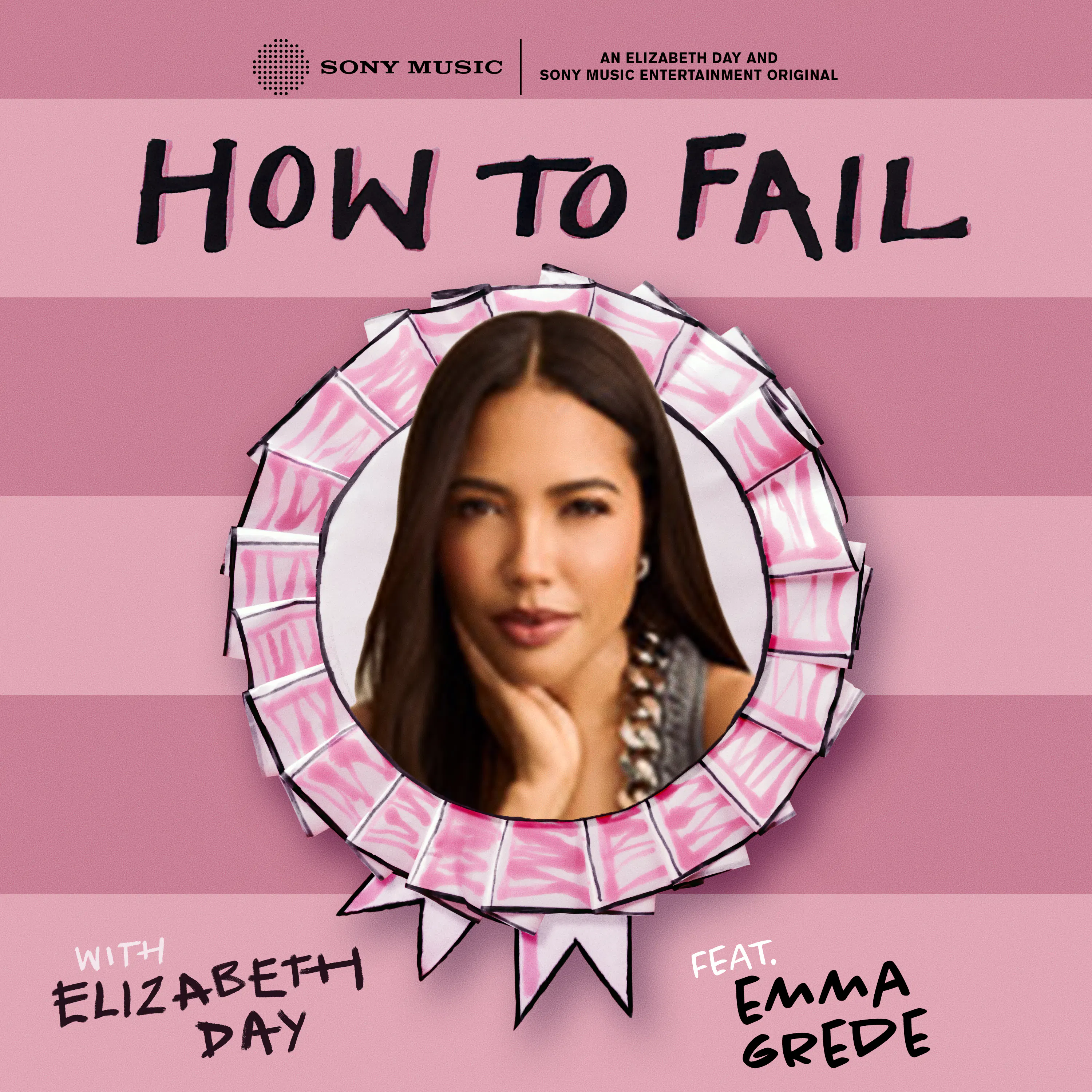
Loading summary
Transcript102 lines
- [00:00]
Emma Grede
I think the idea of work from home culture is career suicide, specifically for women. I always have thought about ambition as something that I am entitled to as long as I work for it. I, you know, started a business with Khloe Kardashian and the rest is history.
- [00:18]
Host (possibly Caroline Criado Perez or similar female podcast host)
Welcome to how to Fail, the podcast that believes that failure doesn't define you, it's how you respond to it that is the true test of character. Before we get into this conversation, please do remember to, like, follow and subscribe so that you never miss a single episode. I have some very exciting news. My great friend Dan Jones, who you'll know as the host of this Is History. He's a phenomenal historian and novelist, although I don't really like to tell him that because he's also very smug. Anyway, the two of us have known each other for years and we've got a new podcast. I know Sound the history Alarm. We're extremely excited, excited about it. It's called History's Greatest Fails. See what we did there and Dan and I will discuss, you guessed it, some of the biggest failures in history. We'll be chatting about everything from failed romance. Think Henry VIII and Anne Boleyn, Anthony and Cleopatra, as well as overlooked women like Ada Lovelace. And we'll be chatting about Richard III and happy accidents in history. Go and search for history's greatest fails wherever you get your podcasts or watch on YouTube.
- [01:32]
Emma Grede
In 1987, a newborn baby is abandoned in a remote spot. Nobody goes down that lane. Why would you think anyone would have picked me up from there? For decades, Jess has searched for answers. Why didn't that person want me? But as she gets closer to the truth, things spiral out of her control. I think I'll always be angry.
- [01:52]
Host (possibly Caroline Criado Perez or similar female podcast host)
Could it have ended differently?
- [01:54]
Emma Grede
From Tortoise Investigates and the observer, this is foundling. Lies always come out, don't they? Skeletons are always going to come out out eventually. Listen wherever you get your podcasts,
- [02:07]
Home Depot Advertiser
it's time to refresh your yard during Spring Backyard Days at the Home Depot. Get low prices guaranteed on propane grills starting at $179 like the next grill 3 burner gas grill. Or get $50 off a select Weber Spirit Grill and bring big flavor to your backyard. Then set the scene with Hampton Bay string lights that bring it all together. Shop Spring backyard days for seven days at the Home Depot now through May 6th. Exclusions apply. Seehomedepot.com Pricematch for details.
- [02:37]
Host (possibly Caroline Criado Perez or similar female podcast host)
In many ways, Emma Greed is the ultimate modern mogul. An East Londoner raised by A single mom who rose to become one of the richest businesswomen in America. Best known for turning big ideas into some of today's most influential consumer brands, Greed is the co founder and CEO of the Good American inclusive fashion brand. A founding partner of Skims, the shapewear loungewear company now valued in the billions. Her close working partnerships with the Kardashian family have led Greed to become an advocate for empowering women through business and she also sits on the board of the Obama foundation as well as being a King's Trust ambassador. Now, as if that weren't enough, she's publishing her first book, Start With Yourself in which she explores everything from building personal resilience to developing self forgiveness. It's an extraordinary ascent for someone whose first job was a local paper round and who struggled at school because of undiagnosed dyslexia. After dropping out of her London College of Fashion degree, Greed started working in fashion events before founding her own talent and marketing agency at the age of 26. She later pitched a business idea to Kris Jenner for a size inclusive denim brand with Khloe Kardashian. Good American launched in 2016, racking up $1 million of sales in its first day. Her stakes in various ventures have earned her a nine digit net worth and a self deprecating nickname. She told Dragon's Den to call her Emma Greedy when she was a guest judge. Alongside her business achievements, Greed is also a mother of four who famously once said that work life balance is an employee's responsibility. As she expands in her book, if you want to be extraordinarily successful, then extraordinary work is required. If you're not failing, she writes, your ambition probably isn't big enough. Emma Green, welcome to how to Fail.
- [04:41]
Emma Grede
What an intro.
- [04:43]
Host (possibly Caroline Criado Perez or similar female podcast host)
You are so impressive.
- [04:45]
Emma Grede
Oh thank you. That's so very, very kind of you to say it's true.
- [04:50]
Host (possibly Caroline Criado Perez or similar female podcast host)
And I'm very interested and admiring of that idea that your ambition might not be big enough. If you feel undone by failure, maybe you're not taking the risks that you're meant to be taking. And one of the things that you write in your book, which I loved by the way.
- [05:06]
Emma Grede
Thank you.
- [05:07]
Host (possibly Caroline Criado Perez or similar female podcast host)
Is this idea that selling women the idea of effortless perfection is what really holds us back.
- [05:13]
Emma Grede
Yeah, absolutely.
- [05:14]
Host (possibly Caroline Criado Perez or similar female podcast host)
Can you tell us a bit about that?
- [05:15]
Emma Grede
Yeah, well listen, I'm so happy that you start there because I think that, you know, when I decided to write this book Start With Yourself, it really is a book that is about self leadership and when I think about ambition, to me it goes hand in hand with discomfort. And I think that what's happening right now in the culture is that we have really kind of taken this idea of what it means to be a female entrepreneur specifically, and glamorized it to the point where people don't understand what it really is, what it means to start a business. And so I have tried to write a book that is both of the things that it needs to be. That it is both interesting and empowering and informative for women who are thinking about a big career or, you know, starting a business. But it's also truthful and honest about what it takes. And so when I talk about what it takes, I'm really talking about the amount of hard work that is most often coupled with a lot of failure and really how to think about those two things. Because too often we think about failure as being something that's really personal and all about us. And I think the reason that I've been successful is because I don't put failure in this space, that it is just mine to hold. I'm like, it's a thing that happened. It isn't who I am. It's a moment in time. It's something that I can learn from, and it exists, and I move away from it. It isn't something that I carry as, like, a burden to my soul. And I think the more we take failure for actually what it is, an opportunity to learn, an opportunity to grow, that is like, you know, that's gonna be when we're gonna see this, like, seismic shift for women. Cause I'm pretty sure that men that fail and get back up again and start another business and lose some more money and move on and go and raise money elsewhere aren't sitting there remunerating about their failure in the same way that so many women do.
- [07:11]
Host (possibly Caroline Criado Perez or similar female podcast host)
Okay, let's just end the interview there, because nothing's gonna be better than that. That is so exactly everything that I think. And so well put. And you're absolutely bang on.
- [07:20]
Emma Grede
You are going to make mistakes. Somebody asked me the other day, like, when was the last time you failed? I was like, I don'. What, 20 seconds ago? Like, every single day I'm failing at something. The reason I'm confident is because I do a lot of stuff, and I've come out on the other side. It's like, I've been through. You don't wake up confident. You become confident because you know you can get through things and you know what's on the other side of failure. And so for me, it's just part of, like, being in the world, being, you know, doing business. It's like, not every day is a good hair day. Like, not every day am I going to do something amazing. But, you know, you live and you learn and you move forward.
- [07:58]
Host (possibly Caroline Criado Perez or similar female podcast host)
When was the first time you realized you were ambitious?
- [08:02]
Emma Grede
You know, I think that that is my default. Like, I grew up in East London. I'm the eldest of four kids, single mom, and, like, there was sort of no choice. Like, where I lived was so grim. I was like, how do I get out of here? And the only way that I knew that people left is when they were successful, because they'd either be a footballer or a dj. It felt like there were all of these, like, routes out for the boys and not as many options for the girls. And so for me, I equated the idea of success and ambition as, like, being able to leave where I was from and, you know, imagine this bigger life for myself. And it's really funny because I feel like East London is in my veins. It's who I am. But by the same token, I knew that that wasn't the extent of my life. I wanted a big life. I wanted to travel and do things and experience things. And I knew that that wouldn't be possible unless I got my butt up and worked for it. And so in my head, it was just a way of creating opportunity for myself. I. You know, in the beginning it was like, can I make 20 quid from a paper round so I can buy the magazines? And the magazines for me were like, this window into a world of, like, fashion and opportunity and glamorousness and all the things that I aspire to. And, you know, that's somewhat how I think about money now. Money is a tool. It's a means to an end, a way of getting the things that I need. And so I always have thought about ambition as something that I am entitled to as long as I work for it.
- [09:32]
Host (possibly Caroline Criado Perez or similar female podcast host)
Have you ever been made to feel that you're, quote, unquote, too ambitious?
- [09:36]
Emma Grede
Oh, God, yeah. I actually remember. It's so funny. Oh, my God. So I, like, at some point in my career, I went and I got a job and the chairman of the company did a reference check on me. And my previous boss said, she's very, very ambitious in that very dismissive way. And I remember then thinking, wow, that's wild that my female boss would frame it in that way, that my ambition was to be dismissed and looked down on. And I thought, wow, that's something you Better keep in check. And I thought that for about 30 fucking seconds. And I moved it on. I was like, what are we talking about here? I was like, that's not gonna work for me.
- [10:24]
Host (possibly Caroline Criado Perez or similar female podcast host)
So, so good and so important for people to hear. And I want to talk more about who or what shaped that mindset in a bit. But before we move on to your first failure, I want to talk to you about the East London of it.
- [10:37]
Emma Grede
Oh, yeah.
- [10:38]
Host (possibly Caroline Criado Perez or similar female podcast host)
There are so many interesting passages in your book. There's this line. If a fortune teller had taken a look at your childhood, they would have predicted you'd become a DJ's girlfriend, a footballer sidekick, or marry a gangster. And at the same facts. Yeah.
- [10:51]
Emma Grede
All the things I knew and could have done.
- [10:55]
Host (possibly Caroline Criado Perez or similar female podcast host)
And at the same time, you make this point that the East London mindset is about. It's about wearing your best, freshest trainers. It's about celebrating the power that money can give you.
- [11:08]
Emma Grede
Absolutely. And also a mentality of how to behave. Right. That I think is almost like the foundation of the way that I do business today. Because when you grow up in East London, you learn to tell the truth. You learn that your word is king. You learn that what you say has implications and it matters. And you also learn that you need to be trusted. Like, you need to be someone who is trustworthy. And so when I think about what it means to be in business now, it's like all of that stuff is just what I learned being a kid in East London, you need to be able to be honest and truthful with your customers. You need your investors and your shareholders and your stakeholders and your staff to trust and believe you. And you need to be truthful with everybody around you.
- [11:51]
Host (possibly Caroline Criado Perez or similar female podcast host)
Let's get on to your failures. They are all business failures. How long you got, which I find so interesting. Did you make a deliberate decision not to choose personal failures? I mean, maybe they're just in time.
- [12:07]
Emma Grede
It's so interesting for me. Well, that's the point. Like, I never see the two things are so separate, because the way that I am in my world, like, I don't have, like, a private life and a family life and a. Like, my life is just all intertwined. I do a thing that seeps into every part of my job and my family and my friends and my work, it's all completely intertwined. And actually, when I think about failures and specifically, like, framing what can be useful for people to learn from, it often is in the kind of guise of business, because I think there are so few models out there for Women. Because what happens to women when they fail in business is they have to kind of scurry off into some obstacles, obscurity, and go like to Thailand and meditate. And I'm like, what? Like, what is that about? So I think I was trying to be quite deliberate about going. Here's all the ways that I have fucked up and here's all the ways I've been given opportunities and here's all the successes that I'm really happy to talk about. It's deliberate, it's purposeful.
- [13:11]
Host (possibly Caroline Criado Perez or similar female podcast host)
Great. Well, I'm very grateful because here's all the data that we can acquire.
- [13:15]
Emma Grede
Let's go.
- [13:15]
Host (possibly Caroline Criado Perez or similar female podcast host)
So thank you. So your first failure is having an employee mentality, which I think is so crazy.
- [13:24]
Emma Grede
So let me tell you how this came around because I think I tell the story in my book. My husband, my now husband was the one who first ever said to me, you have an employee mentality. And it was because ahead of any board meeting. I started my first company when I was 26 and I would get like hives ahead of going into a board meeting. I just didn't really understand that my job was to show the board, here's the direction, this is where we're going and bring everybody on for a journey. And this particular meeting I was going in to make the suggestion that I have a pay increase. And I think that it speaks so much to the way and the relationships that we have to money in that I simply couldn't articulate that I was worth it, that the company was making a ton of money. And here is me over here making it all happen. And therefore my value is as such. And I have never. It's almost like a watershed moment for me was like sort of before that meeting and after and it completely and fundamentally changed the way that I relate to my own self worth in this one meeting. And Jens, who wasn't my husband at the time. Were we dating? No, I don't even think we were dating then. It was before that he said to me, oh yeah, you know, you always get in such a tizzy. You know what your problem is, Emma? You have an employee mentality. And as the CEO of the company, I was like, like what? A, I was insulted. B, I kind of fancied this guy. So I was like, does that mean he doesn't fancy your employee? Do you know what I mean? So there was all of this stuff, but ultimately it meant that I walked into that meeting 100% with an employee mentality and finding it very difficult to understand what that would mean and questioning myself, would I be fit to run this company? Am I the right person? Am I going to get what I need out of this negotiation? And what I hadn't understood is that it wasn't a negotiation. I was completely in the driving seat. I didn't even understand my own power when I had it. And so for me, what I've done since is really to figure out like, when am I in the driving seat? And I think that we often will create bosses for ourselves. We'll create superiors in any situation. You go to the bank, the bank manager, suddenly your boss. You go to see a lawyer, suddenly the lawyer's your boss. It's like none of these people are your boss. You have just fictionalize this idea of somebody who is in charge because they have information that perhaps you don't know even if you're paying for the service. So in this situation, I was the boss, I was the person that was running the company. These guys were simply investors. And yet I found it impossible to say what my worth was. And so I've really changed the way that I go into any situation like that. And I think it's a great learning for women to really take a step back and understand where are you in the situation? What leverage do you have? What point do you start this negotiation? And indeed, is it a negotiation at all? Or is it simply a moment where you need to state your value, believe in your value, and walk away with what you deserve?
- [16:27]
Host (possibly Caroline Criado Perez or similar female podcast host)
One of the things that I really appreciate about your book is the way that you handle emotions as sort of body based information. Because as you're talking, I'm realizing that I often operate from a place of such fear. And it's misplaced fear, but it's fear that I've done something wrong that I might not have known about, that I am in above my head. How would you advise anyone feeling that in a business setting to handle it?
- [16:56]
Emma Grede
Well, the first thing that I always think about is, are you scared or have you just not done it before? Because oftentimes we are, you know, we're doing things for the first time and it's just uncharted territory. And in that case, it all becomes about information, right? Like find someone who's done it, speak to somebody about it, figure it out, do your research, put yourself in a position of power. I often find that when I'm getting scared, it's just because I have no experience of what I'm stepping into. And when I arm myself with all of the information, the fear goes away. Now, there's other times when I'm doing something completely new and uncharted, and I'm like, this fear is necessary for me to actually, like, equate on the scale, like, how important, important this thing actually is. But to me, I look at fear and I'm like, where is it needed? Like, sometimes it's a great signal, and sometimes it's just an absolute barrier to where you need to go. And so I think that you've got to figure out, like, where does this fear need to go? Because as soon as I get that feeling and it does still happen to me, I'm like, all right, what is it like? And am I going to let it dictate the situation? And the reason that I. I decided to really focus on emotions in the book is because I don't want women to make their decisions from an emotional place, right? And I talk about anger and fear and guilt. And when we make decisions from those places, they are not in our best interest. We've got to understand the emotion, understand where it's coming from, and put it in the right place. But don't make your career, your business decisions, your work decisions from those places, because it's just going to hamper you. It's just going to stifle you.
- [18:39]
Host (possibly Caroline Criado Perez or similar female podcast host)
So you also say about this employee mentality that early on in your career, you believed that you needed to be loyal to your employers, and it kept you around longer than you needed to stay in certain places. Tell us about that.
- [18:49]
Emma Grede
Well, you know, this is something that you think as a woman, you know, you're like, I'm so lucky. You know, I get to be in this situation. You're coming to work every day, you're putting it all on the line. You're being paid. It's a transaction. There is no luck in the equation. There is nobody that owes anything in that equation. You come, you do your job, you get paid. In return, you don't owe your loyalty. You don't owe anyone anything. And again, I think it's a uniquely female trait when we believe beyond that transaction, there's something else that we ought to be grateful for. And sometimes, you know, and I've seen it in, you know, I see it in my own company with my own employees, and I've certainly been there myself. You can just stay too long out of loyalty, out of thinking, you know, actually having, like, fear attached to the next move. And so I always try to think about this idea of employee mentality as like, where is it? Where is it cropping up like in your life? Like, where are you making someone your boss? Where are you making excuses? Where are you not advocating for yourself? Where are you not being paid correctly? These are, like, challenging questions to face off against, but you have to have them because again, nobody's coming to, like, tap you on the shoulder and say, hey, girl, do you want to, like, you know, you want a pay rise, you need a bonus, you need a promotion. Actually, you know what you need to do? You need to leave here. Like, no boss ever said, actually, I've done that. But it's like, very rarely does someone say, you're ready for a new opportunity and you're not going to get it here. You have to choose those moments. So again, it's about self advocacy. And I think that the very idea of starting with yourself is about, like, going deep inside and getting close to yourself and what it is that you want and what it is that you need and really choosing those moments. But you have to be. Be very, very deliberate. And that's why I talk about this idea of not hiding behind, you know, soft ambition because no one's coming to pluck you and figure these things out for you. You have to be deliberate about it. And that means, like, running your career like it were a business and thinking about yourself like you're a professional entity. What am I doing with my time and my skills and my attention that could be better used elsewhere? And it's like, you should never stay too long. You should never stay somewhere that you're not appreciated and are ambitious. You have to be very planful about those things.
- [21:11]
Host (possibly Caroline Criado Perez or similar female podcast host)
Should we talk about work life balance?
- [21:13]
Emma Grede
Why not? I've never done that before. No one ever brings this up to me.
- [21:17]
Host (possibly Caroline Criado Perez or similar female podcast host)
I know it goes viral every time. So that's why I'm asking. No, but I do think, can I
- [21:22]
Emma Grede
tell you, and I will just be honest about this, you know, I had no idea that that would have turned into what it was for me. Right. I didn't know it was a viral moment even when it were happening. And I think it's really interesting because I, you know, and my PR will kill me because everybody always wants me to cycle out of that moment and say, you know, like, let me just explain what I said. Actually, I meant what I said and I doubled down on what I say because I think the idea of work from home culture is career suicide, specifically for women. And let me tell you how I know this, because what happens when a woman gets the chance to predominantly work from home? And I see nine times out of ten, let's say that she has kids, right? All of a sudden they've decided in their family she doesn't need childcare that day. So not only is this woman working from her living room table, but she's then gotta go and pick up the kids and look after her kids, which means that she isn't getting ahead and doing what she needs to do and putting her energy into the work. Listen, if you choose to work from home, that is your choice. But if you think that you're still considered for the same promotions and the same pay increases as somebody who's sitting in the office, you're kidding yourself. And if you don't like to hear that, then that's on you. That's not for me to sugarcoat it. That's just what it is. And I honestly think that the reason people got so upset about that is because it's convenient to work from home. It's actually really, like, quite nice to, you know, do a zoom call in your slippers, but it doesn't. It's not congruent with, like, building a big career. Building a big career is not for everyone. But if you're ambitious and if you have a big idea of what you want to do in your life, work from home isn't going to help you get there.
- [23:11]
Host (possibly Caroline Criado Perez or similar female podcast host)
I found it.
- [23:12]
Emma Grede
It's just a fact.
- [23:13]
Host (possibly Caroline Criado Perez or similar female podcast host)
I found it incredibly refreshing.
- [23:15]
Emma Grede
Well, a lot of people did, but, you know, not enough, apparently.
- [23:18]
Host (possibly Caroline Criado Perez or similar female podcast host)
But I think that also what you're saying is that this idea of having it all has to be a myth.
- [23:25]
Emma Grede
It is a myth.
- [23:26]
Host (possibly Caroline Criado Perez or similar female podcast host)
It's a myth.
- [23:27]
Emma Grede
Yeah. Because we have seasons in our life, you know, And I know that, that if I. If I kind of chart my life back to sort of my late teens when I really sort of worked, started working in an office place to now I'm in my early 40s, there's moments and seasons for things. And so what I'm saying, like, with that is that you get all of the things that you want, but not all at the same time. And you pick and choose times to lean into your career. When you've just had a baby, there is no choice. You have to, like, lean out a little bit because you need to look after yourself and your baby and your health. And then when your kids get out of diapers, you can like, lean back into things a little bit and hopefully you're going to have some childcare and you can lean back in a bit more. But there's just moments and we have to kind of like go with the flow of Our life and me putting forward anything other than that is also a myth. And so in the book, I try to be really honest about what I do. If I have any hacks, then I share them. I talk a lot about how much help and childcare and everything and everybody that I surround myself with, because you just don't ever get all the things at once. And it's easy to say that. It's harder to model it outwards. And that's what I'm trying to do. I'm trying to be, like, really honest about what it actually takes and not put the gloss over it, because that isn't helpful for other women.
- [24:45]
Host (possibly Caroline Criado Perez or similar female podcast host)
Yes. And you talk about the rule of thirds.
- [24:47]
Emma Grede
I use the rule of thirds as, like, a measure for how I'm doing. Like, I know that if I'm really, really happy, a lot of the time, I'm probably not pushing in the direction of my goals and my ambition. And if things are too difficult, then I'm kind of, like, a little bit out of whack. But I like that idea that you shouldn't be happy all the time, because that's just not my experience. I have a lot of sadness, and I have difficult times, and I feel guilt and I feel fear. And so I think that when we constantly project this idea that everything is amazing and Instagram ready and you are just, like, you know, rolling from one amazing thing to the other, it's not helpful for other. It's not helpful for other women. And when you are in the kind of throes of your life and trying to do important stuff, it's hard. Like, you get down. Like, I go down, and that's just life.
- [25:46]
Host (possibly Caroline Criado Perez or similar female podcast host)
What does your down look like?
- [25:48]
Emma Grede
I think for me, it's probably. You know, when I was younger, I used to suffer terribly from migraines, and I would almost use a migraine as an excuse to, like, get out of, like, the. You know, the kind of pattern of my work and my life for a few days. So I would just, like, go to bed, you know, now that I'm older and I have kids, I. And again, it's sometimes hard for people to kind of take. But it's like I am, like, right at the top of my list, like, me, myself. And I'm kind of unapologetic about it because I can't be good for anyone unless I'm good for me. So I listen to all the signals. I know when I'm going too hard, and I will cancel something. I will say, I'm not gonna do this. This doesn't feel good for me. I'm not getting on that plane. I'm not doing that thing because I have to be constantly checking in on myself. And I treat the idea of looking after myself as part of my job. And I'm kind of extremely guarded about my time and my energy, extremely boundaried about the things that I say yes to. And I think that that can come across as really, really. But that's not something that I spend any time worrying about because I'm kind of me first.
- [27:08]
Host (possibly Caroline Criado Perez or similar female podcast host)
You said this line. I'm gonna misquote it, but it's something like, I place such a high value on my own opinion that anyone else's opinions pales into insignificance. And you meant it in terms of why you've liberated yourself from people pleasing. And I just love that. Again, it's so rare to hear a woman say that.
- [27:25]
Emma Grede
Yeah. And it's a really good practice, you know, because if you try to please everyone, like, you will be miserable a lot of the time. But if you try to please yourself, most of the time, you know you're gonna be like, default happy. Like, I'm an eight most days. I'm like, I'm so happy with myself because it's just me against me. Do you know what I mean? It's like, I'm really not worried what everybody else is thinking, but I'm super. I have such a high idea of myself and I have such high expectations on myself. So it's not about setting the bar low, it's just about, like, who gets to measure. And I just decided it's me.
- [28:04]
Host (possibly Caroline Criado Perez or similar female podcast host)
When I started this podcast, I honestly felt like I was learning a brand new language, overnight scripts, artwork, scheduling, tech. Suddenly I was the entire team. And it was kind of overwhelming. There were so many moments I wished I had a proper business partner to help me figure it all out. That's why I love Shopify. It's the commerce platform behind millions of businesses and it gives you everything you need in one place. You can build a beautiful online store in minutes with hundreds of ready to use templates. Their AI tools help you write product descriptions and even polish your photography, which is a lifesaver when you're spinning 100 plates. And you can manage everything, inventory, payments, analytics, without juggling 10 different tasks. Start your business today with the industry's best business partner, Shopify, and start hearing. Sign up for your one pound per month trial today at shopify.co.uk fail. That's shopify.co.uk fail.
- [29:07]
Microsoft Advertiser
Study and play come together on a Windows 11 PC. And for a limited time, college students get the best of both worlds. Get the unreal college deal. Everything you need to study and play with select Windows 11 PCs. Eligible students get a year of Microsoft 365 Premium and a year of Xbox game Pass ultimate with a custom color Xbox wireless controller. Learn more@windows.com studentoffer while supplies last ends June 30th terms at aka mscollegepc.
- [29:37]
Prime Video Advertiser
This episode is brought to you by Prime Obsession is incession. And this session, Prime Originals have everything you want. Steamy romances, irresistible love stories. And the book to screen favorites you've already read twice off campus. Elle every year after the love hypothesis, Sterling point and more Slow burns, second chances chemistry you can feel through the screen. Your next obsession is waiting. Watch only on Prime.
- [30:07]
Host (possibly Caroline Criado Perez or similar female podcast host)
Final question on this failure. What did your mother teach you about business?
- [30:12]
Emma Grede
You know, my mum was so, and is so pivotal in my life. And I think the number one thing that she taught me and all of my sisters was how much hard work goes in to anything. Like, my mom worked hard to pay every bill. She worked hard to get us dressed and to send us on school trips. She worked hard just like every day. She left the house early in the morning, she came back late at night. She would clean, she would, I remember her like making calls. She would like, you know, trade off with the milkman so that she could, like, pay a couple of weeks later. She was always in like working mode all the time and kind of relentless with it. But she didn't hide from anything. You know, I knew a lot of people that would like, hide their bills in the sofa and like, kind of ignore them. My mom would like, you know, I remember going to like the Abbey national, which was the bank when I was a kid, and she would like, have a meeting with someone to explain why she would be in, you know, like, in debt arrears, what do you call it in your overdraft and why they couldn't charge her because that was only gonna send her into a spiral. And I just remember her being really like, like, just like full on with everything, like just facing everything. And so I never felt like that hiding from problems was the way forward because I literally had this woman that just like met everything head on all the time. And I think it was so difficult for her because she had just no support. There was no dad, there was no one around. She just had these kids and all of this responsibility. And she's so little and tiny. My mum and she just was, like, fearless with everything. And so I think that she just taught me to, like, not be scared and to meet all of your problems, like, face on, in the face.
- [31:59]
Host (possibly Caroline Criado Perez or similar female podcast host)
And she talked her way into a job on the trading desk at Morgan Stanley.
- [32:03]
Emma Grede
She's a hustler, that woman.
- [32:05]
Host (possibly Caroline Criado Perez or similar female podcast host)
Incredible.
- [32:05]
Emma Grede
Yeah, yeah, she was amazing. Cause my mum was a window dresser by trade. Like, she was, like, in fashion early on, and then, you know, kind of came out of work. My mum had three of us under five by the time she was 28.
- [32:19]
Host (possibly Caroline Criado Perez or similar female podcast host)
And you're the eldest?
- [32:20]
Emma Grede
I'm the eldest. So it's like, you know, my mom's the dad, I'm the mom. We have three kids together. That's the family dynamic. But she, yeah, she was fearless. And even that, you know, kind of going into that kind of very, like, corporate work environment at Morgan Stanley. I remember her reading and learning. You know, back then it was like giant printouts like this, and she would just have these giant printouts, and she'd come home from work and she would read and she would teach herself and learn. And so I think I had a very good role model for what was possible, so long as you were willing to work hard enough.
- [32:55]
Host (possibly Caroline Criado Perez or similar female podcast host)
So impressive. Your second failure is opening your first office in the States, which doesn't sound like a failure, but this is.
- [33:04]
Emma Grede
You should have seen how much money I lost.
- [33:05]
Host (possibly Caroline Criado Perez or similar female podcast host)
Okay, so this is ITB, which you founded over here at the age of 26, which was a talent marketing.
- [33:12]
Emma Grede
Yeah, it was a talent marketing and partnerships agency. And, you know, it was really before its time because we were very early in influencer culture. They weren't even called influencers then. You know, I started off booking celebrities that really famous people and putting them in campaigns. And then, you know, when the fashion bloggers came around, which was like a revelation in the fashion industry, I was, you know, right at the forefront of that industry. Ended up, like, starting a business around it. But before that, ITB was like, right at the pinnacle of when brands started to transact and work with influencers on brand partnerships. And at that point, there were no agencies. You were either working with the influencer's mother or boyfriend as their, like, you know, de facto manager. And it was a dream of a time. You know, I had no idea what I was doing, but I knew I was billing and I knew that I had great clients and I could sell anything to anyone. And we kept winning business. And so I was, like, on fire in London, and we opened in New York, and I was on fire there. And I was like, I'm going to la. And I failed so miserably. And the reason I put it down is because it was when my ego kind of got the better of me. And what I've learned is that success can do really funny things to you if you don't keep it in check. And so I'm at a point in my life now where I'm more successful than I've ever been. But the reason that I can really manage it is because I've had all of these failures in between and I know the signs of when. When it's going to kind of like come back and bite me in the butt. And I think opening that office in LA was such a huge embarrassment because A, it wasn't just about me failing, it was the fact that I had taken a lot of other people with me, you know, when you open a new agency. And of course at that point we were really at the height of what we did. You know, I took like names out of other agencies. Like I, you know, it's like you poach people from another agency, you're moving them across the world to be in this new thing. And it didn't work. And not only did it not work, it failed loudly and miserably and very publicly. And so, you know, I went and did this big, you know, like, hoo ha, I'm, you know, open in LA and brought people to my fancy office and told all the clients what our services would be, took everyone at face value that they would work with me. Nobody caught. Slowly but surely, you know, I didn't have the decisiveness to shut it down in three or four months. So I dragged it out until it was nearly a year. And it was hugely embarrassing, but also, like, hit me in a place that I couldn't believe. It affected so many other people. And that was a huge learning for me. And when it came to, you know, years later, thinking about having another company in la, it really haunted me. And I was like, have I learned enough? Did I get the message loud and clear? What would I not do again? And I think one of the main reasons that I've been able to be successful, cause I live in LA now, is because of that failure with itb. I knew everything not to do and I really took that so seriously. But very importantly, I have never let it stop me because to me it was a moment in time. It was a set of behaviors, it was a arrogance and a lack of understanding. But I learned and I corrected. And I never thought, emma, you can't do that thing. I was like, you need to learn. Go off, do the learning, come back, try again.
- [36:44]
Host (possibly Caroline Criado Perez or similar female podcast host)
You have spoken in the past and written in the book about the importance of a supportive partner. What has Jens given to you? I mean, that's such a huge question.
- [36:55]
Emma Grede
But, you know, I think that the easy way to frame what Jens has really given to me is this idea that it was never about me as a mum, it was us as a family. It wasn't like, what type of mother am I gonna be? It was like, what type of parenting are we going to do? What type of parents are we going to be? And how do we work together to do that? It's never been the default that I was gonna look after the kids, or that the decisions would be made by me, or that it was my primary responsibility. I think that what we have is a really uni, working relationship. Everybody thinks we work really well together. We actually don't. We just. We do different things. We just happen to have these, like, crossover points in, you know, our personal and our professional relationship. But, like, I do. There's just a bunch of things that I don't think about. Cause I have a husband who does that and I think he has a bunch of stuff that he doesn't think about because I take care of those. But never, ever has there been the assumption that the kids are my responsibility.
- [37:59]
Host (possibly Caroline Criado Perez or similar female podcast host)
Beautifully put. You don't have to talk about this, but I'm going to ask you about it because it's one of the things that I'm passionate about having conversations on. Partly because I'm someone who had recurrent miscarriage and unsuccessful fertility treatment and I don't have children. It didn't work out for me in that way.
- [38:15]
Emma Grede
Sorry.
- [38:16]
Host (possibly Caroline Criado Perez or similar female podcast host)
Thank you. That's so lovely of you. And I know that when you say that to me, it's because you have traveled some of that path.
- [38:22]
Emma Grede
Oh, I have. All of it. Like, all of the bits of the path. You know, it's so interesting because, you know, and I always want to be sensitive about this conversation because I think that for so many women, for so long, we were kind of sold this story that, like, we should wait and you should put your career first. And I want to say, and I'm never a person that likes to apologise for what I'm saying before I'm about to say, there are many, many women who have no interest in having children. And that is completely fine. And I am not speaking to them. But for the large majority, and it is a majority who think about Having kids at one point in their life, what we've been told and sold is really contradictory. And there is no right time to have a baby, but there is a biological reality. I'm certainly not advocating for teen pregnancy, but maybe waiting until you're 38 isn't the best thing to do. And when we talk about ambition and careers, we cannot not have the baby conversation because it doesn't serve us. And so when I wrote this book, I was like a. I'm going to be honest about my own journey because I was so lucky to have two children naturally. My 12 and my 9 year old. You know, I, I did it the old fashioned way and I thought that it would completely be my choice to decide when and if I had a third or a fourth. And when I tried, it just never worked. And just like most people, you know, the doctor says you just wait a year and see what's happening. And I thought, yeah, of course, you know, I've had kids naturally. And I waited and then I waited a bit longer and then I was super busy and you know, all the things were happening. And I feel like by the time I kind of got, got around to it, it was then no longer my choice. And I was so frustrated and mad about it and frustrated because I felt like within my organization I'd been somebody who had said, you know, freeze your eggs, focus on what you're doing at work, you know, it'll all be fine, you can think about it later. And by the same token, that wasn't my experience. And so what ended up happening with me for, for those people that don't know my story? I had my first two kids naturally. I had my twins by surrogate. In the middle of that, I had multiple failed rounds of ivf. In fact, they weren't failed rounds of IVF because they worked. But I lost a baby every single time. And it was so miserable. And you know, like you're consumed, like I couldn't think about anything else. You had to be like, what do you want for dinner? I'd be like a baby. You know, I couldn't think about anything. And some people would be like, well, you had two kids and you had a boy and a girl, but what were you doing? But any woman who knows you've got your mind set on having a kid kid, that's just where I was wired and that's just what I wanted. And I couldn't get away from it. So I was super lucky to have a surrogate and to have this magical experience. And now I Have baby number three and number four. And they are delicious and lovely, and I'm very happy that the need is settled. But I don't think it's helpful that we have decided that somehow being successful comes with this idea of, like, when you should have a kid and that the default story is pushing it so late that many women no longer have the choice. And that's the part that I would like people to understand. Like, there is no great time. And when I talk about seasons, you can't always be in go, go, go mode in your career at the detriment of what you might want, which is to have a family. And so when you think about family, you also have to think about timing. And that is unfortunate because. Because that is something that only women need to think about. Right. You can have the conversation with your partner, but that is something that you ought to consider when you're thinking about your life and you're thinking about your vision and what you want. And if it is your choice, which for so many women, it's not necessarily their choice, there can be other complications. But if it is your choice, then you need to think about that planfully because waiting until it's too long is heartbreaking. And. And no matter how successful you are, you won't feel successful if you can't fulfill that part of your life.
- [42:34]
Host (possibly Caroline Criado Perez or similar female podcast host)
Gosh, you speak so eloquently about this subject and all the others. It's incredibly tough. And I just want to acknowledge the loss in what you have told us there. Thank you. Because, yes, you have four beautiful children, but I know that the losses never leave you. And I'm so sorry for what you went through.
- [42:56]
Emma Grede
Thank you. I appreciate it. Because it is really difficult and it's really difficult that we've chosen when and how and if we even get to talk about these things. And I think that opening up the conversation is really, really helpful. Selling women a story that isn't true for most isn't helpful, and it isn't what we should do.
- [43:24]
Ollie Sleep Advertiser
Good sleep is everything. That's why Ollie's science back support is made with a blend of melatonin and L theanine for both kiddos and grownups. So when your mind won't switch off, you've got something that can help your racing thoughts and restless nights won't stand a chance. Find Ollie Sleep solutions for the whole family@ollie.com that's o l l y.com
- [43:47]
Host (possibly Caroline Criado Perez or similar female podcast host)
with
- [43:48]
Plan B Advertiser
Plan B emergency contraception. We're in control of our future. It's backup birth control. You Take after unprotected sex. That helps prevent pregnancy before it starts. It works by temporarily delaying ovulation, and it won't impact your future fertility. Plan B is available in all 50 US states at all major retailers near you, with no ID, prescription option, or age requirement needed. Together, we've got this. Follow Plan B on insta at Plan B. One step to learn more. Use as directed.
- [44:17]
Columbia Advertiser
You can't reason with the sun. Trust us, we've tried. This summer, it's time to put that angry ball of fire on mute. Columbia's Omnishade technology is engineered to protect you from the sun's harsh rays that can burn and damage your skin. The sun is relentless, but so is our guest gear. Level up your summer@columbia.com to spend more time outside and less time slathering on aloe lotion. You're welcome, Columbia. Engineered for whatever.
- [44:47]
Host (possibly Caroline Criado Perez or similar female podcast host)
Okay, your final failure is moving into product categories with Good American, where you didn't have the authority. I love how real these failures are.
- [44:55]
Emma Grede
I know.
- [44:55]
Host (possibly Caroline Criado Perez or similar female podcast host)
They're like, do you know there's no humble bragging here.
- [44:57]
Emma Grede
No, no, no. It's like, here's a list. And I could have just gone on and on and on. The reason I wanted to talk about this one is because. Because when people get, like, a little glimmer of something that they're good at in the workplace or something that's working in a business, they often think it gives them license to do a lot of different things. And I think that customers are so savvy and there's so much choice that the reason I think about this as a big failure. Again, it kind of came down to this mixture of ego and taking for granted what we and I meant to people as a brand. And there's something really interesting that as you start to do things, you imagine. Imagine that you're like, oh, like, I own this customer. And I can't tell you how many brands I know of that have gone completely bust because they believe they owned a customer and they could sell them anything, it's just not true. And so when you're in a situation where you've got, like, something good, like, really understanding and diving deep into, like, what that is and having. It's not necessarily just about data, but it's the, like, what do you mean? What place are you feeling? What is it that you're doing for customers? Like, for me, at the time, I was just selling them jeans and I was selling a bodysuit. And so I was like, well, outfit completion. I'll sell shoes but that's not what we meant to customers at all. Nobody is thinking about inclusivity in the way that we believe they were. And so what we told ourselves is, we sell jeans in all sizes, and we sell clothes and swimwear in all sizes. And so maybe we should make this really, like, broad range of shoes. Well, it's just not the same. That's not how customers come to a decision. And just because you're a size, you know, five in shoes, it doesn't mean that you can. That you've got license to sell to this other customer. And so we had just completely mixed up what it was that we meant to our customers, why the brand actually existed. And it's a really good lesson in getting back to what it is that you are uniquely good at. And I think it's the same in our own sort of work lives as well. Often you can, like, think about, I want to make a pivot, but really understanding what is it that you uniquely do and what is it that you uniquely mean to people? And one of the things that I've learned and sort of like a muscle that I've got good at flexing is going and speaking to people, my competitors, other women in business, people that I just admire, like colleagues, like, really, like, getting to the root of something. Cause sometimes you get so blinkered. And it's especially true about how we see ourselves. And so when you can go to someone else and go, what is it that I'm so good at? Like, what is it that makes me me? What is it that you admire about me? What's the most annoying of my traits? What do I get wrong all the time? It is unbelievable. And so many people don't ask those questions. And so in my book, I was like, you need to do that routinely to yourself, because it brings up all of this stuff. And, you know, again, we tell ourselves a lot of stories, and they're not always entirely true. And so I've just learned to kind of understand what it is that I happen to be good at. And when you double down on the stuff that you're good at, that's what makes you really successful. Not going outside of all of the things all the time.
- [48:16]
Host (possibly Caroline Criado Perez or similar female podcast host)
That is such an important lesson. Tell us how Good American came about. Because I love this story.
- [48:21]
Emma Grede
It's such a good story. Well, I had spent, like, 15 years of my career at the intersection of, like, brands and entertainment, meaning that I built this agency that put brands together with celebrities and did film product placement and licensing deals. And so I was so in this place where, you know, as a kind of frustrated consultant, that I imagined that, you know, I do a project for Topshop or Calvin Klein or whoever it might be. And I was like, look at all the money they're making out of my idea. You know, and you do. You get to the point where you're like, I can't keep giving it all away for fees and for something that I have, like, no skin in the game for. And so in my head, I was like, I'm gonna start a brand. I'm just gonna start something and I'm gonna own it all and I'm going to make it huge and it's gonna be amazing and I'm gonna sit at home and count all the money. Of course, it doesn't go exactly like that. I had to go out, I had to raise. I had really uniquely understood the arbitrage between, like, you know, I guess making something faint and the difference between paying your way there through traditional kind of like, marketing and advertising means versus the shortcut that celebrity can give you. But what I knew, uniquely is that if you had an incredible product, what talent could do with an incredible product would be to actually start, like a fully fledged business. And so, as the story goes, you know, I had some good contacts. I went and I pitched and I. I, you know, started a business with Khloe Kardashian and the rest is history. And it was, you know, a magical time, because when you go back, you know, we started this brand, it's eight years old. It was about a year before that, so nine years ago. There was nothing like it then. No one was talking, you know, in the same way that they do about inclusivity or diversity. There were no plus size bodies turning up, you know, in the different brands. We were the first people to show you the different sizes of jeans on, you know, on the website. And it was really before its time. So I'm very proud of what we built and I'm very proud of that association and the fact that, you know, we were a first and that the company's still there, it's still living and breathing and successful and profitable. And, you know, it allowed me to do a lot of other things.
- [50:40]
Host (possibly Caroline Criado Perez or similar female podcast host)
How much was your own faith part of the strategy? Because you have become the celebrity that you used to represent in a way alongside your other.
- [50:51]
Emma Grede
You know, it's so interesting because I don't even know how this happened. When Good American started, I have one picture on my Instagram and it was like a food, because I'm obsessed With food. What happened is that I think people just started asking me a lot of questions. And, you know, I always felt that, you know, if you can answer a question and you can use your experience to help someone, then you probably should. But, you know, that was just part of why I wrote the book and also why I started the podcast. Because I don't think people care at all how I got successful. I think they want to know how they can get successful. And so when I wrote the book, I was like, how can you do something that's going to be useful to people? You give me half an hour of your time. You read a chapter in this book. Is it actionable? And you can take it into your life and do something different tomorrow? Tick. Yes. If you listen to the podcast, am I gonna give you something that is useful for you? And that's really what I'm interested in. I'm interested in there being, like, a different model for the way women get to be in their work and in their careers. And I think that, you know, you can't be what you don't see. You have to have an example of somebody that is willing to say. Say, I kind of did this differently. And I don't believe in the vision boards, and I don't believe that you can manifest your way to anything, actually. I think that you have to work really hard, and ambition has to find you working, and it's as simple as that. Then you add the strategy, then you advocate for what you want, Then you put money in the center of your plans. Then you've got something. But, like, don't talk to me about all of the other stuff, because it's just not interesting and it's not the truth.
- [52:36]
Host (possibly Caroline Criado Perez or similar female podcast host)
Like an injection of motivation directly into my veins.
- [52:40]
Emma Grede
That's what I need to do. Motivation injection?
- [52:42]
Host (possibly Caroline Criado Perez or similar female podcast host)
Yes. IV drips.
- [52:45]
Emma Grede
Can you imagine?
- [52:46]
Host (possibly Caroline Criado Perez or similar female podcast host)
I need an emig green IV drip right now.
- [52:48]
Emma Grede
EG let's go. It's a new business.
- [52:52]
Host (possibly Caroline Criado Perez or similar female podcast host)
Okay, final question. Because I've loved talking to you so much, and I could just use this as my own private mentoring session, but I wonder what you mother says to you now about everything that you've become and everything you've achieved. Is she the kind of mom who says, I'm proud of you, I love you, or is she someone who just
- [53:09]
Emma Grede
takes it for granted? No. You know, it's so funny. Like, I have a very emotional mother. I saw her for dinner last night, and she is, like, beyond proud of me. And she says it to me every time she sees me, you know, I come from a very affectionate family. They're like a kiss on the lips. And every family member tells each other that they love each other all the time. It's very hard to get off the phone. I love you. I love you. Yeah, my mom is really proud of me and my sisters are really proud of me. And I think that, you know, when I grew up, I grew up feeling very loved. Like, we didn't have a lot, but I had a lot of conviction, a lot of support, you know, I've said it a million times, but my mum said, you know, Emma, you're not better than anybody else, but nor is anyone better than. Than you. And I really believed it. Like, I was like, no one's better than me. And I remember when I went to work, you know, I had a work placement and quintessentially, when I was a kid, and it was like, you know, Ben Elliot and what's his name? Tom Parker Bowles and Harry Beecher and all of these, like, amazing toffs that were very lovely to me. But I was like, what school did you go to? Like, Eaton. That's a real thing. I thought it was like Harry Potter. Like, I had no idea, you know, But I was like, yeah, cool. Like, great. Do you know what I mean? Like, I never thought, oh, my goodness, like, these guys are so educated and so much more special. I was like, guess what? They can't do that. I can, you know, And I really always have seen my worth in any situation. And I'm pretty sure that all came from my mum. You know, it's the same woman who would go down the Abbey national and have it out with a bank manager. Like I'm her. Like I'm the same girl, just slightly different circumstances.
- [54:51]
Host (possibly Caroline Criado Perez or similar female podcast host)
From the Abbey national to LA Billionaire. That's such a wonderful story and thank you, Emma Greed, for sharing it with us.
- [54:59]
Emma Grede
No, thank you so much. I loved it. So good speaking to you.
- [55:19]
1-800-Flowers Advertiser
Mother's Day has a way of sneaking up on you. But when it does, 1-800-FLowers makes it easy to send mom something beautiful, thoughtful and worthy of everything she does. Right now, with double blooms from 1-800-Flowers, order one dozen roses and get another dozen for free. It's a bigger gesture with fresh, beautiful flowers arranged to make Mother's Day feel as special as she is. Make Mother's Day feel bigger with Double blooms at 1-800-FLowers.com Spotify. That's 1-800flowers, com Spotify.