← How To Fail With Elizabeth Day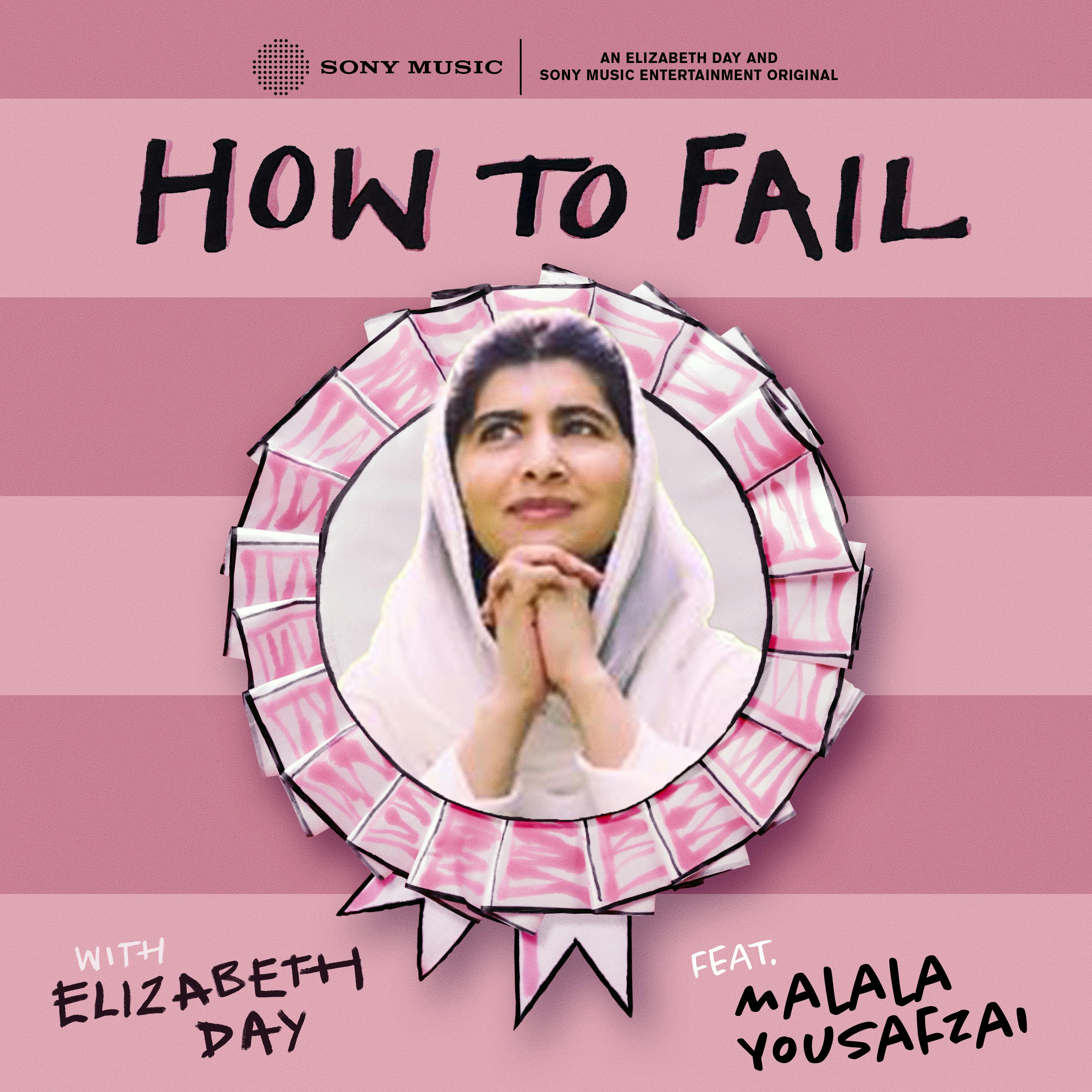
Loading summary
Transcript91 lines
- [00:00]
Malala Yousafzai
I find it so funny when I go on my TikTok or Instagram comments and I see these comments from Gen Z and Gen Alpha saying to me that they thought I was like a dead figure from 19something-40s. And I felt like I was reliving the attack that had happened to me when I was 15 when the Taliban shot me. What was really challenging about the panic attack which was associated with trying bong for the first time? I had never heard what bong was.
- [00:28]
Elizabeth Day
Yeah, that's right, listeners. Malala smoked a bong. Yes, hello and welcome to how to Fail. This is the podcast that firmly believes there is no growth without failure. This episode is brought to you by Squarespace, the all in one website platform for entrepreneurs to stand out and succeed online. Squarespace is here to support entrepreneurship and help turn your passion into a business. It does so with cutting edge design, seamless checkout for customers, with simple but powerful payment tools. It helps you turn leads leads into clients, allowing you to grow and communicate with your audience. Their customers include the Dusty Knuckle Bakery and Cafe in East London. And if you know, you know their bread is amazing. They're a Squarespace customer and a brilliant example of how to do it right. Their training program provides young people who've been excluded by society with the basic skills for work and life. Go check them out. Head to squarespace.com fail10 for a free trial and when you're ready to launch, use offer code FAIL10. That's FAIL1 0 to save 10% off your first purchase of a website or domain.
- [01:40]
Jonathan Van Ness
It's Jonathan Van Ness from Getting Better. With Jonathan Van Ness, it's easy to feel hopeless. But we don't have to stay there. I'm all about finding places where we can turn that energy into hope and into action. One of those places is Americans United for Separation of Church and State. Americans United, or au, is this quiet but mighty force working every day to preserve freedom without favor and equality without exception. I am so obsessed with that tagline. And let me tell you something, honey. That wall between church and state, paper thin. It's got a leak, honey. It's one of the last safeguards protecting so many of our rights. So right now, from bodily autonomy to LGBTQ + rights to the future of public schools, to me, this is about creating a world where everyone gets to live as themselves. As long as you're not harming anyone else. Now is not the time to curl up and hide. It's the time to link arms and stand together for a better future. Join Americans United for Separation of Church and State and their growing movement. Because church, state, separation protects us all. All. Learn more and join the fight@au.org better. Let's go. Americans United.
- [02:43]
Elizabeth Day
My guest today belongs to the select cadre of people whose global impact is so significant that they are known instantly by one name. That name is Malala. She was born Malala Yousafzai in Mingora, Pakistan. When the Taliban took control of the Swat Valley, Malala started writing an anonymous blog about life at school for the BBC. Her activism made her a target. In 2012, on her way home from school, a masked Taliban gunman shot her in the head. Ten days later, she woke up in a hospital in Birmingham. She was 15 and her life as she knew it had been forever changed. The rehabilitation was lengthy, requiring multiple surgeries. But she continued her schooling at Edgbaston High and then at Oxford where she studied PPE while pursuing her own education. She fought tirelessly for the rights of other girls to receive theirs. She launched the Malala Fund, which works for a world where every girl can learn and choose her own future and which lobbies governments to make education accessible for everyone. At 16, she co wrote an autobiography, I Am Malala, which became an international bestseller. At 17, she became the youngest ever Nobel laureate after being awarded the Nobel Peace Prize. But behind the modern myth making machine, there was still a teenager trying to discover who she was. Now 28, Malala is publishing a new book, Finding My Way, which describes some of that journey. It's a story of self discovery, of trying to stay true to yourself when everyone wants to tell you who you are. She says this is not the story you think you know. It's the one I've been waiting to tell. Malala, welcome to how to Fail.
- [04:44]
Malala Yousafzai
Thank you, Elizabeth. I'm so excited.
- [04:46]
Elizabeth Day
I'm so excited to have you here. It's such a pinch me moment and boy, do you know how to sell a book. That quote, I was like, yes, I want to read that immediately. And I did read it and I adored it. But I can imagine it took a lot of courage to write because it's honest and you are confronting a lot in your own story and also in your family's story. How difficult was it to be that honest?
- [05:17]
Malala Yousafzai
I took this opportunity of writing a book as a reintroduction of myself. I wanted to tell people who I was beyond the titles I had received the Nobel Peace Prize winner, a 15 year old girl who was attacked by the Taliban. And I knew that there was more to my story than just That I was still a student, a lonely student at school. I wanted to redefine my life in college and I wanted to feel loved and love myself and find someone who I could love and. And I also wanted to tell people that my life was not all perfect because I had set really high expectations for myself. And I am able to share the true personal journey, the true personal reflections of my life.
- [06:12]
Elizabeth Day
What is the most common misconception people had of you? The one that most annoyed you, the.
- [06:20]
Malala Yousafzai
One that annoyed me the most was people thought I was boring. I have met so many people who in person have told me that they think I'm funny. And I was shocked. I thought I was always funny and I thought people understood that. And when my story is told outside, it is narrated as the story of a hero, a story of a figure from the past. I find it so funny when I go on my TikTok or Instagram comments and I see these comments from Gen Z and Gen Alpha saying to me that they thought I was like a dead figure from 19something-40s. They just cannot believe I am alive and I'm still in my 20s. And that's because that's how the story is told.
- [07:08]
Elizabeth Day
There's a lot of mischief in this book, but I don't want to ruin anything for anyone who has yet to read it, but Oxford was the time of firsts for you, and one of the firsts was your first ever McDonald's. Is that habit that you've kept up or.
- [07:21]
Malala Yousafzai
Yes. And I had no idea how I had such little exposure to the world outside when I was at school in Birmingham with my parents. And I would spend my whole day either at school or with my parents at home, and then I would be at events and conferences whenever I would get a break. I had not had this normal experience of trying a caramel frappe or going out with friends for pizza or just having a normal conversation about boys. So when I entered college, I knew that I wanted this life to be very different. This was the first time that I felt nobody was watching me. There was no surveillance. Of course I had security with me, but I tried to ignore them, pretend like they were not there, but they were always there. And this time I just wanted to allow myself to try new things. And that's because I wanted myself to have these experiences that I might never have. I was just so curious about the life after graduating university that I thought maybe these are the only three years at university where I could have any experience. I could have any exposure. I could climb the rooftops. I could get into trouble. That's okay. I'll get away with it. I can skip my assignments. I might do really badly in one exam, but somehow I'll get over it. Because right now I want to be with my friends. I want to stay up till 3am I want us to gossip. And more than that, I wanted to make friends. And that did happen.
- [08:55]
Elizabeth Day
It did. And we're going to come on to that because I, like you, am obsessed with friendship. So I can't wait to talk about it with you. Before we get onto your failures, I wanted to ask you about mental health, which I know we're going to go into a lot more. But you write in the book that in your mother tongue there is no word for anxiety, which I find fascinating. Why do you think that is?
- [09:17]
Malala Yousafzai
Yes, it's true. We do not know how to express anxiety and mental health in our culture, in our community. I grew up in Pakistan and the way I understood mental health was that a person has gone mad. And there was a psychiatrist, a local doctor in our area, and. But people would call him the mad people's doctor. So mental health was not a topic that was understood by many. So when I had this, you know, this experience where I needed mental health support, I just could not really accept it immediately. So it was a whole journey for me to accept that, yes, this is okay and this will help you.
- [10:05]
Elizabeth Day
And have you been able to express it to your parents?
- [10:08]
Malala Yousafzai
So I did tell my parents that I had an experience at college, basically a panic attack, and that I do not feel okay anymore. What was really challenging about the panic attack which was associated with trying bong for the first time? I had never heard what bong was.
- [10:28]
Elizabeth Day
Yeah, that's right, listeners. Malala smoked a bong.
- [10:31]
Malala Yousafzai
Yes. You know, inhaled it once and I coughed. I just didn't know if it had any effect. Then my friend insisted I give it one more try. I said, okay, fine, what could it do? So I had another intake and I immediately felt it in my body. And I don't know how time passed, I don't know what happened, but I just lost connection with reality. And I felt like I was reliving the attack that had happened to me when I was 15, when the Taliban shot me. And I was in this phase of trying to process whether I was alive or not and who those scary people were who were trying to take away my life. Was I dead? Was I alive? I was reliving it all. The way I tell my story is that I don't Remember the incident. And it's true, I don't remember the incident. But somehow in that moment when I had that panic attack by taking bong, I felt like I was seeing the attack. I was seeing everything all over again in front of my eyes. It was a very tough moment, but I knew I needed some help. So I did talk to my parents about it. I did talk to some close colleagues as well. But I feel like my parents did not fully grasp it. I thought my mom told me off for saying that you should be careful and don't hang out with bad people and you know, what your life is like. Why are you not being mindful? And I felt so uncomfortable. I thought, okay, I need to go and talk to somebody else. My friends are also very helpful because they understood that I needed more professional support. And I'm so glad that I had this conversation with one of my friends one time where I wanted to be with my friends and I wanted to hang out and I wanted to enjoy ice cream and caramel frappe, all of those things. And I just did not feel present. And that's when my friend told me that, you know, there is actually professional support and there is a therapist you can see.
- [12:34]
Elizabeth Day
Thank you so much for sharing that. You write in the book with exquisite precision, actually about that idea that when something shockingly violent happens to you forever after, you are trying to discern between what is real and what isn't. Because the violence itself seems so surreal and so out of the norm. Because it is. And I just thought you put that so well. And I know many listeners, even though they haven't been through the direct experience, will really relate and feel helped by your words. So thank you. Your first failure. Failing your first year exams at Oxford.
- [13:13]
Malala Yousafzai
Yeah. How good is that? Perfect answer.
- [13:16]
Elizabeth Day
I mean, it's a quintessential failure.
- [13:18]
Malala Yousafzai
Yes. It was my first year in college where I nearly failed my first year exams. And those exams are critical. They don't count towards your final grade, but they do signal to your tutors how you are doing academically. And that moment really was stressful because I was worried if I might be kicked out of college. But at the same time, I was reflecting on why that was the case, that I was behind on my academic progress. That first year I had overwhelmed myself with so much work. I wanted to be good in my studies, but I had other priorities. I wanted to socialize, I wanted to make friends, I wanted to be at every event. There was nothing that I wanted to skip. And at the same time, work was important. To me, I knew that we have to advocate for girls education, we have to secure financing for it. So I was in three different countries in a week or so. And those trips were important. Like, I still cannot be convinced that it was not worth going to the World Economic Forum or going with Tim Cook to Lebanon to introduce our partnership together, because that money has helped so many girls get into school. And at the same time, I also had to make a living for my family. So I was doing private paid speaking events as well. And it was really difficult to make my senior tutor understand why I had to do all of that. And I would always come up with different excuses, but this was a truth about my life that I needed to do all of it. So after getting those results and realizing that I had nearly failed my exams, I knew this was a moment to change things. So the tutor kindly wrote a letter to my parents and my work colleagues and everybody who was managing my business and, and said that they cannot arrange any trips, any travel, they cannot make any commitments during my college term times. And that was life changing for me.
- [15:22]
Elizabeth Day
I wonder as well, if there was an added layer of importance because education had become such a symbol in your life, let alone something that you loved pursuing and that you felt was fundamentally important for the rights of girls across the world.
- [15:40]
Jonathan Van Ness
But.
- [15:40]
Elizabeth Day
But almost. It was almost, I imagine, like you were fighting a battle with the men who had tried to oppress you. So was there an added layer of feeling like a failure because of that?
- [15:52]
Malala Yousafzai
I felt this imposter syndrome, that somehow I was failing myself. Education was once denied to girls in my hometown. I was one of those girls at age 11 who could not go to school. And now I had access to the best university in the world. I could sit in any library, read any book. And here I am trying to prioritize socializing with friends over studying. So I did feel guilty. I did feel like I was the imposter. And somehow I was failing my personal commitment to my own education. And I was also failing my commitment to other girls education as well as. But I realized that my learning was not limited to just reading articles and books. And it's really your friends who make you comfortable because they don't judge you. They don't judge you, they don't see you with any title. They see you beyond all of that. To them, you are just a friend. And I felt so secure and so comfortable around them that it was not just me knowing them and them knowing me, it was me knowing myself. In a way, it was important to me to fail those exams just to reflect on the fact that, yes, you know, maybe my priorities have changed. Maybe it's not always about getting the top grades.
- [17:17]
Elizabeth Day
How easy was it for you to make friends in England and then in Oxford, because the shift that you went through, let alone almost dying, but then moving from this beautiful part of Pakistan to Birmingham, which has its own beauty, but having to then acclimatise to Edgbaston High School after everything you'd been through, how easy was it for you to make friends?
- [17:43]
Malala Yousafzai
It was not easy at all, actually. I was introduced to my school before I had joined. They had already read about me on the news and the school also put introduced me. So the girls were either worried that they might be overwhelming me, that they might be making me uncomfortable, but I felt nobody was approaching me, nobody was sitting down with me at the dining table to eat together with me. I thought nobody was really engaging me in the gossip or any conversation. And I felt sometimes really silly for even asking a question. But I am forever grateful for that one friend who approached me one day, and she has been my best friend since then. So in school, I had just one friend. In college, when I was joining, I made a commitment that I will go and talk to everybody. I will not feel shy. And when the college principal emailed me saying that if he should introduce me to everybody, send out an email, and I said, please don't. I do not want to be seen as however you want to define me. I do not want that Wikipedia introduction of me. And when I entered college, I met so many students from my subject group, from my college, from other colleges at Oxford, and so many students from Pakistan. And I realized how diverse this whole university is. And you get to meet so many incredible people with completely different personalities and you get to have this exposure that you have never expected before. I also felt closer to Pakistan because there were so many Pakistani students. I felt closer to South Asia because of the whole South Asian community there and the friends I have made there are now friends for life. And I'm so grateful for that.
- [19:49]
Elizabeth Day
I really appreciate how you talk and write about friendship because I think that friendship so often gets overlooked and marginalized in favour of romantic love, which, by the way, you also write about very well.
- [20:02]
Malala Yousafzai
But I wanted both.
- [20:03]
Elizabeth Day
Yeah, and you've got both of which I. Which I really. That's. I'm so happy for you.
- [20:08]
Malala Yousafzai
Yeah. Friends are everything. That's all I needed, a laughter, somebody listening to me, somebody making me feel like they saw me, they acknowledged my presence. That was Everything. And they would help me with my wardrobe because it just was not appropriate at all. They said, you need to put some glitter on your face and put some bolder jewelry and stand out and enjoy your time here.
- [20:33]
Elizabeth Day
And you face a lot of criticism from your homeland sometimes because of the way that you chose or choose to dress. You write about that with real clarity in this book. But I wonder how you feel about it now. That pressure. How do you deal with it?
- [20:50]
Malala Yousafzai
I was expecting that at some point people would make a whole drama out of something, and they might be watching for some photos of me at a club or a photo of me with a boy, but I was doing everything not to expose myself to any of those things. But in the end, when people made a whole controversy after seeing a photo of me wearing jeans, I was not surprised at all to see the backlash. But I was just shocked that jeans, like, of all the things. Of all the things that you could have picked, you just picked me wearing jeans. And that is something that I was not going to explain, defend, or choose not to wear, because for me, it's just simply trying to live like any other student at college. I was not there to be representing my culture or I was not there as an ambassador. I was not there as an activist. I was there as a student like everybody else. And I wanted to fit in. But the backlash was crazy because some people were criticizing me for not being Islamic enough or cultural enough. Other people were criticizing me for still wearing a headscarf and somehow not liberated enough. And I thought everybody was wrong. Yeah, every criticism was wrong because what you wear is your choice. Nobody should be deciding that for you. And we need to give more freedom to women to make these decisions for themselves and respect their decisions.
- [22:25]
Elizabeth Day
My final question on this failure is that you describe yourself as the essay crisis queen.
- [22:30]
Malala Yousafzai
Yeah.
- [22:30]
Elizabeth Day
What was your worst essay crisis in this first year?
- [22:35]
Malala Yousafzai
So many, to be honest, every essay was a crisis. I would think that this cannot get worse than this one. Awake till 5am, awake till 6am on the next one, awake till 7am on the one after. It was getting worse and worse and worse that I realized I had just switched my day. The nighttime would be my essay time, and I would try to sleep a bit in the morning when the sun rises. So that meant then I could do my assignments when everybody was asleep.
- [23:09]
Elizabeth Day
You did turn it around, though. So you did. And you graduated with a 2:1 during COVID I'm sorry that you didn't have an actual graduation ceremony. It's so sad. I really feel for you. And part of the way you turned it around is that you got some skills, you got someone to teach you how to study. And I think again, that's something that is important for people who are listening to this, who maybe feel lost in their own education. To hear someone as intelligent as you saying, actually I needed a bit of help and I went to this study skills person.
- [23:41]
Malala Yousafzai
Yeah, I was so nervous because I thought I might be the only odd one in my friends group who would show up here. And then I realized that there were so many students, including many who I knew were visiting that and it's completely okay for students to have this academic support. We all come from different backgrounds, we all have had education in different kinds of schools in different places and we may not have the same academic exposure or some of us might just simply be doubting ourselves. We sometimes just have this imposter syndrome where we think we are just the only ones who cannot do it. And even a few of those sessions really helped me think differently.
- [24:24]
Jonathan Van Ness
Pet Lovers It's Jonathan Van Ness from Getting Better with Jonathan Van Ness. My pets, they're my family. They mean the world to me and I want to give them the absolute best life possible. That's why we switched to Ollie. They make fresh protein packed meals with real human grade ingredients. They're backed by vet nutritionists and crafted with culinary experts. My dogs are obsessed. Even my little Georgie, who's kind of a picky eater, is obsessed with mealtime and his poop is so much more solid and predictable, which I have to say, two thumbs up. Your dog's well being starts with their food. And that's why Ollie delivers fresh human grade food that your dog will love. Head to ollie.com better tell them all about your dog and use code better to get 60% off your welcome kit when you subscribe today. Dang yo, that is such a good deal. Plus they offer a happiness guarantee on the first box. So if you're not completely satisfied, you'll get your money back. That's O L l I e.com better and enter code better to get a 60 off your first box.
- [25:27]
Malala Yousafzai
Buenos dias. Cafe Bustelo Espresso styled iced coffee is hitting refrigerators with a cold front that'll sweep through your senses. So keep the coffee pours long and the cold sip slow. Cafe Hostelo Estaki Every now and then.
- [25:43]
Elizabeth Day
I rinse it out and I need.
- [25:45]
Malala Yousafzai
Downy rins tonight and I need it more.
- [25:50]
Elizabeth Day
My kid wet the bed and the smell never leaves.
- [25:55]
Malala Yousafzai
I don't know what to do I'm always in the dark. The sweat and dance sure smells like a dark downy rinse Fights stubborn odors in just, just one wash when impossible odors get stuck in.
- [26:12]
Elizabeth Day
Your second failure is a heartbreaking one. And as you put it to me, it's watching your childhood friends and cousins get married as teenagers.
- [26:22]
Malala Yousafzai
Yeah.
- [26:23]
Elizabeth Day
Tell me about your cousin, Nazneen.
- [26:27]
Malala Yousafzai
So Nazneen and I grew up together and I would visit her in the summers in our village, Shangla. We both had the same dreams. We wanted to go and change the world. She wanted to be a doctor, she wanted to be an artist. She loved writing poetry. And when I recently saw her in person, I realized that she was living a very different life than I was. And that moment just struck me because I still remember that 12 year old Nazneen, 11 year old me sitting together by the river in our village and dreaming about our lives, how we wanted to shape it and how education would be that transformative power through which we can challenge the stereotypes, we can fight these cultural barriers and we can be the women who we want to be. And many years later, I was seeing her again in the same village. Now. She was within the four walls of a house. She had a child in her lap. She had another child roaming around and her eyes were on her husband as if her whole life was decided by everybody else around her. She had very little say in how much she could choose for herself, as if she had lost the battle. And I could imagine her in the same moment like this Nazneen, she could have been a doctor right now. She could be writing her poetry and narrating it to everybody. And it was heartbreaking to witness that moment. So on that trip, we had gone to our village to visit the school we had built. And it was very nice to see these students in uniform, meet the teachers and just hear from the girls what their dreams were. And there were so many girls, the younger ones who were so confident and they had dreams. And I was hopeful that, okay, in this village there would be a generation of girls who would be educated and their lives would be different. But that could have been Nazneen too. But her generation have a different life now.
- [28:48]
Elizabeth Day
Yes. And why do you think this might sound like an obvious question, but why do you feel it is such a personal failure?
- [28:59]
Malala Yousafzai
I felt guilty. I felt that somehow I had failed because it's one thing to go and dream about the 122 million girls who are out of school and you want to see a world where every girl can access education. You want to change policies and implement them, and you want to secure more financing for education. And it all sounds so technical and fancy. And in a few years, you can list down all the remarkable things you have done. But I always think about the people I know. I think about the friends who I grew up together with. And I have changed my approach to work. Like at Malala Fund, which is my nonprofit, we have emergency grants as well because we care about how the education of children is impacted. Now we are giving grants to education in Afghanistan, Gaza, in different places, so that children right now are provided the support that they need. But we are also working on the long term change. So when I was just, like, watching Nazneen and going through that moment, I was feeling really just sad and guilty. And I was imagining if her life could be different and somehow if I could have made that difference in her life. So her marriage agreement was done when she was still in school, and she had no idea. And. But everybody said, yeah, yeah, you know, we are working on it. And I talked to Nazneen myself as well, and I told her many times that she should not give up. Of course, opportunities are limited. Our school was not built at the time that we could find her a school in another city. She could maybe do these, like, virtually or, like, there could be a way. There could be a way in which we could maybe take her to a boarding school. And somehow I feel like something had broken her that she herself could not fight it. She herself could not take it forward. And of course, like, I was trying to offer her everything that I could to tell her that we will be there for her, but I was now living in a different country. She was in the village, and it felt like she just saw little hope. And she thought that it was more her community and her parents and the cultural norms that would determine her life. She just could not see a way out of it. And it just made me really sad because I just could not imagine how Nazneen had lost that ambition and hope so quickly, how society had convinced her that she has no future.
- [31:31]
Elizabeth Day
It's so sad. And I wonder if you saw, when you saw Nazneen last time, if you were not only confronted with the reality of her situation, but whether you pondered how different your life might have looked at the same time, or maybe you would never have taken that path because you had a father who didn't clip your wings. But were you also aware of how you were never given the chance to find out who you would have been had this not happened to you at 15, 100%.
- [32:03]
Malala Yousafzai
I think even with the supportive father and even with an education, I think there would have been still many limitations in the things I wanted to do in Pakistan. I think it would have been a challenge in picking a career path. It would have also been a challenge to choose the person I love and want to marry. So I don't know exactly what it would have looked like, but I do know it would not have been that easy. It wasn't even easy in Birmingham in the uk, because I don't think the culture can be separated from you that easily. It somehow reminded me that my story was actually an exception. It was unique because what Nazin faced is what thousands of women have faced. But what I faced, like, how many girls have gotten this opportunity. Everything that I have, from a platform to the support around the world, to a foundation, all of the things I can do. So I cannot even compare it. But even when I look at the stories of, like, two or three other girls from our village who somehow escaped and made their way out, they fought. They fought and they still keep fighting. They still keep fighting to protect them from marriage. Or they're like, let's just pray this husband turns out to be the nice guy so I can do my job. But there are one or two stories of these incredible girls from our village who have completed their education, who have graduated and are also married and have good husbands. It is a privilege for them to have a husband who is just normal. The story is that he doesn't beat me. He doesn't stop me from going outside to the house to take some fresh air or meet other friends of mine. It's crazy. It's hard to process, but that is a reality that girls and women still face.
- [34:04]
Elizabeth Day
Understandably, you had reticence about marriage as an institution and a concept. However, you are married and your husband sounds utterly delightful. I mean, I'm sure he has some flaws, but I can't discern them from reading this book.
- [34:18]
Malala Yousafzai
I tried. I tried to make.
- [34:20]
Elizabeth Day
How annoying.
- [34:21]
Malala Yousafzai
I know, I know.
- [34:24]
Elizabeth Day
Tell us about your experience of marriage.
- [34:28]
Malala Yousafzai
Marriage was one of those topics that I hated. I hated it. I did not want to get married. I thought, you know, I will. I will stay single forever. Just stay focused on my work. I would be some sort of like a Mother Teresa, like a nun or something, that this was not part of my story. And then I fell in love with this guy, was handsome and attractive and kind and nice, and he made me happy and smile and more Than anything. He just treated me as a normal person. He never asked me about the attack or the international exposure I have had. He was never interested in that. He was interested in the present me. He was interested in the person I was becoming. And I could imagine myself growing bigger with him now after marriage. Like I have noticed how when we travel, when we go for events and things, I enjoy work as well because he makes it more fun. We play paddle, pickleball, cricket. But when it comes to marriage itself, I was worried about marriage because I thought I was giving up to an institution that had counted women lesser than men, that had reduced women's rights, that had taken away their autonomy. And anywhere that you look in any part of the world, it is the same story. And that still in this day, millions of girls every year are married off. When they're still children, they lose their dreams. So I just thought, this is one of those topics that I'm going to stay away from. I will advocate against it. You know, I respect everybody's marriage. And my mom and dad, they're married and they're a beautiful couple. But I was just scared. I thought I would lose something if I get married. And I knew I wouldn't. I knew I wouldn't. I knew I was much stronger. I knew I had everything. I make my own income. Why am I scared? And somehow I was. That is the reality. I was scared of marriage. I was scared of somehow reliving the stories that I had heard of girls being abused, girls married off on their children, girls losing their dreams, husbands just being cruel so much that I was like forgetting about the good stories at the same time. So I started to reflect on my, you know, my parents marriage. I started to reflect on how we can redefine these norms, we can redefine these institutions. And in the end, it was about the understanding between me and ASR, how we both mutually agree that it is about equal respect for each other, equal roles and loving each other, being kind to each other. So yeah, we are, you know, we are best friends more than anything. It wasn't as scary as I thought, but still, like, if I look back, I do not regret it for a second. That I was doubting marriage and I was questioning was all worth it. And I know so many girls and women out there who are scared and worried. Yes, we have to be. That's the reality we face. But we should have more open conversations. We should be talking about it. And we should also talk about the reality of how many girls are at risk of forced marriages, how Child marriage is still a reality and we need to talk about equality and freedom for women when we talk about these traditions.
- [38:21]
Elizabeth Day
I totally agree with you. I mean, preach to all of that. But can I ask you then connected to that, how you feel about motherhood now? Because you used to feel a certain way, but I wonder if that's changed.
- [38:35]
Malala Yousafzai
So as a kid, whatever I did not want to talk about or imagine myself, I would simply say I would never get married, I would never become a mother, I would never have kids. But sad. Like, I don't know why life is this way, that I was the first one in my friend's group to get married, even though I was a strong advocate against it. So now I feel like I should be very careful in what I preach against. So, you know, I do not want to say that I'm against motherhood and I never want to have kids. But that is another thing that still scares me. I worry about what that means for my body, what does that mean for the role expectations, what does that mean for my career? And I think about the reality out there. We know that women lose so much in their career, in their work life, in their income. Even in that short period of time, the whole structure of equality can change significantly. But I've also heard good things, that it is life changing and you are not the same person anymore. Like, you cannot even accept, express the love that you feel. I get so happy when other people have kids. And I. And I love kids. I think I can get along with kids really well. At the same time, I think I feel I do not have the answers now. I think it's okay not to have the answers now.
- [40:09]
Jonathan Van Ness
Yeah.
- [40:09]
Elizabeth Day
I mean, you're only 28.
- [40:10]
Malala Yousafzai
And I hope that no tabloid or newspaper in Pakistan makes it into a headline that Malala is against marriage and is telling all women not to have kids. That's not what I'm saying. But I'm saying it is okay to question these things, to take your time. And in the end, whatever decision you make for yourself, that is your choice.
- [40:32]
Elizabeth Day
Thank you. I feel that you already show up as a mother in this world, everything that you do for girls. And I appreciate your candor and your honesty and your questioning. So thank you for that.
- [40:50]
Malala Yousafzai
Hello, friends. Guess who? That's right. It is I, the replacer. Once again, I've been called on so you can play the new Call of Duty Black Ops 7 with three expansive modes, 18 multiplayer maps, and the tastiest zombie gameplay you've ever freaking seen. Machine available November 14th pre order Call of Duty Black Ops 7 now rated M for mature. Introducing Weight Watchers for menopause. It's the number one doctor recommended weight loss program. Now with menopause trained medical experts and nutritionists ready to give you the care and results you deserve. Join us today@weight watchers.com based on a 2023 survey by Cerner and Visa 500 doctors who recommend weight loss programs to patients.
- [41:33]
Elizabeth Day
Some people think nature is like this.
- [41:35]
Malala Yousafzai
But actually it's like this. That's why Colombia engineers everything we make for anything nature can throw at you. Colombia engineered for whatever.
- [41:48]
Elizabeth Day
Your final failure is not yours. But it is. The fall of Afghanistan to the Taliban in 2021. Tell me why you chose to speak about this.
- [42:02]
Malala Yousafzai
The fall of Afghanistan to the Taliban is a story of failure. To me, failure of all of us. This is not the first time that the Taliban took power. We had seen them in power before in the late 90s. They had shown us who they were and what do they think about women's and girls rights. They had banned girls education. They had taken away every right from women. And then 20 years later, just to witness how leaders and some advocates were saying that these Taliban are different. They are Taliban 2.0 and they will treat women slightly better this time. They will allow girls to school, give them time. While on the other hand, the Afghan women were screaming, crying and shouting at the world that do something. There is no guarantee that the Taliban will allow women to work and allow girls to schools. There is no guarantee that they will not oppress them. So we need accountability. We need all of you to watch them. We need all of you to put pressure on them. Do not normalize relationships with them. And be on our side. Be with the Afghan women. Be our advocates. Talk about us. Put us on the agenda. Include us in the rooms where you make decisions about our future. But here's the reality now, four years later, everybody's now seeing who the Taliban were, which is what Afghan women were saying this whole time. Girls have been banned from school beyond grade six. Women cannot go to university. Women are prohibited from work. They cannot be in the government positions anymore. They cannot be in the public. They cannot go to a doctor or any other need that they have without a male chaperone. Their exposure to parks is limited. They cannot play sports. They cannot have a normal life as a man would have Afghan women call it a gender apartheid because, like, systematically, you are being punished for simply daring to have any of these rights. If a girl is seen daring to be in school in a secret School, learning, online. She could be threatened. We have stories of women being detained, even killed and harmed. It feels like they're getting away with it.
- [44:29]
Elizabeth Day
So you say in the book that when all of this was happening in 2021, you reached out to a lot of leaders across the world, and the men that you reached out to, all of them didn't take your call or they didn't return your call, and you suddenly had this realization that you were little more than a photo op for them. The women, however, did. Why do you think that was?
- [44:53]
Malala Yousafzai
I don't know why women leaders, ambassadors, actually stepped in and did something. From the Prime Minister of Norway to officials in Canada, in the US In Qatar. And these women saved so many Afghan activists lives. They helped them in their evacuation. And they talked about the Afghan women's rights in the first UN Security Council meeting. I had a call with Erna Solberg, the Prime Minister of Norway, that very morning when they had called the UN Security Council meeting, and she accepted the call. I just could not imagine any other leader taking that call. And before she headed to the meeting, she said, let's talk about it. What do we need to mention? And I told her that, please talk about Afghan women and girls. We know that they would never even put them on the agenda. Bring it up, talk about it. So she. She mentioned it and she made it as. As part of the discussion. Officially. I think for us, it's really time to question our commitment to gender equality and feminism, whatever we want to call it. When we say we care about women and girls and we want to have a different future for them. Nice, nice speech, nice convention. But what does that mean? When you witness a woman being denied her rights right in front of your eyes, do you look away or do you take an action? And this is the question that our leaders need to ask themselves. I think it's meaningless if we are not able to protect the right to education for Afghan girls. It's meaningless. It's not doing anything. How can we live in a world where more than 2 million girls have not seen their classrooms? And why? How can they be prohibited? Somehow the Taliban are blaming it on the culture and saying that it's our tradition and it's the religion that is guiding us in our decisions. But if you look at similar traditions to theirs, and if you look at other Muslim countries, none of them are banning girls education.
- [47:01]
Elizabeth Day
You mentioned earlier in our conversation acknowledging that you have PTSD and panic attacks for you are triggered at certain points, and Afghanistan is one of those triggers. So I wanted to ask you, just on a personal level, how are you coping with this? Are you still triggered into that state, that fight or flight anxiety by this news?
- [47:24]
Malala Yousafzai
It is scary. I do not want to say that I'm scared of the Taliban or. Or somehow I feel more threatened than before, but I feel scared for women. I feel scared for all of us. So for me, it's just grasping and understanding this reality that somehow they're back in power, they're given a second chance, they're given more time. I even had conversations with some ambassadors recently, like, after. Like, the Taliban in power for more than three years. They were saying that, you know, we have to be really careful in how we talk to the Taliban. You know, they're very sensitive people, and we need to give them more. We need to explain it to them, but slowly. And I said, what? Like, are we going to spend our whole life trying to explain it to them that we're equal humans? You know, what is. What is her crime that she cannot see a doctor? Even the most recent conversations that were arranged by the UN in Doha, the Taliban put a condition that they would not show up if women were on the agenda or if women were in the rooms. And the UN accepted that that is not working. We need to take more steps. We need to be bolder in pressurizing them. We need to help support organizations who are providing alternative education and other forms of support to the Afghan women in the country and outside. And we need to share our solidarity with them and help them know that they are not alone, that we stand with them.
- [49:02]
Elizabeth Day
The horror that you describe in Afghanistan is of a magnitude that so many of us can't even begin to comprehend what it must be like to live under that oppression. And we also exist in a world where there are so many crises and there is so much pain, whether it's in Afghanistan or Gaza or Sudan. And because of what happened to you and because of the impressive activist that you are, you are so often expected to speak. And I wonder how you handle that pressure, because I imagine you can't speak all of the time on exactly the time frame that someone would want you to. On everything.
- [49:46]
Malala Yousafzai
Yeah.
- [49:46]
Elizabeth Day
How do you handle that?
- [49:48]
Malala Yousafzai
I think your podcast is the right place to talk about it, because when I witness and see any crisis, any atrocity in the world, from Afghanistan to Gaza to Sudan to Congo, I feel it's a failure. It's a failure for me. It's a failure for all of us that we have somehow failed as a humanity. We have lost our senses. We do not care about humans, just like us. Some are literally treated as second class citizens. They're not treated equally. We have lost sympathy. And that breaks my heart that that is a reality we're living in. When it comes to what's happening in Gaza, we need to see them as humans. We need to talk about how they have been dehumanized in this genocide, they have faced bombardments, they have been killed, displaced multiple times. And what is more heartbreaking about this is that it's happening live, right in front of our eyes. In times like these, I do feel like, yes, it is a failure. But then I also remind myself, what is it that we can do? I think we need unity. We need to make sure that we speak as one voice and realize that majority of us actually care. Majority of us actually have a kinder heart. We also need to acknowledge that we can do so much from providing donations to organizations who are working on the ground. Like, that's what I have been doing for charities in Gaza, in Afghanistan as well, supporting alternative education. And in places like Sudan or Afghanistan where an earthquake has affected so many children, or the floods in Pakistan, just making sure that we are doing something right now, that we are telling people that we see them, we hear them, we are with them. And if we can't do any of that, just listening to their voices, hearing their story, and maybe sharing it with others can also be a way of sharing our support.
- [52:19]
Elizabeth Day
We keep our humanity alive. Thank you so much, Malala. What a profound conversation that will leave me forever changed. Thank you so much. I wanted to end on two very, very trivial questions.
- [52:34]
Malala Yousafzai
Okay.
- [52:36]
Elizabeth Day
Are you still in a group chat with Greta Thunberg?
- [52:39]
Malala Yousafzai
Yes. I mean, direct chat, group chat, everything. Yes.
- [52:43]
Elizabeth Day
She's also been on how to Fail and I love speaking to her.
- [52:45]
Malala Yousafzai
Yes.
- [52:47]
Elizabeth Day
In your book Finding My Way, you write about going to Oxford, aware of the fact that you. You're not cool. At least that's not how you think of yourself. And you make all of these wonderful friendships and they give you advice and they help you in dress. Do you now think, Malala, that you are cool?
- [53:07]
Malala Yousafzai
I think I am getting cooler and cooler day by day. So it's work in progress, but yes.
- [53:14]
Elizabeth Day
Malala Yousafzai, it has been such a pleasure to meet you. I think you're super cool.
- [53:18]
Malala Yousafzai
Thank you. Thank you. You are also super cool.
- [53:21]
Elizabeth Day
Thank you so much. Gonna make that into my ringtone. Just you. Please do follow how to Fail to get new episodes as they land on Apple podcasts, Spotify, Amazon Music, or wherever you get your podcasts. Please tell all your friends. This is an Elizabeth Day and Sony Music Entertainment original podcast. Thank you so much for listening.
- [53:47]
Malala Yousafzai
It's okay not to be perfect with finances. Experian is your big financial friend and here to help. Did you know you can get matched with credit cards on the app? Some cards are labeled no Ding Decline, which means if you're not approved, they won't hurt your credit scores. Download the Experian app for free today. Applying for no Ding Decline cards won't hurt your credit scores. If you aren't initially approved. Initial approval will result in a hard inquiry which may impact your credit scores.
- [54:15]
Elizabeth Day
Experian.