← How To Fail With Elizabeth Day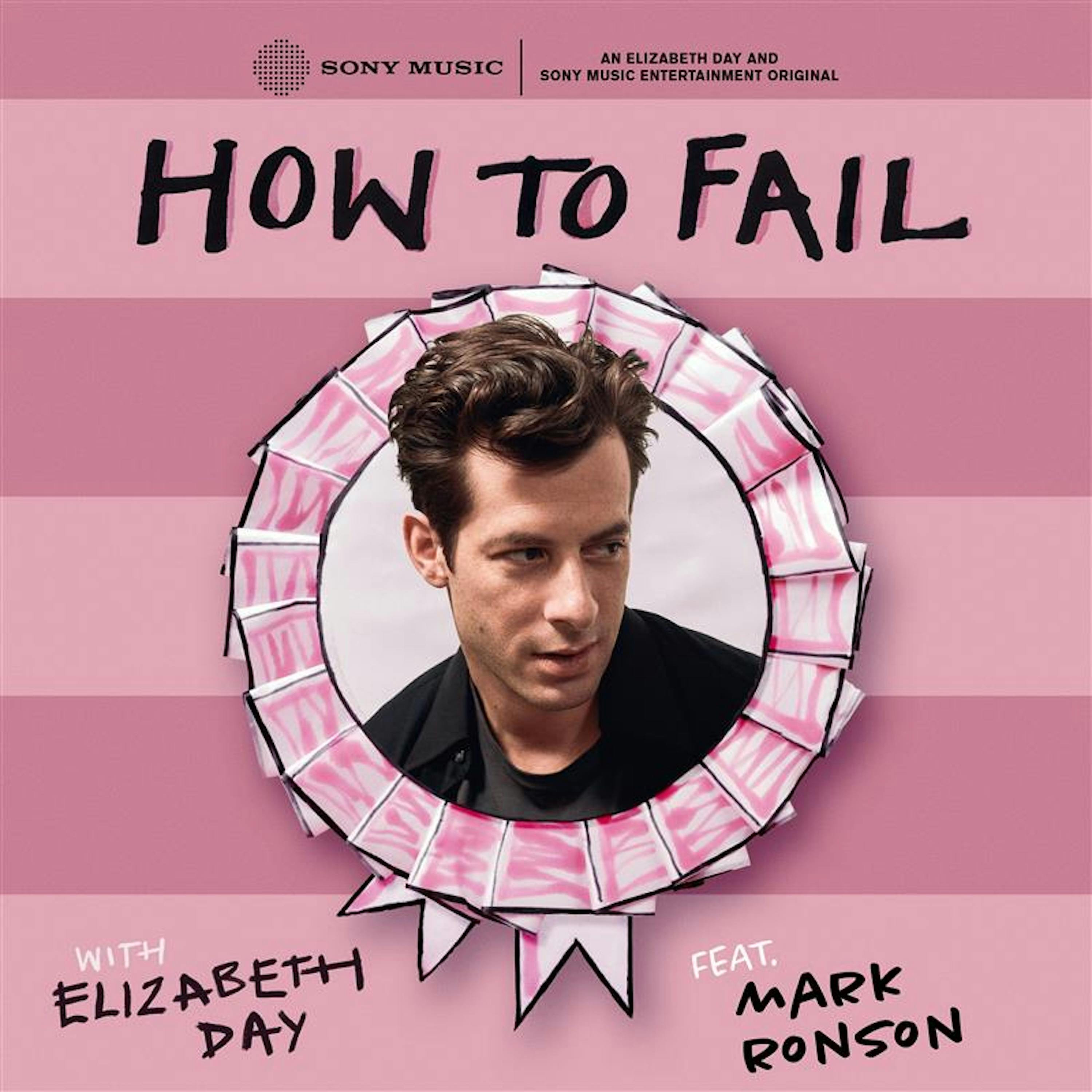
How To Fail With Elizabeth Day
Mark Ronson - The Stories Behind ‘Uptown Funk,’ Amy Winehouse & ‘I’m Just Ken’
00:50:59
Loading summary
Transcript127 lines
- [00:00]
Mark Ronson
Uptown Funk came out of a jam with Bruno and actually it kind of was like a definitely linked to a There's a failure origin story. And she was like, and can you just write a Ken song? Like, just meaning like maybe in the credits we'll have a song about Ken. And so I came up with the idea for I'm Just Ken. We met that day and then literally wrote back to Black that night.
- [00:30]
Elizabeth Day
Hello and welcome to how to Fail. I am the creator and host Elizabeth Day, and this is the podcast where we believe that learning how to fail actually means learning how to succeed better. This episode is brought to you by Squarespace, the all in one website platform for entrepreneurs to stand out and succeed online. Squarespace is here to support entrepreneurship and help turn your passion into a business. It does so with cutting edge design, seamless checkout for customers, with simple but powerful payment tools. It helps you turn leads into clients, allowing you to grow and communicate with your audience. Their customers include the Dusty Knuckle Bakery and Cafe in East London. And if you know, you know their bread is amazing. They're a Squarespace customer and a brilliant example of how to do it right. Their training program provides young people who've been excluded by society with the basic skills for work and life. Go check them out. Head to squarespace.com fail10 for a free trial and when you're ready to launch, use offer code FAIL10. That's FAIL10 to save 10% off your first purchase of a website or domain. I know from experience that starting your own business can be super intimidating and can feel really isolating. So I empathize with those of you who are currently feeling that way. However, I've got a tool for you that can simplify everything and make you feel less alone for millions of businesses. That tool is Shopify. Shopify is the commerce platform behind millions of businesses around the world and 10% of all e commerce in the US from household names like Mattel to brands just getting started. Get started with your own design studio. With hundreds of ready to use templates, Shopify helps you build a beautiful online store to match your brand style. Turn your big business idea into With Shopify on your side, sign up for your 1 pound per month trial and start selling today at shopify.co.uk fail go to shopify.co.uk fail my guest today is someone who, without you even knowing it, has probably been responsible for the soundtrack of your last 20 years. Mark Ronson is a globally celebrated DJ, a nine time Grammy winning producer and songwriter who also scooped an Academy Award for his work on the Barbie movie. Because, yes, it really was Mark Ronson who co wrote and produced I'm Just Ken. Throughout his stellar career, Ronson has worked with everyone from Lady Gaga to Duran Duran, Miley Cyrus and Sir Paul McCartney. He produced Amy Winehouse's legendary 2006 back to back album, and his own 2014 single Uptown Funk featuring Bruno Mars is one of the biggest selling songs of all time. Ronson was born in London and after his parents divorce, moved to New York City at the age of five with his mother and stepfather. Music was always in his blood. Ronson's father, an entrepreneur, was a music obsessive and his stepfather is the Foreigner guitarist Mick Jones, who wrote I Want to Know what Love Is for Ronson's mother, Anne. Ronson himself had an internship at Rolling Stone magazine at the age of 12, manning the phones before his voice had broken. And in between prepping for his bar mitzvah, he began DJing in earnest while a student at New York University, which eventually led him production experiences recounted in his new memoir, Night People. In the book, he describes the hit of selecting a song to play at his mother's second wedding. The first time you feel this sensation, nothing compares, Ronson writes. You're giving the room a feeling they didn't even know they needed. Oh, how I loved that control. Mark Ronson, welcome to how to Fail.
- [04:37]
Mark Ronson
Thank you. Thanks so much for having me.
- [04:38]
Elizabeth Day
It's a pleasure.
- [04:39]
Mark Ronson
Yeah.
- [04:40]
Elizabeth Day
Tell me about that control and what it felt like.
- [04:43]
Mark Ronson
Yes, for me, the control, you know, I grew up in this pretty. You know, I love my parents and I say in the book they're good people, but they were not good together. And I had a pretty turbulent upbringing from the ages of 0 to 5. And the house was, it was a lot of fun at night and in the day it was not so much fun. There was something about the DJ booth, just like almost physically it was this, that one man command center where I was just the captain. Nobody can get to me. This is my thing. So that, that sense of control, you know, I mean, it makes me feel sound like the evil like villain in like a Bond movie or maybe more like an Austin Powers film. But like, you know, I'm controlling all of you with my music and selections. It wasn't, but there were, there was this thing that like, nobody can touch me in here. And the worries and the unease of the outside world does not affect me.
- [05:43]
Elizabeth Day
Here you have this amazing phrase in your book about you getting very good at walking on eggshells but inevitably one would crack.
- [05:54]
Mark Ronson
Yeah.
- [05:55]
Elizabeth Day
So you are so loving about your family in the book. And I want to make that clear from the outset. And the chaos, such as it was, was kind of a party chaos, Is that right?
- [06:07]
Mark Ronson
There was a party chaos and then there was the hangovers the next day. There were moods. And I have such a great relationship with my parents now and this book isn't that kind of book where I'm throwing anyone under the bus. And they were wonderful, loving parents to us at that age, but they were really young and they were partying and that's why I learned. And I think I had this attraction tonight from really early on because at night grown ups were like buzzy and excited and they wanted to know what you were into and all these things. Stumbling out into the, you know, my parents house in the middle of the night, there were 50 people there hanging out. And then the daytime, the mood was always very heavy and kind of hanging. And you. I remember even as an early kid, like being able to figure out like what mood's he and what mood's she in. Like, do I. Am I going to be careful? Am I going to maybe take the long way around the kitchen and just like play it safe? So yes, I do think that as a young kid I remember being very, very sensitive to like the moods of adults because I was like, you know, looking out for myself.
- [07:16]
Elizabeth Day
Do you think that makes you particularly gifted now at dealing with artists who might occasionally be emotionally fraught or anxious?
- [07:27]
Mark Ronson
I absolutely think that. And I think that being so attuned and listen, I'm not saying I had some supernatural talent for empathy, but I think from such an early age, being so in tune with that, I think even made me probably a pretty good dj, because it's like as a dj, you're trying to read the room, you're walking into a room, you're looking at 300 people, most of whom you've never seen in your life, and you're like, how am I gonna get these people open? What mood? What's the first song? So I think there's that. And then I think, absolutely, dealing with superstars, it doesn't even have to be a superstar, but incredibly talented artists. We all know sometimes the more talented, the more complicated, you know. So you're dealing with these people and as a producer, your job is to just make them feel as safe and as vulnerable as possible. So I think, yeah, absolutely. And I think, you know, working with people who write songs in this place of like real heartbreak and heartache, like, whether it's Amy Winehouse or Yeba or whoever, like, there's a moment at which you can't make them sing that song one more time. That might be just the time that, like, emotionally they crack. You're always navigating this. This thing. So I think absolutely, like, being in tune with people's emotions is something that's benefited me much later in my life.
- [08:51]
Elizabeth Day
You made a conscious decision not to write about Amy Winehouse or Lady Gaga and to set this book in a very specific period of time. Why was that?
- [09:03]
Mark Ronson
I hope there might be a time when I write about the later years and working with Amy and other experiences that I've had. But I really felt certain about making this just within the 90s, because I wanted to celebrate DJing, and I wanted to celebrate the kind of DJing, like, not standing superstar DJ standing on a stage at a festival with 10,000 people, but, like, a gigging DJ, like, five nights a week. The ins and outs of that, the highs and the super lows of, like, you know, you're just in the club by yourself at the end of the night as the lights come on most nights. So I just. I knew I wanted to be about this era. And then as I started to get into it, I was like, what was it that brought us all together, these, like, night people? So a little bit more of a, you know, without stepping out of my pay grade, a psychological examination of what brought all these people together at night. But there's a difference between people who enjoy a night out and then night people. And night people are the kind that just, like, they live for the night, whether it's dance to go out. It can be drugs. It can be a lot of things. But what was it that brought us all together?
- [10:17]
Elizabeth Day
And for anyone who has yet to read it, what was your conclusion?
- [10:21]
Mark Ronson
God, that's really a good question. Did I come to a conclusion? I think it was all different reasons. You know, there were some people that went out because they loved the music. There were people that went out to hook up. There were people that just almost a little damaged, like, people. That day was just a bit too harsh. Like, maybe you're running from something in your reality. Maybe you didn't think that you lived up to society's expectations or your family's expectations. And night provided this armor for a lot of people. And maybe sometimes it was the drinks, drinking and drugs that also helped, like, a little bit of that as well. The armor. Of course, we know it does.
- [11:01]
Elizabeth Day
You also talk about when you experimented with heroin and met David Blaine shortly afterwards.
- [11:06]
Mark Ronson
Yeah, you know, I tried to keep it as diaristic as possible. Like, I'm writing in that era, even though I didn't keep a diary. I wish that I had. I had to interview, like, 200 people to get all these stories straight for the book. But, yeah, they were amazing people in that time that went on to be superstars. So even when I first see Beyonce in the club for the first time, as ridiculous as it sounds, I'm like, this girl named Beyonce who sings in Destiny's Child was there hanging out, and David Blaine, and there were these people just at the beginning of their career in that time in New York in the 90s. And David Blaine would just be in the club doing tricks. Like, that's kind of how everybody got to know him. He would just come up to you and go, like, hey, wanna see some magic? And, you know, that's kind of how he made his name. I remember being on heroin. I didn't. I'd never done heroin. I sort of did it by accident. But the way that I was so cavalier about taking drugs, it probably wasn't a surprise. I snorted something that somebody put in front of me. I'm not saying I'm especially proud of it, but, yes. And I was stumbling through this club called the Tunnel, and I was just having this terrible sort of like, meltdown, out of body experience. And then David Blaine just came up to me and was like, hey, wanna see some magic? And I was just like, already on another dimension. He bit a coin in half, spit it into himself, made it reappear, and to the point where I just really had no idea what was actually really happening anymore.
- [12:40]
Elizabeth Day
What was Blaine and what was the heroin?
- [12:42]
Mark Ronson
Yeah, exactly. Exactly.
- [12:44]
Elizabeth Day
Before we get onto your failures, I want to ask if you're still a night person. You're now the father of two young girls. So has your night personhood served you well?
- [12:55]
Mark Ronson
It's so funny, you know, I met my wife Grace during COVID so we really had this relationship in the way that it started. Of course, she knew that I had been a dj, but the way that we were first together, and she didn't see any of that side of me, never saw me dj, even for the first few years we were together. And then, you know, we have these two amazing daughters. But as a result of the book, I've kind of gone back to DJing. And something about it just triggered, like, I want to go out and play vinyl again. I want to play in some clubs, play in some underground places. Just show up with records. So, you know, now I like come home at three in the morning. She's like, I can't. Like, she's in a sweet way. I was like, I can't believe this book has like made you go back to a night person. Like, I married a dj, didn't I? I was like, sort of. But I definitely had left most of that time behind. But it's no surprise the book has reopened. A little bit of that.
- [13:55]
Elizabeth Day
But I guess when you come back at 3am you can do the feeds.
- [13:58]
Mark Ronson
Yeah, you can do the feeds. And you know, I don't need a lot of sleep. I'm pretty lucky. So I'm up at 6:30. Anyway.
- [14:06]
Elizabeth Day
Your first failure is, as you put it, the JZ approach disaster.
- [14:12]
Mark Ronson
Right.
- [14:14]
Elizabeth Day
Tell us their story.
- [14:16]
Mark Ronson
There's quite a few people in the book that start off as these characters that I really like. Hero worship, like Q Tip from A Tribe Called Quest, Jay Z. And then as I kind of get a little further in my career, they start to be in the clubs and we start to almost with Q Tip, we became really good friends with Jay Z. He started to know my name, come to where I DJed. They go from being these heroes on your record sleeves to these people that you actually know. So. But early on with Jay Z, there was a club night that I used to do on a Tuesday, that one night him and Biggie came down to. And it was such a big deal because Biggie was the king of New York at that time. Jay Z was like, sort of like the Prince. Like he only had one or two records out, but they came down and. And so I was at this other nightclub once on a Monday and I saw Jay Z and I'd had a few drinks and I was thinking to myself, you know, what a great time to just go up to Jay Z and just say something really, really intelligent and insightful that's just gonna make him so curious about me. And we'll be best friends by the end of the night. And he'll be saying, call me Jigga, we're toasting Cristal. But I was kind of tipsy and as I was thinking of what to say. Sometimes in a really packed club, there's almost like a current in the club. And I remember just being like pushed right in front of him before I really thought of anything to say. And I don't think I had anything intelligent to say anyway to him because the truth was I just wanted him to think I was probably cool or something. And I said, I Play all your songs. The absolute most inane thing I could have said, like, I'm the dj. Tuesday night, you come down and hear me play, like, anything. It was just like, I could have literally been. Anyone could have said, like, I have an ipod, so. And then just as I really got to, you know, barely finished the line, you know, the club current, like, was, like, kind of pushes me away from him. And I can see out the corner of my eyes. I look back, like, he actually, probably because I was drunk in the manner that I went up to him, thought like, maybe I was, like, a heckler or something or like, some kid being a wise ass because I saw him, like, slightly tense up and say to his friend, like, what'd that kid say? You know? And his friend's just like, I don't know, like, probably a fan or something. And I think I just, like. I wouldn't say I was, like, absolutely shattered because I knew, like, the way that I got up to him, like, what was I actually really expecting? But there was this slight, like, embarrassed thing as I, you know, made my way through the club.
- [17:05]
Elizabeth Day
The mortification.
- [17:07]
Mark Ronson
Yeah, yeah, a light mortification. For some reason, everybody has, like, an. I get together with some of my friends, my friend Ezra, who's in this, lead singer in this band, Vampire Weekend. Like, everybody's got a really good, mortifying Jay Z story from somewhere early in their career. Yeah. Because I think everybody loves Jay Z. So everybody at some point is, like, gone up to Jay Z and tried to say something. And I'm sure, like, I wonder if Jay Z just keeps a tally of, like, all the people. Like, he can just flip through a magazine, be like, I remember that person said some dumb shit. That person made an ass out of themselves. Yeah. Something about Jay Z, the power that he wields.
- [17:49]
Elizabeth Day
Have you ever crossed paths with him since?
- [17:52]
Mark Ronson
Oh, yeah, very much.
- [17:53]
Elizabeth Day
Okay.
- [17:54]
Mark Ronson
I mean, I've never reminded him of that story. Like, I don't think that he would even remember. And he figures importantly in the book because he was just such an important part of New York and how the scene transformed in the late 90s. And then he rapped on a remix of Rehab. He was a huge Amy fan. He was at Amy's first ever show in New York at Joe's Pub. I remember it was on Valentine's Day. That's a weird fact that stays in my mind. So, yeah, we've had a. I would say a basic, normal relationship since that.
- [18:34]
Elizabeth Day
Well, he listens to this podcast regularly, so now he'll know his story. But when you see someone like that for the first time, you mentioned earlier seeing Beyonce and she just came, hung out in the club, can you tell that there is star quality there?
- [18:50]
Mark Ronson
I think so. I mean, anybody on that level would be on tour. Jay Z, like certainly radiate something. Jay Z was, I don't want to use the word remarkable or unique, but Jay Z was just so memorable because I just remember seeing him cut through the club and he must have been like, he's a couple years older than me. I was 20, he was probably 24, DJing the club. And it's just like a force. I don't know what it is. And then there was such a sense of even at that age, I just remember he just had this like kind of poise. I don't want to use these cheesy words like magnetism. It wasn't that. It was just like he was just serious and. Yes. And kind of intimidating because everybody knew like, you know, he rapped about his street rap and everything else.
- [19:38]
Elizabeth Day
I just wanted to take a moment to tell you about a brand new release from New York Times best selling author Kristin ashley. Finding the one. With over 80 romance novels under her belt, translated into 14 languages and millions of copies sold, Kristin Ashley knows how to deliver a story that stays with you. And this is no exception. Finding the One follows Blake Sharp, an American English aristocrat, and Alastair Wallace, a charming Scottish playboy. Their families are tangled in a web of secrets, lies and unresolved history. Childhood friends turn strangers. Their paths cross again later in life when Alistair, reeling from a failed marriage, finds himself drawn to the strong, captivating woman Blake has become. But just as sparks begin to fly, old ghosts resurface, threatening everything they're trying to build. Can love survive when the past refuses to stay buried? Finding the One is available now in both ebook and print. Go all in on fall with Abercrombie Kids. Their newest drop of on trend outfits are ready for everything from the bus.
- [20:45]
Mark Ronson
Stop to family bus bonfires.
- [20:47]
Elizabeth Day
And it wouldn't be fall without football. Gear up. The kids with officially licensed NFL tees and sweatshirts. Shop Abercrombie Kids this season in the.
- [20:56]
Mark Ronson
App, online and in store.
- [21:09]
Elizabeth Day
When did making plans get this complicated? It's time to streamline with WhatsApp, the secure messaging app that brings the whole group together. Use polls to settle dinner plans. Send event invites and pin messages so no one forgets mom 60th and never miss a meme or milestone. All protected with end to end encryption. It's time for WhatsApp message privately with everyone. Learn more@WhatsApp.com youm have described yourself in the past as a people pleaser who longed to be cool. And this anecdote, I feel really illuminates quite a bit of that.
- [21:45]
Mark Ronson
Right? Yeah.
- [21:46]
Elizabeth Day
Where are you now on your journey with people pleasing?
- [21:50]
Mark Ronson
I think I've definitely mellowed out. There's still some old habits die hard. There's just, there's something probably still in me that, like some kind of validation or something or people to think you're cool. But yeah, I've grown up a lot. I don't feel that happening too much anymore. But I don't think it's because I've learned to hide it better. I've just like got better at playing it cool. I, I think that I probably have gotten better at needing people's valid the validation of strangers. But that is a big part of DJing, you know, that's a big part of why. Loved it. And in the 90s and late 90s in New York, we hung out with, for some reason, I hung out with DJs and stand up comedians. We all like hung out together, I think because it was same things, kind of late hours, you all get off work around the same time. It's 150 bucks in cash. And you know, it was this era where Dave Chappelle and all these really talented comedians, you could just go into the comedy cellar, go see him on any night and then walk over to the club. And I felt like there was a strong parallel between comedians and DJs, even in the way that like we both use the word kill and we both play clubs and for crowds and our entire thing revolves around the validation of strangers in a room. You're just going to a room of people you've never seen and you have to win them over.
- [23:15]
Elizabeth Day
And you get immediate feedback as well.
- [23:17]
Mark Ronson
Yes.
- [23:18]
Elizabeth Day
Whereas putting a podcast episode out or writing a book, it's not as immediate or present or in your face.
- [23:23]
Mark Ronson
Yeah. Or making a record. No, absolutely. And it's. And there's also something I write about briefly in the book. It's like, I'm sure it must be the same, I imagine for standups. Like, you can have the best night, you can have 300 people. But if there's one person that just is not having a good time or didn't dance, you just go home and you're haunted by that person's face until.
- [23:47]
Elizabeth Day
You fall asleep, I think it goes back to control again, doesn't it? I mean, I Speak as a fellow people pleaser. And I realized after a while that I guess you're trying to control other people's responses to you in order to feel safe. So that all connects as well. But I'm very interested in the idea of self esteem. Do you think great creativity thrives if you have lower self esteem or higher self esteem?
- [24:16]
Mark Ronson
It's tough to. I know. Drive and ambition. You can definitely connect to lower self esteem I'm sure because you just constantly feel you have to prove yourself. Creativity is interesting because I'm sure that they're well adjusted people and I don't know many. So I'm just saying I'm sure there are but who are incredibly creative and you know, through all the hate to use all these things but like the therapy and all the work and the things I've done, I certainly have less of those drivers that come from needing to prove myself, low self esteem, whatever that is. But creativity, that's the one thing that I still see as this pure little beam in the middle of it all. So you have drivers ambitions and all the things that can drive you to do all the work and stay in the studio till four in the morning. But creativity is almost just like the newborn baby that's just pure and I'm not sure if that's really affected by esteem or not.
- [25:22]
Elizabeth Day
Beautifully put.
- [25:23]
Mark Ronson
Thanks.
- [25:24]
Elizabeth Day
Can you talk to me about how you came up with Uptown Funk?
- [25:28]
Mark Ronson
Yeah, Uptown Funk came out of a jam with Bruno and actually it kind of was like a definitely linked to There's a failure origin story. So we had this song called Magic that had nothing to do with the song. Bruno went on to do 24 karat magic and it was a song that was left over from Bruno's album Unorthodox Jukebox that I'd worked on and I was convinced this was going to be like a huge hit. And it had this great hook and it had this cool beat. And I was working on my album and I was like, Bruno, can we finish this song Magic? Can we just do it for my album? And he was like, yeah. And every time get in the studio, crank it loud and sit back for a minute and be like, man, isn't this great? And everybody would be like, yeah. And then after like 20 minutes, just couldn't write a shred of lyric. Nothing else on it other than this little hook just wasn't moving anyone. And so we just decided to take a break for a second and we're like, let's just jam on something else. Fuck it. And Bruno got behind the drums and he had this really modest, tiny studio at the time. And the drum kit was like basically in the fax machine closet. It was like a tiny cocktail kit, which is just like three drums. And I think he was like. It was like almost like a child's kit. Bruno's playing, I'm playing bass, our friend Jeff Basker's playing keys. And we just jammed for like five hours. And we just got the basic. Just like just a disco group. That was fun. We didn't come up with the do do do till much later, but we wrote the whole first verse that night and we were like, wow, this is exciting. So. But that's all we had. And then every time we got back together to try and finish the song, we could never match that, like, brand new excitement of the first night. If things started to feel forced and labored and didn't match that, like this here, that white gold, like this really initial excitement. So it took seven months. Sometimes we'd get together for three days to write and all we'd get was like, maybe two lines, like the Jackson, Mississippi. You know that part? And Bruno was on tour. And then by the end of three days, everybody would just had it with each other. Tempers were flaring with like, frustrations, kind of. And then I'd wait two weeks for everybody just to calm down and be like, hey, you guys wanted to get together, try and finish that song. And then after seven months, we kind of got it to a place we were all happy with.
- [27:54]
Elizabeth Day
That's amazing. So you always knew that there was something there, that it was worth pushing through.
- [28:00]
Mark Ronson
I did. And honestly, I had the most at stake. Cause it was for my album. So, like, I kind of needed. I was like, I can't. I can't afford to, like, ditch this song fully. Bruno was on tour, this giant arena tour. So I would just get on a plane with my bass, just go wherever he was, and we'd just keep chipping away at the song.
- [28:20]
Elizabeth Day
What's your relationship with that song like now?
- [28:24]
Mark Ronson
It's just so beyond me, like, meaning it doesn't belong to me. It's such an interesting thing. I mean, obviously we're so excited when it came out because it didn't sound like anything on the radio at the time. It was all a bit of a risk. I remember someone at my record company saying, like, do you want to put funk in the title? Is there another title you could possibly call it? Because it's a little like. Like there were just all these reasons it was Four minutes long. Everyone was like, can you make a radio edit? We tried all these things to make radio edits. It didn't work. So it was always like a bit of a roll of the dice. So then when it started to blow up, we were obviously over the moon. And then when it became a hit and then six months later, it was like, All My Friends with the Young Children. And it sort of went. Made its way. It became a children's song and then a wedding song. And it's just. It's just incredible. Like, I'm. As, you know, I write in the book, like, even though it's a wedding song now, like, I heard it's been banned, actually. Like, some brides ban it from the wedding because they don't want the whole best man choreo. But I made sure to say I'm as proud of it as anything I've ever done, because it's not a slight to that song, but it really is just, like, it's part of the kind of ether almost now, you know, I.
- [29:41]
Elizabeth Day
Remember when I first heard it, and I remember it sounding so original, but also so cool. And cool is something that you, Mark Ronson, strive to be. And from my perspective, I think you achieve it. But there's a very funny bit in your acknowledgments of the book where you say you did a word search for cool. One of your friends told you to do a word search, and you'd used it 73 times.
- [30:01]
Mark Ronson
Yes.
- [30:02]
Elizabeth Day
You've now used it 31 times.
- [30:03]
Mark Ronson
Yeah.
- [30:04]
Elizabeth Day
Do you feel. Do you feel cool?
- [30:08]
Mark Ronson
I mean, at this point, I know I'm all right. There's cool. There's like, Mia and Travis Scott and, like, cool. Scissor cool in that way. Like, I'll never be. Like, I've made my peace with that. But I think what's cool is if you're around long enough and you make good music that people sort of get somewhere in the end. But I don't really care so much about being cool anymore. And then you reminded me in the acknowledgments. So my wife's grace, her cousin Abe is a really beautiful writer and has written some incredible books and writes for the New Yorker and all these things. So when I had finished the book and I thought it was done, I showed it to him and he was like, there's a permanence to books. And I was like, okay, how long do I need? He's like, I think you need three months. So I asked my editor, and he was like, I can get you six weeks, which I then did stretch to three months. But I really went so deep back into the book and Abe and then he put me with his features editor at the New Yorker, and they just. I went to school for 18 hours a day rewriting the whole thing, putting it, you know, much more under. I don't know, just a deeper lens. And that was one of the things he was like. You cannot use the word cool 73 times. You have to dig deeper in your lexicon than that.
- [31:34]
Elizabeth Day
Your second failure is the shattering of your guitar dreams.
- [31:38]
Mark Ronson
Yeah.
- [31:39]
Elizabeth Day
So growing up, you always wanted to be a lead guitarist, is that right?
- [31:42]
Mark Ronson
I did. You know, I played guitar. I listened to Led Zeppelin and Jimi Hendrix and Living Color and all these kind of shreddy bands and then Guns N Roses. And I wanted to be like that. And I was in this band with another guitar player who actually technically was ridiculously gifted and can play all those crazy solos. And I was the rhythm guitar player. But, like, I just. That wasn't my thing. And I was coming to terms with the fact that I just didn't have those chops. And then my best friend, who I write about in the book, Sean Lennon, we were always about the same level as musicians. And he came back from a summer and, I don't know, he'd been studying. It was just so far beyond me. I just remember thinking, like, if that's what being a guitar sounds like, I need to just find a new thing. And it just sort of happened at the same time. I was really falling in love with hip hop music. And I didn't know anything about rapping or making beats. So I was like, DJing. This is this one art form in this thing, this music that I love so much that I could maybe do. So it made me switch to DJing. But yeah, I had this like, you know, this kind of like ridiculous fantasy of like being like Slash with the top hat, no shirt, on stage shredding a Les Paul. But it just. That wasn't supposed to be me.
- [33:09]
Elizabeth Day
Do you think being average at certain things can lead to you being brilliant at others?
- [33:14]
Mark Ronson
I absolutely think that for being a producer, which is what I went on to do, it was really great that I had like rudimentary or maybe above rudimentary knowledge of all these different things. A little bit of guitar, bass, piano. But yes, because I never had a virtuosic talent that was like pointed the way, like, this is what you go do. I had to find it. It took me much longer. But then by the time I Found it. I had these little tools in my box because of all these other things I had tried.
- [33:51]
Elizabeth Day
Talk to me a bit about friendship. Because you write so lovingly of Shaun in the book, and you express that time when he moved away, I think you were 14, and you express it as heartbreak.
- [34:03]
Mark Ronson
Yeah.
- [34:04]
Elizabeth Day
Can you tell me a bit more about that? Because I think friendship is so underplayed in our modern culture.
- [34:09]
Mark Ronson
Yeah. There was that recent meme that went around in America, where I live, of, like, guys calling each other up just before bedtime just to say goodnight, but not telling anybody. It was like, in this bro culture, it was suddenly, like, just calling up, like, hey, man, just thinking about you. Just calling to say goodnight. Partly just to see what kind of weird reactions you might get. But, yeah, maybe male friendship is a thing that we don't feel quite as comfortable with. Beyond, like, love you, man. But, yeah, with Sean, we were best friends. I finally felt like I'd sort of found, like, a musical kindred spirit and somebody who. And Sean was just so wonderful and charming and magnetic, and he was my best friend, and I probably even looked up to him in some ways. And I remember him calling me one summer to say, like, hey, so I'm gonna go off to boarding school in Europe with Max. That Max was our other really close friend. There were three of us, and he was like, but we'll still have the summers to jam, right? He's trying to sort of keep the sunny side for me. But I also knew they were about to go off and have the best time ever. And I was just like, yeah, but I did. It was my first heartbreak in some ways, because those were my best friends. That was sort of my life at that time. But then by them moving away, I had to put my own band together, and it led to other things.
- [35:45]
Elizabeth Day
And how important is friendship still to you now? Because you also have a bevy of siblings and half siblings. I know you're very close. Does friendship perform a different function?
- [35:55]
Mark Ronson
It does. And because I've had children, you know, a bit later in life, like, it's so hard beyond the work and just the time that you want to spend with family, keeping those relationships. Like, I've felt some of my friendships like, then not what they were. And that makes me a little bit sad. But there's just, like, there are not enough hours in the day. But I really value friendship. I think I'm really lucky that also a lot of the people that I work with, my songwriting partner, Andrew, like, I spend so many days in a tiny Room or just in a very close confines with people that I really love. And working with people on records, you do have these sort of like very intense, quick friendships as well because you're, you know, working with doers. Somebody like, you know, you're absorbing everything that they're going through in their life and, you know, and when they happen to be really great, wonderful people as well, you do become friends. But it's definitely something that I've really noticed lately.
- [37:11]
Elizabeth Day
It sounds a bit like your job is also a therapist.
- [37:16]
Mark Ronson
Yeah.
- [37:16]
Elizabeth Day
And you mentioned, although I know you feel uneasy talking about it, that you have been in therapy yourself. And I wonder if part of that is a bit like you needed a therapist, almost like a supervisor.
- [37:28]
Mark Ronson
I think I always thought therapy was something loosely like, oh, you're in trouble, you're having anxiety attacks or something like that. It's good to check in. I didn't think of. It was really something to like, have consistently in my life. And then after my first marriage ended, I noticed that the series of relationships that I was in afterwards were actually getting worse and worse than even my marriage. I was like, man, how am I getting? Like, I should be getting better after this. I really need. I want to say kick in the ass, but it sounds like I'm trying to make light of it, but I do. I need to figure this out. So I did actually find somebody who was quite intense and put rules of. Basically rules of conduct and whatever. You're not going to date anyone for six months. You're going to sort yourself out. I went to this place called Hoffman as well. I don't think that having dealing with some of the emotional baggage of these incredibly wonderful, complicated artists was like getting heaved on to me. But I do think that you can definitely use it as a way to ignore skirt issues that you're dealing with in your own life. Because you can just take on other people's baggage or just use it as a way. Work was always something that I used to blot out any kind of dealing with personal stuff as well.
- [39:00]
Elizabeth Day
Hard relate.
- [39:01]
Mark Ronson
Yeah.
- [39:02]
Elizabeth Day
I'm also someone who was married, got divorced, made some dubious life choices, and is addicted to work. If I have an addiction, it is that right? You mentioned earlier that you met your wife Grace during COVID Yeah. How did that happen?
- [39:16]
Mark Ronson
I had met Grace on one or two other occasions, and I always was just impressed by her and I had a crush on her, but the timing was never right. And so in September 2020, a mutual friend of ours just knew that we were both single at the same time and played matchmaker. And it was always. It was that really, you know, I can't remember exactly what it was like in London at the time or in England, but in New York, it was definitely like you were looking out for your family. If you were going on a date, you were. Somebody was getting tested or you're asking them, like, had they been around anybody in the past five days. But yes. So we met in that time. And then I think because I wasn't traveling like crazy and working like crazy, we had such a lovely, intense period of spending time. It's almost like we got to know each other in six months, what might have been three years during any other time. And then we were married eight months later.
- [40:19]
Elizabeth Day
I'm so happy for you.
- [40:20]
Mark Ronson
Thank you.
- [40:21]
Elizabeth Day
How do you feel about turning 50?
- [40:24]
Mark Ronson
I haven't really thought about it in the way that, like, I mean, it's undeniably sounds like a big milestone, that's for sure. But there's no part of me that like, wants to have like some crazy celebration or I did that on my 40th. I feel fine with it. It's just like I want to be somewhere with my grace and our two kids. Somewhere I'm not. Yeah, I guess my life is a bit different.
- [40:51]
Elizabeth Day
I mean, I said before we started recording, your skin is excellent. I mean, you could definitely pass for.
- [40:56]
Mark Ronson
I would say like 32, maybe 39, 42. But thank you. Thanks.
- [41:03]
Elizabeth Day
Do you have a special skincare regime? I do sometimes ask men this.
- [41:07]
Mark Ronson
I do not. I do not have a special regime of a little moisturizer. That's really it.
- [41:14]
Elizabeth Day
Just blessed. Genetically blessed. Routine adjective used to describe an individual who spirit is unyielding, unconstrained.
- [41:26]
Mark Ronson
One who navigates life on their own terms effortlessly. They do not always show up on time, but when they arrive, you notice an individual confident in their contradictions. They know the rules, but behave as.
- [41:40]
Elizabeth Day
If they do not exist.
- [41:44]
Mark Ronson
The new fragrance by Miu Miu defined by you this episode is brought to.
- [41:49]
Elizabeth Day
You by State Farm. Checking off the boxes on your to do list is a great feeling when.
- [41:55]
Mark Ronson
It comes to checking off coverage. A State Farm agent can help you choose an option that's right for you. Whether you prefer talking in person, on the phone or using the award winning app, it's nice knowing you have help finding coverage that best fits your needs.
- [42:08]
Elizabeth Day
Like a good neighbor, State Farm is there.
- [42:14]
Mark Ronson
Lowe's knows how to help make your home holiday ready for less. Get select style selections. Vinyl flooring for just $1.99 per square foot and have it installed for before the festivities begin. Our team can help you every step of the way. See a Lowe's Red Vest associate or visit Lowes.comholidayinstall to get started. Lowe's. We help you save basic Install only. Date restrictions apply. Subject to availability. Install by independent contractors. See Associate for details. Contiguous US only.
- [42:43]
Elizabeth Day
Your final failure. Is your first solo album Tanking.
- [42:48]
Mark Ronson
Yes.
- [42:49]
Elizabeth Day
And then you say you were sent into industry exile.
- [42:53]
Mark Ronson
Yes.
- [42:53]
Elizabeth Day
Which is a particularly strong term. But tell us this story.
- [42:56]
Mark Ronson
Yeah, so my first album came out and here comes the fuzz. I don't think I had huge expectations for it anyway. I just, you know, I'd made my name as a dj. DJ in New York. I just produced this album for this artist, Nica Costa that was kind of like, you know, people were really into. And I just couldn't believe that some record company was giving me a blank checkbook to make songs with people that I love like Jack White and Mos Def and Mop and Q Tip. So I made this record and I hadn't really thought about whether it was going to be successful or not. But then when it came out and it really tanked, it was suddenly like, oh God, like, yeah, nobody cares about this record. The thing that was the saving grace really was that I'd made the record in such this New York lens. You know, I'm a DJ in New York. I want things to do well in New York, you know, like those. I want the people who I see every week to be like, pumping my records. And what had happened, that was a really unexpected term, was that the record actually did much better in the UK and Uwee was like, you know, kind of top 15 hit here. And it made me realize that, oh, even though I left England when I was seven, it's obvious that this growing up here has had some kind of influence on my music. And it would make sense that why it's like embraced here. So I started to come back to London quite a lot to DJ and do gigs and then just really reconnected with this English part of me. But yeah, the album just really tanked. And I think I got dropped by the label like maybe two weeks after the album came out. Like they weren't taking any chances. They were just like, all right, we're cutting you loose. And because I had to pay, I was booked on some late night show and I remember having to paying like on Air Miles to get Ghostface Killer to come out to LA so he could like perform on the Show. So yeah, it was really like that kind of thing. And like in the movies where you call and then suddenly the people that were talking to you a week ago and no longer taking your calls is exactly what happened.
- [45:06]
Elizabeth Day
How did that make you feel?
- [45:08]
Mark Ronson
It was certainly a downer. I mean, I do think that at the time, luckily the combination of low expectations or low self esteem or whatever it comes from definitely in some weird way help. Because I probably hadn't expected it to be huge anyway. But it was a sobering reality and I went back to doing music for TV commercials and just like anything that I could just. Because at that point, just to keep the lights on. But this one, you know, silver lining of the record doing well in the UK or slightly better, was that this A and R person from EMI named Guy Moot remembered it. And he introduced me to Amy Winehouse. So when Amy was in New York, he was like, you know, I've got this girl, Amy Winehouse. And I was like, yeah, I remember Frank. I love that song in my Bed. And he's like, she's in New York for a day. Do you want to meet her? And I was like, yeah, sure, send her up to my studio. And then we met that day and then literally wrote Back to Black that night, the next day. So there was this thing that even though this record that I had made kind of for New York, intending a New York audience completely bombed in New York, had a little bit of a ripple in England, but then led to me meeting Amy and then Lily Allen as well.
- [46:34]
Elizabeth Day
When you met Amy for the first time, and then that evening wrote Back to Black, would you describe it as a kind of falling in love?
- [46:42]
Mark Ronson
Yes. She came up to my studio, like falling in love in a platonic sense. Like, just like this person who like, is just so funny and entertaining and it just has such an instant connection where she could be a sister or someone I knew growing up. Yeah, she just came up and we had this talk and I said, what do you want your record to sound like? And she said, well, they play all this music down at my local and she played me all this 60s girl group stuff. And she left. And I just wanted to make something because she was supposed to go back to London the next day. I was like, I just have to make something that's exciting enough to this girl that she's gonna want to stay in New York for two more days or something to make music. And that night just like had the inspiration from her and came up with the piano for Back to Black. Just really sparse demo. And she came in and heard it the next day, and she was. She wrote the lyrics in about an hour or something.
- [47:43]
Elizabeth Day
I'm so aware, when I ask you about this, of the legendary status of that album, also of Amy and that you get asked about it a lot. And it must also be incredibly grief soaked for you. And I wonder how that feels, the combination.
- [48:02]
Mark Ronson
I think when I think of us making the record, there's no grief at all. Like, I only just remember the spark of her and inspiration and just, you know, I think it's only when I start to think about later and, you know, what happened and when she sort of fell back into addiction and those things that it starts to get obviously into those, you know, dark or sad, grief soaked, as you say, things. But. But it's all of those things. It's tough. Sometimes I can hear. I hear the music so much. It could be in a restaurant or walking through an airport and hear Valerie. And it's sort of like a sunny, lovely feeling, or sometimes it just goes past me. And then hearing maybe Back to Black or something that's a little more, you know, desperate and heart wrenching is some of those sometimes are hard to listen to.
- [49:03]
Elizabeth Day
It must be so strange that you've orchestrated this soundtrack for so many people that you catch snatches of as you go about your daily life and they take you right back to the place where they were created.
- [49:15]
Mark Ronson
Yeah, sometimes I'd just be, like, at a New York Knicks game, you know, my basketball team from New York, and I'll just play Uptown Funk. And I'm just there in, like, the eighth row, and I'm just watching everybody dance. And nobody has any idea that I had anything to do with the song. And it's like, it's a nice feeling.
- [49:32]
Elizabeth Day
Okay, indulge me before we have to draw this to a close on Barbie. I just want to know everything about writing that soundtrack because it's so brilliant, but it's so fun and funny at the same time as not losing any artistic integrity. How do you go about something like that?
- [49:49]
Mark Ronson
I think it's the same thing. Like, I read the script. The same thing we were talking about a little bit with meeting Amy. I read the script. It was so brilliant and so, like, heartfelt and moving and so clever. And then I spoke to Greta Gerwig. I met her on a Zoom, and I was just like. I just remember, like, just having this ball, this wellspring of, like, inspiration. And we were originally only supposed to do two songs. There was the dance number what became Dance the Night? And she was like, and can you just write a Ken song? Like just meaning like maybe in the credits we'll have a song about Ken. And so I came up with the idea for I'm Just Ken and wrote a demo with my partner Andrew and sent it and she was like, I love this. I think I want Ryan to sing this. I played it for Ryan, he digs it. We're gonna put it in the movie. And it was just such a crazy thing to go from like writing a demo and loving this script to being like, no, your song's actually gonna be in there, like with our words, you know. And then as it went from being two songs, like, let's maybe try some more songs. And then Billie, she knew Billie Eilish a little bit from. I think they'd crossed paths at something. And Billie was a big fan of Greta and said she wanted to write a song. And then in two or three weeks, Billy and Finneas sent us the demo of what was I made for. And then we were just floored by that. And then Greta asked us to do the score. So we started to weave little bits of all these songs into the score. And it was just such a fun. It was sort of like if a year long thing could be a whirlwind. Like it was just, it just became my life. Like if there were Barbies and Kens all around the studio, it was just like just fully immersed in it. So it was great.
- [51:45]
Elizabeth Day
Final question, just because I've always wanted to ask you, do you dream in music? Do your dreams have a soundtrack?
- [51:52]
Mark Ronson
It's very rare that I've woken up. Oh my God, what's that melody? I've got to sing it into the phone. No, actually maybe my dreams are sadly devoid of music because maybe that's like the only place I can go to that's just like free of music. I'm not sure now most of the music what I listen to is what our two year old daughter wants to listen to around the house too. So it's like when you say listen to music, I'm just thinking either of like everything from she likes the Wheels on the Bus and things like that, but then she loves Joni Mitchell and then she loves Chapel Rowan and she loves like old dance hall, like Sister Nancy. It's kind of amazing watching what she gravitates to.
- [52:39]
Elizabeth Day
Mark Ronson, it's been such a pleasure talking to you on how to Fail. Thank you.
- [52:43]
Mark Ronson
Thank you.
- [52:45]
Elizabeth Day
Please do follow how to Fail to get new episodes as they land on Apple Podcasts, Spotify, Amazon Music, or wherever you get your podcasts. Please tell all your friends this is an Elizabeth Day and Sony Music Entertainment original podcast. Thank you so much for listening.
- [53:07]
Mark Ronson
And Doug, here we have the Limu imu in its natural habitat, helping people customize their car insurance and save hundreds with Liberty Mutual. Fascinating. It's accompanied by his natural ally, Doug. Limu is that guy with the binoculars watching us. Cut the camera.
- [53:26]
Elizabeth Day
They see us.
- [53:27]
Mark Ronson
Only pay for what you need need at libertymutual. Com Liberty Liberty Liberty Liberty Savings.
- [53:32]
Elizabeth Day
Very underwritten by Liberty Mutual Insurance Company and affiliates.
- [53:34]
Mark Ronson
Excludes Massachusetts.