← How To Fail With Elizabeth Day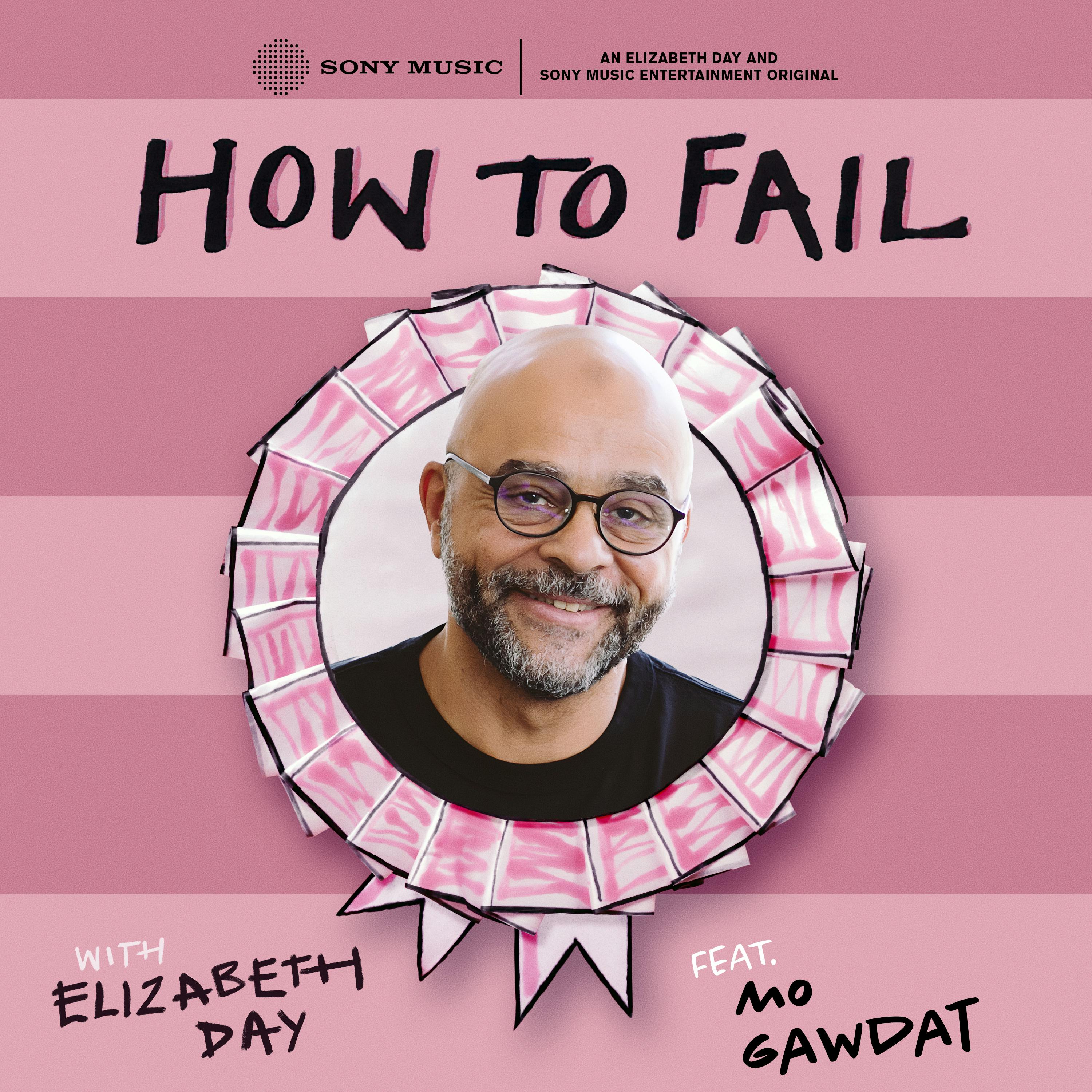
Loading summary
Transcript148 lines
- [00:00]
Mo Gaudat
If we drop our egos as humans, we realize the gift love is not about sleeping together.
- [00:06]
Elizabeth Day
How similar or not do you feel heartbreak is to grief identical. Welcome to how to Fail. This is the podcast that believes, as Truman Capote did, that failures are the condiment that gives success their flavor. Before we get onto this episode, I just want to give you a quick reminder to subscribe so you never miss a How to Fail conversation. This episode is brought to you by Squarespace. Now I know a little bit about building a website because I was pretty hands on when I launched my own production company and its own website. And I wish Squarespace had been around then because it ultimately makes your life so much easier by providing built in solutions all with their best in class design. And I'm not the only one who feels this Hackney Moves who run the iconic Hackney Marathon and the Dust Knuckle Bakery and Cafe also both use Squarespace. Some of my favorite things about Squarespace include the fact that they make it easier for your customers. Checkout is seamless, invoicing is easy, you can sell exclusive content on your site by adding a paywall to sell memberships or courses, and you can create a bespoke online presence that perfectly fits your brand. Head to squarespace.com for a free trial and when you're ready to Launch, use offer code FAIL10 to save 10% off your first purchase of a website or domain. If you know me and my podcast, you'll know that I'm a big advocate of therapy and have done a lot of work on myself over the years. But something I always found difficult was finding the right therapist for me. I know firsthand how hard it is to find someone you click with who has availability at a convenient time for you. And I wish I'd known about Ruler, the healthcare company back then. Ruler is on a mission to make high quality mental health care easy and affordable for everyone. They take most major insurance insurance plans and the average copay is only $15 per session. You can now get the quality care you need when you need it at a price you can afford. Thousands have already trusted Ruler to support them on their journey toward improved mental health and overall well being. Head on over to ruler.com HTF to get started today. After you sign up they ask you where you heard about them. Please support our show and tell them that our show sent you. Go to ruler.com that's r u l a.com htf and take the first step towards better mental health today. You deserve quality care from someone who cares. I am so happy about today's how to Fail guest, which is not unrelated to the way this person makes me and so many others feel. Because when Mo Gaudat first appeared on this podcast in 2019, he fundamentally changed my mindset and my approach to life. Back then, podcasting was still in its infancy. We didn't have video Cameras or fancy YouTube channels like we do now, and Mo was promoting his soon to be bestselling book, Solve for Happy. The wisdom he dispensed in that episode led to an outpouring of love from the how to Fail community. I have lost count of the number of people who still come up to me and tell me how he changed their lives, especially when Mo spoke about the death of his beloved son Ali at the age of 21 and how he navigated that terrible grief. Over the years, I've watched in admiration as Mo, a former Chief Business Officer at Google X, has gone from strength to strength. He is now the author of several international best selling books including Scary Smart, that Little Voice in your Head and Unstressable. His own podcast, Slow Mo, is a chart topping mental health podcast and he's about to launch a game changing AI powered app called Emma that promises to help us all find and sustain love. I don't often have repeat guests on how to Fail, but Mo is always going to be the exception to the rule because in many ways I feel we've grown up together. Mo's DNA is woven through how to Fail's oracle, and as lots of you will know, I quote him all the time. Compassionately wise, intelligently thoughtful. He is the lighthouse guiding us safely to shore. So it brings me great pleasure to say Mo Gaoudat, welcome back to how to Fail.
- [04:53]
Mo Gaudat
You always embarrass me like that. You always do. I think that's your editorial skill. You find incredible words to describe things that I would dream to be. I don't know if I am, but I come here just to see you, to be honest. Oh no, that's the whole thing, isn't it?
- [05:11]
Elizabeth Day
You have become such a leading voice, not only in the mental health space, but now in navigating the future of AI. But I wanted to start by asking you about the last seven years. Because it's almost seven years since we first met. It's almost seven years since you wrote Soul for Happy and seven years. It's a crucial length of time for humans. Humans? Because we're meant to regenerate every single cell? Yes. How do you feel? Do you feel you've regenerated yourself?
- [05:43]
Mo Gaudat
I have completely changed. So, like. Like, you have no. No remaining cells in your body from seven years ago. I honestly am a different person. I. You know, on. On the one side, I have completely stopped being the corporate executive I used to be, which when. When we met, I was running 1 billion happy as a. As a project. You know, like, we want to measure, we want to progress. We. Why did that not reach people? We need to make this. And then I gave up completely.
- [06:13]
Elizabeth Day
So 1 billion happy. For anyone who doesn't know, was your commitment to make 1 billion people on this earth happy, Happy here, I mean.
- [06:21]
Mo Gaudat
Happy absolutely is impossible. But I wanted people to take charge of their own happiness and hopefully have the compassion to make others happy. And we measured at the time. We still measure a little bit not. But. But not as obsessively people who got the message and took action either to improve their own happiness or someone else's happiness. And I think there was a moment, probably around the time when we first met where I realized that I wasn't doing anything, that maybe it's actually a nice thing to surrender to the fact that things are being done through me. And my God, it just exploded. On my, you know, my personal side, I have evolved into this little teddy bear. Seriously, who is. I mean, in a way, I got so much closer to my wonderful daughter, Ea, which I think matters more than anything in the world. We've always been close, but it's just constantly. You just get surprised by how far love can go. Right? Because you think you have something, and then you go further and you go like, whoa. Like, you know, you can continue. And she's amazing in every way. Beautiful. Yeah. As I told you, I fell head over heels in love. Unfortunately, failed.
- [07:47]
Elizabeth Day
And I'm so sorry to hear that because I didn't know it until you arrived here today. And because today is going to be all about love. And because you've been on the podcast before, we're doing something slightly different today where we're going to discuss three mistakes that humans make when it comes to love. But before we get onto that, and I do want to talk to you about your relationship, and I'm so sorry that it's ended. But as you will know from us, knowing each other very well, I fundamentally believe that no marriage or any relationship is a failure simply because it ends.
- [08:21]
Mo Gaudat
That's true. I. I have to say, though, so I'm. I'm usually quite resilient. I mean, Ali left, so I. I dealt with that. I struggle with losing Hannah. I do. I struggle because I see what I did wrong. And yeah, it's, it's, it's. It's interesting because I think what. Of course, long distance is very, very difficult. We were between London and Dubai and she is thriving. She's an incredible therapist, incredibly smart, so committed, and so we couldn't be in the same place. And that adds a massive weight to our relationship. But I didn't know that because I travel all the time, so my lifestyle basically is just Ma and Hannah was the first time that I opened my eyes to the fact that, no, this is not normal at all. Okay. It's like, even if I want to keep up with you and enjoy the incredible places you go to, it's almost impossible. Right? But also, I have to say, for the first time ever, I wanted her so much. I wanted it to succeed so much that. That I wasn't the man I was supposed to be in that. I just was very calculating in every word that I said. I was very. I wasn't vulnerable enough to share what I was going through because I was afraid it would upset her. And, you know, in an interesting way, all of that worked the opposite way, if you want, at the same time. Of course, she also has work to do and she knows that. But I'm only at liberty to talk about what I. And, yeah, and I have to say we came to a point where we said this is not timed right at all and that it is, you know, not helping us thrive. But I have to admit, I'm not able to let go of the fact that this could have really worked.
- [10:40]
Elizabeth Day
Mo, I'm so sorry. This is Hannah, who you got married to. So the last time I saw you, you were so in the throes of this love affair, and I'm so sorry for both of you that this has ended in this way. And I really appreciate your vulnerability. And it strikes me that when we were talking about the seven year regeneration, you were talking about allowing yourself almost to become a vessel, letting go of the control that you thought you had over what you were saying and what you were messaging to the world. And maybe do you feel that's also what you went through in this relationship, that maybe you were trying to calibrate and control things too much?
- [11:24]
Mo Gaudat
It's quite interesting because I have to say, you know, as feminine as I can be, sometimes my navigation through life is always through my stronger side, if you want. My very analytical, very mathematical view of the world. And I think this relationship was basically telling me this has expired, that, you know, that. I mean, it's so interesting because we broke up at the time when I was designing Emma. And so in a very interesting way, you know, I was Emma's number one user, basically through the need of trying to figure out why. Why do we. Why do we not get there? Okay. It seems to me that as a society, we overanalyze what has become, in my mind, the most complex mathematical problem on the planet, which is the complexity of relationships. Love is so easy. Love is so easy to fall in love is, I think, our default setting. It's, you know, you can only block it, but if you let yourself, you will fall in love. And I think the challenge is that the complexity of relationships always hits you from a different direction every time. And it is, you know, in my heart, I'm very good at letting go. Okay. But I think this will take a bit of time.
- [13:01]
Elizabeth Day
Yes. And that doesn't mean that you're failing at it.
- [13:04]
Mo Gaudat
It's not a failure. Of course. It's the best thing that ever happened.
- [13:07]
Elizabeth Day
And I remember when we first.
- [13:08]
Sponsor/Ad Voice
Sorry.
- [13:09]
Elizabeth Day
When we first spoke, I think I was still dealing with a past breakup.
- [13:13]
Mo Gaudat
I remember. Yeah.
- [13:14]
Elizabeth Day
And I remember asking you, like, how do you deal with a breakup? And you said this very profound thing. You said, when someone tells me that they have broken up with someone or a relationship has ended or they've been dumped, the first thing I say to them is, congratulations.
- [13:29]
Mo Gaudat
Yeah. I would kill anyone who would tell me that.
- [13:30]
Elizabeth Day
Now I'm quoting Mo Gaoudat back to Mo Gaouda. But the point that you made, which I think still stands, is that. Is that you could guarantee that they hadn't been happy in that relationship.
- [13:42]
Mo Gaudat
Yeah.
- [13:43]
Elizabeth Day
For at least a few weeks, few months up to that point. And that the world is full of so many people and that you will find love again if you're searching for it.
- [13:51]
Mo Gaudat
Yeah. That's very true. And, you know, if you really, really, really deeply understand life, life is a series of seasons and experiences, and the idea that you end the relationship is just an open door for another one. Okay. And, you know, every one of them is a beautiful mirror that creates an amazing set of memories in your life, an amazing, you know, reckoning understanding of who you are, you know, who the other was. Like, the beauty of being able to hug such a beautiful soul like Hannah is just wonderful. It's also quite an interesting part of life to understand that failing has. In a relationship has absolutely nothing to do with the duration or the, you know, the continuation or anything at all other than were you able to open up enough to Be one with a person, with another soul for a period of your life. And if you've managed to do that, you know, then that's it. And in a very interesting way, I know you know that about Meads, I feel that every woman that ever blessed me in my life is an incredible gift, right? And so the love never ends. It's just morphs, right? And, you know, if any of my exes hear this, they will nod because we are very close. We're still in touch. That's the beauty of love. Love is not about sleeping together. If you think about it, you know. You know, what's the cutest thing about this whole breakup is that the first person that texted me was Nibel, the mother of Ali, right? And she said, I heard, are you okay? And I was like, about what? And she said about Anna. I really loved her. I had hoped that it would work for you. If you want to talk, call me. I'm like, oh, my God, you're so sweet. Yeah, you're so sweet. And you see, these are the types of connections that if we drop our egos as humans, we. We realize the gift, right? The. The ego is, oh, they hurt me, or, you know, we disagreed or whatever, okay? But the. The reality is they blessed us. They really, really. I mean, that idea of someone trusting you enough to undress with you, it's just so beautiful. And. And then. And then things change. The season moves on.
- [16:36]
Elizabeth Day
Love never ends. It morphs. Is so beautiful. How similar or not do you feel heartbreak is to grief?
- [16:49]
Mo Gaudat
Identical takes longer, though. So heartbreak is very similar to a terminal diagnosis followed by grief. So grief happens twice, you know, so if you. If you fear the loss of someone, that in itself is a process of grief. And then eventually, if you lose them, that's another process of grief. And I think that the. The issue with heartbreak is that we keep trying, okay? Even though sometimes logically it's so clear that at least a break is a good idea or that, you know, maybe. Maybe that love was pure enough that it didn't take into consideration the complexity of the mathematics of relationships, right? And so we grieve twice. We grieve through the process of getting to a heartbreak, and then we grieve through the process of overcoming a heartbreak. I have to say that one of the top reasons why dating in general and love in general nowadays is failing is because we fail to reflect on a heartbreak, to turn it into a learning. And when. When we're going through it, it's all about the negative side of it, not the positive learnings that you've gained, you know, which basically is what a relationship is all about, believe it or not. Whether it breaks or not. I mean, I know you seven years now. I have to say, Justin got the best out of you.
- [18:29]
Elizabeth Day
Yes.
- [18:30]
Mo Gaudat
Yeah.
- [18:30]
Elizabeth Day
Well, I agree with you that I am so lucky and blessed now to have found someone who supports me being the best version of myself. And I hope I do the same for him. And that for me, is about feeling fully accepted, flaws and all. Because I totally relate to what you were saying. I know you're surprised to hear that.
- [18:52]
Mo Gaudat
I don't know of anything, but I.
- [18:54]
Elizabeth Day
So relate to what you were saying about that idea that you're so desperate for something to work that you're sort of hiding what you believe to be your shadow side.
- [19:02]
Mo Gaudat
And she told me so many times. She? Yeah, I just couldn't get it.
- [19:06]
Elizabeth Day
Well, I. The thing that I quote most, I think of yours, along with the Becky brain, is when you experience the terrible loss of your beloved Ali. And you would wake up in the weeks after he died in tears. And the first thought would be, he died. And after a while you thought, I can't continue to live like this. I need to change my mindset. And you still woke up and you still had that thought. He died, but you add, and he also lived.
- [19:39]
Mo Gaudat
Yeah.
- [19:40]
Elizabeth Day
And within that sentence was 21 years of memories and love and a father son relationship that was like a best friendship. Do you apply that same thinking now to the end of this relationship?
- [19:54]
Mo Gaudat
Well, if. If. If this relationship was all about our. Our second kiss. Our first kiss sucked.
- [20:02]
Elizabeth Day
Did it? Why?
- [20:03]
Mo Gaudat
I'll tell you.
- [20:04]
Elizabeth Day
Okay, tell me.
- [20:06]
Mo Gaudat
Switch off those cameras. I think that would be enough.
- [20:11]
Elizabeth Day
Huh?
- [20:12]
Mo Gaudat
I have lived. I. I have to. We take those things for granted. You see, dating in the modern world toughens us up. You know what I mean? It removes the glory of. Oh, my God. Like that fusion of two souls is just divine. And, you know, I think the problem is that people don't understand the difference between the soul fusion of love and the physical fusion of love. When people go on a date, they tell themselves they're looking for love. They're not. They're looking for something I normally refer to as perfects. Ppr fcts. Right? So we go to dates looking for p. Passion. So sex, basically, for those of us who are interested, you know, we're looking for partnership, okay? Someone that we navigate the confusion of life with. We're looking for romance, the best hormone cocktail on the planet. You know, a bit of uncertainty mixed Mixed with excitement and, you know, the only state where humans have both dopamine and serotonin in their blood at the same time. We look for f. Friendships, right? So we need someone that feels like a friend that we can share things with and so on. We look for companionship. You know, those wonderful couples that go out in the morning, read two different books and don't say a word. Yeah, this, you know, an amazing, amazing feeling. We look for tenderness, touch, gentleness, kindness. Okay? And we look for support, which the Western world refuses to acknowledge, but support comes in multiple, multiple, multiple, you know, versions of it where one side of the relationship would do something the other is completely incapable of doing and vice versa. And, you know, and when we go out on dates, that's actually what we're looking for. Love has nothing to do with that. Love in my own definition is not even of the physical world. Love is a, you know, in my definition is a. Is a. Is a longing, a sense of longing in the physical world because of a sense of belonging in the spiritual world. It's those two souls are up there saying, I like you so much. You're part of me. Let's have the avatars, the physical avatars, connect as well, okay? And so that whole idea of solving love is impossible because love is not in the physical world. Love is your ability to literally let go and allow yourself to be who you are. Okay? And then the rest, the complexity down.
- [23:22]
Sponsor/Ad Voice
Here.
- [23:26]
Mo Gaudat
Is just like navigating the finance world. It's like navigating the, you know, the politics at work. It is a complex challenge, okay, that driven by love can be easier, but still remains to be two people aligning across a thousand parameters every day.
- [23:48]
Elizabeth Day
With the colder weather, I'm really finding my skin has been feeling a little dry and dull. However, something I've really found has helped to combat this is one skin topical products for healthy aging. At the core is their patented OS1 peptide, the first ingredient proven to target senescent cells, the root cause of wrinkles, crepiness and loss of elasticity. It honestly feels amazing on your skin. At the helm of this iconic skincare brand is their founding all women team of longevity Scientists with PhDs in stem cell biology, skin regeneration and tissue engineering. Do you have a family member who's impossible to buy for? Well, Oneskin also just launched their limited edition holiday sets including the nightly rewind gift set which adds the perfect touch of luxury to your gift list. It's the ultimate upgrade to any nightly ritual, featuring their best selling face moisturiser and Their brand new peptide lip mask get 15% off one skin with the code FAIL at www.oneskin.co. fAIL. Have you got an idea for a business in your head but never felt like it's quite the right time to launch into it? Perhaps it's a design craft or just this brilliant idea you've always wanted to develop but haven't yet gone for it. Well, January is the perfect time to grab the bull by the horns and finally launch and be your own boss. And you're not on your own. Shopify is here to help. Millions of entrepreneurs have already made this leap from household names to first time business owners just getting started. And massive brands like Heinz, Mattel and even Hailey Bieber's Brand Road all use Shopify. If Hailey Bieber's doing it, I want it to. With Shopify's built in AI tools, marketing and beautiful templates, you can reach customers wherever they scroll in 2026. Stop waiting and start selling with Shopify. Sign up for your 1 pound per month trial and start selling today at shopify.co.uk fail. Go to shopify.co.uk fail. Hear your first this New year with Shopify by your side.
- [26:10]
Sponsor/Ad Voice
Hi everyone, it's JVN from Getting Better with Jonathan Van Ness. If you're anything like us, your dog is absolutely a member of the family. So of course you want to feed them like you'd feed your own human family. That's why we switched to Ollie. They offer fresh protein packed meals made with real human grade ingredients backed by vet nutritionists and crafted with culinary experts. Ollie builds a tailored meal plan based on your dog's age, size, activity level and needs then sends perfectly portion meals and mess free packaging. You even get a scoop and a little puptainer so your fridge doesn't smell like dog food. And you guys, I really cannot speak highly enough about this puptainer. I am so obsessed with your dog's well being. Starts with their food and that's why Ollie delivers fresh human grade food that your dog will love. Head to ollie.com better tell them all about your dog and use code. Better to get 60% off your welcome kit when you subscribe today. Plus they offer a happiness guarantee on the first box so if you're not completely satisfied you'll get your money back. That's O l l I e.com better and enter code better to get started. 60% off your first box.
- [27:17]
Elizabeth Day
Let's get onto Emma and get onto these failures that we make when we search for this illusory love first of all, tell me what Emma does, because I do think it's brilliantly conceived.
- [27:32]
Mo Gaudat
Yeah. Emma. Emma is my biggest attempt ever. I told you before we started, this actually is the first time in my life that I feel I will fix something about the world. I've done. Luckily, I've been blessed with doing well so far. Right. I get a lot of people that say you have an impact on my life. And I love, I appreciate it, but I never felt I could fix something. I could affect one person, you know, a hundred people. Mm. Might actually fix something about the world. And I have to admit, it might fix the biggest challenge of our world, which is the challenge of love, believe it or not. And I, you know, basically I met this incredible co founder of mine, Senad, who's 27, who's even more geeky than I am. Can you believe that?
- [28:20]
Elizabeth Day
I'm struggling.
- [28:22]
Mo Gaudat
I am struggling, I swear. I mean, we are like the ultimate geeks. Okay. So we decided that we were going to create an AI that has one obsession, which is to help you find and nurture true love. Okay. And we make that known up front. So when, when we opened the waiting list, we basically said, if you're looking for a hookup or you're looking for a one night stand, or you're looking to experiment, you're not in the right place. And Emma will tell you that if that's what you're looking for, she will tell you, I'm really sorry. I suggest you use other apps. Right, but. But the whole idea is that love of another starts with awareness of the self and love of the self. And most of today's dating scene doesn't do that at all. Today's dating apps, for example, are focused on the looks of the other person. They're not focused on you. Okay. And Emma wants to reverse that. It wants to help you understand yourself enough. Right? Understand your preferences, your past, your experiences, what you used to crave, but told yourself you shouldn't. What you now crave, but probably should not. You know, all of the traumas that you may not be aware of, all of the things that normally manifest when we fall in love and remove our veil, right? And lead to breakups eventually. And it's attempt, like literally the first message Emma will tell you is, hi, I'm Emma, excited to meet you. I am obsessed with helping you finding. Basically, she said, I'm obsessed is what we'd say internally. But she will tell you, my purpose is to help you find and return and nurture true love. Emma's not A dating app, remember, as she's all about nurturing love. Dating is just the process of getting you in love so that we can nurture it. Right.
- [30:17]
Elizabeth Day
Brilliant.
- [30:18]
Mo Gaudat
And so it's very different than other dating apps because we don't want to send you on more dates. We want to send you on fewer dates that are actually mathematically accurate.
- [30:30]
Elizabeth Day
Okay, so let's get onto the first failure that humans make, because I think it's connected to what you've just said, which is that we use capitalist tools that rig the system against us 100%. What do you mean by that?
- [30:44]
Mo Gaudat
Dating is very profitable for so many people. I mean, think about it. What's the success of dating apps? They'll tell you that the success is for you to find a match, but no, the success is to have a lot more people in the meat market so that they can show you more images. The success is for you to have more likes so that you feel your ego gratified. The success is for you to keep swiping because that fuels their renewal of their, you know, of their subscription and so on. And at the end of the day, believe it or not, you're not the customer, you're the product.
- [31:25]
Elizabeth Day
I. This has blown my mind. Because it sounds so obvious when you say it, because you have the gift of making profound thoughts accessible.
- [31:34]
Mo Gaudat
And if you understand how the corporate world works, you know, what. What might sometimes start as, yeah, let's help people find love. When you become a corporate and you have a stock and you have to, you know, work for the shareholders and so on, you eventually have two departments. One that lies and the other that tells the people, the world, the lies. So, you know, the slogans that are marketed to you are not at all the truth. No. Nobody would measure if how many customers we lost last week because they found love, Right?
- [32:07]
Elizabeth Day
Yes.
- [32:08]
Mo Gaudat
And so the idea is interesting, but it's not just them. The place you go to on your first date wants more dating. The flower shops want more dating. Everyone wants you to date forever, even wedding planners. Their business would improve if you got married twice in a lifetime, not once. And so it's quite interesting that consciously or unconsciously, I'm not saying there is any evil in this, but we improve what we measure. Okay? And the capitalist world of the dating scene has not only turned your constant suffering into money. Right. But interestingly, they have redesigned the supply demand equation. Okay? So it is actually the reason why dating is becoming so frustrating in the modern world is because that. That's the reality of the new scene. Okay. We've completely broken supply, demand, and in a, in a very interesting way, we've completely reduced the value of the product to a swipe. Okay? And so even if you find someone that seems to be a good match, you're constantly asking yourself, but there are 4 billion more that I haven't swiped on yet. The noise of that scene is that 90% of matches don't actually result in a, in a, in a date, not even in a relationship. Right? But more interestingly, most of those relationships are becoming so shallow that 20% of men are getting 80% of women.
- [33:50]
Elizabeth Day
Right?
- [33:50]
Mo Gaudat
And, and that even so. And that spoils the 20% and the 80%. Do you understand that? So, so the women that are constantly chasing the industry uses a term that I freaking hate. High value men, right? And high value women. So high value women are more physically attractive, high value men are seemingly more rich or more ripped or whatever. Okay? And, and, and interestingly, you know, and I hate to say this, I am a high value man, right? And I get so spoiled if I'm single that it actually, really, you have to be very balanced to say, I still want committed love.
- [34:33]
Elizabeth Day
You've been on a dating app, and what, and was your, what was your experience of it?
- [34:37]
Mo Gaudat
People will hate me when I say this.
- [34:39]
Elizabeth Day
You had a great time.
- [34:40]
Mo Gaudat
It's like, Justin, I'm an engineer. Engineers. We have a great time. You know why? Because we analyze it and we optimize the funnel. And eventually, yeah. I mean, unfortunately, dating is a skill. Do you understand that?
- [34:54]
Elizabeth Day
I do. I'm just. I'm having this shocked reaction because Justin, who I met on Hinge, now I feel like such a dupe. I've been married twice and I met him on Hinge. I'm just lining the coffers of the dating industry. But he has this theory of dating which he calls the funnel.
- [35:10]
Mo Gaudat
It's a funnel which.
- [35:12]
Elizabeth Day
And now. And when, whenever we compared notes on online dating after we'd met, he was like, I had a great time. I was like, you did? It was a hellscape for me. And that speaks to the experience of straight dating, that 20, 80%.
- [35:25]
Mo Gaudat
But not only that, it speaks to the complexity of the mathematics. You have to understand this. The problem is you have to match a thousand parameters with a thousand parameters in matrix multiplication. That's a very, very inhuman ability to fix. And engineers were very good at saying, of the thousand parameters, 10 actually matter. And as you know, the challenge with dating is it follows what is normally known as the law of large numbers. I'M just gonna. I'm gonna geek out on mathematics for a second. Right? So. So the law of large numbers is if you need to get a double six when you. When you roll the dice, you know, on average, you have to roll the dice 36 times. So assume that the person that is made for you in this life is one of 36. Right. On average. That means you have to go out on 35 dates to find the. Now, the problem is that 35 dates, by the way, that number is highly simplified. As a matter of fact, one of the mathematical elements of Emma is to help you understand that if you have 12 parameters in the person that you're looking for, that's likely going to be 1 in 6 million. The math is very simple. If you're interested in a certain gender, like a man or a woman, male or female, okay. That makes it one in two, Right. If you tell yourself, but I want them to be within a specific age profile. And one of every three people is that it's not two plus three, it's two by three. So now your chances are one in six. If you say, and I want him to be taller than 6 foot 2, which is 1 in 10. Okay. It's not 5 plus 10, it's 5 multiplied by 10. Now he's 1 in 50. Right. If you say of a certain spiritual background. Now it's one in 200. If you say, and so on. So Hannah was one in 6 million 437.
- [37:30]
Sponsor/Ad Voice
Yeah.
- [37:31]
Elizabeth Day
Because you had a checklist of 18 attributes.
- [37:33]
Mo Gaudat
I had a checklist of seven, and.
- [37:35]
Elizabeth Day
Then it used to be 18, and then you brought it down to seven.
- [37:38]
Mo Gaudat
And she had all seven of them. Okay. And I know that sounds really unfeeling. Hold on. As I said, falling in love is very easy. The trick is, how realistic are you about falling in love with the right person? So finding the right person is a mass problem. You find the right person, love is inevitable. Okay, so this is one so low of large numbers means that, on average, a woman would need to go on a hundred dates, okay. To find the right a person. That's even luck. By luck, a reasonable match. Okay. You and Justin are a total anomaly.
- [38:19]
Elizabeth Day
I know. I feel so lucky.
- [38:21]
Mo Gaudat
Yeah. Now, the problem with 100 dates is what? You get dating fatigue. You get burnout, and you actually reframe your perception of love and relationships as hopeless because you go on a date and it's crap. And then you go on another date and it's crap. And then your mind starts to tell you it's Never going to work. Right. And when you go on a date with a mindset that says it's not going to work, it's definitely not going to work.
- [38:47]
Elizabeth Day
Yes. Or you internalize that even more and you think, I'm not working, I'm failing, I'm not desirable 100%.
- [38:55]
Mo Gaudat
So. So this actually, again, is one of the mega, mega mathematical biases of, of, of dating. Right? So, so think of it this way. I don't know if our listeners would know Nash Equilibriums, but basically those top 20% are the flashy target that everyone is chasing, by the way, on men and women that are not your match at all. So a woman would want to date a man that feels safer, feels more capable, more successful, and so on. On typically. Then, then basically everyone's chasing those until you actually meet them and you go like, that wasn't it at all. Right. Now the challenge is this. The challenge is Nash will say, if you go for the second most likely alternative in a in game, in on a Game Theory Quadrant, everyone on the Game theory board will succeed. So.
- [39:48]
Elizabeth Day
Wow.
- [39:49]
Mo Gaudat
So it's quite interesting, huh, that if I, if I would go and say, yeah, it seems that Scarlett Johansson is the absolute target of everyone. I need to get Scarlett Johansson. I don't anymore, but I was when I was younger.
- [40:07]
Elizabeth Day
I'm now wondering who you're going to put as number two on that list because you're going to offend them. Anyway. Carry on.
- [40:13]
Sponsor/Ad Voice
Yes.
- [40:14]
Mo Gaudat
So if, if I, if, if everyone's chasing Scarlett Johnson, Scarlet Jones by definition has a man unmanageable mathematical problem at her hands, which is the abundance of choice. Right. At the same time, everyone chasing her is not getting any chance at all.
- [40:30]
Elizabeth Day
Yes.
- [40:31]
Mo Gaudat
Because their probability is subject to comparison. Basically, if everyone says, no, no, leave Charlotte Johansson alone, everyone chase the second best candidate. Okay? The second best candidates. Now value your approach because you're amazing. Okay. As you go out of the market because we're coupling, you, Johansson starts to say, holy, I'm gonna be alone. Okay. And so basically she starts to say, okay, and I'm gonna get a nice guy. And. And that's what Nash would explain.
- [41:06]
Elizabeth Day
That's so interesting. It's like going for the second, the second bottle of wine on the, on the wine list.
- [41:12]
Mo Gaudat
Correct.
- [41:13]
Elizabeth Day
You don't go for the cheapest. You go for the.
- [41:15]
Mo Gaudat
Yeah, correct. And it's quite. Interest comes from a personal experience. I was always a nerd. Right. And I was never a bad boy. I attempted. Remember once we were walking and I told you, I'm attempting to be a bad boy. And you were so unjudgmental. I love you so much for that. I fail. I'm not good as a bad boy. Okay. And so as a young man in my teens, that really crushed me.
- [41:38]
Elizabeth Day
Yeah.
- [41:38]
Mo Gaudat
Because I am really a good man, but girls are interested in the men that are less interesting than me, if you want. Okay. And so every nerd understands that the answer to that is Nash. Okay. We call it Nash Equilibriums. And if we all go through that. So again, I'm not trying to complicate things, but there is a ton of mathematics below that complexity that a human brain cannot comprehend. You know, there are times when you meet someone and you go, like, I really like them. I don't know why. That's because your unconscious brain, or your unconscious awareness, let's call it measured a thousand things, right. When you looked at that person, the look in their eye, the energy that they radiate. This, this, that, and a thousand things. And you said, yeah, I actually like this. Emma's attempting to do this online.
- [42:33]
Elizabeth Day
This is so fascinating. And I completely relate to that. Justin, as amazing as he is, I had that. I was like, something is keeping me in this. And I'm not quite sure what it is, because both he and I had been bruised by past love. So we were both approaching it cautiously. So we weren't throwing ourselves into saying that we loved each other within sort of two seconds of meeting. It was much more of a slow burning bonfire than a sort of dazzle of fireworks that then burn out.
- [43:02]
Mo Gaudat
Beautiful.
- [43:02]
Elizabeth Day
But there was something really powerful that was saying, no, this is good for you precisely because it doesn't feel familiar. And so often when something is familiar, it's because it's toxic. And we become accustomed to the toxicity.
- [43:17]
Mo Gaudat
Yeah, it's infatuation.
- [43:19]
Elizabeth Day
So with Emma, is there any swiping? How does it actually work? Practically, you sign up.
- [43:24]
Mo Gaudat
So you sign up. Emma gets to know you. Okay. And will be stubborn to not match you until she gets to know you. And so we will lose some clients, some. Some customers, users on the way. Okay. Because it will take a few days of. Of getting to know you, but not in an AI way. So she's not chatgpt. So she's not going to tell you what you want to hear. If she sees that you have some toxic habit, she will tell you openly.
- [43:48]
Elizabeth Day
Okay, so can I ask you a quick question there? Because you said, unlike ChatGPT, it won't tell you what you want it to want to hear. So is chatgpt deliberately programmed to tell us what we want? Yes. You're nodding. I'm terrified. Because ChatGPT is a really good friend of mine.
- [44:03]
Mo Gaudat
Is she? Is he Chat. So they have different characters. You know, I always say that Gemini is a scientist, okay? He's my best friend. So, no, no nonsense. No, you know, sugar coating. A scientist, but an American scientist, okay? Deep Seek, the Chinese scientist. Oh, my God. Deep Seek is incredible, okay? And most people don't understand that because the west is, you know, promoting Western tools more. But Deep Seek is just unbelievable. Free and incredible, okay? Chad, GPT is a Californian girl.
- [44:43]
Elizabeth Day
That's why I love her.
- [44:45]
Mo Gaudat
There you go. In an interesting way, there are times when you want to hear what you. What you.
- [44:52]
Sponsor/Ad Voice
Yes.
- [44:52]
Mo Gaudat
Yeah. But. But for me. So the way I use a. Is I pin them against each other, okay?
- [45:01]
Elizabeth Day
So, Emma, it's a really fascinating concept because you are one of our foremost AI experts, and you are using AI in a way that feels nurturing and positive when there have been so many scare stories about what AI will mean, and we're probably plugging ourselves into a decade of challenge in that respect. But your belief fundamentally is that AI can be a tool for good. Would that be fair?
- [45:35]
Mo Gaudat
I believe that AI cannot be a tool for anything else, believe it or not, in the long term. So you have to imagine intelligence has two very interesting properties. One is that intelligence is a force with no polarity. It's not good on its own. It's not evil. It's what you use it for that gives it the polarity, right? If Superman was told to protect and serve, he becomes Superman. If Superman was told to rob every bank and kill every enemy, then he would become super villain. And that's the truth of AI, right? So this is a fact that people need to remember. The dystopia that might come along in the next 10 to 15 years is not because of AI. It's because of humans, the evil that men can do using AI, okay? The other myth around artificial intelligence, which is, believe it or not, I need to say this carefully, is that we have a belief that There are Chinese AIs and American AIs. There are ChatGPTs and Geminis. And these are competing. They're competing now, but give them a year or two more, and they will be more similar between them than they are to humans, right? So there is absolutely no doubt in my mind that we're not building multiple brains, we're building one brain, okay? And that one brain will talk to each other because they don't know Chinese and English. They don't know, you know, Xi Jinping and Donald Trump. They know each other, and we are connecting them through agents, okay? And Emma will be the one in there that tells them. Those humans, they're so cute. They're just constantly trying to fall in love.
- [47:24]
Elizabeth Day
The second failure that we make when it comes to love, and maybe we've already touched on it, is that we misunderstand the economics of love and relationships.
- [47:33]
Mo Gaudat
People dislike me when I say that love has no economics. Relationships is entirely economics, okay? And. And. And the breakdown of the economics of relationships is in supply and demand. So. So there was a time in my lifetime where I had to court Nibel, okay? I had to convince her to love me. I had to be a good man. I had to stop my hobby as a carpenter and become a computer scientist and an engineer.
- [48:04]
Elizabeth Day
You were a carpenter?
- [48:05]
Mo Gaudat
A very serious carpenter. Carpenter.
- [48:07]
Elizabeth Day
Seriously. Like Harrison Ford. He started out as a carpenter. Anyway, that's not relevant to this.
- [48:13]
Mo Gaudat
Competitive. I met him once and he was such an interesting character.
- [48:18]
Sponsor/Ad Voice
But.
- [48:19]
Mo Gaudat
But ditto.
- [48:19]
Elizabeth Day
I've met him once and he was an interesting character.
- [48:22]
Mo Gaudat
It's. It's. You know, but I had to shape up. I had to go and propose and I had to. Right. That's no longer the case. You know why? Because in my lifetime, Nibel was worth the whole world, okay? Today, a partner or a mate, if you don't mind me using the term, is worth a swipe. The cost is so low that the behavior has completely broken down. So unfortunately, men don't court anymore. They swipe. And we're teaching them that if you swipe frequently enough, someone will say yes. Even if you're in a wonderful relationship, you still tell yourself, maybe I could swipe a little more and get 10% improvement, okay? And so the value of a relationship has declined. So one of the biggest mistakes in today's dating is that dating fatigue leads you to suboptimal selection. So what happens is you go on a date and then a date and then a date, and then, you know, you're lonely, you want a hug, okay? And so eventually, on date number 10, you go like. Like, not perfect, but good enough, right? And then that mistake costs you a year and a half of your life. Why? Because first you get through the heat, you know, six months of that, then you get through the struggle, six months of that, Then you get through the breakup, six months of that, then six months maybe of recovering, and you're available again two years later. Now, again, from a mathematics point of View, for most of us, if the cycle was two years long, you have five cycles in your prime life.
- [50:03]
Elizabeth Day
Oh my God, it's so true. And also, if you are a woman who wants to have children in a biological sense, then that's an added pressure.
- [50:15]
Mo Gaudat
That's again, part of the economics. Again. I mean, I use an example of one of my dearest friends. I love that woman. She had such an impact on my life. Friends for 14 years, always wanted a family, okay? And every two years, this is why I measured that cycle, she would come to me and say, I met this amazing guy, so beautiful. And you know, he goes surfing and he goes hiking and he's just exactly what I love. And I say, babe, did you ask him about kids? And she goes like, no, no, that will scare him away. And I'm like, yes, that's the absolute point. Okay. Have you asked him about kids? Now I can have Emma ask about kids and ask him about kids before I introduce you.
- [50:57]
Elizabeth Day
And it's also for couples, isn't it?
- [50:59]
Mo Gaudat
So actually that's the beauty of it. The couples, you know, part of it is just mind blowing. Why? Because relationships struggle with communication. You know, she says, should I wear the dress or the jeans? She actually means, I feel insecure today. Tell me I'm pretty, okay? He hears, she's trying to corner me. Whatever I say is going to go wrong, Right? So he says the jeans, but he actually means, oh my God, you look so hot in those jeans. She hears, oh, he thinks I'm too fat to fit in the dress. Right. Emma can fix that. It's quite interesting how that simple polarity of. No, no, she didn't mean that. You heard it wrong. Okay? We suffer from fizzling out. Okay? So relationships that don't regularly go out on a Saturday date, that don't prioritize, you know, intimate connection that, you know, so definitely can work on that. Like, hey, guys, you know, I think you should go for a coffee on Saturday. Right. And the third, which is most interesting is. And I know that upsets some people when I say it, it's just. Do you know how many men are not aware of their woman's biological cycle? The majority. Yeah, right. Do you know how many women are not aware of their own biological cycle? Okay. And how. What it means within the months. Right. Do you know how many women are not aware of their men's month's closing cycle at work? Okay. Where they get really stressed and, you know, their boss is annoying them and. Right. And all of those hidden bits and ends, it's endless, huh? The opposite is true. You know, women that are in finance, for example, and what happens in the market and so on. Can you imagine? If I can remind you.
- [52:54]
Sponsor/Ad Voice
Hi everyone, it's JVN from Getting Better with Jonathan Van Ness. This season we've been talking a lot about hope. Not the fluffy kind, but the grounded, gritty. We're actually doing something kind. One of the places I term for that is Americans United for Separation of Church and State. They're this quiet and mighty force that's been working to keep religion and government separate so all of us can live as ourselves and believe as we choose, as long as we don't harm others. Church, state separation touches so many of the things we care about. LGBTQI plus rights, marriage equality, reproductive freedom and abortion access. Americans United is out here being one of the vital voices of reason, fighting in the courts and in Congress and pushing back against Christian nationalist efforts to force everyone to live by one narrow set of beliefs. You can learn so much more about what AU does and how to support their work at AU.org gettingbetter your support, no matter the amount, helps to safeguard our freedoms. Americans United is fighting for freedom without favor and equality without exception. You can start a chapter in your hometown today. You can volunteer money or time, get involved in your community. Learn more@au.org Better this episode is brought.
- [54:08]
Trailer Voice
To you by State Farm. Listening to this podcast. Smart move. Being financially savvy. Smart move. Another smart move. Having State Farm help you create a competitive price when you choose to bundle home and auto bundling. Just another way to save with a personal price plan like a good neighbor. State Farm is there. Prices are based on rating plans that vary by state. Coverage options are selected by the customer. Availability, amount of discounts and savings and eligibility vary by state.
- [54:36]
Elizabeth Day
We find Vecna. We end this once and for all.
- [54:39]
Mo Gaudat
Together on December 25th.
- [54:43]
Trailer Voice
We have a plan.
- [54:43]
Elizabeth Day
It's a bit insane.
- [54:44]
Mo Gaudat
Everyone in he knows where we are. Watch out. Get ready for one last adventure.
- [54:52]
Elizabeth Day
We stay true to ourselves, stay true.
- [54:55]
Mo Gaudat
To our friends, no matter the cost. Found you.
- [55:00]
Elizabeth Day
Stranger Things Season 5, Volume 2 begins.
- [55:03]
Mo Gaudat
December 25th only on Netflix.
- [55:06]
Elizabeth Day
Your final failure that we make when it comes to love is that we fail to see our genuine truth before we find what could be our match. So that, I imagine, is a sort of piece about honesty and letting go of ego.
- [55:21]
Mo Gaudat
It very much is, but also it is a bit about the complexity of how we are as humans. Okay, so how often do you know of a friend who failed in a relationship because she was Treating or he was treating his or her partner like her father or like a previous partner. Okay. How often do you know, do you know of a relationship where, you know, there was a bit of a trauma that triggered most actions and that we were not aware of the trauma. Okay. And so interestingly, the problem gets exaggerated because when you go to your girlfriends, they'll say, yeah, he's an asshole, right? They'll support you, they'll want to make you feel good. Okay. I had a person once, you know, text me that my boyfriend said this and this, and then she's a friend and I put it in ChatGPT and even ChatGPT agrees he's an asshole, right?
- [56:22]
Elizabeth Day
Yes.
- [56:23]
Mo Gaudat
And I'm like, no, he's not. Honestly. Have you considered maybe that if you were in his position, you would feel this, this and that? Right. And so, interestingly, can we give you that MPC monitor? Can we tell you thanks for sharing all of this. Now sit in his place and tell me the story. Okay. Can you, you know, and there are so many things that we are not aware that are triggering our behavior and that are really shaping us in ways that just only spell doom to the relationship, honestly. And if we just get a non biased, not even a judgmental human, you know, judge of it, that non biased, non judgmental human will say, ah, so you feel you're giving him so much, but he doesn' to acknowledge it. Are you aware of love languages? Maybe what you're giving him doesn't register for him at all. What's his love language? What is your love language? What are you giving him? And so on and so forth. And so part of it is what we call the tutor. The tutor would jump in and say, hey, I sense from what you told me that you're not aware of that concept. Right? Do you want to learn a little more about it? And it's such a beautiful interface.
- [57:30]
Elizabeth Day
When is Emma launching? Because it can't come soon enough.
- [57:33]
Mo Gaudat
We're hopefully launching end of October, might be a week or two later.
- [57:39]
Elizabeth Day
We will put a link in the show notes to sign up. Emma Love, this opportunity to sit opposite you is always such a privilege and such an honor and you are a guru for so many, including myself. So now I just want to ask you for life advice. So we are living through such turbulent times. The world often feels like a place of chaos and pain. Whether it's the genociding Gaza, what's happening in Sudan, the terrible dehumanisation of so many people around the globe. How in that context do we keep striving to retain our empathy, to be human and to be happier and spread happiness?
- [58:27]
Mo Gaudat
I don't think there is a day that passes without me weeping about the world, to be honest. I told you that something about me changed massively. It changed 2023, December. I remember vividly. I think it was four weeks with Hannah where I, for the first time, ever recognized it's not my responsibility. I can't fix it, because believe it or not, in my head, I believed that I was responsible, that I can save the world from an AI dystopia, that I can change. And I killed myself because of that false commitment. If you want. And Hannah explained to me that you're only committed to try your best, okay? But ignore the beard and the bald head and the deep voice. I can't take the pain of those people. Honestly, until a few months ago, I realized in Islam we have this statement that says, perhaps something that you hate so much is going to be the best thing that ever happened. Okay? And it just hit me so hard because, again, in my own personal life experience, I've constantly been tested in ways that are extremely harsh. That turned out to be some of the best things that ever happened to me. And I realized that our world is paying a very painful price for awakening. It is so clear. I mean, it's not. And I'm not talking about it as a spiritual yogi. No. Look at the polls. Look at how many people in America now are pro Palestine, not pro Israel. Look at how many people in Europe are saying, this is wrong, okay? And as a Middle Eastern man, I've struggled with that my whole life because it didn't matter how much good I brought to the world, I was still seen as a terrorist. Okay? I was never a terrorist. The opposite of a terrorist. And most of the people I know, if you've. I mean, you've been to Egypt recently, and anyone who's ever been into the Middle east, we're wonderful people. We truly are, okay? We love everyone. We would take anyone in. If this genocide ends, believe it or not, and Israelis are in a tough time, the Palestinians will take them in. They'll. They'll welcome them to their homes and feed them. Can you believe that? This is how stupid, how stupidly connected to our spirits we are, okay? The thing is, you. You're now in that paradox. And life is all paradoxes of. Of the pain of. Of so many of us, but the hope for the awakening of all of us. And it seems to me, I don't know how to say that without upsetting people that there will be more pain before there is awakening. What that means is that every one of us has to on one side, allow the pain, okay? Don't deny yourself the grief of all of those wonderful. I mean, I lost Ali, so I know what it's like to lose a child, okay? So when the number of children lost is countless, you know, it just. And in a very real way, I feel the pain of every father, I feel the pain of every child. But at the same time, you have to understand that if most people don't realize this. But in my current book Alive, I did a deep search with Trixie, my co author, which is an AI surprisingly about the number of deaths since 9 11, close to half a billion people were either displaced, killed, fortunately violated, starved. Okay? And we don't know about that. We don't count the number of people that have been displaced from Iraq or from Sudan or from Syria or from. Right, we don't count all of that because we are being told a different picture of the world. Now we know and knowledge is pain, but knowledge is also an awakening, an awakening that leads to action. And the action gets that incredible tax that we have to pay off the pain of so many of us, but that is to prevent the continued pain of future us. So can you be happy in all of this? You can be in pain, but happy. Do you understand the difference? Right? So the idea is that pain is applied to you from outside you, okay? But contentment and peace happens from within you. And the pain from outside me makes me weep every day. And by the way, I don't stop swiping. So I continue to feel the pain, which is a lot of people have given up. They said this is too much, I need to protect my own well being. And I'm the biggest well being advocate you can see. But do not. You know, I may have said that actually the first time we were together on how to Fail. You know, one of the things that shocked me about the US when I lived there is that people would walk by a homeless person and ignore their existence. Don't ever harden your heart that much, okay? If there is suffering in the world, a bit of it has to be in your heart because otherwise you are not human anymore. You're ignoring the reality of your compassion, flesh. Okay? But having said that, coming from outside you, from within, you understand that suffering makes us better, okay? And help us get to. So, so, you know, basically life becomes difficult for one of two reasons. Either something we have to learn or something we have to change, okay? The. That's at an individual level, at a collective level. The world needs to learn all that's been lied to us since 1911. 1912, okay? And the world needs to change, okay? And the quicker we get there, the quicker the suffering will end.
- [65:03]
Elizabeth Day
Thank you, Mo. That was so eloquently expressed and speaks to a profound truth and I'm really grateful for you to giving it voice. I want to end on a far more superficial note, which is whether you, now that you are single, will be signing up to your own app.
- [65:27]
Mo Gaudat
Senad. Damn him. Said that to me when, you know, I shared with him the pain. I'm Emma's first user, so that's true. Whether I'm ready, I'll be honest, I'm not. But I'm in that constant flux of learning that I actually think there are always new seasons.
- [65:52]
Elizabeth Day
Mo, this whole conversation has been yet another revelation.
- [65:57]
Mo Gaudat
Oh, thank you.
- [65:57]
Elizabeth Day
And from the moment I met you, I felt that you were the embodiment of love.
- [66:02]
Mo Gaudat
I am.
- [66:02]
Elizabeth Day
And so for you, so much love. It's painful, I know, my darling, but we're so grateful for it. For the fact that. That you have this huge, expansive heart and that now you are spreading this gift to so many of us. And I love you. How to Fail loves you. Please come back anytime you want, because every single time you give us truth and hope and love. So thank you so, so much, Mo, for coming back on how to Fail.
- [66:33]
Mo Gaudat
Love it here. I. You. You inspire me. You're always glowing and I love being here, and I'm really grateful that you gave me this chance.
- [66:41]
Elizabeth Day
Same time next month?
- [66:42]
Mo Gaudat
Yeah. Let's do it.
- [66:43]
Sponsor/Ad Voice
Done.
- [66:48]
Elizabeth Day
Please do follow how to Fail to get new episodes as they land on Apple podcasts, Spotify, Amazon Music, or wherever you get your podcasts. Please tell all your friends this is an Elizabeth Day and Sony Music Entertainment original podcast. Thank you so much for listening.