← How To Fail With Elizabeth Day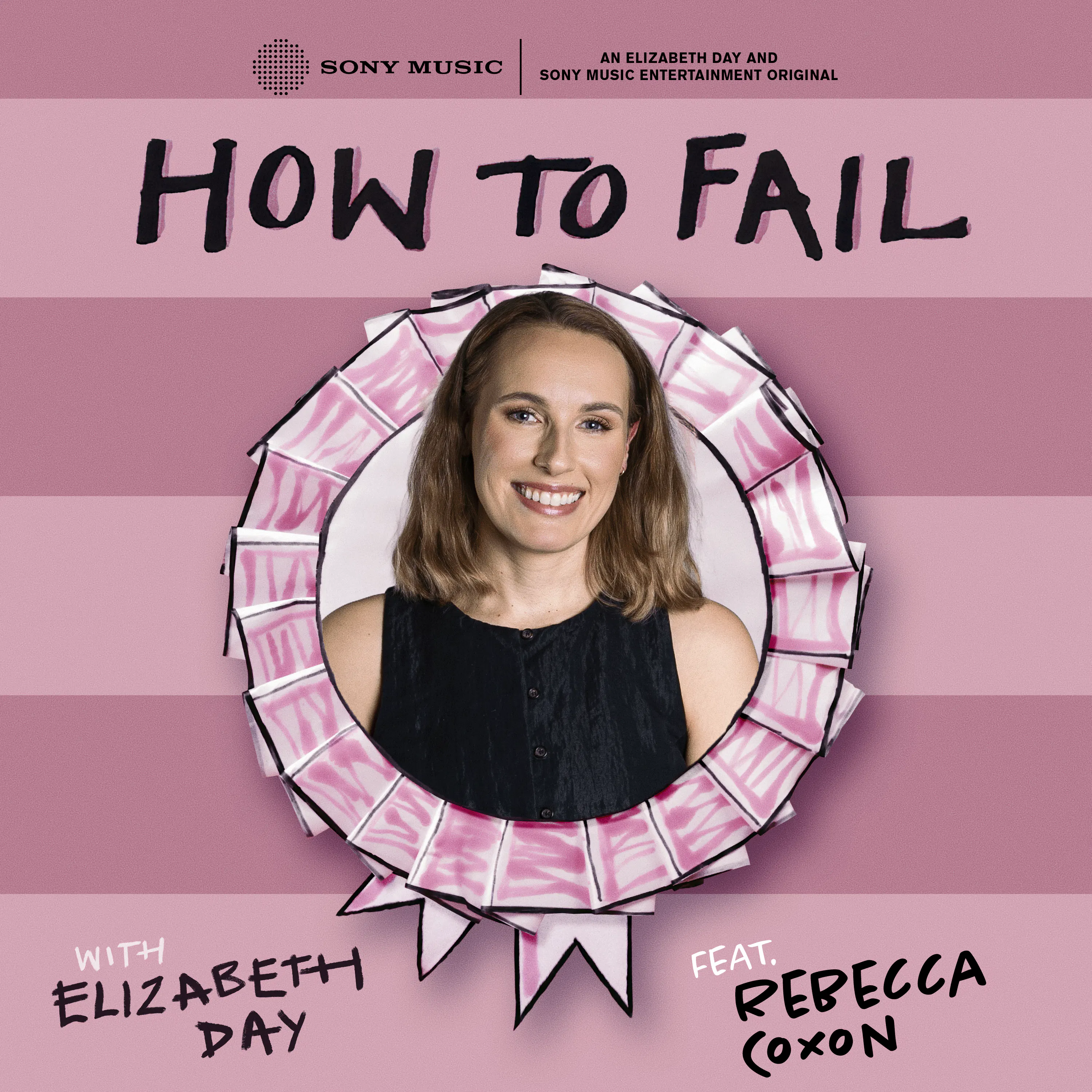
How To Fail With Elizabeth Day
SPECIAL EP: On Fertility and Finding Your Family… with Rebecca Coxon
00:41:15
Loading summary
Transcript41 lines
- [00:00]
A
Obviously, I'm so grateful that he decided to donate and to all the donors who do donate, because I wouldn't be here. So it's that really kind of existential gratitude, but also just sort of wanting to keep him at arm's length. And the amount of men who, when you asked them if they wanted children, said they hadn't thought about it even though they were in their mid-30s, was astonishing. I was told that my ovarian reserve was low, you know, so essentially I had the eggs of a kind of 40 year old in my early thirt.
- [00:35]
B
Growing up in rural Nottinghamshire, Rebecca Coxon was drawn to telling other people's stories. She became an award winning documentary maker whose credits included 24 Hours in Police Custody and Channel 4's Dispatches. But it was while working on a documentary called the family secret in 2019 that Coxon discovered one of her own. A 23andMe DNA test revealed that her father was not biologically related to her. Confronted by this shocking revelation, Coxon started mapping out the story of her own existence. She had always known she was one of four IVF siblings and herself a triplet. But a conversation with her mother revealed that she was actually donor conceived. The long buried secrets uncovered by her genes led her to examine what family really means and how her own remarkable conception offered profound insights into how we choose to create new life. Coxon, who was moved to donate her own eggs and who has undergone fertility treatment herself, has now shared this extraordinary story in a book. Inconceivable is a beautiful meditation on what it means to belong. It is also, I'm so proud to say, the first book to be published under my own imprint, Big. And I could not be more thrilled to be championing this utterly essential work. So today on How To Fail, we're doing something a little different. As many of you already know, I have been through my own fertility journey and I'm passionate about bringing these necessary conversations to the fore. So instead of our regular three failure format, this is going to be a freewheeling, wide ranging chat with Rebecca on fertility, family and the leaps of faith we take in loving other humans. Rebecca Coxon, welcome to how to Fail.
- [02:38]
A
Thank you so much for having me. It's so surreal being here.
- [02:41]
B
Oh my gosh, it's such a pleasure to have you here sitting opposite me. I am so proud of this book and so proud of you for the courage it must have taken to write it and for the courage it took to go on that journey in the first place. And I wonder if I could start by asking you to take us back to that moment when you got the DNA test results. And as the realization slowly began to dawn how that felt, where were you? Take us to that scene.
- [03:10]
A
Yeah. So originally I'd signed up to 23andMe, and when I logged on, you know, it said I only had distant relatives. It told me about my health profile and there was nothing really to see. And I'd sort of told my family when I went home to see them, they sort of just looked at it and shrugged and sort of said, oh, that's interesting. You know, I'm part, you know, my ancestors are from Scandinavia or whatever. And that was it. And then a few years later, I was reading an article in the news about a lady with a gene for breast cancer and I thought, oh, I'll just log back onto the DNA website and check if I've got that gene, because I know they're updating everything all the time. And I was sat at work, as you say, working on this documentary called the Family Secret, coincidentally. And I was just sat in the edit suite and it said new. It had this relatives tab that said it had been updated. And I clicked on it and it said half sister Lucy on the paternal side. And I sort of just froze and thought, that doesn't make any sense. I don't have any half siblings. And then I just went outside and called my mum and said, this really weird thing has happened. Do you know anything about it? Her first response was shock and denial. I guess she so my dad was adopted. So she sort of said, well, maybe it's something to do with his side of the family. And I said, oh, yeah, maybe. Maybe it's a long lost cousin that we don't know about something. Because the DNA shared was 25%, which can be a sort of aunt or niece or something. But the more I looked into it, I realized it's unlikely to be incorrect. There's a lot of people Googling these things saying I've got the wrong DNA results. And most of the time it's not wrong DNA result, it's a family secret. So I ended up going home that weekend anyway because we were celebrating Easter, we always gather for Easter as a family. And I sort of confronted my parents and said, what is going on? And that's when they admitted to having used a sperm donor.
- [05:28]
B
So your own fertility journey plays into the narrative of inconceivable as well. And you write very movingly about suffering with endometriosis and how that threw a massive curveball into Your own plans for your own family. What was it like for you writing about something that has so shaped your life and shaped it in a very painful way?
- [05:59]
A
Endometriosis is getting more sort of airtime recently, which is great. People seem to be more aware of what it is and how difficult it can be to live with. However, the things that I've read about it tend to be kind of more textbook or academic or medical. And I really wanted to make the experience of living in a body with endometriosis relatable and also sort of like crafted in a kind of really readable way. So, you know, I talk about it feeling like a cactus through my colon and the steel plumbing of my pelvis. You know, things like that, where I just think it gets described as a painful disease, but it doesn't and it is painful. But for me, this sort of the whole body inflammation where your sort of immune system is attacking itself is the best way to describe it and help people understand the day to day experience of it. You know, it's more like living with bone aching flu that can affect you on so many levels. You know, it makes you tired, it affects the way you think. You have brain fog. You know, I've got it on my bowels and my bladder. So you know, going to the toilet or sex can be quite painful sometimes. But yeah, it takes, it takes a lot from you. We're not taking it seriously enough and it's really underfunded still. We don't really know what causes it, but it is affecting hundreds of millions of women and girls in the world to the level where they're living in this state of half sickness that I described, where you're not quite ill enough to stay in bed, but you can't function properly and how that affects your social life, your work life. And that's not even discussing the infertility of it, which can, you know, affect which affected my mum and me, which has its own, you know, grief. And you know, as you well know, you know, living with infertility is another kind of pain.
- [07:59]
B
In the midst of all of this, you decide because of how you realize that you were conceived, that you want to give someone else that opportunity and you decide to donate your eggs. And I was fascinated to read about that because as you might know, I went through a round of egg donation on the other side where someone was generous enough to donate their eggs to me. And I find it a profoundly moving part of the book to read it from your perspective, tell us about that decision and about that process Weirdly, I'd
- [08:35]
A
always been interested in the ethics of fertility. And again, another weird coincidence. When I found out I was don't conceived, I was already pitching a documentary series idea to, well, with the production company I was working with to a channel about donor eggs in the us because it's a very different sort of market over there. You know, they get paid tens of thousands of pounds of dollars sometimes and it's a bit like Tinder. You can sort of swipe through and choose.
- [09:03]
B
Rebecca Rice did it in the us So I can tell you all about. Yeah, you're totally right. That's the analogy I often reached for. Yeah, that I was sort of swiping through all of these gorgeous women being like, oh, is her hair brown enough? It was, it was sort of horrific.
- [09:17]
A
Yeah.
- [09:17]
B
Car.
- [09:18]
A
Um, I mean, that's the world we live in. It's interesting. And my, my parents didn't have anything like that. They just let the hospital decide, you know, there wasn't any sort of apps or anything. So I'd been researching egg donation. Anyway, then I found out I was donor conceived and then the pandemic hit and I just thought, you know what? I know people who are struggling with infertility. I would love to have kids soon but my partner's not ready, so I'm just flushing these eggs down the toilet. You know, I may as well, you know, I know how valuable these things can be and that there is a shortage of egg donors in some parts of the uk. I'm going to sign up as an egg donor. So I called, I found an agency on the line that does it. There's various ways you can do it. And I also thought they can check my fertility for me. You know, I was nearing 30, I had endometriosis. What state is my fertility in? And you can get a little bit of an indicator of that when they check your AMH levels. So there was that. You do get paid expenses. So that was just a little bonus because I'd lost all my work as a result of the pandemic. I worked in TV and everything shut down for a little bit. I mean, it will always be one of the things I'm most proud of in my life. It's, you know, I got the most beautiful letter from my recipient and having been donor conceived myself, you know, you just think, I wouldn't be here without somebody like me doing that. So, yeah, I didn't, I didn't think very much about it. I just sort of went ahead and did it and, yeah, I have no Regrets. I didn't even find it a particularly difficult process, which I know, you know, injecting your belly and stuff obviously is. But it was sort of just a means to an end. And, yeah, the process went quite straight, was quite straightforward for me.
- [11:15]
B
It makes me tear up hearing about it, and it made me cry reading about it because it's such an extraordinarily generous thing for you to have done. And then that letter that you got from the recipient was so beautiful and you had to wait a few years, but they went on to have a baby. So, like, thank you for the gift that you gave someone who was really struggling with their own fertility. It's so amazing. And my experience of egg donation, even though it didn't end with a baby in my arms, taught me so much. And my husband and I did do it in la, so we had that experience of. And we're privileged enough that we were able to set aside money to pay the thousands of dollars that were required. And we had that experience of going through agency websites and they give you these questionnaires that the donor completes. You can see photos of them. You can even have a zoom call. You can meet them in person sometimes. And it was a sort of. It was a profound but also unintentionally darkly comic period. Because the questionnaire, the questions would be things like, what's your favorite food? What are your favorite books? And I automatically discounted anyone who said that their favorite book was either Harry Potter, because that just felt like it's too easy, or Paulo Coelho, who I interviewed once and didn't like. And so you suddenly realize that what things, what stupid little things you think are important? And then as time went on and it was harder and harder actually to find a donor, all of that went out of the window. But the donor that we eventually found, and I'm sharing this with you because it has resonance to your family story, was adopted. And it meant that many people didn't want her eggs because she didn't have a full genetic history. Whereas I thought, gosh, how wonderful that here is this person who has this full conception of what family really is and the choices that we make. And I also loved her because her favorite book was Plato's Republic, which is one of mine. Anyway, I remember sending her a message very like, your recipient sent you. And it moved me thinking that her reaction would have been like yours. So, thank you. And to anyone who is listening or watching this, who has either donated their eggs or their sperm or who's gone through a round of Donor conception and maybe has their baby. Now, I just want to salute you and say that we see you and it's such an extraordinary process. And as Rebecca, you've said, family, really, there are so many different ways to grow one. And thank you for giving us the chance to speak openly about it. So you donated your eggs. Okay. And then there's a period of time where these are my words, you are dating extremely disappointing men. And this is another thing that I feel like we've had in common, and maybe many people who are part of this show will also have in common with you. But it's not that they're bad men, it's just that they go through with things and men have that privilege at a certain age. Can you tell us about James and what happened with him?
- [14:34]
A
There tends to be, in my experience, a kind of lack of awareness of the finiteness of fertility for women from men. There also tends to be, you know, I ended up dating again in my early 30s, and the amount of men who, when you asked them if they wanted children, said they hadn't thought about it even though they were in their mid-30s, was astonishing, you know, because as a woman, you know, you've been thinking about it since you were 15. You know how to avoid getting pregnant when you might want to get pregnant. You know, it's on your mind every month that you have a period. So for men to sort of, yeah, in their leisurely, in their sort of 30s, think, well, maybe one day, but not have put any thought into it or even know, was a real shock, especially when, you know, like me, I felt like I was running on a treadmill, double the speed of everyone else because, you know, my endometriosis was getting worse every month. I was told that my ovarian reserve was low. You know, so essentially I had the eggs of a kind of 40 year old in my early 30s. And you. Do you feel like you're running out of time and you're also really aware that any kind of whiff of desperation or wanting a family scares people off. So, yeah, so with James, you know, I, I made it clear very early on that I, you know, I'd been diagnosed with endometriosis. The doctor had said, you know, don't leave it very long to have children, you know, in the next few years. So he knew that and, you know, he sort of said, I'm not, I'm not ready yet. But soon, soon. A few years went by and, you know, I was like, you know, my, my endometriosis is, is really hard. And the sort of irony of endometriosis is that often pregnancy is touted as a cure. It's not a cure. There is no cure. But for some people, it can ease the symptoms. So there's also that sort of, you know, I'm living with this chronic illness that I also, you know, would love to have some respite from coming off the pill. Exacerbates the symptoms of endometriosis. So you're kind of living in this catch 22 where when you start trying, your endometriosis gets worse, but you also struggle to get pregnant. But pregnancy can also be a kind of cure. So, yeah, it's quite a complicated thing to navigate, but I was ready for children and James was not. So that went on for a few years, and then finally he said, okay, let's go for it. We were actively trying. Nothing happened. And so I was getting a bit worried at the stage. And I think, you know, probably my family's history set off alarm bells and made it all feel, you know, like, okay, well, I'm infertile, just like my mum, and, you know, I need to hurry up with this. So I feel there was a lot of pressure, but we were referred for ivf. But unfortunately, a few days before the egg retrieval, James sat me down and said, actually, I'm still not ready. I don't. I can't go through with this. And it was just. It was just so devastating, you know, as you can imagine. It was just everything collapsed overnight. We ended up breaking up a few weeks later. And, yeah, my sort of future children, you know, the prospect of my future family, which I thought, well, maybe this is it. This is my only. This is my only chance. My in laws, you know, they'd. They all disappeared, and I was just back to square one. Yeah, it was a really, really terrible time.
- [18:23]
B
Devastating. I can't. Well, I can imagine. I suppose I can only imagine what that was like to go through. Because so often with infertility, there is so much painful ambiguity, and what you're grieving is an absence and a loss that was never fully present in the first place. So whether it's miscarriage or constantly being told by mostly male clinicians that you are failing in some way, there's so much complexity in the sadness that you're experiencing. And then to have not only your support system, but the key part of the process of IVF just leave, you must have been unbelievably destabilizing. And it's such an interesting one because obviously people are allowed not to be ready. And I don't want to sort of hang out any individual men to dry here, but I have had very similar experiences where, as you say, you. There is vanishingly little education given actually to any gender, let alone young boys, about the limits of fertility. And like you, Rebecca, the only thing that I was ever taught was to avoid a teenage pregnancy. So I went straight on the pill for 14 years as soon as I became sexually active and then really struggled to get pregnant. And some of the men that I dated had this privilege of being able to say, I'm not ready. But part of that privilege was their firm belief that they would meet someone who would open up the gift of their ovaries and their womb to them at the notional point that they might suddenly feel ready. I was like, gosh, that's. That's. Now that is an entitlement, the levels of which I, as a woman have never experienced. And so it's come to fruition. I mean, those men have gone on and they have had babies with the people that they met when they were ready. But I think that you identify so potently in your book, inconceivable, how just aggressively awful it is when you feel trapped in the ticking clock of your own biology. Well done for getting through that, quite frankly. And we're going to circle back to how your fertility journey has been progressed. But I wanted to ask you about your donor because you made the decision to meet him, and in the book he's referred to as Rodney, which is a pseudonym that he chose, I believe. And you have this line in the book where you say, I was glad to know of his existence and quietly furious that he existed. Talk to me a little bit about that nuance and how that felt.
- [21:26]
A
So I've only spoken to Rodney over video call. I haven't met him, met up with him in real life, which I don't think I ever will. I only had to deal with not knowing who the donor was for about a year. Some of my half siblings were in the dark for a lot longer than that. And that year I really struggled because I think once you know about their existence, you and. But you don't know who they are. You know, I thought, he's a man probably in his 50s. You know, I work. I work with loads of men in their 50s and TV, you know, I was like, is he one of them? Have I passed him in the street? Is he a celebrity? Like, is he homeless? Like, who is he? You just have no idea where you've come from. So when he signed up to the DNA website a year later, I was really relieved. I was really curious, obviously about, you know, who he was and what he looked like and that kind of thing. And that was it really. You know, I, that question was answered. You know, I, I'm really close with my dad. I just did not want, I didn't, you know, I had, I didn't have a void there, let's put it that way. So I wasn't looking for anybody else. And, and I say in the book, you know, him coming into my life has felt a bit like somebody trespassing and putting a stake in the ground that says father. But he, you know, I will describe him as the donor. You know, he's not my father, he's not my dad. It's taken me a long time to even sort of like, logically I know that biologically I'm related to him, but it's so removed from my experience that it's taken me a long time to sort of accept that he, you know, I'm lucky that he has been open and generous with his time and he's answered any questions that me and my half siblings have. But it's a really complicated relationship because, you know, there's no manual for how you interact with your sperm donor. And I think people like to think that it'll be some sort of long lost family moment or something like that. And it's just not been that at all. Obviously, I'm so grateful that he decided to donate and to all the donors who do donate, because I wouldn't be here. So it's that really kind of existential gratitude and, but also just sort of wanting to keep him at arm's length because he didn't change any of our nappies, he didn't have anything to do with our upbringing. You know, he's just a random person really.
- [23:58]
B
You say at one point in the book, he says, oh, I'm so proud of you all and that your hackles rose understandably. You did such a good job of explaining that.
- [24:07]
A
Yeah, it's a really weird one because I understand what he's saying. You know, he's proud of what we've all achieved and he's seeing different parts of himself in the world and. But again, it's that sort of, you know, he's not family and yet I donated as a direct result of him donating. You know, he inspired me. You know, we're all on this planet together and actually borrowing somebody else's eggs or sperm or embryos. We're all putting it back into the same pot. Do you know what I mean? And there's something really beautiful about that, and that's one of the reasons I think I donated my eggs, was just because I just thought it's a way of paying it forward and just saying, you know, sometimes, you know, like baking cake, sometimes we do run out of sugar or we do run out of eggs, and we just need to go and ask our neighbor, you know, can I borrow some of yours? And there's nothing wrong with that. It's beautiful that we can share in that way.
- [25:02]
B
You write about going through fertility struggles when your friends are seemingly getting pregnant with ease, which is also something I've written about. And I think it's something that's very important to raise and talk about, not just for the women and men who are going through fertility struggles, but also for their friends and loved ones to know how to relate and how to bring it up. And do you have a couple of just exquisite sentences? There's the one about. Okay, this one, which I'm going to quote. The experience of watching your friends have babies. Every milestone in their lives feels like a splinter in mine. Oh, and then your friend, I think, compares it to ordering in a restaurant. Talk to us about the ordering in a restaurant and how that works.
- [25:45]
A
Yeah. So Aisling, she's brilliant. So she describes it as, you know, you go to a restaurant, you order your meal, and then they bring out everyone else's meal but yours. And then some other people arrive after you, and their meal becomes. Comes before yours as well. And then some people arrive who haven't even ordered meals, and their meals come too. And then your meal finally arrives, but then the waiter drops on the floor, you know, and it's such a powerful metaphor for infertility because, you know, takes over every waking thought. As you will know, you can't go anywhere without being reminded of it in some way. And it's just not an equal playing field. You know, you. You can live your life in one way, you know, the healthiest way possible. You can do all the research. You can, you know, put everything into it, and it's not going to work for you. And for some people, they. It will happen accidentally, you know, so it can drive you crazy. And in fact, that chapter is called Crazy. And when I wrote it, I just thought, oh, my God, this is so unhinged. I can't. I can't publish this. But actually, I think it's really important to say those things out loud, because when you speak to somebody who has struggled with those things, they're like, oh, me too. Like, I understand that, you know, And I've never heard anyone say it, like, out loud. And I've had that experience with other people telling me things that were so sort of dark and taboo, but actually they're normal things to think when you get in that headspace.
- [27:23]
B
I completely agree. And that chapter did not read as unhinged to me whatsoever. It read as being seen in another human's experience. And that really is the most precious thing about true writing. And similarly, when I wrote a chapter about friendship and fertility in my book Friendaholic, that was an interesting experience because it all came out. It sort of rushed out in a flow. Like, it was clearly stuff that I had been thinking about without understanding that I was thinking about it. And when it came to reading the audiobook, I read that chapter out and enough time had elapsed that I was able to say to myself, wow, I was really angry when I wrote that. And I hadn't noticed it at the time. And a bit like you, I felt anxious about that and putting that anger out in the world. And then I realized that in the anxiety is the necessity, because women have been so conditioned to exist in shame and in silence and to deny their right to anger or confusion or pain or sadness. And actually, it's the discomfort that we need to lean into. So so many people will be helped by that chapter. Going back to Rodney the donor a second, there was another revelation in Inconceivable, where you're writing about bodily autonomy and the case of a male sperm donor. Tell us that story, because that really astonished me.
- [28:47]
A
So this is from the Netflix documentary the Man With a Thousand Kids. You know, I've worked in the true crime genre for a lot of my career, and I couldn't help but notice that there's almost like a whole true crime genre of sperm donor gone wrong, basically. And so I sat down and watched these documentaries. And yeah, in one of them, there's this serial sperm donor who sort of would donate to several different clinics, which you're not supposed to do. You're supposed to just donate for one, and then they can sort of keep tabs on it, and also donated online. And he'd been doing it for years and years and years. And it turned out he had possibly in the region of 1,000 children, which is obviously insane. And it became like an addiction to him. Some of these children and their parents sort of took him to court and said, we need somebody needs to stop him. We can't, you know, this is becoming a human bio health hazard, if nothing else. They took him to court and the court said, you've got to stop donating. They ordered all the clinics to get rid of his sperm and said, we'll fine you if you do carry on donating. And documentary makers said in the voiceover, you know, this was the first case of a man's bodily autonomy being restricted. And I just paused the TV and I was like, what? Like, there isn't a day that goes by that women's bodily autonomy is not restricted and, you know, controversial and in the news and being taken to court, you know, to do with, you know, rape or breastfeeding or pregnancy or, you know, whatever it is. Women of abortion, of course, contraception. So I just thought it was absolutely bonkers that this was the first case of a man being ordered to. And, you know, and he tried to appeal it. He said, you know, I'm being medically castrated. I just thought, oh, gosh, what world are we living in?
- [30:45]
B
It's wild. It's wild, isn't it? And I know that you write in the book about the fact that fertility stories don't always have the ending that you think is going to be the happy one. And I am an example of that in that I did 12 years of fertility treatment, had three miscarriages, and I don't have a baby. And I am at peace with having made the decision not to pursue further treatment or further avenues of parenthood in the conventional sense. And I am genuinely at peace with that now because there are so many ways to show up in this world as a parent and so many ways to create and choose one's own family. Your story has had a different ending, and we stop the book short before you get there. So as a little how to Fail exclusive, will you tell our listeners and our viewers what happened after you finished writing the book?
- [31:42]
A
Can I just preface it by saying that when I was going through the worst of the infertility, reading your writing about it really, really helped me. And I have forwarded your articles and things to so many friends who've been struggling.
- [31:57]
B
Sorry, no, I'm going to cry now. That means so much to me. That means so much to me. Thank you.
- [32:03]
A
It really, really helped me to know
- [32:05]
B
that
- [32:07]
A
you can make peace with these things and you can have such a effing, amazing, fulfilling, creative life like you had. Like, I'm in awe of your life. It's, it's, you know, what you've built and what you're doing and, you know, how you're helping people is just astonishing. And it's. Yeah. So thank you. It's meant so much to me that you. Because. Because not many people share how it feels and as you say, it's always about the happy endings. So that really has helped me. So thank you.
- [32:36]
B
Thank you.
- [32:38]
A
I went. So I met my now partner, Ollie, and we started trying quite.
- [32:48]
B
How did you meet?
- [32:49]
A
We met on an app.
- [32:51]
B
Another thing we have in common, the
- [32:52]
A
best way to me. Yeah, the only way he didn't run away when he asked me what I did for a living and I told him I was currently writing a book. What's the book about? Well, let me tell you. And, yeah, and I said, you know, it's fine if you don't want children, but I do want children and could you let me know if that's on your radar as well? Because it's fine if not, but we're not meant to be together kind of thing. Luckily, he said yes, I'd love to have a family as well. So we started trying. Nothing happened. Nothing happened. So we signed up for ivf. Couldn't get IVF on the NHS for various reasons, which I explained in the book. And so we were looking privately. It was, as you know, it's very expensive in this country to pay privately. So we were looking abroad at the same time. I was finishing this book. And the book ends with. We all know how these books should end. You know, there's a beginning, a middle and a happy ending. And my book doesn't end like that. You know, I'm still on the shoreline waiting for my time, and I'm standing alongside people who are struggling. And at the end of every month, I always do a pregnancy test because I don't want to get my period at work and just be thrown by it, you know, how it feels. And so I took a pregnancy test like I always do, and it had a double line. And it was the first positive pregnancy test I'd ever seen. And I couldn't believe it. And it was the same week I handed in my book, my book about infertility. And it was amazing. But, you know, you don't believe it and you keep testing. You keep testing. And I thought, should I mention this in the book? You know, the whole time I wrote the book, I thought, if I do happen to get pregnant, I'm never gonna mention it because I just don't want it to be one of those, you know, smug, I've got my happy ending, but, you know, good luck. To you. But a lot happened after I handed him the book. And so there were other things I wanted to add. So I decided to write an epilogue and include that I'd amazingly got pregnant. And I am just so grateful, so grateful every day, honestly. And you know, it's been very strange to be on the other side because I'm just so aware of how painful it can be. But at the same time I'm, you know, I want to enjoy being pregnant and having a child and do the things that other people get to do and it's just a really fine balance. I think it's just one of those things that just never leaves you, isn't it?
- [35:33]
B
I do. And I want to give you permission to be really happy and enjoy the aspects of motherhood that you have so yearned, longed and fought for. You deserve this and I am so happy for you. And your baby is not my baby is not my journey. And the extraordinary empathy you have because of what you've lived through, your right will never leave you. And it will inform how, how you parent and it will inform how you interact with the rest of us. And that's so profoundly beautiful because you're going to raise a young man who is aware of all of these things and those acts change the world in a really radical way. And I want to thank you as well for taking the time to write down everything that you experienced because this book, Inconceivable is going to be a life manual for. So it is poetic and powerful and moving and profound. And I also want to thank you for trusting me with it. I could not be prouder that it's the first title on my imprint, Big Day. I really couldn't. It could not be a more perfect fit because it so embodies everything that I hope the imprint stands for and that I hope we as storytellers stand for.
- [36:58]
A
So thank you for thank you so much.
- [37:01]
B
And Inconceivable is out on the 12th of March. It's available to pre order guys. And I really think you should. You will not regret it. I know that I'm not objective, but also I'm still capable of having an objective eye and I can tell you it is terrific and such an achievement. Rebecca Coxon, thank you so much for coming on how to Fail.
- [37:21]
A
Thank you so much for having me. It's been a pleasure.
- [37:24]
B
Please do follow how to Fail to get new episodes as they land on Apple Podcasts, Spotify, Amazon Music or wherever you get your podcasts. Please tell all your friends this is an Elizabeth Day and Sony Music Entertainment Original podcast.
- [37:38]
A
Thank you so much for listening.