← How To Fail With Elizabeth Day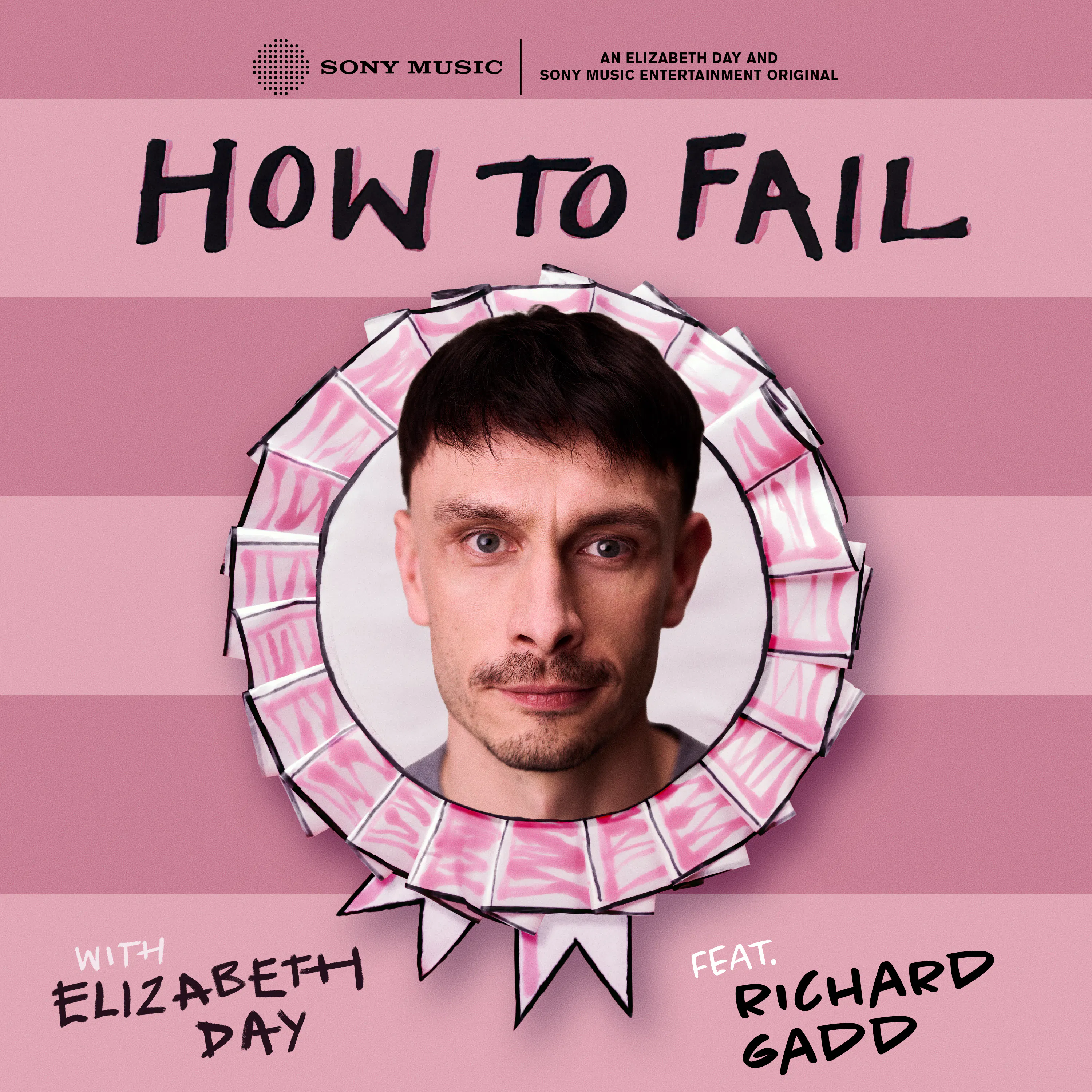
Loading summary
Transcript137 lines
- [00:00]
Richard Gadd
And sometimes I even say like date too. By the way, I work so much. Like I really, really work a lot and you should really know that. I think it's always a shock, but I actually think like we have but scratched like the surface of sexuality in a way. Like, I think there's so many complications to it. You know, I would say I get about four hours sleep a night probably.
- [00:19]
Elizabeth Day
You're like Margaret Thatcher. That's the first time that's ever been said about you. Hello and welcome to how to Fail with Me Elizabeth Day. This is the podcast that believes every failure can teach us something in the fullness time. Before we get into this conversation, please do remember to like follow and subscribe so that you never miss a single episode. In 1987, a newborn baby is abandoned in a remote spot. Nobody goes down that lane. Why would you think anyone would have picked me up from there? For decades, Jess has searched for answers. Why didn't that person want me? But as she gets closer to the truth, things spiral out of her control.
- [01:02]
Narrator
I think I'll always be angry.
- [01:04]
Elizabeth Day
Could it have ended differently? From Tortoise Investigates and the observer, this is Foundling Lies always come out, don't they? Skeletons are always going to come out eventually. Listen Wherever you get your podcasts,
- [01:19]
Richard Gadd
it's
- [01:19]
Home Depot Advertiser
time to refresh your yard during Spring Backyard Days at the Home Depot. Get low prices guaranteed on propane grills starting at $179 like the next grill 3 burner gas grill. Or get $50 off a select Weber Spirit Grill and bring big flavor to your backya. Then set the scene with Hampton Bay string lights that bring it all together. Shop Spring backyard days for seven days at the Home Depot, now through May 6th. Exclusions apply to home depot.com pricematch for details.
- [01:48]
Elizabeth Day
Richard Gad was 34 when he became really, really famous. Baby Reindeer, the seven episode Netflix series he adapted from an award winning Edinburgh one man show, was a global hit of such magnitude when it was released in April 2024 that Gad briefly became Googled man on Earth. A visit to a supermarket turned surreal when he saw his face staring out of the front page of a tabloid newspaper under the headline Richard Gadd's Struggle to Cope with Fame. The strangeness of the moment was compounded, perhaps, by the autobiographical darkness of his subject matter repressed trauma, sexual identity, stalking and mental illness. The show won him six Primetime Emmys, two Golden Globes and garnered 84.5 million views within its first 45 days. Gad has long been interested in the complexity and struggle of understanding the self. Growing up in a village in Fife, he was bullied at school, but found solace in drama. He studied English literature and theatre studies at the University of Glasgow, where he began performing stand up. By 2016, he'd won a Perrier Award at the Edinburgh Fringe. His work became known for its compulsive storytelling, blending dark comedy with a kind of philosophical kink for asking audiences the most uncomfortable questions. Now Gad returns with Half Man, a six part drama co production between HBO and the BBC. Half man tells the story of two brothers played by Gad and Jamie Bell over several decades, exploring the not bonds of trauma, the long legacy of violence and the intense fragility and fear at the heart of male relationships. Gad created, wrote and exec produced. But despite his success, he insists that I never wanted fame. I just liked the idea that one day I would make a piece of art that was culturally important because then maybe I would learn to like myself. Richard Gadd, hello. Welcome to how to Fail.
- [04:06]
Richard Gadd
Thank you. It's lovely to be here. Thank you. Thanks for that introduction. That's. That was beautifully, beautifully done, I thought.
- [04:12]
Elizabeth Day
Oh, thank you. Well, your work means a lot to me.
- [04:15]
Richard Gadd
Oh, thank you.
- [04:16]
Elizabeth Day
And I'm really thrilled that you're here.
- [04:18]
Richard Gadd
Thank you.
- [04:19]
Elizabeth Day
And you have a way of speaking in interviews that conveys these really profound truths in these kind of sound bites. And that idea of wanting to create something that would make you like yourself, I so relate to. And I just wonder if I can ask with a very easy, straightforward question, Richard Gadd, how much do you like yourself?
- [04:43]
Richard Gadd
Now, it's an interesting one because I hear it back and I think when you said that, I guess I got a bit of a sort of like an internal jolt in a way, being like, oh, it's sort of. I guess it didn't quite work out that way in the sense that even though I know I did make a sort of culturally impactful piece of art, I have kind of learned since Baby Ranger came out, I suppose that, you know, the journey for, I suppose solace does come from the inside, from within in a lot of ways. And I think if you do look for sort of external answers to internal pressures, it never really quite pays off that way, I think. But I'm still very proud that I did make a piece of art like that.
- [05:22]
Elizabeth Day
Yes. And also I wonder if there's part of you that feels the internal discomfort is what is the engine for creation. So if you cure yourself of everything, then there's no more creativity. Do you worry about that.
- [05:38]
Richard Gadd
Yeah, it's like I'm damned either way, almost. But, yeah, I do sometimes question that. And I certainly think, like, both these shows, you know, and indeed all my shows have kind of been born out of a sort of quite tormented place, I suppose. And, yeah, I do sometimes question that. I often question, like, whether, you know, because sometimes, like, people have such bodies of work and as they get older, they. They seem to detach. I'm not going to use any examples, but, like certain artists seem to. Their work detaches from the public in a way, and it's not as resonant as their earlier work. And I've always questioned whether that's like, comfort. They've. They've arrived at a certain comfort in their life because of their success, because of their fame, because of their potential wealth, all these kinds of things. I do often question, does their arc start to Peter a little bit because they're now comfortable, they're happy in a way. So it's that kind of existential question of whether an artist needs to suffer in order to do good work. And I honestly don't know, but I guess it's just always been born out of my suffering in a way, if that makes sense. That's not too dark?
- [06:39]
Elizabeth Day
No, it's a great place to kick off.
- [06:42]
Richard Gadd
Yeah.
- [06:42]
Elizabeth Day
I just wanted to say something about the quality of your work because you do tackle these dark subjects, and yet they are so compulsively conveyed that as a viewer, I cannot stop myself from watching. And I don't know how. How you do that, but are there ever moments that you worry this is going to be too much?
- [07:05]
Richard Gadd
I don't necessarily set out to be shocking. In fact, I definitely don't. I just think, like, I'm firm of this belief almost in a way that you sort of don't choose your writing style or what you want to write about it. It sort of chooses you. And I suppose because I've guess I've grown up with a lot of confusion and inconsistency and identity crises and all these things that I suppose gives birth to work that is innately, I guess, complicated or challenging. I think as long as you tell a story correctly, you can kind of be as shocking as you want. But as long as it's not shock for shock's sake, I think that's what actually leads to turn off television more than kind of thoughtful shock, if that makes sense, or building towards something which is shocking in a way that is thoughtful and character and character developed and all these kinds of things. I Think where shock really falls down is where it's clearly just put in there to shock.
- [07:58]
Elizabeth Day
Were you surprised by the global scale of how popular baby reindeer was? Or did you always suspect that so many of us are grappling with so much trauma that there would be a degree of resonance there?
- [08:16]
Richard Gadd
It's a great question. I mean, I think the sheer level of it surprised me. Like the fact that it blew up in the way that it did and the fact that it was so quick and so sudden and then. And that I went from sort of being able to walk to the shops one day and then it coming with a thousand complications literally the next day. I mean, it came on the Thursday. And by Friday I felt like everything had changed. It was that sheer level of acceleration took me off guard. But I never want to kind of sit here and be like, oh, I just didn't know. I really believed in it and I believed in it. I believed that it was good, that it was different, that it was kind of tonally, kind of like something we hadn't seen before. But I couldn't have anticipated what happened. I mean, stuff like Emmys never even came into my head at all because I almost didn't think that that was even possible in this country for starts. But so there was a level above where I thought it would go. But I did believe in it enough to think it would hopefully be something
- [09:13]
Elizabeth Day
you physically transformed yourself for. Your role in Half man, was that also deliberate because you wanted to distance how recognized you were from your baby reindeer self?
- [09:29]
Richard Gadd
I knew in order for people to buy me as Reuben, I needed to get away from Donnie Dunn in almost every single way I could. I was 68.8kg when I shot baby reindeer. So I was rake thin, you know, and I intensely like lost weight to do that. And I wanted to feel vulnerable in my body and slight and I wanted to feel young and youthful in my body and everything. And so I knew I needed to do 180 for Ruben. And I was 110kg at my heaviest when I shot Half Man. So huge, huge difference. I was aware that baby reindeer was so ubiquitous that people might struggle to see past Donnie Dunn. Therefore, I needed to change everything. My size, my voice, my beard. I grew a big beard, my hairstyle, everything. And I needed to transform. It's hard enough if you're just your job as a sole actor on something to kind of transform, but doing everything else alongside it, a huge commitment.
- [10:26]
Elizabeth Day
So the character of Ruben in Half man is chilling and powerful and sinister and manipulative. And also charismatic and intoxicating. And you've made the point before that something can't be toxic unless at first it's intoxicating, which I thought was so profound. And you do. I mean, you are utterly chilling in the role, Richard, so well done. You've nailed the transformation.
- [10:49]
Richard Gadd
Thank you. I appreciate that. It was a big relief. Thank you. Thank you.
- [10:53]
Elizabeth Day
And Halfman tells the story of Ruben's relationship with his sort of brother from another mother, Niall. Why is it called Half Man? Because originally it was called something else, wasn't it?
- [11:06]
Richard Gadd
Yeah, yeah, originally it was. I mean, originally, I think I was sort of floundering for a title and, like a press release ran out and I just scribbled something down and it didn't really mean much of anything and I sort of. And then it stuck for ages and I was like, oh, dear, I better do something about this title. But when Halfman came, it felt. Felt right and it just felt so right for the project. It has so multi. Reason, I suppose the title, I never usually like to say, particularly like, this is what the title means, because I sometimes think the best way of leaving sort of art is people questioning why something's been done that way. You could take it in so many ways. It can be about how a lot of men just feel incomplete as men. You can take it as the fact they both need each other to feel complete. And I think that's the best kind of way to do our. I hope, or I think is to leave people pondering a little bit.
- [12:01]
Elizabeth Day
Congratulations. Because it must have been so hard in many ways to follow up. And I know that you did them back to back. You did Baby Reindeer and you went straight into Half Man. And that actually brings us onto your first failure, because your first failure, as you put it, is failure to prioritize anything but work.
- [12:19]
Richard Gadd
Yes, yes, without doubt. I mean, even talking about that, I mean, it was. I remember it was the 13th of December. I'm trying to get my dates 20, 23, I think when I finished Baby Reindeer and Halfman was a project that I knew I wanted to return to next. I know the BBC were very keen to get started on it. And I remember finishing Baby Reindeer. It was a sound mix. It was very late on the 13th. And then the next morning at 8am, I went into the office, had a meeting and started writing Half Man. Literally, like less than 24 hours. I turned the other direction and started working on the next project. And I think this time I'm definitely gonna take a break, but television is so intense. Doing two back to back like this in such a short space of time has made me realize that is a big failure in my life for sure.
- [13:15]
Elizabeth Day
When did that obsession with work start?
- [13:19]
Richard Gadd
I've always had a sort of obsessive mind. An obsessive sort of, you know, like if something. Even from a young age, even, like, even tiny, tiny kid, like wrestling figures, I collect them on mass, you know, and become completely immersed in, like, wrestling figures or Boglins or I think Pokemon cards at one stage. Beanie Babies. All the rest of it, like, obsessive. Throwing myself into everything to a huge degree. And then when it came to sort of school, I'm not saying I was the smartest kids in the class, but I worked so, so hard at school. And I always remember, even my standard grades, when things I knew were getting serious or when things had mattered for the future. I remember knowing in a way that, oh, this stuff matters. This in the future, this. This counts for something. And really putting myself through my own sort of revision, as you call it, I suppose. And to the point where my friends were like, you're mad, you're working too much. So even back at school, I felt like I was pretty ferocious worker. I went to uni and I remember I went to, like a state comprehensive school and I went to uni and I remember, first thing I felt when I went there was like a real intimidation. A lot of very, very smart sort of private school kids who kind of, you know, had a lot of. Who were well versed in sort of independent thinking and all this kind of stuff that I would be in tutorials and I'd be like, oh, God, oh, God, I feel like I'm behind here. And I always remember I kind of struggled through my first few years of university, like, not getting the grades I should have and feeling, you know, just struggling, like, really, really struggling. I remember, like, taking a summer off because in Scotland you do a kind of dummy year a couple of dummy years before it actually comes towards your degree. And I remember the summer before everything I did counted towards my degree. I took that summer off. I stayed in Glasgow, all my friends moved back home, went out, went abroad and I went to the library and I read all these books on writing essay. I almost went back to basics over the summer because I was like, I'm doing something wrong here. And I started to. I worked all the way through the summer. I'd write dummy essays and set myself deadlines. And then I started to get good grades and, you know, I ended up getting a First at uni. And I went from a first to, like, barely getting a D. From barely getting a D. And I kind of realized in that moment, like, if you put the hours in, it matters more than anything. Like, I always, like, say to any writer who's like, how do I be a writer? Doesn't matter your intelligence, where you come from, your upbringing, anything. It's about the hours you put into it. Like, it's. Hard work trumps everything. Intelligence, upbringing. I've long learned that, like, hard work is the absolute key to anything in life. If you want something bad enough, for sure.
- [16:05]
Elizabeth Day
It's so interesting talking to you because I feel that there are certain elements that I really relate to. And I mentioned in the introduction that you were bullied at school, and I was slightly too. I mean, nowhere near the level that you experienced. It didn't get physical with me, but I also worked incredibly hard and still do. And I wonder whether you feel, as I do, reflecting on this, that there's something about hard work that you think makes you feel lovable or makes you feel safe.
- [16:34]
Richard Gadd
Yeah, I think, for me, certainly safe. I think that's. I think I know where I stand when I'm working. Like, I think I sort of. I feel perhaps confident in a work zone in a way that I don't in sort of life sometimes. I'm not saying I find it easy, like work. We both know it's supremely challenging all the time in so many different ways. But I don't know, it just seems to make sense with me. And sometimes when I take a day off, which is so rare, like, so rare that I take a day off. This is going to sound so bleak, but I sometimes feel like something's missing. Like I almost don't know how to plug into the world. Like, I sometimes find, like, work can be so intense, especially the pressure of television, where, like, every minute counts and you have to get film, you have to get everything filmed by the end of the day. The pressure is so unimaginable sometimes, but there is also, like, an addictive sort of adrenaline to it all, where it's like a thrill. Like, it's a real thrill. And I think that is sort of quintessential workaholism in a way.
- [17:29]
Elizabeth Day
Do you feel you have to work to a certain level in order to be accepted or loved?
- [17:36]
Richard Gadd
I honestly sometimes think, like, I've become so lost in work, in both good, in good ways and sort of intense ways, to the point where I almost don't know why, other than I just feel so compelled to sort of do it. Almost like it's just like such a part of me now that my life kind of revolves around it and I'm sort of in it and I enjoy it and I'm kind of addicted to it that it just becomes, it just is the way it is now. And I think like I sort of love it. I think I sort of love it in a way it's. It's weird. Like I sort of feel like I've had that revelation just then, but. But I think I must do to do it this much. And I think there's no feeling like working hard at something and feeling it come together.
- [18:22]
Elizabeth Day
Well, you said to me when you were writing about this failure that it gives you a strong sense of purpose and satisfaction.
- [18:27]
Richard Gadd
Yeah, yeah.
- [18:28]
Elizabeth Day
But you also admitted that you've neglected relationships as a result of it and self care. So what are some of the extremes that work has taken you to in that respect?
- [18:39]
Richard Gadd
Well, I think, you know, I am, you know, 36, single, which kind of says it all in a way. You know, I have such a close group of friends. I think I'm the only one who's single. It doesn't bother me. I think it used to a little bit. It doesn't bother me at all anymore because I actually think it's. I almost think everyone should go through a sort of enforced like at least three year period by themselves. I think it actually makes you stronger in a way. But I think that. I think a lot of relationships I get into with amazing people, very special people in early. I think people are quite amazed by how much I work. I think people and sometimes I even say like date two, by the way, I work so much. Like I really, really work a lot. And you should really know that. And I think there's always a thing, well, he might sleep at 8pm every day, you know, Monday, Friday or something. But I think it's always a shock for people and I think because work has always taken the number one place in my life, people can find that quite hard and rightfully so, to not be the kind of number one thing. Especially when you're looking forward, certainly my age, when you meet someone, it is about like, what does the future hold at this age? Because you know, when you meet people sort of similar age or whatever. And I think that, you know, people sometimes take one look at someone who works this hard and thinks maybe this isn't quite right. So to come back to, I suppose the sense of failure, I do sometimes think I fail to prioritize Anything in my life over work. And I think that can be, I suppose, a failure at times. Yeah.
- [20:12]
Elizabeth Day
And with something like Half man, where you are wearing so many different hats.
- [20:16]
Richard Gadd
Yeah.
- [20:17]
Elizabeth Day
How hard do you work? Like practically. What does your day look like?
- [20:21]
Richard Gadd
I mean, it is crazy. I get up about half five, I'll have a coffee and some breakfast and then I'll head into the edit suite for about six. I'll try and get all my sort of emails and sort of admin stuff done before people come in around nine. And then I'll work with the editors, the mixers, the producers, everything up until about 7, 8. And then I'll stay till about 10 catching up on things and then I'll go home and probably do some more stuff. I tend to, you know, like it's a HBO show, so America wakes up later on as well. And I'm always happy to stack till about midnight, but I would say I get about four hours sleep a night probably.
- [21:00]
Elizabeth Day
You're like Margaret Thatcher. That's the first time that's ever been said about you.
- [21:05]
Richard Gadd
Yeah, well, I almost quoted her a second ago because I almost said, I'm on the Margaret Thatcher. I'm on the Margaret Thatcher routine at the moment.
- [21:12]
Elizabeth Day
You once uprooted your life and moved to a different city for work. Didn't you tell us that story?
- [21:16]
Richard Gadd
Yeah, well, a year and a half the show was filmed in Glasgow and the show was filmed in Glasgow and edited up there and everything like that. And I just was like, well, if that's where the show is, that's where I've got to be. But I think it would be rare, I would say that a lot of showrunners would uproot their life for a year and a half to somewhere else and live. And here is a bit of a note to self being like, wow, that is, that is a big. That is quite a big sacrifice. You know, being in a city you're away from all your friends. That is. I think it shows just how extreme sometimes my commitment to work can be.
- [21:55]
Elizabeth Day
As I mentioned earlier, your career started out doing stand up shows. I mean, they weren't straight comedy. There was sort of theatrical aspect too. And you have been very open about the fact that you know what it's like to perform to. For one person to turn up and for you to take him to the bar. Is there part of you that feels you want to make the most of the attention that you're getting now? Because there's a fear that it might go away?
- [22:24]
Richard Gadd
Fear of my go away? It's a good question. I tell you what I think drives me more is the fear that if I take, you know how like MMA fighters or boxers talk about ring rusty.
- [22:35]
Elizabeth Day
I don't know that.
- [22:36]
Richard Gadd
Tell me, have you heard about ring rust? It's kind of like basically if a boxer or an MMA fighter takes too long away from the cage or the ring or whatever, the whole idea is they develop ring rosters and they forget how to fight. And I often sometimes worry if I take too long away from being creative, will I forget how to do it.
- [22:57]
Elizabeth Day
When I started this podcast, I honestly felt like I was learning a brand new language overnight. Scripts, artwork, scheduling, tech. Suddenly I was the entire team and it was kind of overwhelming. There were so many moments I wished I had a proper business partner to help me figure it all out. That's why I love Shopify. It's the commerce platform behind millions of businesses and it gives you everything you need in one place. You can build a beautiful online store in minutes with hundreds of ready to use templates. Their AI tools help you write product descriptions and even polish your photography, which is a lifesaver when you're spinning 100 plates and can manage everything inventory, payments, analytics without juggling 10 different tabs. Start your business today with the industry's best business partner, Shopify and start. Sign up for your 1 pound per month trial today at shopify.co.uk fail. That's shopify.co.uk fail.
- [24:01]
Narrator
This episode is brought to you by Prime Obsession is in session and this summer, Prime Originals have everything you want. Steamy romances, irresistible love stories and the book to screen favorites you've already read twice off campus Elle every year after the Love Hypothesis, Sterling Point and more, slow burns, second chances, chemistry you can feel through the screen. Your next obsession is waiting. Watch only on Prime.
- [24:31]
Ollie Sleep Advertiser
Good sleep is everything. That's why Ollie's science back support is made with a blend of Melatonin and L Thean for both kiddos and grownups. So when your mind won't switch off, you've got something that can help your racing thoughts and restless nights won't stand a chance. Find Ollie Sleep Solutions for the whole family@ollie.com that's o l l y dot com.
- [24:55]
Elizabeth Day
Your father is a noted microbiologist.
- [24:58]
Richard Gadd
Yes.
- [24:59]
Elizabeth Day
Which I find fascinating because microbiology is the art of looking at small things that are the stuff of life.
- [25:07]
Richard Gadd
Yes. Yeah, absolutely.
- [25:08]
Elizabeth Day
Can you see a connection between what he does and what you do?
- [25:12]
Richard Gadd
Yeah, I guess there is a sort of overlap with kind of looking at things in forensic detail. I suppose I've always wondered whether my dad always wanted me to go into science. I guess he probably doesn't think too much about it now, but. Yeah, I just never. I always remember at school I'd always like excel in the kind of art subjects, you know, the history and the English and all that kind of stuff. Drama and all that stuff. And I would always find the maths and the chemistry and the biology and the physics really quite tricky actually.
- [25:38]
Elizabeth Day
Yeah, I did single science and my dad's a surgeon, so. I hear you. You, you've spoken very warmly about your parents.
- [25:46]
Richard Gadd
Yeah, yeah.
- [25:46]
Elizabeth Day
And the support that they've given you, the work that you've put out into the world. Do you think it's made you closer to them?
- [25:56]
Richard Gadd
I think so. I don't know. It's a good question. I sometimes wonder what they do think. They're always like so supportive. They've never ever told me, even from a young age, oh look, I want to try be an actor and a writer and I want to write my own show and be in it. Like I'm sure a lot of alarm bells goes off in most parents head. Like the child becoming an actor, which is, what is it like 1% or 2% of actors actually make it or whatever. I'm sure it's like an alarm bell. But they never ever said no or discouraged me or anything like that. Which I think is a testament to them as parents really, because I think it would be very easy not to. I sometimes think I had a kid and they were like, I want to be an actor. I'd be like, oh God, really? Because it's tough and it's a tough life. But I think like they've never discouraged me and they've always watched everything I've done and they've always been super supportive and non judgmental. There's strong stuff in it. You know, a lot of parents would be like, oh God, you know. And I admit to a lot of things that I think is uncomfortable. I'm sure my parents find Baby Reindeer episode four uncomfortable to watch.
- [26:59]
Elizabeth Day
You know, remind us what happens in episode four.
- [27:01]
Richard Gadd
Oh, well, that's the flashback, the kind of famous baby reindeer episode where it kind of goes back in time. He meets a man at the festival. There's this kind of a grooming abuse storyline that kind of goes on with it and you know, they've seen all. But of course they knew about all that anyway and so they've just been nothing but supportive really. I've got a screening tonight for half mine. And they're down to see it. Yeah, I'm very blessed to have their support in my life.
- [27:25]
Elizabeth Day
When you say they knew about that, that's because you also are a survivor of sexual assault.
- [27:31]
Richard Gadd
Yeah. Yes, yes. And they knew about that.
- [27:35]
Elizabeth Day
You work with a charity. Why is that important for you?
- [27:38]
Richard Gadd
Yeah, we're survivors. They're. They're amazing. I came across Weird Survivors very, very early on in my career. I was kind of like a kind of bumbling comedian when I sort of came across them and they sort of reached out. I'd done Monkey Sue Monkey 2, I think, actually, which was the Edinburgh show I did back in 2016, which. Where I first started to sort of merge comedy with abuse, which kind of sounds a bit odd, but it's not like I was making fun of it or whatever. It was like I did a show basically where I ran on a treadmill, I was escaping a giant monkey. And when I say it out loud, it sounds so bonkers. But you heard, like, voices in my head as I was trying to come at terms with sort of like a sexual abuse that happened in my past. And, you know, it kind of changed my life. It was this thing where, you know, I think actually that was when I told my parents, I was like, look, I'm going to Edinburgh to do this show and you should know what I'm about to say and about to do. But I remember when I was doing that show, Weird Survivors got wind of it and they reached out and I sort of went and met them, Met an amazing man called Duncan Craig, who's been a brilliant. Not just a brilliant sort of colleague, if that's the right word, like a brilliant friend, a brilliant person does a lot for so many people, and I think it's a great charity. And I'd never put my name to something that I thought wasn't doing, but they do the most amazing work and the most amazing help for men who have been through this kind of stuff. And they're going from strength to strength, and I think they're amazing and they've helped me down the years. You know, I'm an ambassador, but I've also, you know, early on I have used their services and can testify to how amazing they are.
- [29:13]
Elizabeth Day
I think it's so important that you do what you do with We Are Survivors. And I think it has helped an enormous amount of people. And I was thinking of you recently with Giselle Pellicault and the book that she published, and her famous quote, which is that she rebukes the shame. The shame is not hers to carry. And I think that. That your work goes such a long way in reminding men of that.
- [29:42]
Richard Gadd
Yeah, it's not something to be ashamed of. It's put simply. But I get how it can feel that way. And that can be very hard to shed. You can say it's not, but sometimes the way your synapses have been wired as a result of sort of trauma or something means that it will circle back to that. So you can say. And sometimes I think the human brain has the capacity to sort of feel something before you think it. You have the ability to sort of rationalize it. And I think sometimes you can almost like, you know, I remember in the aftermath of it, I felt like everyone could see it on me, like I was keeping this big secret. You'd be at, like, a cash register, you know, something, and then you'd be like, paying for your shopping, and the cashier looks at you like, you know, it's because you feel it before you think it. You're like, what is that feeling? And you're like, oh, it's because of that, and it's because of this. And so sometimes you feel shame before you have the ability to rationalize shame, and that. That can be very difficult to do. So it's very. It has to be a sort of internal process of acceptance, I think, you know, in order to get rid of that. Yeah, it's. It's very complicated. I'd love to say, like you. It's not something to be ashamed of, but I'd almost rather say I understand that you feel that shame, and you will get through it through a process of acceptance. That will take time, you know, so
- [30:57]
Elizabeth Day
it's very complicated, that sense that an imprint, as you put it, that your fear is that people can see it on you. When you were going through that process of baby reindeer, of being recognized all of the time and having your face staring at you from newspaper front pages, was there a sense of retriggering? Did it feel similar? Shame and fame, did they feel similar?
- [31:21]
Richard Gadd
It's interesting because I always went the other way, and I thought, oh, everyone's gonna know this about me now. And I saw.
- [31:26]
Elizabeth Day
Yeah, it was release.
- [31:27]
Richard Gadd
It kind of was. In a way. I do sometimes marvel at how the journey has gone, you know, like, it's been like God knows how many way, way over a decade. Like, way over and sort of from kind of dare not speak it out loud for fear you might admit the truth of what happened kind of thing, because it's got to stay in. It's got to stay all the way to sort of. Was it like 250 million people have watched it now? It's kind of a crazy journey. That's, I suppose, an indicator that things can improve and can get better with time. I think it did help. It was kind of that pull off the Band Aid thing. Yeah. And I sort of. I sometimes think that when people come up, oh, they must be thinking this, they must be thinking that. But it doesn't bother me as much anymore. I really don't think it's anything to be ashamed of.
- [32:15]
Elizabeth Day
No. And there's your work again. The work is the salve.
- [32:19]
Richard Gadd
Yeah, yeah, yeah.
- [32:20]
Elizabeth Day
Let's get onto your second failure, which is your failure to compromise, in your words, Richard. I can be quite stubborn and tend to hold onto things in principle, even when they are small or not especially important.
- [32:32]
Richard Gadd
Yeah, that's.
- [32:33]
Elizabeth Day
Are you petty?
- [32:34]
Richard Gadd
Petty? Petty's an interesting word, I think, if I feel I'm right about something, but I might not be right. I think I could be quite unyielding in sort of having my mind changed about certain things, I suppose.
- [32:47]
Elizabeth Day
And does that exist in personal relationships as well as professional ones?
- [32:51]
Richard Gadd
Yeah, I think so. I mean, this, I suppose. I don't know whether it was like, the way I was brought up to a certain degree, you know, I'd say my dad taught me the art of being kind of, if something is bothering you, you know, you sort of speak your mind. I think it's quite healthy in a way. Like, I think in a lot of ways. But the thing is, like, the worst thing is when you've been stubborn and then you realize two days later, actually, maybe I shouldn't have been stubborn. I'm struggling to think of examples here, like, outside of work. But, you see, I haven't been in a relationship for so long.
- [33:20]
Elizabeth Day
Give me an example from work, if you have one. Is there something that everyone was saying, no, don't in the script, or you can't do that, Richard. And then you sucked your guns and you did it well.
- [33:29]
Richard Gadd
I mean, the biggest one, I think, is probably Jess Gunning. Really well. I mean, I was so unyielding in the fact she had to be Martha, that I was sort of willing to alienate everyone in order to get her on the show. There was a lot of things that would be rainy, like, it was obviously the right choice for so many reasons. I mean, in my opinion, I'm biased, obviously, but one of the best performances ever, I think, on tv. I think she auditioned like Six times in the end. And she came in for the first one. And I knew straight away that it was Martha. I knew straight away this was what I wanted out the character. Funny, kind of cute, but slightly bit unhinged and capable of switching and vulnerable. I saw the most amazing, amazing actors for that role. There was always a sense of. Of perhaps playing the madness a bit too much, which is very, very easy to do. I've been so guilty of playing the character in additions and stuff like that. But she came in and she played the truth, which I suppose is. I think people, in addition, think actors think that you look for good acting. I don't think actually sort of producers and directors look for good acting. They look for truth almost in a way, like this kind of window into a character's soul. And I just saw it and I. I think there was a lot of baby reindeer was quite like fought for IP at that stage. And there was a lot of talk about, you know, a lot of famous people being in the role, being in the. Especially the role of Martha, which was an actor's dream in a lot of ways, you know, And I really did not want a famous person in that show. I just didn't. I thought that it would become a vehicle for their fame. And I think, like, I really am all for. And I urge directors, production companies, everything, to cast unknowns because I think it allows you to see the art more clearly. I think if we watch the Office and bad example, but Brad Pitt was playing David Brent, it would be like, isn't Brad Pitt doing an amazing, amazing turn as this guy running this Office? But we believed it because we hadn't really heard of Ricky Gervais before. And therefore we believe that David Brent was an actual, living, breathing human being desperate to be liked, failing as a boss, we wouldn't have bought into the art as much. And so I'm extremely pro casting unknowns. But there were some extraordinary, that I'm not allowed to say actors who wanted to play Martha, like, extraordinary. And I think people on the process thought I was crazy saying no crazy. But it had to be Jess Gunning. It had to be.
- [36:01]
Elizabeth Day
I'm so glad she's miraculous in that role.
- [36:05]
Richard Gadd
Yeah, yeah.
- [36:05]
Elizabeth Day
This inability to compromise, as you put it, do you think it also. It's a weird question, bear with me. Affects how you perceive of your own sexuality.
- [36:20]
Richard Gadd
Go on, explain.
- [36:21]
Elizabeth Day
Because I'm always really interested in the way you talk about your sexuality. You've said that the closest approximation is probably bisexual, but it's sort of more than that isn't it. It's more nuanced. I mean, forgive me, because this is my interpretation of what you're saying, but for me, when I read what you said about it, it's more about the person than any other label. And I think others sometimes struggle to not put a label on people's sexuality.
- [36:54]
Richard Gadd
Yeah, I think sometimes labels around sexuality can tend to be quite a sort of like, normative societal thing. Like you have to be one of any three. And I still think a large portion of society don't believe you can be one of the three. I don't believe you could be bisexual. I always think that it's still a large course of society that believes you sort of can. You're one or the other. And that's. But I actually think, like, we have but scratched like, the surface of sexuality in a way. Like, I think there's so many complications to it. You know, I almost think that a lot of people are attracted to, say, femininity across all spectrums of sort of gender, you know, our masculinity across all spectrums of gender and sex. And I think we're so complicated in a lot of ways. And I think every time I've tried to say, I'm this way and I'm going to leave the house today and I'm going to be this. And this is the way I'm going to be. Like, nothing's ever really stuck. And I just long realized that it's almost like I'm just kind of exhausted of asking myself the question. Almost in the way I almost just think, like, I'm, like, a bit restless, I'm a bit confused. It's discombobulating to me. But I think I've learned to sort of accept that it's. Yeah, but I suppose bisexuals like the way I say it's kind of the easiest way of helping other people sort of understand it, I suppose, in a way. But I. Even when I say it now, I'm sometimes like, is that right? I'm not sure you're in the question
- [38:15]
Elizabeth Day
in a way, which is.
- [38:16]
Richard Gadd
Yeah, but I think in the question, I suppose, would, I suppose imply that I was sort of still looking for an answer. I don't think an answer is going to come. I think it's quite. I think people, more than people care to admit. I think sometimes when they are bisexual or have bisexual leanings, that when they're with one, they sort of are like, oh, I kind of question whether I want the other one. And then when they want that one they question they want the other one. And there can be a bit of a seesaw, like a sense of restlessness, certainly from people that I know. I don't really know where it'll all end up. I still, more than anything, at one stage of my life, want kids. For sure.
- [38:52]
Elizabeth Day
I was about to say, I can so see you as a parent.
- [38:56]
Richard Gadd
Yeah, yeah, I'd love to. I'd love to. But it has to be right.
- [38:58]
Elizabeth Day
Little Gaddafs. Gad babies.
- [39:01]
Richard Gadd
That's what I'll call them. Yeah, yeah. They won't have names. They'll just be the Gad babies. But I, I do, I do, I do want kids, Venture. But, you know, it has to be right. And I think, you know, I have to be sort of settled and I have to probably come back to failure, you know, create a few boundaries with work and create a good environment there. So, you know, there's work to do, you know, before that. But so, yeah, I do really want kids. One day.
- [39:29]
Ollie Sleep Advertiser
Experience a membership that backs your business journey with American Express Business Business Platinum. When you pay with membership rewards points for all or part of an eligible flight booked with a qualifying airline through Amex Travel, you can get 35% of those points back up to 1 million points back per calendar year. American Express Business Platinum. There's nothing like it. Terms apply. Learn more@americanexpress.com Business Platinum. This summer, serve up the Cookout Classics. Heinz ketchup and Kraft Singles. Every good burger needs a layer of perfectly melty cheese and thick, rich ketchup. We all know it's not a cookout without Heinz and Kraft.
- [40:16]
Depop Advertiser
You tell yourself no one wants your college era band tees, but on Depop, people are searching for exactly what you've got. You once paid a small fortune for them at merch stands. Now a teenager who calls them vintage will offer that same small fortune. Back, back. Sell them easily on Depop. Just snap a few photos and we'll take care of the rest. Who knew your questionable music taste would be a money making machine? Your style can make you cash. Start selling on Depop. Where taste recognizes taste.
- [40:46]
Elizabeth Day
Do you bear a grudge?
- [40:48]
Richard Gadd
Bear a grudge?
- [40:49]
Elizabeth Day
Just generally, do you have grudges?
- [40:52]
Richard Gadd
I think I've actually learned to get a lot better at. I remember once somebody saying to me, like, resentment is drinking poison and expecting the other person to die. And I remember being like, oh God, that's so true. You know, like, I've definitely been in periods in my life where somebody's, you know that phrase living rent free inside Your head where somebody has just been going round and round and round and round. But I think a lot of it was down to sort of can be down to sort of not being able to communicate sometimes properly. And I've long learned that actually some of the best ways of getting rid of these kind of real long term, sort of stewing resentment is to actually cut it off of the past and just say, look. Even the small thing, just say, look. Can we just chat about that for a second? I used to think that if you had sort of low level discussion about something that upsets you, that that person might hate you. And so you better just keep it in and you can't come across like that. But I actually think people respect it as well. I really think if you go about something in the right way, like it's not even conflict, it's discussion and it's healthy. And so I've long learned to not stew on things and to bring things up if I feel it's necessary. But I also have learned a lot better at sort of letting go.
- [42:05]
Elizabeth Day
I used to be a terrible grudge holder, and I think I still am in the sense that I never forget if someone has inflicted some kind of pain or humiliation on me. But I think I realized when I was reading about your failure to compromise as you perceive it, sometimes holding onto resentment is the only power left to us. That's the power we have.
- [42:28]
Richard Gadd
Yes, yeah, yeah, yeah. But it's very disempowering as well, isn't it?
- [42:32]
Elizabeth Day
Totally, yeah, yeah. And it belongs to a sort of former version of myself in a way that I want to have evolved out of. And so now I find, and it's a bit like what you were saying, that if I approach that person mentally with compassion, the one who I think has done me wrong, that actually it diffuses the entire situation.
- [42:53]
Richard Gadd
Yes, yes.
- [42:55]
Elizabeth Day
And I think that's what your work does because you use empathy as this very powerful tool. There's. Although your characters might act in really terrible, unlikable ways, there's always something that you bring in that makes them understandable.
- [43:15]
Richard Gadd
Yeah, I think that's kind of like the human condition almost, in a way. I think what Halfman does, I hope, is almost test people's capacity for forgiveness in a way. You know, the whole nature nurture question, which I'm certainly not educated enough to sort of have an answer to, but I do think where a lot of our experiences very, very nurture, very sort of environment based. And I think a lot of people are grappling with Things most people are grappling with things. Most people have had a period in their life where they felt unstable or really depressed or something's happened that was of great consequence or tragedy to them. And I think that does make up a person and can lead to certain problems and repressions that can result in complicated behaviors. And I think most human beings. I know there are people who have sort of psychopathy and stuff like that, but removing everything. I think most human beings, the 99% of human beings are dealing with a lot of pain and a lot of bad actions comes from pain and comes from an inability to process it. And I suppose with the characters of Ruben and Niall, they're both struggling so much so the behavior is contextualized and then it kind of offers that to the audience and asks them how much they're kind of willing to forgive. And I think after everything they've done, in a lot of ways, I still hope, or I still believe, I suppose, that the audience might still have some sympathy for
- [44:42]
Elizabeth Day
your final failure. That's no easy link. It's your failure as an athlete.
- [44:47]
Richard Gadd
Yes. Yes.
- [44:48]
Elizabeth Day
So you used to be a very good squash player?
- [44:50]
Richard Gadd
Well, I thought I was. I mean, I was very sporty kid and I sort of. I played football and tennis and squash. I mean, I did like so many sports and I sometimes look back and think I should have really. I don't know whether I was ever good enough. In fact, I definitely wasn't good enough. But if I ever wanted to go back and do life again, I'd try and be a footballer for sure.
- [45:11]
Elizabeth Day
Really?
- [45:12]
Richard Gadd
Yeah.
- [45:12]
Elizabeth Day
Yeah.
- [45:12]
Richard Gadd
I just love. I just love football, but. But I. I did. I think squash was the one thing that I think I did kind of excel at at an early age. But bear in mind, I suppose I. This was. I played in the. I think it was the North Fife League. So it's not. Not the biggest pool of squash players in the world. But I. I did. I do remember like taking to it very quickly and, and rising up the leagues and. And then I played all the adults in the area, so I was probably about 15, 14, and I was beating all the adults in the area and like the kind of semi pros and stuff. But I remember distinctly I got called up to the Scottish Midlands for the kind of regional kind of tournament. And I remember going there because I kind of never really lost up to this point, including sort of adults and all these people who'd been playing for like decades. And I remember going to the. Playing for the Scottish Midlands and I just Remember suddenly coming across just an elite level sort of players. And I remember one game, you know, my dad watching on Crestfallen, and I didn't get a single single point against someone. It just served me out the game. I look back and think I should have stepped outside. Every time I got to the top of a kind of like the next test, I should have changed and gone to the next test. And I kept kind of challenging myself. I think I was too comfortable to sit in North Fife as the best squash player rather than go out and test. Cause when I went to the kind of national level, I just got thumped every single time. And I have vivid memories of seeing my dad just absolutely standing, watching, just feeling bad for me, I suppose is the easiest way of putting it. And just feeling like I'd really disappointed him. Not that he was ever like that kind of parent or ever that he was always very supportive, but I just could see on his face that I didn't know whether he was feeling embarrassment for me or whether he was just feeling sorry for me. But either way, I just remember looking up at him, you know, they're feeling I was an indestructible squash player. And I not only my points were so bad, because of how bad my points were. The Scottish Midlands finished bottom of the league because. And that was when I decided to call it a day.
- [47:19]
Elizabeth Day
It sounds as though the worst part of it for you was the letting down of other people.
- [47:24]
Richard Gadd
Yeah, that's the bigger pressure for sure. Yeah.
- [47:28]
Elizabeth Day
What do you think that experience taught you about failure or about yourself?
- [47:32]
Richard Gadd
I mean, I think failure is hugely important, almost more important than success in a lot of ways. And I think, like, I always think, like, there's a quote by Samuel Beckett, you might know it, fail once, fail twice. Fail better.
- [47:44]
Elizabeth Day
Yes.
- [47:45]
Richard Gadd
Yeah.
- [47:46]
Elizabeth Day
I almost called the podcast Fail Better.
- [47:48]
Richard Gadd
Oh, really? Really? Oh, yeah. I think it's a beautiful quote. I think, like, failure is where you sort of grow and develop the most. I always remember thinking back to sort of my early comedy shows at the Fringe. I remember my first ever show I did kind of exploded at the Fringe. And then I came back the next year and I did a sort of very similar show, just with a kind of different spray job on it kind of thing. And it was still very popular show and everything, but I didn't feel as buzzy. It didn't feel like it was like the industry were as tuned into it or whatever. And I felt like it was a step back, and I think I realized that I'd kind of done the Same thing twice. And so it was never gonna have the impact of the first one. And that was a good failure. I look back on in the sense of, I think it taught me that you can't just carry on doing the same thing. And I think a lot of mistakes that writers and artists make is they kind of make everything the same but slightly different as they move through their career. And I think almost like the key to longevity sometimes is testing yourself. You get better, testing yourself, risking failure and sort of reinvention in a way. And I think like I learned through that failure that I have to keep trying different things in order to make myself a better artist in a way. And I never would have done that had I not failed. And so I think failure is where you learn everything. You don't really learn anything from success. If anything, it can make you complacent. If anything, I think that success can make your ego bigger and it can make. Make you think that you are like. I also think a dangerous thing is when sort of artists kind of start to believe their own mythology that they are some sort of God given talent. And I think that that's also very dangerous because I think they start to believe it and it innately impacts their work.
- [49:33]
Elizabeth Day
I mean, what a perfect note to bring this to a close to. But actually it makes me curious as to what, what you're working on now because I know you must be working on something because you are a workaholic.
- [49:45]
Richard Gadd
I am working. I'm not. Let's say what it is.
- [49:47]
Elizabeth Day
Is it a light hearted romp?
- [49:49]
Richard Gadd
Oh, never, never.
- [49:50]
Elizabeth Day
Is it a Regency romance?
- [49:52]
Richard Gadd
One day. One day. One day. I mean, one day. I think I'd like to try that, but I think that's too removed from my personal experiences, I suppose. And I think you should always try to sort of write sort of what you know are close to your heart, close to your soul, close to what you're going through kind of thing. So maybe one day I'll do a Regency romp.
- [50:12]
Elizabeth Day
You've taught me so much and made me question so much about myself in the best kind of way. And that's what true art does. And so to have you sitting opposite me in the how to Fail studio means an immense amount and is such a pinch me moment. So thank you. Richard, Carl, thanks so much for coming on how to Fail.
- [50:27]
Richard Gadd
That was really kind. Thanks so much. Thank you.
- [50:31]
Elizabeth Day
Please do follow how to Fail to get new episodes as they land on Apple Podcasts, Spotify, Amazon Music or wherever you get your podcasts. Please tell all your friends. This is an Elizabeth Day and Sony Music Entertainment original podcast. Thank you so much for listening.
- [50:49]
Ollie Sleep Advertiser
The new Wegovy pill is now available through weight watchers. Powerful GLP1 results in a simple pill at the lowest price available, and with Weight Watchers you can get doctor support and personalized nutrition programs. See if you qualify@weightwatchers.com ad not reviewed or approved by Novo Nordisk.