← How To Fail With Elizabeth Day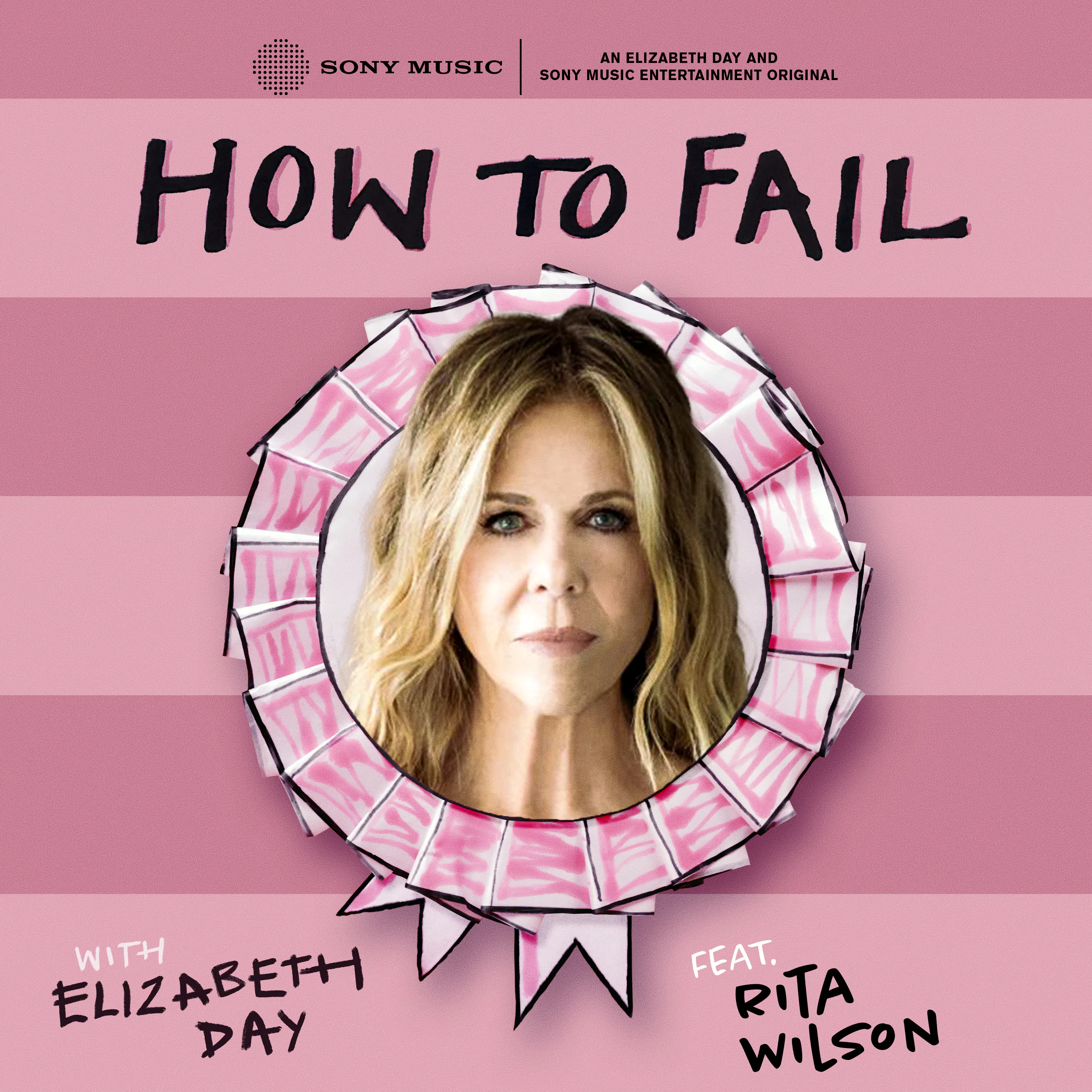
Loading summary
Transcript126 lines
- [00:00]
Elizabeth Day
How have your 60s been?
- [00:02]
Rita Wilson
69. A very sexy age.
- [00:04]
Elizabeth Day
It's the sexiest age.
- [00:07]
Rita Wilson
Your whole job, if you're an actor, is mostly failing. You don't get every job that you go up for you, you know, it's one out of 10, I suppose. And there's something really great about working with women.
- [00:20]
Elizabeth Day
Hello and welcome to how to Fail with Me, Elizabeth Day. This is the podcast that believes at the root of failure, there is the chance for growth. Before we get into this episode, please do remember to like, follow and subscribe so that you never miss a single conversation. In 1987, a newborn baby is abandoned in a remote spot. Nobody goes down that lane. Why would you think anyone would have picked me up from there? For decades, Jess has searched for answers. Why didn't that person want me? But as she gets closer to the truth, things spiral out of her control.
- [00:58]
Rita Wilson
I think I'll always be angry.
- [00:59]
Elizabeth Day
Could it have ended differently? From Tortoise Investigates and the observer, this is Foundling. Lies always come out, don't they? Skeletons are always going to come out eventually. Listen wherever you get your podcasts,
- [01:15]
Home Depot/1-800-Flowers Advertiser
it's time to refresh your yard during Spring Backyard Days at the Home Depot. Get low prices guaranteed on propane grills starting at $179 like the next grill 3 burner gas grill. Or get $50 off a select Weber Spirit Grill and bring big flavor to your backyard. Then set the scene with Hampton Bay string lights that bring it all together. Shop Spring backyard days for seven days at the Home Depot, now through May 6. Exclusions apply. See homedebo.com Pricematch for details.
- [01:44]
Elizabeth Day
My guest today is quite possibly the only woman who bears the distinction of having both a star on the Hollywood Walk of Fame and and a Greek postage stamp to her name. She is Rita Wilson, acclaimed actor, singer and producer. Born Margarita Ibrahimov in Los Angeles to a Greek mother and a Bulgarian father who emigrated to the States in 1949, Wilson wanted to be a singer from a young age, but she ended up at the London Academy for Dramatic Arts and soon got parts in sitcoms including Bosom Buddies, where she starred opposite her future husband, Tom Hanks. Notable movie roles followed, including Runaway Bride, It's Complicated and a scene stealing turn in Sleepless. I love this scene so much I can't get it out, and a scene stealing turn in Sleepless in Seattle, when she memorably bursts into tears recounting the plot of An Affair to Remember. As producer, she was the driving force behind developing theatrical productions of My Big Fat Greek Wedding and Mamma Mia. Into some of the highest grossing movies of all time. Alongside this, she has a successful musical career, releasing albums since 2012 and reaching the top of Amazon's Singer songwriter chart. Known for her collaborations with major artists such as Elvis Costello and Willie Nelson, she now returns to her solo work with her sixth album, Sound of a Woman, released in May. I've come to a stage in my life where I'm only now just finding my voice, both metaphorically and literally, wilson says. Many times I felt muted, not necessarily by the world itself, but by my own sense of propriety as a very private person in a very public life and profession. Rita Wilson, welcome to how to Fail.
- [03:41]
Rita Wilson
Hi, Elizabeth. So nice to be here, really. Thank you.
- [03:44]
Elizabeth Day
Oh, it's so lovely to have you sitting opposite me. And I'm sorry I stumbled over the Sleepless in Seattle recollection, but truly one of the greatest scenes of all time. There is a naturalism to your performance on screen, and I'm gonna get onto your music in a minute. But that naturalism. I wonder how hard it is to stay so natural when you're being filmed.
- [04:07]
Rita Wilson
Well, everybody should have the luxury of being able to say Nora Ephron's words. That screenplay was written by Nora Ephron, who also directed the film, and her sister, Delia Ephron. And if you have good material, that's it, then your job is done for you. Her scripts are actually quite musical. They have a rhythm and a tempo for comedy. So we had gotten a few of the takes down, and at the end, I said, may I try something? Because the scene actually continued on a little bit further than what Nora had written. And I said, do you want me to just continue on, like maybe a little improv? And. And she said, yes, try it. But because Tom's character and Victor Garber's character didn't know that was coming, then they improvised the whole scene about. That's a Chicks flick. And that reminds me of the Dirty Dozen and the guys jumping off and how that made the men cry. And so Nora kept it in, which was really great, and I was very surprised that she did that.
- [05:16]
Elizabeth Day
And talking of musicality, brings us to your album, Sound of a Woman. And I'm very interested in some of your lyrics. So there's a. There's a track called Michelangelo, which I love, because the whole premise of that track is that there is something beneath this rock that is generally. That is. That is gradually sort of carved out, and there is the woman beneath. Can you talk to us a bit about that? Track and what you were trying to say with it?
- [05:45]
Rita Wilson
Yes, there was a quote that I used to have on my bulletin board, and it was a quote from the artist Michelangelo. And someone had asked him, how do you carve these spectacular statues out of these massive, massive chunks of marble? And he said, I see the angel in the marble and I carve until I set him free. And when I read that, it just, it opened something up for me because I think as humans, we all have a vision for ourselves, like, who do we really want to be? And I think as women, we come in and we're. It's so easy to assign labels to women. Oh, you're such a sweet young girl, or you're a sassy teen, or, well, you're a little bit of a workaholic, or, you know, what a great mother you are, or you're a wonderful wife. And all of those things are wonderful and they're beautiful, but they're also the sort of superficial exterior things. And I think we spend so much of our lives shedding those identities that don't work for us anymore. Until we get to a place like now where I am, which is literally, you know, I guess, the most unfiltered place you can be when you get to a certain age where you just don't care what anybody thinks and you can tell the truth more fully.
- [07:20]
Elizabeth Day
What's the most annoying label that people have given you that you are delighted to have shed?
- [07:27]
Rita Wilson
You know, it's a series of labels. Because I grew up in a generation where, you know, I was very much influenced by my mom's generation. My mom and dad, you know, were. I'm a first generation American. So my mom and dad were immigrants, and dad was from Bulgaria, as you mentioned, and my mom was from Greece. And then, so I had values that were very, very traditional. And then I'm in this little middle section and ahead of me were already these women like Gloria Steinem and Bella Abzug and feminists who were fight for women's rights. And I knew that that was incredible. Like, I thought, wow, this is very different than what I'm growing up with. But I was a little too young to sort of go off and burn my bra or go to Woodstock. But I was very keenly aware of the strides that they were making for, you know, financial equality, job equality, you know, glass ceilings that we all know about women's rights. And so I've always been straddling those two generations. So the labels I can say are, I always wanted to do the right thing. By my parents, because they were the greatest people and I loved them. So I was not much of a rebel. So I think my rebel phase is coming much later in my life, I think. Shedding, putting good in front of anything. You know, we're always a good daughter, a good wife, a good girl, a good worker, a good student, you know, and so I'm enjoying discovering, you know, like, shaking it up a little bit.
- [09:20]
Elizabeth Day
Yes. And although I don't believe this because you are so unbelievably gorgeous and youthful, apparently you're 69.
- [09:28]
Rita Wilson
That's right, lady. Bring it. I own it.
- [09:32]
Elizabeth Day
How have your 60s been?
- [09:34]
Rita Wilson
69. A very sexy age.
- [09:36]
Elizabeth Day
It's the sexiest age.
- [09:42]
Rita Wilson
Well, here's the thing, though. I really feel that we are only limited by. Well, that could be a label. What does that mean? What does that mean to be 69? It means that I'm living my fullest life. The sands in the hourglass are going fast now. You know, they're coming through there in a much quicker tempo than when you're 16 or 19. And, boy, that really encapsulates what it is that you want to be doing with the rest of the time that you have left on this planet. And, you know, I started, as I said, started doing music in my 50s, but I. And I struggled with that because I thought, I don't know anybody who has done it. I didn't have a role model for that in music. But there are role models all over in poetry, in journalism, in writing, in painting. And there are so many women who got later starts. And a friend of mine who's. We've been friends for many, many years, Bruce Springsteen was one time. We were talking and having a conversation about songwriting and. And he was basically giving a little mini masterclass on songwriting, Kind of like very, very quiet and listening to him. And when he paused, I said, okay, Bruce, then I have a question. What makes me think that I can start writing now when you've been doing it all your life? And he said, because, Rietz, creativity is time independent. And that, to me, is so true, because I thought to myself, absolutely right. Who's the one that sets the clock on creativity? Who is the one that says, oh, sorry, that window, according to my creativity clock, passed for you. That was supposed to happen at 32 and a third, and you missed that window. I'm sorry. No, I wouldn't have been able to write the songs then that I'm writing now. I wouldn't have been able to do it. I didn't have a voice to say these things then. So I'm very thankful that it's happening at this point in my life.
- [12:04]
Elizabeth Day
And really, so much of creativity comes through wisdom, which comes through lived experience. So actually, the older you are, in a conventional sense, in many ways, the more creative you can be because the more you can draw on.
- [12:19]
Rita Wilson
Right.
- [12:19]
Elizabeth Day
Can I also just say that I love the sound of your friendship group like Nora Ephron and Bruce Springsteen? Sign me up.
- [12:25]
Rita Wilson
That's like, wait, yes, please. That's not name dropping. Because, you know, I know. I really mean that. You know, it didn't come across as
- [12:31]
Elizabeth Day
name dropping at all.
- [12:32]
Rita Wilson
Okay, good.
- [12:33]
Elizabeth Day
I know of several people personally who have been helped by work that you've put into the world, pieces that you've written. You wrote this extraordinary piece about breast cancer and surviving breast cancer for Harper's Bazaar, which was beautiful. Maybe we could come onto that. But also My Big Fat Greek Wedding. My aunt is Greek. Yes, and you are a hero in that household. And like my two cousins, who are like sisters to me, obviously are half Greek and they felt so seen by the story that you brought to screen,
- [13:06]
Rita Wilson
you know, but this is the thing, like, again, I want to credit, you know, the writer Nia Vardalos, because really, she wrote something that was so. To me, it was so specific to my life and my upbringing. I loved that we could look at our own cultural heritage and be able to embrace it and love it and also understand that, you know, it may not apply to everybody. And yet if you're with somebody who is not from that same cultural heritage, that it might seem like really outside the box for them. I found this play when it was in a 99 seat theater. And I the little ad in the paper, which was about an inch big, and it said My Big Fat Greek Wedding, Nea Vardalis. And I thought just that title made me laugh. So I went to see it. I thought, worse comes to worse, I took my mom and my sister and my nieces. Worst comes to worse, we've seen a bad play, but we had a great dinner beforehand and it ended up being the most fun play. And afterwards I asked to meet the writer, who was Nia, and. And she came out and I said to her, gosh, this is so good and I think it would make an amazing movie. And she said, I have a script. And I said, let me have it. And that's how it happened.
- [14:27]
Elizabeth Day
Did your mom love it too?
- [14:28]
Rita Wilson
She loved it. Oh, she told the funniest story after she saw the movie, which, by the way, we could not get a distributor for. We could not get anybody to finance it. Nobody wanted it. But even after the movie was finished, our distributor sort of just bailed and said, I don't get it. And of course, you know, it became the greatest, the biggest grossing independent movie of all time, which, very grateful for that. But my mom, after she saw the movie for the first time, she's. I said, mom, what did you think of the movie? And she said, oh, this movie is funny. This is very, very funny. These people are crazy. They're not like us. And I was like, no, not at all, Mom. Like, they're totally like us. By the way, my sister has a house next to my mother's. So when they were alive, they had the houses next to each other. My mom and dad. Yeah.
- [15:26]
Elizabeth Day
And was your mother using Windex for every minor ailment?
- [15:29]
Rita Wilson
No, that's all Neil. I didn't know anything about Windex when
- [15:36]
Elizabeth Day
I started this podcast. I honestly felt like I was learning a brand new language. Overnight scripts, artwork, scheduling, tech. Suddenly I was the entire team and it was kind of overwhelming. There were so many moments I wished I had a proper business partner to help me figure it all out. That's why I love Shopify. It's the commerce platform behind millions of businesses and it gives you everything you need in one place. You can build a beautiful online store in minutes with hundred of ready to use templates. Their AI tools help you write product descriptions and even polish your photography, which is a lifesaver when you're spinning 100 plates. And you can manage everything, inventory, payments, analytics, without juggling 10 different tabs. Start your business today with the industry's best business partner, Shopify and Start. Sign up for your pound one per month trial today at shopify.co.uk fail. That's shopify.co.ukfail.
- [16:39]
Podcast Sponsor Announcer
this episode is brought to you by Prime Obsession is in session. And this summer, Prime Originals have everything you want. Steamy romances, irresistible love stories. And the book to screen favorites you've already read twice off campus. Elle every year after the Love Hypothesis, Sterling Point and more. Slow burns, second chances, chemistry you can feel through the screen. Your next obsession is waiting. Watch only on Prime. Good sleep is everything.
- [17:11]
Rita Wilson
That's why Ollie's science bag support is made with a blend of melatonin and L theanine for both kiddos and grown ups. So when your mind won't switch off, you've got something that can help. Erasing thoughts and restless nights won't stand a chance. Find Ollie Sleep Solutions for the whole family@ollie.com.
- [17:28]
Podcast Sponsor Announcer
that's o l l y dot com.
- [17:33]
Elizabeth Day
Your first failure is dropping out of college and then being rejected from true drama schools before being waitlisted at Lambda here in London.
- [17:42]
Rita Wilson
Yes, yes.
- [17:43]
Elizabeth Day
So tell us this story because from what I understand, singing was your first love.
- [17:48]
Rita Wilson
It was.
- [17:49]
Elizabeth Day
So how did you end up applying for drama school?
- [17:51]
Rita Wilson
Back in the day when I was working, I started working when I was 15 and a half and I got my Screen Actors Guild, my union card, doing an episode of the Brady Bunch. And that sort of got me into acting. And I was working. I worked all the time. I did commercials, I did television shows, I modeled. I just never stopped working. But in my head, that wasn't really a job. That was, you know, sort of like, this is what you can do right now. But a job to me was, you know, being a teacher, which was what my sister was going to be. And I didn't really think that you could make a living being an actor. And yet I was doing that. So I applied to community college, which we back then was called junior college. And those were only for two years. And then you would take that two year degree and then go on to a college to finish and get your bachelor's degree. So I went to the first junior college and I was taking general ed classes. And this one junior college was kind of far away and it was a long commute, so I decided to transfer to one that was closer. And I was taking all my general ed classes, you know, English and history and just the same things that you would have taken in high school. I kept having to retake a class over and over again because I couldn't be there and I would miss classes because I was working. But I also had to support myself. And so it was always a conflict of being able to do I take the job or go and do this class. And our business was paying really well back then and I would take the jobs, but I knew I wanted to stay in college because it was so important to my parents. You know, they didn't have really high school or college education, but I knew that it was so important to them because they impressed upon us that if you have a college degree, then you would have a much better chance at having a better job. My dad was a bartender and my sister was the first person in our family to actually get a college degree. So I felt like an utter complete disappointment when I had that conversation with my parents, which was, I don't think I should stay in college because I think acting is my real job. And it was also back then, if you were an actor and you were a woman, and believe me, I was only a teenager back then, it had a little bit of a taint to it. Like, oh, you're, you know, like a loose lady or something. You know, it wasn't a respectable job. And so that was also, like, a little scary to me because my mom used to say to me, your reputation is very important. You know, once you lose that, it's very hard to get it back. And so I had these old school ideas of, like, am I gonna lose my reputation by being, you know, in this business? But I went for it. And I have to credit my parents for never telling me I couldn't do something. They never put their foot down and said, absolutely not. So I really credit my parents for not shutting that down for me.
- [21:37]
Elizabeth Day
What was Hollywood like in the 1970s?
- [21:41]
Rita Wilson
Fantastic. Oh, my gosh. It was everything. I mean, I was born and raised in Hollywood, California. I went to Hollywood High, only town I ever knew. It was my hometown, but I knew people came from all over the world to try to make their dreams come true there. But, I mean, it was Sunset Boulevard was our street. That's where we went. I mean, we would go to the Whiskey A Go Go. We would go to the on the Rocks. We would go to or the Roxy. You know, there were so many music venues to go and listen to music and dance clubs, and it was fantastic. Laurel Canyon. The Laurel Canyon scene. It was everything that you think it would be. It was that.
- [22:22]
Elizabeth Day
I'm so jealous.
- [22:23]
Rita Wilson
It was really fun.
- [22:24]
Elizabeth Day
Would you see Joni Mitchell walking along Laurel Canyon sidewalk?
- [22:29]
Rita Wilson
No, but my parents met Joni Mitchell once, and they knew how much I loved her. And they met her at this little restaurant, and it's still there, called Dantana's, right next door to the Troubadour. And my mom and dad came home from dinner one night and they said, we met Joni Mitchell. She's so nice. And she came and she sat down at the table and talked to them because my mother happened to be in the ladies room with her and recognized her. And Joni came and sat down with my parents and talked to them. That's how incredible she was.
- [23:01]
Elizabeth Day
Wow.
- [23:01]
Rita Wilson
I know. But, oh, my gosh, Can I add this one story? I'm not taking too long.
- [23:05]
Elizabeth Day
No, please, take all the time you need.
- [23:08]
Rita Wilson
Okay. So my high school was Hollywood High, and our class was too big, so we didn't graduate from the high school. We graduated from the Hollywood bowl. And we would get, you know, wear our caps and gowns and get our diploma on the Hollywood bowl stage. That was in 1974. In 2024, Brandi Carlisle did the Joanie Jam, which is Joni Mitchell and other people singing all of Joni's songs. And Joni was on stage and Brandi said, would you come in and be part of the Joni Jam? Which means you're singing the harmonies and singing along, right. With Joni. And some of the people that were those people were Elton John, Annie Lennox, Allison Russell, Meryl Streep and Jon Batiste and Jacob Collier.
- [24:07]
Elizabeth Day
Okay, no pressure, right?
- [24:08]
Rita Wilson
No pressure. It occurred to me that was 50 years to the year of graduating high school. And if somebody had said to me when I was getting my diploma, you're going to be back on this stage. I've never stepped on that stage since my high school graduation, and I'm from Hollywood. In 50 years, you're going to be back on this stage singing with your idol, Joni Mitchell. I would have said, okay, first of all, why is it taking 50 years? But I'm so glad I'm there. I mean, that just blew my mind. I still can't get over it when I think about it.
- [24:47]
Elizabeth Day
And that is why Hollywood, whatever it's going through right now, is the place where you can write those stories. It is the place where you can make your dreams come true. What a full circle moment. Wait, so how did you end up in Lambda?
- [25:02]
Rita Wilson
So more failure to come here, Elizabeth. I was cast in a play, but it was in a very small theater, but it was all good people. And the director of the play was also an actor. And he said to me, you know, you seem to really like the stage. Have you ever gotten any formal training? And I said, no. And he said, I said, what do you mean formal training? Because, you know, I'd been working, I'd been doing a lot of television. And he said, you know, like stage training, voice movement, classical literature and plays. And I was like, no, where do you go to get that? And he said, well, there's places like rada, there's places like Lambda, a place called Juilliard in New York. And he put me together with a woman who had just come from Lambda. And she told me about the program. And I thought, this is incredible. And at that point, I don't know if they still do it, but they had had a one year overseas program. Usually they're course was three years. So I figure out how to apply and I figure I might as well apply to all the drama schools that he mentioned. So I applied to rada, I applied to Juilliard, and I applied to Lamda, and they all come to the US to audition people. So I did my auditions, and then you wait and you wait and you wait to hear, and I get turned down from Juilliard, I get turned down from rada, and then I got wait listed at Lambda, and I thought, oh, my God. And I would call them, like, hi, is there any chance that you know yet if I'll be accepted or. I mean, I didn't know why I was being wait listed, you know, because I was already a professional. I was a little bit older than kids just getting out of high school, so I was probably like 23 or something, as opposed to 18. And when I got the call that I was accepted, I was ecstatic. Ecstatic. And it was one of the greatest years of my life. But it was scary because I definitely thought I was. I had already failed two other auditions and didn't get in. And then being waitlisted is a failure also, because you're like, it's not just a slam dunk. And I loved that course. And I remember the principal, at the end of our course, at the end of the year, he came into the class and he said, I want you to look around, and only five of you will still be doing this in five years. And I was like, don't look at me. I'm going to be doing it in five years. Now I'm not one of the others. I think we were maybe a group of 30. I was like, speak for yourself, sir. But I think it is true, because I think so. I already was experienced with rejection and not getting jobs. I mean, your whole job, if you're an actor, is mostly failing. You don't get every job that you go up for. It's one out of ten, I suppose. So I was bound to prove him wrong, which I think I did. I hope I did.
- [28:24]
Elizabeth Day
I mean, forget five years. You're here 50 years later.
- [28:26]
Rita Wilson
Yeah, exactly.
- [28:29]
Elizabeth Day
You often on screen have played a really good friend. And I feel like you would be a really good friend in real life. But maybe we can come on to that, because friendship's one of the subjects I'm most passionate about.
- [28:42]
Rita Wilson
I love my friendships. Love my friendships.
- [28:45]
Elizabeth Day
There's one friend that you play in. It's complicated. Opposite Meryl Streep again and again. One of the greats. Nancy Meyer's, like, how I've always wanted to ask you about this. It's so weird. It's like I've manifested you because, again, the naturalism of that group of friends on screen, I felt so understood by it, and it felt so real. Like, how much of it was real? How did you develop a real friendship?
- [29:15]
Rita Wilson
Again, I have to say, so much of what makes an actor's job easy is good writing. I do have to say that Nancy also was very much trying to create this camaraderie of girlfriends, and she did that. And you do have that moment when you're working opposite Meryl that, like every film she's ever done flashes in front of your eyes. This was before we had done Mamma Mia. So I didn't know her as well. And it was just so lovely to work with her and work with those ladies. And there's something really great about working with women.
- [30:03]
Elizabeth Day
Maybe that's what it is. That's what I was picking up on.
- [30:05]
Rita Wilson
Yeah, there's something really great. I was doing an indie film, and it was all women. And I was driving home and I thought, gosh, I'm in such a good mood, and why am I in such a good mood? And I realized, oh, I'm working with all women. And then I thought to myself, oh, this is what it must feel like for men every day when they go to work. Yeah.
- [30:25]
Elizabeth Day
Or just in the world.
- [30:26]
Rita Wilson
Exactly. Right, right.
- [30:28]
Elizabeth Day
So tell me about friendship. What, for you is the essence of friendship?
- [30:34]
Rita Wilson
Acceptance for who we are. An ability to really feel like you can be yourself. That sort of authenticity of being able to share with someone and feel that they really get you. They're not judging you. They're just listening. And there's gotta be laughs, and there's gotta be humor. There's gotta be all of that. But it's an intimacy that is a real understanding of what the experience of, like, is like being a woman, but also who we are, you know, to each other, to our friendships and that. I mean, I owe so much to my girlfriends. I love them so much. They're just fantastic. And my goodness, I feel so lucky to have that.
- [31:37]
Elizabeth Day
Do you mind my asking you about breast cancer?
- [31:40]
Rita Wilson
No.
- [31:41]
Elizabeth Day
Because I wonder how much your friends helped you through that period of your life. You were diagnosed in 2015. Yes. And you had a bilateral mastectomy.
- [31:50]
Rita Wilson
Correct.
- [31:50]
Elizabeth Day
And as I mentioned earlier, you wrote this extraordinary piece, magazine piece, about. The thing that really struck me about it was you were tackling the idea that so many women are guilted into feeling that their stress might have caused their illness.
- [32:04]
Rita Wilson
Right.
- [32:05]
Elizabeth Day
And I thought that was very powerful. But could you talk to us about that part of your life and how important your friends were through that.
- [32:11]
Rita Wilson
Well, I want to, because I think that so many times you'll hear women say, I brought this on myself, Stress brought this on. And that's why I got sick. And I really felt that I wanted to understand that. And so I called a doctor at Stanford University and I said, is there a connection at all between stress and breast cancer? And he had done a study on that. And he said there is not. And also my doctor told me that too, that there is no connection. He said, there's a connection between stress and if you're going through chemotherapy and any kind of treatment, that they found that the more relaxed you are, if you did meditation, if you did something like that, that the chemo, it was a bit easier to go through chemo. But when I asked him why this happened, why do women say, I brought this on? Why do they take responsibility for it? He said, such a fascinating thing. It actually goes back to, I don't know what period, but let's say the 1800s. And it was about venereal disease. And if you got a venereal disease, if you were a man and you got a venereal disease or a woman, then you were considered dirty. And so you were, you know, didn't want to be. Nobody wanted to deal with you. Right. And if you recall, Even in the 60s, if you got cancer, you never said cancer, you said the C word because it was not to be spoken of. And so there's this kind of shame and this thing that got attached to this earlier thing of venereal disease. But it's all this sort of thing that just gets translated over the course of years and years to people not talking about it and people feeling as if there's shame around it and there's something that they did wrong that brought it on.
- [34:28]
Elizabeth Day
Fascinating.
- [34:33]
Podcast Sponsor Announcer
This episode is brought to you by Redfin. You're listening to a podcast, which means you're probably multitasking, maybe even scrolling home listings on Redfin, saving homes without expecting to get them. But Redfin isn't just built for endless browsing. It's built to help you find and own a home with agents who close twice as many deals. When you find the one, you've got a real shot at getting it. Get started@redfin.com. own the dream.
- [35:00]
Home Depot/1-800-Flowers Advertiser
You tell yourself no one wants your college era band tees, but on Depop, people are searching for exactly what you've got. You once paid a small fortune for them at Merch Stands Now a teenager who calls them vintage will offer that same small fortune back. Sell them easily on Depop. Just snap a few photos and we'll take care of the rest. Who knew your questionable music taste will be a money making machine. Your style can make you cash. Start selling on Depop, where taste recognizes taste.
- [35:31]
Podcast Sponsor Announcer
With Plan B Emergency contraception, we're in control of our future. It's backup birth control. You take after unprotected sex that helps prevent pregnancy before it starts. It works by temporarily delaying ovulation and it won't impact your future fertility. Plan B is available in all 50 US states at all major retailers near you with no ID, prescription or age requirement needed. Together we've got this. Follow Plan B on insta at Plan B. One step to learn more. Use as directed.
- [36:01]
Elizabeth Day
Rita, your second failure is not recognizing the true value of your dad until a fateful dinner with friends. Yes, tell us this story.
- [36:11]
Rita Wilson
Okay, so I mentioned earlier that my parents were uneducated, but they were incredibly smart and incredibly intuitive and very hard working. Incredible values. And of course I knew this, but my dad was bartender, and we grew up in the Hollywood Hills. And everybody around me in my school, they were all, I would say, upper middle class. And I was dating a guy, and he was from a very wealthy family and all of his friends were incredibly wealthy. And so I was just getting to know all of these people. And they were, you know, I mean, they were. I had never been exposed to that sort of lifestyle or anything. And we were having dinner in Laguna beach, which is a community south of Los Angeles, and there was another couple there. We were on a double date. And we're all like 23 or something like that, 24. And this young woman said to me, what does your dad do for a living? And I knew that she was really wealthy and she had taken over her father. She was working in the family business. And I said, oh, my dad's a bartender, like. And she goes, why do you say it like that? Oh, he's just a bartender. And I said, well, I don't know. I mean, you guys all have businesses and your families are all, you know, different than mine. You're very wealthy. And her father had passed away.
- [37:59]
Elizabeth Day
Oh, Rita.
- [38:01]
Rita Wilson
And she said, no. She said, I would give anything, I would give up everything that I have to have my father back here with me. And it really changed instantly in a minute how I represented my father out in the world because he was an extraordinary man. He escaped communist Bulgaria. He escaped a labor camp. He got on a freighter ship to get a job so he could come to America. He jumped ship when he got to America. He got a job as a bar back in New York and worked his way up to being a bartender. And he supported a family. He bought a house. He never had debt in his life. He and my mom were married for 59 years, and they were an incredible couple and incredible, incredible parents. And I knew that in my heart. But my own insecurities. That time, I really failed to honor my father in the way that he should have been honored at that time. Fine. I was 23 years old, but still old enough to know better and to really value what he had accomplished and what he had sacrificed in order to have a life of freedom in America and to escape from communism. And he was such an incredible person. So that she taught me an enormous lesson, and I was able to have my dad for so many years. So. Yeah.
- [40:02]
Elizabeth Day
How moving. Thank you so much for sharing that.
- [40:06]
Rita Wilson
Oh, you're welcome.
- [40:07]
Elizabeth Day
And I think there's a lesson there for so many of us who take our families for granted, because that's all we've ever known.
- [40:17]
Rita Wilson
Yeah.
- [40:17]
Elizabeth Day
Were you able then to have a conversation with your dad?
- [40:22]
Rita Wilson
Everything changed. Everything changed. In that moment. I looked at him in a completely different way. The. The realization that he could be gone. And. And she was saying, my dad died young. And, yes, I have this business, and yes, I have a fancy car and a fancy house, but I don't have my dad. I'd rather have my dad.
- [40:49]
Elizabeth Day
Your father, as. I mean, both your parents sound utterly extraordinary. And your father had this whole story, this whole life that you only found out about after he passed.
- [41:00]
Rita Wilson
Yes.
- [41:01]
Elizabeth Day
About his first wife. Do you mind sharing that? The December 26th of it all that.
- [41:09]
Rita Wilson
Okay. You did your research, girl. Okay. So I did this show. You know, it. It's an English show, who do youo Think youk Are? And usually in those genealogy shows that go back back many, many generations. But what they found with my dad was that his story was so shocking and unusual that they stuck with his story. And so we went to Bulgaria, and they're telling you all these different things. And one day they take us to kind of like, their hall of records. And that day, I have a driver. And this driver, I'm just chatting with him, and I said, what's your name? And he said, emil. And I said, oh, what a beautiful name. I've never known anybody named Emil. And we're just chatting. We go to the place, and we look at this book of records, and it says, oh, now, this is where your dad was living. And names. It goes. Read the names in the. Of the different people in the house. And I'm kind of trying to figure this out. And they said, well, your dad was married. I said, what? Yes, he was married and he had a child. I said, am I going to meet someone? Am I going to meet a family? It was a little boy. And they're like, no. My dad's first wife, whose name was Alice, gave birth on December 26, and she died three days later due to complications from delivery. Her son and my dad's son, Emil, lived for four months. This was right after the war. And then he passed away. I don't know the name of it, but it was like an infection. And what happened, you know, during that, I can't imagine they were so poor. It was right after the war. It was Bulgaria. I don't know how they would have afforded formula or something, but I'm sure they made ways. I mean, he didn't die from starvation. He died from an infection. But this is where it gets weird. My sister's firstborn child was born on December 26th, and my youngest son was born on December 26th. And I think of my dad all of those years celebrating all those birthdays and knowing that he had a child born on December 26. Emile, who passed away. I just. I still can't get over that he never said anything to us. I wish. Wish I could have talked to him about that. They kept things so private. This is another thing about privacy. You know, there's no word for privacy in the Greek language. Really? No. There's words for private. That's private, the private room, or private property, but there's no word for personal privacy. Why? Well, the Greeks grew up, you know, if you grew up in a community, you grew up in a little village, and everybody knew your business. So everybody was talking, looking, observing, watching. My mom told me that in her village, if you went to somebody's house, and this was during the war, you were hungry, and they said, would you like something to eat? She was instructed to say, no, she was fine, because she didn't want. Her mother didn't want anybody to say, they can't afford food or they're poor or they're, you know, whatever they were gonna say to talk about you. What a burden. What a burden to be having to do that, to feel. And I think in my own generation, as we talk about public versus private, I think this privacy thing was something I grew up with, that I was like, don't Ever talk about anything, anytime, anywhere, because you don't know what's gonna happen. It's gonna backfire on you.
- [45:50]
Elizabeth Day
That's so fascinating. Thank you.
- [45:52]
Rita Wilson
Yeah.
- [45:52]
Elizabeth Day
What a beautiful and tragic story.
- [45:54]
Rita Wilson
I know.
- [45:55]
Elizabeth Day
But the privacy part is so interesting because I think my parents and certainly my grandparents are absolutely of that mindset. And so what I do is so strange.
- [46:07]
Rita Wilson
Exactly. I think if we were all more open with each other, then. We are. We all can see that we're all in the same boat.
- [46:18]
Elizabeth Day
Yes. So can I ask how the experience of being raised in this exceptional family has informed how you create family?
- [46:31]
Rita Wilson
Everything. I think all the values that I have about family come from my parents. I lived at home till I was, like, 23 years old. Like, people were saying, when are you moving out? I'm like, where would I go? I mean, we're like, cut the cord, Rita. Cut the cord, Meaning the umbilical cord. I'm like, I like my parents. Why would I move out? I eventually did move out and get an apartment, but I valued everything that my parents brought. I learned everything. Everything about who I am today is informed by my parents. Work ethic, love, family connection, humor. All of that has been so impactful in my life. I think the biggest challenge is realizing that the world was not often as warm, embracing and understanding as my own family was. So I had to learn a little bit about that. But they're just.
- [47:40]
Elizabeth Day
You must miss them.
- [47:41]
Rita Wilson
Oh, I do. I do. Yeah. I still talk to them every day, though.
- [47:44]
Elizabeth Day
Oh, do you?
- [47:45]
Rita Wilson
Oh, yeah.
- [47:46]
Elizabeth Day
Oh, good. I love hearing that we're running out of time because I'm so sorry. I've been so invested in every single story you've been telling me. But your final failure is being fired from a job as a ticket taker. Tell us this story.
- [48:01]
Rita Wilson
I told you earlier that I love music. Right. And so I got a job in the summertimes working at this place called the Universal Amphitheater. It was part of Universal Studios, and it was this gorgeous outdoor venue. So beautiful. Absolutely fantastic. And the job as a ticket taker was you would take the tickets, they were paper back then. You would cut them in half. Then you would go and count them. So you would, you know, do an accounting of all the tickets that came of the people who came through. And then you could go and watch the concerts. And then after the concert, you'd have to clean the bathrooms. And then you could go. Let me just set the stage for you. About what our uniforms looked like, though. The uniforms were orange polyester suits, pants, and A jacket with a white. And then we had orange and blue plaid capes with these, like, almost. They look like Bobby hats. Like, you know, what a bobby would wear here, also in blue and orange plaid.
- [49:10]
Elizabeth Day
How fantastic that was.
- [49:12]
Rita Wilson
Everything had uniforms back then. So really, like, so weird. It's maybe 90 degrees. What is that, like, 30 degrees Celsius in the middle of summertime, and you're wearing a suit and a cape. Why they would do that, I don't know. So that's the look. But this one year, I had about three weeks left in the season, and there was somebody that I had met who said, I'm gonna be coming to the show. I think it was a Bonnie Raitt show. And can you meet me backstage after the concert? I finished the job, finished cleaning the bathrooms, put on my regular clothes, and I go backstage and my name was on a pat, you know, a list and everything. So I wasn't like, crashing or anything. And my boss is backstage, and he sees me, and he's like, what are you doing here? And I said, oh, my friend invited me to come be backstage. He's like, you can't be backstage. I said, but I'm done working, and I'm a guest, but you can't be here. He was just. He could not. He could not grasp that it was okay for me to be there. I had permission to be there, could not grasp it. And he fired me. But there was only three weeks left in the season, so technically it was a suspension, but. But he fired me. And I was so mad because, like, there was no. I couldn't respond. There was nowhere I could go to fight him on it. There was, what am I gonna do? Get proof of the backstage list or something. It was no big deal, but it just made me. It made me feel so bad because I thought, I'm following all the rules. Like, this is one of the things. I'm a rule follower. I'm trying to get better at breaking rules as I get older. More rebellion. But I was so mad that I had no way to sort of defend myself and to write it, you know, that it just really bothered me because I couldn't. There was nowhere to go with it. And so. And I never got to, you know, resolve it.
- [51:41]
Elizabeth Day
The injustice.
- [51:42]
Rita Wilson
The injustice of it. It was like, is anybody kicking me out here? I'm supposed to be here.
- [51:48]
Elizabeth Day
Yeah. How interesting, though, that that experience still lives with you, and it's clearly taught you something very meaningful, which is that sometimes rules are unfair or they're wrongly defended.
- [52:03]
Rita Wilson
That's right.
- [52:04]
Elizabeth Day
And therefore, you have to break them.
- [52:06]
Rita Wilson
That's right. That's what I'm all about now. Breaking the wrong rules. Yes, the unnecessary rules.
- [52:14]
Elizabeth Day
Long may you, Rita Wilson, continue to break the wrong rules.
- [52:19]
Rita Wilson
Come on, Elizabeth.
- [52:20]
Elizabeth Day
I've loved talking to you. Thank you for letting me be your first ever podcast interview.
- [52:25]
Rita Wilson
Thank you.
- [52:25]
Elizabeth Day
It's been a delight.
- [52:26]
Rita Wilson
Thank you.
- [52:30]
Elizabeth Day
Please do follow how to fail to get new episodes as they land on Apple Podcasts, Spotify, Amazon Music, or wherever you get your podcasts. Please tell all your friends this is an Elizabeth Day and Sony Music Entertainment original podcast. Thank you so much for listening.
- [52:48]
Home Depot/1-800-Flowers Advertiser
She does a lot for your family. Mother's Day is your chance to show her you see it with a gift from a brand trusted for generations to help people get the moment right. 1-800-flowers with double blooms from 1-800-flowers buy one dozen roses and get another dozen for free. It's a bigger Gesture backed by 50 years of experience delivering fresh flowers so you can feel confident sending something that lands. Show up for her with double blooms at 1-800-Flowers.com Spotify. That's 1-800-Flowers com Spotify.