Loading summary
Transcript215 lines
- [00:00]
A
I knew I was obviously and I was like, ah. He just thought I was being like really frisky on holiday. He was like, this is great. I actually then did go into trying to do a 9 to 5 job.
- [00:11]
B
What was that?
- [00:12]
A
To this day, I still don't even know what the job was.
- [00:16]
B
Do you feel good enough? Hello and welcome to how to Fail with Me, Elizabeth Day. This is the podcast that believes the true test of character is not the failure itself, but in how we respond to it. Before we get started on this conversation, please do remember to like, follow and subscribe so that you never miss a single episode. Hello, this is Elizabeth Day from the how to Fail podcast. I wanted to share something I'm genuinely excited about. One of my favorite UK wellness brands, Ancient and Brave, has just launched in the us. I've used two of their products in my daily routine and they've made a tangible difference. The first is True Creatine Plus. With added taurine, vitamin D and magnesium, it supports physical performance, energy and cognitive function. It's easy to take at home or on the go, whether I'm working out or not. I also use their clinically studied True Collagen, a pure, potent and powerful staple that supports skin elasticity and hydration as well as whole body health. It's EU sourced, so free from growth hormones or antibiotics, plus it's neutral in taste and dissolves effortlessly into coffee or smoothies or a cup of tea. I would say that as a Brit, wouldn't I? Ancient and Brave are proud members of 1% for the planet, meaning that 1% of their sales go to environmental causes, wellness. That feels good and does good too. Go to ancientandbrave.com planet and use the code howtofail. That's howtofail. No spaces all one word for $10 off any purchase.
- [02:01]
A
This episode is brought to you by TaxAct. Don't do your taxes alone. Join TaxAct's National Admin Admin Nights are social gatherings for getting through your to do list.
- [02:11]
B
So get ready for a night of fun finding deductions and filing taxes with TaxAct, where you can file your federal
- [02:18]
A
and state return for just $49 through April 8th.
- [02:21]
B
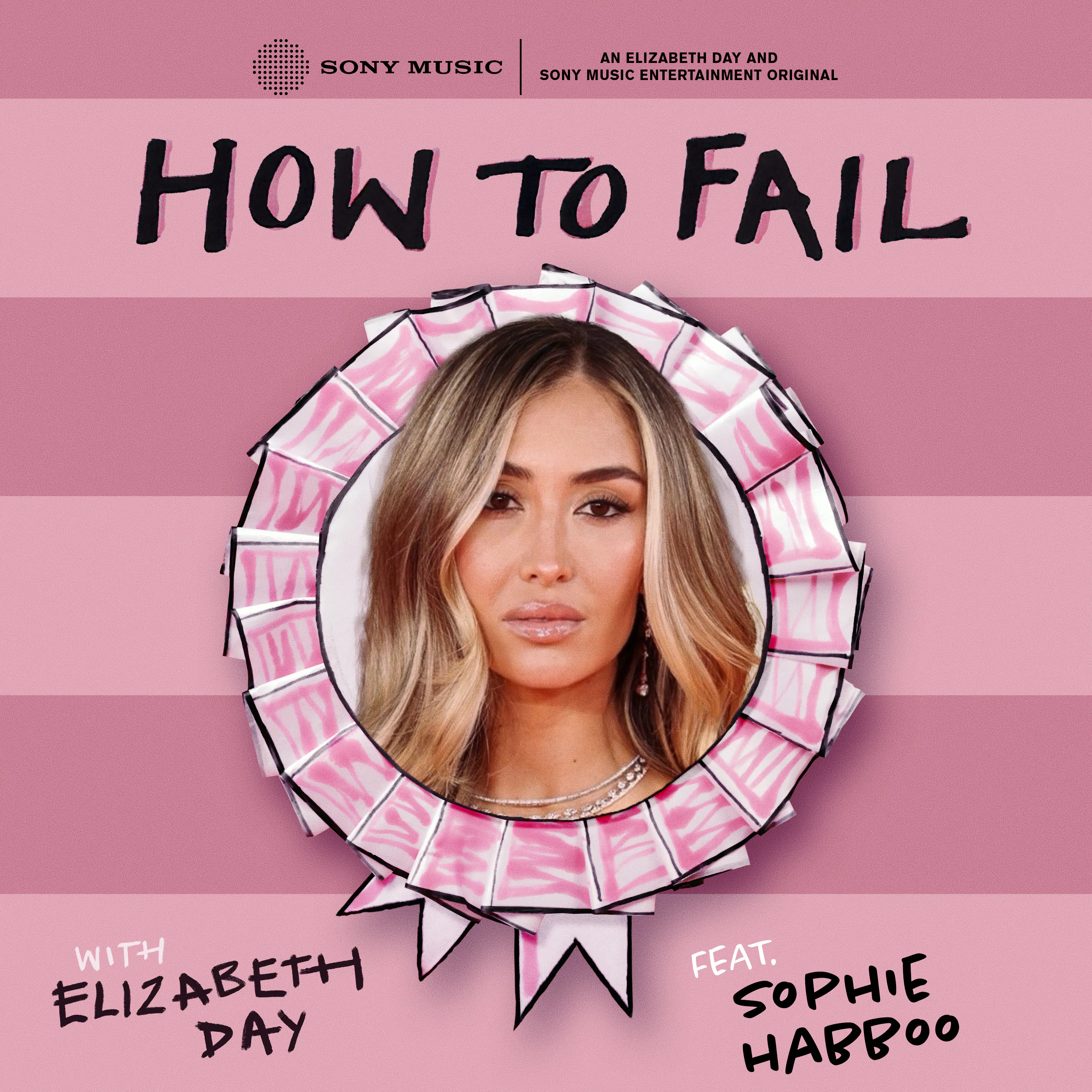
Let's get together and get them over with. Visit taxact.comadmin-knight for details. My guest today is Sophie Haboo, podcaster, model, entrepreneur and reality TV star. After a childhood in Leaming Bar, boarding school and a media and communications degree at Newcastle University, she found fame On Maiden Chelsea E4's structured reality show following the lives of affluent 20something Londoners. Her boo initially struggled with the attention it brought her, but became a regular. Crossing paths with her fellow castmate Jamie Leng In 2017, the two began dating and then launched a media empire. Their podcast, Newlyweds was an instant hit and was rebranded as Newlyweds when they got married in 2023. Fans of the show love the couple's hilarious and authentic repartee, whether it's arguing over hand jobs, being underrated, or having more serious conversations about anxiety and toxic masculinity. Haboo now runs the hugely successful Jam Pop podcast production company with her husband, and the two served as executive producers on Raising Chelsea, a new three part Disney documentary following the couple as they face the messy, scary and comic reality of becoming parents for the first time. And yet, for someone who has publicly shared so much of her life, such focus still doesn't feel entirely comfortable. We always have this struggle in our relationship, haboo says. Jamie would want to share every single thing, and I find that a little bit scary. With this TV show, I realized that it wasn't going to work unless we showed everything. Sophie Haboo, welcome to how to Fail. Oh, my goodness, what an intro. I'm so happy to have you sitting opposite me. I'm thrilled for multiple reasons, but one of them is I'm really honored that how to Fail is your first ever solo podcast interview.
- [04:33]
A
I have been so nervous. I've been calling everyone. I'm like, I need to prep. Do I come in with notes?
- [04:38]
B
Oh, so sweet. Do people come in with notes? One person came in with notes. I think it was Geena Davis.
- [04:45]
A
That's a bit weird.
- [04:46]
B
Well, interestingly, you and she share something in common and it pertains to one of your failures. So we'll come on to that. Please don't be nervous. I lapped up every single second of Raising Chelsea. Have you watched it? I've watched it all, Sophie. I've done my research.
- [05:00]
A
Oh my goodness. I need to know everything.
- [05:02]
B
I think you really shine in Raising Chelsea, and I also think alongside you and Jamie, the breakout star, are the parents.
- [05:11]
A
But Penny's got some absolute wild, amazing one liners.
- [05:16]
B
Yes. Penny is Jamie's mother, and at one point she says that she left him in a pram in the garden for several hours and to train him out of crying.
- [05:25]
A
Yeah, yeah. Which she tells me to do regularly with Ziggy, and I'm like, oh, cut. Politely decline.
- [05:30]
B
I'm not gonna do that. So it was also lovely to see your parents and your surname. Haboo has Iraqi heritage. Is that right?
- [05:38]
A
Yes. My dad's Arabic. Yeah.
- [05:40]
B
How interesting. Have you ever been to Iraq?
- [05:43]
A
Is that a weird question? No, I haven't been.
- [05:45]
B
I would love.
- [05:45]
A
It's such a shame because. So my. My dad's family moved. Well, most of them moved to Michigan when he was younger, and then his father moved to England. So my dad's never grown up. I mean, he doesn't speak Arabic, so we don't. It's very much like we eat Arabic food and stuff, but we don't, you know, I don't have much of that culture within me, which is a shame. I'd love to sort of be more cultured.
- [06:10]
B
What's your favorite Arabic food stuff?
- [06:13]
A
Oh, I love all the standard baba ganoush. My mum makes this incredible rice dish with, like, minced lamb. And weirdly, when she met my dad, his father made it. And so it was a very family thing. We all sort of ate that. It's delicious. I can't remember the name, but it's so good.
- [06:28]
B
What that shows is how important family is to you. And that's something that came across loud and clear throughout raising Chelsea as well, that this is something it feels like you've always longed for, to be a mother.
- [06:42]
A
I, from a really young age was like, all I want to do is, you know, have babies and have a family. So I feel really lucky that I'm in the position I am now.
- [06:52]
B
You say in the show that motherhood is everything you dreamed of and more. Does it still feel like that?
- [07:00]
A
I should actually start by saying that I am so sleep deprived at the moment. He's four months and he's. He's teething and sleep regression. So if I'm not making any sense to you and the listeners, I'm so sorry. I. I do feel like my brain is, like, not quite gone back to normal since becoming a mother. But, no, in answer to your question, it's one of the hardest things I've ever done, if not the hardest things I've ever done. And I'm only four months in, but, yeah, the love is mad.
- [07:28]
B
Thank you for saying that about your fears that you're not making sense, because from my side, you are incredibly eloquent. You're making total sense. But I think very often there are diminishing terms applied to the experience of pregnancy and birth. So baby brain is kind of one of them. But actually there is a serious underlying issue, which is all of these hormonal shifts and the brain fog.
- [07:52]
A
You know, you're tired Your brain's changing. The hormones are real. You know, if you're breastfeeding or you're stopping breastfeeding or all of it, it's a shift and it is just an adjustment. And so, yeah, I don't feel as. I wouldn't say ever been quick, and I've always got marbled up with my words. But I'm more so now, like, I'm a little bit like, woo. Is it just air up there at the moment?
- [08:14]
B
No. Well, that's so interesting that you perceive yourself like that. And maybe it is because you think differently. So that's really interesting. And we'll elaborate on that. Ziggy is called Ziggy because you went on holiday to a beautiful place called Ziggy Bay.
- [08:29]
A
Lovely place.
- [08:30]
B
After Jamie had run those bloody ultra
- [08:33]
A
marathons I got him when he was vulnerable, I was like, now is my time. Didn't even tell him. Didn't even tell him.
- [08:40]
B
You didn't tell him that you were going on holiday?
- [08:41]
A
No, I. No, I was just like, blindfold, off we go. No, I didn't tell him that. What? I. I was. I knew I was obviously. And I was like, ah. He just thought I was being, like, really frisky on holiday. He was like, this is great.
- [08:57]
B
But we, as a nation felt like we ran alongside Jamie as he was running those marathons. It was an extraordinary thing to witness because he wore his emotions and his pain so publicly. There was something so beautiful about it. And I remember texting him and just getting these texts back saying, I'm in hell. I just don't think I can do it. Like, it was real, the amount that he was going through. What was that like for you, Sophie?
- [09:24]
A
It was so intense. Truthfully, Jamie actually didn't want me to come up, so I arrived on, like, day three, but he didn't want me to come up. He wanted to put his head down, like, get involved. He just needed to get in the moment. But when I saw the videos and the clips and I spoke to him on FaceTime, I was like, he's not in a good way. And obviously everyone was so supportive. And it was, you know, it was crazy looking back at it. It's a wild time. Everyone was rooting. I mean, people are out on the streets. Like, it was mad, but it's just so proud. It was crazy. It's so proud. So brave. I didn't expect any of it. I don't think he expected any of it. I don't think he thought he would sort of have that emotional breakdown. Or be that vulnerable. He. He was just running, you know, for Comic Relief and he was going to do this challenge for BBC, but actually it was so. And I think it. I actually think it's really changed him as a person.
- [10:19]
B
Has it?
- [10:19]
A
Yeah, I definitely.
- [10:21]
B
Has it changed your relationship?
- [10:23]
A
Yes, it has. I think over the years since I've been with Jamie, he's obviously very openly spoken about his anxiety and all these, you know, different mental health hurdles that he's had to overcome. And I think throughout our relationship he's just got to understand or become more vulnerable or become more okay or accepting with himself and with doing that, it's just made us grow.
- [10:53]
B
When I started this podcast, I honestly felt like I was learning a brand new language overnight. Scripts, artwork, scheduling, tech. Suddenly I was the entire team and it was kind of overwhelming. There were so many moments I wished I had a proper business partner to help me figure it all out. That's why I love Shopify. It's the commerce platform behind millions of businesses and it gives you everything you need in one. You can build a beautiful online store in minutes with hundreds of ready to use templates. Their AI tools help you write product descriptions and even polish your photography, which is a lifesaver when you're spinning 100 plates. And you can manage everything, inventory, payments, analytics, without juggling 10 different tabs. Start your business today with the industry's best business partner, Shopify, and start. Sign up for your pound one per month trial today at shopify.co.uk fail. That's shop.
- [11:57]
A
This episode is brought to you by Fandango. People say fans are too distracted these days, but the truth is, when a
- [12:03]
B
great movie hits the screen, you show
- [12:05]
A
up, you stay glued, invested, part of the story. And without fans like you, there'd be no cinema magic, no shared moments. So head to fandango.com to get tickets, stream or rent or buy top movies and cities. Bendango loves fans. Good sleep is everything. That's why Ollie's science back support is made with a blend of melatonin and L theanine for both kiddos and grown ups. So when your mind won't switch off, you've got something that can help your racing thoughts and restless nights won't stand a chance. Find Ollie Sleep solutions for the whole family@ollie.com that's O, L L Y.
- [12:46]
B
Okay, so your first failure is your failure to have boundaries.
- [12:51]
A
I want to stress that my family are amazing and I was so lucky. My parents were really liberal and actually it sounds a really weird thing to Say, but, you know, my. My dad almost had no boundaries. Like, whatever you want to do, you can do. I wasn't often told no. My sister was always sort of the academic one. She was amazing at the.
- [13:09]
B
At school.
- [13:10]
A
And I was sort of the theatrical entertainer, like, crazy. Oh, my goodness, Sophie's crazy. She has all these weird sayings that she says, like Sophieisms, they used to call it. We had this very liberal life, and we were always encouraged to do anything, but never really given the structure to help with it. And I. I hope if my parents are listening to this. My. My childhood was incredible. I'm so lucky. But I went to uni and I did media and communications, and I did well. But I never identified. You know, I got a 2:1. But I never identified as someone who was academic. I never identified as someone who was going to go into a normal 9 to 5. Like, I was always gonna become an actor. That's what my dad told me I was gonna do. I thought I would just walk onto a set and be cast a role. So I went to a acting class, and I was very humbled with very quickly, like, everyone there had been doing it since they were like eight. They had done auditions, they had done training, they'd been rejected, and I was just there, and they were like, so what have you done? I've been in my school plays and my tiny little girls school, which has 20 people in my ear. Like, I was very much like a big fish in a small pond. And suddenly coming into this, I was like, this is not going to be as easy as I think it's going to be. So I quit mounting glass, and I was like that. I. I mean, there's no way I can do that. I realize how hard it would be to get into that industry. I actually then did go into trying to do a 9 to 5 job.
- [14:41]
B
What was that?
- [14:42]
A
To this day, I still don't even know what the job was. I had to sit in a room and I had to answer calls. And if they wanted to go to, like, you know, if they wanted to do something, I'd have to put them onto Darwin. It was like a switchboard. But of course, I didn't listen to what. When they were telling me what I had to do.
- [14:59]
B
I hope it wasn't like a 999 operator.
- [15:05]
A
I promise you guys, it will.
- [15:06]
B
It wasn't.
- [15:08]
A
But I essentially, every time they called, I was like, yeah, I got it easy. Sounds a breeze. When they'd call me, they'd say, oh, this is what I want to do. And I'd look at the keypad. I'd be like overwhelmed. So I hang up the phone every time. I did it for eight hours. I just hung up every time. And so I was leaving that day. This is day one of my job. I was leaving. I was about to get on the tube and I got a call. I picked up and I was like. It was my manager. She said, I'm really sorry, we don't want you to come back tomorrow. So I lasted one day. I mean, it just horrendous. So at that point I was like, don't think 9 to like this office jobs for me. And again, I'd always sort of been pigeonholed as like not academic. Yeah, I need to do something different. And in the entertainment world. And luckily maiden Chelsea came along and obviously I know people have the preconceptions about maiden Chelsea and it, you know, it's reality TV and it's a bunch of posh 20 year olds.
- [16:06]
B
I love it. Still watch it. Age 47.
- [16:08]
A
How good is it now?
- [16:11]
B
Do you mean that as in like, isn't it great or do you mean
- [16:13]
A
it is amazing now?
- [16:15]
B
Do you? Oh, I think your era was the best era, but I'm still really enjoying it.
- [16:19]
A
I'm thrilled that you say that.
- [16:21]
B
Oh my gosh, 100%. But I think maybe it's because I'm. I'm so much older now.
- [16:25]
A
I know. I really can't identify.
- [16:27]
B
Anyway, sorry, sorry.
- [16:28]
A
Okay, so.
- [16:29]
B
But you're amongst friends here.
- [16:31]
A
I love it. I love it. I still watch it every night. Jamie's like, please, can you turn off it gives me anxiety.
- [16:36]
B
I'm so happy you still watch it. Yeah.
- [16:37]
A
Oh, Jazz and Jules. I love them.
- [16:39]
B
Yes, I love them.
- [16:40]
A
I'm rooting for them as just like. Anyway, greatest best friends. Anyway, we digress. So I went on to Made in Chelsea and you know, it felt like an easy option. It was in the entertainment world. It's what my dad and my family had always said that, you know, that's what I should be doing or. Sorry. I do want to just stress that my parents didn't like push me to do anything. They are amazing.
- [17:03]
B
Yes, that's coming across loud and clear.
- [17:05]
A
It really is.
- [17:06]
B
Your parents are amazing. Were amazing. And they come across like that on the show as well.
- [17:11]
A
Yes. Yeah, but.
- [17:12]
B
And well, yes, that is totally. Just let me set your mind.
- [17:15]
A
Be listening to Sophie. And I went and I did maiden Chelsea. And obviously maiden Chelsea is maiden Chelsea. And you know, I've met Jamie and I now do podcasting and all of these amazing opportunities have, you know, and now I'm doing raising Chelsea and so I'm so grateful for that. But I do a failure of mine is I wish I set myself those boundaries to have even tried. I just. I just copped in the first hurdle.
- [17:44]
B
I think you're being really hard on yourself and I think the thing that it's reminding me of is a very early interview I did on the how to fail with Dolly Alderton, who actually also started out her career on Maiden Chelsea.
- [17:55]
A
Love that.
- [17:56]
B
And she was talking about her parents and how much they love her and how much they believed and still believe that she is capable of anything, whether she wants to be Prime Minister or a nuclear scientist or the incredible screenwriter and author that she is. They just loved her so much, which is the primary thing that a parent should do. And her point was that that was so wonderful. But it was equips you quite badly for the harsh realities of the real world outside of your front door. And I wonder if you relate to that. Like actually at home. It was sort of wonderful to be in this boundary less bubble of parental love. But was it when you confronted the real world that. That was trickier?
- [18:42]
A
Yeah, massively. Like I remember core memories of mine were my parents sort of saying to, you know, their friends and I was so little, but I was just listening, as you do. And it's so interesting looking back at how much we absorb when we're younger. I remember them saying, sophie's definitely going to be on stage one day. You know, things like that. Yes. And when I went to the audition and I could instantly see that when I was doing the audition, I could instantly see they were like, you're rubbish. Or they would just say, no, you know, And I, I didn't. I wasn't equipped for that. I was like, what? Surely you're going to cast me?
- [19:18]
B
Yes.
- [19:18]
A
Which, you know, if I'd had that sort of like, it's going to be tough. You've got to be resilient. You're going to have rejection. It's a really industry. Maybe I would have been more equipped to have. Have. I would have had more tenacity, maybe.
- [19:32]
B
I also think that the labels we give ourselves or society gives us or our families give us the one who's going to be on stage, the one who's not academic in a way. Whilst they can be very loving and very supportive, they also make you feel like a failure if you don't live up to that. But it's ultimately like someone Else's label.
- [19:53]
A
Yeah, it's so true. It's funny because I. I do believe that I always wanted to be in entertainment in some way. But it's funny, like, so many people, you know, grew up thinking, I want to be a doctor or I want to be a ballet dancer, I want to be a vet. And it's like, did we think that? At what stage did we think that? Or did somebody else, you know, were we pigeonholed to that?
- [20:16]
B
Exactly. Now, very often, people who struggle with boundaries, and I count myself in this category, become people pleasers to an extreme. That means that they forget their own needs in the mix of trying to please others. Did you have that experience?
- [20:33]
A
Yes, massively. I think not so much in my early days, but particularly when Jamie and I, you know, we started the podcast, we. I really lost the sense of boundaries then, and I was very. You know, I'm married to somebody who is literally the king of no boundaries. He is. Has no boundaries. He's like, cameras follow me in while I go to the loo. Like, there's no boundaries. And I think actually marrying him or even being in a relationship with him really made me realize how much I need boundaries. You know, he's a. He's a. A thorough extrovert. He thrives and is energized by socializing, entertaining, being with people 24 7. I. I'm definitely introvert, extrovert, and I really recharge by having those moments to myself. And so I think in the early stages of our relationship, and particularly when we first started the podcast, I was. I was. You know, and he will say this, too, I was sort of dragged along with him. I don't know how he survives with the amount of stuff he does. And I was very much like, whoa, I'm surviving. I was really burnt out, really exhausted, and I was just saying yes to everything.
- [21:46]
B
Because you didn't want to let him down?
- [21:49]
A
Yeah, because I didn't want to let him down, but also because I didn't know myself. I didn't know how I recharged. I didn't know what my boundaries were. I just thought, this. This is. These are all amazing opportunities. I. I surely want to be doing them. And now I know myself more like, yes, I can do them, but I need to have that downtime. I need to have a moment to myself to breathe. Like, I can't. And I'm not as high energy as him. Spring just slid into your DMs. Grab that boho. Look for that rooftop dinner.
- [22:20]
B
Those sandals that can Keep up with
- [22:21]
A
you and hang some string lights to give your patio a glow up. Spring's calling, Ross. Work your magic. Liberty Mutual customizes your car and home insurance. And now we're customizing this rush hour ad to keep you calm, which could help your driving. And science says therapy is great for a healthy mindset. So enjoy this 14 second session on us. I think you've done everything right and absolutely nothing wrong.
- [22:47]
B
In fact, anything that hasn't gone your
- [22:49]
A
way could probably be blamed on your father not being emotionally available because his father wasn't emotionally available, and so on. And now that you're calm and healing,
- [22:56]
B
you're probably driving better, too.
- [22:58]
A
Liberty. Liberty.
- [22:59]
B
Liberty.
- [23:00]
A
Liberty. I'm Craig Melvin. Cheers. Cheers.
- [23:03]
B
Cheers.
- [23:04]
A
I've always been a glass half full kind of guy, and now I'm talking
- [23:08]
B
to some people who look at the world, world that way, too. Some really fascinating folks who share their defining moments, their triumphs, their challenges.
- [23:16]
A
Their stories are funny and quite candid.
- [23:19]
B
So I hope you'll join me each week.
- [23:21]
A
And who knows, you might just come
- [23:23]
B
away with your own glass half Full. Search Glass Half Full with Craig Melvin From Today on YouTube and wherever you get your podcasts. How did you get to know yourself?
- [23:34]
A
Well, it's still getting to know myself, Elizabeth. It's a long old process.
- [23:38]
B
Me too.
- [23:41]
A
When we got engaged and started the wedding process, I always said to Jamie, and he'll say this as well, and I love my husband so much, and he's amazing, so I don't want to sound like I'm bashing him either, but he, he always wanted this huge, big white wedding. Loads of people. He, you know, he wanted to walk down the aisle himself in a white suit. And I said to him straight away, I want to get married with 20 people with my feet in the sand. I didn't want, you know, I don't like birthday parties. I, I, it's funny because I obviously do the podcast and when I'm in the work environment, I, I can do it. But in my private time, I'm actually quite a private person. I don't love being the center of attention. And when we were getting married, he was very much like, this is the big white wedding. This is what everyone dreams of. And everyone was saying it to me. It wasn't just him, you know, everyone. God, you're living the dream. And we've grown up thinking that women want this big white wedding and we want to have our moment. But I, I was incredibly overwhelmed. I found it really overwhelming, which then caused me to have Massive anxiety. And obviously the podcast, you know, we're so lucky that so many people were so interested, interested in it. But it became like a big spectacle with me and that, you know, made me have imposter syndrome. And I just, I was really struggling with. With massive overwhelm and anxiety. I was looking around thinking, everyone is so excited for me. Everyone is, like, behind us. Everyone's rooting for us. I'm gonna have this incredible wedding of people's dreams, like the fairy tale wedding. Why? Why am I not able to cope with this? And my anxiety got so bad that I went and spoke to a therapist and they said, I. I think we need to get you tested for adhd. Have you ever been tested for it and limp hold? I have adhd and I know it's. I know everyone talks about adhd and I know it's. It, you know, it's a bit of a buzzword at the moment, but having gone through what I've gone through and everyone handles it differently, like now I know I have adhd. It does make a lot of sense. And it is really tough when, you know, to manage if you do have it and you've been diagnosed with it. It is. It is hard when you've got it. And so, yeah, I found the wedding and all of the chaos and just all of it incredibly overwhelming. And, yeah, it was. It was like a crazy time. And that is actually one of my failures because had I been diagnosed with ADHD earlier, I would have been able to understand and have more compassion for myself. And it's really sad for me to look back at our wedding because it was, you know, in so many ways, the best day of my life, and I should have enjoyed it so much, but I was just really struggling and I didn't cope as well as I could have done because I didn't know what was wrong with me.
- [26:36]
B
Thank you so much for opening up about that. And we will come onto your AEDHD next, because as you say, it is your second failure, the late diagnosis of it. I think so many people relate and do relate. When you take the risk of opening up about these things that you feel are uniquely your own. You described it as having imposter syndrome about your own wedding. And actually that's why your podcasting is so great, because you say the things that so many other people are secretly feeling, and that is the antidote to shame, is sharing. So thank you for opening up. I wonder if I could ask you, potentially a tricky question in the run up to the wedding. How bad did it get. Did you think at any point, I'm gonna have to call this off?
- [27:21]
A
I can't cope? Weirdly, I think the fact that I didn't think that was an option was what caused the anxiety to spiral. I just felt like I was. I held it all in because I was so confused why I couldn't cope with this. You know, as I said, I'd always wanted to be an entertainment. I wanted to be on stage, I wanted to be an actor. Like, why could I not cope with all of this attention or all of the, you know, planning a wedding. We did a live show a month before our wedding. You know, all of those things. I couldn't understand why I wasn't managing. So I held it all in because I was so embarrassed. I thought there was something wrong with me. And I think the fact I didn't speak about it and I didn't say. I'm actually really struggling with this. I'm actually feeling really anxious about this. I actually don't want this enormous 250 people wedding. I want to just go away and get married on a beach with bare feet. The fact I didn't say those things made me worse.
- [28:17]
B
Yes. Looking back on your wedding day now, how do you feel about it when you look at photos?
- [28:24]
A
I feel. I feel sad looking back at it because I can see that I was just struggling. Yeah, I was so overwhelmed. I was, I was really burnt out. I was just like, whoa, what is going on? So I have compassion looking back on it now, but like, that's only been since, you know, I got diagnosed. I've understood it, I've unpacked it. You know, I had to. I did a lot of work on myself after my wedding because I, again, I. It was like a shock. I couldn't understand what I was feeling.
- [28:52]
B
Yes. I'm not suggesting that you do this for a minute, but I was married before, so. And I had the conventional white wedding, 80 to 100 people with my ex husband. And I felt not as happy as I thought I should have felt. And obviously I was marrying the wrong person. But also there was a degree of overwhelm that I can completely relate to. And when I got married to Justin, my now husband, it was during the pandemic and it was literally him and me, two registrars, my best friend and her then husband. And it was the most romantic thing ever. And I think you and Jamie should renew your vows. That's what I think you should do.
- [29:27]
A
Honestly, I really do too. Yes, I think about it all the time. Do You. I think about it, I've said it to him, but then he's like, yeah, yeah, we'll make it into a huge thing.
- [29:34]
B
No, no, I don't want cameras there, Jamie.
- [29:36]
A
No, that's the point.
- [29:39]
B
I want my feet in the sand. I want Sophie's feet in the sand. Okay, thank you so much for talking about that. Let's talk about your diagnosis for adhd. So how old were you when you got this diagnosis?
- [29:51]
A
So I was 28. It was just after my wedding that I went and got diagnosed, and I was like, like, and when we unpacked it and I learned about it, I was like, this makes so much sense. Like, I've always struggled, like, regulating my emotions. Severe overwhelm. I. You know, Jamie speaks about having adhd, which is crazy. Having two people married who both have quite severe adhd, and we have quite different types of it.
- [30:15]
B
Interesting.
- [30:16]
A
His is, like, you know, hyperactive. He's energy on the go. He's hyper fixation. Mine is like, overwhelm. I could have a to do list that's three pages long, and I will just stare at it and end up doing the complete opposite. So, yeah, I got diagnosed when I was 28, just after the wedding. And I. It just. It just made everything like, oh, I get it now. And it made me able to look at me and be like, I feel so, you know, have compassion.
- [30:45]
B
Yes. And how does it make sense of some of the things that you experience? So you mentioned in your email to me that idea of feeling. Feeling almost embarrassed that you didn't progress academically the way that you could have done. Is that part of how you experience adhd?
- [31:03]
A
I actually did quite well. Like, I did. Yeah.
- [31:06]
B
I was about to say two, one. Hello, two one.
- [31:09]
A
I got all A's and A stars, my GCSes and A levels. But again, I just. I was able to hyper fixate and revise. But in lessons, I was never very good with vocabulary. I always got my words muddled up and I would, like, stumble or talk really quickly. And I still do it now. And weirdly, our podcast people seem to find that really funny. But that's. Which is so lovely, because it's always been something that I was quite insecure about, you know, like, I hate playing board games. Like, if someone puts a ball game, I actually get in a mood. I'm like, I hate you for suggesting that we should play a board game because I will not understand it. I won't understand the instructions because my brain can't concentrate on what they're Telling me.
- [31:48]
B
Yeah.
- [31:49]
A
Yes. It is something that I'm insecure of, like, doing something like this.
- [31:54]
B
It's.
- [31:54]
A
It's weirdly something that I become nervous about because I just sometimes st. Struggle to get the words out. And it's because, like, my brain's just,
- [32:02]
B
like, I don't have adhd, but I have that thing of, like, I can't think what word to use next. And also, you are so. I promise, you're so lovely of you,
- [32:12]
A
but, like, the opposite. Right.
- [32:13]
B
Thank you. But I feel that about you. And I just want you to know that even though it might feel sort of chaotic and overwhelming in your head, you don't come across like that ever.
- [32:24]
A
Wow. Really?
- [32:25]
B
Ever.
- [32:25]
A
Really?
- [32:25]
B
Yes.
- [32:26]
A
Are you sure?
- [32:26]
B
I'm positive. I mean, I don't, like, see you every night or wake up with you every morning. Sorry, Jamie, but my experience of you, having listened to your podcast and watched you on TV and now meeting you again now, and like, anytime I've met you in the past, I just. I really would love to release you from that sense of imposter life.
- [32:47]
A
That's so nice to hear.
- [32:48]
B
Thank you. Of course, when we started this podcast and you said, does anyone ever bring notes? The person that I thought of was Geena Davis, the actress, and she came on the podcast and she was diagnosed with ADHD in later life as well.
- [33:00]
A
Wow. Me and her.
- [33:01]
B
And the other person was Nicole Scherzinger.
- [33:04]
A
I love.
- [33:04]
B
There we go.
- [33:05]
A
I want to hear all about that. I'd be listening to that straight away. And what did. They needed the notes because they couldn't think of the things to say. Cause I was fearful. I was like, I might come into this, and then it's all just there.
- [33:17]
B
Yes. And now I don't know what Nicole Scherzinger, why she was bringing notes. In fact, I find it like a real compliment if someone has really thought that much about it. But I think, yes, I think it's that thing of wanting to communicate the truth of yourself and potentially being fearful that you're not going to do a good enough job.
- [33:37]
A
Yeah. It's like when you walk out a room and you're like, oh, my God, I wanted to say all of those things.
- [33:40]
B
Yeah.
- [33:41]
A
You're in an argument and you leave that finishing argument. You're like, I should go into an argument with notes because I always walk out of it. And I'm like, I could have won that argument, but I forgot everything that I wanted to say.
- [33:51]
B
I feel like you win most arguments with Jamie, though. Rob rings around him what am I talking about? Talking about Jamie and ADHD and the fact that he lives with it too. How easy have you found it to open up to Jamie about the things that you. You were feeling and are feeling? Because I imagine in the run up to the wedding, that was probably quite tricky.
- [34:12]
A
It was really tricky. And he. He will say this openly, like he couldn't understand it. He kept saying, what are you talking about? This is amazing. You know, it's all he'd ever wanted. Which obviously, sadly, like, just made me feel even more, you know, upset and confused and isolated. Isolated. But now we've. We've both sort of gone to therapy. We've spoken about it before, we've done couples therapy, which we love. And he got diagnosed with the same doctor that diagnosed me, after me. So he was able to really understand about ADHD and how it shows up with people differently. And he can really see it now. We. We've. We've really understood each other more and we've worked on ourselves together and separately and to be able to communicate more and understand it because it is confusing and everyone feels things differently and, like, he doesn't understand a lot of the way I feel. Like I don't understand a lot of the way he feels.
- [35:10]
B
Yes. So you go to a therapist, but you also, I read somewhere, go to a psychic once a year.
- [35:17]
A
We love a psychic. Jamie actually was doing secret psychic sessions without telling me. Like, he became really obsessed with the psychic. He was doing monthly, it was like his therapy. He was. Monthly psychic sessions.
- [35:28]
B
Wow.
- [35:29]
A
I've always gone to psychics. Both of my parents went to psychic. So even as a little girl, I used to go and, like, sit in the room and my mum would go to the psychic. She lived in this little tiny house and she smoked. Honestly, she chain smoked. And the house was like, my eyes would sting going into there and I used to sit in her living, like, the waiting room while my mum would have psychic readings. I love them.
- [35:50]
B
Your final failure is fear of failure as a mother. Tell me about this. Like, when did this fear start? Has it been ever present really weirdly?
- [36:01]
A
It started without knowing. When I got diagnosed with adhd, I said to him, how have I been? How have I gone my whole life without getting diagnosed? And he said, a lot of women get diagnosed later in life, particularly new mums. And I said, really? Why? And he said, they come in, they really struggle becoming new parents. They feel it, they find it so overwhelming and they get recommended to come and. And, you know, and they've been going their whole lives with undiagnosed adhd. And once they know that, they can sort of use the tools to help them be present with their children and don't become so overwhelmed. And that even though I only. I got diagnosed when I was 28 and I wasn't thinking about children then, I was so far off it, it really stuck in my mind. So when I became pregnant, I kept thinking in my head, you know, it was just a thought in the back of my head, like, you're really going to struggle. You're really going to struggle. And I think that's why I did. I was anxious my whole pregnancy, which. Oh, God, it really comes off in the show.
- [37:01]
B
Oh, but again, it's so relatable.
- [37:04]
A
I think it's whether you've been told that or not. I think when you're pregnant for the first time, it's so many unknowns. You don't, you know, and you're responsible for this little human growing inside you. I mean, like, everything. I drank a coffee and I'd be like, should I drank the coffee, you know, but I think that's where the fear came from. And, and of course, it's still with me all the time. I try and be as present as I, I can be and I mean, I will say I do. I'm really pleasantly surprised. I do feel like Ziggy is my calm and I, I actually, when I'm with him, I don't really think about anything else. I'm really able to be present with him and just, you know, he keeps me. I feel my calmest when I'm with him, which is so lovely and, you know, such a amazing surprise because I didn't expect it to be like that.
- [37:56]
B
Do you feel good enough
- [38:00]
A
as a mother generally? No. Does anyone? That's such an interesting question. It's such a deep question.
- [38:09]
B
Yeah.
- [38:11]
A
There are moments I feel really proud of myself and there are moments I feel good enough. But I do think I, I do always have imposter syndrome and maybe even as a mother, you know. You know, I'm back to work now and I really struggle with mum guilt.
- [38:25]
B
Well, the good news is that you're not an arrogant narcissist. But the poignant news is so many people will look at you and think rightly how amazing you are. And for me, life has been a process of, of gradually building on low self esteem. And I wish that for you too, because from what I've seen on screen, you are an amazing parent and Ziggy is a very contented little baby. Because he can clearly feel the safety of his parents. Love. What kind of parent do you think think you each are, you and Jamie?
- [39:13]
A
I feel content being a mother and, and of course I have those doubts in my mind and of course I worry and I have mum guilt and all of those things, but I do think that is normal and I hope and I feel like I'm doing a good job. He's a very happy, happy boy and he's so loved. I think I will be. Oh God. I think I'll be really weak and just let him do anything and just obsessed. I, I honestly, I always said to Jamie, I was like, your, your relationship with your mom's a bit, we, she loves you a bit too much and you love her a bit too much. And now I'm a mum to a boy. I'm like, I get it, I get it. Honestly.
- [39:49]
B
Do you think Jamie will be the disciplinarian?
- [39:51]
A
I think he will be.
- [39:52]
B
Stop it.
- [39:52]
A
I can't even imagine that I think he will be. I know, I'm shocked too. But I promise you he's gonna have to be because I'm not gonna be.
- [40:00]
B
And what's Ziggy like? Like, what's his character like?
- [40:03]
A
He's very smiley. He's very, he's so chilled. I'm so surprised. I thought he'd be crazy and so energetic, but he's a chiller. Like touchwood so far. He's just cooching. He just loves it.
- [40:17]
B
I mean, looking back at your journey, can you imagine if someone had said to you this guy Jamie with the peroxide hair that you've just crossed paths with on maiden Chelsea, who cheats on everyone? Yes, exactly. I mean, what did you first think when you first saw Jamie?
- [40:38]
A
Oh my goodness. I didn't like him. I was friends with his ex girlfriend and he was not treating her very well. So I was like, naturally. I really don't like this guy. I thought he was very arrogant, but I did think he was very funny.
- [40:49]
B
Okay.
- [40:50]
A
And I very quickly we went away to Croatia like very early on in maiden Chelsea and we became such good friends. I mean we were like sharing about in a non romantic way, but we were like join at the hip. We became really close.
- [41:02]
B
When was the first time you started to feel romantic towards him?
- [41:07]
A
Well, it's funny because looking back at it, even in Croatia where we were both, both in relationships with people, everyone was like, you know my best friend Melissa, she was like, you guys are in love with each other. Like there's something really weird going On. I was like, stop it.
- [41:19]
B
No, we're not.
- [41:22]
A
And then we. We, like, used to call each other and see each other the whole time, even after that. But I think the first time we started or I started feeling things for him was in Cape Town because everyone said to me, he really likes you. And even though I was saying, no, he doesn't. He doesn't. I kind of, you know when you know. And I was like, oh, God, I think I feel. But I just kept it all in
- [41:45]
B
and I got to see it all on E4. If you want to watch him, find out what happened. I know. And he saw you in this bikini and he was like, oh, my God, I can't get her out of my mind.
- [41:56]
A
He was like, she's a woman. I'm like, well, what did you think I was before?
- [41:59]
B
Yeah. Also, I have the privilege of having been around when you and Jamie were getting really serious. Do you remember?
- [42:08]
A
You sent me a text. Oh, my God, this is real tea. This is a real Ted.
- [42:14]
B
Can we talk about it? Yes, we can. Okay. Okay. What exactly happened? So what happened was you and Jamie were boyfriend and girlfriend, but it was still quite early days.
- [42:24]
A
Very early.
- [42:25]
B
And I think it was like. I was trying to think about it. It was either 2018 or. No, it was 2019. And Jamie came and did a live how to fail show with me in Bath, and he came with Penny, his mum, and we went for a pub dinner before the show. And Jamie seemed really off because normally he's so high energy and charismatic and just adorable and, like, radiates positivity. And there was. He was still all of that. But there was something. I was like, what's wrong? He said, I've just had a massive row with Sophie. I was like, what? I was like, I've got to sort this out before we go on stage.
- [43:02]
A
You were like, do not ruin my show.
- [43:04]
B
Pull it together. First ever tour. I'm like, come on, Jamie. I said, what went wrong? And he said that. I don't know if this is true. I'm sorry. He said that he'd, like, stupidly DM someone on Instagram.
- [43:16]
A
Yeah. Yeah.
- [43:17]
B
I was like, you absolute idiot. Why did you do that? He was like, I don't know. I think I'm too needy. And I just love Sophie so much and I need her to know. And he was so upset. I'd never seen him like that. And you and I had never met, never. But I voice noted you on Instagram. Of course you did.
- [43:34]
A
You were like. You were like, sophie, he does love
- [43:37]
B
you, I promise you. I was like, oh my goodness, he's voice acting me. Jamie was like, she'll really, like, she'll really take it from you. Like she'll really respect what you say. And you were away somewhere. You were in South America. South America Film made a Chelsea. Anyway, it was such an overstep on my behalf. I'm so sorry. But genuinely, I'd never seen him so devastated.
- [43:58]
A
I think what got us back together so we wouldn't have Ziggy if it wasn't for.
- [44:02]
B
Is it because of me? Anyway, I've loved being a tiny part of your relationship and I wanted to say something to you, which is that Jamie came on how to Fail initially for his episode very early on, I think it was 2018 and one of his failures was his failure to have a long term relationship at the age of 30. And we spoke a lot about that. And I just think it's so beautiful to see where you both are now. And Sophie, I have a little surprise for you. You, which is that you're going to hear something now that we're going to play through the speakers in the studio. And it's just for you.
- [44:46]
C
This is Jamie here, Sophie's husband. And I know as Sophie hears my voice, she'll be cringing because she'll be so worried what I'm about to say. So, Sophie, I apologize. I know sometimes you don't like outward emotion, but here it is for you. Sophie and I met on a TV show called Made in Chelsea. And I think without knowing it, I craved normalness. And this sounds strange, but my first impression was Sophie was she was so normal in the best way. And in that world of entertainment and reality tv, that's all you ever want. And Sophie was that for me. Sophie made me realize that being me was enough. I don't think I've ever told you of that. The most attractive thing I realize now about her is that she's an amazing mum. Now, if there's one thing that I could change about her, and as I'm saying this, you'll be mouthing it, but it's probably her temper that sounds so bad. But Sophie can go from 0 to 100 within the space of a second. There's no gearing up, there's no warming up, it's straight there. Which is also the fiery side of her that I love. But also it is, you know, a wild ride occasionally when you're not expecting it. But everything else about her overshadows any sort of temper that she can happen Normally, I deserve most of it. If I'm totally honest, getting married to Sophie is the best decision I've ever made in my entire life.
- [46:21]
B
Life.
- [46:22]
C
And I feel lucky every day. Yes, we argue. Yes, we have our ups and downs. Yes, I probably annoy her to the end of the earth, but we truly are best friends. Sophie, I love you. I'm so proud of you. And you're the greatest. And what's even more exciting is it's just the beginning of everything. Okay, that was cheesy enough. I hope you're having a good episode. All right away.
- [46:48]
A
Oh, my goodness.
- [46:51]
B
That is so.
- [46:52]
A
What?
- [46:53]
B
I'm crying. I love you. I feel so privileged. Oh, my gosh. That lovely, lovely note.
- [47:00]
A
That is so sweet. No, he's so sweet.
- [47:03]
B
You deserve that every single day. I'll send it to you. You can make it your ringtone.
- [47:06]
A
I'll just. I. I'll put that as a loop. And I'll just go to sleep. Because at the moment, I go to sleep listening to the Harry Potter, the Philosopher's Stone on repeat, just the first book every night. So I'm gonna change it to that.
- [47:17]
B
Change it to this.
- [47:18]
A
That's so nice.
- [47:19]
B
And let it go in. Let that soak in. Like, how much you are loved not just by Jamie, but also by all of your listeners and viewers, all of your fans, your son, Sophia. Boo. Thank you so, so much for making HowToFea your first ever solo podcast interview.
- [47:38]
A
We love you. Thank you so much.
- [47:40]
B
Love you. 2. Good Co Coffee creamers are made with
- [47:48]
A
farm fresh cream, real milk, and contain 3 grams of sugar per serving. That's 40% less than the 5 grams per serving in leading traditional coffee creamers for a rich, delicious experience.
- [47:58]
B
Whether you enjoy your coffee hot, cold,
- [48:01]
A
bold, or frothy, two good coffee creamers make every sip a good one.
- [48:05]
B
Two good coffee creamer.
- [48:07]
A
Real goodness in every sip. Find them at your local Kroger in the creamer aisle.
- [48:13]
B
Now, just before you go, I have some very exciting news. My great friend Dan Jones, who you'll know as the host of this Is History, he's a phenomenal historian and novelist. Although I don't really like to tell him that. Cause he's also very smug. Anyway, the two of us have known each other for years and we've got a new podcast. I know. Sound the History Alarm. We're extremely excited about it. It's history's greatest fails. See what we did there? And Dan and I will discuss, you guessed it, some of the biggest failures in history. We'll be chatting about everything from failed romance. Think Henry VIII and Anne Boleyn, Antony and Cleopatra, as well as overlooked women like Ada Lovelace. And we'll be chatting about Richard III and happy accidents in history. Go and search for history's greatest fails. Wherever you get your podcasts or watch on YouTube, please do follow how to fail to get new episodes as they land on Apple Podcasts, Spotify, Amazon Music or wherever you get your podcasts. Please tell all your friends this is an Elizabeth Day and Sony Music Entertainment original podcast. Thank you so much for listening.