
Podcast
How To Love Lit Podcast
Hosted by Christy and Garry Shriver · EN
The How to Love Lit Podcast analyzes and discusses Classical, American, British, European and world literature both traditional and contemporary. It discusses novels, plays, speeches, song lyrics and poems that are commonly taught in high school, secondary or university English language classes. Garry and Christy Shriver's focus on the historical context, poetic, narrative and rhetorical structure is researched, and entertaining; Each series consists of one to five episodes focused on the most important titles of each author enhances understanding of English both for teacher and student. The podcast is useful for flipping classroom instruction, supplementing lectures, asynchronous learning, and personal growth. Each week a new episode consisting of a lecture under 50 minutes is introduced.
To know more, visit our Website: https://www.howtolovelitpodcast.com/
Christy Shriver,
teaching literature,
learn English through story,
literature,
English audiobook,
rhetoric,
GCSE,
International Baccalaureate,
Ap literature prose essay tips,
literary analysis,
Exam Prep,
Poetry Analysis,
poetry analysis structure,
Short story analysis,
Genre studies,
AP Lit Exam,
Collegeboard,
classical education,
teaching rhetoric,
GCSE English,
Hosted on Acast. See acast.com/privacy for more information.
46episodes
Episodes
Newest firstAll episodes
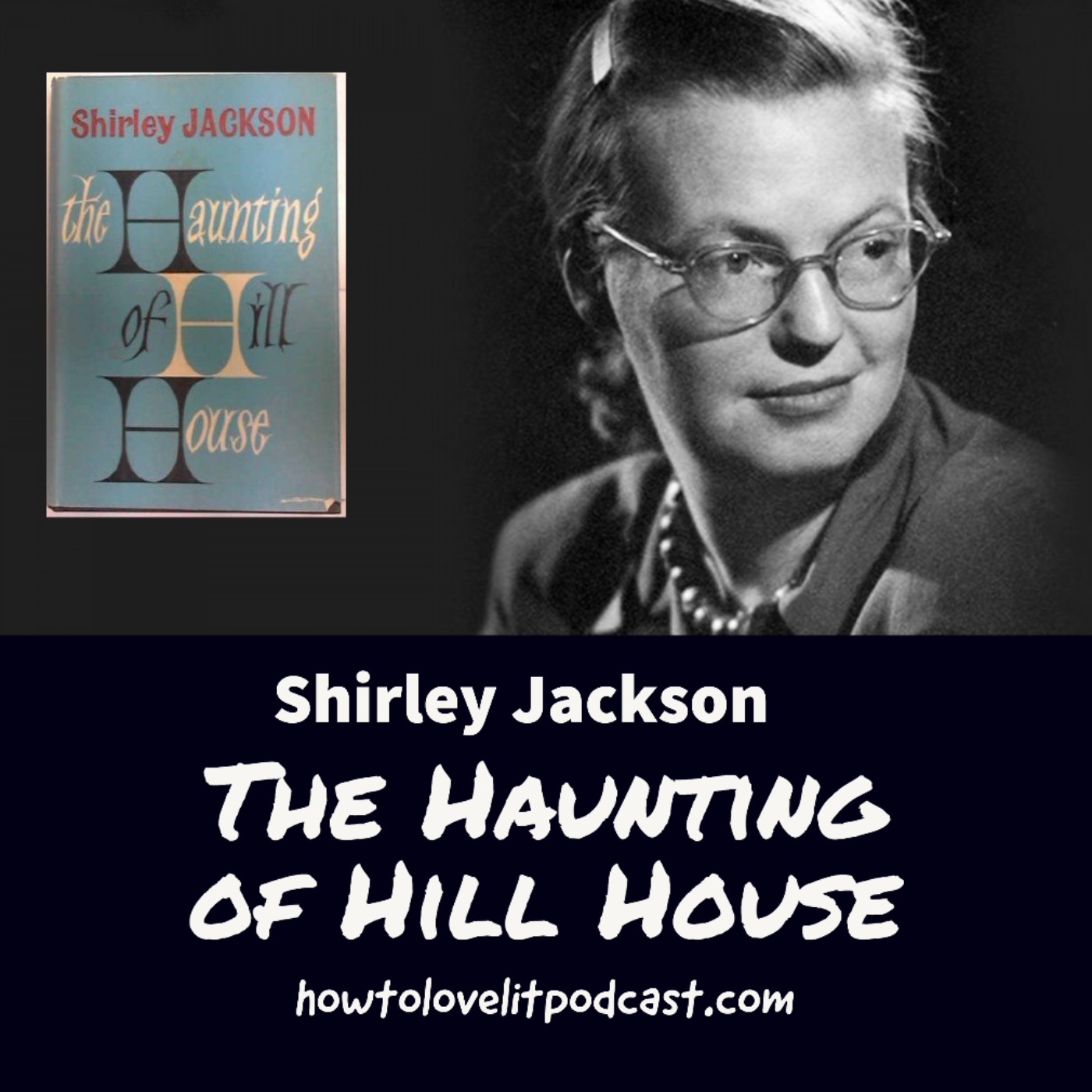
Shirley Jackson || The Lottery ||Her Most Famous Short Story!
Nov 9, 202400:47:25Tap to summarizeShirley Jackson - The Lottery - Her Most Famous Short Story! Hi, I’m Christy Shriver, and we’re here to discuss books that have changed the world and have changed us. And I’m Garry Shriver and this is the How to love Lit Podcast. Today we are finishing up our series on Shirley Jackson. Last week we concluded our discussion of her most famous book, the one that inspired the Netflix series by the same name The Haunting of Hill House. Today we are going to read the short story that made her a household name, “The Lottery.” It has had its share of movie inspiration. Anyone who has seen the opening of The Hunger Games would not be shocked at the plot of “The Lottery.” It’s inspired a bunch of other stories and movies besides that one; I think you mentioned the Stephen King one last week. I’m sure there are way more than that if we sat here and thought about it. True, and maybe I shouldn’t have been, but I was actually surprised as to how scandalous this story was when it was first published. If we’re talking solely about violence, by today’s standards, it’s mild. There is no blood or gore, it’s definitely no Squid Games. I agree- and I believe that is why this story- so deceptively simple and relatively tame- is actually taught in the eight grade in many school systems. It’s disturbing for reasons beyond the fact that someone is killed at the end- kiiling a main character is just par for the course in a standard English curriculum- in fact, that’s the big joke among English teachers- we don’t teach a story if we don’t kill someone at the end. “The Lottery” reads and feels so simple. And it is…so why the sensation? Let’s talk about the sensation, it’s definitely worth noticing how big a stir it actually created. For starters, the story generated more negative letters and subscription cancellations than anything the New Yorker had ever published. Jackson herself received over 300 letters just the summer it was published. In her own words she said this, “I can count only 13 that spoke kindly to me.” I want to point out that her mother, the ever-inspiring Geraldine could be counted on for a comment. She wrote her daughter with this to say, “Dad and I did not care at all for your story…it does seem, dear, that this gloomy kind of story is what all you young people think about these days. Why don’t you write something to cheer people up?” Dear Ole’ Geraldine- at least she’s consistent. But Jackson refused to explain the meaning of the story. She did once tell a journalist, “I suppose I hoped, by setting a particularly brutal rite in the present and in my own village, to shock the readers with a graphic demonstration of the pointless violence and general inhumanity of their own lives, but I gather that in some cases the mind just rebels. The number of people who expected Mrs. Hutchinson to win a Bendix washer at the end would amaze you.” Ha! Well, I don’t know how pointless violence and general inhumanity could have surprised anyone in 1948 when it was published. That was right after world war 2, especially the United States, had to stare the reality in the face that we had stood by and turned a blind eye for almost a decade to the atrocities committed by Hitler, and there was no one more cultured or sophisticated than the German people. I guess that’s true, but of course…for Americans that was always…over there…we, self-righteously could always claim we were not capable of such things... we after all were the victorious winners in that struggle between good and evil. And yet, Jackson’s simple story does seem to be pointing an accusing finger at someone. Yes, I totally think it does, and I do want us to take a different direction than many people who read this story. At first pass, and this is how I’ve most often heard this story discussed, this is a story that rails against tradition, against not questioning authority, specifically religious authority, against patriarchy…all very easy things to attack and very common in the American canon. Well, not just in the arena of literature either. We’ve been attacking cultural norms in one form or another since American invented baseball as its own American sports ritual over the sport of the British Empire- football or better known here as soccer. HA! I guess that’s true. We also have a way higher tolerance for gore than this story evokes- I mean we were comfortable with the headless horseman and the tell-tale heart. There was something personal about the Lottery that went beyond attacking traditions or killing an innocent victim. I also don’t think many of us would cancel our subscription to our favorite media streaming service (which would be the modern day equivalent), or take the trouble to dig up someone’s personal address and write them a personal letter if we did not feel personally attacked. “The Lottery” got under people’s skins because it was personal. So, that’s the question I want to ask? If this story is about pointless violence and general inhumanity, and if I’m offended because I feel personally accused, how? So, let’s start- Christy, we talked about if we should read the entire story and then discuss it or if we should stop and start. We’ve decided to stop and start, but hopefully we won’t stop and start too much to be confusing, but just enough to be helpful- a difficult balance to strike. True- Garry- we may fail, but let’s give it a go. Let’s start with the first three paragraphs and then we’ll interrupt. Paragraphs 1-3 What are your thoughts? Well, the thing that strikes me here is tone. Look at the imagery and word choice- it’s summer, there is fresh warmth- there are flowers blooming- there’s not just grass there’s richly green grass- this is the language of birth and beauty. There is also a deliberate attempt to characterize these people as organized and civilized- the lottery is annual, it takes less than two hours, they eat a noon dinner- the children don’t gather, they assemble- assemble is a formal word. There is a reference to school. They are being instructed and civilized so to speak deliberately – the word “liberty” is thrown around here. And yet what are they doing, they are stuffing their pockets full of stones- even the very small children. They assemble as family units, the very bedrock of civilization across time and culture- they stand together- united- and for a purpose that is upsetting to no one. Let’s read the next four paragraphs and learn about the culture and traditions of this place. Next four paragraphs One funny thing that Jackson does in this story is play around with names. The names are all carefully selected- look at who’s conducting all of this, a man by the name of Summers- such a happy name associated with youth, strength, growth, life, all of it. But look at the other guy- Mr. Graves- he also is responsible for making up the slips of paper and putting the names in this black box. It’s a pun- a grave is a place where we put a dead body. It also means serious- like if you are in grave danger. The black box one time spent a year in Mr. Graves barn, but that’s not the only place it lives. He is not solely responsible for this black box. It’s spent a year in the post office and also in a grocery store owned by Mr. Martin. Another thing that people have pointed to is all the possible symbolism in this story. It does seem that this box is a symbol, the three-legged stool is a symbol, the black mark is a symbol, even the stones are symbols. But for what? We should always annotate and follow the symbols, but I usually withhold judgement on what they mean until I’ve had time to think about the story as a whole. And we’ve got more names- a lot of names actually. One that showed up earlier, but we didn’t address is name Delacroix- we’re even told the correct pronunciation of this name- Dela-Croix- as in French for of the Cross Yep- except they mispronounce it- they don’t say Delacroix like you’re supposed to say it- they say delacroy- a corruption of the original. And that sets up for me another a pattern that I see as you read through all these traditions. Traditions are not fixed- like people think they are. No, They evolve like everything else on planet earth. We keep what we want and discard what we don’t like. On my wall, I have a poster that says all behavior is goal- directed- and that goes for entire cultures as well. No matter what we say, our behaviors speak for us- and they are all goal-directed. This is true for traditions as well- be it religious, ethical, or civic. Jackson is very ambiguous about her relationship with religion here. I want to point out that this is not a religious ceremony, and she could have very easily and understandably made it one. Mr. Summers could have been Pastor Summers or Father Summers or Rabbi Summers, but he’s not any of these, he’s a businessman. I want to suggest what I think here about-that three legged stool- I do think it represents what holds up society in general- three aspects of societal authority or control- religious, civic and commercial- these three legs hold up the black box. They are working together, but none is running the show exclusively. Well, if we’re going to guess at symbolism, I want to make a suggestion of my own. Oh-okay- what do you want to suggest? That black box. It’s power, it’s control. It’s black because fear controls. It’s dynamic in that it moves. It evolves over time, a...
Transcribe →
Taylor Swift || Commencement Address At NYU
Nov 2, 202400:40:56Tap to summarizeTaylor Swift || Commencement Address At NYU Hosted on Acast. See acast.com/privacy for more information.
Transcribe →
Macbeth || William Shakespeare || Episode 5 || The Tragic Conclusion...And The Conclusion Of Tragedy!
Oct 26, 202400:44:21Tap to summarizeMacbeth || William Shakespeare || Episode 5 || The Tragic Conclusion...And The Conclusion Of Tragedy! Hosted on Acast. See acast.com/privacy for more information.
Transcribe →Henry David Thoreau - Walden Pond - Simplify! Simplify! Simplify!
May 13, 2023Tap to summarizeHenry David Thoreau - Walden Pond - Simplify! Simplify! Simplify! Hosted on Acast. See acast.com/privacy for more information.
Transcribe →Agatha Christie - The Murder Of Roger Ackroyd - Episode 2 - Agatha Christies Masterpiece of Whodunit!
Mar 19, 2022Tap to summarizeAgatha Christie - The Murder Of Roger Ackroyd - Episode 2 - Agatha Christies Masterpiece of Whodunit! HI, I’m Christy Shriver and we’re here to discuss books that have changed the world and have changed us. And I’m Garry Shriver, and this is the How to Love lit podcast. This is our second and final episode discussing Christie’s breakout novel, the one critics claim is her very best, The Murder or Roger Ackroyd. Last week, we talked about the book in terms of it being a formal detective novel- a murder of manners as I read one critic describe the genre. We discussed the conventions of the style. We also introduced her most famous and beloved character, Hercule Poirot, and you left us, Christy, with a teaser saying you wanted to get back to the story of Christie, as in Agatha Christie and Poirot’s relationship before we finish by spoiling for everyone who hasn’t read it yet, who did kill Roger Ackroyd. So, Christy, and it is slightly confusing- calling you Christy and then her being Dame Christie. But even still,, here’s the question to start with, Did Christie really hate Poirot? He made Christie quite a bit of money over the years. How could she hate a character that had been so good to her? Yes, I truly think she came to. The first reason I feel confident making this claim is that she wrote an essay titled “Why I got Fed up with Poirot”- Well, that certainly conveys at minimum a slight frustration. Yes- the title is a little catchy. I read the essay, and the first reason is simple, makes a lot of sense if you thnk about it. She was just saddled with him- she didn’t know when she made him up that she was going to closer to him than most husbands and she made him deliberately annoying to be around. Some of her final words in that essay were advice to future writers and she says this, “I would give one piece of advice to young detective writers: be very careful what central character you create- you may have him with you’re a very long time.” HA! So basically, his eccentricities the ones people find hilariously annoying just got on her last nerves over time. She said once that he was a “detestable, bombastic, tiresome, ego-centric little creep”. Which is, of course, a nasty way of saying some of the same things she’s said about him in her books, but often in her books she uses gentler terms. He IS annoying- that’s part of the schtick. He DOES brag and constantly reminds his suspects that he always uncovers their lies. Even in this book, up to the very end, he gloats and brags on himself from the beginning to end. Oh for sure! And since she wrote him in 33 novels, two plays and over 50 short stories. I can only imagine he was with her, at least in the back of her mind, always. If he’s not like a husband, he’s certainly like her child, maybe that’s the right metaphor. But I do think it went even beyond her being annoyed with him, as a character. Poirot, in very obvious ways, limited her as a writer. In that same essay she also said this, “ My own Hercule Poirot is often somewhat of an embarrassment to me – not in himself, but in the calling of his life. Would anyone go and ‘consult’ him? One feels not. So, it seems as if it bothered her that he wasn’t as realistic as she would have written him, maybe later in life? I think it’s something along those lines. He was a great schtick, but there was schtick element to it, in many ways. He didn’t allow her to develop her writing or even her thematic ideas- he was just too silly. Her great- grandson, James Pritchard spoke to this to the BBC. He said that in her own words she wanted to “exorcise herself of him” but he was her- and again in her own words- “bread and butter”. He was of immense commercial importance to her, if not of great creative importance in some ways. According to Pritchard she had so many other ideas for books that weren’t appropriate for Poirot, but her agents and publishers would come back and remind her he was his most popular character. And so, there was the conundrum…although I have to admit, I’d love to have a problem like that. Yes, I think many of us would, although I can kind of see where she’s coming from. We hear actors from time to time express ideas similar that. Famously, I remember George Reeves, who was the original Superman, complained all the way until his strange and mysterious suicide that he just hated always being Superman. Or more recently, one example that comes to mind might be Daniel Ratcliffe who noticeably has worked incredibly hard to demonstrate that he is not just Harry Potter, but a versatile actor. What I find interesting about Christie’s relationship with Poirot is that she was loyal or maybe even jealous of him. Explain that. She took great pains not to let anyone else have him. During WW2, Christie, like many patriotic British celebrities chose to stay was in London during the Blitz. In other words, not taking advantage of the privilege of wealth and fame to ride the war out in America or some other safe destination. If you remember, the Blitz is what we call the eight months during 1940-1941 when the Nazis sieged London as well as other large and important British cities with constant bombings. But choosing to stick it out during the bombings is not the same as not being concerned that the decision might cost you your life. Fearing she might not survive the attacks, she wrote two stories that killed off each of her most famous detectives – Poirot and Miss Marple. She included a provision in her will that the stories would be published if she were to die in the war. But fortunately for us, she didn’t die in the war and Poirot hung around to annoy his creator for three more decades. True, and it wasn’t until 1975, when her own health began to fail that , she finally published Curtain, the novel she wrote during World War II, which killed off Poirot. It wasn’t but a few months later, in 1976, that Christie herself died- so you can see, she kept him around her entire adult life. I would tell you how Poirot dies, but you never want to give too much away about Christie novels- the surprises are the fun part- but it is a really great conclusion. Oh and one more thing- and this is really to Poirot’s credit, maybe more than Christie’s, the public reaction to what Christie did in her final novel was so tremendous that Hercule Poirot was the first ever fictional character to get a front page obituary in the New York Times. On August 6, 1975, a headline ran announcing, “Poirot is Dead; Famed Belgian Detective; Hercule Poirot, the Detective, Dies”. Incredible! Truly, so back to our story. Last week, we talked about all the ways, The Murder of Roger Ackroyd fits the bill for a traditional formal detective novel: the setting, the characters, the weapon, the investigative style, all of it cul minating in a happily ever after ending where the world is left back in an orderly fashion- where justice is served- you even brought up the mah jong game, and even suggested that Christie may even be constructing a subtle argument that life is better in community playing by the rules. Where life is better lived when and where people interact and engage each other deliberately- where people organize and live according to commonly agreed-upon rules of engagement…or something like that…And now this week, we are going to see that all that talk about rules is just a cruel joke to seduce us into a game where she is NOT going to follow the rules of the game. And here’s the spoiler, so if you haven’t read the book, unplug now…fair warning….drum roll for the reveal….. the narrator is the murderer!!! That’s unfair!!! Even according to Christie’s own set of rules. And yet is it? and I assume, by rules you are referring to the rules of the Detection Club. In 1930, a group of mystery writers, Agatha Christie, among them but also others one example being, interestingly enough, the AA Milne who’s most famous for giving us Winnie the Poo. The Detection Club actually still exists, btw. You have to be formally invited, and obviously it’s prestigious. But, to be a member, you swear an oath- and of course, it’s a bit tongue in check but you are asked to foreswear any of the bad practices of mystery writing. Garry, read for us the oath. “Do you promise that your detectives shall well and truly detect crimes presented to them using those wits which it may please you to bestow upon them and not placing reliance on nor making use of Divine Revelation, Feminine Intuition, Mumbo jumbo, Jiggery-Pokery, Coincidence or Act of God? It’s awesome, and gives you a distinct impression that this is a fun bunch to be associated with. The Detection Club hosts formal dinners and other social things, but also The members collaborate with ideas, encourage each other with their individual works and even at times have co-written books together. Beyond the oath though, they also have what they call the “fair play rules” of detective novels. There are ten of them. One rule is that the detective himself will not commit the murder. But here’s the one that people claim Christie broke with Dr. Shepperd. Rule number 9- let’s read that one And I quote- The stupid friend of the detective, the Watson, must not conceal any thoughts which pass through his mind; his intelligence must be slightly, but very slightly, below that of the average reader. What we have to recognize, and what is so awesome about how Christie wrote the book is that Dr. Shepperd, the narrator who is actually our murderer never lies tp us. He never conceals anything that happens during the investigation at all really- the facts are the facts. He faithfully relays...
Transcribe →Wuthering Heights - Epsiode 5 - Emily Bronte - Redemption, Forgiveness and Overcoming
Dec 5, 2020Tap to summarizeWuthering Heights - Emily Bronte - Episode 5 - Redemption, Forgiveness and Overcoming WH- Episode 5 Hi, I’m Christy Shriver and we’re here to discuss books that have changed the world and have changed us. I’m Garry Shriver, and this is the How to Love lit Podcast. If you have made it this far into Wuthering Heights, I feel like you deserve an award or something. This is our fifth episode analyzing this book, taking five episodes on a single work is something we have only done with two other authors- Hawthorne with the Scarlet Letter, our first series, and then again with our Shakespeare plays. But my goodness-navigating through Wuthering Heights is nothing short of brutal- I’ve gone back and looked at those initial harsh criticisms we read in episode one- and I have to admit, they weren’t wrong in recognizing this. Well, you are right about that. It IS brutal- but honestly, how could a book about generational abuse be anything except brutal- exposing the brutality of abuse is in many ways at the heart of this book, but honestly, an even more important purpose- and for me the reason to suffer the experience of reading this book, is because Emily offers hope. There is literally NOTHING anyone can ever do to undo any abuse anyone has suffered in the past- and Bronte highlights that very clearly- however, she suggests that even under terrible circumstances, there is a way to be free of the curse of abuse and move into a future of new beginnings- and yet she absolutely parallels with this idea that it is also possible and perhaps in some ways easier to live and die in the victimhood of the past- this week we will end this journey and for me she concludes in an almost fairy tale-like way- which is alright with me! My first question about this book when I read it was this- why does Bronte give the girls the exact same name? It’s SO confusing. Even if one had been Catherine and the other Cathy that would have helped= but she even mixes the nick names up- deliberately trying to get us the confuse the two women. Mine too- actually- Of course, it now occurs to me, as I really believe great authors don’t do things accidentally or whimsically- that this confusion is for us to undeniably understand that the journeys of the catherines is perhaps the same journey- the experiences are the same- and yet she juxtaposes two opposite postures in life and two very different outcomes: one a tragedy the other a comedy- one ends in death, the other a wedding. And this last episode absolutely leaves us with a feeling we haven’t felt as we’ve left parts of the book- this last episode leaves us with a feeling of hope, security and empowerment- it also clarifies Emily Bronte’s heterodox religious views- which I will say are very Christian in tradition, but not traditional in their Christianity (that, btw is a chismus- I’m proud of that sentence structure- that’s hard to do. HAHAHA- chiasmus it is- but let me say that hope, security and empowerment are great emotions to carry forward especially this time of year and particularly this year, if you are listening to this episode in real time- this is the first weekend of December, which in the Western tradition is the month where we do focus on hope, peace on earth and good will toward men- and it is the year 2020. So happy December 2020! as we round out the tumultuous or wuthering year of 2020, Christy and I have thought about how WE could use our small voice to give hope, peace and good will to the different communities that we connect with through this podcast and we came up with a small idea. 2020 has been SO brutal to everyone, we thought, if we could do nothing else, we could at least give some recognition and a shout-out to small entrepenuers out there who are braving our 2020 storm, opening their businesses, serving their communities and connecting people. So, this is what we want to propose, if you are a small business or if you have one you love and want to support- email us a picture or a shout out at garry@howtolovelitpodcast.com- and that is garry with two R’s not one R G-A-R-R-Y. Or just go to our website. We will promote your business and your community on our social media accounts, recognizing and giving respect to all of us pulling together this year in a unique way. Okay- back to the story- let’s give a little recap as how we’ve tried to organize this book. In episode one, we covered chapters 1-3 as we were introduced to the estate and residents of WH. Episode 2 we made it into chapter ten- discussing the childhood years of Catherine and Heathcliff and reading out that most famous, “I am Heathcliff” speech Catheirne gives as she decides to marry Edgar. This is the speech Heathcliff doesn’t hear because after hearing that she thinks it would degrade her to marry him he runs away. Yes- in Episode 3- we’ve jumped three years. Edgar and Catherine are married and then six months later, Heathcliff is back- a changed man- he’s good-looking and rich. He’s also a man on a mission- and it seems as the story develops this mission is revenge. In episode 3, Heathcliff moves back into Wuthering heights. Hindley degrades himself through alcoholism and gambling, and HC begins the process of buying WH from Hindley while at the same time seeking to destroy Hindley’s son Hareton by treating him the same way Hindley treated Heathcliff as a child- an obvious and perhaps understandable revenge sequence. Yes- and while this is going on in the background- the focus of this section of the book is not on HC’s revenge towards Hindley- Episode 3 really centers of the deterioration of Catherine and the love triangle between her, HC and Edgar. She wants to have both Edgar and HC in her life, and when it becomes evident this absolutely will not happen, she dies in this bizarre way- perhaps suicide, perhaps insanity- perhaps both. Right before dying however, Catherine gives birth to a child, also named Catherine. But Heathcliff also gets married and has a child with his wife, Edgar’s sister, Isabella, a young woman who he also deliberately and viciously abuses. Eventually after throwing a knife at her head, she leaves him, moves to London and raises a child six months younger than little baby Cathy. Her son’s name is Linton Heathcliff. Linton being her maiden name, and obviously Heathcliff being her married name. There are so many plot twists, but the main thing to notice is all the parallels and doubles in the story. Eveyrhting everything is happening twice. Everything has a double- everything has an opposite too- from the weather- storm versus calm- to the houses- WH- chaotic to TG- peaceful- to most importantly the characters – of generation one to generation 2- they paralle but they are not the same. And of course, today we will juxtapose outcome number one to outcome number 2. Let’s not forget last week’s episode, before we jump to today- in that we leave generation one for the most part- and focus on this second generation. The generation of little Cathy, little Linton and hareton-all three victims of abuse. Arguably Hareton, the most abused of them all- no one in his life has loved him- unlike the other two. One a child of Edgar, one a child of Hindley, one a child of Heathcliff. Is that confusing enough for you? It really does require me to slow down in my thinking and draw the family tree in my head or I’ll get lost. Last episode I think focuses on the most difficult chapters of the book to read- even though I’ve found this book difficult to read from the beginning. We see so much abuse and evil at the hand of Heathcliff. Where there is no doubt that Heathcliff and even Catherine suffered a great deal of abuse, neglect and trauma in their childhood, Heathcliff takes his childhood pain and seeks to inflict it in a grotesequely magnified way on helpless innocent children. In this section, Heathcliff is all powerful. He manipulates his son Linton. He physically hurts all three children. He dominates Edgar, Catherine One’s husband, Catherine Two’s father, by stealing his property through the manipulation of property law of Victorian England, but also by seeking to deny him his daughter’s presence at Edgar’s moment of death. The revenge of Heathcliff birthed out of childhood abuse drives the action, destroys everything in its wake, and progresses to the third generation in the person of his own son, Linton, who is also abusive to his wife Catherine TWO. Yes- that is all true- yet, I want to point out a subtly of technique that is very important to understand- if we want to get to where Emily Bronte is taking us in the conclusion of her novel. We, as readers, are very much aware the entire time that Heathcliff’s cruelty rises from his personal misery. His hatred is destructive to everyone and that includes himself. It’s not that he hates everyone else, he hates himself and that’s what’s driving his indiscriminate hatred outward. The self-hatred is there to see, but also it’s there for readers to feel, and thus we don’t entirely ever stop sympathizing with him- even at his cruelest moments. Of which there are many- the cruelest perhaps is where we start this episode with the death of his son Linton here in chapter 29. Edgar Linton is dead. He’s buried with his wife Catherine- although Heathcliff does try to block that, nelly interjects herself and makes sure his will is legally followed. But little Linton Heathcliff has done something at the end of chapter 28, pretty much the only kind thing he ever does in his entire miserable life, but this one act of kindness and bravery, will turn the rest of his life into an even greater livi...
Transcribe →