Loading summary
Transcript86 lines
- [00:02]
Eduardo Barba
Ser podcast.
- [00:10]
Hoy por hoy Magazine.
- [00:19]
Ángel
Ser podcast.
- [00:30]
Eduardo Barba
You know you better.
- [00:34]
Ángel
Eduardo Barba, buenos días.
- [00:35]
Eduardo Barba
Buenos días, Ángel, ¿Qué tal estás? Muy bien. Mira, aquí rodeado de orquídeas, hemos convertido la mesa del estudio en un pequeñísimo orquídeario.
- [00:44]
Ángel
El día de la orquídea es el.
- [00:45]
Eduardo Barba
Día de la orquídea, el día internacional de la orquídea.
- [00:47]
Ángel
Tú sabes que todo el mundo dice, ahora lo hablaremos, pero todo el mundo qué difícil es cultivar las orquídeas, qué difícil es que florezcan. A mí me regalan una orquídea y se me muere enseguida. Pero tú llevas unos cuantos años demostrándome que no es así.
- [01:00]
Eduardo Barba
No es así porque de nuevo, mira que somos insistentes en este programa, en esta sección jardinera, pero lo importante para las plantas, lo primero es elegir bien el sitio. Una planta que no esté en el sitio correcto es imposible muchas veces sacarla adelante.
- [01:14]
Ángel
Pues aquí está claro que nuestras orquídeas están en el sitio correcto. Antes de nada, 638 313 466 si ustedes quieren dejar una nota de voz porque no pueden escuchar el programa en directo, porque no pueden llamar en el momento en el que estamos en directo y además emitiendo en streaming, si no pueden hacerlo, dejan una nota de voz en el 638 3466 que sí que pueden estar en directo a la hora del programa, a la hora de la sección de Eduardo Barba 900 1800 Cualquier duda, cualquier pregunta que tengan sobre plantas, la semana pasada, hoy vamos a hablar de orquídeas. La semana pasada ya nos dijiste que alguna de ellas estaba a punto de florecer y yo insisto, es una planta la orquídea que habitualmente da problemas. Todas las que ha metido dentro del estudio Eduardo Barba, o están florecidas o están a punto de florecer.
- [02:00]
Eduardo Barba
Así es Ángel, si es que como acabamos de comentar, lo importante para la orquídea es el sitio. Si no tenemos un sitio correcto es imposible que nos vuelva florecer, que es lo que les pasa como mínimo a muchos oyentes. Compran la orquídea, se la llevan a casa en plena floración, está durante unas semanas o incluso meses con esa flor rozagante a tope y luego cuando se apaga, cuando se embuste esa flor ya no les vuelve a reflorecer. Incluso pasan años, como yo me he encontrado muchas veces eso en el mejor de los casos, porque en otras ocasiones incluso a continuación la planta muere normalmente tiene que ver con esa orientación. Cuando nosotros hablamos de las orquídeas, tenemos que tener en cuenta que son plantas que muchas veces provienen de regiones tropicales o subtropicales, ligadas muchas veces a una iluminación que no tiene que ser excesivamente alta, es decir, no tiene por qué recibir el mayor sol del mundo y de hecho muchas veces es evitable. Nosotros donde las cultivamos, repetimos por enésima vez, nosotros las tenemos en los alfízares interiores de las ventanas, en orientación perfectamente norte, mira hacia todo el norte de Madrid, es decir, no les da nada de sol de la mañana directo, pero han encontrado el sitio, como podremos ver a continuación. No siempre se han de colocar en esta orientación norte, sino que yo por ejemplo, de nuevo pongo mi ejemplo particular, yo en casa por ejemplo, las orquídeas donde las tengo, les da el sol en la mañana, están en una orientación bastante este y durante la mañana, sobre todo en el invierno, que el sol está más bajo, les entra ese sol, ese sol del invierno es muy suave, entonces les viene genial para iniciar incluso floraciones como les ocurre a las nuestras.
- [03:38]
Ángel
Y cómo sabemos que la planta está a gusto, que ha encontrado el sitio.
- [03:42]
Eduardo Barba
Notaremos que la planta está a gusto cuando vemos que la planta sigue formando hojas y que no solo forma hojas, sino que a continuación incluso activa yemas de flor, como nos está ocurriendo en nuestro caso, en las cuatro que vamos a ver hoy. Ese sería el primer efecto. Si nosotros notamos que nuestra orquídea en casa está estancada, que tiene las mismas hojas desde hace un montón de tiempo, que no vemos que tenga una vitalidad, eso significa que muy probablemente haya que cambiar alguno de esos parámetros. Evidentemente también eso se acompaña, no sólo la luz correcta, de una correcta hidratación y de por supuesto un abonado. Yo las orquídeas las abono, tengo que decir que no las abono tanto como debiéramos. Estas que tenemos aquí nosotros en el estudio hoy, el último abonado que les di puede que fuera a inicios de septiembre o incluso a finales de junio, no lo recuerdo porque no lo he apuntado, pero fíjate si viene ya de largo el abonado y aún así la planta está.
- [04:40]
Ángel
Vamos una a una y así recordamos las orquídeas que se estamos cultivando en el interior de la radio. La primera, la orquídea mariposa, la tenemos.
- [04:48]
Eduardo Barba
En este gran cubo de cristal, que.
- [04:50]
Ángel
Esta es aquella que tú contaste que las raíces tienen que estar en un macetero transparente.
- [04:55]
Eduardo Barba
Sí, porque es una orquídea epífita, es decir, que crece sobre otras plantas o sobre incluso rocas u otro tipo de estructuras en la naturaleza. Y vemos cómo está a tope. Este año lo que nos ha hecho.
- [05:07]
Ángel
Esta es la más habitual, ¿No?
- [05:09]
Eduardo Barba
Esta es la más habitual, como tú.
- [05:10]
Ángel
Dices, se regala habitualmente.
- [05:11]
Eduardo Barba
La de siempre. Cuando nosotros tenemos en mente orquídea mariposa, o sea, una orquídea es esta, la orquídea mariposa, con esas flores de color blanco, de color rosado, en muchas tonalidades. Aquí lo que estamos viendo es como este año incluso nuestra orquídea mariposa activó una nueva hoja. Llevaba ya un tiempo sin echar una hoja nueva y eso a mí me preocupaba un poco, porque es verdad que estas orquídeas muchas veces no tienen por qué tener muchas hojas, pero ya llevaba un poco de retraso con esta formación de nueva hoja. Aquí ya la tenemos y no sólo eso, sino que al pie de una de las hojas antiguas ha activado una vara floral. Fíjate, puedes tocarla con suavidad, vas a notar que es muy acuosa. Enseguida la partiríamos, le daríamos un toquecito y parte como el cristal está formando esta nueva vara floral que ahora es esencial abonar. ¿Para qué? Para que forme más flores.
- [06:02]
Ángel
Vale, eso te iba a decir. Ahora que está en este punto. Ahora la abonamos.
- [06:05]
Eduardo Barba
Ahora sí la abonamos.
- [06:07]
Ángel
El único cuidado que debería recibir es abonarla.
- [06:10]
Eduardo Barba
Exacto, porque ahora es una planta que está muy necesitada de un extra de nutrición. Es como un animal que estuviera embarazado o estuviera preñado, como se diría en los animales. Le damos ese extra porque tiene más desgaste de energía. Ahora mismo esta orquídea mariposa.
- [06:25]
Ángel
Venga, la orquídea mariposa, que es aquella que a todos ustedes se les muere después de que hayan caído las flores. Lo digo porque le pasa, voy a hacer un cálculo Así, ojo al 90% de la gente, pero que sepan que sobreviven. Y aquí tenemos la prueba. ¿Por qué otra continuamos? Porque esta de las Bars.
- [06:41]
Eduardo Barba
Vamos a continuar por esta que tienes al lado, que es el dendrobio, que.
- [06:44]
Ángel
Esta también la tenemos en un macetero transparente.
- [06:47]
Eduardo Barba
Exacto. Este es un Dendrobium nobile, Es una de las orquídeas más habituales La diferencia de esta orquídea Dendrobio es que tiene unas cañas muy largas, a veces del tamaño de dos latas de refresco de alto, puede ser incluso más. Y aquí lo que estamos viendo es cómo esta orquídea Dendrobio, de la cual hemos hablado ya unas cuantas veces, tiene unas varas muy largas, que algunas están sin hojas y otras están con hojas, porque las que están con hojas son las más nuevas. Aquí lo que estamos viendo es que son estas varas más nuevas del Dendrobio, de la orquídea Dendrobio, son las que están formando la floración. Voy a parar quieto para que Roberto, maravilloso compañero que está con el vídeo para el streaming, pueda apuntar bien, pero vemos estos capullitos que tienen las varas más nuevas. Aquí estaríamos viendo varios capullitos. Hay que decir que este Dendrobio el año pasado floreció tanto que no se podían ver las cañas. Este año va a florecer menos. De hecho, yo ahora mismo te puedo decir casi las flores que va a echar. Una, dos, tres, cuatro, cinco, seis, siete, unas ocho flores, muy pocas en comparación con lo del año pasado. ¿Por qué? Porque este año esta planta habrá visto comprometida su nutrición, en el sentido de que no la he abonado tanto, no ha contado con tanta energía y la planta no ha formado tanta floración.
- [08:08]
Ángel
Y mi pregunta ¿Estas varas que ya no van a tener flor ni tienen hojas, ¿Las cortamos?
- [08:16]
Eduardo Barba
No, en el caso de Dendrobio hay que dejarlas porque estas cañas viejas sin hojas siguen verdes, es decir, siguen haciendo fotosíntesis y cumplen una misión importantísima dentro de las orquídeas Dendrobio, que es el de almacenar agua y nutrientes. Estas varas funcionan como un banco de energía para la planta, así que no las cortamos, aunque no las veamos tan estéticas, es el ciclo natural de la planta, porque los Dendrobios son esta estructura que tú estás viendo muchas cañas, en el cual solo las cañas más nuevas son las que mantienen la hoja.
- [08:49]
Ángel
Entonces esta también la abonarías ahora también.
- [08:52]
Eduardo Barba
Ahora lo que haré es, justamente viendo que están todas las orquídeas tan activas, como decíamos el otro día, oye, ¿Qué hay que hacer en el invierno con las plantas de interior y de exterior? Pues nos adaptamos a sus ciclos. Y aquí estamos viendo cómo estas orquídeas nos muestran que están a tope, están moviendo mucha savia, están formando flor, entonces es el momento de continuar con un abonado, o mejor dicho, retomarlo, porque llevan mucho tiempo sin ese abonado.
- [09:17]
Ángel
En el momento en que están en flor o la vara está a punto de salir, momento para abonarlas. Vamos a escuchar una llamada y luego continuamos hablando de las orquídeas, porque además es que la persona que nos llama, que es Andrés desde Logroño, quiere preguntar sobre una orquídea. Precisamente. Andrés, buenos días.
- [09:33]
Andrés
Hola, buenos días. Muchísimas gracias por el programa.
- [09:36]
Ángel
A ti. Cuéntanos de qué orquídea quieres hablar.
- [09:39]
Andrés
Tengo una orquídea colgante, una orquídea banda.
- [09:45]
Con las raíces al aire. Después de cortar la vara floral en el mes de julio, tuve un accidente con ella al meterla en un cubo para regarla por inmersión. Se enganchó una hoja, justo la de debajo donde había cortado la vara floral y se rompió la hoja, y la de enfrente se abrió por la mitad hasta el centro. Se ha comportado correctamente porque desde entonces ha echado tres hojas nuevas, ha echado en la base de la planta un hijo. Se le han caído muchas raíces de las finitas, pero las cuatro raíces gordas que tiene han echado raíces también bastante gordas, como ocho o nueve raíces más. Pero mi preocupación ¿Me va a echar otra al romperse la hoja, ¿Me va a echar otra vara floral este año? ¿Me va a regalar con ello?
- [10:32]
Ángel
¿Porque ahora mismo no hay ninguna vara floral asomando, No?
- [10:36]
Andrés
Ha tenido dos guardas florales hace dos años y otra el año pasado en el mes de mayo y estuvo hasta julio. Preciosa, inmensa, 10-12 flores y unos 50 centímetros de alta. Pero desde entonces no le veo por ninguna parte la intención de echar.
- [10:56]
Ángel
Va a florecer la orquídea banda.
- [10:58]
Eduardo Barba
Bueno, pues Andrés, muchas gracias por llamarnos. Y bueno, tienes una de esas orquídeas que son espectaculares.
- [11:03]
Ángel
Ahora están viendo las imágenes.
- [11:04]
Eduardo Barba
Bueno, es que no tiene nada, nada, nada de sustrato. Las venden en los viveros directamente colgadas del techo o de las barras del invernadero, como si fuera una especie de fantasma, una orquídea voladora, que así podría asemejarse. Y es una de las orquídeas que en cultivo son un poco más demandante de algún tipo de cuidado. Es verdad que por lo que nos estás contando, Andrés, te ha florecido ya dos veces. Una de las veces de la floración que traía del vivero y otra ya en tu casa. ¿La estás abonando?
- [11:33]
Andrés
Sí, sí, abono cada quince, veinte días con abono líquido y la riego cada tres días por inmersión.
- [11:40]
Eduardo Barba
Bueno, muy bien.
- [11:41]
Andrés
Tiene una cosa muy característica esta orquídea y es que de mayo a octubre está en un porche, en el chalé, en un jardín, debajo un porche, y ahora en invierno está colgada en el salón de mi casa. Bueno, pues.
- [11:57]
Y ahí está colgada, la llevo al baño cada tres días, la riego por inmersión unos 30 minutos, la dejo colgada en el baño para que se seque y al día Siguiente, cuando amanece, 8 o 9 de la mañana, la llevo en el restaurante, la cuelgo.
- [12:11]
Ángel
Perdona, perdona, Andrés, pero está más mimada esta orquídea que yo que sé.
- [12:16]
Andrés
Bueno, tengo todo el tiempo para ella, soy una persona ciega, estoy jubil y lo paso en grande con.
- [12:25]
Eduardo Barba
Qué maravilla. Qué maravilla, Andrés. Mira, yo lo único que te diría es que tengas paciencia, porque si has conseguido que una banda te reflorezca en casa después de la floración que traía del vivero, eso significa que le estás dando los mejores cuidados. A veces ocurre con las plantas que se pueden saltar un año perfectamente. A veces la planta elige formar más hojas por alguna razón, quizás porque este año le has dado más abonado, quizás porque ha tenido esas roturas, ha estado formando más hojas que esa floración. Pero yo no haría nada diferente a lo que estás haciendo, porque yo lo que te iba a decir precisamente es que la banda necesita mucha cantidad de luz e incluso sol directo de la mañana. A la banda es de esas orquídeas que incluso a veces se las ve cultivándose a pleno sol. Yo he visto muchas bandas en el pleno sol, no en el sol de las horas centrales del día, pero sí en el de las primeras horas de la mañana. Y es una planta que yo mantendría todo lo que estás haciendo porque es imprescindible ese abonado que tú le das, Andrés, porque sin un abonado es una planta que necesita mucha energía para formar esas varas florales tan densas, a veces con tantas flores. Y una de las cosas que has dicho es que incluso llegó a darte alguna vara floral con una gran cantidad de flores. Eso significa que el abono que estabas empleando es el correcto. Cuando la gente quiera cultivar unavanda en casa. Una de las cosas que tiene que tener en cuenta es que le gusta mucho un nivel de hidratación alto como el que tú le estás dando. Las raíces de lavanda son como las de la orquídea mariposa, que tienen este color gris cuando se deshidratan. En cuanto veamos ese color grisáceo en las raíces de una banda o del Phalaenopsis de la orquídea mariposa, hay que regar.
- [13:59]
Ángel
Hay que regar, que en este caso es por inmersión, porque no tiene sustrato.
- [14:02]
Eduardo Barba
Ideal, porque es una de las cosas que se suele decir con banda. Para que coja hidratación, esas raíces a tope, lo mejor es sumergirla en agua. Andrés, yo creo que lo estás haciendo genial. Espera a ver si este año vuelve a florecer.
- [14:15]
Ángel
Pero volver a florecer está cuidando a la orquídea como vamos. Quién fuera orquídea.
- [14:22]
Seguramente que volverá a florecer. Algunas plantas, como dice Eduardo, se toman un año de descanso y no florecen. Siguiente orquídea.
- [14:29]
Eduardo Barba
Bueno, pues la siguiente orquídea que vamos a ver es nuestra orquídea Ludisia. Aquí las tenemos. Tenemos solamente tres tallos porque estas las traje yo de casa. Esta es una orquídea que yo tengo desde hace unos años. Estás viendo aquí las sales, Algo está cayendo al suelo. Tiene un poco de caspa. Bueno, vamos a poner el platito para que Marimar no tenga que limpiar en exceso. Bueno, pues aquí lo que estamos viendo es cómo está Ludicia. Son unos esquejes que yo traje de la planta madre, que la tengo en casa. Y les ha ido tan bien desde mayo, junio que las pusimos, hicimos este esquejado que incluso están arrancando a florecer. De los cuatro tallos tenemos dos en floración. Están empezando a emitir esta floración tan bonita de esta orquídea joya. Y se le llama orquídea joya porque muchas veces de esta orquídea lo bonito no solo son las flores, sino también las hojas. Tiene unas hojas de un color verde.
- [15:21]
Ángel
Oscuro.
- [15:23]
Unas líneas muy delgaditas.
- [15:24]
Eduardo Barba
¿Cómo son estas líneas?
- [15:26]
Ángel
Es preciosa.
- [15:26]
Eduardo Barba
Son de una. Vamos, están tiradas con tiralíneas. Son de un color blanco que destacan contra este color verde oscuro.
- [15:33]
Ángel
Es que además, depende cómo la mires, el verde parece que sea terciopelado.
- [15:36]
Eduardo Barba
Sí, porque tiene esta iridiscencia. Es de estas orquídeas que tiene una cierta iridiscencia y es precioso. Así que esta orquídea joya, aunque está esquejada desde hace solamente unos meses. Esquejada en agua además, porque enraiza muy bien en agua. Vemos cómo está a tope de flor y vamos a disfrutar de una Cos Angels. Esta es una de esas orquídeas que tiene aroma la flor, porque lo normal es que una gran mayoría de las orquídeas no tengan aroma. Esta sí tiene un aroma que es de una delicadeza y de una sutileza deliciosa. Así que la meteremos en el estudio.
- [16:05]
Ángel
Y una pregunta, porque de las dos orquídeas anteriores que hemos hablado, las dos estaban en maceteros transparentes. Y es una de las primeras lecciones que aprendí, sobre todo con la orquídea.
- [16:14]
Eduardo Barba
Más habitual, Phalaenopsis, orquídea mariposa.
- [16:17]
Ángel
La orquídea mariposa, exacto. Pero tanto esta, como la orquídea joya, como de la que vamos a hablar ahora, no están en macetero transparente. ¿Por qué?
- [16:24]
Eduardo Barba
Porque lo que hacemos es imitar a sus condiciones de cultivo en la naturaleza, dónde crecen las plantas. Las orquídeas que cultivamos en maceteros transparentes son plantas epífitas que crecen sobre los árboles o sobre rocas incluso. Entonces sus raíces significa que están a pleno aire, no necesitan de ningún sustrato envolvente que rodee esas raíces. Entonces nosotros en cultivo en interior les facilitamos que tengan un poquito más de humedad con ese cultivo en maceteros transparentes, con un sustrato hiper poroso, porque es todo granulometría muy gruesa, con corteza de pino. Y el macetero transparente es para que las raíces sigan haciendo fotosíntesis, porque son raíces que muchas veces encima tienen la capacidad de hacer fotosíntesis.
- [17:08]
Ángel
Y estas dos, tanto la joya como la que vamos a hablar ahora, estas.
- [17:12]
Eduardo Barba
Se crían en el suelo, normalmente en sustratos muy orgánicos, con mucha hojarasca, mucho humus.
- [17:20]
Ángel
Y nos queda una que es la única que a estas alturas tiene flor.
- [17:23]
Eduardo Barba
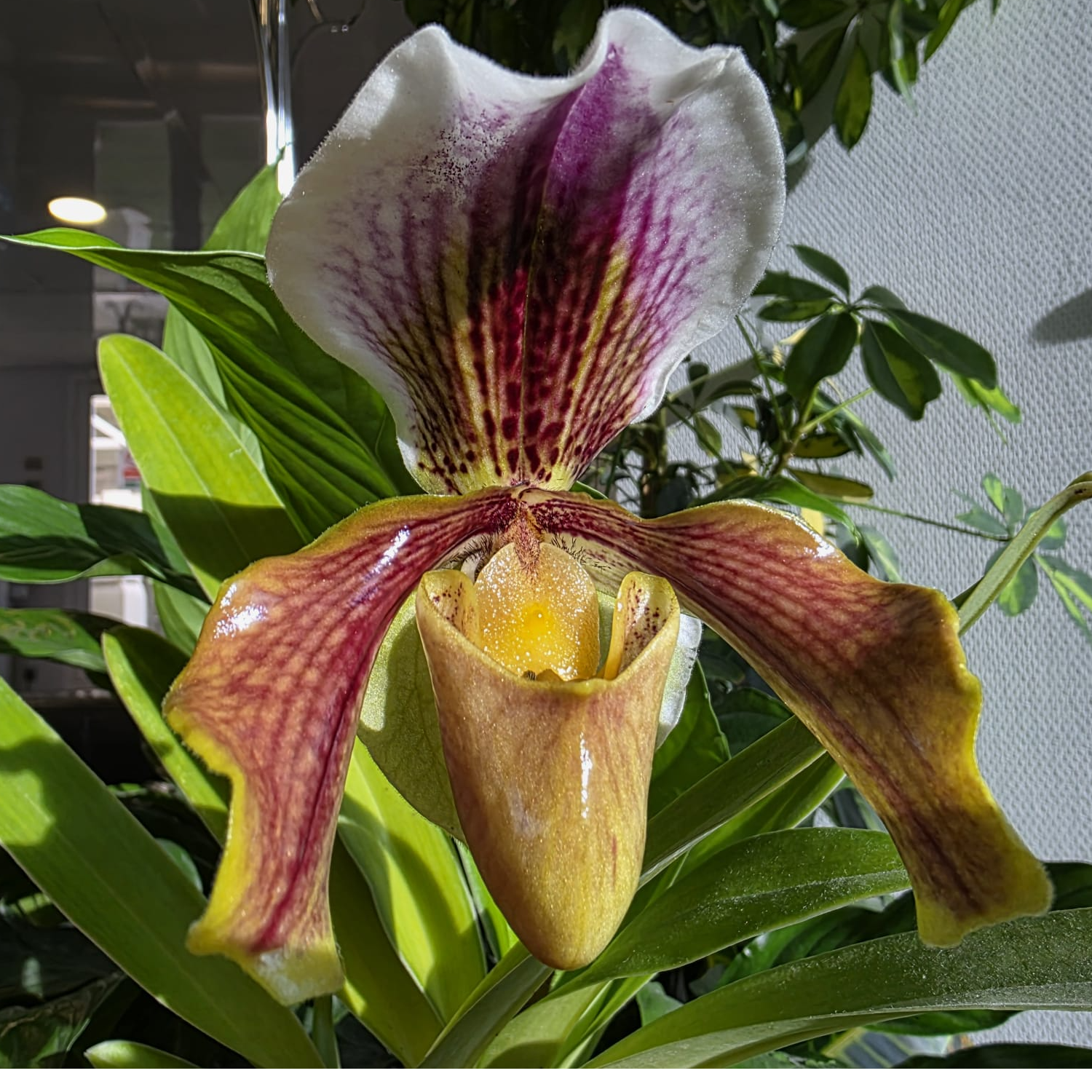
Sí, es la única que sí que se ha abierto y ha sido un poco la excusa para hablar de nuestras cuatro orquídeas que tenemos. Fíjate lo que tenemos aquí. Tenemos el zapatito de Venus, que sería como uno de los nombres más habituales. El nombre científico te lo digo. Que eres una amante.
- [17:41]
Ángel
Sí, porque luego además los recuerdo todos.
- [17:43]
Eduardo Barba
Exacto. Luego examen. Es el paphiopedilum. Lo podríamos decir más castellanizado y podríamos decir papiopedilum Papiopedilum. Bueno, pues aquí tendríamos esta orquídea que yo la compré en flor en marzo o en abril en un vivero. Estaba muy barata porque precisamente estaba sin flor. Entonces estas orquídeas, cuando no tienen flor, los viveros no las suelen vender porque es verdad que sus hojas no son gran cosa, son un poco más anodinas. A mí me gustan, es verdad, porque sé lo que viene después, pero son unas hojas acintadas, largas, tiene una textura durita. Si las tocas, Ángel, vas a notar. Y como estaba sin flor, costó la mitad de la mitad. Seguramente que si ahora la comprara en flor. Así que lo que tenemos es que esta orquídea, este zapatito de Venus, no tiene una barra floral tan densa como la orquídea mariposa o como el dendrobio, sino que suele tener más bien flores en un solo tallo. Una flor singular, pero vaya florioso. Tiene el tamaño de casi casi una pelota de tenis, ¿No? La forma. Tiene un labio inferior que se ha transformado en una especie como de bolsón.
- [18:49]
Ángel
Este será el zapatito.
- [18:50]
Eduardo Barba
Ese es el zapatito. Tiene como una forma de zapatito. Bueno, Brian me ha dicho antes que se parecía a otra cosa. Luego que te diga él que se parecía. Pero aquí estaríamos viendo una.
- [19:01]
Aquí estaríamos viendo este zapatito de Venus que es de lo más peculiar.
- [19:05]
Ángel
Yo he visto inmediatamente un zapatito de Venus.
- [19:07]
Eduardo Barba
Yo también, yo también.
- [19:10]
No sé, Brian, qué es lo que. Lo que habrá visto. Una cosa curiosa es que esta la liga un poco a tu tierra, Ángel, porque. Porque aquí lo que estamos viendo es que en Barcelona se le conoce como zapatito de Arens.
- [19:20]
Ángel
Ese es un pueblo que hay en.
- [19:21]
Eduardo Barba
El Maresma, porque allí llegó en algún momento un fraile capuchino que la llevó Arens de mar, y allí los vecinos la reprodujeron por todos lados. Esta historia me la contó Rubén Velázquez del vivero Flora del Trópico, un especialista en estas orquídeas, que es maravilloso.
- [19:37]
Ángel
Pues me ha encantado el mundo orquídea y así se me dieran bien, sería fantástico. La semana que viene más.
- [19:42]
Eduardo Barba
La semana que viene más.
- [19:43]
Ángel
Un beso.
- [19:43]
Eduardo Barba
Hasta luego, Angels. Para no perderte ningún episodio, síguenos en la aplicación o la web de Laser Podium Podcast o tu plataforma de audio favorita.