Loading summary
Transcript81 lines
- [00:02]
A
SER Podcast Hoy por Hoy Magazine Ser Podcast Eduardo Barba. Buenos días.
- [00:35]
B
Buenos días, Ángel.
- [00:36]
A
Que por eso veíamos ahí, o bueno, yo intuía, tú le veías un poco más, pero yo intuía a Páramo, porque como está el estudio lleno de plantas, porque llegas tú, no le veía.
- [00:44]
B
Estamos forestando. Forestando a Páramo.
- [00:46]
A
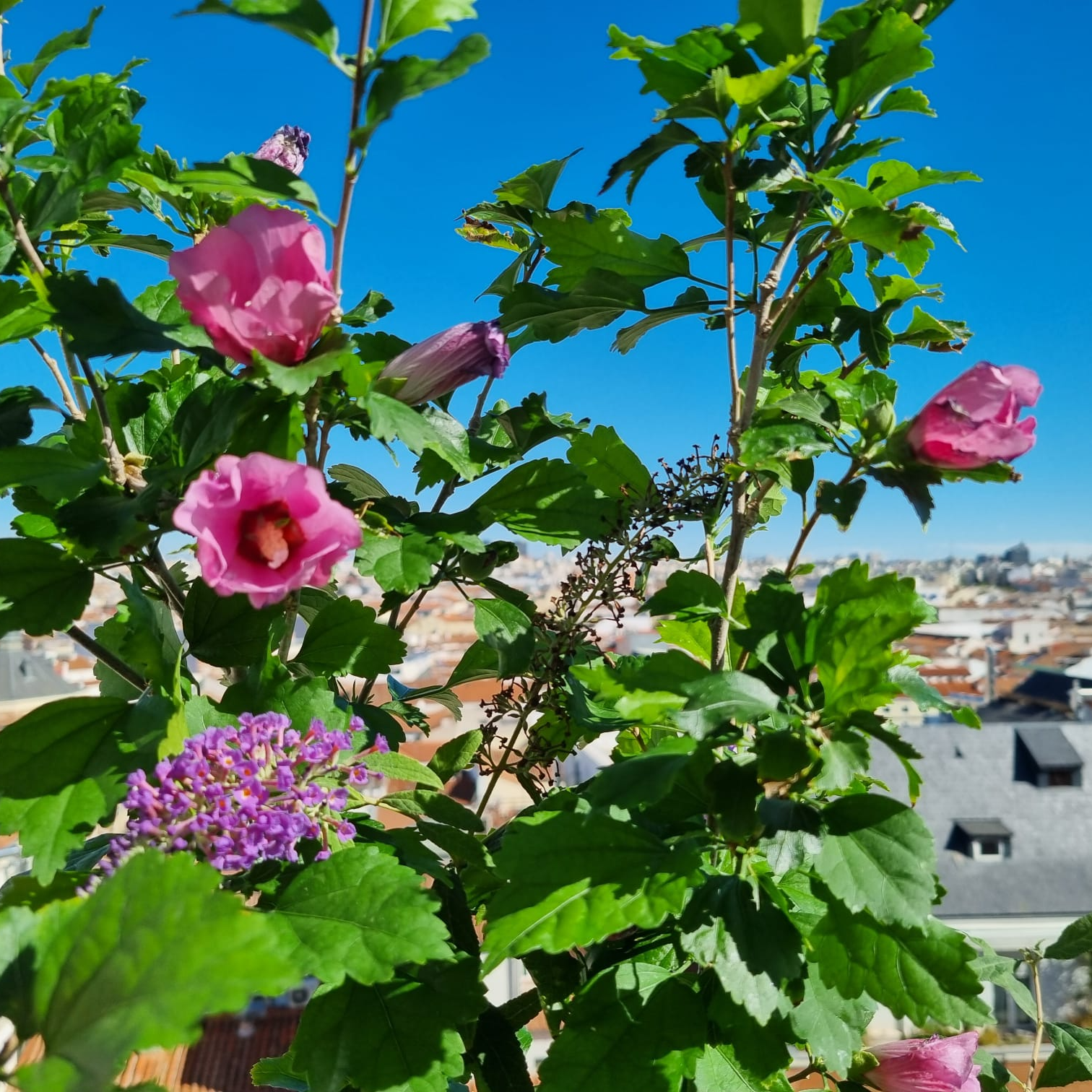
Forestando porque entre las plantas que has metido en el estudio hay algunas que son más grandes de lo habitual, que parecen así arbustos. Y tengo una aquí en mi derecha que por la hoja no tanto, pero por la flor, que a mí ya sabes que es una planta que me gusta muchísimo. Es un hibiscus.
- [01:02]
B
Es un hibiscus. Hibisco para los coleguillas. Hibisco lo podríamos. Bueno, porque tú eres una jardinera ya. Aquí le llamamos en latín. Exacto, tú llamas en latín.
- [01:13]
A
Mi hibiscus hablo en latín.
- [01:14]
B
Exactamente. Entonces tú ya has dado el paso jardineril. Entonces aquí lo que tenemos es este hibisco y a la par tenemos también un arbusto de las mariposas. Son dos arbustos muy especiales, que lo importante de estos dos arbustos, bueno, habría que decir que estos arbustos son como los cócteles de gamba en las bodas, ¿Sabes? Esos alimentos, esas comidas un poco viejunas de toda la vida. Tanto el hibisco, la rosa de Siria, que es también el otro nombre, y el arbusto de las mariposas. Son dos arbustos muy antiguos, como si dijéramos en jardinería ya como pasados de moda.
- [01:47]
A
A mí que me gusta tanto el.
- [01:48]
B
Hibisco, estoy pasada de moda, ¿No? Porque ya sabes que la moda es cíclica.
- [01:52]
A
Y vuelve.
- [01:53]
B
Entonces tú ya eres una adelantada que ha vuelto. Ha regresado. Exacto. Entonces, bueno, lo que tenemos aquí son estos dos arbustos que comparten además lo que es el origen. Los dos son dos arbustos del sureste asiático, concretamente de China, de la parte sureste de China, y se llevan cultivando desde hace muchísimo tiempo en los jardines, como te digo, ya incluso han dejado de la gente ya no los planta porque han pasado un poco de moda.
- [02:19]
A
Son súper resistentes, te lo digo por experiencia propia, sobre todo si los tienes en el suelo.
- [02:23]
B
Sí, son muy resistentes. Son dos arbustos que una vez que empiezan a crecer y están a gusto en el sitio, no hay que hacer prácticamente nada. Tienen una inercia increíble. No son de estas plantas que son delicaditas. Madre de Dios, con lo bien que estabas estos dos últimos años. Bajón, No, eso es. Como lleguen al sitio correcto, es decir, sol y más sol con un punto de humedad continuo en tierra van a estar súper bien y van a prolongarse su floración durante meses y meses y meses. Durante los meses cálidos.
- [02:50]
A
¿Todos los tipos de hibiscos se llaman también rosa de Siria?
- [02:53]
B
Bueno, no, no todos los hibiscos, porque desde luego hay uno que es el que nosotros tenemos en mente, sobre todo en las costas y en los sitios más cálidos.
- [03:02]
A
¿Ese no se llama rosa de sidra?
- [03:03]
B
No, ese es el hibisco del sur del Pacífico. Es un híbrido que se originó en jardinería y se ha extendido por todas las zonas tropicales y subtropicales del mundo. Es una planta que muchas veces incluso también se vende en sitios más fríos, como pueda ser un Burgos o un Madrid también, o Cuenca. Lo vamos a encontrar en las floristerías también en la primavera y en el verano, pero cuando llegue el invierno va a sufrir si no está recomiendo.
- [03:26]
A
Es muy mediterránea. Hay muchas casas, muchos chales en el Mediterráneo que tienen hibiscos.
- [03:29]
B
Sí, porque es una planta que como toda la familia. Es que la familia de las malvas, que es a la que pertenecen los hibiscos, también es una familia muy florífera. Muy florífera y muy resistente. Es verdad que suelen tener problemas con hongos muchas veces, algunas plantas, pero lo normal es que sean bastante resistentes a cualquier tipo de cosa.
- [03:48]
A
Y la otra, el arbusto de las mariposas. Cuéntame algo más. ¿Por qué se llama el arbusto de las mariposas?
- [03:53]
B
Bueno, pues porque este arbusto de las mariposas, que su nombre científico es Budleia davidí, es el otro nombre además popular que empleamos. Budleia es un imán para las mariposas. Todo el mundo que tiene o va paseando por un parque y de repente se encuentra una buzleya o arbusto de las mariposas, va a ver como normalmente hay varias de ellas revoloteando. Y no es un anuncio, no es una cosa ficticia, no. Es que cuando llegan los meses de calor, cuando hay esa explosión de estos lepidópteros, de estas mariposas volando por aquí, por allá, tú te quedas al lado de una budleya y es muy fácil que encuentres varias mariposas de distintas especies.
- [04:32]
A
Pero porque comen algo de la planta.
- [04:34]
B
O porque les gusta Exacto, tiene mucho néctar. Es una planta que tiene muchísimo néctar. Las flores además se agrupan en una especie como de racimo, un racimo erecto, que es como los racimos en jardinería y en botánica le llamamos. Bueno, no tienen por qué colgar como los racimos de uva, sino que también pueden tirar hacia arriba. Y lo curioso de estas mini florecitas que se agrupan en racimos es que tienen una grandísima cantidad de néctar al final de este tubo. Y no sólo eso, sino que tienen un color anaranjado que podrás ver en la boca de la miniflor, donde lo que están haciendo es llamar al insecto.
- [05:06]
A
Y decirle explicamos un día el color, cómo influía, el efecto llamada para los insectos.
- [05:13]
B
Es como una especie de anuncio publicitario que hace al insecto ven aquí que tengo néctar para ti. Y a cambio ¿Qué vas a hacer tú? ¿Vas a llevar mi polen a otra buddella para hacer una polinización cruzada y así aumentar esa genética?
- [05:28]
A
Son florecitas muy pequeñas, muy pequeñas, pero que se agrupan así en racimo, que parece que al final sea una flor grande, pero no, está formada de florecitas pequeñitas. ¿Todo es positivo, todo es bueno para la butleya, no?
- [05:39]
B
Y de hecho, las personas que me escuchen es muy probable que hayan visto las budleyas o arbusto de las mariposas a centenares o a miles en las vías de tren de los sitios donde hay un clima más húmedo, con lluvias repartidas a lo largo del año. Quizás en un Madrid no, no es un problema tan grande, o en general en las Castillas, en las Castillas más secas, pero en una zona norte de España, o ya si vamos a Francia, Bélgica, Países Bajos, una ultra invasora ha colonizado este arbusto del sureste asiático, ha colonizado las vías del tren de todo el mundo, mundo mundial, porque luego usan esos terrenos alterados, las vías de tren en los lados, en los laterales, siempre es un terreno alterado, muy pobre, normalmente porque ha habido movimiento de tierra, ha habido añadidos de tierras poco fértiles, hay mucha gravilla y en estos sitios con tierras es feliz porque es una titana. Es una de esas plantas que son una auténtica fuerza de la naturaleza.
- [06:38]
A
Pero esas, las de. Las vas a dejar en la terraza.
- [06:40]
B
Sí.
- [06:40]
A
¿Y qué va a pasar? A ver si todo Malasaña ahora va a estar así, lleno de esta planta.
- [06:44]
B
Se juntará con todos los dientes de león. Ya sabes que hemos colonizado los dientes de león de Malasaña. Un 80% son nuestros, ¿Verdad? Se ve de las veces que hemos hecho soplar el fruto del diente de león. Pero con este caso no. Porque claro, los viveristas, conscientes del problema que hay con las budleyas y de esta invasión que originan en todo el mundo, lo que han hecho ha sido crear híbridos que son estériles. Es decir, no van a tener una semilla fértil y no van a propagarse. No vamos a llenar la gran.
- [07:13]
A
Son las que encontraríamos en los viveros.
- [07:15]
B
Y esta que he traído aquí hoy también. Esta es de un viverista que ha producido esta budleya Purple Chip, que es una budleya que tiene una peculiaridad, además de ser más pequeñita, solamente mide un metro y medio, 1,20 metros. No como las grandes budleyas que sobrepasan incluso. Yo he visto budleyas y he tenido Budleyas de 3 metros de altura. Esta es más pequeñita y no tiene esa facilidad para propagarse. Entonces, bueno, pues la vamos a tener en la terraza.
- [07:39]
A
¿Y se puede cultivar en maceta?
- [07:41]
B
Esta sí, porque es una versión enana. Las grandes budleyas, los suyos, siempre se entierra, o como mínimo en un gran macetón. Yo he tenido budleyas en grandes macetones y funcionan también bien.
- [07:53]
A
Siempre que hablamos de una especie invasora, y lo hacemos también cuando hablamos de la fauna, siempre pensamos que una especie invasora va en detrimento de otra especie que se come el terreno, que se come el alimento de la otra especie. Cuando tú dices, es una especie invasora, vemos las vías del tren, esto es malo.
- [08:07]
B
Claro, aquí es donde hay una tema estético. Hay una disyuntiva, porque mira, aquí hay dos vertientes. Jardinería es de lo más, muchas veces antiecológico que hay. ¿Por qué? Porque utilizamos, yo ya no, desde luego, y mi entorno en general, utilizamos muchos químicos, modificamos terrenos para meter plantas que son de otros países. Pero no siempre es así. No siempre es así el tema de esta jardinería. Nosotros intentamos ser un poco cuidadosos, que incluyamos una planta que sea invasora, pues evidentemente puede desplazar a otras autóctonas, pero quizás es el fruto de nuestros tiempos. Igual que el ser humano, también hay gente dice, oye, mira, igual que el ser humano se ha propagado casi de una manera peligrosa, viaja, origina estos cambios poblacionales, tanto a nivel de animales, de fauna y de flora, pues bueno, pues quizás es algo que es inevitable. Y que es inevitable. Igual que viene una avispa velutina desde otro continente, aquí nosotros también hemos llevado a América, por ejemplo, otras plantas que ahora están casi como flora autóctona. Es una disyuntiva y es una etapa. Y de hecho yo es algo que quiero escribir algún día un artículo para el periódico de este tipo de ética que también surge en torno a la jardinería.
- [09:21]
A
Ahora vamos a seguir hablando. Esta es la planta de las mariposas. La hemos llamado el arbusto de las mariposas. La velutina, la butleya. La velutina es la avispa, ¿Vale? Ya tenemos una que además está criada, de manera que no vamos a propagarla por toda Malasaña. Se puede cultivar en maceta. Ahora te pregunto por el hibisco, pero antes déjame que escuchemos la llamada de una olga desde Madrid. ¿Qué tal? Muy buenos días.
- [09:48]
C
Hola, buenos días.
- [09:49]
A
¿Qué tal Olga?
- [09:50]
C
Cuéntanos hablar con vosotros.
- [09:53]
A
Igualmente.
- [09:53]
C
Mira, el problema es que tengo un geranio pelargonio que le da el sol, que está estupendo de hoja. Bueno, está enorme y no me da ni una flor. Entonces para tener eso, pues plantaré lechugas.
- [10:07]
A
Mejor, que al menos que las puedes comer, digo, a ver qué pasa con las flores de este gerente.
- [10:13]
B
Olga, yo te tengo que decir que un botánico, un amigo botánico, una vez me hizo una tortilla francesa cuyo ingrediente principal eran las hojas de los geranios estos, que son un poco pelosillos y aromáticos. Bueno, pues era una delicia. Hasta que lleguen cocineras grandes ideas por.
- [10:30]
A
La radio, a ver si vamos a tener un problema. Por la radio.
- [10:33]
B
Exacto. Pues mira, Olga, ese geranio lo que tienes que hacer es muy bien que le dé todo el sol del mundo, es incluirle algún tipo de abonado. Sí, lo has dicho. El tema es, ¿Le estás abonando con algún tipo de abono?
- [10:48]
C
Pues el otro día le puse algo, un abono bueno, pero en todo el verano no, porque ha estado ahí a su aire, pero muy soleado y muy regado.
- [11:01]
B
A veces cuando una planta está muy al límite y tiene un estado nutricional muy bajo, no es capaz de formar una floración consistente. Es raro. Es verdad que en los geranios, que son plantas muy resistentes y muy duras, a poco que tengan un poco de tierra, un poco de sustrato enseguida producen flores, pero el tuyo por alguna razón no. Abono es el abonado es aumentar su estado nutricional y producir esas flores que van a darte durante toda la temporada.
- [11:26]
A
Puede ser que haga, o sea que me ha dicho que de flores, dice nuestra mente que de flores está maravilloso, o sea que echa de hojas, perdón, que echa hojas. Esto puede ser que eche hojas y que no tenga ningún problema nutricional en las hojas y sí en las flores.
- [11:39]
B
Sí, mira, bueno, yo por ejemplo tengo un geranio que es un Pelargonium crispum, que ese por ejemplo casi no florece, pero es porque es su manera de ser. Si, ella dice que el geranio que tiene es un sevillano, que me imagino que será el típico colgante con la hoja un pelín más brillante.
- [11:51]
C
No, no, es un pelargonio, es el.
- [11:53]
B
Zonal, tiene una marca. Amiga, amiga. Es que es el pelargonium, que sólo florece una vez al año en la primavera. Entonces esa es la razón. Claro, cuando yo has dicho geranio sevillano, yo me he ido al geranio que es súper feliz. Tú tienes el pelargonio de flor de pensamiento, que solamente tiene una floración al inicio de la primavera, ya cuando ya la primavera es cálida. Entonces, ¿Qué es lo que tienes que hacer? Abonarlo igualmente. Abonarlo ahora es muy buen momento, lo.
- [12:28]
C
Quito hojas, lo puedo, porque es tan enorme, tan alto, que ahora si quieres.
- [12:34]
B
Puedes reducir un poco el tamaño porque estamos en buen momento para hacer un rebaje en el otoño, pero ahora es un rebaje muy ligero, no tienes que hacer una gran poda y sobre todo el abonado, porque el abonado que tú des ahora va a hacer que la planta despierte más fuerte en marzo y produzca esa floración que es única y anual en este.
- [12:54]
A
Pero ahora, Olga, no le cojas manía porque no eche flores. Te estoy viendo, Claro, te estoy viendo.
- [13:04]
B
Es un geranio muy bonito, es el pelargonio real, que es una maravilla. Así que a por esa floración de primavera.
- [13:09]
A
Muchísimas, muchísimas gracias. Florece solo en primavera y con la primavera entrada, dices. Pero bueno, un abonado igualmente le irá bien. Y un podado. Pero claro, es el problema. Si no echa flores, no echa flores. Oye, Hibisco, cuéntame también rosa de Siria. ¿Por qué?
- [13:26]
B
Bueno, pues casualmente esto ocurre con muchas plantas que muchas veces te encuentras que tienen un apelativo geográfico, pero no corresponde al sitio. Aquí en origen se le llamó rosa de Siria porque las plantas que se llevaron para analizar, para clasificar, mejor dicho, taxonómicamente esta planta, provenían de la zona de Siria, del Líbano, de Palestina, donde se cultivaban. Y nos imaginamos que todavía se cultivarán profusamente. Entonces, en siglos pasados, la planta que llegó a Linneo para analizar su genética y clasificarla genéticamente, taxonómicamente, llegó de Siria. Así que no tiene nada que ver porque también, como hemos dicho antes, es del sureste asiático, del sureste de China concretamente. Y aún así se le quedó en el nombre científico, como tú has dicho, es un hibiscus. Este es el Hibiscus syriacus. El tuyo, el que has dicho antes que es más tropical, es el Hibiscus rosasinensis, que tiene otro apellido y me.
- [14:21]
A
Parece a mí que este, comparándolo con el otro, es como más alargado.
- [14:25]
B
Sí, porque aquí he traído uno muy especial. Dentro de los hibiscos hay una peculiaridad, que es que muchas veces pueden llegar a formar este arroce de Siria, unas columnas bastante cerradas. Este es un cultivar, una variedad, como también se podría decir de una manera no tan correcta, que se llama red pillar columna roja. Y eso significa que es un hibisco muy cerradito, que como máximo. Madre de Dios.
- [14:49]
A
Una araña cangrejo, pero una araña interesante.
- [14:51]
B
Es una araña cangrejo. Esas son arañas cangrejo que se suelen colocar en las flores. Esta que es blanca, pues le gustaría colocarse en una. Además, fíjate que son fieras, porque esta, mira que es pequeña, pero no ves tú cómo se defiende. Aquí la tenemos, Roberto, como siempre, está ahí enfocando maravillosamente con su cámara a la gente de streaming. Si quieres la dejamos aquí para el abierto.
- [15:10]
A
No, llévatela.
- [15:13]
B
Pues aquí nos la llevamos, que te he despistado. ¿Es un hibisco muy cerradito y esa propiedad la hace perfecta para qué? Para balcones. Es una planta perfecta para un balcón donde muchas veces tenemos muy poquito espacio.
- [15:27]
A
Porque hay poco espacio.
- [15:28]
B
Exacto.
- [15:28]
A
¿Tanto el hibisco como el arbusto de las mariposas tiran hoja en otoño o la mantienen todo el año?
- [15:33]
B
Estos son caducos, así que habría que tenerlo en cuenta que si está en un sitio muy prominente, decir, oye, durante varios meses, durante diciembre, enero, febrero, parte de marzo, no van a tener nada de hoja. Y bueno, eso también lo hace bonito muchas veces ver la tronco pelado. Queda el tronco pelado. En el caso del hibisco, en el caso del arbusto de las mariposas, lo que hay que hacer es darle una poda además brutal, porque el arbusto de las mariposas, Obudley, recibe una poda a la par que él rosal, que los rosales, es decir, los acortamos.
- [16:05]
A
Una poda brutal es dejarlo cortito, cortito.
- [16:09]
B
20 centímetros, incluso 25 centímetros, inclusos ahí abajo. ¿Para qué? Para que formen nuevas ramas muy vigorosas. Porque si te fijas, yo mira, esta rama que estoy sujetando aquí, esta rama la ha producido entera, nueva este año. ¿Y donde ha florecido? En la punta. Eso significa que si tú ves un arbusto que florece en puntas, en yema terminal, es porque la madera, la estructura es del año, la ha hecho nueva completamente este año. Entonces, lo que hay que hacer es formarlo todos los años con una poda baja para que haya una brotación muy fuerte y muy intensa.
- [16:42]
A
Pues hoy hemos aprendido sobre el arbusto de las mariposas y sobre el hibisco. Muchísimas gracias.
- [16:47]
B
Un placer, Ángel.
- [16:48]
A
Hasta la semana que viene. Llévate la araña.
- [16:50]
B
La araña está por aquí.
- [16:51]
A
Sí, pero es que me estoy temiendo que la de.
- [16:53]
B
No, mira, está aquí, está aquí, está aquí. Se ha quedado adormecida.
- [16:56]
A
Pues llévatela.
- [16:57]
B
Ay, ya nos la ha matado. Marca. Hasta luego.
- [17:00]
A
Para no perderte ningún episodio, síguenos en la aplicación o la web de Laser Podium Podcast o tu plataforma de audio favorita.