Loading summary
Transcript88 lines
- [00:02]
Podcast Host
Ser Podcast. Hoy por hoy Magazine Ser Podcast.
- [00:31]
Eduardo Barba
You know you better.
- [00:34]
Ángel
Eduardo Barba, Buenos días.
- [00:36]
Eduardo Barba
Buenos días, Ángel.
- [00:37]
Ángel
Es que se están riendo, pero no sé si se ríen de nosotros.
- [00:39]
Eduardo Barba
No, porque estaba tarareando. Estaba por aquí, estaba Turiuriuri. Es una canción pegadiza.
- [00:44]
Ángel
Sí, totalmente. Además pegadiza. Y además es la que anuncia que nuestro jardinero ya está en el estudio y que vamos a hablar de flores, vamos a hablar de plantas y ahora entraremos en materia, porque veo las plantas que has metido hoy aquí dentro del estudio, pero este estudio huele a curry.
- [00:58]
Eduardo Barba
Huele a curry. Ya se acerca la hora del desayuno, almuerzo, comida.
- [01:02]
Ángel
Has metido la planta del curry.
- [01:03]
Eduardo Barba
He metido la planta del curry. Curry está ahí a tope.
- [01:06]
Ángel
Luego hablaremos de curry, pero tengo que decir que este estudio ahora mismo huele a curry. Pero bueno, ha entrado. Las hortensias están aquí metidas en el estudio. Las hortensias que se pueden ver en muchísimos jardines, especialmente jardines del norte de España, cómo tenemos las hortensias.
- [01:20]
Eduardo Barba
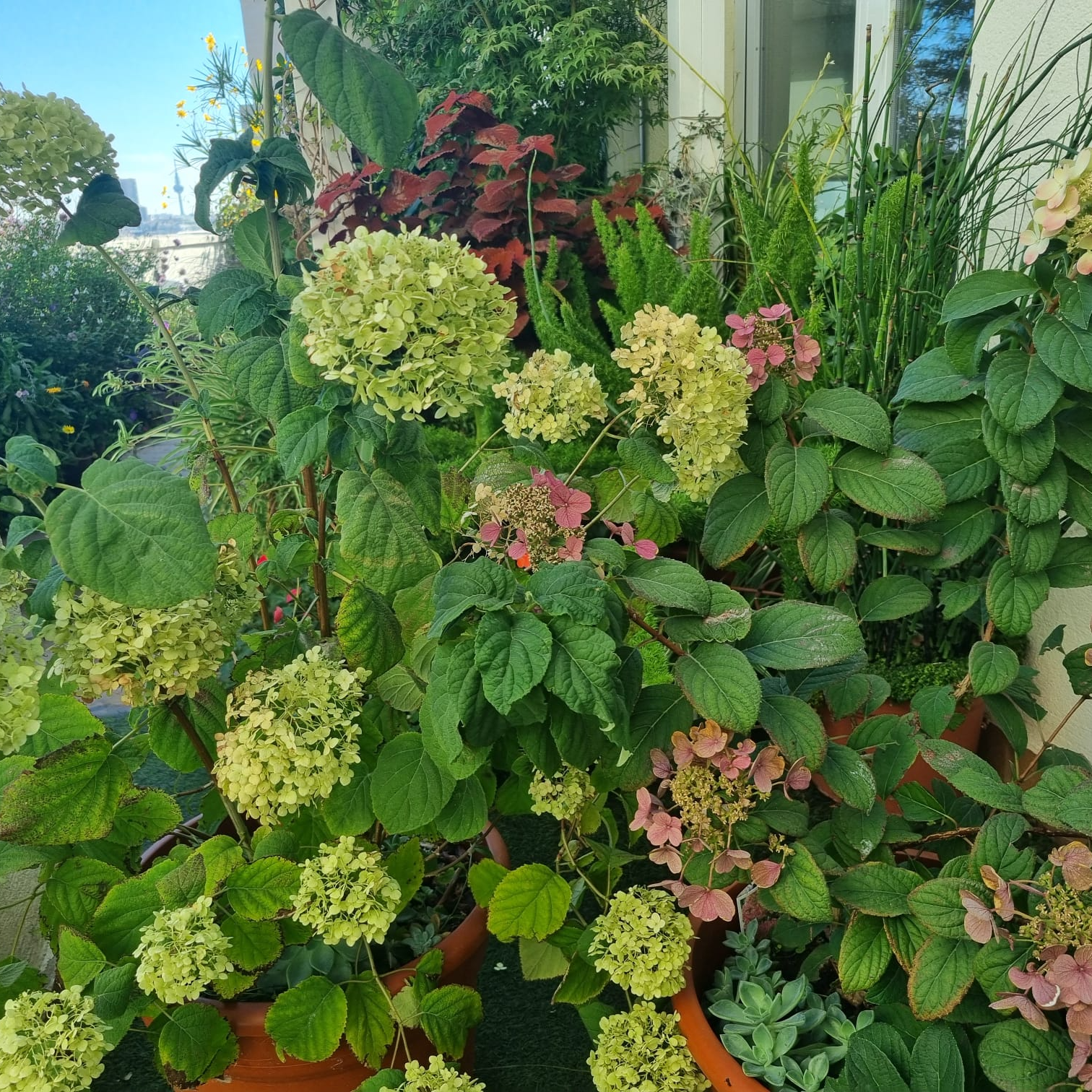
Bueno, pues las hortensias están rozagantes. Es verdad que vamos a ver ahora que no están todo lo bien que debieran, Ahora veremos el porqué. Pero hay que hablar de estas hortensias porque son plantas muy habituales, especialmente en las regiones más húmedas de España, Todo lo que es la parte norte de España, desde una Galicia hasta una Huesca, pues muy habitual encontrarnos estas hortensias. Seguro que muchos de los oyentes que hayáis veraneado en estas zonas, pues habréis visto esas hortensias enormes con esas cabezas florales azules, blancas o rosadas, llenas de color y tan vibrantes. De estas hortensias ya hablamos a finales de junio por una razón, porque nos la regalaron un viverista. Y tenemos aquí que ver ahora cómo se han adaptado y ver qué podemos aprender siempre cuando tengamos plantas nuevas en nuestra terraza, en nuestro balcón, en la repisa de la cocina, de la ventana, en nuestra casa, dentro. Siempre hay que aprender de las plantas, observándolas.
- [02:15]
Ángel
Y cómo se han adaptado estas.
- [02:17]
Eduardo Barba
Bueno, pues podemos ver que las dos hortensias han crecido muy bien, porque venían muy chiquititas.
- [02:22]
Ángel
Hay una que está enorme, las dos están grandes, pero hay una que está enorme.
- [02:24]
Eduardo Barba
Vendrían como del tamaño de una pelota de fútbol, por hablar de una manera incluso un poquito más pequeñas. Y ves que las dos han crecido unos tallos, han hecho crecer unos tallos bastante larguiruchos, fuertes. Vemos que las cabezas florales, inflorescencias, están perfectas, se han formado muy bien. Y bueno, pues tendríamos que ver ahora que no son las hortensias típicas. Estas no son las hortensias que los oyentes habrán visto este verano, como hemos dicho, con esas cabezas azuladas, esa flor tan grande. Exacto, estas no. Estas son un poquito especiales. Y vamos a empezar por la que ves aquí a la derecha, si te parece. Es una hortensia que la llamamos en jardinería hortensia arborescente, que eso ya implica que ya es una hortensia un poquito diferente a la nuestra azul. Mientras que las azules, rosas y blancas que vemos normalmente en Cantabria, en Galicia, en Euskadi son de origen japonés, asiático, aquí la que estamos viendo es una nativa del este de Estados Unidos. Y las hojas, si te fijas, no tienen nada que ver con las hortensias. Estas hojas de la hortensia arborescente son un poquito más pequeñas, son mucho más duras. Ahora no las podemos tocar porque he puesto la hortensia un poquito lejos, pero si la tocaras notarías que tienen un tacto mucho más duro. Y eso también implica ya que es una planta un poquito más resistente a condiciones del centro de la península ibérica, en nuestra zona de España, en Madrid, en Castilla. Esta es una hortensia muy apta porque resiste muy bien el calor y la humedad tan baja que tienen.
- [03:56]
Ángel
Y ahora, cuando llegue el frío, que todavía no ha llegado, ¿Qué pasará cuando llegue el frío?
- [03:59]
Eduardo Barba
Bueno, cuando venga el frío, lo que vamos a ver es que esta planta poco a poco va a hacer una retirada de nutrientes como hacen todas las plantas caducas. Esas hortensias son como las hortensias de nuevo del norte que hemos visto de España. Son caducas y lo que va a hacer va a ser una retirada. Si te fijas, esta hortensia de la derecha que hemos dicho que es la hortensia arborescente, su nombre científico es Hydrangea arborescens y es la variedad o el cultivar Strong Annabelle. Y esta lo que va a hacer es, va a pasar desde esas cabezas de un color blanquecino que tenían, de hecho la más alta, ves que todavía.
- [04:35]
Ángel
Tiene todavía un poco blanca, pero el resto se están poniendo un poco verdecitos.
- [04:38]
Eduardo Barba
Van mirando al verde. Bueno, pues ¿Qué es lo que va a ocurrir con ese invierno y con esa bajada de temperaturas? ¿Que preguntas? Pues la planta va a ir amarronando, va a ir retirando la energía, va a ir retirando la clorofila, que es al final también un nutriente móvil, lo va a ir recuperando y va a ir reabsorbiendo esa clorofila para colocar como si fuera un banco de energía en las partes leñosas, toda esa clorofila, ¿No? De forma de clorofila, y va a.
- [05:05]
Ángel
Dormir y va a echar las hojas.
- [05:06]
Eduardo Barba
Va a tirar todas las hojas y las cabezas florales de esta hortensia se quedarán marrones. Pero eso a nosotros nos gusta mucho.
- [05:14]
Ángel
Porque secas están muy bonitas.
- [05:16]
Eduardo Barba
Porque secas están muy bonitas. Es un mantra casi que habría que repetir varias veces, porque yo recuerdo y he visto muchas veces, por desgracia, jardineros que han cortado estas cabezas secas de las hortensias en pleno invierno. Y es una lástima, porque es muy bonito ver estos procesos. Es una de las cosas que en jardinería hemos cambiado un poco el chip. Yo cuando salí de la escuela de jardinería, año 99, lo normal era que siempre cuando una hoja, una flor amarronaba, se cortaba. Pero a día de hoy no nos gusta esa decrepitud, porque es un ciclo que nos marca muchas cosas. Nos marca, por ejemplo, lo que hubo. Esa flor la seguimos viendo aunque esté seca, y vemos y recordamos el verano pasado, incluso la primavera. Ay, qué bonita. Que estaba de color azul, o estaba de color rosa, qué preciosa. Nos habla también del paso del tiempo, que eso es bueno. Seguimos vivos y vemos como las estaciones van pasando también por encima de nosotros, reflejado en esta hortensia. Y también es una especie de esperanza de qué vendrá después. Oye, yo el año que viene voy a tener estas flores otra vez, cuando las vea en pleno invierno, marrones. Y siempre hay esperanza. Y ahí estarán las yemas dormidas con esa esperanza de la noche.
- [06:25]
Ángel
Pero tú dices que los jardineros habéis cambiado el chip, pero yo creo que los ciudadanos normales también tenemos que cambiar el chip, porque somos muchos los que a la que vemos una hoja un poco marnosa. Tú tienes aquí las tijeras. ¿Cómo es el ruido ese que tú haces? Pues eso, vemos una hoja así un poco marrón. Para afuera, que se está secando la flor esta, Venga, para afuera. Tenemos mucha mano hacer esto.
- [06:46]
Eduardo Barba
Todos tenemos mucha manía y hay que saber cuándo. Hay que saber cuándo sí se puede dejar esa cabeza floral seca para que luzca durante el invierno. Y cuándo no, hay algunas flores que es verdad que cuando se pasan hay.
- [06:56]
Ángel
Que quitarlas porque la cabeza floral seca se va a mantener ahí, es decir, no se va a poner para abajo ni nada, ¿No?
- [07:02]
Eduardo Barba
En el caso de las hortensias, como suelen tener unos tallos bastante fuertes, permanecen erguidas, sobre todo en estas arborescentes. Esta hortensia arborescente, de hecho tiene ese nombre porque incluso se la puede llegar a formar como un pequeño arbolito. Tiene unos tallos muy rígidos, muy endurecidos, con mucha lignina y aguantan erectos todo el invierno.
- [07:18]
Ángel
La otra, que es más pequeñita, que también se ha adaptado bien.
- [07:22]
Eduardo Barba
La otra que tenemos aquí, muy chiquitita, es una especie diferente. Si te fijas, no tiene nada que ver la cabeza floral de una y otra.
- [07:30]
Ángel
Ni el color.
- [07:31]
Eduardo Barba
No, ni el color, porque lo que tenemos es una hortensia paniculata. Nosotros tenemos, acabamos de ver la hortensia arborescente, ahora vemos la hortensia paniculata, que también es diferente a las que vemos en el norte de España, a esas hortensias de cabezas azules. Aquí lo que tenemos en concreto es el cultivar que se llama Hydrangea paniculata, Little Quick Fire, como pequeño fuego rápido o algo así, yo no sé cómo traducirlo. Little Quick Fire. Lo que tenemos es una planta que sus cabezas, sus inflorescencias pasan desde un blanco a un rojizo fucsia, que es lo que estamos aquí viendo. De hecho, si te fijas, emitió una inflorescencia más tarde que las otras y.
- [08:10]
Ángel
Todavía tiene un color, se está tornando verdoso, rosadito, pero.
- [08:15]
Eduardo Barba
Y va evolucionando a este fucsia. Entonces tenemos estas hortensias paniculatas que tienen una peculiaridad y es que su inflorescencia tiene forma de cono. Aquí todavía el cono no lo ves muy claro. ¿Por qué? Bueno, pues porque es una hortensia todavía pequeña, todavía no ha ganado todo el cuerpo y toda la masa que debiera, porque es una hortensia. Al igual que la hortensia arborescente, esta hortensia paniculata están en primer año, es decir, se están adaptando a nuestra terraza y al nuevo sitio, al nuevo sustrato, al nuevo macetón.
- [08:46]
Ángel
Es decir, que si no han echado las flores que habíamos pensado o que estamos acostumbrados a ver, es porque es joven.
- [08:53]
Eduardo Barba
Claro, hay que pensar siempre. Y es importante que todos los oyentes seguro que cultivan plantas lo tienen muy en cuenta, que no es lo mismo tener una planta el primer año que ya cuando ya se ha establecido y está dos, tres años. Nos pasa a nosotros lo mismo. Si nosotros nos mudamos a una casa nueva, tenemos un periodo de adaptación, si cambiamos de país, otro periodo de adaptación. Cualquier cambio en nuestras vidas suponemos que el organismo se tiene que adaptar quizás a un nuevo sabor del agua de un grifo de otra región o a el sol no me da por la mañana. Las plantas exactamente igual. Cuando tú tienes una planta por primera vez, esa planta se tiene que adaptar, viene de un vivero con unas condiciones de iluminación altas, con un buen abonado, con un sustrato tacatá y de repente la traemos a nuestra casa, la cambiamos de orientación, la ponemos en un sitio que quizás ya no tiene la misma temperatura, le cambiamos a un macetón como hicimos nosotros y entonces la planta se tiene que estar y ese establecimiento hace que la planta tenga que producir las flores. Aquí estas no son las reales que va a tener la Hortensia paniculata. Esa Hortensia paniculata ha hecho unos conos tremendos.
- [09:59]
Ángel
Florecitas pero pequeñitas.
- [10:01]
Eduardo Barba
Exacto, muy pequeñitas. Pero bueno, aquí lo que estamos viendo es que eso sí han sufrido un poquito, tanto una como la otra han sufrido un poco. ¿Por qué? Bueno, no ha sido por el exceso de sol, porque son dos hortensias que aguantan muy bien el sol, el sol también de Madrid o de un Toledo o de una Cuenca o o de un Burgos. Aquí lo que ha ocurrido ha sido que ha habido que reequilibrar con el agua. Madre de Dios.
- [10:26]
Ángel
¿Isaías La fuente Pero porque le ponías poca agua o la regábamos poco? La regábamos demasiado, claro.
- [10:31]
Eduardo Barba
Pues porque aquí con el sistema de riego automático le coloqué dos goteros que quizás no eran lo suficiente y entonces añadí un tercero a cada una de ellas para que tuviera un mejor reparto de agua en ese sustrato. Entonces lo que hice fue aumentar ligeramente la dosis de agua y ya la planta se estableció. Como me di cuenta enseguida vi como en algunas de las hojas de la hortensia amarronaron ligerísimamente algún borde, alguna punta, que era como ya un aviso de decir oye, si me echas un pelín más de agua, sí no mucho, porque estas dos hortensias no son muy demandantes en agua pero sí que le echamos mayor dosis y se han establecido, se han restablecido y están ahora tremendas.
- [11:12]
Ángel
Pues mira, voy a abrir yo la consulta de los oyentes Araboy con los que han llamado al 900 1800 pero yo voy a aprovechar que le tengo aquí porque tengo una hortensia en mi jardín y es de las habituales japonesas con las hojas grandes. Ahora las hojas verdes que ha estado todo el verano perfecto, se me están como poniendo rojizas, no marrones, rojizas.
- [11:34]
Eduardo Barba
Bueno, pues mira, eso es una muy buena señal, Ángel porque lo que estás viendo es cómo la planta está colocando un pigmento rojizo para por debajo de ese pigmento retirar muy eficientemente la clorofila y de esa manera es una retirada mucho más fuerte de nutrientes. Es decir, eso sólo lo puede hacer una hortensia que esté realmente sana porque las hortensias que no están tan sanas no tienen esa pigmentación. Ojo, si no se pigmenta en rojo no significa que la hortensia está mal, pero es un extra. Entonces es muy buena señal, no es ningún problema e incluso añade un goce estético más a la planta porque cuando tú ves esas hojas entre rojizo amarillento se pone otoñal, es una planta como más otoñal todavía y nos habla ya de esa retirada de nutrientes.
- [12:17]
Ángel
Y este año ha tenido pocas flores.
- [12:19]
Eduardo Barba
Ha tenido pocas flores y muy probablemente.
- [12:20]
Ángel
Es porque la has podado La podé el año pasado.
- [12:23]
Eduardo Barba
La podaste el año pasado y a.
- [12:24]
Ángel
Veces no la he abonado.
- [12:25]
Eduardo Barba
Muy bien, Ángel, Ahí está. Bueno, pero te pongo un positivo. Progresa adecuadamente. Positivo una A.
- [12:33]
Ángel
La podé.
- [12:34]
Eduardo Barba
La podé bien, La podaste bien.
- [12:35]
Ángel
Pero no aboné.
- [12:36]
Eduardo Barba
Pero no abonaste. Tú piensa que siempre después de una poda drástica la planta tiene que rehacerse y ese rehacerse tiene que venir acompañado por parte de la jardinera de turno, en este caso tú, de un abonado orgánico para que la planta tenga nutrientes para formar esa nueva masa.
- [12:51]
Ángel
Y ya la última pregunta, yo lo hago porque sé que hay mucha gente que tiene hortensias y se pregunta lo mismo, que yo no me estoy aprovechando de nada, ¿La podo este año?
- [12:57]
Eduardo Barba
También va a depender de cómo tengas tú la masa. Si tú ya es una masa que ya la tienes contenida, no ha crecido tanto, seguramente este año puedes descansar de esa poda y yo no le tocaría nada. Si tienes una masa que está contenida.
- [13:11]
Ángel
Aunque las hojas se me pongan chuchurrías.
- [13:12]
Eduardo Barba
No, porque las hojas es que las va a tirar. Claro, entonces se te van a quedar.
- [13:16]
Ángel
Eso es lo que a mí me asusta. Cuando veo solo los tallos, digo, uy.
- [13:18]
Eduardo Barba
Esto hay que cortarlo, paso de la estación. Ahora tú tienes que pensar que en esas yemas que tú estás viendo ya está la flor del año que viene, seguramente en muchos de esos tallos. Entonces tú ahora, yo no la podaría y este año la dejas un descanso, la puedes podar un año cada dos, o sea, mejor dicho, año sí, año no. Eso es mejor dicho.
- [13:35]
Ángel
Insisto, lo hago por todos los oyentes y las oyentes que tengan, no por mí.
- [13:39]
Eduardo Barba
Es una planta muy querida, por eso, aunque sabes que es una planta que tiene.
- [13:43]
Ángel
Hay gente que no le gusta y.
- [13:44]
Eduardo Barba
Por superstición dicen que si tienes hortensias que no se te casan las hijas. Eso lo decía una tía mía, por.
- [13:50]
Ángel
Ejemplo, pero te pregunté lo mismo el otro día, la semana pasada, que teníamos cactus aquí dentro. Hay mucha gente que no quiere tener cactus por superstición, porque dicen que entra.
- [13:56]
Eduardo Barba
En mala suerte o el feng shui. Ya ni hablemos, hay muchas plantas que.
- [14:00]
Ángel
Venga para no yo monopolizar todas las consultas aquí a Eduardo Barba. Azucena, desde Valladolid, muy buenos días.
- [14:07]
Azucena
Hola, buenos días.
- [14:08]
Ángel
Cuéntanos o cuéntale a Eduardo cuál es el problema que tienes.
- [14:11]
Azucena
Primero, enhorabuena por el programa y gracias Eduardo por existir. Mi consulta es muy breve. Yo tengo un acanto de hace muchos años en un atico en Valladolid. Vivo en Valladolid, en maceta, tendrá como 30 años aproximadamente. Y cuando echa la flor, que produce bastante, pues se me caen todas las hojas.
- [14:36]
Eduardo Barba
Claro, es un ciclón. Bueno, Azucena, muchísimas gracias por el piropazo. Con ese nombre floral que tienes tan precioso, pues no me extraña que te gusten las plantas. Bueno, pues mira lo que tienes. El acanto es una de las plantas más maravillosas que hay. Ángel, ya lo has visto.
- [14:54]
Ángel
Yo siempre que los oyentes llaman hago el ejercicio de buscar.
- [14:56]
Eduardo Barba
Es una planta que muchas personas habréis visto en los jardines, con hojas enormes recortadas. Fue la inspiración para Calímaco, se dice en la leyenda, para generar los capiteles corintios, esos capiteles de los templos clásicos grecorromanos tan preciosos que a día de hoy todavía vemos como edificios nuevos los siguen ornamentando con esas hojas de acanto. Bueno, pues el acanto tiene esas hojas tan grandes y tú lo que estás viendo, Azucena, es el ciclo natural de la planta. La planta lo que hace es, durante el otoño, con las lluvias del otoño, es una planta mediterránea, con las lluvias del otoño la planta lo que hace es desarrollar grandes hojas, porque esas grandes hojas requieren de mucha cantidad de agua. Entonces la planta con esas lluvias es capaz de generar esas hojas grandes. Durante todo el otoño crece hasta que llegan los fríos. Con los fríos la planta se detiene porque no hay temperatura muchas veces para hacer fotosíntesis. ¿Y se detiene más o menos hasta cuándo? Hasta que llega la subida de temperaturas y la subida de horas de luz. A medida que avanza febrero y marzo y la temperatura sube, la planta vuelve a crecer y a generar más hojas más grandes todavía. Pero llega un momento en que la planta empieza a florecer. Azucena La planta empieza a florecer en el entorno de un mayo, por ejemplo, y la planta lo que hace es destinar absolutamente toda la energía que tienen las raíces y en las hojas a formar esa floración. Lo que está haciendo es un ciclo natural. Y cuando tiene esa floración, la planta se queda exhausta, totalmente exhausta.
- [16:23]
Ángel
Y es cuando tira las hojas.
- [16:24]
Eduardo Barba
Y acompañado de que hay subida de temperatura muy alta, la planta lo que hace es obedecer a los ritmos del clima en el que vive. La planta cede toda la energía a la flor, a la semilla, al fruto y a la semilla, y después se queda bajo tierra en esos rizomas. Por eso las hojas desaparecen en el verano.
- [16:42]
Ángel
Azucena ¿Qué querías?
- [16:43]
Azucena
Conozco conjuntos de acantos que no la han perdido nunca.
- [16:48]
Eduardo Barba
Claro, porque estarán en tierra. Muy probablemente estarán en tierra o en macetones más grandes y tienen mucha más cantidad de agua, tienen mucha más cantidad de recursos que en una maceta. Tú, si quieres que tu acanto sobreviva al verano, lo que tienes que hacer es en un febrero marzo, sobre todo en un marzo, aplicar un abono muy rico en fósforo y en potasio para que la planta vuelva a tener mucha energía, toda la energía que gasta en la floración, y luego súbele el riego. Tienes que regarla un poco más para que no desaparezca la hoja, pero sabes que es un ciclo natural, que si.
- [17:24]
Ángel
Desaparece tampoco pasa nada. No es que la planta tenga una enfermedad ni tenga ningún problema.
- [17:28]
Eduardo Barba
Lo que puedes hacer también, Azucena, es sacar la planta del sustrato y dividirla y tener una planta más pequeña para que tenga más recursos de agua y de nutrientes.
- [17:37]
Ángel
Azucena, esos acantos van a ser maravillosos. Muchísimas gracias.
- [17:42]
Azucena
Seguro.
- [17:43]
Ángel
Venga, hasta luego. No nos va a dar tiempo a ningún otro oyente porque como yo he monopolizado un poco, pero bueno, no te quiero preguntar por la planta curry, ¿Por qué la has metido aquí dentro?
- [17:51]
Eduardo Barba
Pues mira, la planta del curry está aquí. Quería haber metido la lavanda, pero tenemos ya un problema con las plantas de la terraza, Ángel.
- [17:57]
Ángel
Claro, que además llevan el riego automático.
- [17:58]
Eduardo Barba
Tienen el riego automático, están con varios goteros y es que se están haciendo ya tan grandes que ya necesitamos un camión.
- [18:04]
Ángel
Todavía podemos hacer una cosa, si la semana que viene hace bueno, podemos salir fuera y fijarnos en las plantas que no podemos meter. Vale, pues la semana que viene queda anotado. Si hace bueno, estaremos fuera.
- [18:16]
Eduardo Barba
Muy bien, pues el curry lo metí porque simplemente para recordar a los oyentes lo importante que es el recorte después de una floración en las plantas aromáticas, lo que hicimos fue, la planta del curry quedó desastrosa después de la floración, se abrieron las ramas, perdió muchísimas hojas, pero mira, después de un recorte fuerte que le di, como la planta ha rebrotado, ha generado un cojín perfecto de estas hojas plateadas tan bonita, o sea, paso por la peluquería, paso por peluquería, rebrote, rejuvenecimiento y rejuvenecimiento.
- [18:44]
Ángel
Hasta la semana que viene.
- [18:47]
Podcast Host
Para no perderte ningún episodio, síguenos en la aplicación o la web de Laser Podium Podcast o tu plataforma de audio favorita.