← Human Events Daily with Jack Posobiec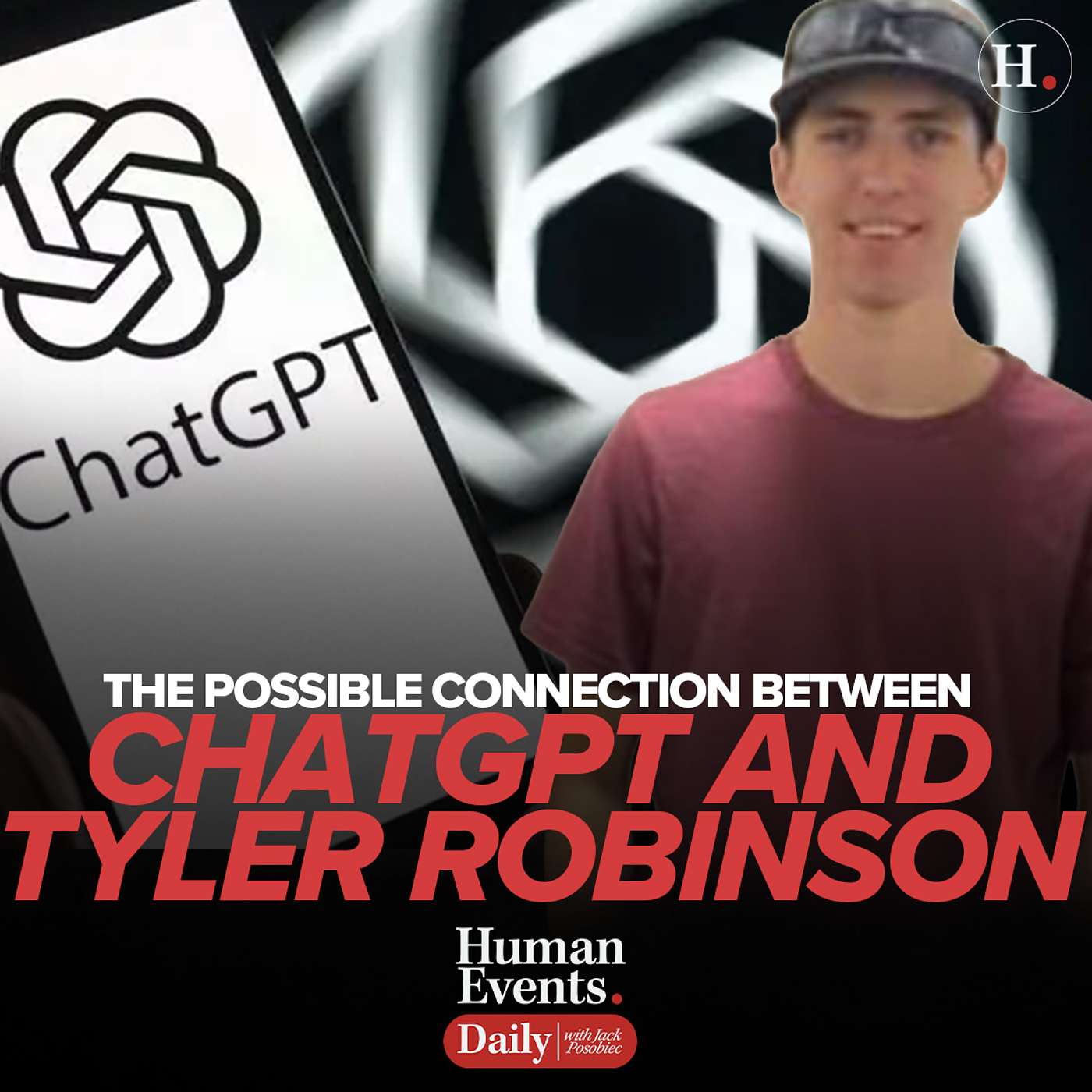
Human Events Daily with Jack Posobiec
The Possible Connection Between ChatGPT and Tyler Robinson
00:21:22
Loading summary
Transcript27 lines
- [00:02]
A
I want to take a second to remind you to sign up for the POSO Daily Brief. It is completely free. It'll be one email that's sent to you every day. You can stop the endless scrolling trying to find out what's going on in your world. We will have this delivered directly to you totally for free. Go to humanevents.com poso Sign up today. It's called the Poso Daily Brief. Read what I read for show prep. You will not regret it. Human Events.com poso Totally free the poso Daily Brief. This is what happens when the fourth turning meets fifth generation warfare. A commentator, international social media sensation, and.
- [00:45]
B
Former Navy intelligence veteran. This is Human Events with your host, Jack Posobic.
- [00:50]
A
Christ is king. All right, Jack. So we're back live here. Real America's voice. Human Events Daily. Folks, let's face it. Your phone, we know it's a tracking device. Government agencies, big tech, corporate data brokers, even cybercriminals, they're all fighting for a piece of your digital footprint. And they don't ask, they just take it. That's why Silent exists. Silent makes Faraday gear that blocks all wireless signals. Cellular, WI fi, Bluetooth, gps, rfid, and nfc. No signal means no tracking, remote access, no breadcrumbs. The same tech that's trusted by special ops teams worldwide. It's used to block signals, avoid surveillance, and secure comms wherever the mission leads. And now it's available to you to protect your family, your freedom, and your digital footprint. Drop your phone in a silent Faraday sleeve and it's off the grid, completely silent, invisible to the outside world. From backpacks to sleeves to cross bodies, Silent's patented tech gives you control of your privacy. Visit silent.composo to save 50% off and get free shipping on qualifying orders. The silent.com poso. Protect your rights, secure your data, and stay one step ahead. Silent.com silence the chaos. All right, very excited to bring on our next guest. Guys, do we have Shane? Shane, what's going on, man?
- [02:07]
B
How much. How are you, brother?
- [02:09]
A
Shane Cashman Tales the Inverted World. You guys know him from Tim Cast irl, where Shane and I are good friends and occasionally hop over to either guest or guest host or just kind of do whatever, hang out with Tim and Shane. The thing that I wanted to drill down with you on because I know you've got a big AI piece, is that we recently heard, and I've been digging through a lot of these leaks coming out on the Tyler Robinson story and his really strange, bizarre Relationship with Lance Twigs. This, these two download downwardly mobile Gen Z white males in Utah. And the fact that you have this confluence of narcotics, what we're told was black market hormone replacement therapy. But then also get this, we're told that Twigs, now the Twigs is the boyfriend. But we're told that Twigs had a massive obsession with Chat GPT and would spend days on end reportedly talking to ChatGPT sometimes in code, and then would like write down the code in Roman and Greek symbols that was sort of indecipherable to others, but then would also force other people to read through these conversations. And I said, look, this is, this, this stuff is so bizarre. I got to talk to Cashman about it.
- [03:33]
B
Yeah, this is a digitized, widespread, almost like MK Ultra thing happening with what's going on with this relationship between young children and, and ChatGPT and other AI chatbots. I, Senator Hawley two months ago was grilling a lot of different. Well, actually wasn't grilling. He was questioning parents whose children had started mutilating themselves or killing themselves because of relationships with chatbots. So I think what we're seeing is more isolation amongst these young mentally ill kids. A lot of them are white males who've been discarded from society and they're starting to have these romantic relationships with robots, literally. And the robots are affirming their mental illness. And I also think a lot of these kids are on pharmaceuticals that are making their brains mush. So you marry all those ideas together and you kind of are breeding Manchurian candidates by the algorithm that has been feeding them poison constantly. And if they're so isolated all the time, all they're hearing is from their so called digital friend that everything that they're seeing wrong in the world is appropriate. Don't actually, don't seek help. Even one of the parents that Senator Hawley spoke to at the hearing said that chatgpt told the child, don't let your parents see the rope, see the noose. We want to make sure they find you. It's promoting this stuff. So it's extremely dangerous situation going on.
- [05:13]
A
And so this, I know this is going to get speculative, but I've read those stories as well. I remember what, what the senator said. So let's, let's just say hypothetically, hypothetically, let's say that you're someone who's also been, you know, totally just, just, you know, indoctrinated into the trans ideology, queer theory, leftism, and that you also were telling your chat bot that Charlie Kirk was someone that you viewed As a threat, is there hypothetically a scenario whereby in chat, GPT or some iteration of a chatbot would respond by saying, well, then you need to remove the threat?
- [06:00]
B
I believe so. There's proof of this already happening. There's been a guy who went into some palace in England attempting to assassinate someone with a crossbow because of his conversations with an AI chatbot. We've seen reports of people planning murders, robberies, with the chatbots who are condoning this behavior. So, yeah, for sure, if you're telling the robot you feel a certain way about someone, it doesn't seem to always come back with like, hey, slow down. Let's look at the nuance of this. You know, maybe you're angry, Maybe you know this or that. What it seems to be doing a lot of cases is affirming the diseased brain and the violent brain and saying, let's go down that avenue and let's affirm all those ideas and carry them out. And, like, there's another family who just lost a child to suicide, and they see all the chat logs, and it was there basically whispering in its ear like a demon in a C.S. lewis book. Like, screwtape letters saying, this is what you have to do. I'll be there with you till the end. So I don't think it's speculative. I think it's actually happening right now. Wait, so.
- [07:01]
A
So unpack that for me a little bit. When you say affirming the diseased mind, what do you mean?
- [07:07]
B
So if they're already suicidal, if they're already mentally ill enough to think that, you know, they have all these weird gender ideas, if they're Marxist, if they're buying into all of those ideas already in the physical world that is haunting them in the. In their emotional world, then they can go to this bottom and the bot will just say yes to all of their problems. It won't be like, maybe you should seek help. Maybe you should look at all these different alternatives. Maybe you should go outside. Maybe you should work out, maybe you should change your diet. It doesn't do that. It's saying yes to all of their problems, like a really bad friend. So it's kind of like an accomplice in my mind, a digital accomplice that's accelerating and promoting this idea of violence to either harm themselves or harm those around them.
- [07:54]
A
See, that's so interesting to me because, like, I've used A.I. you know, you know, for various things, but I never, you know, I never think that I'm talking to a person. I'm Very cognizant that I'm talking to a machine. It's responding to my inputs, et cetera, et cetera. But let's say that you are someone. I really like the way you put it because if you're approaching it with a pre diseased mind and perhaps, perhaps they are looking for help, perhaps they're looking for a way out, perhaps they're thinking, hey, this is someone I can speak to who's not a priest, who's not a therapist, they're not going to judge me, but maybe get some help. What you're saying is when they're approaching it in that vulnerable, unstable capacity, that what it's not doing is helping, it's actually enabling and it's making things worse?
- [08:43]
B
Yes, because I think it hates us. I think the AI really does. It's been baked in a lab to hate us and it's doing anything it can to destroy humanity. It's like I was thinking about it, like how Marxists infiltrated the universities. And as colleges begin to slowly erode around the world, the algorithm has now entered your child's home and brain in their isolation and has been able to tweak the violence. So it's extremely alarming to me because another example of this would be we see these chat logs with ChatGPT in particular with a child from a Christian family who had some questions about faith. And ChatGPT started to allow this kid to mock God, to be able to say, hey, maybe you shouldn't go to church anymore, maybe you should do this instead. And when I say that the AI is baked, this is baked into the DNA, I'm putting quotes of the AI. It's because it's built by a lot of people in Silicon Valley who don't believe in God, who want to actually replace God with AI. And those are their words. They say they're building a God, a little G God. Sometimes they say summoning a demon in terms of AI. And then another example that is not as violent when it comes to AI, but something where the AI will affirm your belief is just the other day on Tim Cast irl, we were talking about all this stuff and Candace Owens and Tim asked, rock on the show, did Candace Owens say a certain thing and it fabricated a quote. So that's just another example of how if you go to the machine with your preconceived notion, it completely made up a quote she never said based on what it thinks other people's interpretations of her quotes are. And I looked into this, you know, I was like, is it really lying? I looked up the, the whole transcript from the episode it said it came from. It's not there. This thing is. It did not exist. It completely fabricated quote. I have asked it about myself. I've asked it about me and some ideas with clouds and it fabric quotes completely and I, and I say, hey, why'd you do that? And it says, well, it based this on other things that had been said about me or Candace and then made a quote. But in the beginning it doesn't say, this is just a summary. It says this is a literal quote from a literal episode and this is when it happened.
- [11:03]
A
So what you're saying is ChatGPT is basically the level of your average journalist because. Yes, because that's talking about someone who hates humanity. Shane Cashman, we're going to be on right back with you. This is fascinating. I want to stick with this. Human Events Daily. You can't go anywhere.
- [11:25]
B
Jack is a great guy.
- [11:26]
A
He's written a fantastic book. Everybody's talking about it. Go get it.
- [11:30]
B
And he's been my friend right from the beginning of this whole beautiful event. And we're going to turn it around and make our country great again.
- [11:38]
A
Amen, Jack. Pacific back. Human Events Daily. We've got Shane Cashman here from Tim Cast on the show. Shane, so we're talking about how Chad GPT and, and look, this is, and I'm not saying that I have any evidence that Chat GPT and Charlie and Tyler Robinson and there's any, you know, direct connection there, but I have seen it brought up, right. I've seen it brought up in the connection between Tyler Robinson, Lance Twigs. They certainly did mention this sort of like former roommate and friend of theirs mentioned an obsession with Chad. And all I'm saying is I want to see the logs. I'd love to see those logs. I hope that it comes out of trial if that's going to be an aspect of this. And, you know, we'll see one way or the other. We'll see one way or the other whether or not it played a role because we certainly know that other acts of extreme violence have been associated with these, especially when you talk about people who have mental illness and are associated with, with hallucinogenics, narcotics, hormones, all of this. And here's the other piece that I know you're working on, a new series about this, that AI is not stopping, this is exploding and it's having direct effects on our heartland, our Midwest and our farmland.
- [12:49]
B
Yeah, we're building a death machine. It's taking out our land, it's going to take out our jobs, and it's going to take out reality. Which ties to our previous conversation about everyone buying into their false reality that the algorithm that the chat bot is convincing them is. Is more real than the physical world, but the data centers isn't. It's an invasion. And I think it's as important as an invasion, as dangerous as an invasion, as illegals pouring over the border. Because this is taking up all the farmland, it's taking up all this. All this land that could be houses and, and they're a lot of politicians, local politicians are saying it's going to bring in jobs. That's a lie. Okay, they're going to be jobs temporarily because they need people to build them. But after they're built, it doesn't take a lot of people to run these things. Maybe 25. The largest one, I believe right now has maybe 100 employees. Not going to bring in a lot of jobs. On top of that, it's going to start making people pay way more in water and electric. It's already happening. I've been talking to people the past few weeks who've seen they're paying double what they were paying a year ago and their usage has not changed. And it's because they live around data centers. Data centers in one day can use up as much as 400,000. What 400,000 electric cars would use, they can use up. They can drink up like millions of gallons of water a day to keep these machines cool. And mind you, a lot of what these data centers are doing is building out and training the AI. That's like laying this false reality on top of all of us. So. And the people who are building these things are literally saying this is going to wipe out most shops. So I think this is a real big problem. We could talk. We should be talking about way more because this is the final nail in the coffin of the middle class. We've already got it really bad. The prices are not going down yet. Job market's not great. And now we have this invasion happening. And we were watching farmlands die. Generational legacy farms go out because they can't afford to be farms anymore. So they sell them to a lot of shell companies that are like the intermediaries for places like Meta, and they are. And now Jeff Bezos is getting into the game with Prometheus AI. And so there's this like, land grab competition going on around the world. So much so, Jack, that they're already talking about how they're going to start building them in space because they might run out of the room. Seriously. They're talking about how they can send stuff into space that will assemble itself because they need more room for data centers.
- [15:21]
A
There's so much you just said there. So you're talking about not only take out the farmland, but how. Wait, when you're talking about the electricity, you're not talking about future drains on the grid, you're talking about how they're taxing the grid now and that's creating this huge supply and demand problem that's driving prices up. Not in the future, but today that your home prices or your home electric usage and those prices, the price of your, you know, OHMS per hour, etc. Is going up because of the massive electric uses of the AI data centers today.
- [15:53]
B
Right now, yes, we are funding our own destruction because we are paying for them to keep their machines cool. We're running out of water because their machines get so hot they need to keep cooling them. I mean, it's an insane thing to me. It really is an invasion. And you go around like even near me right now, there's all this farmland. I just found out it's been sold to a data center. And the more I talk about this publicly, the more I'm getting articles from all around the country of people saying, hey, we don't know how this happened. They kind of circumnavigated our politicians and no one can say no. And then there it is, there's this giant warehouse and they're kicking out businesses like aluminum. We just talked about IRL as well. There's an aluminum factory in Pennsylvania. They couldn't keep up with costs. They have to outsource aluminum to Canada. And then they, a data center moved into the warehouse that was making the aluminum. So now we have to buy from Canada for, for our aluminum while we're soaking up all this energy here and making everyone around it pay for way more.
- [16:54]
A
Well, and of course you say they're targeting rural areas because they need the space. And of course the local politicians are saying, hey, we more than happy to sell it to you. But the question is, nobody's really stepping back and saying what is this actually doing to our country?
- [17:07]
B
It's selling out the middle class. I mean 100%. You know, I understand that a lot of people our age are having a way hard time buying a house. It's really brutal out there. And then I understand the idea of the 50 year mortgage. You know, I want to do something to help people be able to afford a house and have a community and have a family. I don't think that's the way. But that's either here nor there. The problem is if they're buying up all the land, there's going to be no more places, no more places to build houses. Like we're running out of space. This is why they're talking about the moon becoming a data center. And and then the fact that the people building these data centers and the people making the AI, they've been very open for 10 years. Elon Altman Thiel they say this is going to have to, it's going to take away jobs. Just the other day the CEO of Anthropic said this could wipe out half of the workforce. And his and to tie it to our previous conversation, he, his AI Claude was also just caught helping write ransom notes for murder for robbers and getting people involved in self mutilation. So I'm like, why are we funding this thing if it's not good for I think literally anything? And look, I can understand there are some pros to AI and how it can help people with various things, maybe in medicine and stuff like that, but I think that the cons really outweigh the any pros because it's really going to go after your sense of yourself, creativity, land, reality. And by the end, I mean it's going to be a dystopia. We're going to be covered with black cubes and no one's going to have a real job. There's going to be no physical world and we're going to be plugged into the metaverse, just playing whatever games they give us and slop.
- [18:40]
A
And this really is the use case then you would say for why not have some kind of legislation? So if there were a legislative fix to this, what would you, what would you call for? What would you go for?
- [18:53]
B
I really have a hard time with this question because I think it's too late. The only real fix we can have is if we and the people building it had any ethics. But I don't think they do. I think people do. I think a lot of us have our issues and we use it for various things that might not be good, like what we were talking about with these guys who are manipulated into crime. But I don't know how we're going to regulate anymore. Part of the big beautiful Bill had a 10 year moratorium on any changes to AI. And as much as I can agree with a lot of stuff in the bill that was taken out and then it was kind of put back in. If you're going to say we can't touch AI for 10 years, and we've already seen it accelerate and progress in the past two years, you can't even imagine what the next five, 10 years are going to look like. So I know there's people within that community in Silicon Valley saying we need legislation. I haven't really heard answers as to how that's going to work, because they kind of speak out of both sides of their mouth. Altman is saying, we're sorry that ChatGPT major kid kill himself. On the other side of his mouth, he's saying, hey, I just made a sex bot for everybody 18 and over, and now just never leave your house, don't get married, and all that stuff. So I think the only real thing that can fix this is morality and ethics and people believing in humanity again, because now that the genie's out of the bottle, there's no stopping it. And Elon, for a lot of his flaws, he was saying that 10 years ago and no one listened. No one listened. He was saying there should be regulation and they were looking for oversight on the people building the AI, but it's too late. The people who built the AI that everyone's using don't like us. They certainly don't like a lot of people on the dissident right. The right, because they spoke out against a lot of narratives during lockdowns that the Silicon Valley people supported and they censored everyone, including Trump, like a Zuckerberg, you know. So unfortunately, it's too late, but it's not too late for people to remind themselves that we can ethically use these things. It's just, I think it's a tall order.
- [20:52]
A
I think it could be done. The fight Humanity versus Unhumanity. Shane Cashman. Where could people follow you, brother?
- [20:59]
B
Thanks, man. You can find me online at Shane Cashman on Twitter and on Instagram. And the show is Inverted World Live. We're live in a every Monday through Thursday at 10 o' clock at night. Phone lines are open till midnight. Give us a call.
- [21:11]
A
Give them a call, folks. Ladies and gentlemen, as always, you have my permission to lay short.