← Human Events Daily with Jack Posobiec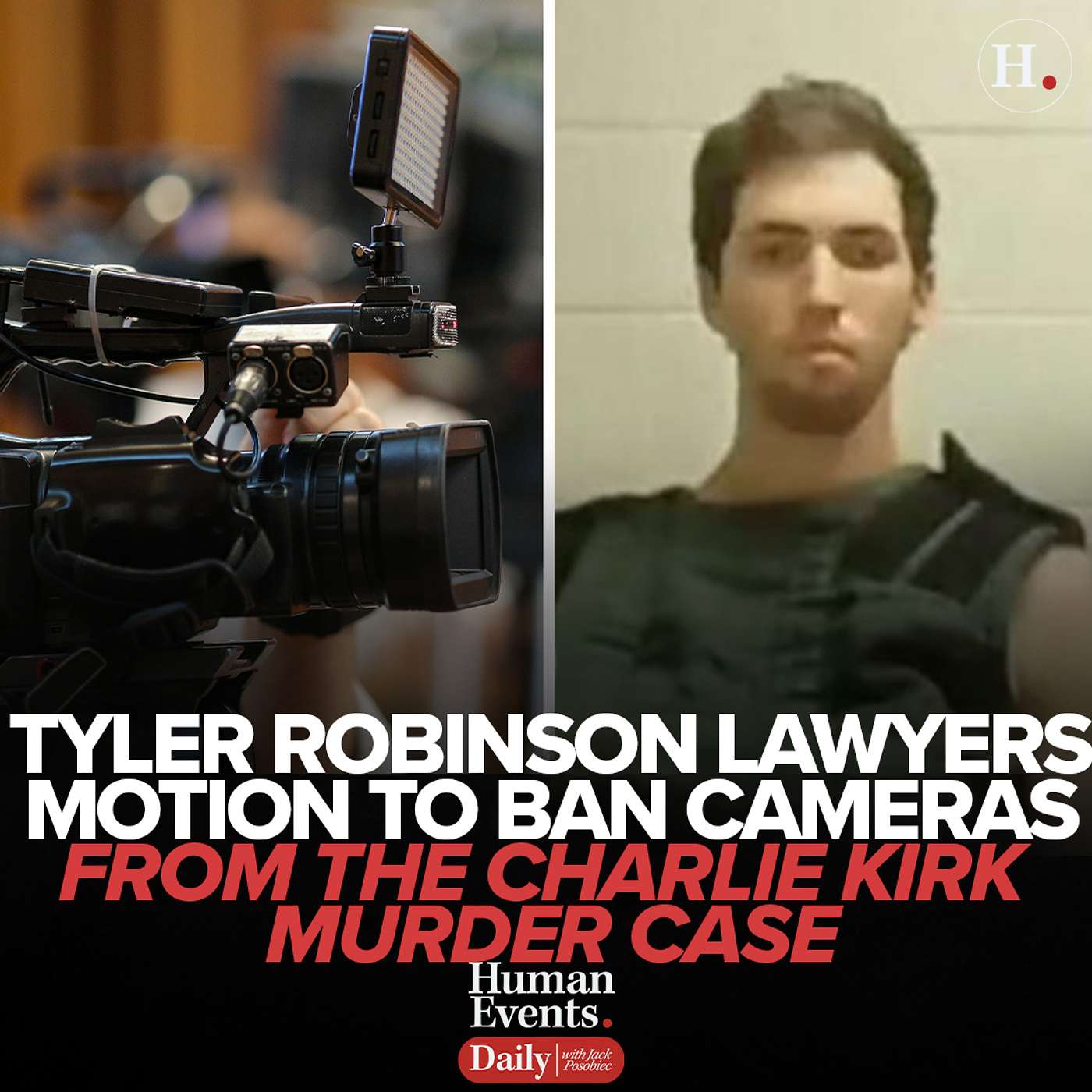
Human Events Daily with Jack Posobiec
Tyler Robinson Lawyers Motion to Ban Cameras From the Charlie Kirk Murder Case
00:48:21
Loading summary
Transcript52 lines
- [00:02]
Jack Posobiec
I want to take a second to remind you to sign up for the Posto Daily Brief. It is completely free. It'll be one email that's sent to you every day. You can stop the endless scrolling trying to find out what's going on in your world. We will have this delivered directly to you totally for free. Go to humanevents.com poso Sign up today. It's called the POSO Daily Brief. Read what I read for show prep. You will not regret it. Human Events.com poso Totally free the poso Daily Brief. This is what happens when the Fourth Turning meets fifth generation warfare. A commentator, international social media sensation and former Navy intelligence veteran.
- [00:46]
This is Human Events with your host, Jack Posobic.
- [00:49]
Christ is king. Morning. Day 28 of the government shutdown with no end in sight and the US now careening toward a hunger crisis. 48 states now warning if the shutdown continues by the end of the week, they'll be forced to stop distributing SNAP food assistance. If they took away these snaps, these SNAP benefits, when is we snapping?
- [01:09]
When is the day?
- [01:11]
Because don't have me going in the grocery store and y' all loading up your carts with groceries running out. And I'm at the register. I'm running too.
- [01:20]
I mean, shutdowns are terrible and of course there will be, you know, families that are going to suffer. We take that responsibility very seriously. But it is one of the few leveraged times we have. The Department of Justice is getting involved with New Jersey's election announcing the agency will monitor polling sites in Passaic county to, quote, ensure transparency, ballot security and compliance with federal law. US kills 14 alleged drug traffickers in strikes on four boats in eastern Pacific. That's according to Defense Secretary Pete Hegseth. Yesterday, at the direction of President Trump, the Department of War carried out three lethal kinetic strikes on four vessels operated by designated terrorist organizations trafficking narcotics in the eastern Pacific. The FBI making an arrest in a chilling murder for hire plot targeting Attorney General Pam Bondi. The man accused of assassinating conservative political activist Charlie Kirk was back in Court today. 22 year old Tyler Robinson appeared virtually in Utah, but he did not show his face today. That judge granted a motion to appear in street clothes moving forward but denied his request to appear without restraints. The judge said that there were some safety concerns and also the charges against him are very, very serious.
- [02:48]
All right, Jack Ross, over here. We are live Human Events Daily. Real America's voice. We are here. Today is October 28, 2025 Anno Dominique. Well folks, as you know We've been covering the murder of Charlie Kirk since literally the very moment that it happened here on Human Events Daily. I was live the day that Charlie was shot. Go back and watch the episode. I haven't gone back and watched that episode. I don't know that I will or any of the episodes that we did, you know, in those days. But we've done it. We've been, we've done it. We've been doing it every day. We are here and in this case we have an update. We have an update on the Tyler Robinson trial. Now this comes from the lawyers here at the courtroom in Tyler Robinson's case that are working for him. And that's fine. He's got his lawyers, he'll have his day in court. But here's something that's not fine. And I understand that they are advocating for their client, but this goes beyond that. In the fourth Judicial District Court of Provo for the county of Utah, State of Utah, the defendants reply to sheriff's response to, to motion to appear at all in person proceedings in civilian clothing without restraints and Miranda in support. Okay, so, so this, these are the lawyers Catherine Nestor, Richard Novak, Michael B. Burt and Stacy Visser. They came in and, you know, if you read the headline and it said, okay, it's just, you know, he just doesn't want to be in. He wants to be in person. He doesn't want to be in the prison. So he wants to travel over there for the in person proceedings pre trial. And he wants to be in civilian clothing. Okay, he wants to be in civilian clothing. All right, but then when you scroll way, way, way down in the filing, what do we find? They want cameras taken out of the courtroom. They want cameras out of the courtroom in a Charlie Kirk murder case. They don't want any, what they call electronic media coverage. Electronic media coverage. Listen to this, Listen to this. The court should limit media coverage or video and photographic coverage at the least. So defendants physical appearance is no longer the subject of interest and he has some chance of securing a fair and impartial jury. So they're trying to say, they're now trying to say that showing the defendant is prejudicial to the. Just showing him, just showing him as a defendant. So what they're doing here is they're trying to play games with the case, play games with all of this and get to the point where. And now listen to this. They want television cameras to not be allowed in the courtroom of the criminal case or where television news crews are, quote, unquote, turned loose on those eager to obtain fame or fortune concerning a pending Trump. Guys, no, this is absolutely incorrect. This is the wrong way to do this. I understand what they're saying. And I'm going to be fair here. I'm going to be absolutely fair. As someone who, look, Charlie's a friend of mine, very good friend of mine, I would not be able to be on the jury in this case, Right. Because I am directly impacted by the crime at question here. So I would not be allowed to be on the jury, the same reason that family members are not allowed to be on juries. But that being said, I do want there to be a fair trial. I really do. And the fair trial does not change because you see a picture of Tyler Robinson. It changes when you get the evidence, all the evidence, and all of it in public. Now, by the way, not just for the fairness of the trial, but for the good of the country, for the public interest. And so I announced earlier today, and I'll say here as well, Human Events is currently preparing an open letter that we will be filing with the court in Utah calling for an opposition to this ban and the allowance of full live streaming and full camera access for the entire proceedings of the trial. We'll get into that and more later on with Will Chamberlain. We've got Mike Benz up next. Ladies and gentlemen, the public has a right to know. We'll be right back. Jack Posum. Events Daily stand in our way.
- [07:24]
Mike Benz
And our golden age has just begun this Human Events.
- [07:27]
Jack Posobiec
With Jack sober now, it's time for everyone to understand what America first truly means. Welcome to the second American Revolution. All right, folks are back here. Human Events Daily. Real America's voice, Jack Posobic. And folks, let me ask you a question. Have you noticed that flavor has seemingly been stolen from our country? That's true. Because somewhere along the way, we traded real flavor for seed oils, processed junk. Well, it's time to take back our kitchens. Let me tell you something. Our new partners at Steak N Shake are here to help. We're introducing steak and shakes. 100% pure beef tallow. No chemicals, no fillers, just premium beef fat rendered the old fashioned way, the way that my Polish grandparents cooked. Right now they have two options that you can choose from both@steakandshake.com. that's steak and Shake with the letter N. That's their grass fed beef towel. You're going to love that. That's $9 a jar. But if you want to go a little bit more premium, you got the American wagyu beef tallow $12 a jar and with a rich, buttery taste that you're absolutely going to love. Now if you want, bundle them both. 1999. Revolutionize your cooking. Fry the crispiest fries. Sear the perfect steak roll. Roast vegetables bursting with real flavor. This is how food should taste. Bring tradition and taste back to your table with Steak and Shake Beef Tallow. Order it now@steakandshake.com that's steak n Shake and you know it's got the letter n. Steakandshake.com you're going to love their beef tallow. Now we've been talking about the rise of political violence, particularly from the left. We've also been talking about left wing networked violence. Participated in a White House panel discussion, a roundtable on that. But there was one man who I believe there's a lot of people who could have been there and should have been there, et cetera. But there's one man that I definitely wanted in that room. And though he wasn't there that day, I wanted to kind of pick his brain on this because he's an absolute expert on the networks, on the money, on connecting the dots. And his name is is Mike Benz. He joins us now. What's up, Mike?
- [09:46]
Mike Benz
How you doing, Jack? Great to see you.
- [09:49]
Jack Posobiec
So Ben's we spent a lot of time while we were in there talking about, you know, I, for my part, I talked about how the violence is getting worse, how we see these tactics moving now more towards assassinations as opposed to the traditional black bloc protests or the violence against, you know, a random Starbucks or random cars, that type of thing. We're now seeing more and more targeted violence, including asymmetric threats such as assassinations. I even went on CNN and walked them through this. I'm not sure if they understood, but I tried, I tried to do what I could to explain it to cnn. But Ben's when we hear the response from these types, they say, well, antifa is decentralized. There's no network there. That's just a group of people organically fighting fascism. Is that true?
- [10:34]
Mike Benz
Not even in the slightest. Go to any one of these antifa websites, although they're getting rarer and rarer as so many of them are to shut down right now to try to hide their own secrets. But they all have.org as their websites. The Portland Antifa site is a dot org. The Torch Antifa site is a dot org. The Seattle cell is a dot org. Jack, what is org short for?
- [11:04]
Jack Posobiec
Well, that's short for organization or specifically nonprofit organization.
- [11:10]
Mike Benz
Yes, these are organized organizations. This is not some ethereal metaphysical idea. They are organized organizations and they operate through a cluster cell network which is the part and parcel of how we do influence operations abroad. And this kind of gets to the broader antifa story. ANTIFA is an international network. And one way to understand it and to try to depoliticize it a little bit for a second here. There were very radical right wing decentralized cluster cells of networks for political influence operations and brass knuckles, breaking up meetings, acts of domestic terrorism that were conducted in the 20th century under what's known today as Operation Gladio. This was a NATO network of stay behind groups, paramilitary street militias. In Italy, in Central and Eastern Europe. There were dozens of these cluster cells that were organized in a decentralized fashion where it brought together basically captains of industry, government regulators, international aid organizations, and then violent political, at the time, right wing anti communist forces that were secretly working with the Central intelligence agency and NATO's political affairs units in order to nudge domestic politics country by country in the emerging soup of the democratic turbulence post World War II from the 1940s to the early 1990s. And this was done because we were fighting a cold war against international communism. And these stay behind networks which were licensed to do dirty work and were on the ground, on in the streets, were essentially sanctioned by US and NATO intelligence to do a department of dirty tricks of violent activities, often in order to stop the emergence of left wing communism. I believe the best way to understand Antifa and its various connective tissues at the foundation level, at the nonprofit level and at the US Government level is as a left wing counter populist faction organized with a very similar structure and for a very similar purpose, that the right wing anti communist cluster cells were set up internationally during the Cold War. The difference is the American people have not known until just the past few years that this type of, this type of structure even existed or that we were even in a kind of second Cold war against international Trumpism in the way that there was an initial Cold war against international communism.
- [14:06]
Jack Posobiec
And so you've got these leave behind networks, you've got them bounced out. And by the way, and you and I have talked about this, that's exactly what I told the President when I was in the room. I pointed out that all of this goes back to World War II. It even predates World War II. If you look at the way that Antifa was used as the international arm of the Bolsheviks to destabilize countries like revolutionary Spain and like the Weimar Republic. And certainly we all saw what the destabilization of the Weimar Republic turned into, if you go back to the 1920s, 1930s, but it was always meant to be the international arm of the revolution, funded by the Russian people, funded by looting the the Russian treasury. And so you fast forward that to the Cold War era and they were using it for the exact same thing. So when President Trump brought up that question, should they be designated a foreign terrorist organization, you'll notice that I was the first one. I said, yes, Mr. President, absolutely. They have networks all across Western Europe. And in fact people are looking at it a little bit backwards if they think that Antifa started here. No, no, no. ANTIFA started in Western and Eastern Europe and then came to the United States, not the other way around. That's why these leave behind network so important. And that's the way they were set up in the very first instance.
- [15:22]
Mike Benz
It's exactly right. And it's a seamless interchange as you've covered. Mark Bray is the antifa professor and I believe Rutgers, and then as soon as he feels he's running into legal trouble, tries to flee to Spain to join up with, you know, cluster networks there. And there is this kind of, I think Michael Lowdenthal, another antifa professor and organizer described in one of his books, he called it networked clandestine. Clandestine clandestine. This kind of secrecy and this cluster cell organization they refer to as a network of networks. This is the exact same language, by the way, that Naito used during the Integrity Initiative where they targeted right wing, right wing nationalist forces in Spain. Pedro Banos famously his nomination to be the security director, the military head in Spain was nuked by a clandestine operation by NATO called the Integrity Initiative, of which according to the documents, both Anne Applebaum and Nina Jankovic were a part of. They were part of the UK inter cluster cell of this NATO funded secret influence network. And if you look country by country in Europe and around the world, it is impossible to disentangle the goals of ANTIFA and the goals of the Joe Biden, Barack Obama, CIA, State Department and usaid. Look at for example what Antifa does in Germany targeting the AfD part, the AfD party, the right wing populist party there. Look at what they do in Spain targeting the vox party. Look at what they do in France targeting Marine Le Pen. Look at what they do in Brazil targeting Bolsonaro. Look at what they do in Belarus, targeting Lucas One by. It is impossible to see a lick of daylight between the foreign policy goals of the Central Intelligence Agency under Joe Biden and Barack Obama and the on the ground domestic political actions of Antifa as a kind of street muscle. It's all the way down to the political to the commercial investments of the political donors to the DNC as George Soros and Bill Gates and Tom Steyer and Al Gore and all of these billionaires with multibillion dollar assets under investment management funds are promoting things like climate change and shifting profits within the energy the global energy market to portfolio companies that require government mandates to wean off of fossil fuels and into renewables or ethanol based fuels. George Soros and Al Gore and Tom Steyer and this entire DNC investor class are pre invested in those markets while Antifa serves as a fascist battering ramp to promote those stocks. The same thing in the public health space. Look at how Antifa breaks up anti vaccine protests. They're. They're the paramilitary arm of Pfizer.
- [18:28]
Jack Posobiec
Exactly. And they don't even realize it half the time because they aren't in that part of the cluster. We're coming up on a quick break but I just want to point out that not only did Mark Bray head over to Spain seamlessly integrate with Spanish anarchists which all exactly what we saw during the Spanish Civil war. He's publicly identified himself as part of the Black Rose Anarchist Federation. He stated this and he stated that he participated in the Hamburg attack on the G20 where they were burning cars. And he specifically talked about how he was targeting luxury vehicles to make sure they didn't burn any working class cars. Only wanted to target those of the wealthy. Again this is a guy who's now take Dr. Antifa who's taking a tax break payer funded vacation to Spain. We'll be right back. Jack Bosobic. Mike Benz, Human Events.
- [19:22]
Mike Benz
You talk about influencers. These are influencers and they're friends of mine, Jack Sobeck. Where's Jack? He's got a great job.
- [19:37]
Jack Posobiec
Jack, we're back here. Live Human events daily Real America's voice. Folks, I got a question. What if those who were once called conspiracy theorists turned out to be. Well right again. A new study by Korean doctors claimed that Covid vaccines raise the risk of six cancers including lung, breast and prostate. Now researchers analyzed health records for more than 8.4 million adults between 2021 and 2023. And findings were that were then published in Biomarker Research. This is a respected scientific journal. Critics dismiss it but the data raises concerns that spike protein exposure may be tied to long term health risks. Dr. Peter McCullough has been aware of this since 2020 which is why he collaborated with the wellness company to create Ultimate Spike detox which is designed to help your body clear spike proteins, reduce inflammation and support heart health with natural ingredients like the tikinase, dandelion root and bromelain. It's your daily proactive defense from a man made virus. Don't wait until symptoms strike or something unexpected happens. Experience the only formula approved and used by Dr. Peter McCullough, one of the top doctors who risked it all. Head to TWC Health, slash POSO and use promo code poso to get 10% off plus free shipping. Again that's TWC Health. Slash posto and use promo code posto for 10% off. Get back to that pre Covid feeling. Mike Benz we're on live. We're talking about these networks, international networks of antifa. They've got journalists, they've got reporters, supporters, they've got professors, they've got direct action militants and agitators. The question is what should the federal government be doing and where should they be looking in terms to break up these networks to disrupt these operations and ultimately to stop these activities from destroying our our society like the cancer that it is.
- [21:34]
Mike Benz
I consider ANTIFA and U.S. government Adjacency Adjacencies to it to be part of the weaponization toolkit that the Biden administration used that spanned lawfare, FBI targeting and the like. I consider paramilitary street violence and the condoning of it or the tactical tacit blessings for it to be a part of that weaponization toolkit. And Tulsi Gabbard ODNI just stood up a interagency working group on on weaponization of intelligence and Foreign affairs type functions. This spans odni, CIA, State Department, usaid, FBI, DHS and other equities. I believe that for example search terms can be inputted into internal searches at usaid, the State Department, the Central Intelligence Agency and you can start right there and simply put in terms like antifa or anti fascist or authoritarian in these these type terms and start with a basic review of all files around. For example energy policy in Germany. The the Biden administration blew up the Nord Stream pipelines. The the antifa groups in Germany were champing at the bit for that and have been used as a battering ram against the AfD party. There does we were we were giving tens of millions of dollars in aid to various organizations within Germany. You can start right there and simply look for all antifa adjacencies blessed by the foreign policy establishment or used or even had peripheral awareness by CIA, State Department, usaid with antifa networks that were going against those agencies, political enemies, I think it is impossible that there are no linkages there. You start with that and you make it sunlight the best disinfectant. These networks rely on secrecy. You now what you'll argue, what you'll hear from the national security state is oh, you can't disclose the involvement of the US government in Antifa in Germany because then no other dissident group will want to work with the United States knowing that their cover will be blown because this, the US government betrayed these antifa groups by disclosing internal memos and conversations with various leaders on the ground. I say that is complete bs. If you use this as a sword abroad, for example, if you use antifa networks to go after the AfD party in Germany or Marine Le Pen's movement in France, you can't use that secrecy as a shield at home because Antifa operates here at home. So I think it starts with taking the, the lid off of the den of vipers, the cage that they've been with classification and simply exposing the snakes inside to sunlight. Given how the layers of secrecy and OPSEC that Antifa moves through, that itself will have a tremendous on the ground impact in those countries themselves, potentially violating FARA type laws if these were not disclosed in accordance with each country's process. For example, we know that Syria units were, according to Rolling Stone, the closest allies on the ground of the U.S. military in Syria as we were backing the ISIS and Al Qaeda forces against Bashar Al Assad. We know because the military was working directly with these antifa units. We know that there is connective tissue between the US Military, the Central Intelligence Agency and Antifa in Syria. Does anyone doubt those linkages in Germany or France or in other European and Latin American countries? If you do.
- [25:18]
Jack Posobiec
And Mike, by the way, those linkages that you're talking about, the foreign fighter flows that we saw traveling to YPG and other other affiliates, it wasn't just American Antifa that were coming. They were sourcing them from Germany, they were sourcing them from Greece. They were using that area of northeastern Syria as a training ground for Antifa to receive battlefield experience. In fact, I know of at least one individual who received that battlefield training and then traveled back to the in 2019, then traveled back to the United States to participate in what? The Capitol Hill autonomous zone where he was manning the armed barricades in Chaz in Seattle just a year later.
- [25:56]
Mike Benz
That's right. They go straight from targeting the CIA's enemies abroad to the CIA's political enemies here at home. That's how this international network works. And the capacity building for it moves through foundations. And this is really the layer that I think would break this whole thing open. You take a place like the Tide Center. The Tide center which gives the 501C3 to the black Lives Matter Global action Group and to many of these antifa funding pass throughs. The Tide center, as I've documented has gotten about $27 million in U.S. state Department and U.S. aid grants for some very peculiar things including the Tide center getting a $2.5 million grant to quote, secure concrete commitments from foreign governments on behalf of the U.S. state Department. And this is the group that is giving the 501c3 to nonprofit status, the fiscal sponsor to these antifa groups and these BLM street muscle groups in 2020. How is this foundation serving as the shadow diplomat formally for the US government internationally and getting funded tens of millions of dollars investigated.
- [27:05]
Jack Posobiec
Mike Benz. Mike Classified Declassify all of it. Ben's we'll get you in. We will do the work of digging all the way down on this like any. Please go follow Mike Benz. Mike, Ben Cyber across all platforms. Right back. Jack. Where's Jack? Where is he? Jack, I want to see you.
- [27:31]
Mike Benz
Great job, Jack. Thank you. What a job you do.
- [27:34]
Jack Posobiec
You know we have an incredible thing. We're always talking about the fake news in the bank, but we have guys.
- [27:39]
Mike Benz
And these are the guys who be getting policies.
- [27:46]
Jack Posobiec
All right, Jack Posobic, we are back here, Human Events Daily. And I got to tell you folks here on the east coast, cold weather, you know, we're saying it's going to be here, but it's kind of already here. And you know what I realized the other day? I'm just going have to say it. If the power goes out when it's really cold, I have no way to keep myself and my family warm. Isn't that crazy? We could actually freeze. But then I heard about the Vesta off grid space heater from our friends over at my Patriot Supply. Now this is a space heater that doesn't use electricity. It runs on something called canned heat, which is an indoor safe fuel. And what's great is that with the Vesta stashed in the poso closet, I know that my family will keep warm no matter what. And it doubles as a stove to boil water or cook food, which is pretty cool, honestly. Now the best part is you can get a Vesta and a bunch of other free gifts when you order the Winter Prep Special from my Patriot Supply. Just go to my patriotsupply.com jack to see everything included. This offer won't last long and neither will the nice weather. So go to my patriotsupply.com jack today. That's my patriotsupply.com Jack. My patriotsupply.com Jack folks, I said we were going to have it during the show and we do have it. This letter that is now in draft form is about to be published, but we've got a copy of it that I want to show here right for you. Human Events.com so Human Events Media Group, that's the official name of our company, is going to be publishing this open letter to the Honorable Tony F. Graf Jr. Of the Fourth District Court of Utah County, State of Utah. And it states Human Events Media Group and national news organization committed to transparent and accountable reporting, respectfully urges this court to deny any motion to prohibit video, photographic or livestream coverage of pre trial and trial proceedings in the capital prosecution of Tyler James Robinson for the murder of conservative activist and leader Charlie Kirk. Such a ban would violate U.S. law, U.S. supreme Court precedent, First Amendment protections and the public's fundamental right of access to judicial proceedings. And now we've got all the citations there. But I wanted to want to dig in on two specific points before we bring our guest in here. And this is Utah Code of judicial Administration, Rule 4.401.01. And here's what's really interesting. It states that there that in Utah there is a presumption that electronic media coverage by a news reporter shall be permitted in public proceedings where the predominant purpose of the electronic media coverage request is journalism or dissemination of news to the public. The law, a court may decline to permit cameras if the court determines, quote, there is a reasonable likelihood that media coverage will prejudice the right of the parties to a fair proceeding. So here's the, here's the idea that the presumption is already there under Utah law. Now this is very expensive compared to other states that don't necessarily have this. And so restricting camera access, restricting live streaming obviously would be a huge problem. And pretrial publicity alone does not justify camera bans. We covered that in this we're going to publish this all@human events.com and here's a piece that I wanted to put in in section four we wrote banning cameras would amplify misinformation, not reduce it. In the absence of official courtroom footage, speculative secondary content on YouTube or AI generated reenactments, partisan edits would fill the void this would stand to increase, not decrease, prejudicial distortion. Live, unedited coverage is the most reliable antidote to misinformation, allowing the public to see proceedings as they occur, not as filtered through third party narratives. And so this is all going to go up@human events.com we're going to be delivering this to the court very soon. It's really simple. Look, I want everyone to have all of the evidence available. I want everyone to ask for evidence. I want people to be skeptical. I want people to ask questions and push for it. But what I don't want are bans on cameras and bans on evidence that could be coming out. Joining with me to discuss this and other legal matters, Will Chamberlain of the Article 3 project. Will, what's going on, man?
- [32:07]
Will Chamberlain
Good to be with you, Jack, as always.
- [32:10]
Jack Posobiec
So. So, Will, I called you this morning with this crazy idea that we were going to throw together this letter and we've, we've put it together. You know, what do you think about the, this question right there? And I kind of get where, where the judge is coming from, or I should say not the judge, but the attorneys are coming from. So they're trying to. Their argument is, well, if we allow all this public consumption, he's not going to be able to have a fair trial because this is going to prejudice the jury pool and perhaps create undue interest in the case. And therefore, you know, and therefore, you know, that's why we should ban cameras. And you also, of course, hear this in, in federal court as well. What's a good response to that?
- [32:50]
Will Chamberlain
Well, I think there's a fundamental presumption that these are, these courts are, these proceedings are open to the public. Right. Courthouses are open. They can be reported on court. You know, people show up and report on them all the time. And there's a reason for that. Justice is supposed to be done in public so that we're confident that the system is transparent and operating as according to law. That's, I think, necessary here. There's an enormous public interest in this trial, for obvious reasons, and therefore there's also an enormous public interest in ensuring that the trial is conducted transparently and scrupulously in accordance with law. So I think that that's part of the reason why these proceedings should be public and the public is right to be interested in this. This was the most high profile assassination of an American in a very, very long time, probably since Kennedy, actually, in terms of a successful assassination. So it's something we should have the right to see.
- [33:42]
Jack Posobiec
Yeah, and it's really as simple as that to me. And look, these are always done in public. And that's, that's, that's, that's part of our tradition in terms of the public court system. It is public justice. Yes. It is meant to be done in public. And by the way, for folks who don't know, if you ever. And I've covered a number of trials, D.C. area, I've covered trials in Virginia. You can just go. You can literally just go. And there are members of the public who just show up. And, and this is part of the point. And obviously there's, there's, you know, space restrictions and physical limitations, but there will be overflow rooms if there are cases, there are media rooms, if you're credentialed media, etc. All of this is done from the point of, of saying that if this person is to face whatever judgment they receive, and in this case, we are talking about the highest possible judgment in the entire world, that, that, yes, actually, it should be done in public or else it's going to. And will, I want to ask your question or get your sense on, on the other part is if you turn those cameras off in today's society, which is driven with, or riven with, you know, AI recreations and all sorts of just, just anything that anyone can do, I really think it's going to create a much worse environment for the trial.
- [35:00]
Will Chamberlain
Yeah. So I think a good comparison would be, you know, what went on in the Chauvin trial and the Rittenhouse trials, where you had public live streaming and everybody was able to watch and critique it. In general, I think the judges in both of those cases did really well. If you actually look back and think, you know, I don't necessarily approve, you know, I don't like the outcome of the Chauvin case. I think Chauvin was innocent, but I don't think the judge did anything obviously wrong in terms of the way he was handling evidence, at least nothing that comes to mind. And I certainly think the judge in the Rittenhouse case did a great job. So compare that to how the judges conducted themselves in the state court trials of President Trump, both in the civil matter involving his organization that Leticia James brought and in the criminal trial for the false statements. I think that those judges, both of them, were wildly out of pocket, and I think part of the reason they were able to behave so out of pocket is because they didn't allow the proceedings to be live streamed and their decisions to be critiqued so aggressively.
- [35:55]
Jack Posobiec
And another One, by the way, recently to take politics out of it in a sense is the Bryan Coburger trial, which took place up in Idaho. The murder of those for sorority girls. This was a case that generated enormous public interest. There was a huge amount of publicity surrounding it and yet there was no problem whatsoever with people being able to have access to that case. And it didn't affect the outcome of the case one way or the other.
- [36:21]
Will Chamberlain
Yeah, I mean, I think that, you know, what's the big fear? What are you trying to protect with any sort of limitation on publicity or limitation on the ability of people to describe what's happening in the courtroom? Well, you're trying to protect the integrity of the jury and you're trying to protect the extent to which the jury is considering evidence that's not been admitted into the record. But whether or not you live stream trials, it really doesn't have that much of an effect on that. Either the jury is going to pay attention to your instructions not to consume outside media about the case, or they're not. And if they do consume outside media about the case, they're going to get at least some sort of bastardized version of the internal reporting. I mean, if they might as well get exactly what they, you know, rather than speculating or getting secondhand information, it doesn't really improve the situation if they're getting or make it worse if they're getting the first hand information. So the real question is, can you prevent jurors from consuming outside media about the trial as it's ongoing, so that they're only considering the evidence that's been admitted? That's that problem just isn't implicated by livestreaming.
- [37:21]
Jack Posobiec
Yeah, and there's a really, I believe this is from Richmond, Richmond newspapers v. Virginia, 1980. People in an open society do not demand infallibility from their institutions, but it is difficult for them to accept what they are prohibited from observing. So, you know, it's, you know, the explicit guaranteed right to speak and to publish concerning what takes place at a trial would lose much meeting, meaning if access to observe the trial could be foreclosed arbitrarily. You know, and they're just, they're just really, you know, taking that idea of a public trial and broadening it out to. And again, this would be the television age or new media. But again, the principle is something that has been around for hundreds of years, if not thousands of years, going back to even ancient Rome itself, a public trial to be held in public. Be right back. Jack Posobic, Will Chamberlain, Human Events Daily. Jack is a great guy. He's written a fantastic book. Everybody's talking about it. Go get it. And he's been my friend right from.
- [38:28]
Mike Benz
The beginning of this whole beautiful event.
- [38:31]
Jack Posobiec
And we're going to turn it around and make our country. Amen. All right, Jack Bosobik. We are on now with Will Chamberlain, Article 3 project, where he works with Mike Davis. And we're going through this open letter that Human Events Media Group has issued in. In the case of Tyler Robinson and the state of Utah. This is the murder trial of Charlie Kirk. And it's a question. It's a very simple question. And by the way, I would have the same standard for pretty much any trial, regardless of whether or not it's one that, you know, that I was involved in, in the sense that I was friends with the victim, that I believe the public has a right to know, and I believe that the public should know in these cases whether it was Kyle Rittenhouse, by the way. And we're on with Bill Chamberlain. We're talking about this Will. In fact, Kyle Rittenhouse is someone who reached out to me directly and said, you know, how can I help? How can I be of assistance? He showed up. Just funny aside, because you brought him up, he shows up at the Charlie Kirk Memorial and sends me a message, hey, Jack, I'm here outside. He had never mentioned that he was coming. I said, man, I could have got you, like, a. Like a special guest pass or something. He just showed up. He literally just drove there from Texas and was like, yep, I'm just. I'm just here. And, you know, everybody was, you know, because, you know, everybody was there to. To, you know, thank him for coming. And, you know, people remember that. I think it was just a couple of weeks after his acquittal that he appeared on stage with me and Charlie at the Turning Point. I believe that was the first America Fest, the first AM Fest. And the media lost their minds because we gave him that sort of WWE intro with the cold sparks and everyone cheering. And. And I remember going to Charlie with that idea and Charlie saying, oh, yeah, absolutely. And. And I actually told Kyle. So the. The week before, the weekend before, the jury came back. So the jury went out for one weekend, and they were deliberating, and then they had a weekend, and then they came back with a ruling on a Monday. And I think they still deliberated for a few days during the week, but even the weekend they were out, I actually talked to Kyle on the phone. This is before the. The ruling was in. And I said, kyle, a month from now, you're going to be with me and Charlie Kirk at amfest. And that's awesome. Sure enough, we were. Sure enough we were. He was. He told me he was sitting around a fire somewhere, somewhere outside of Kenosha.
- [41:06]
Mike Benz
That's.
- [41:07]
Will Chamberlain
That's. That's. That's awesome to hear. And I think it was cool that.
- [41:11]
Jack Posobiec
And it was just cool that. That he showed up. Right. And you see the connection between, you know, Charlie really being the first person to say no, like, we are going to absolutely support Kyle Rittenhouse, and we're going to support him, you know, and absolutely, obviously, there's an obvious case of self defense. And so it was great to see that, you know, that Kyle and obviously so many other people. I just. That was just one story out of the millions that, you know, that are out there. That I don't even know if I've told that publicly yet. But, hey, Kyle, I told everyone. So there you go.
- [41:40]
Will Chamberlain
Charlie touched a lot of people, you know, and he was such a. You know, I haven't really had the great opportunity to talk about him personally. I mean, certainly I knew Charlie. He was, you know, very helpful to me. And, you know, I think he was involved very much in both getting Human events together and when I was running it and getting you on board as well. So I think, you know, Charlie's. His loss is just enormous. It's still very, you know, it's every day I think about it, and, you know, it's really, really difficult to still have. Not have Charlie around.
- [42:12]
Jack Posobiec
And. And in fact, by the way that I remember, there was a time where, you know, speaking of which, we held that. What was that, like, roundtable, you know, discussion that we did the one time. And I don't remember if you were even in this or not, because this is. It was like me, Charlie Kirk, Andy Ngo, Libby Emmons, and you may not have not been in this roundtable, but Charlie spent like, an entire day just sitting with us talking about, this is my vision for human events. This is how it can work. This is how I want Human Events Daily to run. And in fact, Human Events Daily began life as a turning point USA show, and then we took it independent, but obviously still work very closely with Charlie in order to be able to, you know, kind of kind of move Alan, from the. The C3 restrictions on political speech. And it's. It's. It's all. It's all because of Charlie.
- [43:05]
Mike Benz
Right.
- [43:05]
Jack Posobiec
You know, he would not have had any of that without Him. The linkages that he was able to do, the. The bridge building that he was constantly doing behind the scenes in the movement, saying, you know, this. This thing should exist. Let's make it happen. And then he'd sort of like, you know, without any credit, without his name on it or anything, and he would just. He would just put people together and then things would happen. And I think that, you know, I think that we, you know, we kind of sit back and we talk about it, but we really did lose a big figure in terms of that. And it's. It's something very clear that the left will continue to do this. They'll. They'll continue to target people if we do not stop them from doing so. And that's why, just from a personal perspective, that regardless of just knowing Charlie, that's why the Tyler Robinson case is so important and getting it precisely.
- [43:56]
Will Chamberlain
We absolutely have to see justice done here, and we have to see it done publicly. I think it will be useful to put to bed some of the more ridiculous theories about what's happened here. And what frustrates me so much about those theories is because they're distracting from the obvious and core truth that is so important for every conservative to internalize. A leftist assassinated Charlie Kirk and a slew of other leftists celebrated it. And we just need to remember that. We need to get it. I mean, that's. That's so important for us to remember because it reminds of what the stakes of this actually are, what the stakes of our politics actually are. And, you know, I. It's hard to forget that. I think it's changed. It's certainly changed the way I'm really tolerating sort of what I might have called, you know, antagonists on the left who I might have otherwise tolerated, engaged with. But I look at some of their views or how they've responded to this, I'm like, no, I'm not. I'm not even engaging with you anymore. You're obviously just an adversary, and we need to defeat you. That's it. There's no, you know, I don't see any good faith coming from you. You had nothing to say about the assassination of my friend. So that's it.
- [44:59]
Jack Posobiec
Yeah. And then you hear. You see a guy like Mamdani who gets up there, and I'm just going to keep saying it. The Mom Dhumi campaign to me sounds like Radio Rwanda for white people. I mean, he just says it over and over that this is black and brown people rising up to defeat white supremacy. And this is Something that Charlie was warning about in his last days, in his last weeks, was that, you know, there is this huge mass, you know, not nationwide, but certainly in select localities across the country like New York or maybe Minneapolis or Dearborn and others of people who have come in and they have. They have no interest in, you know, doing right for everyone. They're. They're directly telling you, we are going to take down people that we view as, quote, unquote, the enemy class, the target class, and we are going to take their stuff and give it to the people who are our supporters. And that's about it. And this kind of politics is. It's obviously resentment politics, but it's also very, very powerful. And it's led to really bad outcomes in the past.
- [46:02]
Will Chamberlain
Yeah, I mean, Mamdani is deeply anti American. I mean, you even saw AOC at the big Democratic rally speech, basically say that everybody built New York City except white people. When it was white Protestants who founded New York City, it was called New Amsterdam for a reason. I'm tired of a world where it's very obvious who they think is the enemy and who they're willing to be violent against and whose deaths they're willing to mock. Like it's you and me and it's other Republicans. We're the enemy. That they're willing to see dead. That maybe they wouldn't pull the trigger themselves, but they shouldn't. Certainly wouldn't shed a tear if other people pulled the trigger against us. And that's, you know, that needs to. Every conservative needs to understand that what the stakes are.
- [46:41]
Jack Posobiec
No, it's 100%. And by the way, we are going to be seeing this Halloween because Halloween's coming up on Friday. I'm just going to say we've already seen a few. We're going to see more. These leftists are going to be celebrating it. They're going to be dressing as Charlie Kirk. They're going to have, you know, plumes of blood spurting from their. From their necks. The freedom shirt. It's going to be everywhere.
- [47:00]
Mike Benz
Right. Though.
- [47:01]
Jack Posobiec
There will probably even be just, you know, screenshot it. Right. You know, there will be people who try to dress up as Erica who do things like this to mock them. And I'll simply put it like this. Screenshot every single one of them. Screenshot every single one of them. Document them, because we are going to make them famous. We're going to make them absolutely famous. And we're more than happy to do so. Will Chamberlain, where can people go to follow you and get access to your work.
- [47:26]
Will Chamberlain
You can follow me at Will Chamberlain on X and you can follow what I do with the Article 3 project at a3paction.com join in many of our campaigns where we try and bully senators into doing what we want.
- [47:38]
Jack Posobiec
Thank you so much. All right, folks, this Sunday in New Jersey, check me out. I'll be at the Turning Point Action Super Chase event to get the ballots out on us. That's this Sunday afternoon, Toms River, New Jersey. We're going to be up there Turning Point Action the first time deploying to New Jersey, the Garden State. And by the way, if you're in the Garden State, if you know anyone in the Garden State, go vote. Go vote right now. New Jersey. Vote New Jersey. Vote. Imagine living in New Jersey and not having voted yet. Could you, can you live with yourself? Could you? I don't, I don't know if I could. So you got to get out there, be persistent and harass people. Ladies and gentlemen, as always, you have my permission to lay a short.