← Human Events Daily with Jack Posobiec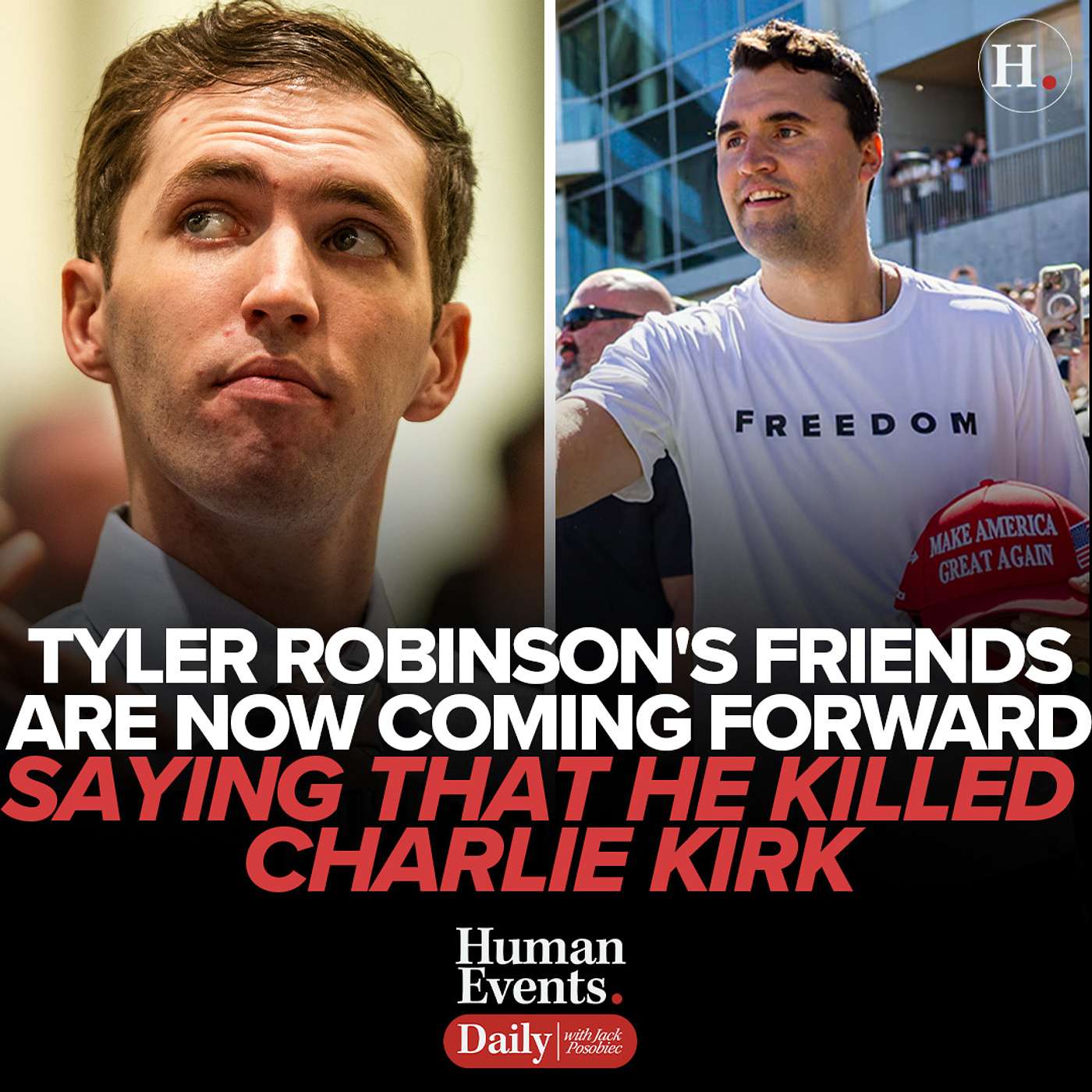
Human Events Daily with Jack Posobiec
Tyler Robinson's Friends Are Now Coming Forward Saying That He Killed Charlie Kirk
00:48:48
Loading summary
Transcript69 lines
- [00:02]
A
I want to take a second to remind you to sign up for the POSO Daily Brief. It is completely free. It'll be one email that's sent to you every day. You can stop the endless scrolling trying to find out what's going on in your world. We will have this delivered directly to you totally for free. Go to humanevents.com poso Sign up today. It's called the POSO Daily Brief. Read what I read for show prep. You will not regret it. Human Events.com poso Totally free the poso Daily Brief. This is what happens when the fourth turning meets fifth generation warfare.
- [00:40]
B
A commentator, international social media sensation and former Navy intelligence veteran. This is Human Events with your host, Jack Posobic.
- [00:50]
A
Christ is king.
- [00:51]
C
President Trump just announced that he ordered a complete blockade of all sanctioned oil tankers going in and out of Venezuela. He also called on Venezuela to return, quote, all the oil, land and other assets previously stolen from us. White House National Economic Council Director Kevin Hasset was about was asked about a possible blockade just a couple of days ago.
- [01:13]
B
Do you feel you have the leeway there to conduct more seizures or even a blockade of oil from Venezuela without it hurting?
- [01:20]
A
Yeah, well, I'm not a foreign policy.
- [01:22]
D
Guy, so like what we do with.
- [01:23]
A
Venezuela and whether we blockade is up to the President and Marco Rubio, the.
- [01:27]
E
Son of Rob Reiner and his wife Michelle Singer Rainer is facing charges of first degree murder with special circumstances for their killings. Los Angeles County District Attorney described this as, quote, the most serious charge the DA's office can bring against anyone, end quote. Reiner was arrested Sunday and he's currently being held without bond.
- [01:45]
F
The hunt for the gunman and Saturday's deadly shooting at Brown University could hinge on this. A grainy picture of a masked man released this afternoon. It is one of the latest in a flood of images released by authorities today, including this minute by minute timeline tracking the masked person of interest as he walks around a residential neighborhood near the Brown campus hours before the mass shooting took place.
- [02:10]
G
I know the name that you're asking about because a member of the media asked me about it. I am familiar with it. I wasn't familiar with it when the media member asked me about it.
- [02:19]
H
I think it was.
- [02:22]
G
I think it was either CBS or NBC. I asked my team about it and I think this is an area where caution is really necessary. There are lots of reasons why a page might be taken down, particularly if there's chatter out there about to. Your question, Amanda, about words that were spoken. It's easy to Jump from someone saying words that were spoken to what those words are to a particular name that reflects a motive targeting a particular person. That's a really dangerous road to go down. Really dangerous. If that name meant anything to this investigation, we would be out looking for that person. We would let you know we were looking for that person. You know, again, I think it's just a really dangerous road to go down.
- [03:10]
A
All right, ladies and gentlemen, welcome aboard. Today's edition, Human Events Daily. We're here live from Washington D.C. today is December 17, 2025 Anno. Dominique, folks, massive news out of believe it or not. There's a huge report Washington Post today where Tyler Robinson and they've done an in depth report where what they're doing is they are trying now to cover up the politics involved in Tyler Robinson's act of killing Charlie Kirk. And they're completely, completely and utterly burying the lead. What's the lead? They say that Tyler Robinson told friends that he wanted to see right wing politicians, quote, catch a bullet. He also bragged that if he were the person to take the shot in Butler, that he wouldn't have missed. That's what's in the Washington Post. But you have to read all the way through this thing because I've been reading these guys for a long time. You got to go past the stuff they're saying, oh, he played Wordle and he did this. And he had a friend who was in New England. Stop, stop. Cut the crap. Don't bury the lead. But that's what they're trained to do. They're trained to bury the lead. They said that Lance Twigs was sobbing when Donald Trump won the election and that he was being cradled on the couch by his homosexual boyfriend, Tyler Robinson. Then they wrote that Tyler Robinson would again would brag about his long range shooting skills, that Tyler Robinson would brag about how he would have made the shot in Butler. And he would also talk about how right wing politicians deserve to catch a bullet. So all of this and then they're trying to say, oh, it wasn't political. Oh, we're not sure if it was political. Remember, hey, fascist, catch on the bullet. But the real buried lead you have to go to. I haven't counted all the paragraphs, but it's almost 25 paragraphs in. And they finally have the buried lead. One of Tyler Robinson's friends, someone who knew him, who was a sometime roommate of theirs, would go over to the house, play magic the gathering, would drink, would participate in these gaming parties. What did he say? What did he Say he killed Charlie Kirk. So Tyler Robinson's own friends, people that should be close to him, are saying, this is the guy who did it, that Tyler Robinson killed Charlie Kirk. His own friends admit it. And we know that his parents also believe this because they are the ones who turned him in. We also know that Tyler Robinson's parents were at the courtroom last week when he was there, smiling and grinning, yucking it up with his lawyer. Yeah, we saw it. We saw all of it. And at no point did the parents ever go to media and say, my son didn't do it. If you thought your son was wrongfully accused of something, you might tell someone about that. Right? But not Tyler Robinson's parents. No. And unfortunately for the. And truly, unfortunately, it sounded like they were actually very emotional, specifically his mother in court. And when they were asked to step outside of court and leave their son there over what their son had done. This is the narrative that's shaping up. They're trying so hard to divorce left wing politics, transgenderism, the trans agenda from the murder of Charlie Kirk. Why are they doing this? It's obvious they don't want anyone to know that a violent, leftist, gay communist killed Charlie Kirk. The man who should be right here today talking to you. But he's not going to be around this Christmas because of this freak. We write back, Jack Posobic.
- [07:20]
I
Stand in our way and our golden age has just begun.
- [07:23]
A
This is Human Events. With Jack sober now, it's time for everyone to understand what America first truly, truly means. Welcome to the second American Revolution. All right, Jack Kristobic, we're back. Live here. Human events daily Washington, D.C. folks, if you use Gmail, Chat, GPT @&T DoorDash or Comcast, you better know something. You're now at a critically elevated risk level. In just the last few months, there have been confirmed major security breaches at each of these companies. The leaks exposed names, emails, addresses, phone numbers, and behavioral problems that scammers rely on to target you. Data brokers publish detailed profiles on every single American adult. Your home, your family, your habits, your age, your income, your online footprint. Everything that scammers need to calculate whether you are a profitable target. Don't believe it. Well, just Google your own name and your address. You'll see hundreds of websites publishing intimate details of your life. That is, unless you use Patriot Protect. Patriot Protect removes your personal data from the Internet, wiping it from Google and every major site where scammers, cybercriminals and stalkers hunt for victims. You never agreed to share this info but now you can take it back. Patriot protects, scans and deletes your personal information from 100/plus people, search engines and data brokers. These are the exact sites scammers use to case for you before they strike. Once your profile is eliminated, their search and destroy protocol runs continuous monitoring so every new exposure is detected and wiped immediately. So peace of mind from having your own security team. All for the cost of keeping your porch lights on. Because the only thing worse than getting hacked is knowing that you could have stopped it. Use promo code POSO for 15% off your yearly subscription. All right, folks, I want to dig in more on this Tyler Robinson story as well as some of the other cases that are out there right now. I want to bring on Nick Sortor, independent journalist who has been covering this and a number of other stories. Nick, I know that the piece just dropped this whole thing. Tyler Robinson's friends now coming forward. And if I could just get your reaction, I know you've covered the case extensively, but just get your reaction to Tyler Robinson's friends now coming forward to say that yes, he did in fact kill Charlie Kirk.
- [09:32]
D
Well, to be honest with you, Jack, I'm surprised that it took this long. And I mean, I guess the piece was in the Washington Post. That was a little bit surprising to see, I guess. But I mean, the evidence is just stacking up against this clown, right? I mean, there have been a lot of people throwing out a bunch of other theories that don't seem to hold any water, such as like Egyptian stuff and planes that flew into Provo that have been going there for service since 1999.
- [10:01]
A
You know, like I get, you know, obviously I have a lot of questions about this and I, I want to know why this happened to my friend. And obviously everyone's security, your security, my security, others, you were just assaulted recently is certainly called into question, but we have to follow the evidence and we have to follow the facts where they lie. And this guy's own friends are now coming forward and are going to media outlets and other places who are doing, by the way, everything they can to spin the narrative to take politics out of it. See, that's what, that's what Washington Post is doing. They're trying to say, well, it wasn't really political, he was kind of a gamer. And. But if you, if you read through, they cherry pick and there's these little quotes where you say, well, every once in a while, yeah, he might mention that he wanted to assassinate right wing politicians, but really it was video games. He cared about it's like, wait, what? Can we get a little more on that?
- [10:49]
D
That's a hell of a thing to just pivot from, I guess. But you know, you go back and think about what his mother had said at some point about him taking a hard left turn at some point politically and getting involved with all the trans stuff. And I mean, this article seems to go play right into that, to be like, okay, yeah, he got this boyfriend, they. Them thing, this, this trans Lance Twiggs person, and all of a sudden he became a radical leftist. So that totally lines up with the original story that we heard the family saying. And do we know where this Lance Twigs person is anymore? Has anybody. Do we have an update on that?
- [11:27]
A
What, what I would high. So here's the thing, right? The media is saying that they can't find Lance Twiggs. However, I have noticed that no one in law enforcement is saying that as well. And so I'm kind of putting two and two together on that and saying that. And because remember that Lance Twigs, it was reported early on, was cooperating and I would suspect that his cooperation is probably continuing, but they've got him in, you know, probably like some kind of safe location, that sort of thing.
- [11:58]
D
Yeah, it's very possible. I think the public probably deserves to hear more about this character at some point in time. And at the latest, I would say we'll probably hear more about this at, at trial. I know it was reported last week that cameras were going to be allowed in the courtroom, but that was only for the. That specific hearing. I hope that there are going to be cameras allowed in the courtroom because, you know, at the end of the day, I mean, this is such a high profile case. It's so important to so many people. And I think the, I think the American people deserve to see each and every piece of evidence that's introduced in this case and, and hopefully it'll put a lot of doubt to bed.
- [12:34]
A
Well, no, I certainly agree with you on that. And you know, looking at this, there was even. There he were times he was talking about the, you know, that he was talking about the, you know, shooting at long range. There were, there were times that he was talking about even. Where was it? Where was it? There was some. There was a line where he was even talking about Butler basically and saying that like, oh, those, those guys always miss, you know, and basically bragging that he pretty much would have made the shot himself if he was the one who was there. So, you know, again, he's just seemed fascinated with this type of thing. And as horrific as it is, it's still something that I think it's very strange that so many people in conservative media, not including yourself, obviously, have stopped talking about Tyler Robinson and they want to talk about anything else under the sun. And I'm still sitting there going, guys, there are leftists who are completely insane. And not only do they want to kill us, they have already started stacking bodies.
- [13:38]
D
This isn't even the first time, like, there's this, that, that we, my legal team and I get uncovered in Portland back from a couple of years ago where this leftist ran out and assassinated a Trump supporter in the middle of the street out there. This stuff happens more often than, than we hear about.
- [13:56]
H
Right.
- [13:56]
D
This just is, this is just a high profile example. And so it needs to be talked about. I think people have been, especially commentators, have been a little bit afraid to talk about this over the past several weeks because it has been such a hot button issue. It's not a very good excuse in my opinion, but that seems to be the rationale behind it. And I think that we're getting to the point where people can be more comfortable talking about it now after hopefully this meeting between Erica and Candace that happened on Monday, I don't really know.
- [14:28]
A
The end of this.
- [14:29]
D
I haven't got an update on that situation. I'd be interested in hearing about that.
- [14:32]
A
Yeah, no, I mean, everything I've heard is that, you know, they had the sit down. I'm glad they did. I'm glad they were able to share notes. And, you know, I think ultimately it's good to have communication and I think that's better than, you know, people kind of like lobbing, you know, lobbing grenades at each other from afar. I think that's, you know, kind of devolves into a food fight and. No, like, let's have conversation, let's get answers. And if there's places where we can get clarity and intelligence and information, get it out. Let's just do that. Let's, let's simply just do that. Wanted to switch gears with you just because we only have a couple more minutes with you, but Brown University, and I know you've been, you've been drilling down on this. We all have this press conference yesterday. It's. To me, it seemed like a complete debacle. I was watching this live on the War Room with Steve Bannon. The guy's up there, he's not even speaking English. The police chief, he's speaking Spanish. He's some kind of migrant. Then Sundance over at last Refuge pulls, and a conservative treehouse pulls up all this information that the locals there were very anti ICE and that it was a sanctuary city. And there had been a petition, I guess, circulated to try to get them to turn off cameras in Providence because they didn't want to help with ICE raids. And now. And now all of a sudden, people are saying, why weren't there cameras on? And so, of course, conservative trios is asking the obvious question. Did you turn the cameras off because you didn't want to help ice? And it seems like they were attacking people for trying to provide information to invite to the investigation.
- [16:03]
H
Yeah.
- [16:04]
D
And it's really odd. You keep seeing these press conferences, and they're getting worse and worse and worse every single day. I mean, the first press conference that they had back, you know, the day of this shooting was bad enough, and then they ended up holding, like, two more press conferences that same day. And the ball just kept getting dropped and dropped. I mean, the ball has been dropped into a million pieces at this point. It is so bad and cringeworthy. You see, they. On, I believe, the night of the shooting, when they had to come out and say, you know, well, we thought we had somebody. We thought we had the suspect in custody, and now we don't. They lost all of that time in between to catch this guy. And I don't know if you saw the video yesterday that was released by the FBI, this timeline video, but I watched it all the way through. It was like, seven minutes long. And you see at the end, you see they've got this distant figure circled all the way. You can't see who it is, but you see the circle moving in front of multiple police and emergency vehicles that all have dash cams. And you're like, where is the dash cam footage from that? This guy just walking down the street. So do no government cameras work in the city of Providence? So it's not just Brown University cameras. The streetlight cameras don't work, the red light cameras don't work, and the police dash cam videos cameras don't work either. What's going on?
- [17:27]
A
Oh, it makes no sense. It makes no sense when we're. We know that we're surrounded by cameras all the time, and yet we can't actually seem to get any footage off of these cameras. And it's a big difference, by the way, that I've certainly learned from just being in the military that there's a huge difference between surveillance and security. And just because you have a camera up does not mean you actually have security. And I think Brown certainly realized this but at the end of the day, man, there's a girl who's a young girl who's not going home to her family this Christmas. And Brown University is not providing any answers. What they are providing, it seems to be is chastising, yelling, screaming, angry, just outbursts at the public for trying to be helpful and trying to find out who killed her and her fellow student there on campus. Nick, final minute to you. Where can people go to find you and what are you working on right now?
- [18:24]
D
Well, I mean like I'll comment on that real quick. Where you have the university, the university president, Brown University paid $3.1 million a year and has given some of the worst answers I've seen at a press conference. And these are the so called intellectuals in our country where they've been scrubbing their website of pages of this individual that sleuths have been like being like okay, well this guy matches the build, kind of matches the height, you know, have you guys looked into this person? There were several other reasons that this person was named and instead of just saying no, it's not him, we know where he is. This is, we have his movements, he had an alibi, any of that. They just started scrubbing his existence from the website which is incredibly, incredibly, incredibly, incredibly suspicious.
- [19:09]
A
Nick Sorter, go give him a follow folks. He's one of the best in the business. Right back. Human Events Daily.
- [19:19]
I
You talk about influencers. These are influencers and they're friends of mine. Jacksonvic, where's Jack? Jack who's got a great job.
- [19:31]
A
All right, Jefferson, we're back live here. Human Events Daily. Real America's voice. Ladies and gentlemen, and all the patriots out there, you need to listen up. For a limited time only, Patriot Mobile is running the red, white and blue Friday promotion. Your once a year chance to get a free smartphone just for switching to America's only Christian conservative wireless provider. A brand new phone absolutely free while supplies last. For over 12 years, Patriot Mobile has defended faith, family and freedom while giving you the same or better premium coverage on all three major US networks, Unlimited data, mobile hotspots, international roaming, they do it all. When you switch, you never sacrifice quality or service. Hundreds of thousands have joined the movement because every bill supports the first amendment, the second amendment, the sanctity of life, our veterans and first responders switching is easy. Keep your number, keep your phone or upgrade to that free smartphone. Today their 100% US based team can activate you in minutes. Go to patriotmobile.com/poso or call 972 Patriot and use promo code POSO. Don't wait. This limited time offer will not last. That's patriot mobile.com poso or call 972-patriot with promo code posto. Join me and make the switch today. All right, I wanted to talk about this huge Compact Mag article. Some of the new research and anecdotes that are coming out. And PG Keenan has been talking about this at length. She joins us now. Peachy.
- [20:54]
B
Hey, Jack, how are you?
- [20:55]
A
So I wanted to talk to you about that, but first I have to get you on this incredible Washington Post piece where they interviewed Tyler Robinson's own inner circle of friends are now coming out and saying, yes, he is in fact the killer of Charlie Kirk.
- [21:11]
B
Yeah, that's amazing. I mean, they knew him best, so I'm going to take their word for it. But they're apparently saying that it was not really political, that he was only a little bit hostile to right wing influencers. He was mostly peaceful. Except for that one time.
- [21:27]
A
Yeah, I mean there's this line where I'm trying to, I'm like, I've got my. It's a long piece. And he would listen to this a few times when he was drunk. Robinson, quote, would joke about right wing politicians. One person recalled, like, and I'm quoting, that guy's going to catch a bullet one day. But nobody took it seriously, noting that, listen to this. It was the kind of flippant remark that anyone in the group might make during a night of drinking. I mean, the context on this is insane. This is completely insane. They're trying to make excuses for, for a left wing killer who shot Charlie Kirk in cold blood. And they're talking about him going out drinking with his friends. Oh yeah. I mean, he sure would make comments about killing right wing politicians. But that's, you know, that was just, that was just drunk talk. Really.
- [22:23]
B
It's really revealing that on the left in these friend groups, I guess at the furry conventions or whatever, they can like flippantly talk about, you know, executing political enemies. And I'm, you know, on the right, I hang out with a lot of people who are like super conservative and right wing. And frankly that has like, that's not a thing. No, no one I know ever casually jokes about, I'd put a bullet in his brain. Like, that's not a thing that we do. We are people of peace. And it just very revealing that just that that impulse to just wanton violence is really, it's really just like a joke to them.
- [22:55]
A
Well, and it also talks about, and at least, you know, they do have some quotes you have to dig way, way, way down where they talk about how. So he spent a lot of time indoors during COVID a lot of time in the lockdown, which I know you and so many of us have talked about, and how that affected people who. He would have been sort of like high school age during this time during their absolute, you know, absolute formative years. And instead he was online getting involved with all these subgroups, wasn't making those sort of in person connections until much later. And when he takes up with this furry and takes up with these, these drinking buddies at some, you know, at some sort of hovel where they're all sort of living. And I think we really do need to try to understand what the lockdowns, what Covid did to a lot of people during their formative years.
- [23:50]
B
Yeah, and a lot of kids, that's when they discovered their, you know, secret trans identity and their, their fursona for the furries. And they, they go down these rabbit holes of video games and pornography and like really extreme pornography. And I think that that is what leads to, you know, transgenderism in many young men. And the furry world seems like something that is very like dark and spooky and like, what is going on with these furries? He's not the first furry shooter that we've had. We've had like multiple and. And then the guy, the supposed suspect in brown apparently was also a they them that, you know, the, the one that the Twitter non has, has dug up and seems like possibly could be him. He was also like a trans or like a queer non binary or whatever. And these are what children are learning, not children. Young men and young women are picking up from these sort of Internet friend groups. So it's like, what is the alternative to that? How do we, you know, when someone goes, when a boy goes down that rabbit hole, what can pull him out of that? His parents aren't gonna know. He's 20, 21. And I feel like very strongly that the only way that parents can prevent a child falling down that hole is to immunize them well in advance of that. And it'.
- [25:05]
A
No, it's absolutely difficult. And so when, and by the way, we also saw this when you look at the, the online comments and Miranda Devine over at the New York Post found a series of online comments and a YouTube account connected to Tyler, or excuse me, to Thomas Matthew Crooks, who was the shooter in, in Butler, Pennsylvania, who apparently Tyler Robinson. This is interesting. Tyler Robinson made fun of him for not being able to shoot straight. So he was sort of, you know, bragging that, you know, this guy can't shoot straight. You know, kind of bragging to his friends that perhaps he could have been the one to take the shot in Butler and connect with the target, if you will.
- [25:47]
B
It's like this perverted masculinity. Like, instead of like, than you. I can get. My girlfriend's prettier than you or whatever. More girls like me. It's. Who can, who can pick off the more famous right wing politician?
- [26:00]
A
No, I think that's, that's part of it. And we really have to look at. And so I don't actually, here's, here's my hot Take the Compact Mag article. The white economic genocide that we've seen going on over the last really decade, maybe 15 years is affecting these downwardly mobile young men. And it is making, it is making them downward mobile. It is making them angry. And there are people who are lashing out. There are those who want to get on board and help people and be productive, but there are also those who want to tear everything down. And what do we see? Tyler Robinson, Thomas Matthew Crooks, Luigi Maggione. They all fit a certain profile of this type of individual who have been demonized by academia, by society, and so many more. We're going to get into that and more with P. Keenan right after the break.
- [27:02]
I
Where's Jack? Where's Jack? Where is he? Jack, I want to see you. Great job, Jack.
- [27:13]
A
Thank you.
- [27:14]
I
What a job you do. You know, we have an incredible thing. We're always talking about the fake news and the bad, but we have guys, and these are the guys who'd be getting bullishers.
- [27:24]
A
All right, Jack Bozobic, here we are. We're back live. Want to let everybody know the images you're looking at now. You're seeing a live shot over of Dover Air Force Base, where we know the President is there, Secretary of War. They're going to be conducting the dignified transfer very soon here of those soldiers who were recently killed in Syria. And that's had to take place in just a couple of minutes. And of course, we are going to be covering that in full. These were American patriots who were sent far away from the American homeland by their government. They served, they fought and were killed. And we are going to honor their sacrifice here. And another way we honor that sacrifice is also questioning whether or not sending troops to the Middle east, even in 20, 25, 24 years after 9, 11, is really the best use of their willingness to serve, put themselves in harm's way, and perhaps die for us. Peachy Keenan joins us yet again. Peachy, before we get to Compaq, did you want to just comment on that? It could be happening any moment now.
- [28:38]
B
Yeah, I agree. I don't really think we need to be sending our young people to Syria right now. And it actually reminds me, and it ties in with the whole. The young white men genocide that we're gonna be talking about, which is what someone in the uk, One of the defense ministers, said that Britain is gonna be prepared to send their sons and daughters to defend England.
- [28:59]
A
Oh, Russia. Yeah, yeah, Russia. I saw that.
- [29:02]
B
And I'm like, what sons and daughters? Oh, you mean the sons that you have called the villain? And they get shunted for, you know, for jobs, for school. They've been replaced by huge waves of third world immigration. You mean. Do you mean those sons and those. And the daughters that are getting raped every single day now in Britain by the immigrants? Who. Who are you planning to send to defend your country? And why in the world would they want to do that?
- [29:29]
A
No, it's. It's. It's absolutely horrific. Peachy. So this question, this phrase that you called it economic genocide, I want to say white economic genocide so people understand exactly who it is that we're talking about and what group. What does that mean? What is white economic genocide? What is this compact article? How does it relate to everything that we're seeing today?
- [29:51]
B
Yeah, that article by Jacob Savage was great. And I think, really, it gave so many concrete examples to things that you and me and many of our friends on the right have been talking about, have been screaming about for. Yeah. For over a decade, it's been so apparent. If you have anyone your age who applied for a job, applied for college, applied for graduate school, tried to get tenure track at a university, tried to get their kid into college. Everybody, yes, white people have been aware of this issue. I think that that article relates to so many people, and I think, finally, now it's been taboo. You haven't been allowed to talk about this, and I think now we can. And when I tweeted that yester, I think. And actually, Elon Musk retweeted me or someone's response to me when I referred to economic genocide, what I was literally talking about was young men, highly competent, hardworking, like, excellent. Any other era would it be going right into the top universities would be filling up UCLA and USC and Berkeley and all these schools. Instead, they're getting Shunted to the bottom. And what that is doing is literally depressing the birth rate. So that's another aspect that I think people aren't aware of or aren't really connecting is that the economic genocide is that these babies are literally not being born. So it's sort of like a pre genocide because there's a huge population of little children who are never gonna be born because their fathers were prevented from getting into a good school. And then they face it again when they go and apply for their first corporate job, they're not getting the job. And because of DEI and because of these blatant anti white racist policies that every corporation in America has instituted, especially.
- [31:41]
A
Since COVID And so let's be clear, let's be clear. They deliberately stopped hiring white men. And this happened in the second half of the Obama administration. So Obama's second term, about halfway through there, they just stopped hiring white men. At the same time that we saw wokeness explode on social media because the algorithms were giving. Because DEI was also instituted in places like Facebook, Instagram, Twitter, where more advertising revenue was give to given towards woke or woker articles. And then this creates a feedback loop where then those, those institutions were hiring more and more people to write those woke articles, which is being fed back to. So they're hiring more woke people to write the woke articles and make the institutions more woke up. It all starts with dollars. And it would be tempting for me to say that Barack Obama did this. I would just say he probably fueled it, barring a specific order. But it's very clear that it goes back to 2014 and the order went out. So what does it do then to a generation of young white men, if you were starting really for those born in 1980, that they were not able to be hired in any of these places in, you know, sort of, sort of higher society?
- [33:02]
B
Yeah, I think it drives the young men two directions. One is sort of like more like right wing, which, you know, welcome. And obviously there's some element of that that is more extreme and to the left and into this sort of like weird kind of anti human transferee sort of assassin culture. So basically, like which way, young man, you only have two choices. And because you are, if you stay in the kind of like the mainstream world, just like regular centrists, you're the villain in any room, in any conversation, in any stack of resumes. You're the bad guy. This is all your fault. And you're gonna be passed over again and again by women who are as qualified or less qualified than you or diversity hires and anyone who's applied to college. I've written about this. Elon retweeted my substack today, which was a surprise. I wrote last year, the race for college after going through one round of college admissions with my oldest son, who is by all accounts like, you know, just a kid who would 10 years ago, 15 years ago, would have been instantly accepted basically anywhere. And he was shockingly like rejected from UCS and USC and all these schools. Of course now he's doing great at a conservative university and he's very happy. But it was really shocking. And I started posting statistics of how young white men have been replaced in freshman classes at all these universities. And the New York Times columnist Jamelle Bouie tried to fact check me and come after me. And then Hannah Nicole Jones sicced her mob on me. But I was right. These numbers did not lie.
- [34:39]
A
So we see this because this creates a system then where what happens downstream of this when you tell young white men that they don't have a chance for upward mobility, or if they do, it's very, very hard, that for the vast majority of them it leads to depression. It leads to, well, you would see deaths of despair like we see all across America, opioids. We see alcoholism, alcohol fueled deaths, drinking themselves to death. We see suicides on the rise with white males. We see marriage rates on the decline, which of course leads to the birth rate being on the decline, which I think everyone's been talking about. We end homeownership rates also on the decline. All of this starts because of these sick policies that were put in place where. And by the way, just on, on another aside, it's also led to the reason that everything kind of sucks now, because rather than, you know, rather than have the meritocracy that we had before, instead we have this, this, this wokeocracy where, you know, you're given a job because of your race, because of your gender, because of your sexuality, rather than because you're simply good at your job.
- [35:58]
B
Yeah, we saw this right at the start of COVID right after George Floyd, where Netflix and other studios started putting out notices for hiring for writers rooms. And I think the Compact article talks about this, but I remember talking about reading about this, you know, five years ago. So writers rooms usually, like for a TV show or something, they would just, you know, look at some spec scripts and they would hire the best writers. And traditionally in Hollywood, you know, the best writers, the ones who win all the awards, the ones who wrote all of our Beloved comedies were always a bunch of white guys. A few girls in there are fine. But it was basically, you know, that industry is just like very heavily male comedy world. It's not really a place where, you know, I would never want my daughter basically working one of those writers rooms. But they start putting out these notices for hiring for writers rooms. And they would say something like bizarre racial categories like native Hawaiian Islander writer only, or looking for disabled queer writers only. And so these white writers who had a lot of credits, had written top shows, could not get hired. They would have one token white guy, and the rest were these like, very, like, kind of very baroque racial gender mixes. And yes, everything sucks now. Why does TV suck?
- [37:15]
A
Why are there no good movies? Why is every movie tell people where they can go, Follow you. I don't want to pull it up on the guys. Pull that shot up. Because I believe the dignified transfer is happening now.
- [37:27]
B
Oh, at Kenanpici on X and Peachy Keenan.com on substack. Thanks, Jack.
- [37:32]
A
And there you can see it, folks, President Trump, he's got the military detail there, the military team, the officials. As we await the dignified transfer of our heroes returning from Syria, returning from war this Christmas, We're now seeing the dignified transfer take place. The soldiers, Sergeant Edgar Brian Torres Tovar, 25 years old, Des Moines, Iowa. Sgt. William Nathaniel Howard, 29, of Marshalltown, both members of the Iowa National Guard. They were members of the 1st Squadron, 113th Cavalry Regiment, the US civilian who was working as an interpreter for them, who was also killed. His name was Ayad Mansour Sakat. And so we see President Trump, see Secretary Hegseth, see the military detail there, the dignified transfer. The Pentagon said that an ISIS gunman had ambushed the two guardsmen and the interpreter. We know that the president did meet the families ahead of the solemn, dignified transfer. Chief of Staff of the Army, General Randy George was present. And they're out there. It's a cold day. It's a cold day out there. And in fact, this is the first dignified transfer that President Trump has participated in since taking office in January. Although, of course, we know that unfortunately, he had to attend some of these transfer events in his first term. And this is the remains the bodies Dover Air Force Base. And it honors those who sacrificed their lives in the service of our country. After this, the reins will then be transferred to the mortuary facility at Air Force Mortuary Affairs Operations, which is at Dover Air Force Base. So this is not a ceremony itself, but it is a solemn Movement of the transfer case by a Carrie team composed of military personnel from the fallen members respected service. This is their return to US soil and this is their President. The President of all of us, our leader, the leader of all Americans right now there on the tarmac greeting, greeting the families and being there for this occasion. And it's a real question, it's a real question of not their patriotism and not their service, but it's a real question as to these operations and it's a real question as to the price that is paid for the US to be in these places. The price that is paid by American families, by the greatest American families that we have, two boys out of the Midwest right there in Iowa sent over to Syria, thousands and thousands of miles away from their moms, from their dads, from Christmas, from everything and everyone that they know to fight isis, to fight these nebulous threats that we're told need to be done. And they come back like this. When you join the United States military, you sign a blank check to your country is up to and including your full life. I want to bring in. We have R.C. maxwell here, he's joined me actually as a member of the new Pentagon press corps. And rc, we're going to keep the video feed up of the President and the dignified transfer, but tell us what you've heard about the operation and what happened here regarding these soldiers.
- [41:46]
H
Well, look, we know that the United States federal government has been kind of mum on the situation. Yes, they've announced that ISIS was involved. Of course they announced all the critical 5Ws in terms of who did the attack and if they were killed. But there's a lot of information that's coming out of international news sources and quite frankly it doesn't sound good. It appears as if the United States forces were in a new era area of Syria, an area not in control by the President of Syria, who is a new ally, quote unquote, of the United States or at least working in conjunction with the United States now. Which means is there a security vetting crisis happening with the security forces of Syria? There's been some reports, some outlets have reported that this individual, yes, was allegiance to isis, but he also had some sort of status with Syrian security forces, which of brings all sorts of new questions. So to answer your question that you've had here at the top of the hour, what are troops doing in Syria? Certainly that's a question, but even a bigger question is what are they doing in an unsafe environment? And certainly especially with those troops being members of the National Guard in Iowa. Certainly just questions beget questions. So certainly, look, there's going to have to be answers at some point. There's going to be a report. All this stuff is eventually going to come out. And certainly it's only going to allow the questions and the voices to be louder, which is, why is the United States conducting these kinds of operations in the Middle East?
- [43:28]
A
And I think that's right. And, you know, look, you and I, you know, as members of the new Pentagon press corps, we've certainly taken our slings and arrows even for just daring to show up and ask questions. But I didn't see the previous press corps asking those type of questions at all, did they?
- [43:46]
H
No. I mean, there's been lots of comments about the new corps us being quote, unquote, stenographers. But the moment you had an initial briefing, you have tough questions from Gates yourself about the presence of United States troops overseas, what the scope of the United States operations are in Latin America. Obviously, you have Laura Loomer asking questions about Qatar and the United States influence, all not softball questions. And it certainly seems like I've noticed in the past few weeks, the national security discourse has just been a little bit more on the fingertips of everyday Americans because they're getting reports coming directly from this new Pentagon press corps, such as reports that you broke about Mark Kelly's investigation escalating from the Department of War, which he even said he found out from you. So certainly there's a lot more information that's not being controlled by media, established elites.
- [44:46]
A
And that's exactly right, because we as the American people, look, it's Christmas time. It's a time where you hope the families could be together. Obviously, I don't know how their deployment schedule was, but it stands to reason that their deployment could have included Christmas. And so they may have been already planning to be separated from their sons this Christmas, the families of these soldiers. And you know, that's something happened that happens. That's something that's part of being in the military. I've had it happen. When I was in the military, I was on deployment during Christmas. And that's, that is a terrible thing. It's a very hard thing to go through. It's, it's very, it's very rough. But the only thing then worse than being separated from family on Christmas is something like this when knowing that your own, you know, your own son isn't going to be there on Christmas. And this is why. And R.C. look, you know, you and I are both, you know, we both work with Turning Point as well. We're going to be at amfest this weekend, and it's certainly the loss of Charlie and the thought that he will not be with Erica and his kids this Christmas, that they have to wake up on Christmas morning without their dad being there is, it's, it's, I'm going to tell you, man, it's, it's really never far from my thoughts.
- [46:05]
H
No, it's the grief that surrounds these situations is certainly no small situation. So you're going to continue to see not only an outpouring of comments. I mean, obviously, look at the amount of high military brass and, you know, administration officials you have on hand for this ceremonial movement that you've described. This is no small issue, which means that every single aspect of it is going to be scrutinized not just by members of the press like us, but by, of course, members of Congress on both sides of the aisle. I mean, this is going to be certainly looked into. And of course, again, it's a solemn reminder. I mean, obviously, you know, Charlie is one situation. You know, Charlie didn't sign up per se, to put his life on the line, although obviously you and I know that he did based on the way that he knew what he was doing and the risks that he took. But certainly when you see a situation like this that results in death, it's just a reminder that, yes, our troops, they sign up and they sign up to be willing to pay the ultimate sacrifice. And that's certainly something to be honored and it's something to take seriously. And I hope that's a reminder to, of course, the opposition party and opposition media as they seek to probably use this to undermine the Trump administration. You know, this is just a reminder that, you know, families are involved here and let's get to the facts instead of rushing to judgment.
- [47:30]
A
Yeah. And look, you know, when we talk about, and I just had PG Keenan on, and we were talking about the lost generation and talking about those, those American men who were born in the 1980s and look, Iraq and Afghanistan, there are a lot of people who said, hey, you know, the economy is in the tank, financial crisis hits. It was all terrible. So why not join the military? Why not go do this? Why not take that $5,000, $15,000, $20,000 signing bonus, I got a $19,000 signing bonus and go join the military. And then some people, they ended up not coming back. R.C. maxwell, where people go to follow you, man.
- [48:07]
H
Follow me on X, follow me on Twitter. I'm going to be here at America Fest. I'm here in a room where there's going to be thousands of patriots here in breakout session. So hopefully a lot of unity and a lot of revival this weekend on America Fest.
- [48:19]
A
Why, I hope that's right as well. And I'll be there leading a number of those breakout sessions. All right. You see, President Trump, we're just about out of time here for Human Events Daily, but I'm going to turn this over to Real America's Voice now, as President Trump attends and oversees the dignified transfer. It's very cold, but President Trump will stand there unflappable in that cold, icy wind. Dover, Delaware, as he returns these heroes to American soil. Ladies and gentlemen, as always, you have my permission.