
Podcast
Humans of Martech
Hosted by Phil Gamache · EN
Future-proofing the humans behind the tech. Follow Phil Gamache and Darrell Alfonso on their mission to help future-proof the humans behind the tech and have successful careers in the constantly expanding universe of martech.
43episodes
Episodes
Newest firstAll episodes

202: Aleyda Solís: AI search crawlability and why your site’s technical foundations decide your visibility
Jan 1300:59:36Tap to summarizeWhat’s up everyone, today we have the honor of sitting down with Aleyda Solís, SEO and AI search consultant. (00:00) - Intro (01:17) - In This Episode (04:55) - Crawlability Requirements for AI Search Engines (12:21) - LLMs As A New Search Channel In A Multi Platform Discovery System (18:42) - AI Search Visibility Analysis for SEO Teams (29:17) - Creating Brand Led Informational Content for AI Search (35:51) - Choosing SEO Topics That Drive Brand-Aligned Demand (45:50) - How Topic Level Analysis Shapes AI Search Strategy (50:01) - LLM Search Console Reporting Expectations (52:09) - Why LLM Search Rewards Brands With Real Community Signals (55:12) - Prioritizing Work That Matches Personal Purpose Summary: AI search is rewriting how people find information, and Aleyda explains the shift with clear, practical detail. She has seen AI crawlers blocked without anyone noticing, JavaScript hiding full sections of sites, and brands interpreting results that were never based on complete data. She shows how users now move freely between Google, TikTok, Instagram, and LLMs, which pushes teams to treat discovery as a multi-platform system. She encourages you to verify your AI visibility, publish content rooted in real customer language, and use topic clusters to anchor strategy when prompts scatter. Her closing point is simple. Community chatter now shapes authority, and AI models pay close attention to it.About AleydaAleyda Solís is an international SEO and AI search optimization consultant, speaker, and author who leads Orainti, the boutique consultancy known for solving complex, multi-market SEO challenges. She’s worked with brands across ecommerce, SaaS, and global marketplaces, helping teams rebuild search foundations and scale sustainable organic growth.She also runs three of the industry’s most trusted newsletters; SEOFOMO, MarketingFOMO, and AI Marketers, where she filters the noise into the updates that genuinely matter. Her free roadmaps, LearningSEO.io and LearningAIsearch.com, give marketers a clear, reliable path to building real skills in both SEO and AI search.Crawlability Requirements for AI Search EnginesCrawlability shapes everything that follows in AI search. Aleyda talks about it with the tone of someone who has seen far too many sites fail the basics. AI crawlers behave differently from traditional search engines, and they hit roadblocks that most teams never think about. Hosting rules, CDN settings, and robots files often permit Googlebot but quietly block newer user agents. You can hear the frustration in her voice when she describes audit after audit where AI crawlers never reach critical sections of a site."You need to allow AI crawlers to access your content. The rules you set might need to be different depending on your context."AI crawlers also refuse to process JavaScript. They ingest raw markup and move on. Sites that lean heavily on client-side rendering lose entire menus, product details, pricing tables, and conversion paths. Aleyda describes this as a structural issue that forces marketers to confront their technical debt. Many teams have spent years building front-ends with layers of JavaScript because Google eventually figured out how to handle it. AI crawlers skip that entire pipeline. Simpler pages load faster, reveal hierarchy immediately, and give AI models a complete picture without extra processing.Search behavior adds new pressure. Aleyda points to OpenAI’s published research showing a rise in task-oriented queries. Users ask models to complete goals directly and skip the page-by-page exploration we grew up optimizing for. You need clarity about which tasks intersect with your offerings. You need to build content that satisfies those tasks without guessing blindly. Aleyda urges teams to validate this with real user understanding because generic keyword tools cannot describe these new behaviors accurately.Authority signals shift too. Mentions across credible communities carry weight inside AI summaries. Aleyda explains it as a natural extension of digital PR. Forums, newsletters, podcasts, social communities, and industry roundups form a reputation map that AI crawlers use as context. Backlinks still matter, but mentions create presence in a wider set of conversations. Strong SEO programs already invest in this work, but many teams still chase link volume while ignoring the broader network of references that shape brand perception.Measurement evolves alongside all of this. Aleyda encourages operators to treat AI search as both a performance channel and a visibility channel. You track presence inside responses. You track sentiment and frequency. You monitor competitors that appear beside you or ahead of you. You map how often your brand appears in summaries that influence purchase decisions. Rankings and click curves do not capture the full picture. A broader measurement model captures what these new systems actually distribute.Key takeaway: Build crawlability for AI search with intention. Confirm that AI crawlers can access your content, and remove JavaScript barriers that hide essential information. Map the task-driven behaviors that align with your products so you invest in content that meets real user goals. Strengthen your reputation footprint by earning mentions in communities that influence AI summaries. Expand your measurement model so you can track visibility, sentiment, and placement inside AI-generated results. That way you can compete in a search environment shaped by new rules and new signals.LLMs As A New Search Channel In A Multi Platform Discovery SystemSEO keeps getting declared dead every time Google ships a new interface, yet actual search behavior keeps spreading across more surfaces. Aleyda reacted to the “LLMs as a new channel” framing with immediate agreement because she sees teams wrestling with a bigger shift. They still treat Google as the only gatekeeper, even though users now ask questions, compare products, and verify credibility across several platforms at once. LLMs, TikTok, Instagram, and traditional search engines all function as parallel discovery layers, and the companies that hesitate to accept this trend end up confused about where SEO fits.Aleyda pointed to the industry’s long dependence on Google and described how that dependence shaped expectations. Many teams built an entire worldview around a single SERP format, a single set of ranking factors, and a single customer entry point. Interface changes feel existential because the discipline was defined too narrowly for too long. She sees this tension inside consulting projects when stakeholders ask whether SEO is dying instead of asking where their audience now searches for answers.Retail clients provided her clearest examples. They already treat TikTok and Instagram as core search environments. They ask for guidance on how to structure content so it gets discovered through platform specific signals. They ask for clarity on how product intent gets inferred through tags, comments, watch time, and creator interactions. Their questions treat search as a distributed system, and their behavior hints at what the wider market will adopt. Aleyda considers this a preview, because younger customers rarely begin their journey inside a traditional search engine.Her story from a conference in China made the point even sharper. She explained how Baidu no longer carries the gravitational pull many Western marketers assume. People gather information through Red Note, Douyin, and several specialized platforms, and they assemble answers through a blend of formats. That experience changed Aleyda’s expectations for Western markets. She believes...
Transcribe →
201: Scott Brinker: If he reset his career today, where would he focus?
Jan 601:04:07Tap to summarizeWhat’s up everyone, today we have the honor of sitting down with the legendary Scott Brinker, a rare repeat guest, the Martech Landscape creator, the Author of Hacking Marketing, The Godfather of Martech himself.(00:00) - Intro (01:12) - In This Episode (05:09) - Scott Brinker’s Guidance For Marketers Rethinking Their Career Path (11:27) - If You Started Over in Martech, What Would You Learn First (16:47) - People Side (21:13) - Life Long Learning (26:20) - Habits to Stay Ahead (32:14) - Why Deep Specialization Protects Marketers From AI Confusion (37:27) - Why Technical Skills Decide the Future of Your Marketing Career (41:00) - Why Change Leadership Matters More Than Technical AI Skills (47:11) - How MCP Gives Marketers a Path Out of Integration Hell (52:49) - Why Heterogeneous Stacks are the Default for Modern Marketing Teams (54:51) - How To Build A Martech Messaging BS Detector (59:37) - Why Your Energy Grows Faster When You Invest in Other People Summary: Scott Brinker shares exactly where he would focus if he reset his career today, and his answer cuts through the noise. He’d build one deep specialty to judge AI’s confident mistakes, grow cross-functional range to bridge marketing and engineering, and lean into technical skills like SQL and APIs to turn ideas into working systems. He’d treat curiosity as a steady rhythm instead of a rigid routine, learn how influence actually moves inside companies, and guide teams through change with simple, human clarity. His take on composability, MCP, and vendor noise rounds out a clear roadmap for any marketer trying to stay sharp in a chaotic industry.About ScottScott has spent his career merging the world of marketing and technology and somehow making it look effortless. He co-founded ion interactive back when “interactive content” felt like a daring experiment, then opened the Chief Marketing Technologist blog in 2008 to spark a conversation the industry didn’t know it needed. He sketched the very first Martech Landscape when the ecosystem fit on a single page with about 150 vendors, and later brought the MarTech conference to life in 2014, where he still shapes the program. Most recently, he guided HubSpot’s platform ecosystem, helping the company stay connected to a martech universe that’s grown to more than 15,000 tools. Today, Scott continues to helm chiefmartec.com, the well the entire industry keeps returning to for clarity, curiosity, and direction.Scott Brinker’s Guidance For Marketers Rethinking Their Career PathMid career marketers keep asking themselves whether they should stick with the field or throw everything out and start fresh. Scott relates to that feeling, and he talks about it with a kind of grounded humor. He describes his own wandering thoughts about running a vineyard, feeling the soil under his shoes and imagining the quiet. Then he remembers the old saying about wineries, which is that the only guaranteed outcome is a smaller bank account. His story captures the emotional drift that comes with burnout. People are not always craving a new field. They are often craving a new relationship with their work.Scott moves quickly to the part that matters. He directs his attention to AI because it is reshaping the field faster than many teams can absorb. He explains that someone could spend every hour of the week experimenting and still only catch a fraction of what is happening. He sees that chaos as a signal. Overload creates opportunity, and the people who step toward it gain an advantage. He urges mid career operators to lean into the friction and build new muscle. He even calls out how many people will resist change and cling to familiar workflows. He views that resistance as a gift for the ones willing to explore.“People who lean into the change really have the opportunity to differentiate themselves and discover things.”Scott brings back a story from a napkin sketch. He drew two curves, one for the explosive pace of technological advancement and one for the slower rhythm of organizational change. The curves explain the tension everyone feels. Teams operate on slower timelines. Tools operate on faster ones. The gap between those curves is wide, and professionals who learn to navigate that space turn themselves into catalysts inside their companies. He sees mid career marketers as prime candidates for this role because they have enough lived experience to understand where teams stall and enough hunger to explore new territory.Scott encourages people to channel their curiosity into specific work. He suggests treating AI exploration like a practice and not like a trend. A steady rhythm of experiments helps someone grow their internal influence. Better experiments produce useful artifacts. These artifacts often become internal proof points that accelerate change. He believes the next wave of opportunity belongs to people who document what they try, translate what they learn, and help their companies adapt at a pace that competitors cannot easily match.Scott’s message carries emotional weight. He does not downplay the exhaustion in the field, but he reinforces that reinvention often happens inside the work, not outside of it. People who move toward new capabilities build careers that feel less fragile and more future proof.Key takeaway: Mid career marketers build real leverage by running small AI experiments inside their current roles, documenting the results, and using those learnings to influence how their companies adapt. Start with narrow tests that affect your daily work, share clear outcomes with your team, and repeat the cycle. That way you can build rare credibility and position yourself as the person who accelerates organizational change.If You Started Over in Martech, What Would You Learn FirstCross functional fluency shapes careers in a way that shiny frameworks never will, and Scott calls this out with blunt honesty. He shares how his early career lived in two worlds, writing brittle code on one side and trying to understand marketers on the other. He laughs about being a “very mediocre software engineer” who built things that probably should not have survived contact with production. That imperfect background still gave him an edge, because technical fluency mixed with genuine curiosity about marketing created a role no one else was filling. He could explain system behavior in a language marketers understood, and he could explain marketer behavior in a language engineers tolerated. That unusual pairing delivered force inside teams that usually worked in isolation.Scott makes the case that readers can build similar momentum by leaning into roles where disciplines collide. He argues that the most useful skills often come from pairing two domains and learning how they influence each other. He highlights combinations like:Marketing and IT for people who enjoy systems.Marketing and finance for people drawn to modeling and forecasting.Marketing and sales for people who want to connect customer signals with revenue conversations.He believes these intersections are crowded with opportunity because organizations rarely invest enough in communication across teams. You can create real leverage when you speak multiple operational languages with confidence.“The ability to serve as a bridge of cross pollinating between multiple disciplines has a lot of opportunity.”Scott also shares the part he would invest in first if he were twenty two again. He spent years focusing almost entirely on what systems could do. He cared deeply about architecture diagrams and technical possibility, and he assumed people would adopt anything that worked. He later realized that adoption follows trust,...
Transcribe →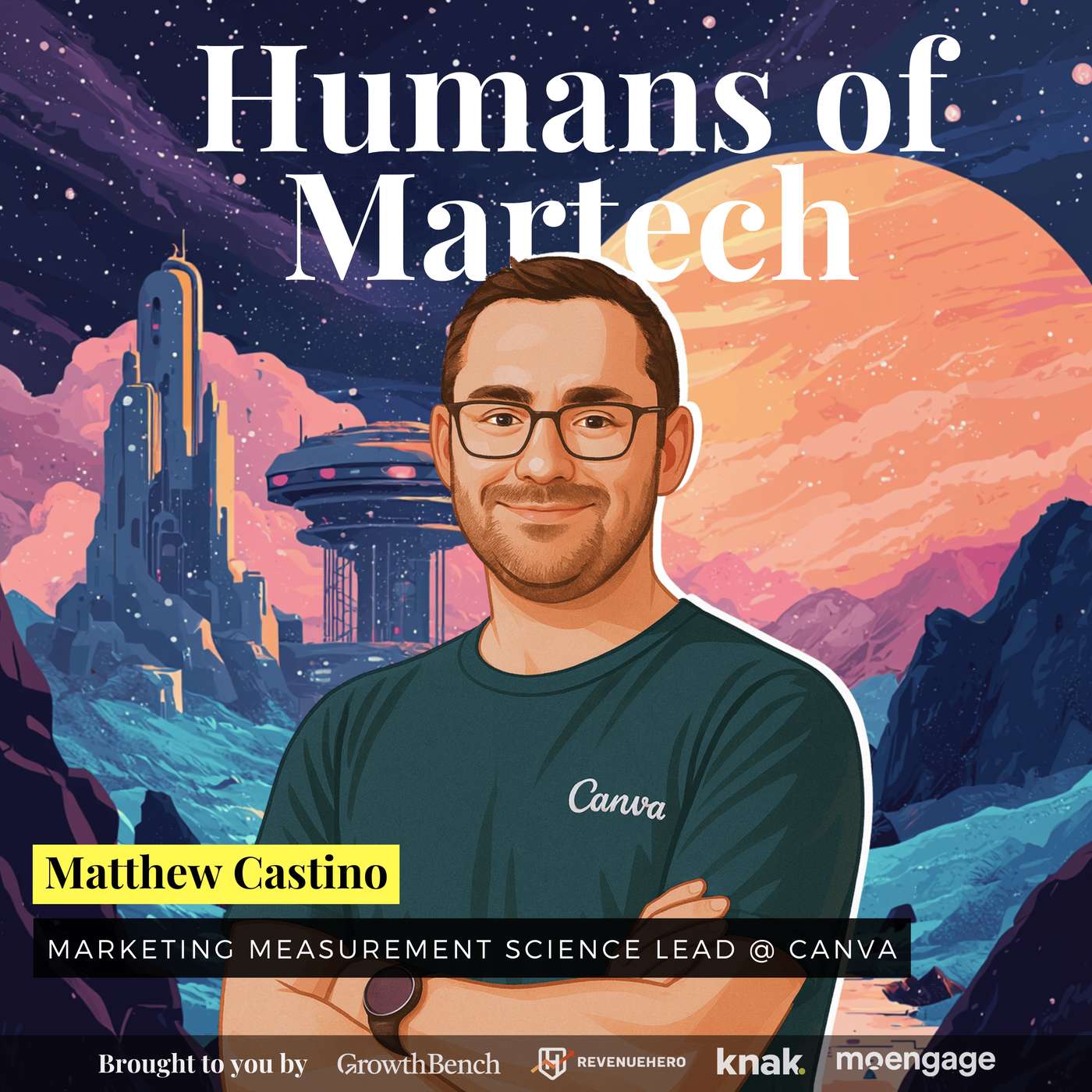
200: Matthew Castino: How Canva measures marketing
Dec 1600:55:37Tap to summarizeWhat’s up everyone, today we have the pleasure of sitting down with Matthew Castino, Marketing Measurement Science Lead @ Canva.(00:00) - Intro (01:10) - In This Episode (03:50) - Canva’s Prioritization System for Marketing Experiments (11:26) - What Happened When Canva Turned Off Branded Search (18:48) - Structuring Global Measurement Teams for Local Decision Making (24:32) - How Canva Integrates Marketing Measurement Into Company Forecasting (31:58) - Using MMM Scenario Tools To Align Finance And Marketing (37:05) - Why Multi Touch Attribution Still Matters at Canva (42:42) - How Canva Builds Feedback Loops Between MMM and Experiments (46:44) - Canva’s AI Workflow Automation for Geo Experiments (51:31) - Why Strong Coworker Relationships Improve Career Satisfaction Summary: Canva operates at a scale where every marketing decision carries huge weight, and Matt leads the measurement function that keeps those decisions grounded in science. He leans on experiments to challenge assumptions that models inflate. As the company grew, he reshaped measurement so centralized models stayed steady while embedded data scientists guided decisions locally, and he built one forecasting engine that finance and marketing can trust together. He keeps multi touch attribution in play because user behavior exposes patterns MMM misses, and he treats disagreements between methods as signals worth examining. AI removes the bottlenecks around geo tests, data questions, and creative tagging, giving his team space to focus on evidence instead of logistics. About MatthewMatthew Castino blends psychology, statistics, and marketing intuition in a way that feels almost unfair. With a PhD in Psychology and a career spent building measurement systems that actually work, he’s now the Marketing Measurement Science Lead at Canva, where he turns sprawling datasets and ambitious growth questions into evidence that teams can trust.His path winds through academia, health research, and the high-tempo world of sports trading. At UNSW, Matt taught psychology and statistics while contributing to research at CHETRE. At Tabcorp, he moved through roles in customer profiling, risk systems, and US/domestic sports trading; spaces where every model, every assumption, and every decision meets real consequences fast. Those years sharpened his sense for what signal looks like in a messy environment.Matt lives in Australia and remains endlessly curious about how people think, how markets behave, and why measurement keeps getting harder, and more fun.Canva’s Prioritization System for Marketing ExperimentsCanva’s marketing experiments run in conditions that rarely resemble the clean, product controlled environment that most tech companies love to romanticize. Matthew works in markets filled with messy signals, country level quirks, channel specific behaviors, and creative that behaves differently depending on the audience. Canva built a world class experimentation platform for product, but none of that machinery helps when teams need to run geo tests or channel experiments across markets that function on completely different rhythms. Marketing had to build its own tooling, and Matthew treats that reality with a mix of respect and practicality.His team relies on a prioritization system grounded in two concrete variables.SpendUncertaintyLarge budgets demand measurement rigor because wasted dollars compound across millions of impressions. Matthew cares about placing the most reliable experiments behind the markets and channels with the biggest financial commitments. He pairs that with a very sober evaluation of uncertainty. His team pulls signals from MMM models, platform lift tests, creative engagement, and confidence intervals. They pay special attention to MMM intervals that expand beyond comfortable ranges, especially when historical spend has not varied enough for the model to learn. He reads weak creative engagement as a warning sign because poor engagement usually drags efficiency down even before the attribution questions show up.“We try to figure out where the most money is spent in the most uncertain way.”The next challenge sits in the structure of the team. Matthew ran experimentation globally from a centralized group for years, and that model made sense when the company footprint was narrower. Canva now operates in regions where creative norms differ sharply, and local teams want more authority to respond to market dynamics in real time. Matthew sees that centralization slows everything once the company reaches global scale. He pushes for embedded data scientists who sit inside each region, work directly with marketers, and build market specific experimentation roadmaps that reflect local context. That way experimentation becomes a partner to strategy instead of a bottleneck.Matthew avoids building a tower of approvals because heavy process often suffocates marketing momentum. He prefers a model where teams follow shared principles, run experiments responsibly, and adjust budgets quickly. He wants measurement to operate in the background while marketers focus on creative and channel strategies with confidence that the numbers can keep up with the pace of execution.Key takeaway: Run experiments where they matter most by combining the biggest budgets with the widest uncertainty. Use triangulated signals like MMM bounds, lift tests, and creative engagement to identify channels that deserve deeper testing. Give regional teams embedded data scientists so they can respond to real conditions without waiting for central approval queues. Build light guardrails, not heavy process, so experimentation strengthens day to day marketing decisions with speed and confidence.What Happened When Canva Turned Off Branded SearchGeographic holdout tests gave Matt a practical way to challenge long-standing spend patterns at Canva without turning measurement into a philosophical debate. He described how many new team members arrived from environments shaped by attribution dashboards, and he needed something concrete that demonstrated why experiments belong in the measurement toolkit. Experiments produced clearer decisions because they created evidence that anyone could understand, which helped the organization expand its comfort with more advanced measurement methods.The turning point started with a direct question from Canva’s CEO. She wanted to understand why the company kept investing heavily in bidding on the keyword “Canva,” even though the brand was already dominant in organic search. The company had global awareness, strong default rankings, and a product that people searched for by name. Attribution platforms treated branded search as a powerhouse channel because those clicks converted at extremely high rates. Matt knew attribution would reinforce the spend by design, so he recommended a controlled experiment that tested actual incrementality."We just turned it off or down in a couple of regions and watched what happened."The team created several regional holdouts across the United States. They reduced bids in those regions, monitored downstream behavior, and let natural demand play out. The performance barely moved. Growth held steady and revenue held steady. The spend did not create additional value at the level the dashboards suggested. High intent users continued converting, which showed how easily attribution can exaggerate impact when a channel serves people who already made their decision.The outcome saved Canva millions of dollars, and the savings were immediately reallocated to areas with better leverage. The win carried emotional weight inside the company because it replaced speculati...
Transcribe →
150: Welcoming Darrell Alfonso as a co-host, celebrating baby milestones and the top 2 predictions for martech by 2030
Dec 17, 202400:34:40Tap to summarizeWhat’s up everyone, today is our last episode of the year and if you paid attention to the intro, I’m excited to officially welcome Darrell Alfonso as the newest co-host of the podcast!Summary: The Humans of Martech enters an exciting new chapter with Darrell Alfonso joining as co-host, bringing fresh energy and insights to the show. As a long-time listener and new dad, Darrell offers relatable stories of juggling work, family, and community while sharing bold predictions like the shift to warehouse-native architectures in martech, which promise to streamline data operations for enterprises. With AI poised to handle executional tasks, Darrell emphasizes the evolving role of marketers as strategic thinkers guiding AI with emotional intelligence and ethical oversight. As the podcast heads into 2025, it remains committed to delivering actionable insights, thought-provoking predictions, and a fresh perspective for the martech community.Welcoming a New Co-Host and Celebrating Baby MilestonesDarrell’s journey to becoming a co-host on the podcast came full circle, blending mentorship, passion, and personal milestones. He shared how one of his mentees suggested the idea, sparking an opportunity he immediately embraced. As an early listener of the show, Darrell highlighted his admiration for its unfiltered and geeky deep dives, calling it his favorite podcast—a sentiment that fueled his excitement for the road ahead.On a personal note, Darrell and his wife recently welcomed their baby boy, just eight weeks ago. Parenthood, he admitted, has been a whirlwind of sleepless nights and steep learning curves. As ambitious and organized as he and his wife are, they’ve quickly discovered that babies don’t operate on predictable timelines. Moments of progress—like better sleep—often take a step back as developmental leaps shake up routines. While the lack of rest is taxing, Darrell’s outlook reflects a blend of exhaustion and gratitude.Balancing professional life with a newborn is no small feat. Darrell recounted a whirlwind day of delivering a keynote, driving home, and immediately diving into baby duties. He joked about the unpredictability of these moments while acknowledging the personal growth they inspire. Virtual support groups like Maven have also helped him navigate the early stages of parenthood, offering both guidance and camaraderie with other new parents.For all the challenges that come with parenthood, I always like to emphasize gratitude. Reflecting on the struggles my family faced in our journey to parenthood (and how many other couples have it much harder), we need to emphasize the importance of cherishing even the tough parts. The joy and fulfillment of finally welcoming our child outweigh the sleepless nights and ever-changing routines. Key takeaway: Parenthood is a mix of exhaustion, growth, and gratitude. Embracing the ups and downs, leaning on community support, and focusing on the meaningful moments can help navigate this transformative stage of life.Marketing Tools Without DatabasesOkay… enough baby talk haha. Darrell predicts that in 5 years, most marketing tools will no longer rely on databases. At first glance, this concept might seem shocking—after all, marketing automation platforms, CRMs, and CDPs are fundamentally built on relational databases. But Darrell suggests this assumption is rooted in tradition, not necessity, and outlines a shift toward a warehouse-native or zero-copy data architecture that could redefine how tools operate.To illustrate this point, he draws a simple analogy. Consider apps like Yelp or Google Places. When you share a restaurant with a friend, the app doesn’t create a duplicate of your contacts database; it accesses the data on-demand. Contrast this with the typical marketing stack, where almost every tool replicates contact data, creating endless updates, sync errors, and manual fixes. Darrell estimates that more than 80% of a team’s data work revolves around ensuring consistency across these copied datasets—a cumbersome and inefficient process.The inefficiency extends beyond wasted effort. Darrell shares examples of bi-directional sync loops that occur when two systems endlessly update each other, introducing a frustrating complexity to even the simplest workflows. These scenarios highlight how deeply ingrained data copying is within current systems and how much time is spent combating its limitations.Shifting to a zero-copy model, Darrell argues, could eliminate these inefficiencies. A warehouse-native approach would enable tools to work directly from a centralized data warehouse, bypassing the need for constant synchronization. This not only streamlines operations but also reduces the risk of errors. It’s a radical departure from the status quo but one he believes is inevitable as teams demand greater agility and accuracy in their tools.Key takeaway: The future of marketing tools lies in a warehouse-native approach, eliminating the inefficiencies of duplicated data. By moving beyond traditional databases, teams can reduce errors, streamline processes, and focus their energy on strategic initiatives rather than endless data synchronization.Preparing for a Warehouse Native FutureI think the shift toward a warehouse-native approach for marketing tools feels inevitable, but its timeline remains uncertain. While this approach won’t entirely replace APIs, it will change how tools interact. Instead of passing data back and forth through integrations, tools will increasingly work directly from a centralized data warehouse, eliminating inefficiencies tied to duplication and synchronization.This prediction, often misunderstood as futuristic, is already shaping current tools. Vendors like MessageGears and Castle.io are leading the charge, offering solutions that bypass traditional database structures and avoid charging based on record counts. Despite their innovations, the challenge lies in industry adoption. Many teams are accustomed to older models, making this transition as much about change management as it is about technology.A critical insight from my past research and conversations with experts on the podcast highlights the importance of internal readiness. Tools can only perform as well as the data they rely on. High-quality, structured data is the foundation for warehouse-native success. Teams must focus on improving internal processes now, rather than waiting for the perfect tool to arrive. This means investing in data hygiene, organization, and strategy to prepare for the opportunities that a warehouse-native architecture will bring.However, the path forward isn’t without challenges. Many companies are still immature in their data strategies, making widespread adoption a longer process than anticipated. Whether this shift takes five years or more, the direction is clear: vendors and teams must align their operations with the possibilities of a warehouse-first world.Key takeaway: Warehouse-native tools represent a significant step forward in reducing inefficiencies and modernizing operations. Teams can prepare for this shift by prioritizing high-quality, well-structured data. The strength of these tools lies in how they interact with clean, organized data, making internal readiness the best first step for embracing this future.Understanding When Warehouse Native Tools MatterDarrell explains that the value of warehouse-native tools becomes clear especially when dealing with large volumes of data. For small and mid-sized companies, the classic setup—a CRM, marketing automation platform, and a few connected tools—works perfectly fine. He notes that for organizations with 500 employees or fewer, traditional data architectures remain suff...
Transcribe →
149: Kacie Jenkins: Sendoso’s SVP of Marketing on capturing the true impact of marketing and avoiding reductive metrics
Dec 10, 202401:09:28Tap to summarizeWhat’s up everyone, today we have the pleasure of sitting down with Kacie Jenkins, SVP Marketing at Sendoso. Summary: Marketing isn’t about cramming creativity into a spreadsheet, and Kacie’s journey proves it. She took on last-touch attribution, broke free from narrow metrics, and built a system that told the whole story, one where sales and marketing actually worked together. It wasn’t flashy; it was months of unsexy foundational work that led to record-breaking results. Kacie’s advice is to stop obsessing over proving your worth with perfect data. Focus on collaboration, long-term strategies, and building something so good it proves itself.About KacieKacie started her career as a recording artist for 6 years where she recorded and released 2 top 30’s singles on country radioShe transitioned to FANDOM as Marketing Manager where she helped build and scale entertainment and gaming communitiesShe then shifted to consumer tech and worked at Roku where she helped take their streaming stick to marketShe later joined Fastly when they were still a tiny startup and was eventually promoted to VP of Marketing while helping them scale to $200M in ARR and a massive IPOShe moved on to a few other VP of marketing stints at Ace Hotel and then SourcegraphToday Kacie is Senior Vice President of Marketing at Sendoso, the top gifting and direct mail platform for revenue teamsWhy Marketing Needs to Break Free from Last Touch AttributionKacie has strong opinions about last touch attribution and its role in marketing, calling it both misguided and overused. She recounts a memorable example where a company’s finance team mandated that every marketing touchpoint be unique, forbidding multiple efforts for a single account. The result was a fragmented strategy, with marketing forced to isolate efforts rather than integrate them—a scenario she describes as fundamentally broken. This, she says, reflects a wider misunderstanding of marketing’s role in driving success.In her experience, marketing is often held to an unrealistic standard that no other department faces. “No one questions whether a sales team should exist,” Kacie points out, yet marketers are repeatedly asked to prove their value in isolation. This obsession with single-point attribution—whether first or last touch—reduces complex buyer journeys to simplistic, unrealistic models. She likens it to sports, where success is measured by the contributions of the entire team, not just the final goal or play. In marketing, the same principle applies: campaigns succeed when brand, product, sales, and customer experience work cohesively.Kacie highlights how marketers often agree to flawed measurement practices under intense job pressure. Many leaders, she notes, demand immediate, trackable results and dismiss longer-term investments like brand building. When these short-sighted strategies fail, the blame lands on the marketing team, perpetuating a destructive cycle. This became especially apparent during the pandemic, when companies slashed budgets for brand and integrated marketing, only to see their performance suffer months later.At its core, the problem stems from a demand to quantify marketing in ways that are convenient rather than meaningful. Kacie insists that attribution models like last touch can provide insights but have been misused to force marketing into a demand capture role that undervalues its broader impact. Effective marketing, she argues, cannot succeed in a vacuum—it depends on the health and alignment of the entire organization.Key takeaway: Attribution models like last touch offer insights but become problematic when used in isolation. Marketing thrives on collaboration across teams, long-term investments, and integrated strategies. Simplistic measurement frameworks undermine this by reducing success to isolated metrics, which fail to capture the bigger picture. Focus on fostering collaboration and investing in holistic strategies rather than chasing immediate, trackable wins.What’s the Best Way to Prove What Drives Revenue in Marketing?Kacie’s candid take on the challenges of attribution didn’t stop there. She explains that board members and leadership often seek simple answers, asking, “What drove the most revenue?” This, she notes, is rarely a question with a singular answer, and it certainly doesn’t lie solely in the last touchpoint.Her approach combines every available data point, UTMs, self-reported attribution, and multi-touch models, to create a comprehensive picture. This isn’t about assigning credit to one channel or tactic but understanding the collective influence of all touchpoints. For instance, at Sendoso, Kacie leveraged this holistic perspective to reinvigorate outbound sales. By investing in trust-building, strong branding, and thoughtful partnerships, the team shifted outbound calls from cold to warm, creating an environment where sales and marketing aligned seamlessly. The results were tangible, but proving causality required a deeper story, not just a simple report.She recalls challenging her finance team’s reliance on last-touch data. When presenting a report that suggested “more direct traffic” as the solution, she asked bluntly, “What does that even mean?” This moment underscored how reductive metrics fail to capture the true impact of marketing efforts. By shifting the focus to sales-qualified opportunities and long-term patterns, she built trust with stakeholders and steered conversations toward what truly drives growth.Kacie emphasizes that this broader view isn’t fast or easy, and it requires fighting against short-term thinking. Marketers must advocate for strategies that don’t immediately show up in last-touch reports but are essential for sustainable growth. She also draws from B2C insights, where buying decisions often happen long before measurable touchpoints, reminding us that customers’ journeys rarely follow a predictable path.Key takeaway: Attribution isn’t about isolating success to one channel or tactic. By combining multiple data sources and focusing on long-term causality, marketers can tell a more accurate story. This approach builds trust with leadership, aligns teams, and justifies investments that might not show immediate ROI but are crucial for sustainable success.How to Convince Leadership to Rethink MeasurementKacie explains that driving change in marketing attribution and measurement requires aligning cross-functional teams and proving value over time. When she joined Sendoso, the disconnect between sales and marketing created distrust, and outdated metrics like MQLs dominated conversations. To address this, she set clear expectations with leadership: changes would be foundational, require significant investment, and take time to show results. This up-front agreement ensured her efforts had initial backing, though challenges arose as the process unfolded.A crucial part of the transformation was bridging the gap between marketing and finance. Kacie worked with a finance partner who embraced curiosity, seeking to understand marketing’s perspective by educating himself through webinars and discussions. This mutual respect and collaboration were essential for aligning goals and building trust. She demonstrated that her approach wasn’t about gaming numbers or securing credit but about laying a foundation for sustainable growth.Despite initial alignment, skepticism crept in as foundational work—cleaning up Salesforce fields, rethinking sales stages, and redefining metrics—took longer to yield visible results. Kacie emphasizes the importance of perseverance during this phase. Companies often lack the patience for foundational changes, cutting le...
Transcribe →
148: Stephen Stouffer: Understanding AI's Role in Customer Journeys and Messaging
Dec 3, 202400:50:50Tap to summarizeWhat’s up everyone, today we have the pleasure of sitting down with Stephen Stouffer, Director of Automation Solutions at Tray.ai and the first ever returning guest. We had Stephen on earlier in the year in episode 112 where we unpacked the practical wonders of combining AI tools with iPaaS solutions. Summary: AI can transform your marketing without overwhelming you. Start with one use case. Watch the results, and go from there. You don’t need to master data science to add AI value, but you need to be willing to experiment, keep what works, and let the tech do the heavy lifting. Customer Journey Mapping EssentialsCustomer journey mapping, as Stephen puts it, is best approached as a clear, structured framework. For marketers, this often starts by examining the visitor's first few seconds on a website. Stephen’s “three, five, seven rule” is a useful guide: three seconds to capture attention, five to build engagement, and seven to prompt action. Reviewing homepage or landing page performance through this lens keeps the focus on essentials. Are calls-to-action (CTAs) clear and accessible? Does the page guide users toward the intended outcome effectively?Stephen further notes the importance of every element “above the fold.” Content here needs to be concise, visually appealing, and should naturally lead users to the next step. A well-placed CTA, such as a prominent button, encourages forward motion, while a hidden or confusing one can derail the journey. Each interaction should be straightforward and intuitive.Beyond landing pages, Stephen highlights the journey before a visitor even arrives. Campaign managers, for instance, should ensure that ad copy and visuals align with the landing page, creating a smooth transition from ad to action. Consistency here reduces friction and keeps the experience cohesive.For advanced mapping, Stephen recommends storyboarding different customer personas and their digital pathways. By tuning each stage to fit these profiles, marketers can craft a journey that feels relevant and trustworthy, engaging each segment from the very first interaction.Key takeaway: Use the "three, five, seven rule" to evaluate each customer touchpoint on your homepage or landing pages. This approach helps ensure your content captures attention, fosters engagement, and prompts action—all within a few seconds.AI’s Role in Automating Personalized EmailsStephen recently demonstrated how AI automates personalized emails with just a first name, last name, and email. AI uses data from sources like LinkedIn, company details, and job history to craft messages that feel genuinely tailored to each recipient, far beyond typical generic responses.This level of automation doesn't just boost engagement; it saves significant time. Instead of setting up complex variable fields or spending 15-20 minutes per email on manual research, AI handles it all in seconds. Stephen notes that marketing teams can skip intricate field configurations, while sales teams gain back valuable time to focus on high-impact tasks.AI also serves as a replacement for traditional enrichment tools, pulling in dynamic contact details without third-party data providers. For sales, it means delivering relevant, personalized content effortlessly. AI does the heavy lifting, creating an email that feels custom-built for the recipient—no manual assembly required.Key takeaway: AI enables efficient, data-rich personalization for customer outreach, saving marketing and sales teams time and resources while boosting the quality of each touchpoint.Automating Personalized Outreach with AI AgentsAI agents are redefining how teams approach personalized outreach, offering new ways to automate highly customized interactions. Stephen explains how Tray.ai leverages a powerful combination of APIs—OpenAI, Google, LinkedIn, and more—to build out complex automation processes directly within its platform. Each AI agent is designed to use the best tool for the task at hand. Given the right context and instructions, these agents can gather relevant data from press releases, Crunchbase, LinkedIn profiles, blog posts, and other sources to craft an email that feels genuinely tailored.Imagine a marketing email generated entirely by an AI agent. With the recipient’s email, role, and other contextual clues, the AI might produce a message like, “Hey, congratulations on your recent speaking slot at AntiCon in London. Hope you had a safe journey back!” This level of personalization would usually require about 15 minutes of research by a BDR or ISR. Now, it can be fully automated, freeing up sales and marketing teams to focus on strategy and high-priority tasks rather than time-consuming data gathering and crafting.Stephen points out that the true power of AI agents comes from implementing them in real, tangible ways. For instance, rather than abstract promises of efficiency, Tray.ai demonstrates AI’s impact with practical use cases like this automated email personalization, which resonates more directly with the people using it. By creating a functional demo that allows teams to see this technology in action, Tray.ai bridges the gap between AI's potential and its practical application.For anyone curious to test it out, Stephen offers a live demo of the personalized email automation. This hands-on approach helps users understand the realistic possibilities AI agents bring to customer engagement and outreach, transforming the process from concept to actionable, impactful workflows.Key takeaway: AI agents streamline personalized outreach, combining data sources and automation tools to generate highly customized emails without manual research. By automating these tasks, teams can focus on high-impact activities while still delivering meaningful, individualized interactions.Challenges in Implementing AI-Driven Customer Journey MappingImplementing AI-driven customer journey mapping and personalization comes with its share of challenges. Stephen highlights three primary obstacles teams face: complexity, connectivity and compliance.The technology’s complexity. Even technical professionals sometimes struggle to understand the nuts and bolts of AI integrations, making it difficult for organizations to determine how to effectively deploy these tools. The ambiguity around building and customizing AI solutions internally often becomes a barrier to adoption.The challenge of data connectivity. For AI agents to deliver relevant outputs, they need access to comprehensive data across systems. Whether it’s a CRM, sales records, or product usage data, these inputs provide the context for AI to make useful recommendations. While crafting a prompt might sound straightforward, gathering and linking all the necessary data to inform that prompt is anything but simple. Stephen explains that AI can only be as effective as the information it’s fed, making seamless data integration a top priority for effective personalization.Perhaps most daunting, the challenge is compliance. When feeding sensitive data into large language models, teams must navigate a maze of security requirements like SOC 2, HIPAA, and GDPR compliance. Many organizations hesitate to dive into AI because of the fear of regulatory risks. Legal teams often step in, concerned abo...
Transcribe →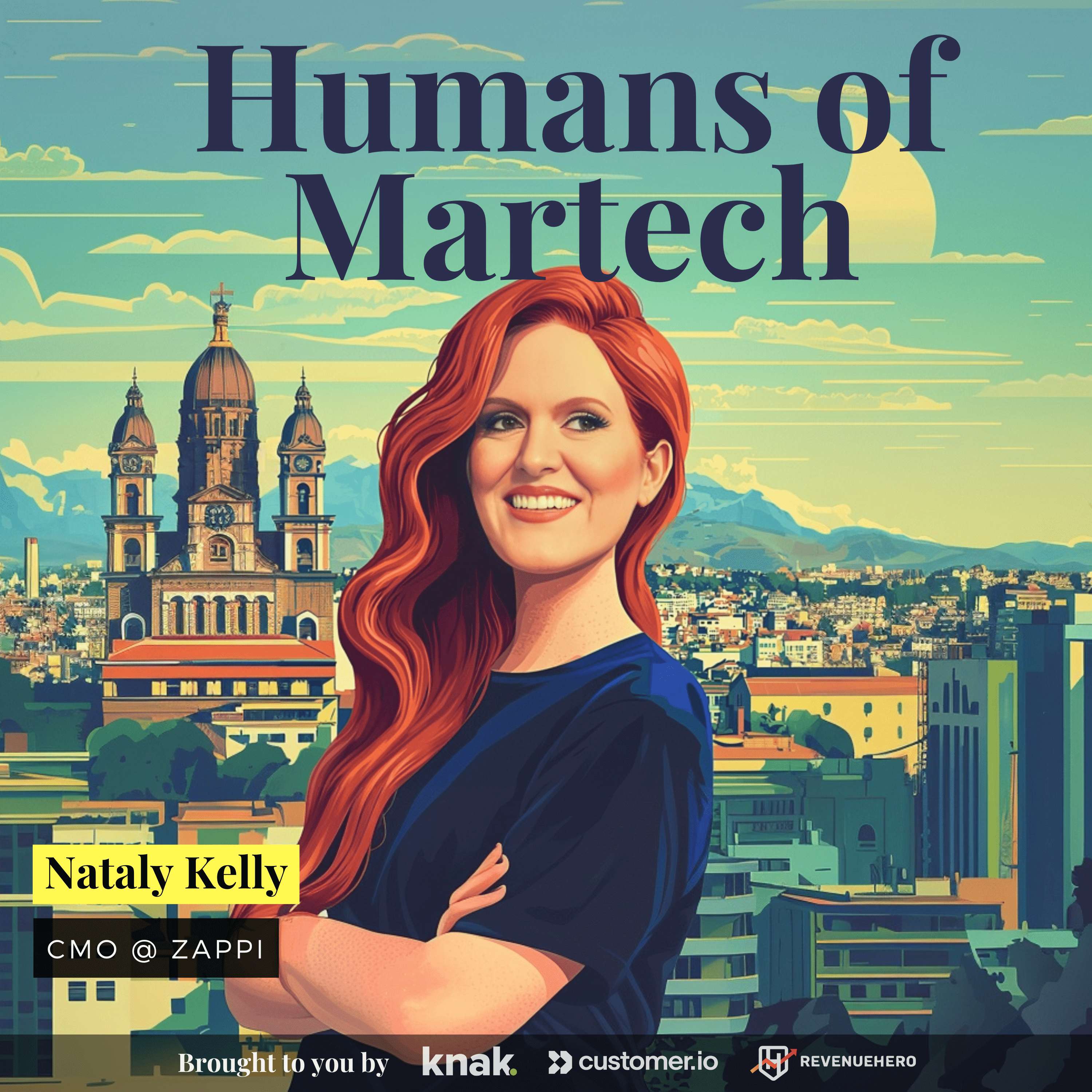
147: Nataly Kelly: Making global feel local through the power of marketing localization
Nov 26, 202401:00:37Tap to summarizeWhat’s up everyone, today we have the pleasure of sitting down with Nataly Kelly, CMO at Zappi. Summary: Global expansion is a wild process that connects brands to the unique vibe of each market, it’s not just creating a website or translating content. Every market brings its own needs, from how audiences navigate sites to what resonates visually and emotionally. Moving into international territories means showing up prepared, with a localization strategy that’s flexible and has a ton of local insight. Marketing Ops and RevOps both play a key role in localization as a strategic partner, organizing data and decision-making to fuel growth across departments. About NatalyNataly started her career as an interpreter at AT&T and later co-founded a research and consulting company which was acqui-hired by her biggest customer where she would serve as Director of Product DevelopmentShe later held Chief Research Officer and VP of Market Development titles at a market research firm and a translation and localization companyNataly then made the mega move to HubSpot as VP of Marketing where she would spend nearly 8 years – involved in all aspects of full-funnel marketing globally, including International Ops and LocalizationShe then moved to Rebrandly as Chief Growth Officer leading sales, marketing and product Nataly’s also an author, she’s published 3 books and 1 coming out next year, she has a Newsletter called ‘Making Global Work’Today, Nataly’s moved into her 4th SaaS marketing leadership role as CMO at Zappi–the leading consumer insights platform Why LinkedIn Works for Building a NewsletterNataly decided on LinkedIn for her newsletter with one primary goal: reaching more people, fast. In marketing, there's always talk of “owning your audience,” but for Nataly, the built-in reach LinkedIn offers outweighed the usual risks. Sure, LinkedIn could shift its algorithm or start favoring video, but Nataly isn’t fazed. She believes adaptability is more valuable than control. “If LinkedIn ever moves entirely to video, I might reconsider,” she says. “But for now, it’s a writer’s platform, and I’m a writer.”What really sold her, though, is LinkedIn’s “triple play” effect. Each time she publishes a newsletter, her audience doesn’t just see it once—they get three reminders. The content appears in their feed, triggers a platform notification, and even lands in their email inbox. This multi-touchpoint delivery isn’t just convenient; it significantly boosts her visibility. In a crowded digital space, those three nudges are powerful. And the best part? It doesn’t take any extra work on her end. For Nataly, this setup is gold: “If I can reach my audience in three different ways without doing three times the work, I’m in.”On top of that, LinkedIn’s algorithm has started indexing her posts for keywords, so they pop up in search results long after she hits “publish.” Nataly likes this longevity. She’s seen her posts gather momentum over time, which reassures her that LinkedIn isn’t likely to abandon text-based content anytime soon. This layered exposure works in her favor, especially since she’s already built a solid following on LinkedIn. Her audience is naturally expanding, without any additional ad spend or email list management.This approach ties back to a guiding principle Nataly picked up at HubSpot: follow the growth. When a channel shows traction, commit fully and ride the momentum. LinkedIn’s growth trajectory fits perfectly with her goals, allowing her to spend her time effectively—engaging with followers, creating relevant content, and letting the platform do the heavy lifting. “I see LinkedIn growing, and I’m here for the ride,” she says.While email newsletters and other platforms might come into play in the future, right now, LinkedIn is her sweet spot. It’s a low-maintenance option that lets her connect with her community directly, on the platform where she’s already active. She’s writing for the sake of sharing knowledge, and LinkedIn offers a direct, hassle-free way to reach a broad audience without splitting her focus across multiple channels.Key takeaway: For marketers aiming to maximize reach, LinkedIn’s multi-touchpoint setup and organic audience growth make it an ideal platform. When traction is the goal, LinkedIn’s notification, email, and feed distribution offer valuable, low-effort exposure—perfect for those who want to focus on content, not channel management.Understanding the Nuances of Going GlobalNataly makes a clear distinction between "going global" and "going local," a distinction that goes beyond simply putting content online for everyone to see. Launching a website, or even setting up a LinkedIn profile, can technically connect a person to a global audience. But creating an intentional, local connection demands a specific approach, one that carefully considers language, cultural context, and user experience. For Nataly, globalization isn’t just about reaching people across borders—it’s about meeting those audiences where they are, with language and content that resonate.Her insights stem from years of experience, including her work at HubSpot, where she developed a practical framework to explain these concepts to teams across the company. She found that simplifying these ideas into one-word definitions helped cut through the confusion. For example, “internationalization” is about adapting the technical side, like making code accessible to different languages and regions. This step ensures the foundational structure can support localized content, but it’s just the beginning.Translation, Nataly explains, isn’t about directly swapping words. True translation involves adapting the message itself. For one audience, a particular phrase might evoke excitement; for another, it might fall flat or even offend. Nataly emphasizes that effective translation reaches beyond literal words to convey a message that feels native to each audience, maintaining intent, tone, and cultural relevance.Localization goes further, adapting the entire user experience for specific markets. It's not just about making text comprehensible but ensuring every interaction—from navigation to design—feels intuitive for users in diverse regions. For instance, a website optimized for American users may assume all visitors speak English, but this model doesn’t apply universally. In countries like Canada, India, or across the EU, multi-language realities complicate navigation. This level of adaptation requires deep cultural and technical knowledge to avoid common pitfalls and create a seamless experience.Globalization, however, is the ultimate adaptation, demanding a complete rethinking of the framework itself. Nataly notes that one of the biggest challenges is getting teams to shift from a single-market mindset to a truly global perspective. A platform initially designed for one language or culture may struggle when stretched to fit a multilingual or multicultural user base. Globalization requires a build-it-right-from-the-start approach, anticipating diverse user needs and ensuring the platform can expand without limitations.Key takeaway: Successful globalization is about more than just reaching an international audience; it requires intentionally adapting every layer—from code to experience—to create content that resonates locally while remaining accessible globally.Strategic Timing for Going GlobalWhen HubSpot considered expanding internationally, it wasn’t about leaping into new markets; it was about waiting until the timing and resources aligned. Nataly recalls that CEO Brian Halligan was deliberate, even drafting a Harvard Business Review piece outlining Hu...
Transcribe →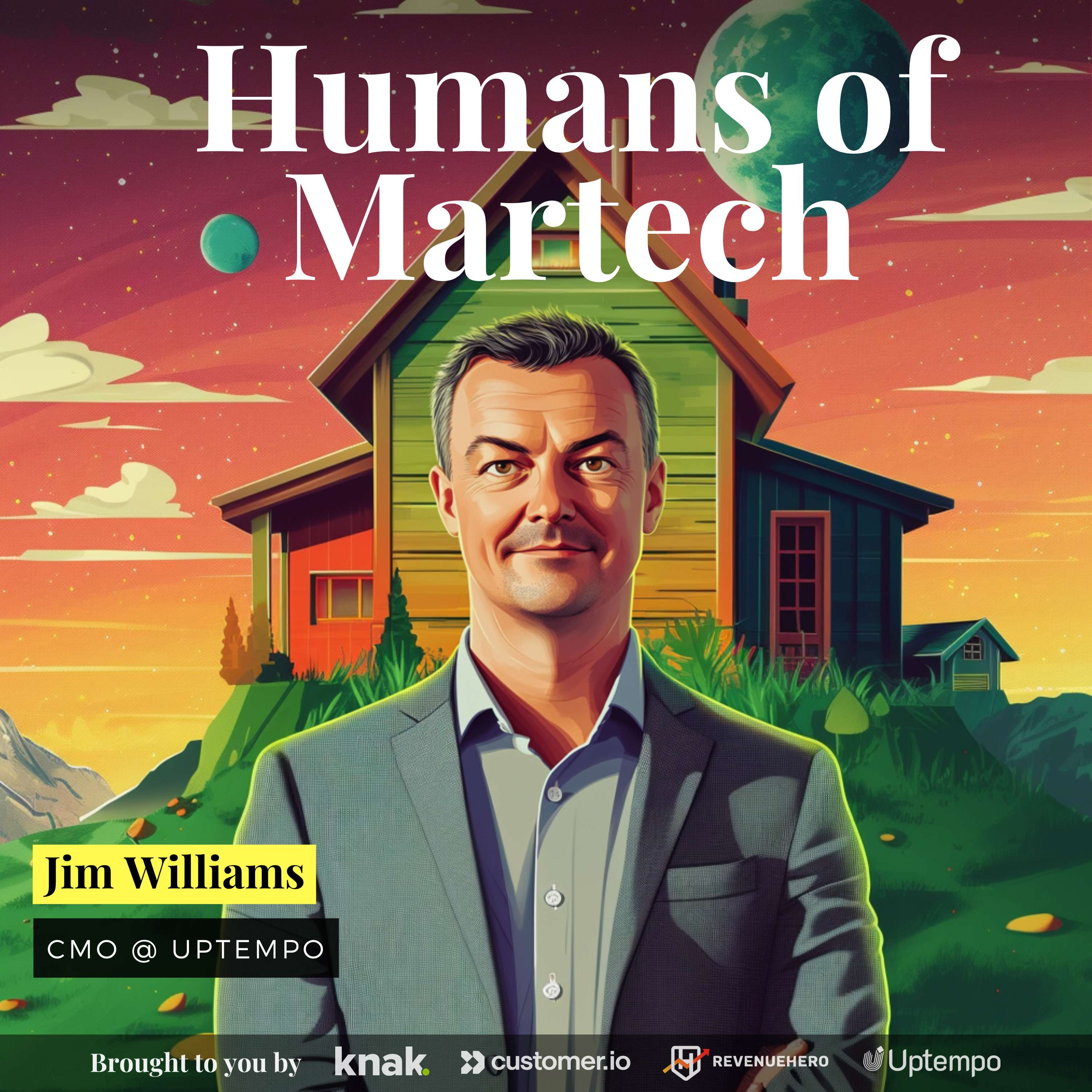
146: Jim Williams: The strategic role of marketing ops in annual planning
Nov 19, 202400:55:14Tap to summarizeWhat’s up everyone, today we have the pleasure of sitting down with Jim Williams, CMO at Uptempo. Summary: Forget version control spreadsheets and stale budgets, Jim’s take on marketing planning is about putting purpose behind every dollar. Instead of throwing darts at a board, focus on creating a blueprint that connects goals to actual business impact. For him, goals shouldn’t be handed down from the top like a royal decree but hammered out together with practitioners so they’re ambitious… but you know, grounded in reality. Marketing Ops pros are the unsung heroes, bringing sanity to the madness with data and KPIs that keep every piece aligned. Plus, AI’s set to take over the boring bits—updating data, tracking budgets, making sure no dollar gets lost—leaving marketers free to do what they do best: make real magic happen.About JimJim started his career in PR and Product Marketing before spending 7 years at Eloqua as Sr Dir of Product Marketing and helping the company rise from 15M ARR to 92M and IPO. He later moved on to Influitive – the popular advocate marketing platform – as VP of Marketing where he helped grow the company from pre revenue to 12M in ARRHe then moved over to the DNS world as Snr VP of Marketing at BlueCat where he led all facets of marketingHe then became CMO at BrandMaker which has since rebranded to Uptempo, the leading enterprise marketing operations software that helps marketers plan better, spend smarter and execute with confidence.What Is a Marketing PlanJim dispels the idea that marketing planning should be like “throwing darts at a dartboard.” A marketing plan isn’t a guessing game; it’s a strategic framework for how teams tackle the future. One of the most common mistakes Jim sees? Dusting off last year’s plan and rebranding it for the new year. This tactic, he argues, is the quickest way to stay stuck. In a world that demands fresh thinking, relying on past strategies doesn’t cut it.The old-school concept of a “pivot” has taken on a new life in marketing. It’s no longer about just one big strategy shift but about building in constant adaptability. Jim suggests that, unlike traditional yearly plans, today’s marketing requires continuous recalibration. The best teams aren’t just agile once—they’re agile all the time. That flexibility to assess, pivot, and refine isn’t a luxury; it’s the core of modern marketing planning.Another common pitfall Jim highlights is the habit of dividing up the budget before solidifying a game plan. For too many teams, budget allocation is seen as the end goal rather than just a piece of the puzzle. Getting the numbers in place is just step one, not the entire strategy. A plan isn’t simply a breakdown of costs; it’s the strategic “why” and “how” behind each dollar spent. Without defining the intended outcomes, budgets lose meaning.Jim makes an essential distinction: budgets support the mission, but plans set the course. The budget tells you what’s possible financially, but the plan clarifies what needs to be achieved. This separation between resources and goals keeps marketing teams focused, providing a framework to measure success rather than just track expenses. With a clear strategy in place, budgets go from static numbers to dynamic assets driving real outcomes.Key takeaway: A budget is just a set of numbers; a marketing plan is the vision behind those numbers. By keeping intent at the forefront, teams can transform budget allocations into impactful actions, staying adaptable and ready for whatever’s next.Building a Marketing Plan That Aligns Top-Down and Bottom-Up GoalsJim dives into the complexities of planning in a large organization, pointing out that it’s not a matter of simply setting goals at an offsite retreat. At the enterprise level, planning is a detailed, phased, six to nine-month process. Yet, he notes that surprisingly few accessible resources break down this method. For many marketers, planning seems shrouded in mystery—a skill they’re expected to learn on the job, often after they’ve already taken on leadership responsibilities.Jim explains that marketing planning often starts with annual, top-down forecasts. This approach provides broad company objectives, which interlock with a bottoms-up plan in later stages. Rather than seeing top-down and bottom-up planning as opposing methods, Jim views them as stages in a coordinated approach. At Optempo, they’ve formalized this method in a seven-step “blueprint for marketing planning” to guide teams through each phase. This blueprint begins with setting overarching company objectives—determining whether the focus is on market expansion, product launches, margin improvements, or even mergers and acquisitions. Until these objectives are set, marketing teams can’t start defining specific growth tactics.Once top-level objectives are clear, Jim explains that the marketing team distills them into a focused “plan on a page,” a roadmap outlining how marketing will support each objective. This document serves as a communication tool, clarifying what marketing intends to achieve and aligning these goals with company-wide expectations. According to Jim, defining these specific objectives—whether they involve selling to new buyers, entering fresh markets, or optimizing existing processes—is foundational for cohesive planning.Jim also breaks down the budget allocation process, which directly follows the plan on a page. This is where marketing teams work with finance to divide funds, categorizing costs into programmatic and non-programmatic expenses, as well as campaign-based and non-campaign-based spending. By grouping expenses into clear, high-level “buckets,” Jim explains, teams ensure their budgets align with strategic priorities and company-wide financial targets.Key takeaway: A successful marketing plan balances top-down objectives with bottom-up execution. Begin with high-level company goals, then translate them into actionable steps and align budget allocations accordingly. This approach ensures that both strategy and resources are directed toward achieving meaningful impact.Why Marketing Goals Need to Be a Two-Way ConversationJim counters the misconception that company goals are simply handed down from a closed-door board meeting, with marketers then left scrambling to hit those targets. He clarifies that in most forward-thinking companies, the setting of financial objectives isn’t a secretive, top-down affair. Instead, it’s a dialogue involving senior leadership across all departments—including marketing. When the ownership of a business, be it public shareholders or private investors, establishes financial ambitions, these aren’t randomly assigned numbers; they’re set with input from an executive team that includes the CMO or head of marketing.Jim explains that technology companies, for example, often focus on maximizing valuation. The board or ownership group typically benchmarks these goals using standards like the “Rule of 40”—a common framework in SaaS that blends growth rate and profitability. But these objectives are usually part of a larger, multi-year vision, not just a single-year target. Once these broad metrics are set, the board works backward to define the current year’s objectives. From there, it’s up to the executive team, including marketing leadership, to devise the most effective strategies to meet these targets.Jim emphasizes that marketing isn’t just a passive recipient of goals. Marketing leadership works closely with other executives to determine how marketing can help hit specific benchmarks. It’s at this stage that the conversation turns practical. For instance, if a company needs a particular level of market penetr...
Transcribe →
145: Barbara Galiza: The inconvenient truths of attribution no one wants to admit
Nov 12, 202400:57:29Tap to summarizeWhat’s up everyone, today we have the pleasure of sitting down with Barbara Galiza, Growth and Marketing Analytics Consultant.Summary: Attribution is a bit like navigating Amsterdam’s canals: mesmerizing but full of hidden turns that don’t always make sense. You don’t need to chart every twist—just focus on finding the direction that moves you forward. Instead of obsessing over every click, use attribution like a compass, not a GPS. Multi-touch attribution (MTA) gives you some of the story, but often misses those quiet yet powerful nudges that drive real decisions. Layering in rule-based or incrementality testing can fill the gaps, giving a clearer picture of what’s driving your wins. For startups, it’s even simpler: stick to what’s working and forget complex attribution—qualitative feedback is often the best guide in the early days. Data doesn’t need to be perfect, just practical, and sometimes trusting that a strategy is working is enough to keep pushing it.About BarbaraBarbara was an early employee at Her (YC), the biggest platform for LGBTQ women where she would eventually become Head of GrowthShe was also Head of Growth at different startups like Pariti and HomerunShe worked at an agency where she led data and analytics for Microsoft EMEABarbara then went out on her own as a GTM and Analytics consultant for various companies like Gitpod, WeTransfer, Sidekick and dbt LabsShe has a newsletter on marketing data: 021 newsletter.She produces content for data brands (dbt, Mixpanel, Amplitude) like case studies and webinarsBuilding Data Literacy Through SQLData literacy is essential for modern marketers, but it doesn't have to be intimidating. Barbara’s advice is simple: learn SQL. While marketers today are surrounded by user-friendly tools and drag-and-drop interfaces, those who want to truly grasp their data should get comfortable with SQL. It’s not about becoming a data engineer but about understanding how the numbers you rely on every day are built. SQL helps you see how data connects, how it’s organized, and how you can group it to make sense of what’s happening in your campaigns.What’s great is that you don’t need to dive into formal classes or certifications. Start where you are. Most companies are sitting on a goldmine of structured marketing data, whether it’s Google Analytics data in BigQuery or Amplitude events stored in a data warehouse. The next time you’re building a report, try using SQL for a small part of the process. It’s a skill that compounds over time. Once you get familiar with the basics, you’ll start to see data in a different way, and you’ll be able to spot insights faster.Barbara also points out a crucial, often overlooked skill: understanding why your tools give credit to certain campaigns. Why does one Facebook ad outperform others in your reports? Why does Google Analytics attribute more conversions to certain sources? Getting to the bottom of these questions puts you in a much stronger position as a marketer. If you can explain how attribution models work and why certain data points appear, you're already ahead of most.At the end of the day, it’s about making smarter decisions. Barbara believes that marketers who can confidently say, “I know why these numbers look the way they do,” are in the top 10% of data-driven marketers. It’s not just about collecting data; it’s about making sense of it and using it to steer your strategies.Key takeaway: Learning SQL gives marketers the power to truly understand their data. Starting small, even with basic queries, can unlock a deeper understanding of how marketing data is structured and why campaigns perform the way they do. The key is to build practical skills that help you make more informed decisions.Rethinking Attribution and Understanding Its Role in MeasurementBarbara brings clarity to two commonly conflated concepts: attribution and measurement. While many marketers default to thinking of attribution as purely click-based or multi-touch attribution (MTA), Barbara challenges this view. She argues that attribution goes beyond just tracking clicks and touches throughout a customer’s journey. It’s about understanding the overall impact of marketing efforts—whether through incrementality tests, media mix modeling (MMM), or holdout groups. Attribution is meant to explain how marketing drives results, but it’s not the only tool for assessing campaign success.MTA, particularly click-based models, excels at measuring bottom-funnel actions like search marketing, where high-intent users click on an ad and then convert. This method works well for campaigns that rely on clicks to move the needle. However, Barbara notes that it has its limitations, especially when it comes to non-click-based channels like video or display. MTA often over-credits search campaigns because that’s where the conversion is tracked, but it misses the broader influence of awareness-building efforts. In essence, MTA can tell you what happened after the click, but not what inspired it in the first place—be it a podcast mention or an engaging piece of content seen days before.On a broader level, Barbara explains that attribution is not the same as measurement. Attribution focuses specifically on tying marketing efforts to business results, such as leads or revenue. Measurement, on the other hand, casts a wider net. It includes performance across various metrics, not just conversions. For instance, measuring how well different messaging resonates with audiences is crucial, but it doesn’t always directly lead to immediate sales. Measurement can inform future strategies by offering insights into engagement, customer preferences, and channel effectiveness.As Barbara sees it, attribution is a subset of measurement. It’s a tool for understanding what drives business outcomes, but it shouldn’t be the only tool marketers rely on. For example, MTA has its place but should be used alongside other models like MMM to paint a fuller picture. Measurement, meanwhile, helps marketers assess the effectiveness of everything from messaging to customer touchpoints, beyond just the end goal of conversion.Key takeaway: Attribution is one piece of the measurement puzzle, focusing on business outcomes, while measurement encompasses a broader range of insights. Marketers should use a mix of attribution models to understand their campaigns and apply measurement tools to gain a holistic view of performance.Limitations of Multi-Touch Attribution in Credit DistributionMulti-touch attribution (MTA) is often seen as a way to distribute credit across different customer touchpoints, but Barbara questions its effectiveness in this role. She argues that MTA is inherently limited because it only attributes credit to interactions that involve a click. This creates a skewed view of the customer journey, where only click-driven strategies—like search ads—are recognized, leaving other key touchpoints, like connected TV (CTV) or social media, out of the equation. The result is a narrow perspective that doesn't capture the full influence of various channels.Barbara points out that for marketers to make better decisions, MTA needs more than just click data. One alternative she suggests is pairing MTA with rule-based attribution models, where data from "How did you hear about us?" surveys are integrated into the analysis. This way, marketers can capture insights from channels that don’t typically generate clicks but still play a crucial role in driving awareness or consideration. By adding this type of first-party data, businesses get a broader understanding of what’s really influencing their customers.Some data agencies are also experimenting with es...
Transcribe →
144: Steven Aldrich: Identify the martech you really need with a bottom-up analysis
Nov 5, 202401:05:51Tap to summarizeWhat’s up everyone, today we have the pleasure of sitting down with Steven Aldrich, Co-CEO and Co-Founder at Ragnarok NYC. Summary: Like the aftermath of Ragnarök according to Norse mythology, the martech world is emerging stronger, more focused, and ripe with potential. Rather than being overwhelmed by the chaos, marketers should use this time to rethink how to evaluate technology choices through the lens of business value. Prioritize platforms that drive real-world impact and avoid getting lured by features that blaze brightly for a moment, only to be swallowed by the tide of irrelevance.About StevenSteven’s first job out of business school was a customs broker in Colombia, before his Visa ran out and he was forced to return to the US He started his marketing career as a Marketing and Comms Associate at a market research firm where he discovered the wonders of HTML, email development and Adobe dreamweaverWhile continuing his full time in-house career working in email and CRM roles for different industries, Steven and his co-founder Spencer launched Ragnarok, first as a side hustle where they spent their evenings moonlighting as marketing technology consultantsIn 2017, both co-founders decided to take the leap and go all in on their agencyToday Ragnarok is a 50+ person full service martech agency that’s helped well known brands like zapier, dropbox, asana, adobe and many more!The Evolution of Martech and the Impact of ConsolidationWhen asked about the future of martech, Steven immediately highlighted the ongoing consolidation in the industry. He pointed to acquisitions like Twilio snapping up Segment and Salesforce expanding its Customer Data Platform (CDP) offerings as clear signals. According to Steven, these moves indicate that we’re in the midst of a reshuffling phase—one that will shape how martech platforms are built and used over the next decade.However, it’s not just about merging and acquisitions. Steven sees the next wave of growth stemming from generative AI. This technology, while still in its infancy for many organizations, will soon be as fundamental as marketing automation tools were a decade ago. Platforms are experimenting with Gen AI features like automated content creation, but they’re still scratching the surface. “Right now, a marketer isn’t likely to sit down and have their AI tool write an entire creative brief,” Steven noted. “But once the tech reaches a level where it’s drafting briefs and campaign strategies, it’ll fundamentally change what marketers do day-to-day.”He also predicts that the next few years will separate the genuine innovators from the rest. Startups focusing on AI-powered automation and advanced integrations will emerge as key players. Those that fail to embrace this trend will struggle to maintain relevance. Steven pointed to companies like Castle.io as an example—a newer entrant that has managed to make a name for itself by rethinking traditional automation and going all-in on a warehouse-first approach.Looking ahead, Steven envisions a future where marketers become more like strategic curators rather than operators. Instead of creating every campaign element manually, marketers will outline goals and high-level structures, and let the tools figure out the rest. “Think of a platform where you set your conversion goals, outline your audience, and the tool builds the journey for you,” he explained. Some companies are testing these capabilities internally, but we’re still far from a world where it’s the norm. To reach that stage, platforms need to overcome significant technical challenges and gain marketer trust.Ultimately, Steven believes that by the ten-year mark, the martech industry will look entirely different. The focus will shift away from basic integrations and automation to more complex AI-driven orchestration. Platforms will evolve into decision-making engines, allowing marketers to focus on strategy, creativity, and innovation, leaving the grunt work to the machines.Key takeaway: The martech industry is undergoing a consolidation phase as it readies itself for the next wave of innovation: generative AI. Startups that embrace AI-driven automation will emerge stronger, while legacy platforms must integrate these new capabilities or risk becoming obsolete. In the next decade, marketers will transition from hands-on campaign execution to strategic oversight, as tools handle more of the complex work autonomously.Blending Automation with Human Spark for Smarter Martech StrategiesWhen it comes to AI and automation in martech, there’s a spectrum of opinions. On one end, some marketers insist that only a human can truly understand and engage their audience. On the other end, there’s a growing camp eager to hand over the repetitive tasks to machines and focus on strategy. Steven pointed out that the real value lies in finding a balance between the two extremes, especially for industries with strict compliance requirements like FinTech and health tech.Steven used abandoned cart programs as a foundational example of automation’s role in marketing. Not long ago, these campaigns were inconsistent and cumbersome. Companies like Klaviyo and Shopify stepped in, making abandoned cart emails table stakes for eCommerce. Now, if you abandon your cart, you can almost predict when you’ll receive that follow-up email offering a discount or reminder. “It’s just expected,” Steven explained. He believes this kind of automated functionality has become the baseline for what customers and marketers alike view as the norm.But not every industry can afford to automate at that level. With sectors like finance or healthcare, there’s a need for humans to review and validate messages for compliance. “A legal person is at the end of every review,” Steven said. “It’s frustrating and time-consuming, but the cost of sending the wrong message at the wrong time is just too high.” He sees these industries gradually adopting AI where they can—incremental optimization, message testing—but keeping a human in the loop for quality assurance.The evolution of martech, in Steven’s view, will be about advancing beyond these early stages. He predicts that the future will bring a seamless integration where humans set high-level goals, and AI takes care of execution. The role of the marketer shifts from managing individual campaigns to curating experiences and setting strategic parameters. Some platforms are already testing these capabilities, but they’re far from ready for mainstream adoption. “Imagine a future where marketers simply set their audience, goals, and content, and the tool builds the entire journey for them,” Steven envisioned. This approach would redefine what it means to be a marketing operator, giving professionals more time to think strategically rather than tactically.Ultimately, Steven sees the evolution of martech as an interplay between speed and quality. Some companies will succeed by automating faster, launching multiple initiatives, and iterating based on outcomes. Others will opt for a more deliberate approach, spending more time crafting the perfect message. “There isn’t one clear winner,” Steven concluded. “It’s about choosing the right tool for the job and understanding what’s at stake when the human element is minimized.”Key takeaway: Martech’s future lies in balancing automation with human oversight. While some industries can embrace full-scale automation, others need humans in the loop to maintain compliance and quality. Marketers must choose tools that fit their strategic goals—whether that’s rapid iteration or precision crafting.The Value of Data Science in Martech OptimizationWhen asked about the role of data science in marketing operations, Steven was quick to point out the di...
Transcribe →