
Podcast Summary: Can We Trust Law Enforcement?
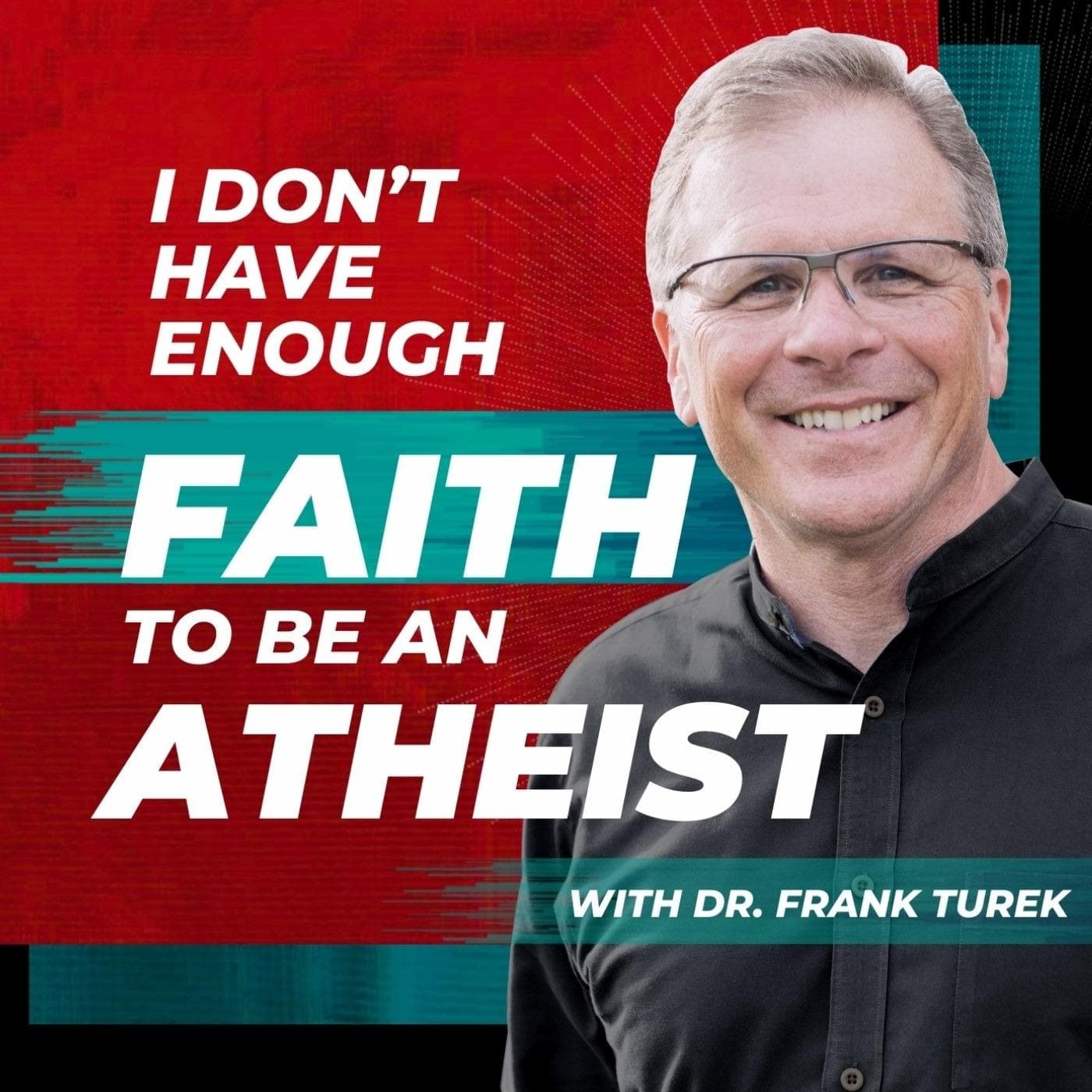
Podcast: I Don't Have Enough FAITH to Be an ATHEIST
Host: Dr. Frank Turek
Guest: J. Warner Wallace
Date: December 19, 2025
Main Theme
This episode tackles the growing cynicism toward law enforcement in America, asking: Can we still trust the police? Dr. Frank Turek and former cold case homicide detective J. Warner Wallace discuss the indispensable role of law enforcement in society, common misconceptions, and why respect and gratitude for “cultural protectors” is critical to sustaining civilization. Wallace shares both personal experiences and his ongoing ministry to police families, offering insight into the modern challenges police face—from media scrutiny to the impact of high-profile cases like George Floyd and Charlie Kirk’s murder.
Key Discussion Points & Insights
The Foundational Role of Law Enforcement
- Law enforcement enables all other professions and society at large to function safely. Without police, basic order and freedom cannot be maintained.
- [06:05] Wallace: “You are the one necessary profession upon which every other profession is contingent... Law enforcement is the ground floor that makes civilization possible.”
- Law enforcement officers are “cultural protectors,” not just enforcers. They preserve a way of life, not simply uphold rules.
- [08:03] Wallace: “We do two things. We enforce laws, but we also protect culture... And what are we protecting? Not just individuals. We're protecting your way of life.”
Sacrifices & Stresses Faced by Police Families
- Police families live with daily anxiety and strain due to the dangers officers face. Many marriages suffer under this stress, motivating Wallace's marriage resilience retreats.
- [05:29] Turek: "People don’t seem to understand the sacrifice that law enforcement people make every day... Particularly the spouse lives with that every day."
- Law enforcement is a service-oriented career that demands personal sacrifice.
- [11:11] Wallace: “It’s paid, yeah, but... there’s no amount of money that can pay for the loss of those men and women.”
Public Cynicism & Morale
- Cynicism is distinct from skepticism. Skepticism can be healthy, but widespread cynicism erodes public trust and harms police morale.
- [17:21] Turek: "What does the morale of the police force do when the public becomes so cynical of them?"
- High-profile tragedies lead to demoralization and less proactive policing. Officers are less likely to engage in self-initiated activities out of fear of repercussions.
- [21:11] Wallace: "Statistically... whatever self-initiated field activity was occurring prior to 2020 has dropped precipitously and has not returned to those levels."
- This retreat from proactive policing results in more crime, particularly violent crime.
- [22:41] Wallace: “Statistically... when self initiated field activity decreases, crime increases, especially violent crime... Communities know when police stop being part of their community, things go sideways.”
Comparing Police to Other Professions
- Why does one “bad cop” make people distrust all police, when we don't generalize similarly about doctors or restaurants?
- [38:36] Turek: “Why is it with law enforcement, suddenly one guy is found out to be bad— you can't trust any of them. Where does that come from?”
- Uniformity and lack of visible local differentiation in police forces contribute to the public’s tendency to see officers as a monolithic group.
- [39:00] Wallace: “Because we are seen as this large body of cops, but actually we are very different local agencies. And you want that...”
The Importance of Local Policing over Federal Involvement
- Wallace strongly advocates for local law enforcement, emphasizing its adaptability to community needs and insulation from federal political shifts.
- [26:21] Wallace: "I have my own hesitations... I'm a big advocate of local law enforcement… You do not want a one general type of law enforcement being applied to a city of 1500 and a city of 15 million."
- The U.S. constitutional design supports local control for legitimacy, effectiveness, and fairness.
- [28:06] Wallace: “The Constitution, right in the 10th Amendment, basically tells us that... all of these local agencies are the agencies that should take care of local policing.”
Transparency, Evidence, and Conspiracy Theories in High-Profile Cases
- Premature release of investigation details breeds conspiracy theories and undermines the legal process.
- [43:33] Wallace: "The level of transparency that occurred early in the Charlie Kirk investigation... I think they were too transparent in the first two weeks."
- The proper approach is to protect evidence and witnesses until the trial.
- [47:03] Wallace: "Sometimes the evidence you have is a human... you want to be very careful about what you reveal early because you're trying to protect that testimony."
Body Cameras and Ethical Behavior
- Body cameras have significantly reduced complaints and use-of-force incidents—a result of the “observer effect.”
- [35:21] Wallace: “If you know you're being observed, you behave better. Both sides.”
- A Christian framework (awareness of being observed by God) further contributes to personal and professional accountability.
- [36:23] Wallace: “If cops felt like the spirit of God is actually watching... they've got a body camera whether they have a body camera or not.”
Notable Quotes & Memorable Moments
-
“Law enforcement is the ground floor that makes civilization possible.”
— Dr. Frank Turek [01:26] -
“We do two things. We enforce laws, but we also protect culture... I have a tendency to not want to call them law enforcement. They're cultural protectors.”
— J. Warner Wallace [08:03] -
“With great power comes great responsibility. It's not a blessing. I don't want the responsibility. But you have it if you step into this profession.”
— J. Warner Wallace [11:54] -
“You can't even have firemen. The first profession you lock in is your sheriff's department. Why? So you can have all the other professions.”
— J. Warner Wallace [06:38] -
“Nobody hates misconduct more than a cop who's doing his best not to behave this way.”
— J. Warner Wallace [34:03] -
“We’re paid not for what you necessarily have to do today, but for what might happen to you today. How much would be enough knowing that you have this competing thing? I'm willing to die to protect my community, but I'd also like to get home for dinner.”
— J. Warner Wallace [16:20] -
“You want your city to reflect [its own ethos]. And that's why... every one of those agencies is different. And you want it that way to effectively police your community.”
— J. Warner Wallace [41:38] -
“The best thing you can do is tell the person you're talking to, I have a body camera. You're going to get much better response from that person. You also know you're being filmed right now. It turns out that there is a body camera that's always been there... it was called God.”
— J. Warner Wallace [35:22–36:23] -
“Let's not accuse people of wrongdoing without really good evidence. No slander. Let's just follow the evidence where it leads. That's the way forward.”
— Dr. Frank Turek [48:45]
Important Timestamps & Segments
-
Opening: The Host’s NYPD Hat, Framing the Issue
- [00:03] – [02:30]
-
J. Warner Wallace’s Ministry to Police Families
- [02:57] – [06:05]
-
Essential Role of Law Enforcement in Civilization
- [06:05] – [09:32]
-
Police as ‘Cultural Protectors’
- [08:03]
-
Public Cynicism and Its Effects on Morale & Proactive Policing
- [17:21] – [22:41]
-
The Necessity of Local Law Enforcement
- [26:21] – [28:06]
-
High-Profile Investigations and Media Transparency
- [43:33] – [47:50]
-
Body Cameras and Ethical Accountability
- [35:21] – [36:23]
-
Addressing Public Generalizations about Police
- [38:36] – [39:00]
Ministry & Resources Mentioned
- Thin Blue Life: Support and marriage resiliency programs for officers
Website: thinbluelife.com- [47:55]: “That is our ministry to cops... upper banner or taking applications right now for law enforcement officers who have been involved in critical incidents, who need some help in their marriage...”
Closing Takeaways
- Don’t judge the entire profession by rare but real misconduct; support and thank police, who make safe society possible.
- Local law enforcement is vital for legitimacy, effectiveness, and the health of communities.
- Christ-centered accountability and respect for the foundational role of police should guide both public perception and the ethical standards of officers.
Final Word:
“Don’t forget to tell police officers you thank you for your service. God bless. Merry Christmas. See you next week.” — Dr. Frank Turek [48:45]