Podcast
If You're Listening
Hosted by ABC Australia · EN
The world is on fire. There's a coup. Inflation is through the roof, and AI is taking our jobs. What does it all mean? Each week, Matt Bevan explains the biggest story in world news while hiding in his basement from assassins and authoritarian regimes.
Recent episodes include an exploration of the relationship between India and China, a closer look at the Saudi Arabian city of NEOM, the conflict in the Middle East, the assassination of Hamas leader Ismail Haniyeh in Iran, and Ukraine's incursions into Vladimir Putin's Russia. Matt Bevan draws connections between stories from the past and the events of the present to help listeners understand world news and international affairs.
The podcast also features series about big moments in world news; previous series have focused on the United States presidential election, the United Kingdom's 14 years of Conservative Party leadership, Donald Trump's relationship with Russia, Donald Trump's presidency and promise to Make America Great Again, the Mueller Report, Vladimir Putin's scheme to destroy western democracies, how the relationship between Australia and China came to the verge of collapse, and Australia's turbulent history with climate change.
There's a new episode of If You're Listening every Thursday.
74episodes
Episodes
Newest firstAll episodes
Can we afford to power AI?
Nov 5Tap to summarizeIn the last decade, the number of data centres worldwide has doubled. As the tech bros spend big to render AI an irreplaceable part of our everyday lives, the energy and water required is truly eye-watering. Nvidia, Google, Microsoft and Meta have already seen their cumulative emissions rise by 72% in the last five years, and given the direction AI is headed, it’s likely that our AI footprint today is the smallest it will ever be. Hundreds of millions of people are using AI every day - and that number is growing fast, but is a world with widely available AI actually sustainable? Follow If You're Listening on the ABC Listen app.Check out our series on YouTube: https://www.youtube.com/playlist?list=PLDTPrMoGHssAfgMMS3L5LpLNFMNp1U_Nq
Transcribe →The people have spoken and they love mud
Oct 27Tap to summarizeToday Matt and Kara are answering your questions, mostly about Trump and mud. They talk about whether Trump could serve a third term, if the rest of the world could just ignore the US, and ask for your help solving a mystery about the soil in the rural NSW town of Nimmitabel. Plus, Matt has a very exciting announcement.Got a question you want us to answer next time? Email ifyourelistening@abc.net.auFollow If You're Listening on the ABC Listen app.Check out our series on YouTube: https://www.youtube.com/playlist?list=PLDTPrMoGHssAfgMMS3L5LpLNFMNp1U_Nq
Transcribe →Weighing up Ozempic
Oct 8Tap to summarizeThis episode originally aired in September 2023.For a century, society has bullied and shamed people into trying to lose weight, without much result. Is the century-long search for a weight loss drug finally over? A seemingly accidental discovery by Danish pharmaceutical company Novo Nordisk, people are hailing semaglutide (known as Ozempic or Wegovy) as a miracle weight loss drug — but it comes at a cost.Follow If You're Listening on the ABC Listen app.Check out our series on YouTube: https://www.youtube.com/playlist?list=PLDTPrMoGHssAfgMMS3L5LpLNFMNp1U_Nq
Transcribe →The blueprint for Palestine
Aug 20Tap to summarizeAustralia, the UK, France and Canada intend to recognise Palestine as a state at the UN General Assembly in September. But what does that actually mean? Well Timor Leste, the small island nation 500km off the coast of Australia was recognised as a state back in 2002 after years of Indonesian occupation and violence, and might offer us a glimpse into what the future looks like for Palestinians. Follow If You're Listening on the ABC Listen app.Check out our series on YouTube: https://www.youtube.com/playlist?list=PLDTPrMoGHssAfgMMS3L5LpLNFMNp1U_Nq
Transcribe →RFK Jr v Fluoride
Jun 4, 2025Tap to summarizePutting fluoride in drinking water has often been called one of the most successful public health measures in human history. But since the very beginning of fluoridation programs in the 1940s, it’s been plagued by misinformation and furious opposition.Now with Robert F Kennedy Jr at the helm of the US Department of Health, the Trump Administration is leading the charge to get states to ban the use of fluoride in water - and he’s succeeded in Utah and Florida. So when did this anti-fluoride scepticism begin? And can it be stopped?Follow If You're Listening on the ABC Listen app.Check out our series on YouTube: https://www.youtube.com/playlist?list=PLDTPrMoGHssAfgMMS3L5LpLNFMNp1U_Nq
Transcribe →Why Pakistan fights India
May 28, 2025Tap to summarizeIndia and Pakistan have agreed to a temporary ceasefire, but tensions between the two nuclear-armed nations are still running high. There are factions in both governments that think a war might be a good thing for them politically. The old saying goes that most nations have an army, whereas Pakistan is a place where the army has a nation. So will nationalistic rhetoric from Pakistan’s military lead an inevitable escalation into all-out war? This is the second episode in a two-part series where we take a look at both sides: India and Pakistan. Why they want to fight, and what they have to lose.Follow If You're Listening on the ABC Listen app.Check out our series on YouTube: https://www.youtube.com/playlist?list=PLDTPrMoGHssAfgMMS3L5LpLNFMNp1U_Nq
Transcribe →Why India fights Pakistan
May 21, 2025Tap to summarizeAfter a brief moment where two nuclear powers looked to be on the verge of war, India and Pakistan have agreed to a temporary ceasefire. But Indian Prime Minister Narendra Modi says it’s not an end to hostilities, just a pause. The scary thing is - there are factions in both governments that think a war might be a good thing for them politically. So why is that and will it inevitably lead to a deadly conflict? Over the next two episodes, we’re going to take a look at both sides: India and then Pakistan. Why they want to fight, and what they have to lose. Follow If You're Listening on the ABC Listen app.Check out our series on YouTube: https://www.youtube.com/playlist?list=PLDTPrMoGHssAfgMMS3L5LpLNFMNp1U_Nq
Transcribe →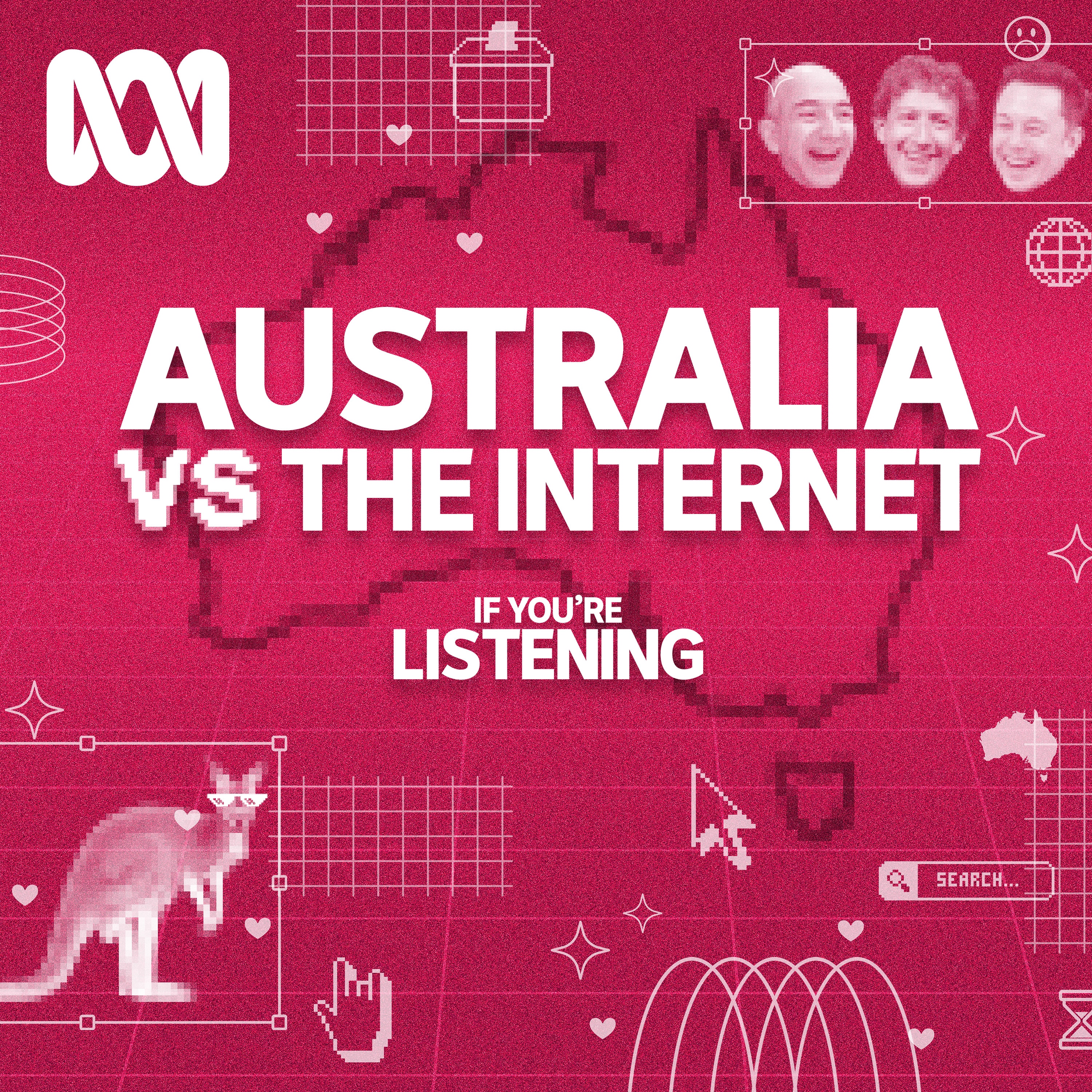
Australia vs the Internet: Misinformation overload
Apr 30, 202500:25:40Tap to summarizeTo scroll through social media during an election campaign in 2025 is to experience some of the worst misinformation. But an online soup of bots spouting partisan talking points wasn’t inevitable, even in recent years. After the 2016 election of US President Donald Trump and UK vote for Brexit, it was clear that online platforms like Facebook and Twitter were used to target voters with misinformation and disrupt political discourse enough to sway elections. As a result, the social media giants really tried to crack down on harmful content spreading online…or at least they pretended to.But in the last year or so, they’ve almost completely given up… and the vast digital sea of misinformation has become more dangerous than ever. If you're around Newcastle on the 18th of May, come along to the live show of If You're Listening at the Young People's Theatre - tickets available here: https://yptninc.sales.ticketsearch.com/sales/salesevent/149193Follow If You're Listening on the ABC Listen app.Check out our series on YouTube: https://www.youtube.com/playlist?list=PLDTPrMoGHssAfgMMS3L5LpLNFMNp1U_Nq
Transcribe →Australia vs the Internet: RIP your newsfeed
Apr 23, 202500:24:30Tap to summarizeWhen US President Donald Trump was inaugurated in January, the world’s three wealthiest people stood right behind him, Jeff Bezos, Mark Zuckerberg and Elon Musk. All own massive online platforms. These tech billionaires are now major political players in their own right, but for the last 15 years the platforms they control have shaped political debate, changed how people feel about their governments and gathered information on voters that tells politicians which buttons to push. The Australian government has attempted to force the social media giants to pay for the news that they profit from and that worked… for a little while. But in the last year the broligarchs have torn up those contracts and are embracing a brave new newsless world – which isn’t great news for Australia’s upcoming federal election.Follow If You're Listening on the ABC Listen app.Check out our series on YouTube: https://www.youtube.com/playlist?list=PLDTPrMoGHssAfgMMS3L5LpLNFMNp1U_Nq
Transcribe →The secret weapon that changed war forever
Apr 16, 202500:31:49Tap to summarizeIn the middle of the 1800s, the Confederate army built a stealth vessel that could travel undetected underwater to give them the military edge over the Union...so did it work and how has it impacted military innovation since? In this special episode of If You’re Listening, Matt Bevan sits down with Marc Fennell to talk about his new ABC RN show, “No One Saw It Coming”. Follow If You're Listening on the ABC Listen app.
Transcribe →