Podcast
If You've Come This Far
Hosted by Shaun Emerson & Chris Lozier · EN
a podcast where Shaun and Chris simply aim to have authentic conversations with interesting people about what they do to make life more fulfilling and more impactful.
15episodes
Episodes
Newest firstAll episodes
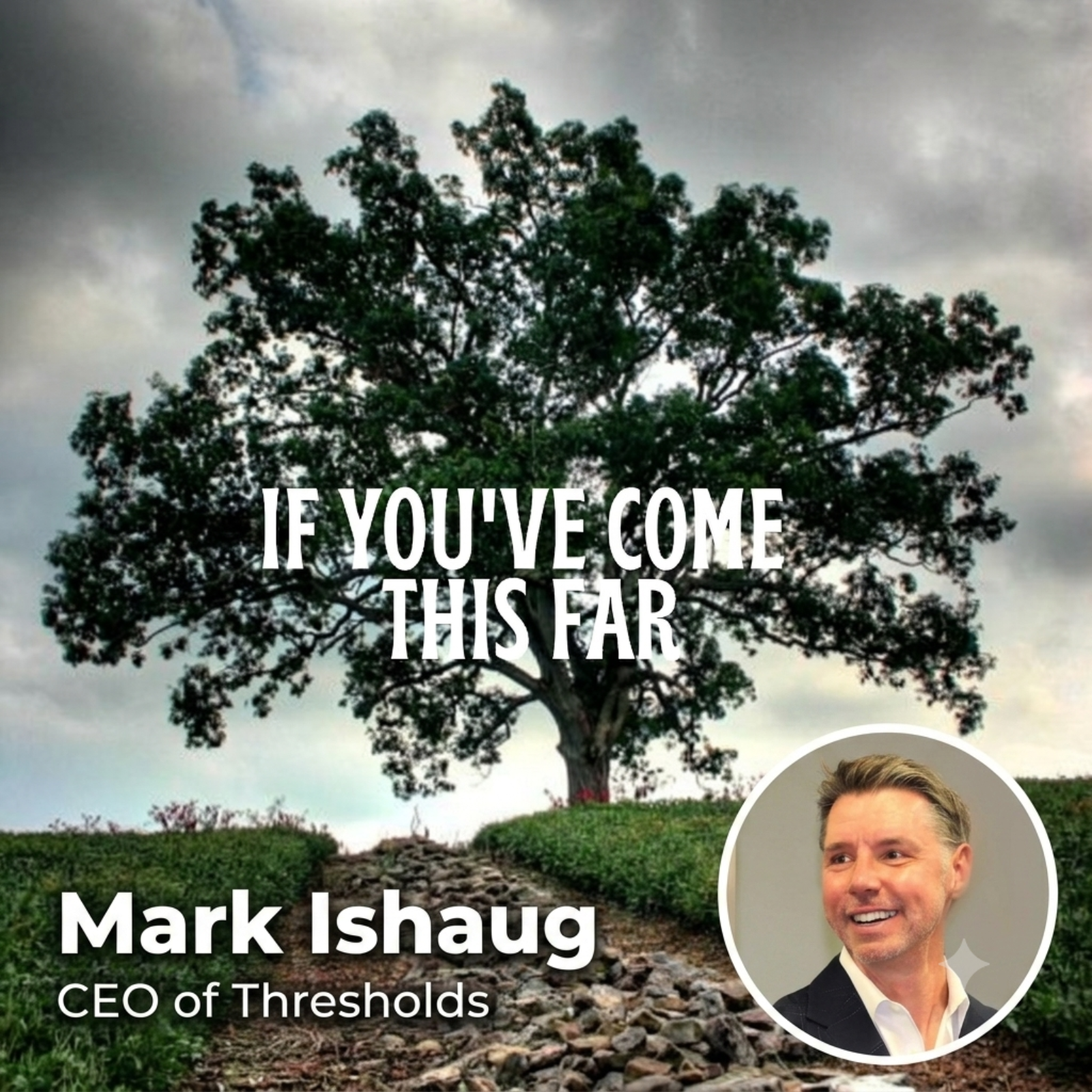
Mark Ishaug...Lead with Love, Get Stuff Done
3w ago01:20:38Tap to summarizeMark Ishaug has spent his career at the forefront of mission-driven advocacy and community healthcare. Before serving as the CEO of Thresholds--one of Illinois's largest and oldest providers of mental health and substance use recovery services--Mark spent two decades leading public policy and executive efforts at the AIDS Foundation of Chicago and AIDS United. Inspired early in life by his mother’s civil rights activism and cemented by personal tragedy--losing his 29-year-old brother, Eric, to undiagnosed mental illness and substance use--Mark has dedicated his life to creating tangible social impact for society's most vulnerable.In this episode of If You've Come This Far, Mark joins Chris and Shaun to unpack how love and power must intersect to build sustainable, high-impact organizations. He shares how Thresholds provides "Home, Health, and Hope" to over 13,000 individuals annually through supportive housing, mobile crisis response, and comprehensive behavioral health clinics. Grounded in pragmatism and deep empathy, Mark discusses the critical need to protect healthcare access, eradicate systemic stigma, and foster genuine human connection in an increasingly disconnected world.HighlightsDefining Love as an Action and Business Foundation: How leading with love translates directly into organizational operations, listening to those on the margins, and driving systemic change.Personal Tragedy & The Mission Behind Thresholds: Mark opens up about losing his younger brother Eric at age 29, and how that personal loss fuels his commitment to mental healthcare reform."Home, Health, and Hope": The Scope of Thresholds: A look into how Thresholds operates 1,600+ housing units and Certified Community Behavioral Health Clinics (CCBHCs) to keep individuals supported in their communities.Navigating Policy Challenges & Systemic Threats: Examining the impact of Medicaid redeterminations and threats to the "Housing First" model on safety-net providers."We Show Up": Love in Action: How frontline caseworkers operationalized compassionate care through severe heatwaves, COVID-19, and daily community outreach.Resources MentionedThresholdsAIDS Foundation of ChicagoBowling Alone by Robert PutnamFestival! (Podcast) & Join or Die (Documentary) by Pete DavisSponsor: Mental App
Transcribe →
Matthew Quick...Radical Acts of Love
Jul 1301:08:10Tap to summarizeMatthew Quick returns to If You've Come This Far for his second appearance on the show to discuss his new memoir, Dad, Love, Me. In a raw conversation, Matthew opens up about his father’s battle with dementia, his own journey through sobriety, and the grueling but beautiful process of Jungian analysis. Offering an unfiltered look at generational trauma, he discusses the courageous choice to love a parent exactly as they are, without demanding they earn it. Pragmatic and deeply moving, this episode explores the profound impact of showing up, making peace with the past, and creating new narratives for the future.Highlights:Defining love as a choice to embrace someone in the present moment without needing them to earn it, particularly in the face of dementia.Breaking the cycle of father-son violence by making a conscious decision not to pass on inherited trauma to the next generation.The healing power of Jungian analysis and the importance of experiencing positive, altruistic male friendships.The difficult reality of writing a vulnerable memoir without family support and dealing with the tradition of secrecy in traumatized families.The feminization of reading and the critical need for older men to mentor younger men and guide them back to literature.Resources:Dad, Love, Me by Matthew QuickMental app (getmental.com)Joe Conrad's new book Man Therapy: Therapy the Way a Man Does It
Transcribe →
Ron Dresher & Brian Harris...Balancing Life
Jun 3001:06:04Tap to summarizeIn this episode of If You've Come This Far, Chris and Shaun sit down with Ron Dresher and Brian Harris, founders of the Los Angeles-based Life Transition Group. Approaching their 80s with the metabolic age and energy of men decades younger, Ron and Brian share how they built a thriving community designed to help men navigate the often-daunting shift out of full-time careers. They discuss the critical need for connection, empirical learning, and purpose in later life, emphasizing that retirement isn't just about financial readiness—it's about holistic well-being.Grounded in pragmatism and lived experience, the conversation explores the "CHAIRS" framework—Charity, Health, Achievement, Independence, Relationships, and Spirituality—as a practical guide for balancing our priorities through all of life's chapters. From the importance of giving back to the community to fostering deep, vulnerable friendships, Ron and Brian offer a pragmatic blueprint for aging gracefully, intentionally, and joyfully.Highlights:[04:12] The origins of the Life Transition Group and the realization that many men lack a roadmap for retirement beyond finances.[07:15] Breaking down the "CHAIRS" framework.[11:05] Why soft skills, such as nurturing relationships and maintaining spirituality, become crucial growth areas for aging men.[33:14] The concept of chronological age vs. metabolic age, and the critical difference between lifespan, healthspan, and "joyspan."[48:10] Ron's personal "GRAMPS" blueprint for life balance and his advice to his 10-year-old self about the paramount importance of relationships.Resources:Helen Dennis: Syndicated columnist and expert on aging and the new retirement.Dr. Michael Greger: Physician and author of How Not to Age and How Not to Die.PreNuvo: Preventative health and full-body MRI screening.GetMental: App designed to help men strengthen their mindset and achieve discipline.
Transcribe →
From the Vault: Fr. Michael Himes on Love
Jun 1501:03:43Tap to summarizeIn this "From the Vault" episode, Chris and Shaun are joined by MenLiving co-founder Todd Adams to reflect on the teachings of the late Father Michael Himes, a beloved Notre Dame and Boston College professor whom Chris considers the wisest person he’s ever known. Anchored by audio clips from Father Himes's beautiful "Last Lecture," the trio explores what it means to live a deeply meaningful life and the urgency of sharing our most authentic truths before our time runs out. They discuss integrity, giving one's self, uttering the definitive message, and more.Before diving into the vault, Chris also takes a moment to highlight real leadership by shouting out Chris "Chowdah" Hill on his promotion to Rear Admiral. Chowdah's focus on mental health, positive relationships, and mission aboard the USS Dwight D. Eisenhower serves as a modern, pragmatic example of the very principles Father Himes spent his life teaching.Resources Mentioned:Father Michael Himes's "Last Lecture" at Boston CollegeThe Way of the Warrior Sailor by Rear Admiral Chris "Chowdah" HillMenLiving (Co-founded by Todd Adams)This episode is brought to you by Judson & Moore, Family Legacy American Whiskey. Born from Boundless Curiosity. Learn more about Judson & Moore here
Transcribe →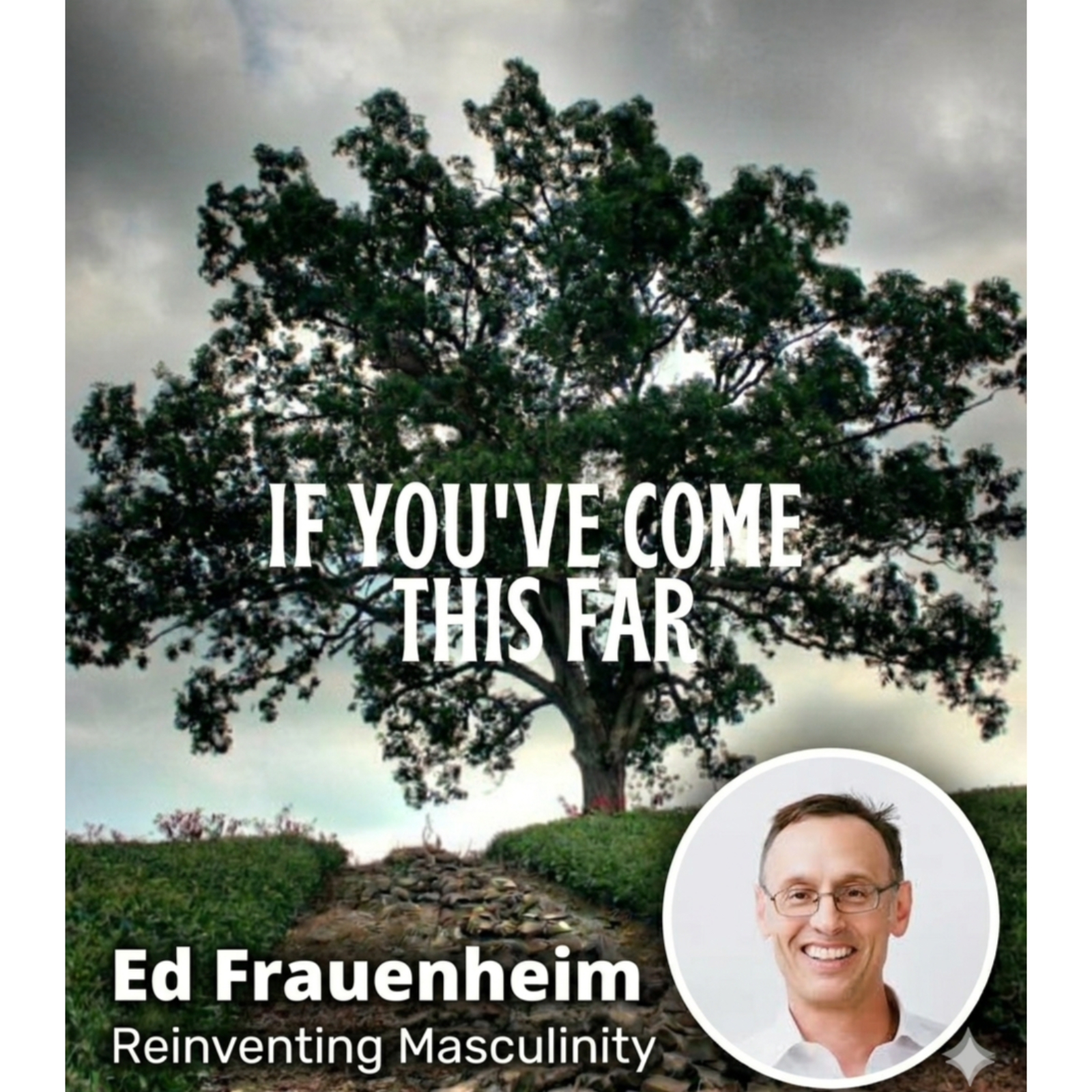
Ed Frauenheim...Reinventing Masculinity
Jun 101:05:05Tap to summarizeIn this episode of If You've Come This Far, Chris and Shaun sit down with Ed Frauenheim, an author, journalist, and advocate doing critical work around masculinity and men's health. Ed's career spans from technology journalism to studying organizational culture at Great Place to Work, but his current mission is deeply personal: helping men move past the isolated, stoic "cowboy" mentality to embrace emotional intelligence and community.Ed candidly shares his own wake-up calls, including a stress-induced heart attack in 2021 and a recent, grueling battle with appendix cancer that required a 10-hour surgery. Through these physical trials, and by reflecting on his upbringing with a father who struggled with an explosive temper, Ed illustrates why redefining toughness is literally a matter of life and death. It's a raw, pragmatic conversation about giving men the tools to ask for help, show vulnerability, and build authentic connections.Highlights:[04:15] The Birth of "F the Tough Guy": Ed shares the story of a ski lift operators' conference where a tragic string of suicides prompted a room full of stoic men to finally open up about mental health.[14:30] Making Peace with the Past: Ed discusses growing up in Buffalo with a father who had an explosive temper, and the healing power of acknowledging that pain while choosing forgiveness.[25:10] The Corporate Grind: A look back at Ed's career in tech journalism, the pressure to climb the corporate ladder, and realizing that the traditional metrics of success were leaving him unfulfilled.[41:00] Wake-Up Calls: Ed recounts his 2021 stress-induced heart attack and how ignoring his physical and mental limits caught up with him.[48:45] Surviving Cancer: Ed details his recent battle with appendix cancer, the 10-hour surgery he endured, and how leaning on his community for support ultimately saved him.Resources:Reinventing Masculinity by Ed Adams and Ed FrauenheimFrauenTimes (Ed's Substack)
Transcribe →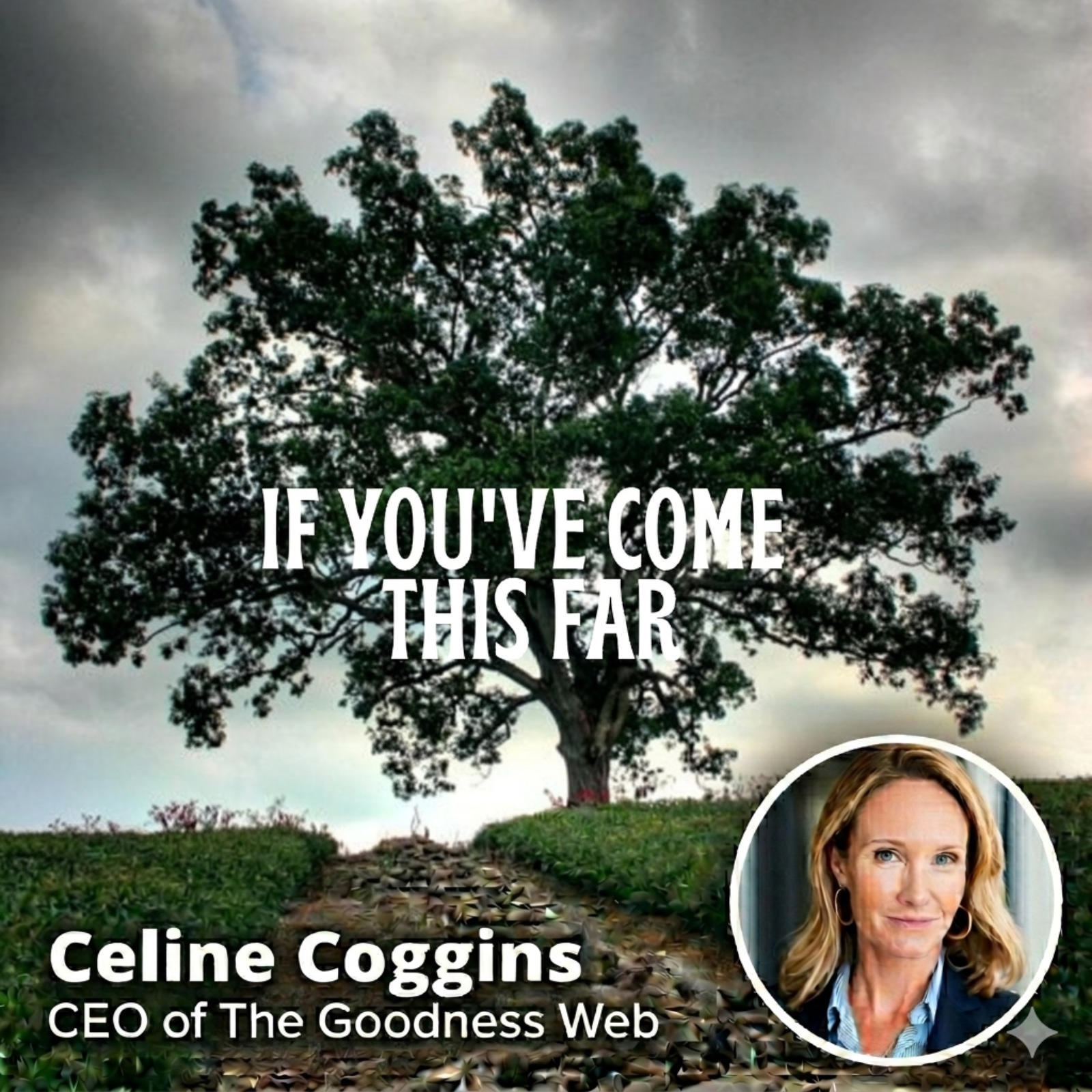
Celine Coggins...Investing in Youth Mental Health
May 1801:07:33Tap to summarizeShaun and Chris connect with Celine Coggins, a lifelong educator, founder of Teach Plus, and the inaugural CEO of The Goodness Web. Celine shares her journey from growing up in a large Irish Catholic family in Massachusetts to navigating the rigorous worlds of Stanford and Harvard. The conversation explores her career transitions and her current mission with The Goodness Web: transforming youth mental health through collaborative, scalable venture philanthropy that moves past isolated efforts to fund systemic, nationwide solutions.We dive deep into:The Venture Philanthropy Model: Moving away from isolated, small-dollar grants toward pooled, million-dollar investments that can actually scale across schools and pediatric practices.The Gen X "Unlock": Why data shows that youth mental health is one of the most defining and deeply emotional issues of our generation's parents.The Teacher Retention Crisis: What public education can learn from the business world about rewarding talent and performance early in a career.The Reality of the "Anxious Generation": Navigating a landscape dominated by social media, hyper-connectivity, and the new frontiers of AI.Resources Mentioned:The Goodness Web (thegoodnessweb.org)Teach Plus (teachplus.org)Inseparable (inseparable.org)The Anxious Generation by Jonathan HaidtNAMI Chicago (namichicago.org)
Transcribe →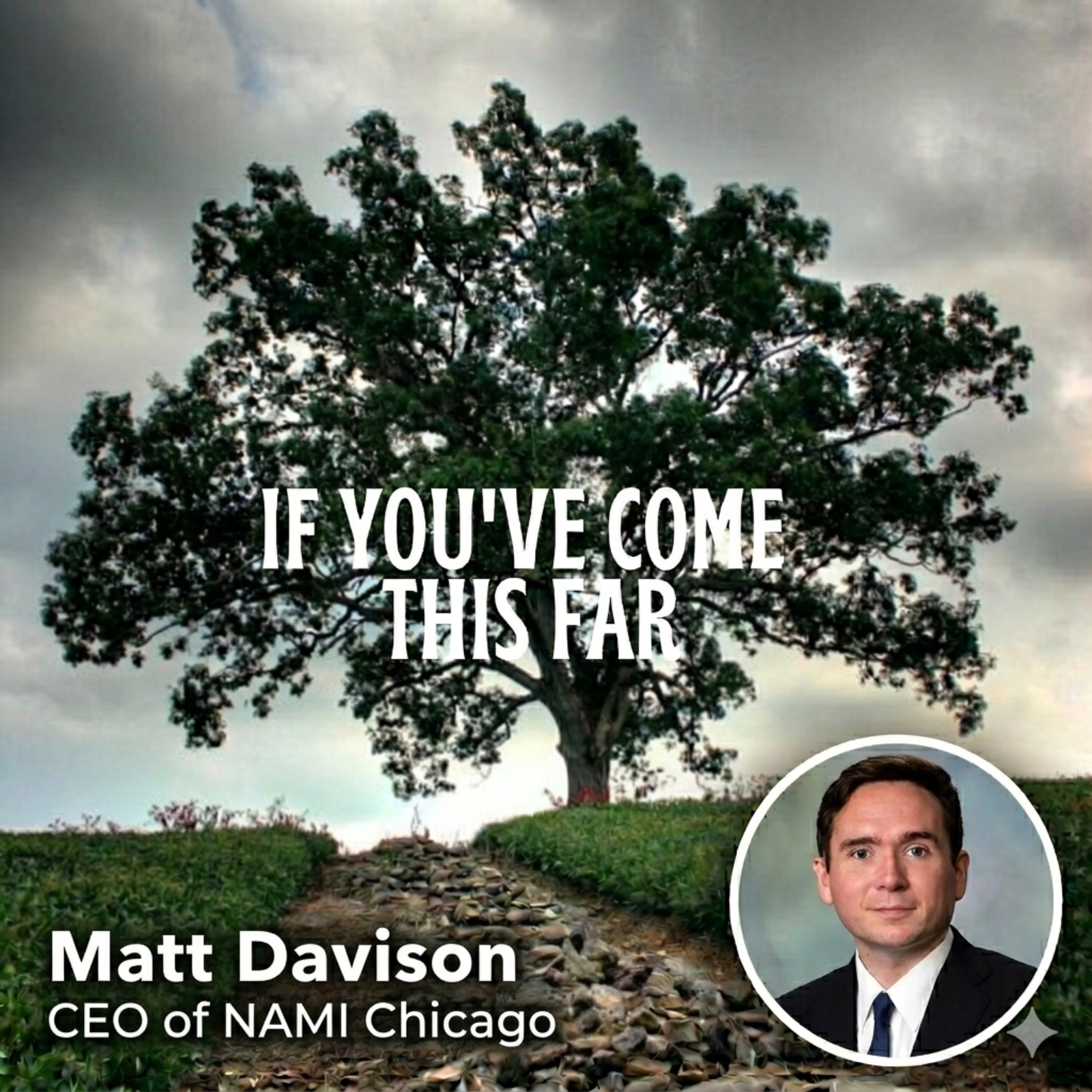
Matt Davison...More Empathy in the Mental Health Space
May 401:14:39Tap to summarizeChris and Shaun sit down with Matt Davison, the CEO of NAMI Chicago, to explore the intersection of law, advocacy, and radical empathy. Matt shares his transition from serving as a public defender and civil litigator to leading one of the nation's most prominent mental health advocacy organizations. He discusses the limitations of our current "triage" approach to mental health and why we must move "upstream" to address systemic issues before they become crises.Matt also opens up about his personal philosophy on "self-love" vs. "self-care," his concerns regarding the toxic impact of social media algorithms on youth, and the visceral moment on a Chicago Blue Line train that changed his perspective on systemic reform forever. This conversation is a pragmatic yet hopeful look at how we can build a more dignified system of care for all Chicagoans.Key Takeaways:The "Hammer and Nail" Fallacy: Why the criminal justice system is fundamentally ill-equipped to handle healthcare crises.The Blue Line Inflection Point: A powerful story about why individual advocacy isn't enough to fix a broken system.Upstream Intervention: The necessity of investing in community resources to prevent the "triage mode" of emergency rooms and jails.Social Media as a Public Health Crisis: Comparing modern algorithms to the "Big Tobacco" moment and their impact on youth body image.Self-Love vs. Self-Care: A therapist’s distinction between occasional treats and the daily practice of checking in with yourself.Resources Mentioned:NAMI Chicago: namichicago.org988 Suicide & Crisis Lifeline: Dial 988 for immediate supportThanks to our sponsor, Mental. Mental is a wellness app built specifically for men, offering a sanctuary from "toxic positivity" and generic advice. It provides personalized, affordable, and science-backed support through real-life coaching designed to help you navigate life's messiest challenges. If you've been thinking about doing something for your mental health, visit https://app.getmental.com/subscribe to get started.If you enjoyed this episode, please leave us a review on Apple Podcasts or Spotify—it helps more people find these important conversations!
Transcribe →
Andy Rotherham...Policy Beyond Partisan Teams
Apr 2001:14:25Tap to summarizeIn this episode, Chris and Shaun sit down with Andy Rotherham, co-founder of Bellwether Education Partners and a veteran of the Clinton White House. Andy has spent over 30 years at the intersection of education policy and social impact, but he’s also a music enthusiast, a Red Sox fan, a Boston bar investor, a podcaster himself, and a man willing to run a 5k in a full Easter Bunny costume to surprise his daughter.We dive into the "no-fluff" reality of the American education system, discussing why school "averages" are often not helpful and how we can actually move the needle on equity. We also explore the "modern vice" landscape—from the gamification of sports betting to the pervasive influence of social media on youth.In this episode, we discuss:The McCaskill Update: A shout-out to previous guest John McCaskill on his new book, Dialing Your Leadership .The History of a "Planned Community": Growing up in Reston, Virginia, and how its "hippie experiment" origins shaped Andy’s worldview .The Trillion-Dollar Industry: Why education spending is both too much and not enough, and the desperate need for honest performance audits .The "Omni Cause": The quantitative shift in how gambling, weed, and social media are impacting the next generation .A Personal "Why": Andy’s commitment to the Pan-Mass Challenge and raising funds for Dana-Farber Cancer Institute in memory of his fathers .Speed Round: Andy’s life mantra, "What’s the worst that can happen?"Resources Mentioned:Bellwether Education PartnersEduwonk (Substack)Pan-Mass Challenge / Dana-FarberD.I.A.L. IN YOUR LEADERSHIP by John McCaskillThanks to our sponsor, Mental. Mental is a wellness app built specifically for men, offering a sanctuary from "toxic positivity" and generic advice. It provides personalized, affordable, and science-backed support through real-life coaching designed to help you navigate life's messiest challenges. If you've been thinking about doing something for your mental health, visit https://app.getmental.com/subscribe to get started.If you enjoyed this episode, please leave us a review on Apple Podcasts or Spotify—it helps more people find these important conversations!
Transcribe →
Katie Fogarty...Aging is Living
Apr 701:01:05Tap to summarizeChris and Shaun sit down with Katie Fogarty, a communications expert, "proud crusader" for women in midlife, and the host of the popular podcast A Certain Age. Katie discusses her journey from a religion major at Holy Cross and a teaching stint in a Japanese fishing village to becoming a leading voice in the "menopause zeitgeist." We explore the systemic gaps in women’s healthcare, the "beauty industrial complex," and why Katie believes that aging isn't about becoming invisible—it’s about becoming visible to the right people.Key Takeaways:The Menopause Zeitgeist: Why the conversation around menopause is finally hitting the mainstream and why "bikini medicine" (focusing only on the pelvis) is failing women’s brain, heart, and bone health.Aging Out Loud: Katie’s philosophy on resisting the "anti-aging" narrative and why she refuses to allow advertisers on her show who suggest that aging is a condition to be "fixed."Curiosity as a Superpower: How partners and husbands can support the women in their lives by educating themselves on perimenopause rather than waiting for their partner to explain it.The "Invisibility" Myth: A reframe on midlife—arguing that 50+ is not a time of fading away, but a time of intentional reinvention and newfound relevancy.Episode Highlights:[00:00] Intro: Shout out to our friend and previous guest Jason Ronai on his new role at the Basketball Museum of Illinois (plus a goat debate).[02:15] The Small World: We uncover multiple points of connection and discuss Katie's career journey.[14:30] Culturally Catholic: Katie discusses her upbringing, the "Spotlight" scandal, and how she and her husband navigated faith while raising three young adults.[23:00] The Birth of A Certain Age: The "aha moment" when a New York Times bestselling author and a Michelin-starred chef both admitted they were afraid to go public with being over 50.[28:15] The Medical Gap: The staggering statistics behind NIH funding for women's health and the importance of HRT as a foundation for mental health.[35:10] Advice for Men: How husbands can "pull their heads out of their butts" and become active participants in the conversation around hormonal health.[43:00] Voting with Your Wallet: Why Katie chooses to use reading glasses and color her hair while still rejecting the "anti-aging" industrial complex.[53:40] Parenting Truths: Advice for parents of 17-year-olds on finding what "lights you up" rather than just padding a resume.[58:20] The Speed Round: Sunblock regrets, the "this too shall pass" mantra, and what Katie hopes people say at her wake.Connect with Katie Fogarty:Podcast: A Certain AgeInstagram: @acertainagepodCompany: The Reboot Group
Transcribe →
Zach Gale...Me to We
Mar 2301:06:37Tap to summarizeChris and Shaun sit down with Zach Gale, an elementary special education teacher and the founder of Me to We. Zach discusses his journey from a hyper-competitive sports family to finding his purpose in supporting students with behavioral needs. We explore the transition from "Me" to "We," the importance of routine for mental health, and why Zach believes your story can one day become someone else’s survival guide.Key Takeaways:Behavior as Communication: A core pillar of Zach’s teaching philosophy—understanding that every action from a child (or adult) is an attempt to communicate an underlying need.The "Me to We" Shift: Inspired by Inky Johnson, Zach explains how attaching yourself to a purpose and mission makes you "dangerous" in the best way possible.The Savage Servant: Trading the idea of being a "nice guy" for being a "good man"—someone who stands their ground and holds core values while remaining a "warrior in a garden."The Power of Routine: Why waking up at 4:00 AM and investing in self-discipline is Zach's greatest form of self-love and mental health maintenance.Episode Highlights:[00:00] Intro: Celebrating Angela Saini and the Daniel Radcliffe connection.[05:30] The Gale Household: Growing up with a father who coached for 23 years and the "Golden Year" retirement video.[13:45] The Pivot to Special Ed: How "Bartlett Baseball Buddies" changed Zach's career path just days before college.[19:20] Men in Education: The disparity of male teachers at the elementary level and the importance of male role models in schools.[25:10] Perspective in the Classroom: Having tough conversations with veteran teachers and putting personal biases aside for the students.[33:00] The Origins of Me to We: Starting with Zoom workouts during COVID and evolving into a formalized LLC and men's group.[40:15] Family & Addiction: Zach’s middle brother’s journey to sobriety and his role in the men's group today.[48:40] Imposter Syndrome & Social Media: The struggle for authenticity in a society that casts judgment.[55:20] Curiosity Over Judgment: How Ted Lasso and "perspective taking" drive connection in Zach’s workshops.[01:02:00] The Best Sports Movie Debate: Miracle vs. Facing the Giants (and the notable absence of Hoosiers).Connect with Zach Gale:Organization: Me to WeLinkedIn: Zach GaleThanks to our sponsor, Mental. Mental is a wellness app built specifically for men, offering a sanctuary from "toxic positivity" and generic advice. It provides personalized, affordable, and science-backed support through real-life coaching designed to help you navigate life's messiest challenges. If you've been thinking about doing something for your mental health, visit https://app.getmental.com/subscribe to get started.If you enjoyed this episode, please leave us a review on Apple Podcasts or Spotify—it helps more people find these important conversations!
Transcribe →