
Podcast
IMF Podcasts
Hosted by IMF Podcasts · EN
Listen to the World's top economists discuss their research and deconstruct global economic trends.
22episodes
Episodes
Newest firstAll episodes

Pierre-Olivier Gourinchas on the Story Behind the Number
Jun 3000:30:51Tap to summarizeInflation pressures were already brewing when Pierre-Olivier Gourinchas stepped in as IMF Chief Economist in January 2022, but rising geopolitical tensions soon added fuel to the fire, and inflation remained a challenge throughout his tenure. In this podcast, outgoing Chief Gourinchas reflects on four + years marked by trade tensions, geopolitical shocks, and rapid technological change. And how the value of forecasting lies less in precise point estimates and more in articulating the underlying forces and policy implications. Transcript: https://bit.ly/4oUrjvy
Transcribe →
Pierre-Olivier Gourinchas on the Story Behind the Number
Jun 2900:31:16Tap to summarizeInflation pressures were already brewing when Pierre-Olivier Gourinchas stepped in as IMF Chief Economist in January 2022, but rising geopolitical tensions soon added fuel to the fire, and inflation remained a challenge throughout his tenure. In this podcast, outgoing Chief Gourinchas reflects on four + years marked by trade tensions, geopolitical shocks, and rapid technological change. And how the value of forecasting lies less in precise point estimates and more in articulating the underlying forces and policy implications. Transcript: https://bit.ly/4oUrjvy
Transcribe →
Jeffry Frieden: The Cost of Geoeconomic Coercion
Jun 2300:19:40Tap to summarizeAs geopolitical tensions rise, countries like to flex their economic muscle. But as appealing as they might be, sanctions, tariffs, and export bans come at a price. Jeffry Frieden is a professor of international and public affairs and political science at Columbia University. In this podcast, he says when economic and geopolitical relations become tightly connected, bad things can happen. Transcript: https://bit.ly/4vxZmfU Read the article in Finance & Development: IMF.org/FANDD
Transcribe →
Trade among Geopolitical Rivals: Michele Ruta
Jun 1100:21:41Tap to summarizeIncreased trade integration between economic superpowers shaped our globalized world, but that world we've known for the past three decades is becoming increasingly fragmented. What happens to those trade relationships when countries disengage? Michele Ruta is the IMF expert on trade and global imbalances. In this podcast, he says even strategic rivals can benefit from trade cooperation. Transcript: https://bit.ly/4ebXDW0 Read the article in Finance & Development magazine. IMF.org/FANDD
Transcribe →
Nationalizations Get Another Look: Nicholas Mulder
Jun 400:17:15Tap to summarizeState-owned enterprises have long been viewed by economists as a bad idea due to proven inefficiencies and mismanagement. But is handing over key resources and industries to the private sector really the answer? Economic historian Nicholas Mulder says, with all the geopolitical risks in the world of late, governments are looking for ways to keep essential resources under their control. Mulder is a professor of history at Cornell University. His article The New Wave of Nationalization was published in the June issue of Finance & Development magazine. In this podcast, Rhoda Metcalfe and Nicholas Mulder discuss the potential and risks of rising government ownership. Transcript: https://bit.ly/4wYy0R0 Read the article in Finance & Development magazine: IMF.org/fandd
Transcribe →
Gracelin Baskaran on the Race for Minerals
May 2900:21:49Tap to summarizeThe recent scramble for the minerals that go into our electric vehicles, solar panels, and defense systems has exposed vulnerabilities in the supply chains. Mineral markets are complex, spanning dozens of materials found around the world, but the real challenge is processing. More than 90 percent of rare earth minerals are currently processed in China. Gracelin Baskaran is the founding director of the Critical Minerals Security Program at the Center for Strategic and International Studies. In this podcast, she says mineral security is not just a national security imperative, it's an economic security imperative. Transcript: https://bit.ly/4uBN1qu Read the article in Finance & Development magazine
Transcribe →
Geoeconomics Revisited: Josh Lipsky and Matteo Maggiori
May 2800:33:56Tap to summarizeAs global powers face rising geopolitical tensions, sanctions, export controls, and tariffs are once again tools of leverage, marking the resurgence of geoeconomics, where economic policy and national security converge. This approach to business was largely abandoned by the West after the Cold War, though for most other countries, geopolitics and economics have always been closely linked. Josh Lipsky is the founding director of the GeoEconomics Center at the Atlantic Council, and Matteo Maggiori is a professor of finance at the Stanford Graduate School of Business. In this podcast, they discuss the new face of geoeconomics and its seemingly vengeful comeback. Transcript: https://bit.ly/4fe0G2a Read the articles in Finance & Development magazine: IMF.org/fandd
Transcribe →
Barry Eichengreen and Chima Simpson-Bell on Currencies that Shine
May 2200:27:53Tap to summarizeWhen global volatility increases, so does the demand for the dollar. When countries face sanctions, they rush for gold. But while the two have been the most common reserve currencies for decades, surprising alternatives are emerging. UC Berkeley professor and author Barry Eichengreen, along with IMF economists Chima Simpson-Bell and Serkan Arslanalp, track the dynamics of reserve currencies in their recent NBER paper. In this podcast, Eichengreen and Simpson-Bell discuss the changing landscape of reserve currencies. Transcript: https://bit.ly/43ovB4o
Transcribe →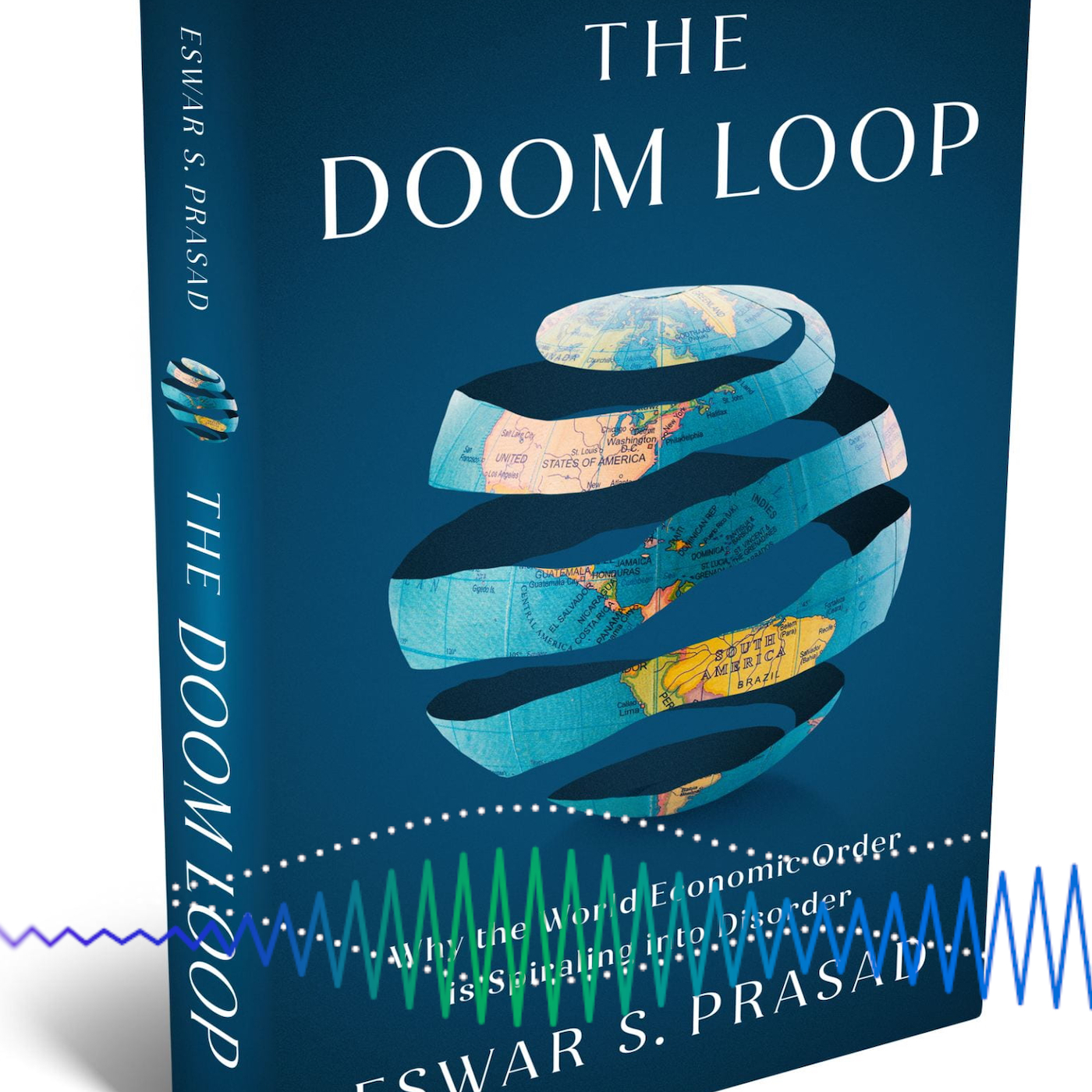
Eswar Prasad on Escaping the Doom Loop
May 500:28:29Tap to summarizeWhen esteemed economist and author Eswar Prasad set out to write his latest book, it was to be about the promise of some recent trends within the world's economic and power structures, but he found something darker. The Doom Loop is about what happens when the positive forces that normally bring stability begin to work against each other. In this podcast, Prasad says that the dynamics of this negative feedback loop have led to the erosion of institutions across the globe. Transcript: https://bit.ly/4d5i8Df
Transcribe →
Taxing Bad Habits: Christoph Rosenberg
Apr 2200:19:18Tap to summarizeWhile it is true that death and taxes are unavoidable, good tax policies can help delay the inevitable. So-called sin taxes on alcohol, tobacco, sugar, and other harmful products can raise revenues and reduce public healthcare spending. In this podcast, economist Christoph Rosenberg says sin taxes are relatively easy to collect and, done right, can nudge people towards healthier lifestyles. Transcript: https://bit.ly/4ttwKmI Read the article Finance & Development magazine. IMF.org/fandd
Transcribe →