← IMO with Michelle Obama and Craig Robinson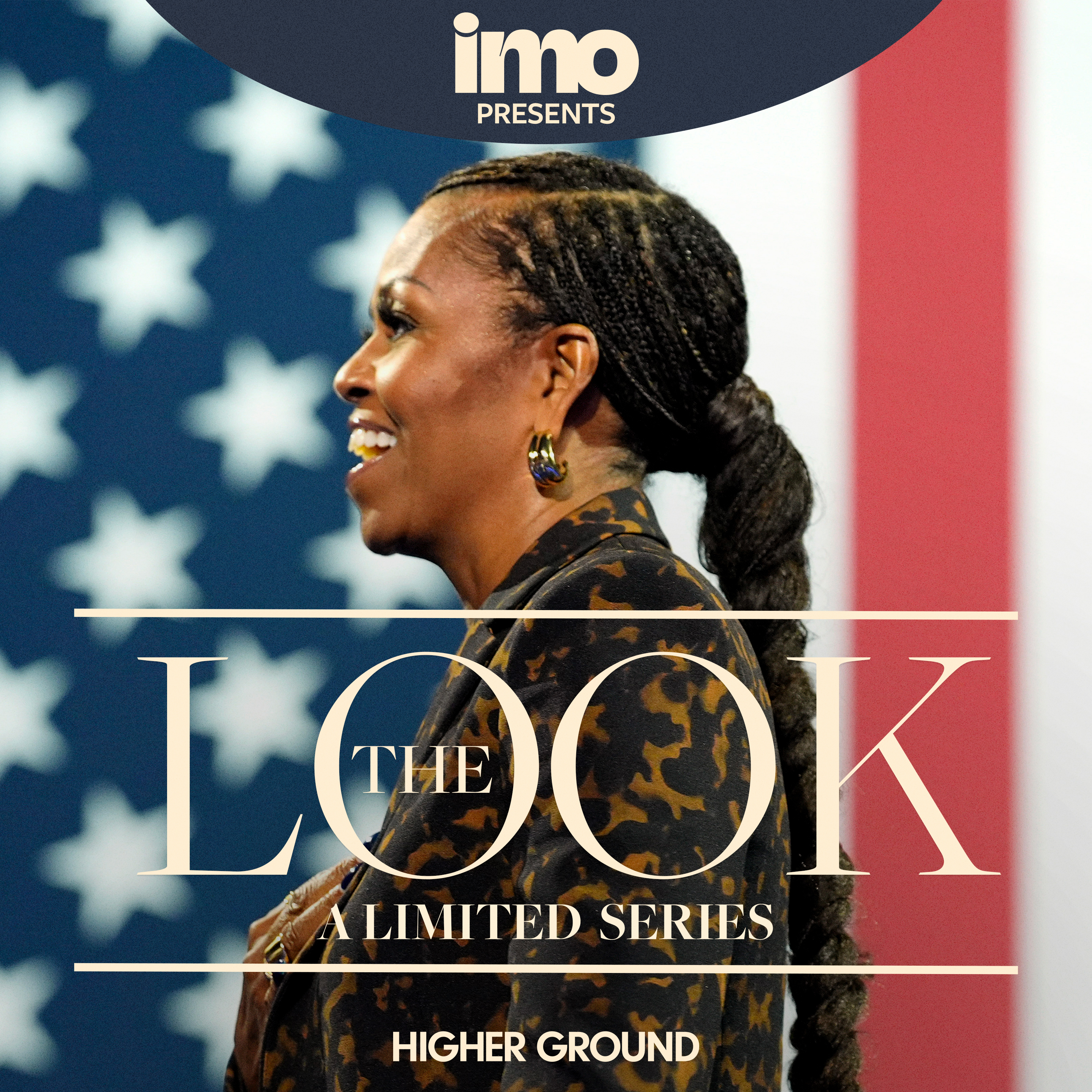
Loading summary
Transcript353 lines
- [00:00]
A
I knew, like, if something went wrong with the designer, you know, if it was the wrong thing, the wrong person, the wrong time, even just the zipper breaks. She falls down, her heels break like you've never seen her fall down. Because I checked everything. You've never seen her zipper pop because I checked the zipper. You know what I mean?
- [00:20]
B
So, like, we can't have our first black first lady falling down.
- [00:23]
C
No, no, no, no.
- [00:24]
B
That's imperative.
- [00:26]
C
That was the biggest goal getting out of the eight years. This episode is brought to you by Rivian.
- [00:41]
B
Welcome to the Look, a special series on imo. The look also happens to be the name of Michelle Obama's beautiful new book, which is available for purchase now. I'm Elaine Welteroth, journalist, author, television host, and founder of Birth Fund, and it is my absolute honor to be here today with Elaine, the Mrs. Obama, and her longtime beloved stylist, Meredith Koop. Hello, ladies.
- [01:07]
C
Hi, Elaine. Thank you for being. I'm so, so, so excited to have you here. When we started working on this project, first person I said we have to get is you, my friend. So, you know, and look at you.
- [01:21]
B
Let me not cry.
- [01:22]
C
Let me not cry. Look at you.
- [01:23]
B
Look at YouTube.
- [01:25]
C
Okay.
- [01:25]
B
I am so excited to be here. Even just walking into this room, seeing these pictures made my eyes well up. This is a moment that we get the opportunity to sit together and reflect on all of the history, all the fashion history that you all have co created. So it is my honor to be here. You both worked so hard on this book project, and I am so excited to get into all of it. For this episode, we are gonna go deep behind the scenes with both of you to hear all about your style evolution from the White House to today. And before we get to all of that, though, I want to take a moment to get to know Meredith.
- [02:09]
C
Ooh.
- [02:10]
B
So, fun fact. When I had the opportunity to share, well, when I shared this opportunity with just a couple of people in my life, even the fashion people were like, wait, Michelle Obama has a stylist? And I was like, yes, people, yes. So after being behind the scenes all of these years, what is it like to finally step up, step in front of the cameras and tell your story and be able to share your work with the world? This must feel so amazing.
- [02:37]
A
Yeah, it's exciting, honestly. I mean, I've done interviews and things here and there, but to have this project that's so much more in depth and substantive and really speaks to what the work is. Awesome. And it's. My work with Michelle is different. You know, than I would say most stylists, but there's also a lot in common with what most stylists do. So it feels good. I mean, it's kind of scary, but it's good.
- [03:10]
B
Well, you have to tell us a little bit of your backstory because you, you are literally living so many people's fashion dream, and yet you didn't even set out to be a stylist. So we have to hear how you landed this job of, of all jobs. This is huge. And, and, and by the way, you started your first fashion job was kind of just to pay the bills. You went to school for psychology. You were intending to pursue a path in psychology. So I also want to hear how your background in psychology has influenced your work as a stylist.
- [03:45]
A
My passion growing up was dance. That was something that I felt truly passionate about, but that did not come to fruition for me.
- [03:54]
C
Can I just say, one of the favorite, my favorite things about Meredith is that she is a bomb dancer. Let me find out.
- [04:02]
B
Meredith, she has 5, 6, 7, 8. Yes.
- [04:05]
C
And kickball change. I mean, she can throw down, but that's a factoid that I think the world needs to know that in addition to being.
- [04:13]
A
Let me be a middle aged backup dancer, please.
- [04:15]
C
She is ready. Okay.
- [04:18]
A
But yeah, so that was really something that had I had all the expansive opportunity in front of me with that, that's what I would have done. But that's not how I grew up. Like, the culture of my family was, you're gonna go to a liberal arts college, you're gonna go to a four year college, you're gonna get a degree. Something that could potentially translate into some sort of steady income. And I think it wasn't. You know, when I meet people that have children that are pursuing the arts, I'm always so impressed with the parents of how open they are to that experience. So when I went to school, I chose psychology just because I was interested in people, but it wasn't like this big plan, you know, and college was not a place where I thrived. I was not prepared emotionally, mentally, to be in that space independently and had a lot of issues. So when I came out of that experience, I wasn't, oh, I'm set up for success and now I'm gonna go climb some corporate ladder somewhere. I came out like, phew, what am, what, what are people doing? Like, how old am I? What am I, what am I supposed to do now? Like, I think a lot of people have that experience. It's just, you know, with my Specific issues and things that I was dealing with. I was like, I just need to get a job. I wasn't about my ego. It wasn't about anything except I, I want to make money to support myself so that I can just be a functioning adult on some level. I moved to Chicago and I just started looking through ads. And at the time, a lot of those ads were print. They were printed out.
- [06:02]
C
Do you remember the day I saw.
- [06:03]
A
This ad and it said, sales associate at a high end clothing boutique. Like, I remember exactly what it said. And then a number, no name. Like, I didn't really know what it was. I didn't really know where it was. I just knew it was in Chicago and. And I wasn't shopping at high end luxury stores. Okay. So I had no reference. So I called. I, you know, they answered with the name of the store. So then I was able to research what it was. I went in for the interview and also just noting that, like, I'd always been interested in fashion. Like, fashion always spoke to me. Clothing always spoke to me. Like, I always liked that expressive nature of it. I always liked playing dress up. I always, you know, was laying out outfits for my mom at a young. Like, I was always drawing clothes and designs and things. But again, it wasn't something where I thought, oh, here's a model of how I could use that in a career. I had no idea.
- [07:00]
C
That's just the thing about unconventional careers, you know, I mean, you go to college for a broad spectrum and you get the majors that you get. You can be. You still learn, you can be a doctor, a lawyer. I always say this, but nobody talks about being an entrepreneur. No one. No one talks about fashion design. No one talks about styling.
- [07:24]
A
And certainly not in my community that I.
- [07:26]
C
Not in the Midwest, in St. Louis.
- [07:28]
A
Missouri, in the suburbs. Like, I just didn't. I just didn't have a frame of reference for it like that. So, yeah, so I went in, I did this interview, and the woman that owned the store was like, sorry, no. Like you have no experience and so therefore you can't work here. And what had happened was when I walked into that store, I saw all of these amazing clothes and jewelry. Like, I remember exactly how it looked. Where the jewelry cases were, the jewelry that was in it. You walk over here, the gowns were hanging at the end of the rack. And I'm going a little out of order. Forgive me, but prior to the interview, as I was walking around looking through.
- [08:13]
C
I was just like, whoa.
- [08:14]
A
Like, this is crazy. I've never Seen this in person. I'd seen magazines. Like, I grew up reading magazines. I would go to Barnes and Noble and read the magazines that we didn't have at the house. And then whatever we had, I would read. So I was just like, wow, I want to work here. You know, once I saw that. So when she told me no, I was just like, oh, no, I am going to work here, though. So I'm working here. So it was just a moment of clarity, a moment of boldness. I was like, well, put me on a temporary. Put me in a temporary position. If you think I'm awful, you can just let me go. No questions asked. Like, no problem. Six months. And she was like, okay. So that's when I started working there. And that was sort of like, you know, it's not just a clo. A clothing store. You just kind of, you know, you walk in and you look around. You had client books. There was a lot of fashion.
- [09:16]
B
High end.
- [09:17]
A
It was very high end. And, like, there's a fashion education that happens there with the staff, with the owner. Like, she is incredible at her curation, her styling, the way that she runs her store. So I just learned a ton being there about designers, fabric, alterations, tailoring. Like, all of the things that you would sort of learn as a styling assistant. I learned some of those things there.
- [09:43]
B
So this is Ikrom boutique in Chicago, which is legendary.
- [09:48]
A
Yes.
- [09:48]
B
Even as someone who's not from Chicago, like, I've heard of Ikram. And so it makes sense to me what you're describing as this. Like, I mean, this is kind of the fashion fairy tale. Even starting at Ikram.
- [09:59]
A
Yeah.
- [09:59]
C
I mean, that's how I felt when I first walked into Ikram. I was like, oh, my God, this place is amazing.
- [10:06]
B
So flash forward, you get a call one day from Ekram, and she says, what?
- [10:12]
A
I'm at this. I can't swear, crappy job. And I get a call and it's Ekrom. And she literally is like, meredith.
- [10:25]
C
Meredith.
- [10:27]
B
Guys, are you seeing the scene? Are you seeing this play out? I could see this play out. I don't wanna do too much.
- [10:32]
A
I'm not gonna go too far. But there was, like a sense of drama. There was a sense of something's happening, like she's calling me for something big. So she said, I need someone to go to D.C. or she said something like, I need someone to go to D.C. and be sort of the go between, because I don't have anyone else to send and I trust you, blah, blah, blah. And I was like, huh, like, what are you talking.
- [10:59]
C
What does that mean? What does that look like?
- [11:01]
A
It was just out of nowhere. So I'm like, what exactly am I gonna be doing? I'm gonna be working with Michelle Obama. In what sense? In what context?
- [11:11]
B
D.C. when?
- [11:12]
A
Who?
- [11:13]
C
What?
- [11:13]
A
When?
- [11:13]
C
Where?
- [11:13]
A
How? Why? What's going on? And it was just like you say.
- [11:19]
B
Say yes and ask questions later.
- [11:21]
A
You have 24 hours. Because I was like, I don't want to think about it. You know, I don't think that went over well. So, yeah, so basically the next things were like, I was just saying yes to the next thing. I wasn't saying yes to the whole kit and caboodle, because I didn't even know what the kit and caboodle was. So I wasn't going to be like, yeah, I'm in. Right. I didn't know you. I didn't know anything about anything.
- [11:45]
C
You didn't know D.C. i didn't know.
- [11:47]
A
D.C. i didn't know, like, anything. So I just agreed to move forward with whatever the immediate next step was.
- [11:57]
B
Which I think is a major lesson in life.
- [12:00]
C
Oh, my God.
- [12:01]
B
Is just to say yes to the next best thing. Don't overthink it. Don't just say yes to the next best thing. If your enthusiasm is calling you in that direction, if it feels like the right step. When did you know this was actually the right step for you, though? Cause it sounds like you went in with a little bit of trepidation and a lot of unknowns.
- [12:22]
C
Yeah. And I can say that that was a big plus, you know, the. You know, to be cold, called to drop your life. Because what I said, I think that it's sane to be hesitant. I think I would have been a bit more suspicious. I would have been like, okay, does this young person have some gravitas in her own life to really think about this? You know, because sometimes just saying yes, that's not an indication that you're really ready. Because if you haven't sort of thought through this big, life changing move, you know, you're gonna pick up from everything, you know, move to a whole nother city and enter into a world that I couldn't even explain yet to Meredith, you know, there was a lot of, we don't know what we're doing. We don't know what this is gonna be. But, you know, what I could say to her is that, you know, you'll be safe, you'll be respected. You know, if you put in the effort, you'll be treated well. I need the help and You've got to be ready to build and grow with this process, because there really wasn't a process. So it was two leaps of faith that we were. We were both taking kind of a fashion love story. This is true.
- [13:46]
A
And really what you said, because I remember, like, when we had our little meetup for the first time, she said to me, she said, if you're smart, funny, and you work hard, you'll be fine. And I was like, well, okay.
- [14:02]
B
You're like, check, check, check, check, check, check.
- [14:04]
C
Just to create a bigger context to what we were doing. I had been working with Ikrom. I started working with Maria Pinto, the first time that I had ever worked with a designer. Um, and I. I met Ekrom through another friend, and I hadn't shopped at her shop in Chicago either. And walking in, I was like, wow, you know, this is a whole nother level of design and styling that was just important to the overall role. At the time we started working together, we were still campaigning. It wasn't clear that he was gonna win, but I was thinking ahead to thinking about, you know, I'm going to need gowns and a whole range of things that I can't get from one designer. So Ekram was styling me for about the first year of the term. But it was very difficult for her, as the owner of her own shop, to really. I mean, I needed somebody full time. I needed somebody that was smart, capable, understood the baseline of fashion, but could also get the political message. And there was just something about the way Meredith carried herself. She was always poised, and she was always honest. You know, she wasn't selling me on this job. She wasn't sort of telling me a bunch of stuff that she was ready. She was very clear. I don't know about this. I'm learning this, but I could tell that she was a hard worker. And I was like, well, we can figure the rest of it out, you know? So she came on about the. Well, you were always there facilitating. But it was clear that I needed one stylist. I needed somebody exclusively working with me for me, with a range of designers. And that's when I decided, okay, Meredith, you can do this. Then I had to really tell her, you can actually do this. I had seen her working enough to know that she could figure this out. And I think there may have been a little kind of like, can I? But I knew she could. Hey, everybody. I am here with my sister, daughter, friend, everything, hairstylist Yanae. Yanae, welcome to the podcast.
- [16:43]
A
Thank you for having me.
- [16:44]
C
I know I get to have you here and we get to talk all the things.
- [16:49]
D
More conversations.
- [16:50]
C
Yeah. We've been working together for a while. I mean, you've been styling me exclusively almost for a decade now, but in.
- [17:00]
D
The orbit for about 16, 17 years.
- [17:03]
C
16. 17 years. See, you look at you and you think, well, she's 16 or 17. So you started when you were 8 years old?
- [17:12]
A
Yeah, 21.
- [17:13]
C
21. Well, that's a little baby. Share with us, our listeners, our audience, your story of how we met and how you came into my life as baby. As a little baby. Stylist Scared baby. Stylist Scared baby.
- [17:30]
D
We met in 2009. I started doing hair. I had just got licensed, actually, shortly after. Shortly before we met. But I had started doing hair when I was in middle school. That's when my interest in the beauty space first peaked. By 16, I decided to go to cosmetology school.
- [17:47]
C
And you were like doing people's hair in the neighborhood, your family?
- [17:51]
D
I was the neighborhood braider. I had a little salon set up in my parents garage.
- [17:57]
C
That's the funny thing. It's like your parents hooked you up, let you be a little entrepreneur. Yes. It was so nice.
- [18:04]
D
It was like the early 2000s, and I was doing all the braiding and all the things. My brother was my very first client. I would start a braid here.
- [18:10]
C
It ended here.
- [18:11]
D
My braiding skills were horrible, but.
- [18:15]
C
But you were seven.
- [18:16]
D
Yeah, but it was. It was fine. It was like. It was my practice. It was really great. And then went to cosmetology school. And shortly after I got licensed, I met Johnny and I started working with him.
- [18:27]
C
And by Johnny, you mean Johnny Wright?
- [18:29]
D
Yes.
- [18:29]
C
Johnny Wright is my primary hairstylist throughout the White House years.
- [18:34]
D
Yes. And he took me under his wings and brought me in, and that's how we met. And I started working with the girls, which is crazy because I was the baby, but they were the babies too, and I got to work with them.
- [18:46]
C
How old were they when you first. Because it was at the very beginning. So they were 10 and 7 when they were very little. You met them?
- [18:53]
B
Yes.
- [18:53]
D
We used to do the twists and all the things and Sunday wash day routines and all the fun times and chaperoning them and just being a part of their lives. It was now being a little bit older and having my own kid. It's like, oh, those were the fun moments. And I remember what that was like when I was in their age and I was, you know, getting my hair done by my mother.
- [19:15]
C
Well, that was the beauty of them. You were their big sister, and it was good for them. And you were my big sister. Yeah, it was all the sisters falling down. Cause you also did grandma, too.
- [19:24]
D
Yes.
- [19:25]
C
So it was all of us ladies together. But I love the fact that you were their big sister hair mentor at the very beginning, that they had somebody younger who understood what they were trying to do. And you were teaching them all along about hair health and hair care. And you would have the arguments with them if they wanted to switch a style that you didn't agree with.
- [19:47]
D
I'd be like, okay, you guys learned.
- [19:48]
C
This in school, and this is all.
- [19:49]
D
Cute, but we have to think about what's gonna work beyond this period in time and making sure that when we finish throughout all of this, that your hair is still healthy and you can do whatever you want when you're an AD and you actually have the freedom and the financial capacity to do whatever you want and be creative. And so it was fun times, for sure.
- [20:08]
C
And, you know, the thing is, people don't realize that you were also studying to get your degree. Yep. While you were working. Because your parents were in. Tell them about that. Because your parents were supportive of this.
- [20:22]
D
Endeavor of me doing hair kind disorder, which is why they let me go to cosmetologist when I was 16. But there was a caveat. I still had to go to college. But when I ended up working with Johnny and moving because you guys want and took office, and I packed my life and moved across the country From California to D.C. i dropped out of college. And so my parents were like, okay, you still have to go to college. So I did. I went back.
- [20:44]
C
Still have to go to college. Y' all still have to go to college.
- [20:47]
D
Which, you know, I'm so grateful for, because I think that people don't realize that as beauty professionals or service providers, we're entrepreneurs, and it's extremely important for us to have these skill sets and to have the knowledge to properly run a business. And going back to school and getting my degree in business really helped me, which now that I have a salon, it has helped me build the team that I have. It has helped me run my business in a way that is profitable and that makes sense, and I'm able to scale. So I'm grateful that I went back to college. But it would be in the salon, in the middle of touch ups, helping Johnny out or join the girls. I'd be in the corner writing my pictures, doing her homework, doing my homework. And it was actually kind of funny because the girls would look at me. And they'd be like, are you really doing homework? And I'm like, yeah, just like you guys, I have homework, but I'm in my 20s now and you're not.
- [21:36]
C
But this is the reality of life. So what was it like for you, being that young, entering into that arena? What did it feel like the first time you had to walk into the White House because you were.
- [21:51]
D
I was a lot of nerves. A lot of nerves, you know. And I think not only was it that I was young, but you grow up in a society where people don't have respect for the traits, right? People don't think that, like, even my parents are like, you have to go to college. So I had to be a doctor, a lawyer, an engineer, or go down this traditional trajectory when it came to education. So coming into that type of space, you're always doubting yourself to be like, am I adequate enough? And that was something that I struggled with all throughout our time there. But there was this reinforcement. I knew that I was adequate. But you still have these doubts. And so the first time coming in, it was just do the job. It was Easter weekend, it was before the Easter egg roll, and I was shampooing the girl's hair, and your husband walked in and you were like, this is Yanah. And I was like, shampooing hair. And I was like, hello, sir. And then I just went right back and I was like, don't say anything.
- [22:39]
A
Don't make eye contact, don't look him in the eye. Just like, do your job.
- [22:44]
D
And I just kept hearing my parents in the background being like, don't embarrass us. Act like you have manners, you know? So there was all of these pressures because there was so much respect. And as a young little black girl, I also knew what it meant to have someone like you and your husband in office. And so there was that added layer of pressure where it was just like, we also had to make sure that we did you guys right and make you proud. And we had to make sure that we were doing the best of our ability to keep your guys legacy as bright as it was.
- [23:12]
C
And you made me so proud all the time that you know, your skill set, your professionalism, always, you were never late, you never complained, you never talked about your homework, you didn't treat it as a problem. You were kind, gracious, all the things. And it has been just amazing to watch you grow. And now you are your own business owner. Can you talk a bit about where you are in life now?
- [23:41]
D
Founded aesthetic salon in 2017. We have a team of 23 individuals.
- [23:46]
C
That work with us. You have 23 people working for yoga sales? Yes. Isn't that crazy? I can't stop but think about it, of this child as a baby. So I came to the opening.
- [23:56]
D
Yes, you came to the opening.
- [23:59]
C
But still watching you be a baby boss is.
- [24:02]
D
I still like to take the title of baby boss. I'm gonna hold on to that title. But we have 23 team members that work with us, from styling team to assistants to our operations manager. And we have three apprentices right now that are going through cosmetology school with us as well. Because rather than going and paying, they're coming and getting firsthand experience, trade experience on the job, which I'm extremely proud about. And not just for myself, but for the other salon members who are pouring into these young girls as well. And they're from all different walks of life and all different ages, and so I'm grateful for that. We have a thriving clientele book that we're so grateful for, that supports us, that does a lot in the community, that supports us, that gives back, that brings ideas to us that we're always grateful for as well. And as you know, like the relationship we have, we have very intimate, personal relationships, and we're get. We get to be a part of all of their big life moments, good and bad, to just have someone to lean on and like you. My clients pour into me and help me become a better person, a better woman, a better mother, a better wife. Now, in this era of my life.
- [25:09]
C
Like you do, and your philosophy is beautiful hair, but healthy hair.
- [25:16]
D
Yes, good hair is healthy hair. So health is first, the health, integrity of your hair. We could have versatility, but we have to make sure that we're doing a 360 approach. We're looking at it from the inside out.
- [25:27]
C
What are you eating?
- [25:28]
D
What is your diet? What is your lifestyle like? Is this conducive to what you do and what your hair goals are? And not really being so fixated on, like, length retention, but healthy hair. So sometimes we have to do a cut or a chop to grow it out. If we need to use extensions, if we need to go into protective styles, or all is well and all is necessary, but understanding who you are and giving you a personalized approach.
- [25:49]
C
And this is what I like about what you bring to the industry, is that you're not just concerned about the outside, the aesthetic. And people ask me, well, what's your favorite hairstyle that Yanae has done? I mean, I like them All. But what I love about you is that you care about my health. So you create styles for the moment that fit the moment, but also don't damage my hair that keep me looking fresh and healthy and up to date. You know all the trends, you can take me through all the things. You absolutely do. But at the core of your philosophy is teaching, training and hair health.
- [26:31]
D
Yes, Education is extremely important, and transparency is really important. I think that. So for so long, women have felt captive to their hairstylists, and they're not.
- [26:40]
C
Able to say that again.
- [26:41]
D
They're not able to recreate things, because hairstylists are like, this is my territory. This is my landscape, this is my space, and I have to be in control. And for me, it's like, no. Because if a client doesn't come to me every single day, they're in control of their hair, and they need to be able to make it look good regardless. Because if someone stops on the tree and says, who did your hair? You go, say my name. So I need to make sure that you have the education, you have the products, you have the skill set, you have the tools at home to maintain your hair and that your hair is healthy and it works for you. And education is at the key foundation of everything that we do.
- [27:17]
C
And one thing you all I'm very excited about is that services from people like Yene are available to everyone now.
- [27:26]
D
Yes, yes.
- [27:28]
C
Because of Airbnb and their new special efforts to not only offer wonderful places to stay, but they can access your services through Airbnb. Can you talk about that relationship?
- [27:43]
D
Washington, D.C. but also in LA, which is Jalapeno. So shout out to California. Airbnb's new platform makes it easy to book services with professionals for all special events, from birthdays to weddings to girls getaways. You can find a makeup artist, you can find a massage therapist, hairstylist, and even me. All you have to do is search my name. Yanae Damtu. And if you're. If you're also a hair professional looking to grow your clientele, you too can list your business on Airbnb@Airbnb.com Services.
- [28:21]
B
Well, we. I want to go back a little bit to first impressions, because neither one of you could have prepared for the role of a lifetime that you were both about to step into together. So, you know, not just you being a first lady, but the first black first lady. Is it. That's a unique styling job that there. There's certain complexities that no one can teach you that. Right. You have to learn that there's some innate intuitive and historical understanding that you have to. Have to step into a role like that. So I want to go to first impressions and how. And because when I think about, you know, the fact that most people don't know who this enigma is, this stylist behind Mrs. Obama. What was your very first impression of Meredith? And Meredith, I'm gonna ask you the same question. And I want unfiltered, raw first impressions of each other.
- [29:18]
C
Well, the first impression was she's. She's gorgeous, you know, and I always tell Meredith this. I think she is one of the most beautiful people inside and out. And she seemed calm, just steady. Even though I know that deep down inside she can be a bubbling pot of everything. You know, this poise, this. I mean, this is who Meredith has always been. She has not changed. And even though Meredith worked in this high end store and she could have been, she was very much a regular girl who I felt like I recognized. And I'm always one to get to know people's stories, you know. So throughout all the time that we work together with everybody that I work with, I want to know, how did you grow up? Tell me about your mom. Tell me about your sister. You know, her relationship with her sister and, and her brother in law and her honesty about her challenges in life. I mean, she wasn't coming in phony, she wasn't coming in trying too hard. She was coming in full heart open. And then there is the relationship with my girls, right, because she, Meredith didn't just style me. I mean, I needed the girls had to get dressed, you know, for events and for my mom, had to get dressed. I mean, this little girl at such a young age was taking that all on. And she had a connection with Malia and Sasha and mom. I mean, they were as close to Meredith as I was. She's been through a lot over the course of our time in the White House. She lost her sister in her battle with cancer.
- [31:18]
B
So sorry.
- [31:18]
C
And she's in Washington trying to hold that down and making sure that her family was good. It's just, you know, you become family after that. You just know a person's heart, which to me is more important than the job. You know, her heart was right and that was completely clear from the beginning. And I'm so proud of her, just proud of the woman that she is. So, so that was my. That was really my first and continues to be my impression of Mary.
- [31:56]
A
Thank you. I know. Get the two. She's.
- [31:58]
B
I'm supposed to make you cry.
- [32:00]
C
Here, here goes some.
- [32:02]
B
What is it like hearing her say that, those things about you?
- [32:04]
A
It's wonderful. I. I very much appreciate it. And I mean, frankly, it's true. You know, I have done, you know, just to sort of go back a little bit. Like, you know, by the time I met you, I was 27. So when I was 21, after like a lot of struggles, I got sober, I started going to therapy. So any. The foundation that I came in with was that, that was the foundation that I built over those six years of learning about what it was to be in recovery, learning about myself in that way. So I'm in that. That's where I'm at when I met her. And the first time that we met was at Ikram's store and it was her and Sasha and Malia. So.
- [32:57]
C
That's right. It was hectic.
- [32:59]
A
Yeah. It was like a lot of energy. And also there was an expectation that I should sort of like be a little bit reserved. Like, I'm not going to go in. Hey, every, what's up y'?
- [33:12]
E
All?
- [33:12]
A
You know, like, it's like, you're here, you're going to meet them and like, that's it. She's going to pull you for an interview. I don't know when. That's. Whatever. So my first impression was there was a lot going on.
- [33:28]
C
Secret Service.
- [33:29]
B
I know she looked at me and.
- [33:30]
A
I know she acknowledged me, but it wasn't like warm fuzzy right off the bat, you know what I'm saying? Like, there was just.
- [33:37]
C
We were in the middle of a fitting.
- [33:38]
A
She was about her business, had to get done. She was about her business, you know, and like, I get it. And I had already worked with clients, so I understood. Clients aren't gonna come in and placate.
- [33:49]
B
You, make you feel good.
- [33:51]
C
Yeah.
- [33:51]
A
So like.
- [33:52]
B
Right.
- [33:53]
A
So that I understood. And, and then, but then the, the sort of shift in that environment is her two daughters that are there jumping around and like, just acting like they're at a carnival, you know, And I'm like, oh my God, they're just so cute, you know, they're just so, like, so cute.
- [34:16]
B
Just ah.
- [34:17]
A
You know. And so it was sort of more of an environment. And when we went in the dressing room, we had like this very short interview. I mean, it was just like, who are you? Like, there wasn't like a resume sitting out. I was just like, who are you? What's going on? I need someone like, you seem like this, that. And I was just like, uh huh, yeah, yeah, yeah. So it's I'm not, you know, just to go back. I'm not really shy. I'm not reserved. That's not who I am. But I'm also. I think it's just my approach and what I see fashion as and this industry that I work in, I think is probably maybe a little different than what a lot of people are projecting or what sort of like the loudest voices. Like, for me, it's always been, like, the beauty and the creativity and the connection and the energy and that whole thing, even if I couldn't articulate it when I was 21, you know, that's always. I've always just been, like, imaginative and creative and wanting to be creative in that space. So the fact that I got into this. This is now what I'm doing with my creativity. It could have been other things. It's just. This is just how it played out up until this point. So.
- [35:35]
C
And I. I also want to say that there is a difference between. When you think of celebrity stylists, I always think of which word are you emphasizing? Are you the celebrity stylist? Are you a celebrity stylist?
- [35:51]
B
And there is a difference.
- [35:52]
C
There is a big difference. Right? Because you know what? I say that I have a stylist. I didn't know what that word was. I knew that I needed help getting clothes because there was no way, as I write in the book, that I could go to Bloomingdale's and run and do a couple of errands or go to Neiman Marcus, like I was doing before I met Meredith. There was just no room for it. And the art of getting dressed as a regular woman, it was not executable for me. So I wasn't thinking style as much as I was thinking I got a lot of events coming up, and I can't. I can no longer go into the department store like a regular person. I can't get stuff off the rack. I can't. I can't browse. I don't have time for that, nor do I have the ability. The bubble was so thick and continues to be that the normalcy of everyday dressing was no longer available to me or my daughters.
- [36:55]
B
Well, I think let's define the term stylist.
- [36:59]
C
Oh, here's the.
- [37:00]
B
Because you started styling Mrs. Obama before that was a recognizable term or job that people even knew about. And to this day, the average person doesn't really know.
- [37:11]
C
I didn't know about it. I wouldn't have called Meredith a stylist.
- [37:17]
B
I mean, it was what she was doing. If you were. I mean, that was the only.
- [37:20]
C
That was the first time I heard about it. When I. That she had that reality show, I was like, oh, wow. Imagine somebody buying clothes for you.
- [37:28]
A
Right.
- [37:28]
B
It seems like interesting fashion fairy tale, like, not real life. And one of the words that Meredith has used to describe you, like, in a word, she has described you as practical above all else. So I want to hear you guys. It's true.
- [37:43]
C
It's so true.
- [37:44]
B
It applies to the fashion. We're going to get into that. But. But help us define what your role actually was, because, as you mentioned, these days, sometimes the stylists are as celebrated as the celebrities that they dress, and they have their whole aura and a whole platform. In this case, that was not the case. You were here to do a job, and the job was so singular for an individual like Mrs. Obama. So what? And it's not as glamorous as people might imagine. So tell us what the job really entailed.
- [38:21]
A
Yeah, So a few things. It's true. Rachel Zo was the first stylist in sort of, at least American culture that everybody was sort of aware of in the mainstream. So I watched that show, and I knew who she was, and I was like, she's incredible. Like, I love her, but my role. And kind of coming back to this question of defining a stylist, it's true that what I was doing in the White House isn't what a typical stylist would necessarily be doing, just because of the. The various considerations and the intensity of those considerations. Like, it wasn't about what's fabulous, what's new, what's hot, what just came down the Runway. Sometimes little bits of that.
- [39:19]
B
Probably more so now.
- [39:20]
A
More so now. But it was more about what works, what makes sense, what is not going to pull attention away from what is going on here. That is the bigger, more important thing. There were so many other considerations in choosing clothing and accessories and research and vetting and all of this stuff that I think it. It is different.
- [39:46]
C
And, you know, I needed to look good but not look apart. Right. So it had to. You know, I had to feel good in it, but I couldn't show up looking like, don't touch me. You know, don't come near. I am so above you. I can't. I couldn't do that and sit on the floor with a bunch of preschool kids. You know, as I was alluded to, I didn't want my clothes to speak before me. I didn't. I didn't. I could never wear anything that wouldn't allow me to hug someone, to drop on the floor to do jumping. Because. Because we were literally. Because of. Let's move. I would never know when somebody would say, let's do some pushups. I mean, that happened on Ellen. That happened when we went to South Africa and went to the World cup event. And we did this big let's move event. Event. And remember Bishop Tutu? Desmond Tutu? Because we were doing all these. We were just supposed to be walking around watching kids do calisthenics and things like that. And he looked at me and he said, I'm gonna do pushups. And I'm like, oh, Bishop, please don't do. Don't do. Don't do push ups. He was like, no, no, I. He dropped on the floor and I was like. I looked over at my team and I know Meredith was like, don't. Don't get on the floor. And I was like, if he's doing pushups, if an 80 plus Bishop Desmond Tutu is on the floor doing pushups, I'm doing pushups with him. That kind of stuff would happen all the time.
- [41:26]
B
Meredith is cringing in the back, like, no, for sure.
- [41:30]
A
And also, we were ready. I remember what she was wearing that day. It was just. We were ready because by that time we kind of knew.
- [41:39]
B
Had to stay ready.
- [41:40]
C
Yeah, had to stay ready.
- [41:41]
A
And it was a lot of very unglamorous activities.
- [41:45]
C
Well, and then there's the. Also the valet part of what Meredith had to do.
- [41:51]
A
Those would be the unglamorous activities.
- [41:53]
C
Hugely unglamorous.
- [41:55]
A
Packing insane amounts of items and things and clothes and color coding them and organizing them.
- [42:02]
B
And, like, give us a sense how many events a week, a month.
- [42:07]
A
Well, it wasn't. So it, you know, I don't know how many events a week, a month. But it was more the foreign. Foreign travel or campaign travel. That was like the big, huge lifts of, like. And let's be fair, like, people do press tours and concerts and all this. So, like, it's not that. It's not that it's out of the ordinary. I guess the situation was because I was working for the government and because there's only so many resources, I was the one person doing that. I was the one packing everything.
- [42:39]
B
I mean, Rachel Zo has a team of stylists. Law Roach has an entire team.
- [42:43]
C
We didn't have that.
- [42:45]
B
You were one woman, Joe.
- [42:46]
C
And also, for structural purposes, this is the difference between the first lady and the commander in chief. The commander in chief, his whole wardrobe crew comes from the Military because he is the equivalent of a five star general. And generals have valets. They have, you know, people who are enlisted who are trained to wash, care for uniforms, suits, so on and so forth. The President of the United States has the same thing when he travels, when he gets dressed. So my husband was assigned three valets. The family gets zero. The family is a bit secondary.
- [43:31]
B
Right.
- [43:32]
C
So on the First Lady's personal staff, there was only a position budgeted for one person that could be a babysitter or like a maid or a, you know, I mean, it sort of was a catch all position which didn't really fit into anything that a modern day woman was doing. I mean, was working. I was up, as they would call it, at least three or four days per week. That's just the average week. And by up means, and this is how I would just structure my days because I was also a mom and there were also the times when I needed to be at school and going to soccer games and have that time up. And in those three days that I'm up three or four days, we would do anything from the day. Could start off with me harvesting the garden with kids and then I would move to maybe a greet with military spouses and then go to a tea with a set of ladies or give a speech in the executive oval on healthy eating. And then I would leave and maybe go visit a high school. I would get all that done in one day. And we would have to be prepared. That might mean I'd be changing my clothes two, three times a day. And so Meredith would be responsible for getting me ready for each of those looks each of those days, getting those clothes ready, getting them fitted, getting them two designers in back coordinating fittings for me within that schedule. Because then you have to still sit and fit for clothes. I had one person to do all of that. That person was Meredith. And she had to procure it. She had to go out and do the research and find designers and find see who were the latest and greatest, who were those new up and coming minority designers. And I don't even know how she did that or when she found time to do that, to get on the phone and actually procure clothing to set up for the fitting, to get ready for those weeks and months and months of things. But here's what I didn't have to do. I didn't have to worry about it because this little kid from Missouri somehow handled all of that.
- [46:09]
E
Foreign.
- [46:13]
F
Hi, I'm Carl Ray and I'm Michelle Obama's longtime makeup artist. Working in the beauty industry, referrals are everything. I've really made a career through word of mouth. Referrals can come from a radiant bride I just worked with or from clients attending galas and events. They receive compliments and they're asked, I love your makeup. Who did it? Word of mouth is great, but it would have been so much easier to have Airbnb when I was coming up. Now, as a service professional, you can list yourself on Airbnb. You can get discovered by all kinds of potential clients. You can easily choose your availability. It's simple to manage your bookings. And with Airbnb, finding and managing clients as a business owner is so straightforward. So if you're a makeup artist like me, you can now list your business on Airbnb@Airbnb.com services.
- [47:05]
E
Hey, everybody, Craig Robinson here. Amazon has everything for everyone on your list, like my sister Michelle. Now, let me tell you, shopping for her has always been a thing. When we were kids, she'd circle everything she wanted in the Christmas catalog. But now it's impossible to find something for her other than books. She doesn't even wear those little fluffy slippers that everybody likes. But now with Amazon, I don't have to run around to a dozen stores to find the perfect gift for her. Amazon's got it all in one place. Books, fitness products, even the latest gadgets she likes to play with when she's cooking for the family. And with Black Friday and Cyber Monday deals, I can save big while making sure Michelle's got everything she wants and maybe a few things she didn't know she wanted. So, yeah, this year it's easy. Amazon's got her covered. And that makes me the favorite big brother. Well, I'm the only big brother. But still, shop Black Friday week deals now, because with Amazon Black Friday week starting November 20th, you can save up to 40% on the gifts everyone wants, like the latest fashion finds and the hottest electronics. Amazon's got you covered. This episode of IMO is brought to you by Cologuard, a non invasive colon cancer screening test. The American Cancer Society now recommends that if you're at average risk, you should start screening for colon cancer at age 45. During my visit to the Cologuard lab in Madison, Wisconsin, I learned that there are an estimated 60 million adults over 45 who aren't up to date with their current screening. That's way too many. And I got to see firsthand how Cologuard is committed to changing that. And what really stood out to me is how their commitment goes far beyond the lab. From hosting community events and local health fairs to educating on prevention, sharing screening options, and providing access to preventive care. The cologuard test is designed to help you feel more in control of your health and your screening process. The test is delivered right to your door and you can collect your sample comfortably at home on your own schedule. Then you just ship it back to the lab and your results are ready in about eight to 10 days. Simple as that. And the best part, you can start screening for colon cancer without all the hassle of preparing for a colonoscopy. No fasting, no drinking that prep liquid, no requesting time off work. Most insured patients even find they pay nothing out of pocket. That's why 20 million cologuard tests have been used and hundreds of thousands of healthcare providers across the country prescribe it for their patients. There's no excuses. Get screened for colon cancer. So if you're 45 or older and at average risk, ask your healthcare provider about screening for colon cancer with the cologuard test. You can also request a cologuard prescription today@cologuard.com podcast. The Cologuard test is intended to screen adults 45 and older at average risk for colorectal cancer. Do not use a cologuard test if you have had adenomas, have inflammatory bowel disease and certain hereditary syndromes, or a personal or family history of colorectal cancer. The cologuard test is not a replacement for colonoscopy in high risk patients. Cologuard test performance in adults ages 45 to 49 is estimated based on a large clinical study of patients 50 and older. False positives and false negatives can occur. Cologuard is available by prescription only.
- [50:58]
B
I'm sure there was so much pressure on getting it right up front that by the time you left the door.
- [51:05]
C
You had to let it go.
- [51:06]
B
You gotta let it go.
- [51:06]
C
The biggest decision I write about this in the book was the very first time we went to the Grand Canyon. I write about this and we're on Air Force One because the schedule kind of screwed us up, right? And this is sometimes when I. When it's me on my own, I control the schedule, fashion, and all of that is factored into the schedule. When I'm with the President of the United States, I'm on his agenda. We're told we're supposed to go on a hike in the Grand Canyon, right? We don't know anything more than that. This was at the Beginning of the term, too, where we really didn't realize that we have to really know all of the details. We can't just get the. We're going to the Grand Canyon because we're on Air Force One about to land, and we're also. He's. He's gonna then go off and give a speech somewhere. So we are sitting with this dilemma. What do I wear off this plane? Right. Because we hit the tarmac and we're going with a park ranger to the Grand Canyon. We were like, well, what would I wear? What would a regular person. Woman wear with her husband? She would have on shorts. And we spent like, four, 15 minutes.
- [52:26]
A
Going back and forth. That's a really weird day, I'm gonna say that, first of all. But, I mean, for me, that whole thing was like, this is my perception.
- [52:35]
C
Yeah.
- [52:36]
A
The word hike was. Miss was being thrown around in a way that if I were to define a hike, and I've been on many hikes, this was not a hike. But it was like they just kept saying, hike, hike, hike, hike. That's what they told us in their mind, that it's a hike. So she's like, I'm going hiking. And I'm like, there's no way they're having her. But I can't prove it. I don't know. I don't have information.
- [52:58]
C
And nobody could tell us.
- [52:59]
A
Nobody could.
- [53:00]
C
Clearly was gonna. Well, we might. We might. We might hike down the mountain. Right?
- [53:05]
A
And I was like, well, I came down the mountain.
- [53:07]
C
But there were times when stuff like that would happen. Or if my husband decided, come on, let's go down the mountain. Right?
- [53:13]
B
Right.
- [53:14]
C
I have to be ready for that. And you don't win. I got crucified for the dishonoring Air Force One by walking down the stairs in shorts.
- [53:29]
B
How dare you?
- [53:30]
C
Dishonoring. I mean, the terms used were like, whoa, okay, we have to start pushing for real, clear answers. I mean, we slowly started changing the way that we got prepped and what kind of information. And this is why people started. It was detailed, and it was detailed because it's like, no, you have to tell us. If I. If my team hasn't planned it, if I'm with the president, we have to know what exactly we're gonna do. And then I would have to opt in and out of stuff. So we. We learned, you know, we. We learned how to manage information and learned that the wrong management of it could be some crazy negative headline that could then distort the whole purpose of the trip. And that Kind of stuff infuriated me, actually. It really did.
- [54:20]
B
Cause it's wildly unfair.
- [54:21]
C
Well, it just is pointless to the bigger issues of the country. Right. It just seems like the people who are sitting at their desk deciding to write about a pair of shoes, you know, again, we've lost the plot.
- [54:38]
A
It wasn't like people in the White House were like, oh, yeah.
- [54:44]
C
It was in fact, the opposite.
- [54:45]
A
It was very. It was not that type of environment.
- [54:48]
C
People didn't, you know, there were people who didn't respect the work, that they had no clue, I mean, of that pressure that is on the first lady. And I will say the first lady because it's a woman's burden of getting up every day and showing up in a readied way. And the women who work in the White House, I mean, many of them were struggling as well, especially on foreign travel. I mean, one of the things that we had to do with the State Department, which they failed to understand, is that we needed a lot of really important details to make the fashion on foreign trips work. Because you have to think about colors. What colors? Prints could be insulting, could be inclusive. We'd have to know things like weather, is it going to rain? Because you can't show up with a silk blouse if you're gonna be standing in the pouring rain. The pavement, you know, cobblestone versus grass versus, you know, all of that kind of stuff, which Meredith would have to at a loan push to get this. What seemed like meaningless information from high level officials that could make or break the whole trip.
- [56:10]
B
So many powerful women, especially women of color, related to your journey and the tightrope walk of even having to decide with such discernment and so much intention what you put on your body, how you do your hair, how you present yourself to the world.
- [56:30]
A
I knew, like, if something went wrong with the designer, you know, if it was the wrong thing, the wrong person, the wrong time, even just the zipper breaks. She falls down, her heels break. Like you've never seen her fall down. Because I checked everything. You've never seen her zipper pop? Because I checked the zipper. You know what I mean?
- [56:50]
B
So, like, we can't have our first black first lady falling down.
- [56:53]
C
No, no, no, no.
- [56:53]
B
That was. That was Meredith.
- [56:55]
C
That was the biggest go out of the eight years without falling. It's like.
- [57:00]
A
Because really, when you did tightrope, sometimes, it literally was like a set of slippery stairs. You know, she's walking down in three inch heels or whatever. So, yeah, it was really just keeping that all in mind. And also, like, I Just didn't. I didn't want to bring any negativity. I was like, let it not. Let me not be the one to bring negativity into the space.
- [57:24]
B
Just for listeners who don't really have context, like, the role that you are describing doesn't exist. This is one. One of one. You are one of one. So I want to give you your flowers. And now that we understand the practicality, the logistic, the logistics of the job, I want to talk about the creativity and the storytelling, because I know that that's what makes your heart beat. That's what gets you up in the morning and makes you excited to do the logistics. And you're kind of like a professional schle, in addition to being, like, this incredible visionary stylist. So let's talk about the storytelling, because that is so such a big part of styling. And the two of you have woven together this incredible fashion narrative over the years together. Talk to me about what. What were the stories you were trying to tell, both in the White House and after?
- [58:21]
A
Yeah, I mean, it's different for everything. Everything is. So you relish the moments of the state dinners or, you know, the events where you feel like, okay, we can, like, have a little bit of more fashion and not feel nervous about it, not feel like, oh, this is gonna take away from something. It's part of it, you know, like, it's part of it for a first lady to show up looking beautiful, you know, as a representation.
- [58:51]
B
They're waiting with bated breath to see what she turns up in.
- [58:54]
A
Absolutely. So it's true. There were a ton of, like. I mean, I would say even now, like, logistics just, like, take over everything. I feel like, in creative spaces, unless you have a certain setup, which I don't know a lot of people that do, but that creative, that storytelling was always, for me, just a lot of instinct, frankly, and just, like, taking in a lot of. Taking in a lot of information and then allowing it to come out however it would. And that means, like, I'm keeping up with shows. I'm keeping up with designers. I'm keeping up with new designers. I'm keeping up with politics. I'm keeping up with what's going on internally. I'm keeping up with the east wing. I'm keeping up, you know, so it's like, you take in all this information and, like, it would just always come back to, like, my process. Like, I established and built a process for myself of how I procured clothing, how I interface with designers, how I pulled things, and then Putting them together upstairs. Like, I would spend all the time I had laying things out, like digesting it, trying it on myself. Cause we're about the same height and like, it's convenient.
- [60:07]
C
Yeah.
- [60:07]
A
So I kind of became the fit model. A little bit of a fit model.
- [60:11]
C
Cause some things I was like, I couldn't understand it on the rack.
- [60:14]
A
It was like, huh, Things always look different on the body, so it's helpful to see, to try on. So really it would just be that I would just. Over the years especially, I just started to trust more and more what my vision was.
- [60:31]
C
And we also never allowed anybody else to dress me for a fashion shoot because we couldn't count on somebody not putting us in a designer that could, you know, was doing something wrong or get you in trouble. And the fashion editors aren't thinking like that. They're thinking even with Vogue. And I want to thank Anna Wintour for allowing us the flexibility. I mean, the first time I was on the COVID of Vogue, I was wearing J. Crew. I know Anna wasn't really happy about that. But we were also sending a message that this Vogue cover was about something bigger than fashion. And fortunately, every editor understood that, you know, so while there were those that took it too seriously, we had so much support from the fashion community, the fashion industry, as they got to know us to understand this bigger story that we were trying to tell. And we got a lot of really good support.
- [61:33]
B
Yeah, I can speak to that as a fashion editor at the time.
- [61:37]
C
Yeah.
- [61:37]
B
I don't know if you would remember this moment, but it was my first, first shoot ever.
- [61:42]
C
I remember for sure because it was. It was Essence. So it was.
- [61:48]
B
Ebony was your first.
- [61:48]
C
It was Ebony.
- [61:49]
B
First solo Ebony ever.
- [61:50]
C
I wore that feather.
- [61:52]
B
Yes, your black McQueen.
- [61:54]
C
McQueen with the McQueen suit with the.
- [61:57]
B
But the fun backstory here is that. And I don't even know if you know this, but before you arrived on set, we had racks for you and custom made pieces. And the stylist was just, you know, stressed and oh, poor thing.
- [62:14]
C
And then minutes before you arrive, we.
- [62:17]
B
Get this phone call and we hear she's gonna arrive in her own clothes and she's going to shoot in her own clothes. And while it sent the stylist in a tizzy, my boss, Harriet Cole, who I have to shout out, took it. She had a big smile on her face and she said, that's what we're gonna do. Then we are pivoting. There was something so incredibly awesome about that. From the very first moment that you stepped on the scene you redefined the terms of how you were gonna play this fashion game. And those who got it got was powerful. I just, I'm curious, were you aware, like that day, did you know that? I know it happened at Vogue as well. Was this a thing that you all sort of did?
- [63:08]
C
I think it was a part of us understanding that I had to be in complete control of my image. I had gotten burned. By not being really in control of the narrative of me. And it just became something that I knew I needed to do. It's important for me to define me to America. Yes. Because I'm black. Because I was the first. Because there were opponents on both sides. It wasn't just Republicans. It was some of our. My husband's Democratic opponents who were, you know, who. We're going to play the race card and use our otherness against us. So when we talked about this, that I have to show up authentically me, because if I'm gonna get dinged, it's gonna be dinged. I'm going to get dinged. It's gonna be the real me that's gonna get dinged. It's gonna be the clothes I chose to wear, not somebody else's clothes. It's gonna be the word and not what somebody put in my mouth. It's gonna be the America understanding me, you know, like, me, don't like me, but don't like the made up version of me that I think I would have more trouble. I would've had more trouble with than, you know, than the opposite. So.
- [64:41]
A
And also, I just respectfully cannot imagine you showing up to a photo shoot and trying on clothes for two hours or whatever before a shoot. Like a matter of practicality.
- [64:52]
B
It's a Capricorn in her.
- [64:54]
A
I've never seen anything even close to that occur. I mean, it's just not. It's not prepared. What if she didn't like anything? What if nothing fit? What if they had her wrong measurements? Like, there's just a million things that could go wrong. Also, given what era this is, is she campaigning? Like, is she gonna come to a shoot and do you know what I mean? Like, these are the things that maybe differentiate her as a public figure. First lady incoming first lady from a celebrity. I don't know, but, like, I would just never even imagine something like that happening.
- [65:27]
B
Yeah, well, it's interesting that you're contextualizing it in this, in this way, because, you know, that cover was June 2008 for the September. That was when we shot. It was for the September issue cover which is typically the fashion issue. And so it was. It felt like you had already understood the power of what you put on your body and what it can do. And so it was genius for you to say, I'm gonna control my narrative, I'm gonna control my image, and I'm gonna do it respectfully.
- [66:04]
C
You know, the story that we wanted to tell was inclusion, you know, which started with the selection of Jason Wu as to design both of my inaugural gowns. It's an opportunity. It's an American opportunity. So we wanted to make sure that dressing me, which was a big deal, we knew, became an American opportunity. It became something that all designers that could aspire to if they were ready for it, right? So if I have the body that is going to sort of showcase it, I felt it was my responsibility as the first lady of the United States of America to wear American designers. That was an easy thing. We never ran out of wonderful things to do, and we believed in the immigrant story of the. Which is. Which is part of the American story. I will say it and continue to say it. We are all immigrants in one way, shape, or form. It is the foundation and the basis of this country. So being able. And that is so true in the fashion industry. We would not have the clothes on our backs if it were not for immigrants coming here with tools and skills and the abilities, as all of our ancestors did, to make this country what it is today. And what better way to hail them than to bring up the Jason wu's and the Prabholes and the Maria Cornejos? I mean, what a powerful way to talk about fashion without talking about fashion.
- [67:48]
B
There was a mic. If I could just. I would just drop on the floor right now. That was so riveting. And I remember vividly living through those things. That was fashion history. And while you weren't trying to make it the story, it was a huge story for folks like me in the fashion industry and for anyone. I mean, speaking about your influence on fashion, I think about that White House black market dress that you wore on the View. It was, I think, 137, 127, $24 or something. Sold out at their three, over 300 stores. And then there was a two and a half month wait list for that dress. I mean, the incredible influence that you had cannot be understated. Although I know that you all are so intentional. And that's what I love about hearing more about your process.
- [68:47]
E
This episode of IMO is brought to you by. Indeed. Typically, your college major is unlikely to be your profession and that's certainly the way it was for me. So it's really important to be extremely flexible and open minded about what you're willing to pursue. Think broadly in your search. That's why it's important to think outside of the box and tap into your skills for your next career move. Indeed Career Scout can help you land your next role fast leveling up your job search process with personalized recommendations and support. Being open to change helped me explore roles I hadn't imagined, which made my career richer and more fulfilling. Indeed Career Scout can help you do the same by connecting you to opportunities you might not have considered based on your skills and interests. It's like a personal career coach that makes every part of the job searching process easier. It can tailor your resume for specific specific applications, match you with new opportunities, and even help you practice your interviews. Indeed's mission is to empower people to use their skills to find better work and Career Scout is their latest innovation to help you do that. The future of job searching is here and it's called Indeed Career Scout. Try it today in the Indeed app. Welcome back to imo everybody. Hope you're ready because it's officially November, we are in holiday hustle mode and it's game time. It's got me thinking. What's the one thing that you most want for your brand this time next year? For me, the one thing I want next year is more that sweet sound of the continuous cha chings. And that's why I'm talking about Shopify. Look, whether you're running a side hustle or a storefront selling locally or globally, Shopify takes the guesswork out of starting a business. For all my solo entrepreneurs out there, Shopify basically operates as your back office, replacing the need for a full staff to oversee operations. But here's the game changer Shopify Sidekick, Shopify Magic, and their entire suite of AI tools. Directions, report, editing, images, content, ideas, Shopify's got your next move covered. Plus, built in social selling means you can sell right where your audience is scrolling. Whether you're selling merch products or the next best idea, make sure you do it via shopify@shopify.com IMO for $1, it's time to put that business idea into action and start the next chapter again. That's shopify.com IMO1 link that has the potential to change your future. Sometimes you just need a little boost. Nothing wild, just something to help you stay steady through the day. Between shuttling the kids to sports, recording the podcast, and Even traveling out here to D.C. for recordings. I like having something easy to keep my energy up. That's why I go with, well, with all energy. It keeps me feeling good and energized while I'm on the go. Mm. Wow, that's good. It's lightly sparkling, has natural caffeine from tea with only 45 calories. Made with real fruit and vegetable juices. No artificial colors, no artificial flavors. Just good stuff for some good energy. And you know what I really like? Wellwithal is black owned and they give 20% of their profits to support black, brown and underserved communities. That means a lot to me. Three great flavors, super easy to grab on Amazon. And if you use the code IMOPODS10 on Amazon, you'll get 10% off.
- [73:10]
B
We have to talk about post White House fashion because you're saying, you know, at that time you were not representing yourself.
- [73:18]
C
Yeah.
- [73:18]
B
But now you are all of it.
- [73:21]
C
Right?
- [73:22]
B
Your style evolution has just captivated so many people who love fashion and those who maybe weren't thinking about fashion until they saw how good you looked at your book tour. So for me, as an outsider, your becoming book tour was really kind of this defining moment in your style evolution where you stepped out and said, honey, I am going to wear the Balenciaga boots that are thigh high, that are sparkly with the yellow dress. And like, that was another moment that blew up the Internet. And I remember, like the girlies going, wow. I mean, everybody was talking about that look, that moment. So we have to talk about the Balenciaga boots. And just really beyond the boots, was there like a post White House meeting? Was there a mood board? Was there like a decision where you're like, my handcuffs are off. Let's go crazy. Let's have more fun. Let's be bolder. What was that conversation like?
- [74:25]
A
I mean, really, the becoming book tour? We talked and I had put together some images and things. Cause it was different, you know, it was like, oh, we're going into a new era. And the book itself was like, massive. I mean, it was a movement, it was unprecedented. So when we spoke about the tour, I mean, I just remember us being aligned. It was like pants, suits, because we had done skirts, Dresses, first lady dresses.
- [74:57]
C
Like, enough of that.
- [74:58]
A
There's so much about a dress that defines a dress or a skirt that defines the role of first lady and has for so many years. So it was like, we're not gonna do any, except for the Balenciaga, but we're not gonna do any of that. We're gonna do these like strong suits and sort of updated pants and tops. And so really that was like the starting point in our conversation. And then I don't know if you want to say more on that, but.
- [75:28]
B
I was so reserved about the most fun part of your style.
- [75:31]
C
Evolution. And it was fun, and I will say it was really a lot of fun. It started with that. It was like, okay, we're free.
- [75:39]
B
Did you feel that liberation?
- [75:41]
C
Oh, yeah, yeah, yeah.
- [75:42]
B
You can see it. You can feel it.
- [75:44]
C
And we talked about it and also I felt like I wanted my team to feel like they could play. I mean, for eight years, some of the most creative people work with me. And we were in a bit of a box. It was a great box. I always, always felt good, always looked good. It was a well managed box. Not mad at the box, but it was still a box. And knowing that when you have creative people who have. But not. You can't do this and no, not, you know that that's no fun for them.
- [76:21]
B
Stifling.
- [76:21]
C
It's stifling. So I was like, okay, Mir. You know.
- [76:26]
A
Yeah, I'm pretty out there. So there's still things I feel like I can't do. I mean, I'm not, you know what I mean? I don't feel like I'm just totally free.
- [76:36]
C
No.
- [76:37]
A
But yeah, I mean, it was cool. Like a lot of things that she hadn't worn and some that she had. I mean, she'd worn some fabulous suits in the White House too. I think it was just the whole energy of the tour and then just how beautiful everything was. Like every suit, every pant. Like we.
- [76:55]
B
But how'd you get her in those boots?
- [76:57]
C
Was it conversation? Okay. The boots specifically encourage her? Yeah, she did. Yeah. She showed me the boots and I was like, oh my God, they took my breath away. Mine too, right, Mrs. Obama.
- [77:10]
A
Yeah, but that whole, the whole look was like a big process. Like all of these looks, it's not like, oh, I went to the store, picked it up, threw it in a bag, came over. Like, it's a whole process. Okay. So that Balenciaga, it was like Balenciaga Spring 2019 show. I saw there was a version in blue and a version in yellow. And I was like, the yellow's kind of different. Like the yellow. There's something a little tacky about it in a way I don't wanna.
- [77:42]
C
And that was probably the part. She was like, she'll never go for the yellow.
- [77:45]
A
But also. And by the way, this was like just for people that are following fashion. And it. This was pre any Balenciaga scandal, pre any Demna scandal. But so I got the look. It, it was a skirt and a top, actually it wasn't a dress. And we fit that look like five times. Like there's certain looks that we would fit and over and over again. Because to get it right and also with the calendar, sometimes it would be like, maybe it's for this. And then that thing would happen. We went with something else. So then we come into the next fitting. So it was like, maybe it's for this. So I really thought it was puzzle pieces. I never thought it was going to be worn. I was like, it's never going to be worn. I'm going to have to write them an email and be like, I'm so sorry. Like, we love it. I hope she can wear it in the future. But it just didn't, you know, it was.
- [78:26]
C
She's got the letter.
- [78:27]
A
I was, yeah, I mean I've written that before, but I had a different shoe with it and I think at first, because I didn't want to pull that boot if it was just gonna, like, she was gonna be like, no, I don't feel like putting that on. Like. So I showed you a picture of it and then I brought the boots at the next fitting. And the thing with those boots are you have to, you know, kind of slide them down, the fabric down and then put your foot in and put it on like a pair of pantyhose. So it takes a minute, you know. And backstage before a big appearance, she didn't always wanna be bothered doing stuff like that.
- [79:03]
C
So there's many a joke like, you know, you get something pretty and then you put it on. And then I'm like, this is ridiculous, there's no way.
- [79:12]
B
So it's like I can't say yes on the paper. On paper.
- [79:15]
A
You said paper.
- [79:16]
C
I was like, I didn't say no.
- [79:18]
B
Right, okay.
- [79:18]
C
There were also those. So I was like, I could do.
- [79:21]
A
That, I could do that.
- [79:22]
B
But in your mind, are you thinking there's no way I'm getting these?
- [79:25]
A
Pretty much. Cause I'm used to being disappointed. So I'm like, you were breathing yourself. I'm like, she's not gonna do it. I'm gonna get it. She's not gonna do it, but I'll get it. Fine.
- [79:33]
B
So you're writing the email in your mind already. Regretfully, we couldn't get it somewhere across the line.
- [79:38]
A
Once she puts em on, she's not gonna wanna do this.
- [79:40]
C
So.
- [79:41]
A
But yeah, I brought em in, we tried them on, we prepped them so we knew how to get them on. Cause it's true. There's like a time limit. And once that time limit is up, the item is out the door with.
- [79:54]
B
Your hopes and dreams.
- [79:55]
A
Exactly. So I'm like always looking at stuff and sometimes I don't get it. Right. But I'm gotta make sure I get this on quickly.
- [80:03]
B
Like a science experiment.
- [80:04]
C
Yeah. But she and I will make fun of a crazy thing that I'm putting on. I'm like, look at. This is ridiculous. It's like. And I was making fun of the boots, you know, all while we were putting em on the first time. Because it took a lot of work. I mean, because it would be better if they were all just the stretch material, which I love.
- [80:24]
A
And here she's. And I've got a suggestion.
- [80:26]
C
And I love a boot like that. And I love a boot.
- [80:30]
B
I maybe need a boots at some point.
- [80:32]
C
Well, I'm very into boots. I love boots more than I love stockings. Right. So all throughout the White House, cold weather. Meredith knew that I wanted a boot. A tight fitting boot that like hugged the leg. That was the inspiration for the second inauguration parade look. You know, I had these amazing boots that I wanted them to fit like a glove. Right. So that they wouldn't add bulk to your legs.
- [81:00]
A
Because you did wear pantyhose. The first inaugural.
- [81:02]
C
Which was ridiculous. It was. I was freezing cold, freezing cold, freezing cold. So I was like, don't want to be cold anymore. So I was very into boots. So she knew she could get me on the boot, but it was just the putting them on that was nuts.
- [81:15]
B
Right.
- [81:16]
C
And I was like, do I want to have my hair on and am I putting the skirt on first? It just didn't make sense. But once they got on, then they were amazing. Right. So I thought, okay, New York, New York is a place like I wouldn't have done that.
- [81:33]
B
Sarah Jessica Parker, AKA Carrie Bradshaw.
- [81:38]
C
Fashion over the top, right?
- [81:39]
B
Yes.
- [81:40]
C
I mean I wouldn't do that. Those boots in Colorado. Right. I mean you also think, yeah, you want to be special. But I was like, we could get away with this in the New York show. And it's a big enough arena. The boots won't look like, you know, a sore thumb in the middle of a. You know. Cause I also think like that it's like, is it too much?
- [81:59]
B
No, it's. It stole the show though. Even in the massive. On that massive Barclays stage, like.
- [82:04]
A
And there wasn't even a Good picture of the boots. Like, there wasn't.
- [82:07]
B
I saw a lot of good pictures of those boots on the Internet.
- [82:09]
C
Did you really?
- [82:10]
A
There were, like, two. The pictures weren't even that great. Like, so I was surprised that people even really registered it because they were, like, from the side she was. You know, they weren't like, like, posed. Really. Super. Super high definition, clear photos.
- [82:24]
B
Right.
- [82:24]
A
So I was just like, people even gonna, like, see this. Like, it's in our mind, in our memories in there.
- [82:30]
B
Exactly.
- [82:31]
C
Yeah. I know. Barack is like, where are those boots anyway? Mr. Obama enjoyed those boots as well. What you do those boots.
- [82:41]
B
Bring those back.
- [82:42]
C
Are those in a museum somewhere? Have a.
- [82:46]
B
Have some fun in those boots.
- [82:48]
C
But those are the boots. Yes.
- [82:50]
B
We also need to talk about the Stuart Weitzman boots during Biden's inauguration, because you told me a fun story about these boots that.
- [82:59]
A
It's not really fun.
- [83:01]
C
It's kind of fun. It's a little dark.
- [83:03]
B
But I do think it's relatable in this moment, and I think just. It speaks to your practicality as a Capricorn.
- [83:10]
C
Yeah.
- [83:11]
B
But also this moment that we're in where we all are sort of feeling a certain uncertainty in the air that maybe you felt at the inauguration just after we all know what happened January 6th. Mm. And there was this feeling in the air of we might have to run.
- [83:30]
C
Yeah.
- [83:32]
B
So tell us the story behind the boots that you put her in that day and what was going through your mind. This is the psychology piece of your brain.
- [83:41]
A
Well, so, I mean, it's the whole look, first of all. So we did Sergio Hudson, and he's amazing. And it was such. It was just that moment, to me, outside of any of the context of the politics. It was such an amazing moment for him as a designer, and I was so honored to be a part of it. But we had prepped that look around the demands and uncertainty of inauguration day anyway, which are really about being cold. So I had, like, multiple sweaters with multiple closures and multiple layers underneath and everything you could think of in case it was this temperature or that temperature. And then the shoe, I had Stuart Weitzman pumps or the boots. And when we were in the fitting and talking about it, she said to me, I want to be able to run. I was like, whoa, okay. Wow. That's intense. But I had already, you know, I already prepare a selection of options, so it was like I had them there, but just putting it into that framework. And I didn't go to the inauguration. You only went with one Person, I think.
- [84:52]
B
And even that was by design, right?
- [84:54]
A
Yeah.
- [84:54]
B
For your own safety.
- [84:55]
A
Yeah. So that was different because normally we would always go like hair, makeup, me. We would always go to a big event like that and be in the hold in case there was any issues to touch her up and anything like that. And so, yeah, that was a crazy year. And she wearing a mask as part of the inaugural festivities.
- [85:15]
B
Which part of the ensemble?
- [85:16]
A
The ensemble.
- [85:17]
C
The mask.
- [85:19]
A
And not to like, not minimizing or anything, a mask, but it did sort.
- [85:22]
C
Of set the outfit off because nothing like a mask.
- [85:27]
A
It really did bring all the.
- [85:29]
C
It did bring out the hair.
- [85:30]
A
Oh, the hair and the outfit. But without that mask, it would have.
- [85:34]
C
Just been a suit.
- [85:35]
A
It would have been good. It would have been good. But that really, like, it just brought all your attention to those elements in a way that hadn't happened before. Cause that hadn't happened with her publicly before. So mask was custom made. Christy Rilling, shout out.
- [85:52]
B
Okay. Well, luckily you did not have to run that day, thank goodness.
- [85:56]
C
But we were prepared, you know, and that's half of, you know, the fashion story. One of the fashion stories was be ready, you know, be ready to be able to do the job. Right?
- [86:09]
A
Yeah. And I would never, in that moment, whatever the job is, I would never in that moment be like, oh, no, you really have to wear this 4 inch stiletto because it's so gorgeous. Like, I would never. Do you know what I mean? Like, so I think that's why you.
- [86:20]
B
Lasted all these years, girl.
- [86:21]
A
That is one of the points of this conversation of like, why these things matter more, why these are bigger, why you can't. We've talked several times about being bogged down by different elements, whether it's fashion or haters or whatever. Like, it's so easy to get bogged down by all of that. So.
- [86:40]
C
And the other part of the story is. Was my comfort, right? And that's a big part of the fashion message to women, to all people, but to women in particular. Because, you know, fashion can be fun, but it could also be a straight jacket, right? I mean, you know, tiptoeing around in heels that hurt your. Your feet, in clothes that are slipping off in things that don't stay up in corsets that. And I've done it all. The chain link Versace gown. Beautiful. One of my favorite gowns. That gown weighed about, I found out.
- [87:24]
A
And it's in the book, but I can't recall.
- [87:27]
C
10, 15 pound.
- [87:31]
A
It'S in there.
- [87:33]
C
And I had to wear that for Three hours stand in a photo line. I had to, you know, dance in it. I had to. You know, it's not a one Runway look. It's not a going on the red carpet and sitting at the Emmys. I mean, I'm working at a state dinner, and luckily, I'm in shape. So I have done it. You know, I've done it all right? And I believe in that beauty and sometimes the impractical beauty of fashion, right? It is fun, but, like, for most of us as women, I want to promote us feeling good in the clothes, not the. I want to wear the clothes. I don't want the clothes to wear me. And I think, you know, I want to encourage women to, you know, make choices about fashion that are good for them. And I think that that's something that we did for eight years. And beyond that, I didn't wear it. And if I didn't love it, if I didn't feel wonderful in it, because that's the way fashion disappears and becomes a part of your story, like it's not wearing you. And so because of that, I could focus on kids. I could focus on the military families. I could focus on the people who were right there in front of me. I could hug somebody, wrap my arms around somebody, have somebody cry on my shoulder, and not be worried about what I was wearing. And that helped with my authenticity, right? Because ultimately, I'm a woman who loves clothes, but I'm a woman who loves. And that, to me, Meredith helped me find clothes that let that shine through. And I want us as women, to embrace that, to have that be the first thing that we think about when we put something on. Does it make us feel like we can love? Does it make us feel like we can just be our true selves? And I had to be that for eight years. I couldn't do the job wearing some costume or tiptoeing around in something that was on point, but not me. And the brilliance of Meredith Koop was that. And that's. Maybe this is her psychology degree. I think a lot of it is her upbringing.
- [90:02]
A
Oh, that was a question. I forgot to answ.
- [90:05]
C
But I think what Meredith did for me, what makes her such a special stylist, and I know she does this for other clients because I have friends who've worked with her as well, people of all backgrounds, all sizes, all occupations, is that she saw me, she learned who I was. She knows who I am.
- [90:28]
B
I think the show is something about Meredith. There's something about Meredith. I don't know how you you are a magical unic in the world of fashion. Thank you both so much. What a beautiful fashion love story that you have had. And I'm just so honored to be able to be part of documenting this moment in history, these many fashion moments throughout history. And Meredith, to introduce you to America.
- [90:55]
C
Hello.
- [90:56]
B
Let's go.
- [90:56]
A
You can call me mayor. You don't have to say my full name.
- [91:00]
B
Well, this has been such a delight. Thank you both.
- [91:02]
C
You're amazing.
- [91:03]
A
I love you.
- [91:04]
C
To Dutch.
- [91:04]
B
Thank you for this.
- [91:05]
C
Love you.
- [91:06]
A
Thank you.