← IMO with Michelle Obama and Craig Robinson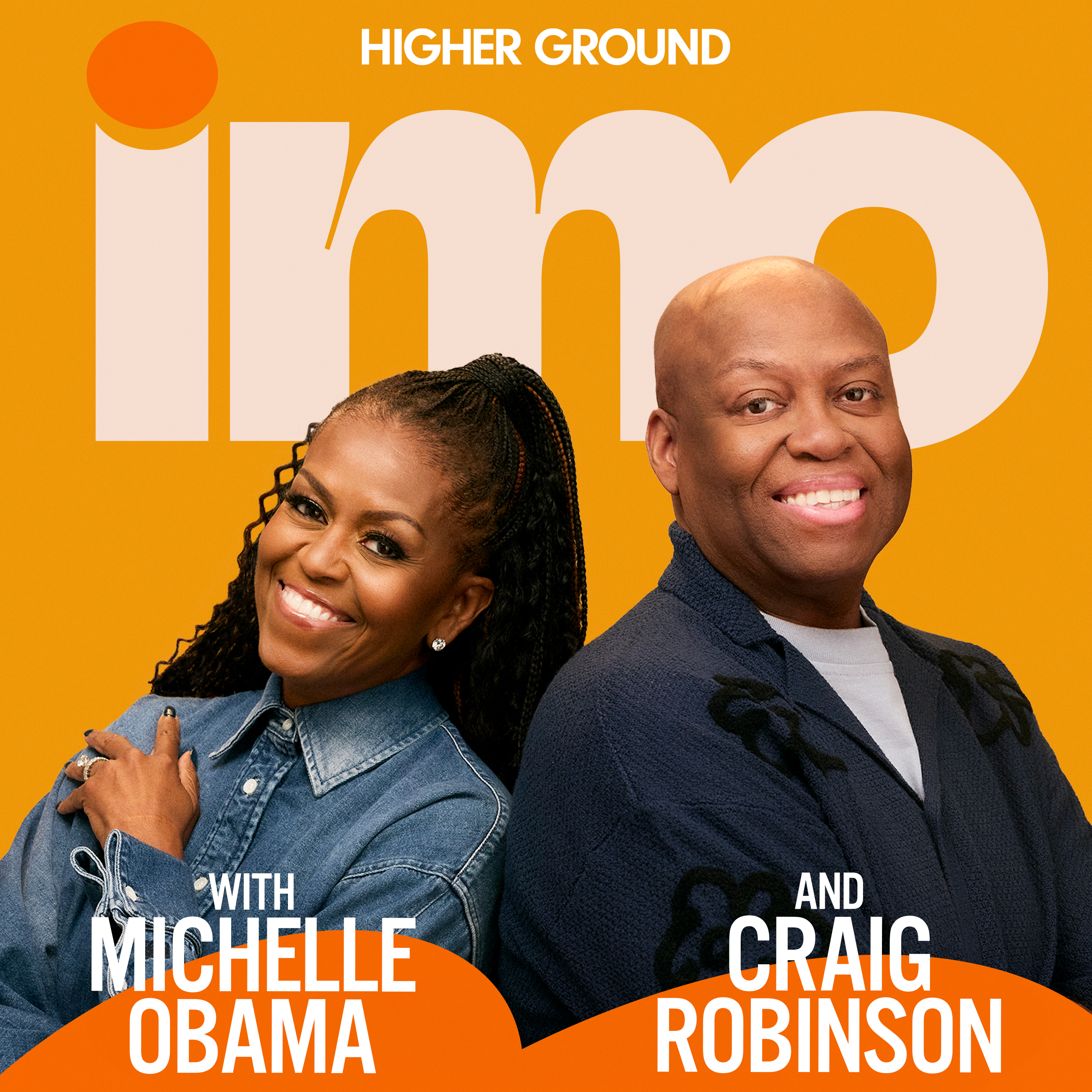
IMO with Michelle Obama and Craig Robinson
Change Your Relationship with Money with Steven Bartlett
00:51:42
Loading summary
Transcript126 lines
- [00:00]
Stephen Bartlett
I've never actually said this before, but when I got my student loan, I took half of it and I bet it on a football game.
- [00:08]
Michelle Obama
You know, one of the things.
- [00:09]
Craig Robinson
What game? Hang on, what game?
- [00:11]
Stephen Bartlett
Honestly, it wasn't even a good game. It wasn't a good game, but it was just. It was Stokes. I didn't even like the team.
- [00:23]
Michelle Obama
This episode of IMO is brought to you by Progressive Insurance.
- [00:29]
Craig Robinson
Hello.
- [00:30]
Michelle Obama
Hey, there.
- [00:30]
Craig Robinson
How you doing?
- [00:32]
Michelle Obama
I'm great. We got a good one today.
- [00:34]
Craig Robinson
Oh, I cannot wait.
- [00:35]
Michelle Obama
I cannot wait. I'm very excited to talk to our guest. But to kick it off, we were gonna. Because we're gonna be talking about finance, finances. We're gonna be talking about how do you manage money? These economic times are really a little scary out there. And I know a lot of people have questions, but we were talking before the show just trying to think of how did we think about money when we were growing up? And we talked a little bit about this in some of our other podcasts, but we've said that we grew up pretty. I would say we grew up poor.
- [01:20]
Craig Robinson
Right. But poor. But not knowing we were poor, that was a real testament to our parents because we didn't have disposable income and they were managing paycheck by paycheck, but we didn't know that. And when Stephen gets out here, we should talk about how dad taught us the value of money, you know? Cause that was a real great lesson.
- [01:50]
Michelle Obama
But our father worked as a. He was a city worker in. For the city of Chicago. Worked in the water filtration plant. Blue collar worker. He was the sole breadwinner because he and mom made a decision for her to stay home so that she'd be able to be an involved and engaged parent in our school, which she was. She was very active in the pta. So we sort of had that typical come. Oh, we came home for lunch every day. So him being the sole breadwinner afforded her the luxury of being more engaged in our upbringing. But it meant that we were, you.
- [02:32]
Craig Robinson
Know, we had to sacrifice.
- [02:34]
Michelle Obama
We had to sacrifice a lot. And it just. Sacrifice just became a habit. You know, little things like, you know, Christmas was, you got three gifts, you got.
- [02:44]
Craig Robinson
You could ask for three gifts, you.
- [02:46]
Michelle Obama
Could ask for three things. And another thing dad focused on was never stretching or using credit.
- [02:57]
Craig Robinson
Yeah, right. He paid his bills at the end of the month. He never carried balances on his credit cards. He never bought things on time. I mean, he never used the system.
- [03:10]
Michelle Obama
That when you say bought things on time, what do you mean by that?
- [03:13]
Craig Robinson
So back in the day, you could buy things on layaway, similar to what you can do now, but it was called layaway. So you'd put $20 down on a $100 couch, and then you'd pay $5, and eventually you'd own that. He thought that was like quicksand. That was financial quicksand to him. And so he never did that. He never carried a balance on his credit cards. And I think the only time he actually went into debt was when it was time for us to go to college, when it was time for me to go to college, because there was no way we were gonna afford that. So you had to take out a loan that he couldn't pay back at the end of the month.
- [03:57]
Michelle Obama
But so we got in the habit of not really asking for things because we didn't want to put our parents in a bad situation. But that meant that, for example, you almost didn't go to Princeton.
- [04:10]
Craig Robinson
I almost chose not to go because it wasn't a full scholarship to pay for everything.
- [04:16]
Michelle Obama
You had gotten a full scholarship to.
- [04:18]
Craig Robinson
Another school, to other schools, and Princeton was, you know, you had to pay what you could afford. And they told me, wouldn't it have.
- [04:26]
Michelle Obama
Been nice if we had gone to school when there was blind admissions, financial admissions? Can you imagine our. Our. Our parents being working class people and that. That a school that rich requiring them to have a financial contribution to the point that they went into debt when a school like Princeton had such a huge endowment? That was. It's. It's amazing, But I don't want to digress.
- [04:52]
Craig Robinson
I know. Let's not dig. But you know what? This would be a good time to bring Stephen Bartlett out so that we can continue this conversation with him, because his background was very much like ours. So. Stephen Bartlett is an entrepreneur and one of the most influential voices in modern business and media. He's the host and creator behind the widely popular podcast, the Diary of a CEO. And what a great name for a podcast. I want to find out how he came up with that. He's the founder of a media investment company, Flight Story, a leading media and publishing company, and the Flight Story Fund, a global investment fund. Stephen, come on out, my friend.
- [05:37]
Michelle Obama
So good to have you.
- [05:39]
Craig Robinson
Good to have you here, man. Oh, good to have you here.
- [05:44]
Stephen Bartlett
Manchester.
- [05:46]
Michelle Obama
For Michelle. Please, please. I know I have to give permission to call me by my name when he's calling me me. She can't be Mrs. Obama.
- [05:57]
Craig Robinson
We've called her Mish since she was a baby. Yes, it was Michelle. If you heard my mom say Michelle, she was about to get into something that she shouldn't. You know, I used to live in Rush Home, Stephen.
- [06:11]
Stephen Bartlett
Did you?
- [06:11]
Craig Robinson
Actually, when I live. When I lived in Manchester, I lived in Rush Home. We played our game. I played professionally overseas in Manchester, England, for the Manchester Giants.
- [06:20]
Michelle Obama
Basketball. Basketball.
- [06:22]
Craig Robinson
Basketball. Not football. But I lived in Rush Home and we played in Stockport.
- [06:27]
Stephen Bartlett
Oh, wow. That's my area. It's my old stomping ground.
- [06:30]
Craig Robinson
Love it. I'm looking forward to getting back there. I haven't been back there since I played.
- [06:34]
Stephen Bartlett
So are you a football fan?
- [06:35]
Craig Robinson
I am. So I lived right by Manchester City, so that's all I knew. I know. And you're a United fan, but.
- [06:42]
Michelle Obama
Oh, and Stevens went dark.
- [06:46]
Craig Robinson
It's rivalry.
- [06:47]
Michelle Obama
Oh, and he started to scratch. Why did I ask?
- [06:51]
Craig Robinson
It was going so nicely until.
- [06:53]
Michelle Obama
I know you got there.
- [06:56]
Craig Robinson
Oh, man.
- [06:57]
Michelle Obama
Well, beautiful place, though.
- [06:59]
Stephen Bartlett
It's a beautiful place.
- [07:00]
Craig Robinson
Yeah, it's terrific. Terrific.
- [07:02]
Michelle Obama
Well, it's great to have you here. Just excited to hear about all your success, the podcast, your books, your advice, and we need people like you at this time. You know, somebody so young who has such knowledge. But, you know, the thing that is really unusual, you know, probably not to us, is your background, your upbringing, you know, where you came from, how you. You know, how you wound up here. And I, we were hoping to start with you telling us just something about you, how you grew up and how you came to be in this spot, first and foremost.
- [07:45]
Stephen Bartlett
Thank you for having me. It's a real honor in so many ways. But to answer your question, I was born in Botswana in Africa. Moved to the UK when we were very, very young. There's four of us, four siblings in my family. My mother's Nigerian. My dad is English. And this is important context because, you know, being of having two parents with two different ethnicities plays a role in shaping how you understand yourself. We moved to the southwest of the UK in a place called Plymouth, which was predominantly white. In fact, I didn't another black family in the area. And it's interesting listening to your upbringing where you had this healthy, stable, secure attachment to money. I think I very much had the opposite, because in life generally, we understand the value of things by the context in which we see them. So if you go to, you know, they've done the studies. If you go to a restaurant and there's three steaks on the menu, we use the expensive one and the cheapest one to make the decision that the middle one is the right one. And if you remove one option, we make a different decision. It's context that helps us to put value in perspective. And in the case of my life, we were the black family in a middle class area that ended up losing our money, remaining in the middle class area, becoming the poorest family in the area and the black family in the area. So at a very young age, I internalized this belief that I was less than. And I believed, which I heard you talking about money a second ago, I believed that money was the antagonist in my life. So it, you know, I always think that the things that invalidate us when we're younger end up being the things we seek validation from when we're older. And for me, money was one of those things. I had a unhealthy relationship with it because it was the reason why my parents were screaming. It was the reason why I had so much shame every day going to school. It was the reason why I didn't tell my friends where I lived. Because if they saw my dilapidated house and the smashed windows and the high grass, it was already hard enough to fit in and that would just exacerbate the massive further. So that was my context.
- [09:29]
Michelle Obama
So why were things so unstable financially?
- [09:33]
Stephen Bartlett
Yeah, so my dad had a good job and we'd moved into this area and my mother got into business and she left school when she was extremely young in Nigeria, 5, 7, 10 years old, roughly. She didn't get an education. So when she. And in Africa, business is in my mother's village is put out a store and sell everything you have. Business in the UK was different. So she really, really struggled to adapt. She. She hadn't learned to read or write. So that was an exacerbating factor. And all of that meant that the family money was invested into the businesses. The businesses failed. They failed, they failed, they failed, they failed. And that kind of took the money out of our home. And it was kind of a downward spiral from there until properties. We had our stuff repossessed at one point and it was a downward spiral from there. As I was listening to you talk backstage about your relationship with money and the lessons that your father taught you, I was thinking to myself, money is this other person in the room for our entire childhood. And we're developing, just like we're developing a relationship with people and other things, we're developing this really clear, explicit, emotional relationship with money. In the same way that we talk about attachment styles, we say you're an anxious attachment style or you're secure or you're avoidant. In my household, I learned to be both anxious and avoidant with money. And you can see that in me as an adult, avoiding bills, hiding bills, not looking at my banking app. Because as a young age, my relationship with money, which is also kind of a proxy for your relationship with yourself, was that this person, the second person in the room, which I'm going to call money, isn't around enough and its absence is making me feel insecure.
- [11:14]
Michelle Obama
Yeah.
- [11:14]
Stephen Bartlett
And this is, and I also, this is a bit more sort of esoteric. But when you think about the concept of wealth and money, it isn't something that our prehistoric human brain knows anything about. We had tribes. We all, we didn't have wealth. It was what you could carry back then. We had food, we had love, we had tribe, we had status. That was a really important thing. But we shared. We shared. But money is this alien thing to the brain that we still have today. So it's actually just an emotional proxy for how you feel about yourself and that early context of love, attachment, abundance. And I think if you see it as a person in the room and then you ask yourself the question, how did that person treat me growing up? Did I have that secure attachment to it? Were they absent sometimes? Was there a longingness to be closer to them? Then it helps you to understand the relationship you have today.
- [12:01]
Craig Robinson
Well, this is a good opportunity to share some of this knowledge with our listeners. We've got a question.
- [12:09]
Michelle Obama
Hi, Michelle and Craig. It feels like debt is just an endless abyss. I'm in my 40s now and I find myself still living paycheck to paycheck. What do wealthy people know that I don't? What did you do to educate your children on setting up for financial success in the kind of world we live in today? Thank you so much, April.
- [12:36]
Craig Robinson
Let's start by looking at the first part about debt. Right? How do people end up in debt.
- [12:45]
Stephen Bartlett
For many, many reasons? The reason why I ended up in debt was because of my unhealthy relationship with money. Essentially, my spending is very, very simple. My spending was higher than my revenue. But I also didn't understand this thing called credit because nobody had told me I didn't have financial literacy at all when I was 18 years old and I started working in call centers and I got my own money when I got my paycheck, yeah, I would go and buy a plasma screen tv, the biggest one I could possibly buy, and get this, I'd put the plasma TV up like that. I couldn't afford cable to actually and Then a week later, because I couldn't pay my rent and I couldn't feed myself, I would sell the plasma TV.
- [13:25]
Michelle Obama
And that would be a cycle.
- [13:27]
Stephen Bartlett
This was a cycle.
- [13:28]
Michelle Obama
Wow.
- [13:29]
Stephen Bartlett
I had all kinds of really unhealthy, toxic relationships with this thing called money. I've never actually said this before, but when I got my student loan, I took half of it and I bet it on a football game.
- [13:43]
Michelle Obama
You know, one of the things.
- [13:44]
Craig Robinson
What game? Hang on, what game?
- [13:46]
Stephen Bartlett
Honestly, it wasn't even a good game. It wasn't a good game, but it was just. It was Stokes. I didn't even like the team, but it was. I was. So it goes back to what I said earlier. The thing that invalidates you when you're younger is the thing you end up seeking validation from when you're older. So the dopamine hit I could have got from winning, would have filled some kind of hole in my insecurities.
- [14:06]
Michelle Obama
So one of the things that I talked to, because, you know, I talked to a lot of young students, college bound students, students in school. And, you know, and I saw this, I was an associate dean at the University of Chicago. I had the. My own. And what you know, is like early debt starts right at that college age. Because, you know, not only do a lot of kids, kids of color, kids from working class backgrounds that have never had money, you go to school, you get that loan check that's supposed to go to paying for books and food and all those things. And because nobody's taught you how to use it, you and you do not have a healthy relationship with it. We see over and over again kids who do exactly what you did, or they do something even more magnanimous. They take the money and try to help their family by using it to pay an electric bill or to buy shoes for a kid. And time and time again, one of the most powerful things I tell young people is that they have to be wary of that. That, you know, that's gonna be an instinct that they have when they get a large check is to use it. And then, you know, I try to remind them, if you don't have that money for they don't give you more money for books, you still owe the money. And now you won't be able to get the books and you'll be in debt and you won't have anything to show for it. That I'm so glad you shared that because that occurs among so many young people who are trying to figure out how to manage their money in college. And to top it off. They're handed credit cards.
- [15:44]
Stephen Bartlett
Oh, my.
- [15:45]
Michelle Obama
You know, and I don't know if you went through that, too. At.
- [15:49]
Stephen Bartlett
I had destroyed my credit rating by the time that I figured out what it was. No one told me what a credit score was. And I had four credit cards that I'd been given, because when you're a student, they just want to give you these cards. I went out, I spent the money, and then someone explained to me that you have to pay it back.
- [16:05]
Michelle Obama
Oh, at 25% interest. What's that?
- [16:09]
Stephen Bartlett
I had no money. I had no money. And because I then dropped out of university, my parents didn't want to speak to me because that's complicated. And I was the only child in my family that left university. So I'm hundreds of miles away from home. I have managed to achieve these two CCJs, which is a county court judgment where the court comes for you because you've not paid any debts back. I've dropped out of university. I'm shoplifting food to feed myself at this point. Can't call my parents and ask them for anything. Not that they would be able to help me in that situation anyway. And I've destroyed this credit rating that apparently is really important and that nobody told me was critical. And that's the situation I found myself in at 18, 19 years old.
- [16:52]
Craig Robinson
This segment is brought to you by Progressive Insurance, where progress isn't just in the brand's name. It's what they stand for. You know, Meesh, the hardest part that Kelly and I encountered when we got our first home was coming up with the down payment. And, you know, we waited until we got every penny of it because we didn't want to take any chances.
- [17:15]
Michelle Obama
Yeah, yeah. You know, I hear that, Barack, and I think we took it at the right pace. But still, saving for a down payment is a pretty exhaustive process, and it can be a limit to owning that first home.
- [17:33]
Craig Robinson
Right, right. Home ownership is more than just buying a house. It's about building stability, creating opportunities, and changing the lives of future generations. That's where Progressive comes in. Making homeownership more accessible and achievable for those who need it most. With a down payment assistance program like the Up Payment Program and Progressive's contribution of over $7 million in 2024 toward housing initiatives, Progressive is offering the resources to turn your dream of owning a home into a reality. Home ownership isn't just a milestone. It can be a first in their family opportunity for financial prosperity. If you're ready to take that first step, visit progressive.com OpenTheHouse because when it comes to building wealth and securing your future, Progressive Insurance is here to help you open the door. I want to hear what was the point where you realized that this other person or this relationship with money, you had to change direction? Because at some point you figured it out. And we were lucky enough that, you know, our father was so worried about debt that he just hammered it into us. And so I want you. While you're thinking of this question, I want to tell the story of how I learned the value of money. Because as Meesh had talked, we went to a school. It was more working class than middle class, so we didn't feel less than at all. We felt like it's just stuff you can't get when you're in this position. But because we had lunch every day, people came to our house and ate lunch with us from school. We would get the occasional pizza on Friday for good report cards. One of my friends said, hey, Craig, are you rich? And he hit me with that. And I was like, well, I've got food to eat. We get pizza every now and then. We go to the drive in movie once in a while. Maybe I am rich. I went home and I said to dad, hey, dad, are we rich? And he said, do you think we're rich? And I went through the whole thing. I was like, well, maybe we are. He said, let's talk about this tomorrow. I'm getting paid. He got his paycheck the next day, went and cashed it, the whole thing, and laid it out on the bed. And it had. Who knows what it was, but let's call it $500. And he laid it out in 20s, tens, fives and ones. And I walked in there and I said, oh, we are rich. And he was like, now, wait a minute, wait a minute now. He said, you have to pay some bills. And I was like, oh, yeah, okay. And he said, the first thing you do, he took $20. He said, you pay yourself. You put this in your savings account. And I was like, oh, okay. And then he said, and rent is this. And he took some money out, and he said, now we've got a nice car. Gotta pay for that.
- [21:12]
Michelle Obama
And he went down the bills, and.
- [21:13]
Craig Robinson
He went down all the bills till he got to maybe there was $30 left. And I was like, yeah, baby, we are $30. We're getting a quarter for our allowance, so $30 seems like a lot. And then he was like, ah, no, no, we have pizza on Friday every now and then. And he took Some out. And he got to the point where it was like $10 left. And he said, this gotta last me the whole two weeks till I get paid again. And it was a blessing is all I can say, because I realized that. So you can have a job and you can have money, but it doesn't necessarily mean you're rich, number one. And number two, the most important thing he said was, pay yourself first. And I have been doing that ever since. And I don't know if Misha's been doing it, but I always take a little bit and put it away. And it was the best thing that he could do for us, which gave us that secure relationship you're talking about. And I hadn't heard it put that way, but I've always been secure. And even when I graduated from school and I'm working in finance myself and I'm making more money than I ever needed, I'm still leery of not overspending.
- [22:46]
Stephen Bartlett
Interesting. Well, I wish all parents did that, because I was thinking about what's actually going on there. And what he did is he pulled back the curtain on how the system works. He gave you, like, certainty through information on how this thing called money operates. The opposite approach is what I experienced, which is total uncertainty. And there's nothing humans hate more than uncertainty, I. E. Money was this person in my life that was stood behind the curtain, wreaking havoc. I didn't know who he was or who she. Or what she was doing, but I could see the consequences of her, and I didn't have a relationship with her. Your dad pulled back the curtain and gave you a direct relationship with money, as if you think of it like a person and showed you how they operate, how they think and what they do.
- [23:29]
Craig Robinson
Right.
- [23:30]
Stephen Bartlett
And that. That kills the uncertainty so you can be at peace with this thing. Whereas I. I didn't know. I could just see the downstream consequences in my everyday life. I could see the argument. I could see the stress.
- [23:42]
Michelle Obama
Steven, when did you start, right. Sizing your relationship with money, and how did you do it?
- [23:47]
Stephen Bartlett
There's a few things that sprung to mind when you ask the question. The first is at 18 years old, when I dropped out of university, my friend had given me this diary. And I'm alone in this room in a place called Mosside Rushholm in Manchester. And I write in the first page of my diary my goals before I'm 25 years old. Number one, I'm gonna buy a Range Rover Sport, right? Bear in mind, I'm stealing Chicago Town Pizzas to Feed myself at this point. Number two, I'm gonna be a multimillionaire. Number three, I'm gonna get a six pack. And number four, I'm gonna get a girlfriend. That was my entire orientation in life. And I thought if I achieved these four things, I would achieve happiness. And again, if we look at this list, seeing the insecurity in my mother's and father's relationship, that's why probably number four was there. I was always the smallest of my siblings. I was always a small kid growing up as well. I had a bit of a growth sports, but I couldn't drive. All of my rich white friends could drive. I was the youngest in my year, roughly. So I got my driving license. I would be eligible for a driving license latest, if I could even afford one. So I'm always in the back of my friend's car and of course, the issue of money. So my list was a list of my own insecurities. And then I spent the next five years making sure that by the age of 25, I ticked off everything on the list. And I did. And upon the day, when I bought the Range Rover as my first car and I had a girlfriend and I had worked on my body and all these things, I felt a tremendous sense of anticlimax because someone had lied to me and the person that had lied to me was myself and my own insecurities. So sometimes in life it's not a popular answer, but you have to have your BS fail you for you to realize that it's BS at all. And sometimes our own self story is so strong and our insecurities are so strong that it's not until we confront them by accomplishing the thing it told us to confront that we realize that it was lying to us the whole time. And at that point I could reorientate my life towards something else and I could say what actually matters. What I found really interesting about her question was my brain has this orientation that I've learned over time, which is to focus on the other part of debt and wealth, which is wealth creation, which is how can I improve my financial situation by first increasing my income and the second part of that is reducing my overheads. And I want to say this because I don't think enough people are talking about it. And I think this is a great platform to talk about it. The world in front of us is changing extremely quickly at the moment. This thing called artificial intelligence, I think is going to have a profound impact on so many industries, so many lives in so many ways I spend so much of my time obsessing about this. It also presents us with this generational opportunity to build a new type of wealth and to build wealth. And that opportunity will be captured as it was across history from the Industrial revolution to the, the dot com boom, by those that focus on filling that first bucket at this moment in time. And that bucket is of knowledge and skills. And my, the other sort of really important point of context in my life is my parents weren't around, so my mother was running a restaurant which went from afternoon till 2, 3am in the morning. My dad would leave his job, but when I was about 10 years old and he would just go straight to her restaurant, help her clean up and everything. So by about 10, when I woke up, they weren't there. When I went to bed, they weren't there. If you imagine the context there, you've got a kid that's desperate for stuff to fit in, then you've got this void of independence. And in that void of independence the kid runs experiments, he starts selling things. He starts trying to make a website so he can sell Japanese clothes to the UK market and fails at that. He, he finds things in the house and goes and sells them on the playground. And then he gets the full feedback loop of getting money in his hands and going, oh, now I can buy things. I, I got the feedback because there was this void of independence. It's, it built this wealth of evidence in my head and I think confidence, self belief, and really any belief is a question of what stack of irrefutable evidence is greatest in your mind. And for me, my parents, I think somewhat accidentally taught me that you can have an idea and then you, there's nothing between you and the execution and realization of that idea. This was this parasitic, life changing realization that I was given at 14 years old. You can have an idea and then you can make the idea a reality. I didn't, I'm not good at maths, I still can't spell, was never particularly good in school. But this one macro tailwind of this thing they call self belief, which came from this void of independence and the ability for me to fail means that you persevere in the face of not having money or not having a degree to the point that you get feedback and feedback becomes knowledge and knowledge becomes your power in life.
- [28:19]
Michelle Obama
Unless there are some deep inequities in your life, in your community. Because when I hear you talk, Stephen, I hear the story of every other black and brown kid in the United States of America in Inner cities, you know, they are you in so many ways. You know, not connecting with school in any major way. Whip smart, you know, hungry, capable, probably living in a lot of dysfunction, unparented in many ways. And what do they do? They do exactly what you did. But they're doing it with illegal substances and gangs. But they're trying to do the same thing. Use their knowledge, acquire it. But they're doing it in a way that puts them in jail and changes the trajectory of their lives forever. But you're the exact same kid.
- [29:14]
Stephen Bartlett
It crossed my mind.
- [29:15]
Michelle Obama
Yeah.
- [29:16]
Stephen Bartlett
Yeah, it crosses your mind. And I now fully understand how people end up making those kinds of decisions. Because when you feel the pain in your stomach of not eating for a couple of days and you can't see a clear path out of the situation you're in, you weigh up your options. And if you have a clear understanding of consequence, like I did. Thank God.
- [29:40]
Michelle Obama
Thank God. Yeah.
- [29:41]
Stephen Bartlett
You make a different set of decisions, but I have complete empathy and understanding for how one ends up choosing another path, especially if they don't have role models around them, which is a form of consequence.
- [29:51]
Michelle Obama
Yeah. And I wish we were having those kind of conversations. I wish, you know, not to make this political, but as people think about criminal justice and what young kids are doing to survive and what motivates they are so deeply penalized for because they're in a different socioeconomic and life structure, but they're challenged by the same things. They're trying to work their way out because they don't have schools that speak to them, they don't have parents that can help guide them. They are as capable and able as you are, but their chances are now completely wiped out because they're felons, they're convicts. They don't get a second chance. They don't have the opportunity to turn that intellect into power in so many ways. And I just want our audience here to be thinking about that as we think about rehabilitation and how we work with young men in particular, because we're losing a lot of them, but so many of them are you, which means that they could be you with a little extra attention and help and understanding and compassion.
- [31:10]
Stephen Bartlett
It also makes me realize as you speak, how important the safety nets were that I didn't even realize were there. And in the uk, we have an nhs, we have a healthcare system, and.
- [31:19]
Michelle Obama
We are eliminating them here in this country, sadly, day by day, which is.
- [31:23]
Stephen Bartlett
Just conceivable to me. Yeah, it's like growing up in the uk, it's inconceivable that I could get sick and it could cost me money or make me bankrupt because I got sick. And if you think about my story, there were so many safety nets. I had a house with parents that I could have run back to. That creates a psychological safety that I could retreat backwards. We also have benefits in the uk and I remember the day where I printed off the we call it job seekers allowance forms, which would have given me some money. I never submitted them, but I was at a point where I'm weighing up my options here. And then the safety net of our healthcare, which is I did know that I was playing on a solid foundation and that allows you to take those risks.
- [32:00]
Michelle Obama
Yeah, yeah.
- [32:00]
Stephen Bartlett
You know.
- [32:09]
Craig Robinson
We'Re happy to team up with Progressive Insurance for this episode. Buying your first home is a huge milestone, but it can feel like a lot to navigate. From budgeting for a down payment to navigating the many ins and outs of homeownership, there's a lot to consider. Progressive Insurance is here with resources to help make the process easier so you can feel confident taking the first step. With Progressive's up payment program, first generation home buyers can move closer to the dream of home ownership and building generational wealth. Personally, I wish I had that system in place when I bought my first home. Attaining home ownership starts with knowledge. Get expert tools and resources@progressive.com OpenTheHouse.
- [33:06]
Stephen Bartlett
The second thing I was thinking about is something I learned. The question said, what do wealthy people know that I don't know? They know something about sweating the small stuff and the compounding returns you get from that. The richest investor in the world, I think he's the fourth richest person on earth, called Warren Buffett says that compounding returns is the eighth wonder of the world. Now, compounding returns are essentially what happens when you have an obsessive focus on small marginal improvements in our money, in our finances, in our savings, and how that then starts to build over time. The reason why it's eighth wonder of the world and is it's slow, then it's fast. If I think about how my podcast grew for the first three years, no one's listening. And then it's incredibly fast. When I think about how my investments and my net worth grew, it was slow and incredibly fast. When you think about something like your teeth, if you don't brush your teeth today, fine. No one's really gonna know. If you don't brush your teeth every day this week, you're probably still gonna get away with it. But if you don't Brush your teeth for five years straight, you're in a dental chair and they're ripping the molars out of your mouth. The same applies for your skin and your hair. Your relate your relationships with others and your relationship with money. This idea of out obsessing others on the small stuff is for me is much of the game of both business life, money, relationships. And we have like two phrases in my company that are the most popular. The first is failure, which I talked about. And the second is 1%. It's, you know, you can stand at the foot of Mount Everest and look up and you'll be daunted and anxious and intimidated, so you'll bury your head in the sand or you can say to yourself, how do I move this one pebble in front of me? And actually when I, when I studied how great things are built, how people become wealthy like Warren Buffett, it's not by making some gargantuan intelligent financial decision that changed their life. Great businesses aren't built by some great stroke of innovation. You feel like you are going somewhere and that is a motivating force. So all. And the last point I'll add to this is in business, in life and in our finances, when we set about to accomplish great things to climb the Mount Everest, we experience that cognitive dissonance, that psychological discomfort which often forces us into a form of paralysis. But if we break it down into what is the small thing, what is the 1%, not only is that does that feel achievable, which starts that momentum, but that 1% really, really, really matters. It's ultimately why someone like Warren Buffett was able to be so successful outside of his. His other forms of privilege was because he started investing at 11, his pocket money 11 years old. And now by the age of 80, that compounding graph, which is slow, then it's fast, has compounded in its favor. The problem is we don't think the small things matter.
- [35:49]
Craig Robinson
And in addition to sorry mij. But in addition to not knowing that the small things matter, even if we are fortunate enough to have Stephen Bartlett sit here and tell us how to do it, we don't have the patience in this day and age of instant gratification of getting to the one month mark, let alone the three year mark, Right. How do we work at getting people to understand? You gotta give it time.
- [36:20]
Stephen Bartlett
I give them examples from their own life. This is why I always talk about people's teeth, because we all.
- [36:26]
Craig Robinson
That was a good one that hit me. I mean, I felt that.
- [36:30]
Stephen Bartlett
Didn't you when did it happen? So if we talk about the example I gave of 5 year tooth decay, when did it happen? It happened today. It happened today with a decision. And this is always the case with small things that is both easy to do and also easy not to do. In fact, every small decision in our lives, saving a dollar or not saving a dollar, brushing our teeth or not brushing your teeth. The problem with the small decisions is they are easy to do and easy not to do. So it almost has to become a, a somewhat religious belief in the power of compounding returns. But when you say like, what is the 1% gain that I can make today and can I make that again tomorrow? And how does that look when we zoom out on a graph over the course of five or ten years? It is profoundly pivotal.
- [37:11]
Michelle Obama
What does that look like for an 18 year old? You know, practically speaking, is an 18 year old going to college, coming out with debt. What are some of the first steps of thinking or action that they need to take to be to begin to feel that compounding feeling what mistakes are young people making where they're not on that path.
- [37:41]
Stephen Bartlett
So as an 18 year old, your knowledge of course is gonna matter. So I would read 10 pages of a book a week, a place to start there and that will compound the books will get increasingly more difficult and increasingly more challenging as you get off to the races and you'll feel accomplished, you'll have that progress principle. You'll feel like you are making progress on skills. This is quite an interesting one because the thing that ends up making an 18 year old valuable in the economy and in the working market, and this is kind of paradoxical, isn't if they go and get common skills, crazy thing about life is it doesn't necessarily reward you for common skills, it rewards you for having a rare and complementary skill stack. So when we think about an entrepreneur, we think they have the skill of entrepreneurship. No, they have have 10 underlying skills which made them successful at entrepreneurship. And actually in life, the people that become number one in an industry aren't necessarily the best at any individual underlying skill, but they have the right set of rare and complementary skills. If you're training to be a lawyer at this moment, instead of tripling down on law, what I would highly advise you to do at that age is to think about the rare and complementary skill that this industry is going to value over the next 10 years, I would recommend that you go and do one semester or one course on large language models and artificial intelligence. Because the lawyer that has that isn't paid the same as the lawyer that's even 10% better at law. They are paid hundreds of percent more in terms of value if they have rare and complimentary. The best football player in the world, Cristiano Ronaldo, that played at Manchester United, you'll know he's not the best at any individual skill. He's not the best runner, not the best penalty taker, not the best. I'd go on and on and on. He's the best player in the world. The reason for that is he has the right set of rare and complimentary skills that aren't often found in one person. So again, going back to this point of skills, I would tell April to think about the rare skill that's going to be complimentary that her industry values and start compounding there. Number three was network. So this is every conversation you have. You don't realize at 18 years old that every conversation is a seed you're planting that may blossom in the next five, 10, 20, 30 years. I had a conversation in a queue as a 14 year old with a guy and at 18, his dad hit me up four years later, having not spoken to me and was the first investor in my company. It was a conversation I had in a line. Every conversation is a seed that will blossom. So I would tell her, which is quite uncommon for young people these days, to get out and speak to people face to face and be polite on every interaction because you never know when those seeds blossom later. And fourth is your resources, which comes back to what we're saying about saving, you know, and learning a more secure relationship with, with your money. And the fifth is your reputation, which is simply just how you treat people. All of those things will compound over the next 5, 10, 15 years of your life. And they will be slow and then they will be fast. In the same way that I met that kid at 14 years old, Jay. And then all of a sudden I'm at his father's mansion in London and his father is saying to me, we want to give you your first, you know, $10,000 for your business. It's slow, then it's fast. Yeah, those that focus on what they can give and what they have to offer end up getting what they want. But those that focus on what they want never give enough to get what they want. And so it's this reframing and this is why I start with these five buckets, because they orientate you to becoming a valuable person in the world. And I believe that the downstream consequence of you building up your own Personal value, which is your own knowledge, your own skills, your own relationships, is wealth. So the orientation needs to be an internal locus of control. What can I control and how can I make the world reciprocate with value, which is what we end up calling wealth? And it's a slow approach, but in life, the slow way is the only way. And every fast way that they try and sell you on some course or some ad is actually the extremely fast way, because there's no such thing. So patience.
- [41:45]
Craig Robinson
Let's back up, though, because what I found really impactful in this discussion was when you said you've always had a tough relationship with money, and it didn't change until you changed how you felt about yourself. And so if April or anybody out there is in your shoes and they have already developed a poor relationship with money, how did you go about changing yourself? I would love to hear the strategy behind that because I think our listeners could. They could really benefit from that advice.
- [42:31]
Stephen Bartlett
Nearly every trauma, small t trauma that I overcame in my life actually came from writing, okay? Because writing is this remarkable thing where you put down how you acted, your behavior, how you feel onto a piece of paper, and it gives you this almost third person view from 30,000ft as to the patterns and cycles in your life. So when I think about my avoidance in romantic relationships, it wasn't until I started writing about it that I understood myself. And I deeply believe that self awareness is one of the other powerful approaches to overcoming some of these things. Because you can read as many books as you like, but you will never learn a thing until you start learning about yourself. And I don't think most people have a practice for this kind of sort of self awareness for me, for mine was writing, funnily enough, at the age of, I'm gonna say, 19, 20 years old, I made a commitment every single day. I would write a tweet and I would post it, and I thought it was a. You know, looking back on it, it was probably the single most important thing that helped me to develop my sort of personal wisdom, my self awareness, my articulation.
- [43:38]
Michelle Obama
I think about it in terms of sort of a simpler concept of we have to practice the behaviors that we want to. How we want to live out our lives. We have to practice who we want to be every day in these small, little incremental ways that if we want to be fearless, then we have to take those small, little, you know, fearless steps. You know, something as insignificant as if you're shy, you've gotta, you know, walk across the room and introduce yourself to somebody. You have to just push back that initial discomfort and fear and just do the little thing.
- [44:23]
Craig Robinson
So this is a perfect time because you're talking incremental, and you're talking incremental. But let's come up with a few takeaways that we can give April here, so if she's not taking notes, she can come away with something.
- [44:39]
Michelle Obama
Before we do that, one thing I do, I would love Stephen to address before we dive in is the current economic sort of instability that we're facing. Because that April's question is sort of, how do I do this? But. But today it's also, how do I do this now? I mean, you saw Brexit happen in your country, and what we're seeing happening today could impact all of the advice that we're giving, because if they're tariffs, if they're layoffs, if the economy is fundamentally changing, or maybe it doesn't change the advice that you give. But I want Stephen to sort of talk a little bit about what he sees happening here in the United States as compared to what you've seen at Brexit, and what folks need to be thinking about or how we need to be thinking differently about securing some kind of financial stability or just surviving in this climate.
- [45:50]
Stephen Bartlett
There's so many things that come to mind, I think, when the economy is uncertain, I think is the word that I'd use it both in the uk in other markets around the world, because we are in a global economy. I think you have to do a bit of a pre. Mortem. And what this means in terms of finances is you have to play out the scenario now that your income, your job, your financial situation was at risk, and you have to plan accordingly. A pre mortem, something we often do in business, where we imagine the business has failed, and then, then from today, we ask ourselves why it failed and what we should have done today to sort of preempt or anticipate that moment. So this is why having a bit of a rainy day fund is highly advisable. If you're able to build that up and in certain markets, start thinking a little bit about your spending. But the most important thing, and my unwavering bias, is always to try and advise people on wealth creation in these moments as well, because that is the life raft, that is optimism, and that is longevity. And it goes back to what we were saying earlier about how to make yourself valuable in an economy that is shifting quickly and is uncertain. And the great thing about the Internet now is we don't need the mentors that we once used, because in the palm of our hands, we have the entirety of the world's information. If we know it's there, we know the value of it, and we have the sort of proclivity or we have the mindset to lean in and to mess around. And that is the game. Just mess around. Learn. Use your weekends on YouTube. Learning stuff, self educate. In that regard. Education and information has been democratized, but we don't necessarily act like it has been. So that would be my overarching message for April.
- [47:28]
Michelle Obama
Yeah, that is a unique perspective. And it starts with believing that you can do it, because this is all at. Everyone has these tools at their fingertips, but if they don't believe that they deserve to be at that table or can be at that table, then they won't explore it.
- [47:48]
Stephen Bartlett
Amen. So I'd say to April to understand what her limiting beliefs are through journaling, and then to run an experiment of stepping over a couple of them and doing it anyway. And it's remarkable how that will just compound your life in the most unbelievable.
- [48:02]
Michelle Obama
Direction, because everybody's trying to get rich quick and fast and do it with the least friction possible. There isn't a level of patience because people are. Are trying to get stuff. And you learned at 23, you know, and I learned later in life, and Craig at later in life, it isn't the stuff that makes you happy. It is. It is. I just, you know, it's hard to say this with a straight face without people saying, well, great, you know, you lived in the White House. You, you know, you own this. You're wealthy people now. But I'm going back to, you know, the lessons that our father knew. I mean, this was the other advantage of being raised by our parents is like my father, as a working class black man on the south side of Chicago, knew that money was not the thing that would bring joy to our lives. We have to raise kids who understand that you have to build a life where you give more than you take in order to get anything in life. And I just want to emphasize that to April and everyone else listening. The real work is with self and then finding purpose that is bigger than self. And when good things come from that, and if those things look like financial gains, great. But the work will still bring the happiness that you think the money will bring.
- [49:33]
Craig Robinson
Good.
- [49:33]
Stephen Bartlett
Amen.
- [49:34]
Craig Robinson
Good.
- [49:35]
Michelle Obama
Are kids in your future?
- [49:36]
Stephen Bartlett
I hope so.
- [49:37]
Craig Robinson
Oh, here we go.
- [49:41]
Michelle Obama
I got it.
- [49:42]
Craig Robinson
Now, as your attorney, you don't have to ask questions.
- [49:45]
Stephen Bartlett
No, we start, we're trying now. So, yeah, we're trying to have kids. I hope to have many kids. I hope to have four children. But, you know, one would be amazing.
- [49:52]
Michelle Obama
How would you start off their sort of better relationship with money? What would you do differently?
- [50:00]
Stephen Bartlett
I would do exactly what your father did, which was I would invite money into the room and I'd sit them down at the table and I'd explain to my children exactly where money comes from, what it does in the world. And then also some of the great things that you said, Michelle, where you talked about actually what matters more than that, this idea of being a valuable person and cultivating worth and value in yourself so you can pour it out for other people.
- [50:28]
Craig Robinson
There's some good takeaways there. There's some good takeaways there for April. So, Steven, we cannot thank you enough for being here. You are. I'm sure you hear this all the time. You're wise beyond your years, clearly, but you have a tremendous way of communicating, points to folks like me and make me feel like I'm learning something with every word that comes out of your mouth. And that is truly a treat for us.
- [51:00]
Stephen Bartlett
Thank you for having me, by the way. It's such an incredible honor.
- [51:02]
Michelle Obama
Thank you for taking the time. I'm just so impressed with you and just grateful that your voice is out there. I think you're gonna help some folks in a major way beyond, you know, what you create and what you build. You're gonna change some lives. So just keep on keeping on.
- [51:20]
Stephen Bartlett
Thank you. And thank you for changing mine.
- [51:28]
Craig Robinson
Thanks again to our friends at Progressive Insurance for sponsoring this episode. For more information, visit progressive.com OpenTheHouse.