← IMO with Michelle Obama and Craig Robinson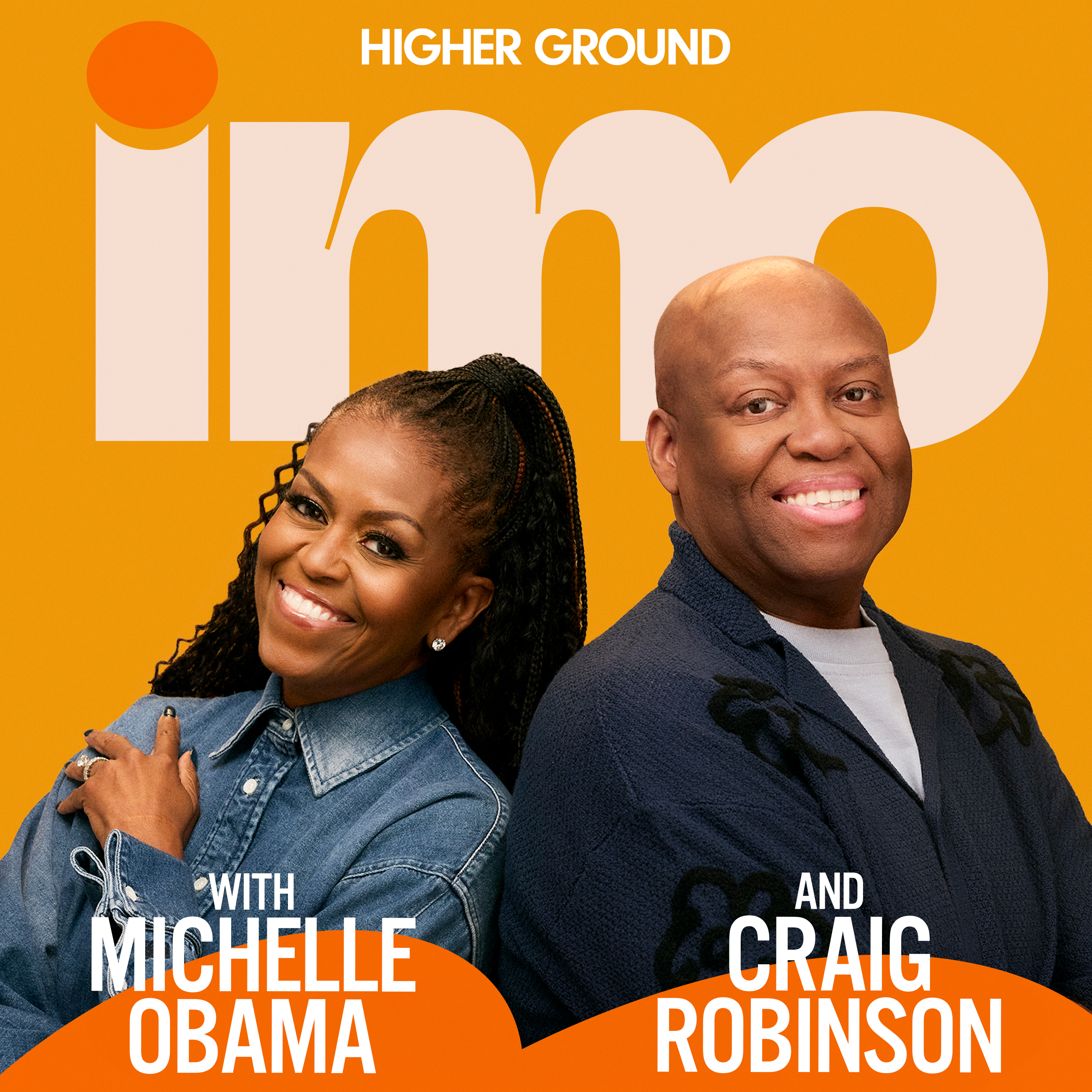
IMO with Michelle Obama and Craig Robinson
Disappointment Is the Key to Career Success with Keke Palmer
00:47:06
Loading summary
Transcript232 lines
- [00:00]
Keke Palmer
So I remember when I did a Kill and the Bee, everybody kept saying, this movie is going to be a hit. This movie's going to bust it out. This is you going to be a star. And, like, it's such an elusive thing, because what's the star? You know what I mean?
- [00:13]
Michelle Obama
And how old were you then?
- [00:14]
Keke Palmer
I was 11.
- [00:15]
Michelle Obama
11.
- [00:16]
Keke Palmer
And they were like, this is cute. And I'm like.
- [00:18]
Michelle Obama
It's like, really? Whatever that is Michael Jackson now, you.
- [00:21]
Keke Palmer
Know, like, it was, like, cute. And then the movie came in and did so terrible in the box office.
- [00:27]
Michelle Obama
Although that was one of my favorite movies.
- [00:29]
Keke Palmer
And then another thing about it is, like, over time, it grew to be my most popular film. And the thing that people most know me for, but I use that as an example in this is because our life is made up of many moments. It's not made like our legacy is not just that one thing we did. You know, it's the many things that we did. And so, like, Akilah Nabee was always there for people to come to and remember my work. And it grew over time amongst all. All the things I did. But I remember feeling in that moment being like, everybody lied to me. You know what I mean? I felt like when my mom told me I was gonna be a big girl at 5, I still didn't get big. I was like, now wait a minute.
- [01:04]
Michelle Obama
I'm still shorter than y'all. It sounds like big girl just means I can't be a baby.
- [01:09]
Keke Palmer
Exactly.
- [01:16]
Michelle Obama
This episode is brought to you by Pine Sol and Chase Home Lending.
- [01:22]
Craig Robinson
Well, hello.
- [01:23]
Michelle Obama
Hi, Craig.
- [01:24]
Craig Robinson
How are you?
- [01:25]
Michelle Obama
I'm great. How are you? Welcome.
- [01:27]
Craig Robinson
Thank you.
- [01:28]
Michelle Obama
To my world.
- [01:30]
Craig Robinson
Even though I didn't stay at your.
- [01:31]
Michelle Obama
Place last night, you know, and that you got a lot of nerve coming into D.C. and you didn't even stay with me.
- [01:36]
Craig Robinson
I know.
- [01:36]
Michelle Obama
Because you all trying to be Airbnb friendly.
- [01:40]
Craig Robinson
Let me tell you. I would normally stay with my sister, but this time I stayed at a really nice place.
- [01:49]
Michelle Obama
Okay.
- [01:50]
Craig Robinson
And I was gonna go for a walk this morning, but I was so excited about our guest today that I was preparing all morning long. And we're gonna be talking about dreams. And, you know, it made me think of when we were little. Did you have a dream? Did you know what you wanted to do?
- [02:06]
Michelle Obama
I thought I did. When I would be asked, probably around the age of 10, I thought I wanted to be a pediatrician.
- [02:16]
Craig Robinson
I remember.
- [02:16]
Michelle Obama
You remember?
- [02:17]
Craig Robinson
Oh, yeah. I was wondering if you remember. Cause I thought you were gonna say lawyer or something.
- [02:21]
Michelle Obama
No.
- [02:22]
Craig Robinson
But yes, you wanted to do.
- [02:23]
Michelle Obama
The lawyer didn't come until after I realized that I was not talented at chemistry or math. You know, that's what you can be, a 10. You can dream. It's like being a doctor is all about loving children and wanting to help. Because I love kids. I love little kids. And I thought, well, if I could do something that was professional and I could save lives. And then I went to high school, and chemistry kind of threw me forward. I didn't like science or math.
- [02:50]
Craig Robinson
So the problem with you and science is you didn't like it because you were a good student in every subject.
- [02:56]
Michelle Obama
I could get grades, but if I thought, if I'm going to pick a career where I have to do math and science for, like, eight years, it's like, nah, I'll do something else. But that was my dream. What about you?
- [03:08]
Craig Robinson
So I'm going to see if you remember this. The first thing I wanted to be wasn't an athlete, wasn't a coach. Well, kind of an athlete, but it was a race car driver. Do you remember that?
- [03:20]
Michelle Obama
Well, it was like race car. I was gonna say pilot.
- [03:23]
Craig Robinson
No, no, it wasn't pilot because folks weren't on planes like that back then. So I wanted to be a NASCAR or IndyCar driver.
- [03:36]
Michelle Obama
That's why you love Formula One so much.
- [03:38]
Craig Robinson
It is. But do you remember how I got talked out of it by Mrs. Thompson, my second grade teacher?
- [03:43]
Keke Palmer
No.
- [03:44]
Michelle Obama
What did she say?
- [03:45]
Craig Robinson
So it was one of those days in school where you have to. She's like, all right, I want everybody to stand up and say what you want to be when you grow up. And people were, like, standing up saying they wanted to be a teacher and they wanted to be a fireman and they wanted to be a policeman. She gets to me and I said, I want to be a race car driver. And she was like, craig Robertson with all those brains, all you want to do is be a race car driver. Oh, see, Ms. Thompson, she shamed me out of it.
- [04:11]
Michelle Obama
See, that's what I'm talking about.
- [04:12]
Craig Robinson
But as it turned out, you grow to be six. Six. You can't be a race car driver, Right?
- [04:16]
Michelle Obama
Yeah, but she didn't know that.
- [04:17]
Craig Robinson
She didn't know it. And the fact that.
- [04:20]
Michelle Obama
And she didn't also know that race car drivers make a pretty good living.
- [04:23]
Craig Robinson
Well, they make a good living, but, you know, they're mostly. Most of those guys have to be engineers. They have to be really good. To your point, math, science, figuring things out. So it.
- [04:34]
Michelle Obama
So Ms. Thompson didn't know what she was talking about.
- [04:36]
Craig Robinson
And I love Ms. Thompson. You know, she was one of my favorite teachers, but she talked me out of my first dream.
- [04:43]
Michelle Obama
And what grade was that?
- [04:45]
Craig Robinson
Second grade.
- [04:46]
Michelle Obama
See, this is what we're talking about. And that's the thing. One of the things I don't like about asking little kids, little bitty kids, what they want to be like, they would know.
- [04:56]
Craig Robinson
Right.
- [04:57]
Michelle Obama
And then shaming them. You know, I know. It's just sort of like, why do we do that to kids? Because that sets them up for thinking that life is predictable. You can pick things and plan it and it will actually happen. That's. And we're gonna talk about this more later. But I think that's one of the things that gets kids kind of stuck into thinking that they're supposed to know everything about their lives by the time they're 15. They're supposed to have it all figured out. And that just. It sets up the wrong kind of expectation for how life actually works.
- [05:30]
Craig Robinson
Absolutely. Absolutely. And it's okay to want to be three or four things too?
- [05:34]
Michelle Obama
Well, because over the course of your life, you may actually be three or four different things. But, yeah, dreams, you know, it's fun to dream, but I think that it's the balance of how do you let kids dream, but you don't pigeonhole them by their dreams? And I'm very careful about that. I mean, like with the girls. Malia is one of those interesting kids who, when she was 10, she said she wanted to write and direct, and she's doing that. Right. That's crazy. I always say that to Sasha, the younger one. That's unusual. It is rare that somebody decides at 10 that they want to do something and then they do it and they actually like it. But I still try not to pigeonhole them. Like, just because I say this to Malia. Just because you said you wanted to do that at 10, you're now an adult. You're trying this stuff on. You may like it, you may not. I just want to always give my kids an out, because if things don't work out right, I don't want to think that they're disappointing me because they said they were gonna do something when they were 10. It didn't turn out that way, or life happened. So I'm constantly trying to balance being enthusiastic about what they wanna do, but also say life. We don't know what's gonna happen in life, so we have to stay emotionally and mentally flexible so that when things go wrong or something changes or they learn something new about themselves that they have room to respond to that change.
- [07:15]
Craig Robinson
Yeah, well, you know, I always thought mom and dad did a terrific job because they never said you should be this or stick with this. They just said, whatever you decide, just work hard at it. Just work hard. It was like schoolwork. You don't have to get the best grades as long as you work hard. And typically, when you worked hard, you got the results you wanted. And that was. That was advice that I've carried with me through a bunch of different machinations and jobs. And I never set out to be a basketball player. But I digress. I want to bring out our guest, who is an Emmy award winning, multi hyphenate entertainer, an actress, a musical artist, a producer, a host of her own podcast, and an author. But most importantly, she is the favorite game show host of the Robinson household. Cause, you know, we play some Password in our house.
- [08:21]
Michelle Obama
You come to our house, family, you.
- [08:23]
Craig Robinson
Got to be ready to play some Password. So, Keke Palmer, will you please come on down?
- [08:30]
Keke Palmer
Oh, my gosh, you guys. How are you? Oh, my goodness. Good news. I could listen to you guys talk all day long.
- [08:39]
Craig Robinson
It's so good to see you. Thanks for being here.
- [08:42]
Keke Palmer
Hey, you too.
- [08:43]
Michelle Obama
You guys.
- [08:43]
Craig Robinson
Oh, my gosh.
- [08:44]
Keke Palmer
Thank you for having me on. And I just live for the Password play.
- [08:47]
Michelle Obama
All right.
- [08:47]
Keke Palmer
The password is. Yes.
- [08:49]
Michelle Obama
My glasses.
- [08:50]
Craig Robinson
When we play, we say it like that. And the password is you. You. You've done better than who is the guy? Alan L. Original.
- [09:01]
Keke Palmer
I love doing that show, and I just love that families can get together and have fun with it. Yeah, that's the thing. It's like, it's an opportunity for everybody to play, even the babies.
- [09:09]
Craig Robinson
So I was telling our producer, Natalie, there's only two we have at home. We have four kids, but only two at home.
- [09:16]
Keke Palmer
Okay.
- [09:17]
Craig Robinson
14 year old and a 12 year old. So sitting down and watching TV has gone by the wayside. But there's two things we watch. Password and Dateline.
- [09:27]
Keke Palmer
Okay. Cause Dateline gets you into it. That's like the perfect balance. You know, you can laugh and then you're like, oh, no, that man wasn't no good. I love that vibe.
- [09:36]
Craig Robinson
You can teach some life lessons with Dateline.
- [09:39]
Michelle Obama
I mean, just. Just listening to you read Keke's bio, it's like, girl, I would think you were 70 years old with all you've done in your life. Sometimes I do feel 70, you know? I mean, how did you. How have you packed so much into such a young life? You're, you know, you're A baby yourself.
- [10:00]
Keke Palmer
Oh, my gosh.
- [10:00]
Michelle Obama
Thank you so much. And you have done so much in such a short period of time, girl, I'm so proud of you. Just watching you just do your thing. How do you manage all of that?
- [10:11]
Keke Palmer
I think it's so much of what when you guys were talking about dreams, knowing your dream as a kid and then how people can help kids, nurture them, is that when I told my parents I wanted to entertain, we started going on auditions and stuff. There was never a ceiling. They always encouraged and said there was more that I could do. There was never a feeling that I had. Well, because I started with acting. That's all I had to stick with. You know, if I wanted to try singing and focus on that, I could. If I wanted to try hosting, if I wanted to do less film and TV and maybe do more theater, you know, it was always. Or even community stuff. You know, I never felt like I had to just abandon any one thing to follow my dreams. It all was rooted in being of service to my community, in the ways that felt most natural to me. And so I really loved hearing you guys talk about that, because I think that is why I'm able to do all the things that I do. I think a lot of people have multiple. Most people, everybody has multiple gifts and things they want to offer. But like y'all was saying, sometimes people make them believe that it's that whole jack of all trades, master of none.
- [11:11]
Michelle Obama
Yeah. Yeah.
- [11:12]
Keke Palmer
You know, but really, it's jack of all trades, master of none is often better than a master of one.
- [11:16]
Michelle Obama
One. Yeah. Yeah.
- [11:17]
Keke Palmer
And so I think my mom, my dad, my family saying, okay, we with you. Let's do it.
- [11:23]
Michelle Obama
All right. Let's give this a shot.
- [11:23]
Keke Palmer
It's what made me be able to do it.
- [11:25]
Michelle Obama
Do you think about the wisdom of their parenting? What do you think now about the way your parents sort of guided you?
- [11:37]
Keke Palmer
I think in the beginning, I was kind of, like, as a teenager, in my early 20s, it was kind of like, did I like my parents? Yeah.
- [11:42]
Michelle Obama
Real, real.
- [11:43]
Keke Palmer
And then I was like, girl, everybody go. I remember my dad had this talk with me where he was like, okay, so I didn't do a lot of things. Right. I'm sorry that you didn't like this. I'm sorry that you didn't like that. But now you're a grown woman.
- [11:55]
Craig Robinson
Mm.
- [11:55]
Keke Palmer
So now what are you gonna do with that? Are you gonna be mad at me forever?
- [11:59]
Michelle Obama
Yeah.
- [11:59]
Keke Palmer
Or are you gonna move forward and take matters into your own hands?
- [12:02]
Michelle Obama
See, now, now that's Chicago right now.
- [12:04]
Keke Palmer
That is Chicago to the man. He was like.
- [12:05]
Michelle Obama
I mean, everybody's parents did something wrong. He was kinda like, okay, girl, that sounds just like our mom who's like, I don't understand these kids blaming their parents. It's like, well, you think their parents didn't go through something? I mean, there's just a. And we talked about. Cause we from Illinois.
- [12:22]
Keke Palmer
Okay.
- [12:23]
Michelle Obama
And Keke, she's sort of almost from.
- [12:26]
Keke Palmer
Every time I say Robbins, people are.
- [12:28]
Michelle Obama
Like, but if, you know Chicago, you know, Robbins is like, it's the hood suburb.
- [12:34]
Craig Robinson
And if Keke's from Robbins, she can handle herself. You can handle yourself.
- [12:39]
Keke Palmer
We know that.
- [12:40]
Michelle Obama
It's not, you know, Robbins is not Highland Park. No, it is not. It's not Barrington, you know, but your parents sound like there's a sort of common sense groundedness to the. Just the way they think. There's just kind of a Midwestern kind of simplicity and kind of, you know, no nonsense ism.
- [13:07]
Keke Palmer
I just always wonder how it's like that, you know, Obviously you don't wanna be biased because we're all from the Midwest, but I do think there's something that's so, like, look hardworking, pull yourself up by the bootstraps, hug on your family. You know, be good to yourself and keep moving forward, because life isn't gonna. So what are you gonna do with that? And I think that's what I learned the most from my parents after I got out of my.
- [13:27]
Craig Robinson
Ooh.
- [13:28]
Keke Palmer
I was kind of like. It all slowly started to come to me. All the sacrifices they made. On all accounts, not just sacrifices that we think about, that we, like, like, oh, you know, I can't go out tonight. I can't go. No sacrifices. Like, I have to abandon my comfortability with anxiety. I have to abandon my comfortability with not chasing my dreams and stepping out into the unknown. My parents abandoned those things. They became heroes. They became courageous and brave in ways that I don't even think they knew that they could be, just so their children could see that they had options and that their dreams were worth believing in. And I think that is, like, what I wanted to be able to do the most with my son is teach him how to be an authoritative figure, but also help to nurture his sense of leadership without, you know, tampering him down. You know, like, be a leader, but be the right kind of leader. You know.
- [14:27]
Craig Robinson
As I mentioned earlier in the episode, this time on my trip to Washington, D.C. i didn't stay at my sister's place. I stayed at a wonderful Airbnb. The place was fantastic. My sister is not very happy with me, but being at my own place, I can cook for myself when I want to. I actually boiled a few eggs for myself. I can have a beer, put my feet up. I can take a shower and come out of the bathroom with my towel around me and not necessarily have to get dressed right away. But I think that from now on when I come to dc, I'm going to stay in an Airbnb. To my sister's chagrin. This episode of IMO is sponsored by Chase Home Lending Inspiring confidence in your home buying journey no matter where you are in your home buying journey, it's easy when you start with Chase's home lending experts and smart digital tools that can guide you every step of the way. Buying a home is part of building a strong foundation for your future and creating a space where you and your loved ones can thrive. When Kelly and I got married, we were thinking, what's the best way to lay a foundation for our new family? Well, we decided that foundation could be laid by purchasing a home. As it turned out, that was the right decision. We've raised four kids in our home, we still have two there and we are saving for college and our home ended up being the best foundation we could have ever wanted. Chase is committed to helping you build a strong community and achieve your homeownership goals. They offer the support and guidance you need to make your dream of home ownership a reality. Visit chase.com start to learn how Chase can help achieve your homeownership dreams. Member FDIC Equal Housing Opportunity we're so thrilled that pineasal is a partner of imo. Pine Sol has been connected to our family forever. To this day, whenever my sister and I catch the scent of pinesal, we automatically feel better about life. The smell of Pine Sol has always taken us back to our childhood home. It is amazing how smells can transport you to a place or a moment in time. Another smell that takes me back is cherry blossoms, which always remind me of visiting Michelle in dc. That's why I'm excited for Pine Sol's newest scent, Cherry Blossom. The cleaning power you know and love from Pine Sol is available in a new scent, the Spring Cherry Blossom, which is light and fresh and leaves a lasting floral scent while eliminating tough dirt, grease and grime. You can use Pine Sol Cherry Blossom Multi Surface Cleaner to help deodorize and clean hard, non porous surfaces including floors, sinks, counters, stoves, bathtubs, shower stalls, tile and more. Visit pinesol.com to find where to shop Pine Solutions Multi Surface Cleaner in the new fresh cherry blossom scent. So I. Sorry, Mish, but I love you. Yeah, right.
- [17:47]
Keke Palmer
Sorry Mish.
- [17:48]
Craig Robinson
Yes, I'm in control here. This is a perfect time to segue into our question and our producer Natalie is gonna read the question and then we're gonna react to it.
- [18:03]
Michelle Obama
So Natalie, what's up?
- [18:04]
Keke Palmer
Nat?
- [18:05]
Michelle Obama
Nat.
- [18:07]
D
Hi Michelle and Craig. My name is NOELLE and I'm 36 years old. My whole career, I've had one dream, to write a cookbook. Since college, I've worked single mindedly towards doing this. I've written for food magazines, become an in house recipe developer. I worked as a cheesemonger. I've even become a food stylist to help other people realize their own cookbook dreams. In the midst of it all, I've also been scheming up and dreaming my cookbook. Until recently though, it really felt like it would never happen. And then bam. I got a book deal. My first cookbook will come out late next year. So you might be wondering, what's the problem? That's my question to you. After years of working towards one thing, I found myself oddly unhappy. Now that I've achieved it, I don't feel I've made enough progress in the rest of my life. I've made very little money. I don't have the house I hoped I'd have or the relationship I thought I might. I fear I've given up so much for one thing and I'm really not sure it feels worth it. I'm deeply aware of what I don't have and I feel a bit overwhelmed by the rest of my life. Getting this cookbook to the finish line on time and within budget, trying to earn more money, staying healthy, trying to date. You get the picture? In short, I don't feel encouraged and proud or like I've succeeded as an adult. I feel tired and anxious. Have you ever felt this way? Do you have any advice on how I can reframe my mindset to focus on the good, embrace what I do have and move forward with a little more optimism for the future. Maybe even find a little gratitude for what I have accomplished? Any insights would help. Thanks, Noel.
- [19:46]
Craig Robinson
Well, that is a lot.
- [19:49]
Michelle Obama
Yeah, it's heartbreaking.
- [19:50]
Keke Palmer
That was heartbreaking.
- [19:51]
Craig Robinson
And I'll open it up to you folks.
- [19:53]
Keke Palmer
I mean, I think I maybe have had one experience like that and it's because you attach all these expectations to it. You know what I mean? Like it's one thing to say I Want to achieve this for me. And then there's another thing to say. I want to achieve something. Because I'm expecting all of this to come with it. You know how you can think about one side. Get da, da, da. I'm gonna have this, I'm gonna have that.
- [20:13]
Michelle Obama
I'm have that.
- [20:14]
Keke Palmer
And then you kind of continue to push the goalposts for yourself. So I remember when I did Akil and the Bee, everybody kept saying, this movie is going to be a hit. This movie's gonna bust it out. This is gonna. You gonna be a star. And, like, it's such an elusive thing. Cause what's the star, you know?
- [20:29]
Craig Robinson
Right.
- [20:30]
Michelle Obama
And how old were you then?
- [20:31]
Keke Palmer
I was 11.
- [20:32]
Michelle Obama
11.
- [20:33]
Keke Palmer
And they were like, this is cute. And I'm like.
- [20:35]
Michelle Obama
It's like, really? Whatever that is.
- [20:37]
Keke Palmer
I guess it was Michael Jackson now, you know, like, it was like, cute. And then the movie came in and did so terrible in the box office.
- [20:44]
Michelle Obama
Although that was one of my favorite movies.
- [20:46]
Keke Palmer
And then. And then the funny thing about it is, like, over time, it grew to be my most popular film. And the thing that people most know me for, but I use that as an example in this, is because our life is made up of many moments. It's not made like our legacy is not just that one thing we did, you know? You know, it's the many things that we did. And so, like Akilah and the BE was always there for people to come to and remember my work. And it grew over time amongst all the things I did. But I remember feeling in that moment being like everybody lied to me. You know what I mean? I felt like when my mom told me I was gonna be a big girl at 5, I still didn't get big. I was like, now wait a minute.
- [21:21]
Michelle Obama
I'm still shorter than y'all. It sounds like big girl just means I can't be a baby. Exactly. This don't seem right.
- [21:29]
Keke Palmer
How I felt with the Aquila thing. And so. But what I learned and what I never did to myself after that was to expect an outcome, to be proud of the work, to be happy that I got the. The job or the thing that I wanted to get or did the. But not to make it mean that it is only that if I receive a certain achievement. No, it's that to me. And that has to be enough. So that's the one thing I thought.
- [21:53]
Michelle Obama
About when that happened that makes me think. I mean, I share this all the time. I mean, I went to Princeton, Harvard Law, because I thought I was Gonna be a lawyer and a corporate lawyer. I didn't know anything about what a lawyer did. I didn't come. Our family was. We were not professional people. I picked law because it was the next thing to do. I applied. I got into Harvard. You get into Harvard, you go. Right. That was the extent of my thinking. Right. And then I got out. I practiced in a firm for two years. And I was like, I don't like this at all. I'm not, you know, because corporate law is about. It's papers and briefs. It's research. It's not very people oriented, especially in your early years. It just. I had no idea what corporate law was. Right. And I had a. I had wonderful mentors. People supported me. I did. I was able to achieve and do good things in that year, but I didn't know what that felt like. I did not want to be a lawyer.
- [23:01]
Keke Palmer
Yeah.
- [23:01]
Michelle Obama
As it turns out, after all that education and all those loans. But to your point, it was all them loans that we just paid off before Barack went into the White House.
- [23:13]
Keke Palmer
Okay.
- [23:13]
Michelle Obama
So, I mean, we were carrying debt, you know, for a very long time for me not to be a lawyer. But to your point, I had no idea what that was gonna mean and what that was gonna feel like. It was just a goal that I set for myself. I didn't even know what it was based on. I didn't know my why. I knew my what, but I didn' my why. And I could have felt like a failure for it. Right. But I didn't. Fortunately, I had parents. I was like, let me try on some other things. Like, to your point, there are chapters in life. That was a chapter. I needed to do that and know that and understand that. And I went on to have many, many chapters. And I'm still glad that I got my law degree the way I think. You know how I see the world is very much influenced by that education. But it wasn't who I was supposed to be. And there's no way I would have known that had I not tried it and then moved on from it and tried on some other thing. So for Noelle, they're just that life is about the chapters. You know, it's never any one thing. And to place too much stock or put too much. Put too much emotion on one or two achievements, it always sets you up for disappointment because life is bigger than that.
- [24:39]
Craig Robinson
So to not take this into a sports metaphor, which I get accused of all the time, but it seems to me that in order to be really good at what you do and to be really good at what you do, you can't just. The goal can't just be the goal. You have to enjoy the process. Like guys who make it into professional athletics, they love to work out. They love to do the hard stuff. They love to get in the gym. They love to compete when nobody's watching. And that ends up being turning into a guy like LeBron or like Michael Jordan. And what I finding is that people don't learn how to enjoy the process because Noelle's done all this great work that got her to where she is. And she should be loving the fact that she got there, and she can't, because she got there. And the goal was, I do the book, and then I get all of this. That to your point, Keke, I get all this stuff that's supposed to come with the book.
- [25:54]
Keke Palmer
It's because I think that what happens to us sometimes is we focus on the micro goal that is actually servicing the macro goal. Now, I don't know what that is for Noelle, and sometimes we don't know, which is why the chapters are important. But let's say, for instance, she just likes to tell stories through food. That's the real goal, to tell stories through food. I can do that. Through helping people tell their stories through food. I can do that. Through food styling. I can do that. And so I think what we often have to do is pull back and say, you know, I talk about this like, it's not really just that I like to perform. It's that I like to make people believe in something. I like to make them feel inspired, excited. Whether that's through Akilah and the bee having a conversation here with y'all, or you and your family getting together, watching Password. The macro goal, the real goal that I'm servicing that never has an ending is to just make people believe and feel good and inspired. And so I think that's another thing that I hear with Noelle is like, that's. The micro goal was to do this thing.
- [26:54]
Michelle Obama
The book. The book.
- [26:55]
Keke Palmer
The micro goal was to do the book. But the macro goal, you gotta really identify that to yourself. And that helps you to know that I'm going in the right direction. You feel that you're being of service to that macro goal. Even when these micro goals go in the random directions that you didn't expect because, you know, you're still servicing that real thing.
- [27:14]
Michelle Obama
But this is why I want, you know, this piece of advice is for Noelle, but it's also for parents out there. It's for teachers it's for the people who work with young people. You know, I think we put too much emphasis on titles and salaries and stuff like that. I mean, you know, one reason why I said I wanted to be a lawyer was because when you say that out loud and you were a little kid, the adults responses are always, oh, that's so wonderful. Right? Like, they don't even know what that is. It's like, it sounds good, you know, I want my daughter to be a lawyer.
- [27:52]
Keke Palmer
That's so true.
- [27:53]
Michelle Obama
You know, so we are constantly giving feedback to kids subtly and directly about what makes for a good life, what makes for a good career choice, what makes you a good person. And a lot of times it's tied to what's your title, what's your salary, what school did you go to, what's that name?
- [28:15]
Craig Robinson
School.
- [28:15]
Michelle Obama
And we're sending those subtle messages. So now you become Noelle. And you've been all throughout your life pursuing these little applause lines that you get from adults that are a sign that this is good. Oh, you want to write a book? Oh, that sounds impressive, right?
- [28:33]
Keke Palmer
Yeah.
- [28:34]
Michelle Obama
Get someone to write a book. You know, mom reacted pretty well to that. So now I see young people getting caught at going after words, titles, things. Right? A salary, I wanna be rich, I wanna be this name thing. And that keeps them from understanding their macro, because they're not spending time thinking about, who am I?
- [29:00]
Keke Palmer
That's right.
- [29:01]
Michelle Obama
And what do I wanna be in life? Because when I had to transition out of law, that was the first time when I decided at that stage, after all that debt, I don't wanna be a lawyer. Now I have to do the hard work of figuring out, well, who do I wanna be? Cause none of my degrees taught me to even think like that. No one had ever asked those questions. I was getting A's and awards and all that, but nobody ever said, who is Michelle and who do you wanna be in the world? So I had to do that work on my own and start meeting with different people and hearing about different jobs and careers. Because I was going to the best schools in the country. I was shown like, 10 careers I could be. Of all the things in the world, you know, how did you discover?
- [29:47]
Keke Palmer
How did you get yourself to that answer? I'm curious.
- [29:50]
Michelle Obama
I started doing. I started meeting with people. I started thinking. I had to start thinking outside of the box. Like, what do I enjoy?
- [29:58]
Keke Palmer
Yeah, yeah.
- [29:58]
Michelle Obama
And it went back to kids and inspiring. It went back to mentoring. And it's like, I. I get my most fulfillment. I wake up and pop out of bed when I'm. When I'm going to sit down with another young person who was like me and I could, like, share with them some secrets, some things I learned to help make their life a little bit easier. Because I know just how many young people just don't know.
- [30:24]
Keke Palmer
And you really do that?
- [30:25]
Michelle Obama
Yeah.
- [30:25]
Keke Palmer
And it is really. I don't want to just. I mean, I know we're hearing it. I'm not being biased, but you really do that. And it means so much to us, especially when you talk about, you know, family and unity. I think that's something that our generation is really struggling with right now. Not trying to speak for everybody, but we just don't know how to be a we. We don't always understand how to get from challenges to peace. It's like everything is like, well, challenges came, we gone. And it's like, yeah, I'm sure sometimes that's important to do. But when you speak about your family and how you've gotten to where you are, and you always talk about there were challenges, but what you get on the other side of going, getting through that, is what you're looking for.
- [31:20]
Craig Robinson
This episode of IMO is brought to you by theraflux as a product that was created to provide effective and comforting relief when you're fighting the flu or a cold. Ferraflu firmly believes that the ability to rest and recover when sick should be a right, not a privilege. You know, I think back to the time when my dad was working for the city of Chicago as a stationary fireman, and it seemed to us that he never missed work and he never got sick. But what we realized is that my dad didn't want to take his paid sick time because he wasn't sure if he would keep his job by doing that. And my sister and I realized that my dad would be sick, but he just thugged through. Was a difficult thing for him to deal with then. And unfortunately, so many Americans still face this pressure today. 27 million Americans still lack paid sick time, which causes them to have to choose between losing a day's pay and getting the proper rest they need in order to get better. And what's worse, this all too common issue disproportionately impacts lower income individuals. Theraflu created the Rest and Recover Fund, which has committed nearly $1 million to to provide micro grants to workers to help offset the financial burden of taking an unpaid sick day. It's been making a big impact, and Theraflu is committed to keeping the fight going as everyone deserves the right to rest and recover. Learn more or help someone apply for the fund@theraflu.com right to recover. This episode is brought to you by Rivian and their fully electric full sized SUVs and pickups that are designed for all of life's adventures. The folks at Rivian lent me an R1S to drive around while I'm here in LA and it has been awesome. You know, I'm 6'six and there is plenty of legroom and headroom for a guy like me. In addition, there's also great cargo space for my luggage. So learn more right now@rivian.com.
- [33:42]
Michelle Obama
But before you can understand the we, you have to understand the me. You know, like I had to take some time to really understand my. I'll use your. My macro. What did I care about? How do I want to be in the world? How do I want to impact people? And so from there really sort of saying to myself, well, my joy comes from giving and working with other people and working with young people. That's really my joy, right? And then now like, what are the careers I can do with that? Who are the people that do this? And their teachers is like, I don't know if I want to be in a classroom, have some conversations with professors. I started talking to people at universities because young adults were there. I met with deans of students. I wrote to presidents of universities, Northwestern, I wrote to the president of the University of Chicago. I was just making this stuff up. And I sent letters saying, this is who I am. I'm a young attorney. I went to these schools. I'd love to come and talk to you. And I got a lot of no's, but I got a handful of yeses. And I remember meeting with the head of corporation council for the University of Chicago. I'll never forget Art Sussman, who has passed. He just said, I would love to meet with you because he was an attorney. And I sat down, took time off of lunch, went met with him, talked about the university and all the things that you can do there. And then he introduced me to Susan Scher, who eventually became my chief of staff as first lady. Wow. She was working in the mayor's office as corporation counsel. Eventually she introduced me to Valerie Jarrett, who then hired me to work in the city. These are people who are now all my longtime friends. But this all came from me trying to find out my me. And through it I met all these strangers. None of these people knew me.
- [35:39]
Keke Palmer
But built to this story and I.
- [35:42]
Michelle Obama
Started trying on Other things I just tried on other careers. I worked for the city in planning and development. I worked in the mayor's office. I started a nonprofit organization working with young people. All of this stuff built. And all those different careers and experiences started helping me understand my. Me. Right. And I just wanna wrap it up by saying that point, by saying, we've gotta find a way as parents and teachers to make that a part of the process of deciding who and what you wanna be. And it has to involve some exploration. And instead of keeping the aperture of possibility for kids open and not asking them to narrow it so much so that they only start. They focus on the wrong things.
- [36:33]
Keke Palmer
Yes.
- [36:33]
Michelle Obama
And comparing and get confused about what true happiness is. So.
- [36:40]
Craig Robinson
Yeah. No, that. So let's try and give Noelle some advice to. Because I'm hearing from both of this macro thing is. Is something to really grab onto. How can we help Noelle find her macro?
- [36:57]
Keke Palmer
That's a really good question. I always do personal prompts like, what she was just saying is, ask myself. Write down. Ask myself a question that I would ask someone else. What makes me happy? How does food service?
- [37:12]
Michelle Obama
That.
- [37:13]
Keke Palmer
How can I be of service? To me, a good way to find your. Your macro is, I think, always of a point of view of service. I truly believe that we all feel most purposeful when we are being service to something else. You think that it's when you're getting. When you're receiving accolades, but actually it's when you're giving stuff out. And so I would ask myself, how do I feel like I can best be of service? What makes me happy? And how does food play a part in those. Those things that would be my. My first three. Just to throw something out there to help lead her there.
- [37:42]
Michelle Obama
I would also want Noelle to think about, what does happiness mean? What does that mean? Right. Because I also notice among young people, because I mentor a lot of young people, the expectations of life are outsized, you know?
- [38:03]
Keke Palmer
Yes.
- [38:03]
Michelle Obama
I mean, I just think it is true. I think there is. We have a generation of young people in their 20s who think that the goal is their personal happiness, period. Like, and that is just not life. You know? You know, I mean, service is a better goal than happiness because, you know, life is full of bumps and bruises. And if we. If we're teaching young people that it's all about happiness, because Noelle has been. She's been chasing some false belief of happiness. Like, there's a place that you land where the land is forever happy and there is never a bump. I hear that. That's part of her disappointment because she's waiting for the thing to be perfect.
- [38:52]
Keke Palmer
I think that's also a big thing. When we're talking about the generation and just how we're all growing through this phase, There is a reality that I think has to hit us. All that discomfort is a part of life.
- [39:02]
Michelle Obama
It is a part of life.
- [39:03]
Keke Palmer
Like, this period that Noelle is also in is like. That may just be the vibe right now.
- [39:07]
Michelle Obama
That's right. We don't have to. Right. You achieved a thing, and now you had a high with it. You celebrated it, and it levels back off. Right. So now, dude, does Noelle know how to deal with level? Does she know how to. Does she know how to exist when life is just life?
- [39:25]
Keke Palmer
Yes.
- [39:25]
Michelle Obama
You know, and I talk to my girls about this all the time. It's like, learn to be satisfied.
- [39:32]
Keke Palmer
My mom says it to meet you.
- [39:33]
Michelle Obama
Where this was a thing that our parents said. This is another midwestern Chicago South.
- [39:39]
Craig Robinson
Never satisfied.
- [39:40]
Michelle Obama
Never satisfied. I mean, we didn't have anything, but the minute we acted like we weren't appreciating what was on our plate. Yes. It was like, never satisfied. How are you asking for something and you still have something on your plate? You know?
- [39:54]
Keke Palmer
Yeah.
- [39:56]
Michelle Obama
I tell my girls the greatest gift that they can have developed for themselves is the ability to be self sat, to be happy where you are, wherever that is, content to learn how to be like, I. This is not exciting. I'm not winning. I'm not losing. Yeah. I'm not achieving. I'm not. It's not a party. I don't have friends around every day. It's like most of life is just. It's not the. Nothing in the middle.
- [40:24]
Keke Palmer
Yes.
- [40:25]
Michelle Obama
And I think this generation, they don't want that nothing in the middle. You know, when things are just bland, which is y'all. Most of life is just ordinary. You know, you gotta learn how to be happy alone. You gotta be happy a little bored. You gotta be. You gotta be happy when things are hard. You gotta learn how to be satisfied when you failed. And things don't go your way because all of that keeps you getting up. But I think there are a lot of young people who are searching for this impossible feeling.
- [40:58]
Keke Palmer
Yeah.
- [40:59]
Michelle Obama
Of continuous happiness.
- [41:01]
Keke Palmer
I'm curious with you both, because, you know, we were talking about the generation, but it's also like. It's like when I was saying the age I went through of blaming my parents. Okay. This is the age of having to realize that you have to be comfortable in discomfort and everything's not gonna go your way. When you think about you in your early 30s, what you know, and you're dealing with the new reality of. Cause that's the thing, is we all are breaking the realities that we thought would be at 18. I'm grown, okay, not really in my 20s. It's fun, actually. This was terrible at 30. Realizations that I have to contend with. How was it for you guys when you were approaching that and had to come to those realizations?
- [41:36]
Michelle Obama
How did you deal for. For me?
- [41:39]
Craig Robinson
Go ahead, you go.
- [41:40]
Michelle Obama
You know what I've. What I've learned now that I'm 60, right? Because there's.
- [41:44]
Keke Palmer
I know that's right.
- [41:45]
Michelle Obama
There's. There's wisdom. You know, you look back on your life, you only know what you know. And of course you thought you were grown at 20. Of course you thought you knew what you were doing at 30. Of course that's all you knew. I used to joke with the girls. It's like when they have some epiphany about life that I was telling them. It's like I told you that when you were 10. I've been telling you that girl, you know, And I'm getting a lot in their 20s. Well, mom, you were right. I didn't even think about that. I was like, just imagine. You just were. You're 20. You just now putting together sentences. You know, at 20, you got five years of that. You couldn't even talk straight, right? You didn't, you know, you were learning how to go to the bathroom on the toilet. You know, life is like, you're young. You just haven't even been here long enough. And now that I'm, you know, wisdom comes with age. So with wisdom and hindsight, I realized that that is life. Life is becoming like we are always becoming. There is no point in which you stop learning and discovering and you get to a place where, ah, this is it. And do you really want that?
- [42:58]
Keke Palmer
That would be crazy.
- [42:59]
Michelle Obama
That would be crazy. At this stage, I am still becoming. I've learned something new about myself as a woman. I'm more in touch with my confidence. I know what I know, and I feel more empowered to claim what I know. I don't doubt myself in the ways that I did in my 40s and 50s. Cause that's still coming for you too.
- [43:23]
Keke Palmer
You know, you can only imagine. And that's what I'm hearing from you is literally just to keep living, you know, that just, you know, the expectations and the, you know, I think that's the thing is like, you Know. Yeah. We're always becoming. I think that was. That's a great way to put that because. Yeah. It's never ending, these realizations that we're gonna have.
- [43:42]
Craig Robinson
And we'll.
- [43:42]
Michelle Obama
We'll.
- [43:43]
Craig Robinson
We'll leave Noelle with this as we close.
- [43:46]
Michelle Obama
Are we closing already?
- [43:48]
Craig Robinson
We're closing, unfortunately. But we want to send Noelle home with. Find your macro.
- [43:55]
Keke Palmer
Yes.
- [43:56]
Craig Robinson
Stay away from those titles.
- [43:58]
Michelle Obama
Yeah.
- [43:59]
Craig Robinson
And keep becoming. Yeah, keep becoming.
- [44:02]
Michelle Obama
Well, you better wrap that up. But I also want to remind Noelle and young people that happiness is within your power. You know, the happiness.
- [44:10]
Keke Palmer
Now what do we mean by that?
- [44:11]
Michelle Obama
The happiness that she is trying to find in this job, in this book, this whatever. It's not the external achievements. It's. Are you good with you when you're all alone and achieving nothing and nobody's around? Have you learned Noelle how to be okay with you? Because that disappointment, you know, the next achievement will happen and it will pass.
- [44:38]
Keke Palmer
That's right.
- [44:39]
Michelle Obama
You know, the next big thing will come and it will go. And when you are left, what you're left with is yourself. And that's that self work that I would want Noelle to do. You know, thinking about the prompts of who you are and who you want to be. But I think all young people, you will not find your happiness on a phone, on social media. You won't find it in a salary, you won't find it in a title. You know, you will find it once you figure out what really grounds you. And as you said, Keke, a lot of times that's serving others. You know, and if Noelle gets out of her head and balances out her achievements with some giving, you know, I think that she will find more. More peace. I think that's. I just wanna.
- [45:29]
Craig Robinson
No, that's perfect. Because Noelle's getting it from the young and the not so young.
- [45:34]
Michelle Obama
You better watch it. I'm on the floor. You best watch it.
- [45:39]
Keke Palmer
Oh my gosh. I love.
- [45:40]
Michelle Obama
He's the old man at the table.
- [45:42]
Craig Robinson
By the way, Keke, this has been terrific. We loved having you.
- [45:47]
Michelle Obama
Oh, you were such a wise. No, you're such a little old wife.
- [45:50]
Keke Palmer
Just cause I listen to you. That's right. Guys, please let me come back anytime.
- [45:55]
Craig Robinson
Please, anytime.
- [45:56]
Michelle Obama
I just need to get the joy firsthand. We will find you the tea that.
- [46:01]
Keke Palmer
You just laid on me today.
- [46:03]
Michelle Obama
You had some tea too. Some tea with some lemon. And then Craig, you had some things to say.
- [46:08]
Keke Palmer
But you know, we are a perfect match. Capricorn, Virgo and also Taurus. We're always.
- [46:13]
Michelle Obama
This is a good balance table. Kiki, I'm so proud of you, girl.
- [46:19]
Keke Palmer
Thank you.
- [46:20]
Michelle Obama
I really am. You are showing up in the world and being the role model you were. You know, you were putting your light out there, and we all feel it.
- [46:30]
Keke Palmer
Means the world to me. You're an inspiration. I'm so glad to meet you. You're an inspiration as well. Both of you.
- [46:36]
Craig Robinson
Thank you. Sweet of you. This discussion's not over. We'll have another one.
- [46:39]
Keke Palmer
Yay.
- [46:40]
Michelle Obama
Yay.
- [46:41]
Craig Robinson
Your girls come back.
- [46:42]
Michelle Obama
Happy about that. Thank you, babe.
- [46:45]
Keke Palmer
Thank you.
- [46:45]
Michelle Obama
Thank you.