← IMO with Michelle Obama and Craig Robinson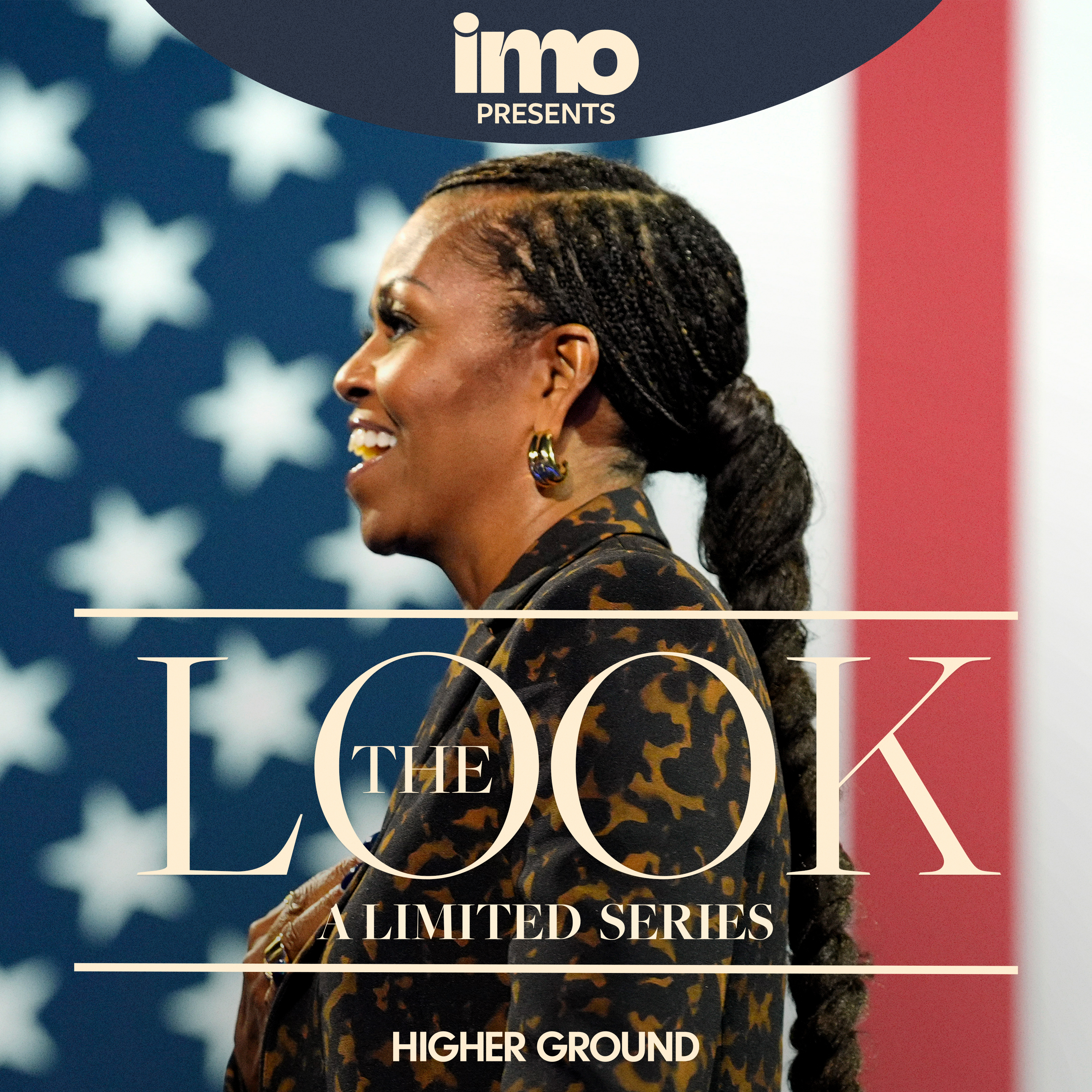
Loading summary
Transcript335 lines
- [00:00]
Michelle Obama
She sends a box of then Ralph Lauren's first edition clothing line. It was like three suits, seven sweaters. I mean, it was an Oprah size gift. And this shows up at my door in this big locker trunk, is a thank you. And I'm sitting there, like, with all these clothes, feeling like I've been Oprahed. It's just like, wow, you get a car and you get a car, there's sweaters coming out and it's all this great stuff up, every color. It's like, my God, this woman is rich. But because my husband, who is my husband, he's like, we can't keep that. It's like, it's like, what? He's like, I'm in office. We don't accept gifts. Imagine that.
- [01:08]
Yinae (Assistant/Team Member)
This episode is brought to you by Rivian and Cologuard.
- [01:14]
Wesley Morris (Interviewer)
Hi. That is a very religious high. I mean, you know, it can be church anywhere. Okay, so I'm going to bring Mrs. Obama out. But I just wanted to say something before we started, just about this book. It's very short. I'm going to look at my phone to do it. First of all, I put this. I have a baking scale, a kitchen.
- [01:46]
Mish (Co-host/Commentator)
Scale.
- [01:50]
Wesley Morris (Interviewer)
Just for kicks. Last night I just put it on the scale 4.12. That is. That's a heavy book. And I just want to talk about the meaning of a book being this heavy because, I mean, this book is proof that something happened, something unprecedented, extraordinary for millions of people. Like, we're all here because we know that something extraordinary happened and it expanded people's lives. It changed people's lives. It changed the way people look at the world, what they think is possible. And this book, this 4.1 pound book, I mean, it's documentation that all of that actually happened. And the reason to say that is because we live in a moment where people are going to try to say that it didn't. And it did. And this book is documentation of that. So with that, Give it up for Michelle Obama.
- [03:17]
Michelle Obama
It. Hi, everybody. Whoo. That was a catwalk. I was just like, just, don't trip, don't fall. Have you ever tripped, you know, Wesley, that people wonder, well, what were you thinking here? What were you thinking there? I was like, don't trip, don't fall. Don't fall down these stairs of Air Force One? No, I never tripped because that was all I was thinking about when there were stairs or a long walk or heels. It was just like, just one foot at a time. Don't become a meme.
- [04:22]
Wesley Morris (Interviewer)
Now. You've got other memes.
- [04:24]
Michelle Obama
I do, I do. But I didn't want falling.
- [04:26]
Wesley Morris (Interviewer)
Those are good ones. Those are the ones you want.
- [04:30]
Michelle Obama
Thank you. Thank you, you guys. Wesley Morse, man.
- [04:35]
Wesley Morris (Interviewer)
Thanks.
- [04:36]
Michelle Obama
I specifically ask for this brother to do this because you are one of the smartest, most diverse, thinking, broad minded men that I know, and I am. I'm always impressed.
- [04:54]
Wesley Morris (Interviewer)
I really appreciate that. Thank you. Let's see how true that is about the case.
- [04:59]
Michelle Obama
All right, Bar tie. Bar tie now.
- [05:02]
Wesley Morris (Interviewer)
All right, so I think I feel like where I want to start. Okay, first of all, how you doing? I'm good. I'm gonna start there.
- [05:09]
Michelle Obama
I'm. I'm home. It's like everybody's here. It's like half the people in the audience, I know y', all, and half the other.
- [05:19]
Wesley Morris (Interviewer)
The other half I know because my sister drove them up here. There they are.
- [05:24]
Michelle Obama
Wesley brought, like, a busload of people. Hey, y'. All.
- [05:27]
Wesley Morris (Interviewer)
My sister Robin did it.
- [05:29]
Michelle Obama
Okay. Okay, Robin.
- [05:30]
Wesley Morris (Interviewer)
And I'm glad. I'm glad they did.
- [05:33]
Michelle Obama
I'm glad they.
- [05:33]
Wesley Morris (Interviewer)
Glad they came.
- [05:34]
Michelle Obama
But I feel. I feel good. I'm feeling good. Glad to be home. This is the last live event. I'll do a little more press in LA in December, and then y', all, that's it. So.
- [05:46]
Wesley Morris (Interviewer)
Well, I think the second sort of, like, small talky question I have to ask because people want to know, what are you wearing?
- [05:57]
Michelle Obama
Well, Wesley knows that I forgot to check before I put this dress on. So we just act.
- [06:02]
Wesley Morris (Interviewer)
Doesn't even look at the labels.
- [06:03]
Michelle Obama
I didn't look. I didn't look. I knew what I was going to wear, but I don't remember sometimes. And Meredith couldn't be here because she wasn't feeling well. So this is vintage Zac Posen. Oh, yeah. Yeah. And I was going to wear something else. And then you said you were wearing a suit and a tie. And I was like, oh, okay, wait a minute.
- [06:23]
Wesley Morris (Interviewer)
Hold on.
- [06:23]
Michelle Obama
He said a mint suit.
- [06:25]
Wesley Morris (Interviewer)
What happened was.
- [06:26]
Michelle Obama
Well, what happened?
- [06:29]
Wesley Morris (Interviewer)
I got a text from somebody.
- [06:31]
Michelle Obama
Uhhuh.
- [06:32]
Wesley Morris (Interviewer)
Asking, what are you wearing tonight? And it was not from my sister, who also wanted to know what I was gonna wear.
- [06:39]
Michelle Obama
It's like, don't embarrass us.
- [06:40]
Wesley Morris (Interviewer)
And I'm like, okay. But there was no. Like, there were no caveats.
- [06:44]
Michelle Obama
No, there was no.
- [06:45]
Wesley Morris (Interviewer)
And then Julia wrote back and was like, everybody just wants to make sure you guys aren't clashing.
- [06:50]
Michelle Obama
That's right.
- [06:50]
Wesley Morris (Interviewer)
What would clashing look like under these circumstances?
- [06:53]
Michelle Obama
Because I wore if you were gonna come out in a tux or if you were coming out in jeans because there was no dress code. So I try to keep in mind, like, I don't want to come out in a ball gown and you're in jeans. Right.
- [07:05]
Wesley Morris (Interviewer)
She'll almost wore tux.
- [07:07]
Michelle Obama
Well, then I would have worn something else.
- [07:09]
Wesley Morris (Interviewer)
I. I had a long conversation with Robin about whether I should wear the tux, and I just decided I just wanted to be comfortable.
- [07:17]
Michelle Obama
And you are, and you look good.
- [07:19]
Wesley Morris (Interviewer)
Also. I didn't want to be triggering to you. Like, you look at people in tuxes all the time. Oh, you like.
- [07:24]
Michelle Obama
Not anymore, though.
- [07:25]
Wesley Morris (Interviewer)
Bring the pistachio.
- [07:26]
Michelle Obama
It's been eight years. Barack's tuck is tux is tucked away. The one tux. Oh, you all. By the way, he got another tux finally.
- [07:36]
Wesley Morris (Interviewer)
Like, he has two or he replaced the old one.
- [07:40]
Michelle Obama
He probably replaced the old one.
- [07:42]
Wesley Morris (Interviewer)
So the old one's going to. I mean, well, we have a Smithsonian.
- [07:47]
Michelle Obama
It's going to the real real. Yeah, we have. We have a whole museum where stuff. And I'm sure that's the only thing that's going to be. The Obama Presidential center opens in June, you all. That's another. And there will be a big celebration. But as part of the exhibit, the archives of many of my dresses will be there. And I keep telling Barack that's what people are coming for. They're coming for the dresses. So there are going to be many of them up. And then he'll probably have that tan suit, and that'll be his contribution.
- [08:22]
Wesley Morris (Interviewer)
So y' all laugh at that tan suit. That was meaningful to me. I mean, we can come back to this because I would like to talk about his experience in clothes.
- [08:33]
Michelle Obama
As far as you're concerned, there were no experiences. That's a short answer. He's just now getting his fashion edge together. He's trying to keep up, but he's the kind of guy that has a pair of khaki pants from the Gap, and he just goes and replaces that pair of khaki pants.
- [08:54]
Wesley Morris (Interviewer)
He's a man.
- [08:54]
Michelle Obama
The girls and I, we are shocked when he has on a color. And we try to encourage him. It's like, oh, it's purple, it's lavender. Oh, dad, you look great. I mean, it's black, blue, tan, gray. That's his story. He could not write a book.
- [09:10]
Wesley Morris (Interviewer)
But I guess I'm not even gonna read between the lines of like, he can't write a book. But what I will ask. I mean, we're kind of like, we'll just. We're just having a conversation now. So I'm just wondering, like, what do you think his experience was like, you know, in terms of his sartorial choices? And did you have a preference? Were you, like, did you ever hope you'd come out of the room? Because one of the most beautiful descriptions in the book is what was going on on one side of a door and what was anticipating what was gonna come out or through those doors on the other side. So he's waiting for you, event after event, to emerge in the clothes that we all see that this book is full of. Did you ever hope you'd open the door and see.
- [10:11]
Michelle Obama
I knew I wasn't. I knew I wasn't going to. I mean, that's just not, you know, Barack. That's not a part of who he is. He is not a fashion person. And he looks good and everything. I mean, he's tall, he's handsome, you know, so he's got a blue suit, a gray suit, a white tie, a white shirt, a blue shirt, maybe a stripe. I mean, it's like a handful of things. And I knew what they were going to be. So, I mean, I just truthfully know I was like, he's like the steady. You know, he's there, and I'm always the flower. It's like, you know, I'm in a dress. I'm in colors. I'm in, you know, I'm in short sleeves and pants and, you know, and that's kind of like how the West Wing, East Wing felt. It felt like the East Wing was where there was color and light and joy. We had apples and children and puppies, and there was laughter. And I don't know if we have any Obama folks here, any west wingers. I know we've got some east wingers over there. And, you know, when the West Wing would come, the State Department, they would come for briefings if we were doing something, they always felt little lighter. They were like, wow, you know, my office had a pink hue. It had pretty colors in it. We always had flowers. Then you go to the West Wing, and it was war, death, horrible things. Congress.
- [11:45]
Wesley Morris (Interviewer)
Okay, we're done.
- [11:51]
Michelle Obama
And so that was sort of our sartorial. He was. He was serious, and we were joyful.
- [12:00]
Wesley Morris (Interviewer)
I mean, well, we're here now. So, I mean, you have invoked that part of the White House. Everything you're describing as light and flowers and joy and welcome is rubble. And I'm wondering how it feels. I'm wondering a few things about the East Wing aspect of your time in the White House, because that was where you worked.
- [12:26]
Michelle Obama
Yeah.
- [12:27]
Wesley Morris (Interviewer)
You did a lot of your work there. You welcomed people there. Music got. Events happened here.
- [12:37]
Michelle Obama
The social office was there, the volunteer office was there. The place that welcomed visitors. Because we did have a lot of visitors. I mean, that was one of the things we wanted to do in the White House was open it up. You know, our view was, this is not our house. We are here to do a job. We're here for a term, we're here for a moment. We are caretakers of this history, and it's about bringing more people in. I mean, I always. I was always the kid growing up on the south side of Chicago that didn't feel welcome. In some of these fancy places, you go to the big store downtown, and if you. All of a sudden somebody's following you or you go into the museum and people think that you don't belong. When Barack and I were there, we were thinking about those kids like us who were outside of the gates of the South Lawn looking in, or maybe not even getting down to Pennsylvania Avenue, not knowing what it meant to be in the White House, not knowing what a state dinner was, not knowing what those rooms look like, because a lot of those kids didn't feel invited in. But those were the people who got us there. So our goal was to make that house as open as possible. And the East Wing, that was the place where that work got done, along with all the work that I did on the initiatives. I had five initiatives throughout the eight years, and that work got done in that. In the East Wing. That's where the first lady staff was located. So. Yeah, but every president has the right to do what they want in that house. So that's why we gotta be clear on who we let in.
- [14:35]
Wesley Morris (Interviewer)
Okay, I'm going to change the subject back to the book because I really want to talk about the title of the book. Yes. Because the title to me is deep. Like, you could have called this Armor Uniforms, but you called it the Look. And I'm. The things that come up when I hear this title are. I mean, there are a lot of things like who. Who's looking.
- [15:07]
Michelle Obama
Yeah.
- [15:08]
Wesley Morris (Interviewer)
Which look. Who were you aware of looking at you. Which look suited. Which. I mean, there's a lot of.
- [15:19]
Michelle Obama
What's.
- [15:20]
Wesley Morris (Interviewer)
Talk to me about the title.
- [15:22]
Michelle Obama
Well, that I have to give a lot of credit to. And I want to take a moment just. Just to shout out Penguin, Random House, my publishers, my longtime publishers. And I know you guys are here. You know, there's always the point when in these books where it Comes time to. What are we going to call this? Yeah, right. And like so much of what I do, it's a collaborative effort. And I think, you know, this. The title is so good that when. And I don't know who threw it out, but once it was out there, everybody said, that's it. That's it. It says it all, every word. And even the picture on the COVID was gonna be a different picture because we wanted to have a cover picture that nobody had seen before. And then I don't know whether it was Chuck or which White House photographer. I think it was Chuck that took this. Who was it? Chuck. It was Chuck. This was the photo shoot from my official White House portrait. So no one had ever seen this, but I forgot about this shot. And then he showed it to the team. And that look, that sort of like we start the book with, this is kind of where it began, but this book takes us on a complete arc. So this is like, this is the beginning and then there's more. But I think the look, it just. The title itself, just. And when you talk to the publishers, they always want one word, one word for a title, right?
- [17:00]
Wesley Morris (Interviewer)
Yeah. That's where we are now.
- [17:01]
Michelle Obama
Becoming just one. What we want. I see David over there. So it was a team effort, but when, you know, when those words hit the zoom meeting, we all agreed that was it. And it's about all of it. Yes. This book is about being looked at. How you look and what you look. It's how you want to be perceived. It's all of that. So while it's a book full of beautiful pictures and it's a wonderful coffee table book, I urge people to read the essays. The forward by Farrah Griffin.
- [17:35]
Wesley Morris (Interviewer)
All of that is an excellent.
- [17:37]
Michelle Obama
It is an excellent. For it. That was something that I knew when we started talking about the book. I knew that I wanted Farrah, who is a historian, sociologist, brilliant woman, dear friend, just to set the tone for. Why even talk about fashion? Because it's not about fashion. It's about culture. It's about race. It's about a woman's journey. It's about my journey. Farrah helps to provide a wonderful context to the essays that follow. So there's a lot in there.
- [18:19]
Mish (Co-host/Commentator)
This segment is brought to you by Cologuard, a colon cancer screening test that doesn't have any special prep. And mish, have you ever put off health needs for yourself?
- [18:34]
Yinae (Assistant/Team Member)
No, I can say that particularly now in my life, it is baked into my schedule, and I probably did that because we grew up With a father that put off health. And our dad, as many people know, had Ms. And he didn't. He wasn't always diligent about making sure he got his doctor's appointments and you.
- [18:58]
Michelle Obama
Had to push him.
- [18:59]
Yinae (Assistant/Team Member)
And I think that sometimes that's the challenge with men, especially men in our communities. I know a lot of young men who are very hesitant when thinking about a colonoscopy. They don't know what it is. It's a scary proposition. There's just something about the process that doesn't feel right for them. And often they're putting it off. And I find myself making sure that the men in my life are not doing that well.
- [19:29]
Mish (Co-host/Commentator)
You know, Mish, I got a chance to visit the Cologuard lab in Madison, Wisconsin and boy, was it impressive. It is tech enabled, automated and state of the art, leading to accurate and consistent results. Seeing their team in action showed me how committed they are to catching colon cancer early. And they do all of this because they are currently about 60 million people putting off their colon cancer screening. To your point, many African Americans are part of a group putting off colonoscopies and have a higher rate of colorectal cancer and also unfortunately, a higher rate of dying from it. But what was amazing is the work the cologuard team is doing. It's an innovative company with a mission to eradicate cancer. I found it really impressive that the Cologuard test has been used to screen for colon cancer more than 20 million times. It's a no prep. That's right, no prep colon cancer screening test that is delivered to your door.
- [20:38]
Yinae (Assistant/Team Member)
No excuses.
- [20:40]
Mish (Co-host/Commentator)
After seeing the lab firsthand, I really want to encourage anyone 45 or older at average risk to talk to their healthcare provider about getting screened with cologuard. You can even request a prescription online@cologuard.com don't wait. Taking control of your health is something you can do today.
- [21:08]
Wesley Morris (Interviewer)
Let's talk about. Let's look at what's in there. I. We've got a deck of images from the book and I just sort of want to hear you think through some of the. I mean, you know, you all will leave here with this book. You're going to see them. But like, I would like to do some close reading on some of these. These pictures.
- [21:30]
Michelle Obama
You know, this is little Michelle Robinson at Bryn Mawr high or elementary school. That must have been first grade, maybe third grade. It was probably first grade and that was probably gym day because that's a sweatshirt. And I think my mom was still doing my hair. So that was one of those cool. You do the ponytails and put them up. But that was the typical going to public school. I didn't have much control over my look because I had no money, I had no resources. This was a child that, you know. And I was still a bit of a tomboy then because I had an older brother and I was surrounded by boys. I was athletic, I loved to keep up. I boxed with my male cousins, I played catch. Anything my brother was doing, I was doing. So I wanted to be. If I had to describe my fashion desire, I wanted to be Jose Cardinal, who was the first baseman on the Chicago Cubs. And I would pick my braids out into a big fro because he wore his Chicago Cubs cap with his butt. And when I wasn't at school, that's how I wanted my hair. I wanted to be Jose Cardinal of the Cubs first baseman.
- [22:53]
Wesley Morris (Interviewer)
And you write a lot. Next. Can we get the next set of images or this is the next.
- [22:57]
Carl Ray (Makeup Artist)
Okay.
- [22:58]
Michelle Obama
And then I grew up.
- [23:02]
Wesley Morris (Interviewer)
So before we talk about this phase of your life, I want to actually go back and think a little bit about how you as a young person were thinking about what to wear.
- [23:15]
Michelle Obama
You know, there was a lot of dreaming and wishing.
- [23:20]
Wesley Morris (Interviewer)
Of who and of what.
- [23:22]
Michelle Obama
It just, you know, when you're young, you just want to do what the cool kids do. You want to look like the pretty girls on Soul Train, but your parents are broke and your mother sews your clothes and you're mad about it because you don't appreciate the value of a well made pair of pants. Pants, because all you want are the Gloria Vanderbilt jeans with the swan on them. So there's a lot of wanting when you grow up poor, you know, because. And maybe that's a good thing because there's a period of you don't get what you want. It wasn't an expectation. There was no fashion. It was practicality. I write about the fact that I used to watch laugh in young people.
- [24:08]
Wesley Morris (Interviewer)
I mean, LAUGHING, LAUGHING. Great 60s sketch show.
- [24:13]
Michelle Obama
It's a comedy.
- [24:14]
Wesley Morris (Interviewer)
Rowan and Martin's Laughing.
- [24:15]
Michelle Obama
It was one of the first sketch comedy shows.
- [24:19]
Wesley Morris (Interviewer)
Goldie Hawn's names.
- [24:20]
Michelle Obama
Goldie Hawn, remember her? She's like 90 now, but she. Remember her. Michelle. I'm talking to the young people. They don't know what we're talking about. But she used to dance in short mini dresses and these patent leather go go boots. And I wanted a pair of white patent leather go go boots. I lived in Chicago. It was snow, you know, My mom would look, listen, laugh, and then she'd pick up those rubber boots that you put over your shoe. You'd need to put a plastic bag over your shoe galoshes, but they came all the way up. Yes, I know. It was so sad. But, you know, I had no choice. So I think I was probably dreaming of a time when I could ditch my mother's ways and go out on my own.
- [25:10]
Wesley Morris (Interviewer)
And she was your first stylist, really?
- [25:12]
Michelle Obama
Oh, yeah. My mother was not a style icon. She was a practical woman. I loved my mother. And she was very crafty. She sewed everything. She sewed our drapes. She made cushion covers. I mean, I don't. You know, my mom didn't work until I went to high school, but she got stuff done. I mean, you'd come home and the whole house would be remade. It's like, what are you doing? You know? My mom didn't shop for herself. She was one of those typical mothers. She put all of her energy into us. So she wasn't somebody that I looked to. She rarely dressed up. She wouldn't go to the hairdresser until we all made her. So, no, my mother was not my fashion role model. So I think as a young person, I did know what nice stuff looked like, you know, but it was something out there to be had.
- [26:08]
Wesley Morris (Interviewer)
There are a few. I've seen a few pictures, and there's definitely at least one in the book of you at Princeton at some point. And Farrah, like, almost really beautifully close, reads this.
- [26:20]
Michelle Obama
Yeah.
- [26:22]
Wesley Morris (Interviewer)
In her forward. And it's you with your hair in braids, and you've got a denim jacket on, and the jacket is buttoned or fastened at the bottom. It's the only fastened.
- [26:38]
Michelle Obama
It created a waist.
- [26:40]
Wesley Morris (Interviewer)
I was gonna say. That is style. Yeah, that is style operating.
- [26:46]
Michelle Obama
I knew it was out there. I knew what it could be. Right. But you don't. You know, you don't get to actualize it until you get a graduate, get a degree, get a job, pay your loans off, and then maybe you can explore fashion. So it wasn't until I was. Even when I was practicing law, you know, it was the 80s 90s, business suits, ladies, you know, those horrible suits with the big shoulder pads. It was the uniform. And you would get a red one or maybe a blue one, maybe a tweed jacket and a black. It was very sad. Sad lawyer, corporate clothes with nylons, which I hated nylons. That's a man invented nylons. I mean, those things, it's just cruel and expensive, and they run all the time. So even when I had resources, I lived in a uniform of work. There weren't casual Fridays. Everybody had to wear a suit all the time. So it probably wasn't until I became a public figure that I not only had the resources, but the necessity to really think about how I had to show up. And I had some flexibility. But until then, I was. I was just getting through the day. Just like, you know, I write about what it was like to even think about shopping for a suit for Barack's big convention speech. I mean, I was a typical mother. We were running around. I had a job, I had little kids. And it was like, oh, my God, he's speaking at this convention thing I need. And I Now.
- [28:27]
Wesley Morris (Interviewer)
It's an amazing part of this book because I will just kind of. I'll interrupt to just say one thing that's extraordinary about this book that we. I can't. I've not read every first lady's memoir, but I did do some digging around before we hooked up, and just the facades of how things were maintained. You know, Barbara Bush is maybe the only person I could find who was really sort of piercing the. The sort of glamour bubble a little bit about, like, what it. Like what? Well, you quote her in the book, actually. About what she will not be doing.
- [29:04]
Michelle Obama
Yeah, yeah.
- [29:06]
Wesley Morris (Interviewer)
But I also feel like it's important to think about the. The honesty of this thing, right? The things you were letting people see in terms of, you know, smoke and.
- [29:20]
Michelle Obama
Mirrors, the process of it in terms.
- [29:23]
Wesley Morris (Interviewer)
Of the structure, stresses and the uncertainties is always like.
- [29:28]
Michelle Obama
Like, if I'm gonna connect with people. The whole point is, like, if you're gonna help people, especially young people, they have to see you. They. They can't see some facade. They can't think that it's all magic because then they don't think they can do it. So why I am so brutally honest about all the things, it's like, yeah, you know, this is. It looks good, but it's, you know, swans and paddling under the water. I just want. I think my honesty is directed at young people who covet and look and want to be. And I want people to know what it all is. Let's talk about it all. And so dressing for me was like that. I was a typical working mother with a busy husband who was in politics and traveled a lot. So I heard that I had to walk on stage with him after his speech, and it was like, oh, my God, I can't just wear one of these horrible suits. You know, I gotta Think of something. So it's a mad dash to Bloomingdale's. Why Bloomingdale's? Because you could park there and get your parking validated. I mean, that's how you think. You know, it's like, I'm going where they validated, and so, you know, that's how I dressed. It's like, oh, my God, I gotta run and do this. And then I've gotta dress two little girls. So there's also a cute little girls dress place in Bloomingdale. So I was like, I can hit that. Get two little outfits, a suit for mom, and back in the car in time for the next meeting. That was the light.
- [31:04]
Wesley Morris (Interviewer)
So you were doing this on your lunch break?
- [31:06]
Michelle Obama
Yes, in between, you know, soccer and ballet and the 8th birthday party of the weekend.
- [31:14]
Wesley Morris (Interviewer)
Well, during this period, though, I kind of want to talk about what I would describe as, like, you're through the looking glass moment with respect to, like, how you were going to present yourself and, like, what it would feel like to go through the looking glass. So you. You have this on page 44 of your books.
- [31:36]
Michelle Obama
Oh, my goodness. See, this is why I like this guy.
- [31:40]
Wesley Morris (Interviewer)
There's a story that you tell about. Well, I think it's 43 and 44. All right, 40 or 44. Anyway, the point, because some pictures in between. Oprah comes and interviews you, the both of you.
- [31:54]
Michelle Obama
Which sounds crazy, right? Oprah comes to your house and interviews you. That's what life was like. It's like, she's coming to our house.
- [32:02]
Wesley Morris (Interviewer)
This is before.
- [32:02]
Michelle Obama
I mean, does she know who you are, Barack? She thinks you're important. Okay, all right. Well, get ready. Like, wow. My motto then was, must have been a good speech, right? It's like, he gave that speech, and all of a sudden, everybody knew who he was. And I was like, it's a good speech. You did a great job. Let's go home. We gotta get back. We were in Boston, and then all the while, it just got more ridiculous. He was on the COVID of Time, and I was like, what? Oprah's coming?
- [32:34]
Wesley Morris (Interviewer)
This actually does sound surreal. Just imagine this person. How long had you guys been married at this point?
- [32:40]
Michelle Obama
Oh, we had been married seven, eight years. Math. Okay. It's been a while. Do the math, y'. All. It was. We had kids. The kids were little.
- [32:50]
Wesley Morris (Interviewer)
So just to, like, watch this person who is just, like, regular schmegular guy who, you know, has something special, for sure, but to see everybody else figure out what made you marry him is a different story.
- [33:02]
Michelle Obama
Oh, wow. You guys are paying attention to this. So, yeah, Oprah comes over.
- [33:06]
Wesley Morris (Interviewer)
So she comes over, has the interview. She's so grateful that y' all took the time to do it. Sends you a gift.
- [33:15]
Michelle Obama
Oprah, this is Oprah. Wasn't a car, but it was close.
- [33:21]
Wesley Morris (Interviewer)
Now, I don't want to step on any punchlines here, but I know what would have happened to that car. She sends you a suit, like a camel suit.
- [33:32]
Michelle Obama
She sends a box of then Ralph Lauren's first edition clothing line. It was like three suits, seven sweaters. I mean, it was an Oprah size gift. And this shows up at my door in this big locker trunk is a thank you. And I'm sitting there, like, with all these clothes, feeling like I've been Oprahed. It's just like, wow, you get a car and you get a car, and there's sweaters coming out, and it's all this great stuff, every color. It's like, my God, this woman is rich. But because my husband, who is my husband, he's like, we can't keep that. It's like, what? He's like, I'm in office. We don't accept gifts. Imagine that. It's like, they're all lovely. Pack them up and send them back. So I call. I called Oprah. Yep. I called Oprah and I was like, I can't keep all these things. And she was like, what? She's like, yeah, Barack's in office. You know, there's. I mean, you're really not supposed to accept gifts. She's like, but it's for me. And it's like, yeah, but, you know, so we sit that stuff back. I know.
- [35:02]
Wesley Morris (Interviewer)
Listen.
- [35:02]
Michelle Obama
But there's a happy ending to it because he was a state senator. He stepped down. A state senator, was running for US Senator. In between that time when he wasn't in office, Oprah sent the clothes back. What? Yes. She was watching. She was like, take them now, girl. Take them now.
- [35:38]
Pakila Riley (Stylist)
All right, Miche. Michelle.
- [35:40]
Michelle Obama
Hey.
- [35:40]
Pakila Riley (Stylist)
We have done so many fun looks together. We have over the years. One of my personal favorites is when we started wearing your natural curls. And for me, I love it because I felt like it was the opening of the freedom of post life. Michelle.
- [35:59]
Michelle Obama
Yeah.
- [35:59]
Pakila Riley (Stylist)
Where you were in control and you got to do whatever you wanted with your hair. Tell me, you know, that's the vibe that she felt as well.
- [36:06]
Michelle Obama
I agree. I mean, I love.
- [36:09]
Yinae (Assistant/Team Member)
I loved my hair all the time because I had wonderful stylists like you helping me, so I never had to worry about it. But as you know there, I always wanted to have the freedom to live my life without you.
- [36:23]
Michelle Obama
Yeah.
- [36:24]
Yinae (Assistant/Team Member)
I didn't want to, you know, I didn't want to feel like I couldn't go out. I couldn't do anything unless Yanae was.
- [36:31]
Michelle Obama
There making it happen.
- [36:32]
Yinae (Assistant/Team Member)
So when we started to go into the natural looks and wearing my natural curls and even working with n' Jerry with braids, I mean, the freedom that you're talking about.
- [36:43]
Pakila Riley (Stylist)
I know you love your braids.
- [36:44]
Michelle Obama
I love my braids.
- [36:45]
Pakila Riley (Stylist)
I do.
- [36:45]
Yinae (Assistant/Team Member)
She loves her braids.
- [36:46]
Pakila Riley (Stylist)
And what does the braids do?
- [36:47]
Yinae (Assistant/Team Member)
Well, because I'm also very active.
- [36:49]
Pakila Riley (Stylist)
Yes.
- [36:50]
Yinae (Assistant/Team Member)
I'm swimming all the time, I'm playing tennis, and I can do it myself whether you're there or not. But the natural style that you structured, I loved it because it was fully me. It was free. It was also a representation to all textured girls out there that our hair comes in all different shapes, sizes, and colors. And this straight look and bouncy look is wonderful. It's fun. But the way our hair curls naturally.
- [37:21]
Pakila Riley (Stylist)
Absolutely.
- [37:22]
Yinae (Assistant/Team Member)
Is also beautiful and full and alive in ways that we got to celebrate.
- [37:28]
Pakila Riley (Stylist)
Absolutely. And the other thing is, is that with braids and natural hair, you are able to be in control.
- [37:36]
Michelle Obama
Right.
- [37:36]
Pakila Riley (Stylist)
And I think that particularly when you started wearing your hair natural, it was the rite of passage that everyone else was just like, okay, Michelle's doing it.
- [37:45]
Michelle Obama
I could do it too.
- [37:46]
Yinae (Assistant/Team Member)
Right.
- [37:46]
Pakila Riley (Stylist)
Like, everybody loved the flowy bouncy, and I love that too. But I also love the versatility that our hair has. We have. Our hair can be a chameleon, and we. There's so much that we could do with it. And so you are able to embody that and show that to everyone, to kind of give them be like, all right, girl, you could do this too. Which is extremely important. You know that I'm very big on making sure that your hair isn't just looking beautiful, but that it stays healthy. Absolutely. And that goes back to the products that we use. So you know that I love your braids, and I love that the braids give you the versatility that you want. And which is why we've played with U parts, we've played with wigs, we've done so many different things to master the look that you want for the time and place that you are in whatever you're doing. So I love Amika. We use Amika on your hair all the time. And it is a Brooklyn born salon powered brand, which I love that.
- [38:43]
Yinae (Assistant/Team Member)
Yes.
- [38:43]
Pakila Riley (Stylist)
It's made by stylists it is high performing, and it has amazing ingredients like sea buckthorn for visible results. It's designed to meet all hair needs. It gives us hydration, strength, smoothness, and shine. Amika is built with stylists, not just for them, which makes pro hair care joyful, approachable, and inclusive for all. And when I want fullness or versatility from my clients, I know that true and pure Textures Extensions, founded by Pakila Riley, who's a part of the Amica Stylist Collective, is my go to.
- [39:16]
Yinae (Assistant/Team Member)
And you were just telling me, what does amica mean?
- [39:19]
Pakila Riley (Stylist)
It means friend.
- [39:21]
Yinae (Assistant/Team Member)
I didn't know that until you just mentioned it. Yeah, yeah. So I love all that.
- [39:27]
Pakila Riley (Stylist)
If you want to experience these same prolove products, check out amika@loveamica.com and use code IMO20 for 20% off through the end of February, because with Amica, all hair is welcome. Every texture, type, and style.
- [39:49]
Wesley Morris (Interviewer)
Okay, So I just wanted to hear Oprah's side of the story, so I reached out to Oprah Winfrey.
- [39:56]
Michelle Obama
Of course you did.
- [39:58]
Wesley Morris (Interviewer)
She got back to me and what she. Her version of the story, you guys. Perfect.
- [40:05]
Michelle Obama
Perfect alignment because it happened.
- [40:07]
Wesley Morris (Interviewer)
And. But what she wanted me to know was that there was another story.
- [40:15]
Michelle Obama
Okay. She's talking about the.
- [40:18]
Wesley Morris (Interviewer)
Yes. She has her Legends Ball. Yeah, y'.
- [40:22]
Michelle Obama
All. She invited me to the Legends Ball.
- [40:25]
Wesley Morris (Interviewer)
As what Oprah called a youngin. Yes, because you were a youngin.
- [40:30]
Michelle Obama
I was a youngin, but I was still like, you know, Coretta Scott King was there.
- [40:34]
Wesley Morris (Interviewer)
Tina Turner, Scott King.
- [40:36]
Michelle Obama
I kept walking Angelou. I said, oprah, are you sure you meant to have me here? She was like, yeah, go sit down.
- [40:45]
Wesley Morris (Interviewer)
You're supposed to be here when Oprah Ghost sits down.
- [40:48]
Michelle Obama
You like, she's just like, stop asking me that. Go sit down.
- [40:53]
Wesley Morris (Interviewer)
Don't cross that wall.
- [40:54]
Michelle Obama
That's right.
- [40:55]
Wesley Morris (Interviewer)
But she said that, you know, every year at her Legends event, she gives a gift to every everybody who goes. The legends get one, the youngins get one. And normally at the Legends event, she says she gives out pajamas. Every year she was giving out pajamas. And this particular your year?
- [41:17]
Michelle Obama
Well, it was her 50th birthday, so it was a big year for her.
- [41:21]
Yinae (Assistant/Team Member)
It's a big.
- [41:22]
Michelle Obama
It was the big one. Right?
- [41:24]
Wesley Morris (Interviewer)
Well, Gayle is like, girl, don't be giving people pajamas. Enough with the pajamas.
- [41:32]
Michelle Obama
We've enough.
- [41:33]
Wesley Morris (Interviewer)
Don't do it. So Oprah's like, what can I give people? What would mean a lot that aren't pajamas that would really entertain everybody and not tick Gayle off So she's like, what about a little black diamond hoop earrings?
- [41:54]
Michelle Obama
Well, there were two different types of earrings. And the teardrop, or the legends got these big diamond teardrops. And then the young ones got these big diamond hoops with black and white diamonds on either side. So we're at this luncheon where everybody gets the gift, and they're opening up again. You get a car, you get diamonds. You get diamonds. And I open mine up, and I look at Oprah, and she's like, you can't keep that. I was like, I can't keep these. So everybody's like, ah, they're putting their diamonds on. You know, all these. These are, like, great. It's like, you all don't have nice stuff. I would think. Like, all of you all. Yeah.
- [42:36]
Wesley Morris (Interviewer)
Tina Turner is just rolling in the aisles.
- [42:38]
Michelle Obama
I'm the only one in that group that's broke, right? And they were so happy with these diamonds. And I was like, you know, I can't keep this. And she's like, really? I was like, I can't. I can't keep it. Cause he was a US Senator then.
- [42:53]
Wesley Morris (Interviewer)
Well, her version of this story. Once again, y' all are on the Newlywed Game. Your stories match up. But what she really wanted to emphasize in telling me this second story was that y' all are good people. Y' all are. Wanted to stay on the right side of all the laws, because, I mean, you know how it is. I mean, count the people who. Every day you hear about people taking gifts, and the gifts are like gold bars. This is a gift from the. One of the most famous people on planet Earth. Can't keep it. And I think what she. She wanted me to run it by you, but she also wanted me and the rest of us to know that from the beginning, y' all were ethical, Conscientious. And, you know, she knew. She knew she chosen the right people to align her values with.
- [43:55]
Michelle Obama
Well, that starts at the top. And that's, you know, one of the reasons why I love. Many reasons why I love and respect my husband. That's who he is. He doesn't, you know, he's not extravagant, but he believes in the importance of symbolism. And when you are the commander in chief, there's a standard at which, you know, you have to set for the American people. And some of these things aren't even laws. They're just norms. They're just things that you do because you don't want the people to feel like wealthy people have a different level of access and, you know, access to power. So that means you gotta say no a lot. Our motto was like, if it looks like fun, we can't do it.
- [44:49]
Wesley Morris (Interviewer)
Oh, my God. Put that on every bumper sticker in this town. All right, but let's talk about some of the symbolism. Can we have. Well, let's do the slide that was previously up, and then we'll just sort of go through them. So this is you wearing Jason Wu to the inaugural. To one of the inaugural balls, the first one. Talk to me about this, the moment, the dress, what the experience was like, because this is you going through another portal. Essentially.
- [45:24]
Michelle Obama
Yes, for sure. I mean, there were so many portals at this. At the. In this time in our lives. And it was all very surreal. The whole day was. I mean, many of you all were there. It was 800 below. It was like the coldest weather.
- [45:43]
Wesley Morris (Interviewer)
You wore two pairs of pantyhose.
- [45:45]
Michelle Obama
Two pairs of pantyhose. I should have had on boots. I didn't even realize. See, this is what I learned in the second inauguration. I was like, I'm putting on boots. And then it was like, 70. But it was a long day that started with a prayer breakfast. So I'm, of course, up at 5am Right, because that's what women have to do. We have to get up to get hair and makeup done, and then the girls have to get ready, and mom. And you've got family and friends, so it's all a little spinny when that's going on. And so you go to the White House, you make that transition in the morning after the prayer breakfast, and then you get in the cars, you go to the Capitol, and that's when it gets otherworldly. When you're in the beast in that moment and you're driving down and you see the.
- [46:32]
Wesley Morris (Interviewer)
The monument, actual vehicle. The beast.
- [46:34]
Michelle Obama
The beast. And you don't really see the breadth of that day until we walk out of the Capitol in that moment where you see the president, the family, everybody walk out. And that's when we saw what you would say. History. It was like, oh, my God, look at that. And when you grow up seeing the march on Washington, when you see the city symbolism of what it means to be on the monument, and you're on the other side of that. I mean, that's when you're like, whoa, this is something. This is. And it should feel that way. You should feel the weight and the responsibility. I mean, the whole process is to ground the administration in the seriousness of the task you're about to take on. And the response Responsibility, and that it is not about you. It is about all those people standing in the cold, you know, hoping for some kind of change, but it is cold. And then, you know, to do it with little kids. I mean, remember how little the girls were? They were just so, you know, mothers with little kids. I'm just. Don't fall.
- [47:50]
Wesley Morris (Interviewer)
Okay?
- [47:51]
Michelle Obama
You can paying attention. Are you warm enough? You know, so I'm looking at the Bible, but I'm looking at Sasha teetering on a. On a stool trying to look up. Are they paying attention? Is somebody picking their nose? Because these pictures are going to be historic. So, you know, I've got that going on in my mind while I'm trying to take this in. And I think being a mother in these moments helped to ground me because I couldn't get too wrapped up in it, because there's the mothering part. Are they okay? What does this feel like for them? Do they feel seen in this moment? I mean, how are they emotionally? I'm constantly weighing their emotional energy through all of this as well. That's why clothes have to be secondary. It had to be like, you mean.
- [48:41]
Wesley Morris (Interviewer)
You can't think about.
- [48:43]
Michelle Obama
That was always my model. I. I had to set up enough of a process that allowed me to show up well represented. But then once the clothes were on, there was just too much going on. They had to fit, they had to move, they had to be warm. I had to know we did all of that beforehand so that once hair, makeup, as my team, who is here knows, it's like, once it's done, don't touch me, don't look at me. Don't come near me. I barely look at myself self when it's over, because then the work happens. And that's the point. The point isn't the look. It's the look. It's us looking out for the country. It's us looking out for the nation. It's us looking out for all those people who are depending on us. So the look goes both ways.
- [49:30]
Wesley Morris (Interviewer)
See, this is why you're doing my job now. I. I mean, because the title is infinite, right? It means, like, a thousand different things. Can we have the next slide?
- [49:43]
Michelle Obama
So the. This night, that gown was just the end of it. And I will say that the choice of Jason Wu, I've said this before, Was intentional. The dress was beautiful, but we were beginning to realize that everything we did sent a message. Sometimes people would read the wrong thing into a fist bump into, you know.
- [50:08]
Wesley Morris (Interviewer)
Into everything, into everything, into every single.
- [50:11]
Michelle Obama
Thing, which is why it's just like, look, folks, when I tell my story, I'm not whining. I don't feel put upon. This is just what happened. And I hope it doesn't offend someone for me to tell you what happened in my life, because it is what happened to me and it is the truth. As you said, if we don't tell it, there will be other people who will try to pretend like it didn't happen. But it did. And so there were a lot of things that we had to take into account. I mean, the fact that something, you know, anything was made of me wearing having my arms out was just a small indication of the kind of crazy attention that, or standard of beauty or acceptability that was at play. So we knew that everything was going to send a message. So who I chose to design my gown was intentional. Jason was an extraordinary designer. This was not a DEI hire. It was an affirmative action. It was the prettiest dress. It was the best dress I put on. It made me feel ethereal. He just happened to be an immigrant kid new to the business, who happened to be as talented, if not more than some of the greats who always got those opportunities. Oscar de la Renta, he just got the opportunity. It was just a given. And see, that's how the world shouldn't work. You know, at some point, we, the greats, should step aside to let some of the young people get a chance. And so that was.
- [51:55]
Wesley Morris (Interviewer)
I mean, you're saying that in Washington.
- [51:57]
Michelle Obama
D.C. well, but doing that, me wearing Jason Wu, where that could have been, Oscar de la Renta, it would have just been another one of his accomplishments. For Jason Wu, it changed his life. And so that's what we were trying to do with the choices that we made, was to change lives, to say something different about who belonged and who was good enough. And Jason Wu, that dress was the beginning of, like, we're going to do this with everything we do, including everything I put on. We're going to rep American designers. We're going to rep everyone. But, you know, I didn't wear Chanel. I didn't wear beautiful clothes. But let's.
- [52:41]
Wesley Morris (Interviewer)
Let's look at some of the beautiful clothes.
- [52:42]
Michelle Obama
Yeah, but I. I always repped American designers of all races, of all, all classes. And these are. Well, this just. This is just shows the breadth of my style evolution.
- [52:57]
Wesley Morris (Interviewer)
Can we talk about the Sergio Hudson? I mean, all of these, I believe, I listen, these appear together. I believe in the. I'm going to call this the breaking the Internet portion of the book. Do you understand? Like, so I get. Sorry. I understand that one and that one in terms of, like, kapow, Kapow, Kapow.
- [53:23]
Michelle Obama
It's like, blam.
- [53:24]
Wesley Morris (Interviewer)
But I want to say I love this country because that one, the Sergio Hudson, the one you wore to the. To Joe Biden's inauguration, that, to me, is just one of the most bewitching pieces of, like, outfits I've ever seen anybody wear. There is so much happening here that I have never seen on anybody, really. I mean, well, think about when this was happening.
- [53:55]
Michelle Obama
You're wearing a mask. Well, nobody saw anybody. That was also it. You know, it was like they were probably like, they're still alive. That's what I attribute some of that to. It's like, oh, my God, mom and dad are still here.
- [54:09]
Wesley Morris (Interviewer)
But you had never worn. You had never worn anything like this. I mean, at least in terms of how we think about you in public.
- [54:23]
Michelle Obama
Right.
- [54:24]
Wesley Morris (Interviewer)
And just talk to me about how it felt to wear that and did you feel powerful in it? Because this is a power suit.
- [54:34]
Michelle Obama
It's a power suit.
- [54:35]
Wesley Morris (Interviewer)
These are power clothes.
- [54:37]
Michelle Obama
Yeah.
- [54:37]
Wesley Morris (Interviewer)
And so talk to me about what it felt to be in them.
- [54:41]
Michelle Obama
Well, you know, a beautiful anything. Right. Makes you feel everything. Right. For that particular event. I mean, we all remember what just happened January 6th happened. So to my mind, I was really in practical mode. We didn't know what was going to happen at this inauguration because the sitting president was trying to convince us that January 6th was just a peaceful protest. Right. So it wasn't clear whether anybody was going to be safe. Were you safe at the Capitol, where it just happened? So to my mind, where we usually travel with hair, makeup for touch ups, staff assistance, I said, I don't want anybody with me inside this perimeter because if something pops off, I don't want to put my team in jeopardy. So I was like, we're getting dressed. I knew I wanted to wear pants because I was thinking, if I have to run. No, that's where you were. I was thinking, I need to be comfortable. I need to. That's not a heel. The boot that I wore was a lower heel. I wanted to be able to move. I wanted to be ready.
- [55:59]
Wesley Morris (Interviewer)
That's what it is, though, right?
- [56:01]
Michelle Obama
Yeah.
- [56:01]
Wesley Morris (Interviewer)
This is offensive and defensive.
- [56:04]
Yinae (Assistant/Team Member)
Yes.
- [56:05]
Wesley Morris (Interviewer)
This is preemptive.
- [56:07]
Michelle Obama
And any power that comes just comes with the. Yeah, we're here because this is important, and it's important for us to show up. I think that's what was going through my mind, this feeling of we're going to be okay. You know, democracy can withstand a lot and our presence has to represent that. I don't know that it was. Now, the code is beautiful. The flow of the pant was lovely. Yes, all of that. But by then I was already. I wasn't wearing a lot of dresses. Then I had my becoming book tour. So I was in pants more and more because I was just shifting away from that look into something else. And I was like, and I'm going to continue that look here. And Sergio Hudson is a fabulous designer and he is. He's known for his suits and his coats. Meredith pulled it out and once again, I put it on. I felt good in it. I felt warm. And we had no idea that it was going to break the Internet. I mean, there's some of these moments. The Versace dress, I put that on, I was like, yeah, this one, the gold boots, it's like, yeah, these are really, really cute. And I can. Barack is the first test. Right. So I walk out and he's like, wow. And I'm like, mmm. It's a good one, right? Yeah. Yeah. But that the, the inaugural outfit was. There was really a lot of practicality for me that went into that dressing because of the. Because of the circumstances.
- [57:48]
Wesley Morris (Interviewer)
Can I read it a little more, please? The belt.
- [57:52]
Michelle Obama
Oh, the belt.
- [57:53]
Wesley Morris (Interviewer)
The belt is superhero, right?
- [57:55]
Michelle Obama
You think?
- [57:56]
Wesley Morris (Interviewer)
I mean, I don't know what. This is not about you. If I'm doing my job.
- [58:00]
Michelle Obama
Uh huh. Yeah.
- [58:01]
Wesley Morris (Interviewer)
The belt to me says Marvel. It says strength. It also says, I don't give a fuck. Like, I did this. I mean, I don't know who you did it for, but it definitely felt like that was. Whatever it means to say for you. For you.
- [58:27]
Michelle Obama
Yeah.
- [58:29]
Wesley Morris (Interviewer)
I don't know, it's just such a.
- [58:31]
Michelle Obama
And that. Absolutely. Once I left the White House, the responsibility of dressing for that job changed because I was not in that job anymore. I know a lot of young people say, did you feel like you have to give up part of yourself to, you know, look, when you're a professional, you dress for the job. That's what I tell young people. It's like, until you have control and power and leverage, then you better look at what your boss is wearing and act accordingly because you need a paycheck. So be smart about it. You dress for the job. And the job of first lady was a different kind of job. When I was done with that, I was doing different jobs. I was my own boss. I wasn't representing the nation in that way. So, yes, those. A lot of the. And the Versace dress was the last state dinner. So that was a kind of I don't care dress. Now I will tell you that one was like, because of the dresses that were available, that rose gold, I put that on. I was like, this is sexy. It's the last one. This is like bye bye.
- [59:48]
Carl Ray (Makeup Artist)
Hi, I'm Carl Ray and I'm Michelle Obama's longtime makeup artist. I've been on many of these sets, but I'm so excited to be in front of the camera. My first client was my mom. I would always watch her apply her makeup. When I was around 14 years old, I asked her if I could do it for her because I thought I could do a better job. She obliged and soon after she started asking me to do her makeup a lot. I never knew makeup was a career until I was an adult. Now my work has introduced me to so many interesting experiences. I've worked in film, tv, print, fashion and beauty all, all around the world. I've also had the pleasure to work with many celebrities and dignitaries along the way. And I'd love to work with you. So the next time you're booking on Airbnb, click on the services tab. You'll find professionals like me and my team. We can help make your next special occasion even more memorable. Weddings, galas, birthdays, headshots, or anytime you just want to feel and look your very best. You can find me@airbnb.com services.
- [60:55]
Mish (Co-host/Commentator)
This episode of Imo is brought to you by Progressive Insurance, who help people move forward and live fully. Owning a home can be one of the most powerful ways to build financial security. But for many, especially first generation buyers, it can feel out of reach. That's why I appreciate what Progressive is doing. In 2024, they contributed over $7 million to help individuals and families break the cycle of renting by providing support, offering educational resources, and developing tools to build long term financial stability through home ownership. Their work goes beyond just insurance. They're opening doors through their newly created Up Payment program. Progressive is helping first generation home buyers move closer to the dream of home ownership by offering eligible applicants a chance to receive a down payment assistance grant. You know, owning a home for me made me feel grounded and also set me up for the future. And as a coach, when your life is dependent on wins and losses, it's really important to have the comfort of a really nice home to come home to, especially for your family. Homeownership is one of the biggest investments you'll ever make and Progressive wants to help more people. This episode of IMO is brought to you by Cologuard, a non invasive colon cancer screening test. The American Cancer Society now recommends that if you're at average risk, you should start screening for colon cancer at age 45. During my visit to the Cologuard Lab in Madison, Wisconsin, I learned that there are an estimated six 60 million adults over 45 who aren't up to date with their current screening. That's way too many. And I got to see firsthand how Cologuard is committed to changing that. And what really stood out to me is how their commitment goes far beyond the lab. From hosting community events and local health fairs to educating on prevention, sharing screening options, and providing access to preventive care. The Cologuard test is designed to help you feel more in control of your health and your screening process. The test is delivered right to your door and you can collect your sample comfortably at home on your own schedule. Then you just ship it back to the lab and your results are ready in about eight to 10 days. Simple as that. And the best part? You can start screening for colon cancer without all the hassle of preparing for a colonoscopy. No fasting, no drinking that prep liquid, no requesting time off work. Most insured patients even find they pay nothing out of pocket. That's why 20 million cologuard tests have been used and hundreds of thousands of healthcare providers across the country prescribe it for their patients. There's no excuses. Get screened for colon cancer. So if you're 45 or older and at average risk, ask your healthcare provider about screening for colon cancer or with the Cologuard test. You can also request a Cologuard prescription today@cologuard.com podcast. The Cologuard test is intended to screen adults 45 and older at average risk for colorectal cancer. Do not use a Cologuard test if you have had adenomas, have inflammatory bowel disease and certain hereditary syndromes, or a personal or family history of colorectal cancer. The Cologuard test is not a replacement for colonoscopy in high risk patients. Cologuard test performance in adults ages 45 to 49 is estimated based on a large clinical study of patients 50 and older. FALSE positives and false negatives can occur. Cologuard is available by prescription only.
- [64:53]
Wesley Morris (Interviewer)
One photo we don't have with respect to that Versace dress. It is in this book and look.
- [65:00]
Michelle Obama
At you with your your tabbed book.
- [65:03]
Wesley Morris (Interviewer)
I put a tab on the version.
- [65:05]
Michelle Obama
Raised a very thorough Young man, there.
- [65:09]
Wesley Morris (Interviewer)
Is a photo of. Can we talk about. Can we talk about this one?
- [65:15]
Michelle Obama
Oh, the. The back.
- [65:17]
Wesley Morris (Interviewer)
There's no page number.
- [65:18]
Michelle Obama
What page?
- [65:19]
Wesley Morris (Interviewer)
It's.
- [65:20]
Michelle Obama
It's in the section that's probably my.
- [65:22]
Wesley Morris (Interviewer)
Robin, is that you?
- [65:25]
Michelle Obama
It's in the section of. There's a whole section on inaugural gowns.
- [65:29]
Wesley Morris (Interviewer)
It's just before page 210.
- [65:32]
Michelle Obama
So what is it you're looking at? The draping of it. No, what are you looking at? What do you see?
- [65:38]
Wesley Morris (Interviewer)
There's a photo of you. I never watched you from behind. I've never done it. And it's. It's not for the reason. Reasons you think. I'm just. It. It just never. It's not. That's not what we're doing here.
- [65:55]
Michelle Obama
It looks good. It's. It's a. Well, it looks great.
- [65:59]
Wesley Morris (Interviewer)
But I'm saying.
- [66:00]
Michelle Obama
What are you saying?
- [66:06]
Wesley Morris (Interviewer)
Jeff Koons, Brancusi. This, to me, is like. You can see your reflection in this dress.
- [66:14]
Michelle Obama
Yes.
- [66:15]
Wesley Morris (Interviewer)
And the one place where it's not draping is back there. And this. This is. This is. You just said. Yes, this. I d G A f. This is. Kiss my ass.
- [66:32]
Michelle Obama
Oh.
- [66:34]
Wesley Morris (Interviewer)
This is. The world is looking and can see themselves in this part of the dress.
- [66:40]
Michelle Obama
You can see the reflection.
- [66:43]
Wesley Morris (Interviewer)
Do it in the front. Right in the front. It's.
- [66:46]
Michelle Obama
Well, now, you're reading a lot into.
- [66:50]
Wesley Morris (Interviewer)
You put the ball on the team, Mrs. Obama. I'm going to take a swing.
- [66:54]
Michelle Obama
Look, much all of my choices ultimately are what is beautiful and what looks beautiful on. And I think, as women, in the end, that's the whole point of it. One of my philosophies is that if I don't feel good in it, if I don't feel beautiful, I don't buy it. I don't pick it. I don't wear things because they're in. I don't even know whether I'm gonna like a dress. I don't pick a dress from the rack because we all know something that looks good on the rack. You put it on and it's like, ooh, not for me. And that's one of the messages. It's like, if you. If you feel good with your arms out, wear your arms out. You know, if you feel good in nylons, then put them on. That was my philosophy.
- [67:42]
Wesley Morris (Interviewer)
Does anybody feel good in nylons?
- [67:44]
Michelle Obama
Some people do. I don't know. I did not like them.
- [67:48]
Wesley Morris (Interviewer)
But you also look happy, like in a lot of those photos.
- [67:53]
Michelle Obama
I'm always happy. I have. I had a really great job And a great time doing it. And we got a lot done. I mean, there was so much joy in everything we did. And this is one of the things that I wanted to show in the book was the life of that White House. Just the vibrancy, the activity. So, you know, we could have done just a series of photos of standing in pretty dresses. But when you open this book, you see. You see kids, you see puppies, you see all the movement, because we were an active White House, and we were a joyful White House.
- [68:36]
Wesley Morris (Interviewer)
One of the chapters is called first lady as a verb.
- [68:40]
Michelle Obama
Yeah. I mean, everything for me was about. It was about moving the ball. I mean, literally physically moving the ball. An initiative, as my team will know, in the East Wing. It was like, what are we going to do? We're not going to announce something. I didn't want to be a symbolic first lady. That was a slogan. First Lady. It's like, you know, just say whatever I wanted to. I wanted to have tangible goals and outcomes that I could see because I came from that world of running a nonprofit. I ran programs. I. I started things. I like to build things and see them go.
- [69:24]
Wesley Morris (Interviewer)
Those are great verbs. I mean, for real.
- [69:29]
Michelle Obama
So, yes, I was always a person that was thinking about moving things forward, going ahead, and that helped us get through. You know, if you're focused on the work, you know, just getting things done every day, then it makes all the hardships, all the thorns and arrows and all the haters and all the negative things, they just blow right off of you because you have an agenda in front of you. And if you focus on that agenda, which is what I would tell my team, that's what we're going to focus on. And clothes were like that, too. We're going to figure out a process that we make this simple so that we're not. While I have to wear a lot of clothes, I'm not going to spend every day. I cannot spend every day thinking about what I'm gonna wear. I have to have this done quickly. We fit one day a month. We fit. We had the calendar. We knew what we were doing. Meredith, my stylist, brought clothes in. We fit them, we tried them on, done, so that the work could get done. And as I said, I was concerned about, can I hug somebody in it? Will it get dirty? I mean, I was the kind of person, lady, that there was no telling what I would do, you know, I mean, I'd walk out the house and hula hoop and I'm doing push ups, you know, and then People start. I mean, in the time that I was. I think I caught a football pass from an NFL player. I played soccer with David Beckham. I did push ups with Desmond Tutu. I have done broken a Guinness Worlds record for jumping jacks. I mean, and this would all happen on a day. You know, it could. It could be, you know, you're giving a speech on health here, you're meeting with the first lady, blah, blah, blah. And now you're digging up dirt in the backyard with kids. So my clothes had to be ready for that. Because the thing about clothes that I find is that they can welcome people in or they can keep people away. And if you're so put together and so precious and things are so crisp and the pin is so big, you know, it can just tell people, don't touch me. You know, if you're not dressed to bring people in.
- [71:49]
Wesley Morris (Interviewer)
Great point about that.
- [71:50]
Michelle Obama
You know, your clothes can make people push away. So I always wanted to be able to. If a rope line was happening, if somebody was going to be in tears and need a hug, we're not wearing white. We're going to wear print. If I have stuff to do, because I'm not going to leave some. I'm not going to push somebody away when they need something from me, and I'm not going to let the clothes get in the way of that. And I had a team of people who understood that. So, you know, there had to be a lot of thought, and that stuff had to be done well in advance.
- [72:26]
Wesley Morris (Interviewer)
Well, I want to talk about the team for a second, because these people seem fantastic.
- [72:31]
Yinae (Assistant/Team Member)
They are.
- [72:32]
Wesley Morris (Interviewer)
They've been around the entire time. And I don't know. I mean, Yine and Jerry.
- [72:49]
Michelle Obama
Mm.
- [72:50]
Wesley Morris (Interviewer)
And Meredith, of course. Carl.
- [72:53]
Michelle Obama
Yeah.
- [72:56]
Wesley Morris (Interviewer)
I wanted. I want to take a second to talk about Carl.
- [72:59]
Michelle Obama
Yeah.
- [73:00]
Wesley Morris (Interviewer)
Because there's a part. I mean, you know, everybody. One of the beautiful things about this book is that everybody who is on the team has a little section of the book where they talk about how they got started, what it's been like to work with you, what the artistry that they practice. Because, I mean, it's work, but it also is. And it's a talent, but it also is art. And for, like, Carl's entry in this book, like, I might start. I'm gonna read it. I'm gonna read part of it because I think it's beautiful. And I think that, like, it is such a. It stands in for the whole of how many. Many people think about you in a way that feels different from the way we've thought about people who've had this job before, and I also think that it is a testament to. I just can't imagine many other women allowing what Carl wrote to appear in print at all. Because it's just. Well, it's intimate.
- [74:09]
Michelle Obama
Yeah.
- [74:11]
Wesley Morris (Interviewer)
And it's about you. So hold on, let me just read a little part. This is. This is. This is.
- [74:15]
Michelle Obama
I love your.
- [74:15]
Wesley Morris (Interviewer)
This is Carl Ray.
- [74:16]
Michelle Obama
Yeah.
- [74:17]
Wesley Morris (Interviewer)
Writing about what it is like to do Michelle Obama's makeup.
- [74:26]
Michelle Obama
Carl, are you listening?
- [74:31]
Wesley Morris (Interviewer)
Carl's here.
- [74:32]
Michelle Obama
Carl is here. Carl's always here. Look at me. Don't I look like Carl's here?
- [74:39]
Wesley Morris (Interviewer)
All right, so I'm going to start.
- [74:43]
Michelle Obama
Can you read it? You can't read. You can't see, can you? I was about. I'm sitting here going, wow, he's got great eyesight.
- [74:50]
Wesley Morris (Interviewer)
That's good enough to get me through this. I think I can do it.
- [74:52]
Michelle Obama
Hold it up real close or far away.
- [74:55]
Wesley Morris (Interviewer)
I think. I think I can do it. Depending on whatever she's doing later that day, I might add to that. And then use some concealer. This is about the foundation. This is a parenthetical. She inherited amazing skin from her mother and has passed it on to her girls. I set her face with powder, which allows everything else to apply smoothly and often. I do a little quote baking, unquote, by applying extra powder beneath her eyes, down her nose, and on her chin and forehead. We then finish with a setting spray. Her skin has red undertones, so I use warm bronze and gold tones to highlight and brighten her cheekbones and other high points of her face. And cooler brown tones for contouring and sculpting her jaw, nose, cheeks and forehead, blending along the way to enhance the structure of her face. If she's wearing an off the shoulder look, I apply shimmer or glow to her shoulders and decolletage, depending on what she's wearing. I sometimes even apply it down her arms and legs. Then I work on her eyes. My favorite part, I fill in the lids, often with gold, bronze, or soft peach, and then do a brown contour on each eye crease. I generally use a black pencil on her top lash line, sometimes followed with a liquid eyeliner for a quote kitten eye. We've gone full blown cat on special occasions. I then used a black or brown kohl eyeliner on her waterline. Now I don't know what a waterline is. Is it just the. Okay, thank you, Carl. I learned something new. I then use a black or brown kohl eyeliner on her waterline and fill in her eyebrows with a brow pencil and powder. Lips and lashes are generally last. For her mouth, I use a lip pencil, lipstick and finish with a gloss 75% of the time. I opt for a nude lip, which I do in a variety of tones, including peach, brown, caramel, and pink. Nothing too distracting. Always enhancing. I always want the focus to be on her message. I'm going to skip way ahead. Michelle remains my primary client. I've worked with her for 16 years, and I believe she's more beautiful now than ever before. For I'm not done. She loves the fact that I'm fast. This is fast. How long does this take?
- [77:29]
Michelle Obama
He can do that in 15 minutes.
- [77:31]
Mish (Co-host/Commentator)
Damn.
- [77:32]
Wesley Morris (Interviewer)
I mean, how long did it take the Sistine Chapel to happen? I mean, Michelle remains my primary client. I've worked with her for 16 years, and I believe she's more beautiful now than she ever was before. She loves the fact that I'm fast. Sometimes she doesn't even look in the mirror when I'm done. That's his exclamation point. Look at yourself. I'll say. You're beautiful. President Obama on multiple occasions has said, carl, I want to thank you for making Michelle look and feel beautiful. And he always responds, my pleasure.
- [78:07]
Michelle Obama
He does. That's beautiful. I'm so glad you read that. Yeah.
- [78:16]
Wesley Morris (Interviewer)
I find that so moving because it is like the care. I didn't want to go into this, really, because it kind of doesn't need. It's so obvious. It doesn't need to be said. But this is a black woman. This is a black woman who was in the White House. A place. I mean, I don't care what they say. She was never supposed to be. The idea that you were being beautified in a place that, you know, at many points in history were responsible for making sure you couldn't even write the words White House by a white man who loved you is just. That is America to me.
- [79:12]
Michelle Obama
That is. Yes, it is. Yes, it is.
- [79:17]
Wesley Morris (Interviewer)
And I don't know, this book is deep because nobody talks about this stuff, right? I mean, you can get. You can go to YouTube and see all kinds of beauty tutorials and all that stuff. But this isn't a tutorial. This is. It's kind of like fashion criticism. It is an artist talking about his craft. It is hearing about what it is like to practice that craft on an excellent person, I'm going to say, according to him. But I know, you know, what is it? How does it feel to have gone through that experience where what is happening is on the one hand, how you're supposed to look, but beneath that really is about how you're feeling.
- [80:16]
Michelle Obama
Who.
- [80:20]
Wesley Morris (Interviewer)
Even a question.
- [80:23]
Michelle Obama
You know, it's complicated because I, you know, as I said before, I think that life is such. During those times, even now can be such a whirlwind that there, I think this is the moment where I took the time to actually reflect on it.
- [80:48]
Wesley Morris (Interviewer)
So what came up for you while you were reflecting on it? I mean, we have the book, but what was it like to write it?
- [80:53]
Michelle Obama
Well, it was beautiful. It was a book that I always knew I wanted to write. The question was always the timing of it, because I think, quite frankly, I probably had a little ptsd, I probably still do, about how I. What I put out into the world, because I know that there are always be some kind of commentary, some reaction. You do it. You also want a reaction. I mean, I wrote this book to create a conversation among us as people, as women, as women of color. You know, so I knew I wanted to do this. It was just now felt like the time. I also knew that I wanted to use this as kind of a love letter to the team of people that you just wrote about, to Meredith and Carl and Yana and Jerry. And let me just say that team is the team that's been with me the longest. But there are so many others. All the seamstress, all the designers. Johnny Wright, who was my hairdresser during the eight years in the White House. I think dawn is here. Who has done my nails all this time? I mean, my trainers and, you know, it's just, you know, this whole process of showing up for the world, it. There's no way I could do it without this team. And I think about how much they sacrifice because we live in an age where it's like the odd part of the first lady position is that I guess I'm famous, but I'm not a celebrity.
- [82:35]
Wesley Morris (Interviewer)
What's the difference to you?
- [82:37]
Michelle Obama
Well, celebrity is a celebrity stylist. You're styling for beauty. You're styling to be seen. I'm styling to work. And I'm not saying that, you know, there. You know, I never walked on a red carpet other than a state dinner red carpet. I am the first. I have a job to do. And so my team has to understand that mission. And when you work in the beauty industry and you're used to a stylist who wants credit or wants to be seen, it's like, we're not even talking about this. We did all of this. And we're not talking about it because we're also thinking about the times that we're in. How are we going to talk about fashion when there's a recession? How are we going to talk about, you know, a pair of shoes when, you know, we need immigration reform? I mean, there is also thinking about what is appropriate to say at what time. And I always felt like fashion was the underlying story. So that meant that they had to kind of cut their shine. You know, there was no posting, there was no behind the scenes gossip or talk. And to have people who were so young. Let me just remind you, Yanae was 18, 19 years old when she started. You'll hear her story in Jerry the same way. These were kids. Meredith was 28 years old. We had a very young White House. A lot of really smart young kids who came in understanding the assignment, that none of this was about them. Me, we were there to support the commander in chief. We were there to represent the country. Everybody took their job seriously. They didn't make money. There was no glamour to it. In an industry of glamour, you know, this was about message and service and the fact that they were willing to make that sacrifice right alongside of us, riding in, you know, bad sweaty vans, taking helicopter rides that were precarious, you know, being on boats, being in holds in Africa with no air conditioning and no lights and through thunderstorms. I mean, this was not a glamorous job, but they did it and did it well. So I want their stories to be told, because this is what this work is. You know, we as women, we don't get to just show up any kind of way. We don't have the luxury yet to just wake up and throw on a tie and call it a day. There's a lot of. And I think this book is, you know, this book is kind of speaking for all of us, for all that work that we do that sometimes goes unacknowledged. I mean, I even saw it when we did foreign trips. You know, the West Wing didn't necessarily plan a trip for a woman. You know, they wouldn't think about the cobblestones or the rain or the grass or the terrain. But yet here I am following my husband around in a pair of heels. Or, you know, because what a man has to do, do. If it's casual, you take the jacket off. If it's formal, you put the jacket on, you take the tie off, you put the tie on. It's like, we don't get to do that. But I'm with him. Every step of the way, I'm doing, like, the Ginger Rogers thing. I'm doing the same thing, giving speeches, but I'm doing it with heels and walking backwards. And it's not just me. You know, it was our Secretary of State. It was all of our senior advisors. It was Nancy Pelosi. When I would think about these women who are along on these codels, and they're trying to keep it together and keep their hair in place, and the men are just in their stupid suits, just not thinking, not asking a question, not realizing all the machinations that have to go on for us to stand up and show up. And we feel like we have to do this stuff quietly. Like, it just happens. It isn't magic. It's a lot of freaking work, and it takes care.
- [86:59]
Wesley Morris (Interviewer)
I think that's also the four pounds, right? Like, the work. I mean, they worked. Y' all worked. So we work, right? Like, to. To lift this, to carry. I. I got to take two of these back.
- [87:15]
Michelle Obama
Okay.
- [87:15]
Wesley Morris (Interviewer)
I put them, tellingly, in my garment bag. Did anybody. You're talking about these, you know, the difference for women in this experience in terms of, like, what you all had to. Just what it's like to put on clothes, period. Did anybody talk to you just about how to not look or. Or how to look during those years? Did you get advice from anybody?
- [87:44]
Michelle Obama
No.
- [87:44]
Wesley Morris (Interviewer)
Okay.
- [87:46]
Michelle Obama
No, there isn't. You know, there isn't a handbook for it. You know, that was one of the excellent things that Meredith was able to do, and most of this was it was very important on foreign travel because, you know, even the State dinner at Buckingham palace, to wear gloves. To not wear gloves. That is the question.
- [88:10]
Wesley Morris (Interviewer)
You wore the gloves.
- [88:11]
Michelle Obama
I wore the gloves. But there were so many meetings about those gloves, and were they appropriate and who wore them? Did the Queen wear them? And then what did other First Ladies do in the State Department? They weren't that helpful. They didn't have the strong opinion about it. And let me tell you, if I showed up as the first black first lady and didn't have something appropriate. You remember when I touched the Queen, after she touched me, it's like she touched me first, y'. All. She did. She did. And I felt like it was rude not to touch her back or you wear a cardigan. I mean, you know, we're out in the country, in the world, representing the country. That takes work. A visit with the Pope. The amount of requirements to visit the Pope, a mantilla. You've got to have your arms covered. You've got to cover your knees. That's if you're. You know, you can be in the Sistine Chapel in shorts and a T shirt, but if you go on upstairs to see the Pope, there is a way to dress, and some of that comes from the State Department. But some of that work was Meredith researching what other first Ladies wore and calling designers people on the ground who knew. And because she did that work, I didn't have to. I could be there and do the work and know that what I had on was appropriate. Those are things that male leaders do not have to. To think about. If you were visiting an Arab country, the amount of rules and who you can touch and who you can't and what you can't do as a woman, all of that matters very much. So that becomes a real. That's a real diplomacy issue, that if you get it wrong, maybe you wear the wrong color or you've. You know, a color in a certain country could mean something. So you're constantly sending messages with everything you do. And for me, there's absolutely no way that I could get to a foreign country, because I was also working there, giving speeches, meeting with young girls, doing work there. And then I had my kids as well, and they had to be dressed appropriately. You had to wear something to get off the plane, then you had to get in the car, and then you had to wear something, Something to the. Just the amount of packing that would take for a foreign trip. That was all Meredith. There was one person doing that for me. My girls, my mom. If she traveled, managing outfits, steaming, getting things ready for event after event after event. That's a lot of work, y'. All.
- [91:06]
Wesley Morris (Interviewer)
Yeah, yeah. I. We've got to go. But I've just got a. My sister asked. My sister and her friends had some questions. Okay, we have time for one. It's a question I share, which is basically, do you get advice from your daughters about what to wear and what not to wear?
- [91:32]
Michelle Obama
No. Let me not laugh at that. No, no, no. The girls, they. Yes, I get the, mm, you look good, Mom. Or. That works. I know if they look, they go in my closet a lot.
- [91:47]
Wesley Morris (Interviewer)
That's a sign of approval.
- [91:49]
Michelle Obama
Oh, for sure. But they. You know, as they get older, they're starting to respect what I have. I mean, I remember I was gonna give Sasha an Alaia dress that I had. And for those of you, Alaia is a really short. She was like, why would I want that? I was like, ooh, you just don't know. You just don't know. But now they're starting to know. It's just been fun watching them come into their own style. They're very different girls. They have their unique style. I find that I'm now at a point where I'll see something cool, that they have a jacket or a shoe, and I'm like, where'd you get that? We're doing more of that. They're like, where'd you get that? But that's very different. You know, teenage children that Brandy Melville period. I'm sorry, but that's. That short. Those short dresses. And they went through. They were just like every young teenager. They wanted the stuff off of the web. They wanted to go to the mall. They wanted. You know, they didn't want. They thought designer clothes were for old people. And so they're just now, as they're coming into their own professions, they're just now starting to appreciate the quality of clothes and to understand dressing for, you know, being out in the world. So we're. We're. We're starting to develop a more shared fashion story together.
- [93:16]
Wesley Morris (Interviewer)
And it's like a new thing for you to talk about.
- [93:19]
Michelle Obama
No, no. With girls, you're always, look, Sasha was beating her face from the time she was 11 years old. Because this is the thing about this new generation. Social media introduces them to a lot of stuff. Early on, I didn't wear makeup until Oprah came over. I mean, literally, you know, you take one picture that appears in the press with no makeup on, and you're like, I need a makeup artist because I don't wear makeup all the time. But when you are filmed and seen, it does make a difference. You do not show up on TV without makeup. You just. Barack will get touched up. He's learning that, too. So I didn't grow up wearing makeup, but the girls, you guys who have young girls, they all know how to do their makeup because of social media. They all go on these websites, and they know how to powder and contour in ways that are amazing to me. So Sasha was doing that for the longest, and Barack was like, she's just wearing too much makeup. And I was like, it's a phase. You know, this is what he had to understand. Girls, we play. We play in these spaces. And I was like, let them play. You know, they will get to the point where they will decide as women on their own, what they can afford to do, what they have time to do. I was like, they get to the point. It's like Sasha, the minute she gets in college, when she doesn't have any time no makeup. And lo and behold, she chose sleep over the extra time to put that. So just slowly, it's like, woo, yeah, that hour routine, you know, you can do that when you finish your homework and you're just at home, but you.
- [94:59]
Wesley Morris (Interviewer)
Could learn from Carl how to do it of in front 15 minutes.
- [95:02]
Michelle Obama
That's true. She's gotten faster. But that's the beauty of having young girls around, just watching them. And I give credit to this new generation, the younger generation. A lot of this openness, the sharing comes from that. They want authenticity. They want to hear your truth. They don't want things to be powdered over or smoothed over. And they're honest. I think my decision to wear braids more and more comes from a whole generation of young black girls who were embracing their natural hair, who are no longer using relaxers, who are saying, take me as I am, who are embracing their beauty. And as I said, I wanted to be a part of supporting them in that journey. And I know that me being Michelle Obama, the first former first lady, wearing braids in the White House mattered. And that was a deliberate decision that I made to support young girls that are trying to break old patterns and norms that don't serve them as young girls. And I credit that generation. And I want them to continue to be, be themselves and show up in ways that make sense for them, not following some limited stereotype of what beauty is. And I say that not just to girls of color, but to all women. You know, that's what we need to break out of, is this one narrow standard of what is acceptable and beautiful. I hope that what I've shown is that beauty comes in all shapes, sizes and colors. There isn't one way to wear your hair. There isn't one way to look professional. There isn't one way of showing up as an American. And I think it's incumbent upon all of us as women not to make, not to look for us to look like each other. You know, we should embrace the power of how different we are. Our hair texture, our sizes and shapes. It's all beautiful and it's. It's all important and it all matters. But we have to fight for it because if we let somebody else set those standards for us, we will be trapped in this narrow how we got.
- [97:21]
Wesley Morris (Interviewer)
In this mess in the first place.
- [97:22]
Michelle Obama
We got in this mess in this place in the first place. So, yes. So I hope that this empowers us as women, as people to embrace all of who we are, whatever that looks like.
- [97:36]
Wesley Morris (Interviewer)
Michelle Obama, everybody.
- [97:39]
Michelle Obama
Thank you Wesley. You all, thank you. D.C. thank you for buying the book. Wonderful crowd. You all take care. Good night.
- [97:57]
Mish (Co-host/Commentator)
Hope you're ready because it's officially November. We are in in holiday hustle mode. And it's game time. It's got me thinking. What's the one thing that you most want for your brand this time next year? For me, the one thing I want next year is more that sweet sound of the continuous cha chings. And that's why I'm talking about Shopify. Look, whether you're running a side hustle or a storefront selling locally or globally, Shopify takes the guesswork out of starting a business. For all my solo entrepreneurs out there, Shopify basically operates as your back office, replacing the need for a full staff to oversee operations. But here's the game changer. Shopify Sidekick, Shopify Magic, and their entire suite of AI tools. Directions, reports, editing, images, content, ideas. Shopify's got your next move covered. Plus, built in social selling means you can sell right where your audience is scrolling. Whether you're selling merch, products or the next best idea, make sure you do it via shopify@shopify.com IMO for $1, it's time to put that business idea into action and start the next chapter again. That's shopify.com IMO1 link that has the potential to change your future.