Loading summary
Transcript319 lines
- [00:00]
Craig Robinson
You know, this time of year reminds me of growing up on the south side of Chicago with my sister Michelle and the comfort meals we would eat during the fall. You know, when the big fall recipes start coming out, you also have to worry about the mess they make. But you know what's changed the game for my family is this amazing little machine called Mill. You just drop in those apple cores and pop pumpkin peels, the dinner scraps, and mill automatically transforms them overnight. It's completely odorless and no fruit flies. Mill holds weeks of food scraps and turns them into these nutrient rich grounds. And I love being able to work them right into our soil. Knowing that the food I couldn't eat is now helping our plants grow is such a satisfying feeling. But you have to live with MIL to really get it. Good thing is that you can try it risk free and get $75 off@mil.com IMO. That's mil.com IMO.
- [01:11]
Michelle Obama
Dude, this fashion is counting for at least one percentage approval weighting. You know, this gown, you know, somebody.
- [01:20]
Julie Wilson
Put some respect on the fact that me coming out here slaying and looking this good is help our situation, your situation.
- [01:28]
Michelle Obama
It's only value added, dude. It's the only value added. This episode is brought to you by Rivian.
- [01:43]
Julie Wilson
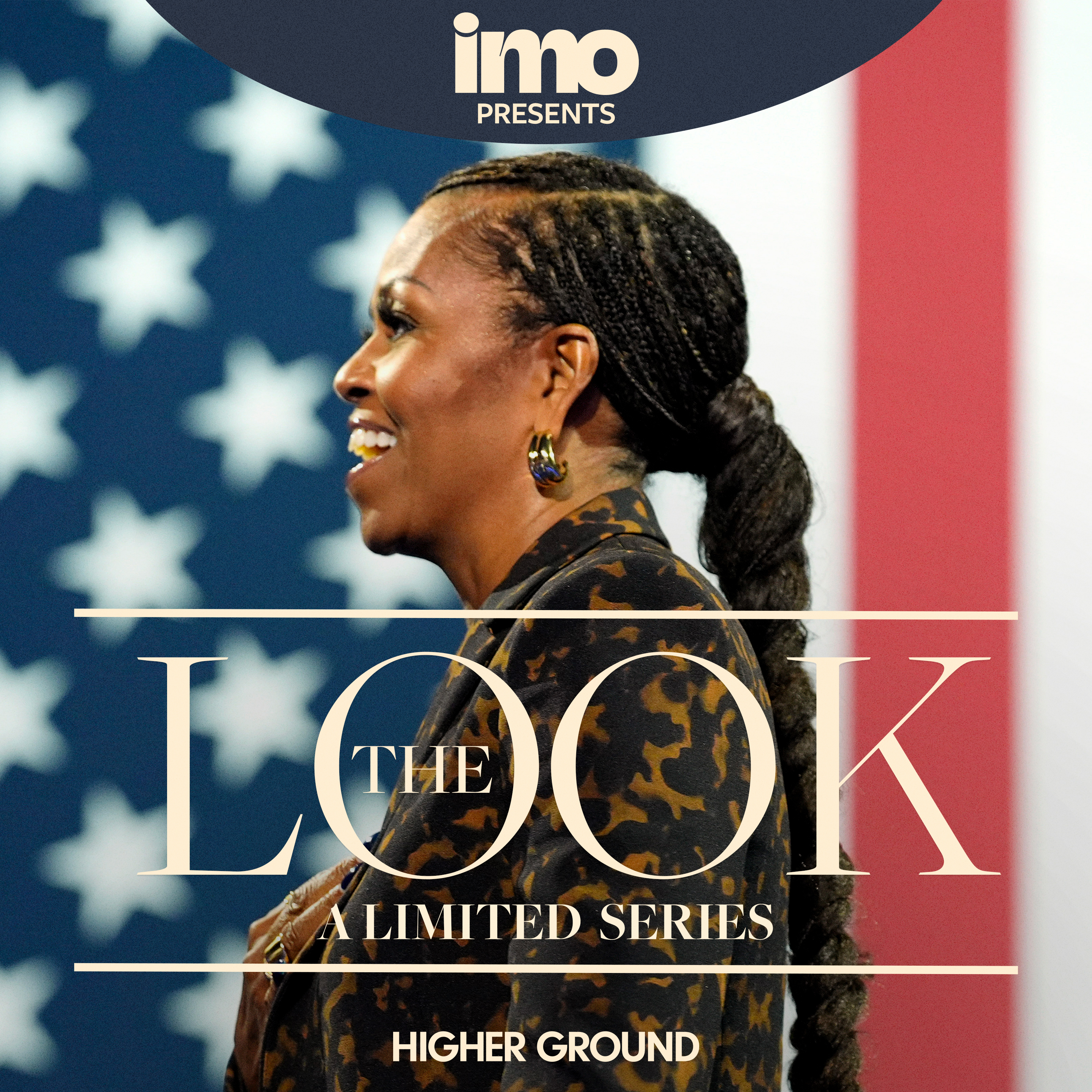
Welcome to the Look, a special series on imo. The look is also the name of Michelle Obama's beautiful new book, which is available for purchase now. I'm Julie Wilson, award winning journalist and beauty editor at large at Cosmopolitan, and it's my pleasure to be here with with Yene Demtu, renowned beauty expert, founder and owner of Aesthetics salon in Arlington, Virginia, and longtime stylist to Mrs. Obama and Marseille Martin, award winning actor, producer and founder of Genius Productions, and of course, the one, the only Michelle Obama. Welcome, everyone. All right, I need to know what your hair journey was. What was it like growing up in the south side of Chicago, being a beautiful little black girl? What were some of your earliest hair memories?
- [02:34]
Michelle Obama
Ugh. Sadly, it was combative.
- [02:38]
Julie Wilson
Okay.
- [02:39]
Michelle Obama
You know, my mother admittedly grew up saying that she was not a hair mom. She was one of seven kids, two little brothers, a lot of girls. But I don't think my mom wasn't a girly girl in that way. Right. So I think she was intimidated by hair and by my hair. Right. Because I had a lot of it. It was thick, it was all over the place. And so wash day for her felt like a battle. Right. And that's what it was. It was wash day. As I describe in the book it was like Sundays were over. You know, I felt imprisoned by my hair when I was a little girl because we didn't have the facilities. You know, you got your hair washed on the cold Formica kitchen sink.
- [03:36]
Julie Wilson
Right.
- [03:37]
Michelle Obama
That was annoying. You know, the back of your head hurt because you're leaning over it, and then the water is trickling out of a faucet. And sometimes it's hot, sometimes it's cold. And one thing I never realized back then, we weren't using the right hair care products for us. Because there were like, you got what you got at the grocery store.
- [04:01]
Julie Wilson
There was an abundance.
- [04:02]
Michelle Obama
There wasn't an abundance. There wasn't. You know, the soft sheen line hadn't really fully come out. So she was using wella balsam on my hair. And as Yanae now knows, I didn't even realize that that that product stripped all the oils out of our hair. It wasn't designed for black hair. So, you know, she'd wash it twice. And then the process of detangling that hair that without conditioning, I wasn't. By the time I. You know, I couldn't be.
- [04:37]
Julie Wilson
Right, right, right.
- [04:38]
Michelle Obama
So I think I was pretty good for a kid, but still took what felt like hours to comb through all my hair. And then the process of straightening, you know, it's like the hot comb on the stove. You know, talk about heat on hair with a little oil. It was that the yellow oil, the Ultra Sheen. Ultra Sheen oil. I still remember it. Cause I think maybe those were the only products we had. We had the ultra Sheen.
- [05:09]
Julie Wilson
I feel like this is like, really, like, so something we all have in common. Like, hair is such a shared experience for black girls. Do you guys remember getting your hair pressed at home?
- [05:21]
Michelle Obama
Oh, yeah.
- [05:22]
Marsaille Martin
Yeah. But that wasn't. It was funny enough, my mom tried to stray away from getting my hair straightened as much as possible. Because every time I'd get impressed when I was younger, it turned out horribly because I would either go to school and it would look crazy or I would do something.
- [05:40]
Julie Wilson
Right, right, right.
- [05:40]
Marsaille Martin
Funny story. Cause I always used, like, curling rods. Like, she used to just rod curl my hair. And then I'd wake up and then take the rods out and it just be in like a. That was my principal hairstyle. So when I got it pressed with the hot comb and in the kitchen, I used to think I was like the little white girls in my class with her hair straight. And I remember every. Every lunch before recess, they would go into the bathroom and they would get a cup of water and straighten Their hair like this. And I'd be like, yeah, yeah, okay.
- [06:14]
Julie Wilson
Not understanding what reversion was.
- [06:19]
Marsaille Martin
I did it with them thinking that we kikiing like, ha ha, yeah, yeah. And they like, we like your hair. I'm like, thank you, thank you. And then it's Texas heat too. So I'm talking to one of my other friends. They're like, your hair. I'm like, what? I'm on the top of the slide. I'm like, what are you talking about? It's like, oh my God, that's so funny.
- [06:41]
Michelle Obama
Before our very eyes.
- [06:43]
Marsaille Martin
It was like my mom said, girl, what happened?
- [06:46]
Michelle Obama
What were you thinking? And that was the thing about once you got your hair pressed, you were captive, you know. And I think that that, you know, goes along. And I was a tomboy. I loved playing sports. I was out there sweating. I used to want to be. And I liked an Afro. One of my favorite. I loved baseball was a played softball when I was little. One of my heroes was Jose Cardinal on the Chicago Cubs. And I don't. He was black first baseman and he had this huge afro that he would put his cap on and then pick it out.
- [07:23]
Julie Wilson
And so the hair was framing the hat.
- [07:26]
Michelle Obama
And that's how I love to wear my hair with the cap on and have it picked out at bat, you know, So I wanted to be active. But when you get your hair pressed, you know, Mom's like, don't touch your hair. Don't, don't.
- [07:40]
Julie Wilson
You almost gotta walk around like this, right?
- [07:42]
Michelle Obama
Hope it doesn't rain and it's not just pressed. And don't think about swimming.
- [07:46]
Julie Wilson
Even curls, like ponytails, right.
- [07:50]
Yenae Demtu
On Sundays, I only got my hair pressed for special occasions. But regularly, my mother, Sundays, you lay out, you sit between her legs, you try to touch your head, she hits you with the comb. Put your hair in pigtails and just even braids or two twists.
- [08:04]
Julie Wilson
It was.
- [08:05]
Yenae Demtu
And it was an all day experience.
- [08:06]
Michelle Obama
Yes. Yeah, absolutely.
- [08:08]
Yenae Demtu
And it was one of those things my brother freely could run around, he could play in the neighborhood, he could do whatever it is that he wanted. But on Sundays I had to sit and get my hair done. And my mom, similar to Mrs. Robinson, my mother only went to this beauty salon. She did not. She never took care of her own hair. So trying to do my hair, it wasn't even if I was tenderheaded, it just. She wasn't really good at it right either. So it was just kind of like, this is painful and it doesn't look good at the end, but it's just what you do.
- [08:39]
Julie Wilson
Yeah. My father. Funny story. My father actually pressed me in my sister's hair.
- [08:43]
Michelle Obama
Wow.
- [08:43]
Julie Wilson
Like, he grew up with three sisters in North Carolina and had, like, the hot comb on the stove, the whole nine yards. And, like, just captive audience with his girls, like, pressing our hair. Like, grease on the back of his hand.
- [09:00]
Michelle Obama
Oh, man.
- [09:00]
Julie Wilson
Like, so interesting.
- [09:01]
Michelle Obama
I don't think my father ever touched my hair. I can't think of a moment. It's a very, like, that's really experience.
- [09:08]
Julie Wilson
And it's a bond, right?
- [09:09]
Marsaille Martin
Yeah.
- [09:09]
Julie Wilson
That bond right here, sitting, you know, between the legs, getting your hair braided, that sort of thing. And I feel like we probably all got burnt on the forehead at some point.
- [09:18]
Marsaille Martin
Right on the back of my neck.
- [09:20]
Michelle Obama
Oh, yeah.
- [09:21]
Marsaille Martin
Trying to get in my kitchen. It was like the back of my great grandma.
- [09:26]
Julie Wilson
It was always. The worst one was on your forehead, though. Cause, like, you can't cover that. Or you would get like. I love that picture of you when you're little with, like, your ponytails and that bang barrel bag from the sponge roller.
- [09:37]
Michelle Obama
From the sponge of burns. Well, I eventually, because my mother was so bad at doing my hair, I started going to miss Phillips little salon in her basement across the alley. Because my mother gave up so soon. So here I am, six years old, probably going across the alley with my little money to Ms. Phillips basement. You know, the kind of basement salon that I think is almost in every black neighborhood. Still. Still.
- [10:07]
Julie Wilson
You have a song.
- [10:08]
Michelle Obama
We gonna talk about that? Yeah. And she could press my hair faster, get it straighter. And then she would do this thing where she would make a bang. And she put this kind of hair stick that you put on your forehead that would hold the bang on your forehead. I don't know if you. Like a wax stick.
- [10:26]
Marsaille Martin
Yeah, that's interesting.
- [10:27]
Michelle Obama
It wasn't a wax stick. I remember it felt like a hair glue of some sort. But she just put it on my mother's forehead and put down so the bang would stick to my head. And I always thought that was kind of cool.
- [10:42]
Julie Wilson
Almost like an edge. Edge control.
- [10:45]
Yenae Demtu
Think about Spritz and, like, pump it up back in the day. So it's probably like a Bronner Brothers or Dudley's product.
- [10:51]
Julie Wilson
Yeah, that's cool. What up?
- [10:54]
Marsaille Martin
Yeah, I was like, yeah. She was doing arts and crafts.
- [10:57]
Michelle Obama
Like, Oregon.
- [11:00]
Julie Wilson
Innovative. Very innovative. We're so innovative. Just period. But I want to talk about the salon of it. All right. Like, going to the salon. I mean, that's such an experience. The other women there. What Are they getting their hair done? What are they talking about? I mean, you own a salon. Do you have that level of community and a village sense with your customers?
- [11:23]
Yenae Demtu
Absolutely. You know, when we opened UP Aesthetics In 2017, one of the things that I realized living in the dmv was that I grew up in Orange county growing to the salon. The salon experience. Not salon suites. No shade to salon suites. But being in a communal environment, it's a place where we organize. It's a place where we build community. And so in the dmv, I didn't feel like that really existed. And so when we opened up aesthetics, I was very adamant about building a space where women of color can come that are in the professional workplace, that aren't there all day, but they still get that salon feel. Like you still. It's like, oh, there's, you know, Michelle, that's.
- [12:01]
Michelle Obama
She.
- [12:01]
Yenae Demtu
She has a standing appointment on Friday, or, you know, you're not gonna have somebody coming in with the bootlegs or, like, selling a food plate, but you still are getting that camaraderie, and you're still getting hair care. And I think now more than ever, you don't see hair care take place in the salon because everyone is doing quick trends. You know, people are slapping on a wig.
- [12:19]
Michelle Obama
Cool.
- [12:20]
Yenae Demtu
That's great. That serves a purpose. But how are we treating our hair underneath? And so it was really extremely important to me to build a space in a community where that existed.
- [12:28]
Julie Wilson
Were you up in the salon when you were young?
- [12:30]
Marsaille Martin
I was. I was up in the salon. And then, of course, I started black ish when I was nine. So that was a whole new world. That was kind of my version of the salon, in a sense, you know, And I was with people that I worked with every day. It'd be whether it was 7:00am or 7:00pm like, that's where we were just constantly getting our hair changed for different scenes. And that was my first time really getting to explore the amount of styles that can be for my hair, you know, because I think growing up in Dallas, it was really only what I was telling y', all, like, the rod set with the curls or, you know, my terrible press, you know, get my hair straightened. Right. But working with Oroxy Lindsay, which is absolutely amazing. So talented. So, so talented and so unique and a perfectionist and really, like, transforms your hair into something different that you would have never thought in a million years. Like, oh, I didn't even know it could look like this. So I. Growing up with her, it was really, really special to Be able to see that and made me learn more about it, you know, because both. Both my mom and my little sister have different hair textures that I would always, in a way, feel interesting about myself. Of, like, hmm, there's two different textures. But, like, theirs is very fine, really thin. Can be in a ponytail, like, in 20 seconds. Mine is super thick in the middle. Like, I can't even get it. I have to use a hair clip. And it just was really different. And especially growing up on Black Ish with Yara and Tracee, they have two different hair textures than I do. So I needed that person to help me figure out what was for me to where I constantly didn't have to question, you know, if my hair even told a story, you know, But I.
- [14:23]
Julie Wilson
Have to say, watching it, and I'm sure you guys would agree it was so beautiful one seeing a black family like that, you know, for us to have that storytelling beyond the Cosbys and, like, that sort of thing. But also the hair inspiration, right between you, Yara and Tracy, like, I would just be like, oh, I wanna do that. And look at that. I know, like, edges are saying, I.
- [14:43]
Michelle Obama
Wish I had you when the girl were little. Because I used to run out of styles. I just creatively am like, okay, one poof, two poofs. You know. But then I'd see your character and I'd be like, ah, I could have tried that. Yeah. Such cute stuff. Well, it's just. It's just amazing how we don't see a lot of inspiration for our type of hair on television. And I think that that was a big part of that. Part of what kind of got me off on the wrong track in terms of loving my hair was because when we were growing up, we had no images. There were no images of black hair, black characters, let alone black children. You know, we grew up watching the Brady Bunch. It was Marcia and Jan, and it was the Partridge Family. And it was. I think the closest young person that I saw was Janet Jackson, and she was still a baby, you know, so with the Jackson 5. But Janet Jackson wasn't a part of the sort of American zeitgeist in the same way. So the notion that we grow up playing with Malibu Barbie and who wants the Chrissy doll with the curly hair? Because you're always trying to fix the hair. You want the hair to flow. And I think that a lot of women don't, Women, white women, don't understand how problematic it is for young black girls not to see themselves in popular culture and not to Pay, give respect, and to show examples of our beauty.
- [16:24]
Julie Wilson
And that we are beautiful. Right. Like, you have to see it and for it to be celebrated in the world to say, wow, yeah, it's being celebrated. Of course I'm beautiful. But if you don't see that, so was your mother who was. Who was telling you you were beautiful?
- [16:40]
Michelle Obama
You know, we didn't talk about beauty in my household. You know, I mean, it wasn't. You know, my parents were more focused on how smart you were and grades. I don't know whether that was intentional or not, but I don't remember us sitting around focusing on looks, period. Right.
- [17:02]
Julie Wilson
Yeah.
- [17:03]
Michelle Obama
So it probably wasn't until I was maybe in high school that I started thinking about taking control over my look. And I think that had to do with the fact that I went to a neighborhood public school. So From K through 8, I was in the neighborhood. And then I got into a magnet high school and I drove across the city, and it was a school that attracted kids from all over the city. So it was the first time I was around all kinds of kids, all kinds of racists, all kinds of socioeconomic backgrounds of black people. So Joe Dudley was in my high school class, the son of Dudley, and they were wealthy people. You know, there were people, young kids like me, who were going downtown to get their hair done. They were. We had commute through downtown Chicago, so I started going into the department stores there, and I started to see, oh, like there are black girls that are. That do have a lot of variety. They are doing different things with their hair. I think it was high school when I started discovering the possibility of style in clothing and in hair, because I was around a lot more people.
- [18:25]
Julie Wilson
And you got creative, you started doing.
- [18:27]
Michelle Obama
And I started exploring. I started looking for my own hairdressers, you know, started getting recommendations. I would see somebody and go, oh, girl, your blowout looks nice. Where do you go?
- [18:37]
Marsaille Martin
Yeah.
- [18:37]
Michelle Obama
And I would take my little babysitting money and I go down. And that's where I found my first hair. My hair salon community was in high school. When you talk about that salon, it was Ronnie Flowers, the salon with Van Cleef. I started going to him in my senior year in high school, and he did my hair from senior year in high school until I went to the White House. Wow. That relationship was that close.
- [19:04]
Julie Wilson
That is beautiful. And that's what we're talking about, that salon relationship.
- [19:15]
Carl Ray
Hi, I'm Carl Ray, and I am Michelle Obama's longtime makeup artist. My work has introduced me to so many interesting experiences. I've worked in film, tv, print, fashion, and beauty all around the world. I've also had the pleasure to work with many celebrities and dignitaries along the way. And I'd love to work with you. So the next time you're booking on Airbnb, click on the services tab. You'll find professionals like me and my team. We can help make your next special occasion even more memorable. Weddings, galas, birthdays, headshots, or anytime you just want to feel and look your very best, you can find me@airbnb.com services.
- [19:56]
Craig Robinson
Hey, gang. Craig Robinson here talking about Amazon today has absolutely everything for everyone on your list. And with their early holiday deals, you can get a head start no matter who you're shopping for. And let me tell you, I am going to be completely honest with you. I'm the guy who waits until the last minute, but it's because I've been shopping for these people my whole lives. But with Amazon's early holiday deals, that means I can shop for everybody right now. I mean, my kids, they seem to be growing out of their clothes. They want the latest video games. I can get it on Amazon. My older kids could use stuff for their respective homes. I can get it on Amazon. My wife, my sister, the hardest people for me to shop for. But hey, don't worry, I don't have to guess. Amazon's got deals on everything. Electronics, toys, fashions, home goods, you name it. So whether it's your mom you're shopping for or your coworker or that neighbor down the street who always shows up with a nice gift for you, you're covered. And listen, shopping early means I'm done before all of the holiday chaos even starts. Which, if you ask me, is the best gift of all to myself. So, everything for everyone on your list. Amazon's got it. Shop Amazon early holiday deals now. You'll save big. Even after years of coaching basketball, I'm still trying to get better. So when I saw Steph Curry's class on Masterclass, I had to check it out. He breaks down everything. Shooting, form, footwork, mindset. And it reminded me how the little things make the biggest difference on and off the court. With Masterclass, you can learn from the best to become your best. For about $10 a month, billed annually, you get unlimited access to over 200 classes taught by the world's best athletes, business leaders, chefs, and more. Steph's lessons on preparation and confidence really stuck with me. It's advice I've started using in my own routine and the classes really make a difference. Three and four members feel inspired every time they watch. And every new membership comes with a 30 day money back guarantee, so there's no risk in trying it. So if you're ready to level up on the court, at work or just in life, now's the time. Get 15% off any annual membership at Mass. Masterclass.com imopod that's masterclass.com imopod for 15% off.
- [22:50]
Julie Wilson
But I love Michelle, how you were saying in high school, you kind of realized like, I always love asking the question, when did you know black was beautiful? And like you kind of having that realization then what about you, Marseille and Yanae? Like, when did you know black was beautiful?
- [23:05]
Marsaille Martin
Ooh, when did I know black was beautiful? I mean, I think just starting in my household, like I grew up with, of course my parents were around, but also my great grandma lived with us. So basically like my mom's mom and then my mom's mom's mom all lived.
- [23:25]
Yenae Demtu
In the same house.
- [23:26]
Julie Wilson
Intergenerational.
- [23:28]
Marsaille Martin
Exactly. And then my dad's mom also lived in our house. So it was just full of grandparents.
- [23:33]
Julie Wilson
That were loving on you.
- [23:34]
Marsaille Martin
That was just loving on me. And funny enough, we didn't talk about beauty too much either. But it was more like if I'd come home from school and I'd be like, this person said this to me. My mom would be like, f em, you're gorgeous right now. And I'm like, oh, okay, okay, that's cool. But I especially learned from my mom's mom, who I called my booba. She had a range of wigs and a range of nail polish and even my great grandma collected purses. And they just always were about self, always first and then it would be like, you know, midday, they would cater to everybody, you know, start cooking, playing music, you know, making sure I was okay. And my puppy at the time. And it was really just, it was sweet when I just started observing more, you know. And that's where I learned just that black was beautiful. And back then and now and seeing the transition into, you know, when I was young, growing up in Dallas with them and then now them being my, my angels up above and kind of guiding through those situations of like, wow, my booba would have said this at the time or if someone, you know, told me this, like, I would remember everything that they said to me. So that's definitely the first time I learned. Absolutely. Yeah.
- [24:56]
Julie Wilson
Love that. What about you, Yanae?
- [24:57]
Michelle Obama
High school.
- [24:58]
Yenae Demtu
I think high school is probably like the pivotal moment I was a cheerleader, similar to Marseille. All the girls wanted to put water on their hair. And I knew, I knew.
- [25:07]
Marsaille Martin
I was like.
- [25:08]
Yenae Demtu
You were like, my hair can do that?
- [25:10]
Julie Wilson
No, no.
- [25:10]
Marsaille Martin
See, I didn't know. I was like, my hair can't do that.
- [25:14]
Michelle Obama
Crinky dope, right?
- [25:15]
Marsaille Martin
I said, they laughing. I want to laugh too.
- [25:17]
Michelle Obama
They were like, this can make our hair crinkly.
- [25:19]
Yenae Demtu
We're just going to put some water on it. And I was like, I can't put water on it.
- [25:23]
Julie Wilson
Right, right.
- [25:24]
Yenae Demtu
And they're like, why? And I was like, cause my hair won't do what your hair does. And coming home again, my mother was just kind of like. My parents were very protective. We grew up in Orange county, predominantly white, an Asian neighborhood. I was the only black in a lot of environments. And so my parents were very protective of like, you are fine, you're worthy. But on the weekends, we spent all of our time in la. So it was two different worlds that I would see. I would be in Orange county and I would live in that world. And then I would go to LA and I would be around like predominantly black neighborhoods. So it was two different contrasts. And so I got to see both sides. And I felt more comfortable when I was around more black folks than I was at school. Because at school it was just kind of like the way that I speak and like, my hair is different in how I present. And then I'm first generation Ethiopian American. I have a funny name. There was just so many. It was, it was layered for me. So high school is when my parents really started to be like, you're beautiful, you're fine. Like, I was, I. I was a cheerleader. I ran for homecoming princess. It was then that I was like the self esteem and the confidence was being instilled in me. And it was like, you're perfectly fine the way that you are.
- [26:39]
Julie Wilson
And the pride of being like a black woman in that space.
- [26:41]
Marsaille Martin
Yes.
- [26:42]
Yenae Demtu
Because in the beginning you're ashamed. You're kind of like, I'm different. You retract. You don't wanna say too much. And then you realize, like, nope, I'm gonna say what I want.
- [26:51]
Julie Wilson
Right? But Michelle, like going from the south side of Chicago to Princeton, what was that transition like? Because that's gotta be a lot. You're. Now you were in high school, you're learning that black is beautiful, that you're experimenting with your hair and doing all the things. So what was the Princeton experience like?
- [27:08]
Michelle Obama
You know, it's interesting because. And I enjoyed my Princeton experience. I had great education, I made great friends. I think one of the things that saved me was that I wasn't curious about assimilating.
- [27:26]
Julie Wilson
Okay.
- [27:27]
Michelle Obama
What I had learned in high school and growing up on the south side of Chicago and growing up in a big extended family, is that I need to go where I'm loved and have community.
- [27:40]
Marsaille Martin
Absolutely.
- [27:41]
Michelle Obama
Now, when it came to hair, well, that was another story. Cause I'm in Princeton, New Jersey, and.
- [27:48]
Julie Wilson
Where are we getting our hair done?
- [27:49]
Michelle Obama
What you do is you set down foot and you start finding all the black girls where you get your hair done. Where do you get your hair done? And there were some girls that were sophisticated enough that by then I had a relaxer way too soon. But I gave up on the pressing comb very early, and my mother was happy to see it go by. Then I was in a relaxer. So how do you get your touch ups? And for those of you who don't know about relaxers, for black people, it's a process of chemically straightening your hair. And that means as your hair grows out in its curly style, you need to continue to straighten that new growth that comes in, which is every six week process. And now here I am, a freshman in college. So there was a department store called Bambergers in a mall near Trenton. There was a hair salon there. I went there for the first year and it was just another hassle, right? Because in addition to going to classes and trying to have a life and go to a party, I had to make my hair appointments and go off campus and get on a bus and go to the mall.
- [28:57]
Julie Wilson
I can't really.
- [28:58]
Michelle Obama
It just, it's just like, oh, geez. Always a thought. But I discovered I met my D.C. friends, a lot of girlfriends from D.C. so now I'm out. I'm not just out of my neighborhood and in the city. I'm in the. I'm on the East Coast. And I'm finding that there's a whole different attitude about hair for my girlfriends who live in D.C. because there were a ton of braiders in D.C. and that's when I was like, oh, I could be getting my hair braided. Yeah. So sophomore year, I visited one of my girlfriends, got my hair braided. Then I went back to my salon, found a braider, and I started wearing my hair braided in sophomore year. And a lot of that was because I just needed. I needed to be efficient. I needed to be focusing on class and having fun and not worrying about getting touch ups. That was the first time I felt not only Beautiful in the braids, but free.
- [29:57]
Marsaille Martin
Yes.
- [29:58]
Julie Wilson
You know, protective styles will really change your life and allow you to just, like, live and be. But I wanted to ask you guys, too, like, once you got that freedom, college, or going off to do your career or whatever, did you guys ever do anything that you're, like, now? Left to my own devices, like, why did I do that?
- [30:18]
Yenae Demtu
Cosmetology school. I did everything under the sun. I had pink hair, I had blue hair.
- [30:24]
Julie Wilson
You did the color of it all.
- [30:28]
Yenae Demtu
You bleached my hair.
- [30:29]
Michelle Obama
You lifted my hair, bleached it, and.
- [30:32]
Yenae Demtu
Then put color on top, and then it fell out. And I used to have really thick hair, and I just blame myself. I know better now. And I was. You're experimenting in cosmetology school, and you're just trying different looks and you're trying to be a creative. But again, it's also one of those things where my counterparts were doing all these different things with their hair. So I was like, I'm gonna do the same thing too, and I'm learning about this, so why not?
- [30:51]
Julie Wilson
I put the water in my hair too. That was your water moment.
- [30:55]
Yenae Demtu
But my hair didn't respond the same way. There was a little more care, nourishment, love that my hair needed beyond just using whatever products, doing whatever. And you know, what we were learning in hair school wasn't for my texture, but I didn't. I was just like, well, I'm in an educational institute, so of course they're gonna guide me in the right way. And it wasn't. And afterwards, I was like, okay. So then I was like, no more color, no more nothing. I'm just gonna take a break from it all. But it was definitely an experiment.
- [31:27]
Julie Wilson
Yeah. What about you, Marsay?
- [31:29]
Marsaille Martin
I'm trying to figure it out.
- [31:31]
Michelle Obama
It changed you so much.
- [31:33]
Craig Robinson
Yeah.
- [31:33]
Marsaille Martin
I think, honestly, I've been so secure in the styles that I like since I was little. I really didn't change it too, too much. It's so funny, because I learned. I'm, like, thinking more about the mistakes that happen after, like, transitioning to one style to the next. So, like, when I get my hair braided and it's time to take them down, it was just me by myself, trying to take my hair down, you know, trying to be grown. Like, okay, I got you, Mom. I got it, Mom. I was like, my hair's. My hair, you know, stayed the same. I'd cut mine. I cut your frame.
- [32:09]
Michelle Obama
Yeah. I couldn't.
- [32:12]
Marsaille Martin
I didn't know you had to start here. I cut it up here. You were like, it's not that. Like, yeah, yeah. And then I take pictures in my little bob, my little braid bob that I made.
- [32:22]
Michelle Obama
Like, oh, this is cute.
- [32:23]
Marsaille Martin
And then I take it down and then it just looks really bad. It would look. It would be like, part of it's up here, part of it's down here. And it just was. Yeah, but I just. I'm thinking about, like, those kind of little mishaps that just taught me more about just my hair overall. I'm like, oh, okay, maybe I just need to take this step before taking this step. And I've dyed my hair before, but never pink and blues. It was probably not. It was never the pink certified. Yeah, it's currently dyed now. But the first time I dyed, it was like a blonde. Like, it was like a honey blonde. Yeah, it was a honey blonde. And it was 2020, you know, no one. We was inside, we was in the house. And yeah, that was like the one time where I really. I really dyed my hair. And it was funny because back then, you know, everything was really, really remote. Of course, during 2020, so it was the BET Awards and I had to present in my backyard. And that was the first time people saw, like, the honey honey. Yes.
- [33:33]
Michelle Obama
We gotta pull up that picture.
- [33:34]
Julie Wilson
Right, right.
- [33:35]
Marsaille Martin
Y' all can pull it up. Y' all can pull it up. But I think that was definitely. That was a time. Let me just say that that was the time. And then there was comments where I was like, why is her hair blonde? Like, is that a wig? And I was like, I don't know what to do. I was like, I thought I liked it. Yeah, I was just trying stuff. And my mom was like, it's okay, look effle like you like your hair. So I did a video that was just like, addressing the haters. And that was very, very funny.
- [34:07]
Julie Wilson
I love it. I love the humor. But the clap back and all of that, that brings up such a good point about our hair. Is people touching it, petting us. Right. And how have you guys navigated that? Because I've definitely been on the New York subway and someone's hand is just like, in my head where I've had superior at jobs touch my hair. And it's just like, so what did.
- [34:34]
Michelle Obama
You do in those instances?
- [34:35]
Julie Wilson
I mean, when I was on the. But it was like, no, please don't touch my hair. Actually, hot tip. Never touch a black woman's hair, period. You shouldn't touch anyone's hair. But like, Solange wrote a whole song about It. You can go listen to it on. You know what I'm saying?
- [34:51]
Michelle Obama
On top of that.
- [34:52]
Julie Wilson
But, like, don't touch my hair, please. When it was in the workplace, it was harder. Cause this is a superior. And so, like, and it was a white woman. And it's hard because you're like, in that moment, you just feel like, me too. Like, you just feel like, oh, my God, that was uncomfortable. How do I put that person in their place and keep my job and my livelihood? And so you just internalize it and you go home and cry in your husband's arms. And that's what I did. But. And then cussed her out, like, you know, at home with my friends. But, you know, that is a very unique experience I feel like most black women have encountered where someone wants to touch your hair or how is that? Like, I want to feel it. What's the texture? And like. But unsolicited.
- [35:35]
Michelle Obama
But I think that's why conversations like this, why I wanted to talk about hair in the look. Because I think I want us as women of color, all the women of color in the world with all the different textures. I want us to get comfortable with the subject of our hair and owning our beauty and being a part of educating in our circle of conversations, welcoming people into these stories, circles of conversation, to have questions answered and to help people understand the boundaries that they take for granted or they don't offer us. And this is completely true when it comes to the workplace. I mean, the notion that there is a right way for hair to look and to feel is really a presumptuous kind of. Wow. How does anyone get to the point where they think that they can comment on somebody else's hair? And let me tell you, as first lady, even though I wore my hair braided in college, when it was time for me to walk into that law firm to start getting jobs, it wasn't even a question in my mind.
- [36:53]
Julie Wilson
You just knew.
- [36:54]
Michelle Obama
It was just like, it was unknowing. It wasn't up for discussion. There was a standard of hair, and it required a lot of care. I mean, it's actually to get your hair blow dried. And I mean, I had a standing. We all know the standing appointment that is weekly.
- [37:11]
Julie Wilson
You have a stand every two weeks.
- [37:12]
Michelle Obama
Ridiculous. I had one weekly. And it's costly and it's time consuming in ways that a lot of people don't understand. You know, coming into the White House and we were having conversations. I came in with a relaxer, and I knew the importance of making broader statements about hair as the first black first lady. But I will tell you, I consciously understood that, at least until people knew me, which took eight years, that I needed to not make hair a part of the conversation, which is why I'm taking the time to talk about it now, because it always is an important part of a woman and a black woman's journey. But I couldn't risk.
- [38:07]
Julie Wilson
I know that was such a powerful statement when you came out and said America wasn't ready.
- [38:13]
Michelle Obama
It wasn't ready for that. You know, I mean, they couldn't handle me and my husband giving each other a fist bump on stage.
- [38:19]
Julie Wilson
They couldn't handle your arms out with.
- [38:22]
Michelle Obama
My arm in your portrait.
- [38:23]
Julie Wilson
They were like, what is going on? Like, could you imagine if you came down with, like, some box braids? Like, they would be like, what is that? Why is she wearing her hair like that? You know? Like, I think that that's so profound that you were able, like, because, two, you could have been like, screw it. Say it loud. I'm black and I'm proud. I'm gonna do the things. But that could have also overshadowed everything else that you guys were trying to do politically.
- [38:50]
Michelle Obama
And there's also. You know, this is. We talk a lot about change and the evolving and the speed of it. And I know the generationally. People get impatient, and they want change now. And change is one of those things. It's like, you gotta read the room sometimes and feel the time, you know? In my mind, I knew there was going to come a point in time in my public life where I was going to get my braids back in. I was gonna reclaim that. But the bigger point of getting the ACA passed and doing work with health, with kids and military families and all the things that were on my husband's agenda, fashion and hair, had to be a backstory for the moment.
- [39:45]
Julie Wilson
Choose your battles. You know what you had to get done.
- [39:47]
Michelle Obama
Exactly. But I knew that representation is important. I knew that then. I know it now, which is why we're doing this, because now it's time. We should now be in a point in our nation's history, even though sometimes it feels like we're going backwards, that we have to start accepting and embracing the differences of all of us, that there isn't a standard of beauty, and it doesn't look like what's on the magazine cover. That's taste. That's just sort of what you might happen to like. But it isn't the standard. And we have to start educating people about all kinds of beauty and Our beauty is so powerful and so unique that it is worthy of the conversation and it's worthy of demanding the respect that we're owed for who we are and what we offer to the world.
- [40:56]
Julie Wilson
Absolutely. Absolutely. Marseille and Yanae, I wanna know what you guys also think about the this now, in this day and age, the freedom, right? You're styling people's hair and, like, overseeing your salon. You're out here with these amazing braids and like, I. I've scrolled through your Instagram so much, like seeing all of the hairstyles that you do, it seems like there is this beautiful level of freedom where you're not not second guessing whether I want to do this style or not, or present myself in this way and not be, you know, criticized in a huge way.
- [41:32]
Marsaille Martin
Yeah, I know. For me, it's just about, I think in this day and age, too, the only thing that I can really focus on is my originality, just what I bring to the table, you know, such as anybody else, I think that I am lucky enough and beyond blessed to have a family that never told me that I am flawed in any kind of way when it comes to the styles that I want to do and the decisions that I choose to make. And I trusted that. I trusted them. I trusted my family, I trusted my grandparents and just the people around me that said that it was okay to do what my heart desired. And I just kind of wanted to carry that throughout. Regardless of what social media said or anybody that I would approach on the street said, I trusted that statement. I didn't trust, you know, anything else. So for me, that's just kind of what I wanted to do. And I am happy during this time. People have started just to tell their own story and have their journey speak for themselves when it comes to their hair, makeup, fashion, or whatever the case may be. So, as a creator at heart and somebody that just kind of wants to brainstorm and just do whatever that excited me. So I think that's just the energy that I carry in any red carpet, in anything, whether I'm in the house, going out to the grocery store, or I'm going to the next event. That's just what it is. And I've had my braider, Twi, who is absolutely amazing in LA. I've had her since I was 13 maybe. Really, when I started little in that whole trajectory of everything, that's really when I started being like, all right, all hands on deck are my people. Who is my team, like, who are the people that understand me and also would Be able to explain the things that I don't understand in a new light and in a new lane that I can create for myself.
- [43:55]
Julie Wilson
So I was gonna say, do you bring your glam with you? Like, on projects? Are you very adamant if someone reaches out to you for a project, you're like, I'm bringing my hair and make. Cause I'm not leaving it to y' all to figure out what this face and this hair gives.
- [44:12]
Marsaille Martin
It's really interesting. It's funny. Cause I've gotten pickier, but I wasn't like this. I wasn't like this at all. I've gotten pickier. The more stories that I've had throughout my life and different memories. I wasn't as picky, you know, if Roxy wasn't with me or anybody else, I'm like, all right, let's see who's from New York? I mean, New York got some people, of course. And then it was this lady who came in, didn't know how to lay some edges. She had a wax stick and a straightener to put in a ponytail. It was just. It was the craziest thing. I was going to a. I was going to a Prada fashion show at the time.
- [44:50]
Julie Wilson
Oh, no.
- [44:50]
Marsaille Martin
And it was.
- [44:51]
Julie Wilson
And you're probably like, oh, my gosh, I want to slay.
- [44:54]
Marsaille Martin
That was crazy. I had to be 14, 15 at the time. And my mom came in and she said, all right, you have a good one. The lady left. And she said, where. Where's my, you know, the pom pom bun? The pom pom bun. She popped that bun in. She drew the draw shoes, like.
- [45:16]
Michelle Obama
And put some bobby pins in.
- [45:19]
Marsaille Martin
Got a little scarf.
- [45:19]
Julie Wilson
She's like, not today. My baby's not gonna be at the product show.
- [45:22]
Marsaille Martin
Luckily, Prada got a scarf. She said, the Prada got again. Us making something. Yes.
- [45:37]
Craig Robinson
This episode is brought to you by our friends at Rivian and their fully electric full size SUVs and pickups that are designed for all of life's adventures. I have really enjoyed driving around in the R1s that Rivian outfitted our family with. I can't believe there's a full size, all electric SUV that actually fits someone as tall and long as I am. You know, we've done a lot of travel in the Midwest this summer, and a couple of the features that I like are, number one, they're easy to find charging stations. The Rivian app helps you with that. And here's something that's really cool. If you're not in your vehicle, there are cameras that record any movement around your car. What's also really exciting is that Rivian just launched its all new R1S quadrant. It's Rivian's fastest, most capable vehicle yet. Four motors, one per wheel for precision and performance on any terrain. Engineered for sharp corners, wild trails and maximum adventure. From distinctive accents and badging to exclusive new wheels, Quad is built to stand out wherever it takes you. So when you get a chance, go check out the all new R1S quad and all of Rivian's amazing vehicles now@riviAn.com this episode of IMO is brought to you by Progressive Insurance who help people move forward and live fully Owning a home can be one of the most powerful ways to build financial security, but for many, especially first generation buyers, it can feel out of reach. That's why I appreciate what Progressive is doing. In 2024 they contributed over $7 million to help individuals and families break the cycle of renting by providing support, offering educational resources and developing tools to build long term financial stability through home ownership. Their work goes beyond just insurance. They're opening doors through their newly created Up Payment program. Progressive is helping first generation home buyers move closer to the dream of home ownership by offering eligible applicants a chance to receive a down payment assistance grant. You know, owning a home for me made me feel grounded and also set me up for the future. And as a coach, when your life is dependent on wins and losses, it's really important to have the comfort of a really nice home to come home to, especially for your family. Homeownership is one of the biggest investments you'll ever make and Progressive wants to help more people take that life changing step. Learn more today@progressive.com OpenTheHouse this episode of Imo is also brought to you by Acorns. Acorns is a financial wellness app that makes it easy to start saving and investing for your future. You don't need to be an expert. Acorns will recommend a diversified portfolio that matches you and your money goals. You don't need to be rich. Acorns lets you get started with the spare money you've got right now. Even if all you've got is spare change. You know, I was in investment banking for almost 14 years and one of the best pieces of money advice I've ever gotten was compounding makes a big difference in savings. It only takes a little money put in time after time to start working for you. So sign up now and join the over 13 million all time customers who have already saved and invested over $22 billion with Acorns plus Acorns will boost your new account with a $20 bonus investment offer only available@acorns.com IMO. That's a C O R-N-S.com IMO to get your $20 bonus investment today. Whether you're just starting out or looking to grow what you've got, Acorns makes it simple to invest and build a better future. Paid non client endorsements compensation provides incentive to positively promote Acorns Investing involves risk Acorns Advisors LLC and SEC registered investment advisor view important disclosures@acorns.com IMO.
- [50:21]
Michelle Obama
Well, I on the other hand, like my people.
- [50:25]
Julie Wilson
Yeah, I love my beauty. I mean, she's been with you in the White House, but I want to talk about this level of freedom now. Yeah, I love this because this is you have been giving us looks. You too have been creating such moments, hair moments. Talk about that freedom and the collaboration you guys have now that you can kind of step away from the whole respectability politics of the White House and you can have fun. How is it like collaborating? Do you guys come to each other with ideas?
- [50:55]
Yenae Demtu
I do.
- [50:56]
Julie Wilson
Like how does that work?
- [50:57]
Yenae Demtu
We do collaborate.
- [50:58]
Julie Wilson
We need all the tea.
- [50:59]
Yenae Demtu
The main thing for me is making sure that she feels beautiful and she feels empowered and anything that we do, it's always a conversation. And it's not just a conversation between myself and Michelle, but it's a conversation with the whole glam team. It's not about owning a part of her. And I think that that's what makes our team so special is that we collaborate. Asking Meredith and Carl, like, what are your ideas? Like what is she wearing? Where is she going? What is she doing? And then once we figure that out, then we go, we individually have conversations with her and I'm like, I'm thinking this. So depending on what the neckline is doing. Like earlier we talked about putting her hair up because she had high shoulders or just being down and playful and then also having her have the freedom where she doesn't have to depend on us. I think so often black women, we feel like a slave to our hair and that's something that is embedded in us when we are kids, right? We are a slave to the beauty industry. We have to go to the salon, we have to buy these products, we have to wrap our hair, we have to do this. We can't just jump in the pool, we can't just vacations. And freedom isn't really free. And so the main thing is just making sure that she's able to be wherever she wants in the world and not have to feel that she has to have glam with her and that she can take care of herself. And it goes back to education and making sure that her hair is the healthiest, that it needs to be. And so our collaboration process, like she said when she came in, she's just like, you got me out of braids. And I was like, just temporarily, but we're gonna set you up so that when you leave, you're still able to maintain your hair.
- [52:33]
Julie Wilson
Michelle, are you having fun? It looks like you're having so much fun. We've seen the little buns, the two buns. We've seen all of the things like you're.
- [52:42]
Michelle Obama
Yeah, it is so much. It is freedom. It is. You know, I. I had fun in the White House, don't get me wrong. And while I have a team, I've had a number of people in and out as part of the team. Johnny Wright, who trained Yanae, he's moved on. There was my original stylist, Ronnie Flowers, who brought me into the White House in Jerry, who does braids. Because the beauty of Yanae is that she's not wedding me to her. If I want to go into braids, and she knows the best braider, she's gonna get the best braider in, and I develop that relationship. So I think there's a generosity of spirit that goes into this team. It's like, this isn't my client, my thing. Yanae isn't the celebrity in the celebrity stylist, you know, because we really didn't. As I said, we weren't out front on hair and beauty. So I needed a team that was okay being in the background for 8, 10, 15 years until it's time to talk about it.
- [54:03]
Julie Wilson
Yeah.
- [54:04]
Michelle Obama
So all of that made it always fun. And at the. You know, all I said to my team when I went into the White House, I said, I want to walk out here with my sanity, my kids in check, and my hair in my head.
- [54:21]
Julie Wilson
Yes.
- [54:21]
Michelle Obama
And that's the thing that you have to worry about with different stylists, especially as black women. But I think all women go through this. I mean, I've heard this from friends of all nationalities. You get somebody that doesn't know what they're doing to your hair, and the color is too harsh. It burns your hair out. Your hair dries out, you know, and that's traumatizing. It is traumatizing to have somebody mess.
- [54:51]
Julie Wilson
Up your hair, your crown, you know?
- [54:53]
Michelle Obama
Yes. It grows back, but it still. It feels like an assault.
- [54:58]
Julie Wilson
Right.
- [54:58]
Michelle Obama
You know, I mean, it's just sort of like, what did you do and why did you do this? And if you didn't know what you were doing, why didn't you just. Right. I mean, all of us have experienced that, you know, that sort of trauma. I didn't have that, you know.
- [55:15]
Julie Wilson
Cause you had your village and was your village. I know we talked a little bit about this, Yanae, but like, was your village also supporting your mother and the girls in the White House?
- [55:25]
Michelle Obama
Oh, for sure.
- [55:26]
Julie Wilson
So you were very intentional about all the ladies hair.
- [55:28]
Michelle Obama
Right?
- [55:28]
Julie Wilson
All the ladies hair.
- [55:29]
Michelle Obama
Because there's also the difference, you know, I will say, as Marseille as when you were in the public eye, you can't have a bad hair day.
- [55:39]
Julie Wilson
And you were getting up at 4 o' clock in the morning, 4:30 in the morning to work out.
- [55:43]
Michelle Obama
Oh, yeah. And then you would get 4:30 workout. I'd start hair and makeup, which we got down to an hour and a half process. Because everybody is efficient too. Because I'm working efficient. Efficiency, you know, you can't take. I don't have an hour to get.
- [56:01]
Julie Wilson
But that's a lot of prodding and heat and that sort of thing. But your hair was able.
- [56:06]
Michelle Obama
You talk about how you use protective styles. Protective styles, extensions, we used wigs, extensions, we used it all. And something that I wasn't used to coming out of a regular person's life where you just used your own hair, you know, what was clear in the team is like, there's no way you can get your hair done every day, sometimes two, three times a day, depending upon. Did it rain? Did you swim? Did you? And have it stay in your head? And that's, you know. So what I realized is like, oh, the only way you do that is like, you can't use your own hair.
- [56:38]
Julie Wilson
I love that you say in the book too that you wanted it to look like your hair.
- [56:43]
Michelle Obama
Well, that was the other thing. Cause it was about the independence, you know? Cause I was like, well, what if you get sick, right? What if you, you know, what if life happens and now I'm in some long weave and I'm like, I don't know how to. I don't know what to do with this.
- [56:59]
Julie Wilson
This isn't.
- [57:01]
Michelle Obama
That's also the difference with me. I always had to look like me. Like, that's the other thing. The team was like, I am not a celebrity. I am famous. I'm in the public eye, but I'm not Beyonce you know, and I don't.
- [57:16]
Julie Wilson
You are. I mean, you're our political Beyonce or something.
- [57:22]
Michelle Obama
But to show up with hair down my back one minute and a snatched ponytail, that would detract. Not because it's me or because it's black hair, but I feel like every time I'm showing up, you know, consistency, it's the ponytail that's walking into the room, and it's not me. And the room shouldn't be looking just at me. It should be looking at the kids that I'm talking to, and it should be looking at. You know, so there was some level of, let's be consistent. You know, I'm not singing on the stage. I'm not, you know, whipping my hair back and forth.
- [57:56]
Julie Wilson
Right, right.
- [57:57]
Michelle Obama
I'm actually in somebody's church or I'm at a cemetery.
- [58:00]
Julie Wilson
I have to look good, but, like, not.
- [58:02]
Craig Robinson
I'm in a school.
- [58:04]
Michelle Obama
I'm on the ground with four year olds. We're just reading. It should have. Just reading hair.
- [58:09]
Marsaille Martin
Just reading hair.
- [58:10]
Julie Wilson
Just reading hair.
- [58:10]
Michelle Obama
That's all we're doing is reading. Nothing to see here.
- [58:13]
Marsaille Martin
Not a bus down. But I'm cursed.
- [58:16]
Julie Wilson
I'm curious around the maintenance of it. All right. Are there tips and tricks, like, even just like, beyond the philosophy of keeping her hair obviously looking good but healthy? Like, what could. Like, were there, like, things y' all were doing, like in the White House that we need to know about?
- [58:33]
Michelle Obama
Some magic going on.
- [58:34]
Julie Wilson
Some magic going on.
- [58:35]
Yenae Demtu
I think the biggest thing was transitioning her out of a relaxer.
- [58:38]
Michelle Obama
Okay.
- [58:38]
Marsaille Martin
Okay.
- [58:38]
Yenae Demtu
First thing first. And then the use of protective styling, the use of extensions. Just realizing that the average person doesn't have to go into extensions. And one of the things that I always tell when people come into the salon and they bring in inspiration of a celebrity, I'm like, you don't have celebrity glam with you. Like, this person can have a wig on today and then have a different wig on tomorrow, but they have someone else maintaining it. That's not realistic for you to maintain. And so with Michelle, the thing was making sure that she was able to maintain it, but we were also able to maintain it in a way that if we were sick, if someone wasn't available, that she can make herself look decent. So again, it can't be too long. The texture had to match. Understanding, can she tie it into a ponytail? So protective styles, using extensions, staying away from chemicals and knowing that less is more.
- [59:32]
Michelle Obama
Well, in constant conditioning. Right. I was gonna say, are there conditioning.
- [59:35]
Julie Wilson
Products that you loved? Like, did you Deep condition.
- [59:40]
Yenae Demtu
She steamed.
- [59:41]
Julie Wilson
Every appointment steamed.
- [59:42]
Marsaille Martin
Oh, I love that.
- [59:43]
Julie Wilson
Come on. With the steam.
- [59:44]
Michelle Obama
We had a steam. Yeah. We had a steamer. Every.
- [59:48]
Julie Wilson
Every appointment that you. Every wash day. We did have a wash day. Every Sunday was wash day in the White House.
- [59:53]
Michelle Obama
Oh, yeah.
- [59:54]
Julie Wilson
With everyone. Mom, the girls.
- [59:56]
Michelle Obama
Well, mine varied. It wasn't Sunday, because when I ever had a down day, right. The girls, because they were in school and, you know, they would. Sundays tended to be their days. She was regular. She was regular. Grandma was. Grandmas want regular hair. She's black.
- [60:12]
Yenae Demtu
But she came to the salon. She was just like, I could just come to the salon.
- [60:14]
Michelle Obama
We have a salon in the White House.
- [60:16]
Julie Wilson
Okay.
- [60:17]
Michelle Obama
So. But she would choose just a little room. It was like the kitchen of the White House. So I swear that in the salon, it was right next to the kitchen, too. Oh, Grandma. Grandma was getting her nails done and her hair done on a regular basis.
- [60:29]
Julie Wilson
But I love this tip steaming, because I feel like, look, I'm a beauty editor. I get it. Like, I've learned about steaming and how great that is, but it's something that you don't really think about doing at home all the time. You might do it when you're in the salon, but I love the fact that it's like, that was something that was non negotiable in your hair routine.
- [60:46]
Yenae Demtu
Non negotiable.
- [60:47]
Michelle Obama
Yeah.
- [60:48]
Yenae Demtu
Moisture.
- [60:48]
Julie Wilson
Yeah. But wait, can we talk about the girls a little bit? I love how you were talking about how you were always, like, you know, loved on and poured into. And we can see that, like, Sasha and Malia were. That was done at least from the outside looking in. And you've talked about it, you know, in your books of how much you loved on them and wanted them to have this, like, beautiful childhood, even in the public eye. But when it came to hair, too, I think it was so interesting that you were dealing with this respectability politics of, you know, straightening your hair and having it a certain way. But also, you're raising these two young black girls and, like, is almost like a do what I say, not what I do. Like, how are you pouring into them to say you have to love your hair, the way it grows out of your head, be proud of your blackness, all of that. But, like, I've got to do this.
- [61:42]
Michelle Obama
Yeah. I mean, they never. They never have had relaxers. I think.
- [61:48]
Marsaille Martin
Come on.
- [61:49]
Michelle Obama
I think we did a henna once. We did a care for Malia and that didn't want. And it was like, mm, mm, no, not going back there. And she was in Twist until she chose what to do with her hair. I mean, she and Sasha both have different hair textures. Sasha's hair couldn't hold a twist. Malia's hair twisted up so nicely and she had the cutest twist. And so she became a teenager and was like, I need something else. But I was fortunate because I had a team with me. So they understood the difference of my hair was work. It was work hair.
- [62:33]
Julie Wilson
They didn't conflate that with, oh, mom doesn't love her natural hair and she's doing this. Why doesn't she show her natural hair to the world? They could understand the nuance that I have to do this for work. But I want you to be able to be free.
- [62:48]
Michelle Obama
You're little girls and, you know, and you're girls and your hair is beautiful. But they, you know, but we, because they grew up with almost their own little glam team, but it wasn't really glam, but they, you know, they saw so many different versions of beautiful. And Jerry, who had dreads, and Yanae, who changed her hair every other month.
- [63:14]
Julie Wilson
Come on, it seems she's a hair girly.
- [63:16]
Michelle Obama
You know, they, they were surrounded by all different types of black women doing different things with their hair, right? And generationally, thank goodness the Marseille, you guys are coming up with different messages. They do see social media, unlike us. They have Marseille, they have Yara, they have have so many, so many real life examples of how different and beautiful we are. I mean, that's how far we've come.
- [64:02]
Craig Robinson
Welcome back to imo. Everybody. Hope you're ready because it's officially November. We are in holiday hustle mode and it's game time. It's got me thinking. What's the one thing that you most want for your brand this time next year? For me, the one thing I want next year is more that sweet sound of the continuous cha chings. And that's why I'm talking about Shopify. Look, whether you're running a side hustle or a storefront selling locally or globally, Shopify takes the guesswork out of starting a business. For all my solo entrepreneurs out there, Shopify basically operates as your back office, replacing the need for a full staff to oversee operations. But here's the game changer. Shopify Sidekick, Shopify Magic, and their entire suite of AI tools, directions, reports, editing, images, content, ideas. Shopify's got your next move covered. Plus, built in social selling means you can sell right where your audience is scrolling. Whether you're selling merch products or the next best idea, make sure you do it via shopify@shopify.com IMO, for $1, it's time to put that business idea into action and start the next chapter again. That's shopify.com IMO, one link that has the potential to change your future. We here at IMO are big believers that people never stop growing, that we're all in a state of continual becoming. So much so that Michelle even wrote a book about it. Because you are not one thing. You are all the things constantly growing and changing into the next version of you. And every day and in every stage of your life, you're only getting stronger, bolder, more confident than you were yesterday. That's why Desert tone diamonds are the perfect way of celebrating all that you are and all that you are still becoming. They come in a range of unique, unexpected colors. Colors that reflect your unique and unexpected journey. Warm whites, pale champagnes, deep ambers, smoky whiskeys. Natural colors that are truly unlike anything else, just like you. So this holiday season, discover desert diamonds and gift yourself something as unique as you are and a reminder that you have so much ahead. And that's why a diamond is forever. Visit a diamondisforever.com to learn more.
- [66:47]
Julie Wilson
Before we leave the White House and talking about your family, we had to talk about Mr. Obama and, like, how did he ever weigh in on your hair? Was he ever coming into the salon, like, oh, that's cute. Or like, any amazing reactions when you walked out? And he was like, damn. Yes.
- [67:05]
Michelle Obama
Our favorite times of sort of our rituals were state dinners, right? And I write about sort of that whole. Because the state dinners were fun, right? Because it was the gown and the this and the that and the, you know, everybody would collaborate and, you know, they were just routine. We'd have champagne and hors d' oeuvres for the. And we'd play music. And you just sort of get ready. Cause it's special. It's a gown. And, you know, so we'd be getting ready in the salon, and I get hair and makeup done. Then I go into my dressing room with Meredith. We put on the gown, and nobody, he would never see it, right? And he'd be waiting in the cross hall when I came out into the gown, right before we were getting on the elevator to go down for the official greetings. And that's when he would see the look. And everybody would, you know, there's a look.
- [67:55]
Julie Wilson
There's.
- [67:55]
Yenae Demtu
There's just a look trifecta.
- [67:57]
Michelle Obama
Everybody would come out and wait for him.
- [67:59]
Julie Wilson
It's like the first look in, like, A wedding or something.
- [68:03]
Michelle Obama
That's how it was every season. And again, would you get butterflies?
- [68:07]
Julie Wilson
Like, yeah. Anticipating how he would see you?
- [68:09]
Michelle Obama
What's he gonna say? This is so cute. He's gonna, you know, we all used to gosh up. They'd all just sit around and watch. And then we get.
- [68:17]
Yenae Demtu
Then we run to the TV to watch the actual arrival ceremony take place on TV to see, like, how does it feel?
- [68:23]
Michelle Obama
But he was very much a man. Like, it's like, so what does this mean? You know, if there was a long train or something fashiony hanging off that he didn't understand, he'd be like, is this supposed to be like this? You know, and it's like, dude, it's fashion. It's way above your pay grade.
- [68:40]
Julie Wilson
It's like, don't worry about it.
- [68:41]
Michelle Obama
You don't understand. You don't need to understand. Right, right. Just understand it's fashion.
- [68:46]
Julie Wilson
And he obviously understood the reasons why you were wearing the hair in which you were wearing. It wasn't like he was like, no, Michelle, put the braids in. Let the world know.
- [68:56]
Michelle Obama
Well, he is always my, you know, he's like, you are beautiful no matter what you do. He's like, I don't even. I don't. I don't notice the difference in anything. So he has always been. Is always, continues to be completely affirming. But he understands that women are different, that our challenges, our struggles, the things we have to do. He has watched the three women in his life and his mother and his sisters, you know. Yeah. His mother in law, you know, he sees the work that we're required to put in. He respects, he understands it. But it, you know, sometimes he wonders, you know, do you have to do all that? And it's like, dude, you're doing the most, dude. This, this fashion is counting for at least one percentage approval rating.
- [69:50]
Julie Wilson
Right, right, right, right.
- [69:51]
Michelle Obama
You know, this gown, you know, somebody.
- [69:54]
Julie Wilson
Put some respect on the fact that me coming out here slaying and looking this good is helping our situation, your situation.
- [70:02]
Michelle Obama
It's only value added, dude. It's only value added. I love that.
- [70:07]
Julie Wilson
When you would step out on red carpets, are you like, I don't know, like, it's so interesting being a part of the public eye. Like that whole collaboration for you to go out there, how much of it also is like, are you taking your hair into consideration? Right. Cause I think a lot of people is like, it's all about the gown. You go to the Met gala, everyone's asking just about the clothing. Right. Or going to red carpet. Who are you wearing? But, like, I always think it's so interesting as a beauty girl. I'm like, who did that hair? Look at those edges. They're, like, swirled. Like, look at those braids. How much of your hair is, like, taken into consideration when you're, like, going out on the red carpet? Completely.
- [70:47]
Marsaille Martin
I think just like we were talking about, it's the overall look that we break down. I think it just. It only makes sense when. If there's a gown or if there's a streetwear kind of whatever, it has to fit, it has to make sense.
- [71:04]
Michelle Obama
It's.
- [71:05]
Marsaille Martin
It's telling the overall story. Not just that.
- [71:07]
Michelle Obama
And Marseille. Do you have fun in it?
- [71:09]
Julie Wilson
Yeah.
- [71:10]
Michelle Obama
Is it fun for you?
- [71:11]
Marsaille Martin
I have fun.
- [71:12]
Michelle Obama
I have fun.
- [71:13]
Marsaille Martin
I think that's like the triple Leo in me. Like, I have lots triple Leo. I'm a triple Leo.
- [71:17]
Michelle Obama
Oh, my goodness.
- [71:18]
Julie Wilson
Oh, girl.
- [71:19]
Marsaille Martin
I have lots of fun.
- [71:21]
Julie Wilson
You like to show up and show out.
- [71:22]
Marsaille Martin
I like to show up and show out because that's just. I'm a visionary. I'm a creator. Like, that's just what I like to do. And.
- [71:32]
Julie Wilson
And a storyteller, Right. Like, our hair. Like, I love the history of our hair and even, like, braiding. Right. And how we would braid routes to freedom into our hair. They would put rice in our hair so we would have food. Where we, like, this, like, ancestral lineage of our hair is so, like, deep and, like, strong and amazing. That, like, the fact that we can tell stories in everything we do, it's beautiful.
- [72:02]
Marsaille Martin
It tells a beautiful journey. And then I look at not just the pop culture inspirations, but I look at, like, Erykah Badu. I look at Jill Scott. I look at the women who just exude Jhene Aiko, just exude just a beautiful energy that also just transforms into their hair. And I'm like, wow. I think one pop culture, one even Dochi Dochi has been killing it recently.
- [72:29]
Julie Wilson
The overall look, you know, remember was it Saturday Night Live where she did the performance and her and all of her dancers were connected with the brain?
- [72:38]
Marsaille Martin
I think that was Stephen Colbert, I think.
- [72:39]
Julie Wilson
Or Stephen Colbert.
- [72:40]
Marsaille Martin
Yeah. Late night show.
- [72:41]
Julie Wilson
So amazing. They were moving and dancing with their hair connected to each other. Yeah, dope.
- [72:47]
Marsaille Martin
And that's what you mean by, like, just the overall story that you're telling? It's not just one part of it. It's everything that pulls it all together. So, yeah, I definitely think about it all the time.
- [72:59]
Michelle Obama
From your vantage point, do you see movement when it comes to growth in terms of how first we as women of color view ourselves and how the world sees us. I'm just curious about what you're seeing in the culture.
- [73:18]
Julie Wilson
Absolutely. I mean, I think because we live in our phones, because we live in social media, it allows us to curate too, what we see and what we're taking in and the inspiration of. And we're allowed to. I mean, I work for a publication, but I really do find inspiration on, like, following folks because they're allowed to storytell and tell the world that we're beautiful and look at all of the ways in which we're beautiful. We're obviously not a monolith. I. I have a belief that, you know, there was a few years ago, back, we were having this whole, like, are you natural? Are you not like that whole, like, internal beef? And I was like, whatever. We are magical. Whether I'm giving you a 23 inch bust down.
- [74:03]
Michelle Obama
That's right.
- [74:04]
Julie Wilson
Or if I have a sky high Afro, like, it's so amazing that we can create that narrative without. Sure, there's gonna be input and trolls and that sort of thing, but you can kind of zone it out. And the fact that I get to be a storyteller and, like, put the people in the magazines that you didn't see Michelle growing up, like, that is. I know that that is part of my power. I might not have a lot of, like, money and like, like fame and all of that, but, like, I'm very intentional when I'm writing. I mean, I have a column called Yours, Mine, Ours in Cosmo, the biggest young women's media brand in the world, which is an intersection between black culture and beauty. And so I get to be very black. Black, black, black. Be black all the time and tell our stories. Right. So, like, that for me, is really magical. And I am a have half glass full girl. So I do believe we're getting better and we're taking it upon ourselves. I mean, black women, like, come on, we can do anything. We are the creators of our own narrative and story. And so the fact that I get to be a part of that lineage is amazing. But we're all doing it, which I love. And I just love that our hair gets to be part of that storytelling.
- [75:27]
Michelle Obama
Yeah. I just want us to get to the point where it's all right.
- [75:32]
Julie Wilson
Yeah.
- [75:33]
Michelle Obama
You know, we're getting there. Yeah. That the choices that we make for ourselves, whether it's like you said, natural extensions. What is it called? The Beat down.
- [75:43]
Marsaille Martin
Bust down.
- [75:43]
Michelle Obama
The bust down. Got that bust Down.
- [75:47]
Marsaille Martin
Yeah, I got you.
- [75:48]
Michelle Obama
That's new. She don't do.
- [75:52]
Marsaille Martin
Straight back.
- [75:53]
Julie Wilson
Straight, like, whatever we want. You talk about, like, wearing straight backs. And it's like that all of that is not, like, it's professional. It's beautiful. It's all of the things that the world sometimes wants us to think. It's not. And it is. And we get to be the ones to say, quiet that all down. We're beautiful. We're doing it. You eat. Please eat it up, because.
- [76:19]
Michelle Obama
And in this point in time, when it feels like there's potentially an assault on diversity, I think it becomes more important for us to not let the. Not to lose ground on this, you know, and, you know, for the listeners of all races out there, you know, what I implore you to do for this generation of girls of all colors is that we understand that. We understand that it's up to all of us to help all of our girls or women feel beautiful just like they are. And that means how they go to school, when you see them on the bus, when they are your co workers sitting with you, just remember the little biases in your head that may make you think that who they are is somehow different or giving off some message that it's not. You know, our hair is really not a message of anything except this is just who we are. Maybe just today, maybe just for this one time we had this time, you know, how much time we had today, we are more likely than not. Not trying to tell you anything other than, you know, this is what we could make happen for ourselves at this moment, you know, and we're gonna need, in this time, we're gonna need a country of fellow women, a world of fellow women who get this, you know, and stand with us on this. And I think that'll help this next generation of little babies coming up. You know, I feel that we've made that progress.
- [78:04]
Yenae Demtu
Like, the difference between when I was growing up and when you were growing up, when you were growing up in Marseille, just listening to you being in the industry, being in dc, it's a little different for me. But listening to you and you just saying how, well, I just kind of did what I wanted. And being under the public eye, you're just. You're already seeing how much progress we've made. Although at times I do feel like it's like, man, we still got to fight this fight.
- [78:29]
Julie Wilson
We still.
- [78:29]
Yenae Demtu
Like, I have clients that come in the salon and still say, like, I'm going for an interview, maybe I should straighten my hair. And I'M like, no, you don't have to straighten your hair.
- [78:38]
Michelle Obama
And can you just talk a minute about the Crown Act? Yeah. Crown act, for people who aren't aware.
- [78:43]
Yenae Demtu
Crown act protects women of color with textured hair against hair based discrimination in the workplace, in the school place, locks, afros, any type of knots of any sort. And it's passed in only 28 sex as of July of this year, 2025. And it's extremely important because I don't think people realize how much pressure it is on women of color of how they go into the workplace and how they are perceived. And you hear stories, even when it comes down into the military protocols, of how military personnel are allowed to wear their hair and in the workplace, how they're allowed to wear their hair. So the Crown act is really not just. Just talking about race, hair based discrimination, but it's also about education. So you were talking about Oroxine being able to have someone on set that knows your hair texture. That is not the norm.
- [79:45]
Michelle Obama
Yeah.
- [79:46]
Yenae Demtu
Today still in 2025. And so it also is going into teaching texture education in cosmetology schools, which is extremely important as well.
- [79:55]
Julie Wilson
Absolutely. It's so important. I really hope it gets passed federally, because going state by state is one thing, but if we could just make this a sweep that you cannot discriminate against textured hair protective styles. I mean, remember the young boy in Jersey who was a wrestler and he had to cut his locks right there or forfeit his match? Like, it's those sorts of things that are something we don't. We shouldn't have to think about. Again, it goes back to the idea of freedom, and we've talked about that a lot in this freedom of our styles. Freedom for you to be able to, like, move how you want without your team. Like, freedom for our children to grow up and to be able to have whatever hairstyle they want and not feel like they, you know, they have to conform. Being able to go into an interview and wear your hair a certain way. Like, we shouldn't have to be doing this mental gymnastics around our hair just to live and thrive.
- [80:57]
Michelle Obama
Well, and also the financial and chemical gymnastics.
- [81:01]
Julie Wilson
I mean, but we're gonna get there, y'.
- [81:03]
Michelle Obama
All. We're gonna.
- [81:04]
Julie Wilson
We're gonna get there all together. We're like, all doing braids.
- [81:10]
Yenae Demtu
Twist.
- [81:10]
Michelle Obama
A twist. A little dochi.
- [81:12]
Julie Wilson
I love it, but, like, it just brings you. Should we all connect our hair right now?
- [81:19]
Michelle Obama
Yes.
- [81:21]
Julie Wilson
But, like, this is a great way to wrap it up. I could talk to you guys for hours and hours about this. I just feel like hair is just such this beautiful connector of all of us. And, like, you guys wear your crown so beautifully. Thank you so much for allowing this conversation so that the world can hear, like, how we think about our here and celebrate it and how the world should celebrate it. And we're gonna keep doing our part and, like, telling the stories and doing the things, and there is gonna be real change. I feel it. I feel it.
- [81:54]
Marsaille Martin
I mean, it's already starting.
- [81:56]
Michelle Obama
It's already keep these conversations going.
- [82:00]
Julie Wilson
Yes.
- [82:00]
Michelle Obama
At all the kitchen table tables all throughout the land. Thank you all.
- [82:05]
Julie Wilson
Thank you, guys.
- [82:06]
Marsaille Martin
Amazing.