Loading summary
Transcript111 lines
- [00:04]
Wesley Morris
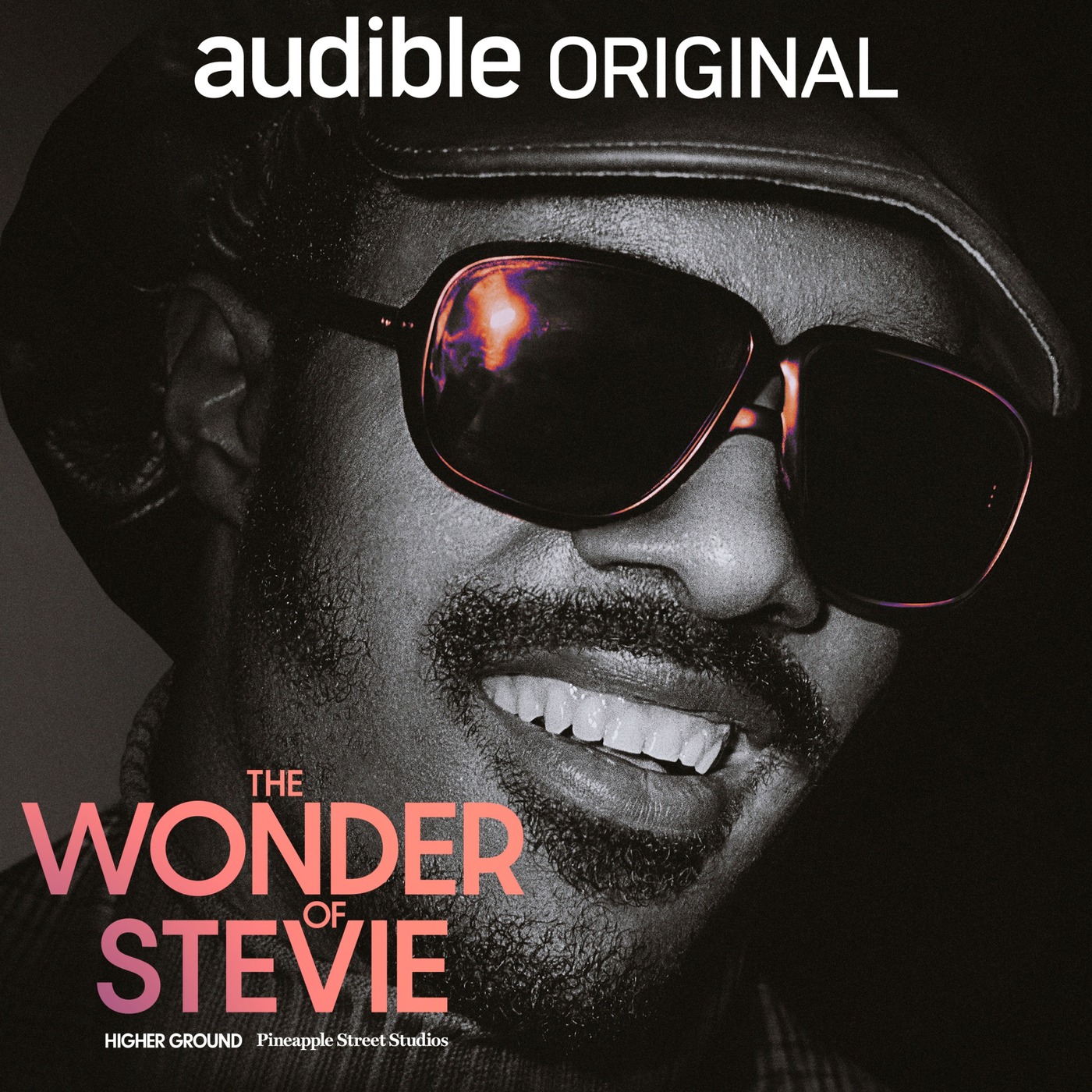
Hey, listeners, this is Wesley Morris. I'm a critic at the New York Times, and I'm here to tell you about a new podcast I'm hosting. I think you'll like it. It's called the Wonder of Stevie. And even if you think you know about Stevie Wonder, even if you think you know his music, you've never heard it quite like this. We're gonna take you on a deep dive through Stevie's classic period. Five legendary albums, back to back in less than five years. From the record deal that started it all, to the technolog used to create never before heard sounds, to his influence on our culture. I'm speaking with Stevie lovers like Barack and Michelle Obama, Questlove, Smokey Robinson, Dionne Warwick, Babyface, Janelle Monae, and more. Join me and revisit all the wonders Stevie's music has to offer. Okay, here comes a little taste. You can listen to the Wonder of Stevie on Audible or wherever you're listening right now. Audible Originals, Higher Ground Audio, and Pineapple Street Studios present the Wonder of Stevie, hosted by Wesley Morris. Please listen to that bass line. That's an engine pumping. We're about to drive somewhere no, no, no, no, no we're about to fly.
- [01:34]
Stevie Wonder
Every day I wanna fly my kite.
- [01:42]
Wesley Morris
This is the beginning of love Having you around the first song on Music of My Mind, the first album in a run of albums by Stevie Wonder, a run almost universally understood to be the most miraculous, most inspired streak in the history of American popular music. They call it Stevie's classic Period. This song is the sound of someone turning into someone else. You don't often get to hear what that sounds like, but that's what's happening right here in this song. Musical adolescence becoming musical adulthood. Axe body spray, getting swapped for cologne. This song is the moment that little Stevie Wonder, Motown Records boy genius, becomes just Stevie Wonder, the visionary who's about to change everything himself. Motown. Our understanding of what pop music can even sound like, and our understanding of who he is and what he's capable of. I'm Wesley Morris. I'm a critic of the New York Times, and I write about popular culture and the relationship between the present and the past. And not infrequently, race is involved in that relationship. And I'm just gonna say, I love Stevie Wonder. I love his love of black people. I love his love of all people. I love his emotional honesty. I love that he's an explorer, curious about life as a person, curious about life as an insect, as a plant. And also, I love that this run of albums contains a story of both the man who made them and a story about life in this country. For our purposes, this classic period starts with Music of My Mind, which Motown released in 1972 when Stevie was just 21 years old. Months later he was back with the second album in this streak talking book. The following year, Stevie releases Inner Visions. The year after that, it's fulfillingness, first finale and finally the culmination of the run, 1976's Songs in the Key of Life. Five albums in less than five years. And it's worth looking back at the musical scope and big heartedness developed in such a short, fraught period of time because it hasn't been matched by any other artist. We're talking about Stevie Wonder's music today because it's our history, yes, but also because it's important to our present too. There's so much in this music Stevie made over 50 years ago. Still so much that is still moving us, delighting us, surprising and inspiring us. He's left a legacy that still impacts tons of people. People we're going to hear from like Michelle Obama, Babyface, Yolanda Adams, Barack Obama, Jimmy Jam, and so many more people. To put it simply, for the next six episodes we're going to be luxuriating and as Janelle Monae describes it, Stevie being a free ass motherfucker. This is the wonder of Stevie today. Episode one, Music of My Mind. Okay, so it's 1986. Come back with me. It's Thursday night, 8pm I'm 10 years old and I'm watching the Cosby Show. I know, just shut up. I'm watching the Cosby Show, Season 2, Episode 18. And Denise Huxtable has just gotten her license and has begged for a car. Now Denise was the coolest Huxtable. But even at 10, I knew cool ass Denise was gonna mess this driving thing up. And mess it up she did. At some point, she and her brother Theo come blowing into the living room with some breaking news. You won't believe what happened to us.
- [05:51]
Barry Gordy
We were in a wr.
- [05:54]
Wesley Morris
Only they don't seem like they're in a wreck. They seem psyched. It's like, Denise, did you hit somebody or did you hit on somebody? Cause I can't tell. They're telling this story like the accident is the farthest thing from their minds. They hit this other car and then, and then the back door pops open and guess who steps out. Stevie Wonder. Yada, yada yada. The Huxtable family hangs out in the studio with Stevie, who's in these big sunglasses and a milky sweater with four big colorful rectangles up around his chest. He's sitting at a keyboard and he gets them to tell him something for him to record, but they're a little starstruck, even. Cool ass Denise, whose immortal line to Stevie is, I don't know what to say.
- [06:43]
Stevie Wonder
Denise, it's your turn.
- [06:45]
Wesley Morris
I don't know what to say. I don't know what.
- [06:48]
Stevie Wonder
I don't know what to say.
- [06:49]
Wesley Morris
And that he turns into music.
- [06:51]
Stevie Wonder
Perfect.
- [06:55]
Wesley Morris
What I couldn't have known at the time is that Stevie was basically in what I'll call phase three. Stevie, beloved, popular, a member of black people's families. Uncle Stevie, basically, you know how it is with stars and kids. You don't know the history. All you know is what you see. And all I saw in 1986 was a kind of cultural totem. A stuffed animal nobody could leave the house without. I mean, just imagine that you're 10 years old and the first Beyonce song you ever heard was cuff it because somebody on TikTok issued a dance challenge. Now imagine your aunt telling you, then after the song is over, oh, honey, you don't know nothing about that. And shows you the Coachella homecoming performance. She shows you the formation video, then the one for single ladies, and you weren't there. You don't know. So now your brain's on fire. And then she's like, mm, honey, there's more. And then she plays you destiny's child, and you maybe feel like your whole life has been a lie. This show, it's about that before, about how phase one, Stevie evolved into phase two. It's about what came before Denise Huxtable crashed that car into Stevie Wonder. These next six episodes are about when Stevie Wonder crashed into us. Here's how we're gonna do it. Each episode in this series is gonna delve into one of the albums in Stevie's extraordinary five album run. We're gonna start now with music of my mind. But before we get to that, how this classic period began. You kinda have to understand how Stevie began as a music prodigy raised in the Motown machine. He's born in 1950 Steven Hardaway Judkins in Saginaw, Michigan. In fact, he arrived ahead of schedule, and his being born early resulted in a condition called retinopathy of prematurity, which left him without sight. His mother, Lula Mae Hardaway, insisted Stevie not be treated any differently than his four sighted siblings. And so he had a vibrant childhood. He was blind, but he and his family would Never call his blindness a handicap. Lula May said as much in a TV interview from 1989 alongside Stevie with the UK's Terry Wogan. Cause when the Brits love you, they want to know everything he was saying.
- [09:17]
Barry Gordy
He used to try and ride bicycles as a kid.
- [09:19]
Wesley Morris
And did he do all those things?
- [09:21]
Barry Gordy
Climb trees, all that stuff?
- [09:22]
Lula Mae Hardaway
Oh, yes, climb trees.
- [09:24]
Wesley Morris
I mean, how did you get down again?
- [09:26]
Stevie Wonder
I just jumped down and got down.
- [09:29]
Wesley Morris
Did you know from the start that he. He had great musical talent?
- [09:34]
Lula Mae Hardaway
Yes, I did.
- [09:36]
Stevie Wonder
I did.
- [09:40]
Wesley Morris
Stevie was writing his own songs. And one day he was out on the family porch playing his bongos. And he got on one person's last nerve. Not because he was loud, but because he was blasphemous. Apparently, he was making the devil's music. According to a neighborhood deacon familiar with the the situation, this little boy needed to let the Lord in his. So off to church he went and played the devil's music there. And there at church is where a young man named Ronnie White saw Stevie and was floored. And Ronnie happened to sing with this act called Symbolism Alert. The Miracles, as in Smokey Robinson and the Miracles. Ronnie was so impressed that he arranged for Lula May to bring Stevie into this new record company called Motown and to meet the young cat who founded it, Barry Gordy. Stevie and Lula May arrive at the Motown offices on 2648 West Grand Boulevard. And 2648 was a house, just like a modest turn of the century home that in the late 1950s and 1960s would have been impressive for a black family to own. But for the label that's about to redefine American popular music, you kind of can't believe this is it. Even after they hang a huge sign outside that says Hitsville, usa. That's also Motown, major American recording juggernaut, and kind of your uncle's house. When Stevie and Lula May get there, they're put in this rehearsal room in the basement that's also known as the Snake Pit. And Stevie just starts playing some of the instruments. And there's some other people in the room. And as the story goes, at one point, one of them, this Motown exec named Mickey Stephenson, he runs upstairs to Barry Gordy's office and says, you gotta come hear this kid now. Barry heads down, enters the pit and notices the crowd that's formed around Stevie, including the Supremes, who are the current babies of the label. And he sees Stevie behind the drums.
- [11:40]
Barry Gordy
And I could see he was blind. He was just moving his head and he was playing and going and doing everything and it was great, you know, But I was wondering, what's the big deal? Because I wasn't in the market for drummer.
- [11:54]
Wesley Morris
That's Perry Gordy. Apparently unmoved by the sight of a pint sized blind boy just killing it on the drums. He remembers watching Stevie go from one instrument to the next. And after a minute, that nonchalance, it kind of started to thaw.
- [12:07]
Barry Gordy
Then he left the drums and he started playing the bongos and, and he did that and it was okay. It was nice. And then he of course sung, you know, I wasn't thrilled with his voice particularly, but it was okay. He was good. And then he went to the harmonica. Now that impressed me.
- [12:33]
Wesley Morris
With that and pretty much on the spot, I should say. Motown signed Stevie to a rolling four year recording contract and a three year artist management deal. They worked out an agreement with the Michigan Department of Labor so that Stevie would be allowed to work. Stevie was a minor, obviously, so his mom Lula Mae represented him. There was this two part TV special from the late 1980s called Superstars and Their Moms. Carol Burnett hosted it with her daughter Kerry Hamilton. I used to love Carrie Hamilton. And everybody else is in it too. Debbie Allen and Phylicia Rashad with their mom Cher and her mom and Whitney Houston with her mother Sissy. And then Stevie and Lula May.
- [13:13]
Stevie Wonder
You know what? I feel shy singing around my mother straight out.
- [13:16]
Wesley Morris
This is ridiculous. What's wrong with her?
- [13:19]
Lula Mae Hardaway
Do you feel bad collecting royalties off at Stevie?
- [13:25]
Wesley Morris
It is such a deeply 1980s artifact. At some point, Stevie and Lula May are at the piano together and he's doing this lyrical ballad that he dedicates to her, you know, just how much he loves her. And just as he's ending it, he kind of can't help but just turn the funk up. Then she starts to tell this story of Stevie getting his first big paycheck. And Stevie's still at the piano playing underneath her while she talks.
- [13:50]
Lula Mae Hardaway
He was first began going down to Motown. I know he don't remember this. He was there playing drums for the Temptation.
- [14:03]
Wesley Morris
Steve.
- [14:04]
Lula Mae Hardaway
When he came home, coming in, it was kind of cold. He had on this little coat, you know. He comes stepping in there, he gives me a check for $750. So here mama is $750. And you know what that $750 means just as much to me as 700 million. And it always will. You don't remember that, do you?
- [14:31]
Stevie Wonder
No, actually Ma, I remember that money. And I wanted that check back oh.
- [14:34]
Lula Mae Hardaway
You a good check.
- [14:39]
Wesley Morris
Motown seized control of all of Stevie's finances and put his earnings into a trust that he would not have access to until he turned 21. Motown also gave Lula May and Stevie a stipend that she used to keep the family going. And Stevie's portion started at $2.50 a week. The innovation of Berry Gordy's Motown, one of them anyway, is that it's a black run music company with a stable of black artists in an industry white men control. Still, he took out an $800 loan from his family to get it up and running. And his first acts included, included Smokey's Miracles, of course, Mabel, John and Mary Wells and the Marvelettes. Then come Martha and the Vandellas and the Supremes and the Four Tops and Marvin Gaye.
- [15:22]
Barry Gordy
My dream was that an artist could walk into one door, just a normal kid off the street, and come out another door a star. So the machinery, once they got in there. So there were producers, there were writers.
- [15:34]
Wesley Morris
By the time Stevie comes onto the scene in 1961, the company is already making enormous hits like the Miracles, Shop around and please Mr. Postman by the Marvelettes. And everybody at Motown is young, but Stevie Wonder is a child at work all daggone day. So while the Supremes are supreming and Mary Wells is a Wellin and the Temptations are out tempting and the Four Tops are a toppin, all becoming international sensations, Stevie's there too. So can Aldous. In learning how to write and produce and perform. And when he's not working and learning at Motown, Stevie's enrolled at the Michigan School for the Blind. He's got a tutor that Motown provided named Ted Hull, who was partially sighted. And Stevie's also busy being a regular kid. Sometimes he'd just swoop into a recording session and interrupt because he couldn't see the red light, saying, don't go in recording in progress, he'd ride bikes and pretend to be reading books, call up Berry Gordy's assistant and convincingly pretend to be Barry on the phone. Dionne Warwick, yes, the Dionne Warwick told me about this prank that Stevie played on her. It involved the Sherelles, the Hall of Fame all girl group famous for dedicated to the one I love and will you still love me tomorrow, among other gems. For some reason, the Sherrelles did not like this red dress Dion had. And so they get Stevie to talk to her about it.
- [17:07]
Dionne Warwick
He said, can I say something to you and you won't get upset? I said, of course he Said, you know that red dress you wear? And it kind of befuddled me. First of all, I didn't know it was red. I said, yes. He said, don't wear that anymore. It doesn't look good on you. I said, what? How do you know it doesn't look good? He says, I know, I know. I thought he could see. I really did. I thought, well, this kid can see.
- [17:38]
Wesley Morris
Between pranks, Stevie was also getting tutoring at Motown that Ted hall didn't provide. The label had a whole finishing school. Artist development is what they called it. When an act got signed to Motown and had a hit and seemed destined to tour as part of the Motown Revue, or maybe even as part of their own show, going to artist development was mandatory. That's where you'd basically be made presentable in long sessions of comportment and movement, in properness.
- [18:03]
Smokey Robinson
It was like going to school.
- [18:05]
Wesley Morris
Yes, it's Smokey, Smokey Robinson.
- [18:09]
Smokey Robinson
It was mandatory. It wasn't your option. You had two days a week when you were in Detroit that you went to artist development. No matter who you became or who you were at the beginning, okay, Motown.
- [18:20]
Wesley Morris
Was going to sand off those rough edges. Allow me to introduce you to Suzanne DePass, who worked at Motown as Berry Gordy's creative assistant. She helped Launch the Jackson 5. Also, she's the one that Vanessa Williams played in the Jackson's An American Dream, that miniseries that plays every Thanksgiving. She also really knew the Motown formula to success. What was unique about artist development at Motown was that there was a great deal of time and effort put into not only singing and dancing, but sort of an approach to how to do an interview, how to present themselves. Basically, even after a few coats of artist development, you still got to be yourself, but in a sleek, tailored suit with a gleam when you winked or smiled or got out of a car or off a tour bus. You'd be all. I suppose a question one could ask is why another might be for whom. These are fair questions. Of course, the implication of that question is that Motown was grooming these performers so white people wouldn't mind looking at them. Also fair. But there was a politics at work in this grooming. Motown arrived during the TV age, and its acts were basically performing in people's homes. Most white people wouldn't have seen black people dressed like this either on the street because they'd fought to be and accepted being segregated from them, or on tv because the very few black people there were service people in service uniforms or rags. So the application of etiquette Was as much a revolutionary act of politics as a lunch counter sit in, as far as I'm concerned. Maybe even more subtly effective. Since seeing four dapper black men called the Temptations. Might actually tempt a skeptical white person. To think of them as human. At the same time, Motown's respectability approach. Would have certainly thrilled, delighted, and moved black people. Black people who yearned to see other black people. As glamorous as the white stars Hollywood was inventing. I talked to the Smokey Robinson about this dilemma.
- [20:33]
Smokey Robinson
Back in those days, man, if you weren't being played on white radio, you were in trouble, you know what I mean?
- [20:38]
Wesley Morris
Was there ever a conversation among you artists. And with Barry and some of the other people at the label in the executive branch. About this question of being proper and being respectable. And making yourselves palatable to a wider audience? Is that ever a conversation you say.
- [20:57]
Smokey Robinson
To a whiter or whiter?
- [20:59]
Wesley Morris
To a white audience, basically.
- [21:01]
Smokey Robinson
It was hard to get played on white radio. If you were black back in those days, you know what I mean? But we got to the point where white rodeo was calling us, asking us, could they please have the records? Okay? We bombarded them with so many hits back to back to back to back. They had no choice. They would call us and say, can we get the new Supremes record first? Can we have that new Stevie? Can you give. That was white radio calling us, you know what I mean? So, yeah, you wanted to groom yourself. Because that's where the money was, man. That's where the money was. That's where it still is.
- [21:35]
Wesley Morris
You know what I'm saying? Yeah.
- [21:38]
Smokey Robinson
So that's nothing new.
- [21:39]
Wesley Morris
Right about now, Ladies and gentlemen, would like to continue with our show. By introducing to you a young man.
- [21:43]
Barry Gordy
That was only 12 years old.
- [21:45]
Wesley Morris
And he is considered as being a.
- [21:46]
Smokey Robinson
Genius of our time.
- [21:48]
Wesley Morris
Ladies and gentlemen, let you and I make him feel happy with a nice ovation.
- [21:50]
Barry Gordy
As we meet and greet little Stevie Wonder.
- [21:52]
Wesley Morris
How about that? Anybody who saw little Stevie live. Would have seen him on stage in his blazer and slacks. Looking as sophisticated as the label's grownups. Playing in a touring act called the Motown Revue. These shows had a kind of big band arrangement. And everybody basically wore versions of the same formal getup. I want to talk about this one night in 1962. At the regal Theater in Chicago. Because it's magical. The emcee brings Stevie on. And he's led out to a chair a little aggressively for my taste. And he puts a set of bongos in his hands. To play a song called Fingertips, ladies and gentlemen.
- [22:34]
Dionne Warwick
Now I'm gonna do a song taken from my album, the Jazz Soul of Little Stevie. The name of the song is called Fingertips.
- [22:47]
Wesley Morris
He's ready to turn them on and turn this song out. He starts by telling them to clap their hands and stomp their feet. Stomp your feet, jump up and down, do anything that. Yeah. I should say first that Clarence Paul and Henry Cosby, two of Motown's great songwriters, wrote Fingertips for Stevie's debut album, which was called the Jazz Soul of Little Stevie. And I just want to also say that his jazz soul was all of 12. It was an instrumental album that's pretty party jazz and. And it's supposed to show off his percussion and keyboard and harmonica skills. You could be forgiven for hearing it and assuming you've been placed on a brief hold. But live at the Regal, Stevie meets the audience and this chemical reaction starts. The crowd is ready to lose it. Eventually, he stands up and switches to the harmonica and does some dazzling, pretty sophisticated harmonica playing again. He 12. Anybody looking at this moment today with any knowledge of who Stevie would become would say, ha, ha ha. This seems kind of important. This is the beginning of Stevie finding an extension of his physical voice with the harmonica. A pocket sized organ that the mouth plays and that Stevie uses to extend expressed the blowest of blues and the highest of highs. The harmonica was a way to manifest the music of his mind with his literal fingertips. Anyway, at about the performance's halfway point, Stevie pivots into what becomes the song's much more famous second part. Everybody say yeah. And they do. Everybody see that?
- [24:43]
Stevie Wonder
Say yes. Say yeah.
- [24:49]
Wesley Morris
Yeah, yeah, yeah, yeah. He had actually wanted his stage name to be his birth name, Steven Judkins. But the folks at Motown were so awed by Stevie's talent that the only stage name that made sense was Stevie Wonder. So that's what everybody called him. Little Stevie Wonder. It took years for Motown to figure out what to do with all of Stevie's Wonder. Initially, Barry tried stuffing him into a Ray Charles mold. The result was an unimaginative ripoff called Tribute to Uncle Ray. Other than being blind and astonishingly talented, Stevie's nothing like Ray Charles. The live version of the song Fingertips Part 2 did top the album chart in 1963. But nothing Motown tried for Stevie after made much of an impression. And it wasn't like he wasn't trying to break through. But as hard as he appeared to work bringing some soul and wit to songs that didn't really know what to do with either, he seemed Poised to become a novelty act. By the time he was 15, everybody knew he could sing and play. But Motown only let him do that on songs other people had written and not even songs by its pop masters. It wasn't until he hooked up with the songwriter Sylvia Moy, another Motown powerhouse, that anybody knew what would happen if he got to sing and play music. He played a part in writing songs that originated with him. At the end of 1965, the label got its answer when it released the song Moy wrote with Stevie, Uptight. Everything's All Right. Great song, and it sounds like the 1960s in, like, Motown. And at last, like Stevie, his voice had actually begun to change, to both deepen and grow more elastic. And the song went to number three on the Hot 100. For years, Berry Gordy had had the wonder. But it wasn't until he was helping write his own stuff that the wonder really went wow. He finally seemed to make complete artistic sense at Motown, a company that, in 1965, was still changing the way black people were seen and the way they saw themselves. Ever since the first Africans were shipped here, enslaved in the 17th century. One question for white Americans, whether they own black people or believed in their freedom, was what would freedom mean? What would it look like? How would it sound? One answer, I would argue was Motown. Berry Gordy started the label hoping in part to nationalize black music. Black culture had been elemental in the development of American pop music, either through blackface, minstrelsy, which white performers invented, or through black forms of expression, like spiritual, like ragtime, like jazz and the blues. The genius of Motown, at least according to me, is that it took the music you would have been hearing on Sunday morning or Sunday afternoon, because you know how church is. Sometimes it starts at nine and ends at three. It took black church music, the belted harmonies, all those big feelings, the call and response, and combined it with the music you would have been hearing the night before. Music you would have been going to church, praying to God that you could get out of your system. Take Martha and the Vandellas in their jam Heat Wave. You can hear an actual palm slapping a tambourine on that song. That's exactly what you'd be hearing if you were in church on Sunday. And you can hear, in the way the Vandellas are calling back to Martha Reeves, something else that happens in church, which is basically the congregation calling out to the preacher when the preacher's doing a sermon. The music that came out of this shotgun wedding between the sacred and the secular, between gospel music and western orchestral sounds. Strings, woodwinds. That didn't sound like anything else on the radio. The clean beauty of doo wop. Plus the boisterous noise of a packed club. Let's just take Ain't that Peculiar by Marvin Gaye. That tambourine again, those hand claps. The tightness of the rhythm section. You do me wrong but I'm still not crazy about you. Plus Marvin's angelic delivery of romantic bewilderment. He don't know what hit him. These are gospel ideas that sound like dance music. Secular, yearning, fun.
- [30:04]
Stevie Wonder
Ain't that peculiar A peculiar energy Ain't that peculiar, baby Peculiar as can be.
- [30:18]
Wesley Morris
By 1965, when this song sold more than a million copies. And hit number eight on the pop chart. The Motown sound was basically at the center of American culture. And therefore also in America's living rooms.
- [30:32]
Stevie Wonder
There's a kind of music, for instance, the black music. Which originates from the church, the gospel church.
- [30:39]
Wesley Morris
This is Stevie talking on Rage Music Program. An Australian music show.
- [30:43]
Stevie Wonder
Just like the English music, for instance, at the Beatles. A lot of writing. Eleanor Rigby, for instance. Or Yesterday, I think maybe a little while back. Could have been some of the music that originated from the church a different way. So we've all been influenced, in a sense, by the church music.
- [31:02]
Wesley Morris
And this is really important for two reasons. The church's influence in the Motown can't be understated. And therefore its influence in Stevie's music can't be understated. Because Americans would have been grooving to grooving with the best dressed, best choreographed people in Pop. Negroes, as opposed to N words. I'll just say it again. No white person would ever have seen such resplendent black people before. Nor would any black person, really, not on tv. Motown was fueled by vision and talent and risk. Lots of people had become rich, famous and adored. But over time, that system began to demoralize some of the artists. And before he was even 20 years old, Stevie was one of those people. So at an age when a lot of young adults are heading to college or figuring out their lives. Stevie is churning out hit after hit. Like for once in my life when he's 18 years old for once in.
- [32:03]
Stevie Wonder
My life I have someone who needs.
- [32:05]
Wesley Morris
Me and Mashariya Moore also. When he's 18 Masheri amore lovely as a summer day and science he'll deliver it when he's 20.
- [32:27]
Stevie Wonder
Then that time I went and said goodbye.
- [32:35]
Wesley Morris
But even with all this success, he had begun to sense that his growth wasn't necessarily in alignment with Motowns. And one of his guides to that realization was a Motown secretary named Sarita Wright. How did you meet your husband, Stevie Wonder?
- [32:49]
Lula Mae Hardaway
Your husband, Stevie Wonder heard a record that I had done with Nick Ashford and Valerie Simpson. And what that record was called, I Can't Give Back the Love I Feel for your. He heard my voice and said, no, I think I need to meet her.
- [33:03]
Wesley Morris
This is her in 1990 on Geraldo Rivera's sane talk show, and she's talking about their meeting toward the end of the 1960s. Stevie's in his late teens and Syreeta's doing her secretary work, but she's also singing backup on records by acts like Martha and the Vandellas. A lot of the women Stevie would work with, Sarita, Minnie Riperton, Denise Williams, they have these sweet, almost angelic sopranos, a perfect complement to Stevie's singing. You can hear the way Sarita's voice flutters on a song like her version of Smokey Robinson's what Love has joined together from 1972. What love has joined Together. Not long after they meet, Stevie encourages Sarita to write her own songs, including with him.
- [33:51]
Lula Mae Hardaway
And so he set up a meeting, and I went in with him. He wrote a song, went in and tried to sing it. And I don't know, I've never been starstruck, but I could not seem to get this song called when youn Love. And I tried. I was so embarrassed. I'm supposed to be a quick study for songs. I couldn't get it, and I felt terrible. But I think he must have done something, you know, he did something so that he could come back and we could meet again. That's what happened.
- [34:17]
Wesley Morris
This is Sarita's way of saying, yada, yada, yada. We fell in love. I wrote songs with him. He wrote and produced for me, and we wrote some songs together, some gems. They marry in 1970 and divorce about two years later and eventually meet and marry other people, start separate families, yet creatively remain very close. Something deep and intangible is going on in that. Yada yada. Sabrina Wright is a crucial factor in the transition from little Stevie to Stevie. She was his personal artist development program. So that brings us to 1971, the year Stevie turns 21. A time lots of people graduate from college and start to figure out the rest of their lives. 1971, also the year his contract, the one we mentioned at the beginning of the episode, is set to expire. And it's going to be a thing. Berry Gordy Wants Stevie to re up that contract. So he tries to sweeten the deal a little bit by planning Stevie a big 21st birthday party.
- [35:23]
Barry Gordy
We were in Detroit on his 21st birthday, and we had a little party for Stevie. And we sat at the table, and we were having so much fun.
- [35:34]
Wesley Morris
So that contract Stevie's mom signed a decade ago when he was 11, and then renewed at 16, a 2% royalty on his record sales. And Motown handles his finances. And his earnings go into a trust that he can access when he's 21. We're talking about an estimate, estimated $3.5 million. Guess who's got a birthday coming. And guess who's surprised to discover that the money Motown's given him is nowhere near what he believes he's owed. Imagine Stevie shock at hearing about the enormous deductions Barry's been charging to Stevie's account for his tutor, Ted hall, who Motown fired when Stevie graduated from high school. For Stevie's allowance, whatever that means when you subtract all of that. Not only did Stevie not get $3.5 million, he got about 3.4 million less than that. Anyway, back to the birthday party Barry's throwing for Stevie. Yay.
- [36:29]
Barry Gordy
When I got here, there was a wire from Stevie's attorney disaffirming every contract that he had with Motown. I couldn't believe it.
- [36:39]
Wesley Morris
My favorite move when a businessman is caught with his hand in the cookie jar is when he's like, I don't really understand what's happening here. They're just cookies. Sorry, Barry. It's business, baby.
- [36:50]
Barry Gordy
I'm sitting with this man, and I thought, surely Stevie's leaving the company. He disaffirmed everything. He's 21 now. He's gonna go out and get bids from all the other companies, and he's got to be. He's gonna leave the company. I mean, that's. Why else would he do this without telling me anything?
- [37:06]
Wesley Morris
For all those years, Barry had complete financial and creative control over his artists. Now, one of them was pushing back hard, and he's got nothing to lose. Here's Barry in a place he's rarely ever been before. Life or death. Compromise. He's got to give something up or he's going to lose Stevie. You might be hearing me say this and wonder, what were the financial consequences? What about his mother, Lula Mae, who originally signed this deal? Did Stevie really ever consider leaving Motown in any serious way? And most importantly, after being this misled by Barry, why would he stay? You know, these are all the existential Questions that are probably unknowable to anybody who isn't named Stevie Wonder. And who knows, maybe one day I'll get to ask him. But what I will say is that in Gerald Posner's book on Motown, a man named Thomas Beans Bowles, who managed the kids accounts, is quoted as saying, the problem was that Barry kept those accounts going for too long. He didn't know when to stop treating people like kids. So put a pin in that. In the meantime, though, Stevie's new contract ran to more than 120 pages. 120 pages of Stevie mapping out his independence from a man who had been his boss and a father figure to him for so many years.
- [38:28]
Barry Gordy
And it just turned out that Stevie was 21. And he wanted to show me that he was 21 now, and he wanted a little respect. And he ended up making me pay him $13 million to sign up another whole new contract with him, which was unprecedented at the time, but probably one of the best deals I ever made.
- [38:54]
Wesley Morris
You can say that now, Berry Gordy, hindsight being what it is. And besides the 13 million, Stevie wanted his own publishing company that would own the publishing instead of Motown. 20% royalties, total artistic control of all his songs. He wanted to choose who played on these records. He wanted to choose what songs appeared on the album and what the first single would be. Basically, he wanted absolute autonomy from Motown's classic way of doing things. Stevie was at least as big as the music factory that discovered him. Signed, sealed, delivered, free.
- [39:31]
Stevie Wonder
A lot of people talk about the whole thing of me reaching 21 and. And everything happened and everything broke and everything this. And I began to rebel.
- [39:40]
Wesley Morris
And here's Stevie talking about that on a E's series biography.
- [39:45]
Stevie Wonder
It didn't start at 21. It started really. And it starts anytime that I get bored with what I'm doing. So I've done a lot of writing a lot of songs. And I just felt that as much as I knew that Motown felt they were doing whatever they thought was best for my career, I had a feeling as to how and what I wanted to do.
- [40:10]
Wesley Morris
And what does 21 year old Stevie wonder do with that newly acquired freedom? He does this.
- [40:19]
Stevie Wonder
Please. Mama, mama, baby, baby, baby, baby, baby.
- [40:32]
Wesley Morris
Baby Love having you around it's the song. We started this episode with the first song on Music of My Mind, the first album in this streak that this whole show's about. Stevie would never be the same after this album. He would never sound the same. The album isn't just the sound of an emotional breakthrough or Some sort of philosophical breakthrough. This is the sound of a technological breakthrough. Stevie had discovered a sound, a technology that produced a sound that he could hear in his head, but that no Motown Factory, no house band, no matter how good it is, no regular instrument was gonna produce. It's a sound he went looking for. And when he found it, it was as revolutionary for him as when he picked up a harmonica for the first time or when he got that new contract from Motown, something that would take his sound into the future. That is a song called Cyberknaut from an album called Zero Time. Cyberknaut sounds like a Stevie Wonder record with a flag. It was written by a couple of self described experimental stoner hippie music geeks named Bob Marguleff and Malcolm Cecil. When Stevie heard their album Zero Time, it blew his mind. Bob and Malcolm were part of an act called Tonto's Expanding Headband. The Tonto referred not to the Lone Ragers Native American sidekick, thank God, but to a synthesizer. A souped up, complicated behemoth of a synthesizer that was able to create really weird, very specific sounds. So he hears this otherworldly sound and he goes to New York City, to Bob and Malcolm's studio. He's never met them. They don't know he's coming. And then. Well, I'll just let Bob tell it.
- [42:38]
Bob Marguleff
It was Memorial Day weekend, 1971. The studio was closed. Malcolm was chief engineer of Media Sound, so they gave him an apartment over delicatessen, which was approximately the very next door to the studio, one flight up, so he could look out the front window and see the studio entrance below. And it was very quiet because it was a holiday. There was very little traffic and it was kind of warm. It was late in the afternoon. And I hear Malcolm, Malcolm. And Malcolm and I stick our heads out the window and look down at the entrance to Media Sound. And there is Ronnie Blanco, a fellow bass player, standing there with a tall black guy in a chartreuse drumsuit with our album under his arm. And that was Stevie.
- [43:32]
Wesley Morris
They invite him in and there's a room full of instruments and speakers. And before long, Bob and Malcolm and Stevie start noodling around playing music together. And over in the corner of the room is this big ass synthesizer, except it doesn't even look like the diet piano thing you're probably used to seeing, especially when Stevie performs live. This thing is a console of keyboards and knobs and jacks and wires whose purpose is to synthesize sound, not simulate analog instruments. In this case, the synthesizer. In the corner of that room is a six foot tall circular machine, a wall, an edifice that could extend to 25ft in diameter and weighed one ton and probably get you to Oz. Obviously, that thing is calling Stevie's name.
- [44:19]
Bob Marguleff
Stevie put his hands all over it. There was plenty of wires sticking out of the front of it. I put up a sound on the synthesizer. We had it plugged into the studio, into the speakers. And he says, bob, Bob, there's gotta be something wrong with it. And I said, why? He says, well, I play in all these notes and just. I skipped from one note to the next. I don't know what's going on. And we had to explain to him that the synthesizer, in a way, was sort of like a saxophone. He only played one note at a time.
- [44:49]
Wesley Morris
And so begins an artistic relationship with Tonto, with Bob and Malcolm, with Stevie that would last for the next four years. As a foursome, they helped Stevie get at sounds he'd never been able to communicate. After that first meeting, they made one song, then another, until a few songs became 17. And 17 became the makings of a library. Stevie finally found the tools and collaborators that could take his power, which was awesome, and make it a superpower.
- [45:20]
Bob Marguleff
Steve said, oh, you know, this is. I got a lot of stuff on my mind. And we said, yeah, it's a good album title, Steve. So that's how Music of My Mind came out.
- [45:36]
Wesley Morris
Music of My Mind is an album full of swinging moods.
- [45:43]
Stevie Wonder
Mary wants to be a superwoman, but is that really in a hit?
- [45:50]
Wesley Morris
One thing about Stevie is that he knows his way around a love song. And love and loss are all over this record. He and Sarita were mid divorce when he recorded these songs. And the album culminates with the realization that you can love, love, love the person who used to be your better half. The second song on this album, it's a seamless marriage of two songs put together to make one shocker called Superwoman. Where were you when I needed you? This marriage of two songs is extra poignant when you think about each side being about separation. Even a, I don't know, a middle schooler can hear the disappointment in that.
- [46:38]
Babyface
I remember I was like 9th grade and totally in love with this girl, and she was leaving that summer.
- [46:47]
Wesley Morris
This is Babyface. And look, we talked to a bunch of people just to hear what Stevie's music means to them. This guy has 12 Grammys. He's one of pop music's great production minds. He's a peerless writer of earworms. But even with all that Acclaim. All that success, all those Grammys, all that talent. Back in 1972, Babyface was just a kid named Kenny Edmonds with a broken heart, because the girl he liked like him back and Stevie Wonder was the place he drowned that sorrow.
- [47:15]
Babyface
It was like the end of the year came and she was going away. And I remember going home and skipping past Superwoman and playing Where Were you When I Needed you? Because the way that he used those synths that almost sound like strings, and it felt like it was talking directly to me and directly to my emotions and the state that I was in. And I just kept playing that song again and again. And every time I hear that song to this day, it takes me right back to, like, summer of 1973 and that lonely feeling that I had of this girl that was going away for the summer. And I also knew that she was going away to see this guy that she liked. That wasn't me.
- [47:53]
Wesley Morris
As necessary as this album is for setting Stevie up to innovate on the albums that follow, and for as much as some of us, like me, love this album, it didn't make much of a splash in 1972. Not in the charts, not on the radio, not on the album's biggest single, Where Were youe When I Needed you'd. It didn't even crack the R and B top 10. Is that because the music wasn't as immediately accessible as some of Stevie's earlier hits? Was it because art that's revolutionary always takes a while to catch on? Is it because music critics at the time were pretty much all white guys and they couldn't fully appreciate what Stevie was up to thematically? I'll keep my answer brief. Yes. All I can say is, with music in my mind, they sensed something good, stylistically was changing with Stevie. They even liked the album more or less. What they were sensing had to do with the nature of the sound of this music. In Rolling Stone, Vinceletti called it indulgent and egotistical. But he also noticed something important. Wonders is one of the very few down to earth uses of the synthesizer, he wrote. No attempts at space music here, no swollen, overripe breaks engulfing two thirds of the album. Only funky, exuberant music of the sort we've come to expect from Stevie Wonder. That sound Vinceletti was picking up on was Tonto. And the way that Stevie and Malcolm and Bob used Tonto wasn't normal. It wasn't routine. It's not how producers tended to use synthesizers in music.
- [49:22]
Jimmy Jam
It's like normally for A song to be emotional. It was violins, it was strings, it was cellos.
- [49:28]
Wesley Morris
This is the producer and songwriter Jimmy Jam, who, along with Terry Lewis, has made some of the greatest pop songs of anybody ever. That includes the masterpieces he made with Janet Jackson.
- [49:39]
Jimmy Jam
It was French horns, it was oboes. It was all the traditional. If you think about the Motown system, all of those things existed. And what made those songs so beautiful was those string arrangements in that. Stevie took all of that away and now he's doing what a horn would do on a synthesizer. And that was so revolutionary. Up to that point, synthesizers were kind of a lot of blips and almost sound effect type things. The fact that he was using the synthesizer as like the main instrument for chords and beautiful textures and actually finding the emotion in the synthesizer where it wasn't this cold electronic thing. All of a sudden there was a nuance to it and a. A warmness to it. And, you know, that really made you feel emotional about an electronic.
- [50:45]
Wesley Morris
The revolution of Music of My Mind is also the revelation of this album. It's that Stevie had found warmth in all of that machinery. He found a deep human frequency in it. The ground he broke is that electronic music was no longer just for robots and sci fi, for geeks and freaks in outer space. It could make real sense right here on Earth. He could use it for joy and pain. And he knew instantly, instinctively, how to adjust the temperature on those emotions with this device to get Tonto from robotic to romantic, like he does on the next song. Track 3. I love every Little Thing about you. He immediately chases the uncharacteristic bitterness in Superwoman. Where were you when I needed you? With what sounds to me like an atonement. One that starts with this chiming opening and then it. It swells to this blissed out melody.
- [51:38]
Stevie Wonder
I love, I love, I love I love Every little thing about your baby.
- [51:47]
Wesley Morris
I love Every little Thing about yout has one of my favorite Stevie Wonder choruses ever. It's pretty simple, just that title repeating over and over. But it's got a gospel song's bigness and certainty. He loves, he loves, loves he loves the way congregants love Jesus he loves this woman. And then it ends very softly with Sarita whispering about candy and sugar. And Stevie growling about a big old piece of cake.
- [52:30]
Stevie Wonder
Sugar cookie, pudding, candy, big old piece of cake.
- [52:43]
Wesley Morris
There's ecstasy on Music of My Mind. There's such sympathy and rich poetry. There's also this playfulness. Take the second to last song on the album, Keep On Running which starts with the opening rattle of church, where the preacher's revving the house band up. That throbbing Moog bass line. A tease of what sounds like a wah wah guitar, some snake rattling tambourine, as Stevie tells somebody, something's about to jump out of the bushes and grab you. And this one man jam session takes off, rising and building and then tumbling apart before funking up all over again. The idea of this song always makes me laugh. It's church music in a miniskirt with a drink in one hand. That's a classic Motown idea. But with Stevie rejecting Motown's efficiency and rigor, this song, like the rest of Music of My Mind, is about playing with form, about being rigorous in some new way that chiefly involves a determination to define independence as almost literally doing everything yourself, including taking everything you've learned from your colleagues and mentors to invent some new thing that doesn't want to get boxed in or be concise or music simple. It wants to sound exploratory. Because the man making it is on an adventure to discover himself. I love every little thing about this album. I loved it before I knew anything about how it got made and how important it was to Stevie's becoming his own artist. I love the assurance and craftsmanship of this album. I love the daring of Stevie Wonder to abandon the comfort of Motown's innovations and renovate himself. I love that Stevie didn't care about these questions of artistic purity when it comes to so called genre music. Black music, jazz, R and B, soul, gospel, blues, reggae. As if these forms didn't come from the same source, as if electronic music didn't come from the same source. Here's the thing about the synthesizer. It was never a dead end for him. For Stevie, it was the key to unlock his musical mind and an escape hatch out of everybody else's. It was a way to do what Motown did. Combine the church, the party and the symphony. Only he didn't need a whole orchestra. He was a one man funk brother. What becomes alone, obviously irreversibly true about Stevie and his ingenuity, starting with Music of My Mind and what'll become even clearer and more electrifying just months later with his next album, is that even though he had this enormous piece of technology he's gonna use to bring all these new ideas and feelings together, his vision transcends the technology itself. See, as important as Tonto was for making Stevie dreams come true, it was just an instrument. The reason these albums mattered at the time, the reason they still move us as much as they do is pretty simple. The real synthesizer it was Stevie. This album declares his independence. The next album in the Street Talking book makes him bigger than he'd ever been.
- [56:13]
Jimmy Jam
He basically provides the goods and has the makings of what could be a global superstar. And this is one of the ways that Stevie Wonder will start not only living up to the promise of creative genius, but also in terms of a creative genius that can be commercially viable. This will help in that direction because he's going to face an entirely different audience that otherwise just knew of as that guy that sang that one song or the other song and whatnot.
- [56:47]
Wesley Morris
That's next time on the Wonder of Stevie. This has been a Higher Ground than Audible Original the Wonder of Stevie is produced by Pineapple Street Studios, Higher Ground Audio and Audible. Our senior producer is Josh Gwynn. Producer is Janelle Anderson. Associate producer is Mary Alexa Kavanaugh. Senior managing producer is Asha Soluja. Executive editor is Joel Lovell. Archival producer is Justine Daum. Fact checker is Jane Drinkard. Head of sound and engineering is Raj Makhija. Senior audio engineers are Davey Sumner, Pedro Alvira and Marina Paiz. Assistant audio engineers are Jade Brooks and Sharon Bardales. Melissa Mixed and mastered by Davey Sumner and Raj Makhija. Additional engineering by Jason Richards, Scott Gilman, Javier Martinez and Leanne Do. Score and sound design by Josh Gwynn and Raj Makhija. Original score performed by Carles Music and Raj Makhija. Additional music provided by Epidemic Sound hosted in an executive produced by Wesley Morris. Higher Ground executive producers are Barack Obama, Michelle Obama, Corinne Gilliard, Fisher, Dan Fierman and Mukta Mohan. Creative executive for Higher Ground is Janae Marable. Executive producers for Pineapple Street Studios are Genois Berman and Max Linsky. Audible executive producers are Kate Navin and Nick D'Angelo. The wonder of Stevie is also executive produced by Amir Questlove Thompson, Anna Holmes and Stevie Wonder. Questlove is the producer of this show courtesy of iHeart and can also be heard on Questlove supreme from iHeart Podcasts. Special thanks to John Asante, Brittany Payne, Benjamin, Leela Day, Sam Dalnick, Haley Ewing, Kevin Garlitz, Amos Jackson, Rob Light, Alexis Moore, Joe Paulson, Nina Shaw, Chris Sampson, Eric Spiegelman and Zara Zollman. Recorded at different fur patches, the Hobby Shop and Pineapple Street Studios. Head of creative development at Audible is Kate Navin. Chief content officer is Rachel Gyaza. Copyright 2024 by Higher Ground Audio, LLC. Sound recording Copyright 2024 by Higher Ground Audio, llc.