← IMO with Michelle Obama and Craig Robinson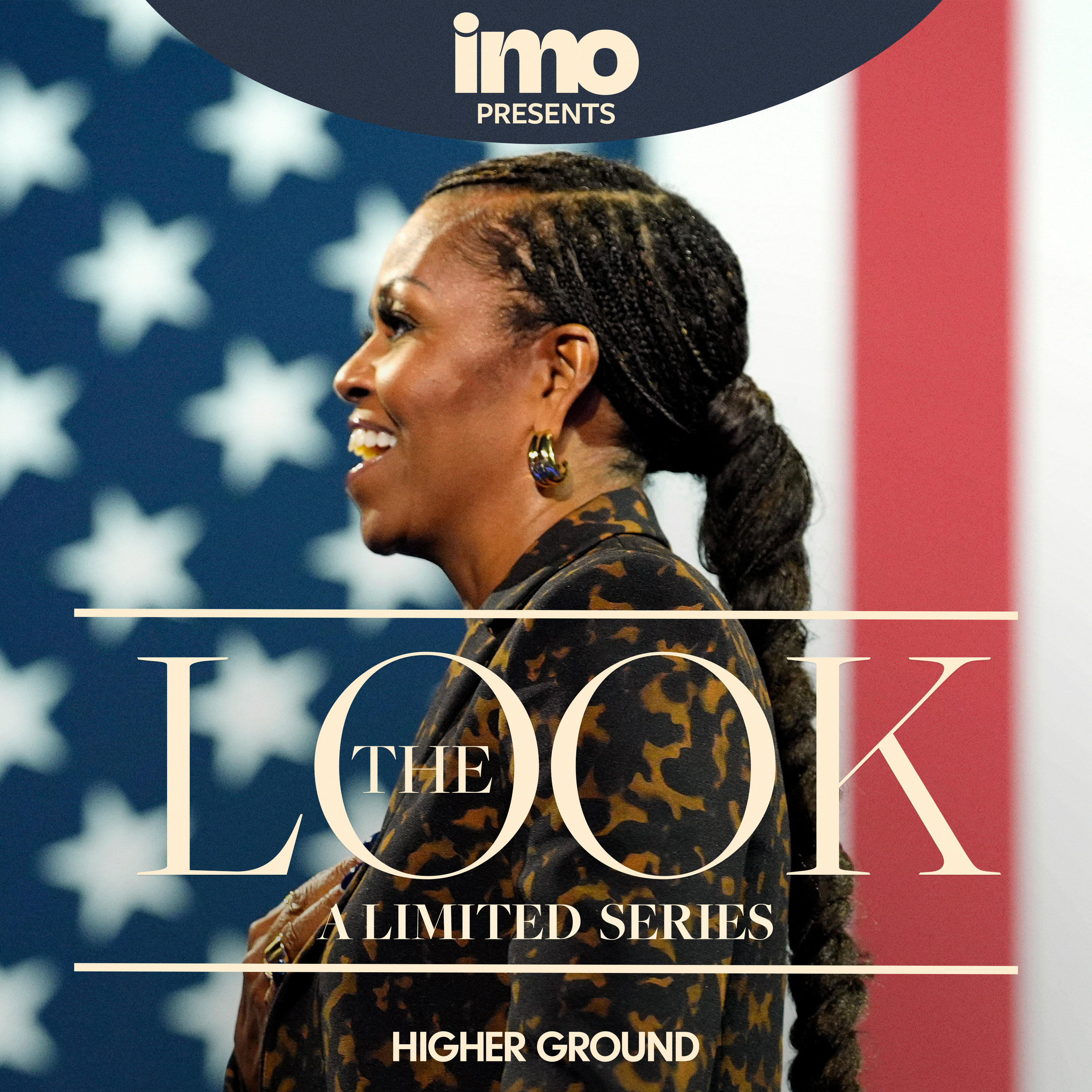
Loading summary
Transcript246 lines
- [00:00]
Michelle Obama
This isn't just about dresses and fabrics and designs, and it never was, never was. It's about the next chapter of who we are. Not just as black people or as black women, but as a nation. We have women in charge, people running offices. Diversity is important. You know, diversity and inclusion, it's not just a catchword. It's not about economics and people getting jobs. It's about us defining, creating spaces where we now know one another so we cannot be one another's enemies. And I know this is a book about fashion, but I hope it's a reminder of what could, what was, what.
- [00:41]
Nina Garcia
Was, and what can be and what it can be.
- [00:50]
Michelle Obama
This episode is brought to you by Rivian and Alloy Women's Health.
- [00:56]
Nina Garcia
Hello and welcome to the Look, a special series on IMO based on Michelle Obama's latest book, which is available for purchase now. I'm today's moderator, Nina Garcia, editor in chief of Elle, and it is a pleasure to be joined today by Farrah Jasmine Griffin, who is an esteemed professor of English and comparative literature at Columbia University and wrote the foreword for this wonderful book. And of course, the former first lady, Michelle Obama, a dear Fran, true inspiration and the reason we are all here today. Welcome, ladies. Today's topic is Mrs. Obama's Style Evolution on the world stage, from childhood to where we are now.
- [01:41]
Michelle Obama
Thank you so much, Nina.
- [01:43]
Nina Garcia
I was going to actually also speak to Farah and tell you how wonderful your foreword was, how insightful and how I felt it was so important to put into context Michelle's legacy and her style not only in American history, but black culture. I think it really set the stage and really explained so much. So really I really enjoyed so much. And there was one part that I want to mention because I really love this line, the look. Like the woman was bold, powerful, forward looking, visionary and empowering for everyone who dares to believe in the possibility of better tomorrows. You're a beautiful writer.
- [02:38]
Farrah Jasmine Griffin
Thank you. Thank you. It was so easy to write about Michelle because she just makes it easy. She's a woman of style and substance. And so the fun part is the style, but the substance is the concrete part that she always gave us as first lady and since then. So that sentence just came naturally when I thought about her time there at the White House, but also her legacy that she stands in a particular culture and moment. But for all of us and for.
- [03:12]
Nina Garcia
Everyone, Michelle, you have stayed away from the conversation about style and clothing and what that represented. Why now?
- [03:25]
Michelle Obama
Yeah, I think it's time from a sort of Strategic standpoint. My thinking when I was first lady was, you know, fashion is. You know, fashion is the monster that ate up New York. It could be. It's fun, it's interesting. It's something that I value, I cherish. But I also knew that it could define fashion, could define me before I defined myself. And as you know, at the outset of me being introduced and introducing myself to the country and to the world, there were people who were trying to define me. You know, I felt the danger of letting other people write the narrative. So once I kind of broke through and entered, I thought, you know, I've gotta let me lead, and I've gotta lead with substance, and I know how important fashion is. But if we succumb to that conversation, potentially that's all I'll be, is the woman in the dress. So I thought, let's put it on the back burner in terms of daily topics. But we always had a strategy for how I wanted to approach fashion and what fashion could be. But I thought it was much more powerful to wait and let that conversation happen later. Now I'm almost a decade out of the White House, two books already written, and I feel like now I think the world knows me. They know who I am, they know my heart, they know my history, they know my purpose, they know my mind. So now it's time to talk about fashion.
- [05:21]
Nina Garcia
I like to. I like to ask, Farrah, what moved you in when. Those days of the administration. You talk a lot in the foreword about the context of being a black woman, being the first woman to be the first lady, and how black women were perceived. Could you expand on that? Because I found that very interesting. And there was a lot of pressure writing on Mrs. Obama, Michelle Obama, to carry that. And I mean, that must have been. That was a lot of work and a lot of responsibility. But you put it into a context that was very interesting.
- [06:12]
Farrah Jasmine Griffin
Yes, we wish we lived in a world where Michelle Obama could simply be an individual stepping into that role. That would be ideal. But we live in a world where we have a history and a lot of baggage that comes with that. And she stepped into the role as the first black first lady. And there were people who were resistant to that concept. There were people who were just unfamiliar with it. And then there were people who were so proud, but they also had a ton of expectations. So there was a kind of weight of the world on her. And everything, every move, every word, every gesture, and, yes, everything she wore would be under a kind of scrutiny that all first ladies are under. Scrutiny. But for an African American woman to occupy that role, who is bringing with her a legacy of stereotypes and stereotypes about what black women are and could be stereotypes that have come out of the mouths of some of our politicians, that she is resisting that, but not in a way that looks like she's fighting in a way that looks like she's just casually being who she is. I think that that's what I had in mind. Just how did she navigate that? And she navigated it so well. And style and clothing and fashion was one language that she used to navigate those treacherous territories.
- [07:43]
Nina Garcia
I want to go back to the beginning because part of what is wonderful about this book is that you share some images that I had never seen from your childhood, even from your prom. And I know that there are stylists involved, but even back then, she had it. She had the style. How do you feel, Michelle, when you look back at that picture of you in the prom? Because that was like such a, such a moment for everyone, right? The prom date. How do you feel about her sense of self? How does that.
- [08:25]
Michelle Obama
Well, it's really interesting. That was my senior prom and I still haven't found my junior prom picture. But both of those dresses I designed in my head, I picked out. I knew the material, the fabric I wanted. And for that prom dress, it's the champagne color. And I think to myself, what did I know about champagne? You know, but, but. And my mom made the dress okay, because my mom, like so many minority women, women of color, black women, I came from a family of seamstress seamstresses. My great grandmother was a seamstress. Most of my clothes as a child were sewn, which was a source of great stress and, and tension between me and my mother because I always wanted the store bought things, you know, I wanted the Gloria Vanderbilt jeans I wanted, you know, so I was always a little resentful. But when it came time to prom, I thought, I know we probably can't afford the kind of dress that I would like. But I knew what I wanted. So we went to the fabric store, picked out a couple of buttermilk fabric patterns. The top was separate from the skirt because I couldn't find that was a skirt and top set. And the skirt was just a straight pencil skirt that buttoned all the way up to the side.
- [09:54]
Nina Garcia
I know there was a little. So I could.
- [09:57]
Michelle Obama
Right, you could button it so I could leave the house with it. Two more buttons. And then when I got in the car, I could unbutton and have it a little more Sexy. And then the jacket overneath. I knew I wanted it all to be one color, one fabric. And in my little mind, my young mind, I knew that's what I wanted the dresses to be. Very simple, classic, timeless. I didn't want to do anything trendy. And I kind of think, I do wonder, how did I know that? My mom said. My mother said, well, you just always had a lot of opinions about who you were and what you wanted to be. And maybe that's it.
- [10:38]
Farrah Jasmine Griffin
But.
- [10:39]
Michelle Obama
But I also had an eye for color and fabrics, and I knew what I wanted.
- [10:45]
Nina Garcia
But don't you think. And I'm deviating into this conversation about seamstress because I grew up in Latin America, and for us, you know, a seamstress was very important. We couldn't travel sometimes and get clothes. It's what. So the seamstress was a very important part of the dress you were gonna wear or something that you had to fix, or a hand me down from your older sister that you were going to. But that, I feel, makes you creative because you have the opportunity to kind of think about it and dictate. Instead of buying off the rack, you're really thinking about the process. It gives you the liberty of decision making.
- [11:35]
Michelle Obama
Absolutely, absolutely. And I was tall. I was very thin always.
- [11:42]
Nina Garcia
So you needed your clothes fitted.
- [11:44]
Michelle Obama
So, yeah, the whole notion of tailoring and the importance of. Because back then there weren't tall sizes. Now, you know, designers, clothing brands do a much better job of providing options for longer inseams, longer arms. But that wasn't the case when I was growing up. And it was very frustrating to pick up something from the rack and have it just be that inch or half inch too short. I was notorious for rolling up all my sleeves because I wasn't gonna have it look short. So the trick of bunching everything up had to work for me. And so I appreciated the notion that tailoring people with the skills to make things that fit your body were important and valued.
- [12:39]
Nina Garcia
Farrah, I know from your forward that your mother was a seamstress.
- [12:43]
Michelle Obama
Absolutely.
- [12:43]
Nina Garcia
How did that inform your personal story?
- [12:46]
Farrah Jasmine Griffin
It informed everything. And like Michelle, I come from generations of seamstresses. Mother, grandmother, great aunt, they were all seamstresses. And it absolutely informed my sense of quality of clothing, clothing, self expression, like getting to pick what you wanted, although sometimes you prefer the store bought clothing.
- [13:08]
Michelle Obama
Always, always, always prefer. You always wanted what you couldn't have.
- [13:12]
Nina Garcia
Now we want the opposite.
- [13:14]
Farrah Jasmine Griffin
Exactly. That this could be made for you. You know, that if you wanted something, someone would create it just for you, according to what you desired. And that it was also, I think, you know, a sense of giving you a sense of self and a sense of style early on. And I think that we all have that too. You look back and you say, oh, I always liked that cut of dress. You know, something about the way I felt in it or the way I looked in it carries all the way through.
- [13:43]
Nina Garcia
Was there a fashion inspiration for you.
- [13:46]
Michelle Obama
When I was younger?
- [13:47]
Nina Garcia
When you were younger that you looked up to, you looked up to, Was.
- [13:51]
Michelle Obama
There someone that you, you know, the images were limited. You know, there was never a real direct connection because there were no models in media that looked like me, a young black girl. There were adults. There was Diana Ross, there was Christy Love, there were Diane Carroll. But they were older people, you know, so now this is why representation matters. I mean, I felt it growing up. The teenagers were Marcia Brady, Jan Brady, the Partridge Family, you know, those were the after school shows. So when you don't see anybody like you, I can honestly say it was hard for me to sort of look at their fashion and the way they carried themselves as a direct model. I also think that going to a magnet high school in Chicago was, you know, it opened me up to a whole nother part of the city. It was a school that drew students from all over the city. So it was the first time I ran into kids not just of all races, but all socioeconomic brackets. There were wealthy black kids at that school who had access to designer clothes and had the best sneakers, you know. So I think when I went to high school, I started seeing my peers, and some just a bit older than me, who had a different set of resources. It was also interesting that my commute to high school took me from the south side of Chicago, through downtown Chicago to the west side. So my daily commute often took me through the downtown area. And because of that, our half day sessions or our lunch breaks happen downtown. So we would go into the higher end malls, Water Tower Place, Bonwit Teller, Marshall Fields, you know, so it was those kind of atmospheric kind of experiences, those chance opportunities. The high school I went to, I think that helped to shape my sense of self in fashion more than any one image that I saw on television.
- [16:25]
Nina Garcia
Farrah, I find this so interesting that you write in the foreword about black girls. Black girls are reared to represent the race well, to counter stereotypes, to be respectable, and at the same time, African American culture prizes and prioritizes individual creativity. How have black women managed this tension?
- [16:53]
Michelle Obama
That's a great question.
- [16:54]
Farrah Jasmine Griffin
Yeah. And I'm sure it's a tension that you felt all along, right. That. Right. Especially those of us who were sent off to the magnet schools, represent the race well. And it is a kind of respectability in how you present yourself, how you speak, but certainly how you dress and certain things you don't wear and certain ways of wearing things that you don't do. And yet we are a culture that prizes innovation and creativity. So I think the tension is, where are you creative, where are you trendy? But not too trendy, not too faddish, not too over the line? I think that's a tension that many black women in the public eye have to manage more. So entertainers manage it, but certainly no one had to deal with it in the same way that no one had ever occupied the position that Michelle Obama.
- [17:50]
Nina Garcia
But in a way, that creativity that we push back on, or you push back on in the black culture is also so incredible and has become so important and so defining.
- [18:06]
Farrah Jasmine Griffin
It defines American style.
- [18:08]
Michelle Obama
It.
- [18:08]
Nina Garcia
It defines him, and it's brought so much to fashion, Right? Yes. So it's really such a paradox that we want to push back on that when it really is so important. And you speak so beautifully about growing what it was growing up in the south side of Chicago, where it was. I am sure there was so much inspiration in the streets, in the women who go to church, in the hats, in. And there is a lot of dignity and poise in how black women put themselves together. It's actually very, very interesting and very respectful.
- [18:53]
Michelle Obama
But we also counter. We have to counter the pressure, the feeling that we have to explain ourselves, who we are, what we look like, how we're shaped, because the industry puts forward a model of what's ideal. And that model has been consistent throughout American history. It is generally a very thin, blonde, pale white woman. I think more recently, in the last decade or so, you know, there's all the conversation about cultural appropriation, and now the. The. The. The figure of the typical black girl is now coveted. You know, people are doing butt implants, and they're, you know, they're. You know, they're. You know, they're. They're wearing their hair in braids. And, you know, and so there's that debate among people that now folks are embracing parts of our culture that made us feel other and owning it as part of their style. It's just interesting. I'm hoping that this younger generation of girls of color feel more empowered, they feel more beautiful, because they're seeing other races take on that style. But we didn't grow up.
- [20:27]
Farrah Jasmine Griffin
We didn't grow up with that at all.
- [20:29]
Michelle Obama
We grew up with the opposite.
- [20:30]
Farrah Jasmine Griffin
Yeah, I think that any kind of standard, because that standard that you talk about is very confining. Not only it was most confining for us as black girls who did not fit it, but it's confining for so many women. Like black women, Asian women, Latino women, but a lot of white women. It's so confining. And I think that even any one standard that says you have to look this way leaves out the vast majority of women. And so what I found so inspiring as I was looking through the years that you were in the White House, was that there was this democratization, this kind of opening up of what you could be. It wasn't like you have to be this. It was just bring your best of who you are. Like, you know, just like, if Mrs. Obama can embrace who she is and be beautiful, then you can embrace who you are and be beautiful. That's where I think the hard work is. And especially for girls, you don't have to look this way. You can look like you.
- [21:42]
Michelle Obama
Carl, welcome to the podcast. I'm so happy to have you here. You look so cute. You know I love you dearly.
- [21:50]
Carl (Makeup Artist)
Aw, thanks, Michelle.
- [21:51]
Michelle Obama
How long have we been working together now?
- [21:53]
Carl (Makeup Artist)
We have been working together. It's been almost 16 years.
- [21:57]
Michelle Obama
Doing my makeup, making sure that I'm beat, got my lashes intact. It's been a fast 15 years.
- [22:04]
Carl (Makeup Artist)
It really has.
- [22:05]
Michelle Obama
And I think I've spent more time with you than most people on the planet.
- [22:11]
Carl (Makeup Artist)
I feel the same way.
- [22:13]
Michelle Obama
Yeah. And it's been a good stretch of time, but I wanted you to talk a little bit more about Carl. I mean, I know your story. We've spent so much time together. I've gotten to know you. You are, besides being an amazing makeup artist, you are just a phenomenal person. And I just want you to share a little bit about your upbringing, how you got into makeup, all that good stuff.
- [22:39]
Carl (Makeup Artist)
Okay, well, thanks for having me. Happy to be here. So my first client was my mother. I used to watch her and Paige. And Paige. I used to watch her doing her makeup all the time. And one day I asked her if I could do her makeup because I thought I could do a better job. She obliged, and she started asking me to do it a lot.
- [22:59]
Michelle Obama
How old were you?
- [23:00]
Carl (Makeup Artist)
I was around 14, 15 years old. I never really thought that was a job or it could even be a career until I moved to Washington, D.C. and I got a job working in a store. They sold skincare, hair care, and they had a makeup counter.
- [23:16]
Michelle Obama
How old were you when you first came across?
- [23:18]
Carl (Makeup Artist)
I think was in my 20s. And when folks would come up to the makeup counter, I would insert myself to help them with a new lipstick or find a foundation that matched and just even do their makeup. One of the customers was a editor from a magazine, and she asked me if I'd like to help her on her wedding day to do her makeup.
- [23:36]
Michelle Obama
Wow.
- [23:37]
Carl (Makeup Artist)
So I said, I would love to do that.
- [23:38]
Michelle Obama
What'd you think? Were you nervous or were you feeling confident by that?
- [23:42]
Carl (Makeup Artist)
Behind the scenes, that's where I feel very comfortable. So I did her makeup, and when the magazine came out, there was a picture of me in it, and I ripped it out, and I thought, what am I going to do with this? So I went to the Four Seasons at the five star hotel in Georgetown, and I asked, are you hiring a makeup artist? They got the owner of the salon. We met over tea and had a conversation. She asked me if I had ever worked in a salon. I said no. She said, are you a prima donna? I said, what is that? She hired me on the spot.
- [24:12]
Michelle Obama
Ah.
- [24:13]
Carl (Makeup Artist)
I worked there for 15 years, having the opportunity to work with a lot of dynamic people. That's when I received the email from the White House asking me if I would like to do your makeup.
- [24:25]
Michelle Obama
Because by way of our team, we were looking for a new makeup artist. Your name kept coming up again and again because by then you had become one of the top makeup artists. You might not brag on yourself in D.C. because by then you had had all this experience doing celebrity clients, doing other people's weddings. So your name was at the top of the list. I love that.
- [24:50]
Carl (Makeup Artist)
So I feel like I was sort of like, on an audition. They sent three pictures of how you preferred your makeup. So when I went into the White House, I thought it was a hoax at first, but I went to the White House and I was escorted upstairs to the salon, where I stood at complete attention on my military background.
- [25:07]
Michelle Obama
You were a military kid? Yeah, military kid.
- [25:10]
Carl (Makeup Artist)
So I'm standing at attention. You walk in the room and you ask me how I'm doing. I said, I'm nervous as crap, ma'.
- [25:15]
Michelle Obama
Am.
- [25:16]
Carl (Makeup Artist)
And you laughed. You said, can I get you something to drink? I said, I can't drink and do your makeup, ma'.
- [25:22]
Michelle Obama
Am.
- [25:22]
Carl (Makeup Artist)
You said, I'm speaking of water. The room laughed. It kind of broke the ice. And the next thing I know, I was being invited to go on your first solo tour as first lady to Haiti and Mexico City.
- [25:34]
Michelle Obama
Yeah. A baptism by fire, as they'd say.
- [25:37]
Farrah Jasmine Griffin
Right?
- [25:37]
Carl (Makeup Artist)
I mean, it was like a very solemn experience till we went to a joyous experience. So it was two big things. Two different things at one time. And on the flight home, I was asked if I'd like to complete trifecta. I said yes on the spot.
- [25:53]
Michelle Obama
We got it. Yes, I do.
- [25:55]
Carl (Makeup Artist)
And I tell this story because you don't have to rip out a page out of a magazine or go into a salon and ask if they're hiring. You can simply just list your services on Airbnb. And if you want to find me or my team, you can find us on Airbnb.
- [26:09]
Michelle Obama
And that is so cool.
- [26:11]
Carl (Makeup Artist)
It's so, so cool.
- [26:12]
Michelle Obama
It's one of the new features of Airbnb where you can contract out for a whole range of services in a site. I think it's a clever addition, you know, and it's not just makeup, but it. You can get a masseuse, a chef. That's amazing that somebody can access one of the top celebrities in the country through Airbnb to do their makeup.
- [26:38]
Carl (Makeup Artist)
Airbnb.com services.
- [26:40]
Michelle Obama
You got it. And, hey, just putting in a pitch. It's like, Carl, you are so good with all kinds of clients. I mean, people may think, oh, he does make up for Michelle Obama. But the spectrum of your experiences with race and age and class and background, you are able to work with any and everyone. So anybody who is smart enough to contact Airbnb Services. There you go. To get Karl Ware to do their makeup is a lucky duck.
- [27:12]
Podcast Host (IMO)
Aw.
- [27:13]
Carl (Makeup Artist)
Thank you, Michelle.
- [27:14]
Michelle Obama
I am so proud of you.
- [27:15]
Carl (Makeup Artist)
Thank you.
- [27:16]
Michelle Obama
Well, we got many more years and excitement together, and I'm happy to have you by my side.
- [27:24]
Carl (Makeup Artist)
I'm happy to be here.
- [27:31]
Nina Garcia
I want to transition from your early years in the public eye. One of the first times the country saw you on a national Stage was the 2004 Democratic National Convention, where you wore an open all white. When you wore all white. Can you tell us the story behind this look? I found that very interesting and relatable.
- [27:53]
Michelle Obama
In so many levels. Yeah, I wrote about this in the book. I mean, this just giving people a sense of. There was my life before the White House, which was very much the life of a working mother with a partner that traveled often. You know, I had a full time, big job. I had two little girls. My husband decided that he was gonna be a politician, which was like, oh, my God, really? Can you pick just one other career? I Mean, there's so much. You're very talented, you know, you could do almost anything. Are you sure politics is what you wanna do? And then he got the opportunity to speak at Kerry's convention. And I literally didn't think about it. I didn't have time to think about the speech. I know he was writing it, and I was listening to drafts, and I was like, ooh, that sounds good. Gonna be exciting. But I didn't make the connection because I was busy, you know, dropping the girls off at ballet and doing pickup and making dinner and getting to my job. And it was maybe a week before the con convention where I realized, oh, I've gotta go with him. And then I've gotta go on stage with him afterwards and be the wife and wave. I was like, oh, my God, I have nothing to wear. You know, I can't just take one of my suits. I think I was working for the university at the time, so I didn't have my lawsuits, you know, So I made one of those mad lunch hour dashes to probably Bloomingdale's. And I just happened upon this beautiful taffeta suit that looked white. It was white, but it had a sheen to it. And I thought, this could be pretty. You know, it could pop on a stage of primarily blue. But this was all done within an hour, right? So I took it off the rack with a couple of other. Went in, tried it on. The biggest thing was that it fit. You know, that was. You know, I wasn't really thinking color. I wasn't making all the decisions that we would later make as first lady about colors and background. And, you know, I just wasn't in that mindset. The suit fit. I bought it, and I took it with us to Boston. And I write about how crazy a choice it was to pick white because I didn't come with a backup, which I later learned to always do. It was really, instinctively, it was what the cut of it, the color worked with my complexion. It would feel sophisticated, but not too elevated. Right. I mean, there were little subtle things in my mind, but there was no strategy. There was no thought about what this meant, because I didn't think it needed to mean anything. He was just giving a speech. We didn't know that it would. That that speech would be the speech that would catapult him to national attention. That was not the assignment.
- [30:53]
Nina Garcia
Farrah, you saw a connection? Yes, immediately.
- [30:57]
Michelle Obama
Immediately. And it may be subconsciously a connection.
- [31:03]
Nina Garcia
Can you talk to me about that? Because I think that was very important.
- [31:07]
Farrah Jasmine Griffin
So, you know, he gives this amazing speech. And immediately people are thinking, we think we've seen a future president. And then there are those of us who said, well, we think we've seen. If he's the future president, we've seen a future first lady. And this is good. She looks great in white. I mean, the white was beautiful. And you know, just thinking about what the color white means on the political stage, I think people often think about the Democratic women wearing white for the suffragists. But for those of us who come out of a kind of black historical tradition, you think about white also being what some of the young women wore in the civil rights movement. Or you think about little Ruby Bridges, those firsts. Or one of my images, iconic images that almost mirrors your suit is Elizabeth Eckford of Little Rock 9. So elegant in that. So beautiful, beautiful in that white short sleeve waist and just calm and cool as she's surrounded by this crowd. And so we also saw that in the white. Just all of this. Oh, yeah, she can carry this legacy, she can carry this history. So we were, okay, that's our future first lady, I think.
- [32:21]
Nina Garcia
Had you guys met at that point?
- [32:23]
Michelle Obama
No, we had not.
- [32:24]
Nina Garcia
You had paralleled lives.
- [32:26]
Farrah Jasmine Griffin
Yeah, but we had not yet met. Right.
- [32:28]
Nina Garcia
I like how you write that you had a checklist that day. I think you had to buy a present for your daughter.
- [32:37]
Michelle Obama
You had to get the food.
- [32:40]
Nina Garcia
And then this was the last thing on your list. And so many women can relate to that. Right? Your family is first, your work. And you are in that situation where you have an event or a, a wedding, whatever that is. I think we can all relate to that moment. But you continue to relate to that moment for a long time. You are scrambling to like, what am I going to wear? There is a beautiful photo on the book of Oprah. And she tell us about how she came to your house and you pulled something really out of the closet. But if you see is, is the chicest look, really, it's in your bones.
- [33:32]
Michelle Obama
Oh, you know, one of my. Well, the story you talk about is that after this major speech at the Democratic National Convention, Barack did become a national, nationally known name. So much so that the queen of daytime talk called our office and wanted to do an exclusive interview in O magazine and she wanted to come to our house. I can't imagine what that was like. Yeah, I'm thinking, oh my God, Oprah is coming to my house. I was like, first of all, we need to paint.
- [34:09]
Nina Garcia
Where do I start?
- [34:10]
Michelle Obama
It's like, where do I start? And you can see in the picture, the kids were little, you know, they were little. And she wanted to meet Barack in his element and see his family. And you know, her team said this was a casual interview. We want it to be a day in the life. You know, this is not a big. We. We were then later invited to appear on her show and she did an interview with us on the show. But this was just the first meeting. And I thought, well, it's casual. So I have a pencil capri length pants and a simple, a crew neck sweater in pink. Just something that I would wear on any given weekend. And the girls had some pinkish. So I sort of tried to coordinate what they were wearing, you know, so we were in the same color scheme. That's all, you know, I thought about. But I. That was thrown on me. And that was the first time I thought, well, this is going to be a hassle, this public image thing, because things come up and you just never know. I mean, the office calls, like, this is all that I was doing. Like, well, on Saturday, Oprah's coming to your house. And you know, I'd start to get into arguments with my husband scheduling people, and it's like, you've got to give me a little more time than this. I have to get myself ready. I have two little girls, I'm working. It was just, you know, those early days were just. It would be the hassle that any woman who is working and has children would understand, you know, that we, as women, we have the burden of doing our work, but then showing up in a certain way, that takes time for us to curate. Yes.
- [36:00]
Nina Garcia
And you speak about how your husband only had to come in, change his tie.
- [36:05]
Michelle Obama
Tie. Right.
- [36:07]
Nina Garcia
And he was ready to go.
- [36:09]
Michelle Obama
And he brags about, I've worn these same khaki pants for 10 years. And I was like, that's. Don't brag about that. Don't say that.
- [36:16]
Nina Garcia
And are you ready? It's been 10 minutes.
- [36:18]
Michelle Obama
Are you ready? It's like, do you know what I'm doing in here? And I'm getting the girls ready. So, you know, those days, that was the beginning of understanding that if this is going to continue, I've got to have a plan. I have to have a bigger strategy. And you did have a plan.
- [36:35]
Nina Garcia
Tell me about. Because you had, you built. It wasn't a uniform, but you knew.
- [36:42]
Michelle Obama
What shapes fit, what looked good.
- [36:46]
Nina Garcia
Tell me how you dealt with those early days.
- [36:48]
Michelle Obama
Well, that's when. So as Barack, after he launched his presidential campaign and I slowly but surely become an integral part of it where the campaign has me going out on my own, primarily in Iowa, because that's the first primary state and it sort of the bellwether of who's gonna be the leading nominee. So we spent a lot of time the summer before that, the. The primaries in Iowa, just because no one knew who Barack Obama was. And I was an integral part of that. I would go out for almost three days a week. And so I realized under this kind of schedule, I can't run to Bloomingdale's. I can't bit by bit just pick up clothes like a normal person. So I was introduced at the time, and I can't remember who introduced me to the first designer I really worked with, which was a wonderful woman, Maria Pinto. And she was a Chicago based designer, had her own design studio with seamstresses. And that got me through the whole campaign season. And it also helped that she had a ready made set of seamstresses. So they could make the pants the right length, they could make the hems they could take. It seems important. So I tell, you know, people that, you know, the clothes and the designs were beautiful, but the fit was always impeccable. And that is the tip, right?
- [38:34]
Nina Garcia
Farrah, in those times when you were seeing this going on, what were your thoughts back then about her style and about her representation?
- [38:47]
Farrah Jasmine Griffin
I think that, you know, just always proud and really loving the way that she was modernizing the, you know, at that time during the campaign, modernizing the candidate's wife that, you know, just as interested in her as a person, you know, that this was somebody who was interesting, who was educated, who had something to say, who was thoughtful and who looked good, but also looked like she was involved and engaged. Not like she was, you know, just this Barbie doll off on the side, but she was on the ground talking to little kids, lifting things up, doing things. And so, you know, there was a sense of style, but it was a style of being active and mobile in the world. And so the style was always a part of this larger story. It wasn't the only story. It was part of a larger story. Okay.
- [39:45]
Nina Garcia
By 2008, Farah, you write you, Michelle had been put through the gauntlet, labeled angry, unpatriotic, emasculating. In other words, you were smart and educated and very successful career woman. How did you feel to have so many outsized voices defining you and really going after you in such a way?
- [40:16]
Michelle Obama
I mean, it was.
- [40:17]
Nina Garcia
And why was that happening?
- [40:20]
Michelle Obama
I mean, personally, it was shocking first and foremost, because those depictions were coming from many media writers who were not with me. Right. I mean, so it was really interesting. I mean, as a campaigner, I wasn't drawing much media attention, but I was drawing a lot of crowds. I mean, I was really. I went from talking to people in their living rooms and backyards to talking to people in a packed high school gym.
- [40:58]
Nina Garcia
Authentic.
- [41:01]
Michelle Obama
It just sort of grew, you know? And I was doing this for almost a year before the media got hold and started writing about it until Barack's opponents, not just in the general election, but in the primary. Right. So fellow Democrats started saying, okay, we're running against a candidate and his spouse who are both very powerful. And so we gotta. We gotta cut somebody off at the knees. Right. That's what it felt like. It felt like now people know I'm out there. And so then it just becomes a game of, this can't be this good. So let me. Now let me pick apart every word she says in a way that I, you know, so you imagine I'm doing this. The crowds are engaged and laughing and enjoying it. It's all these campaign events are upbeat and funny, and then the first story that comes out that says that I'm angry and that I have an ax to grind. It was so counter from what was really happening that it was a shock that it could happen. It's like, oh, so people can just write what they want. They don't even have to be there. They don't even have to see for themselves. They were looking at the tone. They would take pictures of me making a joke with a face that was a little different, and they'd call it a scowl. And I was like. I was in the middle of telling a joke at that picture. So it was truly shocking. It made me want to initially just walk away from it because it was the politics that I knew. I mean, I was shocked that it was happening so blatantly, because. But I was also kind of like, yeah, this is what politics is. This is why I don't like it. This is why I will never do it. So, yeah, it was scary because it's like, wow, if I am not careful, I will be defined in such a way that I won't recognize myself. But fortunately, instead of backing away, I said, I gotta get smarter. You know, I mean, it really woke me up to, oh, I've got a really, really. I have to figure out how to do this thing in a way that is smart and strategic, and I have to think ahead of the critics. It's like, I should have known. I kind of felt to myself, I should have known that this was gonna happen. But being an Iowa people made me feel like, well, people accept you for who you are. So I had to keep remembering to separate out the media and the politics from how regular people are that face to face people are accepting. But through the lens of the media, social media, that's where the distortion can happen. If people don't know you, they believe that image. So I knew that I had to define myself before they did. That that was a race. It was a race for me to define myself and that I had to think about every move, every word I said, every shoe I wore, every piece of jewelry I put on. I had to be thoughtful and strategic, which ultimately wound up helping me. It helped me go into the White House really ready to take a hold of every aspect of what I was going to do, make decisions for myself and own it throughout the eight years. And that included fashion.
- [45:04]
Craig Robinson
This episode of IMO is brought to you by Indeed. Typically, your college major is unlikely to be your profession, and that's certainly the way it was for me. So it's really important to be extremely flexible and open minded about what you're willing to pursue. Think broadly in your search. That's why it's important to think outside of the box and tap into your skills for your next career move. Indeed Career Scout can help you land your next role fast leveling up your job search process with personalized recommendations and support. Being open to change helped me explore roles I hadn't imagined which made my career richer and more fulfilling. Indeed Career Scout can help you do the same by connecting you to opportunities you might not have considered based on your skills and interest. It's like a personal career coach that makes every part of the job searching process help easier. It can tailor your resume for specific applications, match you with new opportunities, and even help you practice your interviews. Indeed's mission is to empower people to use their skills to find better work, and Career Scout is their latest innovation to help you do that. The future of job searching is here and it's called Indeed Career Scout. Try it today in the Indeed Apple.
- [46:30]
Podcast Host (IMO)
This episode of In My Opinion is brought to you by Alloy Health. Aging happens to all of us, but that doesn't mean you have to live with hot flashes, brain fog, poor sleep or weight gain. These changes aren't random. They're hormonal. At Alloy, everything starts with science. Their mission is to make evidence based menopause care accessible with real doctors who specialize in perimenopause and menopause. Here's how it works. Go to myalloid.com, answer a few quick questions and within hours you'll be connected to a board certified menopause trained physician who create a personalized treatment plan for your hormones, mood, sleep, sex, life, weight, hair and skin. Five years ago, my friend Michelle Obama invited me on our podcast to talk about menopause and that conversation actually led me to Alloy. The founders heard it, reached out, and now I'm proud to be their chief medical Advisor. After nearly 30 years in private practice, I get to share what I've learned with women everywhere. So join the 95% of women who tried Alloy and saw relief in the first two weeks. Head to myalloi.com and tell them all about your symptoms and you'll get a fully customized treatment plan and you'll get $25 off your first order today when you use code IMO25. Head to my a l l o y.com and enter code IMO25 to get $25 off your first order.
- [48:02]
Craig Robinson
Hey gang, Craig Robinson here talking about Amazon today has absolutely everything for everyone on your list. And with their early holiday deals, you can get a head start no matter who you're shopping for. And let me tell you, I am going to be completely honest with you. I'm the guy who waits until the last minute. But it's because I've been shopping for these people my whole lives. But with Amazon's early holiday deals, that means I can shop for everybody right now. I mean, my kids, they seem to be growing out of their clothes. They want the latest video games. I can get it on Amazon. My older kids could use stuff for their respective homes. I can get it on Amazon. My wife, my sister, the hardest people for me to shop for. But hey, don't worry, I don't have to guess. Amazon's got deals on everything. Electronics, toys, fashions, home goods, you name it. So whether it's your mom you're shopping for or your co worker or that neighbor down the street who always shows up with a nice gift for you, you're covered. And listen, shopping early means I'm done before all of the holiday chaos even starts. Which, if you ask me, is the best gift of all to myself. So everything for everyone on your list. Amazon's got it. Shop Amazon early holiday deals now. You'll save big.
- [49:43]
Nina Garcia
Farrah why do you think the lens on Michelle was sharper than any of the other ladies?
- [49:51]
Farrah Jasmine Griffin
Because she was the first black woman. I think that I think and I don't want to belittle the fact that other first ladies had sharp lenses, for sure. You know, Hillary Clinton had a really sharp lens on her other first ladies, and even Nancy Reagan had a sharp lens on her. So any woman in that position has a sharp lens. But there was something, especially women.
- [50:13]
Nina Garcia
Like, they really go for the women and they go. Really?
- [50:18]
Farrah Jasmine Griffin
Yes.
- [50:19]
Michelle Obama
And they go mean.
- [50:20]
Nina Garcia
They go mean because they could go.
- [50:22]
Michelle Obama
And they go after how we look.
- [50:24]
Farrah Jasmine Griffin
Exactly. They go very mean. And then Michelle's had a particular racial tinge to it. You know, she was a terrorist. She was the angry black woman. She was. You know, and sometimes I'd be like, oh, my God, can you at least be original? Like, do you have to stick into the bag of old stereotypes? Like, be original, Come up with something new. Like, come up, like, doesn't she inspire your creativity? You know, But I think that.
- [50:52]
Michelle Obama
So there was.
- [50:53]
Farrah Jasmine Griffin
There was that tendency to just be cruel to women anyway and to put them under the, you know, microscope.
- [51:00]
Michelle Obama
And we see it today. We see it all the time in politics.
- [51:03]
Nina Garcia
Yeah.
- [51:04]
Michelle Obama
I mean, I'm not in it in a certain way, but the way that some men feel like they can talk about women on either side, you know, I mean, the first one of the things I wrote is if when people want to control women, the first thing they do is go after our beauty.
- [51:21]
Nina Garcia
Yes.
- [51:21]
Michelle Obama
The way we look. The way we look. And that's true across the board, the political aisle, women feeling like they have to show up in this one Barbie doll kind of image to afford being attacked. This happens to young actresses, young, young women on social media.
- [51:40]
Farrah Jasmine Griffin
It is.
- [51:40]
Nina Garcia
It.
- [51:41]
Michelle Obama
It is the habit of the culture of the world to put women in their place by attacking their physical being.
- [51:50]
Farrah Jasmine Griffin
And it's vicious. It's absolutely vicious.
- [51:52]
Nina Garcia
Yeah.
- [51:53]
Farrah Jasmine Griffin
And so, I mean, I think. Yeah, it's just. It hasn't stopped, unfortunately.
- [51:58]
Michelle Obama
It didn't begin with me, and it's not. It's not ending.
- [52:02]
Nina Garcia
So we're gonna go into winning the White House. 2008. You won. Had you by then. You knew that you needed help.
- [52:15]
Michelle Obama
I needed to be ready. Yeah.
- [52:17]
Nina Garcia
And this is the formation of the trifecta.
- [52:19]
Michelle Obama
Tell me a little bit about the trifecta.
- [52:21]
Craig Robinson
I love that.
- [52:22]
Michelle Obama
I love that it is for us.
- [52:24]
Nina Garcia
But I also love for the audience that is watching and that you can say it and I can tell you, all of these women that have to be public out there need help. It's not possible to do it alone. If you have a family, if you have a job, it's Just not possible, even for myself. And I am in fashion, and there are moments where I'm like, I don't know what. I don't have the time. I have a family too. Yes, this looks great on a Runway, but in reality, it is a real. You needed the help.
- [53:03]
Michelle Obama
Yeah. Oh, yeah.
- [53:04]
Nina Garcia
So you found your trifecta. Tell me a little bit about them before we go move into that day.
- [53:09]
Michelle Obama
The trifecta. The trifecta. It's hair, makeup, styling. Right. And Trifecta has looked different throughout this time. Of me in the public eye from the White House till today. I've had a couple of really good makeup artists, some who've lasted, some who were in for a year or two, hairdressers who were there during the White House, but not with me now. I've mentioned all the amazing stylists in my life, from Maria Pinto to Ikrom, introduced me to Jason Wu Anne introduced me to my ultimate stylist and co author of this book, Meredith Coup. The beautiful thing about the look for me is not just telling my fashion story, but it introduces people to some of the members of Trifecta. And you get to hear Meredith's story, how we came to meet her background. Because so many people who work with us, you guys, they were young. You know, they were in their twenties when they started. They didn't really know what they were getting into. A lot of it is described in the book. Sort of the process.
- [54:29]
Nina Garcia
It's fascinating. The process is set up, and it's like really opening the curtain. Curtain behind the scenes of what it takes to be that public Persona and to have that responsibility that you carried so, so well. Because I think that really, when you look back, and I remember when you were in office, being fascinated by your choices, being. And I wasn't alone. It was the entire country then. It was the entire world. Because you were able to take what clothes. And they weren't just about clothes. It was really style with the substance, helping you communicate.
- [55:23]
Michelle Obama
And that was all intentional.
- [55:25]
Nina Garcia
Yes. Communicate not only your husband's vision. Right. But your own values.
- [55:31]
Michelle Obama
Absolutely.
- [55:32]
Nina Garcia
Your own values. I mean, in everything you. In everything, you talk the talk, but.
- [55:39]
Michelle Obama
You walk the walk. Right. And it helps to have. I mean, it starts with the vision of the president. Right.
- [55:49]
Nina Garcia
Everything aligned, but not all the art.
- [55:53]
Michelle Obama
Right. The home, the music.
- [55:55]
Nina Garcia
The music.
- [55:56]
Michelle Obama
Who was invited into the White House, what designers got pulled. It all had to send a message. The decision of who was gonna do my inaugural gown, Jason Wu, that was an affirmative decision. But the power of this platform in Every way, from fashion to food to the events we did, it was about opening up the aperture of opportunity. And I wanted, in everything we did, especially the fashion, to say, who's new? Who hasn't had a chance at this? And Jason Wu, his story, but his clothing, you know, because we weren't doing anybody any favors. If I didn't like what was present, if I didn't feel good in it. Right. It wasn't beautiful.
- [56:46]
Nina Garcia
But I love also when you say. When you describe that you would.
- [56:50]
Michelle Obama
You would try it, you would kneel, you would spin, you would do all of this to make sure that, yes.
- [56:56]
Nina Garcia
I can wear this.
- [56:57]
Michelle Obama
I can wear this. Because it was like I was working. But Jason Wu.
- [57:01]
Nina Garcia
Because you wore Jason Wu, and I think it was you who pointed it out. I'm not quite sure. You wore him to the inaugural the second time as well.
- [57:11]
Michelle Obama
Yes, yes.
- [57:12]
Nina Garcia
And then the last time.
- [57:15]
Michelle Obama
Yes, yes.
- [57:17]
Nina Garcia
And it was almost like it was such a beautiful full circle. You loved his clothes. You connected to his fashion. It was wonderful. But you connected with so many people. I remember, obviously, the red Narciso Rodriguez.
- [57:37]
Michelle Obama
Yes. Oh, so beautiful for the selection, mate.
- [57:40]
Nina Garcia
So beautiful, so modern.
- [57:42]
Michelle Obama
Oh, my God. It was. That was an Ekram. Ecram helped define that dress.
- [57:46]
Nina Garcia
Yeah, but Narciso was established already.
- [57:50]
Michelle Obama
Yes, yes.
- [57:51]
Nina Garcia
But then you wore the coat, the Isabel Toledo coat.
- [57:56]
Michelle Obama
Yes, yes, yes.
- [57:58]
Nina Garcia
Who is, or was, rest in peace, such a good friend, but such an incredible talent that had. That didn't really get the recognition that she deserved. Like that day. I will never forget it. When I saw that, I. I felt so proud. I felt so proud to be Latina. I felt so proud for you. I felt so proud for the Toledos. It was just a moment where I knew, this is someone that understands. This is somebody that understands.
- [58:37]
Michelle Obama
No, no, no.
- [58:38]
Farrah Jasmine Griffin
It's one of those choices. I was thinking when you were talking about being proud and I think about being proud, and those were also about being proud for our country.
- [58:47]
Michelle Obama
Yeah, yeah.
- [58:48]
Nina Garcia
And you really worked on giving us presenting through fashion.
- [58:54]
Michelle Obama
Well, you. You said, Farrah, that fashion was just one of the many languages.
- [59:02]
Nina Garcia
Correct.
- [59:03]
Michelle Obama
That.
- [59:05]
Nina Garcia
But one that is often, as we all know, everybody thinks is so frivolous. Everybody thinks it's so. But can communicate so much. And that you used it in such.
- [59:17]
Farrah Jasmine Griffin
A.
- [59:20]
Nina Garcia
Special way to uplift designers, to connect with. To wear brands that were not necessarily luxury brands, that really connected with the everyday woman.
- [59:34]
Michelle Obama
And using American designers. I mean, again, you know, the international designing community. Fabulous. I wear them, you know, I love them all, but I felt like in the role of first lady and president, that we had a responsibility to speak to American design in a very clear way. All of that stuff was intentional and still not without risk, right? Not without criticism. Because even when I got into the White House, we spent so much time trying to get it right. I talked about the time that I got off of Air Force One wearing shorts and was crucified by.
- [60:25]
Nina Garcia
And they were not even shorts, almost like Bermuda.
- [60:28]
Michelle Obama
They were hiking. But this is where we learned that the information we got from the West Wing team about a trip was important because we were told we were gonna get off the plane, and we're going on a hike. We're going on a hike in the Grand Canyon. And it was 100 degrees. Barack just had to. He was. I was like, well, what are you wearing? He's like, well, I'm throwing some sneakers. I'm gonna take my jacket off and roll my sleeves up, because that's what men can do. White shirt, no collar, no, you know, no tie. That was how he changed. And I was like, but after this, we're supposed to go to somebody's house and there's a tee. I can't wear hiking shorts there. And I can't wear a dress to hike. That would be crazy. Crazy.
- [61:14]
Nina Garcia
Crazy.
- [61:15]
Michelle Obama
People would call me disconnected and un American. I'm at the Grand Canyon, and we've seen them dressed with flats. I was like, that's not how people go to the Grand Canyon. So literally, me and Meredith were on the plane going, shorts, no shorts. Because if you get off the plane in shorts, somebody's gonna have something to say about it. I eventually opted for the thing that felt mostly me, and it was the Bermuda shorts. Because if we're going on a hike, this is how a normal person would go on a hike. Of course, I have lots of clothes in this plane. I could come off in anything. But I told that we were going on a hike. The fact that we had to spend time thinking about that kind of stuff in ways that my husband didn't. It was really infuriating. And then an article, a negative article still happened. And it was like, be original, don't you think? I know. You know, it's like, why don't. And women aren't given the benefit of the doubt. It's like, why didn't you think. You know what? There must have been something going on where she was in shorts. There might be something that, I don't know beyond fashion, that might have dictated this. But to find people who. And the writer of this article was a black woman. I felt like. I really felt like I got so much going on. I want to see you hiking and everything else. And I've got so many people coming after me. Right. I feel like, could you not have just given me a brilliant.
- [62:53]
Nina Garcia
I have to tell you that that was a little detail, but all in all, it was really spectacular. And most importantly, I really do. In retrospect, when I look at how fashion has progressed and what happened during that era. You put American fashion back in fashion. American fashion was in fashion because of you. That is a very big deal. It was an incredible moment. All these designers were uplifted, all this. It was just a great moment for American fashion.
- [63:38]
Michelle Obama
And it was fun.
- [63:39]
Nina Garcia
And it was fun.
- [63:40]
Michelle Obama
It was so much fun. The big thing in this book that we wanted to show, because it's a coffee table book with beautiful essays, but the pictures we chose, it was like, okay, it could have been a series of fashion shots, but I was like, that eight years was alive. It was alive with fashion. You know, there was always movement. There was me physically moving. There was movement in the colors and the selections and the choices. There was energy. And so we wanted to make sure that the. The pictures in this book, you know, evoked that kind of energy, that aliveness, that this isn't a fashion book. It's a book with beautiful pictures of the history that fashion happened to be a part of, because it's. Fashion is so much bigger. You know, it's a statement, the power that we have as people, as women in particular, to say something meaningful with what we have on is real. It was almost like the clothes had to be so good and fit so well that they almost disappeared for me mentally. Like, once I got dressed, as I told the team, I was like, don't touch me. Don't fix me. Because now I don't want to think about it. I don't want to think about how I look. I don't want to worry about it, because I want to be here for that little kid that I'm talking to. I want to be here for the people that are right in front of me. And if I'm tugging on a thing or holding a jacket on, if I'm worrying about getting smudged, now I've lost the plot. And the plot is the work. The plot is the people.
- [65:19]
Nina Garcia
Right. Or if you're. Or if your outfit is too much is wearing you.
- [65:24]
Michelle Obama
Exactly.
- [65:24]
Nina Garcia
That also detracts from you and ultimately your values, your message, what you want to connect with the people.
- [65:34]
Michelle Obama
It's a delicate balance. I always said, I don't want to. The button, the pin to walk in before me. I don't want people to say, oh, my God, who's that wearing that big flower? Who's that behind the flower? It's like the message, the work, and.
- [65:53]
Nina Garcia
It didn't have to do with the designer labels. It really wasn't. You were wearing J. Crew, you were wearing Target. You were mixing high and low. It really had nothing to do with. With designer. It had everything to do with the delivery, with the style, with the message, with connecting, with having that person at home be like, if she's the first lady. That is a dream. I could be in that. I could be that dream. That little girl could see themselves in. You being like, I could be that. That is a real connection with people. It's not being so impossible, right, to meet in the fashion. It was so real what you wore that it really.
- [66:38]
Michelle Obama
That means a lot coming from you.
- [66:40]
Nina Garcia
No, it really impacted us. And I think, you know, in fashion and this in my industry, we were fascinated by every move you made, and we really followed it very closely.
- [66:59]
Craig Robinson
We here at IMO are big believers that people never stop growing, that we're all in a state of continual becoming. So much so that Michelle even wrote a book about it. Because you are not one thing. You are all the things constantly growing and changing into the next version of you. And every day and in every stage of your life, you're only getting stronger, bolder, more confident than you were yesterday. That's why Desert tone diamonds are the perfect way of celebrating all that you are and all that you are still becoming. They come in a range of unique, unexpected colors. Colors that reflect your unique and unexpected journey. Warm whites, pale champagnes, deep ambers, smoky whiskeys. Natural colors that are truly unlike anything else. Just like you. So this holiday season, discover desert diamonds and gift yourself something as unique as you are and a reminder that you have so much ahead. And that's why a diamond is forever. Visit a diamondisforever.com to learn more. Welcome back to IMO, everybody. Hope you're ready, because it's officially November. We are in holiday hustle mode, and it's game time. It's got me thinking. What's the one thing that you most want for your brand this time next year? For me, the one thing I want next year is more that sweet sound of the continuous cha Chings. And that's why I'm talking about Shopify. Look, whether you're running a side hustle or a Storefront selling locally or globally, Shopify takes the guesswork out of starting a business. For all my solo entrepreneurs out there, Shopify basically operates as your back office, replacing the need for a full staff to oversee operations. But here's the game changer. Shopify Sidekick, Shopify Magic, and their entire suite of AI tools, directions, reports, editing, images, content, ideas. Shopify's got your next move covered. Plus, built in social selling means you can sell right where your audience is scrolling. Whether you're selling merch products or the next best idea, make sure you do it via shopify@shopify.com IMO for $1, it's time to put that business idea into action and start the next chapter again. That's shopify.com IMO1 link that has the potential to change your future. You know, this time of year reminds me of growing up on the south side of Chicago with my sister Michelle and the comfort meals we would eat during the fall. You know, when the big fall recipes start coming out, you also have to worry about the mess they make. But you know what's changed the game for my family is this amazing little machine called mill. You just drop in those apple cores and the pumpkin peels, the dinner scraps, and mill automatically transforms them overnight. It's completely odorless and no fruit flies. Mill holds weeks of food scraps and turns them into these nutrient rich grounds. And I love being able to work them right into our soil. Knowing that the food I couldn't eat is now helping our plants grow is such a satisfying feeling. But you have to live with mill to really get it. Good thing is that you can try it risk free and get $75 off@mill.com IMO. That's mil.com IMO.
- [70:55]
Nina Garcia
Farah, I'm going to come and completely change tax here. You said because the term lady has historically been denied black women, some believe that black first lady to be an oxymoron. What do you, what do you mean by that? Because I am sure a lot of people felt that way.
- [71:18]
Farrah Jasmine Griffin
Yeah, well, lady was a term that was, you know, had so much meaning instilled in it. And it was racial meaning. It was a class meaning. Right. A certain kind of upper class white woman. And not, we're not talking about Britain where it's a status, but here that black women were not ladies. They were women, but they were not ladies. There were even years before black women would be married, black women would be called Mrs. Right. So the idea of a first lady being a black woman or a woman of any Color other than a white woman was just an anathema. Like, what does that mean? They couldn't even imagine it. Right. And so for Mrs. Obama to step into that role for many people was just like the sun falling out of the sky. It just, you know, it just did not make sense to them at all. And for some of them, there was a kind of hostility about that. And for others, I think it was just something that they had to get used to. They had to grow into that. We've adopted the term first lady for the women who are the wives of pastors, Black culture has adopted that term. But for the general culture, I think that for some people, not all, but for some people, there was real resistance, because we've got this long history that black women are women, but they are not ladies.
- [72:43]
Nina Garcia
I think, thankfully, our kids have had more freedom, more opportunities, but they take so much for granted.
- [72:52]
Michelle Obama
They do.
- [72:52]
Nina Garcia
And it really wasn't that long ago.
- [72:57]
Michelle Obama
My mother's generation, my grandmother's, these are people that this generation of kids, they know, they knew. But that's where history and one of the reasons why Farah is forward, you know, when I did this book, I knew I want it. And I knew Farrah in particular, could put the sociological, historical impact context, which I think is so important, because we are in a battle now of who gets to define history in a way that intentionally keeps a lot of this stuff out. So the next generation of kids don't even know that it exists. I mean, if we don't teach, if we don't talk about segregation and slavery, if we don't talk about the suffragist movement, if we don't talk about the struggles of LGBT community and the history of who we were and why that was problematic. Not to place blame, not to say that it's your fault today, but it's like, if we don't know our history, we are doomed to repeat it. And so putting even my fashion journey into some kind of important historical context, I think was essential in telling this story. This isn't just about dresses and fabrics and a style, and it never was. It never was. You know, it's about all the symbolism. It's about the language. It's about the retelling. It's about the next chapter of who we are, not just as black people or as black women, but as a nation. I mean, we should all be proud of the growth that we've made, right? We were this way, but then we learned. And a lot of that learning comes from exposure. You know, people don't know because they don't know. I mean, this is why I don't like labeling people as racist. Right. People are uneducated. People are disconnected. People just don't know. But in their hearts, they don't harbor the kind of ill will that may subconsciously come out. Right. I mean, I learned as first lady that I say this all the time. It's hard to hate up close. And I found that when we were in the White House, we experienced so much love and support from all factions of not just this country, but of the world, because that's who we are. That is fundamentally who we are. Yes, we had some rough times, and we need to remember that because that was based on lack of exposure. Races were segregated. They didn't know each other. They weren't allowed to interact with each other. And when you don't interact with people, it's easy for somebody to place a wedge between those relationships, to paint the other group as something different and scary and bad. But over the years, we started breaking down those barriers. We have women in charge, people running offices. Diversity is important. You know, diversity and inclusion, it's not just a catch word. It's not about economics and people getting jobs. It's about us defining, creating spaces where we now know one another so we cannot be one another's enemies. And that was true in the White House. And sadly, now we're experiencing something completely different. And I know this is a book about fashion, but I hope it's a reminder of what was, what was, and.
- [76:36]
Nina Garcia
What can be and what it can.
- [76:38]
Michelle Obama
Be, and how different it makes us feel when it's good. You know, how proud we felt, how proud we felt.
- [76:47]
Nina Garcia
We also. I didn't touch on this, but I would love to Hear about the 2016 national convention she wore. She made that famous speech, which I.
- [76:58]
Michelle Obama
Use all the time.
- [77:00]
Nina Garcia
When they go low, we go high. You noted that she wore a cobalt blue dress during the speech to represent the party and the nation. Can you talk about how you interpreted the dress and the comparison in contrast to the earlier dnc?
- [77:17]
Farrah Jasmine Griffin
Well, I just think that by then, you know, she didn't have to introduce herself to the nation. Like, we knew who she was. She didn't have to be. There was no tentativeness. There was no, like, will the nation accept her? The nation had accepted her. Had accepted her and, you know, proudly claimed her as the person, a person that we wanted to represent us at home and abroad. And so there just seemed to be a confidence and a comfort and a. Yeah. Confidence in who she was and who we knew her to be. And I think that was a little bit different from that first where. That very first. Was it 2008, where, you know, she has to introduce herself to.
- [78:04]
Nina Garcia
And it was a slightly different color.
- [78:06]
Farrah Jasmine Griffin
Yeah, it was a very slight teal version, that cobalt blue, which was powerful. Exactly, Exactly.
- [78:12]
Michelle Obama
It's.
- [78:13]
Nina Garcia
Was that intentional?
- [78:14]
Michelle Obama
It was pretty full circle. The teal dress of the first convention, actually, Michael Smith, our designer, labeled it Kailua blue, and we used that. That's the blue in the Obama China, for his set of presidential China, because it's. It was that first speech, but it's also the blue of Hawaiian water, which is reminiscent of his upbringing. So, again, it was. So for what would have been the last speech, it wasn't because I ultimately made what is my last campaign speech just this past election. But yes, going back with a different kind of blue. You know, the second term, as we talked about, was completely different. We were no longer. We could experiment more. We could be freer with hair, but we still. I was still the first lady, and so what I did truly post White House in terms of fashion and risk taking, returning to braids like I had in college, that was an evolution, you know, I mean, the becoming book tour was about glam and style, and we knew we wanted to do pantsuits because we were in dresses for. So the Tea Link dresses and the arms out. And it's like, ugh, enough of that. You know, I'm gonna be talking to ladies and in arenas filled with tens of thousands of people who are gonna be excited. So we knew that it should feel special. You know, there should be a little glitz and, you know, there should be sparkle, because it was just fun and invigorating, and people needed to feel that energy.
- [80:11]
Nina Garcia
So I found the quote that I think is your final speech. Our glorious diversity, our diversity of faith and of colors and creed, that is not a threat to who we are. It makes us who we are.
- [80:27]
Farrah Jasmine Griffin
That was beautiful. So beautiful.
- [80:30]
Nina Garcia
And it really, again, this administration believed, it acted, and that was the embrace, and we all felt it.
- [80:44]
Michelle Obama
And we know it's right.
- [80:46]
Nina Garcia
Yep.
- [80:47]
Michelle Obama
Yes, of course we know it's right. And when we second guess it, I guess my message to listeners is, do not let any time in history make us second guess the truth of that statement. Diversity matters. It's important. It's important for us to embrace ourselves first and foremost, because we can't embrace anyone else if we don't like and love ourselves, if we don't value ourselves. It starts there. But we know better. You know, we know that inclusion, that opening things up, it's not just the right politics, but it's the right spirit. You know, if we at all, if any of us believe in a God at all, it is a God who believes in the equality of everyone, that no one owns this earth, no one owns this planet. You know, we all share it together.
- [81:46]
Nina Garcia
We are all brothers and sisters.
- [81:47]
Michelle Obama
We are.
- [81:48]
Farrah Jasmine Griffin
We.
- [81:48]
Michelle Obama
We rise and fall together.
- [81:50]
Nina Garcia
Together. Correct.
- [81:52]
Michelle Obama
And if we're lucky, we do it in a pretty suit. Thank you.
- [81:59]
Nina Garcia
Thank you so much, Michelle. Thank you for this gift.
- [82:04]
Farrah Jasmine Griffin
So beautiful.
- [82:05]
Michelle Obama
Thank you.
- [82:05]
Nina Garcia
It's. It's a beautiful book. Thank you. Your foreword is incredible. Thank you for having me here to discuss this very important moment. Really wonderful conversation and what it did to our country.
- [82:40]
Michelle Obama
Hey there, it's Michelle and Craig on our IMO podcast. We've brought in some incredible guests to answer your burning questions and share our opinions about the things that matter to.
- [82:52]
Craig Robinson
All of us, like what success looks like in different families with Glennon Doyle. Why we all need to learn how to say no with Taraji P. Henson. And how failure can actually make you better in your career with our friend Kiki Palmer.
- [83:07]
Michelle Obama
We hope you'll all listen in every week. And did you know that you can hear the show on Amazon Music? Just open the Amazon music app and search for IMO with Michelle Obama and Craig Robinson today.