← IMO with Michelle Obama and Craig Robinson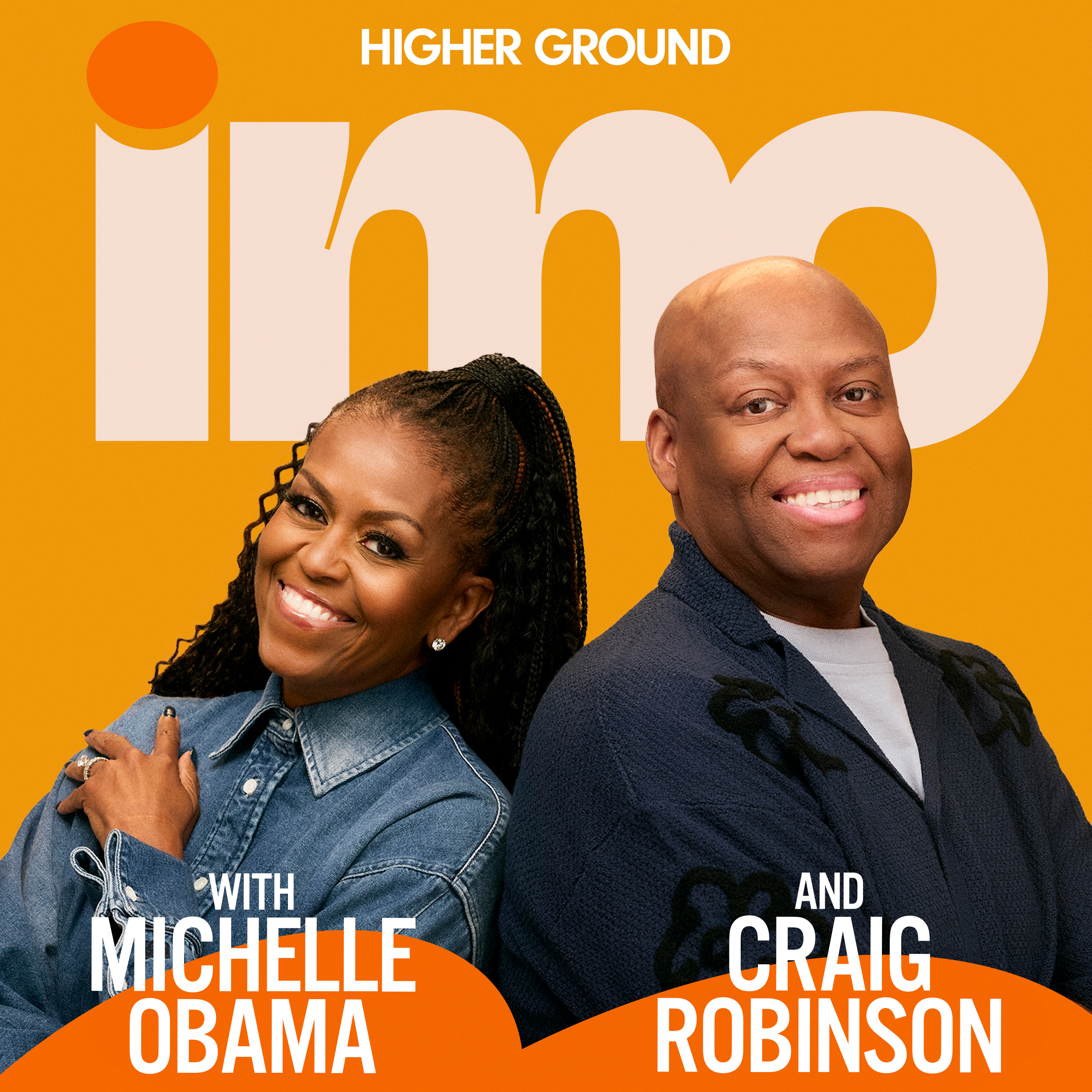
IMO with Michelle Obama and Craig Robinson
You Should Start a Podcast with Your Sibling with Michelle and Craig
00:53:11
Loading summary
Transcript171 lines
- [00:00]
Michelle Obama
A lot of people have questions they want to know, especially when they see somebody of note with a platform who, you know, by every measure, looks successful. The first question is how. I think this podcast, first and foremost, gives us an opportunity to hear from folks. You know, we're going to be taking, you know, questions from listeners who are going through some things and just need a little advice. They want to hear from people in conversations, and folks are looking for a place where they can just. They. They can hear stories. You know, I mean, what I realize is, like, by sharing some of these stories, you know, it always taps into something from somebody else. People, you know, they want to hear some honest kind of conversation about how people are working it through, and we don't have all the answers. You know, I mean, this show isn't about us being experts at anything other than the lives that we've lived, but what we do have are a lot of opinions, hence the name, in my opinion, imo. This episode is brought to you by Rivian and Pine Soldier.
- [01:24]
Craig Robinson
Well, I'm Craig Robinson, and you all know my sister, Michelle Obama. And we're doing this podcast together, and it's really exciting to be working with you on this project.
- [01:37]
Michelle Obama
You know, some people react like you're doing a podcast with your brother.
- [01:41]
Craig Robinson
Why would you do that?
- [01:42]
Michelle Obama
I don't really, but our dynamic is so, in my view, unique. I think there are plenty of siblings who have great relationships. But, you know, I think when we think back to where that came from, we think about. I think about just the physical closeness that we had. I mean, we weren't wealthy and dad was working class. We lived in the same apartment our whole lives and had to grow into that. And as a result, you and me, we were. We were physically close growing up.
- [02:17]
Craig Robinson
Remember when we used to share a bedroom?
- [02:19]
Michelle Obama
Of course. That was our life growing up. We shared the same room. Until you went to high school, right?
- [02:29]
Craig Robinson
That's right.
- [02:30]
Michelle Obama
Well, let's first just recall how small the apartment we lived in. It seemed like it was huge, but it was essentially two bedrooms, right?
- [02:40]
Craig Robinson
No, it was one bedroom.
- [02:42]
Michelle Obama
Well, that little offshoot bedroom that mom and dad stayed in. That. But you would consider that a bedroom.
- [02:48]
Craig Robinson
But that was the only bedroom. The room we were in was actually the living room. And the living room that we. What we called the living room was actually the dining room.
- [02:58]
Michelle Obama
Huh. Okay. All right. So that's how small it was. We had to turn it into something else. But the biggest room was always ours.
- [03:06]
Craig Robinson
Yes.
- [03:06]
Michelle Obama
And we were little. Little like baby littles like Five and three. The twin beds were head to head with like a end table in between.
- [03:15]
Craig Robinson
And we had matching spreads that mom made. That mom made.
- [03:20]
Michelle Obama
They were these big bold stripes. And the twin beds were up against the wall. And she had the concept of creating like these little padding boards.
- [03:30]
Craig Robinson
Yes.
- [03:31]
Michelle Obama
You know, she was so crafty. So she created these foam pads that she hung along the side to make them decorative, but to also provide us with a little cushion against the wall, which was we thought was so cool.
- [03:44]
Craig Robinson
I remember you had a bed guard because you were so little.
- [03:48]
Michelle Obama
Yes. Sort of remember that. Yeah.
- [03:51]
Craig Robinson
You still probably should have been in a crib.
- [03:54]
Michelle Obama
Maybe so. But yeah, I do remember.
- [03:56]
Craig Robinson
You remember that.
- [03:57]
Michelle Obama
You guys would tell me I'd fall out of bed, start crying, get put back in the bed, and I wouldn't remember anything about it.
- [04:03]
Craig Robinson
I wouldn't remember any of it. And everybody else would be wide awake and you'd be snoring.
- [04:07]
Michelle Obama
I didn't snore. Now you're making stuff.
- [04:09]
Craig Robinson
But then from there, from there we went to. And I'm trying to remember what age when our grandfather Southside built us this T. Partition.
- [04:24]
Michelle Obama
Wall.
- [04:24]
Craig Robinson
Partition wall. So then we had our own bedrooms in that same room. So it went from a one room, one big room into three small rooms. Your bedroom was on the right, mine was on the left. And then we had a common area in the front where mom, once again, crafty, built us desks on each side where we could do our homework.
- [04:48]
Michelle Obama
Yeah, yeah. I mean, you talked. That was some poverty crafting. Right. That's like Martha Stewart on a budget. But that wall was just. We were still sleeping head to head, but just on the other side of a wall. And it was special to me because that's, that's. I feel like that's where our. Our real relationship began. Because it's like we would talk for hours. You know, we go to bed, we're supposed to be asleep. And we'd stay up all night just talking through that little partition.
- [05:28]
Craig Robinson
We thought it was all night, but because we had to go to bed at 7:30, it was probably like 8:30. But we talked till about 10:00. And mom would finally come in there, if you all don't go to bed, go to sleep.
- [05:40]
Michelle Obama
But it was really sweet. Cause I remember being able to talk to you even at that young age about anything. What happened during the day, you know, the little drama in the outside world, you know, and just laughing all night long, all night about nothing. Making up silly games. And, you know, it started that young.
- [06:03]
Craig Robinson
Well, what's really ironic is that we were talking about how small our place was growing up.
- [06:10]
Michelle Obama
Our house. Yeah.
- [06:11]
Craig Robinson
And then look where we're doing this taping in this big, beautiful Airbnb. Got a little more room here.
- [06:19]
Michelle Obama
No. Who would have thought we'd be able to be in a snazzy place like this?
- [06:24]
Craig Robinson
You know, Art, this podcast is gonna be about you and I trying to let people in on some of the lessons that we learned as kids and growing up, and, you know, from mom and dad, but also from different teachers and coaches and things we've learned along the way. And let me ask you this. What is one of the lessons that you learned from mom and dad that really sticks out to you?
- [06:55]
Michelle Obama
Well, when I think about what we're talking about now, our relationship as brother and sister, why, you know, we're so excited about doing this podcast, not because we love to talk and we love. We got lots of opinions, but, you know, especially since mom passed, you know, this is a joint project that you and me have, and I think it's the first time we've actually work together and helping people to understand. Where does that foundation come from where you and I feel so comfortable with each other? And we have our whole lives where we can not only work together, but share what has helped to make us close. Right. I think about not just our bedroom space in that little bitty first apartment on Euclid Avenue, but I think about the kitchen table. Cause the kitchen was the other gathering place. And in our house, you know, we, as young people with our parents, what they did for us was they invited us to sit with them at the table and talk. And I think very early on, because our parents had the wisdom to understand how wise kids could be and how important their voices were and how much fun it was to. To not just have kids, just seen and not heard. In our household, our parents wanted to not just see us, but they wanted to hear us. They wanted to hear our ideas. They wanted to hear our opinions. I think that our parents offered us both the first table where we gained confidence in our voices, where we felt like who we were, what we thought, how we felt was important. And not because it was important to the rest of the world, but it was important to them. You know, And I think that's a piece of wisdom in terms of parenting that I try to share, I try to implement in my own life. But our parents wanted to hear from us. They loved our thoughts and ideas, and they encouraged us to. To say what was on our Mind do it respectfully, for sure. But that, you know, a lot of kids don't grow up like that.
- [09:21]
Craig Robinson
They sure don't. And, you know, I'm always asked how mom and dad came to be the type of parents that they were that would be the type to let their kids come into the kitchen table and share in the conversation rather than being lectured to. And I always remember mom always, when we would always ask mom, how do you know something? She was like, well, I don't know everything.
- [09:47]
Michelle Obama
Yeah.
- [09:48]
Craig Robinson
I don't know what to tell you.
- [09:49]
Michelle Obama
Yeah. Yeah. She was never afraid to tell us when she wasn't sure.
- [09:54]
Craig Robinson
When she wasn't sure. And she said, let me think about it and get back to you. And that was one of the most powerful things as a parent.
- [10:03]
Michelle Obama
Like, you don't. You're not supposed to know everything.
- [10:05]
Craig Robinson
You don't have to know everything. And it's better to say you don't know than to make up something or lie or get yourself caught in a position where your kids come back to you and say, you gave me bad advice.
- [10:20]
Michelle Obama
And a lot of parents are. A lot of parents think that a part of being the parent is to be the one with all the knowledge, with all the answers. And because our. Our parents didn't do that, it also gave us permission and taught us that, like, in life, you are in a learning process all the time.
- [10:42]
Craig Robinson
All the time, all the time.
- [10:44]
Michelle Obama
And it's okay to be wrong and it's okay to stumble. Mom and dad were also very good talking to us not just about their successes, but about their failures, what they did wrong, what they got wrong in life. And I see that time and time again. Parents feel like they need a shield of all knowingness in order for their kids to respect them or in order to keep them safe. It's like, let me not share with you how I messed up a few times. And I never felt the pressure of their judgment or their expectation in our lives.
- [11:20]
Craig Robinson
And it's funny you say that. Cause this reminds me of my favorite lesson from them. When you talk about, there's never any judgment. The only time mom and dad would really be upset with us is if we said, well, so and so said I should be doing this. And how about that word so and so?
- [11:46]
Michelle Obama
Yeah, that's a big problem. Who are these so and so?
- [11:49]
Craig Robinson
So and so? Yeah, it's just so and so.
- [11:52]
Michelle Obama
So and so was always a little trifling. That's all I remember about so and so.
- [11:57]
Craig Robinson
So and so was trouble if you hung out With. So you were going to get in trouble.
- [12:01]
Michelle Obama
That's the only way you were going to ruin your life is following him behind. So and so.
- [12:07]
Craig Robinson
And mom would be so mean. So and so. Well, but my point is, if you ever came in the house and said one of your friends, somebody outside of the family said you should do something or you should be something, or how about let's try this? And you followed in behind them and.
- [12:27]
Michelle Obama
That was your rationale.
- [12:29]
Craig Robinson
That is when you caught it.
- [12:31]
Michelle Obama
Yeah, yeah.
- [12:31]
Craig Robinson
And not thinking for yourself, not thinking for yourself and having enough confidence in your decision making process to make decisions for yourself and not because somebody wanted you to. Well, you know, I wanted to wear bell bottom jeans because everybody else is wearing them. That was the, that was the wrong answer. That was the way to not get your bell bottom jeans. If you could come up with a reason why you wanted them, then you'd have some bell bottom jeans. But if you said, I'm not doing this because of somebody out in the streets, as dad would say, you out here listening to these guys so and so out in the street, so and so in the streets, forget it.
- [13:10]
Michelle Obama
Well, that, you know, you also make me think that, you know, another thing that I think mom and dad was so wise about was because in order for them to, to push us to use our own judgment, they empowered us to make decisions and be responsible very early in life. And that meant think for yourself. But in order to do that, they had to sort of hand us our lives pretty young. And I'm not saying that they went off to work and left us alone. But I've said this before. Very early on, mom was like, you're going to kindergarten now. Here's an alarm clock. Here's how to set it. Set it, get yourself up. Because as she said, you're going to school for you, not for me. She's like, I had my education and I don't believe that if you care about yours that you need your mom to be waking you up every morning. So from the time we started kindergarten, you know, now she was up. It wasn't like she was sleeping in. She was just listening to hear us get ourselves up, get ourselves up, start getting dressed. When we got a little older, even start our own breakfast. And in the era of helicopter parenting, where people are waking up their kids, even calling them from college, mom and dad were the opposite of that. And in doing so, they were telling us, I trust you. Even at 5 or 7, you have the capability of like, taking care of yourself, you know, and you Know I love you, but I gotta get you ready for the life you're gonna have as an adult. And that means that if I'm. If you can't even wake yourself up and get yourself to kindergarten, you know, that's how mom and dad would think about it. It's like, so they showed us that we were capable, and guess what happened? We rose to that expectation. I was like, probably to this day, I don't do late.
- [15:19]
Craig Robinson
Oh, not in the Robinson household.
- [15:21]
Michelle Obama
Not in the Robinson household. You know, we don't do.
- [15:24]
Craig Robinson
On time is late.
- [15:25]
Michelle Obama
On time is late as early as on time.
- [15:28]
Craig Robinson
That's Frasier Robinson. And this is a guy who was, you know, for him to be on time, he had to prepare. Cause it was hard for him to get around and get dressed.
- [15:38]
Michelle Obama
His dad had a disability. Yeah.
- [15:40]
Craig Robinson
The fact that he had a disability didn't make him have an excuse for anything, particularly being late. So much so mom used to be mad at him. Cause he would get ready so early.
- [15:54]
Michelle Obama
He'd keep pushing the time of departure for a family outing. It's like, well, we're gonna leave at 3. And he's sitting there at 2 going, well, where is everybody? And it's like you said three.
- [16:04]
Craig Robinson
And I would get ready early just to keep him company.
- [16:07]
Michelle Obama
Well, Barack, you know, he had to adjust to what on time was for.
- [16:12]
Craig Robinson
Cause he was on that island. Time.
- [16:14]
Michelle Obama
Well, you know, I've got this husband who's like, when it's time to leave, it's 3:00. He's getting up and going to the bathroom. And I was like, dude, dude, like three. A three o'clock departure means you've done all that, you know, it's like, don't start looking for your glasses, you know, at the 3 o'clock departure. But he's improved over 30 years of marriage. But that was a, you know, that was. You must adjust. And Malia and Sasha, if they're doing anything with me, they are early.
- [16:42]
Craig Robinson
Right.
- [16:43]
Michelle Obama
So they've learned how to snap to it. But that was, you know, those kind of lessons from parents when you think you're helping your kid, you know, because you're worried about them failing, you don't want them to be late. You don't want them to get a not so great grade on their project that you start seeing stepping in and facilitating way more and not letting kids hit bumps. You're delaying their, I think, their ability to understand that their lives are theirs. And you also are sending them a subliminal message that they're not capable.
- [17:24]
Craig Robinson
That they're not good enough. Right?
- [17:26]
Michelle Obama
Yeah, right, right. Mom and dad didn't do that to us. No, but I started thinking too. I was just thinking of another story. We're flip flopping around. But when I think about our relationship, you know, the other thing that I liked and I tried to do with my kids is like, we were close. We were close physically, emotionally, all of that. But we were not codependent. And we weren't allowed to be like. Because you were a nurturer, you were a natural on your own, a worrier, a guardian. You took on just temperamentally extra worries and responsibilities.
- [18:12]
Craig Robinson
That's right.
- [18:13]
Michelle Obama
Mom understood that. She couldn't in any way imply to you that you were responsible for me. Cause you would have taken that on and gone off the deep end with it.
- [18:25]
Craig Robinson
Right? Right. I would have been your caretaker rather.
- [18:29]
Michelle Obama
Than your brother in grammar school. And I think that's another thing sometimes parents do with siblings. Like you make one responsible for the other. Now you've got a kid trying to be a parent and that leads to nothing but resentment on both parts. You know, if you were trying to parent me, that would have replaced the special relationship that is my brother, you know, which is something very different. I didn't need a father. I didn't need a mother. I needed a big brother. And so you were fully free to be that for me and I wasn't your burden.
- [19:18]
Craig Robinson
Well, you know, another story I think about is how mom and dad trained us to work hard. You remember the chores?
- [19:30]
Michelle Obama
Oh, yeah, we had chores very early on. Very early on. That's another thing. I think, you know, one of the best things that our parents did for us is real work. Real work, real work around the house.
- [19:43]
Craig Robinson
And what I mean by real work is I had. My chores were to clean the bathroom.
- [19:51]
Michelle Obama
I cleaned the bathroom. What are you talking about? We alternated.
- [19:55]
Craig Robinson
We alternated weeks.
- [19:56]
Michelle Obama
Okay. Cause I loved cleaning the bathroom and I didn't.
- [19:59]
Craig Robinson
But I had to do it. Mom wanted us both to know how to have a clean bathroom. But my every weekend job was cleaning those stairs.
- [20:11]
Michelle Obama
Oh, that's right. Yeah.
- [20:13]
Craig Robinson
We had 14 stairs. Notice I remember how many there were.
- [20:17]
Michelle Obama
Yeah, you had to. Yeah, that went from.
- [20:20]
Craig Robinson
Went from our apartment down to our aunt Great Aunt Robbie's apartment. And this is what I remember about Saturday morning. You remember that tin pot that we used to have? We had a tin pot, a pot now that used to be on the stove, which was now used for cleaning. And you put a little soap, dish soap in it. And then you put Pine Sol.
- [20:43]
Michelle Obama
Ooh, nothing like Pine Sol.
- [20:45]
Craig Robinson
And there was nothing like that smell like when you came home from school and mom had been mopping and you could smell the Pine Sol. It was usually Monday because she had laundry on Monday. You come home from school and it smells like, ah, new house.
- [21:00]
Michelle Obama
Yeah.
- [21:01]
Craig Robinson
And I have to say that I still, to this day, when I'm mopping, if we don't have that pine oil smell, that's it. That's it, isn't it? And here we are in adulthood and they're a partner of ours on this podcast.
- [21:22]
Michelle Obama
You know, an appropriate partner.
- [21:24]
Craig Robinson
How about it? So when you get a chance out there, visit pinesol.com and find out where you can shop for your Pine Soldier. This episode is brought to you by Rivian and their fully electric, full sized SUVs and pickups that are designed for all of life's adventures. The folks at Rivian lent me an R1S to drive around while I'm here in LA and it has been awesome. You know, I'm 6'six and there is plenty of legroom and headroom for a guy like me. In addition, there's also great cargo space for my luggage. So learn more right now@rivian.com this episode of Imo is brought to you by Theraflu as a product that was created to provide effective and comforting relief when you're fighting the flu or a cold. Theraflu firmly believes that the ability to rest and recover when sick should be a right, not a privilege. You know, I think back to the time when my dad was working for the city of Chicago as a stationary fireman and, and it seemed to us that he never missed work and he never got sick. But what we realized is that my dad didn't want to take his paid sick time because he wasn't sure if he would keep his job by doing that. And my sister and I realized that my dad would be sick, but he just thugged through. Was a difficult thing for him to deal with then. And unfortunately, so many Americans still still face this pressure today. 27 million Americans still lack paid sick time, which causes them to have to choose between losing a day's pay and getting the proper rest they need in order to get better. And what's worse, this all too common issue disproportionately impacts lower income individuals. Theraflu created the Rest and Recover Fund, which has committed nearly $1 million to to provide micro grants to workers to help offset the financial burden of taking an unpaid sick day. It's Been making a big impact. And theraflu is committed to keeping the fight going as everyone deserves the right to rest and recover, learn more, or help someone apply for the fund@theraflu.com right to recover. I'm so happy that we're doing this together. And this show in and of itself is. Is just bringing me down memory lane. But let's talk about some times when we had to, actually, since you were talking about looking out for each other, when we had to lean on each other for advice. And I'll start because I remember talking to you before I talked to mom about going into coaching.
- [24:27]
Michelle Obama
Oh, yeah, that's right.
- [24:29]
Craig Robinson
And I want to tell you a story about when I leaned on you. And I want to tell a story about when I didn't lean on you. When I leaned on you, I was. Well, I should tell the story chronologically because when I didn't lean on you happened before I leaned on you. Just in this example was when I was going through my first divorce, my only divorce. And I didn't tell you about it.
- [24:58]
Michelle Obama
Yeah.
- [24:59]
Craig Robinson
And the reason I didn't tell my sister about it or my mom or anybody close to me or just the.
- [25:05]
Michelle Obama
Challenges you guys were facing.
- [25:06]
Craig Robinson
Were facing was because I know my sister. And I said if I tell her about this, she's never gonna get over it. And if we ever got back together, it wasn't gonna be good for my first wife. So I was trying to hold off telling everybody, but the first person I did tell was Meesh. And she was so mad that I hadn't told her and so disappointed that I vowed that I would never not tell her hold anything from you because I had never done that ever, and haven't done it since.
- [25:46]
Michelle Obama
Well, Linda, because it was also interesting because I could see that something was going on, that there was a disconnect because we were close. I mean, we had our periods in life where we would come together, be apart, life would bring us together. We wound up going to the same college. We didn't go to the same high school. Cause you went to an all boys school and I went to a magnet high school.
- [26:14]
Craig Robinson
And Whitney Young wasn't old.
- [26:15]
Michelle Obama
It wasn't. You probably would have gone, but it was a brand new school. And because you were a student athlete, you needed a good, solid basketball program. And they hadn't developed it at Whitney Young, so we weren't in the same high school. And that was a good thing because we had times in our lives when we were in the same school, sort of in the Same orbit. And then we weren't. And then I followed you to Princeton, you know, where you were two years ahead of me. And big man on campus there too. Cause he was all Ivy on the basketball team and all this sort of stuff. So everybody knew Craig. I was always Craig Robinson's little sister that I, you know, I'm really enjoying the payback of Craig Robinson now being Michelle Obama's brother.
- [27:04]
Craig Robinson
Boy, times have changed.
- [27:06]
Michelle Obama
But I grew up as Craig's little sister. It's like, oh, you, Craig's little sister? I was like, yeah, yeah. But I do other things too.
- [27:13]
Craig Robinson
It's more fun being Michelle Obama's big brother. Much more fun.
- [27:18]
Michelle Obama
But even in those moments when we were in the same orbit, we were close, but again in the same way, not overly dependent. We had our own friends. We had, you know, you'd know if I was dating somebody. Cause that was the other thing, dating, like big man on campus in college. I think you scared off a lot of potential.
- [27:38]
Craig Robinson
You would have had way more dates. You had way more dates. Once I graduated, yes, I did.
- [27:44]
Michelle Obama
I think people didn't want to piss off Craig.
- [27:46]
Craig Robinson
And it wasn't like I was trying to mark any territory or anything. It was just, you know, your presence. It's just walk around, people get nervous.
- [27:55]
Michelle Obama
And then you graduate, then you go off and you play basketball. You have a whole nother experience. You move to Manchester, England and play in Europe for a couple of years. And so you're coming and going and then you get married. And I was very close with you and your first wife. We were not inseparable, but it was a close family. We did things together. And then Avery was born and we were always right there. We were very tight knit family. And then I met Barack and, you know, then we got married and we bought a condo right down the street.
- [28:33]
Craig Robinson
From your condo, three buildings down, three.
- [28:35]
Michelle Obama
Buildings down in Hyde park in Chicago. So that was a period when we were around each other a lot. And when you see your brother and you think his or your sibling or somebody you care about and you think everything is good, you know, and you're rooting for them. And then you learn that things are falling apart because you think, thank you. I thought I saw some things that were red flags, but I would always be like, how you doing? And your reply would be, we're great, we're good. Fine, fine. You know. And after that, once it all unraveled, I said your definition of fine. I was like, don't ever tell me that you're good because I'm not gonna trust that, you know, because it would have been like, even though you think I wouldn't have been able to handle it, I would have gotten myself together to give you sound advice and be able to stay neutral. But I felt like the dude I depend on the most, who I could tell anything, couldn't. Didn't feel like he could come to me when he was dealing with something really hard in his life, which is his marriage falling apart.
- [29:43]
Craig Robinson
That was a mistake. That was a mistake. And I've learned since then. But I talk about you all the time to people because now that you're an icon, people are like, what's your sister like? I was like, listen, this woman used to take care of me from the time all the way back to when you used to play the piano for me before games. Yes, people. Before my high school basketball games, my elementary school sister would play the piano so I could take a nap, and you'd play. Even after I went to sleep, you kept playing, teaching me how to dance.
- [30:25]
Michelle Obama
Oh, yes.
- [30:26]
Craig Robinson
You needed help before I would go to the prom.
- [30:29]
Michelle Obama
Cause he was just. He was on the court and he hadn't learned, like, some basic moves. So it's like, dude, your first dance, you got to. So we put on the record player, and I gave you a couple of moves that you are still doing to this day.
- [30:41]
Craig Robinson
I still do these moves to the extra.
- [30:42]
Michelle Obama
That's all you got. It's good, though. You're staying in the pockets.
- [30:46]
Craig Robinson
Stay in there. But what I think about when I think about us relying on each other, when I made the move from corporate America to become a coach, and the reason that was such a big deal was I was a bond trader salesperson in investment banking and finance, and big time job, really good living. And I was contemplating stopping that to go be an assistant coach on a.
- [31:20]
Michelle Obama
Basketball team is basically saying, I'm gonna go from being a millionaire to working for nothing. Which seemed to be our overall MO Both you and me. But yeah, yeah, that was a big. That was a big leap to walk away from a very secure, lucrative career and pursue something that you love.
- [31:41]
Craig Robinson
And you talked about how my love for teaching. Like, I always thought I was gonna be a teacher. I never thought I would be a coach or an investment banker or even a basketball player. I thought I'd be a teacher or a cop or a fireman. You know, that was what we were exposed to. And you talked about how much you knew. I loved teaching. I loved helping kids. And then you threw out what dad.
- [32:06]
Michelle Obama
Would say because dad had passed by then.
- [32:09]
Craig Robinson
He had passed by then. And he said, you said he would say if you could find something you love to do, you're not working a day in your life. And that gave me the courage to go into my partners that I worked with and tell them, hey, I'm hanging it up and I'm going to, yeah, I'm going to be a coach. And everybody thought I was having a nervous breakdown because this was after the divorce stuff.
- [32:37]
Michelle Obama
So it's like he's having a crisis.
- [32:40]
Craig Robinson
Yeah, yeah.
- [32:42]
Michelle Obama
But, but even in that, I don't think you realize that you gave me the courage to do the same thing eventually. Because watching you make some major changes in your life and you know, walk away from what people said you were supposed to do, rather than looking internally and really figuring out who you were, I was going through the same thing. Cause I was working at a corporate law firm, you know, making great money. You know, you imagine our parents, mom, working class people, I mean, we were earning more than both of our parents salaries combined, starting out in our first second years, you know, really making the most of this amazing education that our parents helped us acquire, doing what we were supposed to do, going to the best schools and getting the corporate jobs and owning the cars. I had a Saab, you had that red Porsche. I mean, we were the black successful people and so were all the people that we were surrounded by. But no one told us that some of those pursuits could be soul sucking, you know, because first of all, our parents didn't know. It's like you're a lawyer, a corporate lawyer, that's great. You know, you're in finance and you know, that's what all the fat cats want to do. But it was interesting how both of us entered those careers, were successful, but something was missing. And when I saw you make that leap with kids and alimony and all the responsibility, it made me stop and think about who I wanted to be and whether I was pursuing what I thought I was supposed to pursue or whether I was being true to what I cared about. And Barack came into the picture and he was, as I call, a swerver. Never really even thought about the need to pursue some high powered career, even though he was Harvard educated, blah blah, blah. It was all about what were we giving back, what were we doing. So you helped me make that leap. And it's a scary leap to walk away with debt. Cause we still have student loan debt and walk away from guaranteed money and basically start over in brand new careers. But that's the beauty of having a big brother who's paving the way.
- [35:15]
Craig Robinson
Yeah. And, you know, in more recent times, I mean, it feels like I can call and talk to you about anything. I mean, you know, we talk about the kids now. See, I have the younger kids now.
- [35:31]
Michelle Obama
Well, now you're on marriage number two.
- [35:33]
Craig Robinson
I'm on marriage number two. And I'm a charter member of the odc, the old dads Club.
- [35:40]
Michelle Obama
Although you look good.
- [35:41]
Craig Robinson
I do, I do, I do. But, you know, just being able to call you up and have an opportunity to gain from your wisdom, it's just really.
- [35:59]
Michelle Obama
Now that I got a little.
- [35:59]
Craig Robinson
Huh? It's nice. It's nice.
- [36:03]
Michelle Obama
Well, I couldn't have gotten through eight years in the White House without my big brother. That's another sort of unusual aspect to our lives. Our relationship was this whole, you know, being married to the president of the United States thing.
- [36:18]
Craig Robinson
Yeah.
- [36:18]
Michelle Obama
That none of us kind of banked on. I mean, we knew Barack was smart and, you know, ambitious, but, you know, I think. But you. You talked me into supporting his run.
- [36:29]
Craig Robinson
I did.
- [36:30]
Michelle Obama
And he was smart enough to know that he needed to come to you and sell you on the idea. So tell folks, what did he say and what you said to me?
- [36:40]
Craig Robinson
So.
- [36:41]
Michelle Obama
Because I was definitely like, nope. No way. This is crazy. We've done enough crazy stuff.
- [36:45]
Craig Robinson
That's right. That's right. And, you know, everything happened so fast because Barack went from a state senator to a U.S. senator. And next thing you know, people were saying, this guy should run for president. And you were like, uh, no, not doing it. You had grown up with Frasier Robinson. You wanted your girls to have sort of a similar upbringing with a father who would come home from work and play catch and take him to the park and do all these things. And Barack came to me, and he's like, you know, I can't convince your sister to go along with this. And I'm like, whoa, whoa. Go along with what? And it's like, I think I'm gonna run for president. And I. What? I wouldn't go along with it. And I said to him, I said, listen, what you have to do is, first of all, let me talk to her. You don't talk to her. Let me talk to her. No, it wasn't that. I said, if we can get mom on this, our mom, Marian Robinson, if we can get her on board for this, which she was not on board for it, we might have a chance of getting Misha on. And then I said, let me talk to Mish. And that's when I came and talked to you and just gave you your advice that you had given me back pretty much about following your passion and doing the things you love. But I think the thing that, that pushed it over the top was I convinced you to not penalize him for being really good at what he does. And that would be like a guy who is fighting to get to the NBA and he makes it. And because the travel is messed up, his wife says, nah, I don't want you to do it. And it just wouldn't be fair. And I talked to you and mom at the same time, and both of you sat there reasonably mad and said I was right. And then I said to everybody in our family that this is like, not a. This is not just you all doing it. This means all of us are doing it because of the scrutiny you guys would be under, the work you're going to have to do. It. Just. It's going to take a village to do this whole thing.
- [39:21]
Michelle Obama
And.
- [39:22]
Craig Robinson
And that was pretty much the discussion that we had that got this whole thing started.
- [39:29]
Michelle Obama
And that meant that you put your money where your mouth was. I mean, over the course of the campaign, the mini campaigns, our time in the White House, I could count on you to be there when I needed you. You know, I mean, you campaigned with us, you campaigned for us. You know, if anything got tight, if I was feeling a certain way, my team, especially Mel, my chief of staff, who's been with me forever, she knew who to call. She would, you know, Melissa loves you more than I do. It's like a lot of times Melissa will be like, I need Craig. And she'd call you and I come a running, and it was always a breath of fresh air. I mean, there's just something about having your foundation in check, you know, like being able to touch base with home in the middle of something hard and scary and uncertain. And you did that and did that for the girls because they needed their uncle and their cousins and I wanted them. Avery and Leslie, sadly, Austin and Aaron was so young, poor things. They were there, but they don't remember any of it. They're like, why didn't we go to that White House? It's like, you were there, dude. You were there. You were just four.
- [40:50]
Craig Robinson
You know what they remember? The turkey party.
- [40:52]
Michelle Obama
Well, that's the last.
- [40:53]
Craig Robinson
That was the last thing.
- [40:55]
Michelle Obama
Every year we'd have the turkey pardoning. And that was the one thing that the girls would do at Barack was go stand next to him when he pardoned this Turkey. And it was cute when they were little, but as they got older, you could see on their faces in the shots of just them thinking I would just poke my eyes out. Just right now, just get me out of here. I'm standing with my father telling these stupid jokes, you know, next to a turkey. So by the time we got to the last year, the last turkey pardoning, they were done. They did.
- [41:30]
Craig Robinson
I'm out.
- [41:31]
Michelle Obama
I'm not going. So in subs Austin and Aaron, who were. How old were they at the time?
- [41:37]
Craig Robinson
Oh, shoot, six and four.
- [41:39]
Michelle Obama
Maybe I'm turkey pardoning age. Like, they were like, call me up. I'm in, coach. I'm ready. I'm ready to stand next to Uncle Barack. And they loved his stupid jokes. They loved the jokes. You know, he felt like a new man. He's like, I got a new crew in. They were amazed. They were fascinated. While their daughters were like, you are. You are sad, dad. You know, Austin and Aaron came in. So they remember that because that was like the last chance when they started having memories.
- [42:10]
Craig Robinson
Of course, nothing was better than having Thanksgiving dinner at the White House. So yeah, yeah. So we just absolutely loved being a part of that whole thing. This episode of IMO is brought to you by Cologuard, a non invasive colon cancer screening test. The Cologuard test is a one of a kind way to feel more in control of your colon cancer. Screening through a prescription based test with none of the prep that's required of a colonoscopy. When I was a coach, my players had a team of people helping them with their physical well being. They had so many tools to make sure every member of the team was on top of their health and wellness. But what I want our listeners to know is that even if you eat well and have a healthy lifestyle, that does not mean you are low risk for colon cancer. The Cologuard test is the only FDA approved non invasive option that looks for both altered DNA and blood in your stool which can indicate the presence of abnormal cells. The good news is that when caught at the early stages, colon cancer is survivable in 90% of people. So screening and early detection are crucial. With zero downtime, no special preparation, and a screening test that's delivered right to your door, we shouldn't let our health take a backseat. So if you're 45 or older and at average risk, ask your healthcare provider about screening for colon cancer with the Cologuard test. You can also request a Cologuard prescription today@cologuard.com podcast the Cologuard test is intended to screen adults 45 and older at average risk for colorectal cancer. Do not use a cologuard test if you have had adenomas, have inflammatory bowel disease and certain hereditary syndromes, or a personal or family history of colorectal cancer. The cologuard test is not a replacement for colonoscopy in high risk patients. Cologuard test performance in adults ages 45 to 49 is estimated based on on a large clinical study of patients 50 and older. False positives and false negatives can occur. Cologuard is available by prescription only. This episode of IMO is sponsored by Chase Home Lending. Committed to supporting you all the way home with smart digital home buying tools and resources. Chase Home Lending is dedicated to helping individuals and families achieve their dream of home ownership. They offer expert guidance throughout the home buying journey, helping customers navigate the process with confidence. This brings me back to a time when we grew up living upstairs from my aunt in a two family home that she owned and we rented and it was a wonderful time. But being a renter we had to be extremely careful of what we did. For example, we had to be quiet at a certain time. We we couldn't play on the front lawn, my sister couldn't have a dog and we didn't realize the importance of being a homeowner until we got late in life. We always would talk to our dad about why we don't own a home and he talked about being house poor. Little did we know that home ownership was a great way to build equity. My sister and I ended up buying our own homes later in life and we used that to help pay for our kids college. And that is a way where home ownership can lead to future success. Chase Home Lending offers personalized support, expert knowledge and access to valuable resources helping home buyers navigate the complexities of getting a mortgage. Their guidance ensures buyers find a financial fit and make informed decisions. Visit chase.com start to see how Chase can support your homeownership journey. Member FDIC Equal Housing Opportunity. You know it just we started talking about this at the outset why we're.
- [46:38]
Michelle Obama
Doing this show, you know host White House and writing the books and doing book tours. You know we just I you know speaking at leadership conferences, things you do as a coach, you realize that what we have, even in our lack of resources, you know in our household growing up we we had people who would share their opinions, give us advice, we had mentors and we were used to mentoring and Being mentored. And I realize that a lot of people don't have that. You know, they don't have a safe place to come sometimes where they feel comfortable being vulnerable and asking hard questions, or they don't have people in their lives they trust. They are lone wolves, or maybe they have contentious relationships where they're estranged from the people they could rely on. So a lot of people out there are looking for guidance. A lot of people have questions they want to know, especially when they see somebody of note with a platform who, by every measure, looks successful. The first question is, how? How'd you do this? Tell me more. So I can only access so many people through books or tours or at, you know, limited leadership conferences. So I think this podcast, first and foremost, gives us an opportunity to hear from folks. You know, we're going to be taking, you know, questions from. From. From listeners who are going through some things and just need a little advice. They want to hear from people in conversations, and folks are looking for a place where they can just. They can hear stories. You know, I mean, what I realize is, like, by sharing some of these stories, you know, it always taps into something from somebody else. People, you know, they want to hear some honest kind of conversation about how people are working it through, and we don't have all the answers, you know, I mean, this show isn't about us being experts at anything other than the lives that we've lived, but what we do have are a lot of opinions.
- [49:07]
Craig Robinson
Hence the name, in my opinion, imo.
- [49:13]
Michelle Obama
And what better person to do this with than my big brother who, you know, I know how you think. I know why you think it. You were funny as all get out. I trust you implicitly. But I am also excited that we're gonna involve other people around our table, that we've got friends and other out there and people we've met over the scope of our lifetimes, who have their own podcasts or living their own lives, who are gonna come in and engage because we have our opinions, but so do a lot of other people. And I hope this show encourages people to have conversations about what they're afraid about. Don't do what the one time you didn't lean on me, you know, at a time when you needed it because you were afraid of what I would think or what, you know, we want to encourage listeners. That's what we need in this time. We need kitchen tables where we can just sit down and share opinions, share experiences. That's where the wisdom comes from, you know, so I'm Excited to be engaged in some of those conversations with you. How are you thinking about this?
- [50:28]
Craig Robinson
I couldn't agree with you more. I have over these years, and we talked about this a little earlier about being our parents, being before there was the term lifetime learners. Right. That's what they were. And it's been so helpful for me in my adult life and our adult lives. I just want to be able to share what we can with folks who weren't as fortunate to have Frasier and Marian Robinson as parents. And then I have just watched you grow into this person who has a platform where people. You touch, people, people listen to you. And it's just an honor to be sitting here next to you and being able to share that with the rest of the world.
- [51:23]
Michelle Obama
And hopefully it'll be fun.
- [51:25]
Craig Robinson
It'll be fun, you know, because we may not have all the answers, but we got plenty of opinions.
- [51:30]
Michelle Obama
We sure do. We sure do. Well, it's gonna be a joy to have an excuse to hang with my big brother.
- [51:39]
Craig Robinson
So we're gonna want. We want you to hang with us. Tough. So, yeah. And feel free to engage with us. Subscribe, follow us on YouTube, Apple Podcasts, Spotify, Audible, Audible, and wherever you get your podcast, look us up and send us some questions. We'd love to get questions from you folks and try and answer them. And, you know, I plan on learning something, too, in this.
- [52:12]
Michelle Obama
So for sure, lifelong life learners like, we hope to learn from our guests, we hope to learn from our listeners. And I can't wait until we start getting feedback from people to hear what's missing. What more can we talk about? What areas can we touch on? But again, we are not the experts. This is just our opinion, and everybody's got one. And it's important. It's important to have an opinion in life and put it out there. So I'm excited.
- [52:45]
Craig Robinson
So am I. It'll be a lot of fun.
- [52:47]
Michelle Obama
Thank you for coming on this journey with me, Craig.
- [52:50]
Craig Robinson
Thanks for having me.
- [52:51]
Michelle Obama
Yeah.