← In Good Company with Nicolai Tangen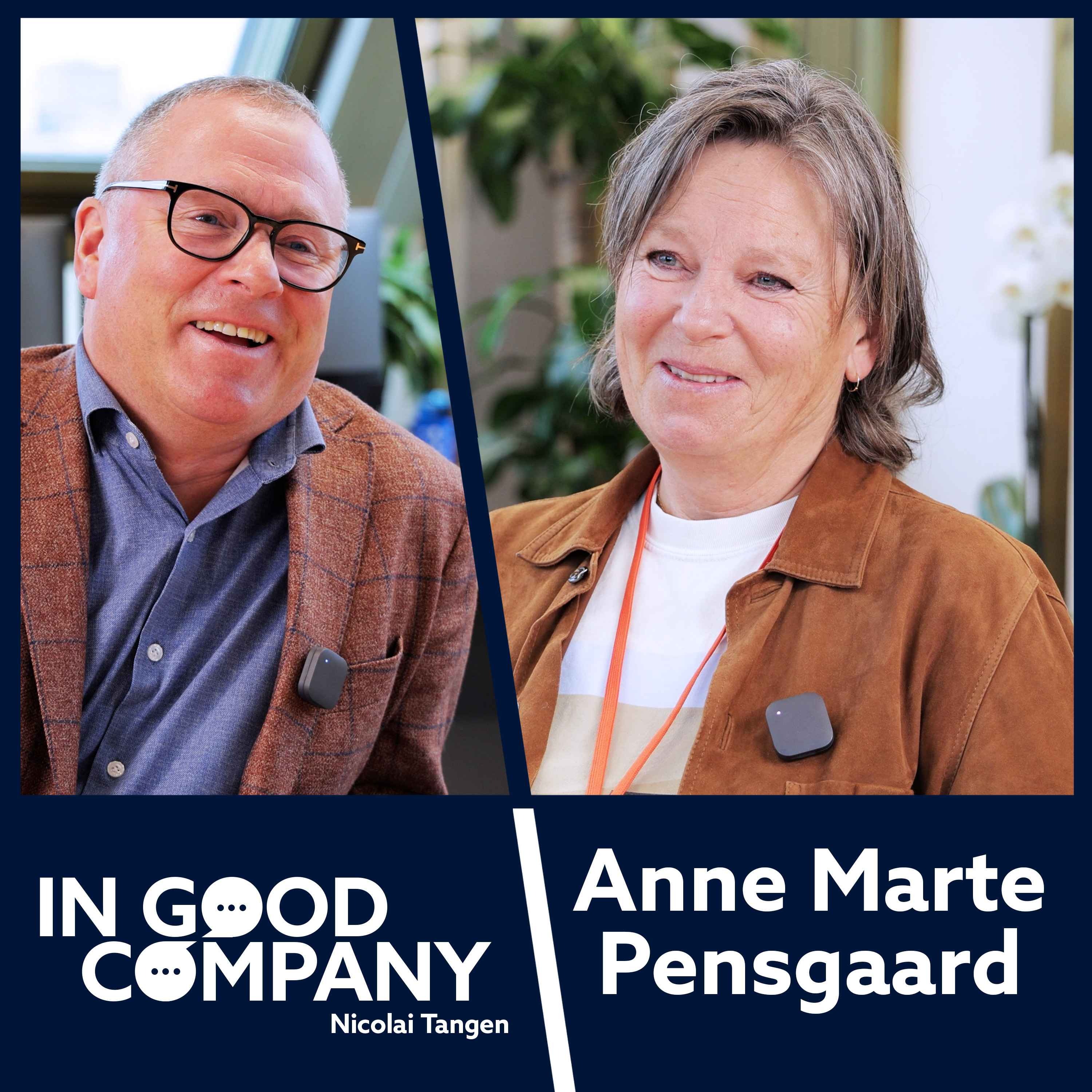
In Good Company with Nicolai Tangen
Anne Marte Pensgaard: Why does Norway dramatically outperform at the Olympics and what can business learn from it?
00:31:35
Loading summary
Transcript98 lines
- [00:01]
A
Hi everyone. I'm Nicola Tangen, the CEO of the Norwegian Sovereign Wealth Fund. And today we are doing something really great fun because Norway happened to smash every record in the Winter Olympics. And today we are joined by Annamarte Penskor, who is the professor of sports psychology and he's basically the person who's shaped the whole mental training of the Norwegian Olympic athletes. So warm welcome.
- [00:25]
B
Thank you so much.
- [00:36]
A
Now, how do you explain all these metals?
- [00:39]
B
That's a really complex question. It goes a long way back because we tend to think about what we do today. But of course it has been a long tradition for maybe 20, 30 years now where we have worked on this culture. So I think there's many pieces in that puzzle.
- [00:57]
A
When did you decide to. Because it was after Turin, I guess, which was. Or when did you think that, hey, we need to do some stuff here?
- [01:03]
B
Well, even later or before that, actually after the Calgary Games, we didn't take any medals and then we started to think, what should we do about this? And we had to do something about the whole top sport level system and also work more together as teams and also think long term to develop athletes.
- [01:27]
A
Okay, so you are in Calgary. It's the worst game the country's ever had. So you sit down, what do you do? What kind of plan do you come up with? How do you.
- [01:36]
B
Unfortunately I was not there, so I started later. But Turul Remi, who was the one who kind of founded Olympiatoppen, which is our kind of top sports center where everybody meets and collaborates and share ideas. And that was a really important starting point. And then we had some good leaders who really focused on expertise, I would say in different areas, but in physiological, nutrition, psychology and also more kind of training insights into the training regime and also how to develop talents. So many things happened in kind of the late 80s and early 90s.
- [02:20]
A
How long time does it take from you start a process like that until you really see the results.
- [02:25]
B
I think that's a good major point, is that this takes time. It's not a quick fix in any way. And of course you need to have athletes who really want to be dedicated, who wants to put in the hours to do this immense training. So you need to be patient. But of course you want to have results fast as well. So kind of have to have two focus at the same time, try to develop instant performances, but also also think long term in order to sustain that kind of performance over time.
- [02:56]
A
There's something called the Norwegian model. What is that?
- [02:59]
B
Well, that's. It's actually the way we treat our youth sports and that we are not allowed to kind of have result lists or give only prices to one person up to the age of 12. So if I get the prize, you get the price, even though I might be faster than you. And that kind of also helps us think that these are children, they are supposed to have fun, to play, not to be kind of singled out as talent at an early age. And I think that is a key element in why we kind of are able to have a lot of youth doing sports for a long time and then we have more to pick from. And also we are a tiny country, we need to kind of take care of everyone who wants to.
- [03:45]
A
Something very social democratic about the fact that everybody gets the same price. No?
- [03:49]
B
Yeah, it is. But you know, when you are a child at 12, you know who is the best one. You don't need to have a prize for that person. And at the same time they forget the results two minutes later. If you ask kid what the result from the football pitch was, they might even not remember the the score. So it's important to keep the perspective on this. They should develop on their own terms and, and the most important thing is that they're social with their friends, so then they will stick it to the sport.
- [04:19]
A
Do you think the. The kind of the result lists and the awards is the reason why people drop off in sports, let's say, in the US much quicker?
- [04:27]
B
I think there's a lot more pressure on young kids in the US we stay there for some time and also we're able to see the system from that perspective and it's very different. And I also think the Norwegian system allows a child to try different sports for a longer period of time instead of just choosing one. We kind of may be losing track of that at the moment. So I think we need to really focus on what we did 10 years ago, because that's the result of what we see today. That's why these athletes perform today is not what they do today necessarily, but what they have done for many, many years.
- [05:03]
A
It's interesting how some. How some of the top talents were doing several sports, right? I mean, even the chess player, Magus Carlsen was a good footballer, right?
- [05:10]
B
Sure.
- [05:13]
A
What is the case for doing many different things?
- [05:16]
B
There's many, many advantages of by doing that because both physically you are more prepared to the different new techniques, that you also get more ability to be more flexible in your mindset. You're in different milieu's so that you have a different Coach, maybe in different settings, teaches you how to behave in different settings to relate to people. So there's a lot more fun to do different things and you're with your friends, hopefully for most of the time. So there's so many advantages of doing this. So we shouldn't lose track of that. And we also know that just by growing children gain more kind of physical fitness. So we don't have to kind of put that much effort into that at that moment.
- [06:03]
A
What's the similarities to business when it comes to that? Doing different things or specializing really?
- [06:12]
B
I think it's important in any kind of profession is to know different skills. It gives you kind of a knowledge background so that you understand your kind of co workers and also you're more flexible and able to kind of analyze them. A situation from different perspectives, I think so. A broad background I think is beneficial in many ways. Also in business, I would say now
- [06:38]
A
there are many sports where we don't do well or where Norway doesn't do well. Right. I mean, figure skating, ice hockey and so on. Why are we not doing well in those sports?
- [06:46]
B
We don't have enough ice hockey wings, you know, we don't have not ice. We have so few places to go on ice. So if we had decided to develop that, I'm quite sure we would also excel in that area.
- [06:59]
A
Right. Okay.
- [07:00]
B
So what I mean is the accessibility to do your sport is of course key. It's easy for us to go out and do skiing. It's far more difficult to get ice time somewhere.
- [07:11]
A
Why doesn't Sweden replicate what Norway does?
- [07:14]
B
Well, I think Sweden is also quite successful, I would say, and also in some of the really huge sports. So we shouldn't kind of boast of kind of knowing what to do and teach other persons or other cultures what to do. I think they do pretty well. I think we in Norway have the advantage of being very close together with the science, the applied part, the athletes, the coaches. It's quite a tight community, a lot of knowledge translation to other sports. And I think that is quite unique for the Norwegian system that we are able to create these meeting places where we actually can talk across sports.
- [07:55]
A
When you contrast with, let's say, the U.S. what's the biggest difference?
- [07:59]
B
Well, this is one of the things my US colleagues envy us for, that we are able to create these meeting places. And we also have, you know, several times before the Olympics, we have all the athletes gathered together also to bond, to get to know each other so that they, they, when they go to the Olympics, they know each other well. And this is a concept that the US have adopted as well and tried to do. But they are huge. I mean, the squad is three times bigger than ours in the Olympics. So it's of course more difficult for them. Being such a huge country and much more people.
- [08:34]
A
How important is it to have specific stars or role models which create these clusters?
- [08:39]
B
Again, I think that's a key thing. You need the role models. Do you need the kind of those who paves the way for other people? And when you see that, oh, can you succeed? I can succeed, and that's super important. So let's say in Alpine skiing, when Olaf is kind of took a World cup medal, the other teammates were just looking at each other and said, well, if he can, I beat him every day on training, so if he can, I can. And that's kind of important in every place you have Ingrid Christiansen. We have in so many different areas. And also now in football, with Haaland and Odegaard, of course, it creates a belief that we also can do well when it comes to different sports, moving
- [09:24]
A
on to the mental edge. So let's say now I'm a decent athlete. What do you, as a sports psychologist do with me?
- [09:33]
B
If you're a decent athlete but good enough to be part of the OlympiatOpen system and you have a scholarship in our place, I will mainly focus on why do you want to do this sport? Why do you become a skier? Why did you become a footballer? What kind of. What's the drive behind your choice of sport and why do you do it now and what do you want to achieve?
- [09:59]
A
Well, I want to win.
- [10:00]
B
Yeah.
- [10:01]
A
I want to show the world.
- [10:02]
B
Yeah. Then we need to know what the potential is and how far you're off that kind of goal, to see, you know, what you need to do at work and are you actually willing to put in that amount of work that you need to do because, oh, it's a huge job to be a champion.
- [10:19]
A
I want to be a champion. I'm going to put in whatever it takes. What would you do with my main. With my brain, then?
- [10:24]
B
You want to focus. You need to learn to focus.
- [10:27]
A
Okay.
- [10:27]
B
Yeah. Awareness is a key, and that's something we have discovered the last, I would say, 10 years, put a lot of effort into to work on attention skills and how to develop a flexible focus system in you so that you are able to focus on what you want to do instead of being caught in the moment and not being able to show us what you can do when the pressure is on because that will be the case that you will experience a lot of pressure and you will have to be able to handle that situation. Also, when you feel very little confidence or afraid or whatever the feelings you have, you still have to be able to focus on what you should do. And that's what we would put a lot of effort into training that ability.
- [11:22]
A
How do you train that ability?
- [11:24]
B
We use different approaches. We do of course do mindfulness based approaches. That's something that the research based from Anders Melan came about. That was really important in kind of our perspective. But we also work with values. Who do you want to be? Who do you want to kind of become? What kind of athlete do you want to be? Do you want to be the brave one? Then you can't do the shortcuts. So we kind of have to work on several abilities that you. And also factors that are important when it comes to mental kind of skill training. We'd also work on how you can distance yourself from some of the thoughts that might kind of steal your focus at some points. So how you can kind of diffuse from the setting that you can. I'm not my thoughts, so I can still do what even though I think I feel not confident. That's a feeling. But I don't have to think that I am not confident. I have these thoughts that I'm not confident. And that's a huge difference. Then you kind of distance yourself a bit from your thoughts. Then you can free yourself to still do what you want to do, do the tasks you are set out to do, even though you don't really feel like you would do it in the first place. But then you start to master the things and then confidence kind of becomes a result of your focus.
- [12:47]
A
Would everybody benefit from that type of focus training, you think?
- [12:51]
B
I think so for sure. Because it brings you back to the moment, to where here and now. And there's a lot of things we can do even though we don't feel like doing it. And to kind of separate the two frees us in many ways. And when we start doing things, kind of mastery follows. Very often our experience follows and then we can learn from that. Instead of that, we sit and wait for the confident feeling before we kind of start doing things. And that's, I think is a huge shift in mindset that you start act acting instead of just waiting for a feeling to to kind of be come before you do actually do the action.
- [13:35]
A
You also work with artists and people in the creative industry. What are the similarities?
- [13:45]
B
Oh, I've Learned so much from them. And because they have to perform every night and give something to the audience every night and have seen how extraordinarily well they prepare, they go through these rehearsals time after time after time. And it's even more impressive than some of the athletes, I would say. They prepare it into minor details. They're focused on details. So. So it's. And the similarity, of course, is connected to what also we do in sports. And I tend to work with artists that are interested in sports, so I can use some of the analogies. And of course, I'm an expert in the sport area, so they have to kind of see what is transferable for their performance and their kind of life. But I also find that they are also. They don't have this big support system that athletes have. So it has been a huge pleasure to be able to work with some of that. Some of the artists, for sure.
- [14:48]
A
You think business people are a bit dull?
- [14:50]
B
Yes. Well, I think it's more. For me, it's more fun to work with athletes and performers.
- [14:57]
A
What is so dull with the business people?
- [15:00]
B
Well, you know, when we win the Olympic gold medal or if you see a huge performance, you can cheer and you can jump and you can cry and you can laugh. You have a lot of emotions and you can cry with athletes when they don't succeed, because that very often happens as well, that they do not succeed. So I think the emotional span within the performing arts and also in sports is much larger. So I don't know what you do here when you have a good day.
- [15:25]
A
Well, we don't really dance around.
- [15:27]
B
No, I can imagine. And I like dancing around when something good is happening. So I guess it's just me. I feel that that's my area of kind of competence is within sports, so. And I have a huge also pleasure working with so determined young people who really want to achieve their goal and maybe being able to shape that kind of road a bit for them and help them maybe reach what they want to do. It's a huge privilege, I would say.
- [15:56]
A
So do you think we'll be a better place if we introduce more emotions and celebrations and high fives here?
- [16:05]
B
I think we should celebrate good results in some way. And you need to find. You know, I'm a researcher, so we kind of. When we have a published paper, it's. We do a little hey. In the office, so it's not much celebration there either. So. So I think you need to kind of tailor it to where you are, but some kind of celebration, I think it's in place because it's what we're working for, isn't it, to try to achieve our goals and then get some inspiration to continue to work hard.
- [16:32]
A
I saw this quote from this famous tennis player. Pressure is a privilege.
- [16:38]
B
We use that also a bit.
- [16:40]
A
Yeah. And we've started to use it too, because it is the fact that you have pressure means that you have an interesting job often at times.
- [16:46]
B
Right. For sure.
- [16:47]
A
Do the best actually, like pressure, I think.
- [16:52]
B
Well, I know some of them are terrified just before they're going to dive into whatever they are supposed to do, but at the same time, the award afterwards is. So it's quite huge. When you have mastered, you have been able to do what you have done in practice so many times, and then being able to do it when it really counts, it's a huge feeling of mastery. And that feeling is difficult to experience anywhere else, I think, in that kind of magnitude in some ways. So, yeah, it's a privilege with try to, you know, put a lot of effort into being to gratitude. Just in lvinho now, when we were down there in Italy now with, you know, looking at the mountains, we'd stayed in this nice hotel place will the Olympic village with the spectacular view. And we just had to say, you know, thank you for being here. I mean, this is. This is. We can't take this for granted. So we need also to ground ourselves and be really grateful, I think.
- [17:57]
A
Yeah. What does gratitude do to people?
- [18:01]
B
Oh, it's. Even science has kind of found that this is hugely important for our brain to also live good lives. And of course, it creates kind of atmosphere when people are grateful and still, instead of taking things just for granted, it's very different. So it creates humbleness in kind of that moment where you also should be very courageous. So it's kind of, again, a span of emotions coming there. So I think it's important.
- [18:39]
A
I read a book last year called the Gratitude Diary, and so I start my day every day. First five minutes, just go through all the things I'm grateful for.
- [18:49]
B
Yes, yes.
- [18:50]
A
And it puts you in a different place.
- [18:52]
B
It does. It also reminds you that you can't take things for granted. And we have been in the last few months in the sports community, there has been some quite tough situations which we had to cope with. And then of course, you get a realization check kind of what. But you can't take this for granted. Tomorrow you can have an injury, for example, that takes you out of sport and things can happen. So now we should be in the moment and be grateful for what we have. And I was. I know I've been to many Olympics. I don't know how many more I will attend. And I was reminding myself this last Olympic that, you know, this is. I'm so privileged to work with these people and these coaches, you know, who really put everything online to help these athletes perform. So there's so many people here in this kind of support system that also put a lot of effort into creating these performances.
- [19:57]
A
If you look at the most important values amongst the people you work with, what do you think? What are the finest values you see?
- [20:09]
B
Caring for each other. And I see it so much in the two winter sports I've been have the honor to follow now is freeski and snowboard. And then you see it across cultures as well. So when somebody is landing a difficult trick, maybe something nobody has done before, the whole community chairs different countries, just cheers this person who has done this trick. And I've never seen that in any other. That may be an orienteering, which I'm also following, where people really are happy about people who succeed regardless from which country you are from. So to see that kind of. That people care for each other, it's I think, a huge thing. Then they share, they help each other, they coach each other. And of course that's very powerful. When you have a lot of expertise together and they share that magic happens.
- [21:04]
A
How do you bring that into a company or into a business, that attitude?
- [21:08]
B
I think you need to have a quite a secure environment. You need to feel that, you know, we all heard about this psychological safety kind of environment. And I think that's actually a key that I know that even though I come with this kind of maybe critique or issue, it doesn't come back to me. And you don't stab me in my back and I don't lose my place on the team. It's community where you actually can. Can share also things that are not functioning that well. So that's. You need to create that kind of environment within the group. And if it's not there, you need to start there.
- [21:44]
A
And how do you create it?
- [21:47]
B
You need to have a coach, a leader that actually wants to do this and is not afraid of having athletes coming in with their opinions. And I think that's where we maybe in Norway are more open, open to having athletes who have an opinion. We want them to take ownership and be part of the development of the sport. If you have coaches coming from different cultures coming to Norway, they maybe find that a bit difficult that you have Kind of outspoken athletes who want to have their saying in decisions. So that had to be taught and had to be cultured in many ways that this is what that kind of. We are secure enough to have that kind of environment. So then you have to have coaches who have a lot of skills also because they are more secure instead of thinking that they have to know it all.
- [22:39]
A
What's the key to create good teams?
- [22:46]
B
We know that the coach or that the leader is important. He sets kind of the tone. I think it also have to be part of different kind of personality styles within a team. You need to have a few rules that you need to attend to and then follow up because otherwise everybody's just doing their own business.
- [23:09]
A
Rules such as, what are the important rules?
- [23:10]
B
It could be such as that we don't have the phone when we have a meal. We eat together sometimes. And if we share an apartment, we need to have some. Try to have it a bit tidy. We make dinner together. Quite ordinary. Simple rules, not too many, but enough to show respect for each other. That we kind of. We're not just alone in here. And this can take time, I can tell.
- [23:39]
A
But how do you build a team consisting of people who actually compete against each other?
- [23:43]
B
Yeah, that's a bit different because it's. And we have learned a lot, actually from the output.
- [23:49]
A
So like the downhill? Like the downhill, yes. Right. They compete each other, trying to beat the shit out of each other when they compete, but at the same time they trade together and so on.
- [23:58]
B
One of my colleagues from a different country said that would never happen in my country. They said. But again, what they have said, and which I think most of us try to replicate, is that they say that, yes, we are competitors, of course, but we also know that if we as a team evolve and are successful, it helps all of us to be more successful. So they kind of. And if I don't win, I want you to win, not someone from Sweden or Denmark or somewhere else. So we kind of try to stick to that.
- [24:33]
A
Are we sure that a more aggressive approach wouldn't have given us more medals? You know, starting earlier, get you into sport, put everybody with big hands into swimming, you know, put all the tall people into basketball, you know, just like totally go for it.
- [24:50]
B
I'm sure we would have some who would succeed in that model as well, but we've had lost so many others, which would have been such a shame. So I think it's a gamble to do that. Of course, if you have a huge amount to pick from, it might be successful, but I still would say that maybe you would lose the biggest talents that way because you wouldn't be able to spot them at that point. We know so much about those who succeed that a lot of them have succeeded quite late. 16, 15, 16. And they would have not been part of that kind of selection that you are mentioning there. So I think we just would have lost so many and it wouldn't have. I don't think it would have been that much fun. And the key thing we have to do with the young athletes is to. To keep them motivated and keep them in sport. And then when they are kind of 15, 16, 17, we will know who really wants to put in that effort. And the rest of them would have had a joyful ride and they would be good friends with those who become the stars. So I think there's so much to gain. And also the physical aspect, which I think we see more and more, there's a lot of injuries in sport and maybe it's also due to that they are not so well prepared now as they were just 10 years ago, because then there were a lot more out in the street playing, climbing trees, falling down, building this kind of ability to handle all the training they have to do later on. So there's so many reasons why being a bit more patient is a success criteria.
- [26:37]
A
So, Anna Marte, I'm now making you the head of the Norwegian sovereign wealth fund. Nice. What would you do with this organization? Just how would you think about. So you inherit now a team of professionals. Just what. What are the kind of things you would think about to develop an organization?
- [27:00]
B
I think I would done exactly what you did. You hired us a sports performance consultant, like in sports psychology. So I think that was. That is the key. Of course, that's my bias. But I think it's important that we. We also focus on that part of development. But otherwise I would have had to hire a lot of really skilled people because I wouldn't have a clue of how to work with that kind of.
- [27:23]
A
But in terms of building the team and building the mentality, what would be the important things?
- [27:27]
B
A lot of communication, openness, welcoming, new ideas. New people have new ideas and we need to listen to them and also to try to create a happy environment because it's much more fun to work with. Work when you feel safe and not safe, like doesn't have to do anything, but safe in the way that you have my back if something goes wrong. The ability to be able to also make mistakes, you learn a lot from them. If you are willing to kind of share them. So try to create that kind of climate, I think would be a key thing. So I would lean on the kind of research we have in those kind of environments and try to build that one part at a time.
- [28:18]
A
There seems to be sometimes a bit of a misunderstanding with what psychological safety is in that people also think it's. It means job security, even if you're a total loser, which is not what it is.
- [28:27]
B
No, not at all.
- [28:29]
A
So what is it?
- [28:30]
B
No, it is. It's that I feel secure enough to say that when I disagree with something. I'm actually, I feel I can say that without you punishing me one week later and taking me out of that team and preventing me from doing my job. So it's a delicate question. It's difficult, of course, as a leader, nobody really like to be criticized or that kind of the approach you have chosen is wrong. So we also need maybe to create a culture where you share that disagreement in an okay manner so that you kind of manage to keep the communication going. Because if the communication stops flowing, problems will start to arise really quickly. So you can never take that for granted. A good culture can die in a second if the trust is not there anymore. So it's a huge challenge to work on that. It's never done. You have to work on it, keep working on it, and being open for change all the time.
- [29:33]
A
Lastly, what is your advice to young people, not only in sports, but generally speaking, how should you think about your life?
- [29:41]
B
Well, I think a key thing is to find something you really find is joyful, where you can laugh, where you can have a lot of fun, where you have good friends and where you feel that you can. You're welcome. Every child and youth should be part of an environment like that, whatever it is. It could be in the performing arts, it could be in sports, whatever. But being part of a community that kind of cares for you is so valuable and I think can help you through all the kind of challenges you will meet in life. And especially as a young person, you should have good friends around you. So that's. Pick a sport. I would look for the one where the climate is good and you have a nice coach. And there's a lot of laughter on the training, a lot of content people. I think that's so important because without motivation, you will never perform anything. So you need that new culture left and take care of that.
- [30:44]
A
And I assume that translates into studies and work choices as well.
- [30:49]
B
Yeah, I have a lot of athletes who ask for career advice And I say, well, my only advice, pick something you really love doing. If you like this book or read on this topic, maybe that's kind of a path you should follow. I honestly feel that I haven't worked in my entire life because I've just done what I really are eager to do. So that's my only advice I can give. Not be too stretchy, strategical and, and sensible, but just go for it. And probably a bad advice, but that's my advice anyway, because I think it's.
- [31:23]
A
I think it's a very good advice. You clearly followed it yourself, had great results. Thank you.
- [31:28]
B
Thank you very much.