← In Good Company with Nicolai Tangen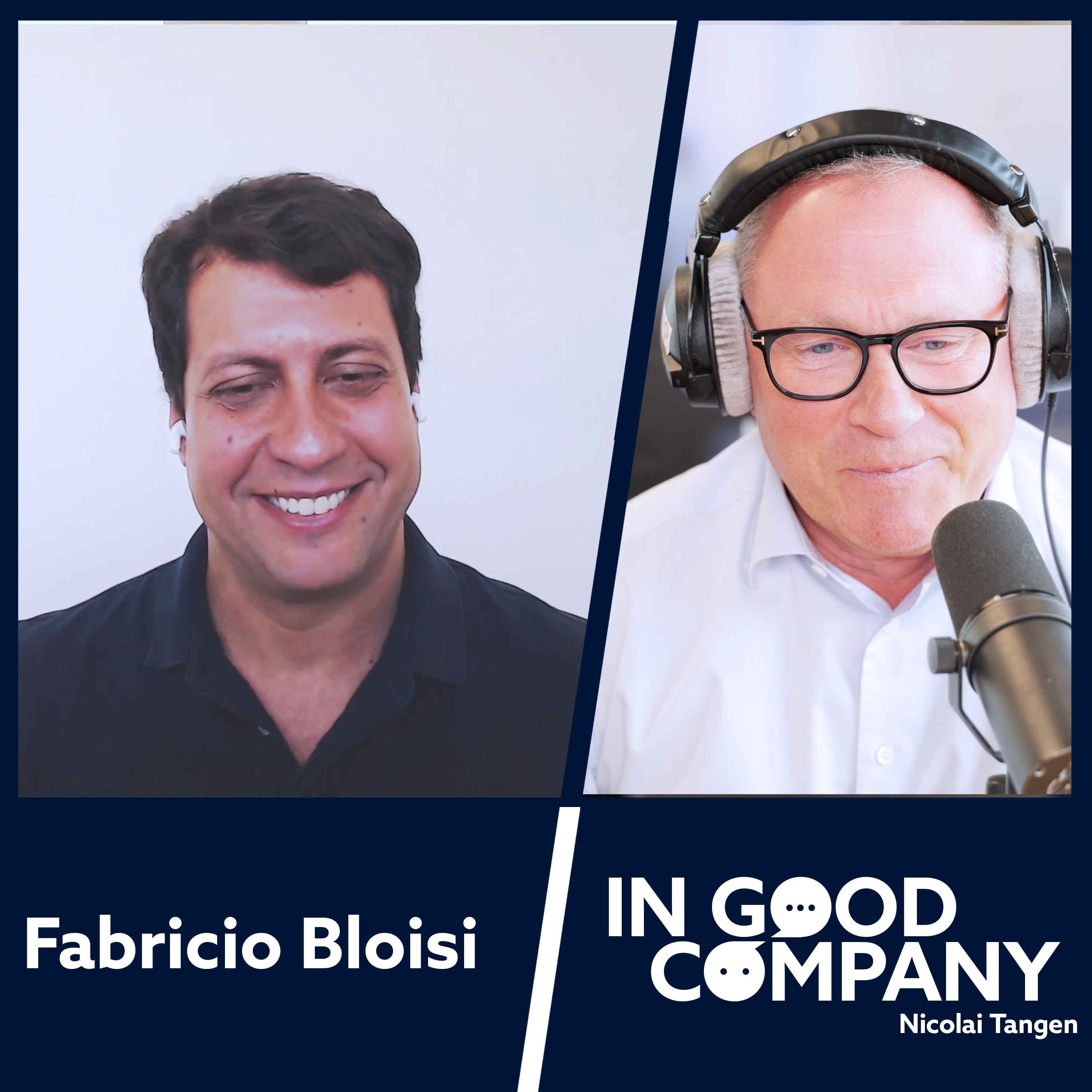
In Good Company with Nicolai Tangen
Prosus CEO: From Startup to Global Scale, Innovation and AI Transformation
00:34:15
Loading summary
Transcript65 lines
- [00:01]
A
Hi everyone, I'm Nicola Tangen, the CEO of the Norwegian sovereign wealth fund. And today. Hey, I'm in really good company with Fabrizio Bloisi, the CEO of Prosus. Now, you may not know what Process is, but they basically have incredible ifood, which is the equivalent of DoorDash in Brazil, JustEat, which feeds millions and millions of people across Europe, Swiggy in India and PayU, one of the biggest fintech platforms in emerging markets. So all in all they reached like a billion and a half people across the world. And he's pretty pleased about it himself. I can see his smiling hair on the screen so far. We look forward to hearing all about it. Before we talk about you. What is Process?
- [00:53]
B
Hello, Nikolai. Pleasure to be here in good company. Process is a tech company and we offer amazing products for one and a half billion customers on delivery, food delivery, on top of that, payment, on top of that, lifestyle services like events and travel. We are just getting started. We do all of that in three big regions, Latin America, India and Europe. And we are reinventing everything we are doing. We are in a moment of amazing change through AI. My whole story is about reinventing everything. So I'm very excited to build the next chapters of pros.
- [01:30]
A
What do these companies have in common?
- [01:32]
B
I think our focus is to build an ecosystem and this ecosystem means we are not investors just to start. What we build are operational tech companies that are very good in execution technology services. So when we build an ecosystem, we make sure that one company help each other through culture, management, model, cross sell, innovation, AI. And I'm investing the same kind. I'm building the same kind of ecosystems in Latin America, India and Europe. So if you look to Latin America, I already had IT work in Latin America. In Latin America people talk about Thai food, but it's 10 times bigger than ifood. We have beverages and pet shops and payments and meal voucher and grocery and travel. The same ecosystem that is very sophisticated that I have in Latin America, I'm building today in India where I have very similar companies and the same ecosystems I'm going to build in Europe. Let's start with just eat and olx, but I'm going to expand that to the same kind of ecosystem.
- [02:32]
A
What region are you the most excited about just now?
- [02:36]
B
The more mature for sure is Latin America. As I told you, people talk about Thai food, but what we had in Latin America is very similar to the ecosystem that existed in China. In China we have tencents, but also Alibaba, bytedance and we really can cross sell lots of our services. For example, we bought a travel company, Despregar, just nine months ago. Despregar is growing twice as fast today because we acquired it. So it's not only Despregar and travel, but we also have, as I told you, grocery and payment and lots of business there. So Latin America is very advanced and my objective is to replicate the same thing I did in Latin America in India and Europe. But an interesting thing, I'm very excited about Ninja because India is a really big market with a lot of potential. We invested in China. Oh, we didn't talk about that, but we own 25% of Tencent. We invested in China 25 years ago and it was more or less like India today. But I can see many of the potential to grow in India in terms of market size and grit and focus in creating big tech companies. So it's very exciting to be in India right now and I think the next 10 years is very exciting. And I'm a Brazilian, but I'm a big believer in Europe. I think Europe deserves and has the opportunity to have big tech in Europe. It's our challenge to make it happen.
- [03:53]
A
But Fabricio, before we go into the businesses in a bit more detail, we have to start with your life story. Right? So you are 21 years old, you live in Brazil, you straight out of school, what do you do?
- [04:08]
B
I was finishing school and I said I love the Bill Gates story and Microsoft story. I want to build $100 billion global company. And I started startup with two people in a small room and we started what was mauvili and became ifood over the next 15 years. 20 years actually.
- [04:24]
A
What was the first thing you did? So you had two people sitting in a room and it's just like, hey, let's do $100 billion. What's the first thing you do? What was the first company?
- [04:34]
B
I think we did mobile content. So like ringtones and messaging, et cetera, like in 2000, many, many years ago. But the first thing I did was failing. I really failed a lot. The company didn't succeed for the first 1, 2, 3, 4, 5, 7 years. And I learned not only about failing, but I learned about the importance about culture and moving faster and innovating and managing people to have an amazing result. And even we were like a 20, 30, 40 people company. We were always dreaming big to create a global leader and that very small company learned about management model and culture, innovation and we grow to become a 10,000 people company.
- [05:16]
A
If you fail for five years, a lot of People give up, right?
- [05:19]
B
Yeah.
- [05:20]
A
Why didn't you give up?
- [05:22]
B
I think that's what I learned. First, I choose something that I love. I love my job since day one. I love the opportunity to learn, to meet good people, to do better, to become better. And I also learned that failing is part of the process to learn. So although we failed a lot, the company became better year after year for many years. We didn't raise a lot of money. In the beginning, we were like a very poor, small company. But we became very good in having the best people and innovating very fast.
- [05:57]
A
But tell me, 1998, you start from scratch and then 2024, you are CEO of 40,000 people. Just what's in between? What did you do in between?
- [06:12]
B
Failing? Learning, finding very good partners, amazing people that are better than me. So my job is to find people better than me, tell them a vision about what we can do better and how we can challenge how the world is today. And those people, together with me, they keep improving and improving. Our company innovated a lot. Ifood is one of the best operators in the world in food delivery. We started very small. It was a $5 billion investment in food. I made like 2013. It became a 10,000 people company that has the best products in the world. And it's not because I'm smart, not because I have an idea. I don't believe in being smart or having an idea. I believe in working a lot with very good people, being open to learn a little every day. And the result was even in Brazil, not like a core country of the world. We have one of the best operations in the world.
- [07:02]
A
How did you build ifood?
- [07:04]
B
I had a reasonable company, Mov Movly was, I don't know, $100 million company, something like that. But I really wanted to build a hundred billion dollar company. So I started to invest in other business to understand how I could use my culture and innovation capability to build something 100 times or a thousand times bigger. Then I acquired ifood. It was a $5 million company. I acquired for I think $5 million, something like that. And I put their culture, management model and innovation and we started to dream big to create one of the biggest food business in the world. When we acquired that, it was a company doing 20,000 orders per month. This month we are doing 200 million orders per month. So we grow a lot. I don't know how to say this. The growth in percent.
- [07:51]
A
Okay, so how do you do that? How do you, how do you go from a dream to Actually achieving this. What are the important steps if you want to build a business like that?
- [08:02]
B
The important steps, people think big is very important, believe you can do it and really think big. Having the best people. And I invest a lot in people, not people that I can hire, people that can execute and deliver and dream and do better every week.
- [08:17]
A
How do you find these people?
- [08:21]
B
I find people that deals well with uncertainty and with big challenges. I hire people that I tell them, look, my goal is unbelievable big. And most people get uncomfortable about that. And I say, you are going to be in charge of that many people. They don't feel empowered enough to build amazing things. I hire entrepreneurs. That's the question, the point. My first value is entrepreneurship. I hire people that want to have big impact and then I empower them a lot. Let me tell you one thing. I also fire people so many times. Doesn't work. And I know in Europe people don't like to talk about that. People in Europe say, oh my God, doesn't find anyone ever. I don't know. I have to find the best, the right people to the right place. And sometimes they're not the right people and they leave the company and it's good for the company, it's good for them. I need to have people that say, I'm going to be empowered to have an amazing impact. And that's my job. Put the people there and they do amazing things and innovate. Innovate every week.
- [09:24]
A
What's the key to innovation?
- [09:26]
B
Innovation to me is, look, we have a successful business. We have 10 to 15 billion dollars in revenue and every day, and we are profitable now, like one and a half billion dollars in profitability. But every day I start the company saying, it's not good enough. We, we are not the best in the world. And even if we are, we have to do better. So the level of pressure in the company to disrupt everything and do better is daily. Every day we have to do it better. So you have to have people with the open mind to think, I'm going to find a new way. I'm going to find a hack to do things better. We are in a technology business and we are in an AI moment. I see the people in the financial world talking about AI and doing spreadsheets. I hire people that understand how AI transform everything. And this is so amazing.
- [10:18]
A
Before we get to AI, tell us about some of the innovations you did in the food company in Brazil. What were some of the clever things you did today?
- [10:25]
B
For example, ifood is a company run by AI the personalization of the first page, what we offer to the customers, the push we give to them, the anti frauds, all those, the customer relationship management, all of that is through AI. And there is no guideline how to do that. You have to experiment to try to do it better. Today we spend less money in marketing than our customers. We have better NPS customer satisfaction because of AI. We internally we have a system called token where we give AI give the capability to everyone in the business to use AI to do their own jobs better through agents. None of that was done like it was an idea of Fabrice. We go there and do it. All of that starts with empower Entrepreneurs move fast, test 20, 30 versions until you have results that makes your company better. Then put that on a scale. Because we never invest 10 million or 100 million a billion because of idea. What I do is to have entrepreneurs moving fast. We call it Jet Skis.
- [11:26]
A
Tell me about the Jet Skis.
- [11:29]
B
Jet Ski means empower a small team with 5, 10 people to experiment as if they were the owner of that business. So they have to experiment, take risks, try 10, 20, 30. Things fail a lot until they find in a way that has amazing impact. So all the innovations I told you started as Jet Skis. A small group trying very fast until we have the best operations of our category or of the world. And why is it important to tell this story? Because that's not how big companies work. Big companies, usually they say, let's make a budget. The budget is a billion dollars. The CEO like this project. Then we have one year to deliver a big, big thing. And then one year after you lost a billion dollars and you lost one year. So what we have to find first, without money, without team, without one year timeline, is to find how we make this really work. That was a Jet Ski, a small company, a startup inside a big company with the right people to innovate and deliver. I don't know. There is an expression I love that's called ambidextrous organizations. I think we heard that in. I think Harvard talks a lot about that. That means a company that is very good in operating with scale. So it's very good in discipline, in budgeting, in financing, planning. But being ambidextrous means the company is very good also in disruptive innovation, just like a startup. I think what I do as a manager and that's I think what people could learn from prosus today and model it should be always ambidextrous. I operate startups as a real startups crazy Fast with entrepreneurs. At the same time I can have the discipline to make a plan and execute that over one year after I find a way to succeed on a jet ski.
- [13:20]
A
Tell me about the. Yeah, it makes sense. I'm not so sure I would be a very good jet skier. But hey, what about some of the things you've done outside Brazil? So in India for instance, how did you come up with the business models in India?
- [13:38]
B
I think India is an amazing opportunity. We have there the biggest payment company Payu and we have the second biggest food delivery company, Swiggy. And what we are doing right now is building the ecosystem around that. That's what we are doing today. So over the last six months, for example, we invested in Happydoo is the number one ride hailing company. We invested in a few fintechs so we can now give credit to our users. And we started to integrate with Ixigo, it's a travel business. And now I'm putting all of them to work together just like Brazil. So in Brazil I had companies growing faster because they are working together in India. Now I'm offering credits and payment services to all our companies. We have 20 companies there in India so they can transact with smaller friction better than that. Right now we are creating what we call large commerce model, an AI model that use the data from all our companies to make all of them operate better. So we understand better than any other company about what the customers want, what they buy, when, how I serve them better. So you see we are using again technology innovation to make all our companies work together. That's what we are doing in India right now. And I think we have half a billion customers more than that in India. And I think it's going to be an amazing ride. Not only the next quarter, over the
- [15:00]
A
next 15 years we'll zoom in a bit more on AI. But before that, tell me about the Just Eat deal you did in Europe.
- [15:08]
B
We had a big business in Europe that is OLX and emeg. But my vision is build the same ecosystem. So it starts with high frequency business. That's why food delivery is so important. People buy food delivery many times per week. We know their payment method, we know their address. So on top of a high frequency business, I can create many other business. That's what I did in Brazil and India. Then we acquired Just Eat. Just Eat was a good. Just Eat was a food company and I had a very different view for Just Eat. I don't think the thing is being a food company, we have to be a tech AI. First company. So the reason I acquired Just Eat is not because it's an investment, it's because I think I can operate Just Eat much better. Sharing the knowledge we have on innovation for Ninja, on AI from Brazil, on, on management and culture from Prosus, we acquired that, I think we took the company less than six months ago, five months ago, and we transformed the company completely from a food business to a technology business. So now we talk about innovation, AI, large commerce model. We are moving much faster. We built an entrepreneurship to make the company really dream to be the best in the world. And I think Europe needs, deserves, requires big tech in Europe. So after acquiring justit, we have now a big AI lab in Amsterdam.
- [16:31]
A
But I'm sorry, before we get to that, you had to sell your stake in Delivery Hero, right? Whilst at the same time competition could make acquisitions. Just how do you look at the European regulatory environment?
- [16:48]
B
Yeah, I am an optimistic CEO founder, but it's frustrating to operate in Europe because at the same time I have everyone in Europe saying I need big tech, I need innovation, I need AI. I said I'm ready to invest $10 billion to build debt in Europe. And then the regulator said no, you have to divest. And I even told the regulators I'm going to divest and sell to an American or a Chinese company. They said we don't care. So Europe. So a funny thing, I see the, the American companies having the government trying to say I need big tech here, let's make my big tech global leaders. I see the same thing in India, the same thing in China. In Europe I have to fight Europe. I have to spend a lot of energy, say Europe, it is good, it's necessary to have big tech here. And what's happening right now in Europe is that Europe is succeeding in avoiding big tech in Europe and succeeding in making the Americans and the, the Asian big tech to win in Europe because the European companies can't win in Europe. So they, I, I have, I, I had, I have an obligation to sell my participation in Delivery Hero. I absolutely disagree with this direction. I, I Interesting thing. 2 weeks ago Europe said we are going to change our guidelines on the M and A. And then we, we said, okay, so like why we are selling, we are an European company, have two European players, why we are selling one of them. And they said we are changing next year, you have to sell this year. So I think Europe didn't understand that AI things happen every month. I know we talk about AI later, but the rate of change in the last two months, it's crazy.
- [18:34]
A
Let's talk about AI. Do you think AI is underhyped?
- [18:39]
B
I think AI is underhyped. This is a crazy phrase to say. And the reason is I do that operationally. I am a CEO of a big company, but I understand the details about what's happening. Many people last year was talking, maybe there is overhype and next year things are going to cool down. It's the opposite. What happened the last three months, it's much more than everyone expected for this year in robotics. Obviously robotics is moving at crazy speed. But what's happened with OpenClaw or with cloud code in the last 60 days is substantially more than what happened before. And it's going to change completely how companies work.
- [19:19]
A
How is your group going to work going forward? By implementing everything you can do in AI.
- [19:27]
B
We will have every time more autonomous organizations where AI do much more than making the job of one person 20 times faster. What AI is going to do is to make the whole company 100, 200% more efficient. Until now people are trying to make their job faster. I have to do a document. I say, AI, help me with this document. What is possible today is much more than that. And it was not possible in December. That's the thing that many people didn't understand from December to May. Now it's possible to teach an AI to. To teach the intelligence of the company to an AI. So the company can really operate for. Not for 10 minutes by itself, but can operate for one to three days by itself. Internally, we have 20,000 people creating agents. That makes them substantially more productive. The last month I gave a course to all our executives, starting with the CEO, so they can program by themselves. You can think, are you crazy? We're talking about CEOs of 5, 10 billion billion dollar company making software. Yes, because when they learn what they can do in four hours work, they understand that all their goals can be substantially bigger. They can deliver software substantially faster. They can automate things substantially faster. I myself, I did a software that we call autoreserch. Software that enable parts of the combat to work by themselves. And myself and the CEOs are doing that not because I'm going to run the software we do, but because after we do that, I can start to operate in weekly cycles and not in monthly or bi. Monthly cycles. I think that's going to. All the comps are going to change completely because of what's possible to do today. Many people ask when AGI arrives. That's not the right question. AGI will arrive in 1, 2, 3, 4 years. The point is that with the technology we have today, for example openclaw and how you can ask an assistant that has memory to to build a whole system for you and you're not even a programmer. So because of this kind of technology, the companies are going to be different. And the companies that are fast enough to do it first, they are going to have a disproportional benefits over the next. I'm not talking three years, I'm talking this year.
- [21:44]
A
How do you spread knowledge across the group? So let's say now you come up with something great in Amsterdam, where you have your AI lab. How do you make sure that Brazil, India, that they benefit from it?
- [21:56]
B
I think that's my job. That's why I'm an operational CEO. I have to know what is exceptional in our companies all around. And I have to make sure that this spreads together with the culture to everyone else. Every two weeks we have the senior management together. Every four weeks we put all the CEOs together, like 30, 40 people to discuss what is exceptional in the company. So people know what's happening and they copy. That's what I built. I built an ecosystem where when I have a disruption in AI in Amsterdam, I have to have that running in Brazil and India in two weeks. Then I fly 100 people to Brazil. Right now I have like 50 to 100 people in Brazil discussing how to make agent AI better in Brazil, but people from now around the world. So I spend a lot of time making sure what is exceptional is spread all around. And second, leadership. So I am a leader that can talk about technology and product innovation with everyone and my CEOs can do that too. So the leaders should be focusing how I make products that people love, how I create innovation that can make us one year ahead of our competitors. And I think we are doing that quite well. I'm very happy. I think process changed a lot last one year and I think that the next one year is going to be even more exciting.
- [23:06]
A
Before we continue on culture, what's going to happen with payment systems when you have all your agents transacting, how are the payment systems going to work?
- [23:17]
B
I think payments are going to keep changing. There is a lot of changes happening today, for example with distributed payment systems and crypto, et cetera. And this is going to keep happening. The big thing we are talking agents and E commerce now is we need to enable agents to complete transactions. And this will happen. Some people say maybe. There is no doubt question that we will have agents purchasing for Their customers for the people that they represent. And today some companies are blocking. That doesn't make sense. It is going to happen. So we as a tech company we have to enable that to enable our software, sell our platform, sell to agents and enable agents. A big priority for us is what we call life assistance. So it's not an assistant like ChatGPT that just answer a question but an assistant that can order you foods or buy a air ticket or a hotel or a ride hailing that's the biggest thing we are investing now. I think we have 20 life facilities in the world today and in the base with the foundation of that it is agents that complete transactions.
- [24:27]
A
How would you characterize the corporate culture in the company?
- [24:32]
B
First thing I do is to kill the corporate world. Culture means empowering people to move faster, to be innovative. We, we call our culture process way entrepreneurs that feel that they are in charge to have results, innovation. Innovation is core to everything. We have to question what we are doing all the time Obsession about results. We need results. I don't need smart people giving nice excels. I need results and impact. I really believe big companies should have impact and have a positive contribution to the regions they are. So we talk about culture all the time. I think my job is to set the culture and division and some people love this culture and they work two, three times more. Some people doesn't fit and we have to politely suggest then keep looking to the company where they fit the culture. To me the most important thing Protos had a good year, we had good results, we grow, we are more profitable. The financial people like to talk about results and numbers to me I like to talk about culture because every result we have is because the company is more focused about giving more power to the right people moving faster, delivering results and being more innovative.
- [25:42]
A
Do you have the same culture in. In all areas like in Latin America, India and Europe?
- [25:48]
B
Yes.
- [25:49]
A
How do you, how do you do that? Do you have like. Do you have town halls? Do you. How do you communicate with Everybody with your 40,000 people?
- [25:58]
B
We start with a very clear set of goals and we summarize all of that like in one page we call our strategic map and we reinforce that with all 4,000 people every month. Also we put people together, everyone usually it's less like 5,000 people like the more senior 5,000 and then they replicate it to the other 40,000. But quite often we do big events we call strategy share. Usually it's four or five hours events where I show direction, I show what we are doing. I show what's doing well and I show what is doing bad. I'm very direct to say, to face the brutal facts, this is doing very bad and we have to fix it this month. So the company has a lot of transparency. That is unusual to a big company and that's what creates entrepreneurial culture. It's not talking about that or putting that in the walls. It's believing in people enough to share what is good, what is bad, what were my mistakes and who, who will deliver and say, look, you, if you deliver more, you also are going to benefit from all of that. Last week, as a curiosity, we did the last strategy share. It was around 5,6000 people all around the world and we only talk. The big thing was disruption. Not only results, but disruption. So now I have the whole company thinking about, okay, openclaw was a big disruption. How process is going to be as disruptive as OpenClaw. And we are launching token claw, our version of OpenClaw. And now I have 40,000 people focusing on that.
- [27:28]
A
What is this new innovation going to do?
- [27:31]
B
We are talking about empowering first people inside the company, but then our partners, we have 5 million partners and then our customers with the latest AI capabilities, where you have agents that behave as smarter agents. It can develop software, it can do transactions. That's what openclaw did like three months ago and now. But openclaw is for nerds, it's for computer scientists. We already have it running inside the company. We're going to push it to our partners now. An open claw for everyone. An open claw that everyone can use. So you see, pros is connected to what is really happening in the world of technology now. But we have the scale, the investment capacity, the reach to push that in Latin America, India and Europe. And I think this is an amazing opportunity because the innovation today starts in Silicon Valley. No, I want that to start in Bangalore, not in Silicon Valley.
- [28:21]
A
How can you be innovative and structured at the same time?
- [28:27]
B
That word, I told you, ambidextrous is in the core of that. My answer is the opposite of what you asked me. You have to be innovative and disciplined in the same time. If you are only disciplined after two, three or four years, some startups take your lunch and you stop being a big company. If you are just creative, when you find something, well, some big company invests and again you lose the chance of really growing. So being ambidextrous is the concept of you need to respect both of them. And I think this is the biggest mistake big companies do. They think I'm very good in discipline and managing a billion dollars. So I don't respect the innovators. No, we need the innovators. Otherwise this company is not going to succeed in 1, 2, 3 years. At the same time they innovators, they don't respect the managers because they say the managers, they are too boring and slow. I spend time teaching the innovators. You need managers, that's how we are going to grow. And teaching the financial and marketing people of the company. You need the disruptors. That's how we are going to keep being a young company for many years.
- [29:39]
A
Where could process be in 10 years time?
- [29:43]
B
My goal for the short term is to have $100 billion more. In 10 years time we will be a half trillion dollar company or bigger and a clear global leader. Today people talk about mobile leaders in Silicon valley, in China, 10 years. To me we have to see clearly process as a company that creates the future of the world through technology with innovation done in Latin America, in India and Europe. And I think this will be a big contribution to those regions and global
- [30:13]
A
leader in what kind of industries?
- [30:17]
B
Agentic lifestyles, ecosystems. So agents that can deliver much more than it's not pure e commerce deliver, as I told you, travel, deliver payments, deliver other services for the user. And this is a very big market. And it's a very big market because people usually think then as individual companies. If you can integrate them as people do in China, there is a space to be a real global leader.
- [30:48]
A
Who will you compete away?
- [30:51]
B
We have lots of companies, the usual suspects in the valley and in China, in the valley you have some big companies doing assistants, including Google and Facebook and OpenAI. In China you have Alibaba for example, or Meituan. Global players you have Uber. That's a similar company to us too. But I'm very confident we can push our innovation to the world. Let me give you one example. In India, the level of innovation we have, usually the world doesn't believe what we are doing. In India we have profitable e commerce companies that sell things for $3 and deliver that in the whole country. American companies cannot think the innovation required to do that in 50 local languages using voice as the main interface. The cost of operation that we have in India is disruptive to how an American or European company operates. The innovation we have in Brazil, it is in food delivery. We have one of the most efficient food delivery business in the world. Because Brazil is a difficult market, the cost of capital is very high. Operating there is very chaotic. So you need to use Innovation and technology to really deliver good results. If I can use this kind of innovation to have a global leader. And Most of my AI R&D is in Europe. So you see, I can take some things from Brazil, some things from Egypt, some things from Europe, and I just need to make it $400 billion more valuable. I think we can do it.
- [32:28]
A
How much do you work?
- [32:31]
B
A lot. Much more than my wife and my kids think I should work. But what I tell them is that I love what I do. I have the opportunity to travel all around the world to meet them, smartest people in the world, to learn with them and to have an impact. That is amazing because I really think if Europe can have big tech, it's going to be really good. I think Europe needs that. Europe needs sovereignty on tech, on AI. I think if you can create a half trillion dollar company in India, it's amazing, good for India. If you can do $100 billion company in Brazil, it's amazing, good for Brazil. And also I invest a lot in social impact and social return. I think I have the responsibility to do that.
- [33:12]
A
So.
- [33:13]
B
So I work a lot, but no one asked me to do that. I just have fun.
- [33:18]
A
What is your advice to young people who listen to you?
- [33:22]
B
Dream big. It's possible to change everything. And people usually look to the world and think that's how the world is. It's a lie that it's how it is today. Everything is going to change so much in the next 1, 2, 3, 4 years. And the young people that can learn and build the future can do much more than they think. So study a lot, do something that you are passionate about. Because the opportunities are much better ahead than before us, than behind us.
- [33:58]
A
Well, this has been tremendous. I'm not sure I've met anybody who's been dreaming bigger than you. So it's been a real pleasure. Great fun, you know, good luck and go get them.