← In Good Company with Nicolai Tangen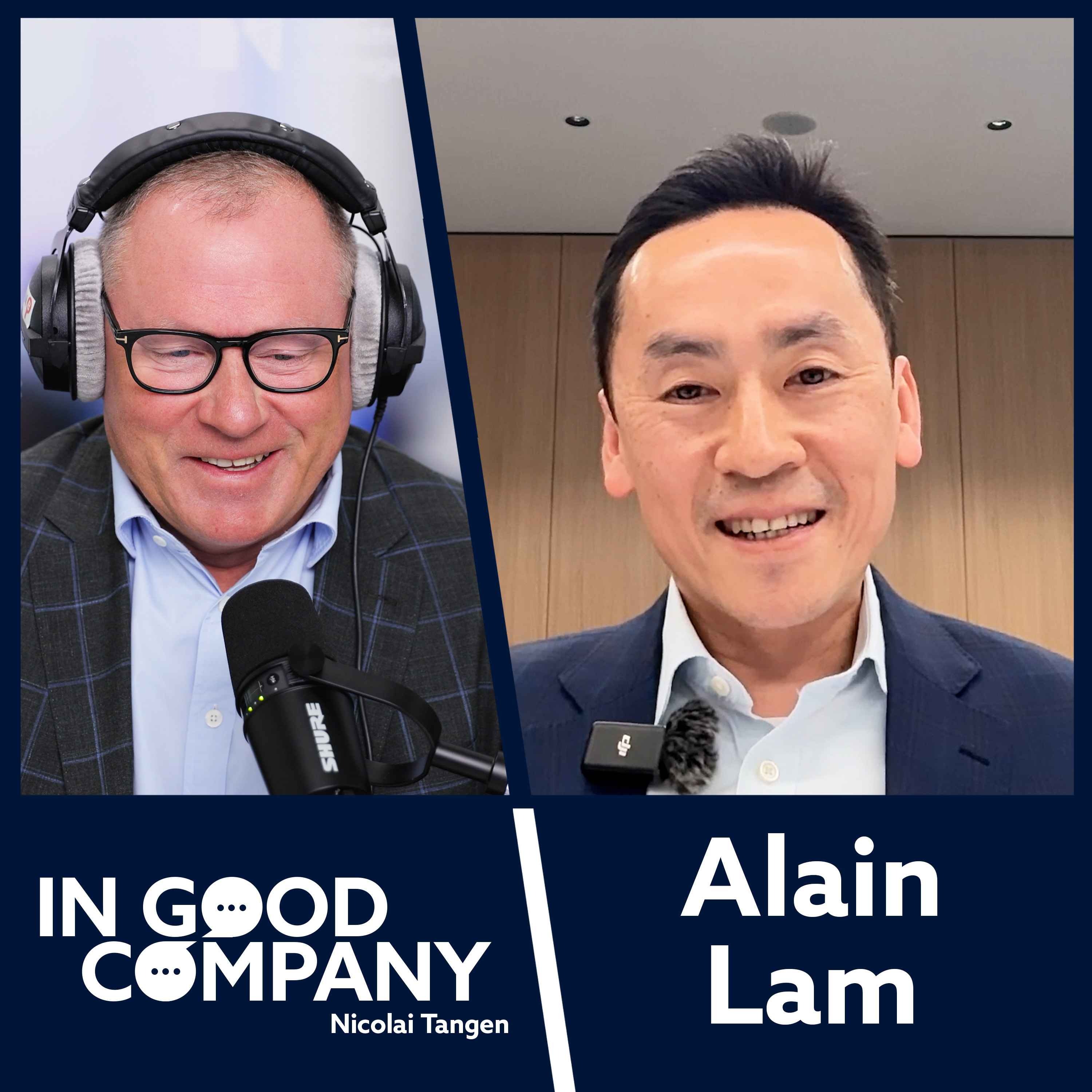
In Good Company with Nicolai Tangen
Xiaomi CFO: From Smartphones to EVs, Speed to Market and AI
00:41:26
Loading summary
Transcript91 lines
- [00:01]
A
Hi everybody and welcome to in good company. I'm nicola tangen, the CEO of the norwegian sovereign wealth fund and I'm in. Today I'm in a particularly good company with the cfo of xiaomi, ala lem.
- [00:12]
B
Hello, nicola. Thanks for having me.
- [00:23]
A
Now, Allah, Xiaomi is just a incredible company with phones, cars, humanoids. You know, we are the lucky owner of more than 1% of the company. So just tell us, what do you do and how did it all happen?
- [00:43]
B
Well, thanks, Nicola. Thanks for the question and good to be here. So, first of all, Xiaomi is still a very young company. We just turned 16. We were founded on April 6, 2010 and since then we have done a lot, as you mentioned, but ultimately I think we think of ourselves as a global technology company. Obviously we have smartphones, we have a lot of smart devices, plus recently we have smart electric vehicles and we are into manufacturing. But underlying all of these is our technology, whether it is our operating system, our semiconductors, our AI. I think those are the stuff that we built underneath all of our ecosystem. Right. I think we built a pretty comprehensive, what we call a human times, car times, home ecosystem, ranging from all your personal devices to all your home devices and now with your mobility solutions. So that's where we are. But, you know, we've achieved quite a bit, you know, over the last 15 years. You know, obviously last year we have over 450 billion RMB in terms of sales and, you know, and we achieved, you know, pretty good profitability.
- [02:03]
A
It's just such an incredible story. So I'm not quite sure even where to start. But why don't we just go through it chronologically? The first products you had, you know, just how did you just. How did it start?
- [02:16]
B
We actually started off building the operating system for smartphones and that was in 2010 when we founded the company. We want to do a, you know, operating system on top of the Android ecosystem and then try to offer it to smartphones. But eventually we decided to get into the smartphone ourselves. And our first smartphone, which we called Xiaomi One, we sold it at 1999 RMB in China and that became a huge success because as you remember back in the days, there were a lot of products out there that were low quality but high prices.
- [02:54]
A
How long time did it take you to develop the telephone?
- [02:57]
B
So we launched our first smartphone in 2011. So one year after we found it.
- [03:01]
A
How is it possible to have such a short cycle time?
- [03:05]
B
Yeah, because at that time I think there is a lot of, you know, the supply chain is obviously quite advanced in China, but the problem in the market for that at that time was there was a lot of expensive products with very low quality. Right. And the philosophy for the, for the company is that can we do a smartphone that is much better quality and can, you know, and we can offer to users at much more affordable prices. And that's something that you see permeated in the history of our products. Right? We try to offer very high quality solutions to our users at affordable prices.
- [03:41]
A
How do you think about your supply chain? How much of that is Chinese sourced and how much is sourced outside?
- [03:46]
B
Well, I mean, at the beginning, I think there's still a lot of reliance on foreign technologies, but over the last 15 years for a smartphone, frankly, most of the content now is localized. You can find local solutions for that in most of our components.
- [04:03]
A
How much easier is it for you as a firm to be fast in product development when you can source everything locally?
- [04:09]
B
It is important because the local, frankly speaking, if you think about the foreign products, a lot of them are more standardized solutions off the shelf, whereas the local partners are willing to work with you developing products that are more customized to what we want. Right. And as a result, it's not just faster, but it's also our ability to offer much more customized solutions that fits better into our smartphone that fits better into what we want. And as a result, the go to market, we are able to offer products to our customers at, you know, offer something that they really want.
- [04:53]
A
So you are now at model 17. You've aligned with, with the Apple kind of numbers. You had a setback in 16. What, what happened then?
- [05:03]
B
Well, I think there was such a big leap between 15 and 17 that we think that it's beyond one generation in terms of improvement from our Xiaomi 17, our Xiaomi 15, and hence we name it Xiaomi 17, you know, and the innovation comes when you look at the smartphone. I don't have one with me right now, unfortunately, but it offered a back panel, right? So instead of having a front panel like most, most smartphones do, we actually offer the back panel as well. So, so you can, you can use both sides effectively. And that's something that has proven to be a lot of ground. I mean, very groundbreaking and a lot of our users like it.
- [05:44]
A
How important has the kind of the Internet of things or your connectivity with home appliances been?
- [05:51]
B
It is important because I think in this world a lot of our users like intelligent solutions, right? So, you know, think about air conditioners, think about washing machines, think about refrigerators people mean the technology have existed for 30, 50 years, but that hasn't changed for, you know, for a long time, right? So what we, what we offer to our users is, you know, a smart solutions, right? Now you can upgrade your software over the air in your devices, right? As opposed to buying new machines, right? And a lot of our users value that. Plus the fact is, can you make your whole lifestyle, whole ecosystem much smarter by connecting everything together so that they can do things for you, not just, you know, using your smartphone as a remote control, but smart, intelligent solutions that they understand who you are, they understand your behavior, and they can try to offer customized solutions for you every day.
- [06:51]
A
What are the kind of things that you can offer clients?
- [06:55]
B
For example, smart lock, right? And many people now installed instead of a traditional lock, a smart lock, right? Not just you can look at, you know, who's outside of your door, who's delivering stuff to you. You can offer specialized password for people to enter your apartment so that you don't leak your, you know, secrecy. But also if you Internet interconnected with other devices home, for example, when you open your smart lock, your AC will automatically be switched on, right? That you don't have to do anything extra. And those are the smart solutions that we like to think that our users need. And obviously that become very popular featured among our users.
- [07:36]
A
And then you decided to make a car, correct?
- [07:39]
B
We decided to get into the car industry in 2021, and then we launched our first car in 2024.
- [07:49]
A
How is that possible?
- [07:51]
B
So a little bit over less than three years, we launched our first car, we designed it and it would build a factory as well. So China speed.
- [08:00]
A
Tell me about China speed.
- [08:02]
B
So look at the beginning. The car industry to us is not that foreign. Xiaomi as a company has already invested in some of the EV manufacturers in China before. So we have an experience of seeing them develop, helping them develop over time. But then we decided to do it ourselves. And as you, as you know, we've done a lot of due diligence in the industry the moment we decided to get into this industry. And I think the ultimate solution is, our ultimate conclusion, I should say, is that, you know, you know, if you believe that a car EV is going to be another piece of consumer electronics, and that's something that we have a lot of experience in, whether it is managing the software, hardware integration, whether it is managing the supply chain. I think those are the stuff that we have experience working with so many consumer electronics products before. I mean, obviously car is a little bit of a Different animal because you need to consider about safety. But again, I think the supply chain in China has been relatively well developed on the EV industry. So as we go into that, I think what we said was, look, can we spend 10 times more investments to build the first car? I think that's also a very important philosophy as well, is instead of going into all these different directions, making multiple cars, we decided to spend all of our efforts on one single car.
- [09:36]
A
And it's a pretty fast car. Right, because now you set the record for the quickest round on Nurburgring last year.
- [09:44]
B
Yeah. Look, I think as we look into this car industry, in the EV industry as well, we think that there are certain things that are core to the EV technology that we want to own and develop ourselves. Right. The rest we can have our suppliers work with us on that. But things like the electric motors is something that we've spent real efforts on. Things like the how do you pack the battery, things like smart driving, assisted driving, etc. Those are the stuff that we spend, you know, a real time on developing our proprietary technology. The rest of it, I think we can rely on other people to supply us with this, with the industry solutions.
- [10:24]
A
How many people do you have in
- [10:25]
B
R and D at the beginning? Probably around 3,000 people to develop the first car, which is, as you know, in this industry, probably 10 times more than other peers in terms of developing the first car. Because our chairman has the philosophy that, you know, we want to spend, you know, a lot of, you know, efforts initially to catch up with our peers.
- [10:48]
A
Now you sold 50,000 cars in 30 minutes.
- [10:52]
B
Yeah, yeah. Because look, I, I think obviously we are very new entrant to the EV business. But, but obviously at the same time, we already have a very established brand in China. We have a loyal lot of loyal users of our products. We have over 180 million people in China that are using our smartphones every day. And at the beginning when we decided to, to develop a car, to develop an ev, a lot of our users saying that, you know, if Xiaomi wants to make a car, we'll buy it. Right? So, you know, you know, 20 plus percent of our initial buyers haven't even test driven the car, haven't even, you know, seen the car in real life, right? They just see us launching the car and they put an order in. So that's a testament to the loyal user base that we've built up. They're loyal to brand and they know that we're going to make the best products for them.
- [11:51]
A
How do you get people to love you.
- [11:54]
B
Well, I think it goes back to our philosophy, right? If you look at our mission, we want to build amazing products with honest prices to let everyone in the world enjoy a better life for innovative technology. Right? It's a long sentence, but you know, we want to build amazing products. We want to offer these products at what we call honest prices to our users and we want to do a global business, right? And we want to be innovative. So I think all these stuff are what all these things are, all these features are what users really value these days. And you know, over time we've also, you know, make the coolest products. We make a lot of friends with our users, we stay engaged with our users, listen to the feedback and try to change our product based on these feedbacks. So, so those are the stuff that we built a very good rapport with our users over time. And that's how they are loyal to our brand. They know that whenever they walk into our store, they, whenever they buy one of Xiaomi products, they are getting the best pricing possible.
- [12:56]
A
What are the similarities between making a phone and a car?
- [13:01]
B
Some similarities, a lot of differences. Obviously, if you look at the phone industry, before 2020, 24, we did not have a first factory, smartphone factory. So before that we were all using, you know, outsourcing it to the Foxconn of the world, the BYD of the world and other suppliers to make the phones for us. So we are more responsible for the design, for some of the basic technologies, for some of the technology, and also for, you know, the branding and the marketing of the products. For the car business, you know, we also undertook the task of building a entire new factory in Beijing, right? And so that is a new experience for us. That's, you know, that's our first, you know, real large scale factory that built our own car. So that, that's, that's the difference, right? I think that's the one key difference between, you know, how we entered into the car business versus how we entered the smartphone business. But there's a lot of similarities because increasingly the software drive the hardware, right, in the ev, just like they are in the smartphone. And a lot of it is, you know, you know, in, in smartphone, we stack up a lot of chipsets into a very small form factor. In the car is similar, we have to stack up a lot of components and you know, other things into a, into a form factor. But increasingly more important, especially in the EV world, the software becomes very important. How do you manage battery power? How do you manage the software? To drive the car in a safe manner. I think those are very important similarities with the, with the, with the smartphone business. Obviously managing the supply chain is also very important. We have a lot of suppliers that are quite, that are the same between the smartphone business as well as the EV business. And that's why, you know, that there's a lot of cross collaborations. I think people trust the engineers of Xiaomi, that we can build something that is world class and that is very popular with the users.
- [15:02]
A
How far behind is Europe when it comes to EVs now?
- [15:08]
B
Look, we still look up to the, you know, a lot of the OEMs, the traditional OEMs. We still think that there's a lot of things to learn from them. The way that they build a brand, they work, the way that they build the drivetrain, the way, the way that they give people a real good driving experience. Those are the stuff that we still look up to. A lot of the European OEMs, what we think that they are lacking are number one, I think the smartness of the car. I think they try to implement a lot of the smart features into the car right now. But I think in that sense they are probably behind what we are seeing in China right now. And then the second is kind of the whole, and you know, nev. The new energy vehicle development. Right. I think that they were a lot of the focus were on electric at that time. But really I think when we look at our ev, we call it the smart electric vehicles, right? And I think that some OEMs may look at electric to, you know, too focused on electric, but less focused on smart. Right? I think that, that, that, that's one thing that, you know, the users right now really want, especially given the Xiaomi advantage is how do I link it with all of our ecosystem products? How do I work better with my smartphones, how do work better with my IoT devices, you know, things like that, that I can create. Not just a EV but also a, you know, smart life ecosystem beyond the ev.
- [16:40]
A
And how long time do you think it would take the western brands to catch up on that particular element?
- [16:46]
B
No, I think, I think a lot of people are learning, right? I, I think a lot of people are studying how the Chinese EB development has become so advanced. We have obviously received quite a lot of European OEMs who've come to visit us, who come to, you know, want to have experience sharing with us. Not just we sharing with them, but they also share with us. You know, it depends on, you know, how serious they are. And I think, I think you already seen a couple of the European collaboration with the Chinese players as well. Right. So I think that that's going to be helpful in driving the industry forward.
- [17:27]
A
Now I think it was the CEO of Ford who, who used your SU7 for a little while. What did he say about it?
- [17:36]
B
He said he couldn't get rid of it after six months of driving it
- [17:40]
A
because he loved it too much.
- [17:43]
B
Apparently. I haven't spoken with him in person, but apparently based on what he's been saying in public, he loves our car.
- [17:52]
A
How is the EV market going to develop going forward?
- [17:57]
B
Look, I think the EV penetrations will continue to go, you know, to, to, to be higher in China is already new car sales is already 50, 60% new, new energy vehicle. Right. So, so that's very high already. But if you look at a lot of the global market, the, the new EV market is still quite low in terms of penetration. So I think that, you know, as the infrastructure continue to develop, as people appreciate the smartness, the drivability of these new electric vehicles, I think the penetration will go up.
- [18:35]
A
So when, so when you see European and American producers actually pulling back their EV efforts, how do you, what do you think about that?
- [18:47]
B
Look, I think, you know, obviously there's a lot of investments that need to go in, especially for many of the legacy brands because they need to retool the whole systems to get NV done. So you know, a lot of them are, you know, probably not pushing that agenda as forward. But I, you know, honestly speaking, we don't think that, that, you know, we would think that the NDV is going to continue to penetrate, you know, whether the Chinese players are coming in or whether the Europeans and the American players are developing it themselves. Also the, also the Japanese and the Korean. So, so I actually think that, you know, the trend will be there longer term. Right. There's obviously, you know, maybe hiccups along the way, but the whole industry I think will move forward in this direction. As, you know, sometimes there's, there's a major breakthrough in terms of, you know, smartness of the vehicles and also the infrastructure. I think, you know, there are a lot of places whereby the infrastructure is probably not as well develop in the other markets for the EV market to take off.
- [20:00]
A
Let's move on to robotics and humanoids. What are you doing there? Have you seen your latest models? And it's, yeah, look pretty mind boggling.
- [20:09]
B
We've been doing robotics for five, six years now. That's an investment that we've started making back in 2019, 2020. But then I think we are beginning to see the inflection point in this market. Combinations of the hardware getting better as well as the software getting better. That is AI that is driving the brain of the robots. The way that we are thinking, Xiaomi internally is thinking about it is we are making these humanoid robots to enhance our own manufacturing capability and efficiency. We are, we haven't launched any to see robots. So all the robots that we are developing, all the humanoid robots we are developing right now are used in our own manufacturing scenario. I think the video already showed that there were two robots that are working consecutively for three hours with a very low margin of 8 error. So. But still, I think that's the long way to go. There's a long way to go because as you know, and I'm sure that we'll move to AI at some point in this conversation, right. The AI right now is mostly focusing on, you know, learning from the text data, from the voice data that have, we have accumulated for a long, long time. But then the physical data are still, you know, quite a way behind in terms of the collection and the interpretation. So I do think that when you develop the large language model for physical AI right now what we still lacking is a lot of data that don't exist, right? So you have to stimulate it, you have to find out the use cases and find the corner cases, etc. Etc. But the text and the voice are quite well developed at this point.
- [22:05]
A
Can you tell us about the improvement in the grip functionality in your latest model?
- [22:10]
B
Yeah, look, I think if you look at the video that they show, the hand is much smaller than the other versions. The hand is very similar to a human hand size now and also the degree of freedom that it offer. I think one of the biggest challenge with the hand is how many degrees of freedoms do you have in the, in the, in the hand. And then the second problem that we're trying to solve is the cooling, right? It's like a, it's like a smartphone, it's like a car. When you use the machines for too long, it gets heated, right? And once you get heated, you know, the consumer electronics rule will say that the performance will degrade, right? So what we're trying to do also is introduce a cooling system that you can, you know, do some heat management of the hand as well so that it doesn't get overheated while you are doing the stuff, the work repetitively.
- [23:07]
A
When do you think you'll have this for consumers?
- [23:11]
B
That's not the focus of Xiaomi right now, to be honest, because we actually think that there is a big space for us to. Because ultimately we do hardware, right? We do a lot of hardware and there's a lot of manufacturing involved, right. So we want these humanoid robots to be able to improve our manufacturing efficiency first and maybe to recreate our entire manufacturing processes. It could be, but that's already a huge market. So right now we are not thinking about doing any 2C robot at this point in time.
- [23:48]
A
Who do you think will win the this race?
- [23:53]
B
It's hard to say but, but it suffice to say that, you know, if you, if you look at this market right now in terms of innovation, in terms of entrepreneurship, in terms of technology leadership, there are two big superpowers in the world, right? The US and, and, and, and China. So you know, the winner will come from one of these two places, but I don't know where yet. Yeah.
- [24:18]
A
What's next?
- [24:21]
B
Well, I think, I mean we talk a lot about, you know, what we've been doing. I think that the next thing for us is, you know, continue to develop our AI capabilities. I think that AI is going to be very important for the next wave of innovations and it permanent. It will impact all of our businesses.
- [24:44]
A
How, how do you use it? How do you use it today in the company?
- [24:47]
B
Well, I mean I think the simple things are coding, right? So a lot of our software engineers now use white coding number one. Second one is can we improve our sales efficiency? Can we predict sales better? Right. I. E. Do I even need to hire an experienced sales store manager? Or I can use AI to predict what kind of sales should each store generate every day. Marketing materials. We use AI to generate the first few drafts. And very importantly, even in the manufacturing process, we've been using AI a lot. So when we talk about our car, we have a big giga press that does the rear floor for the car. But in terms of the material we use for that, for that, for that rear floor we generated over, we stimulated over a hundred plus formulas and use AI to predict the performance of each of these formulas. And ultimately we pick two to be the material for that three or four that we do for the giga press that we do. Right. In terms of like you know, and in terms of each piece that we manufactured, they went through an X ray room when they take a lot of pictures and they use AIs to look into that to see whether they are deflex in the manufacturing process. So you don't use humans to do it anymore. You just use AI to take pictures very quickly. They can diagnose whether this piece is good or not. And then you can use AI in terms of material, generations and a lot of those things. So we're using AI in a lot of different areas. But, you know, but then there are more to do. I think there are more to do going forward.
- [26:34]
A
You also developed your own language model?
- [26:37]
B
Yes, we just launched it two weeks ago. So we launched our own large language model two weeks ago and it has performed pretty well. I mean, if you look at public scoring systems like OpenRouter.com you can see that we have been ranked very highly on that table. So we're very glad that we have a large language model that people like
- [27:05]
A
and people use and at much lower costs than the likes of Claude.
- [27:13]
B
Well, I mean, these calls are never disclosed, publicly disclosed information. So I don't quite know the cause of it. But our price that we offered are lower than Croquet, but much higher than the other models from China that are being offered right now.
- [27:30]
A
What are the cost advantages you have when it comes to the utilization of these models? Giving lower energy costs, simpler model structures and so on?
- [27:45]
B
We did try to innovate a bit on the infrastructure of the model, so obviously we have the benefit of seeing how other people do it before and then we try to optimize our path. So in terms of infrastructure, we have done some innovations, although we didn't talk too much publicly about that, number one. Number two is if you think about the model development right now, I think there's still a long way to go. The good thing for Xiaomi in a way is I already have a basic big ecosystem, right, that we can use to test. We can collect data from, from those user behavior and we can refine our model. Last thing is obviously, as you know, that we put it as an open source model. So we're also trying to, to invite the best, the best mind globally to help improve that model as a result.
- [28:38]
A
What is it going to mean that many of the Chinese models are open source?
- [28:43]
B
Well, I think that's also a different approach, right? I think different model company will have different approach in terms of how they want to do an open source or closed source. But I think that our open source model is obviously because we want to invite, we invite other developers to jointly develop this model with us to help our ecosystem become smarter, right? And then to raise the, you know, experience ceiling of these models and also it help us attract, you know, good talent to help us improve the model. As well, right? Because ultimately I think if you look at whether it's our car, whether it's our smartphone, you know, you know, we want to invite other people to join us together so that we can help improve the ecosystem together as well.
- [29:38]
A
So let's say five, ten years from now when you have integrated, you know, all your, all your products with the latest AI models and so on, what is the, what's the vision of the world? What is it going to look like?
- [29:50]
B
As we think about how AI is going to change the world and how do we fit into our own ecosystem, right. We think about the more in the physical AI world, right? How do we get AI into our phone, how do we get AI into our spot appliances, how do we get AI into our car and then how to interconnect these things to make users lives more efficient, much better. I think that that's kind of how we see this, right? And obviously other people are using AI to serve the coder community, the coding community. Other people are trying to use AI to make very useful chat box for the users so that they can use the chat box to help them manage their life better. But for us, for Xiaomi, because we have over a billion connected devices globally, we have over 800 million mobile smartphone users globally. How do we interconnect these devices so that we'll enhance people's productivity in the physical AI world? I think that that's something that we are looking at.
- [31:12]
A
I have to ask you a question about the founder Lei Yun, who is kind of considered a mix of Bill Gates, Steve Jobs and Elon Musk. How, how is it to work with him?
- [31:28]
B
Well, Mr. Lee himself is a entrepreneur, serial entrepreneur, but he's also a, a product person, right. I think if you look at when we get into the car industry, we decided that he should be the CEO of the car business in order to take it forward. And he will, you know, I, I think you've seen other interviews of him as well that he personally drift. He has personally driven 150 different models of car. Right. Himself and take detailed notes so that he understand what's on offered in the market and how can he improve on it? I mean I, I can, you know, I can, you know, I can, I can assure that you can find very few CEOs that are real dedication, that have this real dedication is to, to start off with this car business, right. He make us like all the management team. Like I personally driven 3,000km before the first car was launched in our own car. Just to again, you Know, his philosophy is that you have to understand the product, you have to love your product before you, you know, before you, you, you know, you are in this business, right? He make us all take professional racing car, you know, licenses in order to, you know, to know how to drive properly. So, so he's obviously he's a visionary. He defined the company's culture but he also tried to, you know, help us, right, enhance our knowledge not just on the business, but also on the products that we offer.
- [33:03]
A
What are the other ways he influences the corporate culture of the company?
- [33:08]
B
Well, I think, look, I mean, he's obviously a very hard working guy, right? You know, he, he worked, I mean people know in China that he works very, very hard and that obviously, you know, inspire all of us to follow suit, right? He is a visionary. I mean, I think he'll consider visionary. He's also a very good investor in, in, in China, you know, so I think those are the stuff that he defined the corporate culture.
- [33:38]
A
What does it mean to work hard in your book?
- [33:42]
B
Look, work hard and work smart, right? I mean obviously we have a very, very complicated business, right? It is not, you know, we are in smartphones, we are in IoTs, we are in car, we have AI, we have operating system and we are in a, we're running our business in over 100 plus countries. We are also in the manufacturing industry, etc. So there's a lot of things to manage on a day to day basis. So by that already, you know, you can spend a lot of time doing daily jobs but at the same time, I think, you know, what we need to do is work smart, right? That is, what are the priorities? What are the three important things we want to achieve this quarter, this month as well as this year, right? And we focus on those three things that matters, right? As opposed to getting immersed into a lot of, you know, small tasks that may not have much of an impact. So for the management suite, we are more focusing on what's the most important things and how do we tackle that on a quarterly basis, on a yearly basis, on a monthly basis and on a daily basis.
- [34:44]
A
You mentioned Chinese speed in the beginning. What's the key? What's the key to gaining speed?
- [34:52]
B
Well, look, I think is, number one is, you know, having the right infrastructure, right? If you look at the manufacturing supply chain, you know, in smartphones, in appliances, in also in the DB industry is very well developed in, in China already, right? I think that that helps any business, any consumer electronics business kickstart very, very quickly. Number one, number Two is the amount of innovation and entrepreneurship that is happening here. Right. People are willing to, you know, spend the, the commitment on innovating stuff as opposed to just following stuff. And I think the third is really, as you know, people in China do spend a lot of time working, right. And you know, you know, at the same time, probably enjoying life at the same time, but, but they tend to spend more hours. If you spend more hours, I think the investment will pay off at some point.
- [35:55]
A
What are your plans for Europe?
- [35:58]
B
Look, we are already quite strong in Europe in terms of consumer electronics. Last year we ranked number three in Europe in terms of smartphone sales. So we up there with Apple and Samsung. Next year, in second half of next year, we're planning to export our cars into Europe. So that's going to be a new and big joint venture for us. A new venture for us, not joint venture. And so that's going to be a new thing that will happen. And we are already investing a lot in Europe right now. As you can see, we have the car racing on new brewing. We also set up a EV research center in Munich this year, last year, with, you know, 75 to 100 engineers over there already developing some of the coolest product. Right. I mean, we've showcased in, in Barcelona this March a Vision Gran Turismo product which is a, you know, you know, concept car that, that we, that we have and that that's developed by our European team.
- [37:09]
A
Great fun. How do you personally relax?
- [37:13]
B
Well, look, I, I did a lot of, you know, many people say working is relaxing, so I, I do work quite a lot. But at the same time, you have to find the right time. I spend a lot of time reading as well. I spend a lot of time doing exercise.
- [37:30]
A
What do you read?
- [37:32]
B
All kinds of books, research reports. I do like reading research reports on other company. I do like reading business books. There are obviously a lot of successful examples in many of the industries that we are in, whether it is Apple, whether it's Tesla. I read a lot of those books. But at the same time, I try to read a lot of books that talk about business failures. Right. Why do some companies fail? And it's something that you always can learn. I think that there's one phase that I really like is history always repeat itself. And so as you read more about these stories, business stories, you know how people can be successful and you need to find your own path to success, but at the same time, you want to avoid the pitfalls that many, many companies have faced in the past.
- [38:19]
A
Working is relaxing. What does that mean?
- [38:23]
B
Look, I mean, you do need to enjoy your work. I think it's very important that you need to enjoy what you're doing. You need to enjoy your colleagues working with your colleagues, you need to enjoy working with other partners. You need to enjoy understanding what your users need. So those in itself can be quite enjoyable experience as well as relaxing experience. But at the same time, I do spend quite a bit of time running outside. I'm going to do a half marathon in Beijing this weekend, so that's something that I would do. And I think that those are the times that you can think about what happened next, some of the long term plans. But I do also enjoy meeting up with partners, customers, friends, over a nice meal, having a nice glass of wine. And that's something that you can learn from them as well. I mean, I do enjoy talking to a lot of, you know, industry people, people from other industry as well. And every, every conversation you, you try to get a different perspective of, you know, you know what's important to them and you can learn from them about the experience.
- [39:33]
A
Also, what is your advice to young people?
- [39:36]
B
Look, I think the world is evolving very, very fast, right? I do think that having the, you know, having the interest to learn about the latest developments is very important, right? I mean, we all talk about AI, right? How is AI going to change the job market in the future? How is AI going to change how people are doing things in the future? I think those are important, right? And I think that the young people do need to catch up on the latest trends because if they don't, you know, if they don't catch up, then, you know, that they may face, you know, job security issues in the future. They may, they may not be able to, you know, understand what the next stage of development is going to be. So I do know, I do think that young people do need to spend time understanding the latest trends. But at the same time, I think, you know, as I mentioned previously, I do like to read about history. I do like to read about what other businesses success or failure. Because you can always learn something from history, right? Because there's going to be, you know, history always, as I mentioned before, history always repeat itself. So there, there's something that you can learn. You know, I think one of our chairman saying many years ago, which resonate a lot with me, was 99% of the problems there was a lot of, there's already a solution out there, you just need to find it. And maybe with AI you can find it fast enough.
- [41:07]
A
Well, you for sure have found a solution to very many problems. And big thanks for all your hard work. We are so happy to be shareholder in your group. And good luck with everything going forward.
- [41:16]
B
Thank you. Thanks for having me.
- [41:19]
A
Thank you.