← In Good Company with Nicolai Tangen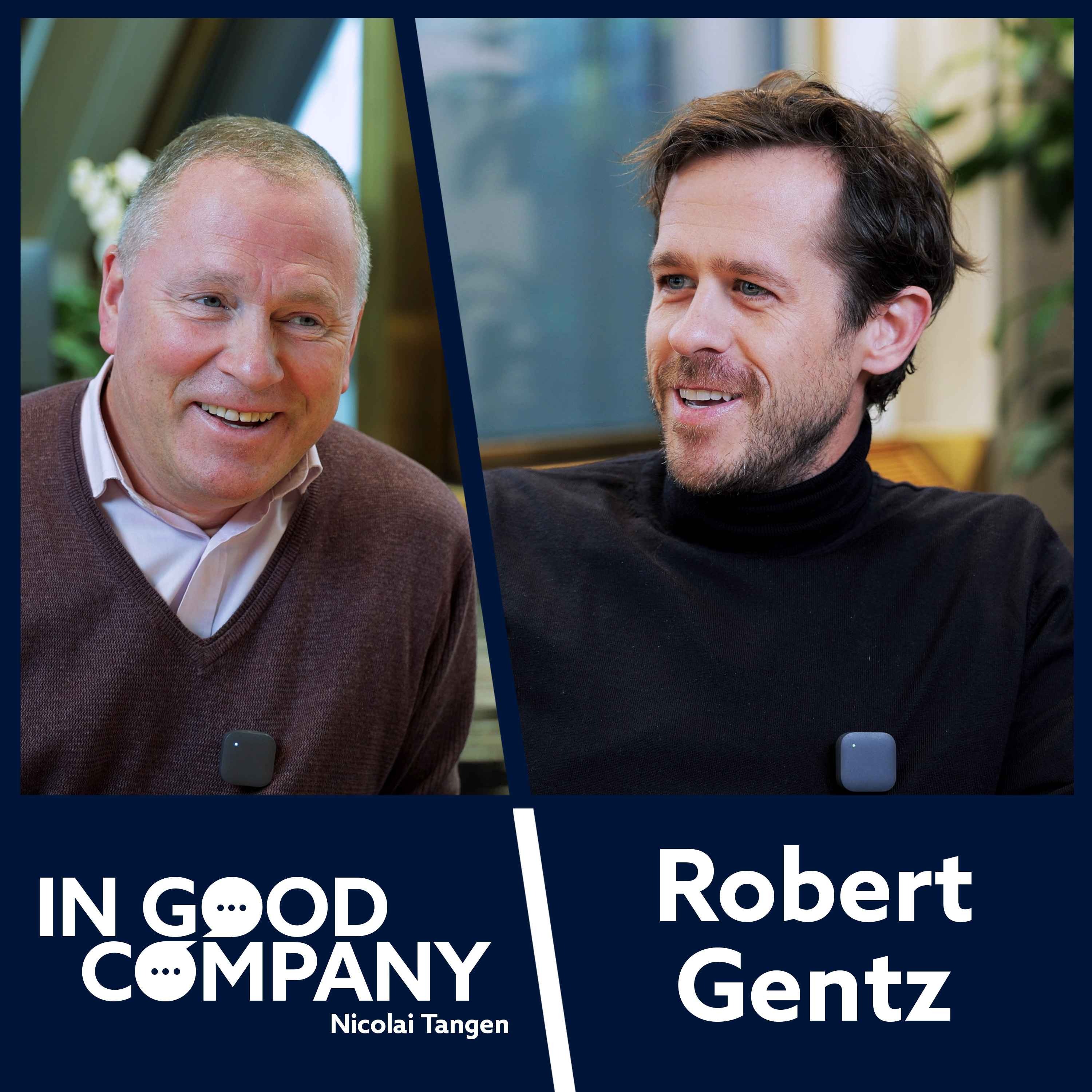
In Good Company with Nicolai Tangen
Zalando Co-CEO: Building Europe's Fashion Giant, AI in Retail and the European Dream
00:41:38
Loading summary
Transcript119 lines
- [00:01]
A
Hi everyone. I'm Nicola Tangen, the CEO of the Norwegian Sewer and Wealth Fund. And today I'm here with Robert Gens, who is visiting us in Oslo. And Robert is the co founder and co CEO of Zalando, which is of course, as you know all of you, Europe's leading online fashion platform. Robert started Zalando in 2008 right as the financial crisis hit and most people thought that selling shoes online was a terrible idea. But now, 17 years later, Zalando serves more than 50 million customers across 25 European markets. We own a lot of shares in this company and it's really exciting to have you here.
- [00:36]
B
Thank you very much for inviting me and having me.
- [00:47]
A
And of course, since you own the biggest kind of fashion thing in the world, what do you wear today?
- [00:53]
B
I'm very, very dark today. So everything that I wear I actually got from Zalando today.
- [00:57]
A
So it's a bit like Steve Jobs,
- [01:00]
B
like your sweater in Norway, you kind of have to dress a little bit warmer.
- [01:05]
A
Good idea. Now Rob, let's go back to the start. You founded Zalando in 2008 just as the financial crisis was kind of hitting the world. So tell me about the very start
- [01:18]
B
before we started Solano. Like me and my co founder David, we started like a social media company in Latin America which was like student network in Mexico, Argentina and Chile. And this was like a startup that didn't really work out. And then we said, okay, well that shouldn't be it. So we actually wanted to actually try it one more time. And we came back to Europe and thought, okay, well in Eastern Europe, ecommerce with soft goods, there's actually very great opportunity here in Europe. And we, we looked into various categories and fashion and, and, and really found shoes quite, quite interesting. And in June 2008 we started to sell Flip flops on a domain called Flip Flops Today. And really worked out well. Consumers really liked it. It really picked up like to whatever, like 20 flip flops a day. Based on this insight, we got a lot of investment into, into for like a big idea selling shoes online.
- [02:14]
A
And then we got started 20 flip flops a day. Were you, you were packing them yourselves and sending them out or.
- [02:21]
B
Yeah, yeah, we packed them ourselves. We went to the post office and really enjoyed every single customer contact we had and every single conversation and just, and as well asked like why did they actually go for an online search for flip flops and why didn't go to stores? And it was very, very good insight. So there was mid-2008 right before the Finnish crisis.
- [02:43]
A
But E commerce was quite new at that stage, right?
- [02:46]
B
Yeah, it was very new. And I think that as well was for us a very good insight that whenever we talk with people about E commerce and with shoes, we get a lot of feedback from people. You cannot with other shoes. You have to try them on, you have to. This is more bricks and mortar experience. But then we actually saw like in Internet, like in Google, like how many people actually searched for specific shoes and specific sizes. And they made it very clear that there's a big market. Although it was on the market for like 90% of people, but it was actually market for a few percentage of people.
- [03:21]
A
Zappos in the US had done something well, I guess slightly similar. Was that an inspiration for you?
- [03:29]
B
It was like selling shoes online. Yeah. So I think it was not the most innovative idea though. But I think what Zappos in the US proved is that with shoes and E commerce you can actually build up a big company. And that helped actually to raise then some money basically in June, July 2008, where they get €100,000 of investment. And then the financial crisis hit. And then we said, okay, now we better get this going and survive. And I think in retrospect this was actually a very good thing for us because. Because it really produces a lot of character that I think we still answer today actually notched from the fact that
- [04:09]
A
you got the crisis straight in your face. You think was a good thing?
- [04:12]
B
Yeah, I mean I remember like with my co founder, I mean we were debating endlessly, for example, for half a day if we should actually buy, as you remember, like this book of the German retail with shoes, which gave us a lot of kind of market data about the German shoe retail. And it cost like €60 at the time. And we really were debating, do we really need to spend the 60 Euro today we have more than 60 million customers, we have thousands of employees. But we still tell these stories of frugality of every single euro and every single resource really counts and treat it as if it's your own money. Do you really have to spend it? And I think this produced a lot of character that we still benefit from today.
- [04:53]
A
When did you realize that there was potential beyond the shoe category?
- [05:01]
B
The scaling of Zealand. It happened extremely fast. So we went from like in 2009, we had probably like 5 million revenue, 6 million revenues. Then we went to 150 in the next year, then more than 500 million.
- [05:14]
A
Wow.
- [05:15]
B
And then more than 1.2 billion in the fourth year.
- [05:17]
A
Wow.
- [05:18]
B
So we literally went from 50 people in, in 2009 to end of 2011, we were like more than two and a half thousand employees. So the scaling went very fast because then we realized that we have this flywheel going for us. So we started off with shoes, and then we understood the more you provide selection, actually, the better you could actually convert the traffic. So better you could create the experience for customers. So we really had to just scale selection. And then we were able to convert the traffic in a good way. And then we ask ourselves, is this not only shoes, but as, well, fashion? And can we actually cross sell fashion? What we then started to do, and then we asked ourselves, is this not only Germany, is this a European proposition? And then we went into first market, and we realized that we could actually bring the same selection that we had now in Germany to a smaller market that was very much appreciated. And then we scaled across Europe, and that was a very, very fast scaling in these first years.
- [06:15]
A
Yeah, much faster than we normally see in Europe. Right. I mean, that kind of blitzscaling, sometimes you see it with new technologies and. And so on, but very rare. So what decides the speed at the start of your launch? How do you get to these growth numbers?
- [06:31]
B
When it's very clear how your flywheel works, then I think it's very incredibly easy for leadership to align under this framework of how we actually grow.
- [06:42]
A
Explain flywheel. For the people who don't know it.
- [06:45]
B
We started off with an Adidas shoe. So people actually Internet searched Adidas Zamba, like a specific shoe size, let's call it 46, like a bigger shoe size than you usually should get actually in the store. So they had very specific searches. And I mean, to convert such a search in a sale, you just need to have the shoe. But there's not that many people that search for this shoe. So more people actually search for Adidas Samba, which is then the model name. And even more people then search for Adidas shoes or for the brand name Adidas, but the brand name Adidas, you cannot really convert until you really have a good selection of Adidas in place. And for us, that actually meant because we had to scale inventory, we started very specifically to scale around shoe searches. In the first couple of months, we knew that the more you build up selection, the more you can convert the traffic. And then you can go from within a brand to the entire brand, then to more brands, then you have entire Germany, then you can replicate the same for the next country. And all of a sudden you didn't have like a selection that brings the same amount of selection, no matter if you live here in the north of Norway, or if you live in the south of, of Italy, or if you live in the. Close to the high street of Paris. And you have the same access to selection. And I think that was very much, I think the journey of the, the flywheel of how we, how we build up a selection actually could, could grow and grow and grow in, in this, in this, in this environment in a good way.
- [08:12]
A
But you are expanding in a lot of different dimensions at the same time. So you are expanding in categories in brands and in geographies. How do you think about that? Expanding in so many different ways at the same time?
- [08:26]
B
The way we think about it is we have people that we form a relationship with. These are our customers. And we have more than 60 million, more than 15% of the European population that has an active customer relationship with us. And we nurture these relationships with our customers. We try to, we invest a lot in terms of our experience to never disappoint, to always deliver in a way that exceeds the expectations. And then it's a question of how we can use these customer relationships to do more for them. We started off with shoes, went into fashion recently, went as well into sports, into beauty, into families and kids, so into all aspects where we can actually play a bigger role for our customers. So we build relationships and then we grow our role for them in a bigger way. And Today it's about €300 on average they spend with us. And our ambition is obviously to grow the role in different categories that we actually play with.
- [09:16]
A
How did you decide which countries to roll out?
- [09:19]
B
We're only in Europe. And so the big reason for only Europe is because Europe is actually so beautifully complex. And we made Europe very easy for brands to interact with due to our kind of logistical footprint. So where we can build like a big, like logistical network throughout Europe that can serve customers as well in the north of Norway and so south of Sicily and within Europe, we actually have the benefit of this network outside of Europe.
- [09:46]
A
So if you have a brand, instead of building out all these facilities yourself, you basically just let you do it.
- [09:51]
B
I mean, what we have recently done now with our B2B service, that we as well enable brands through our B2B services to use our entire logistical network as well for their own E commerce. And as well outside of Solando, which is the B2B vector that we have recently launched, like last year.
- [10:12]
A
Tell me about this. So what do you do for the clients? So this is a whole you basically supply the whole ecosystem. Right, For E commerce.
- [10:19]
B
Exactly. So we have a B2C. That's kind of how we grew up with. And recently we have as well launched a B2B vector for us where we basically prioritize the logistical infrastructure and service that we've built and as well software and regard actually the 7,000 brands that we offer that we work with as customers of our infrastructure and they can use the same infrastructure we built for ourselves now to actually run the entire E commerce on. So that kind of has all these localization features throughout Europe and and that they can send product through like for their own E commerce or as well connect to different marketplaces and only run the entire inventory from one infrastructure. Which is I think a very, very good use for the brands because they don't have to invest into own capex of logistics and they get as well the benefits from the entire network that we have for ourselves.
- [11:10]
A
So if I'm the client and I buy something directly from a company, you basically provide the whole backbone and do the delivery.
- [11:18]
B
Exactly. So.
- [11:19]
A
And I still think I deal just with that company or do I know that you guys are involved?
- [11:23]
B
Yeah, I mean a good example is NEXT that's actually committed the content European fulfillment on. So all the fulfillment actually for NEXT within Europe is done through our logistical footprint.
- [11:37]
A
So Rob, you collect a lot of data, right. You know more about what's selling in Europe than any other firm, right. How do you use all this data?
- [11:48]
B
I mean, you're right with 60 million people that actually shop with us on a yearly basis and many more obviously like, you know, visitors that we actually have use our destination as a lot of great data that we generate on behalf of consumers. And for example, what we do here is that we use the data graphs from consumers and as well from merchandise to help consumers to find better sizes for themselves or find the sizes that have a higher probability to fit them. So I mean, if you actually order something on Zalando and you order history with Zalando and you sometimes return items, you get feedback on items, sometimes you don't return items. Then we see as with similar customers that have similar kind of history as you have, and when you actually look at another item that you have not yet bought, we can give you more accurately advice as which size to order. Because sometimes these brands run a bit smaller, sometimes they run a bit bigger, which we can actually build out of this knowledge graph on sizes.
- [12:42]
A
If I go on Zolando and I try to buy a medium shirt, you're going to Say Nikolai, you must be joking. You should have xl.
- [12:51]
B
This can happen sometimes, but I mean sometimes these brands have different size profiles. So I think it can as well be sometimes that you say, okay, well, I mean in this brand you might actually be an S. So can. That's what happened. Right. But I mean these are like good data points. But I think then there's another kind of very interesting data challenge which actually comes in logistics. How do you actually optimize logistics in the right way? We're in this network of logistics centers. If we run across Europe where like an item should actually be put in this network that actually has the highest probability in terms of speed, but as well in terms of cost, where it might actually be purchased as well. There's a lot of math and data that actually really helps to optimize this network as well on behalf of the entire industry. Because we work 7,000 brands, we run a very, very big network. There's a lot of inefficiencies which can actually be calculated away by actually producing the right algorithms and the right data graphs.
- [13:48]
A
What are the most important ways that AI is changing the way you run your business now?
- [13:52]
B
I mean, it has a few of components about how we actually interact with consumers. For example, we recently launched a Discovery feed, which is actually a great way of how consumers can interact with fashion beyond actually only buying, but as well in terms of their discovery and their inspiration entertainment. So where we actually surface from a huge pool of content, those items of content that actually consumers might be the most interested in, which gives them a great gateway towards finding or getting inspired or as well having fun with fashion lifestyle. So that's a interesting new project that we have launched on our mission to inspiration entertainment with consumers. A second kind of bigger initiative of ours is in the system that we have built which actually enables consumers to interact with us in natural language. So we can actually ask us much more occasion based questions. I don't know, I'm showing up here in Norway and what shall I actually wear today in Norway? Which is something E commerce previously couldn't really answer, but now with all these advances in large language models and as well in our own advancements, we are able to cope with these questions and answer these questions in a good way. So that's.
- [15:05]
A
So the model told you, okay, you're going to Norway, it's such a depressing country, you need to wear black.
- [15:11]
B
Yeah, could be.
- [15:14]
A
What about sizes? How is technology going to help people choose the size?
- [15:20]
B
The size and fit is as well really like one of the most Interesting and complex questions in fashion. And here AI actually helps quite a lot to actually solve these questions.
- [15:30]
A
Can I take a picture of myself and get the size?
- [15:32]
B
Yeah, exactly. So you can take a picture of yourself at zalando, which actually 1 million customers already have done. So you take a picture of yourself using the Zalando app and we render your sizes from your body and this actually increases our probability to actually predict the right size for you. But it's two sided problems. It's the body size but as well like the merchandise measurement size, which is another question. But I think in the future there will be as well experiences where you for certain part of the assortment we would have like close to 100% of confidence that we actually can predict the right size for you. Where you might have actually detailed pages where you don't have to select any more size. We do a size selection actually for you and we're very confident that whatever we will send you will actually fit you. So that's the consumer side.
- [16:15]
A
Tell me about how you work with returns, which is a very big cost in your industry.
- [16:21]
B
Nobody really likes returns. The consumers don't like returns, we don't like returns. The environment doesn't like returns. It's nothing that anyone likes. So consumers don't really like to go to the postal office and just deliver returns again. So it is something that we work on to help consumers to take better choices. And the big driver of returns is obviously that an item actually doesn't arrive in the way of how the consumers imagine it to be. So it be it like in terms of sizes, how it fits or be it in a way of how it was visually imagined when you actually ordered. And there's actually going a lot of investments from our side into helping consumers to actually take better choices here. So on the size and fit we already discussed a little bit like what we do there, but even like on the product presentation. So there's actually innovation happening where this problem might be better solved in the future. So for example, we are now able to render from two dimensional pictures like a three dimensional experiences or videos that actually help consumers to really in depth actually try to imagine this item on the detailed pages in a way that wasn't possible before.
- [17:29]
A
So if you add all these things together, what do you think are the real key issues that you need to get right as an online retailer?
- [17:36]
B
The one key theme is customer obsession because consumer expectations are constantly rising and really staying close to the consumer and really as well staying close to the technology that actually enables you to provide Solutions that actually were not possible before. I think that's one key theme. The second one is have a very, very good relationship with the brands because we work with 7,000 brands and they as well drive their business and they have a lot of good ideas and understanding what they really need. And how do you as a platform actually cater to them in the right way and how do you make it's as efficient for them as possible to drive their brand equity? On Zalan, I think that's the two most important ingredients you have to get right.
- [18:21]
A
You are facing a couple of new ultra low cost competitors, Temu and Shine. How are they changing the landscape for you?
- [18:30]
B
I mean you have these Chinese competitors now, but we're basically in a different game than those companies. I think they are only about price. Our promise actually to consumers as a platform is much more around quality. As a consumer, you know that the selection you get on Zalando is actually these are brands, there's a certain quality filter that we actually apply to it and we invest a lot into experiences to make it better for consumers like delivery speed, reliability, brand presentation and as well like you know, these innovations as size and fit and product presentation and so on. So that's a promise to us consumers. And the promise towards brands is as well on quality, which is very important, is that they don't compete on Zalando with supply chains that are just after copying their styles at a lower quality and cheaper price, but they actually have an ability to build up their brand on Zalando and tell their story on Zalando and sell their product in the way they want to sell them. So it's a very different kind of game that we play. These giant platforms, you see them in segments of the market that are very well priced, sensitive like young fashion, enterprise points. We see them as well in terms of advertising prices because I mean they're sometimes very aggressive in advertising. So that as well we see that. But I think overall like our Zalando game is much bigger. So it's as well like not only about fashion, it's about sports, about beauty, about family, kids and many more kind of lifestyle propositions that we're active in.
- [19:58]
A
Just if you try to look forward, let's say three months, what are you seeing in terms of changing purchasing behaviors? Anything going on in society which you think is interesting?
- [20:07]
B
Just now we have a very broad view across Europe and I think sometimes you see like, you know, price consciousness, I think a little bit more like in some elements of the market in Germany, like Eastern Europe is Actually performing quite well, but nothing kind of really I think extraordinary.
- [20:23]
A
Any particular color?
- [20:24]
B
Sorry?
- [20:25]
A
Any particular color for the next season?
- [20:26]
B
What we recently developed is consumer adoption is actually like a transporter where we actually mine the data of Solano and actually provide by cities. We can actually look on the app, you can actually sort by cities what are actually movers and shakers in terms of trends by cities. So I'm not sure if actually Oslo as well on there, but I think Amsterdam, Berlin, Paris is on this where we actually mine the data about what kind of items as well get searched more like what kind of color trends you actually see more by city. And it actually varies very much by city. It's not the same like in Berlin or in Paris on Oslo. And actually very trends conscious consumers actually look at these transporter data quite a lot. But also brands are very, very interested in the data and then we deploy to them towards their own kind of production and knowledge.
- [21:12]
A
How different is the taste in the various cities? So let's say you mentioned Amsterdam, Berlin, Paris. How different are they?
- [21:18]
B
If you're interested, like you can just look in the app and you sign like you can actually filter by different cities and you just see like just last week what kind of items were trending in which city and it looks totally different.
- [21:31]
A
Wow. And if you were to be a bit ahead of time, what would you buy just now? What color and what kind of clothes?
- [21:40]
B
So it's not. I have a turtleneck all the time, but I am very consistent. I'm very loyal to a couple of brands that I have. And in terms of colors, it's mostly in the gray, blue and, and whites and dark space.
- [21:54]
A
Let's move on to the climate impact and the environment impact. Just how do you assess Zalando's role in the environmental impact?
- [22:05]
B
The fashion industry has an impact on the environment and it actually has to do better. I see as well as Zalando's role and that is kind of important because we interact with more than 60 million consumers and with 7,000 brands, it actually has a big impact and we should use our role as well very wisely to drive impact for good. I think there's one myth that I just want to clarify is E Commerce has the view that it actually is Zeitrjes paribus actually not better than bricks and mortar or like worse than bricks and mortar, which actually is not true because in bricks and mortar you actually have like, you have all these, you know, all these stores that they have, like in inner cities they have to have Lightning. They have like, you know, heating. They have these inner logistics towards providing merchandise in these stores and all the consumers actually have to drive there, park their car, go in there. So in E commerce you don't really have all that. So you just have logistics centers that actually can and are actually pretty efficient in terms of their. And then you just have to run the shipments where there's a lot of levers that you can pull to actually make this neutral. So like for like actually E commerce should actually have a much less impact than extra bricks and mortar. But though I think like in total we are, you know, we're very committed to being climate neutral in our own operation at private ladies by 2040 and as well in our larger scope by 2050. On top of that, we as well try to actually find good mechanisms of how we can actually help the industry to do better. So for example, what we do is that we enable more sustainable flags. So when actually a brand invests into like a certain area of sustainability, so for example like different usage of material or different impacts that we actually create these labels that consumers can actually filter on. And what we see is that this more sustainable filter label, so when actually when consumers shop by them actually the return rate actually gets lower. So it is actually better for the consumer, it's better for, for the environment, but it's as well better for the brand because return rates are always a big cost factor as well for brands like again the flywheel of good, win, win wins. But actually the brands can actually invest towards more sustainable and actually as well has a good impact on consumers. And I think those kind of solutions that we can drive on this intersection between consumers and brands is something I'm very excited about because it is really win, win win situations. We can actually drive very uniquely at Solano.
- [24:38]
A
Let's talk about leadership. So you run this from the first flip flop to now 15,000 people or thereabouts. How has your leadership style changed?
- [24:47]
B
I mean a lot I guess when I started I was 24, like never really worked in another company outside of the social media company we started in Latin America. I never really had any work experience. So I think literally in the first years it was about just being in the front row and just, I mean doing the like playing on the field and just doing, doing stuff. Over time, obviously like, you know, we've grown a lot and I had to as well learn about how to actually scale myself and how to, how to, how to scale the leadership. What I would describe now, how I would lead is I, I'm quite an enabling leader. So I trust by default the the teams or like the deals that actually work for me directly. And I try to actually spend quite some time in just understanding and being curious about like what's happening and then only really get involved in the areas where I feel that only I can do that. So it could be some very ambiguous decisions or like some more long term decisions where you need a certain conviction and risk budget or stubbornness as well. And I think on topics around culture, like corporate culture, like those kind of elements where you just have to really get involved and take a stance
- [26:10]
A
as
- [26:11]
B
no one else can do.
- [26:12]
A
Is there such a thing as a German leadership?
- [26:16]
B
I mean Zalando is. We employ people from 140 different countries and we're a very European company. So although it's headquartered in Germany. But I would very much, I think describe us as a European company.
- [26:27]
A
I mean, you're quite soft spoken. Are you an introvert?
- [26:36]
B
Well, I mean, I'm not sure if I would be an introvert, but maybe yes. Yes.
- [26:40]
A
And how does an introvert run a big company? What are the challenges?
- [26:47]
B
I think actually Barack Obama is even like introvert. I mean I do the stuff that I really care about and I think it's about role modeling, about what's the right values for a company. And I, I really deeply care about the company. That's very visible in everything that I do. But I don't really have to take on the stage all the time. So I'm as well kind of like, you know, very happy as well to, you know, to provide the stage to people that actually deserve the stage, like when they actually have accomplishments. And I think that as well creates the right kind of team mentality at Solando. So I think introvert or extrovert, I think there's always good mechanisms for good leadership.
- [27:20]
A
Absolutely. I do suspect that you're more introvert than Barack Obama, to be honest.
- [27:24]
B
But hey, yeah,
- [27:28]
A
you communicate internally in the organization.
- [27:31]
B
So we have a lot of different formats that we do. So we have like an own intranet network where we do like post letters. We run all hands very frequently and we test out as well different kind of formats where people just ask us anything and we just react to what they have on their mind.
- [27:52]
A
Now one of the most important part of the Zalando culture that you that are non negotiable for you, that you really work hard to retain.
- [28:03]
B
When we started, I really didn't really think that much about corporate culture because we, I mean you just start to run and Then I actually realized when we, when we grew that certain things actually happened in the company that you. Where you feel like you have not where you kind of don't agree with. And you just ask yourself, how did it actually happen? When we realized that like 2010, when we grew like from 50 to two and a half people, we started to actually codify these principles and then actually make them really count within the company. And These are like 14 leadership principles that we then hire by, that we promote by, that we quote a lot internally that very kind of visible. And these were like leadership principles that we say. These are things that really matter when you actually. And it should actually feel kind of very, very important and people really quote them and people are using them that provide an author of how we take decisions, how we run actually together as a team. One leadership principle that is important for us is for example, play as a team. They're to fail as you need to nurture this willingness to take as a risk. So otherwise I think you really create like a culture where it's very easy to just discuss a problem, why it should go wrong. Because there's always so many good arguments why things actually should go wrong. And then I think if nobody really is willing to actually stay positive and take the risk, I think then nothing will really happen. I think if you actually create such a culture, then I think you basically create like a poker without blinds. So where, I mean, only people actually go on when it's very, very, very clear if as a company you never really take on some calculated risk, I think you're very clear to, you know, lose over time. And this is actually something that we're. That's very important to us that we really encourage people as well to take a stance, take a, take a risk and then, and then don't be the I told you so person. But when it actually doesn't go wrong, but we cheer them up when they actually take risk and go after an opportunity. So that's for example, one that I personally care quite a lot about.
- [30:20]
A
You listed on the stock exchange quite early, right? Just after six years. Was that the right thing to do?
- [30:28]
B
It was very, very early. When you started around 2008, end of 2008. So, so we had, we had as well like a different kind of environment that we started in. So there was not a vibrant VC scene, so there was different investors that we could talk to. So like one of the biggest supporters and as well shareholders of Zalando was actually Chinwick. And Chinwick was actually like a public company so, and after some time, because Zalando actually grew so big, so big and in a short amount of time we became actually a very big part of the net asset value. So their kind of earnings calls and is a public company. So kind of their, their earnings calls became, the quarterly earnings call became like our earnings calls because we had to just provide a lot of transparency towards the chin shareholders because it was such a big part of the assets. So, so we had like all these, you know, downsides of a public company without really having the upset of public companies. So for us it was a very natural step then in 2014 to go public, which was only a couple of years after we found the company. So now I run for much longer time now a public company and private company.
- [31:43]
A
Yeah, you've been very vocal about kind of the European dream for entrepreneurship and I'm very concerned about that. Just what are your thoughts about Europe as a place to start up businesses?
- [31:56]
B
I think what I'm missing sometimes in the European debate is like a positive north idea. So because if you don't really have a positive north idea, you kind of get into a lot of detailed discussions and negative discussions. What really I think we need here in Europe is first of all, I think positive kind of idea, what is actually what we want to do. And I felt like that actually creating such a European dream is actually a good and nostalgia idea because I feel the American dream, which was I think like a big, it's like a big brand of the U.S. i think it actually has suffered quite a bit in recent years, which is a brand around come to the US and we cheer you up and build your dream. And it's the right kind of inclusive place. And I feel the American dream has suffer because it went from a very inclusive idea now to a much more exclusive idea. So not everyone is really welcome in the US And I feel Europe really has a big, big chance to actually tap into this void and actually create like a European idea because it's a free space. It's a very value driven, democratic space we have in Europe. And I think we have all the great talents and we have a lot of potential and we just need to I think formulate like a positive like north idea and make it as well clear that we are, I mean we're in a race, we're in a race between China and US and it's about relevancy and we want to win this race. And I think that's some of the positive ideas I think that we need here in Europe.
- [33:37]
A
So do you think that what's happening in the US now is making it more difficult to be a startup. There's,
- [33:48]
B
I think, at least when you are a student that graduates from university and you ask yourself, okay, where shall I actually start a business? I think there are certain elements in America that probably make it a little bit easier, but in Europe there is as well a good fundamental. So there's access to people. It actually has a big single market that should actually enable us to actually really stay here. And I think in terms of values, I think that's one of the core questions that I have for myself is what is actually a value space that you're actually most, most attached to? Because that's essentially you're choosing your home as well as for your company and as well for yourself. That's actually, I think, for me, like what actually European dream actually can become. But I mean, in order to make such a dream happen, first of all we need to do here in Europe is to really realize that I think those, those founders and these movers and shakers, they are really, I mean, they are your customers because they can choose where they want to start a business. How do we really make sure that we make it easy for them to actually start a business, scale a business here in Europe, and how do we ensure that they have speed and can generate scale and really understand as well customers and apply a lens of competitiveness towards all the environment that we actually suggest to them through our regulation? So I think that's one then. The second one is for me, I mean, one of the big arguments for Europe is a single market that we have because it's actually a huge market. So it needs to be as well understood as a single market. So in terms of how merchandise and people, and that's why capital is used in the single market. A lot of fragmentation that goes beyond the natural fragmentation that you have in Europe. I think it's just not very helpful.
- [35:37]
A
What would it take to make a single capital market?
- [35:43]
B
I think you're probably a bit more an expert than I am, but I think just too much competition between the different nations doesn't really help that much.
- [35:51]
A
No, I think we got 35 stock markets in Europe.
- [35:54]
B
Yeah, that's quite a lot. I think it's quite a lot. Yeah. But I mean, it certainly is not so helpful. I think understanding that I think we are in this together and we win this together, I think is, is much more helpful then the third element I would really mention is we talk a lot about level playing field, but I think we actually need to even go beyond that. We need to make it easier for European companies that operate from Europe than actually outside of Europe. And I think at the moment we don't. Do we sometimes even go after our European companies first because they're headquartered here in Europe and don't and make it easy actually for companies to operate outside of Europe.
- [36:41]
A
Some personal reflections. When you look back at your journey at Zalando, what are you the most proud of?
- [36:48]
B
I mean, it's 17 years now since I started this company. So I'm very proud that we actually built. That we built something very meaningful for Europe with a great team that I very much enjoy to work with. And I think when I, when I think about the scale of, you know, more than 15% of the European population and, and have done this as a consumer company, that's something I'm very, very proud of.
- [37:11]
A
If you try to abstract what it is that makes a good founder, what is it who, who are successful.
- [37:20]
B
What for me is, is a trait for like active investors and, and many founders that I always look for is some element of curiosity and some element as well of humility. So because that's what I realized over doing this for 17 years is curiosity is a very, very important leisure trait for, for me because I mean, you can only really take good decisions when you listen and when you are interested in. And you can, and you can learn actually from, from everyone. So from a newly joined person or to. Of your company, from a customer, from a partners, you can, you can literally learn from everyone. And this is really important that you're curious in order to actually take good decisions. And the second element of humility is as well for me important because I mean, you need to be respectful for what is in front of you and not get ahead because I mean, just because whatever you build until here doesn't always predict that you as well being successful in the next kind of challenges that you have in front of you. And I think that's, that's, I think two kind of important traits I would always look for for founders when, when I invest into their companies.
- [38:26]
A
How much do you work?
- [38:28]
B
I think I, I don't really differentiate that much between like when I work and not work. I mean, I think about Zalando when I get up, when I'm at work, when I'm at home. I think it's always when you're found. I think it's a very, very special kind of relationship that you have to the company, like a very deep care and it doesn't really matter where you are. And you always think about it in a way. So it's very hard for me to say what's work, what's not work.
- [38:58]
A
Do you think that's a prerequisite for being a good CEO? That you are totally absorbed in the company?
- [39:05]
B
I mean, you have to balance, you certainly have to manage your energy. I think that's important when you really love what you do and when you're really passionate about what you do and when you care about. I think it as well gives you a lot of energy. And obviously I think there's a lot of stuff that you do as a founder and CEO that not always gives you energy, but I think there needs to be always a certain balance that you actually wake up every day, I think, with a good amount of energy.
- [39:30]
A
Where do you get your energy from? And I know that you know specifically because you got one of these rings right. So what is it that gives you. Where do you charge your batteries?
- [39:43]
B
I think in a work context, whenever we discuss about, I mean, new innovation, new products, and imagining how this actually could be, I think that's always for me, like very exciting products. And as well.
- [39:52]
A
Can you see that from the graph? When you talk about new products, it's just like, you can see it, we'll
- [39:57]
B
probably be able to see it. That's. I mean, something very exciting. Always like when you have an idea, when you have a plan and then we execute on it and you see it actually coming to life and actually working out. That's always the most rewarding experience in intramural life.
- [40:10]
A
Where do you relax?
- [40:13]
B
Well, I relax when reading. I relax listening to. That's a typical way of how I would relax.
- [40:20]
A
What do you read?
- [40:22]
B
I mean, it really depends. Sometimes I even read some criminal stories. The Scandinavian criminal is actually something that I enjoy.
- [40:31]
A
The Nordics, Noir.
- [40:32]
B
The Nordics.
- [40:33]
A
Yeah, I could have guessed, actually. Now, last question. What's your advice to young people?
- [40:41]
B
Stay in Europe, make it work in Europe? I think that's one wish, I would rather say, I think for young people, when they actually start companies out, why
- [40:51]
A
should they stay in Europe?
- [40:54]
B
For me, it's a part of the world that really, I think deserves to actually gain in relevance again in terms of our value set and the way of what we represent. And I think it really depends as well with the value creation of companies actually in Europe. And it's all really on us to actually have this value creation actually here from within Europe. And I think that's. This is what I think a very big motivation of my or my co CEO to actually prove that this is actually possible from Europe and actually put our energy to make it work in Europe.
- [41:22]
A
Well, that's a great piece of advice. You for sure have added more value in Europe than most people I've ever met. So big thank you for doing that and for being on the podcast.
- [41:30]
B
Thank you very much.
- [41:31]
A
Thank you.