Loading summary
Transcript77 lines
- [00:00]
A
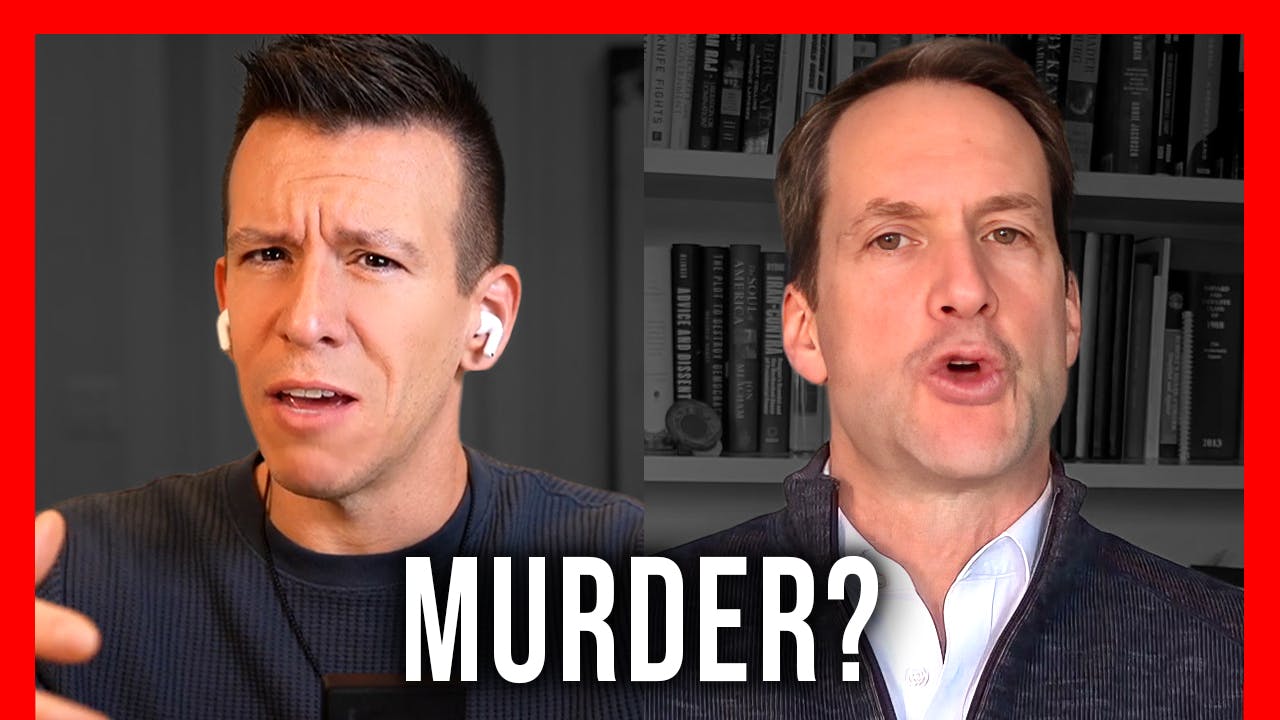
Hey, welcome back to the In Good Faith podcast. Hope you're having a fantastic day. My name is Philip DeFranco, and every week I'm talking to people, I think who are the most important and influential people in the world. And this week I spoke with Congressman Jim Himes, a ranking member of the House Intelligence Committee. Congressman Himes is a representative for southwestern Connecticut. He's the first Democrat to represent the district since 1969. And today we talked about a lot. We talked about the US Military's alleged war crimes in the Caribbean, Signalgate, Pete Hegseth's impeachment, the abandoning of Ukraine and Trump forcing the US out of NATO and into an alliance with Russia. So buckle up. Follow or subscribe and if you enjoyed the episode, it 5 stars on Spotify and Apple or give it a like on YouTube. Representative Himes, can you, can you describe to, to watchers, to listeners, in detail what you saw? What were you shown regarding the September 2nd airstrikes?
- [00:45]
B
Yeah, yeah, sure. In some detail.
- [00:49]
So, you know, this is important because it's the first strike on September 2nd. There was all sorts of reporting about it. And of course, it got very famous a week ago or so when it was reported that after the initial strike, which disabled the boat and caused, you know, quite a conflagration on the boat, that there may have been a double tap, they may have circled back around to kill some of the survivors. And yeah, so I was able to view the video and it was enormously disturbing. I mean, let's set aside the broader conversation about how you go after drug runners and that sort of thing. Just the video itself, when the American people see it, most, I think, are going to have a pretty visceral reaction to it because, and I should say by way of context, I, I'm not, you know, a pearl clutcher here. I've spent a decade on the Intelligence Committee reviewing lethal strikes against typically terrorists. But this one was different. Right. So what the video shows is initially the attack on the boat and the boat is underway. As people have seen, this is, this is out there, a munition explodes and basically takes out the boat, stops the boat and starts just a massive blaze. And as it turns out, nine of the 11 people on board are killed. And by the way, let's come back to that 11 people thing, right? Because people take up space that otherwise could be used for drugs in a drug running boat. But nine of the 11 people are killed. And then fast forward, I can't tell you if it's an hour or two hours or 45 minutes. The point is, it's a lot of time. When the smoke clears, there is a lot of observation of two individuals who have survived that strike. A capsized boat. This thing's probably 40ft long. Almost all of it is underwater. And two guys are basically doing what you and I would do if we were in the middle of the ocean and in distress. They are sort of clinging to this wreckage, to this tiny little bit of wood. I think it was actually the keel of the boat that is still afloat. And we watch that for a period of time. Again, no fog of war. The video is very clear.
- [02:56]
And then another munition hits, I guess three in total. And everything is gone. The two individuals. There's just. There's just nothing.
- [03:04]
A
And I want to. There's a few things in that description that I kind of want to go into. The first, it was something you even hit on regarding the language being used. You know, you talked about a history involving going after terrorists here. You're saying individuals, you're saying drug runners. The administration, the hegseth, they're saying narco terrorists. Can you. Can you walk me through.
- [03:29]
I don't know, their use of the term and what. What you're using?
- [03:32]
B
Yeah, yeah, no, and it's worth spending some time on this because there's two arguments made by the administration, the administration supporters, that I think are just false, right? So the first is.
- [03:47]
That, gosh, this is just like the counterterrorist strikes that Obama took a lot of. And of course, you know, a lot of this stuff happens in a very classified realm, but the American people are aware of the fact, partly because Obama declassified some of these strikes that, you know, the United States periodically takes down terrorists. And I've seen a lot of those videos, and there's a profound difference between that and what we are doing and what I saw. What's the difference? First of all, Congress, as the Constitution says it, must authorized the attacks on terrorism on terrorists. There is an authorization for the use of military force, known as aumf, that authorizes military and other activity against terrorists. When you watch that, what you see. I'll just give you a generic example. What you typically see is a very bad guy, often known as a high value target. This could be the operations guy for ISIS or whatever in a Jeep, probably heavily armed. You know, that ISIS and Al Qaeda and their associated groups, unlike the cartels, their reason for existence is to end us, to eliminate the United States and democracies and the west in favor of an extreme Islamic caliphate. So they're about ending us. The cartels, of course, as awful as they are, are about selling us drugs. Right. The violence associated with cartels is very different than the violence associated with terrorists because actually, cartel leaders, there's a lot of violence associated with the drug trade, but their perfect world is a world in which they don't have a lot of violence because they would like to sell more drugs. Okay? So no authorization for the use of military force against these individuals. And again, terrorists, AK47 sidearms, explosives, they're on their way to plan an attack on an air. On an aircraft or something. What? Again, I won't go back and tell you again what I saw, but here you have a situation where these guys were, in my opinion, about to go under the waves. I mean, I think they probably had an hour or two before their wreckage sunk and they were in the middle of the ocean and it was game over for them. Which is important, by the way, as a legal matter, because you're not allowed to fire on shipwrecked individuals. But. But it's just a radically different thing. This is not what we have traditionally done in the counterterrorism realm. The other big difference here, you know, so the claim is made that this is just like what Obama and what presidents have done. The other claim is that these guys are terrorists, right? So. And I got myself in all sorts of trouble. I got famous on Fox News because I made the point that there really is no such thing as a narco terrorist. Now, maybe I overstated the case a little bit, but it's really important that we maintain the distinction, as I just sort of articulated, between groups that want to end us. And they will not stop until they have ended us. Right? They're going to fly planes into the World Trade center and into the Pentagon. They're going to blow up Grand Central Terminal or whatever their aspirations are for the purpose of ending us. That's a very different set of aspirations and strategies than guys who want to sell more drugs. And I just think it's worth maintaining the distinction between narcotics, cartels and terrorists, if for no other reason than, you know, narcotics is a huge problem that traditionally has not been fixed by stopping the supply. Look, Pablo Escobar was killed years ago, decades ago. I can't remember exactly where. Woo. Big win. Did it slow the shipment of cocaine in the United States? No, it did not. So, anyway, I think that's a distinction worth maintaining. But it's important to the administration for people to think that the cartel guys are terrorists, because then we're comfortable with them dealing with these guys the way we've traditionally dealt with terrorists.
- [07:31]
A
Well, let's dive into the idea behind. I guess it sounds a little bit like what you're talking about is the intent and not maybe necessarily the devastation that would happen afterwards. Right. So I think, like, the administration or someone that would be defending them would say, well, these drugs, they are, you know, ravaging our country, right? So it is, in a way, copy going after American lives just in a roundabout or a different way. And so are you saying that it is just categorically different than, well, someone has a bomb or a gun?
- [08:03]
B
Well, it is, it is. And no one should minimize the.
- [08:08]
Lethality and the horrendousness of the carnage that is caused by drug addiction. But we just can't get to a world. And look, I know how emotionally satisfying it is to see drug runners, particularly if you've had a personal experience with loss associated with drugs, to see them just go up in flames, that's a very emotionally satisfying thing. But there's two things. Number one, the entire history of the United States and our legal structure is built around the notion that we're going to use our very effective military to go after those entities that would end us, whether it was the Soviet Union, terrorists, Nazis, and that we're not gonna use them against lots of other stuff that is horrendous. We're not gonna use it. I mean, for example, let's talk about another thing that killed a lot of Americans. Right? COVID 19. Well, is there a military solution just because lots of Americans died? So I really think it's important that we think very hard about saying, now all of a sudden, the combat power of the United States is going to be turned against criminals. That's a radical change in law, in philosophy, etc. And by the way, it's inconsistent with international law. Full stop. Full stop, sure. So that's a big step. The second big step is, is it effective? Right. And again, I know these things are sort of. This is a pinhead guy making, you know, objections to a very emotionally satisfying thing. Is it effective? First of all, most of the deaths that you talked about are caused by fentanyl. We are taking out boats carrying cocaine. So we're not even going after the most lethal target. Secondly, massive success here. Do we really believe that we're going to stop the flow of cocaine in its entirety out of South America? Of course we're not. Right. We're already seeing the cartels slowing down their maritime transport in favor of Two other ways, at least, that they can move this stuff by air or overland. You know, we saw lots of people move through Panama and up in. So massive success here, you know, in this sort of Trump hexag thing is really just shifting the flow of. Of. Of the drug that is not the primarily lethal drug. So why. Right. Why not go after the fentanyl? Why pardon a massive drug cartel chief who moved hundreds of millions of dollars of cocaine into our country at the very time you're taking out the equivalent of these, you know, these guys who are driving boats. Right. So there's just both a huge legal and philosophical question as well as a question about what is this going to make any difference? And I think the answer is that on the margin, it may make the tiniest bit of difference in moving the way cocaine travels, but that. That's about it.
- [11:01]
A
I want to go back to you talking about the size of the boat and the number of people, because there was a reference there of, why would you have 11 people if it sounded like you were saying if, you know, the goal is to try to move as many drugs as possible? So, I mean, is part of your framing there a belief or a concern that not everyone on that boat was a drug runner, that maybe that there was trafficking involved? Maybe there was something else or. I was trying to understand your argumentation there.
- [11:31]
B
Yeah, yeah. I mean, it got, you know, when people found out there were 11 people on the boat, folks that understand the drug trade far better than I do said there's never 11 people on a boat that's moving drugs. Right. If you're in a boat moving drugs, you want two things. You want room for fuel because you got a long way to go, and you want room for drugs. Right. So, you know, people were like, wait a minute, what else was happening here? And the truth is, we don't know the answer to that question, which opens up a whole other set of questions about, you know, what is the intelligence? What is the targeting protocols? So let me be. Let me speculate here, because, I don't know, we haven't been briefed about the way intelligence is being used in these strikes. But let me speculate and say if you put 11 people on a boat that really needs fuel and space for drugs, maybe they were moving some people. Right. And maybe it was human trafficking. Right. So if it's human trafficking, you've got the human traffickers and the people who are being trafficked. Do we know who those people were on the boat? I don't think so. I don't think we knew the identity of all. But you see my point here. It's questionable enough to be using the military to take out criminals, but when you're not sure that you're also not taking out a human trafficker and the people that that human trafficker is trafficking, you got some work to do and some thinking to do.
- [12:49]
A
Where do we think or where was the boat headed when it was hit?
- [12:53]
B
The boat. This is another interesting point, and it all comes down to something we haven't addressed directly, which is, you know, the laws of which say that you cannot fire on a retreating, surrendering, incapacitated military person or unit. Someone not engaging in hostilities against you is not a legitimate target, and taking that person out is not allowed. The boat was headed south. It was not headed towards the United States. It was not headed north. It was headed south when it was hit.
- [13:20]
A
And so, okay, so headed south. And then you were saying, I mean, once again, it becomes a war of words right now because people haven't seen things as publicly.
- [13:33]
They're making it out to be a. You're saying one thing. We're hearing a different thing from Tom Cotton and others. Were the survivors attempting to stay in the fight or were they surrendering? Is there any fog of war? Is there any uncertainty in your mind?
- [13:46]
B
No uncertainty at all. We can never know what was in their minds at the time, but we can imagine, right? And they. So were they still in the fight? Being in the fight means a lot more than intention right now. You and I can imagine what would happen if a massive bomb had just gone off over our heads. We'd seen nine people die. We jumped out of or were thrown out of a boat that was in a conflagration. We've been floating in the ocean. You might make some speculation about what your frame of mind in that instance would be. Then the question is, did they have weapons? No, they did not have weapons. Did they have any means to communicate? Because we were sort of hearing this from the Pentagon. They might have tried to contact a boat. Did they have a radio? No, they did not. So now the answer I get is, but they might have swum under the boat and gotten a radio to hail a boat that may or may not have been out there. So again, you can emotionally say, it makes me feel good to see these people wasted. But you. There is no credible argument. And, you know, Tom Cotton, I think, will have to explain his conclusions when this video is made public. There is no argument that these two individuals were in any way, shape or form capable or well, either continuing hostilities or even in any way capable of it.
- [15:05]
A
So if that's the case and it's headed south and drug trafficking is not a capital offense, is this just murder?
- [15:11]
B
I think you're, I think in legal circles that's known, known as asked and answered.
- [15:19]
The, the murder distinction. And here's why I get a little twisted up on the question of whether this was a war crime, blah, blah, blah. I've read the legal opinion that supposedly authorizes these strikes. We can get into that if you like, but I think it's bad legal reasoning. And so, and also again, you don't need to spend a ton of time in law school to know that Congress should debate and authorize this kind of action. It says so in the Constitution. And, and again, as we've just discussed, wherever you come out on this, the use of massive amounts of American combat power against criminals and as you just articulated, killing people without any due process, without, I don't know this because I haven't been brief, but without, you know, super well vetted intelligence and targeting processes at a minimum, that should be debated by the Congress. Right. Which is sort of the point of Congress. And so anyway, the point is that if it is not a legitimate war, which I don't believe that it is, because it hasn't been even considered by the Congress, then it becomes a legal issue, a law enforcement issue. And yes, if a cop walked up in New York City and shot a drug dealer on the street, that cop would be tried, convicted and would go to jail, which is one possible analogy for what is happening here. So if you believe that this isn't a legitimately approved military action, then yes, the word is murder. If it is an approved military action, which the administration says it is, the question becomes, is this a violation of the laws of war?
- [16:56]
A
Also, I know we're talking about the double tap and we're talking about people being killed, but there were there not. There were four strikes.
- [17:02]
B
Right.
- [17:03]
A
Was. Do you know what the justification for all four were?
- [17:05]
B
Well, so there was one strike that again took out the boat. You know, massive fire as our munitions tend to cause. Nine of the 11 people killed eventually the boat is huge fire. I would speculate that pretty much anything, whether it was cocaine or people or clothing or radios on that, you can see it, it's out there, was probably destroyed at some point. The boat capsizes, a long time goes by and my understanding is that there are then three more follow up strikes to basically obliterate all of the remaining.
- [17:41]
A
Wreckage in the two people and regarding the footage, I mean, why won't the Pentagon release it? Or do you think that it will eventually be released? If so, how?
- [17:49]
B
Well, so the interesting question, because the President says he's fine with its release, as I guess have a number of my Republican colleagues. So let's do it. I'm tired of arguing with Tom Cotton, who I work with. Well, on lots of other things about something that the American people should see and decide for themselves.
- [18:06]
A
And I want to go into what Admiral Bradley said, because this has kind of been played on Fox News as. And kind of shown as a way of. Okay, well, this is Representative Himes saying that this is actually a nothing burger. Right. You said Admiral Bradley said that there was no kill order from hegseth1. Do you believe that's true? And if there was no kill order, can you walk us through how Hegseth is responsible? Who is responsible here?
- [18:36]
B
Yeah, and I mean, I hope nobody thinks it's a nothing burger. Right. Again, we've already touched on some massive issues. Should a good portion of American combat power be engaged in something that Congress hasn't debated or approved? Big question number one. Should, for the first time in our history, we be using our military power to target civilians? I mean, there's just so much you can come out on either side of those debates. I feel pretty strongly on one side. But one thing, this is not as a nothing burger, to answer your question.
- [19:08]
Look, I don't know Admiral Bradley. Beyond the hour I spent with him. Everyone who knows Admiral Bradley, and I know many of them, say that he is a man of integrity with a storied career, just an exemplary officer. And he told me that there was no kill them all order. Now, there's been subsequent press reporting about, well, was it written down or blah, blah, blah. But that's what the Admiral said. And, you know, while I may question the Admiral's actions, in this particular case, I don't have any reason to believe that he would. That he would be lying about that.
- [19:41]
A
So then can you walk us through where Hegseth would be culpable? Is it just a standing mindset of. I mean, the second strike has to come in for a reason, right?
- [19:54]
B
Yeah.
- [19:56]
A
There are these two guys that are out there. They're clinging on, trying to stay alive. Is it normal practice to go, okay, well, we. That. That's what we do. I'm trying to understand kind of the argumentation, because that is specifically where you have Fox News host saying that is why this is actually being overblown.
- [20:18]
B
Yeah. So I can Only take you so far on this question. It's sort of an esoteric military question, but I can point out a couple of facts. Number one, typically there's something called an X or execution order that comes down from the highest elements of the command, which in this case are the Secretary of Defense, who, by the way, told us that in those initial strikes, he had command. And then he said, in subsequent strikes, I delegated that command. So by his own admission, he had command here. Now, usually these X ords, as they're called, are provided to Congress, I would note, and maybe Fox News would address this. Almost always they are provided to Congress. In this instance, they have not been. Secondly.
- [21:03]
The admiral says, Admiral Bradley says that he, with the assistance of a variety of people, I assume that means JAGs, lawyers, et cetera, that they had an argument about whether to take this strike. He said that in that moment, the Secretary of Defense, Pete Hegseth, was not in the room. He didn't know if he was watching. But anyway, clearly there was a conversation and some consideration, at which point the admiral gives the command to do this. That's the facts as I understand it. But there's something really important here, too, that, that, that sticks with me because I really do believe that this admiral is an honorable man. I have no reason to doubt the opinions of, you know, two dozen people I respect who tell me so. But it does say something about the context. Two things to say. The context, right? We're all human, right? We all respond to incentives. And in a really tough judgment call, do we have a secretary of Defense and a president who are going to be really worried about adherence to the law? I'll let people answer that question for themselves. The Secretary of Defense wrote a book that famously argued that we have way too many lawyers constraining our warriors who should just go out there and do stuff. He didn't say, the law be damned, but that's the feeling. Point two. Point three, lots of guys get fired because they don't do what Donald Trump or what his people want. That's context, right? Point four, Pete Hegseth, when he was a Fox News host, to bring Fox News back into this, convinced the president to pardon a number of special operators who'd been accused of war and convicted of war crimes. So the point, the reason I tell that big Story, is that that's the context in which Admiral Bradley is making a decision. And look, we're all swayable. And I suspect that that's kind of why we ended up where we did. By the way, one Last thing I want to say. Second thing, in the military, talk to any veteran. Talk to any person in the military. There's a principle which is that you don't get to say, wasn't my deal. I wasn't in the room. A captain of the skipper of a ship is responsible for everything that happens on that ship. If a sailor gets drunk and breaks something on the seventh deck of an aircraft carrier, the captain is responsible. That's an almost unviable principle in our military. You know, as they say, you can delegate authority, but you cannot delegate responsibility. What you saw the president and Hegseth doing was trying to distance themselves from the admiral's decision. And I promise you that the uniformed military looked at that and said, wow, that is. That is not the way we've ever operated.
- [23:40]
A
Okay, but I mean, I guess then with that. And this is kind of two questions. One, where would you like to see this go? And two, I mean, when you're talking about the chain of command there and your understanding of what happened, I mean, is this a situation where you think Hegseth should be charged? Bradley should be charged? The people who actually conducted the strike should be charged or investigated?
- [24:03]
B
Yeah, yeah, yeah. Look, I don't spend a ton of time on purely philosophical questions, right?
- [24:09]
A
Well, no, I mean, I think it's like, you know, what comes next, because you have this pocket of time where people are going to pay attention, and very quickly it's going to turn into the healthcare subsidies. Very quickly it's going to turn back into the Epstein situation. So if you're hoping this goes a certain way, it's not really philosophical. It has to go somewhere. It's either nowhere or somewhere.
- [24:33]
B
Yeah, no, it's a fair question. I gave you a pretty cynical answer. And the reason I gave you that answer is that there is more chance I get drafted into the NBA than that the Trump Justice Department or the leaders are going to hold anybody accountable for this. So I gave you a pretty cynical quick answer. I think that's a fact, though. No one's going to be held accountable for this. My aspirations are that the American people see this video because they need to decide for themselves we're a democracy, and people should see this video, and then we should grapple with these big issues. I mean, you said you used the word nothing, Burger. I'm willing to concede that we could have an argument about whether the military should be used in these instances. We've had an argument for generations over the question of exactly what Congress's authorities are in declaring War. Those are all good arguments, but every single one of those arguments is called into question by what is happening. So let's have that argument. So I want to see the video come out. I want to know all the facts. I'm not prepared to say, you know, there was a war crime committed, full stop. I saw that video. So I've learned an awful lot more than I have. But you ask questions that I don't know the answer to, which was precisely what were the commands given and who was doing what to whom? But, but let's start with what needs to happen and the President said could happen, which is, let's release the video so that the American people can see it.
- [25:47]
A
Does it feel like right now that's, that's every fight is there's going to be no accountability, so we just have to make, make it clear what actually happened and hope that the American people act on it in the, in the next election.
- [25:59]
B
Yes. I mean, again, it makes me feel cynical to say that, but show me one example in which the Trump administration, in either Trump 1 or Trump 2, said, yeah, that was a terrible action that my guy took, and as much as it pains me to do it, we're going to, you know, charge him. Let the Department of Justice do what they should do. Just not going to happen. Right? Not only is it not going to happen because that never happens, but because every single day the President is pardoning cartel leaders, as he did last week. He's pardoning white collar criminals, he's pardoning every single person who attacked the Congress on January 6, 2021. So again, it makes me feel bad and cynical to say it, but no, of course, there will be no accountability driven by the administration which controls the Department of Justice and the upper reaches of the Pentagon. So, yes, the answer to your question is yes, this will be. The accountability will be in the ultimate realm of democratic accountability, which is American people saying, I'm just not comfortable with this anymore.
- [27:01]
A
And it's connected to this, but it is a different topic. I want to talk about Signalgate. Right. The Inspector General's report on Signal Gate found, quote, the Secretary's actions created a risk to operational security that could have resulted in failed US Mission objectives and potential harm to US Pilots. From your understanding and what you've seen with, with Hegseth and Signal Gate, is that a situation where, in a, in a world where people are held accountable. Accountable that Hegseth should be impeached, that he would be tried in court.
- [27:29]
B
So, I mean, it's a perfectly illustrative example of what I'm talking about here. And we get into this he said, she said thing, right? Like, oh, well, Tom Cotton and Jim Himes disagree. The Pentagon's own people, the inspector general, these people live inside the Pentagon, said, and you read the quote, that Hexass actions put the mission and his people at risk. Think about that. This is a guy who controls nuclear weapons and makes decisions about whether our troops will go into situations where they may be killed. The line was, you read it, he put people and mission at risk. On this side, we have the administration and supporters saying total exoneration, total exoneration. That's the world that we live in today. So, no, and again, I hate to be cynical, but I sort of feel an obligation to be honest here. What will eventually cause Pete Hegseth downfall is not a criminal charge because Pam Domondi is not leveling a criminal charge. It will not be military action inside the Pentagon. It will be when the President Donald Trump decides that he's a little tired of Pete Hegseth getting headline after headline. And instead of talking about whatever Donald Trump wants to talk about that day, he's being forced to talk about Pete Hegseth. In that moment, Pete Hegseth's gone. And that is the moment and the only moment in which Pete Hegseth is gone.
- [28:41]
A
You keep apologizing for being cynical, but I'm realizing I'm more cynical than you because I'm like, I, I feel like the big difference between Trump 1.0 and 2.0 is there'd be 40 people that have already been out the door that were kicked out the door this time. It feels like loyalty over everything. And that, you know, guys getting blown up on a boat, that's probably infinitely better than talking about what's about to happen to health care if nothing's done or what's happening with the Epstein files.
- [29:06]
B
Well, that's going to be the slow burn, right? I mean, I'm sort of fascinated by this and, and it's already showing up. I'm fascinated by the slow burn of the destruction of the well being of the President's most loyal supporters. And you just named the issues, right? The one legislative achievement this president has, big legislative achievement, of course, is, you know, the decimation of the Medicaid that West Virginia and Alabama and so many of those ruby red rely on to provide basic health care to their people. Here in Connecticut, we're going to be screwed by the cuts to Medicaid, but we're a blue state where we're going to pull out every stop to make sure that we try to make up for the closing of community health centers and stuff that ain't happening in Alabama and West Virginia. So what's more personal to people in the health care that has now been badly damaged by the president? Example number two, arguably, it's the agricultural areas of this country that were most adamant in their support of President Trump. And what has happened, the two signature policies of the president, the tariffs, ask a farmer about soybeans and the fact that they can no longer sell those soybeans to China, and the labor that those farmers use. If you walk through a slaughterhouse, you've got a fair number of migrants working in that slaughterhouse. So, anyway, you get my point here, which is that the slow burn of the president decimating the livelihoods and the, you know, health care and all that is important of his most ardent supporters is what led to the results in the election of this November a month ago, where in every corner of the nation, people moved hard away from the president and his party. And if the president doesn't get his act together, we are going to see a midterm election in a year that is going to reflect the unbelievable damage that the president has done to his own supporters.
- [31:07]
A
I mean, when, I don't know if you think about it this much from a strategic standpoint, but I mean, is there what kind of calculus is being done regarding how much you should be focusing on a situation that we should be looking at, right, with Venezuela, but also the impact for people in your state and what it means for future elections regarding the impacts of health care, what's happening with snap, what's happening with job security, with affordability? Because it does feel like we are in a place where if affordability was actually being handled by the administration and Trump was actually moving forward on populist ideals that some of his base really were going for that they kind of wouldn't care about the other stuff. Granted, the president is getting hit from members of his own party that are more America first and some of them bordering on isolationism. But it does feel like when you, when you're talking about this, do you almost, I want to try and make it into one question for you because it's a big thing. But I mean, do you, do you go, okay, we're going to focus on this for a certain amount of time, but I know it really impacts people the most and I'm going to go back to those things.
- [32:15]
B
Yeah, yeah. No, it's a great question. You know, one of the catastrophes of the Democrats, including myself, in the Biden administration, was that we, in the face of inflation, our argument was, it's transitory. So we used a complicated college boy word to try to fend off what Americans felt when they were buying chicken at the grocery store. Shame on us. Shame on us. Right. Rather than feeling empathy and saying, hey, we're going to pull out all the stops to try to address that. The president is doing that times 100. Right. We didn't say, you're making this all up. It's a big hoax. He just said that. He just told Americans who are paying huge electricity bills, huge health care bills and huge grocery bills. It's a Democratic hoax. I just like, I'm like, does this guy not have a single political advisor? And so the way he's playing this. And by the way, ask my Republican colleagues, it might help if they've got a little whiskey in them, because they won't say a word against the President stone cold sober, but they'll tell you that. And so it's just mind boggling to me. And you asked the question a little bit about talking about these various things. Yeah, if oversight Himes. And I'm the ranking member of the Intelligence Committee, so I really care about doing my job on oversight on these Venezuela boat strikes. Oversight, Himes says I got to really talk about what I saw in that video. And as we have been doing, the incredible issues that are at stake and why it's not a nothing burger. But politician Himes is like, what the hell am I doing talking about boat strikes when Americans are experiencing, you know, affordability crises? So it's a, it's absolutely a tension. And it's a tension. By the way, I echo. This echoes the things that concern me about the Democratic Party. We're concerned about a lot of important things. We often forget that the order has to be the thing. The first thing that you need to say is the thing that most concerns the American people. So by all means, I tell my friends, you know, by all means, talk about climate change, talk about constitutional issues, talk about democracy, talk about, you know, whatever. Start, please, please, please, please start with affordability.
- [34:29]
A
Yeah. And I'm going to do the exact opposite of that right now, because I am, I am very interested. Interested. Because right now it does appear that the Trump administration, via Steve Witkoff and Jared Kushner are. Some people describe it as selling out Ukraine in peace negotiations in order to maybe even enrich themselves. What are your views there about what's happening and what can Congress do to help in that situation or if there is something that's more nefarious, stop them.
- [34:57]
B
Yeah, no, and I mean, don't apologize for coming back to this. You know, I'm making a very political elections related statement when I say affordability. Of Affordability. Affordability. Look, the reality is for 250 years Americans have had national security and foreign policy as a second or third or fourth issue until it's not right until World War II or until 9, 11. So I'm not saying that these questions are in any way unimportant. I was sort of speaking more from an electoral and political standpoint. But yeah, I mean, the reason Russia is important is because if Vladimir Putin thinks that invading a neighboring country maybe costly, but at the end of the day it works out pretty well, we'll have a couple generations of Americans who are still dealing with the fallout of that catastrophe. And that of course is where Donald Trump is taking us. Right. So what has happened in the last month or so? The United States with the famous 28 point peace plan that apparently was worked out by a real estate negotiator, Steve Witkoff, and I don't know, Jared Kushner, the President's son in law, which was basically a Russian wish list. President Trump puts it forward and says, give me your answer by Thanksgiving. The world goes, my God, this is a surrender document. And President Trump doing the usual taco trade. Trump always chickens out, doesn't hold anybody to the Thanksgiving deadline. American people realize that he just put forward a Ukrainian surrender document. And now we're back to, you know, lots of conversations, none of which I think are going to go anywhere. You know, we got a more Ukraine centric plan. And just this weekend or yeah, just this weekend, apparently a plan was proposed that, that the, that the Kremlin likes. All sorts of warning bells should be going on anyway. Step back for a second. Putin has played an enormous cost for his murderous mistake here. You know, 250,000 dead Russians, I mean that's like 5x what we lost in Vietnam, probably three times that number wounded. And he realizes that if he doesn't come out of this with a real win, he's probably toast. You know, Russian leaders don't get to retire comfortably usually. So he's not interested in a peace deal that is anything other than Ukrainian capitulation. And what he sees when he looks at the Trump administration is a group of people who are helping him who are not saying the way to negotiate. By the way, this is the guy who wrote the art of the deal that the way to negotiate is to put a lot of pressure on Putin by saying we're going to keep arming the Ukrainians until you, you know, until you lose. That would be the smart negotiation strategy. Again, all of us have negotiated whatever the purchase of a house or the lease or a car. You know, you try to marshal your leverage. The President has taken the opposite approach which has been to pound on the weak party here, Ukraine, starting with JD Vance and the President attacking Zelenskyy in the Oval Office. So you know, look my wackier, let me revise and extend that mark. My more conspiracy prone folks say well that's cuz the President is a Russian agent. I don't believe that to be true. But I do believe that the President, because he promised to end this war on day one of his presidency and because he wants the Nobel Prize, thinks that he can end it most rapidly by forcing Ukraine to surrender. Unfortunately, half of America and all of Europe is saying NFW to that.
- [38:07]
A
Well, I was gonna say. Cause like the new National Security Strategy was released and it looks like American leadership and kind of the idea of a free world, it's being exchanged for more of a spheres of influence approach. Right. Maybe where we divide the world up with, with China and Russia and maybe you pair that with him wanting to somehow be seen as the president of peace, that he ended another war.
- [38:32]
His words. But do you see that as kind of the approach that we're becoming less of that superpower? We just want to retract and divvy up the world with China and Russia?
- [38:43]
B
You know, it sort of feels that way. But let's spend a second on the NSS document, the National Security Strategy. Read the whole damn thing. Russia's mentioned because we want to re establish and re welcome them into. I can't remember the exact language, but we kind of want to bring them back, you know, do lots of good deals, lots of economic stuff. No mention that they were a, you know, atrocious and murderous invader of a struggling democracy. So the person who is our most dangerous antagonist in that region gets handled with kid gloves. Meanwhile Europe, who is our ally in the region. And look, I'm willing to concede that the Europeans do stuff that annoy me, but with Europe we're like, okay, we're only going to support political parties that are patriotic. Now just think about that line. Wait a minute. We're in the business of supporting particular political parties in Europe. Are you kidding me? And we castigate them for.
- [39:43]
Putting themselves at risk. Of civilizational erasure. What the hell does that mean? I mean, I'll tell you, to my ears that sounds like a lot of white folks are going to be at risk of being displaced by Arabs and Africans and stuff. I mean, and I suspect that's what it means. I mean, this is replacement theory stuff. Never mind that over 4,000 years, like Europe, you know, people have, you know, of all sorts of different ethnicities have run across Europe. And anyway, so anyway, my point is that like Russia gets handled with absolute kid gloves and Europe gets absolutely castigated. What's up with that?
- [40:19]
A
Yeah, I, when I look at the administration and Trump specifically, I'm trying to understand, once I'm overusing the word, but the calculus there, because it does seem like, you know, there is this, this pushing of the great replacement theory. There's the pushing of this idea of like white genocide. But then at the same time he's getting hit by his own party over his stance on H1B visas, which they think are too open. And so, I mean, do you think, do you think Trump is going to end up going one way? Because he seems very movable based off of the noise that's happening on the bait with the base online.
- [40:54]
B
You know, there's a lot of conflicting instincts in the American right, right? You've got the traditional right wing Republican, let's just cartoon that by saying the editorial page of the Wall Street Journal forever has been pro immigration. Right? Why? Because they want lots of people to come here and work and to keep wages down. Okay, Then you have a more, in my opinion, dark element, which is not the traditional conservative or the Wall Street Journal page. And that's the sort of Stephen Miller thing and beyond. So we don't like any immigration civilizational erasure. You know, they, they let the mask slip fairly frequently. White Afrikaners are really the oppressed people in South Africa. Right. And so what you see is an ethnonationalism on the right. You know, the people who explicitly are ethnonationalist or even Nazi, you know, the whole Tucker Carlson in braglio.
- [41:59]
They are not condemned. Right. We have a long argument inside the Heritage foundation about how to handle Nazis. Right. And so anyway, my point is that there's a lot of weird paradoxes and the H1B thing absolutely illustrates it because most right leaning folks other than hardcore ethno nationalist MAGA says, hey, daggone it, we want those, let's just say South Asian engineers, we need them. You know, half of our Nobel Prize winners in the United States actually were born in India or China or wherever. They say that. So they're saying, this is madness. We want those people in our country. Whereas the darker, in my opinion, right wing ethno nationalists is saying, sorry, none of them, unless you come from. What did President Trump call them? You know, I can't remember the word he used, but when he was describing the Scandinavian countries, lily white. Those are the good countries. That's where we want immigration. So that explains the H1B thing. It was a betrayal of the maga. Ethno nationalists. Right.
- [43:00]
A
And so when you see that, I mean, do you, do you have a mindset of you also need to call certain things out or are you of a mindset of let them fight? This is once again, it's like there, there's the what is good for the country and what is good for people here and what is, what increases the odds of Democrats getting back in power, which then could bring more good. Do you go, let them just fight it out.
- [43:24]
B
There's a spectrum of things. Right. So Jeffrey Epstein. And Epstein, you know, was a, you know, salacious, horrendous, disgusting thing that to my policy mind was completely, you know, in a country that has the problems that we do. I want to spend precisely 2 milliseconds talking about Jeffrey Epstein. But it divided the Republicans. It was uncomfortable. I really don't want to spend time on that. On immigration, that's very different. Right. There's a good debate around immigration and, you know, should it be more merit based? If it's more merit based, we're going to have a lot more people from India and China than we do from other countries. That's a fair debate. And by the way, I'm willing to acknowledge too, that, that immigration, first of all, it must be legal. That's something that, you know, my Republican friends are adamant about. And I'm also willing to acknowledge that there are rates of immigration, that when you exceed those rates, people start to feel uncomfortable. No moral judgment here. It's just a fact. Right. You see this in Europe in particular, where the, where the nature of these countries is changing pretty dramatically. Fact. Not good or bad in my opinion. But okay, so let's have that debate. But, but yeah, you know what, it shouldn't be complicated saying that we shouldn't have a debate about the merits of, of Nazi thinking. So anyway, I guess my answer to you is, yeah, when the debate is about Nazis, I'm going to say, hey guys, sober up. Sober up and show a little bit of discernment here.
- [44:47]
A
Well, A big part of the question for me is it feels like there is enough of the party that on the right that is however you want to call it, is further right on a lot of issues that it feels like for Republicans to have any chance whatsoever they would have to let fully into the party. And it's becoming more and more mainstream. Certain kinds of thinking, whether you're talking about Tucker Carlson or Nick Fuentes. And I think part of that door, and I don't know if there's necessarily a question here, part of that door has been opened by the conflation of being anti Netanyahu or what Israel has done in Gaza with anti Semitism. I mean, we were talking about last week, I don't know if you're familiar with it, but certain people that are speaking up for children in Gaza and other children like Ms. Rachel are being marked as possible anti Semite of the year. And so I feel like it's lowering people's appetite for being concerned about a rise of, of anti Semitism and general bigotry because so many things that are not actually that are being conflated with it. And so I was kind of thinking, you know, what is the strategy? Because it feels like it is inevitable that.
- [46:03]
That side of the party is going to grow and grow and that's what you're going to be facing in the future.
- [46:07]
B
Yeah, yeah. I mean, let me say two things to that. You know, you brought up Israel, Gaza, anti Semitism, you know, this is an area where there's a lot more heat than light. It ought to be possible.
- [46:21]
To say, you know, anti Semitic, anti Semitism is completely unacceptable. I'm a supporter of Israel, as I am. And some of the stuff that happened in, that has happened in Gaza and is happening in the west bank is completely unacceptable. Those, those things, by the way, all those things live in my head together. For whatever reason, it's really hard in America today for those things, all of which I think are true to live together.
- [46:50]
But let me say the second thing, which was the original part of your question. Every party and my party and the Republicans to win, they need a big tent, right? So in my party there's a raging debate about, well, what about pro life people? Henry Cuellar, for example, got famous for another reason last, last week. But Henry Cuellar is a pro life Democrat and there's a debate in the party about do we want pro life people to be Democratic elected officials. Fair debate, by the way, there are a fair number of pro life people in this country. So it's Actually an interesting and fair and important debate to have. The Republicans have similar debates, but God help me, don't let that be about whether we expand to include Nazis. You know, I mean, first of all, there's just not that many of them. And secondly, come on, there are lines here, and those lines, you know, they may not be entirely clear, but Nazis are clearly on one side of it.
- [47:45]
A
Well, I want to go. Okay, so I want to go in. When you say Nazi, what are you. In what way are you, like, what people?
- [47:51]
B
Yeah, you're right. You're right. I'm being unprecise in my language. But so let's. Instead of Nazis, which has a very distinct meaning. Mm. Let's talk about ethno nationalists that take their beliefs to the point of bigotry. People who believe that whites are a better and should be a separate race from non whites. Thank you for the call there. Because Nazis has a very distinct. As it happens, Nazis very much believe that. But when you are, you know, racially supremacist or even believe, as many people in the United States did in the 1930s, 40s, and 50s, that, hey, those black people, they may be fine, but they don't get to be part of our society, to me, that's beyond the pale. Very literally, no pun intended, you know, that should not be bigotry, you know, rooted in hatred and pseudoscientific.
- [48:47]
Racial distinctions. To me, that is a very different conversation which the Republicans are having than the one we're having about whether pro life, you know, Catholics should be comfortable inside the Democratic Party.
- [48:59]
A
I mean. Yeah, I. I'm very. Yeah, I'm very interested to see how a number of those things are going to move forward. I. As we are talking about moving forward, you know, when you think of 2029, and maybe what I imagine for you would be an ideal world where a Democrat is able to get in. Do you think we're going to be able to reverse, I guess, not only the policies here, but how America is being perceived? Because I don't know. I just. If I had a friend that was like America that switched up like this every few years, I don't know if I would. That would be a trusted partner.
- [49:34]
B
Yeah. So here's where I get my redemption from being such a cynic. Prior. I absolutely do. I absolutely do believe that we will swing back. We always do. We always do.
- [49:50]
I. I will often when I'm trying to sort of calm some nerves here, and let me say up front that I think they're very real risks, you know, I was in the room, I was in the building for January 6th. So I promise you, I appreciate the risks here, but I do believe to my core that we will swing back. And when I'm trying to calm nerves, I will some times say, I'll give you an example that put what's happening now into the context of history. Think about the 1940s, when the Supreme Court said it's okay to put United States citizens into concentration camps if their grandfather was Japanese. Right? Think about that. Think about as you scream at me about how awful it is that the National Guard is deployed in D.C. and yes, it's awful. I think it's stupid, but I spent enough time in D.C. to know that these are bored 20 year olds who would much rather be at home or playing video games than hanging out on the Mall in DC. Think about that. In 1970, the National Guard shot and killed a bunch of students at Kent State University in Ohio. So just keep the perspective to know that much of what we're seeing, much, not all, much of what we're seeing, we've seen before and we've swung back subsequently. The other interesting point to your question though is you say, well, if the Democrats take control in 29, we're going to do some thinking because it turns out that the opposition party to my party, the Republicans, really believe that the President should be a king. You know, absolute, absolute pardon power accompanied by absolute absence of accountability. Wow. Turns out that the President doesn't need to follow the law with appropriations. You know, President can just say, sorry, we're shutting down USAID without consulting Congress. Man, give me those tools. And I tell my Republican friends there, you understand that this creation of an empty emperor in the White House is something that you will come to regret. I mean, if I'm joking about it, I'll say, you know, when Alexandria Ocasio Cortez is President, all this power that you handed to the President of the United States, my guess is you might be concerned.
- [51:57]
A
Yeah, I mean, I mean, when you mention aoc, when we're chatting, we're like, the longer you see this Trump presidency going where it is, it feels like that increases the likelihood of something like that as far as what the pendulum swing would look like. But I mean, I mentioned specifically international partners because it's like, I don't know, when I see Republicans like Ted Cruz calling for sanctions on the eu, when I see, you know, the eu, you know, once again, it's not like it's a perfect relationship and everything's rainbow and sunshine, but it does feel like they're kind of being pitted right now as almost the Big Bad. Maybe not, you know, not as much as China, but I just don't know. Once again, all these countries, it feels like every conversation that happens when America is not in the room is like, how do we move forward without these crazy Americans? Because they're going to be like, I mean, who knows how many presidential swaps we're going to have? And to your point, the President is just seemingly getting more and more power. And so it feels like that increases how erratic the country could be perceived or, I mean, how erratic we would be as far as what we're implementing.
- [53:06]
B
Yeah, no, you're right. And look, I think, first of all, a lot of this stuff is completely unprincipled. Right? The National Security Strategy and JD Vance every single day calls out purported violations of free speech in the United Kingdom or France or Germany. Meanwhile, they're having a honeymoon with the Crown Prince of Saudi Arabia where you're not even allowed to be Christian. Right? I mean, so this is an unprincipled statement that they make. But, but, but let me say this. I said it before. Look, the Europeans may do stuff that annoy you. I get it, I get it. You know, I actually happen to believe the United Kingdom, a country that I love, I actually think they get it wrong on things like freedom of speech. But there's two really important things here that, you know, J.D. vance would do well to remember. Number one is we need them because China doesn't have allies. And you may be annoyed by the French, but they are our allies and we're pretty strong. But when the United States is acting with Europe, we are absolutely unbeatable and will be for a generation. So they may annoy you, but alliances are a force multiplier that we shouldn't erode gratuitously by being angry about, you know, some lefty in Belgium. Number two, again, be annoyed I just said it. The UK isn't where I would have a society be on freedom of speech. You know, back in the day, if you were an Irish Republican, you weren't allowed to speak to a television camera. I don't like that idea. But in a world that is filled with Russias, with China's, with North Korea's and Iran, understand that Europe and the United States share a fundamental commitment to liberal in the classic sense. I don't mean lefty, but to liberal ideals, the dignity of the individual, the rule of law. So, yeah, they may annoy you, but understand that philosophically While we'll have disagreements over little stuff, they are, they are us with respect to Iran, North Korea, China and Russia. And don't erode that just because it makes your MAGA guys feel good.
- [55:07]
A
And Jim, the last thing I want to ask you about, because whether it be you or anyone, I really have on, there's a constant conversation of the cynicism versus the optimism. So what I want to go out on is if you could say to the people that are listening, what are the, if there are, what are the reasons you are optimistic or people should be optimistic going into 2026?
- [55:31]
B
Let me give you a big picture and a small picture answer. The big picture answer is, and the only reason I'm in this job is because if you pick a span of time greater than 10 years just to pick a number, this country makes progress. It makes racial progress, it makes economic progress.
- [55:52]
We move in the right direction. Sometimes we take big step backs. Again, this was the guy who was in the chamber on January 6th. I am totally cognizant of the remaining echoes of racism in this country which affect the lives of too many African Americans. I'm totally cognizant of all of the stuff that my folks on the far left would say were original crimes in the United States. But the fact of the matter is that over time, we do become a more perfect union. And I don't have any reason to believe that Donald Trump is going to stop that in the end. Big picture optimism. We talked a little bit about World War II and the internment of the Japanese. Small picture optimism. Politics is working. Politics, which is how we resolve these things, is working. Donald Trump and the Republicans got their damn clocks cleaned a month ago. Just last week. District Tennessee's seventh congressional district that Donald Trump won by 22 points. The Republican Congress member won by single digits. So politics is working. So what's the message, the moral, the don't be passive about this. Our country doesn't progress over time because it just happens the way the weather happens. It happens because you do it. And by the way, Tuesday of last November happens because you do it. Because you register, because you vote, because you express yourself. That's why I'm an optimist.
- [57:18]
A
Representative Himes, thank you so much for the time, sir.
- [57:20]
B
Thanks, Phil.
- [57:21]
A
And that, dear listener, is the end of today's podcast. And if you're listening to me here at the end and you're somehow not subscribed, what are you doing? Definitely subscribe. I've got weekly conversations that come out usually Tuesday or Thursday. If you like this one. I definitely recommend you check out one of our last two. No matter what, let me say thank you for watching. I love yo faces, and I'll see you right back here next week.