← Leaders with Francine Lacqua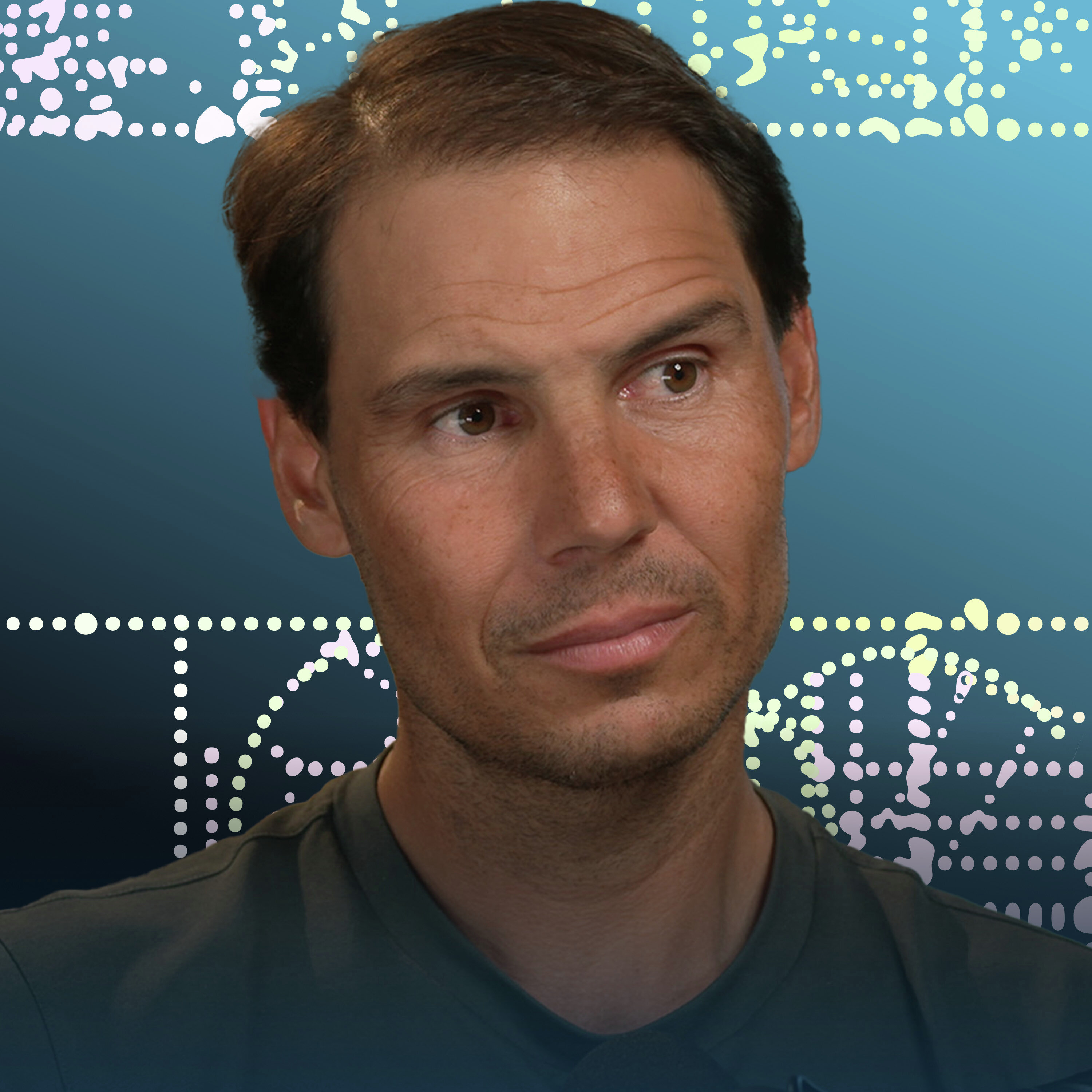
Loading summary
Transcript91 lines
- [00:01]
Rafael Nadal
Introducing B of A Rewards a new way to reward your every ambition.
- [00:06]
Nathan Hager
It all starts with a Bank of America checking account and grows from there. You get cash back deals on brands you know and love, plus a credit card rewards bonus, helping you earn more
- [00:14]
Rafael Nadal
rewards on things you buy every day.
- [00:17]
Nathan Hager
Join B of A Rewards today for
- [00:18]
Rafael Nadal
rewards tailored to your lifestyle.
- [00:20]
Francine Lacroix
What would you like the power to do?
- [00:22]
Nathan Hager
Bank of America Open or enroll your
- [00:25]
Rafael Nadal
account@bankofamerica.com bfarewards bank of America Corporation all rights reserved.
- [00:31]
Francine Lacroix
The thing about AI for business, it may not automatically fit the way your business works. At IBM, we've seen this firsthand.
- [00:39]
Rafael Nadal
But by embedding AI across hr, IT
- [00:43]
Francine Lacroix
and procurement processes, we've reduced costs by millions, slashed repetitive tasks, and freed thousands of hours for strategic work. Now we're helping companies get smarter by putting AI where it actually pays off, deep in the work that moves the business. Let's create smarter Business IBM when you
- [01:01]
Karen Moscow
own your own business, you own every decision. Now own the card that rewards you for it. Chase Sapphire Reserve for Business is a pay in full card that elevates your travel experience and offers premium benefits that will take your business to the next level. Sapphire Reserve for business offers 8x points on all purchases through Chase Travel, 3x points on social media and search engine advertising, airport lounge access, and more. Chase Sapphire Reserve for Business it's the card that gives back all you put in. Learn more@chase.com ReserveBusiness Chase for Business make more of what's yours Accounts subject to credit approval, restrictions and limitations apply. Cards are issued by JPMorgan Chase Bank, NA Member FDIC, Bloomberg Audio Studios Podcasts, Radio News.
- [01:55]
Rafael Nadal
Tennis is one against the other. When the things are going wrong, find a solution to change that dynamic. And when the things start to go well, find a way to keep going the same way. We were not able to have a conversation with the coach during the match. So you are alone there and you need to survive by yourself. You need to correct yourself. You need to find solutions by yourself. So it's a mental battle about the opponent and sometimes about your of.
- [02:26]
Francine Lacroix
I'm Francine Lacroix and this is Leaders, the podcast that explores what drives the world's most influential people. This week I'm speaking with tennis legend Rafael Nadal. He's won 22 Grand Slams, including 14 French Opens, four US Opens, two Wimbledons, two Australian Opens, and two Olympic golds. Oh my words.
- [02:51]
Rafael Nadal
Absolutely incredible. From Raphael Natal.
- [02:58]
Francine Lacroix
Nadal has been called the incomparable Spaniard and a relentless competitor. And despite having retired in 2024. The tenacity that characterized his performance in the game has followed him off the court, diving headfirst into the world of business. He's growing an empire of luxury properties, training academies, restaurants, and even an electric boat racing team. His latest venture is the opening of Zelfort Aventura, the fourth location in his growing hotel partnership with Melia Hotels. And that's where I met Nadal. For our conversation, it was an opportunity to sit down face to face with the player who led the world of men's tennis for most of his career, with Nadal being the only player in history to be ranked number one in three different decades, and to ask him about the challenges behind the success. Because despite his dominance, Nadal's road to the top wasn't always smooth. We discussed how he faced career threatening injuries and high profile rivalries, how he pulled off his Australian Open 2022 comeback, and how he knew it was time to retire. Rafael Nadal, thank you so much for joining us on Leaders. It's very well documented that you suffered a lot of injuries. In fact, you said for your first significant injury that tennis became a ra race against time. What was it like living in constant fear of your career potentially ending?
- [04:26]
Rafael Nadal
Well, you adapt to it because when you have a tough injury and the hope is not very positive for a couple of months, you don't know if you're going to have the chance to keep going. Then when you are able to come back and keep playing, you feel alive, you know, and then you adapt yourself to live with that feeling of I don't know if gonna be able to keep playing tennis for one, for two or for 10 years. And at the end, I played for 16 more years. You know, that's true. But I went through a lot of challenges because of that first injury, but I was able to keep going. And it's the past satisfaction to have the determination to find solutions, to try to keep being competitive and find a way to try to have success with the new circumstances that your body presents to you.
- [05:19]
Francine Lacroix
Do you think it put extra pressure on you? Did you want to win even more?
- [05:24]
Rafael Nadal
No, no. For me, the same. The only thing that of course affect is when you achieve things after having this issue, probably you enjoy more that victories are more emotional. You put the victory more in value for yourself, you know, because sometimes when you are on the run that you are winning, you want to keep winning. You want to keep winning. Okay, let's stop and say, okay, I want to keep winning, but let's enjoy this. Mom after the things that I went through, I was able to enjoy the victories probably more than if I will not have this issue.
- [06:02]
Francine Lacroix
2005 was the year Rafael Nadal won his first French Open. But it was also the year at just age 19, when he suffered a devastating foot injury that followed him for the rest of his career. Then in 2012, there were knee problems. In 2022, he was on crutches. And finally in 2023, he faced a hip injury, which ultimately ended his career. Now, for most people, this level of adversity would have stopped them playing, but not Nadal. Did you ever feel invincible?
- [06:35]
Rafael Nadal
No. At all? No. I always had doubts. And for me, the doubts are good.
- [06:40]
Francine Lacroix
Why?
- [06:41]
Rafael Nadal
For me, doubts are positive because allow you to go on court knowing that I need to improve. Doesn't matter if I am having success today, I need to be better to try to keep having success tomorrow. That's doubts. The people that need to lose to know that they have to improve things, they don't have doubts.
- [07:04]
Francine Lacroix
You have to have doubts, but also not let those doubts cripple you, because you have to perform. This is true for any leader, for anyone that wants to be the best at what they do. Like, what's the right balance between doubts and, I guess, bravado?
- [07:19]
Rafael Nadal
Of course, you can have doubts or over doubt, but doubts in terms of asking yourself if what you are doing is enough for me are positive. Because if not, it's easy to say, okay, I am winning, I am super good, Okay, I keep practicing, but you lose this. This feeling of going on court every day with the motivation and determination to improve something. And for me, as a personal feeling, go on court just for practice, to be fit, never worked well for me, never motivated me enough. My motivation was always going concord with the determination to improve something. And that really that Draksumy.
- [08:08]
Francine Lacroix
Tennis is often thought of as a solo sport. But you can't overlook the power of rivalries. Nadal's were most notably with Novak Djokovic and Roger Federer. But what role did these rivalries actually play in motivating him? Rafa, you really also captured the imagination of people because of the rivalries. And also friendship with Djokovic and Roger Federer. What was that like?
- [08:31]
Rafael Nadal
The rivalry had been a healthy rivalry from my point of view, with huge respect between each other. And putting in perspective that we shared a lot of pressure moments fighting for trying to be the best.
- [08:47]
Francine Lacroix
Did they make you better?
- [08:48]
Rafael Nadal
Without a doubt, yes. We pushed each other to the limits. Our rivalries help us to improve our level of tennis. Our mentality, our level of bringing our possibilities to the. To the limit. Because we knew that if we were not doing the things more or less the perfect way, almost every day, the other will be better than us.
- [09:14]
Francine Lacroix
But it's amazing because you also had this friendship off court.
- [09:16]
Rafael Nadal
I think it's normal then, when you shared a lot of moments with your rivals, you have some love for them because you are fighting for the same thing all the time. And at the end of the day, we are achieving our dreams. So why we need to fight in a negative way? We need to fight in the tennis court.
- [09:43]
Francine Lacroix
As players, it must be very difficult to be at the top of your game and with the pressure not many other people understand.
- [09:50]
Rafael Nadal
We had pressure, yes, because we have some attention, because tennis is a difficult sport. The way that the score is going, you will be never relaxed because you can lose in any situation and you can come back from every situation. And we are very lucky people that we achieve what we wanted to achieve. In my case, much more than what I ever dreamed. So I can't complain a lot. And we had pressure, yes, but everybody has pressure. For us, our pressure was healthy pressure. Some people have not healthy pressure, Dramatic pressure.
- [10:34]
Francine Lacroix
You know, you've achieved much more than you thought you would. Was there a moment that crystallized that for you, where you thought, actually, I'm exactly where I wanted to be?
- [10:42]
Rafael Nadal
I always felt myself a very lucky person. I was able to win a Master Thousand, then a Grand Slam, then Olympics, then more Grand Slams. I had a professional tennis career of 20 or 21 years, having an injury that almost retired myself when I was 19. So what else can I ask?
- [11:07]
Francine Lacroix
I mean, 22 grand slams, given all of the injuries, how do you reflect back on that?
- [11:12]
Rafael Nadal
For me, when I talk about victories, I don't put the injuries on perspective. I won 22. I don't want to create the feeling that, okay, if I will not have the injuries, I will achieve more. No, that's what I achieved.
- [11:27]
Francine Lacroix
After the break, Rafal Nadal talks me through one of the biggest comebacks of his career.
- [11:35]
Nathan Hager
Support for the show comes from public.com. if you're actively involved in your portfolio, you probably catch yourself repeating the same actions. Buying the dip, manually sweeping idle cash, putting on a hedge on Public. You can now create AI agents that handle all these tasks on your behalf. Just describe what you want to do in plain English, like if the Vix hits 25, buy a put option on the S&P 500. Or if my cash balance goes above $20,000, move the excess into my direct Index. You approve the workflow and your agent handles the risk, monitoring the market, watching for your conditions and executing your strategies exactly as defined. An investing platform driven by your intent, not just your clicks. You can also get full read and write access to your account via the public API. Go to public.com market and fund your account in five minutes or less. That's public.com market paid for by Public
- [12:32]
Francine Lacroix
Investing Brokerage Services by Open to the Public Investing Inc. Member FINRA and SIPC Advisory Services by Public Advisors LLC SEC registered advisor complete disclosures available@public.com disclosures when you own your
- [12:45]
Karen Moscow
own business, you own every decision. Now own the card that rewards you for it. The Chase Sapphire Reserve for Business card brings the best Sapphire Reserve benefits to business owners who expect hardworking rewards. Designed to meet the needs of business owners at scale, this Pay in Full card elevates your travel experience and offers premium benefits and value toward business services that will take your business to the next level, fuel your business and maximize rewards. With 8x points on all purchases through Chase Travel, 3x points on social media and search engine advertising, annual partnership credits and more. Make every journey more rewarding with a $300 annual travel credit and access to a network of airport lounges. Whether you're looking for pre flight productivity or time to rest and recharge. Chase Sapphire Reserved for business, it's the card that gives back all you put in. Learn more@chase.com ReserveBusiness Chase for Business make more of what's yours. Accounts subject to credit approval, restrictions and limitations apply. Cards are issued by JPMorgan Chase Bank, NA member FDIC let's talk about health care for a second. It doesn't always work the way people expect it to. If you've ever waited on a prescription refill or had a hard time getting the care you needed, you know the feeling the system should just work better for everyone. That's exactly what the people at Optum are trying to do every day. They're a healthcare company linking patient care and pharmacy services to and using data and technology to drive the whole system so care is connected, not complicated for patients and providers. Things like making it easier to get care that looks at the whole person, from primary care doctors to mental health support and even in home care, and then using technology to make sure they all work together. Technology designed to help doctors spend less time on busy work and more time with their patients in those prescriptions. Optum is working to bring costs down, save patients money and make it easier to get refills Little by little, Optum is helping make healthcare work as one for everyone. Head to business.optum.com to see how.
- [14:52]
Francine Lacroix
Cast your mind back to January 2022. We're in Melbourne. It's the Australian Open final. Rafael Nadal versus Daniil Medvedev. It's off to a bad start for Nadal. He loses the first set and the second set. He has to win the third to stay in the game. In a key moment, Nadal falls behind on his own serve. It's not looking good, but he saves three break points. The tide turns, the momentum changes, and after 5 hours and 24 minutes, Nadal clinches victory. The comeback is a masterclass in crisis management. Reminded of what Nadal told me about how in tennis you can come back from the brink unlike any other sport. I want to tap into the mind of the champion and understand how he engineered the victory. There are some, you know, exceptional matches that you've done. One of them was the Australia final in 2022 against Medvedev. Talk to me about that final. So you're losing by two sets and then something happens between the second and the third set. What were you thinking?
- [15:58]
Rafael Nadal
Nothing happened because the change was in the second, in the second set. Even if I lost that second set, the match already changed because the first set was very clear for him. He was way better than me. But then in the second set, the feeling was different. I had a big chance to win that second set, but I lost that second set. Of course, that was a heartbreaking moment because I came back in Australia after six months without playing on the tour for the foot. So for me, it was difficult to imagine myself coming back in a final against a great player like Medvedev. At the same time, I was thinking, okay, I was very unlucky in Australia during all my tennis career. It's very difficult because physically, I don't know if my body will hold for the next three sets. But in the other hand, I had. Okay, I was very unlucky all my life, so maybe this day will be the opposite. So I just was trying to give me to give myself a chance all the time.
- [16:59]
Francine Lacroix
But you make it sound very easy. It's not right. If you're losing in such a big, important game, you must have a way of turning it around, of saying, actually, I'm not giving up. It can't only be lucky.
- [17:12]
Rafael Nadal
No, it's not luck. Of course not luck. You need to have some luck in every instance in a particular moment. Yes, but you need to look for that moment I need to fight for that moment. So it's about give yourself chances all the time. And that's what I tried to do all my tennis career. And that day was not an exception. I was losing. But in my mind, don't think that after, after. After I lose the first two sets, don't think that I will. In my mind was, okay, I gonna come back for sure. No, in my mind was, I am almost dead. But I don't want to increase the problem on myself. I want daughter to beat me. I don't want to help him to beat me. So let's keep going. Let's try to do things to bother him a little bit. And the dynamic of the match changed. And in the third, after saving that dramatic moment, the match, I don't say was more on my side, because that's not true, but was more or less equal. So when you win that first set, a new match starts. And you know that as a player, you have been in that position a lot of times, and you have been in the position of you are winning and you have been in the position that you are losing. So if you are there till the end, maybe you want to have a chance. And that's what happened. And finally I was able to step by step, climb the mountain and come back.
- [18:39]
Francine Lacroix
So when a momentum shifts in a match, do you play differently? Do you feel different?
- [18:46]
Nathan Hager
No.
- [18:46]
Rafael Nadal
But of course, step by step, you start believing more, more and more. First of all, don't lose the faith when the things are going wrong. Find a solution to change that dynamic. And when the things start to go well, find a way to keep going the same way. It's about point after point for four or five hours. That's the only way. From my point of view.
- [19:15]
Francine Lacroix
It's like resilience on steroids, right?
- [19:17]
Rafael Nadal
Tennis is one against the other. When I was playing, we were not able to have a conversation with the coach during the match. So you are alone there, and you need to survive by yourself. You need to correct yourself. You need to find solutions by yourself. So it's a mental battle about the opponent and sometimes about yourself.
- [19:37]
Francine Lacroix
It must be also difficult because there are fans that are quite close to you. How did you handle the crowds?
- [19:42]
Rafael Nadal
I think the fans always give me this extra motivation to keep practicing when I was injured, to keep fighting even a little bit more when the match was against me. I was a very intense player in my private sessions. That's true. I always practiced it with very high energy, with zero people watching me. But with fans, I think the Adrenaline is different. Yeah, the feeling is completely different. It's more emotional and the amount of energy is higher.
- [20:20]
Francine Lacroix
You're also well known for having rituals those help for was it comfort.
- [20:26]
Rafael Nadal
I needed them to stay 100% focused on what I was doing. As simple as that. Was more that than superstitious, because I have zero rituals outside of the tennis court. I'm not a very superstitious guy, to be honest. But on the tennis court, unfortunately, I needed that routines.
- [20:47]
Francine Lacroix
Why unfortunately?
- [20:48]
Rafael Nadal
Because I would like to have the same kind of concentration without that routines. I don't like to see myself doing that routines, but I need it. I try to avoid them, but I needed them to know that I was just focused on what I needed to be.
- [21:05]
Francine Lacroix
But it's just something that's familiar, right? It's a way of doing.
- [21:09]
Rafael Nadal
Yeah. But if you ask me if you want to have that or don't, I say I prefer don't. But I needed them and I was humble enough to do it.
- [21:24]
Francine Lacroix
In October 2024, Rafael Nadal announced he was retiring. He said it wasn't a decision he came to lightly. Injury followed Nadal, his whole career looming over him and even threatening to take away his dream before it fully began. But I wanted to know how this elite athlete confronted the question we all face at one point. How do you know when it is the right time to go? In 2024, you announced that you were retiring. Do you remember the moment that you decided that it was the right time?
- [21:56]
Rafael Nadal
Yeah, I decided to retire in Bostad 2024. I gave myself around a year after my hip surgery to see if my body will come back or my hip will come back at the normal position like before the surgery. And after a lot of weeks trying and practicing and competing and without feeling myself comfortable on court and feeling myself that with that hip, I will not fight again for the things that really motivates me. Was the moment to say, okay, I am done. I need to stop people around.
- [22:43]
Francine Lacroix
You were advising that maybe it was the right time to retire. Did you feel that you retired on your own terms, that it was really your decision?
- [22:50]
Rafael Nadal
Yeah, if probably I didn't want to talk a lot about that. And I don't want it to be influenced for the media and for the people from outside. No, it's something personal. You need to be sure when you make that kind of decision. Because when you say it's over, it's over. And you need to be 100% sure that is the right moment. And if it's not your personal decision. Maybe I will be today doing this interview thinking that maybe I should be playing tennis. And I'm 100% sure that I'm making the right decision at the right moment.
- [23:34]
Francine Lacroix
So when people said look, maybe it's time to retire and you didn't agree, did you?
- [23:39]
Rafael Nadal
No, never bothered me. But I tried to not put many attention because they don't know the real stuff. They don't know how I feel, they don't know exactly how I am every single day. They don't know what the doctors told me and what the process is being. So I need to make my own decisions with the people that I trust the most.
- [24:00]
Francine Lacroix
It feels like the new chapter is just as busy. So we're in your new hotel. You have a number of hotels of business interests. What do you think comes next in terms of business?
- [24:08]
Rafael Nadal
I want to explore more. I just retired one year and a half ago but have been a lot of stuff since I stopped playing tennis non stop. So I have been traveling, working hard. Of course the Zelle hotel brand is growing. Here is the fourth opening in Forte Aventura and by the end of the year going to be seven. We are in the process of expanding the Rafa Nadal Tennis Academy. I dedicate time to my foundation to keep growing, keep helping more and more kids and families. So yeah, I want to explore and it's great to share all these experiences with leaders on each sector, people that are successful. So for me it's a great experience and I am enjoying that.
- [24:53]
Francine Lacroix
You talk a lot about growth. You could be sitting on a beach.
- [24:56]
Rafael Nadal
I am not the kind of person that likes to wake up every morning and don't know what to do. That's as simple as that. I need to have goals in my life. Even if I am very lucky and I could decide to do another stuff, just stay at home without planning. But I don't understand the life that way. I am enjoying this process and yeah, it's intense but interesting.
- [25:18]
Francine Lacroix
Last year Maria Sharapova told Bloomberg that there's no match point in business. So she, she misses those deciding kind of breakpoint moments.
- [25:27]
Rafael Nadal
Of course, a different, different approach. I mean in sports you need to make decisions in, in, in a, in a fraction of second. You know, in business it's a different stuff. You know, for example, the kami, as I said before, I think we are only in Mallorca. We are 650 workers. You know, it's a big responsibility knowing that a lot of families depends on if you are doing well or not. And I am very interested on learning more about how a company can keep growing and have the ambition to grow, but a healthy ambition, you know, doing the proper way.
- [26:05]
Francine Lacroix
You play tennis for 23 years, 11 months a year. What do you miss about it the most? Do you miss it?
- [26:12]
Rafael Nadal
No, not now. I always will be very thankful to tennis for all the experiences that I enjoyed thanks to tennis. In my mind, in a part of my mind, I always will be a tennis player. But I finished my career because was nothing else to offer, you know. So I don't miss tennis because I accepted since I made that decision, that was the end for me. I was not able to keep going the way that I needed to keep going, you know, and I had plenty of issues. So I bring my body over the limit, I think. So I am in peace with myself and enjoying this new chapter of my life.
- [27:03]
Francine Lacroix
Rapid Fire questions Are you ready?
- [27:05]
Rafael Nadal
I hope.
- [27:06]
Francine Lacroix
What's the best piece of advice you've ever received?
- [27:09]
Rafael Nadal
Copy what you like from the others.
- [27:11]
Francine Lacroix
As a child you played both tennis and football. Do you think you would have been as successful at football as you have been at tennis?
- [27:19]
Rafael Nadal
I mean, the chances are very little.
- [27:23]
Francine Lacroix
Why'd you say that?
- [27:24]
Rafael Nadal
Because in tennis I am probably one of the best players of the history. So if I decide all the way things that I will be one of the best players of the history of football. Let's say it's difficult that you have both possibilities.
- [27:36]
Francine Lacroix
Rafa and Adele, thank you so much for joining us.
- [27:38]
Rafael Nadal
Thanks a lot.
- [27:48]
Francine Lacroix
Thanks for listening to this episode of Leaders with me, Francine Lacqua the Podcast if you like our show, please rate, review and subscribe. If you it means a lot. It will help more people find the show. And if you want to watch the show, please Find us on YouTube. This episode was hosted by me, Francine Lacroix. It was produced by Atalandi Dixon, Summer Saadi and Moses Andam. Amy Keen is the executive producer of Talk Podcasts. Sound design by Blake Maples and Aaron Casper.
- [28:19]
Karen Moscow
Healthcare doesn't always work great. If you've ever waited on a refill or couldn't schedule an appointment, you get it. That's the kind of stuff Optum is changing. They're using data and technology to integrate patient care, pharmacy and everything else. So healthcare is connected, not complicated. What's that look like? Cheaper prescriptions that are easier to get and care that looks at the whole person how you need it. Optum is helping make healthcare work as one for everyone. Learn more at business.optum.com get the news you need in just 15 minutes.
- [28:52]
Nathan Hager
Start your day with blue. Welcome to Bloomberg Daybreak, the podcast with
- [28:55]
Rafael Nadal
a global view on the stories that matter.
- [28:57]
Nathan Hager
I'm Nathan Hager.
- [28:58]
Karen Moscow
And I'm Karen Moscow. Join us each morning for curated stories on current events, politics, business, and foreign
- [29:04]
Rafael Nadal
relations, plus one conversation on the day's biggest developments, all in just 15 minutes.
- [29:09]
Karen Moscow
Subscribe to Bloomberg Daybreak for a precise, thoughtful take on the stories that matter.
- [29:14]
Nathan Hager
Listen to Bloomberg Daybreak each morning on Apple, Spotify, or anywhere you listen.