← Leaders with Francine Lacqua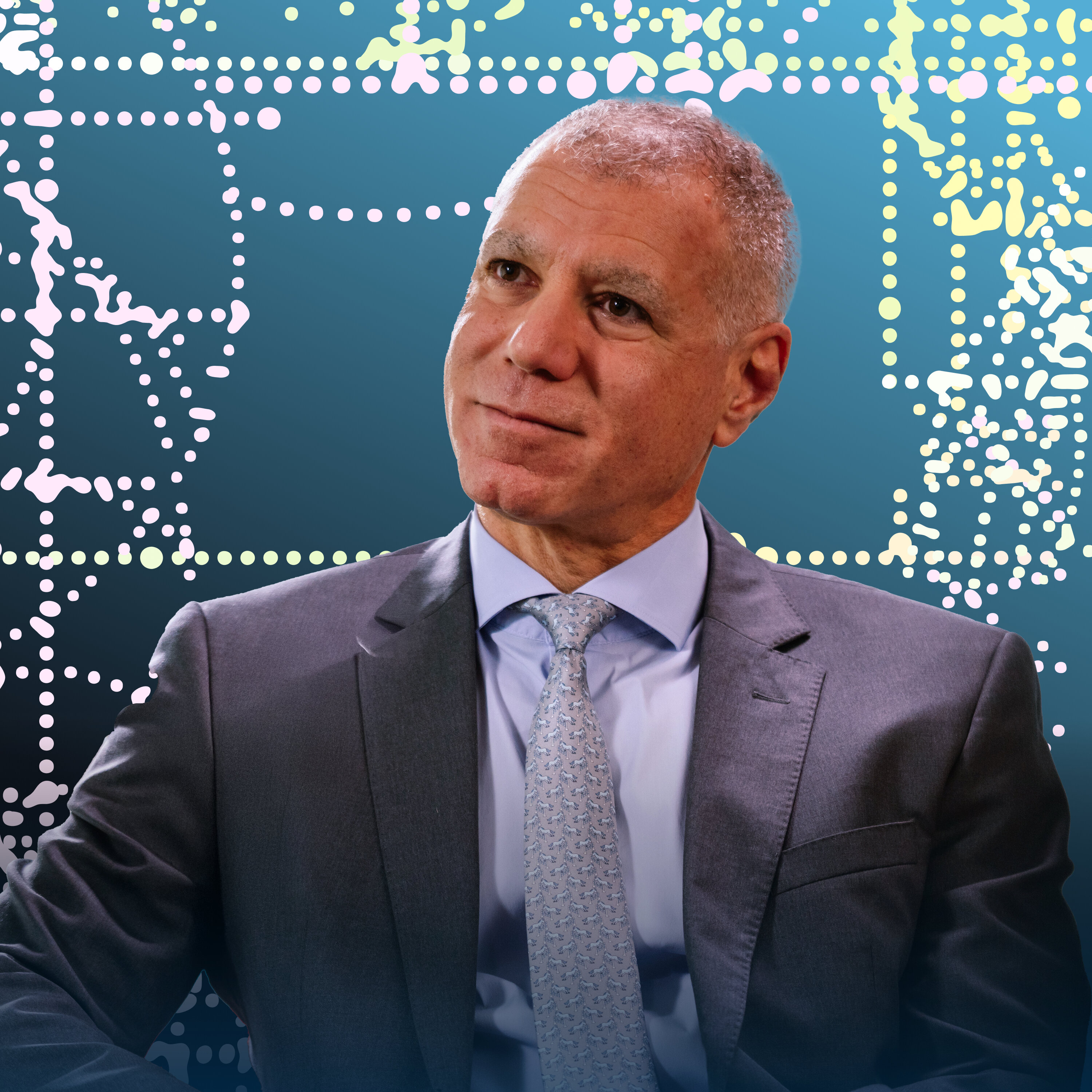
Leaders with Francine Lacqua
‘I Was Ruthless About Killing Complexity’: HSBC CEO on Rewiring the Bank
00:24:00
Loading summary
Transcript88 lines
- [00:00]
IBM Representative
So there's a lot of noise about AI, but time's too tight for more promises. So let's talk about results. At IBM, we work with our employees to integrate technology right into the systems they need. Now a global workforce of 300,000 can use AI to fill their HR questions, resolving 94% of common questions, not noise. Proof of how we can help companies get smarter by putting AI where it actually pays off, deep in the work that moves the business. Let's create smarter business IBM making Being
- [00:31]
Francine Lacroix
a small business owner isn't just a career, it's a calling. Chase for Business knows how much heart and effort go into building something of your own. Manage all your business finances, from banking to payments to credit cards, all in one place with Chase's digital tools. Plus access online resources designed to help your business thrive. Learn more@chase.com business chase for business make more of what's yours the Chase Mobile app is available for select mobile devices. Message and data rates may apply JPMorgan Chase Bank Naomi Member FDIC Copyright 2026
- [01:04]
Sonesta/Cincinnati Insurance Advertiser
JPMorgan Chase Co. Sonesta Travel Pass Makes traveling more rewarding Designed to help you get more out of every stay. Sign up@sonesta.com to enjoy instant savings, bonus points and valuable perks like early check in, late checkout, room upgrades and free stays. Over time with Sonesta TravelPass, every stay brings you closer to your next reward. Choose from more than 1100 hotels across 13 distinctive brands and unlock the best available rates when you book direct with Sinesta Travel Pass. Here today, Rome tomorrow. Join now@sonesta.com terms and conditions apply. Bloomberg Audio Studios Podcasts Radio News
- [01:51]
George Alhedri
I was definitely ruthless about killing the complexity and the drag in the bank. There is massive potential in this bank. Some of it needed to be unleashed. Things don't become complex by design, they end up becoming becoming complex by lack of focus. You wanted you needed we needed to be agile. So bringing the focus at the simplification will allow you to start dealing with it.
- [02:17]
Francine Lacroix
I'm Francine Lacroix and this is Leaders, the podcast that explores what drives the world's most influential people. Joining me this week is George Alhedry, the chief executive of hsbc, one of the world's biggest banks in the top job since September 2024. He's not shied away from the difficult decision, including a huge restructure and slashing thousands of jobs. And while some might consider his methods ruthless, HSBC's share price has responded positively. It's roughly doubled to a record High under Al Hadri's tenure. After an eventful first year, I wanted to catch up with him and really dig into those management decisions, understand how he's evolved as a leader, and hear how he's thinking about AI Georges, thank you so much for speaking to us.
- [03:07]
George Alhedri
Great to be with you, Francine.
- [03:08]
Francine Lacroix
We were counting how many languages you spoke. Eight.
- [03:13]
George Alhedri
So I've studied eight languages. Other people should judge if I speak them.
- [03:17]
Francine Lacroix
Do you have a love for languages?
- [03:19]
George Alhedri
I'm fascinated by languages because if you're fascinated by cultures, then you're fascinated by understanding how they think and how they express themselves. And that basically naturally links you to understanding their language.
- [03:33]
Francine Lacroix
Can you only be a good leader if you understand?
- [03:36]
George Alhedri
I think you have to definitely listen. And if you can listen in their own language, then even better.
- [03:43]
Francine Lacroix
You grew up in Lebanon?
- [03:44]
George Alhedri
Yes.
- [03:45]
Francine Lacroix
And what was your early childhood like?
- [03:47]
George Alhedri
I grew up in Lebanon. At age 18, I moved to France for my university. I then picked an internship in Germany, and by coincidence, I ended up doing an internship in banking. So I went back to Paris to finish my postgraduate degree in finance, statistics and economics, because I enjoyed it, of course. And I picked up my first job in Japan and then back to London at that time, up until the time where HSBC hired me. And that was exactly 20 years ago.
- [04:20]
Francine Lacroix
the time you wanted to be an engineer. So what attracted you to finance?
- [04:24]
George Alhedri
So I absolutely wanted to. To be an engineer. I studied as an engineer. And back to your question about languages. I had studied German for about 10 or 12 years at that time. So I want to do an internship in Germany. The only internship I managed to land was an internship on the trading floor in Frankfurt. So I took it and then I got addicted to it.
- [04:47]
Francine Lacroix
What did you like about it?
- [04:49]
George Alhedri
I like the pace, but at that time, remember, there's a lot of financial engineering. So you're still using a lot of your engineering skills. It still happens, right? And all sorts of, you know, it's highly transferable to finance. I liked the accountability. I liked the early responsibility you can get. So this is where it started.
- [05:08]
Francine Lacroix
Did you always want to be a leader? Were you a leader as a child?
- [05:12]
George Alhedri
It's difficult to define what a leader is, especially if leader as a child. If it's a matter of living up with high standards and high values and high integrity and being able to project that around you, then yes, started very early with me. But there are certain traits in leadership that really resonate with me. The first one is you lead by example. You walk the talk, you demonstrate that Things apply to you as they would apply to anybody else that you expect them to be applied to. And you don't never make an exception for yourself.
- [05:45]
Francine Lacroix
When you look at leadership, how does, I guess the young formative years give you a sense of who you will become?
- [05:52]
George Alhedri
You learn and you feel what is right and what is not right. And a number of people around you, including my direct family, my parents, kind of form part of how you think and what ethical standards you set yourself and the integrity by which you operate. And then sometimes around you you feel things aren't right or aren't fair. And it's very important to stand your line, to hold your line.
- [06:18]
Francine Lacroix
That's difficult. How do you do that?
- [06:19]
George Alhedri
It is difficult. Discipline. It's very important to hold the discipline and it's very important to think of yourself as your own brand. If you your own brand to remain the brand of integrity, then it's very important you stick to it.
- [06:34]
Francine Lacroix
I've heard, I mean some chief executives see it as, you know, they decided from very early on who they did not want to be. Is it choosing who you do not want to be or who you want to be, what's easiest?
- [06:45]
George Alhedri
I think both go hand in hand. It's very important to realize who you want to be and by comparison realize also what are the traits you absolutely do not appreciate, do not regard and therefore that you want to stay away from.
- [07:01]
Francine Lacroix
Talk to me about your, I guess your favorite pre CEO job at hsbc. Do you have a place in the world where you really kind of had to hone in on your leadership skills and understand the culture?
- [07:14]
George Alhedri
I've spent 20 years at HSBC now and there isn't a single geography on the planet where I spend that long. So there is a sense of belonging for me to HSBC that supersedes any kind of physical attachment to any place with hsbc. I don't know if I can count now however many dozens and dozens and dozens of times, probably hundreds to places like Hong Kong, you know, one of the two HSBC home markets, the Middle east where I spent many years for hsbc, specifically in Dubai, but also roving around the whole of the Middle East, Europe, of course the us, Asia as a whole. It's just amazing the opportunities you have to get there. And every time you're there, you spend time, you create more connections, you have an even deeper understanding. If I ask, I bring 10 people in the room and I ask them how many geographies they worked for for HSBC, you would find people who tell you more than 10. That kind of experience frankly is unique.
- [08:14]
Francine Lacroix
But XS, if you look at for example, some of the Wall street banks, they're more cutthroat but they pay their people a lot more. Is that something that you worry about?
- [08:21]
George Alhedri
I mean it's very important that we reward our people fairly, we reward our people competitively and we reward performance. But that's not the only component. The other component is what is the environment in which operate? Who are their colleagues, their bosses? What is their purpose? Who are they serving, why they're serving them? Can they be their true selves? Can they operate with the highest integrity standards as they wish to all of that kind of form part of the value proposition HSBC offers its employees. And this is what makes the kind of equation collectively work for all our colleagues.
- [08:57]
Francine Lacroix
After the break, we discuss how George Alhedri approached HSBC's biggest restructure in a decade.
- [09:06]
IBM Representative
The thing about AI for business, it may not automatically fit the way your business works. At IBM we've seen this firsthand. But by embedding AI across hr, IT and procurement processes, we've reduced costs by millions, slashed repetitive tasks and freed thousands of hours for strategic work. Now we're helping companies get smarter by putting AI where it actually pays off. Deep in the work that moves the business, lets create smarter business.
- [09:35]
Sonesta/Cincinnati Insurance Advertiser
IBM if you follow markets, you know the value of long term thinking. You plan, you diversify, you prepare for volatility. But in life, even the best strategies can't prevent every bad day a fire, a loss, a disruption that demands immediate attention. When that happens, what matters isn't just what you planned. It's who shows up. That's where Cincinnati Insurance comes in. For more than 75 years, they've helped individuals and businesses navigate life's toughest moments with care, expertise and personal attention. Together with independent agents, Cincinnati Insurance focuses on relationships, not transactions. Their approach is grounded in experience, follow through and trust built over time. Bad days happen. And when they do, you deserve an insurance partner who understands risk, respects what you've built and is ready to help you move forward. The Cincinnati insurance companies. Let them make your bad day better. Find an independent agent@cinfin.com support for the
- [10:37]
Public Investing Advertiser
show comes from public. Public is an investing platform that offers access to stocks, options, bonds and crypto. And they've also integrated AI with tools that can assist investors in building customized portfolios. One of these tools is called generated assets. It allows you to turn your ideas into investable indexes. So let's say you're interested in something specific like biotech companies with high R and D spend small cap stocks with improving operating margins or the S&P 500 minus high debt companies. Chances are there isn't an ETF that fits your exact criteria. But on Public you just type in a prompt and their AI screens thousands of stocks and builds a one of a kind index. You can even backtest it against the S&P 500. Then you can invest in a few clicks, go to public.com market and earn an uncapped 1% bonus when you transfer your portfolio. That's public.com market ad paid for by Public Holdings Brokerage Services by Public Investing member FINRA SIPC Advisory Services by Public Advisors SEC Registered Advisor crypto services by ZeroHash sample prompts are for illustrative purposes only, not investment advice. All investing involves risk of loss. See complete disclosures@public.com disclosures
- [11:51]
Francine Lacroix
everybody has to make decisions, big or small, but not everyone runs a bank with 200,000 employees. When El Hadri took over as CEO, he really wasted no time making his mark, ushering in a big restructure and laying off thousands of employees. So I was curious to understand how he thinks about company wide challenges and what gave him the courage to move so fast and so decisively. So Josh, talk to me about when you get the call that you've been appointed Chief Executive. What's your first thought?
- [12:24]
George Alhedri
Of course the first thought is to be humbled and honored for being given this fantastic responsibility. But what really mattered for me is what I can do for this bank, not who I was or what my title was in this bank. Now it so happens there's a lot you can do as a group CEO in terms of affecting change or affecting bringing potential to the bank. So it was therefore the great opportunity for me to be able to do what I really set out to do and what I had the full support of the board to do.
- [12:57]
Francine Lacroix
You moved fast. Does the Chief Executive need to move fast to say, right, this is the change and this is what we need to be and is it all on you or did you govern by consensus?
- [13:07]
George Alhedri
A few things on that Francine. The first one is there is massive potential in this bank. Some of it needed to be unleashed, it needed to be unlocked. And some of that unlocking of the potential had to go through re engineering the bank, rewiring the bank so that we can unlock this potential. Then having been in the bank 20 years, operating in a number of geographies and businesses and functions myself, I've built a lot of experience and a very Large network of colleagues who have been also feeding their input and their concerns, which kind of forms a big set of action book if you want. And then third, very importantly, I was already sitting at the board as a group CFO before I took the co role and all these conversations I was having with my board. And if you have the support of the board, you of course have the kind of right to be able to act quickly.
- [14:02]
Francine Lacroix
But what was the most difficult thing about that first restructuring plan? Because you have to get rid of units that maybe you're attached to. Having worked here for so long, there's people that you like that maybe you've had to move around. Again, was it intellectual or, or are you ruthless about it?
- [14:16]
George Alhedri
I was definitely ruthless about killing the complexity and the drag in the back. The most difficult part is when you have to separate with some of your colleagues. I think we've been very thoughtful, we've been very considerate. We've done it hopefully the right way and the most respectful way for the benefit ultimately of the firm and its customers. You needed, we needed to be agile. We needed to be ready for the modern world. And to be that, we needed to be simple. And therefore everything then drives what decisions you take from that mission statement.
- [14:49]
Francine Lacroix
How did the bank become so complex? And again, this is something that actually most organizations have to face as they grow. I guess there's various factions or a lot of companies actually could just become much more simple and simplified. What did you see?
- [15:04]
George Alhedri
Entropy is a feature. Entropy tends to increase, which means complexity, if you do nothing about it, tends to increase rather than decrease. So things don't become complex by design, they end up becoming complex by lack of focus. So bringing the focus at the simplification will allow you to start dealing with it. That's the first observation. Second observation, you have to be extremely methodical. What has created the complexity? How can it be addressed methodically? Try to identify ways to be simple. Some of the ways to be simple is to decide not to do certain things. And this is why we exited a number of activities. The third thing is when you're taking structured decisions, you have to start from the top down. You can't take structured decisions from the bottoms up. This is why the first decision structurally I've taken relates to simplifying the group operating committee. We moved from more than 20 people to about 12. More importantly, we moved from 0% single accountability. Everything had dual or multiple accountability to now about 60% of our revenue is generated under single accountability. So that's important. And then the last Thing, Francine, is to be patient. We're not solving simplification overnight. It's going to be a journey, and we have to be relentless at that journey, quarter after quarter, month after month, until we get the desired outcomes. And that journey is still on, like we're not there yet.
- [16:31]
Francine Lacroix
But as a big chief executive of a big bank, you basically have the shareholders that you need to please. Simplification maybe helps with them understanding what the bank wants to become. You have your clients, and then you also have the employees. How difficult is it to juggle these three masters?
- [16:49]
George Alhedri
So there is one consideration which, fortunately, the three masters align on is being best at what you do. Your customers want you to be the best at what you serve them with. Customers tick, your shareholders will pay you for what you're best at doing. They won't give you valuation for something that you're average. They will give you valuation for where you really command, where you're an authority in being able to provide that service or that product in that market. So the shareholders align to be the best, and then our colleagues want to win. Our colleagues are in a competitive landscape and they want to win. And they basically thrive when they're the. When we're delivering the best we can and when we're delivering best outcomes, and we're basically the best at what we do. So, you know, you take this as a guiding thread and you say, let's focus on that. Focus where we can grow in areas where we're the most competitively advantaged. And then everybody aligns colleagues, clients and shareholders.
- [17:45]
Francine Lacroix
Is that why you learned Mandarin? You want it to be the best for hsbc?
- [17:49]
George Alhedri
Yeah, I don't think I'm the best at hsbc speaking Mandarin. That's far from it.
- [17:53]
Francine Lacroix
But you're the first CEO to speak Mandarin.
- [17:55]
George Alhedri
Possibly, yes. I think what is important is to gain access to understanding the culture in which HSBC operates. And obviously one of the very important cultures within HSBC as a whole, but that is probably one of the least understood for, say, people living in, you know, in London, like I'm living now, is understanding the Chinese culture. And, you know, if you really want to understand the Chinese way of thinking, the way of reasoning, the way of negotiating or engaging or presenting simply, then there is no better way than kind of put the pain in trying to learn the language and see how it's done in the language.
- [18:36]
Francine Lacroix
It was quite bold because you took a sabbatical for it. Was it a difficult decision or did you automatically know this was the right way to also service Your clients first.
- [18:44]
George Alhedri
I knew if I really wanted to make a leapfrog in my early starts in Mandarin, it needed much more time than I could give it. Now I'm proud to say I still take lessons. Whether I'm progressing or not, I don't know. But I'm still taking lessons. I'm maintaining that journey. But there needed to be a leapfrog at the start, which a sabbatical has helped.
- [19:03]
Francine Lacroix
Was it for yourself or was it for the bank? Because it's interesting. It was Mandarin and nothing. Something else.
- [19:09]
George Alhedri
No. Well, look, I mean, I've taken six month out and there are a number of things I achieved during those six months, some of them personal, some of them professional. But yes, it was full on.
- [19:20]
Francine Lacroix
When we come back, George Al Hadri tells me how artificial intelligence is reshaping HSBC and the future of banking.
- [19:31]
IBM Representative
The thing about AI for business, it may not automatically fit the way your business works. At IBM, we've seen this firsthand. But by embedding AI across hr, IT and procurement processes, we've reduced costs by millions, slashed repetitive tasks and freed thousands of hours for strategic work. Now we're helping companies get smarter by putting AI where it actually pays off, deep in the work that moves the business. Let's create smarter business. IBM.
- [20:00]
Sonesta/Cincinnati Insurance Advertiser
If you follow markets, you know the value of long term thinking. You plan, you diversify, you prepare for volatility. But in life, even the best strategies can't prevent every bad day, a fire, a loss, a disruption that demands immediate attention. When that happens, what matters isn't just what you planned. It's who shows up. That's where Cincinnati Insurance comes in. For more than 75 years, they've helped individuals and businesses navigate life's toughest moments with care, expertise and personal attention. Together with independent agents, Cincinnati Insurance focuses on relationships, not transactions. Their approach is grounded in experience, follow through and trust built over time. Bad days happen. And when they do, you deserve an insurance partner who understands risk, respects what you've built and is ready to help you move forward. The Cincinnati insurance companies let them make your bad day better. Find an independent agent@cin fin.com support for
- [21:02]
Public Investing Advertiser
the show comes from Public. Public is an investing platform that offers access to stocks, options, bonds and crypto. And they've also integrated AI with tools that can assist investors in building customized portfolios. One of these tools is called Generated Assets. It allows you to turn your ideas into investable indexes. So let's say you're interested in something specific, like biotech companies with high R and D Spend small cap stocks with improving operating margins or the S&P 500 minus high debt companies. Chances are there isn't an ETF that fits your exact criteria. But on Public you just type in a prompt and their AI screens thousands of stocks and builds a one of a kind index. You can even backtest it against the S&P 500. Then you can invest in a few clicks, go to public.com market and earn an uncapped 1% bonus when you transfer your portfolio. That's public.com market and paid for by Public Holdings Brokerage Services by Public Investing member FINRA SIPC Advisory Services by Public Advisors SEC Registered Advisor crypto services by ZeroHash sample prompts are for illustrative purposes only, not investment advice. All investing involves risk of loss. See complete disclosures@public.com disclosures
- [22:15]
Francine Lacroix
the future is AI, and in our conversation Al Hadri made that very evident. But bringing colleagues along for the ride is one of his new leadership challenges. Talk to me about in simple terms, right? How you see the bank in five years.
- [22:33]
George Alhedri
The world is moving fast. We need to move fast. Our customers are moving fast. We need to move fast. Their needs today will be different tomorrow. Their goals today will be different tomorrow. And we need to be continuously adapting to their evolving needs and their evolving goals, right? There are a few key components that can achieve this. Most importantly, the first component is the human touch. Okay, we're still in a very much believer in the model where there'll always be a person to talk to. So we invest in our relationship management, we invest in our people skills and capabilities. We invest in our people simply so
- [23:09]
Francine Lacroix
we're not being replaced by AI.
- [23:11]
George Alhedri
So that's the second component is we absolutely need to be innovation ready and embrace it and enable our capabilities and be able to embrace a number of emerging payments through blockchain or tokenized deposit, all of which we launch, by the way. But you know, that's an evolving world. But also being Genaid in particular, I mean AI has been with us for 15 years, but Gen AI is clearly bringing something new to the equation. Now we have more than 100 cases of which about half of them are already live in production, that are transformational and they're going to change the way we as humans operate. And while we as humans will not be replaced by AI, if we don't know how to embrace it and upskill ourselves using it, we will become obsolete. So this is why my call to our colleagues has been to bring all of them along the journey of how can we Best use Genai opportunities because for those who don't use them there is a real risk that they will be displaced. But those who will use them are going to be part of the future.
- [24:20]
Francine Lacroix
But if you're a young kid today and you want to get into banking, what do you study?
- [24:24]
George Alhedri
Let me try to answer it with two prong approach. The first one gen AI specific, right? We now rolled to 170,000 of our colleagues internal productivity tools that can materially improve their capabilities of reading documents, reading emails, writing documents, emails querying, challenging thought processes. 170,000 of our employees, I mean soon all the way to the 200 plus thousand employees. Of course I will be monitoring usage, I'll be monitoring super usage. Those will be the most influencing among their colleagues to drive the utilization. But utilization is not optional because that's how people remain very relevant in the future workforce five years down the road. But we're using Genai in wealth, we're using Genai in markets, we're using Genai in contact centers, we're using Genai of course in technology. Now 30,000 of our technologists, engineers are enabled with Genai. The speed at which we're able to patch for say code weaknesses or kind of vulnerabilities is 10 times faster already now than was the case last year. 10 times now. We're not talking in 12 months in 12 months. We're not talking some productivity in five years, we're talking productivity already here. This is hugely transformational so you can imagine how important it is Now I go back to the first part of your question, Francine is what are the skills that are needed for banks? I would say there is no one particular skill that's going to be critical but it is going to be the ability to learn because you can come in the bank coming from an engineering background, from a technology background, from an accounting background, but once you're in the bank, your career, the customer's expectation are such that you're going to have to continue studio art. And if you think you know it all, then there is no place for those in an evolving landscape. Today, the most important learning capability is how to best embrace Gen AI and innovation in general.
- [26:31]
Francine Lacroix
Are you surprised that these tariffs and trade barriers that have been erected really in 2025 haven't had that much of a material impact?
- [26:40]
George Alhedri
So a couple of things here, Francine, that are interesting. The first one is tariff in and of themselves aren't a new feature of global trade. They've always was forms of tariffs. What was More new in 2025 is the speed at which both tariffs have been erected, but also deals have been negotiated to reduce tariffs or remove tariffs. So that was kind of the new feature. What's also important to note is that yes, trade found its way and we've seen trade patterns between Asia and the Middle east or within Asia or to some extent also between Asia and Europe that have outgrown some of the corridors that have taken, you know, that, that have been slower in terms of trade growth or that have taken a kind of setback in terms of trade growth. What's most important with these reconfiguration of trade patterns is that based on our internal research, we believe the addition to GDP that these new trade patterns within Asia will bring to Asia will three times more than offset the loss of GDP that will be due to the reduction of trade with the us. So there is clearly value creation when we see Asia buying Asia and these trade patterns and these trade corridors grow because they're driving not only trade, but they're driving fdi, they're driving employment, they're driving domestic growth as much as it is trade growth.
- [28:01]
Francine Lacroix
This year, the next couple of years seems to be much more complicated because of geopolitics. You have this massive fight between the US and China, Europe somewhere in the middle. The UK has to find its footing. How difficult is it to navigate geopolitics as HSBC CEO?
- [28:16]
George Alhedri
So look, there is always a guiding north star in managing international kind of relations is what do our customers need from us? Because at the end of the day, whatever we're doing, we're doing it because we have customers asking us to help them with or to deliver it for them. So. Well, as long as you believe on this planet we will have loads and loads and loads and loads of international customers who are looking for supply chains around the planet, who are looking for resilience in their supply chains around the planet, who are also looking for consumer markets for their product and services around the planet to scale their capabilities, then HSBC has a critical role to play.
- [29:07]
Francine Lacroix
All right, rapid fire. Your top tips for holding highly effective meetings.
- [29:13]
George Alhedri
Make decisions. A poor decision is always better than no decision. Because you can always change a poor decision and align it and adapt it. No decision leads to paralysis.
- [29:24]
Francine Lacroix
How do you overcome self doubt or imposter syndrome?
- [29:27]
George Alhedri
Always go to first principles. What is your mission? And is what you're doing aligned to your mission? There are various things leadership principles I live by. An important one is great leaders build better leaders. Am I on that journey? Do I have great leaders around me that I'm helping build.
- [29:44]
Francine Lacroix
What honest advice do you try to impart someone you identify with having great potential?
- [29:51]
George Alhedri
Enjoy it. You can't be too worked out and knots around things. It's very important to take always step back, a deep breath and just do it the way that you feel you're enjoying it because you'll be much more impactful.
- [30:05]
Francine Lacroix
I love that. Have fun along the way, right? Josh, thank you so much for your time.
- [30:08]
George Alhedri
Thank you very much, Francine.
- [30:16]
Francine Lacroix
Thanks for listening to this episode of Leaders with Francine Lacqua the Podcast. If you like our show, please rate, review and subscribe now. We've been getting a lot of great feedback back on LinkedIn and on Instagram, but if you could leave a rating and a note wherever you're listening, it would really help more people find the show. And if you want to watch the show, also please Find us on YouTube. This episode was hosted by me, Francine Lacqua. It was produced by Atalandi Dixon, Summer Saadi and Moses Andam. Amy Keane is the executive producer of Talk Podcasts Sound, designed by Blake Maples and Aaron Casper. Special thanks to George El Hadri and the team at hsbc.
- [31:09]
George Alhedri
The news doesn't stop on the weekends.
- [31:11]
Francine Lacroix
Context changes constantly and now Bloomberg is the place to stay on top of it all.
- [31:16]
George Alhedri
Hi, I'm David Gura. Join us every every Saturday and Sunday for the new Bloomberg this Weekend.
- [31:21]
Francine Lacroix
I'm Christina Raffini. We'll bring you the latest headlines in depth analysis and big interviews, all the stories that hit home on your days off. And I'm Lisa Mateo. Watch and listen to Bloomberg this weekend for thoughtful, enlightening conversations about business, lifestyle, people and culture.
- [31:36]
George Alhedri
On Saturday mornings, we put the past week's events into context, examining what happened
- [31:41]
Public Investing Advertiser
in the markets and the world that
- [31:43]
Francine Lacroix
on Sunday we speak with journalists, columnists
- [31:45]
Sonesta/Cincinnati Insurance Advertiser
and key political figures to prepare you for the week ahead.
- [31:49]
Francine Lacroix
Join us as soon as you wake up and bring us with you wherever your weekend plans take you.
- [31:53]
George Alhedri
Watch us on Bloomberg Television, listen on Bloomberg Radio, stream the show live on the Bloomberg Business app, or listen to
- [31:59]
Francine Lacroix
the podcast that's Bloomberg this weekend. Saturdays and Sundays starting at 7am Eastern, make us part of your weekend routine on Bloomberg Television Radio and wherever you get your podcasts.