← Leaders with Francine Lacqua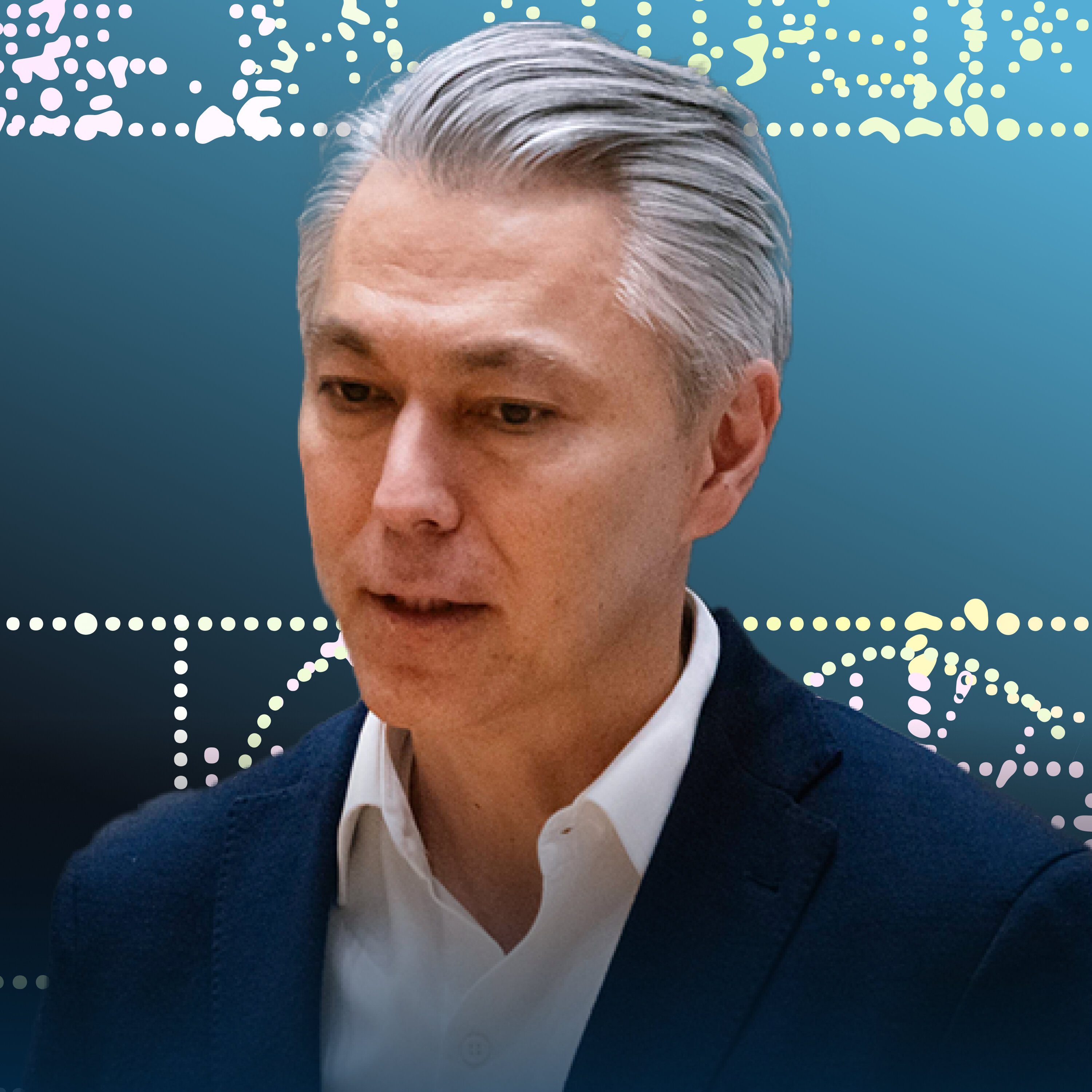
Leaders with Francine Lacqua
Leading Through Uncertainty: Mike Henry's Final Lessons as BHP CEO
00:24:03
Loading summary
Transcript93 lines
- [00:00]
Francine Lacqua
We're living in a time where change isn't just constant. It's complex. It's nonlinear, accelerated, volatile and interconnected. In other words, a navi world. In a navi world, change isn't something you can simply react to. It demands that you respond, adapt and lead. So the question is, will you shape the future or be shaped by it? Today's episode is brought to you by ey. With a full spectrum of services and solutions, EY and EY Parthenon teams can give you the confidence to shape what's next. They help you unlock value by reimagining your business and realize transformation across the entire enterprise. Together, they're all in to help you shape the future with confidence. Begin your transformation journey today by visiting ey.com transformation introducing B of A Rewards
- [00:52]
Bank of America Announcer
A new way to reward your every ambition it all starts with a Bank of America checking account and grows from there. You get cash back deals on brands you know and love, plus a credit card rewards bonus, helping you earn more rewards on things you buy every day. Join B of A Rewards today for rewards tailored to your lifestyle. What would you like the power to do? Bank of America Open or enroll your account@bankofamerica.com B of A Rewards bank of America Corporation. All rights reserved.
- [01:18]
Chase Sapphire Announcer
When you own your own business, you own every decision. Now own the card that rewards you for it. Chase Sapphire Reserve for Business is a pay in full card that elevates your travel experience and offers premium benefits that will take your business to the next level. Sapphire, Reserved for business offers 8x points on all purchases through Chase Travel, 3x points on social media and search engine advertising, airport lounge access and more. Chase Sapphire Reserved for Business it's the card that gives back all you put in. Learn more@chase.com ReserveBusiness Chase for Business make more of what's yours. Accounts subject to credit approval restrictions and limitations apply. Cards are issued by JPMorgan Chase Bank NA member FDIC Bloomberg Audio Studios Podcasts Radio News.
- [02:15]
Mike Henry
If you look back at the history of not just bhp, big companies in the sector, one of the lessons is that when a company gets boxed into a corner where it has to pursue M and A, that leads to all sorts of untold problems. I know how bad things can get when people chase after something. Or if you get worried that failing or being rejected on a transaction becomes a reputational issue, you end up in very deep water then and cause yourself all sorts of problems.
- [02:44]
Francine Lacqua
I'm Francine Lacqua and this is Leaders, the podcast that explores what drives the World's most influential people. Well, this week's guest is Mike Henry, the outgoing chief executive of bhp, the world's largest mining company. It's really a pivotal moment for the industry. Global demand for critical minerals is soaring thanks to the energy transition and the AI boom. And major producers like BHP are actually finding it challenging to keep up. Mike Henry has led the company through a particularly active and transformative period, spinning off its petroleum business, collapsing its dual listed structure and giving the green light to the vast Janssen Potash project in Canada. So we get into all of those choices in our conversation, which we had back in January before he announced he was stepping down. We talk about leading a mining giant at such a consequential time and what it's like when big acquisitions don't go your way and how he's thought about succession.
- [03:52]
Mike Henry, thank you so much for speaking to Bloomberg.
- [03:54]
Mike Henry
Thanks Fraseen. It's great to be here.
- [03:56]
Francine Lacqua
We're in a peculiar moment for the industry because so much is changing. Do you feel like you're in a different moment?
- [04:03]
Mike Henry
Different, but good different, but I've spent my whole career in resources and for most of that time nobody really wanted to talk to miners. It was not seen as being an industry of today, perhaps, but what we've seen over the past three or four years is this awakening to the importance of metals and minerals. You know, you've got policymakers now trying to figure out how do they go about securing critical mineral supply chain resilience, is there going to be enough copper, how do they go about facilitating that? And so mining has gone from a back burner industry to now being front and center of some of the big conversations that are happening globally.
- [04:35]
Francine Lacqua
How do you respond to being in this moment? Is it a lot of pressure? Do you feel responsibility or is it only with hindsight that you realize how crucial this period will be?
- [04:44]
Mike Henry
No, no, no. So I and others definitely recognize how crucial this period is. And to the extent that I feel pressure, it's well more than offset by the opportunity. If you look at copper, for example, copper demand is going to almost double over the next 25 years because it's needed for the broader economy, it's needed for the energy transition, the AI revolution. And yet copper is becoming harder and harder. People are now cottoning onto that and they're saying, well, wow, if we don't do anything, we're going to see super high copper prices or shortages at given times. And so the policymakers now weighing in with industry to figure out how do we Go about ensuring that that's not what happens.
- [05:19]
Francine Lacqua
Can you tell me about a meeting where you felt all of that coming together?
- [05:24]
Mike Henry
A fellow CEO and myself were called into the Oval Office to meet with the President and the Secretary of Interior, Secretary Bergam. Because we have a specific copper project that we're trying to develop in the US. This project could supply 25% of the US's copper demand for decades to come. Having that level of attention on our to that level of support, what that symbolizes then for other governments has been such a big difference from where we were a few years ago. Yes, it creates uncertainty pressures at times, but big picture, this is a net positive for the sector.
- [05:53]
Francine Lacqua
Mike, tell me a little bit about how you transform BHP.
- [05:56]
Mike Henry
First of all, I've been with BHP since 2003, became CEO right at the beginning of 2020 and within three months we were into the middle of COVID And so you were asking earlier about whether I feel pressure. The pressure of today is nothing compared to the pressure of the big decisions that we all needed to take in the face of the uncertainties that Covid brought. But as the impact I and the team have had on the organization over the past six plus years, we've reshaped the BHP portfolio. So at the time we had about 80% of our EBITDA being generated by combination of oil and gas, thermal coal, coking coal and iron ore. So steel making raw materials in a world where over the long arc of time we should expect the world to decarbonize and we're going to see peak steel in China beyond which we'll start to see the iron ore market shrink. So we needed to make sure that we had a portfolio that was fit for the future. We've spun out our oil and gas division, we've halved the size of our coal portfolio. Now only focus on the best coals for steel.
- [06:52]
Francine Lacqua
Making you change the listing.
- [06:53]
Mike Henry
We collapsed the listing into one. We had a bit of a funny structure, was called a dual listed company, two primary listings, two head offices and so on. Collapsed that, that was a big value unlock for shareholders. And we've grown markedly in copper and potash. We've grown copper 30% over the past three years. We're the world's largest copper producer. In addition to that we've improved operational excellence. We've gone from being a laggard in the sector to being best in class from an operational perspective.
- [07:16]
Francine Lacqua
Janssen Right. I mean did you feel the need to go at speed? Who you were listening to? Was it your gut or other people.
- [07:22]
Mike Henry
I've learned actually to rely more on gut over time. But these were all very well thought through. You don't trigger an investment decision the size of Janssen on gut alone.
- [07:31]
Francine Lacqua
Did you feel the need to do
- [07:32]
it in one year?
- [07:33]
I'm often told that actually when you become chief executive, you have a short amount of time to make a difference that people will accept because then it gets lost.
- [07:41]
Mike Henry
So I've never been one to coast in micro. Whatever role I've gone into, you have to bring energy to it. I also believe though, coming back to your point, that there's never a better time to drive change when everything's up in the air a little bit. I had a very clear view of what was going to help drive value for the company over the next 20 or 30 years. We were then able to trigger a series of decisions. Actually on the same day we announced that we were collapsing the corporate structure. We were spinning out oil and gas division, we were selling down parts of our coal portfolio and we were investing in Janssen. The first phase alone. Biggest ever capital project for bhp.
- [08:13]
Francine Lacqua
A lot of shareholders could have pushed back against these individually, but by the fact that you bundled them, everything was like, okay. Was that a strategy to communicate?
- [08:23]
Mike Henry
At the same time, we knew all of the things that we wanted to do. We also believe that by being clear with the market, particularly around the spin out of oil and gas and the investment into potash, that we could make it clear to our shareholders how we were thinking about the shaping of the portfolio and why one decision needed to be seen in tandem with the other decision. For sure.
- [08:41]
Francine Lacqua
Is that how you get your nickname? Meticulous Mike?
- [08:46]
Mike Henry
So sometimes your reputation outgrows you. I am somebody who pays attention to detail, high sense of accountability, and I think maybe that's what sits behind the moniker.
- [08:57]
Francine Lacqua
Do you think when we talk about this new world order, is it being overstated or understated?
- [09:01]
Mike Henry
I certainly don't think it's being understated. So things are definitely more uncertain and more volatile. So it's worth pointing out that in terms of our sector, the decisions that we take, these are 10, 20, 30 year decisions. And over that time horizon, we know for sure that demand for some commodities is going to increase and that then informs our selection about which commodities we want to be involved in. Now how you operate in that environment, of course that's informed by all the turmoil that we see in the world around us.
- [09:33]
Francine Lacqua
Can you talk to me about how difficult is that is to make decisions where you actually don't know where this new world order ends up.
- [09:39]
Mike Henry
It's increased the need for us to be planning through scenarios. So rather than trying to predict a specific individual future outcome in 20 years time, we've continued to reinforce our ability to develop different scenarios that we then test our decisions against. And one of the things that will allow us to be successful is making decisions that are as resilient as possible under a range of different scenarios. It is an added complexity, you know, creates higher stakes in some instances to the decisions we take. But this is the world that we have and as I said earlier, on a kind of net basis, this is a real opportunity for the sector.
- [10:18]
Francine Lacqua
After the break, Mike Henry tells me why he has no regrets over walking away from BHP's highly publicized and ultimately failed acquisition bids for Anglo American. The mining industry is in a major consolidation phase with many players pursuing M and A to beef up their metals portfolios. While BHP is no different, their success has been mixed. Mike Henry tried and failed twice to acquire Anglo American. Not only did they say no, the British mining company is teaming up with BHP rival Tech. With all this happening in the public arena, I wanted to know how Henry handled the bid, whether he had any regrets and how he stays focused in the face of rejection.
- [11:08]
You tried to buy Anglo American twice?
- [11:10]
Mike Henry
We did, yes, but failed.
- [11:11]
Francine Lacqua
What did you learn from those failures?
- [11:13]
Mike Henry
So why did we pursue Anglo American in the first place? It's because we like copper. We've grown in copper over by 30%. We've developed four big internal copper growth options. But we're BHP. We have the ability to do even more. We thought that there was a great opportunity to unlock value for both sets of shareholders through bringing the two companies together. It wasn't to be the first time around. Second time around we were faced with a decision of well we of course for all the same reasons we engaged the first time around. Do we re approach, see if there's any more interest now given that they had progressed some of their strategy or do we hang back for fear of being told no again? I would back us any day of the week to do the bold thing which is to re approach. And in both times we show discipline. I know how bad things can get when people chase after something money wise.
- [12:02]
Francine Lacqua
Money wise so badly that you're prepared to buy it anyways or if you
- [12:06]
Mike Henry
get worried that and failing or being rejected on a transaction becomes a reputational issue, you end up in very deep water then and can cause yourself all sorts of problems. So we went into both approaches with a Clear sense of we will only do something that we believe creates value for BHP shareholders and if we can't see that, then we'll step away.
- [12:27]
Francine Lacqua
How did it feel like at the time?
- [12:28]
Mike Henry
You approach those things with a sense of optimism, a sense of pressure, but coming away from it. Momentary disappointment, but alongside that, the confidence that we've done the right thing by way of shareholders and confident that we've made the right decision.
- [12:45]
Francine Lacqua
How did you manage through it? So you still have staff that you need to speak to, morale that you need to boost or at least keep steady.
- [12:52]
Mike Henry
We've got such a professional team and so it's perhaps a little bit less disruptive inside than people might think. Looking outside in, people are very clear that they like the boldness. So the fact that BHP is willing to back itself and go after opportunities when it spots them, that's motivating for people. They also like the fact that we are super disciplined and that we're confident enough in ourselves and our existing strategy and our internal growth options to back away if we don't think that we can create value for shareholders.
- [13:23]
Francine Lacqua
How much time do you have to spend on that? So was it all consuming?
- [13:25]
Mike Henry
No, unfortunately, when you run a business like bhp, you have to be able to walk and chew gum at the same time. Now, now I do have a team that is very high performing. These are all big leaders in their own right. As CEO, I don't need to spend a large proportion of my time getting in and solving day to day business problems. The business is running so smoothly and when problems do arise, the team's on it on their own. I continue to need to tend to other relationships outside of that particular focus. So it increases in the amount of time that you have to take. But it can't become all consuming for the CEO.
- [13:58]
Francine Lacqua
After the first bid that didn't go through, did you already know that you'd go after it a second time if the opportunity was there?
- [14:04]
Mike Henry
Not at all. In fact, the board and I have been very, very deliberate about crafting a BHP strategy and that would never be dependent on M and A. If you look back at the history of not just bhp, big companies in the sector, one of the lessons is that when a company gets boxed into a corner where it has to pursue M and A, that leads to all sorts of untold problems. And so we've been very deliberate about saying first and foremost we have to be able to get more out of the resources that we have and that then enables, enables us to be quite discretionary about whether we Want to pursue an opportunity. So when we backed away the first time we said our prime focus is this when we spotted a further opportunity or where the question arose for whether we should approach again, it was the same attitude. We don't have to, but because we believe there's value to be created for shareholders, it's almost incumbent on us to make an approach. If there's not a meeting of minds, then fine. We know we've got a great strategy in our own right, great growth ahead of us in the right commodities, so we'll stay focused on that.
- [15:04]
Francine Lacqua
Do you think there was a way of getting it? You didn't want this happening African operations, right? Of Anglo. But had you spent more time in reassuring them or spending more time with the Australian shareholders, maybe something could have moved more in your direction. Is that fair criticism?
- [15:17]
Mike Henry
We will never know. I'm very comfortable with the way that we attempted the original structure. If we had have structured it differently, would that have made a difference? Maybe, but that would have run up against the main objective here, which is to create value for BHP shareholders. So I don't have any regrets over having approached the way we approached the first time around or the second time time around.
- [15:39]
Francine Lacqua
What's the right way of approaching some of these transformational deals? You have to have like a clear strategy and I don't know how you would describe it.
- [15:47]
Mike Henry
Well, you have to be very clear, clear thinking. And if you think about the Anglo deal, it was wholly consistent with the strategy that we laid out as a company, the commodity that we wanted to grow in, how we thought about M and A, the sort of assets that we were willing to acquire. Where you get into trouble is if you're not clear on what your strategy is or you start chasing after a deal to get a deal done or because you don't alternatives.
- [16:12]
Francine Lacqua
So you almost have to set that strategy as soon as you take over.
- [16:16]
Mike Henry
You don't want to be setting strategy in the middle of a transaction, that's for sure.
- [16:20]
Francine Lacqua
Some chief executives change strategy. Why do you think that is?
- [16:23]
Mike Henry
Well, when a business isn't performing well, or when the world is changing in a way that demands a rethinking of strategy, of course then CEO should get in and rethink it. But with ours, we remain confident in the strategy that we have and in the commodities that we've chosen.
- [16:39]
Francine Lacqua
Chosen? That's bold, isn't it?
- [16:41]
Mike Henry
It's kind of like Francine, you have to be bold in these roles. It's kind of an informed boldness. Our sector is such a Dynamic important sector that if you're not bold, that's where companies go off course or they fail over time. And so when I stepped into role I told myself I needed to be bold.
- [17:03]
Francine Lacqua
But I also like the fact that it's no regrets because you could procrastinate about things that you could have done differently or you should have done.
- [17:10]
Mike Henry
So we faced, this was a key point that we faced in the second approach to Anglo. Some people would say, well, do you really want that to be seen in public again the second time around? Of course you don't want it. But when faced with that choice of well, do we take that on but do what we believe is right by shareholders by re approaching and have that level of boldness and confidence or do we stay away from it for fear of looking like another failure? We back ourselves.
- [17:35]
Francine Lacqua
Industry rivals or industry players are now actually coming together. If you were to be number two mining company in the world instead of number one, does that make a difference?
- [17:45]
Mike Henry
Makes no difference whatsoever. I don't worry at all about losing the bragging rights of being the biggest miner by market capitalization. Both because it doesn't actually lead to greater shareholder value in my view. But secondly, I know that the minute that we get into a headspace that says we have to chase something just to be number one, that's where things become much, much riskier. It's never a good idea to pursue a transaction because somebody else is pursuing a transaction.
- [18:11]
Francine Lacqua
When we come back, I ask Mike Henry about stepping away from BHP and what a chief executive should do to guarantee a successful handover. We're living in a time where change isn't just constant. It's complex. It's nonlinear, accelerated, volatile and interconnected. In other words, a navi world. In a navi world, change isn't something you can simply react to. It demands that you respond, adapt and lead. So the question is, will you shape the future or be shaped by it? Today's episode is brought to you by ey. With a full spectrum of services and solutions, EY and EY Parthenon teams can give you the confidence to shape what's next. They help you unlock value by reimagining your business and realize transformation across the entire enterprise. Together, they're all in to help you shape the future with confidence. Begin your transformation journey today by visiting ey.com transformation so there's a lot of
- [19:10]
IBM Announcer
noise about AI, but time's too tight for more promises. So let's talk about results. At IBM we work with our employees to integrate technology right into the systems they need. Now a global workforce of 300,000 can use AI to fill their HR questions, resolving 94% of common questions, not noise Proof of how we can help companies get smarter by putting AI where it actually pays off deep in the work that moves the business. Let's create smarter business.
- [19:39]
Public Announcer
IBM Support for the show comes from Public. Public is an investing platform that offers access to stocks, options, bonds and crypto. And they've also integrated AI with tools that can assist investors in building customized portfolios. One of these tools is called Generated Assets. It allows you to turn your ideas into investable indexes. So let's say you're interested in something specific like biotech companies with high RD spend small cap stocks with improving operating margins or the S&P 500 minus high debt companies. Chances are there isn't an ETF that fits your exact criteria. But on Public you just type in a prompt and their AI screens thousands of stocks and builds a one of a kind index. You can even backtest it against the S&P 500. Then you can invest in a few clicks, go to public.com market and earn an uncapped 1% bonus when you transfer your portfolio. That's public.com market ad paid for by
- [20:34]
Mike Henry
Public Holdings Brokerage Services by Public Investing member FINRA SIPC Advisory Services by Public Advisors SEC Registered Advisor crypto services by ZeroHash sample prompts are for illustrative purposes only, not investment advice. All investing involves risk of loss. See complete disclosure@public.com disclosures
- [20:54]
Francine Lacqua
when I spoke to Mike Henry in January, there had been rumors circling that after six years he was preparing to step down. Since speaking together, those rumors proved to be true and he plans to hand over the reins on July 1. Knowing that his departure could be soon, I wanted to hear more about how he handled the day today while at the same time preparing for success.
- [21:16]
What do you hope your successor can learn from the last six years?
- [21:20]
Mike Henry
My successor is going to have the opportunity to learn from all of the work, both of my time and role, as well as from the long arc of BHP's history.
- [21:29]
Francine Lacqua
I imagine it's difficult, right? Thinking about succession. One of the most important roles for chief executives is to make sure that you think about succession. But also it's difficult to figure out the time to go.
- [21:39]
Mike Henry
Interestingly, day one, literally day one as in when the board made the decision to appoint me into the CEO role. My chair at the time time sat down with me and said succession starts now. And it was made super clear to me that one of my biggest accountabilities was developing that next generation of leaders. So that's always been front and center for me. It's hard though.
- [21:59]
Francine Lacqua
Is it hard?
- [22:00]
Mike Henry
Oh, of course it's hard. In particular if you become complacent and take your eye off the ball and you don't continue to invest in people in giving them different roles, expanding roles, and if you're not providing them with the right support. And the other part of your question, Francine, was well, what's the right time to go if you have the luxury of making that decision on your own? Because there's plenty of CEOs who don't make the decision. It's always hard. I'm sure when that day comes, it'll be a combination of personal perspective, but also what we believe is right for the business. I love bhp. I know that there will come a time where fresh energy, perspective and so on will also be a positive for the organization. I'm a big believer in renewal and that applies to companies just like it does ourselves.
- [22:46]
Francine Lacqua
When you talk to other chief executives, does succession come up?
- [22:49]
Mike Henry
So it comes up more regularly than some people would think in terms of. In some cases it's been their own succession. So as their leaving role, I always like to get their reflections on things as you have new CEOs taking up the role. So for example, when I first was appointed CEO, one of the very gratifying things that I hadn't recognized was the case was a lot of other CEOs reached out and provided a bit of coaching or said welcome to the club and we've all been through this experience. If there's any thing we can help you with, and I try to do that with others as well. I've had discussions on succession, sometimes prompted by me, sometimes prompted by them about the topic or the concept of succession, how we go about building capability in BHP with CEOs from many other industries.
- [23:34]
Francine Lacqua
What's the guiding thought on leadership? If somebody were to be appointed chief executive today and you call them, what do you tell them?
- [23:40]
Mike Henry
It would of course be around Some of the things that we discussed about being clear on strategy, aligned with board, keeping your strategy consistent. Don't get blown off course, but I think most people stepping into the CEO role would know that. What I think sometimes CEOs would be at risk of missing is the importance to long term success of how you go about engaging and enabling your people and doing so in a way that isn't reliant upon the CEO of the day or the management team of the day embedding in the company's DNA and a culture and an approach to how you go about, about leading your people, enabling your people, that stands the test of time. Because over a long enough time horizon, the incremental value, the incremental reliability, which builds trust with shareholders and other stakeholders, the value of that over time is certainly well in excess of the value that you're ever going to get through developing an individual mine or undertaking an individual M and a transaction.
- [24:41]
Francine Lacqua
What's been the most unexpected or surprising thing about leading the company?
- [24:45]
Mike Henry
Probably a couple of things. One, of course, nobody knew that we were going to encounter Covid early on in my CEO ship. So that certainly falls into the unexpected category. Other unexpected things have been just how rapidly. As somebody who spent many, many years out there talking about the importance of metals and minerals, sometimes feeling like our advocacy was falling on deaf ears to see how quickly the world has pivoted on this issue and how this is now much better understood.
- [25:13]
Francine Lacqua
You've also put a stop to pointless meetings. Was there a pointless meeting meeting where you said enough is enough, I need to change this?
- [25:19]
Mike Henry
Well, this is. This has probably been a lifelong passion of mine, so I recognize how valuable time is. We say to people that we want to engage them better, to make sure that their work is meaningful, that their time is better allocated, and that day to day they're able to pursue improvement. It should be no different for senior management. We have to have impactful meetings and that means not holding meetings that we don't need to have, not having people in the meetings who don't need to be there because that's disrespectful to their time. And then for the people that are there, we have to ensure that the meeting is as efficient and impactful as possible. And so we have very clearly set out requirements around meeting objectives, meeting preparation. You want everybody showing up in the meeting, having done the reading, well informed, able to bring their view to the table. And then we put in place a continuous improvement process around that, where I get feedback on whether I've done a good job or a bad job, or I've fallen short in my chairing of that process so I can then improve.
- [26:10]
Francine Lacqua
One of the big debates right now is that do you tolerate tempers in people around you in the business world because it means passion or it's. Is it something that is not tolerated?
- [26:20]
Mike Henry
Temper? If you mean somebody banging on the table and throwing objects, clearly not tolerated. Should people be transparent about when others have fallen short or when they believe that others aren't upholding the values of the organization and so on. Yes, and sometimes there'll be a sharp edge to that, but only to a point. But you can't have an effective high performing company if people are always shying away from being clear about their views on performance and so on for fear of being seen to be too passionate on issues. So it's a difficult one, Francine, to answer in a black and white fashion. Certainly disrespectful behaviors, no tolerance for that whatsoever. But being clear with people, look, I don't accept this level of performance. There has to be space for that.
- [27:06]
Francine Lacqua
What do you think defines bad leadership?
- [27:08]
Mike Henry
Lack of listening. There's this quandary for leaders in that you get into these leadership positions because you've got a certain ability to absorb information, make decisions, a certain level of boldness carried to the extreme that can result in arrogance, overconfidence, which will then lead to poor decisions. At some point there might be a series of great decisions. But if a leader is always just making decisions on their own, not listening to others, at some point, they won't have the benefit of either the checks and balances that come through listening to others or the improvement of decisions through gaining perspective of others. That's a very dangerous space to be. So leaders that don't respect their people who are overconfident and don't really and invite challenge that's certainly not going to lead to the best possible leadership.
- [27:54]
Francine Lacqua
Mike Henry, thank you so much for joining us.
- [27:56]
Mike Henry
Thank you, Francine.
- [28:01]
Francine Lacqua
Thanks for listening to this episode of Leaders with me, Francine Lacqua, the Podcast. If you like our show, please rate, review and subscribe. It means a lot. It will help more people find the show. And if you want to watch the show, please Find us on YouTube. This episode was hosted by me, Francine Lacqua. It was produced by Atalandi Dixon, Summer Saadi and Moses Andam. Amy Keen is the executive producer of Talk Podcasts Sound, designed by Blake Maples and Aaron Casper and special thanks to Mike Henry.
- [28:37]
Genius by Global Payments Announcer
So as a pizza genius, I know pizza shop orders come from well, everywhere. With Genius by Global Payments online orders actually sink straight into your kitchen. It's as simple as pie. And with digital menu boards, your specials, your prices, your brand always front and center. It's one system ready for game night crowds any night of the week. Really big league reliability for any business. That's genius.
- [29:06]
Odoo/Domino's Announcer
Running a business shouldn't feel like surviving a software group project. One app for accounting, another for inventory, another for sales. And somehow none of them talk to each other. That's where Odoo comes in. An all in one business management software that brings every part of your business together, from sales and accounting to inventory and marketing, all in one powerful platform. No messy integrations, no bouncing between tabs, and best of all, no spreadsheets. Stop managing software and start managing your business with one unified system. System. Try for free today at odoo.com iheartradio that's O-O-O-O.com iheartradio it's called soccer.
- [29:51]
Genius by Global Payments Announcer
It's called football. Soccer.
- [29:54]
Odoo/Domino's Announcer
Football. Domino's Best deal ever. Lets you get any pizza, including stuffed crust with any toppings, for 9.99.
- [30:03]
Genius by Global Payments Announcer
Okay, we can agree on that. Yeah, for bully.
- [30:06]
Odoo/Domino's Announcer
So pineapple. Don't ruin it. Get any pizza, including stuffed crust with
- [30:11]
Genius by Global Payments Announcer
any toppings for 9.99. Finally, something everyone can get behind. And if the rest disagree, that's between them and Domino's. Which means the only thing left to fight over is who's ordering. Prices higher for some locations. Excludes XL and specialty pizzas. Select this offer from 615 to 726 online only. Size availability varies by crust type. Max 7 toppings, 6 for pan and New York style crust. Minimum purchase required for delivery prices, participation, delivery area and charges may vary.