← Leaders with Francine Lacqua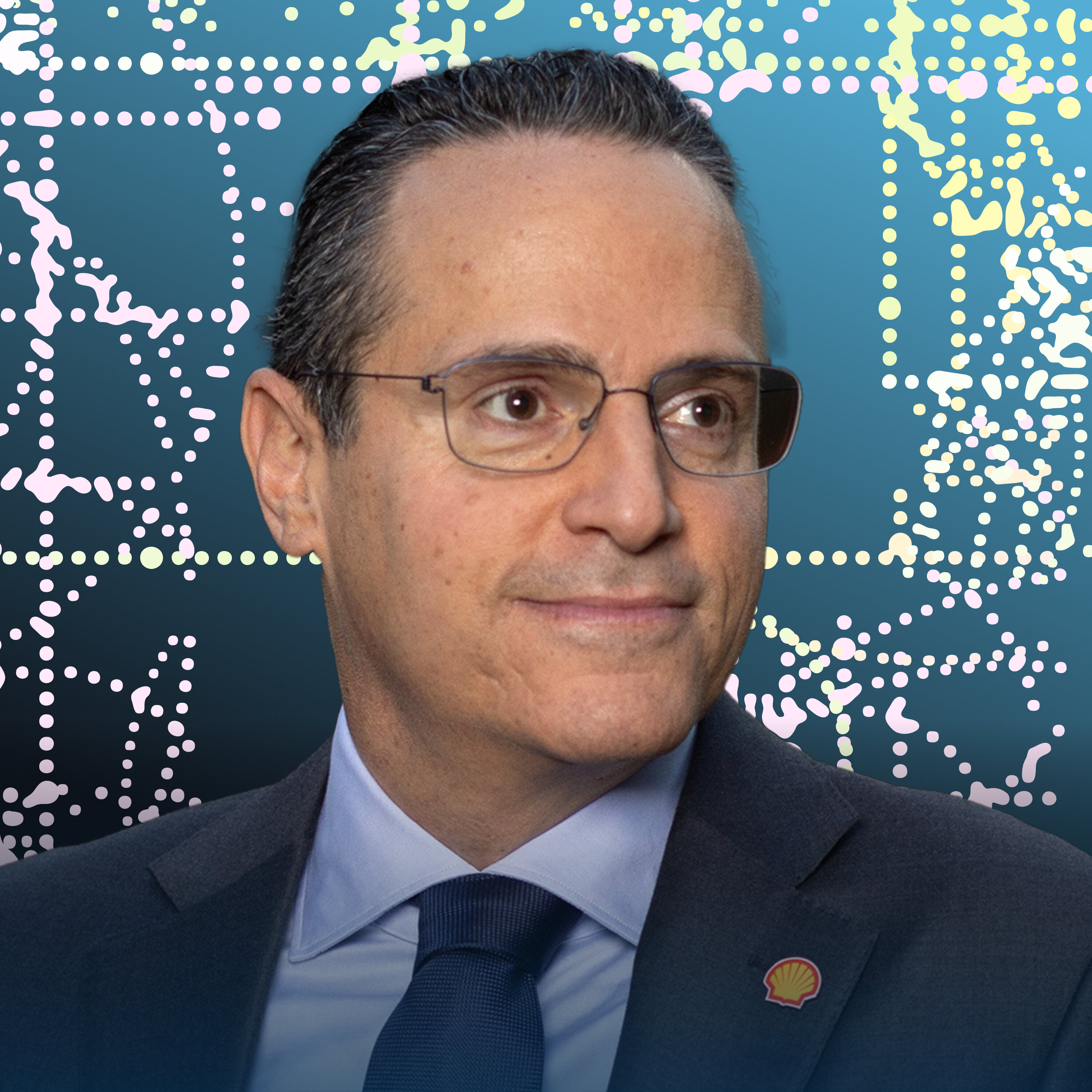
Leaders with Francine Lacqua
Shell Boss Wael Sawan on Tough Calls, Regret and Leading Through Uncertainty
00:24:31
Loading summary
Transcript87 lines
- [00:00]
Cincinnati Insurance Narrator
If you follow markets, you know the value of long term thinking. You plan, you diversify, you prepare for volatility. But even the best strategies can't prevent every bad day. For more than 75 years, Cincinnati Insurance has helped individuals and businesses navigate tough moments. With expertise, personal attention and independent agents who focus on relationships, not transactions. The Cincinnati Insurance companies Let them make your bad day better. Find an agent@cin fin.com so there's a
- [00:36]
IBM AI Representative
lot of noise about AI. But time's too tight for more promises. So let's talk about results. At IBM, we work with our employees to integrate technology right into the systems they need. Now a global workforce of 300,000 can use AI to fill their HR questions, resolving 94% of common questions, not noise. Proof of how we can help companies get smarter by putting AI where it actually pays off, deep in the work that moves the business. Let's create smarter business.
- [01:05]
Cincinnati Insurance Narrator
IBM Everyone has been there. Your team's feedback is scattered across emails, chats and sticky notes. It's a mess, but PDF spaces in Adobe Acrobat gives you one collaborative workspace to streamline every file and comment section. So if you need six departments to finally agree on a proposal, do that with Acrobat. Need to turn a mountain of feedback into one plan of action. Do that with Acrobat. Want to stop searching for files and finally get everyone on the same page? Do that, do that, do that with Acrobat. Learn more@adobe.com do that with Acrobat Bloomberg Audio Studios Podcasts Radio News.
- [01:55]
Wael Sawan
Somebody in the organization made a call and I respect that. I mean are we going to get these calls right? Every day there's a hundred calls we've made to exit stuff that actually didn't end up being successful. Do you regret it or do you deal with what you can control, which is what do we have ahead of us? And I am much more of a philosophy focus on what you can control make makes life much easier because then you can actually look forward rather than keep looking back.
- [02:25]
Francine Lacroix
I'm Francine Lacroix and this is Leaders, the podcast that really explores what drives the world's most influential people. This week's episode is Wall Sawan, the chief executive of Shell, Europe's largest oil company. We spoke at the end of last year because when you have an opportunity to speak to the chief executive of Europe's largest oil company, you take it. So the conversation was before attack on Venezuela and its capture of President Maduro and it was also before the US Israel war with Iran. And while recent Events have really upended the global energy industry. So one's time at Shell has drawn praise, especially for his focus on controlling costs. Since taking over in early 2023, Shell has outperformed its big oil rivals as a leader in a challenging and increasingly volatile landscape. I was keen to hear about the moment Sawant knew he was being considered for Shel. Also, his controversial choice to pivot away from renewables and his advice on how to be decisive about investment. Well, thank you so much for joining us.
- [03:34]
Wael Sawan
Thank you very much, Francine. Great to be here.
- [03:37]
Francine Lacroix
What kind of leader are you?
- [03:39]
Wael Sawan
Look, I've learned, I think through firstly my father, to start with people. I remember when he retired he worked for 3M and he sort of said at the time, business results are important, but when you leave, the number of Christmas hampers you get after you have retired from people whose lives you've influenced will be what actually counts. And so I've always believed you have to start with people.
- [04:02]
Francine Lacroix
You're an oil executive and I couldn't figure out whether you're even maybe, you know, you get more heat than bankers. Does that bother you?
- [04:11]
Wael Sawan
No, it doesn't. Because I think the issues we're trying to sort of work around are really tough Issues and positions of leadership demand a burden of responsibility. I don't think that should be unexpected. What I need to be able to do is to make sure that my compass is clear. And so I spend quite a bit of time in introspection and reflection and then it's how to mobilize our organization to deliver.
- [04:34]
Francine Lacroix
What's that introspection look like?
- [04:37]
Wael Sawan
It starts with actually recognizing that the world around us is moving at an incredibly fast pace. Whether it's geopolitical changes that we see at the moment, technological changes with AI, climate change, and therefore the world that we have come from. In particular, a company like ours, very strong engineering culture in general. We need to move from an all knowing culture to an all learning culture because the world is just unpredictable, it's uncertain, it's not linear.
- [05:03]
Francine Lacroix
As an engineer, does it mean you can take emotion out of it when you problem solve?
- [05:08]
Wael Sawan
I think you can, but I don't think that's healthy. I think at the heart of it, and it's one of my own developments, when I get too strategic about things, good counsel from colleagues around me has been great. You're in head mode. Make sure that you also touch into heart mode because I don't think you want to divorce head and heart, even when you're making some of these tough Decisions.
- [05:28]
Francine Lacroix
Well, when did you first start being like that? Do you remember the first memory as a child that you already wanted to think with mind and heart?
- [05:39]
Wael Sawan
I was the captain of our high school soccer team. And I remember the burden of responsibility at that time. We lost the tournament that we were competing for and the challenge of lifting up a group of around 15, 16 people at the time while figuring out how I lift my own self up, I think was one of my first experiences with leadership. But it was addictive. It was great and it was depressing and it was disappointing and. But it was all. All these emotions at the same time, and it was a great opportunity. Then as I grew in my life career, I had more and more opportunities to test that. I remember once being given my first leadership opportunity at Shell and this poor individual who was reporting into me. I tried to apply all of the potential leadership learnings on this one guy.
- [06:33]
Francine Lacroix
That you learned during your mba?
- [06:35]
Wael Sawan
That I learned during my MBA that I dread a lot about. And this poor individual had to sort of succumb to all of the leadership. 101.
- [06:44]
Francine Lacroix
What does that look like?
- [06:46]
Wael Sawan
How do I make sure that I am providing him his development plan? How do I intervene to support him on a daily basis? How do I coach?
- [06:53]
Francine Lacroix
Did he say, well, I'm okay or super gentle?
- [06:57]
Wael Sawan
And he never pushed back. But as I reflected, as I sort of grew in my role, I'm like, this poor individual must have just been cursing the moment that he got me as a leader.
- [07:07]
Francine Lacroix
What did you learn about yourself, actually, in that first leadership role?
- [07:10]
Wael Sawan
I think I learned that I have natural biases, right? So I love to be out with people. I'm an extrovert by nature, but put me into a room on strategic issues, and I can focus a lot more on that head than the heart. I also learned around just the way I drive performance in an organization. Finding the right balance of when do I reach in and push hard or when do I step back and create space? When am I more the advocate, the supporter, and when am I more the individual who is actually catalyzing a change?
- [07:45]
Francine Lacroix
But. Well, I mean, Shell is one of the biggest energy companies in the world. So when do you ever step back and give space?
- [07:51]
Wael Sawan
What I've seen in my last three years in the job is I've gone through phases. The early phase was all about really step in and stabilize the company, really get it into the performance discipline that I was hoping we can get to a leaner, fitter, much more competitive company. We're very clear on the strategy we want to implement. I can now step back more and more and actually do have time to reflect what are the moves we want to make? Go out, connect with people, be inspired by different ideas from the ones we have internally. I'm finding more and more of that space, but that's partly because we have done a lot of the heavy lifting to be able to get clear on where we want to go. And we've put some terrific people in place to be able to lead their respective businesses and functions.
- [08:31]
Francine Lacroix
So is the secret to a good manager or being good leader being able to adapt to the situation so know when to push and know when to reflect?
- [08:39]
Wael Sawan
Absolutely. I saw that early in my career. I had just successfully concluded a leadership role in Qatar at the time, and I assumed that that leadership posture style was going to serve me in a different role when I was going to New Orleans. And I was absolutely wrong. I needed to very quickly understand and diagnose what the challenges were, what the opportunities were, what the strength of this team was, and to be able to adapt my style to be able to help them unlock their full potential.
- [09:10]
Francine Lacroix
After the break, we discuss how Wael Sawan prepared for the biggest job of his career.
- [09:16]
My Policy Advocate Narrator
We buy insurance for peace of mind, but every year millions of claims are denied, not because people did anything wrong, but because their policies quietly excluded what happened. Insurers know every detail. Policyholders rarely do. That's why my policy advocate exists for just 27 cents a day, their platform reads your policy policies and explains where you are vulnerable. They don't sell insurance, they deliver transparency. Before you trust your policy to protect you, let my policy advocate tell you what it really says. Go to mypolicyadvocate.com find home wherever you
- [09:48]
Sonesta / Okta Narrator
roam at Sinesta ES and simply suites, where longer stays feel comfortable, flexible and easy. Stretch out and enjoy spacious accommodations and homelike amenities designed to help you settle in and stay productive or relaxed for however long you need. And when you're a Sonesta Travel Pass member, staying at Sonesta? Es and simply Suites means earning points toward free nights, upgrades and more with every eligible stay. Go to Sonesta.com to book your stay and unlock the best rates with Sonesta Travel Pass Here today, roam tomorrow. Join now@sonesta.com Terms and conditions apply.
- [10:23]
IBM AI Representative
So there's a lot of noise about AI, but time's too tight for more promises, so let's talk about results. At IBM, we work with our employees to integrate technology right into the systems they need. Now a Global workforce of 300,000 can use AI to fill their HR questions. Resolving 94% of common questions. Not noise proof of how we can help companies get smarter by putting AI where it actually pays off. Deep in the work that moves the business. Let's create smarter business. IBM.
- [10:55]
Francine Lacroix
It's normal to have an inkling you are being considered for a new job, but it's always hard to be sure. It was in Qatar, when he held significant leadership roles, that Sawan realized he might be in the running for the top job at Shell. I really wanted to hear about this moment and how he transitioned from the candidate to chief executive. When you look at your career, how much of a, I guess, game changer was that big catcher job?
- [11:21]
Wael Sawan
It was a huge game changer. A huge game changer.
- [11:24]
Francine Lacroix
Did you understand at the time that they were maybe testing you to then become chief executive?
- [11:28]
Wael Sawan
Of course. It was the sort of job that you figured you were on a good track in Shell. I'll be honest with you. It took me a while to recognize and to convince myself that I was in line one day to become the CEO, because, you know, you're trying to do the best that you can in the jobs that you have. But I can tell you, almost every single job that I had been given in Shell, I thought there were others who were more qualified than I was. And so it created that knot in my stomach going into the job. I need to work harder, need to do better. And so Qatar was one of those moments for me. It was a difficult role because the two, three weeks after I stepped into a role, we had the safety incident where we lost two of our colleagues. I struggled as a leader because it was under my watch that we had lost those two people, two colleagues whose families I knew. And it catalyzed us into a different place. It catalyzed us into a space where as a group, we had to figure out how do we heal and then how do we reach to the stars?
- [12:23]
Francine Lacroix
So when you have a new job, be it Kata or then CEO, how do you problem solve? How do you first of all spend a bit of time understanding what you need to fix and then go about fixing it?
- [12:35]
Wael Sawan
I spend a lot of time once I know I'm in a new job, just meeting with folks both internally and externally to be able to just listen to perspectives. Where are the value pools? How is Shell doing? What can we do better? What are the benchmarks telling us? I then like to move into a space of actually creating clarity of direction because I find an organization is not at best without that Clarity. And so after that, for me is the next step, which is really setting that, that direction. We've done that in my role as CEO. But more and more we, we linked it to the purpose of what we want to do to become that leading integrated energy company.
- [13:10]
Francine Lacroix
Oil companies for a lot of, you know, moment was, were also kind of integral to the energy transition, right? A lot was put on oil companies to make sure that you did your part to become cleaner and greener. Is that fair?
- [13:25]
Wael Sawan
I think it's absolutely fair that we, along with the multiple other stakeholders, have a role to play in the energy transition. So customers have a big role to play, governments have a big role to play. Energy producers like ourselves have a big role to play. And what we have found as a company is we have to play to our competitive strengths. So yes, we're very strong in oil, we're very strong in gas, we're very strong in trading, we're very strong in marketing. So how do we take that nexus of strengths that we have and actually contribute to an energy transition that we know is not going to be linear, that we know is going to be complex? And how do we become a stabilizing factor for our customers as they try to navigate it?
- [14:04]
Francine Lacroix
You were speaking very plainly three years ago, right, when you became chief executive, when some of your rivals or competitors were trying to say, like, look, we're going to be quite good actually, we're almost renewables company. Were you just more honest than some of your competitors?
- [14:19]
Wael Sawan
I think for quite some time what we had been trying to do is maybe speak to multiple stakeholders and unfortunately that can come across as almost being all things to all people. I felt it was really important to one, build our own beliefs around the energy system, really get clear what our role was going to be, and then just say it for what it was, recognizing that not everyone was going to agree with it, that we're always going to have also a small group of avid supporters, and that what was important was for those 80%, 70% in the middle to hear our convictions and then most importantly, to see us follow through on those convictions. And so what we wanted to do was to position ourselves as a player that is supporting the energy of today while looking forward. And it wasn't about choosing sides. It was about finding the role that we can uniquely play to be able to address energy security, energy affordability and energy sustainability. And people, I think some would prefer it either this or that. And we felt, no, we are building a company that we want to be the best performing best returning company not just today, but for decades to come. And therefore it's incumbent upon us to be able to look at not just the energy system of today, but to help shape the energy system of the future as well.
- [15:37]
Francine Lacroix
When we come back, I speak to Walesawan about making decisions and managing regrets.
- [15:43]
My Policy Advocate Narrator
We buy insurance for peace of mind, but every year millions of claims are denied, not because people did anything wrong, but because their policies quietly excluded what happened. Insurers know every detail. Policyholders rarely do. That's why my policy advocate exists for just 27 cents a day. Their platform reads your policies and explains where you are vulnerable. They don't sell insurance, they deliver transparency. Before you trust your policy to protect you, let my policy advocate tell you what it really says. Go to mypolicyadvocate.com travel smarter, not harder
- [16:15]
Sonesta / Okta Narrator
at America's Best Value Inn by Sonesta with convenient locations from coast to coast and value packed comfort at every turn, it's a practical choice for road trips, quick getaways and everyday travel that keeps things simple without sacrificing comfort. And when you're a Sonesta Travel Pass member, staying at America's Best Value Inn means earning points toward free nights, upgrades and more every time you stay. Go to Sonesta.com to book your stay and unlock the best rates with Sonesta Travel Pass here today, Rome tomorrow. Join now@sonesta.com terms and conditions apply.
- [16:48]
IBM AI Representative
So there's a lot of noise about AI, but time's too tight for more promises, so let's talk about results. At IBM, we work with our employees to integrate technology right into the systems they need. Now a global workforce of 300,000 can use AI to fill their HR questions, resolving 94% of common questions, not noise. Proof of how we can help companies get smarter by putting AI where it actually pays off. Deep in the work that moves the business. Let's create smarter business.
- [17:17]
Francine Lacroix
IBM Big decisions have shaped Sawant's time at Shell, some before he became chief executive, others on his watch. There's a sale of its Permian basin assets for $9.5 billion during COVID which was seen as a coup for the buyer ConocoPhillips and the earlier exit from Guyana before it became one of the world's hottest frontier oil plays. Different moments, different leadership, but both raised big questions about long term value. In 2019, Shell decides to sell your basically Permian assets. Was that a mistake?
- [17:52]
Wael Sawan
No, it wasn't a mistake. At the time, what we were trying to do, it was a very different context we had a significant amount of debt. We needed to be able to actually pay down some of that debt to become a much healthier company. We had tried actually before the SAL of the Permian to look at buying and growing our Permian position. We competed in a couple of different processes and were not successful. So we were getting to the point where our position was just not large enough, not material enough to be able to win. And so what we ended up doing is we sold, indeed the Permian, and we used some of those funds to be able to pay down debt and continue to strengthen the balance sheet. Today we enjoy one of the strongest balance sheets in the sector as a result of many of the choices that we have been making over the recent years.
- [18:34]
Francine Lacroix
It could have been a great asset. So is your philosophy no regrets, or do you sometimes think about what could have been?
- [18:41]
Wael Sawan
We always look back. I mean, every single year I take to my board what we call a post investment review. It's all the good, the bad and the ugly of where we have invested, the choices we have made. Because it's humbling to be able to sort of look back with the benefit of hindsight and say, what went wrong, what went right. Sometimes it's execution, sometimes it's our view of the strategic lens that we looked at the world through. But it's important to continue to look at that. Not to regret it, but much more to learn from it as we look to then build the muscle for the future.
- [19:11]
Francine Lacroix
Yeah, Talking about Guyana, it could have been one of the most important assets. Right. For Shell regrets there, look again.
- [19:17]
Wael Sawan
I mean, we empower people in the organization to be able to meet budgetary requirements. We just had a couple of wells that hadn't succeeded. Somebody in the organization made a call, and I respect that. I mean, are we going to get these calls right? Every day there's 100 calls we've made to exit stuff that actually didn't end up being successful again. Do you regret it or do you deal with what you can control, which is what do we have ahead of us? And I am much more of a philosophy. Focus on what you can control. Makes life much easier because then you can actually look forward rather than keep looking back.
- [19:50]
Francine Lacroix
Okay, so what can you control now?
- [19:51]
Wael Sawan
What you can control is becoming that leaner, fitter, most competitive company. Make sure that you continue to build resilience, get that balance sheet in a very strong position, get your businesses delivering cash and making sure that you are ready. Because the world around us is untouchable, uncertain. We need to be able to actually have the strength to go through the cycles and to generate value and grow through those cycles. That's what we can control.
- [20:14]
Francine Lacroix
Well, is bigger better? I know again, rumors of a combination between Shell and BP keep on swirling around and they've been doing so for years. Conceptually, would something as big as that make sense?
- [20:26]
Wael Sawan
I don't start from a position that bigger is better. Undoubtedly there are parts of our business where scale matters. Right, because scale allows you to be able to be competitive. You can spread your resources in some of areas where you can unlock a bit more value. But scale, for the sake of scale, is mistaken. Some of the largest M and A deals are the least successful M and A deals because they are massively complex. So I start more from a place of focus on what your strengths are. If you're ever going to do M and A, firstly, set a very high bar. Make sure that you can create value from it. And then if you transact, put all of your efforts into making sure that it delivers value. But do it for the right reasons. Don't do it because of fomo, don't do it because you want to be bigger. Do it because it creates value for your shareholders longer term.
- [21:10]
Francine Lacroix
We've seen loads of M and A in banking actually fail because the DNA of the culture was different, because the teams didn't work together, be it risk taking or something like that. Is it the same for oil companies?
- [21:21]
Wael Sawan
Absolutely. I think DNA does matter, culture does matter. And again, it depends on the scale of the aggregation of the companies. But if it's two big companies coming together, I would say culture is one of the biggest things you need to be able to look at.
- [21:35]
Francine Lacroix
What do you say the culture of Shell is like?
- [21:37]
Wael Sawan
So I think our strength has always been the nature of the company is high values. That's one of the reasons I joined Shell. It's a company that focuses on respect, on integrity. But we're trying to evolve the culture further. We want to have more edge in our performance focus. We want to look at leveraging more the different parts of Shell to unlock value. We call it One Shell, how we are able to truly come together as an organization. So there are elements that play into that. I'd say at the heart of the cultural shift that we're trying to make is the point I made earlier around, going from an all knower to an all learner. Because of our engineering culture, we like to solve for discrete outcomes and that's what we built. And it's been successful for us for decades, over a century. And as we go into the energy transition, as we go into the world that we're going into, also with the advent of AI and how you leverage AI and what we do with some of the challenges we see on the geopolitical level, we have an opportunity to be able to have the humility to actually step back and reflect. How do we change? How do we challenge the paradigms we have had in the past? And how do we come up with new ways of being able to steward the company?
- [22:45]
Francine Lacroix
But if you look at the numbers of how much energy we need also to just face the data centers and AI usage, I mean, the numbers are so big, it's almost difficult to get your head around it. Do you have to foresee the future or do you need to just react in a way that's in your control?
- [22:59]
Wael Sawan
I think you have to have a clear view of the energy system. And I would agree with you, Francine. I think at the end of the day, we see that primary energy demand is going to continue to grow for quite some time.
- [23:11]
Francine Lacroix
By a lot.
- [23:12]
Wael Sawan
By a lot. And it's been happening. I mean, people talk about energy transition. Of course, what we have been seeing is energy addition. We are at peak oil demand, peak coal demand, peak gas demand, peak renewables demand, peak bio demand. The world is trying to get its hands on all forms of energy for many of the reasons that you talked about. So while we can cannot predict the future, what we can do is sort of really make some very clear deterministic bets on the future. One is gas. For us, for example, you know, we see gas as being a stabilizing force in energy systems that continue to transform. That allows us to be able to say, okay, we are one of the biggest, we are the largest international player in lng. Then make sure that you continue to play that with lower and lower methane emissions, but really be there to give our customers that versatile, reliable fuel that they seek.
- [24:03]
Francine Lacroix
Well, what's your North Star? So if you look at your day, how much is it meetings or things that you need to deal with that you could have or that you want to preempt, and how much of it is actually firefighting?
- [24:15]
Wael Sawan
The ratio, I would say, has swung more and more to actually controlling my own agenda. When you start, you're still learning, you're sort of responding to different stimuli. And now I've had the opportunity to actually shape that. My coach has sort of told me the most important thing you should be doing is to be purposeful. By the way, some of that day is spent having dinner with the kids and my wife, be purposeful and be present in that moment. And other parts of the day are about self exercise, gym, or of course at work. Really be purposeful in this meeting, are we trying to open up people's minds to what's possible in that meeting? Are we trying to address a particular challenge that needs a decisiveness in the moment? Really just being choiceful and purposeful in the way that one conducts himself? I think if I could get to that level of sophistication, then I will feel that the day that I'm spending is worth every minute that I'm spending.
- [25:09]
Francine Lacroix
Does that have to be in everything you do? So as weill the dad and Weil
- [25:12]
Wael Sawan
the CEO, I think in positions like this, it is even more important to be conscious of that purposefulness because it is so easy. You can come back home and your mind's still distracted and thinking about work and trying to be there having dinner, but really sort of your mind's not there. You have to be able to actually create the space and the time to be there, to be present. And it's one of the things I continue to work on as a leader.
- [25:37]
Francine Lacroix
Do your kids talk to you about climate change? Do they push back?
- [25:40]
Wael Sawan
They do, actually. It's more from a position of curiosity. They hear different perspectives and they say, I think I trust you. I'm going to get your perspective on it. So we end up talking about it. We talk about it politics, we talk about life, we talk about leadership. And they've gotten to an age now where they have a lot more curiosity, where they're studying about some of these things. And sometimes the studies sort of end up giving a singular perspective. They're keen to be able to understand the broader perspectives.
- [26:06]
Francine Lacroix
Do you think Shell will be radically different in five years or significantly different?
- [26:12]
Wael Sawan
I think the pace at which the energy system is changing means that we will need to continue to evolve. I don't think one should expect a wholesale change of what we do today. I think hydrocarbons will continue to be a big part of what our business is. How we prosecute our business, I think will change significantly. In particular, we see AI just starting to influence every part of how we work. We have evolved as a company over 135 years, and so it's not unexpected to see us evolve in the next five years and in the next 20 years, and hopefully we'll be here for at least another hundred plus.
- [26:47]
Francine Lacroix
What do you want your legacy to be?
- [26:49]
Wael Sawan
When I was recruited into this position, in the final interview with the board. I said one of the biggest things I hope to be able to leave behind whenever I move on is an organization that is better than what I inherited. And the biggest thing for me has been the people. I do think being able to develop the next cadre of leaders in Shell is one of the things that both excites me the most and I feel most urgently I need to be able to achieve. And the reason I say that what I love about this company is it is an institution. We are all replaceable. That the institution and its values outlive you.
- [27:23]
Francine Lacroix
How difficult is it to groom your possible replacement?
- [27:26]
Wael Sawan
I'm spoiled in a company like Shell, given the talent base we have. We have brilliant people. So for us, we have very, very deep succession planning. We have very deep talent programs. So it allows us to know some of our emerging talent in year five of their tenure, even if they're in their early 30s, to be able to allow us to see who might one day get to the top table and what are the experiences we need to give them to be able to get there and what are the leadership opportunities we need to expose them to. The biggest thing you can do for an institution like this is make sure that you make it stronger when you leave it. If I can do that in my tenure, I'll be a very happy man.
- [28:10]
Francine Lacroix
Well, how do you recharge?
- [28:11]
Wael Sawan
Exercise, do gym when I get back from work and I try to make it consistent.
- [28:17]
Francine Lacroix
Is it difficult to switch off?
- [28:20]
Wael Sawan
Not difficult to switch off. I find myself in the right headspace when I need to switch off and I force myself to do so. Good sleep is key.
- [28:26]
Francine Lacroix
If you had to write a book today, what would it be on?
- [28:30]
Wael Sawan
Leadership? I think it would be on just learnings, failings, challenges and what I took away from it.
- [28:37]
Francine Lacroix
Well, thank you so much for your time today.
- [28:38]
Wael Sawan
Pleasure. Thank you very much for having me. Francine.
- [28:46]
Francine Lacroix
Thanks for listening to this episode of Leaders with me, Francine Lacqua. If you like our show, please rate, review and subscribe. Thanks so much to those who've left comments. Keep them coming and keep sharing with friends. And if you want to watch the show, please Find us on YouTube. This episode was hosted by Amy Francine Lacqua. It was produced by Atalandi Dixon, Summer Saadi and Moses Andam. Amy Keen is the executive producer of Talk Podcasts Sound, designed by Blake Maples and Aaron Casper. Special thanks to Wellsawan and the team at Shell.
- [29:25]
Cincinnati Insurance Narrator
If you follow markets, you know the value of long term thinking. You plan, you diversify, you prepare for Volatility but even the best strategies can't prevent every bad day. For more than 75 years, Cincinnati Insurance has helped individuals and businesses navigate tough moments. With expertise, personal attention and independent agents who focus on relationships, not transactions, the Cincinnati Insurance companies let them make your bad day better. Find an agent@cin fin.com these days it
- [30:01]
Sonesta / Okta Narrator
seems like AI agents are just about everywhere you turn, every field and every function. But without identity, you can't trust they'll serve your business instead of jeopardizing it. Fortunately, Okta helps you get identity right by securing your AI agents identities, giving you a single layer of control, a single standard of trust. So whether an AI agent supports towards a single user or your entire enterprise, with Okta you'll turn risk into opportunity. Secure every agent. Secure any agent. Okta secures AI Find home wherever you roam at Sinesta Es and Simply Suites, where longer stays feel comfortable, flexible and easy. Stretch out and enjoy spacious accommodations and homelike amenities designed to help you settle in and stay productive or relaxed for however long you need. And when you're a Sonesta TravelPass member, staying at Sonesta Es in Simply Suites means earning points toward free nights, upgrades and more with every eligible stay. Go to Sonesta.com to book your stay and unlock the best rates with Sonesta TravelPass here today roam tomorrow join now@sonesta.com terms and conditions apply.