Loading summary
Transcript181 lines
- [00:01]
Madeline Barron
Hi, it's Madeline. Before you tune into this episode, I wanted to remind you that New Yorker subscribers get access to the full Blood Relative series early, all six episodes ad free in the New Yorker app. It's just $1 a week to subscribe, which you can do by visiting newyorker.com dark that's newyorker.com dark Heidi.
- [00:25]
Jeremy Bamber
I'm only allowed 45 minutes, so we will have to schedule or schedule or whatever needs to be. But it's great because I'm now on the phone with you and we can organize times, we can organize, you know, dates, meetings. But anyway, not to worry. We'll speak soon. Bye, Heidi. Happy birthday to me. Bye. Now.
- [00:50]
Heidi Blake
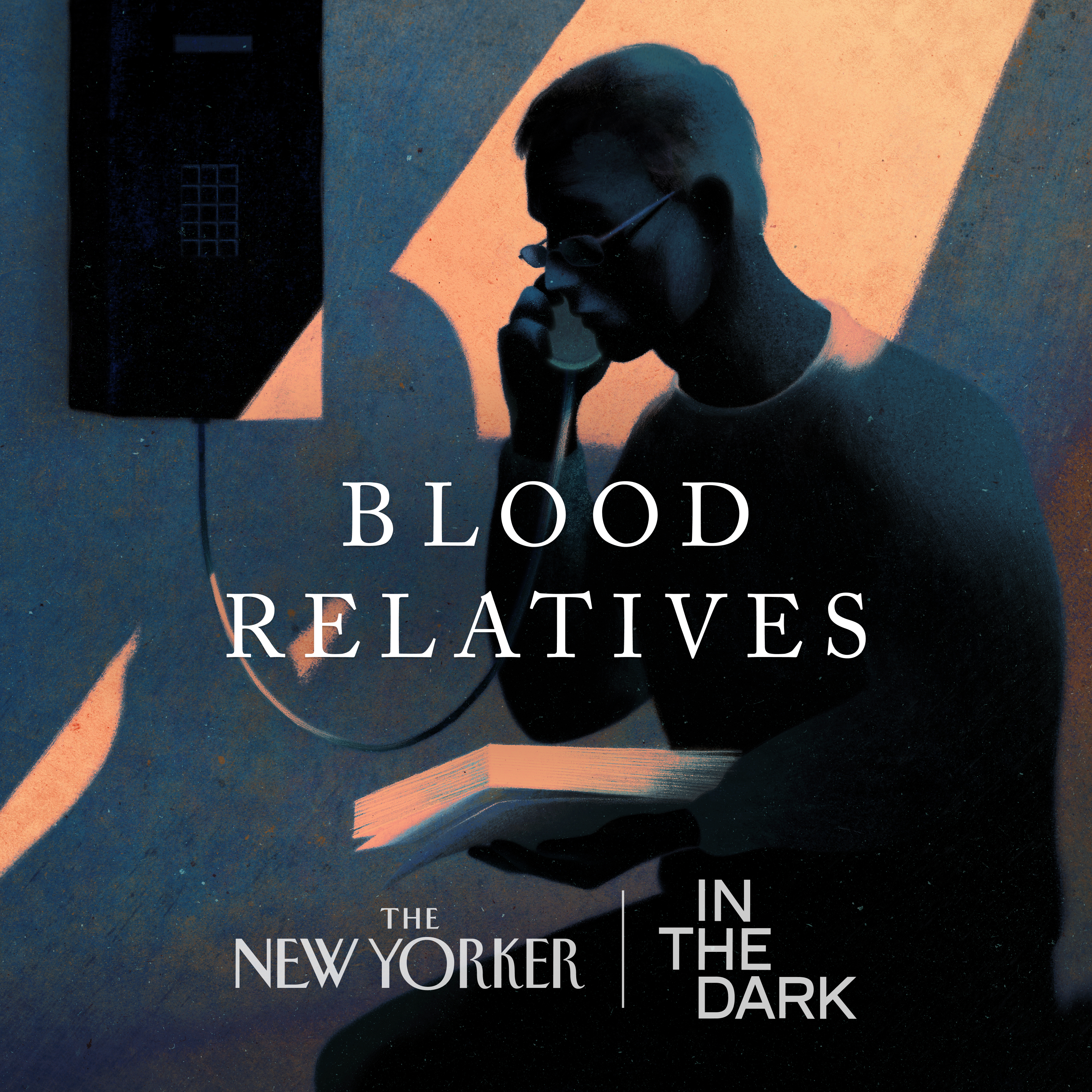
40 years after the murders at White House Farm, Jeremy Bamber remains in prison. He's locked up in a maximum security facility known to the press as Monster Mansion. To this day, his name and photo are still splashed across stories nearly every month with headlines like Twisted Family Killers or what the UK's most dangerous prisoners eat for Christmas Dinner. Full menu revealed. Despite all the fevered publicity surrounding the case, in the years since his trial, I and the rest of the public had actually heard almost nothing directly from Jeremy Bamber. Prison authorities in the UK often make it hard for journalists to talk with inmates. So aside from a few quotes in the newspapers, mostly disseminated by his supporters, his own voice was lost in all the noise. So when I started looking into this story, I took a punt and sent a letter to Wakefield prisoners. And to my surprise, a couple of months later, I got that voicemail.
- [02:01]
Jeremy Bamber
But it's great because I'm now on the phone with you and we can organize times. We can organize.
- [02:09]
Heidi Blake
I was eager to speak to Jeremy Bamber because for all these decades, while the tabloids have run their scare stories depicting him as a monster, he has steadfastly maintained that he's innocent. From in the Dark and the New Yorker. I'm Heidi Blake and this is Blood Relatives.
- [02:36]
David Woods
Cocky narcissist psychopath. Cold Blooded. Jeremy was horrible. I mean, he did horrible things. Do not be fooled by Jeremy Ban. He's got away with so much.
- [02:51]
Sergeant Chris Buese
First thing I thought when he started crying is, you're forcing that. I think nearly every police officer came into contact with him, thought he was lying.
- [03:02]
Heidi Blake
I'd heard so many people talk about Jeremy Bamber. Now I was going to hear directly from him. Part one Prison Calls this call is.
- [03:24]
Jeremy Bamber
From a person currently in a prison in England. If you do not wish to accept this call, please hang up now.
- [03:30]
Heidi Blake
Jeremy, hi.
- [03:32]
Jeremy Bamber
Oh, Hi.
- [03:34]
Heidi Blake
The first time I spoke with Jeremy Bamber, he'd just celebrated a birthday.
- [03:38]
Jeremy Bamber
63.
- [03:39]
Heidi Blake
Wow, 63.
- [03:41]
Jeremy Bamber
I've just put my calendar up in jail and that's my 39th birthday.
- [03:45]
Heidi Blake
It was the 39th birthday that he'd spent behind bars. The image I'd had of Jeremy Bamber was from photographs and footage from the 80s, when he was a brash, puckishly handsome young man of 24, flashing a rebellious smile. But now his hair had turned white and his voice was raspy. He was getting old.
- [04:07]
David Woods
I look at it, I've been awake.
- [04:09]
Jeremy Bamber
In jail a billion seconds.
- [04:13]
Heidi Blake
Jeremy has limited phone time every day, only about 45 minutes to divide between his lawyer and friends and now me. And he was clear about how much of that he was willing to give me.
- [04:24]
Jeremy Bamber
So we're going to have 10 minutes.
- [04:25]
Heidi Blake
Great.
- [04:26]
Jeremy Bamber
We've got to be strict, but we can have 10 minutes every day or perfect. Jeremy, if you're happy with that, because we've only got 45, so you can have 10.
- [04:32]
Heidi Blake
I'm very happy with that. That works great. I would end up talking to Jeremy almost every day for months.
- [04:40]
Jeremy Bamber
Morning, Heidi.
- [04:41]
Heidi Blake
Jeremy, hi. Hello. So sorry to miss your call earlier. Jeremy would call me whenever he was free, which happened at all sorts of odd hours and I've in fact just locked myself out of my house. He'd call me in the morning when I was rushing to get ready.
- [04:53]
Jeremy Bamber
Heidi, have you got two minutes?
- [04:55]
Heidi Blake
Absolutely, yeah. Or while I was sleeping with some urgent detail from his case that he'd just struck on.
- [05:02]
Jeremy Bamber
Sorry to do this, but it's quite important because. And the important thing with the radio and telephone books is they've produced a huge amount of supposed manuscript copies.
- [05:14]
Heidi Blake
It was strange to find myself on the phone with a man considered to be one of Britain's most vicious killers. For years I'd thought about him the same way most people do, as a cold, glib psychopath who'd done something unimaginably evil. But here I was chatting to him about ordinary things.
- [05:36]
Jeremy Bamber
I went down to the hairdressing salon here.
- [05:41]
Heidi Blake
What kind of style have you gone for?
- [05:43]
Jeremy Bamber
Well, just a normal, you know, short back and sides, really. The old standard prison haircut.
- [05:48]
Heidi Blake
When it came to the details of his case, Jeremy was more than ready to dive in.
- [05:53]
Jeremy Bamber
I guess you've got one or two burning things you'd love to ask.
- [05:57]
Heidi Blake
Well, I, I mean, I certainly have and I kind of thought maybe the thing to do, since we're, we're going to be going at this in 10 minute chunks is just to kind of go through things in this somewhat chronological order, if that. If that makes sense.
- [06:08]
Jeremy Bamber
I'm leaving this to you, Heidi.
- [06:10]
Heidi Blake
Yeah. Okay.
- [06:10]
Jeremy Bamber
You are in. You, you can have me fried, poached, scrambled, you know, flambed, however you want me.
- [06:19]
Heidi Blake
I had so many questions for Jeremy about what had happened on the night of the killings, but also about how he'd behaved in the days and weeks afterwards. In that time, Jeremy had acted in ways that his relatives and later police and prosecutors had found odd and by extension suspicious. So much so that his behaviour became a big part of the case against him. It was what led prosecutors to present him so effectively as a cold blooded villain. The way they told it in court, all the strange things Jeremy did and said added up to such a damning portrait, one that has lingered in the public imagination for decades. And so I wanted to hear how Jeremy would explain those things.
- [07:10]
David Woods
Come on then, let's go. Oh, we'll have to rack some brain cells to go back 40 odd years to get some meat on the bone.
- [07:18]
Heidi Blake
It's a long time ago. Let's see how we get on. Just tell me what comes naturally.
- [07:22]
David Woods
Okay.
- [07:23]
Heidi Blake
I'm wondering if you can take me back to the day before the crime on. On the 6th, when you were, you were out on. You were harvesting all day out on the tractor.
- [07:33]
David Woods
Yeah. Yeah. Yep.
- [07:40]
Heidi Blake
It had been harvest season, the busiest time of year on the farm. And Jeremy said he'd spent the day helping his father Neville bring in the crops. That evening he'd spotted some rabbits by the potato shed on the farm. They were considered pesky vermin. So Jeremy said he hurried back to the manor to grab his father's rifle, a.22 Anschutz.
- [08:03]
David Woods
And so nipping back for the, for the rifle and thinking, oh, yeah, I'll get these. And by the time I'd gone back, they'd gone.
- [08:10]
Heidi Blake
No rabbits that day. As dusk settled over the fields, Jeremy said he headed back to the manor to return his father's rifle and say goodnight to his parents and his sister Sheila, who was up from London with the twins. He said he paused when he walked in the house and propped the rifle at the end of a bench in the scullery.
- [08:31]
David Woods
And I think there was some flowers there and some bits and bobs and I just rested against that. And I remember taking the magazine out and putting it on the. I think it was a cushion or something there.
- [08:42]
Heidi Blake
Everyone was in the kitchen. We, his parents were sitting at the table with Sheila. And Jeremy said the atmosphere was tense. He said June and Neville were telling Sheila that she was too ill to take care of her boys since her most recent schizophrenic breakdown, and they were suggesting that she should place them in foster care. This scenario, losing her children, was Sheila's worst nightmare. Tell me, how did Sheila strike you that day?
- [09:13]
David Woods
Well, she was looking just lost, if the words be right, and just that she used to smoke these little cheroot cigars and I remember she was puffing a lot of those when she came down this time, as if she'd, you know, got that kind of need to just get that nicotine fix, which I. I think she didn't like being told what to do.
- [09:42]
Heidi Blake
Jeremy's account of this conversation about fostering the twins was familiar. He'd told police about it on the night of the murders and it had come up at trial. Prosecutors claimed he'd invented it to make it appear that Sheila had flown into a rage at the suggestion that the boys should be taken away and that was why she'd murdered the family. But to me, Jeremy's memory of the last time he saw his family didn't make Sheila sound scary, just kind of small and quiet and sad.
- [10:15]
David Woods
That's the last few I had of them. You know, Mum in her normal seat, sitting there eating her tea, dad in his normal seat sitting there eating his tea, and Sheila at the other end of the table. And I remember her being quite hunched over and small, looking back into the room as I left and just said, good night, everybody. And off I went. And that was it until dad phoned me.
- [10:42]
Heidi Blake
Jeremy said he drove home to his cottage a couple of miles from the manor. He watched a bit of TV and went to bed. That night, around 3:30am, Jeremy said he was woken up by the phone call from his father, Neville.
- [10:58]
David Woods
He sounded distressed and rushed and distracted.
- [11:03]
Heidi Blake
Jeremy recalled Neville saying, your sister has gone berserk and she's got a gun.
- [11:09]
David Woods
Sheila's got one of my guns. Please come over. I must have. I must have said something, but I don't remember saying anything. Dad, what's up? Or dad, you know, how can I help? Or what do you want? Or I must have said something, but I don't remember responding. Dad, what is it? Or dad. And then the phone just went dead or cut off.
- [11:34]
Heidi Blake
He said he tried calling back but he couldn't get through. The line was busy and then that.
- [11:40]
David Woods
Left me just wondering what to do.
- [11:45]
Heidi Blake
Jeremy told me that this call was worrying for sure, but not totally out of the ordinary. His family was used to dealing with Sheila's schizophrenic episodes. She'd lashed out before and thrown things. And when this kind of thing happened, it usually blew over. By all accounts, Neville was an intensely private man who hated the idea of involving strangers in his family's business. But Jeremy said as far as he knew, Sheila had never grabbed a gun before. So after this call from his father, he said he wasn't sure what to do next. Should he call the police or would that seem like a big overreaction?
- [12:24]
Jeremy Bamber
I didn't have any idea that it would spiral like this because it's never done before.
- [12:29]
Heidi Blake
Right.
- [12:30]
Jeremy Bamber
So, you know, thinking, oh, well, I'm heading towards, you know, gunfire and mayhem. I didn't think that at all. I thought I was going to get there. Dad was going to come and say, for fuck's sake, you brought the police. All I wanted was you to come over because I'm panicking a bit because Sheila's just a little bit more out of control than normal.
- [12:48]
Heidi Blake
He told me he wondered if part of him was even feeling a bit annoyed with Sheila for making a scene.
- [12:54]
Jeremy Bamber
It's the inevitability of mental illness that it goes up and down and it's quite emotionally tiring for those around, so it's quite difficult. I mean, and to keep that level of concern and love and sometimes you can just think, for fuck's sake, you know, put yourself together. Sometimes it can just wear you down.
- [13:24]
Heidi Blake
That night, despite his hesitation, Jeremy did decide to call the police. But rather than dialing the emergency number 999, he. He found a telephone directory and looked up the number for the local station. Prosecutors would later point to this decision as evidence that Jeremy was making up the whole story. Sergeant Chris Buese, the first officer on the scene that night, told me it had immediately struck him as odd.
- [13:51]
Sergeant Chris Buese
Kids are brought up with the number 999 drilled into their heads. If something's wrong, call 999. You don't look up the local police station's number at 2 o' clock in the morning or whenever it is.
- [14:06]
Heidi Blake
I asked Jeremy about that and the decision sort of not to dial 999, I guess I'm curious, like, do you remember considering doing that and then thinking, no, that's silly, I'll just look up.
- [14:18]
David Woods
It never occurred to me to phone 999. It wasn't an emergency. You know, she's dealt with these things before, so. So no, I didn't. I didn't think of 999.
- [14:28]
Heidi Blake
Jeremy said that as he drove over to the manor to meet the police. He was a bit apprehensive, but it wasn't until he got there and found the house eerily silent that he said he started to become really concerned. The only sound from inside was the whining of the family's dog, a shih tzu named Crispy. Everything else was still. That was when he'd started urging the police to go into the house. Sergeant Buese had told me he thought this too was suspicious.
- [15:00]
Sergeant Chris Buese
He wanted us to see as soon as possible that the house was full of dead people so we could play out a scene with dead bodies. And him reacting to like.
- [15:12]
Heidi Blake
Jeremy just couldn't wait for the police to go inside and find his family's bodies. But when I put Sergeant Buse's theory to Jeremy, he felt that that was a sign that you already knew what was in there and you just wanted them to go in and find it quickly. So the whole thing was sort of over. Jeremy said, that was ridiculous.
- [15:32]
Jeremy Bamber
I did try and push him to go in the house, of course I did, and he wouldn't, but that's him. That's him being frightened. I mean, obviously, we want to go in the house. I wanted to go in the house to save my family or to help them.
- [15:44]
Heidi Blake
Jeremy sat and waited in a patrol car for hours for armed police to arrive, then for hours more as they surrounded the property and called for Sheila to surrender. He said he kept waiting anxiously while the raid team entered the house.
- [16:00]
David Woods
It's probably as frightening a situation as anyone could be in, and yet I had no one there holding my hand or giving me any reassurance.
- [16:12]
Heidi Blake
After a while, Sergeant Buese came over to him to break the terrible news.
- [16:17]
David Woods
He just came up. I think he tapped on the window and wound it down and said, you know, they're all dead, everybody's dead.
- [16:24]
Heidi Blake
Jeremy broke down in tears when he heard the news, a reaction that struck Sergeant Buis as a big act. But Jeremy told me he was in shock, so much so that he thought at first that the police had killed his family.
- [16:40]
David Woods
And I went, what? You've shot them all? You've killed them all? Why have you shot them all? I remember being really distressed at the police for having done it, because I genuinely believe that because there were so many armed police, I genuinely believed they'd killed everybody. And I remember saying that over and over to them. And I remember that this one of the senior officers coming over saying, no, no, no, we haven't shot them. We haven't shot them, no.
- [17:03]
Heidi Blake
When Jeremy told me This, I was skeptical. I wondered if he'd come up with this story in order to undermine the prosecution's narrative that he set out from the start to frame. But later, I found an officer's handwritten notes confirming that Jeremy had voiced this suspicion at the scene. The officer wrote, I put that comment down to him being distraught. Jeremy told me that however scared he'd been for his family's safety up to that point, it had still never really occurred to him that Sheila had actually killed them.
- [17:38]
David Woods
There was no sense of what on earth could have unfolded in the house, you know, because it's not like I would have imagined that Sheila would have, you know, shot everyone. You know, I had no concept whatsoever that it was going to end like this, that that would have never, ever entered my mind, that. That we were going to enter the house to find everybody dead. Not. Not even 1% of my thought taught that.
- [18:12]
Heidi Blake
From the officer's notes at the scene, it seemed at first like Jeremy was unable to accept that his family was gone. He kept begging to speak to his father, and when the cops reminded him that Neville was dead, he broke down afresh. Then finally, he muttered, sheila ought to be in a nuthouse for what she's done. Shortly afterwards, he was seen retching in a field. Can you tell me a bit of what was going through, Going through you, Going through your mind as you were processing this news that your sister had? Do you know?
- [18:55]
David Woods
Do you know? Selfishly, Absolutely selfishly, I remember. Remember selfishly thinking, how on earth am I going to cope? How am I going to manage this on my own? That. That genuinely, I remember it, and I. And I can feel the feel now. And I'm crying now, just that instant. How the. Am I going to cope? And I. It was really fun.
- [19:25]
Jeremy Bamber
Big.
- [19:55]
Heidi Blake
If you're a reader or even an aspirational reader, I hope you'll join us on Critics at Large from the New Yorker.
- [20:02]
Madeline Barron
Each week on this show, we make sense of what's happening in the culture right now and how we got here.
- [20:07]
Heidi Blake
And because we're culture critics, we just.
- [20:09]
David Woods
Love to go back to the text.
- [20:11]
Heidi Blake
Yes. So if books are for you, Critics at Large just might be for you as well.
- [20:16]
Madeline Barron
Join us on Critics at Large from the New Yorker every Thursday, wherever you get your podcasts.
- [20:25]
Heidi Blake
Part two, scrutiny. In the days after the crime, police records show that a doctor prescribed Jeremy some Valium to calm his nerves, and he started washing the pills down with alcohol. It was after that that he did and said many of the things that seemed to his Relatives so unbefitting of a grieving son, like cracking jokes after the funeral. How do you feel looking back on those moments? Do you look back at that and think, oh, God, I wish I hadn't said that. That just didn't look great.
- [20:56]
Jeremy Bamber
It's just my stupid personality, honestly. Just being a dick, acted like a dick and said things I shouldn't have said. But, you know, I need to take. I need to own it. I need to, you know, I have to own it.
- [21:13]
Heidi Blake
I had noticed that Jaremi could be a bit of a screwball. Like that moment in our very first call when we were about to start talking about the murder of his family.
- [21:22]
Jeremy Bamber
And he said, you can have me fried, poached, scrambled, you know, flambeed, however you want me.
- [21:31]
Heidi Blake
That seemed so flippant. Or another time when we talked about the family Shih tzu. Crispy, the one who could be heard whining inside the manor. The dog had been jumpy after the shootings and had taken to biting people, so Jeremy sent him to the vet to be put down and presumably cremated.
- [21:49]
David Woods
I know I made a joke the other day about Crispy and I said, he was, in the end, Crispy. Is that too soon? Is it too soon 40 years later? Right, and it probably is too soon.
- [22:04]
Heidi Blake
You can hear me laughing along awkwardly, as I did other times, too, when he'd make sexist jokes or be a bit bawdy and I'd think, really read the room. Jeremy. I'd imagine him sitting around the Sunday dinner table with his relatives, David and Anne and their father Robert, back in the 80s, and it wasn't hard to see how he'd rubbed them the wrong way. His Uncle Robert wrote, I loathed that boy and couldn't bear being anywhere near him. Even Jeremy's own barrister seemed to take against him. In private notes before the trial, he described his client as, quote, spoilt brat or brat who would have liked to have been spoiled more. It was strange, this gaucheness coming from a man who'd been so widely depicted as an arch manipulator, a charming and highly persuasive sociopath.
- [23:00]
David Woods
Do not be fooled by Jeremy Badmouth.
- [23:03]
Heidi Blake
Who deceived so many people.
- [23:05]
Jeremy Bamber
We have a scene of a crime.
- [23:07]
David Woods
Which has been very cunningly arranged.
- [23:10]
Heidi Blake
Then, as I waded through the evidence files, I found a document that seemed to offer an explanation. A psychiatric report that outlined multiple assessments Jeremy has undergone over the years at the request of prison authorities or his lawyers. None of those evaluations had detected any evidence of psychopathic traits or any sign that Jeremy had a personality disorder. He was a little vain, a little flamboyant, a little compulsive, but all within the normal range. The report also placed him within the low to normal range for impression management, meaning that he was not an artful manipulator. He was below average in his ability to assess or influence the way others perceived him. The psychiatrist concluded it is hard to sustain the view that Jeremy Bamber is so expert in deceptive self presentation as to maintain this front over a variety of different assessors, different assessment instruments and different times. In the weeks after the murders, Jeremy was under relentless scrutiny. His cousins were watching him closely, taking copious notes about what he said and did. Many of their observations would feature prominently at trial when prosecutors pointed to his behaviour as evidence that he was a cold, remorseless killer. But Jeremy told me he was pretty much oblivious to all of this. He had no idea his behaviour was being picked apart. Like the moment at his parents funeral, for instance, when he broke down crying, which his cousin David Bowflower had told me seemed so suspicious. Did you feel under a microscope at the time? Did you feel like people were watching? You didn't?
- [25:08]
Jeremy Bamber
No, no, not at all. Not at all. I didn't see the cameras, I didn't see. I didn't see people. I didn't see any of it. I was just. I was wrapped up in the few people that were around me and my own self indulgence, sadness, I suppose.
- [25:24]
Heidi Blake
I asked about that famous footage of him breaking down outside the church and how some people thought he was acting.
- [25:32]
David Woods
Yeah, but that's just. I mean, come on, you know, it just, it hurts when people, you know, I was crying yesterday, you know, come on. I'm an emotional person who. I'm sorry. I know everyone thinks I'm a psychopath and can't cry and have an emotion, but it's just not true.
- [25:55]
Heidi Blake
Then there was that moment afterwards that Jeremy's cousins found so sickening when he turned and gave them what David called a Cheshire cap smile. Jeremy remembers that too, but he says he was just trying to reassure them that he was all right.
- [26:11]
David Woods
Smiling and, you know, trying to put forward a, you know, a kind of united front that I'm okay and you know, don't worry and we've got the. We got through the funeral and it was. It was tough, but having got through it, you know, I felt, well, great, we're through it.
- [26:31]
Heidi Blake
What about all that partying and vacationing, the way he'd been knocking back champagne and cocktails at a Caribbean restaurant after the funeral. And then Holden Court at his girlfriend's birthday dinner, visiting strip clubs and sailing off to Amsterdam and Saint Tropez. I asked Jeremy what that was all about.
- [26:50]
David Woods
Trying to feel things, maybe trying to feel. Trying to get people to like me more or, you know, like when we were going down to the Caribbean cottage and, you know, I was trying to be the life and the soul at Julie's birthday or whatever. You know, you kind of. You force it.
- [27:07]
Heidi Blake
And what. What do you think you were seeking? How you were comforting yourself in those actions of all of those things you did?
- [27:17]
David Woods
Love and kindness and support and friendship and. And an end to my sadness and trying to figure out that life was worth living, I suppose.
- [27:35]
Heidi Blake
These criticisms of Jeremy for failing to perform his sorrow convincingly were later presented as evidence at trial that he was lying about everything, as though no innocent person who just lost his whole family would conceivably behave the way he did. But this aspect of the case troubled me because grief can manifest itself in all sorts of strange and unbecoming ways.
- [28:05]
Jeremy Bamber
All these are retrospectively trying to figure out ways to, I don't know, just portray me slightly strangely and it disturbs me a little bit, but it's, you know, these are all kind of nothingnesses, but accumulatively, people think that this is the narrative.
- [28:30]
Heidi Blake
Yeah.
- [28:30]
Jeremy Bamber
And it's really not.
- [28:46]
Heidi Blake
As Jeremy tells it, in his grief, he didn't even notice that his relatives were growing suspicious of him. He said he felt grateful for their presence. He thought they were being supportive. At one point, he even sent his cousin, Anne Eaton a bunch of flowers.
- [29:03]
David Woods
I did, yeah. I sent her some flowers. Thank you for all your loving. Thank you for everything you're doing. You know, I was happy to have some support. Some people come round and, you know, care for me.
- [29:12]
Heidi Blake
Anne recorded this moment receiving Jeremy's flowers. In her notes she wrote, the card which came with them said, thank you for all your loving. Ugh. It wasn't until later that Jeremy started to realise that something was amiss between him and his relatives. It was when he finally went back to the manor for the first time after the murders that Jeremy suddenly noticed various things were missing. He said he was shocked to find that David, Anne and their parents had started making off with some of the valuables from the manor.
- [29:46]
David Woods
They wanted Mum and Dad's possessions, jewelry, paintings, things. They just wanted stuff. When I went round the house and they'd loaded everything into their cars and taken it back to their houses, I just couldn't believe it. And I thought, what on earth's going on here? They were just going in the house and taking what they wanted in Mum's house, Mom and Dad's house. They were just taking things and taking them home. But what happened to her? In whose world do you go into someone's house of the deceased and start taking possessions? I mean, come on.
- [30:20]
Heidi Blake
This was true. That day the cousins went into the manor and found the blood spattered silencer that soon became a crucial piece of the case against Jeremy. They'd also scoured the property for cash and other valuables, the family treasures, as Robert Beauflower called them in his diary, filling the trunk of Anne's car with guns and jewelry that they wanted to take away for safekeeping. It was actually only after this, when he realised his relatives were taking things, that he started to move the family's valuables out of the house himself. An act that led his cousins to allege that he was emptying the house of treasure. Or, as David Beauflower put it, flogging it off. 10 to the penny. Jeremy told me he sold only a handful of items, a few bits and bobs. But this allegation played into the prosecution case that he'd murdered the family out of greed. There was one possession in particular that Jeremy was especially concerned with. It was his mother's engagement ring. A beautiful band studded with gemstones.
- [31:29]
David Woods
Was it three sapphires and two diamonds, Sapphire at the end, diamond, sapphire, diamond in a row. Lovely, beautiful ring.
- [31:37]
Heidi Blake
Sounds beautiful, huh?
- [31:38]
David Woods
Yes, it was. Her mum loved it and she treasured it not for its value but because it was dead.
- [31:43]
Heidi Blake
His mother, June wore it always, ever since he could remember. She never took it off.
- [31:50]
David Woods
Even.
- [31:50]
Jeremy Bamber
Even.
- [31:51]
David Woods
Even. Even when she trapped her hand in the door and her ring finger was damaged and she still wouldn't take the ring off. She'd never taken her engagement ring off and she never would.
- [32:02]
Heidi Blake
The engagement ring was a valuable item and right after the murders, the. The relatives had told Jeremy they wanted to keep it. Anne even wrote about this. I asked Jeremy before I left about Aunt June Bamber's engagement ring because my mother wished to have something of her late sister's, she noted. But Jeremy had told her no. He wanted his mother's ring to be cremated with her. Jeremy told me his mother had always said that she would take the ring to her grave and he insisted that the family follow his mother's wishes. He didn't care about the ring's value. But in the end, that's not what happened. Unbeknownst To Jeremy. The ring was removed from June's body during the post mortem and handed over to the relatives.
- [32:50]
David Woods
Mum would have been absolutely, absolutely devastated by that. Breaks my heart. They did that to my mum. Breaks my heart. She used to say that to me so often.
- [33:14]
Heidi Blake
You really wanted to honor that wish that she wanted.
- [33:18]
David Woods
It was what she said. She must have said it a thousand times in her life that she was so honored to wear Dad's ring. I. I just feel really distressed. Yeah, I just. If. If you could pinpoint one thing that they did that broke my heart.
- [34:00]
Heidi Blake
The ring was given to Anne's mother and she kept it.
- [34:37]
Madeline Barron
Hi, it's Madeline. I'm excited to tell you that in the Dark has merch. There's a hat, a shirt and a tote bag, all with the new in the Dark logo. They're modern and high quality and you can get them by going to store.new.
- [34:50]
Heidi Blake
Yorker.Com part 3 conviction as the weeks and months passed after the murders and the cloud of suspicion continued to form around Jeremy, he still refused to believe he was really a suspect, even after he broke up with his girlfriend, Julie Mugford, and she came forward with damning accusations against him. He said to me with quite a lot of vehemence that he'd get rid of all of the family, including Sheila and the boys. Jeremy told me he assumed she was just angry and wouldn't stick with her story.
- [35:25]
Jeremy Bamber
I thought, typical. That's just typical. You just, I don't want to go out with you anymore. And then you go to the police and say Jeremy's paid a hitman two grand to kill the family because you're really angry. They should play up with you. And I just thought, the police aren't going to believe that nonsense, you know, and she's just angry.
- [35:47]
Heidi Blake
When he learned about the blood spattered silencer under the stairs, he dismissed it, saying someone must have planted was as if the gravity of his situation just hadn't sunk in. Even when he was charged with murder and driven away to jail, he says he caught sight of a group of friends across the street and grinned at them through the window.
- [36:10]
David Woods
Like when I was smiling at my friends at the court case, I just try to reassure people, look, I'm okay, mate. Don't worry. So I smile and wave and I'm fine. But you have to put on a brave face.
- [36:22]
Heidi Blake
This was how the press captured that photo of the accused killer grinning in the back of a police van that became such an infamous image when he went to trial in October of 1986. This tendency of his to fail to read the room, it proved a gift to the prosecution. There was this one famous moment during cross examination when the prosecutor pushed him on, one point in particular, about his story of going out to shoot rabbits on the night of the murders. If Jeremy's story was true, the prosecutor said that meant he'd left a rifle lying around the house, a dangerous thing to do with children present. Jeremy kept taking gulps of water. I wish I hadn't done it, he said. He added in a whisper, I was being lackadaisical. Then the prosecutor changed tack, accusing him of making the whole story up. And Jeremy snapped back, that's what you've got to try and establish. Everyone I spoke to who attended the trial remembered that as a devastating moment. This is David woods, the reporter who covered the case for the Colchester Gazette.
- [37:35]
David Woods
The court went absolutely quiet. Everyone knew he'd slipped up there, because that's the first time you thought you cocky, so and so, you know, he couldn't resist that little taunt. I said it, you know, it's just that frustration. Look, I did. I went out and I saw the rabbits and I got the gun and put it back. And that's the truth. And, you know, if you. It's for you to prove I'm lying.
- [38:03]
Heidi Blake
You know, and when that kind of came out, tell me about what you sensed in the courtroom.
- [38:11]
David Woods
I felt it, you know, I felt. I thought, you know, that just. That just sounds so cocky and arrogant and stupid.
- [38:21]
Heidi Blake
I just wonder what you were feeling at that point, because having left the rifle there potentially played a very significant part in all of this. And I just wonder whether if you.
- [38:32]
David Woods
Of course, because I was being made to feel a guilt that I felt was unwarranted.
- [38:40]
Heidi Blake
But did you?
- [38:41]
David Woods
And that. I couldn't say, well, look, my dad was just so lackadaisical with guns, really, you know, he has to take some blame. And I couldn't say that. What on earth was he doing allowing Sheila and the boys to come to the house where there are half a dozen, a dozen guns and hundreds of rounds of ammunition and not a single thing's locked up.
- [39:04]
Heidi Blake
That felt like something you couldn't say because that wouldn't go over well.
- [39:08]
David Woods
Yeah, I couldn't say it, could I? I bristle sometimes when I get made to feel blame and guilt for things that, you know, I'm not allowed to. To defend myself on, because I can never say anything bad about Mum and Dad, can I? Because I'm not allowed to.
- [39:26]
Heidi Blake
Yeah, that must. I mean, that must be difficult, you.
- [39:29]
David Woods
Know, because people say, ah, yeah, there you go. You see? That's why you wanted to kill them.
- [39:44]
Heidi Blake
Jeremy's trial lasted 17 days before the jury retired to deliberate. So did you sit there with a kind of sinking feeling, realizing this isn't going my way, or did you not realize?
- [39:57]
David Woods
I didn't realize. I still thought right at the end that the jury would come back not guilty.
- [40:02]
Heidi Blake
You did?
- [40:02]
David Woods
Mm.
- [40:04]
Heidi Blake
Huh. And so tell me about that moment when they came back in and read the verdict.
- [40:16]
David Woods
It was surreal because it was like it was an out of body experience. How can they say that? Just shock. Just that. What? As if I'm not hearing it right. Did I hear that right? What? Guilty. You mean? Not guilty. Guilty.
- [40:36]
Jeremy Bamber
And.
- [40:37]
David Woods
And it was just devastating. I thought telling the truth would be enough. And I. I genuinely believed if I was truthful and honest and open, that this would be a not guilty and would all go away and everyone would understand what really happened. And I've been waiting 40 years for that. Morning, Heidi.
- [41:51]
Heidi Blake
Hi, Jeremy. How are you doing today?
- [41:53]
David Woods
I'm doing okay. Sounds like you're outside. I can hear seagull.
- [41:56]
Heidi Blake
Oh, you know, I've just got. I've got my window open. I will close it.
- [41:59]
David Woods
That's. No, that's fine. It's lovely to hear. You know, it's, it's, it's the, you know, one of the things that I, I mean, I, I often just think, God, I've just, you know, I've not been on a train for 40 years. Not being on a plane for 40 years. I've not walked in a. In a straight line for 40 years. I've not done, you know, so many things. And it's just, you know, hearing seagulls. I never hear seagulls.
- [42:23]
Heidi Blake
Well, yeah, I mean, they are noisy, but no, I can't. I mean, I can't imagine what it must be like to be deprived of all those ordinary things.
- [42:30]
David Woods
Well, you just don't miss them in the end because you don't even remember what they were.
- [42:36]
Heidi Blake
Strangely, over those 40 years, a lot has changed. In his early years in prison, Jeremy got into trouble a lot, though he always maintained his innocence. He was angry and he acted out. He brewed moonshine, smoked heroin, and got into fights.
- [42:55]
Jeremy Bamber
You got to remember, I came in very early at 24, and, you know, the, this exposed to an awful lot of things in jail that I never saw outside. And in Italy, I mean, you know, everybody inevitably ends up dabbling in a few drugs in jail and bit of drink and you know, you kind of. It's the same as life outside when you're a young boy experimenting with things.
- [43:18]
Heidi Blake
But after a while he told me he reached a turning point when he met a prison officer who seemed to believe in him.
- [43:25]
Jeremy Bamber
I met an officer called Mr. Robinson and he said, so what you need to do, he said, you do have to decide whether you want to stay in here for the rest of your life and, you know, get involved in the prison or whether you want to fight your case and prove your innocence. And he said, you need to make the decision. And I said, right. And then I just dug in and gone up case papers and you know, filed them all and looked through them all and here I am now.
- [43:49]
Heidi Blake
Since then, Jeremy has applied himself with single minded zeal to clearing his name. He's filled his cell with case documents, piles and piles of three ring binders. And are you sitting there now kind of surrounded by.
- [44:04]
David Woods
When I look against my wall, I have a stack of 1, 2, 3, 4, 5. They're about 5ft high, each stack.
- [44:12]
Heidi Blake
And he spends hours each day rifling through them, scouring them for some new thing, some overlooked fact that might turn the whole case on its head.
- [44:24]
David Woods
I can't help it, you know, you know, I'm trying to cling onto, onto, I suppose small pieces of floating debris in the, in the sea to try and stay afloat. And these little things help to keep me afloat.
- [44:37]
Heidi Blake
Over the years, Jeremy Bamber has fought to overturn his conviction on dozens of grounds, including that his relatives had a financial motive to frame him, that key witnesses like Julie Mugford lied and that police botched the forensics at the crime scene. But the justice system has blocked him at every turn. The appeal courts have upheld his conviction not once but twice. His case has also been re investigated twice, first by City of London Police and then by Scotland Yard. But so far, every attempt to clear his name has failed. Every authority that has ever examined the murders at White House Farm has reached the same conclusion. Jeremy Bamber is guilty, but he has not given up. The way the justice system in the UK works, Jeremy has one more potential path to proving his innocence through a watchdog that investigates potential miscarriages of justice. It's called the Criminal Cases Review Commission, the ccrc. And it has the power to order the Court of Appeal to rehear a case if fresh evidence comes to light. When Jeremy was preparing for his last appeal, his defense lawyer discovered a mountain of new material. Police had gathered millions of pages of evidence, only a tenth of which had been available to the defense at trial back in 1986. Police and prosecutors had wide discretion about what they were obliged to disclose. So a lot of evidence got held back. And a lot more had been gathered since Jeremy's conviction during the various police reviews and reinvestigations of the case. Now, Jeremy had got hold of hundreds of thousands of those files, a vast trove of evidence, a lot of which the jury had never heard about. Jeremy's defence team began combing through those records and in 2021, they filed an application to the CCRC outlining several grounds on which they said his conviction should be overturned. But when I began talking with Jeremy in January last year, it seemed like the case had stalled. So now Jeremy gave all that fresh evidence to me.
- [47:12]
Jeremy Bamber
I hope you find something, you know.
- [47:15]
Heidi Blake
He said maybe there was something he'd missed, something that finally revealed the truth.
- [47:24]
David Woods
Truth. Truth. Truth is always. Truth is. Truth is. It is. It is what it is and you can't undermine it. But I didn't murder my. I mean, I promise you. But, you know, no matter how many times we. We slice up this case, I'm always innocent.
- [47:49]
Heidi Blake
I spent months talking to Jeremy, weighing his version of events against the claims of his relatives and those of the prosecution, trying to understand the complex characters and the tangled family dynamics at the hearth of this case. For what it's worth, my sense of Jeremy, after all those hours of conversation, was very different from the way he's been portrayed. He gave imperfect answers to my questions, made oddball jokes, and he could be reflective and self deprecating. Sometimes he talked about his family's deaths with an uncanny detachment. Other times he seemed overwhelmed by his grief. But all of this is character evidence. None of it is proof of anything. As an investigative reporter, what I'm really interested in above all else are plain, hard facts. It was time to put all of these questions of character aside and look at the tangible evidence. A bloody Bible propped at an unlikely angle. A manner locked from the inside. And the linchpin of the case, a silencer hidden under the stairs and daubed with blood.
- [49:19]
Jeremy Bamber
Blood.
- [49:25]
Heidi Blake
Coming up on blood relatives.
- [49:27]
David Woods
It was such a believable story. It was crazy to think anything else other than what we were presented with.
- [49:32]
Heidi Blake
It just seemed to be orchestrated. Orchestrated? And why do you think they would have done that?
- [49:39]
David Woods
It was panic. 24 7. Panic. What can we salvage? What can we resubmit? Yeah, I could have had a bit.
- [49:46]
Heidi Blake
Of DNA on it. Of course, I could never. No, that never ever came up. If you're a New Yorker subscriber, you can listen to the rest of Blood relatives now. Visit newyorker.comdark to subscribe for just a dollar a week and listen to all six episodes in the New Yorker app ad free for non subscribers. New episodes will be released every Tuesday. Blood Relatives is written and produced by me, Heidi Blake and lead producer Natalie Jablonski. It's edited by Alison Macadam. Samara Freemark is the Managing Director producer for the series. Additional editing by Madeline Barron, Willing Davidson and Julia Rothschild. Additional production by Raymond Tungakar. Theme and original music by Alex Weston. Additional music by Chris Junin, Alison Leighton Brown and Gary Meister. This episode was mixed by Corey Schreppel. Our art is by Owen Gent. Art direction by Nicholas Conrad and Aviva Mikalov Fact checking by Naomi Sharp Legal review by Fabio Bertone and Ben Murray. Our managing editor is Julia Rothschild. The head of Global audio for Conde Nast is Chris Bannon. The editor of the New Yorker is David Remnick. If you have comments or story tips, please send them to the team at inthedos. And make sure to follow in the dark wherever you get your podcasts from PRX.