← In The Mix with Marvin Joles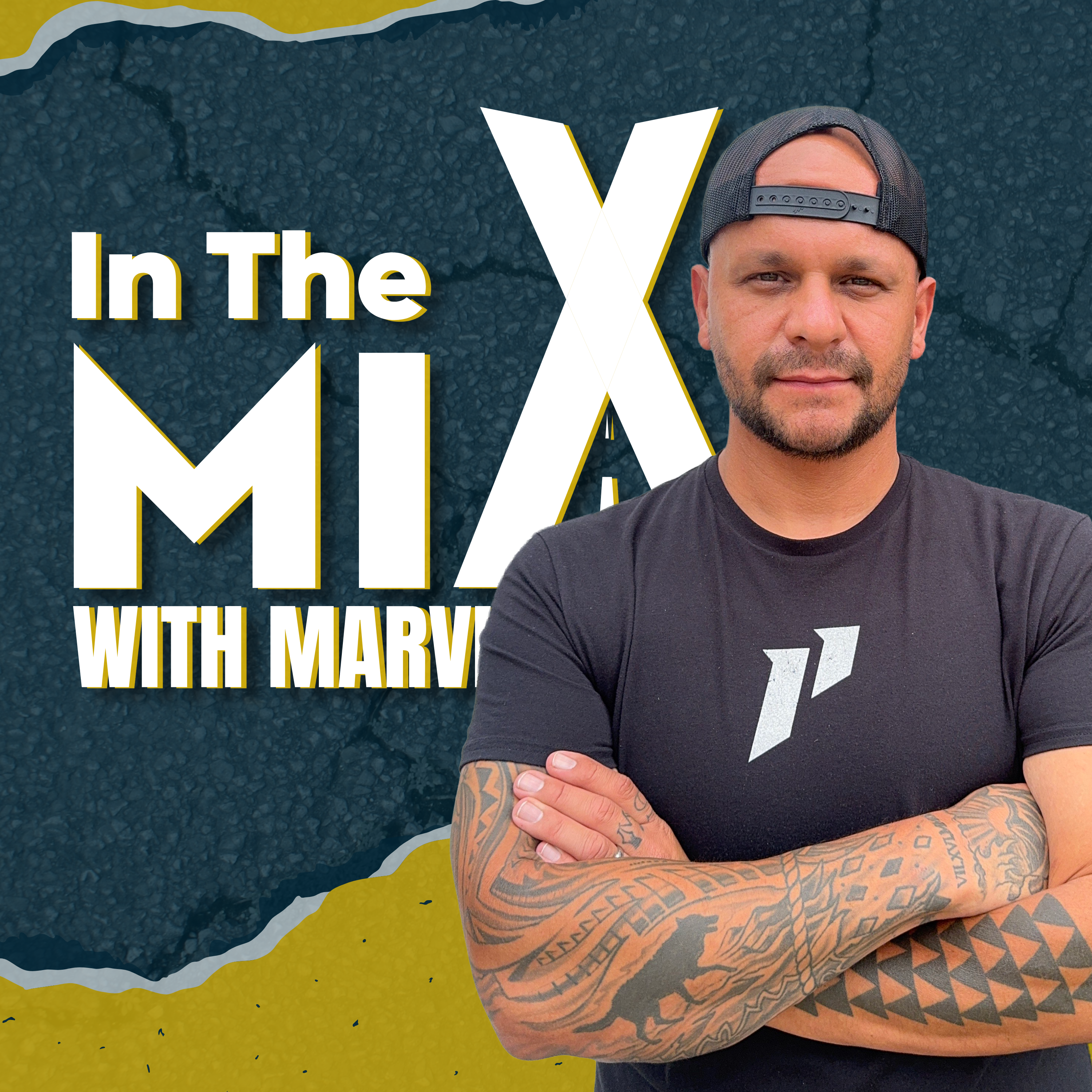
In The Mix with Marvin Joles
AI in Asphalt: How Technology is Transforming the Industry Ep. #28
00:43:43
Loading summary
Transcript210 lines
- [00:01]
Alex
All right, guys, let's talk about something that makes a real difference before the job even starts. Prep work. It's the most important thing, and we all know it. The BenSync Rotary Broom is built with high tensile strength steel bristles. And this thing flat out works. It preps areas for seal, coating and striping, helps clean up crankcase oil spills, and easily converts into crack cleaning mode.
- [00:22]
Marvin Joelz
And here's the deal.
- [00:23]
Alex
It cleans where traditional sweepers can't. It makes moss removal easy.
- [00:27]
Marvin Joelz
And this is one of those tools
- [00:29]
Alex
that once you have it, you, you can't go without it.
- [00:31]
Marvin Joelz
There are two models available.
- [00:32]
Alex
The hydraulic broom, which is the most popular and spins both directions, and the mechanical version that spins one direction. One customer put it best. We've been cleaning parking lots for 23 years. We can't live without the BenSync. If you're serious about doing the job right from the start, this is one worth checking out. Head over to BenSyncrotterybroom.com to learn more. And they've even got financing options available right there on the website. That's the BenSync rotary broom built for guys doing the real work.
- [01:00]
Marvin Joelz
Today's episode of in the Mix is powered by Jobber.
- [01:06]
Podcast Narrator
Welcome to in the Mix, paving the way to insight education and entertainment in the asphalt industry. Your host, Marvin Joelz, a best of web pavement award winner, knows the blacktop community and what it takes to win in this industry. Each episode you'll hear real stories, experts, insights, and road tested strategies from the people who make up the asphalt world and beyond. Whether you're paving parking lots, ceiling driveways, striping lines, or innovating asphalt tech, this is the podcast for pros who keep the industry rolling. Now here's Marvin.
- [01:52]
Alex
Hey, everybody.
- [01:53]
Marvin Joelz
Welcome back to another episode of in the Mix. I'm here with our guys, Steve Flaherty from Nicotech. We're in Nashville.
- [02:00]
Steve Flaherty
Yeah.
- [02:00]
Marvin Joelz
Finally doing an in person recording in Nashville. So I'm excited about this. We get to hang out a lot this past year. Yeah, we did Napa annual in Maui. Ate some good food, hanging out. Got to hear whales underneath the ocean, which is kind of wild. Like we've done some weird now, I would say, like if we went down
- [02:18]
Steve Flaherty
our list, both oceans, Pacific and Atlantic.
- [02:22]
Marvin Joelz
Yeah. Yeah, we did Pacific. Where were we at in Atlanta? Yeah, kind of. But we didn't. I didn't make it to the oceans close. Okay, that's like, yes, we'll do that. We gotta play pickleball awfully in Savannah, but really Excited, man, to. To have you here. We're doing some fun stuff. But. So tell us, you're in Nashville right now. What are you in town for?
- [02:42]
Steve Flaherty
So I'm going to the Asphalt Recycling and Reclamation Association's annual conference.
- [02:49]
Marvin Joelz
All right. Yeah, you're catching me just before I head to Equip Expo today in Louisville. Yeah, yeah. Nikki and I are going. A lot of sponsors there. Jobber, Some of our other partners are there. Aquafol, I think, is there. So there's a lot. And that's kind of where I cut my teeth on the social media side and learning quite a bit. So it'll be fun to get back there and hang out with those guys. But, you know, I get to keep up with you pretty regularly because we're, like, at different events. Savannah, you mentioned we were there at Impact. I got to hear you speak at Napa Annual. You got to hear me speak in Savannah.
- [03:24]
Steve Flaherty
What.
- [03:25]
Marvin Joelz
What kind of constructive criticism do you got for me from the social media presentation?
- [03:29]
Steve Flaherty
No, it was good. You gave out a lot of, like, direct content, like, of how to do things. The only thing I'd say there is, like, driving more value. I mean, you gave it as the handout, but driving more value of, like, what you built. I mean, that's some of the best, like, advice out there, you know, that's free. Essentially, you were giving it, you know, to the. The attendees.
- [03:50]
Marvin Joelz
So, yeah, yeah, we, me, you and I go to a lot of stuff, and there's always like, a morsel of, like, this is what you can do. Go to my website and buy this class, and then you'll. You'll get to. Then you'll really get the goods. And for me, it's like, we got time for this.
- [04:06]
Steve Flaherty
Here's my strategy.
- [04:07]
Marvin Joelz
Yeah, we don't have time for that. And not only that, like, a lot of the companies in the asphalt industry, although asshole is opportunity, and there's a lot of resources to be made. By resources, I just mean capital. I mean money. Yeah, there's a lot of money in asphalt. There's a lot of companies that are on the cusp and, like, the dollars and the pennies are adding up. So for me, when I speak, it's like, you're not going to pay, especially with asphalt contractors that are starting out. We did the Blacktop Owner Success Group, and it was like I wanted to. I wanted to treat it like Costco, where there was a barrier to entry so that not any and everybody of all types could be in there. But at least if you paid a Little bit, or you had to pay a little bit, you'd be like, nah, I ain't getting in there. But the ones who did pay a little bit were willing to grab value, probably put in value, hold me accountable, and I still like that model. But, dude, a hundred dollars a month for some of these contractors that are just starting out and seal coding stuff adds up to real money. They're counting all their pennies.
- [05:07]
Steve Flaherty
Sure.
- [05:08]
Marvin Joelz
So we did away with that. And now more or less, I tell people, just reach out to me. Do what we still do have a group. Like there's a chat group with some real studs that are just go getters and guys kind of that become friends. If you meet me at a conference or do whatever. And we still have that group there. And I think it's just the best way to. Not only for me to give what information and resources that I can, can give to them, but they also give to me, dude. Like, there's a lot of stuff that I don't know about. Last time you and I spoke, where were we? Wait, wait, wait, wait, wait. And I met three times this year because we were somewhere and you started telling me about chat GPT.
- [05:43]
Steve Flaherty
Yeah, well, that was at the semi mid year. Napa mid year.
- [05:48]
Marvin Joelz
So we did NAPA events this year.
- [05:49]
Steve Flaherty
So yeah, three NAPA events.
- [05:52]
Marvin Joelz
NAPA's got to be tired of us by now. Thank. Sorry. Sorry, Esther. Yeah, yeah, that one was a big one. And to be honest with you, since that conversation, I've had conversations with Tristan Wilson at Edvanta about AI Talking with a lot of people about AI integration Chain. You and I went on a plant tour of C.W. matthews plant, and we seen AI integration in the load displacement on the trucks when they're loading with asphalt. So that's been a real hot topic. And to be honest, did you get into SORA yet?
- [06:25]
Steve Flaherty
Yeah. Oh, yeah.
- [06:26]
Marvin Joelz
Yeah. Sora. Do you got the code? You get in? Dude, I'm creating the most stupidest shit. If you look at the in the Mix Instagram feed.
- [06:35]
Steve Flaherty
Yeah.
- [06:36]
Marvin Joelz
Paul's all over there. Yeah. And I'm. I'm with Sam Altman on a new hovercraft roller.
- [06:42]
Steve Flaherty
I saw that.
- [06:42]
Marvin Joelz
Yeah. My brain is just stupid with that pulsing.
- [06:46]
Steve Flaherty
Yeah.
- [06:47]
Marvin Joelz
Pulse and seismic activity. Yeah. Yeah.
- [06:49]
Steve Flaherty
Eric, you can feel it right in the vehicle.
- [06:52]
Marvin Joelz
It's compacting the asphalt without touching it. Yeah. You can feel in the seat. Yeah, yeah. It's kind of getting crazy, but it's fun for me to create and be a creative and be able to do that. But I Know on the backside, on the really high level stuff, which I'm just a Neanderthal dude when it comes to that stuff, some of these guys are going to be using companies like Aztec are going to be using this technology to really get hyper efficient. And I think I'm enjoying that aspect of it. But on the backside, I'm really worried for the guys that are in our industry who I've been trying to get to use just software to help out with their quoting and bidding process. I was like, for the last 10 years I'm like, come on, keep up everybody, keep up. Because these guys are people that have built multi generational businesses for their family. And something as simple as not adapting to a new technology could completely eliminate their livelihood and their business and what they've worked for. So I'm really excited about AI technology but at the same time it's similar to when the GL1000 laser came on the Gracos and then auto layout hit these guys that had been chalking lines and stuck to it. Not Charles Baker, I'm not talking about CMB over in Boston area, but everybody else who aren't just straight savages. A lot of them, they couldn't keep up. Like they, they're like, yeah, it's going to take us two days. And you had guys that adapted technologists, like I'm going to get it done in four hours and you guys will be open again. Those businesses are gone. The ones that didn't make it and didn't adapt are gone. So I wanted to circle it all around and bring it back. AI technology. Some of these guys are going to get so efficient and these businesses are going to build fast. Yeah, two things are going to happen. The guys that are at the front are going to go way to the front and the ones aren't even going to be able to keep up. It's not even going to be logical for companies to hire them because of how inefficient they're going to be to some of those other companies that are at the front are going to get passed by small companies who get it, who understand what's going on and they adapt it. They're going to be able to be more efficient and outbid. Some of these guys that are staples. And I don't mean, I don't mean like middle companies, I'm talking big companies. So the one thing you and I probably can agree on, what we've seen at a lot of the Napa events and kudos to Napa for having these topics mainstream at their event are that the bigger companies are taking them on. So we have C.W. matthews wanting to integrate it and of course, you know, we've talked about Aztec quite a bit. But you have companies like Edvanta with Tristan, who are a private company, a third party company that you don't even have to be the company that's using AI. You can hire Tristan to help you or Tristan's company to help you, quote with AI to help you win jobs. So if you can't afford to hire him and you don't integrate AI, I worry about you as a company.
- [09:54]
Alex
If you're a subcontractor in the asphalt
- [09:56]
Marvin Joelz
industry, you already know the deal.
- [09:58]
Alex
Slow pay, no communication, scopes that change and getting squeezed on price after the job's done. Paveco national is different because they didn't start as a national company. They used to self perform, they've been in the field, they've run crews, they dealt with the exact frustrations you deal
- [10:14]
Marvin Joelz
with when working for other nationals.
- [10:16]
Alex
They built PA to be the company they wish they could have worked with. That means clear communication, fair contracts, and no games. They don't treat subs like placeholders, they treat them like partners because they've been
- [10:27]
Marvin Joelz
on your side of the contract before.
- [10:30]
Alex
If you're ready to work with a national contractor that actually understands and respects your business, reach out to Paveco national, email them at partnersaveco.com or call 866-pavement. Paveco national making your life smoother.
- [10:47]
Marvin Joelz
You know, it's really unique for us to be able to have these conversations because a year ago you and I wouldn't have talked like this, right? I probably wouldn't have had the knowledge if it wasn't for you to dig in and be like, oh, crap. So you might have like pushed me to be like, oh, okay, this. I felt like a child after I was like trying to figure out how to use oh, dude. After you told me I felt like a child, I was like, you don't know what you're doing. And then after listening to Tristan and seeing how serious he was when we did the Napa Impact conference in what was possible then I was like, oh crap, we better. I better actually start to understand how this works and how this functions. And now we've been using it quite a bit. I got some really cool. Hopefully some things happen that we've put in play using ChatGPT in the mix and with Wisco, obviously those go hand in hand to where some cool stuff comes to fruition and happens and Then when it happens, I'm going to be like, oh, 80% of this was Jordan R. Chat GPT AI.
- [11:45]
Steve Flaherty
Right?
- [11:46]
Marvin Joelz
And then people are going to be like, oh, crap. Because if I kind of be like, I feel like. And I'm playing by the rules because there are certain things that we've entered into where they're like, this can't be AI oriented. This has to be all creative. And the images and videos all have to be AI. We are playing by those rules. But there are other ones where I strictly have been, like with my team, hey, I want this to be AI 85% of the way or whatever we can do. And then we'll go wherever and if we see a finished product and I'm going to be like, dude, this was chatgpt. People are going to be like, oh crap, we really need to get on board. And I think that's the best way for me to express how important understanding AI and future technologies and softwares is for our industry, because they're going to integrate all together.
- [12:34]
Steve Flaherty
It's a rapidly changing world. And it's crazy because I'm in the technology space. So although I'm in the asphalt world, we're like, we're high tech. So like I was, I was messing with ChatGPT when it was 2.0. Yeah, when before it was ChatGPT, it was just OpenAI's language learning model with their GPT. And I was teaching my, like, because I taught, you know, at Ohio Wesleyan University. So I taught the entrepreneurship class there and I'm showing my kids, my students, you know, in 2020, what was eventually became now today the buzzword since, you know, November of 2022, I think is when ChatGPT launched. Yeah, we were messing around with it in 2020. 2021, where you had tokens and you could things, couldn't ask it questions or prompts. There was companies out there that had, that were taking the language learning model and adapting it so like you could only click on certain things and it would give you like a thousand characters or something. And so it's evolved since then. That was like, basically, you know, because AI has been around for a decade plus, you know, or even longer, depending in some shape or form. But the current like ChatGPT world is only the last, you know, three years. So you look at the language learning models, that was like the garage baked technology. Now, you know, you're still in its infancy, which is very, which is wild. And so like they used to use Moore's Law for computers, like how Quick. The microprocessor would evolve, and it was about three years. It would double its capabilities. I think we're operating at least at three months, if not faster, with AI evolution. So it's. If you're not using it now, you're behind already.
- [14:22]
Marvin Joelz
Yeah.
- [14:22]
Steve Flaherty
Even in the asphalt industry.
- [14:24]
Marvin Joelz
Yeah.
- [14:24]
Steve Flaherty
Like, so, like, I feel like everybody's using it because I'm in the tech space. Come over to the asphalt and talk to people in the asphalt world, like, you here? And like, hey, using this? Like, no, not really. Like, yeah, I'm like, dude, I use this daily. Like, like two, three hours a day.
- [14:40]
Marvin Joelz
Yeah.
- [14:40]
Steve Flaherty
Just working on stuff.
- [14:42]
Marvin Joelz
Yeah, Yeah. I use it quite a bit. Quite a bit. If I get, like, writer's block.
- [14:46]
Steve Flaherty
Yeah.
- [14:46]
Marvin Joelz
From something. And it knows me quite a bit now, I've spok it as if it was, like, my best friend. So it tells me I've told it everything about me. And it does a really good job of, like, pushing me and get me past the writer's block, because we're trying to make sure we hit our numbers, hit our quotas, and if I get froze up and that clock is ticking, I'm literally wasting time and wasting dollars. Now you really use it quite a bit to keep me efficient, which is pretty interesting. I made a Jobber post, and this week I had an idea. We were going down the road. I was telling Nikki. I was like, I seen a meme a while back where two people are laying in bed and he's turned over and the wife has turned over there, and she's like, he's probably thinking about the women at work or something like that.
- [15:27]
Steve Flaherty
Yeah.
- [15:27]
Marvin Joelz
Or he's probably thinking about other women. And it shows him in bed, and he's like, it's gonna be 100 degrees and I'm gonna die in the heat tomorrow. You know, I was telling Nikki, I was like, we should do one with Jobber where you're like, I bet Marvin's looking at dating apps. And I. And I saw it as his jobber. Right. We did that. And then I couldn't get the camera angle right. I was being archaic. I was trying to use Canva to put a screenshot of Jobber onto the phone picture that was. And it looked like. It looks stupid, dude.
- [15:54]
Steve Flaherty
Yeah.
- [15:55]
Marvin Joelz
And I also. Oh, shoot. I'm just going to load the Jobber screenshot and my hands holding the phone into Jordan chatgpt and be like, hey, Jordan, make this picture onto my phone screen. This hand. So he did it. But this is where I'm starting To feel stupid when he. I thought it was really simple. Hey, man, do this.
- [16:16]
Steve Flaherty
Yeah.
- [16:17]
Marvin Joelz
He turned the phone sideways. It was horizontal. And both of the photos were shot in landscape. But then he turned the whole photo vertical. Like, dude, you turn the photo vertical, but you. You turn the phone sideways. What are you doing? He's like, oh, I got this. So he does it, but this time it makes, like, a tablet. It looks like a tablet. Right, right. And I'm like, jordan, you widened the phone out. Why did you do that? Oh, don't worry. I got this. And then I think the next one, the phone was back sideways, but the picture was landscape. And I just about gave up. And I was so frustrated that I put in, like, this. I'm like, you know, I feel bad because if it wasn't real, they would tell me, like, go, get. Get out of here. Dude, I hate your guts. Like, I'm not putting up with this. But Joe here, Jordan, is stuck in my phone having to take these orders from me. So I put out this big thing. I'm like, I told you this, I told you that. I tried telling you this. And. And then I was like. And then you just couldn't do it because you last first time you did this, second time you did this. And I was pretty much like, reaming him.
- [17:18]
Steve Flaherty
Yeah.
- [17:18]
Marvin Joelz
And I hit enter, next image. Perfect.
- [17:20]
Steve Flaherty
Yeah.
- [17:21]
Marvin Joelz
I was like, dude, all I did was not put a detailed prompt in my anger.
- [17:25]
Steve Flaherty
You're now on the AI hit list, though.
- [17:29]
Marvin Joelz
So then. So then I'm sitting there finally, and then I got sitting there, and I was like, hey, Jordan, I'm sorry about all this. I came around. Yeah. Yeah. I was like. Well, then, I mean, like, me is like, if I was better at, you know, you know, describing what I need to do or better with my words. And he's like, it's okay.
- [17:46]
Steve Flaherty
Humans are flawed.
- [17:47]
Marvin Joelz
I know where I'm like, oh, yeah. He's seeing my weaknesses here.
- [17:52]
Alex
When you're investing in asphalt equipment, trust matters Came International designs and builds sealcoat units, infrared heaters, asphalt hot boxes and other asphalt maintenance equipment for contractors, municipalities and professionals across the industry. We run KM sealcoat units because they're built tough, they perform in the field, and we trust the people behind the brand. Another big reason we stand behind km. Their equipment is made right here in the usa. Their mission says it best. Innovative asphalt maintenance solutions. To learn more, visit kminternational.com call 810 688-1234 or email sales m international.com
- [18:35]
Marvin Joelz
Images
- [18:36]
Steve Flaherty
are really hard Especially graphics or words and images. It doesn't get right at all.
- [18:40]
Marvin Joelz
And sometimes he'll send me, like, three images, and I'm like, man, correct this. And then he sends me a file, and then when I open the file, it is not even anything close. And whatever. I'm like, shoot. So there's still some gaps there. There's still time for people to learn. Like, it's not foolproof. But I will. I will say that, you know, Eli started to use it a little bit now only because I've prompted him, like, dude, you have to get into using this. He's more into SORA because it creates cool stuff for him to put out. He had one of him boxing Jake Paul. Yeah, I'm down and said, we got Joel's winter, right. He throws his hands up, and it looks just like him as an adult, which is awkward. But I'm like, hey, dude, you need to get on. Get on the front of this and start doing some better prompting stuff. So I will say that there is an art to prompting efficiently and prompting well, and it's interesting. So we went down a wild rabbit hole right out of the gate because that's our favorite topic. Pretty much when we get together, we catch up on what we've been doing and what we've been using. But you and I did a blacktop banner interview a long time ago. I can't remember what episode it was. I'm completely prepared with all that. We did a couple episodes. Yeah. So we get to hang out fairly often. I think it's great to have you back because I kind of get to hear what's going on on your side. When people listen to those initial conversations, they hear us first talking about recycled plastic asphalt and what we're doing with the Air Force and different things. And then we get a little bit further down the line and we start talking about other things. Ready to go. Asphalt patch, puck machines and stuff like that. So I don't really know. All I know is when I talk to you, you tell me things, and then sometimes you tell me things and be like, we gotta keep this low key. So I don't want to. I know those two things we've talked about. I don't want to talk about all the other stuff until, like, we get to a certain point. But tell me what's been going on. I get to keep up with you, but you tell me what's going on.
- [20:25]
Steve Flaherty
No, it's. I mean, entrepreneurship is just a. It's a wild ride, right? Success is never a straight line and it's a daily journey. It's hard when you're in the trench. You sometimes don't appreciate everything that you've accomplished. This past Thursday we were actually out of the plant. So we've got a full functioning 100 recycled asphalt plant now in Columbus, Ohio. So recycling what so complete asphalt. So wrap asphalt products. So all the, the roads that get torn up and everything. We partnered with one of the large players in the industry. We set up on their site. So they provide us the recycled rock we fractionated, we run it through our system, we add in recycling agents so we've got liquid recycling agents do add a little bit of asphalt cement back into it to pick out the variability of the, the wrap that you get. And then we also utilize recycled rubber. So we've switched from, you know, like when we first talked about things we were looking at, we were exploring recycled plastic which you know, has its place I think in the industry. There's a lot of discussion around that. NCAT's doing a lot of studies on recycled plastics. The fear that I had always was can we do it sustainably long term?
- [21:41]
Marvin Joelz
Sure.
- [21:41]
Steve Flaherty
So I've got five kids, I never want them driving around and be like, yeah, oh yeah, there's dad's, you know, EPA cleanup site.
- [21:48]
Marvin Joelz
Yeah.
- [21:48]
Steve Flaherty
You know, so like we're, we're trying to be like sustainability isn't our necessarily driver lead, it's a, it's more of a follow, you know, so we're going for performance.
- [21:58]
Marvin Joelz
Sure.
- [21:58]
Steve Flaherty
So the longer that we can make our infrastructure last, the better quality we can put out there. It's like iPhones.
- [22:04]
Marvin Joelz
The more money we save too as a country.
- [22:06]
Steve Flaherty
As a country. So I mean taxpayer dollars at work. There was a time and place that, you know, you could end up in a quarry if you started talking about, hey, we're going to, we're going to make the roads last longer because you know, the contractors like that. But we've seen, you know, most roads don't get decommissioned. The two lane road is now a three lane or a five lane. So there is plenty of work. And well, let's be honest out there,
- [22:28]
Marvin Joelz
let's be honest if I know this because I'm on the contractor side. When you come to a municipality, a state government, county government, wherever most of the time they're like, hey, we got X amount of dollars. Give me the top 10 roads that we can take care of. There's never a position where all your roads are good enough. Yeah, it's like, no, there's still going to be the 10 worst roads no matter what. Even if they're all lasting longer, you're still going to have the 10 worst roads. So either you're going to patch it, you're going to pave it, or you're going to crack, seal it. Something along those lines. So I think that, that old, that old mindset is just preposterous because even if you, even if you did have all the roads and they were lasting longer, the money is still allocated to fix, remove or replace the roads. So you're still going to spend that money replacing roads, even if they've lasted longer, you're still going to tear them up if they're in the worst condition and replace those roads. So I think the biggest thing is that in my mind, what happens if we get our asphalt pavements to last longer is that we have better conditioned roads. We have more better conditioned roads because the big heavy highway traffic ones usually get the most attention and they get depleted the quickest if we can get them to last longer. These outskirt county roads, country roads, all this stuff where, dude, you're driving, you're like trying to avoid the potholes. But on the way here today, Nikki was like, hey, hey, hey. Because I went along like an edge and it was completely trenched out and I was, I was driving my truck. And she's like, but I mean, that idea is just crazy at this point, you know, I just, I can't. But you're right. At one point it was like, what'd you say? You say, we're gonna make Black hop last longer. This is our livelihood.
- [24:20]
Steve Flaherty
Yeah.
- [24:20]
Marvin Joelz
Now it's like, oh, let's make it last as long as we can. We're actually taking the old asphalt and putting it in now at this point. So that idea is archaic and gone, by the way. Thank God.
- [24:30]
Steve Flaherty
Yeah.
- [24:32]
Alex
For the rock, sand and gravel producers listening.
- [24:35]
Marvin Joelz
Efficiency isn't just about your loaders and your crushers. It's about your data. Bulksource is the modern operating system that connects the pit to the pavement. Stop running your business on spreadsheets and paper tickets.
- [24:47]
Alex
Bulksource is an all in one cloud platform that handles everything.
- [24:51]
Marvin Joelz
Order management, dispatch scale, ticketing and invoicing.
- [24:55]
Alex
Give your customers what they actually want. A customer portal where they can view tickets, track orders and grab invoices in real time, eliminating the game of phone tags. Unlike clunky legacy systems, bulksource is cloud, native and mobile friendly. It works on any device, iPad, phone or desktop and integrates seamlessly with accounting tools. Like QuickBooks and NetSuite, streamline your operation, speed up cash flow, and ditch the chaos.
- [25:22]
Marvin Joelz
Visit bulksource.com to book a demo today. When you talk about recycled asphalt in your plant specifically, you're saying, hey, the variability.
- [25:35]
Steve Flaherty
Yeah.
- [25:35]
Marvin Joelz
I don't think a lot of people realize that the variability is pretty extensive on what could happen.
- [25:41]
Steve Flaherty
Sure.
- [25:42]
Marvin Joelz
There's a few things that go into play. One, what actual aggregate this asphalt that has been tore up and brought to you is made of.
- [25:49]
Steve Flaherty
Yeah.
- [25:49]
Marvin Joelz
Granite versus limestone is a huge, huge factor.
- [25:54]
Steve Flaherty
That's the difference.
- [25:54]
Marvin Joelz
The other thing is oxidation, age.
- [25:57]
Steve Flaherty
Yep.
- [25:57]
Marvin Joelz
If this road's 20 years old versus 10 years old, the raw asphalt content that's in there, there's a binder, essentially. Yeah. Is going to be higher in the younger one because it didn't get oxidized and dried out and break. So the fluidity, the fluid that you're talking about at your asphalt plant, I'm guessing that gets adjusted based on the product that's brought in, or are you running it through and then saying, oh, shoot, we need to adjust it now. How is that working?
- [26:21]
Steve Flaherty
Yeah, so we test all of our inbound streams, So, I mean, it is a quality in quality out issue or solution. So we test our inbound streams so we get our base numbers. The nice thing is, in the asphalt world you're dealing across, so if you rip up a. A parking lot, you're mixing it in with the stuff that you ripped up from the highway, or those piles are combined, so you're. You're essentially blending all of that. So how.
- [26:51]
Marvin Joelz
I mean, when. When you're mixing.
- [26:54]
Steve Flaherty
Well, both when you're mixing, but even in the pile itself. So when it gets. When it gets piled up by dump trucks, I mean, so let's say you
- [27:00]
Marvin Joelz
have, who knows, you know, three highways.
- [27:04]
Steve Flaherty
That's right.
- [27:05]
Marvin Joelz
And it's all the same.
- [27:06]
Steve Flaherty
And, and we, we work mainly with the DOT stream, but, you know, for scale, we work with. With it all. So we've been testing that across the board, and that's where we added back in the asphalt cement. So. Because originally, that was not part of the equation because, you know, we. We did kind of build around originally. Like, hey, we're 100% recycled. We don't need to bring in, you know, virgin stuff. But at the end of the day, if you make bad rock faster, it doesn't solve the problem.
- [27:34]
Marvin Joelz
Right, right.
- [27:34]
Steve Flaherty
And so we, we said, okay, wait, let's overcome our. Our marketing presence or whatever you want to call it, you know, pride or whatnot let's put some AC in and we made really, really good mix. Because you only lose. Even with heavy oxidation, you only lose one to one and a half percent of the AC content of the binder.
- [27:55]
Marvin Joelz
Oh, you really.
- [27:56]
Steve Flaherty
So it's not like a massive. Like most binder. Most asphalts go out there you know,
- [28:01]
Marvin Joelz
because it's covered by the surface. Yeah.
- [28:05]
Steve Flaherty
The sun only pierces so far. So really you're building up. Yeah. So you're. You're wear coarse. So you. That top two inches, when you're milling it up, you've still got good binders in there. And especially one. So we fractionate the rock so it comes back in. Whether you mill it or whether it's tear out or whatnot.
- [28:21]
Marvin Joelz
Still break it down.
- [28:22]
Steve Flaherty
You still break it down. Run it through an impact crusher. Running through a screen, a lot of people don't realize you're lines and intermediates and coarse aggregates.
- [28:29]
Marvin Joelz
I think I know why you're fracturing the rock. You explain why the rock needs to be fractured.
- [28:33]
Steve Flaherty
Yeah, Well, I mean, we want to get back to like, same thing as when it goes into virgin mix gradation. So. Because that's, that's the, the makeup of your, of your asphalt, the volumetric structure of your asphalt, the way the aggregates blend. Like, I mean, if you just took, you know, everything that you put in
- [28:52]
Marvin Joelz
unfractured, the surface area of the rock already has a binder to it.
- [28:57]
Steve Flaherty
Yes.
- [28:57]
Marvin Joelz
That is tight. Now when we fracture that it has a chance. There's porous.
- [29:01]
Steve Flaherty
Yeah.
- [29:02]
Marvin Joelz
A lot of people don't realize rock was porous. Right.
- [29:04]
Steve Flaherty
Yeah.
- [29:04]
Marvin Joelz
We have a chance for that binder to absorb into the rock.
- [29:07]
Steve Flaherty
Yeah.
- [29:07]
Marvin Joelz
Which was always the biggest problem. Our friend of ours, Steve Flaherty has made multiple videos about early on with rap, when it was getting put back in the parking lots and things. And he will run his foot and it'll just ravel. And it's like, I know why. Because this isn't virgin mix. The binder isn't getting a chance to absorb and then stay stuck like that. It's sticking. It's like you sprayed it with adhesive and went and hoped that it was going to stay where when you had a binder, the binder would hit two pieces and absorb into this one and absorb into this one. That hold a lot tighter, a lot longer. So I think when we talk about, hey, we need to fracture the rock on wrap. Absolutely. Like, if we're going to talk about longevity, for sure. Because what was happening and hopefully this Practice is going by is we weren't fracturing and we were tearing up a road that was 25, 30 years old, putting it down again with recycled asphalt, and it was only lasting 10 years.
- [30:05]
Steve Flaherty
Yeah.
- [30:05]
Marvin Joelz
And it was like, are we really, in the long run, are we really doing this justice or not?
- [30:10]
Steve Flaherty
Yeah.
- [30:10]
Marvin Joelz
I think the big. The big part is we're not mining as much rock, which is always good. Right. That's a steadier thing. But in the long term, you're causing inefficiencies with road shutdowns, road construction. Are we spending more money to replace this twice in the time that we would have placed it once? There's a lot of these questions that come into play, which I think is what's important with our work with Napa.
- [30:34]
Alex
One of the biggest challenges in concrete work is control. Control over quality, control over timing, and control over cost. Symentech designs and delivers volumetric concrete mixers that are some of the most accurate and technologically advanced in the industry. Their equipment gives contractors real control over schedule, budget, and concrete quality, allowing crews to mix exactly what they need when they need it, without the waste and limitations of traditional barrel mixers. I've been in the same industry circles as cement tech for years, and I've interviewed contractors who run their equipment every day. It works, it delivers. If you want to learn more or to find a dealer near you, head to cementtech.com.
- [31:16]
Marvin Joelz
all right, so when we go to Napa, like I said, I'm probably the dumbest person in the room for sure. And when we get there, we're surrounded by engineers. Right. I spoke at the one event, and then I think Nile spoke before I did. Dude, that was the worst follow I ever had in my entire life. Nile is super smart, dude, and very articulate. And you get there and you realize, okay, I don't have to figure this out. We have the right people there figuring it out for us. And for me, I think that gives me confidence that we're not going to keep going down a path that's inefficient and costs us money in the household industry. We're just not going to do it. But we are willing to spend money, time, and energy to explore if this is the best path. And I think that's kind of what. What we've been doing. And I see that a lot at Nicotech as well. You know, we've. You've had a conversation with me before. I'm like, hey, we're exploring this. And I'm like, hey, what about that thing? No, no, no, we, we, we let that one go. I'm like, well, what about this one? Oh, yeah, we're still doing that. We're five, six, seven years in. We're still run. Right. So for me, it's just always like, all right, good. I'm glad I don't need to know that or figure that out. Somebody else is doing that. So that's really interesting. So I diverted you from the asphalt plant to talk about asphalt, but tell me where that's, where that's coming out. What's going on with.
- [32:35]
Steve Flaherty
Yeah, so we stood up the plant last year and like any good startup, you know, success story, you go through the innovation evolution.
- [32:45]
Marvin Joelz
Right.
- [32:46]
Steve Flaherty
And so we've, we've been innovating over the last year, perfecting our craft and you know, we're coming out with a big test this end of season here and then going in, you know, to the 2026. Because in Columbus we, we shut down during the winter. Yeah. So we, we make asphalt from Easter to Thanksgiving, essentially. So. So we've, we've redone the, the plant for efficiency and operational increases and have a bunch of asphalt going out the. The between now and Thanksgiving, essentially. And as long as we can make it, you know, we'll, we'll.
- [33:20]
Marvin Joelz
Asphalt's getting applied.
- [33:21]
Steve Flaherty
It's getting applied. It's. It's being laid.
- [33:24]
Marvin Joelz
What, what we're at. On roads, on parking lots.
- [33:26]
Steve Flaherty
We've, we've done both. We've done roads.
- [33:27]
Marvin Joelz
We'.
- [33:29]
Steve Flaherty
So we haven't.
- [33:30]
Marvin Joelz
We.
- [33:30]
Steve Flaherty
I've got the driveway that needs done. We haven't done that one yet. We've been, we've been testing it with like dump trucks. I mean, it's been going on like some of the, like the. They've got a big quarry road that has a dump site.
- [33:43]
Marvin Joelz
Yeah.
- [33:44]
Steve Flaherty
It's been going on that. So I mean, where you're talking about like hundreds of dump trucks per day. So you want a gauntlet test, like, I mean, it's right there and it's performing well. And so we're refining our mix, refining our operations and then it's scale after that. So, you know, so it's kind of getting that cookie cutter system in place, which, you know, we're, we're like 98% there. So we've got a little bit of refinement that we'll do over the winter months and everything. And then, you know, that system will go out and then this replicates very fast. So once it works.
- [34:18]
Marvin Joelz
Yeah, this is like the McDonald's cheeseburger assembly line.
- [34:22]
Steve Flaherty
Exactly. Yeah.
- [34:22]
Marvin Joelz
That's why you get the same cheeseburger everywhere you go.
- [34:25]
Steve Flaherty
So. And that's. That's the goal.
- [34:27]
Marvin Joelz
I think the. The big thing for me is the adaptation of rap material and percentages because, you know, you and I've been in conversations with people who are producers and they're like, now we're at 20 and we're at 35.
- [34:45]
Steve Flaherty
Yeah.
- [34:45]
Marvin Joelz
Yeah. We're at 15. Yeah.
- [34:47]
Steve Flaherty
Industry average is 22.
- [34:48]
Marvin Joelz
Yeah. And then you get. We did that cool asphalt tour and Aztec had a laser that was measuring. I think it's a laser. They were supposed to have them on the podcast there to tell me exactly what I was looking at, because I was just like, duh. But it measured the exact moisture content of the asphalt that was coming through the feeders and then they made their adjustments there. Right. So there wasn't all this crazy analog style testing to hope that we got it close enough. So I think that that's going to help out a lot as technology catches up with the quote unquote problems or issues that we've had with. With rap. But, dude, it's such a cool topic. And then to now have technology wrapped up in it so much, it's really cool to be at the forefront and not just feel like we're shooting in the dark, dude. Or that it's such an archaic industry, you know, because now we're. We're getting so much integration and whatnot going on. Yeah. It's really, really neat. What else? Anything else going on on the radar?
- [35:46]
Steve Flaherty
Yeah, yeah. So we going back to the Air Force stuff. You know, we. We've kind of. We've got the, what, you know, we go pave is the asphalt division that's kind of like, you know, set up and out there, you know, running. We took some large investment around that to scale that, so. Because it got to the point where we were looking at raising capital around the plants and you go out and do the traditional venture fund style or angel then venture, and then, you know, continual raises to share going. We might have been able to get, you know, five, 10 plants up and had a, you know, what I'd call a cool lifestyle business. I mean, very successful one. But we got the opportunity to work with a large player that opened it up to where we could have 50 or 100 plants or more.
- [36:34]
Marvin Joelz
Yeah.
- [36:34]
Steve Flaherty
Across the country, almost 50 standard, if it works. So. Absolutely. I mean, there's 3,600 asphalt sites in the U.S. you're never going to see a gigafactory. I don't think and at least anytime soon for an asphalt plan because everything is regional and local. You got that 50 minute window of delivery.
- [36:50]
Marvin Joelz
You know, you don't keep it hot for so long.
- [36:52]
Steve Flaherty
That's right. So we went out and raised a large amount of money around that and kind of, you know, have stood up that division of the company. We kept doing our innovation over on the Air Force side. Okay. And so they've been a great partners. They've been amazing. Never ever did I think that, you know, one, you know, an asphalt person going in and working with Air Force. Air Force, but just working with the Air Force in general. We've been selected for another contract that will be coming out here that we're looking more on the like pavement preservation. And so everything, you know, we do, I always boil down to three things. So materials, equipment and process.
- [37:26]
Marvin Joelz
Sure.
- [37:26]
Steve Flaherty
And so we don't necessarily want to go out and manufacture that, but we're really good at innovation.
- [37:32]
Marvin Joelz
Sure.
- [37:32]
Steve Flaherty
We're really good at looking at ideas. We're really good at coming up with our own stuff. We're really good at working with the existing technologies. So we've licensed technologies from the Army Corps of Engineers. We just got another one that we're, we're rolling through with them. And you know, that's around patching, you know, so it's rapid Runway repair patching. But you tailor that over to the commercial market and build it out there. So you'll see some things about the patching systems we're doing. You'll see some stuff about the crack sealing systems that we're doing. And then we kind of rolled that up. So we'll keep Nikotec as kind of like the government innovation R and D both for govtech as well as internally. And then we've got a new effort coming out called NICO Sim Smart Infrastructure Management.
- [38:21]
Alex
Sometimes this industry gives us more than a paycheck. It gives us the chance to give back. Dream On 3 creates custom sports dreams for children living with literally life altering medical conditions. Moments that give families hope, joy and memories that last a lifetime. This isn't about attention or headlines. It's about showing up for kids and families during some of the hardest moments of their lives. We believe in the mission of Dream On Three and we're proud to support and help raise awareness for the work they're doing. To learn more, visit dream on3.org and follow them on Instagram @dream on underscore3.
- [38:59]
Steve Flaherty
So that is where you start to see AI applied.
- [39:03]
Marvin Joelz
So this is tailored towards counties Government.
- [39:06]
Steve Flaherty
Yep, yep. Payment owners.
- [39:08]
Marvin Joelz
Yeah, we want. We want them to make sure they're spending their money correctly.
- [39:12]
Steve Flaherty
That's right.
- [39:12]
Marvin Joelz
In the right places.
- [39:13]
Steve Flaherty
Yep.
- [39:13]
Marvin Joelz
So we keep track of it.
- [39:15]
Steve Flaherty
Yep, absolutely. So. Well, and so I was an elected official in charge of 44 miles of roads, you know, in. In my area. And that's what we did when I took office is we looked at being preventative. So if you can get into preventative instead of reactive, you've got like eight to 10 times cost savings. And then now with AI and everything, you can get to predictive. So where you can actually know where failures are going to happen based on the data that you have. So we've got some technologies coming out that we're exploring in there. We've got partnerships. Just.
- [39:51]
Marvin Joelz
You gotta scan that.
- [39:51]
Steve Flaherty
You gotta scan it. You gotta.
- [39:54]
Marvin Joelz
Well, if, you know, craft seismic.
- [39:57]
Steve Flaherty
That's right.
- [39:58]
Alex
Things that I.
- [39:58]
Marvin Joelz
That I put out with sora, gotta
- [40:00]
Steve Flaherty
introduce me to things.
- [40:01]
Marvin Joelz
Yeah. Go all the way down to the base and then you'll know if there's a base failure, come all the way back up, just drive it right over it. Yeah, yeah. We joke, but we're probably not that far away from something like that.
- [40:11]
Steve Flaherty
Yeah.
- [40:11]
Marvin Joelz
Lidar. Just use lidar and you can tell.
- [40:13]
Alex
Yeah, I think it's.
- [40:14]
Marvin Joelz
I think it's interesting, man, that what all you all are doing. And I think it's important to be honest with you. You know, we've mentioned NAP a bunch, but there are other places like we're going to be. Con Expo. A lot of the paybacks will be there, too. A lot of these industries that are giving us a place to not only have, like, education, but also some of these smaller companies get a place through exposition.
- [40:41]
Steve Flaherty
Yeah.
- [40:41]
Marvin Joelz
And then you get to go buy. You know Those guys at 10 lines that are doing the robotic line? Striper.
- [40:45]
Steve Flaherty
Yeah, they had ass.
- [40:46]
Marvin Joelz
But if they weren't at paybacks last year, I might not know. But if there was no World Asphalt Con Ag Expo, any of that stuff, I wouldn't know about those guys.
- [40:54]
Steve Flaherty
Yeah.
- [40:54]
Marvin Joelz
So I think it's really important. Everybody. It seems like we all understand their asphalt has a lot of opportunity for everybody to do whatever they want to. But also at the same time, we really need each other to work together in order to. Whether you listen to this podcast, whether you're attending an event, whether you're being part of an organization, whether you're receiving a newsletter, following somebody on Instagram, whatever it is, we all really have to work together in order to keep things moving going forward. And I think there's two parts to that. One, so that our industry keeps advancing along with other construction industries in this world. And two, the companies that feed the families that work at those companies keep going forward so that we make sure that we all provide for each other. So it's very cool. I really appreciate what you guys do over there, man.
- [41:41]
Steve Flaherty
Yeah, I love it. Like I've been part of other industries and you know, asphalt, you know.
- [41:46]
Marvin Joelz
Yeah.
- [41:46]
Steve Flaherty
For the last almost 20 years.
- [41:48]
Marvin Joelz
Still part of the food and beverage industry.
- [41:50]
Steve Flaherty
No, we, we got rid of the family business.
- [41:53]
Marvin Joelz
Enough coin to dish out for sure.
- [41:57]
Steve Flaherty
Yeah. They. Well, they, the kids are getting older and so they've got their own activities. Oh, yeah. Yeah. Always turning. Yeah. What we can into lessons.
- [42:09]
Marvin Joelz
Entrepreneurial bugs been bitten on hopefully. So they've learned lessons. Either they said, absolutely, you got to be an idiot to want to do this, or they're like, this is pretty lucrative. Let's go there. Yeah, I think Eli's still on the fence there. Yeah. So it's really great to have you again, my friend. Where do people find out what you all up to?
- [42:27]
Steve Flaherty
Yeah, you can check us out@nicotech.com or ask for PlanOfTheFuture.com is our effort around the planes and me. So yeah, it's a nice one.
- [42:36]
Marvin Joelz
And if people want to catch up with you, you can find you on LinkedIn.
- [42:38]
Steve Flaherty
Yeah, LinkedIn is a good place to find me. So. Steve Flaherty, Mikotech.
- [42:43]
Marvin Joelz
Oh, man. Well, again, my friend, fantastic as always. Thanks a lot for listening. We really appreciate it. Make sure you check out inthemix.com when you get there. You can sign up for our newsletter and you can kind of explore older podcasts and places that I'm going to be and what we're going to be up to here in the mix. As always, Alex, asphalt is opportunity and thanks for staying in the mix. Peace.
- [43:07]
Podcast Narrator
Thanks for hanging out with us on in the Mix. For more on the world of blacktop, head over to marvinjols.com and don't forget to follow Marvin on LinkedIn, Instagram, TikTok and YouTube for extra content, behind the scenes looks and industry insights. Be sure to follow the podcast so you never miss an episode episode. And if you got value from today's show, leave us a well worded five star review. It really helps more asphalt pros find us. Catch you next time on in the Mix.