← In The Mix with Marvin Joles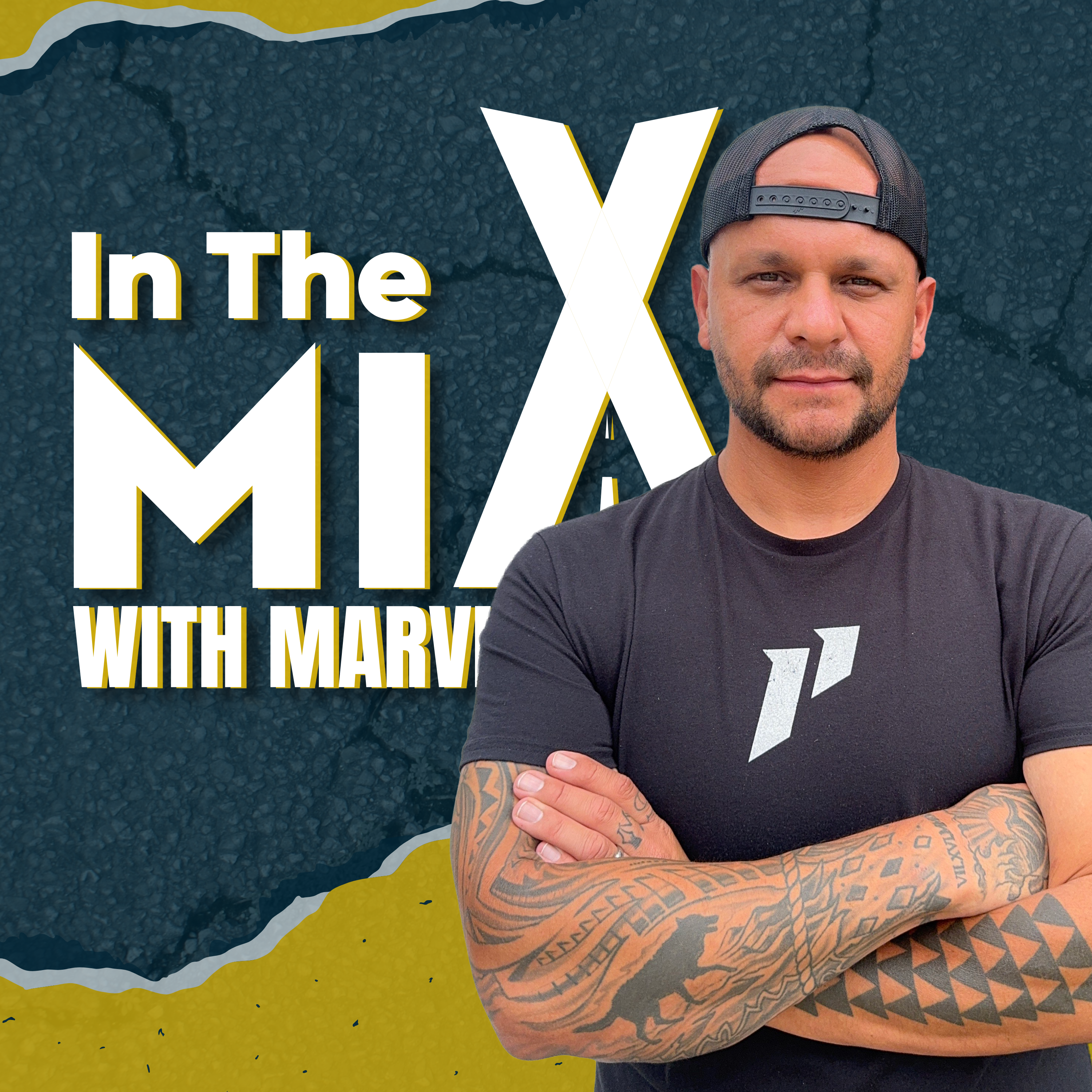
Loading summary
Transcript281 lines
- [00:00]
A
Today's episode of in the Mix is powered by Jobber. Welcome to in the Mix,
- [00:11]
B
paving the
- [00:11]
A
way to insight, education and entertainment in the asphalt industry. Your host, Marvin Joelz, a best of Web pavement award winner, knows the blacktop community and what it takes to win in this industry.
- [00:25]
B
Each episode you'll hear real stories, expert insights, and road tested strategies from the
- [00:31]
A
people who make up the asphalt world and beyond.
- [00:35]
B
Whether you're paving parking lots, ceiling driveways,
- [00:38]
A
striping lines, or innovating asphalt tech, this is the podcast for pros who keep the industry rolling. Now here's Marvin.
- [00:54]
B
Hey, everybody. Welcome back to another episode of in the Mix. And you know, it's. I feel pretty blessed sometimes because I get to kind of cross the line from blacktop banner days now to in the Mix days. And even though we're getting a wide variety of guests from all over the world, from all walks of life, whether that's the UFC or people that are getting movies made about them or whatever, we still kind of get to go back to our roots and our base. See what I did there, Brandon? Our base of the asphalt industry. And here we are. We're back again today. My guest is Brandon Noel and Brandon is actually my editor from time to time. I report to him from time to time if I write an article for Pavement Maintenance and Reconstruction magazine and others. And we got him here today. We were just talking about it snowing this morning in Nashville and that he used to vacation in Nashville as a young man. Fully bearded young man, but still a young man nonetheless.
- [01:52]
A
I was always rocking a beard early on.
- [01:54]
B
But I'm trying to.
- [01:56]
A
You know, I played basketball in high school.
- [01:58]
B
Shut up. Really?
- [01:59]
A
Yes. I played basketball in high school and I. We were all had. We had to be clean shaven.
- [02:05]
B
Okay.
- [02:06]
A
And this is a topic of really boring, like, minutiae, but my daughter is a cheerleader for high school basketball right now. Senior. And I've been going to all the basketball games. And at her school, which I had never attended before because she'd never cheered before. This was like her little senior trick. She was like, got. Yeah. She's like, I'm gonna do something different. Right. She'd always been a band nerd. Sure. And geek. And then she's like, I'm gonna do cheerleading. And turns out she loves it.
- [02:32]
B
Great.
- [02:33]
A
She's having a great time. And I'm having a great time because I'm going now to all the varsity basketball games. Turns out our. Her school is actually pretty good. But things have. Things have changed. Things have changed. I know your son is big into high school sports.
- [02:47]
B
Yep.
- [02:48]
A
He looks like an incredible high school wrestler from.
- [02:51]
B
Yeah, he's doing well. Yep.
- [02:54]
A
So kudos to him. I was not great. When I say I played high school basketball, I mean, I played freshman. Sure, sure, sure. And then I got into music. So, like, I joined a band and I dropped out of court.
- [03:05]
B
That was my daughter Elizabeth's way. She did. She did basketball and then switched to band and chorus. And she's full steam. Has been in high school since then. So, yeah, she went the same route.
- [03:15]
A
But.
- [03:15]
B
What do you mean things have changed?
- [03:17]
A
I live here in Northeast Ohio, and like I was saying, when I played basketball, we had to be clean shaven, even though not all of us were growing beards for sure. Couldn't have facial hair on the team. We all had to wear, like, the same shoes on the court is very strict. And when LeBron James played high school basketball here in Northeast Ohio, yeah, he got in trouble, famously, because he had tattoos and he had. He had to like, cover them up. So I'm at my daughter's varsity basketball game now and like half the team has. They're tatted up. They don't gotta hide them. The kids, they. Some of them have facial hair, some of them don't. I'm like, yep, this is my. I'm 40 years old now, Marvin.
- [03:58]
B
Yeah.
- [03:58]
A
And I, I have reached that threshold now where I'm looking at the current youth and I'm like, the world has changed, man.
- [04:06]
B
It's different. Yeah, These kids nowadays, they don't understand. I turned 40 in September, and you were talking about Eli in high school sports. Eli is a wrestler, and this is the first year he's. He's a freshman, so he's never really wrestled anybody older than him. In wrestling world, when you're in your youth, you wrestle the same year or so that you were born and then same weight class. And we went to one of the first tournaments this year. You know, we knew he would probably be wrestling seniors. He's pretty good. And within the second match, he was wrestling somebody with a full sleeve, a full beard. And Eli was like, this is. He looked over at me and there was just like this deer in the headlights of, oh, my God. I said, you know something about old men. I said, they get tired quick. I was like, just wear them out, son. I was like, take them to the end and wear them out. And sure enough, that's been his game plan most of the year, is get him worked up, he rope a dope. Some like Muhammad Ali until they get tired, and then he'll try to put the finishing touch on them. But it was a unique thing because that didn't happen when I was young either.
- [05:13]
A
I've seen this happen in person recently over the holidays. I went to my dad's house for Christmas. You know, it's like, you do, but my. My brother has three boys. Okay. They're all really close in age, and they're all. They're all pretty young, under, I think. I think the oldest is maybe nine. Right. Okay. And the youngest is, like, four.
- [05:35]
B
God bless him.
- [05:36]
A
Yeah.
- [05:36]
B
Great time.
- [05:37]
A
They got these three boys, and they're all cute as hell. And I refer to them as the cherubs. Like, the little cherubs, because they. They used to be really just cute, sweet, but now they are turning into little boy. Like, they're little boys, and they want to wrestle all the time. They want to wrestle all the time. Yeah. And so they were. They were wrestling my brother, and I was kind of hyping them up at our family gathering. And I joked with the oldest. His name is Echo. I joked with him, and I was
- [06:07]
B
like, what a badass name, right?
- [06:09]
A
Yeah. Echo Grimes. That's. Whoa. Cool last name. So the.
- [06:15]
B
The thing sounds like a pro wrestler.
- [06:17]
A
Welcome to the ring now. Coming down. I. I looked at him because their dad was just, like, taking them to town, right? And I was like, hey, listen, I was like, someday, you guys are gonna be stronger than your dad.
- [06:31]
B
Yeah.
- [06:32]
A
That just, like, had not occurred to them. Yeah. And I was like, Echo, I was like, you're probably, like, five years away from being able to take your dad. And. And then I, like, looked over at the other two youngest, and they. You could see the wheels turning in their head. And then my wife was like, you guys could probably take him now of all three of you just attacked at the same time. Yeah, they just, like.
- [06:54]
B
It's true, man. It's true. They. They do get big enough to take you out. Eli is right about that.
- [07:00]
A
Yeah, for sure, dude.
- [07:04]
B
He takes his shirt off to weigh in and then puts his singlet straps up. And sometimes, like, I'm looking at him, like, literally, the dad. I would have to dig into the dad strength bank, and it would be. Probably be the only way. He's. He's almost six foot tall now, so he has a height and a reach on me, and he's about 144 and about 5% body fat, and he's just. He's. And I know he's been learning all these skills to Immobilize me over the last decade. Yeah. And I'm like, I literally would have to get a hold of him and dad, strength it and hope that it wins. It's probably a toss up right now. I bet.
- [07:45]
A
Then you'd have to go to urgent care.
- [07:47]
B
Oh, for sure. Like, he'll come up and try to test me a little bit. He. We went to Vegas a couple weeks ago, and he was training MMA a little bit, and he came back wanting to kind of, like, leg kick a little bit and kind of throw a jab. I said, son, literally, my knee will bend the complete other way. Please do not kick me. Like, we're out of work for a whole year if you kick my knee in the other way. So, yeah, it's going to be pretty wild with Pops. So besides visiting and hyping up young men to take on their fathers, what's been keeping you busy outside? Because the last time I had you on, you were. You just published a book. What's been keeping you busy outside of the pavement world? You know, I know you've been going, seeing your. Your daughter cheer, but anything else been keeping you busy?
- [08:34]
A
Yeah, I have been working on a science fiction novel, which is kind of like my. It's tough to call it, like, your life's work. Right. That kind of puts a lot of pressure on it. And I learned from my mentor, my writing mentor in college at Kent State. His name was Major Reagan. You're talking about cool, cool names. His name is actually Major Reagan. Right.
- [08:56]
B
Wow.
- [08:57]
A
So he was my professor, and he became my, like, mentor in life. And when I met him, I was working on my very first, like, collection of. Of writing and stuff, trying to get it published. And I'd been working on for, like, seven years. And I was, like, putting all this effort and all this focus into it. And he. One of the best things he said when he read it, I was, like, so anxious for him to give me his feedback on it. He was like, how long you been working on this? I was like, seven years. And he's like, I think you're done. Whoa. And I was, like, really hurt at first. And he was like, this is as good as it's ever going to be. He's like, you need to be done with it because you have more stuff to write.
- [09:38]
B
Correct.
- [09:39]
A
And what I didn't know when I was like. I think I was like, 25 at the time, 24 at the time, was that, like, what he was really just telling me is, like, you can't learn any more from this process. Right. And so I've. Since then I went on to publish three books of poems in the, in over the course of about 12 years. And on the background, I've always wanted to write science fiction. It's kind of like the thing I grew up watching Star Trek, X Files, Star Wars.
- [10:08]
B
Of course, time is right right now too, man.
- [10:10]
A
Yeah. And so like I've had this idea, this nugget of an idea actually going back to when I was in high school. I started like kind of putting the first notes of like, well, if I, if I was going to tell a science fiction story, this is what I would say. And I've kept, I have a bookshelf full of like my journals going back to when I was younger than a teenager. And so after I published my last book of poetry and I was on, I was talking to you about it, my, my writing partner was like, what are you going to do now? Like, what's the plan? And I was like, I think I'm going to try to write a novel. Like, I think I've never done it. I've. But I write every day for a living. I've been doing a lot of practice for years for sure. I was like, I think I'm ready to try and do this. And I've been working on that now for 13 months. I started a year ago, got about 50,000 words in. I'm probably about halfway. Yeah, another. So probably another year of working on that because I, I got to write articles about asphalt. I know I don't have time to just write about science fiction.
- [11:09]
B
I know if you've been in asphalt long enough, you've probably said there's got to be a better way to measure this. That's where Moser comes in. It's a simple app and motion based tool that lets you measure areas, distances, elevations and volumes just by walking the site. From patches and overlays to stockpiles and takeoffs, Moser helps contractors get the numbers they can trust fast. This show is about real stories and the real tools that move our industry forward. And Moser is one of them. To learn more about what Moser can do, head to the link in the description. Description. We still have our place in Wisconsin. You know, I'm in Nashville, obviously now we have a place here, but I still have my place up there. And there's a wonderful place called the Slowpoke Lounge in Cabaret in Spring Green, Wisconsin. And on Monday nights, once a month, I believe could be twice a month to do a night of words. And I Can. Sometimes I'll write a poem, sometimes I'll write a song. Sometimes they get blessed with my asphalt articles. And I'll read the whole thing just to get it out, read it, see how it would read and see how people react. I get mixed reviews on that one. But most the time, if I'm writing a song or I'm writing a poem or anything like that, it goes well. But there is a gentleman there who will come and read. However far he's gotten a chapter, he'll come and read it.
- [12:31]
A
Right.
- [12:31]
B
And I've always admired that about him because it's literally inviting us in, in the process. And, you know, there might be 20 people. Something on a good night, might be 25 or 30. And I've always just admired him because he's. He's writing a novel, and it's like a children's kind of, like, Hardy Boys kind of style novel.
- [12:50]
A
Oh, yeah, I read some Hardy Boys back in the day.
- [12:53]
B
Yeah. And I just was like, he is such admiration for people that are doing that. And it's like building it kind of as you go and being able to see the process of somebody who writes a novel. I've only ever written my articles, and I've had published poetry, which is kind of crazy for my younger years, But I've always just admired someone for it gets a long haul. It's a long dedication, like you said, 13 months. It's a long haul, man.
- [13:17]
A
It's a totally different discipline. And I really didn't think I'd ever be able to do it because of the length and the continuity. Telling a story over 100,000 words over. You know, it's really. It really is a challenge. But it was the right time for me to take this step because I had published, like I said, three books of poetry. And it's like, I could do that again, right. Like, I could go back, but I had done it. And I felt as an artist, like it was time for me to put forth a new challenge. And I had this idea and I decided to work on it. But I heard this Japanese proverb, and that sounds like a setup to English.
- [13:55]
B
In English, though. You heard it in English?
- [13:57]
A
I did, but it sounds like I'm setting up a really bad stereotypical joke or something. Like, I heard this Japanese proverb, but I did. I heard this Japanese saying that no one who climbs a mountain does so by staring at the peak, but he stares at his feet one step at a time and finds himself eventually there, Right? So, like, you know, he's saying like, if you stare up at the peak, you're gonna fail.
- [14:24]
B
Yeah.
- [14:25]
A
But, like, keep your eyes on your feet. Make sure that every step you take is a sure step. And it. Eventually you'll just. One day you'll be standing, you'll be like, oh, I. I got here. Like, I'm here at the top.
- [14:37]
B
I get sometimes this sounds big headed, but sometimes the people will be like, you know, we had Scott Holtzman from the UFC come here to the office and did an interview with me, and he was like, man, you, man, you just blowing up. You killed it. He's like, you've been killing it. And I was like, I guess so. I don't.
- [14:54]
A
I didn't even.
- [14:55]
B
I don't even think so. And he's like, no, man, for sure. I was like, he's like, how long you been doing? I said, 10 years. Like every week I'll dedicate time to this for 10 years straight to get. I might even be halfway up the mountain. Maybe it's a small foothill. I don't really know. But I'm like, I don't really know that this is anything to be super proud of. And he's like, oh, for sure, dude. He's like. He's like, not everybody can do that. And I was like, well, I guess so. And he's like. He said that because he. I'm sure he thought about his fighting career. He owns an asphalt company now in here in Tennessee. But I'm sure he thought about it like, I trained every day and had to do this every day to kind of get here, to get to the pinnacle. And I think it's a unique thing. I think your role in the asphalt industry is unique. I've gained a lot of more perspective and respect from or towards members of our industry who aren't out there. And you, you've done a good job of this right away since you've come into the industry. Sadly, I don't think I've done such a good job because I am a contractor and I'm out there with the shovels and all this other stuff, and I feel like this is where. This is where we make our biggest footprint, is we put asphalt on the ground. But since working with Napa, who you and I have come to work really close with, I've realized that members of our industry are doing really important things for our industry, whether that's writing articles for our magazines, editing them, putting them, putting them out, recording podcasts like some of our friends Cam Roberts and Brian Hess and others along the way. Now, obviously, I'm here with Aaron Witt at Build with, you know, Aaron records asphalt content, creates asphalt content stuff as well. And then Napa in general is filled with great people of the asphalt industry who may have never touched a shovel, drove a roller, did anything. And it gives me this huge respect, but also gives me something to be proud of because we're such a diverse group with such a unique set of talents that is really bolstering the asphalt industry up. And I think that's kind of why I enjoy talking to you so much when we have our conversations, is because we both kind of get perspectives on both sides. You know, you've been recording no edge lines now multiple seasons. You've been on both sides of it. You're kind of from it from the very beginner. Like, I don't know what I'm doing to. I understand how this works now.
- [17:07]
A
It's kind of trippy. Yeah. So episode two of season three just came out where I was on my first night job doing like highway milling with a guy named Griffin Hopkins. Griffin Hopkins from Gray Rock Milling Group. He's in your neck of the woods. I mean, he's based out of Knoxville and coming down there and getting to be on my first night job, I was really actually nervous. If you watch the episode I'm talking about being nervous and it's playing out that I'm nervous. But, like, that was not an act. I was nerves. I was. I. Because I have read the statistics.
- [17:52]
B
Yeah.
- [17:53]
A
I have seen the national averages and the numbers. So, like, the danger was not. I was not unaware of the danger going into that shift.
- [18:04]
B
Be specific. The numbers on what?
- [18:07]
A
So the numbers on roadside work zone accidents, unfortunately, current federal data from like, it only goes to 2023 right now. So like. So, like, if you're looking at FHWA numbers and things like that. The most recent data showed from 2021 to 2023, there was a 50% increase in work zone related injuries and accidents on roadsides. But what we do know is that in 2024, there were reported by states 20,000 injuries across the country. There were roughly 20,000 injuries. Those weren't deaths, thank God, just injuries, but just injuries related to work zone accidents on highways and roadways. And so coming into it, I was very nervous that, like, listen, there's no reason why, because I'm here with cameras, that somebody's not going to fall asleep at the wheel or be driving drunk or it's something. Those things, they absolutely happen. And it is a risk. Regularly. Yes. I mean, even When I. In the episode, I asked Griffin about it, and he tell. He told me a story about something that they had experienced with a drunk driver. But in particular, there near when the. The sun had first set on the shift, and it was just getting, like, really, really dark out in the hills, we broke a milling tooth. And I was excited about that because they were gonna, like, go underneath and, like, change his tooth out. And it was something I hadn't done right. And I'm like, oh, I'm like, I gotta get under here and, like, change this tooth. That was. I think it was the favorite thing I did on the. On the whole shoot. And I get up under there, and a car whizzed by, and I felt dust and like, wind. Like, it kind of, like kicked up around us.
- [19:54]
B
Yeah.
- [19:54]
A
And my. My lizard brain just, like, clicked on for a second. I was like, oh, yeah, where I'm
- [20:01]
B
at now, this is possible.
- [20:04]
A
And I had been out there for hours already, but, like, just being on the ground and being underneath the machine, I was like, if a semi smacked into us or a car smacked into us, I'm dead, man.
- [20:13]
B
Yeah, that's it.
- [20:13]
A
I'm totally toast.
- [20:15]
B
Yeah.
- [20:15]
A
So that was a wild. That was a wild experience. And it was eye opening for me because I want to go back to something you said about Napa about A lot of the people who work for the National Asphalt Pavement association are professionals. They're highly educated. They know a lot about asphalt. But there's a lot of people in that that either their owners of companies that, like, come and attend or the people who run the association. Association itself, they may not have ever run a paper. They may not. You know, maybe they've gone out on a demo or something. And yet they play a very important role because they work to lobby Congress to pass new laws to. They, you know, they talk to our representatives to try and educate them on behalf of the people. Like Griffin being up underneath those machines because Griffin don't have time.
- [21:06]
B
Yeah, yeah, imagine. Imagine the actual worker having to lobby for themselves about being safe to people. And here's the thing. How many times, you know what scares me the most is when I'm on a highway and I'm going past a bridge, or we're going around a corner, and I see one of those guardrails curled up like a sardine can. And all I can think was, like, how fast did somebody have to hit that in order to literally rip those. I beam poles out of the ground and curl that thing up like a sardine can. And they could have went left or right or done whatever, you know, and made it happen. It doesn't matter if that fine is $10,000, $100,000, a million dollars, the fine isn't what's going to stop people from running into somebody. Right. Like we have to do something different and better when it comes to that.
- [21:58]
A
It does, I think, you know, we currently have a system that punishes people who violate, you know, the rules or the laws regarding work zones and stuff. You know, we double the fine like you said or something like that. And I think we, we may need to take a more proactive approach.
- [22:16]
B
Folks, let's take a second to recognize a true staple in our industry. Ray Products and chemicals is celebrating 50 years in. And that doesn't happen just by accident. That's five decades of showing up, delivering and supporting contractors just like you and me. And if you've been around striping at all, you already know 1-800-Stencil. They've got one of the most complete stencil inventories in the game. And if you need something custom, they'll design it and turn it around fast with a quick proof, end quote, to keep you moving. But it doesn't stop there. RAE is a leader in traffic and market marking paints everything from waterborne and fast dry latex to acetone acrylic, chlorinated rubber and MMA systems. They've also got preformed thermo hot melt materials and they're a top tier Graco dealer with parts and repair support to keep your equipment running. If you're looking for a supplier that truly understands the industry, this is one worth knowing. Check them out at 1-800Stencil.com or Raypro stores.com or give them a call at 1-800-783-6245. And from all of us, happy 50th to Rae.
- [23:25]
A
It was interesting because last night I was driving with my daughter and we passed a work zone and they had one of those crash trucks. Right. Have you seen those?
- [23:34]
B
Yeah, yeah. It has like a repercussion at the back. A scorpion machine.
- [23:38]
A
Yeah, yeah. And I think that those are great tools. Right. I think that having those sorts of things that can, that are, you know, it's not just a cone, just a, like a water barrier or a concrete barrier, but this thing, it's mobile, it can travel with the train. I think tools like that are actively protecting and guarding the workers. I think that's a good thing. But when talking about no edge lines as a series, because some of your listeners may not Know what we're talking about, you know, edge lines back in 2023. So now, three years ago, yeah, I had gone to Conex. I had gone to Con Expo, which I'm getting ready to go to again, out in Vegas in March.
- [24:13]
B
Yeah. You and I were there together.
- [24:15]
A
Yes.
- [24:16]
B
Is crazy, but, yeah, it's about to be nuts.
- [24:19]
A
That was my first trade show.
- [24:21]
B
Oh, yeah, it was. Yes, it was. I remember that now.
- [24:24]
A
That's a bad.
- [24:25]
B
And you were like. You're like, are they all like this? I'm like, no, dude, you landed into like. Everything else was a cake.
- [24:31]
A
Good thing.
- [24:31]
B
You know, it's actually a blessing, I guess that that was the first one because it made all the rest of them really easy to swallow.
- [24:37]
A
Oh, yeah. World of Asphalt was a cakewalk.
- [24:39]
B
Yeah. Yeah.
- [24:39]
A
They're going to Con Expo the first time. But it was at Con Expo three years ago where I was at the work in booth talking to Matt Graves, who's like the head of their marketing communications, corporate stuff. And I was doing a booth video with him and we were looking at a. At a mill, you know, one of these two hundred fives. And the. The funny thing is, is I was just kind of like talking out my ass.
- [25:06]
B
Yeah.
- [25:06]
A
Because I was so new. I had. I had been working in this job for less than a year. So a lot. If you go back and watch those videos of me at that Con Expo, I am faking him faking it, and I am faking it so hard. But I'm talking to him and. But I genuinely, in a moment said, like, I would love to run one of these someday.
- [25:25]
B
Yeah.
- [25:26]
A
And, you know, see what that's like. And he was like, oh, well, yeah, we'll make that happen. Yeah. Then I realized, like, oh, I'm like, not only should we do that, but we should film me doing that.
- [25:37]
B
Yeah.
- [25:37]
A
And in that moment, talking to Matt Graves, that was when my first concept of, like, what could. We could do a piece of video content. A series.
- [25:46]
B
Yeah. Of me.
- [25:47]
A
Me going out to learn the asphalt chops. Like.
- [25:50]
B
Yeah. I think the first one I seen was with Buck Brothers, I think with Jake.
- [25:54]
A
Right. Yeah. That's. That was actually the second episode actually filmed. Filmed by my daughter, actually, that episode. Because the first season that we did, we had no budget, we had no finances, we had no sponsors. It was just like an idea. And really the only reason it even happened is because of two. Two guys. There was Kenny Roy from rps, from Royal Pavement, and it was because of Marco Mena from All Out Parking Lots. Because when I told them, just as I was just sharing the idea, both of them were like, well, I'll fly you out on their. On their dime, Kenny. Kenny flew me out to Long Island. Marco flew me out to. To Philly. He paid for my hotel. He paid for everything except my food. You know, Like, I. I bought the food, you know, but they put me up. I mean, Marco took me up in a helicopter. We flew around the city.
- [26:49]
B
Yeah, I remember that one.
- [26:50]
A
It made us look like we had this insane budget.
- [26:53]
B
We actually.
- [26:54]
A
We had no budget. There was no budget at all.
- [26:56]
B
Marco had the budget.
- [26:58]
A
Yeah, Marco had the budget.
- [26:59]
B
Marco had the budget. Oh, we're taking a helicopter, bro. Like, okay, cool.
- [27:03]
A
It was crazy. That was the day that Joe Biden, Air Force One, was in the air. When we were in the air. It was crazy. Yeah, it was nuts, because I don't know if you remember, but a couple years ago, there had been that fire on. I think it's like, Highway 71 or 75. There had been a bridge fire, and it, like, collapsed a bridge, like, on the east side of Philly. So, like, he was there seeing that disaster, whatnot. But my point is, is that when I started, I really was out there being like, oh, we're gonna make this funny, educational, cool show where, like, I can go and learn this stuff, and I'll be bad at it, which will inherently be funny.
- [27:42]
B
Yeah.
- [27:42]
A
And. But also, I'll learn and get to, like, and just stuff.
- [27:46]
B
I. I thought it was a great concept. When you first brought it to me, I was like, dude, you. I said the focus of you saying, I don't know what I'm doing. Show me. I said, is. Is pretty much the greatest concept that we could have for a show because there's plenty of content of people knowing what they're doing, and then it. It doesn't really help anybody that doesn't know what they're doing to learn it. So when you were on the plate compactor with Buck brothers up against the fence or the curbing, I was busting a gut laughing. But then now I'm pretty confident. If I was like, hey, you're on the plate compactor, you'd be able to do your thing.
- [28:18]
A
Listen, if you put me on a finish roller, I could hold my own. Like, yeah, breakdown. Rolling is still really scary, you know, running. I've done it twice. I almost ran into a Cadillac the first time. It was. It was. That's on camera, too. That's a really scary moment. But overall, I. Something has changed. Right? Season Two, we went out there, and I really got to do a lot of things in the second season. We actually had sponsors. You know, we actually. We got to do a lot more, go to a lot more places, see a lot more things, and I really built up my experience in the second season, and now we've shot all of season three, and the episodes are coming out. And when I was specifically with the episode that's out now that people can go watch on our YouTube channel, Construction Pros on YouTube. The thing is, is, like, I did a long stretch of milling. I filled two trucks, and there wasn't any funny. Like, oh, look, I screwed that up. Oh, you better take back over, because I'm messing this up over here. And we're. You're like, I could hold it down. Like, yeah, I could run a mill. And. And I realized when I was editing the episode and putting it together, I was like, oh, I think this show has changed. It started out being like, oh, I'm learning here. I'm new. I'm. I'm dumb. Look at how funny it is. I don't know what I'm doing. I'm just the editor guy. But now that I've. I've actually. And listen, I'm. I'm not qualified.
- [29:50]
B
Yeah, but. Yeah, but your brain is getting the concept.
- [29:53]
A
Get. I'm getting the muscles. Memories down. And I have done it enough times. So I realized when I was editing the episode, I was like, I think the show has to change.
- [30:02]
B
Yeah.
- [30:03]
A
You can't keep doing. I don't know what I'm doing forever.
- [30:05]
B
Yeah, yeah, you're not. You're not necessarily drawing the picture from blank. You're connecting dots now.
- [30:10]
A
Yeah. And so when I was in the edit and I was actually looking at the. Some of the shots that are actually, like, the final shots of the episode where I was underneath the mill with Griffin changing out that tooth, and I realized I'm like, I don't know that the story is not anymore. Like, look at this dummy. Look. Learn this. This industry.
- [30:32]
B
Sure.
- [30:33]
A
I think now the point of the show is to tell and elevate the stories of the industry itself.
- [30:40]
B
Yeah, that's my favorite aspect. I mean, that's essentially why I started doing what I'm doing. And I never wanted to, like, be doing that alone, which was. Made it really exciting for me when, you know, Cam Roberts came along and started doing stripe it like it's hot. And then Matt Stanley was putting out great YouTube videos with American Pavement raised on blacktop.
- [30:58]
A
And then when you started, have you seen Piedmont Paving? Awesome content.
- [31:04]
B
Yep. Great video content. And once. Then all of a sudden it was like, okay, now we're starting to get some real stories out there. And I'll be honest, some of our writing, our articles in the publications within the industry have. Have shifted a little bit, too, to where we're doing a little more storytelling and less. Here's three tips to winterize your equipment or whatever it is. So it's been a kind of a uniform thing, a cultural. Honestly, it's a cultural thing. Like, now we have this culture. I think you and I connect so well because we care about the direction of the industry and what's highlighted. And that necessarily wasn't the case so much. It was always, how do you run your business better? And that is still a major key, still important.
- [31:48]
A
I mean, so major and important.
- [31:50]
B
But there's so much of our world and our culture now that didn't really exist. It's robust. And that's what gets me really excited. I mean, whether it's. Whether it's you with no edge lines under a mill, which I've never got to do. I've never got to run a miller, pull teeth, or it's myself interviewing UFC fighter Scott Holtzman, who decided to buy an asphalt company in Knoxville. These are stories that no one would have ever heard or no one knew that I do the same thing as a UFC fighter does. Or, you know, we. We had our guest, Ben Care came on. He's a wrestler, and he's got a movie coming out now. And I was like, what? Who. Whose life is this that we're talking. An asphalt industry podcast is talking about an upcoming movie debut that's coming out. So it makes me. It makes me really excited when you're like, hey, we're going to be doing no edge lines more, and the content's changing. If 2026 is the year you want to make more money in your business, it starts with two things. Staying busy and getting paid faster. That's why I use Jobber. Jobber is software built for blue collar businesses, and it's designed to help you book work ahead of the busy season and keep your cash flow strong all year long. Their marketing tools help you get found, look professional, and stay booked, not just when the phone's ringing, but before the rush even hits. And once the work's booked, Jobber Payments helps you collect deposits up front and get paid faster so you're not chasing checks or waiting weeks for the money that you've already earned. Bottom line, Jobber helps you Stay busy and stay paid. If you want to make more money in 2026 with software built for blue collar, try Jobber for free today. The link's in the description. What has surprised you most since launching the series? Like, what has been the thing where you're like, this surprised me the most.
- [33:38]
A
I think, without a doubt, what surprised me the most is how much before. Before I went out and started shooting it, I obviously was aware of how far spread the work is, like how frequent it's being done. I mean, asphalt is everywhere. Yeah.
- [33:59]
B
All the time.
- [34:00]
A
So I knew that. I had a conscious awareness of that. But I think the most surprising thing to me has been how everyone does the work differently. I've been out on a number of job sites now. I've been on the east coast, west coast, north and south, and no two companies do things or gave me instruction, even in. In the same exact way. Sure. That's surprising to me. You think, well, like, well, yeah, no, dub, Brandon. People do it differently. But it's. There is a. There is such a science behind this. If you want a good surface, I can tell you the science of how to make that good surface.
- [34:40]
B
Yeah. You know what I compare it to? We go. Roger's group is right here between our home in Gallatin and Nashville. And every morning when we go by Roger's group, the silos have fresh asphalt in them. And I call the coffee shop. I'm like, hey, the coffee shops open every day. They're making asphalt every day. When you go by your coffee shop, they're brewing coffee, they're making pastries, they're making. They're making whatever kind of egg sandwiches you want. And if you go by another coffee shop, they're also doing that, but they're going to make it a little different because they like this a little different, that a little different.
- [35:12]
A
Yeah.
- [35:13]
B
And that is really. You don't really think about it, but asphalt is like a coffee shop. It is making asphalt every day in the same capacity, same amount, and it's going out. And that's every single asphalt plant all over the country.
- [35:26]
A
Right. Little different, everyone a little one was a little different.
- [35:30]
B
Yeah. So go ahead.
- [35:31]
A
No, I was just going to say, like, the difference between the science and the practice is where my. Really, my interest, like, I want to nerd out. Like, I don't. I don't think you could do a no edge lines episode about it, because I try to be keenly aware of, like, what is actually interesting.
- [35:48]
B
Yeah.
- [35:48]
A
What. What would viewers. I actually don't think that no Edge lines is for the asphalt industry in a lot of ways.
- [35:55]
B
Yeah. Even though I'm like a dirty jobs, it reminds me of dirty jobs.
- [35:58]
A
Yeah. I see it as actually trying to bring the story of our industry and hopefully eventually other industries. I, I'd like to branch out actually to other types of construction, other types of blue collar work someday and be great. Yeah. And. And I think that the show is really for the people in the world who were like me. Like I said, like, I. Obviously I knew that asphalt was everywhere before I got in the industry, but I wasn't aware of the, of how far reaching the people who do the work of our industry are and how much influence and power that actually wields economically. Not even just thinking on a national level, but when we look at how private equity has come in and this is a real, you know, hot button, sensitive topic to a lot of people, for obvious reasons. Sure. I mean, private equity has destroyed large retail companies, a lot of industries. Right. It's destroyed the retail industry.
- [36:58]
B
I was just talking about the roofing industry with somebody a couple days ago because the private equity is huge there now too.
- [37:04]
A
And it's like for some reason we just keep letting them go from one industry to the next. I mean, that's beyond our pay grade.
- [37:11]
B
Right, right.
- [37:11]
A
But when I say, like, it's surprising to see how much power that can wield. And it's in the hands of people who, in some cases you wouldn't think that they would have a lot of power or influence economically, but in like their county, they might own two asphalt plants or something like that, and that person has a massive amount of power. Influence.
- [37:38]
B
Yeah.
- [37:38]
A
Because they, they own the two asphalt plants in that area. In that area. You know, they, those sorts of dynamics I didn't understand before going out there and seeing how much, you know, if you own the asphalt plants in that area, if you own the coffee shops. Marvin. Yeah.
- [37:56]
B
If you own all of them.
- [37:57]
A
If you own the people want a
- [37:59]
B
latte and you charge $12. They're going to pay $12, man.
- [38:03]
A
Because they don't. Because you can only transport asphalt so far.
- [38:06]
B
Yeah.
- [38:07]
A
So it really does have a. When you talk about that kind of, that level of influence and power over the little guys. Yeah. You know, and I don't like when I say little. You know what I mean? I'm not talking about worst coat.
- [38:21]
B
Yeah.
- [38:22]
A
We're not talking about insignificance.
- [38:24]
B
Right. We're talking about size of your business.
- [38:26]
A
Yeah.
- [38:26]
B
I don't, I don't produce my own Asphalt. So I'm at the mercy of the asphalt producers who are also contractors.
- [38:32]
A
Yeah.
- [38:32]
B
And if they want to charge themselves a dollar to or $2 less than what they charge me for per ton, they can. They can win whatever job they want to. I'm at the mercy of whatever I got to figure out where I can cut or where my gap is, where they don't want to do the work, where I can do the work to make it work and to take on an asphalt plant. Then I have to think, well, then now I have to buy aggregate from them, because chances are they own the aggregate mine in there as well. So it doesn't do me any good to buy the asphalt plant because then I could get charged whatever for the aggregate. Unless I buy my own mine to mine my own aggregate.
- [39:06]
A
Well, and then you got to get. You got to get permits. Then you gotta get. Does your state even permit new quarries?
- [39:12]
B
I was talking to somebody about this the other day, Brandon, of like, the people who got into it in the 70s and 80s are so far in front of anybody who wants to get to that scale today. That mountain that you were talking about, I need a telescope to look up at the top to decide if I'm going to put one foot in front of the other. And then do I have enough time left on my clock biologically to even make that happen. I believe anything is possible. I've seen it in a lot of different industries, but I don't know that that's a mountain that. That I want to climb when I get to it.
- [39:41]
A
But even one of the. I won't. I won't name which one, because it's actually a point of importance that I keep it anonymous. But one of the contractors that I filmed with this season, we were talking about their work and, you know, what's coming up. I always ask guys, like, so, what's the. Where are you guys headed? You know, what's the direction for the future? And I actually had to cut it out of the episode. I couldn't put it in because he said that we're looking to buy a plant to like, to put their own plant in. But it's. It. He told me. He's like, I just, you know, please don't put that in the episode. Because they had tried to buy and start a plant once already. Okay. They had been scouting the land. They had gotten all the kind of like, yes, this will be approved. Like, we can do that. We just need to put the money in and, like, finance, go for it. Right? Yeah. And the the dominant asphalt producer in the state caught wind of it, went out, outbid them for that land and undercut them and prevented them like, anymore. They had all. They. Yeah, they just killed it. And so they. It had taken three years to go back through the whole process and find another location to. To go through the, like, getting all the paperwork and stuff. And so like, that. That is crazy. The kind of stranglehold. And you know, we're talking about old money. Yeah. You know, old money.
- [41:06]
B
Deep old money from when it. When the asphalt industry first started.
- [41:10]
A
Yeah.
- [41:10]
B
And those guys, kudos to them for striking while the irons hot and scooping it all up. It just has made it difficult for companies even, which we see, whether you're talking about a small company like Wisco or we're talking about a different company of good size, who we see as good size in the asphalt industry is nothing compared to the ones that are the major asphalt producers in the entire state to do the highway projects, do all this stuff. Like, it's. There's just levels to it. And unfortunately, each level has a stranglehold onto the next level below it and below it and below it.
- [41:46]
A
Absolutely right. And I think that there's one. It's not all doom and gloom.
- [41:51]
B
No.
- [41:53]
A
I was out on the. On the west side of the United States.
- [41:55]
B
You get bought out. You could get bought out by pe. It's not all doom.
- [41:59]
A
Yeah. My company is. If you go up high enough, the company that publishes the Pavement and Asphalt Contractor magazine is owned by a private equity congress up. Up the chain. Right. Like, I don't answer to them. Like, but my boss's boss answers. Answers to them. But I don't want to be all doom and gloom because I did see a positive. You know, and I have friends and I've visited and shot Tom Esso, who was one of the best experiences that I've gone out with.
- [42:31]
B
One of the nicest guys in the. In the industry as well.
- [42:34]
A
We'll bend over backwards to do for you and to teach you. And like, he. He, like, rolled out the red carpet for me when we went out and shot no Edge Lines with him. We did. We actually turned that visit into two episodes because we. We shot so much content that was in the second season. But, you know, he's a part of a private equity group, and I have. And I seen how that has benefited his business. And I. So I do think that there are instances where it does work, and in the instances where it's not working, where it's. It's like Forcing people to go out of business, to lose their. Their legacy, to lose that. You know what they have. There's not all bad news there either because is. How do I say this correctly? I don't want to offend, like, but, you know, like, I don't want to like piss people off in both directions. Right. Piss off the people.
- [43:24]
B
There are other people. There are instances where it's a better option. It just is. And not only for. Not just is it for the industry at whole. I don't know, is it better for that person who is operating that business and is at wit's end? Yes, absolutely. And what you and I highlight are the people and their stories within the industry.
- [43:45]
A
If there's a guy who is in his 60s and he built the company from scratch, he doesn't have any kids, he doesn't have a guy who wants to buy it out from him, and the dude wants to retire, there's basically only two options. You either sell to a private equity or you turn it into an esop. You let the people who are running the company own the company.
- [44:07]
B
Own the company.
- [44:08]
A
And you can do that. You can do ESOPs where the owner actually gets a payday. Like they get their payout and they can retire.
- [44:14]
B
Happen here in the green industry. Or I mean, so I'm sorry, in the. The heavy civil industry happened to one of the biggest ones here within the last. Last year, Herb Sargent with Sergeant was like, I'm doing Aesop. I'm getting out of here. And congratulations to everybody. And it went great. But that process was a difficult process. I think that sometimes we don't realize how big we're getting, what we're doing. Yeah, yeah, we know as an owner, you don't. If you don't know how to do an esop, then you're gonna have to learn that. And if you don't know how to scale your business to compete and keep everything going, then maybe that private equity buyout is the viable choice. If you're a paving contractor, you already know the bottleneck takeoffs. Either your estimator is burning a full day on measurements, or you're paying one of those services that takes two or three days to send something back. Trutek fixes that. It's an instant estimating platform built specifically for paving, asphalt, striping, curbs, seal coating, the whole job, and it gets you a measured bid. Ready? Takeoff in minutes. Not 24 hours, not 72 hours. Minutes. They've got construction drawing takeoffs coming. Same instant turnaround. They even have a custom estimating and proposal tool, too. Go to TruTech AI, send them a job you've already bidden, and they'll run a free takeoff so you can see it for yourself. That's TrueTech AI.
- [45:34]
A
Let's talk this through. I know we're probably running into the later part of this episode, and we're probably needing to come in for landing, but I want to do a thought experiment with you. I went through this with the Heart Asphalt out in Phoenix, Arizona, I was filming. That's a future episode coming out that I did with them, and we got talking about this. So I want to see what you think.
- [45:55]
B
Okay.
- [45:57]
A
If in an area, let's say the area where you live in, which is you're in the Chattanooga area right now.
- [46:04]
B
We're in Nashville area. Nashville, yeah.
- [46:07]
A
So let's say that all the mom and pop seal coating companies in the Nashville greater Nashville area, let's say eventually private equity succeeded in gobbling up all those businesses, Right?
- [46:20]
B
Yep.
- [46:21]
A
And because of that, the quality of the service went down. People were unhappy. You know, a lot of the complaints that people make about private equity there wasn't as personable. I felt like I was just dealing with, you know, a faceless entity. I wasn't getting good customer service that immediately breeds the ground for somebody to go, you know what? I'm going to start my own business. I'm going to do it. I'm going to launch my own thing. And I think that this is different than how we. We. We were saying that private equity, like, destroyed retail shops. Like, Toys R Us was like a figure of my childhood. Right. You, like, it doesn't exist anymore. Like, I don't even know of a toy store. Like, I. My kids, My kids have never had the experience of, like, shopping in a toy toy store. Like, going to a toy store. Like, they've never had that experience taking their report card, going, you know, going to Toys R Us, which is like, for me, I got Game Boy games, like, get all A's. Get a Game Boy.
- [47:17]
B
Yeah.
- [47:18]
A
Anyway, but there, the replacement for that was obviously the Amazons and the online retail. Right. So it wasn't the same as, like, people being like, oh, I'm going to start a toy store, like, and go out there. There was already a replacement that kind of took that over. But with asphalt, we've been saying it.
- [47:33]
B
Yeah.
- [47:34]
A
Need for asphalt work cannot be outsourced to the Internet. It can't be outsourced to just any. So even if pe. Let's do the doom and gloom scenario. If it if it gobbled up every asphalt company and it eventually cannibalized everything, it still can't really stamp out the entrepreneurial spirit of the asphalt industry because inevitably a guy worked. Most of the contractors I've talked to who started their own business, they worked on another crew for a year, three years, five years, and then they were like, I've learned how to do this myself. I'm going to go out and I'm going to be the boss. Yeah. And so I think that there will always be in this industry the demand. There's. Guys say it. When I'm at conferences and stuff, there's enough blacktop to go around. There's, you know, for everybody to get a piece. There's always going to be the demand. And I think that even if you live in an area where PE is is kind of putting the screws to you, and, and I. I imagine that that is incredibly stressful and it's making business difficult. I think ultimately the industry itself will survive this. Yeah, right. Some industries haven't, you know, some industries, they're never going to come back to what they were before. But I think the nature of the work and how much work there is, I don't think it will ever fully do irreparable damage.
- [49:01]
B
No, I think, I think in comparison to that, like, I did the coffee shop analogy earlier, there's a similar one. You know, we're right here. I can see downtown Nashville from here. And if somebody. If I'm going to stay downtown, which sometimes we do, if there's a big event going on or it's fireworks, I know it's going to be. Sometimes we'll work late here and want to stay. You know, my favorite thing isn't to stay at the Hilton or the Omni or the Ritz Carlton or wherever it sees small, little, individually owned, like curio collection.
- [49:34]
A
Yeah.
- [49:34]
B
Places to stay. They're really unique. The owners sometimes are there. They make you a breakfast versus you go to the. We stayed at. I came. I think it was like the Embassy Suites or something or whatever. I came down like, you all have breakfast? Like, no, we don't have breakfast. I'm like, I paid $200 a night and you don't even have anything at all. Right. So I think that there's a gap there where it's like, well, why would I pay X amount there when I can pay X amount of here and have a completely personalized, better experience? And I think that's where our gap is. Can you can. Are the. Is the Hiltons of the world going to be okay. Absolutely. But this mom and pop that owns a small curio, you know, place hotel down here in downtown Nashville, they don't need to own 10 of them. They make more than what they need to do by doing a really good job at their one business. And I think that's where we're. What we're Talking about is 100% you. You're getting an artisan stupid. Sounds ridiculous, but I brought up this concept about five years ago. An artisan experience when it comes to asphalt maintenance or asphalt installation, where you can really focus on. We are about you. We're going to work on your job today. We're not in a hurry to get out of here and do whatever and. And not listen to your problems because we have so much going on. We want to cater to you, and sometimes you get a better client that way too.
- [50:55]
A
Yeah. Not to try to, like, drag this into every hot button issue in the world right now, but it. I think I've seen the same sort of dichotomy arise when it. In terms of, like, AI.
- [51:07]
B
Yeah, for sure.
- [51:09]
A
I think that the more AI slop that gets pushed out. Like, you know, when the Sora app and people are like, oh, my gosh, like, look at all this. People are just making all this AI. I've never seen an AI video that was really interesting.
- [51:22]
B
No. And I've never seen one where I'm like, this is an AI. I can almost tell. People send me videos sometimes and they're like, what do you think? I'm like, you say hi. Yeah.
- [51:33]
A
It's now the generation that's going to be raised with it. Like my. You know, I think that it may get more difficult for them to tell the difference and stuff. But mainly what I. What I think about is I think there will become an analog revolution. I think it's already brewing. I think we just have a lot of other really pressing issues going on in the world right now.
- [51:57]
B
Yeah.
- [51:58]
A
So I think that it hasn't had time. People don't really have a lot of time for things when there's serious shit going on.
- [52:04]
B
Yeah.
- [52:05]
A
But ultimately, I think the AI revolution is also going to spread. Burn a analog. A parallel analog revolution. And what I mean by that is you talked about a curated hotel experience. One of the things that made Spotify so successful when it first came out was the curated playlists. Right. Just for you. People love discovering new music that you love that. And it was based on my choices. Like, those have become, like, I have friends that have left the service. Like they've quit using Spotify because they say that part of the service is no good anymore. Yeah, like they've turned it all over to AI and like doesn't even know it. No longer feels personal.
- [52:53]
B
I used to be £300. 297 to be exact. And if you're around me at asphalt or construction expos or in my circle, you remember that Marvin. I'm not him anymore. I've all but eliminated, eliminated the choices that got me there in the first place. And I'm down about £100 over the last few years, all from making better choices. I know it's hard in our industry to find time and that those gas station stops are way too convenient. But we in our industry aren't getting enough of what we need to live healthy and stay productive with those choices being our constant. Besides prepping my own food, I choose foods and supplements from first form to help me get to where I need to be along along with a regular exercise routine. You've seen my posts over the last few years about using First Forms products to get what I need into my body on the road and keeping out excess of what I don't need or want. I use at least one first form product every day to ensure I stay on track. I've worked way too hard to let this slip. If you use the link in the episode description, you'll get free shipping on orders over 75 from first form today. If you reach out to me personally via a DM or email, I would love to tell you about what I use and my experiences using First Forms products.
- [54:04]
A
A friend of mine here in Warren, Ohio, where I live, he runs the local art museum and he puts on like regular art shows, like once a month from local artists and stuff like that. And I told him, I said, you need to start advertising these as ANT as like Anti AI. Anti AI experiences.
- [54:23]
B
Yeah.
- [54:23]
A
I was like, if you don't want to call it like anti. I like if that's too strong or whatever, you could just, you know, you could call it like analog art. Like analog.
- [54:30]
B
Analog art. Yeah.
- [54:32]
A
Right. Analog art. Because like people can come and see the brushstrokes.
- [54:37]
B
Yeah.
- [54:37]
A
And they can come and see the work that a human being put into this. Similarly, I think that what makes our industry special to bring it all home.
- [54:45]
B
Yeah.
- [54:45]
A
It is that sort of like I can see the work being done by people. And I think that my job as a storyteller in the industry, as the editor of Asphalt Contractors, the editor of Payment Maintenance and Reconstruction, as the creator and host of the no Edge Lines video series. I see that as being like highlighting the people doing that work on a day to day basis, how they do it, why people doing it still matters. Right. And I think that's hopefully going to make a difference.
- [55:19]
B
Well, you know, you know, to. Have you seen or have you seen. Have you heard the AI generated videos of. And music of 50 cents where it's played in the 50s and 60s style Motown.
- [55:33]
A
I've, I've seen versions of this like so.
- [55:36]
B
So I've heard. You know, I love listening to those. On my way to the office, I'm like, oh my God, this guy's voice. And I can. I would have much rather heard this than heard in the club the way it was when it, when I was in high school. But it made me think. I told Nikki, when we were one time riding in and we were listening to it, I was like, if there was a place where a gentleman was playing this music, this style, where I got to see him and see his experience and his. In his feeling and his emotions, I would go there every night and listen to him play the same set of these songs. If there was somebody that would do it and could do it. Because that's ultimately what I want now. Does it hit my ears good and sound good? Yes. But does it invoke the emotion and make me feel anything? No, but if I could hear that and see that at the same time, I'm in. And that's where the. Well, I was listening to Al Green the other day and I was like, man, to be able to see Al Green back in the day and have that emotion and have your girl with you, you all would have been like, hell yes, this is it. And I feel like to play to your point, if that goes away, we're going to get sick of just the AI nonsense that's just coming out now. And I'm going to want to go sit down and listen to somebody sing and play music. And I feel like in our industry, we have an advantage in asphalt industry because AI is not out churning no matter how much robotic whatever and AI trembles putting on whatever we're doing. Yeah, we still have to put the black top down. So I want to bring that into one of our last topics before we sign off. Do you still have time for me?
- [57:13]
A
Yeah, I got more time. Okay.
- [57:15]
B
Because it's going to be a hot button issue for us at Con Expo coming up. We're probably going to get into it quite a bit at Paybacks coming up. This is going to come out after both of those, more than likely. But it, you know, with AI being at the forefront, technology being at the forefront, 10 star simulators are. They're my favorite thing to sit in and pretend like I know what I'm doing with these big machines and whatnot. We're going to see quite a bit of those at Pavex. So every year this season comes around with Paybacks. Con Expo or World of Asphalt, depending on the year that we're on. We have conference season coming up for you because you have a unique perspective. There's not anybody who. There's very few people who sit in your seat and look to achieve the goals that you achieve during conference season or the tasks. What does conference season mean to you personally in the asphalt industry?
- [58:03]
A
Honestly, it's. It's prospecting for me. It's. And that's prospecting, like, new relationships with contractors every year. I have especially, like, when it comes to the Ignite conference that we just had in December. I'd say every conference I go to, whether it's. Whether it's World of Asphalt, you know, whether it's Napa mid year, whether, you know, whatever it is, I'm always thinking I'm at least gonna walk away from it. I'm not a maximalist. I'm not, like, sure I'm gonna. I'm gonna get 10, you know, I'm gonna make. Meet 20 people and I'm gonna do whatever. Yeah, yeah. I'm not looking to meet 20 people and get 20 business cards. I'm trying to find one person that I can connect with and add them to my circle. Nice. You know, like the first people that got added to that circle. I mean, like, I think I had a phone call with you, like, in the first few weeks that I had this job. Correct. So, like, and then when I went to Ignite for the first time, I felt like I added Zach from Pothole Heroes into my circle. I added Jacob Buck into my circle. And, you know, then I met Kenny at the last npe, the one that was in Charlotte before Paybacks launched. I. And I met Kenny for the first time. And I was like, oh, this guy's. I'm putting him in my circle. Like, I'm going to connect. So I even had to tell one person who I felt was, like, already in my circle. I didn't really get to spend time with them at a show last year, and I had to apologize. I was like, hey, man. I was like, I was not trying to ignore you. I wasn't Trying to not hang out with you. But I was actively looking to meet some new people and, and widen my sphere of influence, widen my relationships, because each one of those relationships that I make has expanded my knowledge in a valuable way. And I hope that those conferences and those opportunities, they continue to kind of provide those experience. That's what's really valuable.
- [60:02]
B
Is that, Is that what you. Is that what excites you most?
- [60:05]
A
Yeah, like the equipment and stuff doesn't excite me in the way because I'm not buying that equipment and taking it out. And if I was a contractor, I think, yeah, like, oh my gosh, this new machine is going to save me so much time, so much money. I don't get excited about that. Even though I know that my audience is. I'm more excited about, like, what I love about World of Asphalt and Pavex is that I know every contractor here is in my audience. I just need to. I just need to talk to them.
- [60:36]
B
Need to talk to them. What, what separates. So we go to quite a bit of conferences and whatnot. You know, whether it's Utility Expo or whatever's going on. In your opinion, what separates a valuable one from just another trade show?
- [60:48]
A
Is it.
- [60:50]
B
Does that fall on the organizers to be like, we're going to focus on blank because at Pavex, you connect. One of the major features is that you connect with everybody. Con Expo. That is going to be very hard to make.
- [61:05]
A
Yeah, there's. There's not, there's not like networking. Honestly, if I'm. Since this is airing after conexpo is
- [61:13]
B
already over and I hope they prove us wrong. Yeah, we're both actively in Con Expo's realm.
- [61:19]
A
Right. I'd love to be proven wrong. I see World of Asphalt and especially Pavex and Ignite, which are all. Obviously Pavex and Ignite are. They're owned and they are run by the company that I work for. So obviously I'm very plugged into how those function. But even World of Asphalt, I see those as me going to try and establish relationships with contractors, trying to meet people. I'm only there at the booth for these companies because that's where the contractors are like. And I want that opportunity. That's what makes it valuable to me. Con Expo is not as valuable to me as editor of this magazine in that way because, I don't know, I first have to, like, introduce myself to a contractor and then I have to find out, are you an asphalt or are you in something else? And maybe they are. Maybe they're not. It's overwhelming. It's so big. So what I get out of Con Expo is I actually typically go to try and network on the manufacturer side. Same. Yeah, they're all there. They're. Everybody's there.
- [62:26]
B
Be in workin's booth, talk to a contractor. Like, no, we don't do this. We do underground mining.
- [62:31]
A
They're just kicking tires, right?
- [62:32]
B
Oh, well, yeah. I just thought it was cool to be in here.
- [62:35]
A
Right. So they're each show. You said, you know what makes a viable one from an. From one that's less valuable. I haven't really been to one that I was like, oh, this sure. It's just that I have to orient myself in order that I can meet my goals. So, like, I'm going to be straight up honest with you. I'm going to Con Expo and I am looking to find new sponsors for no Edge Line season four.
- [62:58]
B
Nice.
- [62:59]
A
I am going out there.
- [63:00]
B
You will find them there.
- [63:02]
A
I'm going out there. I'm gonna try to be like, get some interest, some new interest in season four. And like I told you because I'm hoping that season four of no Edge Lines, I've only gone out to one job that wasn't asphalt related. I. I did a concrete episode and so I'm. I'm really hoping to kind of like, I don't know, maybe I can get a company that does cranes to work to let me come out and like run a crane.
- [63:27]
B
That'd be awesome.
- [63:28]
A
So yeah, yeah. I think it's just different. Different goals.
- [63:32]
B
I really wanted to ask you a lot about safety, but I think we should do that another episode because I think you could do a whole episode on that. I love your passion for it and you did kind of touch on it quite a bit about how important it is and who we should be supporting that has the initiatives in that Napa. And I was thinking that I'd love to round it out because you get to see so much and we have talked a little bit about doom and gloom quite a bit. I want to give you a chance to justify that. You have quite a bit of optimism as well about the industry. So if you could pin down one thing that gives you optimism, what would you think it would be?
- [64:13]
A
I've thought a lot about this. I think that America and this is like make a big generalization. Right. I think that the blue collar worker, not just the asphalt worker, not just, you know, the road road worker, construction worker. I think the blue collar worker has as an image and as an icon, has Been abused by politicians, by elected officials.
- [64:40]
B
I would agree.
- [64:41]
A
They like to tout us around. They'll on the campaign trail they'll talk about plumber Joe, you know, blah, blah,
- [64:48]
B
blah, like the blue collar workers who we care about.
- [64:51]
A
But I'm telling you, I have yet to see a political party in this country give a damn about blue collar workers honestly, in a meaningful way.
- [65:00]
B
Correct.
- [65:01]
A
So you were like Brandon, this is supposed to be you giving us hope. You're starting. I believe that the truth of the blue collar worker is something that America is ripe and ready to understand in a new way. I think for a long time people have had in their heads these images of like what that means, like who that guy is, who that woman is, who does those types of jobs. And they've looked down on us, they've kind of looked down on what we do and oh, they're on. They're probably uneducated, oh, they're probably this, they're probably that. And they have a lot of assumptions about us. But I think that the modern 2026 blue collar worker is primed to surprise the world. Yeah, they just need the chance. Yeah, they just need the chance for people to see that we're a really diverse group in this country and I think that's our strength. The blue collar worker isn't passionate. It's not just. Yeah, we are more than one type of thing. Correct. And I think that as we wake up, as we wake up to the power of the working person. I'm a firm believer and supporter in the power of labor. And I think that, I think that labor is waking up, I think that the working man and woman is waking up to their power. If you look at where the, the job need is, people don't need more accountants.
- [66:36]
B
Yeah.
- [66:36]
A
They need more people who know how to do this kind of work and who are willing to do this kind of work. And I think that that has shifted and is shifting the balance of power. But we have to wake up to it. We have to wake up to that power and I think, I think we can, I think that we will and I think that America is, is ready for a strong workers in like I think it's, it's way, it's ready and prime's for that to come back our way, I think a little bit. What would you.
- [67:06]
B
Yeah, it does, it does. And I'm, I could say this, but I'm going to ask you what advice would you give to somebody that's entering the asphalt industry or in the asphalt industry to, to help make that happen for them.
- [67:21]
A
It is getting, get involved where you live, right? If you're in the asphalt industry, if you're in the blacktop industry, get involved in your county, get involved in your municipality. You know, I mean, you can make your whole living just doing commercial work, right? But getting involved and doing even municipal level work, going to your city council meetings and doing those sorts of things as a business owner and you're, you have influence that you're, you're not using. If we want to wake up to the power of labor in this country and make a difference, we have to be involved where the decision makers are and small businesses. You walk into a city council meeting, you walk into one of those types of rooms and you say like, hey, I'm Marvin Joel's and I live in this county and I am a business owner, I run a business. Like, you immediately carry a power in your words, than other people. And that's just a fact. Like, I do it all the time. If I go, you're like, oh my gosh, like this guy, he has his livelihood here.
- [68:26]
B
Yeah, he has.
- [68:27]
A
And so I think that's where we can start to make a difference is right where you live, right where you're at.
- [68:33]
B
Yeah, I think what I'm. Some of my biggest piece of advice I give people is like, if you're going to start something, you got to see it through. It's the same thing as any other job. And a lot of times people will, you know, they'll get on their, their cell phone, make a video, create awareness. And it's similar to what I was talking about with the mental health issue.
- [68:51]
A
Stops that awareness.
- [68:51]
B
Sometimes it stops that awareness. And I'm like, you, we can't do that like that. No one is going to care that you made them aware. It's going to be viral for a minute. And people like, oh, this is an issue. Well, what are we doing about it? And to rely on your politicians to take it from there for you to say, hey, this is a problem, solve it for me. They don't do that. Not, not in this day and age when there's so many squeaky wheels and there's, you know, and some of them are louder than others, but they're not as big of a wheel and it's just as causing this disproportionate thing. Sadly, we got to do the work. And I think that I agree with you in that capacity.
- [69:27]
A
There's a. I got one great example I'll give you really quick.
- [69:30]
B
Okay.
- [69:31]
A
Out in LA now Two years ago, I actually did a cover story on this group, they're working out in L. A. They're called the Crosswalk Collective.
- [69:40]
B
Yes. And they do think you brought this to my attention.
- [69:43]
A
Yeah, they do guerrilla line striping, which is they will go out and there's a key thing. The first time I talked to a contractor about this, they were like, they can't be doing this. And I said, well, understand this. They only go and paint crosswalks where they are legally supposed to exist. Okay. Because you can look up in like city manuals and guides. Like there should be a crosswalk here sometimes in like in the city of la, what they were experiencing is that the crosswalks had just faded so bad over time that they were now relevant. Right. Some of these were in school zones, like they need the yellow striping, the special colors and stuff because this is like a school zone crosswalk and stuff like that. They had begged the city to get out there and restripe these lines. The community had. And the city wasn't making, wasn't doing anything about it. So the citizens took it into their own hands, got crosswalk paint and got out there and started painting their own crosswalks. I encouraged that group to make some relationships with contractors. I said, because first of all, they're going to teach you the right way to do this and give you some instruction. And I said, but second of all, if like I said to you, they could go to city council meetings and be like, I'm a business, I own my business, I live here in this area. This is a real problem that we're seeing done that needs to be taken care of. Now last time I checked in with them, you know, they're still having to fight a fight to get some of those crosswalks painting. You think like this should be a no brainer? Well, right. As we know anything about government, sometimes the no brainer issues are no, with no brains, they require a little bit more brain than no brain. But this is, this is the kind of stuff I'm talking about, is that our industry, our industry matters. What we're doing, it affects people's sometimes daily lives, like walking to school or walking to work and potholes can damage vehicles and cause accidents. And it sounds silly and stupid and small, but fighting until you're affected by it. Exactly. If it affected you on the way to work someday, if it was your
- [71:48]
B
loved one, somebody hits a pothole and swerves, hits somebody.
- [71:53]
A
Now your day is totally. Yeah.
- [71:54]
B
And let's say that that person is related to you or you're the person that was in the car, I guarantee you your whole world is going to change and you're immediately going to say a simple little fix that seemed could have prevented this, could have prevented all this. Yeah.
- [72:08]
A
And I'm, I'm excited about infrastructure priority, man. It gets overlooked all the time.
- [72:14]
B
Yeah. And for, for something where we have a lot of tax dollars allocated to it and a lot of contractors that want to work, it seems like it's something we could solve pretty quickly.
- [72:25]
A
Right.
- [72:25]
B
Just put it out there and get taken care of. Where can people follow along with you and where they catch no Edge Lines?
- [72:31]
A
No Edge Lines kind of lives in two places right now. Primarily lives on our YouTube channel. So the kind of parent umbrella YouTube channel that you can check out is called For Construction Pros. We have videos from past trade shows, product walkarounds and demos. But that's where my series no Edge Lines primarily lives. But you can also find it@asphalt.com oh wow. Yes. Asphalt.com is the website where all my articles live that I write for the magazine. If you'd like information about the Pavex trade show or about the Ignite construction summit that happens in December, any of our events that we do from Iron Markets, that's our parent company, you can find that@asphalt.com along with the no Edge Line series and any of the articles and some articles that Marvin Joel's has even written.
- [73:20]
B
That's right. Coming out, coming out soon. Right.
- [73:23]
A
Coming out in the next issue of the magazine. So yeah, it will be up on asphalt.com soon. It's easy to remember for people in
- [73:29]
B
our business, man, what a great snag. Whoever got that domain, great job. But about yourself, we can, we can catch you on LinkedIn quite a bit.
- [73:38]
A
Oh yeah, you can find me on LinkedIn. I don't typically share my personal social medias because, you know, despite being the face of the asphalt and pavement brands, I, I tend to be a kind of private individual. I. Yeah. So I try to, I try to.
- [73:52]
B
I do enjoy your repost to your stories though on some of those things, you and I, the perspective, our perspectives match quite a bit on some of the reposts of other people saying. Because it's just so what I enjoy about some of that stuff that you repost. Your story is it's so damn clever that you know that. No, that whatever the statement is, it's going to be really hard to argue against it because logic wins in that instance.
- [74:16]
A
It's very true. I will say this if you know me in from my work in asphalt and the asphalt business and you are also follow my personal social medias consider yourself a friend because I because I only actually allow people who are my friends like they think like oh that's a friend of mine to actually follow those.
- [74:38]
B
Well I encourage everybody to make sure you that you can subscribe to Pavement Maintenance and Reconstruction magazine Asphalt Contractor as well and get an actual actual physical copy so for free. This goes back to the digital world versus physical world and the preference of each. I prefer to hold the paper in my hands rather than read on the screen. You can do that as well so asphalt.com and also you can take check out no edge line from there. On the in the Mix side you can jump over to inthemixmj.com and check out everything that we do there where we're going to be the podcast episodes article. You can sign up for our newsletter which I write for monthly. We usually have a word from a sponsor or an associate there as well as catch the latest episode of in the Mix from there as well. If you don't prefer to listen to it or watch it, you can actually just read a quick transcript of what what we go over and some of those topics and you can always catch us wherever we're going to be in the trade show season route world or whatever and go from there. Brandon, thanks so much man for joining us today.
- [75:42]
A
Hey, thanks for having me on Marv.
- [75:44]
B
Yeah, next time you come on, we're talking only about safety. We love that topic as always. As Brandon has pointed out, jumping from the wide world he came from into the asphalt industry. Asphalt is opportunity. Peace.
- [76:01]
A
Thanks for hanging out with us on in the Mix.
- [76:04]
B
For more on the world of Blacktop, head over to marvinjols.com and don't forget
- [76:09]
A
to follow Marvin on LinkedIn, Instagram, TikTok and YouTube for extra content, behind the scenes looks and industry insights.
- [76:17]
B
Be sure to follow the podcast so you never miss an episode.
- [76:21]
A
And if you got value from today's show, leave us a well worded five star review. It really helps more asphalt pros find us. Catch you next time on in the Mix.