← In The Mix with Marvin Joles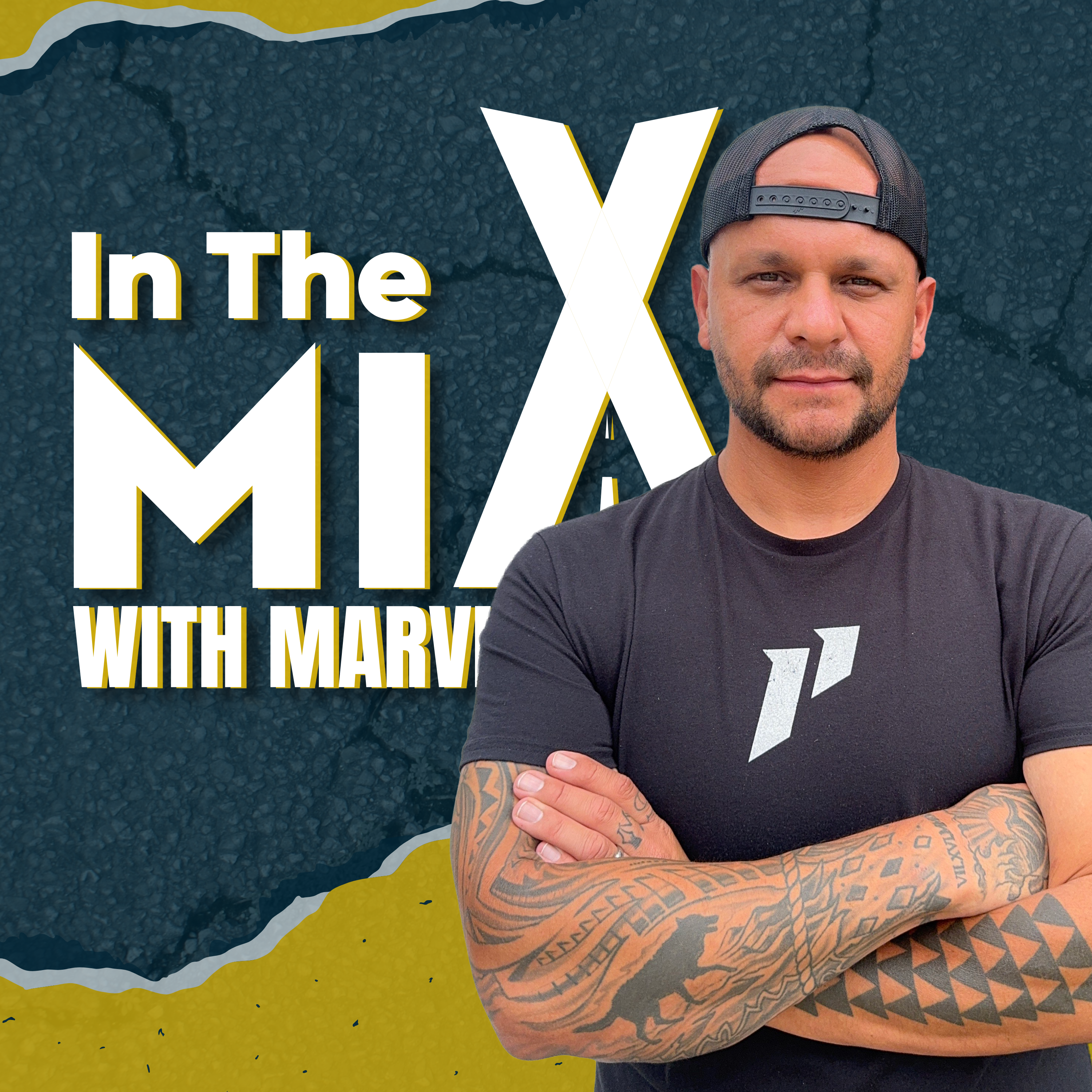
Loading summary
Transcript416 lines
- [00:00]
A
Today's episode of in the Mix is powered by Jobber.
- [00:07]
B
Welcome to in the Mix, paving the way to insight, education and entertainment in the asphalt industry. Your host, Marvin Joelz, a best of Web pavement award winner, knows the blacktop community and what it takes to win in this industry. Each episode you'll hear real stories, expert insights and road tested strategies from the people who make up the asphalt world and beyond. Whether you're paving parking lots, ceiling driveways, striping lines, or innovating asphalt tech, this is the podcast for pros who keep the industry rolling. Now here's Marvin.
- [00:53]
A
Hey, everybody. Welcome back to another episode of in the Mix. We've been doing some in the office on location, but being kind of centrally located, which feels weird when I say Nashville is like centrally located. I kind of am though, because there's a lot of stuff going on in Atlanta. There's stuff going on here in Chattanooga at Aztec, where we are today. But then I'm kind of in proximity to Charlotte and D.C. and I can head back up to Chicago, Indy area. So actually the Nashville area, Tennessee area, is kind of centrally located and it allows opportunities like we have today. Today I have Peter and Trevor and Peter and I, we were in Savann. I spoke at the Napa Impact Summit and we were talking about, oh, shoot, I think I was talking about social media and the things that I think are super interesting that the rest of the world doesn't quite get to see except through the in the Mix Avenue and lens as we're highlighting the asphalt industry in real time. But we got to do a plant tour when we were there in Savannah and after we came back from that plant tour, I immediately found somebody from Aztec, the Aztec Table. And everybody, I was like, I, I want to know about some of this stuff in detail because we talk a lot at in the Mix with professionals, scientists, large contractors about mix design, why mixes are different from here to there, what all the variabilities are. And when I did that plant tour, there were a couple pieces of equipment that it helped eliminate almost, if I can say that, I guess the variabilities that cause some of the major issues. So I'm really thankful to have you here. I'm gonna let Peter, you introduce yourself first, if you would, and your title here at Aztec.
- [02:39]
C
So, yeah, so I'm Peter Moore. I've been with Aztec for. I'm going into my 21st year with Aztec Ashler. So I moved down to this facility in Chattanooga five years ago and prior to that I was on the other side of our Industry with aggregate processing. So crushing, screening, material handling, pretty much all aspects of the preparation of what our actual. One of our monikers for Aztec is. Which is rock to road.
- [03:09]
A
Sure.
- [03:09]
C
So I've got some extensive experience in that.
- [03:13]
A
How do you even decide, hey, I'm going to spend my whole life.
- [03:16]
C
Headhunters.
- [03:17]
A
Headhunters.
- [03:18]
B
Yeah.
- [03:18]
A
How do you say, I'm going to spend my whole life learning about rock and how we do it and how
- [03:24]
C
we make it was really interesting. I. I had. I was at a crossroads. I was working in a. As an engineer in a different industry, which was rubber processing.
- [03:34]
D
Okay.
- [03:34]
C
And rubber's actually.
- [03:36]
A
It's in proximity. Yeah, that's in proximity.
- [03:38]
C
And so some of the equipment that they use to process from rubber is similar to the equipment that we use in aggregate processing to make asphalt as well. So I had an opportunity that you're
- [03:52]
A
in a unique position from Sarasota, Florida,
- [03:55]
C
to move up to Yankton, South Dakota. So that was.
- [03:57]
A
You go to school for this, for
- [03:59]
C
that, for engineering, for mechanical.
- [04:01]
A
We're at. Where'd you go to school?
- [04:02]
C
South Dakota State University.
- [04:03]
A
And you were like, oh, really? Nice, Nice. So you were what, in high school thinking, hey, I want to be an engineer. And then you go to college and say that? Or did you just be like, look at the thing and be like, hey, I'm going to check out some engineering courses? And during those courses, rubber. Rubber came into play.
- [04:23]
C
Strange as it might sound, what brought me to engineering was I started out looking at accounting. And that's mine. Yes.
- [04:32]
A
That's awesome.
- [04:33]
C
Buddy of mine. I had to take some.
- [04:35]
A
It's a good thing. All you did was look at it.
- [04:36]
C
Started taking calculus classes. Really enjoyed it. Buddy of mine was going in.
- [04:40]
A
Would you just say you enjoyed doing calculus?
- [04:42]
D
That's.
- [04:43]
C
That's the funny thing.
- [04:44]
A
I. I thought we had a lot in common at one point when you and I first met.
- [04:49]
C
Good Lord, I don't enjoy it so much anymore because I've probably forgotten more than I ever learned.
- [04:54]
A
Sure. Yeah. But math comes into play quite a bit in the world around us, especially in our world, too. So. So you. So you make a diversion then from calculus to Chrome Rubber.
- [05:09]
C
Yeah. So that was an opportunity with my first job out of college that I was able to work across the corporation. So that was with Columbus. McKinnon was the name of the company that I worked for prior to that and prior to Aztec. And realistically, it was. It was that opportunity to move from Iowa to Florida and then getting into that industry and move from there. Into this industry and just never looked back. Yeah, it's a great experience. Aztec is a great company. They take care of their employees. That's one thing I, you know, obviously longevity of an employee, that means they take care of their employees, right? I mean, yeah. We have people in our industry right now that have 40 plus years.
- [05:52]
A
Yeah.
- [05:52]
C
With Aztec, it says a lot about a company.
- [05:56]
A
Yeah. 20 some years later, you see some guy with a backwards hat telling you how to use social media and why it's important for the asphalt industry. Great path there. I'm really glad I led you there. We go do some work and lead us to some other direction rather than that being the highlight for the last year. Trevor, it's great to meet you finally in person, man. I've seen some videos of yours. You got the, you kind of got the importance of the video thing down and seen some of some really cool pieces of equipment that Aztec is putting into play. So please introduce yourself and, and let us know, please. For God's sake, please tell me calculus does not come into play in that's Journey.
- [06:32]
D
Barbara, thank you for having us. Yeah, so my name is Trevor Wagner. I'm the director of sustainability for Aztec. I have been with the company for almost four years now. I was with Komatsu and a few other companies prior to that. Always in kind of an engineering role. So.
- [06:45]
A
Sure.
- [06:45]
D
Very much like Pete. My background is in engineering. I wouldn't say calculus was a passion of mine, but, you know, you have to be able to tolerate it.
- [06:52]
A
You guys geek out about this stuff.
- [06:53]
D
Well, we'll have moments. Pete and I have some, have some shared, shared experience doing, you know, computer aided design, getting way into the weeds with super technical machine analysis.
- [07:03]
A
You guys are like, w, wow. Yeah, this is awesome.
- [07:06]
D
Neither of us do it as much anymore, but we can appreciate it when we see it. Right? So, yeah, yeah. You know, in, in my role, I, I get to be. I, I tell people all the time. I've got the great pleasure of working with a lot of people who are a lot smarter than I am. And, and in my role specifically, I get to see a lot of what we're doing across the whole organization. My focus is, is kind of within this lens of sustainability specifically. And it was actually one of the things that brought me to Aztec away from Komatsu. I tell people that I'm one of those, you know, poster child, next generation people who was attracted to an industry because what's going on there from a sustainability standpoint, in my mind, sustainability isn't environmentalism. It's performance, it's efficiency. It's smart business.
- [07:49]
A
Yes.
- [07:50]
D
And so I saw that as my opportunity to make a mark on this industry through a lens that I really see as the future of where we're going.
- [07:57]
A
Yeah. Yeah, I do, too. And I think, as you were saying, you know, that you were like, hey, I'm the poster child for the people that we're trying to bring into the industry. That's a huge topic that we talk about at Napa is like, we need that. We need people who do look at something and go, whoa, that's awesome. And we're going to get into it a little bit. But the IntelliPaq device that I seen, I think that's what I've seen down in Savannah. Like you said, you get to work with people who are a lot more intelligent. You try being a podcast host that was an asphalt jockey. Right. That mopsy were on impact. Asshole and potholes.
- [08:32]
D
It's a lot of fun.
- [08:33]
A
It's a lot of fun.
- [08:34]
C
Yeah.
- [08:34]
A
And I still thank God I have at least enough of a touch of intelligence that when I seen what I seen and understood what it did, it got me into a wow moment. Right. So knowing that the process to detect moisture in the aggregate that we're putting into our plants, our asphalt plants, to create this mix, that that's one of the biggest factors on whether or not we have a quality product or not. And the process that formally of what that was was so crazy with variables. And then for Peter to be like, literally, the laser tells us where we're at and how much is going on, how much moisture is there. That's how we know whether or not we put it in, whether it's ready to go. Not. And it eliminates all these factors of somebody in the. The plant house turning knobs and trying to get heat in there and do whatever, and that guy's going crazy inside there. When I got to go in and speak to the. The plant operator there in Savannah, and for him to be like, it makes my life so much easier. Yeah, yeah. It was a crazy thing. So, in full transparency, Aztec's publicly traded. I own shares of Aztec as well. So for me, it's like being able to firsthand see that this company is creating things that make the product better for an industry that's not going anywhere. It's just a smart investment for me to be on my side and be like, okay, I've invested a lot of time, effort, and energy into the industry. It produces enough of capital for me to invest some somewhere where do I do that? A lot of times when you invest in different things, you don't get to see it firsthand and you don't be able to have wow moments and comprehend things. For me, when we were in Savannah, that was it. And then that's where the conversation with Peter and I came of. Like, how do we start talking about some of this stuff? So here we are, we're in Chattanooga at Aztec. Can somebody give me a brief history, if you have it, of Aztec's role in our industry?
- [10:37]
D
Yeah. So Aztec was founded in 1972. A lot of the brands that have become a part of the Aztec family over time have histories that are even longer than that. We have a really, really lengthy and extensive footprint. Pete was saying, you know, where we are today, we are able to provide comprehensive solutions from rock to road. Everything that it takes to get, you know, aggregates out of the ground and turn them into the infrastructure that, that we use in our built world is, is pretty phenomenal. So founded in 1972, Dr. Don Brock was the founder and sort of the, the visionary of the company.
- [11:10]
A
Founded where?
- [11:11]
D
Here in Chattanooga? Yeah, as a matter of fact.
- [11:14]
A
Yeah.
- [11:15]
D
Dr. Brock's father owned a company called the, the Chattanooga Heater Company that made kind of industrial heating products. And then he kind of spun off from that to, to create what has
- [11:25]
A
become, what was the problem that he was solving at that point way back then.
- [11:29]
D
So this is, I love, I love talking about this because when we, when we think about sustainability, people always say it's something new.
- [11:35]
A
Yeah.
- [11:36]
D
One of the, one of the headline products that they launched before Aztec was founded in the, in the late 60s was a heater whose claim to fame was an increase in efficiency over a previous generation. The topics, you know, sustainability, base heater, like. No, like industrial, like hot oil heating.
- [11:53]
A
Oh, okay, okay, okay, okay.
- [11:55]
D
Yep, yep. So, yeah, even, Even, you know, 50
- [11:58]
A
years ago, what a space to jump into. That's crazy. If you've been in asphalt long enough, you've probably said, there's got to be a better way to measure this. That's where Moser comes in. It's a simple app and motion based tool that lets you measure areas, distances, elevations and volumes just by walking the site. From patches and overlays to stockpiles and takeoffs, Moser helps contractors get the numbers they can trust fast. This show is about real stories and the real tools that move our industry forward. And Moser is one of them. To learn more about what Moser can do, head to the link in the description they, they get into that space and then where does the, the growth and the hyper specificity of aggregate come into play?
- [12:46]
D
So, you know, from, from those roots. One of the first sort of breakout technologies that Aztec brought was the long term storage silo. Again, you look at the legacy of doing things intelligently with heat. Asphalt has to be kept hot until it's paved. So one of those first innovations was a long term storage silo. This was one of the innovations that made a continuous mix asphalt plant, which is the dominant asphalt plant technology, especially in the US you have to be able to have some surge capacity for that material. You can't use it as fast as the plant is producing.
- [13:20]
C
Right.
- [13:20]
D
So the silo was one of the first things that we brought to the market that really put Aztec's name on the map.
- [13:25]
A
And then were they making the other components at that point too? And then the stored silo separated them or were there plants already in place? And Aztec's product was like, hey, we have a storage silo that you guys can make that mix and you can just keep it here.
- [13:42]
D
That's a really good question. I actually don't know.
- [13:44]
A
There's a good question.
- [13:44]
C
The answer to that.
- [13:45]
D
I knew that we generally kind of started with components and as we built, you know, competence in those components, we got to a point where we could put a whole plant together.
- [13:53]
C
Yeah.
- [13:53]
D
That's how a lot of plant manufacturers kind of come to start off by
- [13:56]
A
service, how a lot of businesses are. Yeah, interesting.
- [13:59]
D
Yeah.
- [14:00]
A
So nowadays when we go to a conference, we're going to be on a con expo here coming up, which I'm super excited for. When I walk into a room or I get to go through the doors and I see it for the first time, the dominant plant equipment and products and displays that I see is Aztecs. What makes Aztec different?
- [14:23]
D
It's the people. It's the, it's the, it's the people that are our company now. It's the people that built the legacy that our company is. We have people, like Pete said, who have been living and breathing this industry for decades. People who have forgotten more than I will ever learn about plants. People who learned how to make the best possible products the hard way.
- [14:45]
A
Yeah.
- [14:45]
D
They figured out how, you know, the. Anytime you look at our equipment, you know, hopefully we're going to get to go do a shop tour later.
- [14:51]
A
Can't wait.
- [14:52]
D
That equipment, every single choice that was made, there's a reason behind all of it. And as you talk to some of those people that have been here for A long time. You get to see that experience and that and that legacy that, that we carry, you know, into the present day with our designs.
- [15:08]
A
So tell me a little bit about this, Pete. When, when we, we're at that plant tour, when I, as a contractor, I go into asphalt plants. We get asphalt from silos in Wisconsin. I've been doing that for quite a while. When I, when I go in, I can see the main components, right? I'll see everything that normally looks like an asphalt plant. But when we had that tour in Savannah, and hopefully I get to see some. Today when we get to do a tour, it was when I got kind of underneath that surface and started to see all the intricate parts and components and then was like, oh, this does this, that you need this to make this to heat this. And this is what keeps the temperature down and the adjustments in the plant house to make this happen. It became, it did two things. It made a simple design like, oh, the rocks mix here, mixes with the oil, goes in here, stays warm, get really complicated. Once I got that first layer back, I was like, whoa, there's a lot going on here that I, I didn't understand. But then once I started to peek at it, it started to make sense. Once I, you know, it's like popping the hood on my truck. All I know is I put gas in, I hit the throttle and it goes. But when I pop the hood, I'm like, oh, this is busy. But then once I figure out what system does what to make things go, it happens. So for me, I guess the, the question is the innovation side of it. You've been with Aztec now for quite a while. Has that always been part of this company's DNA, is the innovation part?
- [16:38]
C
Absolutely. Innovation's always been there with Aztec. You know, we, we may not have always had a specific formal program for it. You know, being a new product development manager now, we didn't necessarily have those specific siloed areas, whereas the engineer that was in charge of a product line would also be in charge of doing innovation for that product line. So within the last, I'm going to say about eight to nine years, that started getting more siloed so that people could actually, the challenge that we found was that you're so inundated with day to day production that you didn't have a lot of time to actually innovate new products. So we had to start creating these different departments that could actually reach across the aisle on multiple different products, whether it's a, a drum or a feeder or cold Feed bins or whatever, whatever the product might be that that person could then go to a subject matter expert in that area and then really dive into that product a lot further to find out ways that you could either become more cost effective, whether it's through materials or manufacturing processes or whatever it might be, that you can actually develop this. This product, or changing a whole new perspective of what that product's going to be.
- [18:02]
A
Yeah.
- [18:02]
C
That's where I think we start coming into the intellipaq. As far as moisture sensors. Sensors have been used multiple times in different industries, but not very successfully within the asphalt industry.
- [18:18]
A
Sure.
- [18:19]
C
And so when we were able to find a way to start looking at this and we tested multiple different devices before we actually zeroed in on what we wanted to use.
- [18:29]
A
Yeah.
- [18:29]
C
Whether it was.
- [18:30]
A
I can imagine.
- [18:30]
C
Or non contact, we had to make sure that we found what was the best solution for our customer. That was our top priority. What's going to work.
- [18:39]
A
It's crazy to think that when you think of a business model for a company, especially now, knowing how big Aztec is, that most of the time a company is like, hey, here's a problem. We solve it. We have a product. This is our bread and butter. This is what we do. And with Aztec, it was like, yep, we solved this problem. This is our bread and butter. Here's another problem. Let's solve this one. It was always like a shiny object. And people's like, hey, don't, don't, don't, don't. Get away from inside the shiny object and grab the shiny object. But Aztec's like, no, this is good. We're gonna go over here and solve this one. And then we're gonna solve this one. And then you think about how long Aztec has been around. Did they have to solve the moisture reading problem? I don't know.
- [19:23]
D
Right.
- [19:24]
A
I mean, did the company really need to. It's publicly traded. It could still produce and do what it does. But as you were alluding to, is the people intelligent people? Like, yeah, but we can do it. Like, we can do it. So we're going to do it.
- [19:39]
C
If you don't innovate, you, you don't move forward.
- [19:42]
A
Yeah.
- [19:42]
C
In today's day and age, you have to be innovative. You have to keep moving that ball forward, otherwise somebody else is going to come along and start eating your lunch.
- [19:50]
A
I used to say we mix sand, oil and rocks together and mash it like, you know, I'm like, that's what we do. And, and, and now it's like, it's Getting really hard to say that because it's like, well, we don't actually do that. There's so much more. And it's so much more in depth, I think.
- [20:08]
C
Start peeling back that onion. You find. Yeah, you do layers underneath.
- [20:12]
A
Yeah, well. And it makes me think of, you know, the couple. Well, when we did that plant tour, one of your associates, I can't, I can't think of his name at this point, but he was showing me the AI readout underneath the silo that has like a mapping of a truck bed. And. And then the AI is reading the truck bed, the dump truck bed, and telling him whether to back up or move forward. So that way we have exact jobpage. Right. And for me it was like, oh, we're going to solve multiple high level problems at the same time. Apparently at Aztec, where with me, I have a problem editing this video. Great. So I'm like, oh my God. There's a, there's a lot going involved into this. If 2026 is the year you want to make more money in your business, it starts two things. Staying busy and getting paid faster. That's why I use Jobber. Jobber is software built for blue collar businesses and it's designed to help you book work ahead of the busy season and keep your cash flow strong all year long. The marketing tools help you get found, look professional, and stay booked. Not just when the phone's ringing, but before the rush even hits. And once the work's booked, Jobber Payments helps you collect deposits up front and get paid faster so you're not chasing checks or waiting weeks for the money that you've already earned. Bottom line, Jobber helps you stay busy and stay paid. If you want to make more money in 2026 with software built for blue collar, try Jobber for free today. The link's in the description as we do get to see some stuff at the plant that repeatedly have just become known problems. There's kind of this attitude in our industry of like, well, that's just how it is. It's just a problem. That's always a problem. That's just part of it. Where Aztecs like, no, that doesn't have to be. We can do something about that if we get the right people in place. How much of like customer feedback and real world challenges go into the new product development? Can I ask you that?
- [22:11]
C
So, yeah, that's a great question.
- [22:13]
A
And how do you get that feedback?
- [22:15]
C
Going to have a really great answer for that. I'll also give you a fairly good. I can't Wait, so customer involvement, that's where our industry is driven from. And we want to ensure that we involve our customers with our new product development. So we go out, Trevor primarily, and his associates, they'll go out and they get that voice of customer to ensure that what we're developing is going to be useful in the industry. And it's not just something that we think is needed in the industry. This is something that the. It's coming out of the industry. So I'll let Trevor. He's probably got an even even better answer.
- [22:55]
A
Great. The.
- [22:56]
D
The. The term that I have fallen in love with using is customer obsession.
- [23:01]
A
Okay.
- [23:01]
D
And. And Pete mentioned this when he was talking about how we have a little. We've become a little bit more structured with how we, quote, unquote, do innovation, in that we've got a dedicated team and some dedicated resources, and their job is to go find that next problem and solve it.
- [23:16]
A
Okay.
- [23:17]
D
Aztec's legacy and what we are built on is solving customer problems. So fundamentally, at our core, our customers have always been involved in the innovation process, helping us discover and solve those problems. So as we try to find ways to deliver those solutions quicker and more effectively and with less heartache, when a prototype goes to the field for the first time, you know, there's additional structure that we want to bring to the innovation process. But we have to stay obsessed with our customer because that is who created what we are now, and our customers are going to be what carry us into the future.
- [23:56]
A
Yeah. When we talk about customer, are we talking about companies that own asphalt plants? Are we talking about contractors that put asphalt down?
- [24:03]
D
Yes.
- [24:04]
A
Okay. I like it.
- [24:05]
D
And I would even broaden it outside of that. And I would say that anybody that is a stakeholder in our industry, sure, Aztec wants to be involved with those people, whether it's DOTs, state associations, federal agencies, the, you know, the contractors that are paving, asphalt, quarries, source material, all of. We want to touch all of that. We want to be involved in all of that. Because sometimes the problem isn't something that a contractor is facing. When we talk about ccpr, which I know we're going to get to in a little while, you know, we've got this phenomenal material that's very easy for producers to make. The problem is agencies and their ability to specify and use that material when they're letting jobs.
- [24:43]
A
Yeah.
- [24:44]
D
So sometimes the problem that we have to go find and solve isn't something that a contractor or who actually buys our equipment has to solve, but it's some other industry stakeholder some other problem that we need to move forward.
- [24:55]
A
Yeah, yeah. I have a feeling when we do the tour later, I'm going to have quite that similar feeling that I had when we did the plant tour in Savannah where I was like, this is solving a problem that I didn't even know I had as a contractor. You don't actually even know that you have a problem until someone's like, yeah, we developed this and it solved it. And you were like, oh, I didn't realize that that was a problem that I was going to encounter at some point. So, Peter, I'm going to ask you about because you did a very good job when we were in Savannah of explaining to me the problem that intellipaq, which is the laser sensor that tells us our moisture content and our aggregate that we're putting together to make asphalt solves for asphalt producers. So what problem does the Aztec IntelliPaq solve?
- [25:41]
C
So yeah, so the, the IntelliPa system. So it's an infrared based system. And realistically, the problem that it solves is inaccuracies as far as what the plant is reading for moisture in their product. A lot of times most plants, if they even get the opportunity, they'll only test their moisture once a day. Like they'll come in rolling in the morning, they'll do a burn off. Well, they're not going to get.
- [26:06]
A
And what was that process like? Like with before intellipaak? Like we did it manually.
- [26:11]
C
They did it manually.
- [26:11]
A
Ridiculous. What's that process?
- [26:13]
C
Stockpile. Get their sample of material and not from the bottom. They'd have to go midway up.
- [26:18]
A
Yeah. Because moisture is drier at the top, it's wetter at the bottom. So we kind of. So you're getting an average anyway and that's so archaic.
- [26:28]
C
Absolutely. And then it's going to take you two hours to burn this off before you can actually get that information to the plant operator. They can set the controls. As far as how much bitumen is going to be added to the mix, how hot you should be running your burner or something like that particular scenario. But realistically, the intellipack is going to give you that real time.
- [26:53]
A
That's crazy.
- [26:54]
C
So it's going to be sending that information back instead of getting that one reading that was an average from the stockpile of we're at 5% today. You know, that might actually say in the morning. Let's say you had a downpour the night before. That might be saying you have 8% or 9% moisture in your material.
- [27:10]
A
Well, that's going to like this morning it was foggy out. This morning I went to start my truck and it was soaked. My whole truck was soaked. Look like it rained, but it didn't.
- [27:18]
C
Exactly. So this is going to give you.
- [27:20]
A
Oh my God.
- [27:21]
C
Time and constantly be feeding it back to.
- [27:23]
A
What if it, what if it was wrong? What if. Not the laser but like the, the old archaic way that I was talking about, the barbaric way. What if it was wrong and I put material in that had too much moisture or too less moisture.
- [27:35]
C
So you could be adding too much bitumen or you could have too little
- [27:39]
A
bitumen and therefore my asphalt's too soft or too brittle.
- [27:42]
C
It could be too soft or too brittle. Exactly. And so now it's going to get rejected when it goes out to the job site by the dot that's actually inspecting it material, inspecting it as it comes in. And if it gets rejected, suddenly you've got a dump truck material that's coming back to you as the only thing you can use it as is wrap now.
- [28:00]
A
Yeah, it's already been Jones once somewhat. Man, what a crazy thing.
- [28:05]
C
Huge costing.
- [28:06]
A
Even though you told me that once when we were in Savannah, even now it's like this is like that technology that you, you like. Oh, it's kind of like, I don't know what I would want to compare it to some type of technology where it's like, well, that's over. Like vhs. Well, we're done now. Like we don't do it that way anymore because it has to be done this way to keep up with efficiency and standards. We talk a lot about big buzzword, national industries, AI. It does get used as I've seen with some of your all's technology. But people are like, oh, it's, you know, it's going to take this job and that job or whatever. And our argument for some people that are kind of in my circle are like, yeah, so we get jobs done double time. That means we can do double the work in a year. Like it's not necessarily that we're going to be doing less work now or we're going to be sitting around twiddling our thumbs. And it makes me think about this technology, the Intellipa technology. And like, oh, you mean we're going to be able to produce more mix and put more mix through more pavers each day, which means we're going to get product projects done faster and more projects done. We don't only have to allocate X amount of road miles for Georgia each year. We can do double that now. Fantastic. Right?
- [29:13]
C
Well that's, that's just the tip of the iceberg as well. When you look at the asphalt producer, they're saving money. We've. Oh for sure this system will actually pay itself off within six months.
- [29:25]
A
Oh for sure.
- [29:26]
C
I can't imagine capital and expenditure to buy these systems, but the system pays itself off and up to, up to 60 cents a ton is what we've seen for savings, I would imagine.
- [29:39]
A
Well, to think about the savings aspect of it, I would imagine I can link the technology from the asphalt plant to an app on my plant operator's phone while he's home with the laser on reading what's in his piles right now. And he can determine whether or not he has to come in at 4am that morning and actually fire that bad boy up so that the mix is ready to go by seven or six. Or whether he can spend another half an hour sipping his coffee, eating his breakfast or whatnot with his wife at home. Which would be fantastic for guys in our industry because we know the work life balance an issue. So I was driving down the interstate on my way to Tennessee and went through Indiana and I seen some night paving and I seen these big balloon lights on the back of the paver that were illuminating the whole area where everybody was working. Guess where those came from? Portable Lighting Solutions. They're the only balloon light manufacturer offering the consumer a replaceable screw in LED LED bulb that is field serviceable in minutes. They have a patented slide in assembly and they have a push to rapidly deploy mechanism. So you know you push down on the top, it pops up, it lights the whole area up. You push down, it shuts off. They're manufactured right here in the usa. There's no patch kits, there's no blower motors, there's no set screws and they're UL certified. So whether you're seal coating at night, I'm gonna get one and put it on the sealcoat rig so I can seal coat at night and see everything, see the area or whether you're paving at night, you can put it right on your paver. We got a paver now so I'm probably build a mount and just swap that thing back and forth or by two you might need this device. So hop over to portable lightingsolutions.net and put an order in and find yours today. They are ARA members, APWA members and women of asphalt members as well. Once again, that's PortableLightingSolutions.net this is the thing that is the argument for tech in the asphalt industry, for software in the asphalt industry, yes, it has been a certain way for a long time, but this type of technology can ease this thing that keeps people somewhat out of our industry. That is the pressure and stress of our, our industry. When it comes to the, the men and women who are putting gloves on in the morning, grabbing shovels, grabbing loots, firing up equipment, if we can do stuff like you all are doing with tech, link it to our phones, to an app, and the people that are in charge of that area are able to get real time data while not having to be in front of that stuff gives them a little sliver of time each day to get back to like their actual life and stuff outside of it. And that's what gets me excited about seeing the technologies. I thought immediately of the plan operator, excuse me, when we were in Savannah. So the consistency, the fuel efficiency and just the quality of mix that isn't going to be rejected. You're like, yeah, it could be six months, man, on a huge, huge project. Especially in Wisconsin, if Matthew's on one up there or Walbeck's on one up there and all of a sudden they are like, hey, our percentage of wasted material was whatever percent and now that's in half. If you're an asphalt industry, you usually have a good reading on how much asphalt is per ton. Right. So if that cost is going back into our pocket of wasted material, thank God. Right? Yeah, yeah. Give those guys or give the guys on the shovel a raise with that money, for God's sake.
- [33:02]
C
Just gonna say, you know, I've got a, I've got a good friend of mine growing up that he's been in the industry forever. He's out there on the road running a paver.
- [33:09]
A
Yeah.
- [33:10]
C
Every day during the summer. And so, you know, you mentioned that work life balance and he is usually 12, 14 hour days all through the summer. Yeah, that's still that course Minnesota, so they're not doing anything in the winter.
- [33:22]
A
Yeah. Listen, just because we can put more asphalt down and get the section done faster don't mean we're not going to keep putting in the hours. We're going to. Just if we can find four more hours in a day to get more done, we're going to do something and get it done in the asphalt industry. Wisconsin's the same way as Minnesota in the summer. If the sun's up, I'm ready. If the sun's down, I'm time for me to clock in for the most part. Portable lighting Solutions now makes a great balloon light that attached to our sealcoat rig. So maybe we won't stop. Maybe we'll just go 24 hours. Hours a day, I guess. But real quick, from a contractor or better yet, a plant operator's perspective, besides having to go out and check in, do whatever, what are some of the immediate benefits of IntelliPack?
- [34:03]
C
So the cost savings is. Yeah, probably the number one.
- [34:06]
A
That's the number one.
- [34:07]
C
That's the Number One thing right there. You're more efficiently using the bitumen that you have at the plant instead of, you know, wasting.
- [34:15]
A
So I was gonna say it's reduced waste.
- [34:17]
C
Yes.
- [34:17]
A
Right. We're all talking about having a greener, lighter impact on the world. Reduce waste.
- [34:22]
C
You know, another. Another highlight of this product is that it's retrofittable to anybody's bin.
- [34:28]
A
Oh, yeah.
- [34:28]
C
This. This is actually attached at the bin so we can mount it whether it's on an Aztec bin or a competitor's bin. We have a flexible mount system that. This mounts right up to it, man. And they can be up and running in a matter of a day. Yeah, two days. And they have this system. Now, we do like to do a little bit of a run in period, so that we can surely dial everything in so that the manufacturer can get the best bang for their buck. But realistically, it's, It's. It's a great system.
- [35:00]
A
What does it read out to like the. The data control system, huh.
- [35:04]
C
So it directly integrates with our PM3 system and also with our mind system.
- [35:09]
A
Okay.
- [35:10]
C
If. If they need to integrate it with another system, that's going to.
- [35:14]
A
So they'll get a reading on the software that comes out on a display. Okay, man.
- [35:21]
D
I think even, you know, even. Even more importantly than having a readout, you know, one of the things that we focused on as we developed this system was making sure that the plant operator didn't have to think about it. So if. If a plant operator or a plant owner or somebody were to go out and.
- [35:35]
A
And that gives me a shot at being a plant operator. If they don't have to think about it, that gives me a shot at being.
- [35:41]
D
So, you know, if. If you've got. If you've got a display on your screen that's telling you the moisture content of your stockpiles, that's great. That's way better than what it was before. But you're still asking the plant operator, who is buried with a load of other tasks for sure, how to do. You're asking him to make a judgment call. Him or her to make a judgment call about when they need to actually make a change at the plant. So the beauty about the. What we have with the IntelliPaq system is that it's a. It's a system. It's not just a sensor.
- [36:05]
A
Sure.
- [36:06]
D
It's fully integrated with the plant controls, so the plant is automatically making corrections based on that data. You don't have to ask the plant operator, hey, I'm giving you another piece of information, and you have to make another decision every day. You know, how often do I have to check it? What's the threshold?
- [36:21]
A
It's that stuff we were talking about, that pressure, you know, my plant operator up in Wisconsin, his name's Jeff. And I can tell when I come into the plant, when I, When I roll in, whether we got a dump trailer or a dump truck or whatever, what's been going on in his day without him saying anything. Like, I can just tell by the look on his face or if I open the door to the plant and I said, what's up, Jeff? And he gives me a look, I can tell right away whether it, yeah, dude, it's a bad day. And most of the time he's like, when I left yesterday, everything was fine. You know, as soon as he fired it up in the morning, things got. Got crazy. So, you know, I think a lot about, you know, my friend Aaron Witt up at Build Wit, we talk a lot about data centers and whatnot and that whole world of AI and technology. And I just, I don't know, I've turned 40 this year, and for some reason I feel myself thinking about things that I thought maybe old people thought about. And I think about the energy usage now, I'm like, man, we're using a lot of energy. And when I think about the intellipa system, and this will be the last thing I think about, at least in this conversation about it, before we go on to the ccpr, is the energy usage like it.
- [37:32]
C
We.
- [37:32]
A
We only have so much of it. It's going other places. It costs money to use energy, cost time to use energy. And with the Intellipa system, we mitigate and really, really get efficient on how much energy we need to use to get our. Do we want. Do I want moisture content in my aggregate?
- [37:55]
C
No, not at all.
- [37:56]
A
Yeah, I want it to be at 0, 0.0, has to be 0, and then I can stop heating that stuff, put it into it, and put my vitamin in, and I'm good to go crazy. Well, let's get to ccpr because That's a, that's another fun one, Trevor. I'm gonna let you explain that one, if you would. And you know, there's kind of a hit board there. Aztec Remix. I like that. The young people are probably going to be attracted to that. I'm sure there's a lot of people just itching to get into Aztec and be like, I cannot wait for the Aztec remix and all this technology and all this stuff. I don't think so. But there are guys out there and we need them. So tell us a little bit about. Explain it to me. As I've explained to you, and I have a Neanderthal brain in here. What am I, what am I hearing? What is the Aztec Remix and ccpr.
- [38:45]
D
So remix is a specific product and we'll get to that in a second. CCPR stands for Cold Central Plant Recycle. And it's part of a group of technologies that recycle asphalt pavement at ambient temperatures.
- [38:57]
A
Okay.
- [38:58]
D
So when you think about, you know, our, our industry is so insanely cool because asphalt is fully recyclable. It is the most recycled product in the world.
- [39:07]
A
Yeah. At this point for sure.
- [39:08]
D
And every, every ton that is produced can be recycled.
- [39:12]
A
Yeah. Later on, we don't throw any of it away anymore.
- [39:15]
D
It's too valuable. Yeah.
- [39:16]
C
It's.
- [39:16]
D
It's a, it's a gold mine that's waiting.
- [39:19]
A
Like I was telling you, sometimes the old ways are just done, you know, having piles of crushed blacktop that we had to bury or whatever. That's vhs.
- [39:27]
D
Yeah.
- [39:28]
A
That's old. That's out of the way.
- [39:29]
D
It's worth its way.
- [39:29]
A
Yeah.
- [39:29]
D
I mean, the binder. Binder alone is so expensive that.
- [39:32]
A
Yeah.
- [39:33]
D
So when we think about, you know, okay, how I've got, I've got asphalt that's. That's going to be recycled. I'm going out. I've got a job that's going to be sending millings or scrap or whatever. There's a sort of a spectrum of technologies that you can use to reuse that material. There's the technologies that most people are familiar with, which is putting it back into hot or warm mix asphalt, basically running it through a traditional asphalt plant. And there's a variety of technologies that, that we and our competitors also can bring to bear that will let you recycle. Our sort of run of the mill plant now will do 40 to 50% wrap, no problem. We've got higher end plants with some additional features that will do up to 70 or higher percentages of wrap in hot mix.
- [40:18]
A
And hit spec.
- [40:19]
D
And hit spec. It's possible.
- [40:20]
A
Crazy.
- [40:21]
D
The challenge with Hopper.
- [40:23]
A
That's crazy, Peter.
- [40:24]
D
And cold recycling is the specifications that allow that material to be used. There has been so much testing done on these materials at the national center for Asphalt Technology, other places that have validated that this stuff works.
- [40:37]
A
So it will bind with ccpr, the asphalt remix. It will bind at ambient temperature just back.
- [40:45]
D
So. So remix and. And ccpr, which is the mix that it produces that's even one step further than what we were talking about. Hopping asphalt. We can comfortably go 70. We've had a couple plants that have gone quite a bit higher than that that we. That we don't really publish that much.
- [40:59]
A
How fun for you guys to be able to experiment with this stuff at that level, at this hive level. There's not very many people that get to experiment at that type of level with this type of stuff. That's a fun thing.
- [41:09]
D
So CCPR takes that one step further. It's 95 plus percent recycled material and it's mixed at ambient temperatures. So there's some really cool technology.
- [41:18]
A
For what purpose? Are we talking for cold mix material, like for patching? Or are we talking about paving? Even before I had a discount code partnership with Brunt Workwear, which you can find in the description of this podcast, I was wearing their boots when patching or paving and their shirts and hats when I was out on date night with Nikki. I'm actually wearing one right now. Seriously though, half my closet is Brunt workwear at this point. I have three sets of boots, two marins and a pair of the Omans, as well as a green shovelin hoodie that I love. It's got a snake on it. It actually has a pocket where it keeps my cell phone there in the front. I love that about it. And it took the place of my winter jacket last season. To check out their full line, go to bruntworkwear.com and use code MJOLZ10 to save $10 off your first order of $60.
- [42:07]
D
A lot of people want to compare CCPR or other sort of cold recycling technologies to cold mix.
- [42:13]
A
Yeah.
- [42:13]
D
And cold mix is. Is valuable.
- [42:15]
A
It has its own thing.
- [42:17]
D
CCPR is. Is a superhero compared to what cold mix is.
- [42:20]
A
Yeah.
- [42:20]
D
And. And most of the applications that we've seen for cold recycling, whether it's done through a plant or whether it's done on the paving site through a mill, which we would call cold in place recycling. Sure, sister.
- [42:32]
A
I haven't seen one yet, but I want to see one.
- [42:34]
D
Sister Technologies but those have applications in mainline paving. There are jobs in Virginia. They've done a lot of work with this out west. Extensive. Over a decade of research down at the end cap.
- [42:46]
A
So it's taking the place of hot mix paving or, or stone base. Okay, okay.
- [42:54]
D
Right. So it's an opportunity for the contractor to either bid a more cost effective material and drive their bid price down or it's a, it's a chance for an asphalt contractor to a bite out of more of the job. They're not usually in site prep or something like that. It's an opportunity for them to go and get more of the total scope of work. A lot of the work has been done in mainline paving. But where we think the biggest opportunity is. You mentioned data centers. That's one of them. We think the data centers, you know, big box parking lots, you know, commercial parking lots, things like that. Construction paving for subdivisions, you know, before you open something up to the public and you need to get a road paved so that all of your construction traffic can get in and out of that subdivision. CCPR is a, is a wonderful material to use.
- [43:35]
A
You know. You know what it makes me think of in Wisconsin? Wisconsin and Iowa are in pretty close proximity. When I go into Iowa, beyond Dubuque, Iowa City, it's all gravel roads everywhere across that farmland. When you get in Wisconsin, we don't have gravel roads very many. They're very few. They're all tarn chip. Right. That's tarn chip. Better than gravel for sure. Is it as cool as. Better as hot mix? Hell no.
- [44:00]
C
So
- [44:03]
A
what it makes me think of is can we do something where we're a little bit better than tarn chip? Not as expensive as asphalt, maybe not even as expensive as tar and chip, depending on what it is. And we pave roads with this.
- [44:15]
D
Yeah.
- [44:16]
A
At an, at an efficient, nice amount. I listen, I like Iowa, but man, I hate the dust all over my truck. And those farmers work hard and they buy themselves nice vehicles. And I always think it's so funny because I'll see a Cadillac Escalade or at 4 Denali covered in dust. Right, right. And, and then the, the obviously they get a lot of snow there. It's over the gravel roads and whatnot. A better surface that they could actually plow and keep better would be safer. There's just when you, when we start talking about the technology and what we can create on the product side because of technology, that gap of. Or I guess the, the view of benefits is just as wide as that better plowing On Iowa gravel roads if we were able to put down a product like this.
- [45:01]
D
Yep. Yeah. So we're, you know, as we. As we talk about that and we think about where we're going in the future, we're stepping off a little bit into what's on the horizon. So CCPR right now is a base material. Sure. Just because of the. Because of the. The stone structure and the amount of binder that's present.
- [45:15]
A
How long has it been around, Trevor?
- [45:17]
D
So there's a. There's an extensive history here.
- [45:20]
A
Like. Like, where's a. You don't have to say where, but are there test spots of road and highway where it was used as the base to. Where we're able to compare it to one that has a standard base and be like, what type of longevity are we looking at? Is it getting better? Less cracking, less potholes, less movement? Where is it? Is it compared to Arizona versus Wisconsin versus Tennessee versus Wherever? Do we have that going on? Hell, yeah. I'm glad my money's invested in that.
- [45:50]
D
It sounds like, you know, we. We talk about some of these things like it's. And that this is one of those weird but also beautiful things about our industry. We talk about some of these things like we're new. The technology that we use to create a cold, recycled mix was first developed post World War II when rebuilding airfields out in the Pacific.
- [46:08]
A
It's just taken this long to be confident enough to talk about it. Exactly.
- [46:12]
D
But you look at the exact testing that you talked about. I mentioned the national center for Asphalt Technology, so passionate about their mission and what they're doing for our industry. They have been testing this material in their test track for over a decade now. Their test track is doing accelerated testing. So a decade of testing at the test track is multiple decades of real.
- [46:33]
A
Oh, that's true. I guess I never thought of that.
- [46:36]
C
And.
- [46:36]
D
And some of the. Some of the most durable, resilient pavements that that group of researchers has ever cooked up have had CCPR as a. As a key ingredient. It is. It's a wonderful material.
- [46:49]
A
So as it was getting developed, you all were able to keep adjusting and adjusting and adjusting, making it better and better and better as it's getting tested over that amount of time.
- [47:00]
D
So want to be a little bit clear? You know, CCPR is not an Aztec technology.
- [47:04]
A
Sure, sure. It's just a general statement for.
- [47:06]
D
It's a mix design. Yeah, it's a mix design. So, yeah, I mean, we've been. We've been plugged in with NCAT and. And Helping them in their mission and what they're doing as they've. As they've that. And then, you know, the, the remix product which you mentioned is basically our sort of purebred project design designed to
- [47:23]
A
make C. So you all had hands on of like this is we're going to make it the best way that we can make it.
- [47:29]
D
Exactly.
- [47:31]
A
And how does that compare?
- [47:32]
D
So you know, ccpr because it's. I'm going to say new with quotes again.
- [47:36]
A
We've talked about the new to me happened here. Right.
- [47:40]
D
So because it's new, understandably, justifiably, people are reluctant to make a capital investment to have equipment that's dedicated to just make ccpr. So what they would do, what they did down at the test track, what they've done other places is they would find a way, you know, sort of retrofit their hot mix plant to make ccpr. Which works.
- [47:58]
A
Yeah.
- [47:58]
D
Somewhat S strips for, you know, small quantities. You're. You're not necessarily making shortcuts with mixed quality, but you're sacrificing this behemoth of an asphalt plant that could be churning out hot mix just hand over fist for you. You're shutting that whole thing down to make ccpr. So when, when we launched this product, our vision was to give an asphalt producer another tool in their tool belt that would help them just mix. Specifically, we designed it so that it could tie into the other systems at an aspect.
- [48:27]
A
This is one of those shiny objects. That Aztec scene was like, well, they're not going to do it. So let's do it better. Let's do it better and do it so that we can produce something for them. Yeah.
- [48:37]
C
Make it integrated.
- [48:38]
D
Yeah.
- [48:39]
C
The plant as well. They could integrate it into what they have for an existing plant.
- [48:43]
A
Yeah.
- [48:43]
C
One thing I wanted to tie together for you here real quick too is we actually have done some testing with the intellipa for wrap as well, for sensing moisture in wrap and ccpr being that one of the ingredients is moisture. The. The amount of moisture that needs to be in the wrap and then the amount of additional moisture that we have to put into it to ensure that you get the compaction that you need with it. We've also been able to integrate the IntelliPaq system with the CCP.
- [49:10]
A
Oh.
- [49:11]
C
So it's.
- [49:12]
A
We're, we're.
- [49:12]
C
Y'.
- [49:13]
A
All, you know what a lot of
- [49:14]
C
synergy going with our product.
- [49:15]
A
Y' all are like the apple of asphalt all. Some people are going to be like, oh, that's awesome. And other people are like that means I gotta buy the AirPods that go with the iPad, that go with this.
- [49:26]
D
I'm.
- [49:26]
A
I gotta do it. Which is great if you're an investor. Yeah, yeah, I'm happy about that. I used to be £300. 297 to be exact. And if you're around me at asphalt or construction expos or in my circle, you remember that Marvin. I'm not him anymore. I've all but eliminated the choices that got me there in the first place. And I'm down about £100 over the last few years, all from making better choices. I know it's hard in our industry to find time and that those gas station stops are way too convenient, but we in our industry aren't getting enough of what we need to live healthy and stay productive with those choices being our constant. Besides prepping my own food, I choose foods with and supplements from First Phorm to help me get to where I need to be along with a regular exercise routine. You've seen my posts over the last few years about using First Forms products to get what I need into my body on the road and keeping out excess of what I don't need or want. I use at least one first form product every day to ensure I stay on track. I've worked way too hard to let this slip. If you use the link in the episode description, you'll get free shipping on orders over 75 from first form today. If you reach out to me personally via DM or email, I would love to tell you about what I use and my experiences using First Forms products. When it comes to the remix, we talked about sustainability of roadways and whatnot. Is there a sacrifice anywhere in there you think, Trevor? Like are we sacrificing anything by using Remix versus or CCPR versus Breaker Run and three quarter inch gravel?
- [51:09]
D
The the engineer in me is compelled to say it depends. But I will say that CCPR is such an attractive, just amazing material. The reason that it's not more widely used is either you're in a. You're in a rural area and you don't have a lot of wrap. You know, wrap is. Wrap is a wonderful material. It can help us be so much more cost competitive and you know, environmentally friendly with the materials that we're producing, but not everybody has it.
- [51:33]
C
Yeah, you've got wrap.
- [51:34]
D
It's a wonderful tool to use. So one of the challeng is especially as you get up to 100% wrap, I'll talk to producers, they're like hey, I don't have I barely have enough wrap to just stay at 30% my hot mix plant so that I'm competing with the guys down the road.
- [51:46]
A
Yeah.
- [51:47]
D
So that's one of the factors. And then the other fact, the other challenge is just because it's, it's not been widely used is that specifying groups or end customers are sometimes reluctant to have something that's perceived as new in their area. But from a performance standpoint point it's incredible. I mean it's.
- [52:05]
A
Do aggregate mining manufacturing companies hate us because like at some point aren't we going to be able to recycle all of our asphalt all the time.
- [52:16]
D
So we have, we have multiple large customers for whom asphalt is, is almost a, it's a very small portion of their business.
- [52:24]
A
Okay.
- [52:25]
D
They've asked me that question and my response is don't you have other places that you would like to be selling your aggregates for more of a premium?
- [52:32]
A
I guess that's true.
- [52:33]
D
There's, this is planet Earth. There's no more rock showing up. Your quarries are a finite resource. You are going to run.
- [52:41]
A
That's true. So it makes me wish hopefully we can recycle everything at some point when it comes to. So that. Let me ask you this. How many times can I recycle my asphalt?
- [52:53]
D
That's a great question. Another active area of research, of course, of course. They actually, you know, when you think about. I love it, it's, it's wild. When you think about recycling asphalt in a, in a hot or warm mix application you're doing maybe 20, 30, 50%. You're always putting in more virgin material than you are doing recycled material. So as you continue to recycle it the amount of really, really old stuff keeps shrinking because you're always putting newer stuff into it. That flips when you start talking about CCPR because you're doing mostly recycled material. So at the test track they have a test, they have a strip down right now that' been re recycled three times as full ccpr. So it's gone through three full test cycles. It's in the middle of its third full test cycle as ccpr. They're not seeing, you know, I can't speak to their, the current state of their research but what I've seen so far is that there's not any serious issues. There may be some adjustments that you have to make from a gradation standpoint just because every time you process it things.
- [53:55]
A
Is that what they're doing? They're processing it. Processing it in the exact same Way over and over. So that we have. Essentially, this is. The test is the exact same. We're saying, hey, this time it lasted 10% less as long. And then that's kind of the idea.
- [54:10]
D
Okay. Yeah. So they took, they took a section, you know, a section that was built that was fully ccpr. They took everything that they milled out of that section and they just reprocessed it again. So it's, it's not just that they, they made it and rebuilt it. It's. They made it, they trafficked it for the equivalent of, you know, same traffic, of public traffic.
- [54:27]
A
Sure.
- [54:27]
D
They recycled it again to see. Because it's not just the act of recycling that they would be wor about. It's this material has been out on a roadway aging and getting trafficked on for a decade or more.
- [54:39]
A
Hopefully not in Nashville, because this would grown about 10 times its size over the last 10 years, which is another variable. It makes me think about all the variables. Remember, how old are you?
- [54:49]
D
31.
- [54:49]
A
Okay. Hey, you remember when the. Remember Peter, in the 80s space invaders where the. Or like missile command where the missiles are coming and you. Yeah. And you had to stop them. Them. You had. You remember, you had to stop those. Yeah. That's kind of what it feels like. There's. Trying to get really good solid data is like, especially in a. In an actual usage, because we use them on the highways that we use can be a little tough because we have an expanding. If that area that we put it in is an expanding metropolis like Nashville. You're like, yeah, we need it to be the exact same test subject every time. Time for regular traffic while our population doubled. So now we've essentially, we have this time period where this was the traffic and now this is the traffic. Now this is the traffic. We almost are forced to use calculus to say, oh, this is what it would look like long term if we were able to do it. So it's just a unique thing to think we're doing our best to test it the best that we can. And with all the variables that we have, when we talk about that, that CCPR and it being tested in a way where we're trying to run it through the exact same thing every time, are we also doing something where we're like, hey, we tested it and it's got 10% less binder vitamin than we needed. We're going to add 10 in and place that over here and see how that runs. Because, I mean, we kind of want to see if we can rework it while we're testing it over here on this other side. There must be a lot more guys in blue polos with Aztec on than you two around here because somebody has to be in charge of monitoring that all the time. Right.
- [56:33]
D
And, and a lot of this, you know, it's, it's not necessarily something that, that Aztec is personally doing, but it's, it's one of the, you know, we've got a network of industries.
- [56:40]
A
That's why I was going to ask, is there a collaboration? Yeah, there has to be. If we're going to solve these problems, we have to be in a collaboration, right?
- [56:46]
D
Yeah. So, you know, for that, for road performance, material performance, things like that. Again, I've name dropped them a couple times, but. Ncat, national center for Asphalt Technology. It's a, it's a, you know, PhD level. Folks who are studying, thank God, how it performs. It's, it's a whole aspect of the industry that I had no idea before I came to Aztec that there was a group of PhD researchers who worried about how long our roads lasted.
- [57:11]
A
Yeah.
- [57:12]
D
And there are, and they're very, very good at what they do.
- [57:14]
A
Yeah. It reminds me a lot of Napa and being like, I'll worry about us having a good image and whatnot to the general public on my end while you guys take care of everything in D.C. and then we'll worry about what information. They're like, hey, D.C. says this is a new requirement. They talk to Aztec. Aztec's like, well, we'll make whatever we need to make in order to create that requirement. And then that goes to our minds, our raw asphalt material producers. It's taking everybody right to make this thing click. It's like nagging problems are just that they're nagging problems. And I feel like in the old days there wasn't so much collaboration going on in the asphalt industry and now it's like we just don't want to be inundated with that. There's a lot going on in this world. How about we solve our asphalt stuff and then we can take care of some of the other things and that. One of the things I want to ask you about is the self directing surge silo. Pete, let me in on this bad boy. Why do we, why did we need that? What is it? And why did we even need it?
- [58:20]
C
Need it? So, you know, we've got a lot of operators that are portable. You know, their, their whole plant is portable and so they need to have a storage solution as well that's portable.
- [58:30]
A
With them are the Majority of asphalt plants portable nowadays?
- [58:34]
C
No.
- [58:34]
A
What's our percentage do we know of still versus I know personally myself spitball
- [58:41]
C
say there's probably 30 that are portable price 70 are pretty heavy in the
- [58:46]
A
west and Midwest I would think. Right?
- [58:48]
C
Yes. Yeah, yeah, absolutely. A lot of the mountainous regions, I believe there's a lot of portable guys in that area too because there's. Some of those areas are long trucking distances from a, from a stationary but small populations smaller.
- [59:02]
A
All right. So there's not like there's a need for asphalt in certain quantities every day.
- [59:06]
C
But your self directing search silo though, that it's a great piece of equipment in TEP certified. How to say that right off the bat?
- [59:14]
A
Nice.
- [59:15]
C
So that is something that there's other competitors in the market that have a similar system but ours also has all of our storage features involved in it.
- [59:26]
A
Sure.
- [59:26]
C
As far as for the closing of the silo so that you can have long term storage on this.
- [59:32]
A
It integrates with my iWatch and my airplanes, everything else. Right. Like that's, that's kind of like what we're doing. Right.
- [59:39]
C
We'd like to get to that point.
- [59:40]
A
Yeah.
- [59:41]
C
Not, not quite there with.
- [59:43]
A
So what was the need like what, what led to the development of that? Just the fact that it's, it's an essential part and component of it is
- [59:53]
C
an essential part for, for storage of your material. And the, the unit that we have, it stores up to 90 tons.
- [60:00]
A
So it improves efficiency.
- [60:02]
C
It'll improve your, you know, realistically, your, your producer, your asphalt producer, they can get ahead at the end of one day. Day because you know, in portable plants they're not going to produce as much tons per hour as a lot of your stationary plants are going to do. So you could at the end of your day potentially put up 90 tons at night and be ready to go that next day so that your plant can start operating and refilling that silo while you're loading out trucks to get
- [60:30]
A
out on and the contractor can get up early, get on something earlier if they allow them to. So really it benefits contractor and plant operator.
- [60:37]
C
Absolutely.
- [60:38]
A
Essentially at that point when we talked about the, the, the silo. So it's just one of these things where it's another technology. And I think, I think when I say that people are like, it's like when we go to the conferences and there's a CRM for contractors and there's like 50 CRMs, like oh, another one. But what's different? And the main, one of the main reasons why I wanted to do this podcast and create content about it is that Aztec's doing it differently in a way that every time you've mentioned a technology to me me it's not a mimic. It's literally something that has improved and integrates and improved and integrates and all of a sudden our efficiency goes up, our energy usage goes down. So tell me when it comes to that self direct silo, what are some feedback from the early adopters that you all got
- [61:30]
C
Some of the. I, I don't.
- [61:33]
A
Because they either.
- [61:33]
C
I don't want to say anything negative about it but you know some of the portability features. It's a large piece of equipment.
- [61:39]
A
Sure.
- [61:39]
C
You need to have a tri axle truck. Sure.
- [61:43]
A
I can hire somebody with a tri axle.
- [61:45]
C
Everybody can be.
- [61:46]
A
I'm fine with that.
- [61:47]
C
Yeah.
- [61:47]
A
I ain't driving that thing. I can tell you that.
- [61:49]
C
We, we actually we had some hurdles that we had to cross with this as far as the portability goes as developing specific axles so that we could get into locations because the, the height, length, width of this, it creates it. Meaning a super load. Yeah, a lot of places. So that requires for larger permits or larger dollars to be spent for permits to port to, to move this around from place to place.
- [62:14]
A
But when they is there a certain amount where it's like hey, we had this silo and now we replaced it with the Aztec one.
- [62:22]
C
A lot of, a lot of people so. Or is it one place this really fit into is. You know we also have another product called an SEB which is self erecting bin.
- [62:30]
A
Of course you do. Why would you not have that open
- [62:33]
C
top, open air, you know you can't store material in it.
- [62:37]
A
Right, right.
- [62:38]
C
So or not overnight anyways because it'll oxidize and you won able to utilize it. So the need for this once again going back to voice of customer. Our customer said we want a closed top system that we can store material in so that we can get ahead for that next day again.
- [62:53]
A
Yeah.
- [62:53]
C
Thank God. It's really touching that niche that we
- [62:55]
A
needed to man so crazy. It's just so crazy to think about if all these pieces of technology, if we didn't have them where we would be because there's no way we'd be able to be as efficient as we are now. And it makes me always, I think part of the reason why what I do and the way that I interview and the way that I ask questions really relates to the people that make our industry up. And like you were saying, the guys are able to get a jump on the next day. You know, they. They can stay up a little later knowing that they don't have to get up as early or what. Hopefully not. You know, a lot of us as business owners and asphalt nations, like, oh, we're more efficient. Good. That means we can crank out more out of them machine. But it does make things easier and. And less worrisome, for sure. And it eventually kind of what we have going on in this industry. And Trevor, you kind of alluded to it a little bit of being the poster boy for who we hope comes into our industry and helps take things over. Peter, you still got a lot of time left, so I'm not letting you off the hits that easy. There are people within our industry who are getting close to retirement, and they have been in it 40 years, some 50 years since things were a certain way. I can't imagine when they look at a NASDAQ plant now compared to when it was in the 60s or 70s. But we think about the future over the next five to 10 years. If I look back at the last five to 10 years, our industry has made some huge leaps. So then it makes me excited and nervous a little bit about the next five to 10 years. But it's technology like this and stuff that we're talking about. They get people like you interested in this, and it also. There's a lot of different technology going on in a lot of areas of. Of our industry that get young people like my son Eli, who we talked about earlier, who apparently is, you know, going to be the next UFC middleweight champion, I guess, if for some reason that don't work out. I'm not saying that as a dad, I'm wanting him to lean into something else because the probability of that is low. But we have created a pretty cool place for the next generations who are technologically interested to call home. And we're solving real problems. Right. It's not just that this amount of road isn't paved. We're solving that problem. It's the material that we're putting down has a problem that we could help solve. That makes this better and makes this better, and it gives everybody kind of a home there. So what's in you all's wheelhouse and what you get to deal with every day, which I think must be fantastic as an engineer, is asphalt production. I don't think about it so much as a contractor. I just want to know if the plant's running.
- [65:39]
D
Yep.
- [65:39]
A
Right. And am I running binder mix? We run a surface mix. What are we Running. I got patch holes. Can I do that today or whatever? I don't worry about that so much because I got you guys and I got the, the plan operators and whatnot. But when you kind of get a lens for what you guys see, you. You're able to talk about the past and see the direction that some of these products and technologies went. Where we are. Can we get a little bit of appeal back behind the curtain and see what do you guys think in the next five to 10 years when it comes to asphalt production? What does that look like?
- [66:12]
D
Yeah.
- [66:12]
A
Where are we going to make these advancements and increases? Because as I've mentioned to a few times, Aztec does a really good job of picking out the shiny object problems. Hey, we're gonna, we're gonna go over there and work on that. What are we looking at in the next five to 10?
- [66:25]
D
That's a, that's a great question. And you're right, it is. Is so incredibly fun that I get to spend so much of my time doing this because it's a really fun space to be. I like what you said. You know, looking at.
- [66:35]
A
That's not normal, by the way. Just so you know that I'm really glad that you feel that way and I'm. And I'm thankful that you feel that way, but that's not normal. But I, I don't think you have to be an engineer to get excited about.
- [66:48]
D
Oh, absolutely.
- [66:49]
A
About it. Yeah.
- [66:50]
C
No, I.
- [66:50]
A
Because I'm not one. And I got excited about it.
- [66:52]
D
Yeah. So I completely agree. I think there's.
- [66:54]
C
There's a.
- [66:55]
D
There's so much in our industry to get excited about that. I like what you said about, you know, looking at where we've come. When we talk about, you know, new technology and where we're going in the future. The goal is not to throw away where we've come from. There is so much that has been learned in our industry. You mentioned how far we've come. So many people have such incredible experience and they've learned things the hard way. I love the perspective. You know, two, two guys that have been really influential for me in the time that I've been here, Mike Varner and Greg Reniger, we have people like them across our entire organization. They have, they have seen so much and they have learned the hard way how a lot of this came to be. And their perspective when they teach myself, when they teach our young engineers, is not. Here's what we tried before, it failed. Don't touch it again. Yeah, that doesn't work. That that's not how a company continues to exist into the future. Their perspective is, is here's what we tried, here's why it broke back. Then if that changes, go try it again in the future. I see kind of two. Two veins for innovation, for, for this industry going forwards. Some of it is like the IntelliPaq moisture system. We had tried moisture sensors in the past. We knew why they didn't work. We found something that we thought changed that equation. It did. And now we have a system that works.
- [68:13]
A
Is that because technology caught up to the problem?
- [68:16]
D
Yeah, some of it is technology catching up.
- [68:17]
A
It's not that the wheels broke, it's just flat that we had to find a way to plug that bad boy.
- [68:22]
D
A different industry had a better wheel.
- [68:24]
A
Yeah, yeah.
- [68:25]
D
So we brought that over into ours. There's one, there's kind of one theme of innovation that is, you know, that continuing to carry that on. How do we keep solving those problems that have been a thorn in our side for 50 years, learning from all of the experience that we have and continuing to evolve that the other piece of innovation is thinking about more broadly, what does our infrastructure look like in the future and what is the equipment that's going to be needed to produce that infrastructure? Yeah, I'm talking about, about 3D printed roads. Are we talking about hover cars? Yeah. Right.
- [68:56]
A
Hopefully, for our sake, we're going to get in, we're going to get into magnetic. Magnetic levitation aggregate. Yeah. And Aztec will be at the forefront of producing those roads that throw those cars up in the air. No more flat tires.
- [69:08]
C
Yeah.
- [69:08]
D
So there's, there's a lot of.
- [69:10]
A
There's. If you say that, by the way, I'm investing my whole Roth ira. I'm pulling it and dumping it into Aztec stock.
- [69:16]
D
You know, we, we want, we want, want. We are here to stand side by side with our customers. We want our industry to continue to exist. So we don't want necessarily to advocate for something that's going to erase our industry. That's not, that's not where. That's not where we want to be. But we want to stay aware of what's out there so that as technologies that could redefine the way our industry works are coming to the market. You know, we're plugged in with research institutions, we're plugged in with academia, we're plugged in with our customers. And we're hearing these things that they're starting to look at that whether it is, you know, finding more efficient ways to heat and dry Our material. Maybe the way that we have, maybe the way that we're doing it right now isn't the most cost effective, fuel efficient way to be doing it. Maybe there's something else out there paying attention to efficiencies, things like that. Recycling is a common theme. How can we keep pushing the boundaries for recycled material? You know, our plants are capable of a lot. So maybe the, maybe the innovation, if you want to call it that, isn't as much in the equipment space as it is in. How do we rethink the way that we contract jobs? Are there different ways that we can structure the maintenance and the construction of our infrastructure network so that people will be more willing to use high recycle content and find more ways to integrate it? So the innovation isn't always just equipment design.
- [70:38]
A
Yeah, it's.
- [70:39]
D
It's the whole industry.
- [70:40]
A
It's like that ccpr1 you're telling me about. Like they didn't want to bust down their asphalt plant, make that whole place. They want it. But if I. You can create something that I can pop on the site that allows me to create that while I'm still making money. Handover fest. Then I'm in. Yeah, Peter, there's a lot going on at Aztec. A lot.
- [71:01]
C
Always.
- [71:01]
A
Yeah, man. I'm super fun. I'm super excited. I get to plop in and peek my head in twice a year because I get to get caught up in it all. But there's a lot going on here. When it comes to contractors. Is there, is there people or a program dedicated at Aztec to prepare the contractors or plant operators for increased sustainability and efficiency demands? Does that come into play at all somewhere?
- [71:30]
C
Absolutely. You know, we don't, we don't just sell a plant and say I hope you know somebody that.
- [71:37]
A
Yeah, good luck buddy. You got an old farmer around here? Okay.
- [71:41]
C
We, we extensive customer school program that we put on for about the first. It's, it's expanded over the years and it's through the month of January and I think it's all the way through February now as well. That nice week long classes so that all of the plant operators, they get exposed to each portion of their plant as far as how it runs most efficiently, how to set up your, your trunnions so that they run the way that they should so you don't end up with problems on your, on your wheel and spokes or anything like that drum itself on the drawing drum. So we have all of the different classes for all the different pieces of equipment we want to make sure that our customers are as.
- [72:25]
A
I want to take some classes.
- [72:27]
C
Absolutely.
- [72:27]
A
Give me the intro class. We'll start there.
- [72:30]
C
Pretty much all of them start out as an intro.
- [72:32]
A
If I do the Irish goodbye, you'll know that it was too much for me. Yeah. You'll be like, man, I thought Marvin was here. Oh, he went, yeah. Because if there's gonna be a quiz at the end and I don't know what was going on, I don't want to be called on, man.
- [72:44]
C
Most all these classes are also. They're taught by our engineering staff. So that's one thing our. Our engineering staff involved with her there is.
- [72:52]
A
You guys were. We were talking earlier about a training facility here, but are there remote opportunities as well, like in Wisconsin or if I'm in Georgia or wherever, am I bringing people here? Here?
- [73:01]
C
Depending on what product. Aztec product.
- [73:05]
A
Oh, I guess that's a great point.
- [73:07]
C
You know, so we have other facilities that have training centers as well. There's. There's a really nice training facility I know in the Yankton. Yankton, South Dakota area.
- [73:16]
A
Yeah.
- [73:16]
C
Eugene, Oregon has a very nice facility.
- [73:19]
A
Nice.
- [73:20]
C
So there's. There's different things depending on what the class are looking about. Crushers, are you looking about screens, are you looking about asphalt?
- [73:27]
D
Plants?
- [73:27]
C
So depending on what you know. So this, this brings us right back to the main theme. Rock to road, Right?
- [73:33]
A
Yeah, man.
- [73:33]
C
So depending on what a person is looking for, you can really find that training opportunity that you need.
- [73:39]
A
Is there. I'm trying to wrap up, but my brain doesn't shut off. In Wisconsin, south southern part of Wisconsin, a lot of limestone aggregate. You get to the northern part, there's more granite. Are there. Is there Instruction of this is how you create your mix design with what aggregates you have available to hit this spec. Is that on you guys to determine that or is that on? I was trying to wrap up, but then that hit my brain because it made me think about that. Like your guys, asphalt plants are. Are they designed. Are there adjustments per what type of aggregates coming in?
- [74:21]
D
Yeah, yeah. It influences the mix design and there are aspects of the plant sign for those different. I mean, it's every single design decision you. You see at an Aztec plant is because there was a problem that they were solving whether it was an aggregate type, whether it was a new mix design.
- [74:40]
A
We are such nerds. Yeah, we are nerds, dude.
- [74:43]
D
We're going to talk for hours if we're not careful.
- [74:45]
A
We are such nerds. That's crazy. What excites you about the Asphalt industry. Industry.
- [74:49]
D
I'm excited about the future. I've become so, so passionate about learning about where we've come from.
- [74:53]
A
Yeah.
- [74:54]
D
And seeing how far we were able to go in the past 50 years. And just so excited about what the next 50 will bring. Infrastructure is not going away. Infrastructure is what defines.
- [75:04]
A
Oh yeah.
- [75:05]
D
As a country. It is what every single person as they go to work, more than likely the road or the building that they go into was processed.
- [75:15]
A
Even if you're going to work from home. Home. You're still going to have your stuff. Doordash.
- [75:18]
D
Exactly.
- [75:19]
A
So touch it.
- [75:20]
D
Touch it.
- [75:20]
C
Yeah.
- [75:20]
A
It's gonna happen.
- [75:21]
D
And odds are very, very high that at some point it went through a piece of Aztec equipment. So as I think about the future Aztec, specifically the infrastructure industry in general, the built world that we live in. Oh, cool. So excited about.
- [75:34]
A
What about you. And don't say retirement.
- [75:38]
C
I got a few more years to go for that.
- [75:39]
A
Thank God we've got.
- [75:41]
C
Yeah.
- [75:41]
D
So.
- [75:42]
C
So realistically, what really excites me about our industry is the fact that, like Trevor said that we get to my team and I get to see all those new things that we're going to develop and we're going to bring out to the people. But we also like to look at how can we improve the existing equipment that we have. How can we make it more efficient, how can we manufacture it more efficiently? You know, that's what excites. That's kind of the nerdy thing of being an engineer, is like, you can take this.
- [76:13]
A
It's really cool that there's a.
- [76:14]
C
But how can you make it.
- [76:16]
A
Yes, that's what I was going to say. It's really cool that if I wanted to build an entire Aztec system, I can do that. But I think it speaks a lot to Aztec as a business to caring about the asphalt industry at large.
- [76:35]
D
Merge.
- [76:36]
A
When the IntelliPaq system can retrofit to what's already there, it. It doesn't have to be on Aztec stuff, which makes me. I don't know. I'm a. I'm a sales guy at heart still from selling asphalt work for all these years. If you can give somebody the warm and fuzzies, it's like, ah, this is something I want to be part of. And when. When Peter was like, hey, it retrofits onto anything, I was like, that's just a damn nice thing to do. Thank you so much. What a nice thing to do for somebody. It's like opening the door for somebody when they go the old lady or help her carry her groceries back to her car is like, what a nice. What a nice young man Aztec is.
- [77:16]
C
Try to. We try to think about that through in just about every engineering department that we have. How is this going to fit on equipment that was built 10 years ago, 20 years ago? Will it fit on that? Yeah, if it won't fit on that, well, what's the likelihood that that machinery is still.
- [77:33]
A
Yeah, it's so exciting.
- [77:35]
C
Aztec has equipment out there that's over 50 years old for sure.
- [77:38]
D
Still.
- [77:38]
A
I've seen it functioning. Yeah, I've seen it. Yeah, I think it's. It's really cool. It really is. I'm excited about the same stuff that you're excited about. I think, you know, it makes me think about, you know, the fact that, that it can be retrofitted anywhere. There's other companies that are doing stuff to help retrofit things. It. It's nice to know that Aztec's obviously so diverse in all their product line and everything that they're not like, this is. This is ours over here, right? Where it's like, no, we want you to be able to figure this out and do better because maybe we can learn from you and it help create more efficiency over there. It's a really good feeling knowing that, that we're all together in it. I'm really excited to go out and check some stuff out and you guys take me on tour. Thanks so much for this conversation. It's. It's a very unique one that obviously is going to exist forever. For some reason, people watch our stuff and watch me online. I really couldn't tell you why. I think. I think a lot of it is the beneficial part that I have that Neanderthal brand that I ask a lot of questions about stuff. I don't know if I knew what you guys were talking about, it would be so boring. So it's really unique. I. Thanks so much, man, for inviting me and having me here today.
- [78:45]
C
Yeah. Thank you for coming to us and, and having this session. You know, really enjoy Joey talking about our equipment. As you can tell, Trevor and I, we.
- [78:53]
A
I know, man. I'm a geek. As much as I try not to. I try not to be a geek, but I drove two and a half hours down here for us to talk about this, right? And then I literally. I wanted. I'll have to look in the rear view and be like, dude, you're such a nerd. But it's exciting. I think it's important and everything. So thanks so much. Where can people learn more about Aztec Industries and the technologies. Where can we follow along on online.
- [79:16]
D
So we are. We're present on all social channels.
- [79:19]
A
Yeah.
- [79:19]
D
Also our website is a. I've seen
- [79:21]
A
a YouTube video with you.
- [79:22]
D
Yep.
- [79:23]
A
Wow.
- [79:23]
D
So all over the place.
- [79:26]
A
Yeah. Of Instagram. I think I tag Aztec Instagram quite a bit. You know, it's just, it's very cool to follow along with and see some things. Con Expo, World of Asphalt. You know, it's. It's really neat to be able to follow along and see you guys. Yeah, we're gonna be there too. I'm gonna stop by and probably like what's the new? And then you can show me. So it's very cool. All right. As always, listeners and watchers online. You can pop over to inthemixmj.com when you get there. There'll be a prompt for you to join our newsletter. Please do that. That's where you can get all the information on new articles that I'm writing about things, whether it's Ask Text, Intellip technology, whether it's other things, conferences. F1. We were kind of talking about that a little bit that like Las Vegas F1. We'll talk about all those things. I know man. It's crazy. We'll have all those things that will be popping up on the newsletter with word from our advertisers and sponsors as well, man. Thanks so much guys for joining me today. And as always, if this conversation isn't proof enough, asphalt is opportunity. Peace.
- [80:28]
B
Thanks for hanging out with us on in the Mix.
- [80:31]
C
For more on the world of black,
- [80:34]
B
head over to marvinjols.com and don't forget to follow Marvin on LinkedIn, Instagram, TikTok and YouTube for extra content, behind the scenes looks and industry insights. Be sure to follow the podcast so you never miss an episode. And if you got value from today's show, leave us a well worded five star review. It really helps more asphalt pros find us. Catch you next time on in the Mix.