← In The Mix with Marvin Joles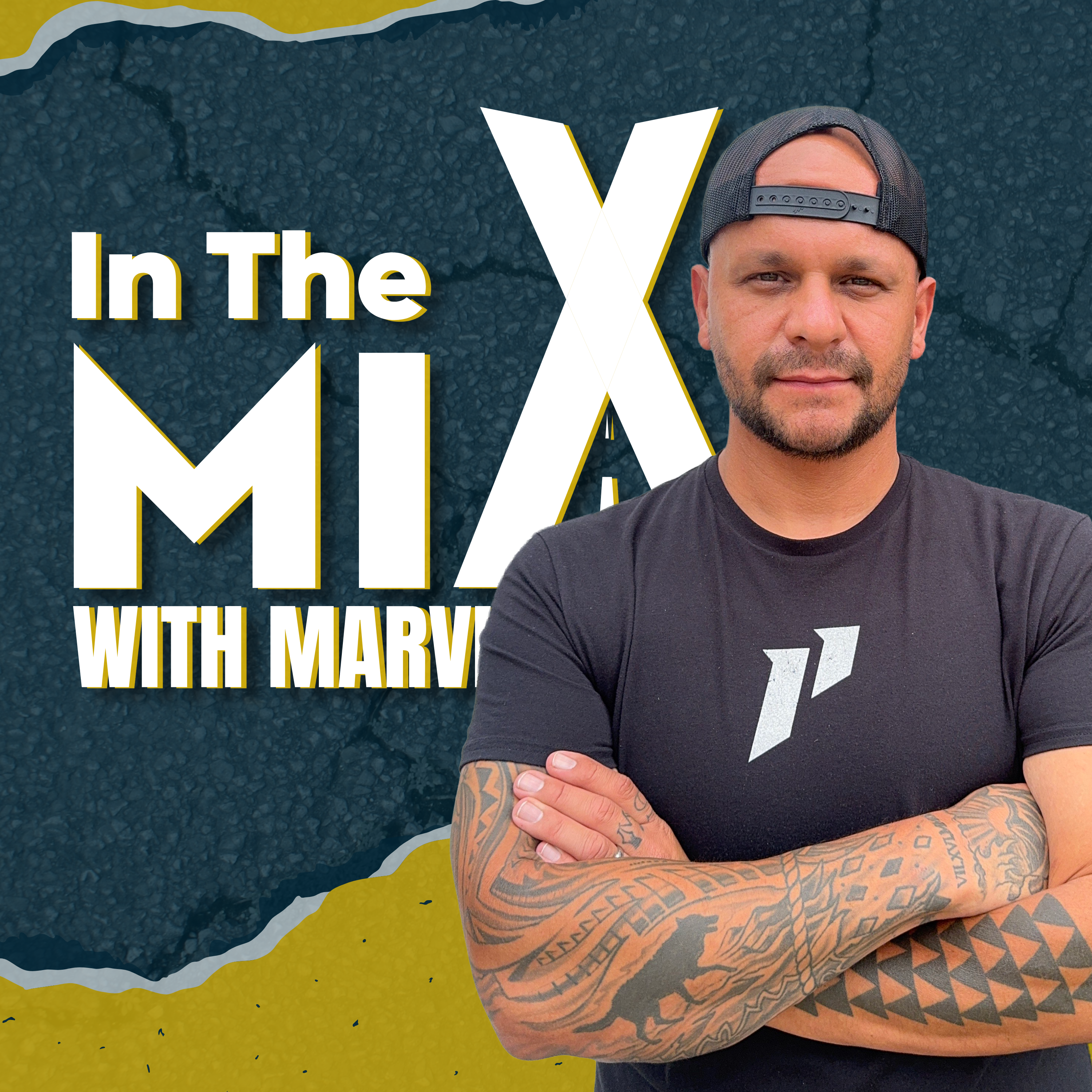
In The Mix with Marvin Joles
Revolutionizing Roadwork: Trimble's Kevin Garcia Talks Compaction to Cloud Ep. #35
00:54:12
Loading summary
Transcript88 lines
- [00:00]
A
Today's episode of in the Mix is powered by Jobber.
- [00:07]
B
Welcome to in the Mix, Paving the way to insight, education and entertainment in the asphalt industry. Your host, Marvin Joelz, a best of Web pavement award winner, knows the blacktop community and what it takes to win in this industry. Each episode you'll hear real stories, expert insights and road tested strategies from the people who make up the asphalt world and beyond. Whether you're paving parking lots, ceiling driveways, striping lines, or innovating asphalt tech, this is the podcast for pros who keep the industry rolling. Now here's Marvin.
- [00:53]
A
Hey everybody. Welcome back to another episode of in the Mix. It's springtime here. We're kind of getting into it. I don't know when you'll hear this one. You might actually hear it in the fall. We've got a lot of podcasts, podcast we've recorded that we've banked a little bit. But one thing I can tell you for sure is it won't be the first time that you'll see content from myself and my guest today. Today I have Kevin Garcia. He's the general manager of Civil Specialty Solutions at Trimble Inc. And you may have seen content with us about a piece of compaction technology and I wanted him to elaborate on that, but I, you know, when we were standing in the booth, we were like, there's so much more that Trimble brings to the asphalt world. Let's start talking about that. But Kevin, if you introduce yourself and tell us, you know, how long you've been at Trimble and what you exactly do there, what does that title mean?
- [01:41]
B
Yeah, it's a good question. And it's a, it's a complicated title. Yeah, I've been at Trimble now 14 years and civil Specialty Solutions is really just anything that's not the dirt moving part. So the, the dozers, excavators and graders, that's not me. If it's paving, if it's drilling and piling, if it's marine construction, if it's landfills, or if it's our off machine stuff. So bases, rovers, total stations, that all fits underneath me with, with my excellent product team develop those solutions in those spaces.
- [02:09]
A
Yeah, that's a lot.
- [02:10]
B
It's a lot. It's a lot of stuff to keep our heads on.
- [02:12]
A
Yeah, I think when we were in the booth and I was like, when people think of Trimble, they always just think of the poles with the Trimble device sitting on the edge of the bulldozers and the earth movers and we're just like, there's so much more to it. So elaborate a little bit for us. Like what, what does that do there? Well, I mean, what do you do in that realm? Because that's a lot of pieces of equipment, a lot of fields.
- [02:33]
B
It's a lot of stuff. Yeah. So we really like to focus on the workflow. Right. I mean, we don't want to build a point solution that just does one thing. It really needs to enable the contractor or in a. In a perfect world, it's the owner, the engineers and architects, the contractors. It's a. It's a whole construction continuum. When we talk about not earthmoving. So the specialty space, a lot of that's machine control centric. We've got automated machine guidance for pavers, for mills, for compactors. In the drilling and piling world, we've got, you know, it's. Solar's huge right now around the world. So we're doing a lot of piling in the solar space. But we have a marine division a lot of people don't know now that is an excavator or a dredge of some kind working underwater. But you know, that little yellow globe sitting on the, on the pole, A lot of people think, you know, oh, that's just part of the equipment. They don't know when they drive past. We're actually taking in, in many instances it's GPS in the paving space. A lot of times it's actually total stations. So we're out chasing, you know, millimeter accuracy GPS is going to get you about a golf ball. But in the paving space where we're managing yields and really tight tolerances and, you know, drains and brake lines, we need to be really tight. So we're measuring a point on the machine, which is usually where you see that target on top of the, the mast. We're measuring to that point. And then the software's got some, you know, complicated algorithms that, that take us down to the thing we care about. So on the mill, I care about the tooth on the, on the drum for the paver, I care about the back of the screed for the roller, I care about the, the bottom of the roller surface and, and we're measuring to that point so that we know how exactly did the job go? You know, did we put the spot where it was supposed to go? Did it follow the grades and the brakes that the engineer intended for the mill? Did we take away what we wanted to take away? Did we take away too much? Did we take away not enough for the Compaction systems. Are we getting a quality product? You know, one thing that's really interesting about building a road is you're going to spend 95, 98% of the cost of the road before the roller hits it if they don't do their job right. You just wasted 98 of your job.
- [04:37]
A
Correct. Yeah, that's what I was gonna say. Yeah, yeah, that, you know, that's the finishing part. And if we don't do it correctly, the whole rest was for nothing.
- [04:46]
B
Exactly, exactly. Right. So, yeah, and then the off machine stuff, that's where we're. That's where we're doing the survey tools. So your, your, your screen, where you're, you're monitoring. Am I doing what I'm supposed to do? I've got my design loaded there. I'm grade checking. Yeah. The paver, you know, I want it to be, you know, over two and a half inches here at a 2% cross slope. Is that what I'm doing? Yes. Where we're verifying that the machine's delivering what we expected out of our model. It's guiding the machine. Now, if it's a GPS world, you've got a base station probably on site, or you're using a VRs network, for example, and we're doing it with precise GNSS accuracy. But when we're doing a paver or a mill, we're using a total station. So you'll hear them called robots or total stations. That's what's sitting on a tripod on the side of the road. Looks like a camera. Yeah, that target on the machine. And now we're chasing, you know, take a quarter side. That's what we're chasing for accuracy. To put it right where it needs to be. Yeah.
- [05:37]
A
And what's crazy is I was fortunate enough at last, World of Asphalt. World of Asphalt, to talk to Carl. And Carl was like, hey, I want to show you this thing. I want to show you this, this piece of equipment and this technology and whatnot. And I think that that's really what. What got me after speaking with him was like, the accuracy that we can do it. Because we're thinking whether it's sand, whether it's rock, whether it's asphalt, whatever, we're thinking about aggregate. And to know that we can get it within, like a micrometer measurement using Trimble's technology is the thing that, you know, you and I were talking a little bit before the podcast. It's the thing that sets us apart now from it did 20 years ago, 50 years ago. 100 years ago when there were horses, you know, you were talking about the horse drawn drag boxes, you know, that, that people used back then and we were spraying oil on rocks and trying to get it compact and all these different things. This is where we're at now. You can't really unwind that. Like, you know, there's, there's not going to be a point now where they're going to, you know, the engineers or state specs or project managers or whatever are going to be like, you know what, it doesn't have to be fractionally close. Close enough is okay. And it's, we're not going to unwind that. Yeah.
- [06:55]
B
And we. What's really crazy is, you know, it's a world where I think. And you opened with this, Marvin. Everyone knows us for the bulldozer, for the motor grader and the penetration or the adoption in that market is huge. Like people, they can't really even think about doing it. The other. They don't put stakes in the ground. There's not hubs, they're not in some places. Yeah. But by and large that's widely adopted. But the pavement space is still lagging behind significantly, which I don't think surprises nobody. History for a long time. We're usually last of the game and it's not because we don't want to. Paving is a hard job. Paving is a job that's got a lot of expertise in it. You've got these seasoned operators who know what they're doing and they're out working all day. Not, you know, it's rare that they look up and go, hey, what is new? What's, what could I be doing different? And it's a word of mouth business. Like, you know, if you tried it, then you talk to your peers and go, I tried this thing. Yeah, it kind of scales up. But in a world where, you know, especially right now, you know, oil prices are through the roof, your yields really, really matter. And I think we, when we think about technology, yeah. We can be microscopically accurate. And, and you know, what does that mean? Well, it means the contractor placed what they bid. So you're, you know, you know, the tonnage that you're expected is what you placed. Your IRI is better. So everyone likes driving on smoother roads. Yeah, the end users like it. The, the state dots like it. They're easier to maintain. You know, especially in a northern climate where you think about snowplows. Yeah.
- [08:18]
A
Oh yeah.
- [08:19]
B
A bad road and a blade is hitting it, you know, every week for dry. It Just accelerates The, the failures. So smooth roads are easier roads, they're safer roads. They, they have better yields so that everyone gets what they expected out of a job cost. There's a lot of reasons to place it precisely.
- [08:34]
A
If you're a paving contractor, you already know the bottleneck takeoffs. Either your estimator is burning a full day on measurements or you're paying one of those services that takes two or three days to send something back. Trutech fixes that. It's an instant estimating platform built specifically for paving, asphalt, striping, curbs, sealcoating the whole job. And it gets you a measured bid. Ready takeoff in minutes. Not 24 hours, not 72 hours minutes. They've got construction drawing takeoffs coming, same instant turnaround. They even have a custom estimating and proposal tool too. Go to Trutech AI, send them a job you've already bid and they'll run a free takeoff so you can see it for yourself. That's TrueTech AI. We're talking about road plowing. We're just now getting over that here in Wisconsin. I was telling you beforehand, I think I quoted 15 jobs today. One of our larger clients was like, well why, you know, why is this area of the asphalt look a little more rough? And I'm like it's a high spot and a plow blade hit it. Right? And when it was installed, granted it was installed well, but you know, that's a high spot and a plow blade hit it. Which means we're getting detriment on the plow blade too. But the one thing that I think that we might overlook in this conversation is the efficiency upgrade of if in the olden. We're just going to call them the olden days, which they're not that far in our past now, but it feels like it with the way we've adopted technology. You know, we would have tried to get grade, we would had to come back and shoot it. They would had to relay that information to the bulldozer operator or the motor grader operator. And here we now we're now that we've accelerated and we are using technology like Trimble, we have also shortened the time frame of when the expectation is of when you're going to complete these projects. So now you can't go back because there's going to be another contract. Like yeah, we can hit the deadline. Not only that, we might be able to beat it. So we can't really go back, you know, as I was saying to unwind it at that point, but I think there's just this. There's this overall feeling a lot of times because we are such an archaic industry, you know, no matter what, it always goes back to rocks, right? The aggregate rocks. Every time that there's this perception that we can't adopt this or it's not for our generation or whatever. But you and I have a mutual friend in Jacob Buck that lets us know, hey, his father probably was like, I have no idea about this. Jacob says, hey, I do know about it. Let's make it happen. They're one of the best advocates that we have in the asphalt industry for using products like what Trimble brings to
- [11:07]
B
the table, and they do it. You know, I think I love the Buck brother story because most people see technology and they go, ah, you know, that's for the big guys doing highways and racetracks and airports. That's not me. I'm, you know, I'm a guy or I'm a parking lot guy. All the Buck brothers do is commercial properties. And, you know, they. They went through that exact evolution you just described of we're a small company. You know, they're not hundreds of employees, but they know that they're a profitable company. And they. But Jacob saw it and said, I know we can do better. He chased down technology. He went out and did his homework. He. In fact, he came to an ignite event in Florida. I want to say it was probably three years ago, four years ago.
- [11:44]
A
Yep.
- [11:44]
B
Did his homework, talked to a lot of people and went and invested in some technology. And he'll. He's not shy at all to say we're grading 50 faster, which is huge in that space. Imagine how many jobs you're going to get done now in a year. It gets 50 larger. And he's able to do that with operators that don't have to have, you know, 10, 15 years of experience. You can almost put anyone in the cab of that machine, and you're still going to get the result you want out of the back of that, you know, out of that blade or out of the back of that city, whatever you're using. And the better the grade is prepped, the easier it is for the paving afterwards. You know, everyone can pay for thickness. It's when you got to do variable that's hard.
- [12:20]
A
Yeah. When they're trying to get those parking lots to divert water, you know, where they're. They're trying to. That's the key. I've seen a lot of posts online, a lot of pictures of not just bird bass, but swimming pools in brand new parking lots. Right. And you were like, this totally could have been avoided. And we know it could be avoided, as you know, at the people who are quote unquote in the know, because we know there's technology out there that can help you avoid these types of issues.
- [12:45]
B
Exactly.
- [12:45]
A
Yeah. So I think the, you know, I always like to tell people when they ask me about technology and I, and you make a great point before I get to that point about, I think people think that they need to be this high experienced operator in order to be able to jump into the technology and understand it. And that's actually not the case. It's the reverse of that where you don't have to have a lot of experience because all the thinking and finesse work actually comes out through the technology and gets you caught up to pace fairly quick. But I talked to a lot of contractors, not just with they're using Trimbles technology, but a lot of different CRMs and different measuring softwares and all these other things. And I asked them, I'm like, you know, on movie night, do you still go to Blockbuster to get one? Like, well, no, I'm like, oh, so you, you pull a DVD out of your collection? Like, well, no, we go to Netflix. Like, exactly. Like that's, that's what we do now. We go to a streaming software. Although we, we could do it on the DVD or we could get a vhs. We don't do that anymore because even those small things, the quality is down and the efficiency is down. Right. You're just not available. So I think about that in that capacity. And when you and I were at Con Expo, you know, we, we started talking about a certain piece of technology, which I'm excited to, to start posting about that and get that out. That'll be out by the time people hear this podcast. But, you know, I live, for me specifically, you know, my career took a weird turn when I started posting the social media and started doing the podcast. But I live for those moments when I'm like, whoa, this is awesome. And you caught me in one of those at the Trimble booth. Tell me about that piece of technology. Because you were like, this sticks to the bottom of your roller. And I was like, what sticks to the bottom of the roller? Tell me about this thing.
- [14:36]
B
Yeah, and this was just, you know, Con Expo, what, a month ago now? And my phone has not stopped ringing since that show about this thing, so.
- [14:43]
A
You're welcome.
- [14:44]
B
Yeah, exactly.
- [14:46]
A
Thank you.
- [14:47]
B
We introduced ground penetrating radar to the compaction process for everyone. That's Been around asphalt, which is all the listeners to this show. When we roll asphalt, that what we're really doing is driving the air voids out of the map. And the more air voids you drive out, the longer lasting, the less, the less water impregnation, the better the quality of the road. And we all have targets we've got, you got to hit, you know, which we equate to density. But it's really just measuring the air voids of a mix design. And for forever our way of managing the compaction effort was a new gauge or a pqi, you know, something that was following the machine and you would set it down and you had a worker with you. You know, someone designs to go out and be that inspector, take some, some measurements and record how well the job is performing. And if you're going to go do a whole parking lot or you know, a mile, a lane.
- [15:35]
A
How does do that though, Kevin? Like how does it, you're going to record how it's doing? Yeah. How does it do that?
- [15:41]
B
A new gauge is using, it's measuring what we call the dielectric profile. So it's effectively measuring, you know, a signal through the mix. And there's a difference between rock and oil carrying a signal and air carrying the signal. The, the, the, it's a lot like when we measure conductivity of steel for that. So we're measuring, you know, how well does the signal travel through the space. And we did it with a new gauge before and that nuke gauge was hand carried. Someone, you know, walks around with it.
- [16:07]
A
Look, toaster on a stick looks like.
- [16:09]
B
Yeah, exactly right. And they get a number and they go, okay or hey, this isn't good enough, come back. And now the roller operator has to back up and work an area again and move forward. We're lucky to check a tenth of a percent of the overall square footage of a job. Right? You're setting this thing down. Push the button. Set it down over here. Push the button. It's not representative of the whole entire surface. And we don't want to let one bad number dictate our roller pattern for the rest of the day. What if, you know, what if six passes was the right pass and we just gotta, you know, maybe there was a gradation change or maybe the mix got a little bit, you know, it wasn't homogeneous right here. But because we saw a lower number, now we, we say it's seven passes. And now the rest of the day you roll seven passes and you start fracturing aggregate. You're Burning fuel. You're, you're wear and tear on your machine. You're holding up the paver because, you know, he wants to be going 40ft a minute, and now we're doing 30 because the roller's got to work longer in specific areas.
- [17:01]
A
Yeah.
- [17:01]
B
So, but that's the way we do it. And then when we finish, the way we verified it was someone went and, you know, on your brand new asphalt mat, someone went and took a hole saw and took a core out. And we take that core to the lab and we measure all the, all the parameters and say, yeah, okay, you know, you hit your minimum asphalt thickness. It was the right gradation, it was the right density. That's just that workflow. It's been that way for as long,
- [17:23]
A
as long as I can remember.
- [17:25]
B
Yeah.
- [17:25]
A
Yeah.
- [17:26]
B
Now we've got this new sensor, this ground penetrating radar. So this little box that you, that I showed you, it looks like an orange pizza box and it sticks to the bottom of the roller between two drums. It doesn't look like anything all that special, but it's measuring the map and it measures down around an inch. So we're. A lot of technology has existed in the past trying to get us a density or a stiffness measurement. And it was accelerometer based, so it was measuring how much of the drum's energy was transferring into the surface and bouncing back. Okay. The problem with an accelerometer is it's measuring down 2, 3ft into the ground. Yeah. You're weighing the asphalt and you're getting
- [18:03]
A
into base and sub base.
- [18:05]
B
Exactly. And that's not what we cared about. We, we prepped that already. We want to measure the asphalt layer, so it wasn't a great indicator of what was really happening with the mix.
- [18:14]
A
If you've been in asphalt long enough, you've probably said, there's got to be a better way to measure this. That's where Moser comes in. It's a simple app and motion based tool that lets you measure areas, distances, elevations, and volumes just by watching. Walking the site from patches and overlays to stockpiles and takeoffs, Moser helps contractors get the numbers they can trust fast. This show is about real stories and the real tools that move our industry forward. And Moser is one of them. To learn more about what Moser can do, head to the link in the description.
- [18:48]
B
This sensor, this ground penetrating radar is only measuring down an inch. So we know what's happening in the layer that we're working. And fortunately, asphalt compacts you Know from the bottom up. And we're doing the same thing. We're measuring the, the air void. So think percent compacted. So if I'm 90 compacted, I'm 90 aggregate 10 air. My target said 93. I know the number directly under my drum at any given time, no matter where I go on the surface. So now I've mapped the entire asphalt surface and I've. I'm mapping it on the screen. It's like a giant digital.
- [19:19]
A
Oh. So it's not just giving you a, A digital readout of a number. It's mapping the entire project too. So it's, it's telling you, hey, it's 94 over here or 92 over here. We need to put more right here. Interesting.
- [19:34]
B
Yeah. So we, we set a target, and in the, in the trimble systems, the target will always be green. So if I set it today at 94, I roll back and forth, making, following my roller pattern. And when the screen turns green, that means I'm in my threshold. I hit 94, move on. So there is no more guesswork. I don't even. I don't need the inspector behind me anymore. I know what I hit because I'm looking at the screen where I hit it. And once everything's green, I move forward. I'll never under compact, and I'll never over compact. Means we can keep up with the roller. And that measuring of, you know, 0.1% of the job before I'm measuring 100 of the job. And as a contractor, I can go. I know that no one's going to find fault in the, in the product I just put down. There's not going to be early failures. I did what I was paid to do.
- [20:19]
A
It's so awesome.
- [20:21]
B
Super cool.
- [20:21]
A
Yeah, it's just so awesome. Kevin. I think people have to know by now I'm a geek about this. I have to be. Because for me, maybe it's just the contractor side of it, knowing the headaches and then having friends, of course, that are paving at that scale where they need to hit those and knowing, like, the gripes and the struggles and stuff that they have. For me, listen, getting over those troubles is awesome, but also when you just think about the technology and that that's what we're doing and that there is technology and teams that designed this to help us. It's so awesome.
- [20:55]
B
Yeah, it's. We, we get to talk to a lot like you. We get to talk to a lot of customers around the world. And, you know, we're always asking them what would you solve tomorrow? Like what, what are your problems? What do you deal with? You know, where do you see the biggest issues in your fleet or with your, with your crews? And this was a common theme. Like, man, you know, we don't have a way of really knowing what we've done until an inspector does it and, and there's nothing, look, nothing, inspectors, we need you on jobs. There's lots of stuff you do.
- [21:20]
A
Yeah, we gotta keep ourselves in check for sure.
- [21:23]
B
Yeah, yeah, but it's, it's, it's still someone standing out there next to live machines. It's a safety risk. You know, unfortunately, every single year, inspectors are struck by vehicles, you know, next to live traffic. And, you know, I feel a lot safer sitting on a 10 ton roller than I do standing, you know, with my work boots holding a nuke gauge. We're just, we're improving site safety, we're improving job site quality. We're not waiting on someone to tell us have we passed or failed. We can just go, yeah, all the time.
- [21:51]
A
Well, I think that, you know, you make a good point about safety too, because if it wasn't an issue, there wouldn't be roller companies creating technologies that stop when they see a human within the field of vision. Right. With all their sensors and whatnot. But I think the, the big picture of it all, including, you know, the, the safety aspect of it, the efficiency and all these other aspects of it, is the fact that there's technology that is created, that and you all, I think honestly when I say you all, Kevin, I mean Trimble, the reputation for the quality of products that you all have created. When you come to the market with something like this, what's the device called?
- [22:37]
B
Pave Scan. Pave Scan rs. Yep.
- [22:39]
A
When you come with Pave Scan RS and Trimbles there and they're like, they're almost the inspectors, almost have to be like, well, it's got to be on like whatever it is, like, you know, whatever these readouts are. There's no way Trimble is going to bring something to the market that isn't proven to work and work well. And I think that the, it makes their job easier, to be honest with you. Right. I mean, it's going to be an interesting dynamic just to see this one device and how it changes our industry and what it does. And we talk about the civil work, right. With this, with this device, the Pave Scan. What was the number?
- [23:14]
B
Pave Scan rs.
- [23:16]
A
Oh, Pave Scan rs. All right. What's the RS stand for?
- [23:18]
B
That's a Good question. This was, I think it just sounds cool.
- [23:24]
A
It's like rt, you know, like a Dodge RT or something.
- [23:26]
B
It's RS for roller scanner. So it's on a roller. So one thing about this tech is we partnered with gssi which is a really, really well known GPR company. And Trumbull doesn't have to build everything. Sometimes there's people with, you know, cool mousetraps and it just needed to be integrated with something else to truly unlock its potential. Yeah, we have intelligent compaction systems, we have gps, they have cool GPR sensors. They, it's called the Pave scan. Then on roads forever, it usually mounts on a cart and they measure the road after it's been constructed and the cubes are gone. And it's nice to know, but it's one of those, well, what am I going to do about it? I've got some bad spots. It's cool.
- [24:01]
A
But how do what now? Now what are you going to do? The asphalt's down to 150 degrees and we can't act it anymore or do whatever we want to do. One thing that I've noticed is that, you know, it's a pizza box right now. But before too long I got a feeling it's going to be the size of a sheet of paper. And then before other long it's going to be the size of my iPhone. And then what that does for me and my brain lets me know that when it is the size of an iPhone, it's going to shoot up to my phone. And I can use this technology then at a smaller scale if I wanted to do it on driveways or, you know, even with parking lots, sometimes those rollers are way too big and will fracture the aggregate. We're going to get this technology down to where I care, like I care how long a driveway lasts a client. I care how long a parking lot lasts a client. There's not an inspector there. But when you are putting your name behind it and you're understanding, hey, this is what it does, we're, we're essentially going, when you get to smaller contractors, we're going off of information that was relayed to us hopefully through training because a lot of guys think they can just get, you know, a CC900 or an RD12 roller from Wacker and that's going to be good enough. It's not, it's not putting the compaction down that we need in order to create a surface where if somebody's house is on a mountainside and they have switchbacks and the water is running down. It's likely going in before it's going down if you don't have proper compaction. So that gets me excited at the contractor scale size because that means we're going to start to be able to take it in. I'm going to see Jacob Buck with it on. I'm going to have to go out to his job site, interview him. We're going to call under there and look at it and just be in awe. But it's cool. I mean, it's cool that we know that it starts there and then it gets down to contractors of all size. Folks, let's take a second to recognize a true staple in our industry. Ray Products and chemicals is celebrating 50 years in business. And that doesn't happen just by accident incident. That's five decades of showing up, delivering and supporting contractors just like you and me. And if you've been around striping at all, you already know 1-800-Stencil. They've got one of the most complete stencil inventories in the game. And if you need something custom, they'll design it and turn it around fast with a quick proof and quote to keep you moving. But it doesn't stop there. RAE is a leader in traffic and marking paints. Everything from water born and fast dry latex to acetone acrylic chlorinated rubber and MMA systems. They've also got preformed thermo hot melt materials and they're a top tier Graco dealer with parts and repair support to keep your equipment running. If you're looking for a supplier that truly understands the industry, this is one worth knowing. Check them out at 1800stencil.com or raypro stores.com or give them a call at at 1-800-783-6245. And from all of us, happy 50th to Rae.
- [26:51]
B
And that's where like, you know, to your point, yeah, the form factor today is a pizza box. But I think what really has changed a lot in the paving space too is nearly all of this information. You know, where was the asphalt put? How wide was the pavement? What's the surface look like? We're recording all of that during the paving process. Just like we're recording this, this compaction factor during the compaction process. It's all streaming to the cloud in real time. So even if you're not there, Marvin, and you got a crew that's out there and you're curious, how are things going, you can pull out your phone, click on your Works manager account, click on, you know, job driveway, 1, 2, 3, and you're seeing the exact same thing on your screen, basically. And you can go, ah, I don't even need to go visit that job today. I see it, everything's green, everything's good, the crew's good. Where should I. I can go bid another job. Let's go make more money. So, yeah, connecting the field and office is another really big part of what's changed in the industry.
- [27:41]
A
Yeah, we've seen that at Con Bo. Like, we've seen that at Trimble's booth. Once you started telling me that this technology was talking to this technology that was talking to this one, and then I would visit other booths. There's. That's happening within other companies as well. One thing that I love about that is it's driving all of us forward. You know, being in a capitalist economy, hey, they're creating it, we need to create it. We need to be going here, we need to be doing there, and everybody's pushing forward. Ultimately, what I was explaining at one point at Con Expo is this making us more efficient so that we're not hopefully out there at 10 o' clock when we should have been done at 6, but we didn't hit compaction. And you can make it back to your home for dinner time with your family, or you can make it to your son's baseball game, or you not get up super early because you didn't know where you were at that night when you ended the project. Same thing with guys at the asphalt plants. You know, when those things are all talking to each other and we're getting more technology, they're not running late. They can kind of get in front of problems before they really exist, which is fantastic. Trimble does that. You and I talked about that in the booth. Right. It's wonderful to. To you and I actually were talking about something where me as a contractor, I didn't know about this, you know, and was. Didn't think that, you know, maybe I should put the device under the roller right now. So I'm doing it in real time versus at the end. I don't even know that that's a solution that I should be asking you to create for me. Right. So it's great to have that partnership and the communication and collaboration between all of us in order to find those problems and solve them, essentially.
- [29:09]
B
Yeah.
- [29:10]
A
It reminded me. I heard something today, and I've been listening to a lot of podcasts about AI technology and, and the world and the universe and quantum. I'M a huge. It doesn't seem like it because I'm not a huge tech nerd, but I am a nerd in some capacities. And I've been listening to like quantum theory and quantum entanglement and listen to quantum particles, and it's just so much fun for me to. To think about and. And listen to. But I was listening to one where it was the guy who invented the sewing machine actually had a dream and he, in his. He was having trouble because he couldn't get it to work. And then he seen somewhere in a dream that there was a spear with a hole at the top of it. And he was like, oh, if I put the thread at the beginning of the needle, then this thing will work. Yeah. Instead of trying to drive the needle all the way through and pull it back, I can just put it at the beginning. And it reminds me of that when we're talking about putting the sensor underneath the roller. It was like, why weren't we doing that, you know, in real time as we were going all the way along? But it's fun to see. It's fun to see the technology. It's fun to talk with people who are at the forefront of it that realize, hey, this is a problem that we're going to tackle. One thing I love about Trimble is they've been around for a while, they seem to be doing very well. And that lets me know that most of the time there's R and D going places where, you know, if you were living on your bread and butter of this thing and that's what you're focused on, you wouldn't get to do R D in other areas of the asphalt industry. But when you and I were talking, it seemed to be there's plenty of technology and plenty of spaces and plenty of solutions you all are looking for in the asphalt world. What are some of the other areas where Trimbles created technology or is creating technology in the asphalt industry, where we're problem solving?
- [30:52]
B
Yeah, that's good. Probably a couple come to mind. Probably, Marvin. I mean, I think one is. It goes back to a little bit what I said earlier about we. We're trying to link, you know, we've got bidding and estimating software, we've got machine control software, we've got survey software. We were known for those things like in buckets, right? I use this, but I don't use those. Or I use this and I don't use those. Having your bid software and your estimate, you know, now I know my values. I know my, my what my costs are going to be for my. For my asphalt purchases, for my curb purchases, all that kind of stuff. Stuff. Having those things flow through to the machine design, you know, that's that one people get. They're like, okay, I said it was a thousand tons. It better be a thousand tons. I know it's a thousand tons because I designed the surface. I have my existing grade. I have my design surface. I know the volume in between. Cool. We take for granted that, like, when you miss that by, I mean even 10 tons when you're a small company, you know, I get that these giant, you know, mega contractors, they. They can afford some cost overruns here and there. In fact, they. They can bake it into their budgets a little easier than a lot of the kind of the. The guys that are doing the majority of the work. So connecting your work orders from your bidding software through your execution piece and then having the survey in to kind of verify that stuff, we spend a lot more time on. It's less about the up, down, left, right of the machines anymore, and it's really more about what kind of insight can we drive from. What did the tractor do? What did the surveyor see? Is there reality capture out there? I mean, these things anymore, like a. You're running an iPhone pro or an iPad pro. We have a product, we call it Site Vision. It was originally an augmented reality thing. So, like, you live in this space sometimes where you're out with a contract or you're out with a customer and they're doing a. Let's say they're doing an addition on the side of the house and they want to do a new driveway roll up, and there's some landscaping around it, and you're showing them some paper prints or even. Maybe even some sketches, and they're like, Marvin, I just. I don't get it. I don't see it. Site Vision was meant to be like, cool, let me put it in here. Let me mock it up in SketchUp or any 3D drawing tool. And now I'm standing in front of that spot in the driveway. I hold up my phone and I see the trees that are there now. But then I also see this digital view of what it's going to look like when I'm done. And that's where we started with this augmented reality. And it was a way for people to visualize what was going to happen and look for conflicts for the contractor, like, oh, we can't go there. There's a ditch I didn't know about. Or someone put a Light pole there. We got to think of something different that evolved into. Now it is a survey tool of outstanding proportions where I can get a really low cost GNSS receiver that is still premium accuracy, premium precision. I can put my phone on it as my, my software controller. And any pro version has a lidar scanner built into it. So as I'm done constructing, I hit the scan button. I just take a sweep of my phone, up, down, left, right. I get a 3D point cloud that is capturing what was in the field. As soon as I hit save, it pushes it to the cloud. And now and if I missed a measurement like, oh man, I forgot to check how far was it from where I was standing to the edge of pavement. Just open up your software and click a line and go up 6.8ft. Done. So tomorrow I know that we're going to pay. 6.8ft wide and 100ft long, 3 inches thick. Let's call the plant. I need 116 tons done. Like, we're always pushing the envelope of what's possible, both on the easy to adopt, like iPhone level, but then all the way up to reality. Captures become a huge deal for a lot of contractors where they're told at the end of the job, I need to know wherever utility was with survey grade, I want to know where. Edge of pavement, top back, a curve, power lines, light posts, everything that was going into this, you know, the subdivision or maybe this, this intersection. We used to go out there with tape measures and string and levels and, you know, guys taking pictures and going,
- [34:33]
A
here, put this on grid paper, you know, on grid paper and say one grid equals 10ft. And then we're trying to draw this thing right now.
- [34:41]
B
We go through with this. You can mount a device on the back of your pickup. You drive it so it takes you three minutes to scan the entire thing. You're going to get hundreds of millions of points. And the AI anymore in the software can give you, this is edge of pavement. This is where your striping is. This is top, back a curb. We've taught the models what to pick out of the data point cloud. And if you do that when the trench is still open, you're going to see the utilities. If you do it when the trench is closed, you know, you're not. So scan, look for things, take measurements when you can. But we can create a digital twin. We've got bim, you know, for, for buildings forever. Everyone knows, you know, if you built a building anytime in the last 10 years, somewhere, the engineers or the owners Have a digital twin that they know where every conduit is, where every h VAC duct is, exactly where it's placed, what the con, what the dimensions were. It's a thing. People have had it. We take it kind of for granted. Why haven't we done it for roads? Yeah, I want to know my asphalt layers. I want to know the geometry of it, you know, in real space, georeferenced. We can deliver on all that stuff, too.
- [35:41]
A
If 2026 is the year you want to make more money in your business, it starts with two things. Staying busy and getting paid faster. That's why I use jobber. Jobber is software built for blue collar businesses, and it's designed to help you book work ahead of the busy season and keep your cash flow strong on all year long. The marketing tools help you get found, look professional, and stay booked. Not just when the phone's ringing, but before the rush even hits. And once the work's booked, Jobber payments helps you collect deposits up front and get paid faster so you're not chasing checks or waiting weeks for the money that you've already earned. Bottom line, jobber helps you stay busy and stay paid. If you want to make more money in 2026 with software built for blue collar, try jobber for free today. The link's in the description. It makes me think about the world around it, though, too, Kevin. Like, you know, it's not just edge of pavement and what's all inside of it. At some point here, that that eyeball is going to be pointing beyond the edge of it because there's other driveways, there's trees hanging over. There was stuff in the way or whatever. And I'm sure I could almost guarantee this. There's. When you're paving a roadway or doing whatever, there's homeowners that are complaining. Well, this wasn't like this. And you hit this and you did that, and then we would be able to go back and be like, no, actually, this was taken in real time, and that was the way it was when we got there. It kind of is a. I hate to be this guy that maybe says this, but it's like an insurance device essentially, at that point to save your tail. If you're the contractor, we have a
- [37:12]
B
lot of contractors who use it primarily for that. They scan it before the job and then they scan it again after and go look. That's what it looked like before. And either we improved it or it stayed the same. So. So dispute resolution is a big one. You know, conflict resolution or Even just looking for clash detection. Stuff like, hey, what, what we designed or what the engineer gave us to go execute doesn't work because they didn't know that there's a transformer sitting right there. I can't just move that thing, you know, what do you want me to do here? So, yeah, a lot of cool stuff like that.
- [37:40]
A
Awesome.
- [37:41]
B
This is autonomy. You know, people push for autonomy when we're not there yet. We don't have, you know, self driving rollers yet, but not yet. That you can do. Horizontal steering we can do. You know, there are stuff we can do that is already starting. It's not going to turn the vibe on and off yet. You might have to have a guy doing that, but. Or a girl doing that. But you. We're big believers in what we call task assistance. So, you know, at any given time, an operator has to do six or eight or ten things. If we can do four of them, that means they can concentrate on the other six, which at the top of that is usually safety. You'll be the eyes. We'll manage the quality or we'll manage the steering, we'll manage the pass counter. But you know, you focus on where's the truck traffic and are my people safe? And you know that. Next, where's the paper right now? Do I, am I, am I close enough to be affecting the right temperature window?
- [38:26]
A
Totally. Yeah, yeah, yeah. And I mean it's in that area of the industry, we're seeing a lot in asphalt plant technology and plant operators and stuff too. A lot of that's getting autonomous. And some of these guys that we used to have to worry about, tons of lights and screens and everything else, they're quote on their quote unquote, AI assistant is being like, hey, I got every aspect over here. Why don't you just focus on this one thing? And it's seeing a lot of ease. So it's not just in the field here. We're seeing it in all areas of, of the industry. I mean we, while we're talking about my phone and me quoting earlier, I use a software for a CRM jobber who sponsors the podcast. And they have an AI receptionist, AI assistant that's there. And then when I talk about marketing, they have an AI marketing assistant, right, that's in there. So literally it's me relaying, hey, I need you to take care of this. And my AI being like, oh, we got you, we'll bring something back and, and you can take a look at it. Almost instantaneous. But you know, I'm still out doing whatever. And when I'm measuring, I'm using software to measure, you know, pieces of hardware that interact with the software. So it gives me a 3D rendering that I can give to my clients. That the guy that shows up with the grid paper. Yeah, that's cool and all, but it took him a week to make that, and it took me two seconds to do it with my device. And I sent it to them right now. They wanted it done Friday, and the guy isn't going to get the quote from them until Saturday. Bada boom. We're in the. We're in the winter seat, right? We're in the driver's seat. So it's an interesting. It's an interesting dynamic. It's totally interesting to see. I just. I don't know, man. I think, you know, I'm 40. I just turned 40. I came from the era of the video games and putting on, you know, 3D, and we still do the Oculus and all these types of things. But also, I'm totally old school where I grew up, and we were looting by hand, and I did all these things on the asphalt side, and I remember the roller having to click the button with the vibrator and turn the throttle up, hold the choke and do all these things. And I'm seeing us get to this point at this. This amount of time. I have a younger son who's expressed interest being in the asphalt industry. I'm gonna get some stuff. I know at some point where he's like, dad, check this out. And I'm gonna be like, that's totally awesome, but that's beyond my realm of comprehension. And you've went ahead and, you know, eased your way into it. Enjoy. Have fun with it. That gets me excited, man, because these are our. This is our community, these are our people, and we're making their jobs and lives easier. We're creating ways for them to generate more revenue and solve problems that have been around in our industry for a long time. One thing I want to ask you about, and this is, you know, I've seen a lot of roller technology within the last two years, right? Other companies and there's other people that are trying to find density through different means and doing all these things, but there's not a lot for the paver guys. We don't always see some added technology. I've seen a paver laser this year. My friend and one of the podcast guests, asphalt space ranger Dusty Bailey, he was like, this is what we got. This is what we're Working with. Right. He drives a cat. But you always talk about the point of contacts, the screed and all these different things. Is there stuff available for the paver? Is there stuff coming out for the paver? How does that work?
- [41:37]
B
Let me. The pavers have had What I call 2D. 2D paving is when we reference something on the ground, we call it bottom up paving. So a classic example is I have to match curb. You know, my asphalt has to meet my curb. So I'm going to put a sonic tracer on the measuring the curb and it's going to keep my screed at the elevation that meets the curb all the time. No matter where I go. If the curve goes up and down, my screen goes with it. So 2D has existed for, geez, I don't know, 15, 20 years probably very common. It's rare to see anyone pave without it anymore. You know, it's, it's pretty common. 3D is when we call that top down. So that's when I want a surface to look exactly like this. Crown is here, width is here, it tapers to shoulder here. I've got a design in mind that I need the road to look like it's going to be the best for smoothness. It's going to be the best for managing my materials for use fields. And we do that top down. 3D is still, I mean I say new, it's probably 10 years, 12 years old, but, but it doesn't see the same adoption. Like there's this fear of okay, this is just new and different. I have to create a model. I got to tell the paper what I want it to do. You know, that's, that's for some people. And there's, there's advantages to it. It's usually around either smoothness or tie ins or job site productivity. So if I know exactly how many tons are going from point A to point B, I can manage the plant, I can manage the trucks, I can manage the paving crew and finish at 2 o' clock like I, like I intended to. When we, when we don't know and we're just using paint marks on the ground and stuff and going okay, I think this is two inches. That's probably two and a half. Let me get my calculator out. That's you know, 1600 tons. Order it and you come up 100ft short of your. Where you want to get to at the end of the day. And now you're calling the plant. You're like hey guys, can you turn on for another 100. Well, we already went home. We got to come back and there's a startup fee and I gotta, you know, got to get the trucks back. Now that 2 o' clock in just became like you said earlier, now it's 7 o', clock, 8 o'. Clock. To do 100ft just took us as long as what it took us to do the first thousand. Yeah. We just missed. Right. So we don't have to deal with that. There's 3D. When I think about the new, new, like the newest stuff, one of the newer ones is, that's gotten really popular is we all know that asphalt can only be compacted when it's in a certain envelope. Right. It can't be hotter than this, and it can't be colder than that. It's got to be in this window. Yep. And we want it to be, you know, kind of continuous across the pavement mat. There's infrared cameras now that mount on the back of the paver that are measuring the temperature of the material as it's coming out of the screed. And I know, okay, it's too hot. Don't roll it yet. Or, hey, it's right where I want it to be. Or. And this is really weird when you see it the first time because we, again, we take this stuff for granted. You know, there's heaters across the screed that are keeping that mat hot so it releases and comes out of the back of the machine. Yeah. When one of those goes out, you'll see this temperature map where it's red, orange, red, orange, and then there's the stripe of green or blue, and then red, orange, red, orange again. You know that your screen heater's out, and no matter how much you roll, there's going to be this section of road that's going to fail early because it was cold. We can know that the minute it comes out of the paver and we can stop and say, wait a minute, did we get a bad load? Is it the mix? Do we have a screed heater out? Let's get that fixed before we just keep paving and make it worse.
- [44:41]
A
Awesome.
- [44:42]
B
Yeah. You're not going to find it, you know, just rolling around on the compactor later. You got blue smoke everywhere. So you think you're okay. Yeah, there's spots to find that. And then the latest, probably the brand newest, and I think it's the one that we get asked about the most outside of that compaction sensor. The next most, by far and away the most common thing I Get is.
- [45:02]
A
So I was driving down the interstate on my way to Tennessee and went through Indiana and I seen some night paving. I seen these big balloon lights on the back of the paver that were illuminating the whole area where everybody was working. Guess where those cameras came from? Portable Lighting Solutions. They're the only balloon light manufacturer offering the consumer a replaceable screw in LED bulb that is field serviceable in minutes. They have a patented slide in assembly and they have a push to rapidly deploy mechanism. So you know, you push down on the top, it pops up, it lights the whole area up. You push down, it shuts off. They're manufactured right here in the usa. There's no patch kits, there's no blower motors, there's no set stop screws and they're UL certified. So whether you're seal coating at night, I'm going to get one and put it on the seal coat rig so I can seal coat at night and see everything, see the area or whether you're paving at night. You can put it right on your paver. We got a paver now. So I'll probably build a mount and just swap that thing back and forth or buy two. You might need this device. So hop over to portablelightingsolutions.net and put an order in and find yours today. They are ARA members, APWA members and women of asphalt members as well. Once again, that's Portable Lighting Solutions. Net.
- [46:14]
B
I would love for my paver to auto steer because I'm already managing the wing walls and the slat conveyor and the augur box and the, you know, the truck traffic. I got to get him dumping up next to me. There's a lot going on for that paver operator and if they didn't have to worry about holding that line, they'd be. Life would be easier.
- [46:29]
A
Yeah.
- [46:30]
B
There are now very. It's right today. It's. It's Vogelay and Dynapack. They have a couple of models that support, you know, full bl own steering automation. So you give it a steering line and the paver is just going to follow that line all day and. And you can do all the other tasks and wow. It's only a matter of time before that grabs more OEMs and more makes. Yeah, yeah. It's something that, that makes again you talked about this earlier, Marvin. I think people take it for granted. No one in this industry is afraid of hard work. You don't join asphalt paving because you want easy days. But. And I don't think anyone's afraid of it, you know, 12 hour days are just what happens during the paving season. But wouldn't it be better if you got home at the end of that 12 hour shift and you were a little bit fresher? You know, it's like, okay, yeah, I worked a long day, but the paver steered itself and I, I know I didn't have any quality errors and I didn't have any plant hiccups because we've automated some of that stuff. When there's no fires, you go home with just, you know, a little bit more energy. You're good.
- [47:25]
A
Everybody around you feels good. You know, you come home after a hard day when things didn't go your way and you ran into problems. I hate to say it, but a lot of times you bring that home with you whether you want to or not. In the asphalt industry, it's really hard to check it on those hard days. And if, you know, we were talking about this, some contractors, I, after I seen the device at COD Expo and not this device, the roller device. And I was speaking, I was like, you know, what would you do if you could, you know, turn your 12 hour day into a 10 hour day? And a lot of contractors like, well, I'd figure out a way to make it back into a 12 hour day. Like, you know, if I get a gap there, I'm getting there. But what they, what they wouldn't do do is figure out how to make it a 16 hour day. Right? And like that's the biggest thing. Like if we can figure out sooner, faster, how to solve the issues that we don't see until it's too late, man, that's going to save us from having to stay way too long, do way too much. And the people that suffer are the people that are paying the, the fee because they're going to get added on fees. The contractor is going to have to deal with eating costs, but they're going to. But it's the families and the people that are running it. No, no one, I hate to say it in this industry, but. And we have a problem in this and we talk about it quite a bit in the asphalt industry and I speak about stress and anxiety and all these other things, but you don't just come out of a stressful situation at work and just be like, I'm on, I check that right here. That doesn't bother me. You're thinking all night like, man, the auger went out and I can't not figure out I'm gonna have to deal with it in the morning. You know, we ran a cold mat and I didn't even know it it. And then we stop the paper. We're gonna have to go back and redo this work. So it's a wonderful thing, man. And I just, I don't think that we. You know, a lot of times you hear my podcast and I have people on from OEMs and people with technology and all these machines and whatnot and see our industry moving. I cannot thank you all enough. Like, we would still be doing it the old school ways with stakes and, and trying to figure all this out if it weren't for you all. I mean, it's, it's cool for me. You can be a nerd and be in the asphalt industry. You can be a geek like me and get excited about this type of stuff. There's space for everybody. And I'm thankful for having you all and, and people at companies like Trimble. It's making our lives easier. I have no desire to create what you all create, but I do have a desire to do my job better. Like, and we can do it with technology that you all create. I think it's, it's a great thing for us to see it and be able to adapt it. And we wouldn't do it, be able to do it if it wasn't for you. Guys.
- [49:54]
B
Guys.
- [49:54]
A
Yeah.
- [49:54]
B
When we appreciate you, you know, being that, that messenger for everybody. Because there's a lot of people that, you know, they're on that screen listening to you. You know, that's how they're running stuff. They're not looking at magazines, they're not going to trade shows, they're out working. And you're, you're our conduit to get that message out. So thank you.
- [50:09]
A
Well, I really appreciate it, man. And I can't get enough. I follow Trimble everywhere. And every time there's some type of new piece of even information or an idea, I love it. And, you know, we, we talk about, I have talked a lot anyways about being nerding out about this type of stuff. But then we get in the booth and there's a NASCAR sitting there. Trimble, like, they, like, they know who their group is. It's us. We're trying to get out here and do our thing. So it's really great to be able to talk to anybody at Trimble. I've always loved that they're an open book of like, hey, we'd love to talk to you and figure out how to help you. They generally do want to help. So if people are Curious. Where can they learn more? Of course they can follow Trimble on social media, platform platforms and whatnot. But if they're wanting to learn more, where do they, where do they jump over to to learn more?
- [50:51]
B
Yeah, the two, two places I would say is you want to go to trimble. Well, civil construction.trimble.com and then this year, 2026 in November is the Trimble Dimensions event, which is this. It's like it's the playground on steroids. We've got an off site. We do a big Trumble show where they're talking about all things trumble, whether it's bidding and estimating, erps, you know, machine control survey. Like you're used to seeing these things in, in hotels or in, in like convention centers. Yeah, yeah, we do have that. But then a short drive away, we've got 50 acres. All these machines, the graders, the excavators, the pavers, the, the curb and gutter machines, they're all there with tech on them. So if anyone wants to try it, you know, you can.
- [51:33]
A
I do.
- [51:34]
B
Paint it, pave a layer of sand, see how it works. You know, it's hard to envision it until you've done it. And so get in the chair, come see how it works. We push dirt around all day long for three days. Customers can come see it that the drones are flying over and scanning with lidar and getting survey data. We're out there with, with mobile mapping units. We've got, you know, reality capture, all the, all the things we talk about. You can try it, you know, kick the tires, we say. And so that's a really cool way to come see it in action.
- [51:58]
A
Well, I want to do that. I'm gonna have to get on Elizabeth and be like, hey, I want to film everything. I want to see it all. You know what, what's not crazy to say is in six months, when we're there, or however long it is until we're there, you and I could probably record a podcast there and it would be about something new or another new advancement that we made in six months. So I would love to get out there and take a look at it. I recommend anybody who's out there. My buddy Jacob, who we mentioned earlier, was out of dimensions. He loved it, like when he was like, this was the event this year, and I was like, oh, I never. I wouldn't have guessed that, but I have a coaster on my desk back in Nashville at the WISCOAT office that's got Trimble dimensions right on it. So I'm ready to rock and roll. Hopefully I get to come out and see y'.
- [52:37]
B
All. Yeah. Hey, we would love to have, we'd love to host you and show you a day in the dirt.
- [52:40]
A
Well, I appreciate it, my friend. All right, everybody, as always, you can jump over to those locations where Kevin mentioned and check out Trimble. And as always, you can also go over to inthemixmj.com you can check out our website. There you'll find links to all of our social platforms. There'll be a newsletter, monthly newsletter for you to sign up for. I write an article and we feature a podcast rundown kind of of what went on this month and sometimes we'll have articles from our guests as well and they'll be able to submit some stuff and give you a little more detail there. So be sure to sign up for that on any social media platform. If you type in at in the Mix mj, just type in in the Mix or Marvin Joel's. You'll find us as well. And the podcast is available not only on Spotify and Apple Podcasts and YouTube, but a plethora of other places. You can always find me on LinkedIn as well. Kevin, thank you so much for joining us today and telling us about Trimble.
- [53:30]
B
Thank you Marvin. Appreciate you. Thanks for hanging out with us on in the Mix. For more on the world of Blacktop, head over to marvinjols.com and don't forget to follow Marvin on LinkedIn, Instagram, TikTok and YouTube for extra content, behind the scenes looks and industry insights. Be sure to follow the podcast so you never miss an episode. And and if you got value from today's show, leave us a well worded five star review. It really helps more asphalt pros find us. Catch you next time on in the Mix.