← In The Mix with Marvin Joles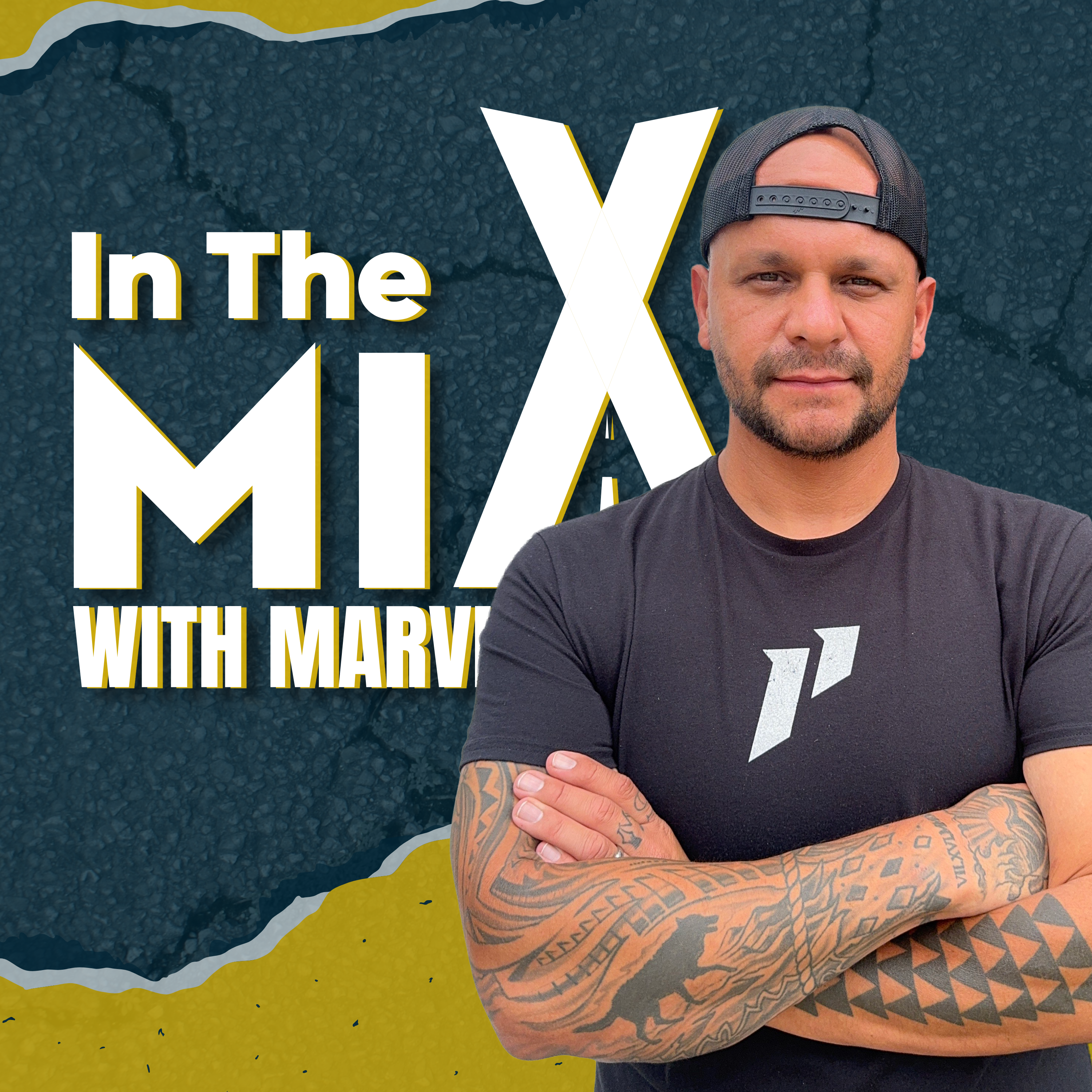
In The Mix with Marvin Joles
The Perfect Fit: Strategies for Attracting Quality Asphalt Workers Ep. #18
00:48:39
Loading summary
Transcript88 lines
- [00:00]
Dr. Larry Kocklenberg
Today's episode of in the Mix is powered by Jobber.
- [00:07]
Podcast Announcer
Welcome to in the Mix, paving the way to insight, education and entertainment in the asphalt industry. Your host, Marvin Joelz, a best of Web Pavement award winner, knows the blacktop community and what it takes to win in this industry. Each episode you'll hear real stories, expert insights and road tested strategies from the people who make up the asphalt world and beyond. Whether you're paving parking lots, ceiling driveways, striping lines, or innovating asphalt tech, this is the podcast for pros who keep the industry rolling. Now here's Marvin.
- [00:53]
Marvin Joelz
Hey everybody. Welcome back for another episode and another great conversation. I'm really excited about this one. Our friend Sandra kind of pointed me in the direction of our next guest we're going to after her and I, you know, shared a room there at Con Expo the last time to do some podcast recordings. She recommended our next guest. So I'm very fortunate and excited to have Dr. Larry Kocklenberg on with us. And it's pretty interesting. I'm big into psychology, as a lot of people know, and the study of it in our industry and how it affects people in all types of different ways. Larry is a clinical and industrial psychologist. He actually served on the White House Council, which is very exciting for me to be able to talk about. But as I said, he created an educational session at Conexpo on hiring and retaining construction employees and how that starts with the right candidates. Also an author and in asphalt and has been in asphalt paving. So it's very exciting to me that sometimes I get a guest and then there's a surprise nugget of hey. From the blacktop world as well. So, Larry, I really appreciate you joining us today. My friend.
- [01:57]
Dr. Larry Kocklenberg
Thank you. Excited to be here.
- [02:00]
Marvin Joelz
So when I got to review the ebook that Sandra sent over and I was like, hey, I would love to have a conversation with this gentleman. There's this underlying tone of we know what we need to do, but we're so busy that we just can't do it. We just hope that it gets solved one way or another. I was really excited when I seen that there was four points that you point to in that e book that could really help us. Do you kind of want to, like, give us an overview of what those things are? Because I think a lot of people just think. I put an ad out, somebody shows up, I interview them, I decide whether they're right or not. We hope that it works.
- [02:34]
Dr. Larry Kocklenberg
Yeah, I'll be glad to do that. It's not just as simple as Putting an ad out. I've heard from other construction companies that 1 in 20 can pass the drug test. So you're spending an awful lot of time interviewing people that aren't appropriate. One of the things we recommend is that even though it's tough right now finding the number of people that you need, we recommend that in the advertisements that you put out, in the signage that you put out, there's clear job requirements, you know, like, must pass initial drug test and random drug testing and have a, you know, clean CCL license and etc. That put all the qualifications. And some people will say, well, that will eliminate most of my population around my plant. Yeah. Hey, but if you bring the wrong person in. Okay. You may think you're done, got them hired. Okay, now I can get back to my work. Yeah. You end up spending an awful lot of time in disciplining that person, training that person, motivating that person, talking to that person. And so you're not saving a lot of time. And they often don't work out even after you spend all that time. And then even more importantly, once you hire somebody, it's like the burdens off me and you stop looking.
- [03:53]
Marvin Joelz
Yeah.
- [03:54]
Dr. Larry Kocklenberg
But if you didn't hire somebody, you keep looking till you find, you know, that nugget. Yeah. So I'd rather I tell people all the time, I know labor's tough right now, but trust me, if you bring the wrong person in, you're going to. You're going to pay for it so many times over. Yeah. Had a neighbor that was a Steeler, hired a guy. He lasted three and a half hours. Claimed he slipped off a ladder. File workman's comp plane for six weeks. And of course, he had to hire a private detective to go because he knew the guy wasn't injured. And so that's what the kinds of messiness you get into when you hire the wrong person. Take your time. Hire. Right. That's one thing I tell people right away. And one of the first points is, how do you attract the good people? You can start with simple things as signage. I've seen signage that says anybody who can breathe will be hired.
- [04:45]
Marvin Joelz
Yeah, yeah, yeah.
- [04:46]
Dr. Larry Kocklenberg
Okay. I mean, so. And. And other science might say, join our team. Yeah. So just look at the signage you've got. I see all the time. Hire laborers because they want a shovel person, elite person. You know, they just want a laborer. You're just getting a person who wants a paycheck. You're not getting a person who wants to be in the industry. So it starts with signage, but then your reputation, how you advertise for people. And there's so many things that go into attracting the right talent. Being on social media today is critical. Yeah. There's employment groups dedicated just to construction, like trades person. There's lots of ways to attract decent people. Two programs that I want to tell you about so your listeners can take advantage of this one. Now, of course, with our new president, things may change here. Okay. But one is the Department of Labor. And the Department of Labor has what's called the Foreign Labor Certification Act. And if you want to bring in people from other countries to work for the season or the summer, all you have to do is apply for that certification. And once they have the certification, they can come in and work.
- [05:54]
Marvin Joelz
Oh, really?
- [05:55]
Dr. Larry Kocklenberg
Yeah. So the industries that use them a lot, of course, our agriculture, California is filled with them. Okay. Meatpacking industry. Okay. Minnesota, Oklahoma. And there's one other industry escapes me right now that. Oh, healthcare.
- [06:09]
Marvin Joelz
Oh, okay.
- [06:10]
Dr. Larry Kocklenberg
Yeah. And by the way, landscaping and gardening. But they bring in all kinds of people. Okay. So that's one program. And the other is this. If you've got a military base near you anywhere, it doesn't matter what the branch of service is, including Coast Guard, does not include reserves or National Guard. But if you got a military base near you, there's a military program called Skill Bridge. And in Skill Bridge, if somebody is going to get out of the service the last six months, they can come to work for you. And I love this. The military pays their salary. You don't even have to pay the salary. So you got six months of labor free. And they can determine whether or not when they get out, they want to work in the construction industry. So great source of labor that people aren't using. And it's there. Okay. So encourage people to check those things out locally.
- [07:04]
Marvin Joelz
I recently started using the Moasure 2 Pro, and I gotta say, this thing is a game changer in the estimating and quoting process. It's a smart measuring tool that captures dimensions, calculates areas, volumes, perimeters, and even elevation right from your device. The elevation thing is great for the paving quotes, so you have no more hand notes or second guessing whether your estimate's exactly right or not. Moasure takes all that out. I'll be using it on my estimates to create nice terrain maps, straight streamline my workflow and make my quoting process more accurate than ever. So if you want to save time and add something to your quotes that separates you from your competitors and levels up your Measurements. Grab a Moser 2 Pro@moser.com and use promo code X8MARVIN or hit the link in the description. Those are great programs, by the way, and a lot of it is just not common knowledge. People, business owners, most of the time that are within the range that we spoke about beforehand, they're not putting themselves in positions to be educated about that type of stuff or be aware of those types of things. Right. They're running, trying to get out there, but, you know, they're trying to do the old school tactics like we were talking about, put ad in the paper. Now they put ads on like LinkedIn or some of these social media sites where they find people. And I think that for us, there's that switch that needs to get made on the owner slash employer, where they have to be accountable. Right. They need to be accountable in order to say, hey, I want this type of culture or I want this type of atmosphere within our business. I have to do more than just hire that warm body. Right. Like you were saying, or just somebody to hold a shovel or move a shovel. So how can we leverage some of that outreach and training that we have as the employer, the entrepreneur, the business owner to help attract those types of people that you're talking about of a certain caliber that want to be in the industry, that want to be part of a team and what we're trying
- [08:59]
Dr. Larry Kocklenberg
to build, number one, you have to build the culture. Okay. And that usually starts with the owner. And so when you're talking small companies, they may have two, three, four paving crews, excavation crew, you know, administration group. So many times the owners are pushed into this autocratic style of leadership, top down, tell us what to do. Do you have people have been in a paving industry maybe 8, 10, 15, 20 years?
- [09:26]
Marvin Joelz
Yeah.
- [09:26]
Dr. Larry Kocklenberg
They come to work and they stand around and wait to be told what to do.
- [09:30]
Marvin Joelz
Yes.
- [09:31]
Dr. Larry Kocklenberg
Yeah. What's that all about? I mean, they know the industry, come on. I mean, you know, but we've trained them to wait until the supervisor, the foreman and boss says, here's what to do. So we train them to do that. So if you want a different culture, it starts with the owner and really deciding why you're in business. And I want to, I want to share this because it's a passion of mine.
- [09:51]
Marvin Joelz
Yes, please.
- [09:52]
Dr. Larry Kocklenberg
I give it a lot of conferences and I usually ask this question, in fact, I'm going to be at the World of Asphalt coming up here in March too, in St. Louis. But I say, why are you in business? And almost always they tell me well, to make money. And I usually challenge that. And they say, well, you're not in business to make money because there's only two businesses that are. One is the Department of Treasury and the other is counterfeiters. Now they're in business. Yeah. Now I understand money is important. I've run a lay down operation. So money is critical. I get that. It's the oxygen supply, you need to have it. No. No margin, no mission. But that's not why your sole purpose is in business. Your sole purpose really is to meet the needs of your customers. And if you adopt that philosophy that we're here to meet the needs of our customers, people should be proud of what they're doing in the asphalt industry. Think about this, you're building America's infrastructure. You know, 99.9% of our goods travel some part of their distance on a road to get to where they need to be. When you form a company, say we have a purpose and that's to help build our community and keep the infrastructure clean and good. And you get all your workers to buy into that purpose. So you don't give people a job, you give them a purpose. And that's why having kind of a mission statement or a purpose statement is important for small companies. Now you create a culture that's really good. So you want to attract people that fish that culture. One more thing I'll say, and I know I'm giving you a lot here,
- [11:22]
Marvin Joelz
but no, please keep going.
- [11:24]
Dr. Larry Kocklenberg
There's. When you interview, typically we interview to see if the person has some skills that we need. Yeah, they've run a road grader, a paver, you know, excavator, whatever, whatever it is that we need. Okay, so we're only interviewing for skills. But there's two other things I think you need to interview for. One is having the right attitude. I much rather you hire somebody that's got a good work ethic, a good attitude, you know, then because you can more easily train them, you know how to do the tasks and you can about how to have a good attitude. Okay, right. And two, you want to interview for the culture. Do they fit our company? You know, because we've got a really participative style where people add and, and challenge and think and give solutions and this person just stands around waist to be told what to do. They're not going to fit. Bingo. Want them to fit the culture too. So you interview for task and skills, you interview for culture and you interview for attitude. And we. It's easy to train people how to do the right interviewing during the hiring process. Yeah. Open ended questions and what to ask and what questions you got to avoid, etc.
- [12:31]
Marvin Joelz
To elaborate on that, those three points you made, the. How do I want to put that? Not the importance, but the ease of. Some of them are different. Right. Because attitude, you. That's the hardest thing to even try to change or do whatever with somebody out of the gate. The culture is similar to like, you know, there's that quote, you know, if you show me your five friends, I'll show you your future. Right. Where this culture, if we can drop somebody in there, the chances of them adapting to it are a lot higher than it would be if we're trying to change their attitude. And then the third one, the skills they can learn, we can teach them the skills to learn to do the labor. So there's a tier there where those three important things. One is almost impossible to change, one you change with impression, and one you can just change by training essentially to get them there. So it makes me ask you the question when it comes to like the current landscape of acquiring employees and what we should look for, why they know. And this is a big question, I guess. And there's probably a lot of points that we could point to as reasons why. But why? Why do I. I'm a younger man, 40, going to be 40 anyways. But I love looking back in history, especially work history and that type of stuff. It seems like there was a point in history where it was like, hey, Kevin got a job down at the lumberyard. Dang, we're proud. And Kevin was proud to be at the lumberyard. In fact, he worked in the lumberyard for 30 years and then retired or 40 years, then retired. Why do we not have that anymore? Why does it seem like that's such a rare thing for people to be proud of? Like, hey, that we got a job down here. They got a job. Now they're going to buy a house and do this. Why is it this constant floating thing? Is there any inclination as to why that seems like that has changed in our society between wiscoat, podcasting, writing, speaking and family. I'm busy. As you can imagine, it's a lot to juggle. How do I do it? I stay organized. Jobber's been my secret weapon at my asphalt business, which takes up most of my time, but is also the force that allows me to do everything else in my schedule. That's why it's essential that WISCO runs fluidly and smooth. After making the switch to Jobber, A few years ago, I simply wish I would have done it sooner. The process from when a client reaches out to when we complete a project project for that customer has never been easier for us. From quoting invoicing, scheduling, tracking hours and even marketing. Jobbers made it all happen in one place in a way that everybody on our team can understand. If you're interested in a free 14 day trial of Jobber, an exclusive discount code for in the mix listeners, check out the show description to find the link to try jobber today.
- [15:10]
Dr. Larry Kocklenberg
Let's go back a little further in history, okay. When the industrial revolution occurred, okay. Nobody knew how to structure an organization or build it or knew anything about leadership. In fact, there was such a demand for, quote, foremen and supervisors and leaders. Because now we had more and more people doing the work that they brought in. All kinds of people, usually who were ex military.
- [15:36]
Marvin Joelz
Okay, okay.
- [15:37]
Dr. Larry Kocklenberg
And so they had that style of leadership. Okay. And the predominant thought was that, oh, you have to police people and oversee them and make sure they're doing the work, blah, blah, blah. So it was kind of a top down autocratic approach back then. And we've came from a craftsperson rule agrarian society to an industrial revolution society. Yeah. But people were still valued. But then as more and more people got educated, okay. Then the white collar group started becoming, quote, the one that is esteemed, you wanted your kid to go to college, etc. And blah, blah, blah. Actually the pendulum swinging back a little bit now because tradespeople, you know, are, are very hard to find. Yeah. And a good tradesperson who does a really good quality work and is good with people, that's a real rare gem. So now they're getting paid very well and it's swinging back a little bit. But yes, we need to value the tradesperson and what he or she does. I think companies can do a lot to help their people be proud of what they do. So that this is a career, not a job. This is. Okay. And that we want you to stay 20, 30 years here. Okay. And I know one company that the supervisors of the crew take pictures of every job they do and they send them, you know, on their phones and they put it into the front office. Front office prints them out and puts it on the wall and they just keep building on this wall down the hallway. Okay? Yeah. And by the end of the year, you, you got a couple hundred pictures up there, you know, telling people, be proud of what you do. And then at the Christmas party, all the wives and kids come and go. You did that you did. Oh, there's dad, you know, and they're proud of that. Those are the things I think we need to help our people be proud of the work they're doing.
- [17:22]
Marvin Joelz
Yeah, yeah, I agree. It's. It's just. It's so crazy to see so many variables, right? Because different companies with different cultures. I, I loved the quote. I wrote it down, right? Where you're like, don't give people a job. Give them a purpose. There's so many jobs available, right? Like, there, there is. I know people are like, you know, the unemployment's high or whatever. There's hiring. Everybody is hiring, right? But there's this attitude, right, where people are looking for more than just going somewhere and it being a huge corporate ladder where they're just a number. They plug in and get a check and then that's that and get it done. Now, there are some people who are looking just for that, but for our industry and our businesses, that's not the case. We're looking for those guys who you said the pendulum was swinging back with, where they don't want to be overcomplicated, right? But they still want to have a purpose and towards a goal. And I, I feel like there's this saying, right? Like, we're a family here or we're like a family here at this business. And that works for some businesses, and it doesn't work for some businesses because let's just say I go to work at, like, Dollar General. It's not going to feel like I'm part of a family at Dollar General, but here, where we show up and we have those company parties and there's pictures on the wall and we. What their goals are for life. How can we help them get there, right? Then all of a sudden we get that, that, that extra feeling. How do we. How in an interview do you relay that that's what you're about? Do we take a tour? Do we have them talk with other people that are in the company? You know, I just feel like that standard interview process is archaic, especially with nowadays just because the atmosphere has changed, right? The current landscape have changed.
- [19:08]
Dr. Larry Kocklenberg
The whole interviewing process is a gem in and of itself. This is just a personal bias, but I don't like when someone comes in for an interview to tell them anything about the company at all, okay? Because if I tell them everything about the company first, then they orient all their answers, okay? What they think I want to hear, okay? So they make themselves look good. I'll be glad to answer all their questions and give them A tour and tell them all about the company at the end. Okay. In the beginning I want to know about you. Okay? So my rule of thumb is that in the beginning you should be talking one third of the time or less and they're talking two thirds of the time. Okay. So that's, you've got a very short period of time to assess whether this person is the right candidate for you. And they have a short period of time to assess if this is the right company too. So you really want to, you know, mutually kind of take a look at each other. And I will ask attitudinal questions, I will ask skill questions and I will ask culture questions. But they're all open ended questions because you don't want to. Yes or no, have you operated heavy equipment? Yes. Well, that doesn't tell you much. Okay, right. Asking them, hey, what type of equipment have you operated in the last five years? Okay. Now they got to tell you, oh, is a bomag roller. It was a cat excavator. They got to talk about that stuff a little bit. So you get a sense of, yeah, I know. What kind of equipment you've operated or what kind of jobs have you had in the last five years. Okay. So attitude questions. Have you ever worked for a boss or someone you didn't like? How did you handle it? Yeah, you know. Yeah, you just get them talking about some of these things. Okay. And then you can. I also am a fan by the way of. Not you just you interviewing.
- [20:50]
Marvin Joelz
Okay.
- [20:51]
Dr. Larry Kocklenberg
Have other people interview them or take them around, show them the yard, show them the plan. If you got one, show, you know, and have people talk to them and then have those people be involved in the decision.
- [21:01]
Marvin Joelz
Okay.
- [21:02]
Dr. Larry Kocklenberg
Impression of that person.
- [21:03]
Marvin Joelz
That's a great idea.
- [21:04]
Dr. Larry Kocklenberg
We had a, a company that the secretary would greet people and sit in the waiting room for, you know, a little bit. And she was observing them constantly. And she was part of that team that said, hey, when they were there, they were talking about, you know, they gotta make sure they can pass the drug screen, you know, stuff and. But people don't think that she's part of the evaluation group, but she was. And I thought that was great.
- [21:32]
Marvin Joelz
So I was driving down the interstate on my way to Tennessee and went through Indiana and I seen some night paving and I seen these big balloon lights on the back of the paver that were illuminating the whole area where everybody was working. Guess where those came from? Portable Lighting Solutions. They're the only balloon light manufacturer offering the consumer a replaceable light screw. In LED bulb that is field serviceable in minutes. They have a patented slide in assembly and they have a push to rapidly deploy mechanism. So you know, you push down on the top, it pops up, it lights the whole area up. You push down, it shuts off. They're manufactured right here in the usa. There's no patch kits, there's no blower motors, there's no set screws and they're UL certified. So whether you're seal coating at night, I'm gonna get one and put it on the sealcoat rig so I can seal coat at night and see everything, see the area or whether you're paving at night, you can put it right on your paver. We got a paver now, so I'll probably build a mount and just swap that thing back and forth or buy two. You might need this device. So hop over to portable lightingsolutions.net and put an order in and find yours today. They are ARA members, APWA members and women of asphalt members as well. Once again, that's portable lighting solutions.net that's a great idea, especially because you have somebody who looks like they're part of the higher up out of the room and you have this person who's like just there. Right. They look like they brought everybody coffee. Maybe they'll be a little more candid with them and learn something.
- [22:56]
Dr. Larry Kocklenberg
Yeah, they're a little freer. Yeah. Yeah. They don't think it matters. Yeah. So, yeah.
- [23:01]
Marvin Joelz
So let's just say that we get the right person and this person is there. They have all the qualities we're looking for, the right attitude and whatnot. And you know, we've dealt with the. Obviously we have a position to fill. Maybe somebody left that position. Maybe they weren't happy, maybe we handled it wrong or whatever. What are some of the things we can think about when it comes to retaining them better or at all. Right. Because a lot of times that, especially in the industry that we're in, in the asphalt world and dirt world, we see where people leave companies to go to different companies or they just leave. And I've seen them flat out knowing that they've leaved. And then I see them on LinkedIn saying, hey, I'm a free agent. If you're looking for somebody, I'm ready to be hired. Which is just kind of a. Whenever I see that, it really makes me. I know that there's a red flag somewhere in there. There's a red flag because no one just leaves a job and then posts, hey, I'm a Free agent if you guys are looking for somebody. So what can we do as employers to help retain these people better when we find them? And they are a good fit?
- [24:09]
Dr. Larry Kocklenberg
The cost of turnover is high. Okay. The last average I heard was 1.5 times annual salary. Yeah. So it's, it's expensive. Okay. So you, when you figure all your time in advertising again and interviewing, then the training of the person, you know, so for the first six months before you recoup. Okay, it's expensive process. Okay?
- [24:30]
Marvin Joelz
Yeah.
- [24:31]
Dr. Larry Kocklenberg
So you want to retain people as much as possible. Secondly, the first week they're on the job usually determines their attitude towards the organization and the people in it.
- [24:42]
Marvin Joelz
Okay.
- [24:43]
Dr. Larry Kocklenberg
You want to make that first week a good week. You know, you want to have a big brother or big sister shadow them. You want to whatever it is, you know, you run them through the safety training and et cetera. And by the way, we're in a dangerous job. Yeah. What is it? I'm real close to being accurate on these statistics. Something like 3.6% of the fatality rate per 100,000 people. Job related asphalt is 46.7. Yes.
- [25:11]
Marvin Joelz
It's very high, very high.
- [25:12]
Dr. Larry Kocklenberg
And it's mostly transportation accidents, hit by truck, whatever. Okay. So really briefing them the first week on the safety training is important. Part of their onboarding, etc. You're working towards retaining people all the time, just like you're working at looking at hiring people all the time. You know, it's like, you know, what can we do? You've already talked about a number of things. You've got parties and family activities and, and you know, I tell people do simple things like when you see somebody in the morning, you know, don't just walk by them, call their name. Yeah, good morning or hey, how you doing? Or whatever.
- [25:47]
Marvin Joelz
Genuinely.
- [25:48]
Dr. Larry Kocklenberg
Yeah, of course not.
- [25:50]
Marvin Joelz
Not. You're saying be interested, right? Be it be interesting.
- [25:54]
Dr. Larry Kocklenberg
Absolutely. You know, and you know, create a culture of appreciation. Thank people.
- [26:00]
Marvin Joelz
Yeah.
- [26:00]
Dr. Larry Kocklenberg
An old excavator tell me once when I was in the lay down operation, he said, do you thank your people? And my first thought was, hell, I pay him. Now you want me to think, yeah. And he said, no, you got to thank your people every day. I said, really? He said, you try this for 30 days and it'll make a difference. You watch. I thought, okay, it doesn't cost me anything, right? So I just started thanking people like, hey, thanks for the day. You know, I didn't know what to say, you know, yeah, hey, thanks for the hard work or hey, thanks for whatever. Okay. And it didn't take 30 days. It only took two weeks because somebody came down the hall and he had to go through my assistant's office at the time to get to my office. So they came down the hall, went through her office, poked her head and said, hey, I'm going home now. And they were just looking for that. Thank you.
- [26:44]
Marvin Joelz
Wow.
- [26:45]
Dr. Larry Kocklenberg
Really? Yeah. So just little things like that when it's a really hot day, hey, you guys are, you know, kicking butt here. It's hot and you're doing a great job. Appreciate it.
- [26:54]
Marvin Joelz
Like, doctor, does it. Does it do good to bring people in for a quote unquote evaluation and just ask them, like, what their goals are there or, you know, after a certain amount of time or what. What do I. Is there a. A good strategy when it comes to retention for like, you know, bi. Quarterly interview or just the yearly interview? And. And to ask them, like, what are your goals with working here? Or what are your goal? What can we. What is working here? What can it provide for you that you're looking for? Dude, is that. Is that a great strategy or a good tact to take?
- [27:29]
Dr. Larry Kocklenberg
Yes, it is. Okay. Pretty much. So now I'm not a fan of performance appraisals, and I haven't been for 20 some years. Okay. Because when performance appraisals were originally designed, they were meant to do two things. One is to give an evaluation for past performance and a guide to future performance. Okay. Everybody focuses on the past performance. I want to go to this rating or that rating, you know? You know, and we focus on the negative, not the positive, Right? Yeah. And many times the evaluations are disagreed with anyhow. But if you focus on the goal setting for future performance, then it's worthwhile. Hey, you know. You know, and we talk about retention interviews, not performance reviews. Right? Retention interviews. Hey, how's things going here? What don't you like, what could I do better as a boss? What could your crew do better? How's our equipment? Is there anything you would like to see change here? If you were boss for a day, what would you do differently? Are people, you know, friendly here? Whatever we catch in interviews and you learn about your people. Oh, you got a kid that's dropped out of school. Geez, I'm sorry to hear that. What? You know, and be interested in that kind of stuff. I think that's important stuff to do.
- [28:39]
Marvin Joelz
Well, I was thinking about that when you were talking about them being retention interviews and. And whatnot. And it makes me think, obviously you're Going to. Especially if your business is growing, right. You're going to have turnover or open spaces to acquire new employees. So you have these two areas, right, where we need to hire for new spaces, whether that's laborers or office staff or whatever, sales side, marketing side, whatever it would. And then you have people who leave the company in one way, shape, form or fashion, no matter what, whether they leave on their own power or something happens. So there's this thing in our industry of a necessity, it feels like. And I mentioned to you that I had a podcast interview before this one where the contractor and I were talking about the need for continuous recruitment and continuous hiring. What does that mean for companies like ours?
- [29:35]
Dr. Larry Kocklenberg
One of the reasons people leave the construction in the asphalt industry is that it's. There's no upward mobility and it is tough. I mean, if you're on a crew, there's only so many jobs you got, right? Yeah. You're not going to be president of the company in six years, so chances are you're still going to be on a crew in six years from now. But we can do cross training, you know. Now some people don't like to do it. I had a roller guy who said, that's all I want to do. You said, I don't want to do anything else. I just want to do roll.
- [30:04]
Marvin Joelz
I just want to roll.
- [30:04]
Dr. Larry Kocklenberg
Yeah, that's it. That's all he did too. You need to cross training anyhow because if somebody's sick for a day, at least you got somebody who can, you know, operate the roller or operate the paver or whatever it is. Okay. Yeah. So. And then maybe there's some, you know, you bring them into for some. Hey, you've been around a long time. So, hey, can you kind of oversee this job or kind of oversee that job or, you know, there's some upward mobility, but there's not a tremendous amount. So what you were talking about is keeping them interested by giving them some other kinds of things to do. I'd love to see some of these papers come on in the office for a day or two and see what goes through in the office. So they have an appreciation of that. And maybe some office people go out and work on the crew for a day. Yeah, yeah. Get some appreciation for that, you know, in 110 degrees next to a 350 degree truck and. Yeah, enjoy that, I think. Yeah. Giving those kinds of interviews and requests and asking for. Yeah. What can we do to, you know, make things better here for you? You want to retain people as much as you can. You're going to lose some. And maybe that's good because then it gives other people opportunities to move on up. But you don't want the turnover cost to be really high, you know, or significant.
- [31:20]
Marvin Joelz
I used to be £300 to 97 to be exact. And if you're around me at asphalt or construction expos or in my circle, you remember that Marvin. I'm not him anymore. I've all but eliminated the choices that got me there in the first place. And I'm down about £100 over the last few years, all from making better choices. I know it's hard in our industry to find time and that those gas station stops are way too convenient. But we in our industry aren't getting enough of what we need to live healthy and stay productive with those choices. Choices being our constant. Besides prepping my own food, I choose foods and supplements from first form to help me get to where I need to be along with a regular exercise routine. You've seen my posts over the last few years about using First Forms products to get what I need into my body on the road and keeping out excess of what I don't need or want. I use at least one first form product every day to ensure I stay on track. I've worked way too hard to let this slip. If you use the link in the episode description, you'll get free shipping on orders over 70 $25 from first form today. If you reach out to me personally via DM or email, I would love to tell you about what I use and my experiences using First Forms products. Doctor, is it our just our current climate or has this always been a thing where we just have to understand that continuous recruitment is just part of the game now?
- [32:46]
Dr. Larry Kocklenberg
Yeah. No, it's not always been the back in the days where people worked for 30, 40 years, got a gold watch, they never left. Yeah. You know that those days are long gone. That was the 1940s, 1950s, so the percentage was lower.
- [33:00]
Marvin Joelz
Like you, let's say you might had 5% maybe you know there I think about our lumber yard. I don't know why but I always go to a lumber yard. When I think about people getting hired and working somewhere for a long time, I might see a new face there once every two years. Right. Otherwise I mainly see the same one. Kudos to them our local lumberyard here in Spring Green, Wisconsin. But and I just think like when it, when it, when I run a, a line next to our industry I just know my, my friends and the people that Own. The businesses in the asphalt industry are continuously recruiting. Right. I get calls a lot of like, hey, Marvin, do you know somebody over in this area that might run a paver or might know who? Somebody who's, you know, has CDL that wants to run a truck or wants to do this? Like, there's just this constant atmosphere. So you're saying like, that we just, we have to get used to, like that's part of running a business now, especially in our industry, is continuous recruitment. You're just, it's something that you're just gonna have to do all the time.
- [33:59]
Dr. Larry Kocklenberg
We have a hard industry and there is turnover. Okay. It's fiscally demanding. Now it's even worse because you get a lot of states that want night work, then it's long work. Those northern states that shut down, you know, they have maybe eight months to get a year's worth of work in. Yeah. You know, it's long hours, night hours, weekends, time away from no work, life balance. And that's why people are leaving the industry. They're not. They are leaving the industry as much as some of them are leaving the company.
- [34:29]
Marvin Joelz
Okay.
- [34:30]
Dr. Larry Kocklenberg
And some of them are leaving a boss. Yeah, yeah, yeah. So that's a whole nother issue. Okay. So, so yes, continuing recruitment is going to be the norm. And how you recruit today, if you're not on social media today doing some things. Yeah. You're missing a good percentage of people because the young kids today, they don't even have computers and laptops anymore. Everything's on their phone. But that's another issue too. But for sure. Yeah. So, yeah, so you're, you're always looking for some good people. You might have internal promotions for a while. There was a big California company that had relatives waiting to work. Yeah. It's like as soon as a job opens up, I'm there. Yeah. Now they're having trouble too, because it's so bad.
- [35:13]
Marvin Joelz
Okay.
- [35:14]
Dr. Larry Kocklenberg
But so, yeah, you have internal promotions. You're always looking for the eagle. Eagles don't flock. You got to find one at a time. Okay. You know, so you're looking for that good person. You have a good reputation. So other paving companies in the area know, hey, if a job opens up with so and so, go work there, they really take care of their people. Those kinds of things are important.
- [35:35]
Marvin Joelz
When I think about companies that I know of and the people who own and operate them, not necessarily operate, but just work on their business and not in it essentially anymore. I find that the ones that fast track to a level that some Other people aspire to, they seem to. And this has happened by chance before in my conversations with them. They've hired somebody and this person became like a pillar in their business, whether they knew it or not. You know, they didn't hire them for attitude, but when they hired them, they found out that they had the right attitude and that person is placed and they're in. They're accountable, right? They're accountable to the team, to underneath them. They make them be accountable. And all of a sudden it just transforms their business, right? They go from maybe being behind a business that they aspire to be to being in front of that business in a short amount of time. You know, I think of two companies like that where I know that they've. Like one guy that I've just seen skyrocket his business and he's like, I hired Paver, a paver operator who also was like the job manager essentially. And he had 40, 40 plus years experience, you know, starting very young in the industry. In his early 50s, he acquired this guy, 35 to 40 years experience. And it transformed his business. Right? He didn't have to focus on the projects anymore. He was able to focus in here. And all of a sudden the projects were turning out great. They were turning out as described. Right. When they quoted the work. And it allowed him to focus on working on the business rather than in anymore. And it transformed it. And I attribute that to him hiring this guy. Now, one guy did it by chance. One guy was very specific in his hiring process, but they still found these two guys. So it makes me think, obviously I don't want to leave anything the chance and just hope that this person falls into my lap. But if I create a filter to find this guy and allow myself some time in order to find the right guy or gal to do this, it can. It can completely fast track my success, create stability and help provide the culture. Right. You said early on, no margin, no mission. If I can find somebody to help me create that margin, it allows me some freedom to be flexible, to find the right people to help us push towards the direction of the mission. Is that the overall consensus? Yeah.
- [37:59]
Dr. Larry Kocklenberg
Well, number one, that you're right on, that's exactly what we're talking about. I tell people all the time, if you just hire a pair of hands, you never get ahead. And I mean that in both senses of the word. Right? So you got to find somebody who can do exactly what you were talking about because that just relieves so much pressure on the owner to have to run and see what every crew is doing, you know, all day long and then correct mistakes and do this and do that. And I. I remember one time in my paving. True, true story. Where, you know, and. And this time we were just paving a few driveways in a new subdivision, and we were having some quality problems with the plant in the mix and our people. And. And so I went out and checked the job, and I looked at this job, and I said, it's the best job I've seen you do all week. He said, this is the smiling and all. I said, unfortunately, it's the wrong driveway. Oh, my God. Yeah, yeah. You know. Oh, gosh. Yeah. So, you know, we just gave somebody a free driveway. So. But anyhow, you want somebody who can help that business grow, who can be the pillar, as you call it, being stable influence, to get the people to work together, to pull them together as a team. You know, somebody who complements. Again, we talk about creating a culture of appreciation. There are people come to work, and they like coming to work. It's a great place to work. Okay. I like the people I work with. I like the work I do. It's hard. Yes, it is hard. And I'm out in the weather. Yes, I am. But it's a great place to work, and if you get that going, your business is going to grow.
- [39:25]
Marvin Joelz
Even before I had a discount code partnership with Brunt Workwear, which you can find in the description of this podcast, I was wearing their boots when patching or paving and their shirts and hats when I was out on date night with Nikki. I'm actually wearing one right now. Seriously, though, half my closet is grunt workwear at this point. I have three sets of boots, two marins and a pair of the Omut, as well as a green shell Evelyn hoodie that I love. It's got a snake on it. It actually has a pocket where it keeps my cell phone there in the front. I love that about it. And it took the place of my winter jacket last season. To check out their full line, go to bruntworkwear.com and use code MJOLS10 to save $10 off your first order of $60 or more. I got a good friend, his name's Brian Hess. They own a national paving company. Right. They don't do any work in house, as far as I know, but they manage all these projects all across the country. And when you're in their office. Doctor. And all the people are there. Right. I want to say there's probably 30 people in the office. Maybe if Brian's Listening. I hope I'm not getting that way off, but it almost, the culture is so strong towards the mission that when you're standing in their office, it almost feels foreign to what is actually possible. It feels like sometimes you're standing in a movie set or where everybody has been given this script and we're all gonna say these things or have this attitude to create a finished product. But it literally is the fact that they've been so specific in hiring for attitude that I've watched them hire people for attitude and then these people switch roles completely and that'd be just fine because it's still gearing towards the mission. Right. They're open towards it. And I just, for me, it makes me think that if you had that specific mindset going into it, it could create an atmosphere in a culture like that. Right. The ideal one. And the ideal one isn't perfect. Now don't get me wrong, they have turnover, but the culture is there. So that continuous recruitment makes me think it's not being blemished is still perfect because you having to deal with continuous recruitment and whatnot is just a facet of what the ideal, you know, what's capable right now of, of owning an asphalt payment company. So it kind of leads me to my last point. If, if there was like, I know you've done great with so many points and I, I really enjoyed the ebook and, and reading it because it just made me think the complexity of the way that times has changed, which I really enjoy, and then dealing with the complexity going forward. I have a son who works in my business with me and you know, I can't imagine what this, the landscape's going to look like for him if he decides to stay in the, in the industry and do it. So it really makes me hope to learn from our past.
- [42:11]
Dr. Larry Kocklenberg
Why does he work in a business?
- [42:14]
Marvin Joelz
Yeah, he just, you know, he's a young man right now, so he's, he's forced to at this point and learn some hard work and, and help me out on a parking lot. I tell everybody, you know, in my mind I'm still 24, 25 years old. I'm, I know I'm still young yet, but I'm 40 and 40 is not exactly a 25 year old guy. But I think when I'm on a parking lot, I'm like, I got this covered. I don't need, I don't need anybody to do anything. A few minutes in, I'm yelling for that boy, hey, you come learn how to do this. I need to go get us, you know, some refreshments. And it's just basically the fact that I need help especially and want help. And I really enjoy what our industry teaches people as far as work ethic, working as a team, being goal oriented, daily goals. I, I feel like we're in an industry where we do one project a day or two projects a day. Those are small goals that we get every day. Where you don't really get that in a lot of larger things. They're usually long term goals that they're working on multiple days or months or years in some cases to produce an outcome where we get to do it on short term goals. And I think that that's the best way to get to your long term goal course is chopping them up into short term goals.
- [43:22]
Dr. Larry Kocklenberg
Let me share with you, this goes to your previous point and then we'll take a look at your last point. But a lot of people come and they want a job. Okay. You're not interviewing for somebody who wants a job because they're concerned with a paycheck. Correct. And then some people come because they want a career. They really want a career in asphalt, and that's good too. But the problem is in a career, because of our industry, there's only limited ways you can go up. So that's why they leave. It's like we, we can't. There's not a lot of promotional opportunities. Yeah, but the person you really want is the person who has a passion for asphalt. Okay? So if you can hire somebody that's got a passion for this work, that you got your pillar, you got that person who's motivated. Every single day they come because they love doing what they're doing. They love the work they're doing. You know, they get the reward like you talked about, hey, look what I did today, you know, or, or they can tell their, their family and they're driving, hey, I paid for that parking lot. Yeah, you know, whatever. And they have the proud of that kind of stuff. So that we want is people that have a passion for the industry and they won't turn over as much as people who want a job.
- [44:26]
Marvin Joelz
You remember those buttons and those bumper stickers that said I love asphalt and had the little car on it? Like, that's what I want. I want somebody who like shows up and they're smiling, they're like, I just love working with asphalt. And if we can do that, I can deal with all the rest of it. And I've seen that with a lot of different things. So I You know, and you've made a lot of great points, like I said, and went through a lot of this conversation, but I kind of want to ask you just an overarching, you know, and, and this is, this doesn't have to do with employee retention or acquiring or anything like that, but when it comes to the asphalt industry at large, what would be a great piece of advice that you would give somebody who is running a company, managing a company, or managing any asset or any aspect of an asphalt company at large? What would be a great piece of advice you've learned in your time in the industry?
- [45:13]
Dr. Larry Kocklenberg
Number one, growth isn't always profitable. You can grow and you can grow. I've seen companies grow themselves out of business. You know, they grow so fast, etc. They take on this job and that job and they get out of their area. Now they're driving 50 miles in each direction with a truck. And, you know, and so growth isn't necessarily the goal, but I think if you do quality work and you're thoughtful about growing your company in number of employees and trucks, and again, we're an equipment intensive industry. Yeah, yeah. So it gets pricey and, and if you're in northern climates, you know, and then that equipment sits, you know, four or five months of the year, unless you do snow plowing or something like that.
- [45:57]
Marvin Joelz
Yeah.
- [45:57]
Dr. Larry Kocklenberg
You know, what's the old story in Minnesota? There's two season, there's this winter and last winter. Yeah.
- [46:02]
Marvin Joelz
That's how it is in Wisconsin too, believe me.
- [46:04]
Dr. Larry Kocklenberg
Yeah.
- [46:05]
Marvin Joelz
This winter seems to be running long.
- [46:07]
Dr. Larry Kocklenberg
Yeah. So, but anyhow, so, but yeah, so I think, focus on your people, focus on doing quality work. And once you get that great reputation, these are the people to go to. Then you get some builders that say, hey, we want to use you to pave our subdivisions or our driveways. And. And then you slowly start to grow. A county says, hey, can you put down, you know, oil on this gravel for us? And yeah, but quality work and good people and you've got to be able as the owner and boss to hire people that get you out of the field and get you into the office so that you can run and grow the operation if you're still out there doing the work. It's so hard to do the task work and the people work and the organizational work. Yeah. Wow.
- [46:53]
Marvin Joelz
I appreciate that a lot. Doctor, where can we find you online? Like, where can we find information to your stuff there? I'm gonna, when I'm gonna post here and make sure that I get the link to the ebook there for everybody. But where can we catch up to you? I know you said you'll be at World of Asphalt. I'm also going to be there. So I'll be excited. I'll be speaking as well. So I, I'm. Where can we tune in or at least get a hold of you, like whether you're well on LinkedIn?
- [47:15]
Dr. Larry Kocklenberg
Okay. But if you want a direct access to me, you know, my email is my first initial and my last name mail.com and you know I generally respond to everybody. I'm pretty good about that.
- [47:27]
Marvin Joelz
We really, really appreciate you being here and providing some insight for us on a topic that is almost ever changing at this point. You know, it, it's tough to get a handle on, especially with technology being so involved in the hiring process nowadays too. So we really appreciate you providing some insight.
- [47:45]
Dr. Larry Kocklenberg
Thank you guys for all the work you're doing and building our infrastructure. Be proud of it. It's really important work. So thanks for the work you do.
- [47:52]
Marvin Joelz
I appreciate that. All right guys. So for myself, Dr. Larry Kocklenberg, this is another episode and we hope that you join us again and stay in the mix. Peace.
- [48:03]
Podcast Announcer
Thanks for hanging out with us on in the Mix. For more on the world of Blacktop, head over to marvinjols.com and don't forget to follow Marvin on LinkedIn, Instagram, TikTok and YouTube for extra content, behind the scenes looks and industry insights. Be sure to follow the podcast so you never miss an episode. And if you got value from today's show, leave us a welcome worded five star review. It really helps more asphalt pros find us. Catch you next time on in the Mix.