Loading summary
Transcript64 lines
- [00:00]
A
Rabbi.
- [00:02]
B
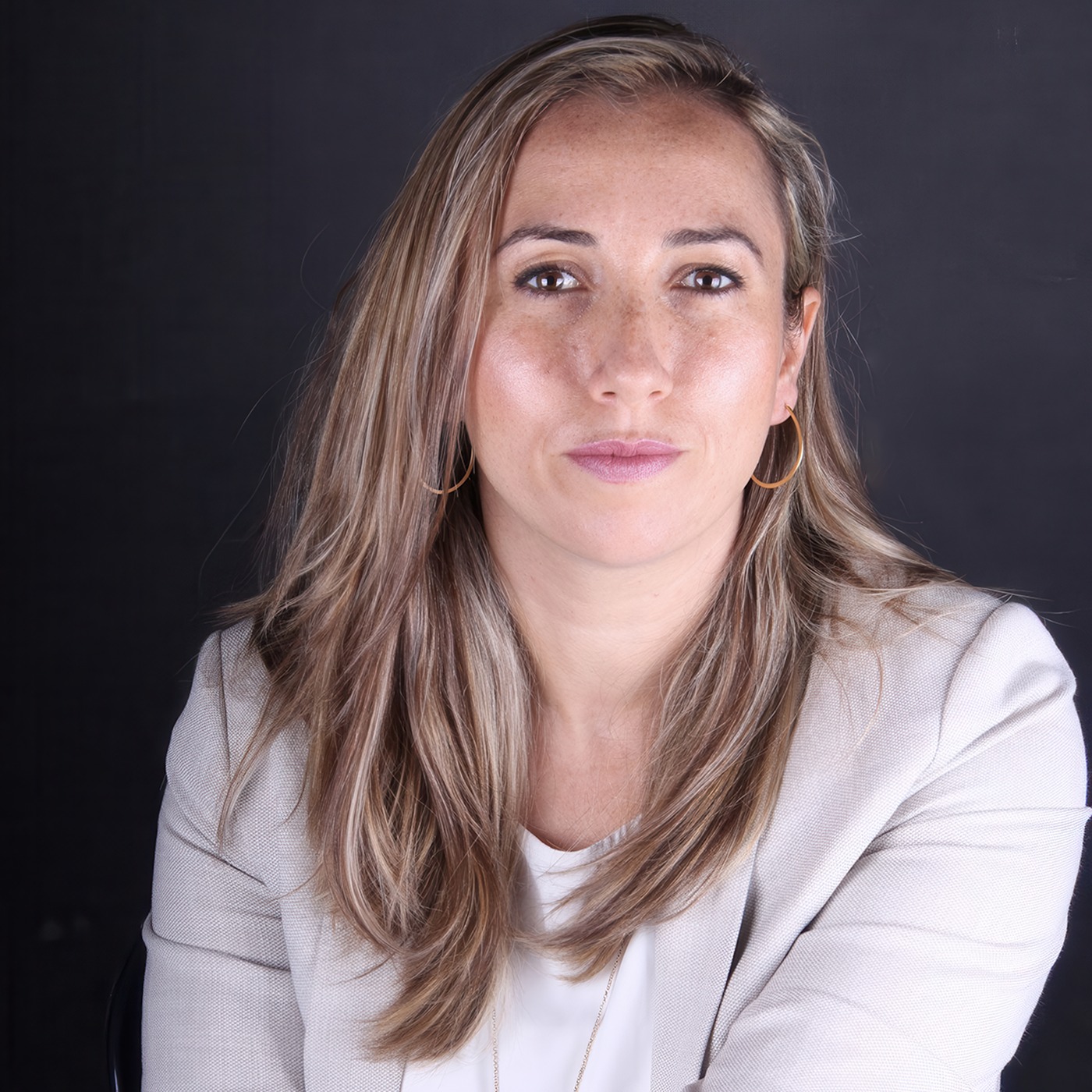
I'm Rabbi Ami Hirsch of the Stephen Wise Free Synagogue in New York. And you're listening to. In these Times, international law always seemed to me humanity's way to ensure and enshrine progress and dignity. But since the extreme violence that Hamas visited upon Israeli civilians on October 7, the silence from the international human rights community has been deafening. Dr. Kochavel Khayyam Levi, an expert in international law, gender and human rights, is the founder and head of the Dvorah Institute for Gender and sustainability studies. After October 7, she established Israel's Civil Commission. On October 7, crimes by Hamas against Women and Children, to document the sexual and gender based violence of that horrible day and campaign for international human rights organizations to recognize the atrocities that were committed against Israel. For her work, Dr. El Khayyam Levi was awarded the 2024 Israel Prize, Israel's highest civilian honor. I invited her here today to help us understand the extent of our enemy's calculated brutality and why the international community abandoned Israel in its darkest hour.
- [01:27]
A
Dr. Kochav El Qayam Levi, welcome to in these Times.
- [01:32]
C
Thank you. I'm glad to be here with you.
- [01:34]
A
You're one of my heroes, really. A true hero of the Jewish people and of Israel. Tell us about your work and what.
- [01:42]
B
Was your life like before October 7th.
- [01:45]
A
And then I want to ask you how your life changed after October 7th. So just before October 7th, you're an expert on international law. You were teaching international law with emphasis on gender studies, and you had faith and belief in the international legal system.
- [02:00]
C
Exactly, yes. Quite different life before October 7th. I feel like life for us were simpler then. Teaching about the international legal system, very much involved in the Israeli protest movement for gender equality, teaching feminist theories of law, how the world can be better for women, for children, for men as well, and how can we thrive as a society. This was kind of the work that I very much miss now doing. And now we're documenting the sexual atrocities and the war crimes committed against women and children on October 7th.
- [02:41]
A
I imagine you remember where you were when you first began to hear the news. Can you describe that for us and tell us what your initial thoughts were?
- [02:49]
C
Yes, I was actually with my father. He. He was hospitalized that day, not because of the attack, but because of personal issues, health issues. And we started getting news from the southern part of Israel, quite shocking videos and bombings and missiles. Especially in the circles of human rights organizations here in Israel. We started getting a lot of information of what is going on in the south and part of Israel. And it was shocking. It was deeply Terrifying. I feel like I can't really explain the sense of existential threat or the fear that we felt. It was like nothing else. I remember thinking, how can I close all the windows, the doors, and make everything sealed? And I had a plan in my head, where am I going to hide my four children?
- [03:42]
A
You were living where we live, in Modi'.
- [03:45]
B
In.
- [03:45]
A
In Modi', in, which is halfway between Tel Aviv and Jerusalem.
- [03:49]
C
Exactly.
- [03:50]
A
And all of this was happening in the south, and you still felt physically threatened?
- [03:55]
C
Yes, we thought this is the end of it. And we didn't think it will end by Hamas entering Israel. We thought other groups will join from the northern part, Hezbollah from the central part of Israel, Judea and Samaria groups, groups within Israel that will start an attack as it was just really terrifying. And people were crying for help for hours, saying they're being murdered, being burnt alive, their children hiding in the closet and saying that they just watched their parents murdered and they can't find their little sister.
- [04:30]
A
And you were saying you were watching this on television or you were receiving social media reports?
- [04:36]
C
Both. I can tell you that I understood very quickly, like a week later, that actually the information that was circulating outside of Israel was greater than what we could see that these days, because the Israeli public, so many had family members that were murdered and videos of their family members murdered that the media here could not show that. But international media did report these atrocities that were documented by Hamas, live streamed by Hamas and different medias. And once I started looking into these crimes, because we saw that many UN organizations were not responding, were not saying anything about our hostages. So I took upon myself to start and report and communicate to them what happened. But then I realized that they actually know more than us. Mm.
- [05:30]
A
So your expertise was the international legal system, and so your initial reaction was to use your skills and your expertise to investigate the crimes and then presumably to delineate some consequences with result to the criminals.
- [05:49]
C
It was initially a working group, like a very small task force on communicating to international organizations what happened. To call upon international community to respond to the atrocities, to bring back our hostages, to speak up for the victims. I have to share that I usually teach international law in ways that explain the importance of the human rights system that was established from the ashes of our Holocaust, from the ashes of World War II, from the atrocities that happened then, and the importance of it. And my students asked me, so what is international law? Why is it important? Because it's not like other legal fields that you have, like, enforcement. And I explained to them the importance of values, of universal values, of giving voice to the victims. This is the first class that I teach. And I could see very early after the attack how all of these systems that are very soft law oriented, the softest mechanisms internationally, are failing. And I couldn't believe it. I felt deep betrayal. It was a month after the attack that I was invited to represent the Israeli women's protest movement at the un. It was a virtual event. And I delivered a speech telling them, how come you're silent? We need you by our side. Our hostages need you. The victims of the sexual violence cannot see the same silence that is usually inflicted on victims of sexual atrocities now inflicted on us collectively as Israeli women. I tried so hard and so passionately to call upon them to respond. I remember asking, is there international law for Israeli women? Are you going to stand by our side? Are you going to protect us? And telling them that their silence is fueling hatred and feeling denial. And I could understand then that something is deeply wrong, that we're seeing a response like never before, and that we need to start document everything, both legally and historically. So we have now legal preservation of the atrocities against women, children and families, and historical preservation of the materials. The generations will know what happened. And we are trying to preserve the truth of October 7, and especially the sexual atrocities and the crimes against women and children that were immediately denied by Hamas. So in many ways, I feel like international organization actually joined Hamas propaganda in denying these crimes.
- [08:35]
A
Because if you deny the truth of what happened, or even if you don't relate to it, you ignored, in effect, you're giving support to the denial of the crimes.
- [08:48]
C
Exactly. Yes. You're betraying the victims. You're betraying the victims. I can't even repeat that enough. I felt like, what are you doing? There are people that have suffered, that have lost the most important thing in life and that their loved ones, their houses, their lives, that have been taken hostages. How come they don't feel like we deserve any response? And even to this day, the UN is not representing the suffering here in Israel, the suffering of the evacuated population, of the victims. It almost became a way to either hide what is going on here or dehumanize us.
- [09:27]
A
Did that surprise you? Because, you know, for decades, Israelis have kind of had a skeptical perspective of the international community and in particular, the United Nations. Was it surprising to you? Was it shocking? Was it devastating for you, this kind of wall of resistance, to attend to what happened to Israeli women in the manner that these international institutions would have attended to victims that were part of any other ethnic group or country.
- [10:02]
C
It really deeply surprised me and shook me to my core. And I have to explain that I'm not naive. I thought about the bias of the UN system against Israel. I thought about it, but honestly, I didn't think, in light of such horrific scenes, that they will remain silent and they will remain unable to acknowledge the suffering here. And in many ways, I was starting to say not only dehumanize us, demonize us as a nation, as a people, as a country. Wow. I feel like I'm so critical of a system that I truly feel that we need as a humanity to find ways to correct. But I want to say that it's not only me. Many of us feel surprised that they weren't able to respond to the atrocities that happen here and not only betrayed us as a people, but betrayed humanity and humanity's values.
- [11:00]
A
When you said they were not able to respond effectively, or they denied it, or they ignored it, just personally, how did that come across? Give us a few examples of what you're talking about.
- [11:11]
C
So usually I speak about. 3 Responses that we want to see. First, initially report the atrocities. Initially report that October 7th happened in the first statement by the International Committee on the Elimination of Discrimination Against Women, the most important international women's rights committee. In the first statement it released, it didn't mention October 7th. So initially reporting, acknowledging that it was an atrocity here, and not only the Committee on the Elimination of Discrimination Against Women, other entities as well, have failed to report October 7th. Secondly, you want to see them expressing concern, condemning the crimes, expressing solidarity, empathy with the victims. It's like, that's the normal response to such an atrocity. The third thing is to offer help. We ask them for help. I personally sent emails to each and every UN entity that is responsible for the rights of women and children from my Hebrew University account, asking them for help, telling them that we've seen some of the most egregious crimes. We need their help understanding what can we do as civil society at this point, especially in terms of understanding the sexual violence that happened not only against women, but against men as well. And we asked for help, and they didn't respond. For weeks, they didn't respond. And some of the responses that I did get weeks later were like, do you have proof for your allegations? And I remember my heart, like, pounding so quickly that I couldn't. I felt like I cannot even speak. Do you have proof for your allegation? This is not the language of a human rights system. Usually they talk about Please provide information. We're sorry for your loss. How can we be of help? What do you need? This is the language of the human rights system that I thought of, that I believed in, and that we lost.
- [13:29]
A
And did you encounter efforts to outright deny what happened, or it was simply a question of ignoring you and having many weeks go by?
- [13:40]
C
Yes, we saw denial. Even if we saw a little bit of recognition, it was very soft. It was even worse than that when the UN decided to initiate an investigation after a very strong international campaign that we held, and they decided to send an expert to Israel. I don't want to get into the details. I'll just say that just a few weeks after the attack, they conditioned the investigation on also initiating a similar investigation against Israel on the same allegations of sexual violence. So the most powerful entity fighting sexual violence in conflict that was never engaged with Israel, now, a few weeks after the attack, is asking, is conditioning its investigation against what hamas conducted on October 7th on also investigating Israel. And I remember myself, it was early December, saying, how come they condition their investigation and also investigating Israel? It's creating this moral equivalence and also putting Israel in the same line with Hamas in ways that again, how come before October 7th, this entity was not even in communication with Israel authorities, but a few weeks after Israel's worst attack, they want to investigate us as well. And I remember calling different officials here in Israel and asking them, are you sure you want to bring this expert to Israel? And then three months afterwards, it was March of 2024, a report of the UN Human Rights Council announces Israel and Hamas in the same line in the annual report on sexual violence around the world. And it was just shocking that they did that because they couldn't. The report said that they couldn't find meaningful information, but they yet decided to include Israel. And then a few months later, another report saying that Israel is committing genocidal sexual violence, which is the worst allegation a country can face. So we were fearing they're using the sexual atrocities that Israeli women and Israeli men were experiencing to create a moral equivalence or to. I don't know even how to make sense of it.
- [16:17]
A
And you think, you think this was a purposeful strategy on their part?
- [16:21]
C
I have no doubt. I delivered a speech at the UN Human Rights Council just a few months ago, and I said that exactly. Yes, it was deliberate from the very beginning.
- [16:33]
A
That's really quite scary when you think about it. It's using and exploiting the international legal system to actually wage a kind of war against Israel and to accuse it of the very things that they were victimized over. Is that how you see it or am I exaggerating this?
- [16:55]
C
No, you're not exaggerating. This is what we fear. It was deeply hurtful just a few weeks after October 7th, and it remains a way to deny October 7th. And I was actually having conversation with genocide researchers who told me that it's a very known technique of shaming the other side, of making sure the allegations lose meaning over time, historically. So they have more of the theory to explain the use of this. I could just say that as civil society organizations, from the very beginning, we were raising a red flag. This was deeply concerning. From the very beginning. We feared that we're serving a political agenda, that the victims are serving a political agenda against Israel.
- [17:42]
A
So you've had a year and a half, close to two years, to kind of reflect on all of this. Have you plumbed the deepest question?
- [17:53]
B
Why?
- [17:53]
A
Where is all this coming from?
- [17:56]
C
Wow. This is the hardest question I'm faced with. I'll say very clearly. I believe it's anti Semitism, I believe it's Jew hatred. I believe it's the result of demonization of Israel. For many years that people have been, I don't know, so deeply invested in delegitimizing our right to self determination, delegitimizing our existence as Jewish state. State. At the beginning, I remember myself explaining to other colleagues, to Israeli media, when I was asked, why do you think they're silent? I remember saying, first, there is no justification for this silence, but perhaps it's the result of technical or procedural obstacles. I remember saying that UN women don't have offices here in Israel. Perhaps there they're stalling, they're trying to reach a consensus. But as time went by, as the days went by after we saw our hostages being taken away and no global response, I understood that it's a much deeper problem than just a procedural problem, a political problem. There are anti Semitic sentiments that we cannot ignore and we cannot like to ourselves that exist.
- [19:22]
A
We've spoken before, and I've always deferred to your hesitation to describe in detail the nature of the crimes. You've compiled mountains of information in the meantime.
- [19:34]
C
Yes.
- [19:35]
A
Can you help us understand the nature of the crimes? What happened? What did you see?
- [19:41]
B
How. How horrific?
- [19:44]
A
Was it distinctive in the annals of human civilization?
- [19:48]
C
It's still very hard for me to describe it. Not like in the beginning that it's still very hard. It's also still very hard to continue doing this. For over a year and a half now. We're seeing videos of bodies taken out of the rubbles, naked, handcuffed bodies that were found, for instance, burned in the area of the genitals. We see abused bodies, women that were shot in their genitalia. I can continue describing mutilation of bodies. In one case, we have a video of a woman that was burnt, and then you see the lower part of her body naked. We have eye testimonies that people that share what they saw, testimonies from Shura, from the morgue, of the condition of the bodies and how they were found, especially women's bodies that were shot in the face, shot in there, as I said, and also men. And I want to emphasize that we are seeing since October 7th, more and more evidence that emerge on a daily basis from those who return from captivity and that share bravely what they have suffered, the torture that they have suffered.
- [21:17]
A
The hostages who are coming back, they report the same type of assaults against.
- [21:24]
C
Them, similar assaults of sexual violence, of men needing to shave their bodies, men being abused, sexually abused men and women that were sexually abused in different ways. Some of them were able to give testimonies for the world to heal, like Amit Sosna and like other hostages. But I can tell you that new information is continuing to emerge, even of first responders that didn't feel that they're able to share what they were filming or taking photos of. And now they come to us and they share this information. And we took upon ourselves not only to collect the information, but to analyze it. So we bear witness to many of these violent materials to make sure we report accurately to international bodies, to international organizations, to global leaders, for them to know the truth and for them to know that we're doing this work to make sure these crimes are not denied and are not buried.
- [22:32]
A
So when you present this mountain of evidence, how can these international bodies continue to claim that there's not enough proof?
- [22:42]
C
I can say that from the very beginning, we found those who were determined to share the truth. We find organizations around the world and leaders around the world that have legally recognized the sexual atrocities. It happened outside the un, as I said, with pressure. Also, the UN responded in a quite short report, but an important one on the sexual atrocities. Since then, we've seen more recognition. And I think now what you need to realize is that the legal battlefield is just beginning. We saw formal recognition, but the legal procedures are just beginning around the world of the prosecution of October 7th in different legal systems domestically and internationally. So the battle now is for legal recognition within those organizations.
- [23:42]
A
Are There international bodies that are friendly to Israel, that you were pleased by their response or even surprised by their response. For the good.
- [23:57]
C
I think the UN Special Rapporteur on Torture has made an important effort to recognize the torture of the hostages. She released a report on February 6th of 2025, a very important report recognizing the torture of the hostages and their families. And it kind of relates to what we found, Remember Rabbi Hirsch, that I shared that while documenting the sexual atrocities, we also found repeating patterns of abuse of families, of torture of families, that we started documenting and understood at a certain point that it has no legal definition and that Hamas was actually not randomly executing families, but actually very intentionally targeting families in a similar ways. And we released a report about it. We call it kin aside kin, as in familial relations and side in the systematicity of it.
- [24:58]
A
So they had a specific aim to wipe out entire families.
- [25:05]
C
To wipe out and torture families. I want to explain. So while we were searching for the videos of women and children, we started seeing seeing videos that Hamas took themselves while entering the houses. And then you see entire families being abused. And for instance, in one case is the Dan family. So the terrorist entered the house and you see the father covered with blood. And we know they just murdered his eldest daughter, Mayan. And the house is covered with balloons of her 18th birthday. And her little siblings are sitting on the floor crying and begging the terrorists to not to hurt them or to asking about their sister. And the mother is screaming, this didn't happen. This didn't happen. And the father is looking just shocked. And I found myself physically unable to document it. And I saw everything, really. I mean, I saw everything. I saw so many things. But the videos of the families were so horrific, were so painful, I don't know how to explain it. I often say that if there is hell, this is what it looks like. Someone abusing your loved ones in front of each other.
- [26:28]
A
So that was part of the cruelty to do it in front of family members and loved ones.
- [26:33]
C
Exactly. They murdered family members in front of one another, but made sure in some cases they leave family members alive to tell. One of the patterns that we saw is actually Hamas using the social media of the victims themselves. It's something that is quite unique to October 7th, and that it wasn't one creative terrorist that thought this would be extremely cruel to send this image of a son, of a murdered son to his mother or from the Facebook of the victims to the entire family to see. So the fact that we were seeing this repeatedly, again and again and Again, across the region of the attack made us understood that it was intentional, that families were the targets of Hamas, that this was family targeted terror was very clear. They separated family members. In one video, you see a mom separated from her son and she's begging them to let him stay. And I can't take out of my head her hand reaching out to him. And so many of the testimonies that we took sense, our families sharing stories of separation and how painful was their separation from their loved ones. So the separation of family member keeps repeating. Even now. I want to give an example. When one of the Horn brothers returned from captivity, when Yahil was returned, we immediately said to ourselves, oh, they separated them. And then a week later, Hamas releases a video of their separation. So they understood that there is a distinct cruelty in torturing family that looks very different from the torture of an individual. It looks very different. It's very traumatizing. And we understood that there is no crime against it or crime describing it. When we are watching these videos, we feel horrified. But gradually we understood that other terrorist groups are watching this family targeted terror and are seeing the potential in inspiring them to act similarly around the world. As I said, these videos show a very unique form of violence in ways that my fear is that it will be copied in other places around the world. And I can tell you, one of the most important things that I feel that we're doing is giving language to the victims to describe what they've been through. I had a father of her, 19, old girl that was taken in captivity. And there is a video of her, one of the hardest that you see her begging from captivity for them to save her. And then the end of the video, you see her body. And so our father called me after a year and they told me, kohavi, you know, I heard you on the news explaining how it's different to witness your loved one being murdered. And. And I suddenly understood. I've been through hell. I've had two heart attacks, I. I can't recover. But suddenly I understood that I'm not crazy. There is something different about seeing your loved one murdered. And I can't take her image from my mind. So please, it's just for me, it keeps me motivated in exposing this and exposing what what happened.
- [30:12]
A
Then you mentioned that they have opened a doorway to hell. What does it say about the human condition? You've seen what most of us have never seen, never imagined, never even want to see. And you forced yourself to do it. And you've done it out of all of the great important personal and legal and ethical obligations that you think you have. But you've also learned a lot in the course of time on human nature. What do you think this says about human nature?
- [30:48]
C
I feel like I'm still shocked by the evil that we are seeing and continuing to document. I still can't fully understand it. I do want to remember that so many Holocaust survivors have talked about it for so long and it was hard for us to believe, but today I feel like I understand the Holocaust better. I don't know if it makes sense, but I've. I've read so many books. I've read everything since I was a little girl to understand this better. But I think only after October 7th, I can more deeply understand that this kind of evil exists. Again, I. I don't know why this kind of evil has surprised me, but it. It is very, very surprising. It's not even, you know, we talk about sexual violence. It's not sexual violence, sexual torture, what we're seeing. And one other thing that I think is important to also recognize and acknowledge is that similar atrocities have happened in other places around the world, but was never recognized as such. So I had the opportunity to meet with amazing people like Nadia Muad. She has been the Nobel Prize winner. She revealed the sexual atrocities against the Yazidi community, Yazidi women. And I remember sharing with her the kind of atrocities that we saw Hamas committing, but also about the family aspects, sharing with her that we're researching this torture of families. And she immediately looked at me and she said, kohaf, please mention that it happened to us. And we did. The report that we wrote also refers to how Yazidi women and the Yazidi community was torture in. In familial settings. And then we sent the report, one of its draft, to Professor David Crane. He was the head of the International Tribunal in Sierra Leone, the founder and of this tribunal. And he immediately responded. Kochav mentioned that it happened in Sierra Leone, and we did. So for me, the ability to echo that these kinds of atrocities have been happening around the world with no response, with no one seeing this. And in many ways, people ask me, so why do you think that you recognize that now, that you identified this now? And as you said earlier, it's that Hamas allowed us to. It's this doorway or window to hell, to see it and to see, not only hear testimonies, but actually seeing again and again and again these videos, I think heartbreaking. And as. And as I said, the fact that we weren't physically Able to document it made me understand that we're seeing a very distinct form of cruelty. But I do want to continue to believe in the goodness of people. And I feel like we're fighting to believe that things can be better and will be better. Specifically, I think for our children not to lose hope for them. I don't think we have the privilege of losing hope in humanity, losing hope in believing that the reality that we're seeing now will get better. I really insist on believing that I don't know the goodness of people.
- [34:32]
A
Do you find moments of joy and relief in the last year and a half or is this all consuming for you?
- [34:42]
C
If I hadn't found the moments of joy and relief, I think I wouldn't have been able to continue doing that. First of all, my children, I have to say that the time that I spend with them is healing for me, especially my little one. He's now over three and he was very little when October 7th happened. It was not even two. So I feel like the time I'm spending with him and with my family is really providing me this kind of joy and, and hope. My 15 year old boy is very, you know, you see the youth here in Israel very much enthusiastic in changing the reality, taking part in making things better. So that brings me joy. We also have, if I'm looking at our work, I wouldn't have been able to continue doing this if we hadn't seen impact. After we published, for instance, the Kinneside report, three weeks later, the Ministry of Justice legal aid department contacted us and said they've been representing families of October 7th and, and I didn't even think that the report would be very useful here in Israel. But they called us and they said they already submitted our report to court, especially in cases of families, that Hamas sent them videos and images of their loved ones murders through WhatsApp or Facebook and they're trying to make sure those families receive recognition and as terror victims, despite the fact that they weren't physically at the site. So we're now joining these procedures to make sure these families receive compensation. And for me, I remember after finishing drafting this report, I said that I'm not sure I can continue doing this. But then three weeks later, seeing the impact that it has on families here in Israel has meant the world. And yeah, I feel like we're doing a work that is so important that it just keeps me going.
- [36:55]
A
I assume that you've spoken frequently and have met hostages who have returned and victims who are in the process of recovery. What is that recovery like, and are you optimistic that most people will still be able to find some kind of peace and live productive lives?
- [37:22]
C
Wow, that's a difficult question. I think it's very different for each of the victims. You know, when we take testimonies, one of the last questions we ask is, what does justice look like for you? And each and every person has a different answer, and each and every person has different perspective on his or her recovery or what could change things for them. Some of them say that they want recognition. Some of them say that they need Israel and Israel leaders to take responsibility for what happened on October 7th. I want to say that each victims bring different life experiences to. To what happened and different abilities to recover or to see a better future. But I do believe that many of them find strength and find very supportive circles around them that is keeping me personally very hopeful. It's like after the Holocaust, people found purposeness or life stronger than any things that has happened to them. Some of them want to bring children. Some of the hostages did bring more children after returning from captivity. So I think it's the power of life that keeps many of them going.
- [38:49]
A
And my last question to you is, where to now, Kochav? What are your plans? What are your objectives in your work for the year to come?
- [39:00]
C
So we're planning on releasing a second report on the sexual atrocities. And that's one of the hardest reports that I've ever written. So we have a new team working on that 24 7. And I'm sure that we're going to see, you know what? I'm very hopeful that much of this work is going to be used for the prosecution of Those responsible for October 7, those from Hamas who led these atrocities. And as I said, around the world. We've been to Washington, D.C. and we met with very determined, I'll say, individuals that are working to bring justice to what happened and to make sure the victims are compensated, to make sure the world knows what happened. And I feel like we're going to have a very critical role in that. You know, what keeps me going, as I said, is the fact that we're meeting victims again and again. And for me to hear them saying, thank you for recognizing what happened, thank you for understanding. For me, it means the world.
- [40:12]
B
Dr. Kochav El Khayam Levi Kochav in.
- [40:15]
A
Hebrew means a star. You're a brilliant star in the constellation of Jewish life and in the world itself. And so on behalf of all of us, all of us, of course, the Jewish people, but anyone who cares about justice and goodness and morality and law. We thank you for what you have done and what you will do in the future. We wish you not only luck and good fortune, but also that you find great satisfaction and peace and tranquility as well.
- [40:54]
C
Thank you so much. Thank you so much, Rabbi. Here.
- [41:03]
B
In speaking with Kochav El Khayyam Levi, I feel a powerful mixture of pride and anger. Pride that this hero of our people is so determined to compile the evidence of human barbarism and depravity for the sake of the dignity of the deceased and the survivors, as well as ensuring that there is documentation of these crimes for the current and future generations. It is agonizing for her. Nearly two years later, it is still difficult for Dr. El Khayyam Levi to describe the human depravity that she willingly exposes herself to. Every time I hear her speak about these crimes, I hear the tremors in her voice and see the tears in her eyes, I feel pride that Dr. El Khayyam Levi persists doggedly because she cares about all human beings and feels a unique responsibility to protect the especially vulnerable children, families and women brutally assaulted in ways that history has not seen before. She even developed a new term, kinocide, to describe Hamas systematic torturing of Jewish families. I feel pride that this brilliant international lawyer single handedly stands in front of duplicitous, hypocritical, so called human rights activists and demands that they live up to their stated values when it comes to Israelis. But I also feel anger. Actually, it's more than anger. It's a kind of rage that comes upon me regularly. Since October 7th. I experience intense resentment at the pretense and deceit of those who claim to be enforcers of human rights. I know that many people around the world are uniquely sensitive to the concept of justice. I am one of them. I too studied international law during my three years at the London School of Economics. I took every class I could with one of the world's greatest experts. She later served as a judge on the International Court of Justice and became its president in 2006. She was one of those teachers that every student hopes to have who made a lasting impact on my life. I was enraptured by the concept of international law. It seemed to me that this was humanity's way to ensure progress and human dignity. And so this lawfare that Kochav described, the purposeful use of international law to accuse the Jewish people, put us in the dock and leave us defenseless. It is exasperating for me because I bought into the idea that what law is the basic building block of a free society and that justice is universal. We do not have different standards for different people. Jewish women are equally entitled to human rights as every other woman. The perversion of the sacred concept of justice to continue the centuries old persecution not only of Jews, but of Judaism itself infuriates me. It undermines my faith in humanity itself. It sobers me that as a species we have not made as much progress as we would like or think we have made over and over again. I ask experts of different disciplines, where is all this coming from? Why the double standards when it comes to Israel? Why do university administrators see so clearly the moral issues when every other minority is targeted? But somehow targeting Jews is morally opaque to them. And over and over I get this kind of befuddled response that even the most brilliant people can't figure out. And eventually, reluctantly and even against their will, they conclude that it is connected somehow to the centuries old animosity towards Jews, that there's just something about the Jews, or at least the 90% of Jews who support Israel, that prevents clear thinking and empathy. This hatred of Jews is exceedingly dangerous, of course, first and foremost to Jews. But the ironclad law of history is that what starts with Jews never ends with Jews. Jew hatred blinds the haters and perverts their values, thus corrupting every institution and society that tolerates it. Look at those universities whose reputations were built up over centuries. How far and how dramatically and how quickly their reputations have collapsed. The Washington Post, the BBC, the New York Times were once the places to ensure that democracy did not die in darkness. Where we could receive all the news fit to print. They are now filled with fake news, propaganda and even blood libels. International legal institutions and courts have proven to be political bodies that bend the law to their own political objectives, to the enduring shame of these courts and to the very concept of justice and international norms. Observing the failure of so many institutions since October 7th, I often think of that poem by William Butler Yeats. Things fall apart, the centre cannot hold. Mere anarchy is loosed upon the world. The ceremony of innocence is drowned. The best lack all conviction, while the worst are full of passionate intensity. The entire international system is working against us as a people. This is what Kochav el Qayam Levi concluded, rather than shrug her shoulders and go back to the classroom or even say what would be completely understandable to me. I've done my part. I can't do anymore. It's too painful. Let someone else carry the torch. Rather than this Dr. Elkayam Levi persists. And for this, every Jew should be grateful. Every person who cares about justice should revere her, and every decent human being should honor her. Until next time. This is in these times.