Loading summary
Transcript93 lines
- [00:00]
Noah Fay
Rabbi.
- [00:01]
Rabbi Ami Hirsch
I'm Rabbi Ami Hirsch of the Stephen Wise Free Synagogue in New York, and you're listening to in these Times.
- [00:11]
Shai Davidai
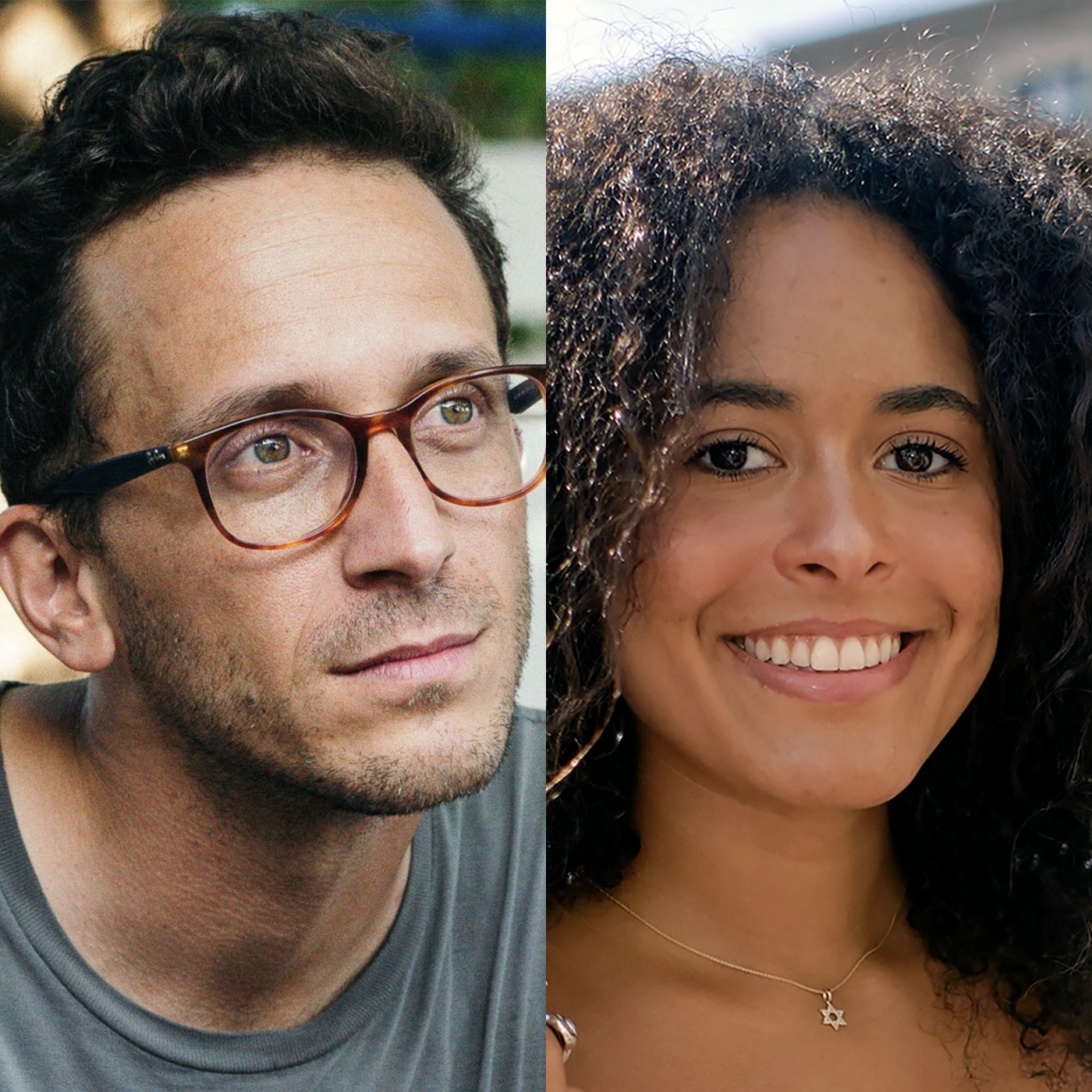
Columbia University, one of our country's most elite institutions of higher learning, where some of history's best and brightest minds have been taught to think critically and creatively, has been in a crisis since October 7th. Jewish students have felt unwelcome and unsafe on their own campus, and the school's administration has done little to alleviate their very serious concerns. Two of the loudest voices standing up for their fellow Jews belong to Columbia Business School Professor Shai David, a social psychologist and a proud Israeli and newly minted Barnard graduate. Noah Fay, one of the brilliant, amazing student leaders that have emerged during the crisis. After Columbia decided to cancel its main commencement following weeks of protest and turmoil. I wanted to catch up with these two on the eve of Noah's graduation before the student body dispersed for the summer. Professor Shai David and Noah Fay. It's an honor to have you with us. Welcome to in these Times.
- [01:23]
Noah Fay
Thank you so much for having us. I really appreciate it.
- [01:26]
Rabbi
Thank you. And thank you for the opportunity to meet Noah. Thank you.
- [01:31]
Noah Fay
I appreciate it.
- [01:32]
Rabbi Ami Hirsch
Our impression was you two are kind of rock stars, not only in the country, but especially in the American Jewish community. You're on the same campus. I would have thought you would have met each other.
- [01:43]
Noah Fay
Yeah, well, there's a lot going on, of course.
- [01:47]
Rabbi
Exactly. I would say when I first saw Noah speak up back on campus, I think it was, like, probably November. I saw that video, and I was great. I can stop doing what I'm doing because the students are taking over. You know, I couldn't stop, unfortunately. But I was so impressed. I remember reaching out to you and.
- [02:08]
Noah Fay
Saying, yeah, thank you. Yes, I remember that, too. It was very, very kind. I appreciate it.
- [02:13]
Rabbi Ami Hirsch
No, I want to second that. I'm not on campus, but, you know, we're on the receiving end of general media coverage, and we've watched you on television. I was just watching a recording of the CNN appearance you made. You are incredible. It really is just awesome. Amazing student leaders. Just a phenomenal thing to see.
- [02:40]
Noah Fay
Thank you.
- [02:41]
Rabbi Ami Hirsch
So let me ask both of you. We're recording this on graduation week. My nieces graduated today from. From the medical school.
- [02:54]
Noah Fay
Oh, wow. Mazel tov.
- [02:56]
Rabbi Ami Hirsch
Thank you. So what's going on in Colombia now? What do we need to know?
- [03:01]
Noah Fay
Okay, so to give a, you know, an on the ground, current student perspective right now, as you were saying, you know, it's graduation week. I'm graduating tomorrow. You know, Things are still very much going on right now, but everybody is quite focused on graduation. There are way fewer people here. Not a lot of demonstrations. I will say that while campus has become quieter in that sense, for me it has been still, if not more, a little bit more depressing, honestly. You know, things have also literally been quite gray outside with the weather in New York. And the whole sentiment has been, you know, kind of like a deflated balloon. The dust is starting to settle. The same is true of my, my Jewish friends now, now that the dust has settled, we all have the time now to really think about what, not only what's going on and the emotions that we're feeling right now, but just what has been going on this entire semester. Things have been going at such a pace that we haven't been able really to sit with things. At least that's been my experience. I haven't had the chance to really feel everything that's been going on. But now that things have slowed down a little bit, you know, our academic obligations have, have ended, there's a lot more time to actually think about how things have ended. And you know, what's been going on this entire semester. And you know, for me it's, it's not great. I don't really like to sit with what has gone on because it's, it's very upsetting.
- [04:36]
Rabbi
Yeah, I think that's a perfect description. I think from my perspective, you know, Noah is graduating. Congratulations. And I'm thinking more what is expecting us, you know, us, the community. Me personally as a professor in August, when next academic year is going to start in less than three and a half months. And I kind of think of this as these past seven months we've been spending in the error. We've been treating the critical conditions to keep the body alive. But now that we have a little bit time to breathe, we can do the bigger examinations and see what are the deep rooted issues. And unfortunately the encampment, the violent overtaking of Hamilton hall, those are just symptoms. Yet the underlying issues are the things that really bother me because they are not going away. They're not going to disappear on their own. And unfortunately, I don't see any interest or will to address them. So I'm pessimistic because of looking forward rather than backward.
- [05:45]
Rabbi Ami Hirsch
Let me ask you, Professor Shy, you're a professor of psychology, so you observe human behavior?
- [05:53]
Rabbi
I try.
- [05:55]
Rabbi Ami Hirsch
I know that you were out front from the beginning. You saw this growing. I don't know if before October 7th, but certainly soon after October 7th. And you were calling this out very early on. Why Colombia and what is the diagnosis? What is going on?
- [06:14]
Rabbi
I think Colombia has an interesting mixture of one, a very socially active student body that has been selected on the fact that it's socially active, which could be a very good thing for people that are socially active on important things like climate change, anti racism, anti homophobia and anti sexism. And it can be problematic in the things we've seen, which is when it comes expresses itself as anti Semitism. I think the other thing is Colombia has many, many problematic tenured professors with a legacy of antisemitism and support for terrorism. And I think the third thing that not a lot of people are talking about is that the 1968 student protests around campuses, the original encampments, they started at Colombia. It started at Colombia and they said, we first we take Colombia, then we take the country. And I think what we saw now is the student organizations trying to replicate that. And indeed, in a way they were successful.
- [07:31]
Rabbi Ami Hirsch
Were they looking for a cause or the cause was ready made for them?
- [07:37]
Rabbi
I think there's a bigger discussion here about what motivates students to rise up. I think there is a search for meaning, a search for a cause, any cause. I think there is a sort of indoctrination that's been happening on campus in relation to a specific cause. And I say indoctrination because it really just shows one side rather than education, requires at least two sides and some critical thinking and synthesis of ideas. And that search for a cause, mixing that with some sort of indoctrination leads to what we've been seeing.
- [08:21]
Rabbi Ami Hirsch
Did it take you by surprise, Noah? You've been there for four years now.
- [08:25]
Noah Fay
Honestly, when I'm thinking about whether or not surprise, I mean, this is something that a lot of us have been know grappling with. I think it's a difficult thing to answer because on the one hand, the overall sentiment that has been conveyed by these students is not new at all. I. I've spoken about this before, but before I got onto Columbia's campus, I was advised not to come anywhere near the university because people told me it was the most anti Semitic school in the country. Precisely because I didn't realize we had this problem within the faculty, but I at least knew that this was a problem within the student body, that there was a fringe at the time. It was fringe, but still strong and clearly present portion of the student body that was violently anti Israel. Violently anti Israel. They had at least once a year, if not twice, you know, once Each semester they had a week of what they called Apartheid Week, which is just a week dedicated to talking about, you know, all the things that we're hearing about constantly now, which is that, you know, Israel is a genocidal, colonialist, imperialist, apartheid state. You know, and then the student body has had a history of conducting BDS referendums. We also, we had a similar vote recently, but the student body would vote on whether or not to endorse bds, even though the administration, at least in prior years had come out well in advance of this to say, listen, not only will this actually not have an effect on how we, you know, as a university engage with our own policy, but this is actually an anti Semitic movement, so we will not be joining for that reason. And still the student body conducted this referendum knowing very well that this was going to have no effect on anything. I knew this existed within the student body. The surprise comes in when we see it on this mass level and in such an extreme form. That is something that I had not imagined. And more than that, I didn't actually think about it. We didn't pay attention to this small faction until it was too late, of course, but that's because I didn't realize that there were enough students on the campus to fall prey to this specific strain of illogic, hypocrisy, contradictions, irrationality. It just doesn't make sense. And so my surprise comes in with really the number of students who have participated in this.
- [11:09]
Rabbi Ami Hirsch
Well, so who are those students? Are they mostly kind of leaders of Palestinian cause and they've, they've been part of that for years? Maybe they're funded and supported both from outside and inside, or are they just run of the mill American kids who are looking for a cause or they sincerely believe that what they're saying, that Israel is this evil place?
- [11:38]
Noah Fay
I am not, I'm not so, so familiar with the actual leaders of the student leaders of everything. But I can definitely speak to the, the general body, which is, I mean, just random American students, particularly from the undergraduate perspective. I mean, this has swept our, our undergraduate student body. Anybody is fair game to be participating in this. It's so unpredictable. I mean, a lot of my friends and I have been talking about is it's just so bewildering to see a bunch of just white and Asian students walking around with keffiyehs and symbolism in support of this now ten times over, clear anti Semitic movement with apparently no regard for that. And so that's again where my surprise comes in, because it just I mean, it makes no sense why they would be not only honestly engaged with this topic overall, considering the innumerable other world issues that we could be, you know, really engaging with. Not only is, is that really what's confusing to me, but just the intensity with which these students are participating in this, especially at Barnard. Because I will say Barnard students are particularly active and passionate about this. If we gave half of our energy that we give to this to restoring our reproductive rights in this country, Roe v. Wade would have been restored. I mean, that is how intensely these students are engaging with something they had.
- [13:10]
Rabbi
That's a beautiful.
- [13:12]
Rabbi Ami Hirsch
Really, that is a.
- [13:13]
Rabbi
That's a beautiful sentiment. I agree that.
- [13:15]
Noah Fay
Thank you.
- [13:16]
Rabbi Ami Hirsch
I mean, I agree with that. And by the way, there are a lot of older feminists who say that I've spoken with who say the same thing, you know, the feminists from the 60s and the 70s, and they've said exactly that, that where are all of these young women and why are they taking this for granted?
- [13:33]
Noah Fay
Yes.
- [13:34]
Rabbi
And I think, you know, economists like to call this opportunity cost. It's what are you not doing when you're doing the thing you're doing? And I don't think we should be a one issue individuals or single issue groups or political body. But you're right. I mean, there could be so like, we could. Climate change is like a huge issue all of a sudden. The students don't seem to care about this reproductive rights, LGBTQ rights. They seem to not only not care about it, but actually seem to undercut the whole idea. When you rally in support of the terrorist regime that is against reproductive rights, against LGBTQ rights, against worker unions, against, you know, against democracy, regardless of anything else, then you are undercutting the whole cause of the other causes that are so clear to our heart. I would say there's always been a tendency to try to understand the anti Semite right. Who are the anti Semites? You know, and the truth is they're not a monolith. When Rabbi Sacks talked about antisemitism as a virus, meaning that it's not only shape shifting, but it's also, it's very contagious and anyone could get it right. So in the 1930s, it was in Munich beer halls and in Berlin lecture halls. And in 2024, it's in Williamsburg beer halls and at Columbia lecture halls. There's no one person. Unfortunately, many people find different ways to get to antisemitism.
- [15:14]
Rabbi Ami Hirsch
Shai, let me ask you. So October 7th, all of these, these dynamics were there pre October 7th but October 7th precipitated something. It maybe lifted the lid off of this box that was somewhat contained. So October 7th happens. And how long did it take you to conclude that something significant and damaging was occurring on Columbia campus?
- [15:44]
Rabbi
Five days. October 12th is when they held their first protest on campus. And up until that point, I really did believe. And I wanted to believe. Right. It was a motivated reasoning on my part, but I really wanted to believe that this is just ideological differences. This is just, you know, we don't see politics in the same way. They see it one way, I see it the other way. And I accept that, you know, we should have political divides and ideological divides in society and on campus. But then on October 12, I saw the protests that they held in celebration of October 7th.
- [16:25]
Rabbi Ami Hirsch
Delineate that a little bit. Describe for us what does that mean.
- [16:28]
Rabbi
The problem is, it's hard to describe something in retrospect when you. We've all been desensitized to everything. But imagine for the first time on October 12, just five days after the October 7 massacre, before Israeli soldiers even entered Gaza, before we even knew how many were dead, before we just started hearing about this sexual assault. We just started hearing about the numbers of kidnapped. And all of a sudden you see 800 students, all clad in keffiyehs, Covid masks and sunglasses, and all chanting the chant now become normal. But from the river to the sea. Globalize. The intifada. There is only one solution. Intifada, revolution. We don't want two states. We want all of 48 things that I haven't encountered. Now, maybe again, it's on my fault that I didn't want to encounter them, so I didn't seek them out. So I was not aware of that. But the truth is that I wasn't. I just didn't see them until that point. And there was that moment when I was observing their protest and I realized that this is hate. And that was the eye opening that moment for me.
- [17:51]
Rabbi Ami Hirsch
And so your focus initially, if I remember correctly, was on the administration. You felt that they weren't responding adequately enough on the ideological level, but also you felt that a insecure situation was developing on campus.
- [18:10]
Rabbi
My focus has always been, and it still is, on the administration. I have nothing against the students. You know, I have a problem with the student organizations, that they are hijacking the student voices. But I have nothing against the students. It is about the administration. And the first thing that I started with very early on was asking the university to condemn Hamas. That was the first and only thing it was before everything else. It was the lack of moral clarity that was in the university's silence is what I believe started all of this. And what could have completely prevented all of this. On October 7th, 8th, 9th, 10th, 11th, we had a moral vacuum on campus because a monumental event, not just monumental for the Jewish people, for the Israeli people, but monumental in world politics. A terrorist organization killing, you know, 1400 individuals, kidnapping 250 from 20 different nationalities. And you had on one side professors who were excusing and celebrating this, like Joseph Mossad at Columbia, like Hamid Abishi, Rashid Khalidi and all those people. On the other hand, you had a very, very silent administration who said nothing. And then the students were confused. A lot of students were just looking to see what is the right thing to do. And that was the vacuum. The moral vacuum is what led to this eruption of at first rhetorical violence and then actual violence.
- [19:56]
Rabbi Ami Hirsch
So that kind of begs the question, why the vacuum? Why the silence? You know, looking from the outside, it's been a while since I was a university student, but you know, looking from the outside, the culture is that university administrations and presidents, they comment a lot about a lot of things that have moral ramifications as well. So you mentioned before that you know, we're kind of still dealing with the ER and when the new year starts, then the underlying symptoms will be clearer and need to be diagnosed. I realize that, that we could talk about that for hours and hours. But do you want to give us a little bit of your thinking now? Why the moral vacuum and what are some of the underlying symptoms?
- [20:42]
Rabbi
In terms of the administration? There are two things that explain everything. They explain the whole situation. It's a mixture of cowardice and callousness. Cowardice, the administration is afraid for, afraid of bad pr. They're afraid of donors and foreign money that is coming into the country. They're afraid of the faculty senate who has been, for lack of a better word, purged from Zionists and had been taken over by openly or covertly anti Semitic individuals. In terms of callousness, there's just lack of concern. I do believe, and it's hard for me to say this, but I do believe that the university of at best does not see Jews, we're just invisible to them. Or at worst sees Jews is just less equal to everyone else. A really good example is last Saturday. Everyone knows Colombia. Instead of dealing with the root of the problem, they decided to cancel commencement because they basically let a few hundred students ruin commencement for the vast thousands of students. So every School had its own graduation. Columbia Business School had its own graduation on Saturday on Shabbat. And because of the situation on campus, it had it in Baker Fields, which is on 218th Street. That meant that a Orthodox Jewish student who's graduating from Columbia Business School could not attend his own graduation. I don't think that was made out of callousness. It was made. That decision was made because they don't care. We are invisible to them. Now, that is just a tiny example of a much bigger issue that they do not see us. And to be fair, it's not just Jews that they do not see. I think that throughout the past few years, we've been seeing how administrations, institutions fail to see other minorities or intersectionalities of different minorities. But one thing that many of us did not realize is that we just do not see the Jews.
- [22:53]
Rabbi Ami Hirsch
Noah, let me ask you. Did you feel threatened? Did you feel unsafe? What did the preponderance of the Jewish students feel like every day walking through this?
- [23:09]
Noah Fay
So I will start by saying that at least with this semester in particular, my reaction is definitely not representative of the overall Jewish student community at Columbia. So for a number of reasons, the first semester was very difficult and very, very painful for everybody, obviously. But for me personally, it was the most raw. I mean, it was an incredibly difficult time. I really barely made it out academically and mentally. It was. It was very tough. Definitely my toughest semester at Columbia. But because I, you know, really went through all of that in the beginning and honored those initial feelings of grief and loss and, you know, isolation and depression, I really primed myself to come back in this second semester with a different. A different mentality, which was ultimately to basically ignore everything that was going on. Disengage. And honestly, I mean, now in retrospect, I can say more frankly, the strategy I opted for was really delusion, which I stand by, because I did have to do that in order to make it through this semester, particularly academically, because, you know, that's our top currency as students. I really had to prioritize that. And so I had to delude myself into thinking that I was not actually emotionally impacted by this and that this was not the most distressing thing to have to deal with really every single day. But also because I went through those initial emotions of grief, it's actually allowed me to. Rather than feel those depressing feelings, I'm now able to think more about how angry I am, which, I mean, I vocalize. That's partially why I really enjoy speaking with people about this. Now is just to vocalize that I am. Of course, you know, I'm very sad and devastated by this whole situation, but I have really. I've moved past that feeling, and I'm not. I'm not just sad. I'm extremely angry. I have lost my patience. I was ready to wrap this up. I mean, the moment we got back on campus in the second semester, and things were entirely the same, if not worse, as we have now seen. So in the first semester, I. I mean, I felt incredibly unsafe. And it is true, Jewish students at Columbia have not been safe this entire year, not once. And so I have basically decided to ignore that out of frustration and anger. The thing is, the students who are running this, These are, for all intents and purposes, you know, my friends, my peers. I know these people, and they are just ridiculous. I mean, it's. It's embarrassing what they're doing. We all go to the same school. We take the same classes. We're supposedly learning the same things at this school. And so I know that I can look at them and say, guys, what are you doing? You've. You've diverged from the path here. Like, this is not what we've come to learn, and it's inconsistent with everything. So I really. They've lost all credibility for me. And for that reason, you know, I mean, I'm done feeling intimidated by these people. I mean, they're just ridiculous. You ask them a single question, and you learn immediately that there is no logic to this. There's no rationality. There's no knowledge, period. And, I mean, it's just. It's an embarrassment.
- [26:36]
Rabbi
Can I add something about the mere question?
- [26:39]
Rabbi Ami Hirsch
Right.
- [26:40]
Rabbi
Do you. Do you feel unsafe? Are you unsafe on campus?
- [26:43]
Rabbi Ami Hirsch
Right.
- [26:44]
Rabbi
I find that question objectionable. And I. And I think we Jews have internalized that question. Right? Because the premise of that question, and I've gotten it so many times from journalists from all over the world, the premise of that question is, is anti Semitism? Could it only be in your head?
- [27:03]
Noah Fay
Right, Right. Yes, I agree. I agree. Thank you for pointing that out.
- [27:07]
Rabbi
The premise of the question is there might be anti Semitism in an objective world, but maybe it's only in your head. And by the way, I think people of color experience this. LGBTQ individuals experience this. And the problem is where we Jews have internalized that question. So it also comes out in internal conversations. You know, are you really safe? Are you really worried? And I'm of the view that if someone tells you there's a problem, you look at the problem. And not at the someone. And it doesn't matter if, you know, if it's. If it's racial, if it's gender, if it's sexual orientation, whatever, if it's ideological. Right. For a lot of conservatives say, like, I don't feel comfortable being on campus. A lot of. There's not a lot of conservative faculty on campus. Right. There's been, again, a purge of thought. So when a conservative faculty tells you, I don't feel comfortable, you can either look at the problem and say, okay, is there a problem? Let's look at the problem. Let's analyze it. Or we can say, are you really feeling it? Why don't you tell me more about your way of seeing it? And I think that we need to update our conversations.
- [28:13]
Rabbi Ami Hirsch
No, There are some Jewish students who are part of the protesters as well.
- [28:20]
Noah Fay
I love this question. I love this question.
- [28:23]
Rabbi Ami Hirsch
Well, you know what? I won't even ask a question. What's on your mind?
- [28:27]
Noah Fay
Okay, thank you. Thank you. Because, I mean, this is just. It's a curious thing to analyze. That's why, you know, I'm happy to have the space to, you know, work it out. So in regards to the anti Zionist Jewish students, I have said before, obviously, you know, on cnn, part of what captured people's attention was I did compare them to blacks for Trump or gays for Trump. I stand by.
- [28:53]
Rabbi Ami Hirsch
I just want to point. You're a woman of color as well.
- [28:57]
Noah Fay
Yes, I am. Yes, I am.
- [28:59]
Rabbi Ami Hirsch
So. So there's extra credibility in what you're saying.
- [29:02]
Noah Fay
Exactly. Which is precisely why I said it. Because, I mean, if I'm saying it, you know, people have to think about it at least a little bit. And I do stand by it. What I am trying to call to people's attention is in terms of how we should understand them and how the general public should interpret them. My point is take them as seriously as we take blacks and gays for Trump, which is to say it is divergent from the vast majority of the group. The majority of the group does not know what's going on. We don't identify with them. They are fringe. So they don't get a lot of attention because, you know, that's the consensus. And so that's how I'm urging people to understand these anti Zionist Jews. The other thing I will say is that. And honestly, Professor Davidai, you were the. You were the first. Call me shy. Call me shy. Thank you.
- [29:53]
Rabbi Ami Hirsch
You're graduated now. Anyway.
- [29:55]
Noah Fay
I know. It's true. It's true. Thank you. Thank you. But no, but really, I mean, I heard you speak about this in a way that I hadn't been able to put it into these exact words, but I had always been thinking, these students, these anti Zionist Jewish students are lucky that the rest of us on this campus are not going to allow things to get to a point where they are forced to learn the hard way that they are also on this train to Auschwitz with us. They are just as you said, Shai, there's no prize for being on the last train to Auschwitz. We are. How I've been thinking about it is. And this is what I said in one of the press conferences that I'm trying to urge the administration to understand. We are all on that same train to a very, very dark place. These anti Zionist Jews, they may be the caboose, but they are very much on this route with us. If this evolves any further, it will get to a point where now it's no longer, you know, it's okay if you're Jewish. You just have to repudiate Zionism. It will devolve to a point where even if you're a Jew repudiating Zionism, you are still a Jewish and therefore you are the enemy. I mean, they don't know that, especially these students. And this is not in any way to excuse what's going on. It's just a way to understand. I think for me, part of what has become clear is there is a serious case of arrested development in my generation. Really. I mean, because people in my generation are missing significant what appears to be cognitive abilities that the. I mean, the rest of us.
- [31:32]
Rabbi
Well, clearly you show that you're not missing. Clearly you're showing that people that choose to, you know, focus.
- [31:39]
Noah Fay
No, no, it's true. It's true. Yes. And so my point though is that there's some sort of discrepancy going on here. I don't know if it's a maturity thing or something, but these anti Zionist Jewish students, I don't know, they're missing something. And I can't even begin to psychoanalyze their whole understanding of the situation. All I can say is that they simply do not realize the severity and the truth of the situation. I mean, they're not actually accepted, is my point. They have been tokenized because they've repudiated what society today has identified as most Jewish. I mean, there have always been Judenrat in any group. There have been people who don't believe the group is going about things in the proper way and they break off and Try and save themselves or save their families in different ways or, you know, deal with the situation with an alternative solution. And in this case, that might involve colluding with the enemy. More broadly, we've seen this consistently in not just Jewish history, but just any history of a minority group dealing with some sort of existential situation. These students are, they're saying, oh, I'm Jewish, but no, don't worry. I mean, I'm not a Zionist. But that will change and we will get to a point where even that does not save these Jewish students. Fortunately, I don't believe we will see that. But that's the situation with them.
- [32:56]
Rabbi
I think it never a thing we need to recognize is, and I've been getting emails from these kind of students, parents, cousins, grandparents. What do we do? How do we deal with a kid in our family who's anti Zionist? And my answer has always been family is part of our Jewish values, even if it's painful. And in the same way that I've been saying like, I'm fighting for Israel and I'm fighting for Israel to remain the homeland of the Jewish people, including the Jewish people that are fighting against Israel. But what this shows us is that for every one of these anti Zionist Jews, there is an entire family who is a Zionist and they, you know, that are fighting. So they show us how small of a minority they are. But also they are a small and tiny minority who of these pro Hamas organizations. And that is an important thing to remember because by putting the Jews like the Jewish students, like on a press conference, by, by, by broadcasting, we have Jews here. These organizations are being anti Semitic. They are treating the students Jewishness as the most important thing is to signal something that is the same as if 99 white racists would take the 1 non white individual to stand and say racism doesn't exist and will put them up front. That is a racist thing. Now of course, no one in their right mind would say, oh, this African American individual said there's no racism in the world, therefore racism doesn't exist. We'd say, maybe this person's experience has been different than the majority. Why would someone take seriously the anti Zionist Jews? Well, because it fits their foregoing conclusion that they want to believe that there is no antisemitism. They want to separate Zionism from Judaism. So they take these very tiny minority and put them up on a pedestal.
- [35:02]
Rabbi Ami Hirsch
Shai, can you tell us more about the faculty? How did they respond immediately after October 7th? How did they respond after the President's testimony on Congress that kind of precipitated a whole new level of anger on campus. And also, if you could, could you tell us about the Jewish faculty? Are they active? Do they care? Are they fearful?
- [35:27]
Rabbi
So that's where it goes from. I go from sadness to anger. Like Noah said before, when we think about the faculty, there's three different groups, right? There's the group that is openly supportive of these organizations and these protests, these uprisings, some of them because they believe in Hamas's cause. Even if maybe they don't necessarily like it. They believe in the cause, right? We had very early on more than 100 professors, including two professors in the marketing division at the business school who signed a letter saying that the massacre of October 7 was in military response. That shows you where their mentality is. Unfortunately, these professors have been egging on the students for seven months. Yet when the time came to get arrested, these professors ran away to their luxury homes where Columbia funded homes in Morningside Heights and let the students carry the responsibility. So I see them as callous, anti Semitic individuals, but also as non leaders. I don't know what the opposite of a leader is because a real leader doesn't throw someone into the fray and then goes to the comfortable. Then we have the Israeli and Jewish professors and we have a group, not a large group, but a group of professors whose who've been active behind the scenes, who've been trying to document and change some of the administration's ways. Unfortunately, most Jewish professors haven't joined, I think out of just pure fear and concern because they've seen what happens to someone like me who's outspoken. You know, I've been vilified by the students, I've been vilified by the administration. There's a baseless investigation against me, there's a petition to fire me again without any real claims. So I won't be silenced. But other Jewish professors unfortunately have been silenced because we don't want that. But the real problem for me is the third group, the majority group of professors. We have to remember there's 4,500 professors at Columbia and I think less than a handful have spoken up against what's happening, especially non Jewish faculty. And at first I was surprised, then I was saddened and now I'm angry because now I understand how mass level atrocities like the Holocaust, like slavery can happen. Remember Columbia, Harvard, those schools were happening while the United States had slavery. Most of them said nothing. And the same thing with the Holocaust, most of them said nothing. And in Germany, you know, the university's Gates were not shut, they were open. And professors of psychology, professors of business, professors of engineering, they kept teaching. Just not Jewish students and not Jewish faculty. And I can. And many of my colleagues who share a floor who are on, you know, I see them on a daily basis. They think that they can just sit on the fence. And unfortunately, what they don't understand, this isn't a fence between two sides. It's a fence between good and evil.
- [38:58]
Rabbi Ami Hirsch
It's what Martin Luther King used to say, right? That we'll be called to repent not only for the vitriolic actions of the bad people, but the appalling silence of the good people.
- [39:07]
Rabbi
It's especially appalling to me because I was trained as a social psychologist. And social psychology is all about what leads people to do bad things and what leads good people to stand idly by. And I believe I'm one of the only social psychologists in the world who've been speaking up. Which means that come August, you're gonna have professors of social psychology all over the country teaching students, teaching first year students, introduction to social psychology about the bystander effect. But they teach from books, not by doing. And they, in my eyes, have lost complete credibility and should not have any credibility in students. Mind the same thing with the professors who teach leadership at Harvard Business School, at Columbia Business School, at Wharton. You teach leadership, but you're not leaders. That is a complete loss of credibility.
- [40:02]
Rabbi Ami Hirsch
Could you tell us briefly, why did they launch an investigation of you? Where does it stand? What were the grounds of investigating you?
- [40:10]
Rabbi
So there's no grounds I could tell you.
- [40:13]
Rabbi Ami Hirsch
What are they, what are the grounds that they say they're investigating?
- [40:16]
Rabbi
They are investigating me for my social activism. So first of all, it's only things that I've done on social media, which I'm glad for, because everything is public and everyone can just go and see. And it's starting on the first video that went viral on October 18, where I say, rape is never okay. They're investigating me for that. And I intentionally say there that I am against the pro Hamas, pro terror student organizations, what they are calling that is racist and Islamophobic. And even though I say it doesn't matter if you're Jewish, Christian, Muslim, Buddhist, Hindu or atheist like myself, rape is never okay. Right? They are trying to paint those who support terrorism as a protective class. This is why I'm being investigated by the Office of Equal Opportunity and Affirmative Action, right? Which is an incredibly important office supposed to investigate racism, sexism, homophobia, transphobia, body shaming, like, everything that's, like, so horribly wrong in the world. It should not be investigating those who call out support for terrorism, but that's the only thing that they could find. So that's what they're doing.
- [41:42]
Rabbi Ami Hirsch
No, Let me ask you, you're finishing up. You've spent four years in Colombia. Would you recommend Columbia to students, high school graduates now, you know, to Jewish.
- [41:58]
Noah Fay
High school students and, you know, even younger students who are afraid of what they're seeing. I say, and this is definitely. This is something that my Jewish friends hear. I mean, this is what we talk about because we have gone over this many, many times. I say, yes, still come to Columbia. What you need to be sure you think about before that, though, is you have to know what you're getting into. Because for me, and for, I think, a lot of students, the. The primary issue was just the shock of all of this. I mean, we had no idea we were going to have to deal with this. I mean, we just, we didn't see any of this coming in any way. We didn't have any idea that we were going to have to deal with anti Semitism. But if you mentally prepare yourself, if you know what you're getting into, which is to say we have this very, very loud and hateful student movement on our campus, if you know that that is going to be a presence at school, but you also know that your social circles are going to be very different. I mean, you know, for a Zionist student, you're only going to be able to have Zionist friends, which really translates to to just mostly Jewish friends, because not a lot of other people are speaking up, at least right now. I. But that's. And, you know, that's not a problem for me. And I think, if anything, that should be really desired, that's one positive thing, is that you have a very, very strong Jewish community here. And, and also, I mean, the reason I still advocate for Jews to come is again, this kind of goes back to my stubbornness that I've adopted out of this situation is that, I mean, I will not be pushed out of my own hope. This is why I didn't. I didn't leave campus all semester, because this is where I've lived the past four years, okay? Like, this is, this is my space, too. I'm not going to be bullied out of it, and I won't have our entire community bullied out of it either, if only because, I mean, if that happens, things have gotten very, very serious. But. So I say come anyway. But the fact of the matter is, by not coming to Columbia, you're not guaranteeing that you're not going to deal with this at any other school you go to, which, in fact, we have pretty much seen. I mean, if you're a student who is aiming for Columbia anyway, you're. I mean, you're looking at all of the, the top institutions, all of which we have seen have fallen victim to this sickness and this, this particular strain of the virus of antisemitism. So don't avoid Colombia, because you will still deal with this in other places. And if anything, what you can guarantee yourself when you come to Colombia is that you will have a strong, supportive community with you. You will have to deal with this B.S. but I mean, as difficult as it's been, it is manageable for some students. But that's the thing. It does, it does come down to a personality difference, I would say, because, you know, it's very overwhelming to a lot of students. It's very distressing. But there is an abundance of support to be felt in this community, and that's what's made it manageable, you know, and so don't sacrifice what, at least as of right now, still a good opportunity. And so I say right now, do not forsake that, if only because, I mean, it lets these anti Semites win. If we, if we say, okay, you know, you got us, we're too afraid. I mean, that's, that's BS too. So I say, absolutely, don't shy away from Colombia. We need more Jews, honestly, now more than ever.
- [45:20]
Rabbi
I would say, you know, it's not where you go, it's how you go. And when you go to campus, the first thing I think you should do is buy a big Star of David or a big Chai or, you know, like, because to show the world, don't hide. Show the world that you are Jewish. Show your campus that you're Jewish. Find the community. Don't ghettosize yourself only with Jews on campus. But do know that you need your community. Buy some books. Be prepared to stand up for yourself, for your values. But come, you know, these anti Semites, professors and students and administration, they represent the worst of us. But students like Noah represent the best of us. They represent the potential for the greatness. And they're Jewish and non Jewish students that are just incredible. So come, don't hide. Be ready to fight. Not physically, but ideologically. Fight for your existence. But, but come. And as long as I'm here, I'm fighting for you. If they push me out, you know, I'll fight for you for a long time, but I'm still here.
- [46:24]
Rabbi Ami Hirsch
Noah, my last question to you is, do you know what you're doing next?
- [46:28]
Noah Fay
Yes. So I am actually, I will be one more year at Columbia. I'm finishing up my master's at the School of International and Public Affairs. I've done a. What? We have a few four plus one programs with our various graduate schools. So. So I'm doing. I'm doing that program, which means, you know, I've got one more year at this institution, which I feel very good about. A lot of people have, you know, asked me if I'm thinking about transferring. My parents have actually advocated many times now that I transfer. But I mean, like I've been saying, I've been here for four years. I also started during COVID I mean, I have a. I feel for better or for worse, I feel very much like this is my space. I've been brought up in this institution, and it has to some extent felt very much like home. And so I am happy to continue that journey. And also, I mean, I am happy to be here for this next year, if only because I am ready to see this thing through. I want to see the resolution to this. And, you know, if I can, I want to be a part of it. But I'm ready, as I've said, you know, I'm ready to be done with this. And I am. I'm excited to be here to hopefully to wrap it up.
- [47:37]
Rabbi Ami Hirsch
I want to tell you, you're an awesome leader.
- [47:40]
Noah Fay
Thank you.
- [47:41]
Rabbi Ami Hirsch
And amazingly articulate, by the way. I would hire you for anything. I don't even know what you're specializing in, but I wouldn't even need to see a resume. You're just. Come on in.
- [47:52]
Noah Fay
Thank you. Thanks, Rabbi.
- [47:54]
Rabbi Ami Hirsch
But I agree with what Shai said that these qualities in us that often we don't even know we have are tested in adversity. And we're refined. The Jewish sages talked about, well, why 40 years in the desert. And they respond by saying, that's the place where the Israelites were refined so that they could understand, you know, what self determination would require and they would.
- [48:21]
Shai Davidai
Be prepared for it.
- [48:22]
Rabbi Ami Hirsch
So if you had to go through these hardships and these difficulties, know that it probably refined you even more and made you even more effective than you might have been had you not had this experience. One final question, Shai. If I can ask you any advice to American parents.
- [48:49]
Rabbi
First of all, I don't believe that I am in any position to give advice. I Am as clueless as everyone else. But I want to give something else which is acknowledgment. You know, I know many people are afraid. Many people are living in this big uncertainty. Things we have taken for granted as Jews, as individuals and as parents, we can no longer take for granted. Know that you're not alone. Know that we, we're all experiencing this. So many, many of us are experiencing this. The one thing I would say is this does not go away by its own because again, going back, this is hate. And hate doesn't disappear. Hate needs to be pushed out. And we cannot let it take a stronghold in our colleges, in high schools, middle schools, and even elementary schools and daycares, which stories coming out. So I know this is maybe not the most comfortable thing, but we all have to get involved in our own ways, in our own capabilities. But we have to get involved. Meaning if you should join your kids, PTA organizations, you should be involved in your kids education. And don't expect your high schooler to know how to deal with this if you don't prepare them for this. Going back to the idea of antisemitism as a virus, well, you need to vaccinate your kids and you need to prepare them. And I've been telling parents one thing you can do is spend a Shabbat dinner playing devil's advocate and asking your kids, prove to me that this isn't an apartheid, that this isn't genocide, that this isn't ethnic, whatever. Like the buzzwords that the anti Semites will throw at us. Prove to me or you know what makes this a blood libel? How is this related to blood libels? Oh, you don't know what a blood libel is? Okay, well go and read. Parents need to push their kids to this education because the idea of a secular public education is relatively new. But throughout our history, we have educated our kids and we have strengthened them and we have given them the armor and the ideological tools to fight for their existence. This is why we have Passover. Passover is just a long seminar with some food. And that's what we do. So I ask parents to get more involved. And the other thing that I would say is I think what Noah is doing and what she symbolizes, and I hope what I'm doing is we are not fighting the institutions, we're fighting for the institutions. I'm not against Colombia. If I was against Colombia, I would leave. You don't stick around in this horribleness with something you don't like. You only stick around and fight for something that you love and you believe will be better despite all of its ills. And I think the current administration is one of the worst Colombia has ever had. I still believe in Colombia as the idea, as the institution that it can be. And that's what I'm fighting for, so always fight for rather than against.
- [52:19]
Rabbi Ami Hirsch
I want to thank both of you. Both of you are heroes in your own way and assumed leadership in a vacuum. And I don't know if you hadn't a step forward, you know, especially you, Shai, at the very beginning when nobody else was speaking, and you on the student level, Noah, it's just a remarkable thing. And you know, sometimes during our more sober and somber moments here and thinking about what kind of leadership do we have currently in the Jewish community and the future of the leadership of the Jewish community, when we encounter people like you, it renews our hope and our.
- [53:03]
Shai Davidai
Optimism, which is, of course, the essence.
- [53:05]
Rabbi Ami Hirsch
Of Jewish civilization to begin with. So thank you very much for those of us who might look back at this 20 years from now. You saw Noah at the beginning of her national leadership, and here is where it started. Present at the creation.
- [53:23]
Rabbi
No pressure, Noah. No pressure.
- [53:27]
Noah Fay
Thank you. Yeah, we'll see. We'll see where things go from here.
- [53:30]
Rabbi
This is something that I actually, every time, because I am so immensely lucky to talk with so many incredible young people, Jewish and non Jewish people, that are stepping up. And I am so grateful for all of you. But I also remind all of them, like you are not responsible for the fates of the entire Jewish people. You know, you are doing this, you're doing an amazing job. And if you want, we will be there for you, we will give you the resources, we will stand with you. But you should be doing what you want and don't feel pressure because of us older people to, you know, we will be okay, we will fight this. But if you want to be our leader, we will embrace you with open arms.
- [54:21]
Noah Fay
Thank you. Thank you. I appreciate it.
- [54:28]
Shai Davidai
What an inspiring podcast. I am filled with awe at the courage of both Professor Davidai and Noah Fay. It's important to remember that within Gen Z, the Jewish community has some of the most amazing people like Noah. Charismatic, dynamic, brilliant Jewish leaders. Crises often bring forth attributes we never knew we had. History creates great people and great leaders. We have some awe inspiring young Jews in our community. So poised, so articulate, so courageous, compelling and captivating that one wonders how such people were produced and why we did not pay enough attention to them before. In their hands lay the future of American Jewish life. What did they receive that others did not? That is the question before us at the dawn of this new Jewish age. How are our schools, camps, youth groups going to change? What Jewish values will we emphasize moving forward? October 7th revealed the moral rot at the core of many of our most elite universities. It is the result of years of neglect, as Hemingway described going bankrupt, at first gradually, then suddenly. Columbia University, that bastion of excellence, the alma mater of some of America's most revered heroes. Columbia student Alexander Hamilton, in whose name the building that students recently occupied and trashed was dedicated, purportedly said, the truth will set you free, but first it will make you miserable. We must recognize and accept the truth of what is happening. It will make us miserable. But we cannot address the problems if we do not know or prefer to ignore what they are. There is a malignancy at the very core of the most elite institutions of higher learning, a clarion call to America that we are sick, and we are sick at the highest levels of American society. As is so often the case, it is the Jews who clarify the extent of the cataclysm, the perpetual canaries in the mine. But more antisemitism is never only about Jews. When the canary dies, it reveals a toxic and lethal atmosphere that no living being can endure. It goes much deeper than this or that president of a university, this or that board of governors or administration. Which is why even brilliant university leaders are having such difficulties explaining their positions, let alone instilling a climate of learning, diversity, respect and tolerance values they say they and their institutions are committed to and without which none of their other objectives can be achieved. I do not believe that there is a university president in office today who wants to see Jews assaulted physically or verbally. I do not think they want to empty their campuses of Jews, but I do think that many of them have an ideological blind spot when it comes to our people. That is why they, the most intelligent human beings in the world, give the impression of being so confused. What they see so clearly in other dimensions is opaque to them. When it comes to the Jews, free speech issues are relevant, but they are often served up as red herrings. Can you imagine what would happen to students were they to chant anti black slogans, anti Asian, anti gay slogans on campus? Why is Go back to Poland tolerated at Columbia? And by the way, what they mean by Go back to Poland is not the modern country that is a member of the European Union. They mean Auschwitz. A student who even whispered to a third generation Asian colleague, go back to Japan would be expelled within a day. The wrongness of the chant to an African American student, go back to Africa would explode in the minds of university administrators with perfect clarity. They would not complicate us with free speech contentions, or, it depends on the context, excuses. The uneven and inconsistent application of their own rules is a window into the mindset of university administrators, DEI functionaries and faculty members. The majority of Americans detect and recoil from the hypocrisy. The truth may make us miserable, but eventually will set us free. I think that deep down, some senior administrators and plenty of faculty agree with the identity based binary theories of social justice blazing through and consuming elite academic institutions. Some consider American Jews white and privileged. Some consider the Jewish state white and privileged. Some consider Zionism, the liberation movement of the Jewish people, inherently racist. Some believe that October 7th was justified as legitimate resistance. After October 7th, 170 members of the Columbia faculty signed a petition justifying the right of Palestinians to resist what they called violent and illegal occupation. Some are strangely attracted to Hamas. Hamas, we love you. They tolerate on their campuses. I am Hamas. Long live the Intifada. These are not really pro Palestinian demonstrations. They are more anti Israel and anti Zionist protests. Among the reasons they keep sliding into intolerance is not because of some lapse in discipline by the protesters. At the heart of the Palestinian national movement is rejection of coexistence and a hatred of Israel. And hence the protests are not simply about Palestinian suffering. Although I grieve for them and I agree that that it is a legitimate concern morally and politically. It is entirely legitimate to debate when and whether a ceasefire should take effect. To lament the human cost of war and to want the bloodshed to stop is appropriate, even welcome. But fundamentally, the protests are about what Hamas represents in the protesters. Legitimate resistance to an alien colonial Jewish presence in the land of Israel. A pathological resistance to the indigenous presence of the people who gave that land its name. The protests are about what they say it's about from the river to the sea. Globalize the Intifada. It is not that the protesters language is unduly radical and therefore should be curbed. It is the cause they fight for that is unduly radical. Why is we are Hamas even acceptable at all? Why is Burn Tel Aviv to the ground even acceptable at all? And why globalize the intifada? Do students even know what that was? It was a mass murder campaign on the streets of Israel, in restaurants, schools, buses, hospitals. My message to young Jews is do not begrudge these years. They can make you better. Nothing inspires us more than the fight for principle, moral sentiment and grim resolve. Lift the heart and stiffen the spine. We get better through moral struggle. Rediscover your Jewish pride. Fight back as hard as our opponents. You will find many allies, both Jewish and non Jewish. I know that some Jews your age have joined the anti Zionist crowd. They are a relatively small minority, but they have influence on you and your peers. Understand that their opposition to Israel is not really about Israel at all. Israel will survive and prosper with or without them. It is about you. It is about the future of American Judaism. We cannot survive separated from the vast majority of our people. Jews who tell you otherwise are deluded. And to the Jewish community at large, consider the influence that one person, Shai Davidai, has had because he refused to take it anymore. We need to respond as strongly and comprehensively as we can. Every little action helps. Letters to administrators, pressure on radical faculty. Withholding alumni contributions. Pursuing legal remedies to enforce the right of Jewish students to a safe environment. Be active. These are important times. And finally, double down on Judaism. This has always been the response to anti Semitism by those who survived these periods. It is why you are still here. We are the remnants of those who refused to convert, who fought for Jewish dignity and outlasted our oppressors. This is a good time to recommit to our people. It is a good time to invest financially in the key institutions of Jewish life. Take the money you would have otherwise donated to your alma maters and give it to synagogues and other Jewish institutions. Stay optimistic. Be a happy warrior. We have seen worse. Eventually we will prevail. Until next time. This is in these times Sa.