Loading summary
Transcript138 lines
- [00:00]
A
Rabbi.
- [00:02]
B
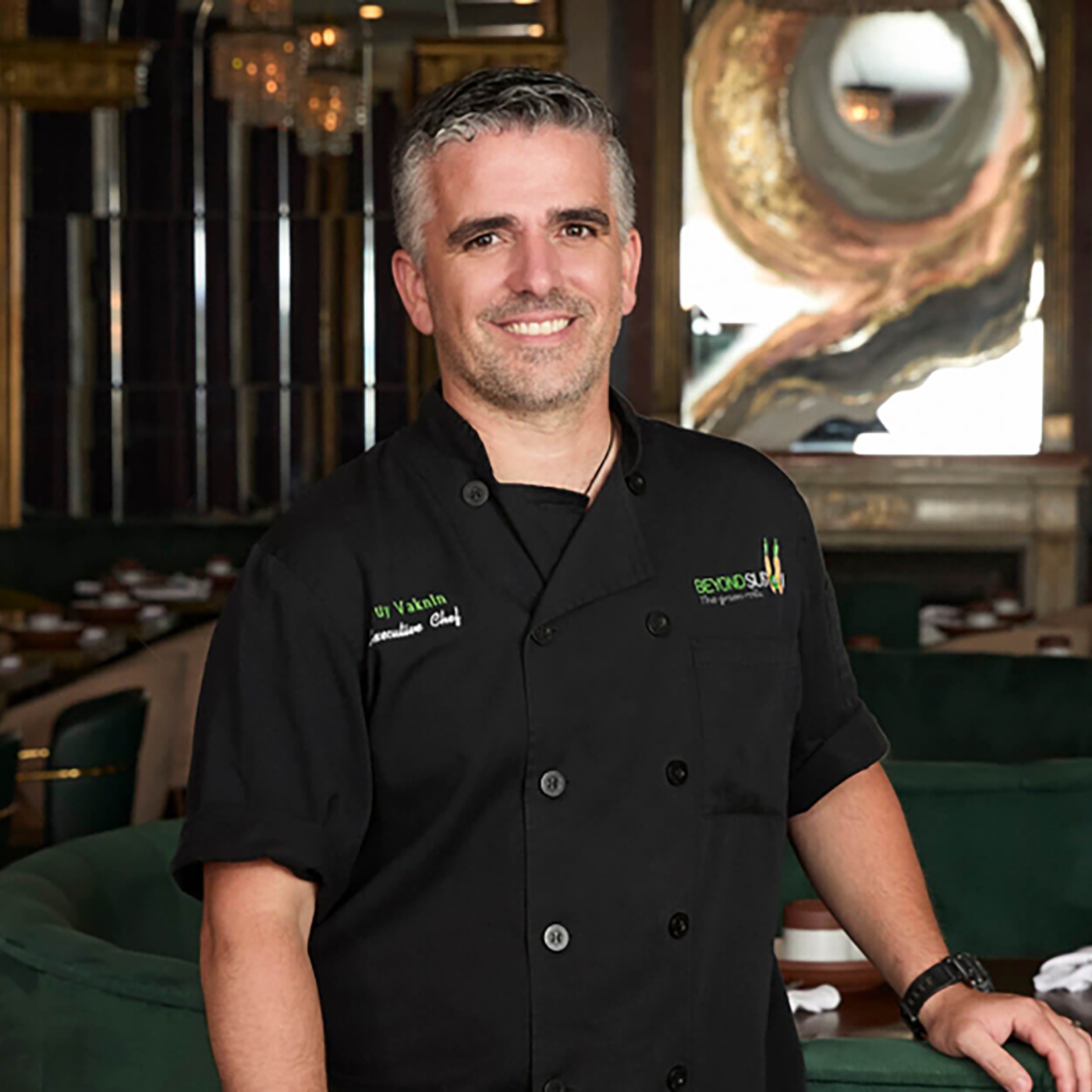
I'm rabbi ami hirsch of the stephen wise free synagogue in new york and you're listening to in these times. Guy Vaknin is the creative culinary powerhouse behind a family of inventive plant based restaurants like Beyond Sushi, Coletta and Willow that have redefined what vegan food can be. His passion is for hospitality, artistry and feeding people well. Guy grew up in state and lived on Kibbutz B Erie. After his military service, he came to the United States and built a life here, restaurant by restaurant, risk by risk. Since October 7th, Guy has been targeted not for his politics, but for his identity. His businesses have faced boycotts and vandalism. People have threatened his family. The vegan community that once celebrated his work turned on him simply because he's Israeli. I asked Guy to join me last week because he represents the best of us. He's someone who's had to start over and over again, who built something from nothing, who leads by example under pressure, and who refuses to cede ground to the forces of hatred. Guy voxnain, It's a pleasure to have you. Welcome to in these Times.
- [01:24]
A
Thank you for having me. Thank you for the invite. I appreciate it.
- [01:28]
B
It's a great honor because I love chefs. I travel the world and, you know, on vacation and we try and seek out, you know, the in thing and it's just very impressive to see what you've done here. How many years now have you been in New York or the United States?
- [01:47]
A
First of all, I appreciate it. Thank you. I, I've moved here in 2005, April of 2005. So almost 21 years now in the food business. Since the moment I got here. My father has been in this before me.
- [02:08]
B
He was a chef. He's a chef, no.
- [02:11]
A
So he owned restaurants, kosher restaurants. So you probably know them if you've been around New York City for long. He had Moroccan restaurants in the city called Village Crown. In the Village, Yeah, Glacosha restaurants. He had a bunch of them opened up in the Upper east side and whatever, whatever. And then ended up in catering. That's where I ended up as well, right before I started this journey.
- [02:36]
B
How old were you when, when you got to the States?
- [02:39]
A
So I moved here when I was 22. I got, got released from the army on March 19 and April 5, landed here and I mean, I went back, but stayed here, built a life here, kids, you know, businesses, all that stuff. So I'm, it's half and half, you know.
- [03:01]
B
So you focused on vegetarian restaurants. Are you yourself a vegetarian?
- [03:07]
A
I'm vegan. So the restaurants are not just vegetarian, they're 100% plant based. But before that I, I was not. So I opened the restaurants not vegan, not vegetarian.
- [03:20]
B
And was that for kosher reasons, religious reasons, health reasons?
- [03:24]
A
I mean I got out of the kosher company, my dad's company. It was easy transition because there's a lot of restrictions in kosher and I was, I want to believe that we were, when I was the chef at his restaurant at the front, front of making it interesting, modern, fun and we did a lot of events all over the city and the company did really well. But the transition to something that is restrictive like being a vegetarian felt natural. I mean I did a lot of carve and it looked different and so on and so on, but it felt natural. And I didn't do it because of, I just did it because my wife was vegetarian vegan. And I jumped into it and I saw the business opportunity. But six months into the journey I became myself plant based by the influence of my customers. And since then it's just, that's my lifestyle.
- [04:22]
B
So that, that's what you do. You don't need meat and, and home either.
- [04:27]
A
I just wanted to try it out and see because I was, I was, when you lead something, if it doesn't feel right to do something on the other side, you're leading it. So I wanted to try it out. I, I never thought that it would last this long and become my lifestyle and the way I see things too. And I tried it out six months into it and then it's just, that's how we, that's how we, that's how we leave. However, I do cook still like I, I eat meat. So everything in my restaurants is basically giving the customer an opportunity or the vegetarian customer, the vegan customer or the non vegan customer to come in, enjoy a full meal with no, with no discounts to the quality food, the taste, the way you feel about the experience and so on.
- [05:21]
B
And do you have non vegans who come to the restaurant on a regular basis too?
- [05:26]
A
I mean without them I'm dead. So 80% of our customers are non vegan. A lot of kosher because by default we are kosher. But 80% are non vegan. And for the vegans that do come to the restaurant, it's much easier for them to bring the non vegetarian, non vegan to, to a restaurant that will give them the same experience on par experience, sometimes even better. They won't feel like, oh, you're taking me to a Vegetarian restaurant or a vegan restaurant. There's nothing for me to eat over here. What am I going to eat? Just salad or whatever, whatever, you know.
- [06:01]
B
So you get here, you're 22 years old, you immediately start in the food business. And what happens first? Does beyond sushi happen first?
- [06:12]
A
No. So food business. I joined my dad's company and then like every 22 year old, you wanna, you want to see the world, you want to test the waters, you want this, you want to test your dad, the dominance and all that stuff. So you step out, you go to the world. I worked in a lot of restaurants all over the city as manager, busser, waiter, bartender, clubs. Did that for a little while when I was young and then went back to the family and told my dad a story about how one day I want to go become a chef because that's my passion, food. He said, why not? I'll send you right now. I didn't know that he was tricking me. He sent me to culinary school. As soon as I got out, he fired his executive chef. He said, okay, you're the chef, good luck. I was 23 and he left to Israel for a year and a half. So I was 23 here in the city, running a catering company by myself. Did that from 2008 to 2012. In between, did a stunt at Hell's Kitchen with Gordon Ramsay in 2010. Told him about my life story. The army that this, the, that got really appealed to them. Went over to Hollywood, got selected to be on season 10 of Hell's Kitchen. Was fun. Eight episodes over there. Didn't want to make a fool out of myself. My mom taught me better.
- [07:41]
B
I then by one. When you appeared on Hell's Kitchen, you were, you were already a very accomplished chef.
- [07:49]
A
I was young, I was young. I wasn't, I, I worked in kitchens, I worked all around the city. But I wasn't, you know, being a chef is not just about cooking and people think that that's what you do. It's being able to manage systems and operate system and use the tools or the people that you have within the kitchen and how to operate and so on. I wasn't 100% accomplished to run a business. 2012, decided to go on my own. Took everything I had that I saved over the seven years that I was here in the us Loaned the same amount from my dad and opened a 280 square feet hole in the wall on 14th street between 2nd and 3rd, serving beyond sushi. That was my first venture. So that was all vegetarian Sushi, all grains, vegetables, fruit.
- [08:44]
B
And were other people doing that, or was that urine?
- [08:47]
A
No, no, I was the first.
- [08:48]
B
You were the first to do first in the.
- [08:50]
A
In the world.
- [08:52]
B
Vegan sushi. That wasn't really fish. It wasn't sushi.
- [08:55]
A
But I mean, not. Not at all. I mean, I went, like, all on the creative side. So there was only vegetables, only fruit. There was no even imitations I wouldn't use. The biggest thing was tofu. Yeah. But the idea was to use your creativity combinations that we put in the sushi create this beautiful package of consistency. So every bite is the same. You know, sushi is very. It's methodical, and it's really. It's a great vessel for packaging food perfectly. So every bite is the same. And I just layer the flavors between the rice, whatever we put inside, the topping, the sauce, everything that goes on top of it was broken down in my head of, okay, how do I layer this flavors?
- [09:42]
B
How long did it take you to perfect? You know, that kind of Beyonce was it trial and error and experimentation and week after week?
- [09:50]
A
Yeah. I mean, I get obsessed about the food, so I don't. I don't spend a lot of time planning it. I think that spending a lot of time planning, you never actually do things. You do them, and then I perfect them. So I have the general idea of how I do. Like, I wrote the menu for Beyond Sushi maybe three weeks before we open. I didn't have time too. I was working, so there was no.
- [10:12]
B
Time to do that, and there were no investors. This was all your money, and you risked everything. You had everything.
- [10:18]
A
We had a thousand dollars left over to open. I went to. I went to Chinatown with my only employee the day before. He got some ingredients and opened. Like, stories that you hear, like, you know, 1980s and 1990s of people, like, doing this crazy stuff just to make things happen. And it really was like that. Like, if it didn't work for, like, two weeks, I'm done. I didn't have any backup. I didn't have anything. I was like, I need to get out of the family business. And I really. I truly believed in myself. Or maybe I was a little bit cocky, which is important at some point in life to go and start things and try things. I was cocky to myself about my abilities, and I. I wouldn't. I wouldn't quit, no matter what. So I knew that no matter what, I'll make it work. You know, I'll work the 18 hours a day. I'll do. I'll do whatever Needs to be done.
- [11:12]
B
And you, you had eventually. How many outlets did you have in, in New York?
- [11:18]
A
So I had seven. Beyond Sushis.
- [11:20]
B
Seven Beyond Sushi.
- [11:21]
A
And right before the pandemic, I, A month before the pandemic, I opened my last Beyond Sushi.
- [11:27]
B
And there's still two of them left in the city.
- [11:30]
A
The longest standing one is 11 years old. It's on 56. Streak between five and six, closer to six. And the second one is also about 10 years old. It's on 37th Street. That one is big. So more of a full service restaurant. 56 is a smaller place. We have a full service menu there, full restaurant, whole 9 yard bar, and so on and so on. And that's the world we're in right now.
- [11:59]
B
And now you, I know that you set up city routes, hospitality, which I want to ask you about. And you have whole range of array of.
- [12:10]
A
Array of restaurants.
- [12:11]
B
Right, Restaurants. But Beyond Sushi was the first. Right. And did you have everything else when you appeared on the Shark Tank episode? I saw that episode.
- [12:21]
A
No. So when I appeared on Shark Tank, I had just opened my six, my sixth one. Beyond Sushi, All Berry Street.
- [12:32]
B
Yeah, it was all Beyond Sushi. There was nothing else.
- [12:35]
A
So the concept was to, to open a bunch of Beyond Sushis all over the city, expand outside the city as well, get it as efficient as possible. And the idea was to grow it. Right. And eventually that was the thing back then. All the companies that you see today, the sweet greens of the world, chopped all the fast casual. That was the trend, not the full service. I always wanted to do the full service. That's why I got into this business. I said, okay, I'll open a small Beyond Sushi, save enough money, open my own restaurant afterwards. The creativity part takes a big chunk of my heart. For me it's artistry at the end of the day. Also not just a business. And then Beyond Sushi became more of like a format boom, boom, boom, boom boom. Which is good. I learned a lot from it. But Beyond Sushi was, was, was a copy paste basically. When I went to Shark Tank, I had six. I, I was opening my seventh one. The seventh one I opened once the due diligence with the Sharks ended and it ended with us splitting and not.
- [13:47]
B
I, I think, I mean it seemed to me that the two sharks that offered you the, the support they, they were in from the beginning. It, it seemed to me, yeah, they were very excited.
- [14:01]
A
I mean I'm not supposed to talk about edits and stuff, but let's Say that things get edited, right. I, I sat in front of them for more than an hour. Right. So you see only, oh really only a portion of it. Yes, we talk, we talk, we talk about everything. We talk about plans, we talk about what it's happening. There's more sharks that are really interested than what you see on.
- [14:25]
B
So they're, they're really sharks. They're really thorough and they're good at what they do.
- [14:30]
A
Forget about it. The due diligence afterwards, seven months of work, lawyers, everything. And it's a learning process and you learn every aspect of everything and you get ideas from people that actually been doing it. But I spent a lot of time with them afterwards and they're on it like day after phone call, text messages, a week after, both of them in the restaurant meeting, blah, blah, blah, social media, they're really on it.
- [14:57]
B
But in the, in the end, they, you, you didn't want to go through with it in the end. You didn't or they didn't, you didn't want to go.
- [15:04]
A
I did. Because there, there is when you, I, I, I bootstrapped everything up until today. Everything is bootstrapped. There's nothing. I didn't take a dollar from, from anybody. Right. I sold a small portion of the company when I was younger just to somebody that I has been advising me, which is great. But I didn't take money as an investment or as like for growth. Everything that we bid was within the company. Company does well, we grow. No, we don't.
- [15:39]
B
And looking back, you don't regret that. Do you think that was.
- [15:42]
A
Oh no, I, I made the best choice because if I, not even looking back, you test things according to factual stuff. When Covet hit one of the investors had a lot of investment in, in other restaurants and, and a lot of them closed. You can be a slug when it comes to things like that. When there is a emergency, somebody's got to move things, got to take responsibility right on the fly, make decisions. Okay, we're firing this much people, we're hiring this much people. We're opening a new location, we're moving money from here to here. Funds are going over there. We're going to invest it here. I have that ability. I, there's no one that is going to say for the good and the bad, Right. I can make mistakes too. I've made mistakes in the past. I've lost money in the past, but I was able to say, okay, hey, we're this situation. We were 125 employees. The next day we became six. Because if not, the company's gone. Right. And now you have to approve that with. We'd be dead, you know, next week we can't pay, you know, covet happened. This is what it is. So we went from 125 to 6. Today we're 300 and change, which is amazing.
- [16:58]
B
You have 300 employees now.
- [17:00]
A
Yeah, yeah, yeah.
- [17:01]
B
So you have this city roots, hospitality you've developed. You've got. I think you said seven or eight.
- [17:06]
A
I got eight restaurants right now. Seven concepts. All, All. All thanks to Covid.
- [17:15]
B
Meaning.
- [17:16]
A
Meaning when I shut down seven locations, and I'm an operator that I used to just go, go, go, go, go. And now I got nothing to do. I sat in my office and wrote the plan for the next five years, wrote all the menus for all the concepts, wrote how it's going to be, which departments are going to open, how we're going to fund it, what's the pace of it, and just went for it.
- [17:44]
B
And it all worked out according to the original.
- [17:48]
A
Yes, for the most part, yes. I have a tendency to wield things. I mean, it comes with a cost, with sacrifice, with pain, with a lot of stuff that is along the way and you don't see. But. But I have a tendency to wield things to what I want them to be at the end.
- [18:07]
B
Yeah. I always say the same thing to people here. You need two elements to be a success. You need the vision and you need the execution. And very often these different attributes don't actually exist fully in the same person. So you, You. You actually need other people around you who are good at stuff that you're not necessarily so good at. Tell us, tell us about all of the restaurants now in New York.
- [18:32]
A
So beyond Sushi, we kept two. Then we have Willow on 20th and 8th Avenue. That's the American bistro. Comfort food, Hamburgers, sandwiches, cool entrees, appetizers. You wouldn't know that it's vegan. Then we have Coletta, Italian, American, Italian. We do everything from scratch. All the fundamentals. Pasta, pizza, fermented doughs, really good stuff again, everything. Plant based on 3rd Avenue between 26 and 27. Then I opened a Nixie as our flagship. I found this Beautiful place on 8th Avenue between 24 and 25. All marbles on the walls. Many Mediterranean restaurant influenced by the northeast of the Mediterranean. So Syrian, Turkish, Greek food all combined together. Plant based again, Khachapuri, pun kebabs, chicken kebab, steak kebab, all vegan. March 2024. Opened my Mexican restaurant called Santir. 19th street between 5th and 6th and everything Mexican under the sun in there. And then I opened another flagship on 15th street and Union Square and it's called La Basque. Two floors, French, Spanish fusion. My biggest project to date. And then the last one, sorry for the big tale of restaurants. The last one I open is in Williamsburg. It's called Reverie, which means daydreaming. And that's what it's about. It's like all the crazy stuff that I wanted to ever do in, in restaurants, I do over there, take all applied over there to fun, bite size, cool food that, that, you know.
- [20:37]
B
So can I ask you, you, you have Mexican and you have French and you have Spanish and, and you're Israeli. Is there, first of all, is there such a thing as Israeli cuisine? If so, what is it? And do you at least glean from all of the restaurants and all the, all that you have and all the cooking that you do, do you glean something that is uniquely Israeli?
- [21:03]
A
I think that the Israeli cuisine is inform.
- [21:07]
B
Right.
- [21:08]
A
It's forming, it's not something, it's always evolving and it's influenced by so many cultures. Right. Some people say, oh, you appropriate this and that.
- [21:18]
B
And yeah, I, I, I want to ask you about, you know, what's going on now with Israeli, but that we.
- [21:24]
A
Are made of so many cultures. I mean, I'm Moroccan, I ate in Persian households when I was, when I was a kid. I mean, Turkish and then one is Tunisian and the other one is Polish and you know, and there's Jewish food that comes from Eastern Europe. It, it's all mixed up, so it's still forming. And I think that the beauty is the diversity.
- [21:50]
B
I imagine you go back to Israel a regular basis. Listen, every time I go to Israel, I was just there two weeks ago. There are more restaurants. The restaurants are amazing, the chefs are amazing. I remember the time that, you know, you used to eat Eshal. Remember that, that little echo that people used to eat in the morning and if maybe there was some toast and cheese or something. And it's like in the last, I guess it's been the last 10 to 15 years, this explosion of culinary excellence.
- [22:25]
A
Yeah.
- [22:26]
B
Where did it come from?
- [22:28]
A
I think that look, that echo and all that stuff, it came from a time where they didn't have any money, resources and so on. So everybody ate as little as possible, made, you know, made things work and there was no time for culinary or thinking about it. I think with the prosperous times that Israel is experiencing in the past 20 years, there is this need for finer things and people want to try new things. And the culinary scene is very creative, so it brings all this creativity. But I think it all relates to how financially sound a country is or a culture is. It's the same thing here. I mean, New York, not for no reason, is the hub of like culinary. In the States, you cannot talk about restaurants if you're, you don't know how to feed your family, you know?
- [23:25]
B
Yeah. So I'm just saying I like when.
- [23:29]
A
People, Israel is like off the hook.
- [23:30]
B
They're like, they're out of sight. It's just amazing.
- [23:33]
A
What amazing, amazing chefs. Amazing, amazing chefs. What they can produce is like, I'm saying I would, I would never go out there and compete. That's too much, too much for me.
- [23:50]
B
I mean, apropos chefs, what's it like to be a chef? Most of us, you know, if we're going to cook, we're going to cook pasta in a bowl or whatever, we're never going to be, we're never going to rise to the level that like, you devote your entire life, your entire energies, all of your creative capacities into feeding people, creating dishes and feeding people. What, what's that like?
- [24:14]
A
I mean, for me, it always been about hosting. Right. I grew up in a Moroccan household. Big family dinners, people coming in, the door is always open. My grandma always cooking. It's just like something that is in, in my blood. But being the cook, being the chef, being obsessed with food, I was a fap kid, I loved food. And I just wanted to always understand how and why and how those flavors are common. It always inspired me to learn more and more of this ingredient, that ingredient, how I can alter the flavors and what combinations will work together. I think it's a chase to one host and make people happy and, and see them enjoy your creations. Over time, it became how many people I can do, like how many people can I make happy. And it's become a chase of the number and the quality at the same time. And you know, of course, living a, a thing behind and infuse into that my mission of plant based and serving harm free meals, which is like a big thing for us. We serve about half a million people a year.
- [25:48]
B
There's something about, you know, chefs that in my sense that they get some kind of unique satisfaction out of people pleased by the food that they cook. Right. It's, there's something unique about that, about laboring over a dish, giving it to somebody and seeing them enjoy it.
- [26:11]
A
To be honest, I'm a Little creepy. I. I stand in the. In the. In the. You watch people eat the dining room and watch people, you know, take the first bite. You know, that's my way of. I can tell by now, after all these years, I can tell by now by the way of their face gestures if they like the food, if they don't like the food, if it's, like. If it's great. I can. I can tell by just. By the first bite, you know, Then I know that table is okay or that table is okay. It's like. It's. It's creepy a little bit, but that's what I do, you know, that's really. It's my way. And I love feedback, so I'm on. A lot of chefs have ginormous egos. I don't. I love feedback. I read. I read reviews like it's my religion, you know, I actually have someone designated in the company just to summarize reviews.
- [27:06]
B
For me, which is, do you get good reviews?
- [27:10]
A
I do. I don't care about them. I don't want to hear about them. I. I want the bad ones. So get. Because. Because the good reviews can't tell you too much.
- [27:19]
B
Yeah, that's good.
- [27:20]
A
Of what you're gonna improve on. Right. So the bad ones is.
- [27:24]
B
I feel the same way. That's what I tell younger colleagues here as well. You know, rabbis. We don't get enough feedback from people. So, you know, the compliments are nice. They're always nice. But give me the.
- [27:36]
A
The criticism, your ego, the compliments. I think that those bad ones teach you. Teach you things. Right. As painful as it is, because people will go and. On your food and, excuse my language, would say certain things that are not. Not nice. But you got to hear it, you know? And if you see patterns, you got to fix them.
- [27:59]
B
Yeah.
- [27:59]
A
You know, look at the mirror. It's okay.
- [28:02]
B
That's great. I love that. I love that approach. That's a good approach. The last area that I want to raise with you is what it's like to be an Israeli chef at this point in time, outside of Israel, in particular post October 7th. You yourself have been targeted.
- [28:20]
A
Yeah.
- [28:21]
B
By. I don't even want to characterize who they are. They're. They're opponents of Israel. I think I saw something. Something about Vegans for Palestine. I didn't even know there were. There was a group called Vegans for Palestine and that they targeted.
- [28:36]
A
You know, there's vegans for everything.
- [28:38]
B
What's it like? What's it like being. Well, how. How has your Life changed since October 7th. And. And has the opposition to what you're doing intensified simply by virtue of you being. I mean, you don't even serving Israeli food. You're just in his chef who was born in Israel.
- [28:59]
A
Yeah, I mean, I was in the idf, so. And it's. I mean, it's all over because I am proud of it and forever will be.
- [29:09]
B
Yeah. So what. What. Just describe to us what your. What you've undergone.
- [29:13]
A
So before October 7th, I mean, just like everybody else, of course, there was opposition to Israel and everything that it stands for, and. But it was very small, dormant, not. Not like it is right now.
- [29:29]
B
You did have protests because before October.
- [29:31]
A
7, too, I did have some people that, you know, mentioned things, but never. I never felt it funny enough in the vegan community that are pro Palestine, whatever, not in peace, and so on, and that's fine. And they used to come dine in the restaurants after. After their rallies and so on. It's okay. I mean, people are people. And you can be for. You can be for b. Fine. You can't be for Palestine. Break the doors to my restaurant or graffiti or threaten my kids and send me pictures of them and telling me that you hope that they're gonna die like the kids in Gaza.
- [30:11]
B
All of which has happened. Yeah, yeah.
- [30:13]
A
Can't do those kind of things. You can't call the restaurants. I hope you burn and your restaurants burn and, you know, scaring my employees. You can't do that. And you can't do that, especially because I made it a point not to say anything political when I have such a close connection to what happened. I grew up in sderot, which is 500 meters outside of Gaza Strip. I saw all of this unfold in the town that I grew up in. I have friends that got killed, murdered in pieces. I have friends that got kidnapped. I know probably a hundred people out of the thousand that. That. That died that day. Okay. I lived two years in Barry, which is a kibus right outside that got almost 300 people there killed.
- [31:10]
B
And you knew some. You knew. You knew some of the kill.
- [31:13]
A
I knew every. Like, I knew almost everybody. I was there when I was a kid. We're connected to that area. You know, my family lives in the road. Like, I have cousins.
- [31:26]
B
I've been to State Road many times. I was in State Road just two weeks ago.
- [31:30]
A
Yeah, I mean, that's. That's my hometown. That's where I grew up, you know, And I served in Gaza, so I know it from the inside. Before. Before we Left Gaza so no one can tell me stories about the army and what they do and how they do and how they operate. I've been it. I've been in it. I know it was a 180 transition. So the people that are went after me are the people that celebrated me prior October 7th. Like the same people, same people that celebrate I used to come to the restaurant B, you know, push me ahead. Are the same people that flipped a switch. Oh wait, is Israeli, is Jewish done.
- [32:19]
B
Did they tell you why have you.
- [32:21]
A
Figured I didn't denounce because I, I wouldn't denounce the Israeli government or I didn't put a, a statement down denouncing Israel. I feel like that's one, it's crazy for me to, for you to even ask me to do that. And two, where are we? Are we in like communist Soviet union in the 1950s that you need to be hung and say in front of everybody that you're the. I'm in America. It's a free world. I can believe, think of whatever I want, right. And say whatever I want. And I didn't say anything. And what if I said. And if I was vocal and I, I don't know what then? Okay. But you know I made sure that everybody, I allow everybody to have their space to believe whatever they want and I believe whatever I want. What I do privately has nothing to do. I'm, I'm a chef. I try to operate restaurant. What did they do? Try to boycott. I mean they boycotted the restaurant for a while which hurt not necessarily me, but my employees more than anything. And then I had to speak about it because if not we were, we were going to go to a bad place once I spoke about it. I'm happy that there is a strong community of good people in this city that came and supported and pushed back and, and helped me make out of the lemon, an extra sweet lemonade and we bounced back and it went to a place where I'm doing much better than what I did before and, and they let off. I mean I'm sure they still don't like me. I'm sure they still would love it if, if because I'm Israeli I won't have a business in this city. But you know they have a lot of businesses to go through if, if they want that.
- [34:21]
B
Do you, you, you, you have 350 or so employees.
- [34:25]
A
Three hundred and changes.
- [34:26]
B
Three hundred and change. There was I, I still not totally clear about what's going on at Breads, which is another Israeli owned enterprise. But apparently some of the employees are trying to be organized.
- [34:42]
A
Before we continue, let's clarify. It's not Israeli owned. Right. Like, I'm not, I'm American.
- [34:49]
B
Yeah.
- [34:50]
A
I have a passport. I can show it to everybody. I'm American. I've been here for 21 years. I was born in Israel. It's like saying somebody that, that is black. Now we're not. We're going to boycott him because he's black. That wouldn't go over well to no one. But it's okay because I'm from Israel, you know.
- [35:10]
B
Yeah, I take that point. That's a very good point. With respect to European Breads is not.
- [35:15]
A
Owned by an Israel.
- [35:16]
B
Yeah.
- [35:16]
A
Owned by somebody that came from Israel.
- [35:18]
B
It was some, yeah. Some, some connection at some point. Which kind of shows you how is fanatical the right, the right word? You know, the, like any, any kind of connection, present or past, raises their ire to such a level that and, and creates in them a kind of fanaticism that is unbreachable. You can't, it's un. You can't reason with it.
- [35:46]
A
No. And, and, and with, without knowing. Because in all reality I'm, I'm the one that, like all my life I was on the left side of things. I think that there should be peace. I think that we should eventually have two states because there is no solution if there isn't. I think that like I, my thoughts. If people ask me actually and knew what I think, they would say, okay, but it doesn't matter because once you hate someone, doesn't matter. It doesn't matter what they think, no matter what, what their actual thoughts are. I don't believe that.
- [36:19]
B
You know, Jonathan Swift wrote, you can't reason somebody out of something they haven't reasoned themselves into in the first place. But my question related to your, your employees. So apparently there were some employees at Breads who wanted to pressure the company. Have you, have you experienced any of that in the.
- [36:41]
A
I have. I mean, I have had, I've had lost some talent.
- [36:50]
B
In the last two years.
- [36:51]
A
Yeah, yeah, yeah, yeah. People are just, you know, they wouldn't say it out loud, but they left.
- [36:58]
B
They, they left, they said, for various reasons. But the real reason was we know why.
- [37:03]
A
It's about what it's about, but it doesn't matter. I mean, for me, look, I can't change. It's like, I can't change where I came from. I can't change. I, I know who I am. I know what I stand for. I know, I know the difficulties of running a business in this city. Yeah, you can hurt the business. At the end of the day, I have 300 families that I'm responsible for that. What keeps me moving all the time, you know, there. And there's people that have been with me for. From day one or a month after. Not day one, but a month after. They're still in the company and their brother and their sister and whatever. It's like a. It's a big. It's a big thing. And that's what. You know, when all of that happened, my, My wife asked me, why. Why do we have like. Because it's only at the end of the day, it's me. It's not like I have this team that, that is gonna back me up. So she asked me, why. Why are you doing all of that? And the answer was that, I mean, it's the team. At the end of the day, it's the people around you, you know, and that what I was scared about the most when all of that happened.
- [38:20]
B
Do you find that it's starting to diminish or. It's as, you know.
- [38:25]
A
Yeah, for the most part. And, And I think that the value that you give certain things also.
- [38:33]
B
Or.
- [38:34]
A
Like the, the voice that you give certain things hate like that if. And I haven't been paid attention to it for. For a long time, but I don't. I don't give it a. I don't give it credence anymore and let it be whatever.
- [38:48]
B
Are you personally fearful for.
- [38:51]
A
For.
- [38:51]
B
For your safety or your. Or your family's safety?
- [38:58]
A
Not at the moment as much as I was when it was like, at the heat of it. Right. Because you see, your. The door to your restaurant breaks and it actually happened. The heat of it was the time where like the whole Charlie Kirk thing happened and blah, blah, blah, and like, say that you say to yourself, okay, are there crazy enough people in this world? And I think there are. I walked around with a knife on me for a long time. There is the second amendment, which is great. And I'm trained, so if anybody wants to come, self defense. Listen, I. I'm not. I mean, I. I still feel like America is the best place to be, so.
- [39:42]
B
Yeah.
- [39:43]
A
Yeah.
- [39:44]
B
Well, that's a great, great way to end. Guy Vaknin, Master Chef I urge everybody to visit one of the restaurants that, that are just, just terrific and keep up the good work. We're proud of you. And I urge everyone to go and visit and dine and experience. And if you are Fortunate. Look around and see if Guy is actually looking at you.
- [40:15]
A
Taking Guy looking, making sure that you're eating. I appreciate it.
- [40:20]
B
All the best. Good luck.
- [40:22]
A
Thank you very much.
- [40:31]
B
Go and dine at Guy Vaknin's restaurants. Tell him I sent you first because he's a master of his craft. You will enjoy the experience immensely. Guy is one of those young Israeli chefs who have emerged in the past 20 years to impact so dramatically on the food culture of the West. These Israeli culinary artists are like so many of their cutting edge compatriots in other fields, relentlessly creative, intuitively ingenious and boldly unafraid of failing. The result is excellence. Second, go and dine at Guy's restaurants because it is the best response to those who threaten Israeli or Jewish owned businesses every time they bully an Israeli restaurant or bakery or author. Go out and support them, buy their books, their babkas, their and their bread. People ask me all the time. You talk a lot about antisemitism, but what can we do? So here's an example of doing. Every time you learn of boycotts and protests against Jewish businesses, go out and patronize them tenfold and urge your friends to join you, Jewish or not. Whenever you learn of protests against synagogues, go to synagogue. The solution to antisemitism is to double down on Jewish life. It's always been this way. It's why we Jews are still around. Who do they think they are? These so called vegans for Palestine? You threaten the safety of an American chef because he was born in Israel, because you don't like views you attribute to him without actually knowing what he believes because he's Jewish. And so what if you disagree with him on Israeli domestic, American politics or any other righteous or self righteous cause you concoct in your head. What does that have to do with plant based lamb dumplings? What these folks are trying to do is to kick Israelis and Jews out of public spaces. We need to make them scared were the chants outside Park East Synagogue in Manhattan in November. It was shouted repeatedly and emphatically. We need to make them scared. We need to make them scared. We need to make them scared. Don't let them. I cannot tell you not to be afraid because fear is an emotion connected to, but also existing outside the realm of reason. But I can urge you to overcome your fear and do the right thing. Respond to hate with fortitude and steely conviction. The streets of Manhattan, the restaurants of America are ours too. And we will not let you intimidate us out of these public spaces. I was moved by Guy Vaknin's description of how he sometimes discreetly watches his patrons as they first taste his dishes. It dawned on me that this is so typical of cooks, whether master chefs like Guy or your mother placing her schnitzel in front of you as she watches you eat. Cooks want to please to bring enjoyment to others. Yes, restaurants are businesses and yes, they require considerable management and organization. But at the end of the day, it's about people wanting to please others through food, ambiance and personal attention. It's about a chef conveying to his guests, I care about you. You are important to me. I want to nourish your body and your soul. This is a good recipe for addressing the moral and political morass we now find ourselves in. Do for others so that they may recover a measure of joy in this challenging world. The best reward is when you see that the fruits of your labors have brought happiness to someone else. Until next time. This is these times.