Loading summary
Transcript81 lines
- [00:00]
A
Rabbi. I'm rabbi ami hirsch of the stephen wise free synagogue in new york, and you're listening to in these times.
- [00:11]
B
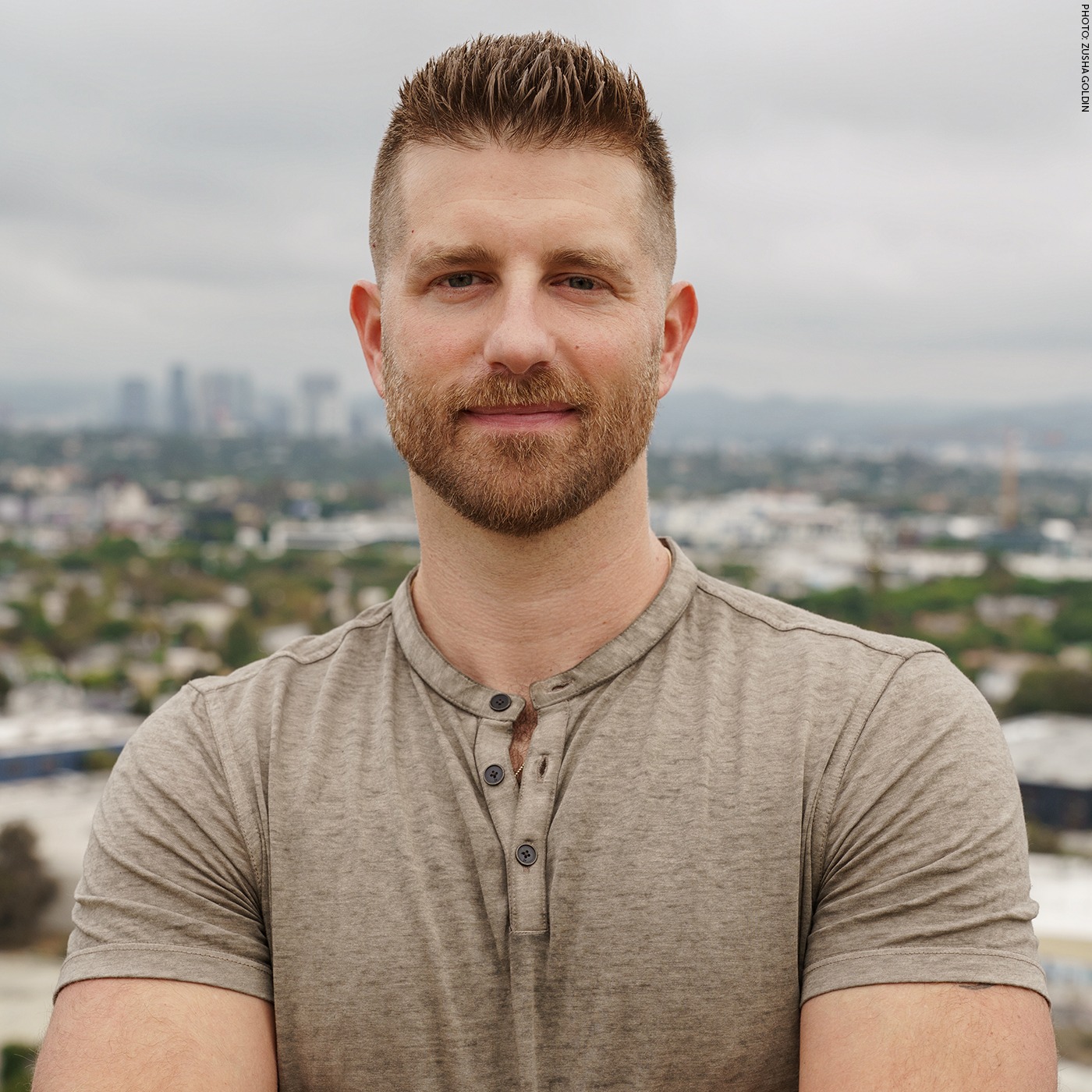
Jonah Platt is one of the most dynamic young Jewish voices in America today. Many of you probably know him as a Broadway trained actor, singer, and writer, part of a creative family that has left its mark on film, television, and theater. But over the last few years, especially since October 7, Jonah has emerged as something more. A tireless, articulate advocate for the Jewish people. His podcast, Being Jewish with Jonah Platt, has become essential listening for thousands of younger Jews and their allies. He speaks to celebrities, thinkers, and creators about Jewish identity, Israel, antisemitism, and the cultural forces molding the next generation. And he's doing something that too few are doing today, giving young Jews the confidence and the pride to stand up for who they are. I asked Jonah to join me to talk about his advocacy, how he reaches young people, and how pop culture is portraying and shaping Jews at this moment in history.
- [01:24]
A
Jonah Plaid, welcome to in these Times.
- [01:27]
C
Thank you. Thank you, Rabbi. Happy to be here.
- [01:29]
A
As I mentioned you before we started, I talked to a number of people who said that where I told that was going to interview you, they were so excited because you're a little bit out of the mode for the people we interview here. They tend to be a little older and less hip and less with it.
- [01:49]
C
That, that's it, man. That's. That's my. My niche.
- [01:53]
A
So I want to ask you about a number of things. First of all, you have this amazing podcast.
- [01:58]
C
Thank you.
- [01:59]
A
Which, like, everywhere I go, I travel around the world a lot, and everywhere I go. Did you hear Jonah Platt's latest podcast? How'd you get into the field in the first place?
- [02:10]
C
Yeah, I. I had been thinking about doing a pod for. Since spring of 2023. I had gone on a trip to Israel through the Tel Aviv Institute, which is Khan Mazig's organization. Shout out to hen. And I met this guy, Ethan Zahn, who some people might remember as being the Jewish winner of Survivor Africa back in the day. And he and I really hit it off in our Israel trip. And we were like, we should do a podcast like something Jewy, something buddy, like young, kind of fun. And we sort of went down that road and tried to make that happen. And it just, it wasn't happening. For whatever reason, we couldn't. We couldn't get that off the ground. And so we put it aside and then October 7th happened. And after a couple of months of me being really more engaged as a Jewish advocate than I've ever been spending all of my time and energy online and in real life talking to people, trying to educate, trying to, you know, meeting with hostage families, putting out fires left and right, all this stuff. I felt like I wanted to get back to this podcast idea. I felt like it's time to get back to my proactive advocacy, not just reacting to what's going on in the world, but back to my main mission, which has always been Jewish empowerment and trying to encourage people to not be afraid as Jews, to lean into their Judaism, to explore it more, to celebrate it. Which, by the way, I happen to think is the best, best answer to the hate that we're seeing today. And a podcast just felt like the natural place to expand on the stuff I was doing online, to be able to really break down stuff that was on my mind that I, I wanted to talk about, that I didn't want to keep doing sort of ad hoc and videos in my, in my office. I wanted to really showcase the diversity of Jewish belonging. I, you know, something I've seen as being one of the key, you know, linchpins to. To anti Jew hate is the fact that most people don't know who or what Jews really are. And so I wanted to create something where I could really showcase all the different ways Jews look and exist and connect and educate both non Jews and Jews about what being Jewish really is and how it is different for all kinds of people. And I want to create a safe space for really notable Jews and allies to. To speak candidly about this stuff and go deep. They just don't have that opportunity. A lot. The, the kinds of guests I try to go for are people who are really notable in their professional fields. And when they're doing, you know, a political interview on CNN or they're at a press junket for a movie release, no one's asking them. So what's it like behind the scenes, you know, since October 7th on your set? You know, and I, I wanted to create that space for those people, and I knew that the audience watching at home would be as interested in those truths as I am.
- [05:09]
A
Well, that's for sure. And maybe it's even more successful than you yourself anticipated, at least at the very beginning. What is it about Jewish empowerment? You said you always were motivated by Jewish empowerment. Is that since you were a child or since you became a young adult, what was it about Judaism? You come from a Jewish family, but also a family that's active in the arts?
- [05:34]
C
Yeah, definitely not since I was a young kid. Was I, you know, I only really became what I would call a Jewish advocate in spring of 2021. That's when I started thinking about this stuff as more than just my own life experience. And as you, as you rightly point out, my own life experience is richly Jewish. The. Through my family, through my day school, through my summer camp, through my cousins, through all the various things I've been involved with in my life.
- [06:02]
A
And your mom, your mom is a Jewish leader, right? And.
- [06:06]
C
Oh, big time. My, my mom is the, the most recent past chairwoman of Jewish Federations of North America, and she's involved in a, a handful of other organizations. Really?
- [06:16]
A
Big time.
- [06:17]
C
Oh, she's big time. I'm sure, I'm sure she's on a zoom right now with some organization. So, yeah, starting in spring of 21 was when I started actually using the platform I'd built through my entertainment career to start talking about Jewish issues and sort of what's just always been, what's felt right to me is to try to encourage Jews to feel not just okay, but loud and proud about being Jewish. I guess I've just always, I've identified that right away as, as, as something we were not getting right and something that was missing. And so with the podcast, it was about getting back to that, getting back to encouraging people, empowering people to take ownership of their Judaism and, and feel confident and feel proud about it. And as I said, I think that, you know, the byproduct of that happens to be, I think, the number one way to push back against anti Jew bigotry and hate.
- [07:10]
A
Is there something in the podcast that you, that guides you in, in selecting guests, or is it just simply, you know, guests that are interesting? I gather that most of them are Jewish, although not necessarily all of them, but they have some kind of Jewish connection. Is that right?
- [07:27]
C
Correct. That's right. So it ends up being something like, I don't know, 70% Jewish, 30% not. But the ones that are not, as you say, all have some connection to the Jewish community. Otherwise we'd have nothing to talk about. And so these are really notable allies. There's a couple of similarities, things I look for when I'm looking for guests. One is I'm, as I mentioned before, I'm really looking for diversity of guests. So I'm trying to make sure that I'm always bringing you different gender, different profession, different geographic location, different background, different level of Jewish observance, just all the different things I can think of. And I have a short form version of my show as well, called 30 Minute Menches. Same show, just a little bit shorter, which has allowed me to showcase even more diverse kinds of Jews, like trans Jews, crypto Jews, Latino Jews. Like, all this different stuff. There's just so many. And I feel like we don't get exposed to all of that. So that's part of it. I'm looking for people who love Jews. You know, mine is not. I'm not trying to be, you know, Piers Morgan and just fight with a bunch of people or whatever. There are shows that do that and they do that well. My show is about celebrating being Jewish. So I want people who are going to come on and want to celebrate Jews and in many different ways, and that means many different things. And then I'm looking also, obviously, for notable guests. I think that's sort of also what's helped distinguish my show is that I'm bringing in a caliber of guests that you might not find on your typical podcast.
- [08:58]
A
That is for sure also true. By the way, do you think you're making a difference? I mean, first of all, do you think that Jews like being Jewish in America? And is your influence in this making a difference to people?
- [09:17]
C
So is it making a difference? I can humbly say yes, and not because I think so or I'm hopeful, but because I get so much amazing feedback that lets me know that it is impactful. I mean, just today I got an email from a young man in New York who is 17 and just achieved the rank of Eagle Scout, something he'd been working towards for a long time. This Jewish teenage Eagle Scout who, you know, his group project was building benches for his Jewish summer camp. And he reached out to me saying, you know, what an influence and, like, source of pride in his Judaism I and my show have been. And would I honor him by sending him something to display in, like, the Eagle Scout hall of Honor when he gets his award. And so, like, that was amazing. I was so thrilled to receive that. That's why I do what I do. And I get stuff like that all the time, from all ages, from young people, old people, everything in between. People who are making changes in their lives or are really feeling more confident because of what they're getting from the show. I got another one. I'll mention this because this was just this week of a woman who had been wanting, had been like, craving a Jewish book club. And she told me that, inspired by your show, I decided I'm just going to make it myself because there isn't one. So now there's a Dallas Moms Jewish Book Club that she started. So, you know, that, you know, makes me feel so great because that, that's why I do it. It truly is to try to just create a ripple effect so that other people are having influence in their lives. That's the, you know, that's the test. If I'm doing my job well, it means other people are making amazing changes.
- [10:57]
A
So going back, I'm really curious about this. I of course deal with, interact with thousands of Jews on a regular basis. The ones who come to synagogue, you know, they're kind of self selecting. They, they want to be there and it's not inexpensive to be affiliated with a synagogue. What is your take on American Jews? Do you think that most of them like being Jewish? They're proud of being Jewish? They are curious about what that means? Or aren't they just on the road to assimilation and it's just a question of where they are?
- [11:36]
C
You know, there's like my anecdotal knowledge who I like, you speak to thousands of Jews. And then there's data that I'm sure we've both seen. I mean, we. The, the most recent data that I saw was something like 40% of Jews in America say they're unaffiliated. And that's sort of the largest single group. I mean, that means 60% are affiliated. So we've still got the majority, but there's a large group that's unaffiliated. I can't necessarily speak for those people, but I do believe that for the most part, most people that I've encountered, even if they were sort of switched off before October 7th and have since been switched on, are proud to be Jewish. A lot of people, there are a lot of barriers to entry, I think for folks like, I don't know how to do it right, so I'm not going to do it at all. Or I'm so new to this and what I mostly hear is the anti Zionist libels. So I'm afraid to be Jewish. It's like being Jewish mean I'm a bad guy or it's, you know, I, I want to lean more into this, but I live in Iowa and there's just like not an easy community for me to jump into. Right now. I, I'm the only Jew for 10 miles around. Um, so there's a lot of barriers. It can be tough. And there's also the fear, you know, the generational inherited fear of. A lot of people want to be proud, but they've got that voice that says, hide Your necklace, hide your mezuzah. You know, keep your head down.
- [13:03]
A
So I think even before the last two years, even before October 7th, I.
- [13:09]
C
Think certainly more so since October 7th. But yes, I think there are, there, there were some people before, but it's definitely gotten worse now. But I think if we can sort of, as a Jewish community and certainly, you know, institutionally and foundationally, like, those are the problems that we need to solve for people. Like, how do we help people who don't have a physical community around them have a community? How do we help people feel like everybody who wants to be Jewish is welcome if they really want to be Jewish? How do we help people to feel brave and confident and secure, both physically and intellectually and spiritually so they can go about the world with self respect, with their heads held high as Jews? If we can sort of check all those boxes, I think the future is very bright.
- [13:55]
A
Well, you kind of addressed my next question, which was you. I saw on your website when you spoke to conferences of rabbis, you probably speak with rabbis from time to time, if not frequently. You're especially talented in reaching younger Jews, which who are the biggest challenge for establishment Jewish organizations. Do you have any advice, like real, real constructive critique and don't pull back anything. Let us know and what can rabbis be doing better?
- [14:32]
C
Yeah, I think a couple things, like, pop into mind. I think that something that young people really crave are it's two things. One is authenticity. So they want to make up their own minds about stuff and they want the full picture. So they don't want the, you know, the cropped out version of a story. They want the whole story and they want the whole context. And they don't mind being, you know, led through it or, you know, being given it by their rabbi as opposed to an imam, but they want the whole story. And even more important is giving them space to talk. I can't tell you how many sort of events that I have been to for my peers and above and below where what really the event should be is the debrief after the event. Like what people really want to do. I think now more than ever, as we are siloed by social media, living our life in our phones, as a lot of our environments feel hostile and unsafe. Like we are just looking for safe spaces to be vulnerable and honest and connect with each other and ask questions and not get in trouble and not get canceled and, and, and just speak our minds in a safe place. You know, people want to talk about how they're feeling. There's a lot of feelings happening right now and people are thinking so much stuff. We're all carrying a lot and just having the ability to talk about it I think is huge. So giving young people an opportunity, like here's the room, here's the mic. What do you guys want to talk about? Let's talk it out. Let's ask the questions, let's answer them. Let's like you guide the program or if you're going to do a program for them, half the program should be talking about the program and what they thought and felt about it.
- [16:25]
A
So you're I, I, you're still a millennial. You're a young millennial. You speak a lot and influence Gen Z as well. Were you try to, you do for sure. Were you surprised at some of the reaction of some young Gen Z's or young millennials to October 7th and to the last couple of years?
- [16:53]
C
Yes, of course. I think anybody who would say that they weren't surprised is lying. I mean there's not a person I've spoken to who wasn't shocked by how quickly and definitively, you know, this, the worst massacre against the Jews since the Holocaust flipped into a blame the Jews narrative. I mean, literally the same day you had College students on October 7th in America on that Saturday already gathering in protest against Israel. So it's, yes, absolutely been shocking. It's been shocking to see just how effective that propaganda campaign and that deep seated academic campaign of the past couple decades has been. I mean, hats off to the anti Israel Muslim world who's been pulling those strings because they did an incredible job. You know, Wikipedia has been ideologically captured, a lot of our universities have been captured, a lot of social media has been captured. And it's, you know, these propaganda pipelines that it's, in a way it's hard to blame the young people for. You know, it's just what they were taught and what they've been showed and what has been handed to them and they've been duped and they, they, they've only known Israel in one way, which is an Israel at war with Gaza. That's under this intense propaganda campaign. They don't have the, the memories we all have of all the other various moments in Israel's history when it was, you know, the David in the David and the Goliath story, even though now it's portrayed narratively as the Goliath picking on the David. But older folks, we don't have that confusion because we know where Israel came from. We know the whole story. And a lot of kids don't. They just know what they're taught and what they're shown and they get this little, this little keyhole view into the actual situation. So it's really tough. It's tricky. I think really the only way to kind of break through that is sort of like, you know, exposure therapy. I mean, if we could make every young person in America watch the Hamas footage, watch the We Will Dance Again documentary about the Nova massacre, that to me would be the easiest start at scale. Is that because there are just so many people who don't even know what we're talking about here. They really don't. They only know what they've seen on social media. And for whatever reason, which I've talked about a lot of my show really bugs me. You know, Israel has done a horrible job of putting this footage in front of people and, and letting it flood young people's screens that just, it's the opposite. And so they only have the images of the other stuff in their mind and. Which is horrible. And so they're naturally being pulled to sympathize with all the people they're seeing be hurt on the other side of the conflict, which again, it's sort of, it's kind of hard to blame them when they don't have the rest of the knowledge and the context. They're just seeing children getting killed on their phones and they go, that's horrible. Whatever, whatever, whatever you're telling me is responsible for that. That's got to stop immediately. And that's the whole story for them.
- [20:06]
A
Do you apply that to young Jews as well? And were you surprised at the numbers of young Jews who joined the anti Israel crowd?
- [20:16]
C
I am surprised at the number of young Jews and sort of really, I guess, you know, well educated, non Jew, like left leftist folks of that same age group who have so readily accepted the propaganda without doing the critical thinking and are so locked in confirmation bias that at this point, like facts really don't mean anything. I mean, I've had these kinds of conversations where I'm talking and it's sort of just, it's not getting in. It's like Israel has no benefit of the doubt and Jews have no benefit of the doubt anymore for a lot of these people. So it's sort of like, are you, am I going to take Jonah's word? Even though I've known Jonah for 30 years and he's been right about like everything else we've ever talked about and we're completely aligned on everything ever. And I know him to be a really thoughtful person. But in this case, I'm going to go with what, you know, social media and my other friends are saying because that feels right and that's the situation a lot of people are in. Um, and that's surprising. I'm surprised that, you know, I'm having conversations with people and they're like, but do you support genociding children? And I have to, like, I have to answer that question, which is painful. Like, I can't believe I'm being asked, do. Would I be in support of murdering innocent people? Because if I support Israel, I mean, I must be in support of that. And that's crazy. That's crazy that that's where we are. But it is where we are, and it's not great, but we can get through it.
- [21:51]
A
I think many of the younger Jews and older Jews, they recognize anti Semitism in the classic way when they see it, you know, swastika or bursting into synagogue and shooting up worshipers and that kind of thing. I'm not sure they see the connection between anti Zionism and anti Semitism, although they do care about anti Semitism.
- [22:18]
C
Right.
- [22:18]
A
So how do. And a lot of the non Jewish, a lot of their non Jewish peers feel the same way. And they recog. They can recognize that kind of classic anti Semitism. Those who are liberal or left leaning, they tend to ascribe that, you know, to the right and only to the right. And they deny that there's a problem on the left at all. But people do care about antisemitism. What do you advise us? What can we do to clarify that there's a connection between anti Zionism and anti Semitism in America?
- [22:54]
C
This is like the question and you hit it right on the head. I mean, we've been having this issue with the left for a while. I mean, my mind immediately goes to the book Jews Don't Count by David Baddiel, the, the British comic and author I had on my show.
- [23:09]
A
Like, I had him on my show too. I, if I had, I would have compared notes.
- [23:15]
C
So, I mean, he was already sort of talking about the ways in which leftist antisemitism is harder to spot and easier to sort of dismiss, and anti Zionism sort of falls in the same camp. The core issue is that because it's so pervasive and so ubiquitous, these, these libels, the, the buzzwords we hear all the time, the genocide, colonizer, apartheid, because they're so pervasive, said by so many people, there's now all this, you know, BS Academia. To back it up, you could read a hundred books about how Israel's settler colonists, even though they could all be wrong, but they exist. So it feels like they're legitimate. And we as a Jewish community and as a, you know, critically thinking non Jewish community, do not take a strong enough stance against that stuff. We sort of allow it to linger as maybe there is some sort of legitimacy to it or it's something that we need to sort of explain away and defend against. It's just a libel. I mean, these are lies are built on falsehoods meant to demonize Jews. And if you're using those, what, whatever your intention is, maybe your intention is I, you think you're doing something good, but it's bad. And that, that's also a way that anti Semitism has always worked, which is it. It works under the guise of loving somebody else. That sort of allows you to hate the Jews. You know, we love our own German race and the Jews, therefore we have to hate the Jews who are defiling it's. And we love the Palestinians, therefore we have to hate the Jews who are oppressing them. So that. But that's how it works. And we have to be able to, you know, show people and talk about that, be like, this is the pattern. This is how it always happens. It's no different now than it was then or any other time before it. And these, these libels, they're the same as every other libel. It's the same as Jews eat the blood of Christian children. Which sounds ridiculous to us now, but boy did people believe it back then. And it was widespread and there were plausible, quote unquote, you know, reasons why it might be true. And people just happily took it up and went with it. And it's the same thing now. And we have to get people to see that and especially Jews and young Jews to feel confident. Like, even if the lesson is just those three terms, proving and showing to the Jewish kids once and for all, this is a libel. Here's why it's false. This is a libel. Here's why it's false. This is a libel. Here's why it's false. Now go into the world knowing you don't have to explain and defend those. You can just call them libels and tell these folks they're being anti Jewish right now by spreading demonizing lies, not based in fact, about Jewish people.
- [26:15]
A
Want to talk to you about Hollywood. You're still well connected in Hollywood and through your family as well.
- [26:22]
B
Before I talk to you about Hollywood.
- [26:24]
A
And the Juice, just about Hollywood and the film industry and the entertainment industry. What do you think? Is, are we, is it. Is it in a good place?
- [26:33]
C
Oh, gosh, the, the industry widely. I mean, it's, it's in a state of flux. I mean, we are seeing unbelievable change. And I mean, this is across all industries right now. With, with the explosion of a. It's sort of all bets are off for the foreseeable future. We don't know what's going to take and what isn't and where it's going to go. Add to that, you know, the consolidation of media companies and the way the market has changed. I mean, to make a big, giant, splashy film, you basically need platinum IP or it's not going to happen. Here's an interesting thing. I was just thinking about this this week. So Stranger Things just debuted their new season. Stranger Things, I think by viewership is. Is like the most watched show ever. It's certainly Netflix's most watched ever. I mean, just hundreds of millions of views of the show. And I didn't feel it was urgent to watch it anymore because, like, there's no more water cooler to talk around because we're all remote and all doing our own thing and everybody's watching 30 different shows. So even if there was a water cooler, who knows what anyone would be watching? We can't get together around it, really. And, and so, like, I didn't feel like I had to hurry and watch it this week because who. I don't know. I might not even talk about it with anybody. So that's a weird thing, you know, that's new. That's not good for, for entertainment, that, that, that that's taking place. So it, it's all, it's all changing. It's harder in Hollywood for, for folks to get jobs and, and for those jobs to be paying well. As things consolidate, production decreases. So there's still, obviously, people always want to be entertained and there's still plenty of money to be made and amazing content to be consumed, but it's. The landscape is changing constantly and it's just sort of really hard to know where it's going to go from here.
- [28:22]
A
Do you think there's some truth to this contention of some people that within, say, a decade or two, movies will be a thing of the past? People won't go to movie theaters?
- [28:36]
C
No, I mean, I think, as I said, like, we're seeing this year the big tent pole ip. They do huge business. I mean, you know, family shout out Wicked for good. Huge, huge box office. Success making, you know, making all their money back and then some, many times over. People were starving to see that movie. The audience score was an A. The critics were across the board like. And it's an IP that people love and were and were jonesing for. That's, that's the ticket. Unfortunately, you're going to keep seeing, you know, the movie business seems like it's just going to be the franchises and the IPs. It's going to be, do I have a great book, do I have a great character that people already know, am I doing a sequel, et cetera, et cetera. I mean, it's already mostly gone that way. And certain movies that are really awesome can break out. I know this year Sinners and Weapons were two smaller movies that both did really well, but they're not going to make, you know, they can't make Wicked money and Jurassic park money and Harry Potter money. They can make great money for their size, but those are never going to be like super duper billion dollar blockbusters. That's going to be reserved just for the key ip. I don't see why that would change. People still love stories and they love the characters they love and the stories they love. And you know, parents still need something to do with their kids as long as they're making kids movies. Thanksgiving weekend I'm taking my kids to the movies Thanksgiving weekend. I mean, you know, they're off Wednesday to Sunday. We got to go to the movies one of those days. We need something to do. So like we all just saw Zootopia 2. The theater was packed. We loved Zootopia 1. That was a, it was a no brainer. So I, I don't think that sort of model is going away.
- [30:19]
A
I'd like to ask you about Hollywood and the Jews first of all, before October 7th, if you can kind of put your mind on that segment. Is it fair to say that Hollywood has always had a thing for the Jews? Both kind of a love affair, but also a sort of a system of bias and prejudgment about Jews and Jewish actors. And what, what do you think is, is Hollywood treated us well? And I'm saying up to say, October 7th.
- [30:54]
C
This was something I was actually talking about before October 7th. I mean, I even wrote an article for Variety about it. And they were doing, you know, anti Semitism and sort of Jews and media summits before October 7th. The, the Hollywood industry, as most of us know, was founded for the most part by Jews, Eastern European immigrants coming to America who were, you know, merchants and Tradesmen. And the only industry they could were allowed into was the movie industry, which was entertainment for the poor, unwashed masses. And, you know, was. Was looked down upon. Vaudeville theaters, which grew into movie theaters. And they, from the get go, hid their Jewishness. And they did so in a way that is understandable to me in the early 20th century, not understandable to me in the early 21st century. But in the early 20th century, they want to be embraced by their new country. They want to be taken seriously. They want. They want to be Americana. And so they change their names. They go from, you know, Shmuel Goldfish to Samuel Goldwyn, et cetera, et cetera. And they make what we now know as sort of classic American pop culture films with that Hollywood morality and sensibility. That's really a lot of Jewish values and Jewish sensibility in that storytelling, but. But never under the guise of being Jewish characters. And the stories, you know, all the great Christmas songs and movies are all written by Jews. And I get it then. And we're all. We just want to be successful and contribute and be American. And that's fantastic. That's like a classic sort of immigrant story that I totally understand. The problem is, we didn't let go of that when it was no longer necessary. And it's sort of this inherited feeling of apologize for your Jewishness. And it's sort of flipped to, well, now that Hollywood is successful and Jews are running it, and everybody says these elders of the Protocols of Zion tropes about us, that we control the media, we control the money, we control whatever. We better keep our heads down, pretend we aren't successful, distance ourselves, apologize for ourselves. And maybe they won't hate us. And of course they hate us anyway. They say those things whether we're in charge or not. So we might as well celebrate being in charge and use it to our advantage. And, and, and what I've seen is for sure, pre October 7th, is the Jews in Hollywood treating Jews differently than they would treat other minority groups. Sort of overcompensating and, like, where it would be totally not only cool, but encouraged, let's say, for a black director to lift up a black crew and black actors and tell a black story and celebrate black culture. For the Jews, it's almost the opposite. It's like, whoa, whoa, whoa, we better not. We better not do that. Because then they're going to say stuff about us and it's going to look like we're controlling. And it's, et cetera, et cetera, just so much worry about what other people think to the detriment of Jewish storytelling and Jewish representation.
- [34:02]
A
You mean the, the people behind the cameras, right? The people making.
- [34:07]
C
I mean, I mean the studio executives and the agents and the, even the screenwriters.
- [34:11]
A
Everybody's kind of self censoring or was in your, in your mind, is that what you mean?
- [34:17]
C
I'm trying to think of screenwriters probably less so. I mean, screenwriters are, for the most part, you know, true creatives. And I can imagine that there have been times where they've written Jewish characters or Jewish stories in. A studio executive has said, now we got to change that one, or have tried to tell Jewish stories and can't get them greenlit or whatever it is.
- [34:37]
A
It's just like George Costanza was supposedly too Jewish, so they made him Italian or something like that.
- [34:44]
C
Yeah, Greek. That's, that's the, that's the apocryphal story. Yes, stuff like that. And so, you know, the actors in some ways are complicit. In some ways they're not, right? I mean, when they change their name, they, they're saying, hey, I want a better stage name. I want something more Hollywoody. But a lot of times it is more Hollywoody. I mean, like, you know, Jimmy Green is just like, not as great of a name as, you know, whatever, like Rock Hudson, you know. So, you know, there is some, there's some fairness there again, so it's like, and, and I know that a lot of Jewish actors would love to be playing Jewish roles and are, are, are excited at the opportunity. And I can certainly speak to that from my own experience. I love when I've gotten to play Jews. It's like, it feels great. So it is a systemic issue. I think October 7th woke up a lot of people, a lot of Jews in Hollywood behind the scenes, who are like, whoa, we have been, we have been. We have abdicated our agency here. Like, we've been letting other people call our shots. And now when, you know, the, the chips have the shits hit the fan and we are not in the position we thought we were in, and we're not creating the kind of content we thought we needed to be creating. And people in power are not using that power for the protection or benefit of the Jewish people. In fact, often the opposite. So I've been encouraged by the, the awakening that I've seen from a lot of agents, managers, publicists, producers, directors. There is definitely a renewed and invigorated attention on this issue. But, you know, there's some work to do because we sort of just, you know, let other people into the driver's seat of the industry that the Jews started, which is sort of a, an issue for Jews writ large, right? Like we get blocked from something so we start our own thing. It becomes awesome. We open it up to everybody because that's what we do. And, but eventually we sort of get, you know, washed out of our own thing that we started and kicked out. Before we know it, it's turned and we have to start our own thing somewhere else. So I don't, I don't have the solution to that. And I'm, and I hear about it from so many industries, feeling that right now it's not just Hollywood, it's, it's finance, it's law, it's medicine. I mean, it's all these different things. And I don't know, I don't have that answer of how we, it's sort of like the Israel question a little bit. It's like, how do we maintain Jewish sovereignty and self determination while also being democratic and welcoming to all? And you know, it's a tricky, it's a tricky puzzle.
- [37:35]
A
But I mean, you're leaving room for a lot of room for nuance. Like for example, I saw Helen Mirren and Golda Meir. Did you see that?
- [37:44]
C
I've spoken about that one specifically. So yeah, that one doesn't bother me at all. So for me, when it comes to actor representation, I take it on a case by case basis. I think in general, obviously right now the proportion is definitely off. I mean, the, the number of Jews playing major Jewish roles is magnitudes less than non Jews playing Jewish roles. But in certain circumstances, like Helen Mirin as Golda, to me that one makes perfect sense. And, and, and I'll say why? Number one, she had the full buy in of Golda's family and the movie was written and directed by Israelis. So like the, you know, the, the, the captain of the ship was a Jewish Israeli. She'd also spent time like on a kibbutz I read in the 70s, like had been to Israel, knew it. This was not her just sort of waking up and saying, yeah, I'll play that Israeli lady. And it's a very specific role. And to get that kind of a movie made, which is so worthwhile in the end to have a, you know, an amazing humanizing biopic about Golda, it required a level of performer and there just aren't that many Oscar winning women of a certain age who can play that role. It's probably a list of, I don't know five people and one of them is Helen Mirren and she gets that movie made and does it really well. So to me, like that totally get it, totally support it. Totally makes sense to me. An opposite one would be, for example, the national tour of the musical Funny Girl, which was out about a year ago. There could be a million Jewish actresses who could have played that part. I know many of them personally. I mean, every Jewish actress on Broadway wanted to play that role. And it's an iconic, historically Jewish real life person. And they cast a non Jew in it to take it to theaters across America. To me, that's an egregious, like unforced error. Like, that's such an easy one to get the right representation. There's to be the representative of Jewish, you know, Yiddishkeit to all these American cities for a tour that like, it doesn't need to be an Oscar winning celebrity, it just needs to be a quality actress. That one bothers me. That to me feels like clearly we're not being taken seriously as a ethnic minority that needs representation.
- [40:14]
A
Why do you think that is? Is that just people relate to Jews differently. If it was connected with the African American experience, it would never enter anybody's mind that the main star wouldn't be African American. What's going on? What do you think?
- [40:27]
C
It's the Jews don't count thing. It's the misunderstanding of who and what Jews are. It's the conflating of Jews with, oh, they're rich and white, so they're fine, they're not in any trouble, they're not dealing with anything. And they don't count as a minority because they're white. And I think a lot of people genuinely have that understanding and that's what they think Jews are. Even though, of course, as we all know, the majority of the world's Jews aren't even white presenting, let alone actually white. But, you know, that's sort of where we are. And I always do this. My wife hates when I do this. But I always play the other side also. Like, so the other side is. Yes, like 80% of Jews in America are of Ashkenazi descent. So in general, American Jews are mostly white, presenting as a, as a, you know, group. But again, that doesn't really explain away like your, your ignorance to who and what Jews are. It just, it gives us another little barrier to reaching that understanding.
- [41:34]
A
But I mean, I think that's a really important observation. They don't really see us as a minority. And honestly, before October 7th, many of us didn't really live our lives as a minority.
- [41:47]
C
Yeah, I think that's fair too. I think it really awakened people to the reality of us being a minority population in a majority non Jewish country or countries around the west in a way that we haven't had to feel in America for a long time.
- [42:05]
A
I want to get to post October 7th in Hollywood, but just beforehand, I've been dying to ask you this question. Have you seen the Netflix series Nobody Wants this?
- [42:14]
C
Yes. So I've watched all of season one and I'm, I'm about halfway through season two, so I can't weigh in yet on all of season two.
- [42:21]
A
From what you've seen, would what are your impressions help us to understand whether that's a good show? Is that, is that good for the Jews?
- [42:30]
C
Yes. So I spoke about this on my podcast. Actually, one of my first episodes I had Jackie Tone, who's the actress that plays the, the sister in law.
- [42:38]
A
Yeah, she's good.
- [42:39]
C
The brunette.
- [42:40]
A
Yeah, I like her.
- [42:41]
C
Yeah, she's lovely. And she's like super Jewish in, in real life, speaks Yiddish because her mom spoke Yiddish in the house. And I loved season one and I thought it was great for Jews. I, I love that there is a hit comedy on Netflix with a giant movie star and Kristen Bell where people are learning what havdala is and going to a Jewish sleepaway camp and seeing a blonde female rabbi who's wise and, you know, lighting Shabbat candles. Like, so much good that even though there were detractors and they didn't get everything perfect because no TV show does. Well, maybe some do. I mean, like, Mad Men's pretty perfect, but, you know, representation wise, hard to get it perfect. And I thought they did an awesome job and that by far the good outweighed any possible bad. And like, what we really need today in Hollywood, I think is contemporary humanizing Jewish narratives that are entertaining because of the story they're telling and the characters happen to be Jews, which is exactly what this is like to me. This is right on the money of what I want us to be producing. Season two. What I've seen thus far has been less that, although there has still been some. So, like, I just watched one where they go to a baby naming and so, like, that was great. Like, I love that we're seeing a baby naming and they make fun of it. Not in a where the Jewish part's the butt of the joke. It's like the woman who names her kid afternoon is the butt of the joke because she's like an influencer but it's not like we're not make. They didn't make fun of the cultural practice at all. In fact, they make the naming look really beautiful. And you see the rabbi sort of trying to search for meaning from the names so he can actually elevate that. That ceremony for that family. And that's incredible. I just, like, tell me another TV show where you watched a female child's baby naming. So again, when. When people want to go, oh, the. The depictions of the women are so terrible. It's so bad for Jews. I hear that. First of all, you know, I saw Tova Feldshaw the other day, who plays the mom who people give the most flak about. Like, she's loving it. She's good with it.
- [44:49]
A
She's.
- [44:49]
C
Tova felt, you know, listen, my mother.
- [44:52]
A
Never acted that way, but of course.
- [44:55]
C
But look, I mean, what. I'll say two things about that part. One is there has to be an obstacle, right? The show is called Nobody Wants this. Not called Everybody Wants this. Otherwise it'd be over in one episode. So. And as is typical in every story where you have one family from one culture and another family from another, the parents are the obstacle to the two people getting together. It's just literally like, find me a story where that's not the case, truly. And so they have to be a little bit, you know, exaggerated in the villainy part because they have to be the obstacle. There has to be something keeping these people apart. I think it's got. I actually think she was better in season two, her character, where it's more like, it's not Jewish tropey, it's storytelling trophy, where, like, I'm just the, you know, the overbearing mom and not. So it's not because I'm Jewish. It's because, like, I'm this overbearing mom character. Like, she could be that character whether she was Jewish or not. It could just be, oh, she's an immigrant. And, like, I go by the old ways. And you're going to stick with the old. I mean, it's such a common thing that. And I think the only people who really read that deeply into that are Jews. I mean, I really don't think I'd be interesting. They should do a study. Like, what do non Jews take away? I think generally what they'll take away is, you know, how much this family cares about each other. The fact that they're having Shabbat dinner together every Friday night. Like, Kristen Bell's character is like, wow, you guys do this Every Friday night together. Like, people love that and admire that about Jews, like how, how tight we are. I know a lot of the times we think people want to use that against us, but most people are really impressed and aspirational towards that. Like, that's a beautiful thing. So, you know, it's all a long winded way of saying, I understand that there are issues where I think season two is less successful is just in the storytelling. I just, I'm, so far, I'm not as interested in the, the narrative now. Like, things are mostly going well for them. So I'm like, all right, okay. Like, what's. When is something going to happen here? So we'll see. But the baby naming, really, I really enjoyed that episode and I really, I thought that was terrific.
- [47:09]
A
Post October 7th in Hollywood and in the entertainment industry. What's changed in your view and what are the dimensions of the hostility to Israel?
- [47:19]
C
I think, you know, the biggest and most important change truly is the way that the Jews of Hollywood, who are engaged Jews, have been switched on since October 7th. Like, I know many people of great influence and, you know, who have worked really hard and built amazing careers who now want to use their position to help tell Jewish stories and to push back against anti Jewish libels within the industry. So I think people should really feel encouraged by that and know that, like, there are major entities trying to tell Jewish stories.
- [48:00]
A
Has that come to fruition yet? I mean, can you point to a couple of examples?
- [48:04]
C
I mean, here's, here's a great example is There are currently two different October 7th fictionalized drama series on streaming platforms. One on HBO Max, one on Paramount plus and, you know, for all the talk of, you know, nobody in Hollywood wants to touch Israel with a ten foot pole. We got two October 7th stories told. I mean, that to me is a big deal. And those things happened because there are enough people at each of these levels, at the studio level, at the producer level, at the director level, who are engaged and want to push forward Jewish narratives. And certainly from the behind the scenes, definitely in the indie world, there are a lot of people who want to help put their dollars towards getting Jewish stories told. So I think, I hope I'm right. But I think within the next two to five years, you're gonna see a lot of Jewish content stories where the characters are Jewish and some of it will still be Holocaust documentaries, which are always great and interesting and, you know, we need them, but we've got a lot of them. And what I think we need and am interested in seeing and think we'll start seeing more of his contemporary humanizing Jewish narratives.
- [49:25]
A
How deep is the hostility to Israel? We read that there's some movement to boycott Israeli producers, directors, actors, so on and so forth. I know Gal Gadot, for example, has had a. Somewhat of a difficult time. I think you, along with some 1200 other Hollywood activists, signed a petition against boycotting the Israeli film industry. Where does all that stand? We're reading about it from afar and we're not inside. Is it more than, than what it seems or less than what it seems because we're interested in.
- [50:02]
C
Exactly. It's, it's less than what it seems. Right. I mean, it's definitely an issue. And, but the, the bigger issue is sort of what the, the bigger issue is with the, the, the society writ large, which is just a lack of understanding. And there are a lot more people in the middle than there are loudly saying anti Israel this, anti Jewish that, anti Israel that. So a lot more people who like, like Jews and work with Jews and know Jews and, and think well that, you know, at, at, at, at worst, I'm certainly not going to say anything and, and at best, like, this doesn't seem right. I just don't know enough. You know, I, I'm, I need more education on this. Look, some people, as we see in society, like, don't think about this at all. You know, this is not really a thing on some people's radar, or if it is, it's, you know, number 20. The same way that like the Ukraine war is like number 21 on their list of things they're thinking about on their day. There are some people who are, and we know Hollywood is as left an industry as you can get, you know, that the super lefty don't know any better. Leftists have these, you know, virulently anti Israel, anti Jew viewpoints. But, you know, there are hundreds of thousands of actors and like a thousand of them sign that letter, right? And several of them very likely signed it because a friend, whether another actor or director, whatever, called them and said, hey, I really need your name on this thing. Can you have a support with this? This is a letter to support poor civilians of Palestine who are getting killed. Okay, great. That sounds great. Yeah, put my name on that. You know, there's a lot of that, A lot, a lot of these actors, again, they're actors and we sort of, we mistake their, you know, presence in our lives as being somehow commensurate with their ability to weigh in on public issues. It's just, it's a totally unfair expectation, first of all. But, and so I don't expect I'm picking a random person. Like, I don't think Keanu Reeves should know everything there is to know about the Israel Palestine conflict. He's busy. He's in a play on Broadway. He's doing movies like, go be an actor. Go do your thing. I don't need you doing anything else. And so I think a lot of people are just in that boat, like, they're just working and they're doing and they're friends with who they're friends with. And this is a bigger thing than they care to be involved in. And there's a lot of conversations that need to be had around the really loud anti ones. And I'd say the biggest obstacle, the biggest issue that I still think needs fixing inside Hollywood is the educational piece. Like in 2020, after George Floyd's murder, there was all kinds of mandatory educational programs and seminars and this and that, that, that the agencies and the studios and like everybody had to take very seriously and take on as they should. But now that the, the Jews are under duress, you're not seeing that same urgency. You're not seeing that mandated training, that mandated education where the, the higher ups are saying, we're getting this wrong. I need my employees to understand what the issues are. We're not seeing that. And I think if we were able to somehow, you know, go top down in that way, get all the heads to mandate some kind of education, things could look a lot different.
- [53:35]
A
My last question to you is, do you have a message to the young Jews of America?
- [53:42]
C
Yeah, my message is, is sort of the same as it always is, which is to be loud and proud and celebrate what you love about being Jewish and, and to make a difference. Everybody has the ability to change something somehow in some way, using their passion and their skill set in their sphere of influence. You don't need to change your entire career and start a podcast to make a difference. It can be just like I described earlier in this conversation. I don't see a Jewish book club. I'm going to start one. It can be there's not a ton of Jewish Eagle Scouts. When I become an Eagle Scout, I'm going to make sure, you know, people know that I'm a Jewish one. And I'm going to make my project bettering my Jewish sleepaway camp. It can be I'm going to throw a fundraiser for some organization. It can be I'm going to go to a school board meeting when they're talking about some sort of anti Jewish ethnic studies program. I'm going to raise my hand and vote against it and just show up that night. Like there are so many different ways we can make a difference in our small spheres of influence. Whether that's your own family, your community, where you work, whatever. It all counts and it all matters right now. And everybody should feel that responsibility right now. As a Jew, to be a Jewish leader in some way that makes sense for you.
- [55:03]
A
One, Amen to that. And two, this has been fascinating. Thank you for taking the time. Keep up the great work. You're making a big, big difference in the world in general, in our country and within the American Jewish community. So may you go from strength to strength.
- [55:23]
C
Thank you, Rabbi. It's been a real pleasure. Thank you.
- [55:34]
B
We need people in America like Jonah Platt. People who are brave, people who are articulate and can speak honestly with younger Americans. And we need people like Jonah Platt in the Jewish community. People who speak directly to younger Jews who offer a positive Jewish role model. To all of our younger listeners and to the parents of young Jews. I want to say this as clearly as I can. Don't be like your anti Zionist acquaintances. Be like Jonah. One of the lessons I drew personally after the October 7 attacks is that we rabbis did not speak clearly enough to Gen Z and young millennial Jews. We did not convey well enough Judaism's central values. I understand why. We thought that if we spoke too strongly against troubling ideas, we might distance young Jews from Judaism. We wanted them to know that we care about them and do not wish to alienate them. While of course I agree with that sentiment, I do not cancel people, especially Jews, especially young Jews. I speak with anyone who wants to speak with me. Still, the last two years have convinced me that we didn't speak strongly enough. We ceded the most central values of Jewish identity to the fringes. So to all the young Jews listening and watching, Jonah Platt fans, and especially to their parents and Gen Alpha just emerging, do not follow anti Zionist Jews off the Jewish cliff. They represent a distortion and deviation from core Jewish values. Judaism teaches justice, righteousness, virtue, honor, rectitude, honesty and decency for all people. We are proud when younger generations of Jews are active in these values. And if these ideals lead you to be critics of Israel or the Jewish community, so be it. Welcome to the club.
- [57:39]
A
Every Jew is a critic.
- [57:41]
B
But never turn your backs on our people. Tikkun olam. Social repair does not mean joining anti Israel demonstrations or giving support to our enemies. Do not allow others outside or within, to strip you from all Jewish solidarity, empathy, responsibility and mutuality. Find ways to connect with your people in America, around the world, and especially in Israel. Everything Jewish starts with Jewish peoplehood. Jewish universalism absent Jewish peoplehood is not Jewish universalism, it's just universalism. Build up your Jewish literacy. Study its teaching, not from our opponents, but from those who have absorbed our people's values over thousands of years. Judaism never sought to be cool, to be in the in crowd. What was always cool about Judaism is that it was uncool. Build up your Jewish resilience. Jewish survival is a moral imperative. You have a moral obligation to keep the Jewish people alive and to pass it on to the next generation as we receive Judaism from our parents. Until next time. This is in these times.