Loading summary
Transcript88 lines
- [00:02]
Rabbi Ami Hirsch
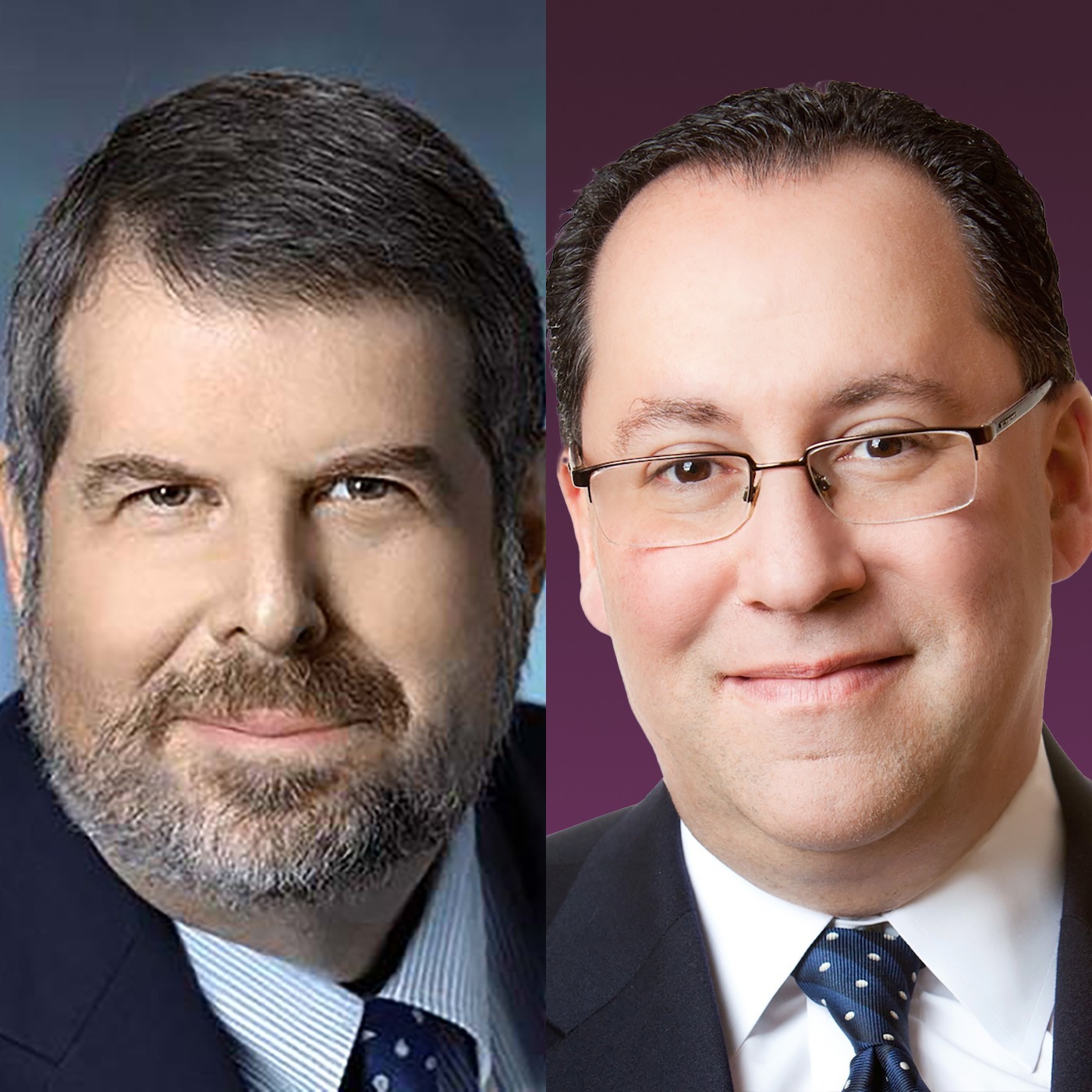
I'm Rabbi Ami Hirsch of the Stephen Wise Free Synagogue in New York, and you're listening to in these Times. Donald Trump has been elected President of the United States. Again, for better or for worse, this is the outcome America wanted. His victory was clear, convincing, and comprehensive in both the Electoral College and apparently the popular vote. To help explain where we are, how we got here, and what we should be looking for in years to come, I have invited two veteran political strategists. Matt Brooks, the chief executive officer of both the Republican Jewish Coalition and the Jewish Policy center, and Mark Melman, President of the Democratic Majority for Israel and CEO of the Melman Group, which has been cited as the country's most accurate campaign polling fir. Matt and Mark, you are two of the best people in the country. Now to help us begin to make sense of it all, welcome to in these Times.
- [01:10]
Matt Brooks
It's great to be with you.
- [01:11]
Mark Melman
Rabbi, let me ask. Well, let me ask you, Matt, first. How are you feeling? What are your friends saying to you?
- [01:20]
Matt Brooks
Well, Rabbi, I could tell you, having done this for 35 years and having won races and lost races, winning is a lot more fun than losing. So, yeah, pleased with the results, I think. It was obviously historic election for many different reasons, but we're particularly pleased with the strong showing that we saw for President Trump and for our Republican House and Senate candidates down ballot with Jewish voters. There were a lot of issues that came into play in this election which I think impacted the Jewish vote and the support that we got. And I think that we have a lot to talk about about what that means for the future and where we go from here.
- [01:58]
Mark Melman
And Mark, let me ask you the same question. How are you doing? Did anything take you by surprise?
- [02:04]
Well, I'm feeling less good than Matt is. There's no question about that. Look, Democrats had every reason to be shocked at these election outcomes, but nobody had an excuse for being surprised. Analysts, myself, many others were saying this was a 50, 50 election at a 5050 chance of going either way. And that's exactly what happened. Any Democrat that woke up on Tuesday morning and was more hopeful than frightened doesn't understand what a 5050 odds mean or at least hadn't internalized the concept. So this was an election that could have gone either way. In fact, it's a pretty close election by historical standards, and it went the wrong way from my point of view, that's for sure.
- [02:46]
You're a pollster, Mark. Among other things, that's what you do for a living. You're an expert on that. Were the polls accurate because, you know, it was supposed to be on a razor's edge. I suppose that you could say that the election was quite close, even though all the swing states broke in one way, but they were still fairly close. Is that right? Or were the polls just completely off again?
- [03:12]
No, no, the polls are really quite on target. I mean, if you look at the average, you can cherry pick any poll and make a mistake by doing so. But if you look at the average of the polls, you'll see that, you know, in some places, Harris was ahead by 0.8% and Trump won by 0.4% or 0.6% or 0.8%. That's a swing, a difference of less than 2 points. That's the margin of error of any poll. So the reality is, I think the polls were quite right. What people don't understand about 50, 50 odds on the one hand and how elections tend to work on the other is that these swing states tend to go in the same direction. And the truth is undecideds tend to go in the same direction at the end of the race. It's not an even split, doesn't mean there's going to be an even split in these states. It means that there's 50, 50 odds of them sort of going one way or another. There's much higher odds of them all going in the same direction.
- [04:02]
Matt, why did Trump win, in your view? What were the big issues that drove that?
- [04:07]
Matt Brooks
Well, I think, you know, there's going to be plenty of opportunity for a real sort of autopsy. But I think, you know, fundamentally, the American people have rejected the progressive woke message of the left at the end of the day, to quote James Carville, it's the economy, stupid. It's usually the fundamentals that drive elections. And as much as the Democrats wanted to talk, and I think they made a miscalculation by trying to make this a personal election about Donald Trump as a threat to democracy, as the modern day Hitler as a fascist. That was their closing argument. At the same time, people are going in the grocery store and paying $7 for butter and not able to pay their bills. And, you know, the Democratic messaging didn't reflect the real angst and the real concern that people had about the economy, about the threats from our border and fentanyl and the drugs that are coming across as well as, you know, the core issues that people sit around and talk about at the dinner table. And I think they fundamentally misplayed their hand by kowtowing far too much. And I know this is something that Mark deals with on a regular basis to the progressive left wing of the democr Democratic Party. That positioned them way out of touch with the mainstream of America. And I think it's an incredibly telling statistic for your listeners who don't know this. There is not one single county in the entire United States in which Kamala Harris outperformed Joe Biden in 2020. And we made huge inroads in non traditional constituency groups, not just the Jewish community, but union voters and Asians and Latinos and African Americans all across the board. We outperform where Joe Biden was in 2020. And I think it's a lot to do with the messaging and how out of touch the Democrats were perceived by the voters.
- [05:56]
Mark Melman
Mark, do you agree with that? I imagine you've taken a very close look at the polls. Of course, people are talking about the economy and immigration and weigh in on whether you agree that those were central factors. But specifically, I know you've been concerned about identity politics in the Democratic Party as well. Do you think that was a substantial factor?
- [06:17]
Look, I sort of agree with some of the things that Matt said. Not all of them, but a few of the things. When it comes to presidential elections, I'm a fundamentalist. That's not a statement about my religious convictions. It's a statement about what I think is important in presidential elections. And I've argued for many years that the fundamentals are important in this election. The key question really was which was going to be more important to voters, Donald Trump's manifold failings and failures or the fundamentals? We have the answer. The fundamentals are most important. If you look at, for example, take the economy, the reality is a guy named Ray Fair, a Yale economist in 1976, figured out that just knowing a little bit about the economy, not knowing anything about the candidates or their gaffes or their messages or their ads or the polls or anything else, you could pretty well predict the outcome of presidential elections and fairs. Model's been updated and so on. It's not perfect, for sure, but what it can tell us is what kind of role the fundamentals played in this election. Before the election took place, Fair's model predicted that Kamala Harris would get about 47.5% of the vote. She's getting about 48.1% of the vote, which is to say this election was almost completely predicted by the fundamentals. And if you take a different kind of model that academics have, that includes the economy, but also presidential approval, you get her at 48% of the vote. Again, exactly what she's getting now, 48.1%. So wokeism, debates about all kinds of other issues, even immigration. Did they play some role in this? Yes, I'm sure they did. But the reality is the fundamental fact of this election was that the economy was not doing well. We Democrats argue that economic statistics, the economic reality is better than people perceived it and there's some truth in that. But Ray Fair's model has the economic statistics, it's just the facts, it's not perceptions. So these set of facts would lead us to exactly this outcome.
- [08:13]
So are you, Is it your feeling that if there had been another candidate or if there had been a primary and Biden had dropped out earlier, you feel chances are good that the results would have been the same?
- [08:28]
Yeah, I think it's very unlikely that the results would have been different. Could they have been? Yes, anything's possible. But I think it's relatively unlikely that the results would have been different with a different candidate or a different process getting to a candidate. All of that I think mattered relatively little.
- [08:44]
Do you agree with that, Matt? I know that there was some surprise and even disappointment in the Republican Party when Biden dropped out because the campaign was built on running against Biden. Did you feel good about running against Harris?
- [08:59]
Matt Brooks
I did for sure. Because look, past is prologue and as Mark will tell you, you're either a good candidate and you run good campaigns or you're a bad candidate and run bad campaigns. There's a reason that Kamala Harris got out of the presidential race. When she ran in 2020 in the primary, she was the first person out, she polled at about 1%. And we saw right then that she was a horrible candidate. And you know, with 100 days to go, no amount of on the job training is gonna move the needle and turn you into a terrific candidate. So I knew with it, in terms of her ability to execut skill set, that she was not ready for primetime or would not be successful as a candidate. But I think all in all, any of us would have preferred to run against Joe Biden. But you know, I almost reminded Rabbi of an old adage that in politics, don't try and pick your opponent, you might get your wish. And both Hillary Clinton and Kamala Harris for sure wanted to run against Donald Trump and thought he would be the weakest candidate and he beat both of them. So I think that you got to play the hand that you're dealt and run the race against the candidate. But I never was worried that she would be a particularly strong candidate. And I think there were many others, if there had been an open process, who would have run a better race and been a better candidate there.
- [10:13]
Mark Melman
I have to disagree a little bit, because the reality is, I think Kamala Harris did a fantastic job as a candidate. First of all, she had a fantastic convention, came out of the convention running ahead, gave a fantastic convention speech. She owned Donald Trump in the debate. There is no question the public saw her as the winner of that debate by large, large margins. Could there have been somebody who would have been different, not so tied to the administration? Yes, it's all that's possible, but as I said, I don't think that would have made much difference.
- [10:40]
Matt Brooks
So I would, I would argue. You know, Mark, I think you're. I think you make a valid point. I think the convention was terrific. I think she's fine in scripted moments. But, you know, to me, the die was cast when she did the View and they asked her, how do you differ from Joe Biden? And she couldn't even get an answer out as to how she differed substantively on policy. And I think that just highlighted her shortcomings as a candidate. And we saw it throughout the campaign in other unscripted moments. And I think that was a big problem for her.
- [11:08]
Mark Melman
She should have been better prepared for that question. There's no question about it. But it is a very difficult question because she is the vice president. She was responsible in some ways for those policies on the one hand. And on the other hand, it's her patron and her party that she's talking about. So it's very hard to say my patron, the person who leads my party, was totally wrong about that. You alienate your own party that way. And of course, we needed strong turnout from Democrats. Had we had stronger turnout from Democrats, we may have actually won the race. So again, it's a question for which he should have been better prepared on the one hand. On the other hand, there's no real easy answer to that question.
- [11:45]
Matt Brooks
And by the way, Mark, I suspect you know as well as I do, I think she would have gotten some level of a pass from Joe Biden in terms of creating her own Runway in her own lane. I think if he realizes that she's got to run her own race at this point. So I'm not sure that the knives would be out if she articulated some differences of policy. And you're right. I mean, there's just. She was ill prepared. But also good candidates are adept at being on their feet.
- [12:11]
Mark Melman
I think what both of you have said it highlights that the Democratic candidate would have benefited from a full primary one. It would have opened up more space for making distinctions between the Biden administration and whoever emerged.
- [12:26]
Rabbi Ami Hirsch
And secondly, if it was Harris who emerged, she would have been tested in.
- [12:31]
Mark Melman
A better way and probably emerged a stronger candidate.
- [12:36]
Yeah. There are costs to primaries, especially late in the game, depending on when that's happening, you know, so benefits, yes, but also costs having not had it. We focused on the benefits of having had it. If we had had a primary process, we'd probably be sitting here focusing on the negatives associated with that.
- [12:54]
Yeah, no, I get that. Can I ask you, can we move to the American Jewish community now? I'm sure you've looked at American Jewish polls. They're all over the map. I saw a poll that 79% supported Harris. Then I saw a poll that 71% supported Harris in New York. The percentages are much closer. What's your sense, Matt? What was the percentage of the American Jewish community who voted for Trump? And was it substantially different than the results from four years ago?
- [13:27]
Matt Brooks
Sure. So you know what we use, and I think which is the real gold standard, because of the scope and size, is the AP Exit Poll. Associated Press interviewed over 3,600 Jewish voters. Some of the other polls that you cited, Rabbi, one on CNN and the other was done by a partisan Jewish Democratic organization, had much smaller sample sizes. I think the CNN numbers, which I believe had Harris getting 72%. Mark, correct me if I'm wrong, had a sample size of about 400 people. Mark will tell you that that is very small and has a margin of error of if you look at a sample like the AP did with their exit polls, with 3,600 plus respondents, has a margin of error about 1.6% or so. And I'll defer to Professor Melman on the specifics if I'm getting my statistics right or not. But I think it's probably pretty close. So you have a huge sample size. And so that's what we were using that showed a national Jewish vote for President Trump of 32%, 66% for Vice President Harris, which is historic. You have to go back to Ronald Reagan, 1988, to see a Republican who's done better nationally. But I think the real takeaways is what happened in the battleground states, because, as you know, a national survey takes into consideration wide swaths of the Jewish community across the country. It heavily weights in major Jewish population centers, like in California, like in Chicago, like in New Jersey. Connecticut and places like that, where we really didn't have any targeted campaign or reach out to the Jewish communities, which I believe brings the national numbers down. But if you go into the AP data and drill down into it, and it's all being corroborated now subsequent to that with precinct level analysis and other exit polls, including the one that showed 43% for the Jewish vote in New York and similar numbers for the Jewish vote in Pennsylvania, which was a respected poll done by a Democratic polling firm. And then you look at the AP data and you're seeing President Trump getting well into the High to mid-40s of the Jewish vote, especially in places where we invested heavily. We're ecstatic. The continuing trajectory of how Republicans are making inroads among Jewish voters in election after election. And I know Mark is deeply concerned about this, which is why he's built the group that he has because of the erosion of support that's taking place as the Democratic Party moves farther and farther away on Israel and other issues of concern to the Jewish community.
- [16:06]
Mark Melman
So Trump said during the campaign, if he loses, it's going to be the Jews fault. Enough Jews, in your view, voted for Trump, so we're not to blame. And maybe gives us credit.
- [16:18]
Matt Brooks
No, I think we could take credit. I think we can take credit in places like Pennsylvania, sure. I think what we did. Look, and Trump agrees with that, too.
- [16:26]
Mark Melman
He prepared to give the Jewish community credit for, well, I mean, the battleground states.
- [16:31]
Matt Brooks
Well, I mean, look at the appointments that have already been announced. I mean, you know, there was all this doom and gloom throughout the course of the campaign that the isolationists and the America Firsters and all of those folks were gonna, you know, even though Trump had a positive record in support of Israel and his first term, you know, there was all the pearl clutchers and naysayers and doomsayers who were gonna say that Tucker Carlson was gonna dictate the foreign policy team. And I gotta tell you, right now, we have an incredible dream team. So I know the President is happy with the support he got in the Jewish community. I know that they are gonna continue with the team that's put in place to support Israel and to support the Jewish community to combat antisemitism both here and abroad. And at the end of the day, I think clearly in places like Pennsylvania, in Michigan, we had a significant component to the ultimate overall victory there.
- [17:24]
Mark Melman
So, Mark, tell us what the numbers show.
- [17:27]
Look, polling a small, geographically concentrated community like the American Jewish community is a very difficult task these days. Very difficult. So we shouldn't necessarily expect any one poll to be a perfect indicator of what's really going on. There have been a number of polls done. If you average them together, they show 70% for Harris, 28% for Trump. And each of these polls individually shows overwhelming support from the Jewish community for Harris. But also most of them show slight erosion in that support from historic highs. So that 70% average, if you look at the last several elections, the support for the Democratic candidate among Jews has ranged from 69 to 71%. That's a pretty narrow band. In the real world, the support for the Republicans has gone up a little bit, but, you know, last cycle it was at 27%. This year at 28%. That's not a big difference. In 2016, when Trump first ran, it was really sort of a low point at 23%. So it's up from the bottom, but it's not, it's not any kind of breakthrough. The reality is the Jewish community didn't move at all. But almost every other community in the country did move in a Trump direction. We're the only community that didn't.
- [18:46]
Matt Brooks
I disagree with that, obviously.
- [18:48]
Mark Melman
Yes, you get paid to disagree with that.
- [18:52]
Matt Brooks
And you get, you get, and you get paid to dismiss that.
- [18:55]
Mark Melman
So I'm talking pure numbers here. Again, if you look at the averages, it was 70% for Harris compared to 71 for Biden four years ago. And it was 28 for Trump compared to 27% four years ago. So this is really precious little change in this Jewish community, especially compared to segments of the population that we saw where we saw 14 point movements and 10 point movements and 7 point movements. We're just not seeing that level of change in the Jewish community. And the reality is American Jews think that Kamahares represented their views and values to a much greater extent, a vastly greater extent than they thought Donald Trump represented their views and values. They thought both of these candidates were pro Israel. A little bit of advantage for Trump on that particular dimension, but only a very little bit. The overwhelming majority of American Jews thought both of these candidates were pro Israel.
- [19:49]
You researched that, but you asked those questions in part of your poll, that American Jews trust Harris because her views on these matters weren't clear and transparent. I mean, she was running a campaign and trying to be careful. And I spoke personally with a lot of including liberal Jews here who just didn't know or were Harris to be elected, whether she would gravitate more to the progressive wing on Israel and foreign policy or whether she would stay with the Biden wing. But you polled that. And from your perspective, American Jews trusted Harris to stay within the mainstream.
- [20:31]
No question about that.
- [20:33]
Matt Brooks
And I obviously have a different take on this one question I would like to ask Mark, though, because, you know, I understand he's trying to average in a bunch of polls, but in data and in statistics, as he knows, garbage in, garbage out. I don't know if you have the J Street poll as one of the polls that you're averaging in there, but, you know, 26% of the people in the J Street poll weren't even Jewish or self identified Jewish. I think it was 76% of the people identified. The rest identified as others. So that should have been disqualifying as being part of the survey. I think it's a garbage poll. I just am curious how you dismiss or how you would argue that a poll that had 3,600 Jewish respondents shouldn't be the gold standard in terms of trying to get an accurate representation of where the Jewish vote was. I mean, that's a huge number of respondents and, you know, a very, very small margin of error resulting from that. And to me, that's why I have so much faith in the AP numbers.
- [21:27]
Mark Melman
Right. Well, so I'm just saying sample size is one important factor here. But again, we have to recognize it is difficult to pull the American Jewish community. And if you again, average these polls, these are the results you come up with in any given year. You can cherry pick polls, but the reality is, if you look at the averages, the averages tend to be right. And in this case, the average. The AP poll wasn't far off from that. I believe it was 32. 32. But 68 for Harris. This is 66. 66. So four points off. But these are honestly relatively small differences in the scheme of things. The thing that's clearly true. Again, what I said before, overwhelming support for Harris from the American Jewish community. Some signs of erosion.
- [22:17]
Matt Brooks
You know, you know the old parable about how do you boil a frog, right? You don't throw it in a pot of boiling water, but you put it in a pot of water and turn it up a degree, degree by degree. I think that's what we're seeing here. Look, you know, Mark and I have been in this game a long time, and Mark longer than me, only because I'm older. When we first started, when I first started doing this, my first race that we actually started to look and try and impact the Jewish vote was in 1992 with George H.W. bush. He got 11% of the Jewish vote. 11. And when Mark says erosion, you know, slight erosion. Yeah, there's slight erosion, maybe year to year. I would consider this year to be a bigger jump. But in the totality of where we've been and where we are now, there's no question that a significant shift has taken place. Even, you know, if you look at from 11% nationally to 32% nationally. But beyond that, you start peeling back and looking on a state by state level battleground, I never thought that we would be in a position where we're seeing us at equal parity among Jewish voters, where we're getting 40, almost 50%. 50, 50 in these battleground states. So we're boiling the frog little by little. And it may not be noticeable to a lot of people because, as Mark said, it's a small shift, maybe year to year, but the totality of the shift over decades is significant.
- [23:40]
Mark Melman
I don't want to pop Matt's fundraising balloon here, but if we draw, just look at the actual numbers, which I happen to have worked on quite a bit over the years. The reality is, in 1980, Ronald Reagan got 46% of the Jewish vote, and in 1988, the Republican got 32%. In 1984, 31%. But look, 16% to 28% over time, that's pretty good. 32% to 28%, that's less good in terms of movement. Depends on when you want to measure from. But look, there are times when Jews have been much more Democratic. There are times when Jews have been much more Republican than they are now. But the reality is, for the last four elections, the support for the Democratic candidate has ranged between 69 and 71%. And the support for the Republican candidate last four elections ranged between 23 and 30%. And we're now at 28%. So. So I'm not sure any frogs are boiling, but in the last several elections, again, we've had overwhelming support from the Jewish community for the Democrats. We've had some more, some less support for the Republican candidates, but always on the much smaller end of the stick.
- [24:56]
Matt Brooks
If the Jewish vote were a stock, I'd be long the Republicans and I'd be short the Democrats going forward.
- [25:03]
Mark Melman
Listen, I just want to point out, frogs aren't kosher to begin with. So, Mark, do you think, I mean, Trump represents for the American Jewish community a rather unconventional candidate. There's deep concern, I can share with you guys some of the reactions of.
- [25:19]
Rabbi Ami Hirsch
Many liberal American Jewish voters.
- [25:21]
Matt Brooks
Really? I hadn't noticed. Really.
- [25:25]
Mark Melman
But, you know, given not only his personality, but also the politics. America first, for example, is something that is of deep concern for the American Jewish community. But you did speak about a. A noticeable, but even though modest erosion. Do you think the erosion would have been bigger had it been what might be considered a more conventional candidate on the Republican side? Somebody like Nikki Haley or Governor Hogan?
- [25:53]
Well, Governor Hogan never can get a nomination in the Republican primary to be President of the United States. And neither will Nikki Haley, for that matter. So the reality is that we have a Republican Party that can't nominate those kind of candidates because it has been taken over. But look, American Jews recognize that what makes America a safe home for Jews is that we are a pluralistic society and committed to the notion of pluralism. And Donald Trump, for all appearances and from his statements and from his actions and from his policy prescriptions, is not committed to pluralism in America. And that makes for a dangerous situation for the American Jewish community. And I think people should understand that. I think many Jews do understand that. And I think a different candidate, a different candidate on the Republican side who was clearly committed to American pluralism could have done a little bit better. I think a lot of American Jews would have been a lot more comfortable had there been a Republican candidate committed to pluralism. But now we have a Republican Party that as a whole is abandoning pluralism. And that is very frightening for the American Jewish community and ought to be of grave concern.
- [27:02]
Matt, do you want to respond to that, at least to assuage the fear of the American Jewish community?
- [27:07]
Matt Brooks
Look, I think, ironically, one of the reasons that we got the strong increase in support in the Jewish vote this election is precisely because for the first time, probably in all of our lives, there was real fear and real insecurity in the Jewish community about being Jewish in America. They weren't fearful of Donald Trump being a Nazi. They weren't fearful of a lack of pluralism. They were fearful of walking down a street wearing a kippah or a Star of David and getting physically attacked. College students, for the first time in my memory, can't walk college campuses safely or without fear of being either physically or emotionally attacked and abused. And I think the Jewish community said, enough is enough. And we touched on this in our closing argument TV spot in which we had three bubbies at a Jewish deli talking about how they don't really care for Trump and they had never voted Republican for. But given where we are with rising antisemitism and the issue of Israel, that they were gonna vote Republican. And we called it internally Our permission spot giving Jewish voters permission to vote Republicans. So I think the fear was a huge driver, but it's the fear of being Jewish in America and who would best protect Jews and look out for Jews and bring back sanity on America's college campuses. As to why a lot of people chose Donald Trump over Kamala Harris.
- [28:34]
Mark Melman
Were any of those actress boobies actually Jewish? I'm just curious.
- [28:37]
Matt Brooks
They were all Jewish and they were all voting for Trump.
- [28:40]
Mark Melman
Interesting. 100% I would have bet against them.
- [28:44]
Matt Brooks
Being Jewish, by the way. I'll take that as a subtle thing that you felt our ad was effective, by the way.
- [28:49]
Mark Melman
No, I didn't. I did see it a lot, however, cuz I watched cnn. I'm not sure how many CNN viewers you got in the end.
- [28:58]
Matt Brooks
Look, there are. I mean, that's the persuadables we were going for, right? So I mean, we made a. You know, we didn't invest in msnbc, but we invested in CNN for sure.
- [29:08]
Mark Melman
Well, look, the reality is there is a deep and abiding grave concern about antisemitism in the United States. It's real, it's intense, it's serious. However, if you look at people who are most concerned about antisemitism in this country, they were as likely to vote for Kamala Harris as the people who are less concerned about antisemitism. That minority that was less concerned.
- [29:28]
Matt Brooks
Oh, I don't know, Mark. The Orthodox community, which is the most visibly Jewish community.
- [29:34]
Mark Melman
Orthodox community voted for Trump. There's no question about it. They're 10% of the American Jewish community. So it takes huge movement in the Orthodox community to affect the overall numbers. But the bottom line is antisemitism. The views about antisemitism did not differentiate this electorate at all, did not play any role. Opinions about Israel did. Let me be clear about that, which is to say people who thought that Trump was pro Israel and Harris was not, were more likely to vote for Trump. But that was a very small group and that's why you had a relatively small group of new people joining Matt's support for Trump.
- [30:17]
Rabbi Ami Hirsch
Mark, let me ask you, you're the president of the Democratic majority for Israel. It was established to reinforce, among other things, the message that the majority of the Democratic Party is for Israel and that it is in fact the mainstream view in the Democratic Party. Are you worried about the future of the Democratic Party and its support for Israel?
- [30:39]
Mark Melman
So look, the organization really has sort of two operative words in its name. One is Democratic and we want to advance the interests of the Democratic Party. The other is Israel. We want to make sure the Democratic Party remains a pro Israel party. This organization wouldn't exist if we weren't concerned about some small trends we were seeing in the Democratic Party. And the reality is we have seen some negative trends. We've seen them in the constituency of the Democratic Party. We've seen it in the fact that we have a few, a very few, but a few anti Israel folks in the Democratic Party in Congress. There's a few anti Israel people on the Republican side too. The difference is we're trying to get rid of these people and we're being successful. We went against Cori Bush to try and defeat Cori Bush, anti Israel Democrat. We were successful. We wanted to defeat Jamaal Bowman, anti Israel Democrat. We were successful. We tried to prevent new anti Israel Democrats from getting into Congress. In Arizona, Raquel Turan, just to name a name that nobody knows, would have been as well known as Cori Bush and Jamaal Bowman had she won. But we stopped her by 30 odd votes in Arizona with a pro Israel Democrat named Yasmin Ansari. So the reality is we're trying to stop these people. The difference is, and Matt will tell you, and I praise him for this, you know, there's a terrible guy, Republican from Kentucky in the House, very anti Israel, I would say anti Semitic, I think Matt would probably agree with me on that. But the difference, and Matt's trying to beat him, but Matt's alone and he's not beating him. The reality is he's getting promoted inside the Republican Party over and over again. And we saw at the Republican National Convention, we saw veritable Nazis, neo Nazis getting speaking roles in the convention. We saw anti Semites being given major speaking roles at the convention. So the reality is we're trying to get rid of these folks from our party, except for Matt. Republicans aren't trying to get rid of theirs and they're certainly not being successful in getting rid of them.
- [32:40]
So I'm going to give you, of course, an opportunity to respond, maybe if you can, in your response, if you can point to where you're concerned in the Republican Party because there is a virulent form of antisemitism from the extreme right in the American polity that is very lethal and very dangerous.
- [33:02]
Matt Brooks
First of all, as Mark knows this because I've told him this, I have incredible respect and admiration for what he's trying to do to work within his party to try and right size it as it relates to issues of concern to the Jewish community. It is not easy to take on your own party from within. And I always have to temper my praise and support for what Mark does on things like Twitter and stuff because it certainly doesn't help him with his constituency. Same thing with Richie Torres, who is a great friend and somebody I have tremendous admiration. I have to titrate exactly how often I say nice things about him publicly for fear that it'll end up on some ad running against him when the progressives try and primary him next time. But look, these are voices of courage within their party and I applaud the fact that they're willing to speak out. Other leaders in the Jewish Democratic world and in Jewish Democratic organizations don't do that and don't speak out. And so kudos to Mark. But I will tell you that we do speak out and we do speak up and we hold people accountable. We spent a million dollars in a congressional race this cycle. Indiana 8. John Hostetler, who was a former member of Congress who was probably the most would be right in line with the squad, was one of the most anti Israel members of Congress, subsequently left Congress, wrote a book about the power and the influence of the Jewish lobby. Not a good guy at all. We spent a million dollars that we could have used to beat Democrats and other races to make sure he didn't get to Congress. He lost. And Mark Mesmer is going to be a terrific prohibitor candidate. We did the same thing helping Tony Gonzalez down in Texas against running a very hotly contested primary against a guy who had neo Nazi tendencies. Tom Massie from Kentucky, who Mark alluded to. We have looked at trying to beat him in a primary every which way to Sunday and we won't beat him in his congressional race. He is obviously looking very hard to run. When Mitch McConnell steps down for his seat in the Senate, I will tell you we will spend whatever it takes to ensure that he is defeated in the primary. And I think we have a good shot at doing that in an open primary in Kentucky. So we will get our Massey scalp at point. But toward Mark's further point, look, at the end of the day, I don't know what neo Nazis he was talking about that were speaking at the Republican Convention. I will tell you who was speaking at the Republican convention to thunderous applause and support for Israel was yours truly. We made a pledge to the Democrats that we would plant trees in Israel. To anybody who spoke on the Democratic Convention and said I stand with Israel. Nobody. They had nobody on the stage that would say that. Nobody who was There none of the Mark wasn't asked to speak. The head of the other Jewish Democratic organization or their respective leaders wasn't asked to speak. But the Republican Party felt not only that it was important to have representatives of the hostage family speak to the Republican convention, but to have me as well and the whole place cheering, carrying Israel flags and showing their strong support for Israel. Look, at the end of the day we have, and this is important, we have an antisemitism problem in America. We have an antisemitism problem on the right, we have an antisemitism problem on the left. And we as Jewish leaders, especially folks, and this is why I have tremendous respect for Mark, you know, especially those of us that have our respective jerseys, our partisan jerseys on. We cannot ignore the antisemitism in our midst. If we're going to stand up and, and from an RJC perspective and combat the antisemitism of the Cori Bushes and the Rashida Tlaibs and the Ilan OMARS and the AOCs and you know, that whole wing of the Democratic Party, we've got to do the same thing to hold our bad actors accountable. And so I think those that dismiss and try and portray one side being bad and don't hold their own team accountable does a whole disservice to the Jewish community as a whole and to the Jewish people.
- [37:06]
Mark Melman
People, with that last point, I certainly agree. Everybody's got to be held accountable. Everybody's got to be confronted. Every anti Semite's got to be condemned.
- [37:16]
Matt, can I ask you to explain for our audience? You know, the term America first is very problematic for anybody who knows American history and American Jewish history. I don't know if it was a coincidence or it was purposely chosen this name, but you know, the America Firsters were opposed to involvement in Europe and they tended, many of them tended to be antisemitic in addition to everything else, what is the ramification of the America first policy in the coming administration and how does that affect our relationship with Israel, the American bilateral relationship with Israel?
- [37:53]
Matt Brooks
Well, I think first of all, no pun intended, but I think America first is probably an unfortunate phrase because of the connotation. I think there are other ways that we could find to say what I know that they are trying to say, which is we need to have an American foreign policy that is based on America's interests. It doesn't mean America alone. It doesn't mean America by itself. It doesn't mean America in an island. And everybody from President Trump to J.D. vance to the leadership in the House and the Senate have all said the same thing, which is why you're seeing the incredible pro Israel appointments to the foreign policy team. Supporting Israel is America First. Supporting Israel is supporting America's interest in a dangerous part of the world. The fight that Israel is making to defeat Iran, the fight that Israel is making to defeat Hezbollah, the fight that Israel is making to defeat Hamas, the Houthis, are all fights that, you know, we have a shared enemy. All those people hate America as much as they hate Israel. So it is entirely consistent when you look at, and you say America first, that we support Israel because we have the shared values, we have the shared common enemies and the shared desires to defeat them. What America first really means is taking a hard look at our position around the world, supporting our allies, not funding regimes and entities that burn American flags in their capitals, that don't support what we support in the United nations, that don't have the same values and the same interests as America. And I think there is a important distinction, and far too often I think they get conflated. I think there is an important distinction between America first, which I think we can all agree on, that, you know, we should support America principles and American values around the world and America's interests around the world with neo isolationism, which means shrink us back to our borders. We have no real role anywhere in the world and we're not going to get engaged in places. And I think there is a difference between the two. I'm very comfortable with the idea of America First. I am very uncomfortable with neo isolationism.
- [40:06]
Mark Melman
Mark, can I ask you to respond to that? In particular, mindful that the American Jewish community by and large did not believe in isolationism, we always felt that America had a special role in the world, that that was good for America, it was good for the west, it was good for the Jews. And I think that spills into our approach towards immigration. I don't think a lot of Jews believe in open borders and no control over the borders. But American Jews have been very open to immigration, in part because we think it's good for America and partially because so many of us came through that door as well.
- [40:41]
No, all of us.
- [40:42]
Almost all of us. Are you worried about, you know, the relationship that America has with European allies, with the future of Ukraine and Israel?
- [40:52]
I suppose as well, I am concerned and I'll tell you why. America first, as you said, Rabbi, has a very clear connotation historically in America. And it was an anti Semitic movement, and it was a movement that was against immigration and specifically against immigration of Jews, and against immigration of Jews at a time when Jews needed to be saved from Europe, and instead they were sent back or refused entry and ended up in ovens and gas chambers. And that is striking for the American Jewish community. And to hear people echoing those phrases like America first is and ought to be jarring for any Jew with a sense of history. And the fact that others can use that term so lightly and so positively suggests either complete ignorance of history or. Or something much more sinister than that. But there's nothing positive about the phrase America first. Nothing positive at all. And nothing positive from my point of view about the immigration policies that this new administration is talking about. Mass deportations. Again, we have our own history. Not only are all of us immigrants to this country or descended from immigrants to this country, but the reality is, again, we have the experience during the Holocaust of America shutting its doors to Jews who needed help. And we understand that that's not the right way to behave in the world. That doesn't mean, as you say, Rabbi, that doesn't mean we're for open borders or no borders or no enforcement, but it does mean that we have a special sensitivity on these immigration issues. The other piece of this, though, is the isolationism. And Matt said he was concerned about that. I'm concerned about that, too. And it is a problem. One only has to go so far as the vice president elect, J.D. vance, in terms of his isolationism and what it means for Israel. He voted against aid to Israel. He was one of only relatively few Democrats or Republicans that voted against aid Israel in the United States Senate. Now, Matt or someone else will come and say no, he was really voting against aid to Ukraine. Well, that's true, but what he was saying was it was more important to him to defund Ukraine than it was to fund Israel. That's the meaning of that vote. It's the only meaning of that, Mark.
- [43:12]
Matt Brooks
The only reason we had that vote is Chuck Schumer wouldn't bring to the Senate the pro Israel, the standalone Israel aid vote that passed the House. And Joe Biden said he would veto it. So they did this whole big consolidated bill with all these poison pills. Nobody questions whether JD Vansen will support aid to Israel, which he will.
- [43:30]
Mark Melman
There were no poison pills. There was aid for Ukraine, which he's against. There's no question he's against it. I mean, he's very clear about that. He doesn't mince any words. He's against aid to Ukraine, and that was more important to him. Than funding Israel. That's the clear fact about what that vote means. But again, this isolationism in the part of the Republican Party is dangerous for America and it's dangerous for Israel.
- [43:56]
I have one final question in two parts for each of you.
- [44:00]
Matt Brooks
Very Talmudic.
- [44:02]
Mark Melman
One, what do you worry about? What keeps you up at night? And two, what are you excited about over the next four years? So, Matt, why don't we start with you. We'll give Mark the last word. What are you worried about? What are you excited about?
- [44:16]
Matt Brooks
So what I was worried about for the better part of the last two years was a scenario in which we would win the election and we weren't able to demonstrate significant increase in support from the Jewish community, especially in light of how President Trump has been so outspoken and such an incredible supporter of Israel during his first term as the most pro Israel president ever in history and his commitment to defeating and standing up to and defending the Jewish community against the rise of antisemitism. But that fear was assuaged with the results of Tuesday. I don't worry about that. Look, what I do lose sleep about in the broader sense is the fundamental shift in the normalization and the acceptance of antisemitism in America. It is profound and it is real. And we have basically, again, going back to the analogy of boiling the non kosher frog, little by little we have made overtime and covert antisemitism acceptable where it's now part of the mainstream. And that is problematic and something that I am committed to combating and I know President Trump is as well in an unprecedented way. What I'm most optimistic about is, look, I'm bullish on America. I am bullish on our country. I am bullish on the American people and our resolve to elevate and to heal and to bring our country together and to again make America great again. I believe that you're going to see a renaissance and a rebirth of the US Israel relationship. I believe we're going to see peace expanding in the region with Saudi Arabia. I think we will see the threat from Iran either reduced significantly or eliminated altogether. And an end to Hamas and Hezbollah. And Israel, I think will be in a much better place. And I just feel good about where we're as a nation.
- [46:14]
Rabbi Ami Hirsch
Hezbollah getting Mark.
- [46:17]
Mark Melman
So Matt and I do live in slightly different worlds, it appears. Look, I think that Donald Trump did a tremendous amount in this country to legitimize and normalize hate and the expressions of hate in this country. And I fear that he's going to continue to do that as president, as he did when he was president the last time, as he did during his campaign, this time and his campaign four years ago and eight years ago. And I, unlike Matt, I fear that the problem of anti Semitism is going to get worse, not better, partly because. Not only because, but partly because Donald Trump is legitimizing and normalizing hate and expressed hate. People used to know, even if they harbored some anti Semitic or anti Latino or racist view, that it wasn't socially acceptable to say that publicly. Donald Trump told them it was not only acceptable, it was the right thing to be out there saying. And I think that's very dangerous. And I'm very concerned about the continued legitimization and normalization of that kind of hateful rhetoric. What am I happy about or looking forward to? Cynical political hack Donald Trump is a bad person who's going to do bad things, and the country in the midterm is going to revolt against it. And we're going to do well in the midterm in two years.
- [47:36]
Well, on that note, if you promise to come back in two years and say a couple of weeks, I'd love to review this discussion and see where we are.
- [47:48]
Matt Brooks
Mark's not going out on a big limb here because the party in power always does poorly in a midterm election. We'll try and break history again, except.
- [47:55]
Mark Melman
When Bill Clinton and Barack Obama were president.
- [47:59]
So, Mark Melman and Matt Brooks, you honored us with your presence. Thank you very much. Thank you for your influence in the political and on behalf of the American Jewish community as well.
- [48:09]
Matt Brooks
Well, Rabbi, thank you for having us. And as you know, I am a huge fan of what you do, and I'm just grateful. You know, we talk about courage. You've been a voice for moral clarity. You have spoken out courageously and in a very, very meaningful and important run. As you know, I send your stuff out far and wide because I think you're a voice that we need at this time. So thank you.
- [48:33]
Mark Melman
Couldn't agree more with that. Thank you, Rabbi.
- [48:35]
Oh, thank you. I was going to ask you to poll that to see if that was true, what he said.
- [48:40]
There's no question it's true. Don't have to pull it to know.
- [48:44]
So thank you very much and we'll talk to you soon.
- [48:51]
Rabbi Ami Hirsch
What a fascinating conversation. It revealed and highlighted the prevailing sentiments now in the American Jewish community. Some are enthusiastic and highly optimistic about the next four years. Others are deeply worried. According to the preliminary polls, most American Jews, at least two thirds, voted for Kamala Harris. Both Matt and Mark agreed that this constituted some erosion from past election cycles, although they differed on its size and consequence. But fundamentally, American Jews sustained the historic level of support our community has granted democratic candidates since the days of fdr. I say this not in moral, political or partisan judgment, rather simply to point out that in all likelihood a large majority of the American Jewish community is deeply disappointed, fearful, anxious, and concerned about the future, as are many tens of millions of other Americans. Some of the nominees for key administration positions already announced further exacerbate the fear and anxiety. Among the many concerns I have for the months and years to come that include the economy, immigrants, reproductive rights, climate change, sustaining America's global leadership, and protecting our international alliances, there are two that I most worry about. 1 the preservation of democratic institutions. Institutions of freedom protect freedom, mindful of all the checks and balances the Founders created. In the end, democracy rests on fidelity to democratic norms. It is why even aberrant rhetoric from people in authority weakens the spirit and eventually the fortresses of freedom. I brush off some political rhetoric as just politics, but bald faced lies repeated over and over again and excessively brutal rhetoric from those in positions of authority eventually wear down the defenses of democracy. Keep your tongue from evil and your lips from deceitful speech, the psalmist wrote. Jewish sages were so concerned about lies, vengeful speech and hateful words that they cautioned, malicious speech kills three, kills the one who speaks it, the one who hears it, and the one spoken about. I worry about such rhetoric as enemies within and enemies of the people. Enemies of the people is a political slogan most often used by history's authoritarians and dictators. Mao, the Khmer Rouge, and the Soviets all employed this language. They learned it from the master orator of the French Revolution as it descended into violent madness. Robespierre said, the revolutionary government owes to the good citizens all the protection of the nation. It owes nothing to the enemies of the people but death. Thus, social cohesion was decapitated by the guillotine of extreme rhetoric that, as Simon Schama wrote, progressively dehumanized adversaries, recognizing no middle ground between total triumph and utter eclipse. Two Anti Zionism and antisemitism. No matter how we voted, all of us should be concerned about the years to come. Hatred of Israel and of Jews exists both on the extreme right and the extreme left. Some of us have been warning for years now that there is a foul wind blowing from the left, not only from the right. I am convinced that the explosion of Jew hatred on American campuses and in the streets of our country was an important factor in the outcome of the elections. Rightly or wrongly, justifiably or not, many Americans blame the Democrats for the chaos on campus and connected that lawlessness and intolerance to the identity politics associated with and propounded by the hard left of the Democratic Party Party. As reelected Bronx Democratic Congressman Richie Torres wrote recently, the far left has managed to alienate historic numbers of Latinos, blacks, Asians and Jews from the Democratic Party with absurdities like Defund the Police and from the river to the Sea. The liberalism of the 20th century was good for the country and good for the country's Jews. It is why Jews not only supported it, but contributed mightily towards its success. We were substantially overrepresented in and disproportionately funded liberal social justice causes, reproductive rights, women and minority rights, civil rights, separation of religion and state and educational institutions that taught and defended liberal values. We understood that these were consistent with the Jewish values of human dignity and liberty. Abandonment of the liberal order is never good for Jews. We will always find ourselves on the wrong side of binary categorizations of good and bad, right and wrong, oppressed and oppressor. It will always lead to prejudice against Jews. I hope that in the coming years, American Jews and our liberal partners work to strengthen that liberalism that we have always supported and believed in. That we help to diminish the influence of identity based theories that masquerade as liberalism and contravene not only the spirit of America, but contribute to domestic polarization, antisemitism and anti Zionism. I hope that the left takes advantage of these years for deep and honest soul searching. A final word to the roughly 2/3 of American Jews deeply worried. Now the heaviness you feel will lift. Give yourselves time. You will soon feel yourself coming back to yourself. Trust your innate strength. Get back on your feet. Get back into the arena. Perhaps roughed up a bit, but ready to resume the struggle to do right for the sake of right. Do not lose faith in American democracy. To live in a democracy is to be defeated. Often the pendulum swings from victory to loss to victory again. There is no relaxing, only perpetual vigilance. Stay positive, be constructive and do not begrudge. These years we get better through struggle. There is nothing that inspires us more than to fight for principle. Moral sentiment and grim resolve lift the heart and feed the pure running waters of the wellsprings of life itself. We do not seek, nor do we expect a challenge free world. We do not seek to empty challenge from our lives. But to challenge the emptiness of life, not to escape struggle, but to struggle with escapism. We should want our fight to count, to mean something. Amidst the challenges of the years ahead lay opportunities for sacrifice and service, an ennobling struggle. Jeremiah, the prophet emphasized, pray for the welfare of the country where you reside. Work for its peace and prosperity, for in its well being you too shall find peace. Until next time. This is in these times.