Loading summary
Transcript86 lines
- [00:00]
Rabbi Ami Hirsch
Rabbi. I'm Rabbi Ami Hirsch of the Stephen.
- [00:03]
Tessa Wechsler
Wise Free Synagogue in New York.
- [00:05]
Rabbi Ami Hirsch
And you're listening to in these Times.
- [00:11]
Tessa Wechsler
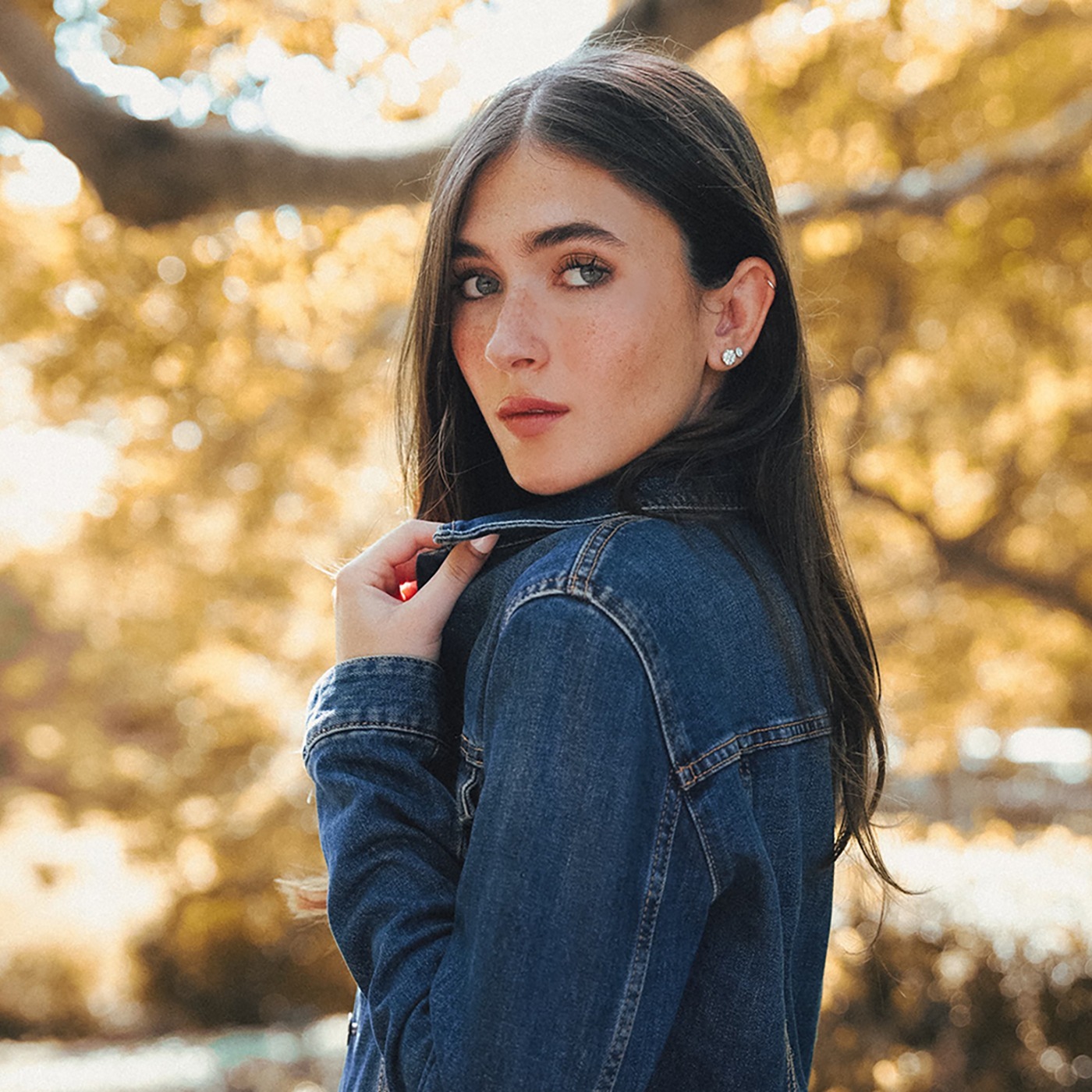
You will see that my guest today is a natural born leader. In the year before everything changed for Jews on American campuses, Tessa Wechsler ran for the UC Santa Barbara student body president against another Jewish student, doing her best to avoid having her campaign become a referendum on Israel. And she won. But by October 8, 2023, at the beginning of her senior year, the hate came pouring in online from unknown actors, but also at school, from classmates, other members of the student body government, and even fellow Jews.
- [00:48]
Unnamed Student
If you take away what it's about, if you take away the fact that it's about identity or Israel, whatever it is, it's just bullying. And I think that's why it felt so isolating. People just kind of opted to say nothing.
- [01:02]
Tessa Wechsler
Hate signs went up, and a vote to recall Tessa's presidency was held and narrowly failed. Tessa, it's a great honor to be.
- [01:20]
Rabbi Ami Hirsch
Able to talk to you.
- [01:20]
Tessa Wechsler
You're one of my heroes. Welcome to in these Times.
- [01:25]
Unnamed Student
Thank you for having me.
- [01:26]
Rabbi Ami Hirsch
I'm honored you came to my attention and to so many other people's attention in the aftermath of October 7th. By then, at least, when I first heard of you, you were already the president of the University of California, Santa Barbara. So you had, I assume, that you had public leadership ambitions and you wanted to be involved in the student atmosphere on campus in a public way. Did you ever anticipate that you would be thrust into these circumstances?
- [02:03]
Unnamed Student
Definitely not. I, you know, I actually wanted to run for student body president since I started in person at ucsb, because I was working for the student body president at the time, in my first role in student government, who was Israeli. And she was so awesome. And I was like, well, you know, if she can do this and she's, you know, proud of her identity, then I can absolutely do it, too. And so I don't think anyone could have foreseen October 7th, but especially I think maybe I was a bit naive in thinking, you know, my community accepted me. I was super integrated into campus life, and I honestly thought that this would be, you know, the. The event that would change people's minds and that we would get sympathy for more than 24 hours. And unfortunately, I was WR.
- [02:52]
Rabbi Ami Hirsch
When you ran and won, what was the margin of victory? Were you running against someone? Was it close?
- [02:59]
Unnamed Student
I was running against someone. I was running against two people or three people, I believe all. All men. My main competition was actually a Jewish student and unfortunately, he got endorsed by Students for Justice in Palestine. And so the one thing that I didn't want the race to be about was, was this, because I wanted to be, you know, I wanted to be voted for based on my merits and based off of the things I wanted to accomplish in office. And instead it became this, like, identity war. And so the margin was actually very slim. I won by about 100 votes. And for context, our undergraduate population is about 24,000 students, and for a valid election, we need at least 20% of the school to vote. And so winning by 100 votes is a very, very slim margin.
- [03:49]
Rabbi Ami Hirsch
And already then there was the issue of Israel. That became part of that campaign, definitely.
- [03:55]
Unnamed Student
I think, because it was almost like the one thing that this student had over me was that he was less of a Zionist than I was, because at the time when I was running, I was the president of students supporting Israel. And it wasn't something that I was hiding, but it became about that very quickly. And the most unfortunate thing was that this individual had not been involved in student government at all, had rarely been involved in the Jewish community, had very little participation until it was election time, and then made his participation in the Jewish community very obvious. And I was someone who held. You know, I did three years of student government. I did three years of Jewish leadership across all the Jewish clubs on campus. So for me, it was really disappointing. The one vote that I thought I could count on was the Jewish vote. And for some reason, even that was. Was a battle which I definitely didn't foresee.
- [04:46]
Rabbi Ami Hirsch
But you had two Jews who were running for the top position. You won.
- [04:51]
Unnamed Student
Yes.
- [04:51]
Rabbi Ami Hirsch
So does that say something about the student body at ucsb?
- [04:56]
Unnamed Student
To be frank, I think it says less about the student body and more about my effort, because for him to get votes, he actually put in very minimal effort in terms of campaigning. I was out there every single day, like, talking to people individually, asking them to vote. I was going above and beyond. I had a whole team of people that were helping me because I knew that when it came to the Israel Palestine debate, that I was outnumbered on campus. And so I genuinely think that it was my individual campaign strategy that I was using that got more people to vote. And also I was very active in my Greek life campaigning, and that's also a majority of the vote and where that came from. And actually, students that were involved in Greek life were very supportive post October 7th as well.
- [05:45]
Rabbi Ami Hirsch
So it's. It's like general campaigns. Get out the vote is a really important component of winning yeah, for sure.
- [05:51]
Unnamed Student
I think he thought he had it in the bag and if I tried a little bit less, he would have.
- [05:56]
Rabbi Ami Hirsch
So you were seated before October 7th, but not significantly before. Right. You entered into your senior year, you.
- [06:04]
Unnamed Student
Get elected in May of the previous school year.
- [06:07]
Rabbi Ami Hirsch
So you had been president for about six months before October 7th.
- [06:10]
Unnamed Student
Right.
- [06:11]
Rabbi Ami Hirsch
Tell us, what were you doing and what was your reaction when you heard the news on October 7th and when were the first indications that things were going to get much more ugly than even you might have expected?
- [06:26]
Unnamed Student
I think so October 7th, it was Shabbat and I keep Shabbat, so I was completely offline. It was also Simchatora weekend, so it was a 48 hour period of being offline. And I found out about October 7th while I was still in my bed, because I woke up and my housemates were already awake and they were waiting for me to wake up and they were like, you know, there is a war happening in Israel right now. And I didn't really react because I'm like, okay, like I get, you know, rocket alerts on my phone all the time. This is super common. And they were like, it's not that kind of war. And so my friend came up to me and she showed me her phone and the first video that I saw was the video of Nama Levy being put in the back of a truck by terrorists. And there was blood all over her. And I just was in complete shock. I was so devastated. And I ended up telling my friends, I was like, please call my mom because they didn't keep shua and like tell her to call her family in Israel. I don't know how aware she is of how bad this is and I'm more plugged into this world than she is. And it was just such a weird time because Simcha Torah is supposed to be, you know, like the most joyous day of the year. And it was such a weird experience because all of us came to Chabad to celebrate Simchatorah. But it was like all these conflicting emotions of this holiday. Supposed to be happy, but none of us are happy right now. And then as soon as I got my phone back, I. I mean, I didn't even think twice because I have always been someone who's posted very publicly about my support for Israel. I lived in Israel, so I made a post immediately. And immediately the reaction before Israel had responded, while we were still counting our dead, I was already getting a lot, a lot of hate.
- [08:07]
Rabbi Ami Hirsch
From who?
- [08:08]
Unnamed Student
From students.
- [08:09]
Rabbi Ami Hirsch
They were just run of the mill students or was it some kind of.
- [08:13]
Unnamed Student
Organized campaign, I think at first, like that first period, like October 8th, 9th, the first week or two following it was mainly students, but it's so hard to identify on social media. But there, there was no kind of. It wasn't organized at that point. There were also people just that I knew that didn't go to my school. One of the first things that someone had posted was that, like, it was a girl I actually went to high school with and she posted a photo of me and she basically said, this girl deserves to be dragged through the streets and she deserves to be afraid that she's a Zionist. And that was one of the first times that I had read something so threatening toward me on social media. So.
- [08:55]
Rabbi Ami Hirsch
And that was within a day or two of knowing about the events of October 7th.
- [09:00]
Unnamed Student
Yeah.
- [09:01]
Rabbi Ami Hirsch
Were these students with some kind of Middle Eastern background or foreign background, or were they mostly kids like you who grew up in America?
- [09:12]
Unnamed Student
It's hard to tell. It's on social media in terms of the in person stuff, to my knowledge, there were very few actually Palestinian students that were a part of Students for Justice for Palestine on campus. And one of the girls actually that gave me the hardest time in person and online was white. Definitely a lot of the students actually that were the most, you know, that wanted to show the most support, I guess, for this like, campaign against me were white students. And I think that a big part of this is kind of this morality olympics of how do I show that I'm the most moral person that there is and how do I prove a point due to like this white guilt that I stand on the side of the oppressed and not on the side of the perceived oppressor, which would be me.
- [10:01]
Rabbi Ami Hirsch
So the kinds of threats you were receiving were threats of violence against you and it rose to that kind of level or was it just kind of general statements of Jews are bad? Was it specifically targeted to you?
- [10:17]
Unnamed Student
Yeah, it didn't feel general at all because it was always either my name or she or my job. The uniqueness of my situation is that people found something tangible that they could grasp onto that would be a victory if they had won. So essentially because of my position, they saw this as, okay, if we can do something like take a Zionist out of a position of power at our university, that's a win for our team. And so I think that that's why it was so particularly targeted, because they found a way to almost disguise their anti Semitism by saying, no, no, no. The reason that this is a problem is because she's a student body president and she's not allowed to express views that don't align with the majority of the campus community, which isn't a standard that you would probably hold for any other person of any other background. You wouldn't tell black person that they're not allowed to take a stance against racism. And so for some reason, when it comes to Jews, we're not allowed to speak up for our people or our community or the hatred that we experience.
- [11:18]
Rabbi Ami Hirsch
It's one thing, you know, to talk about Israel and anti Zionism and to make that kind of a generalized statement and not to personally threaten somebody's well being, safety or even life, which anybody should be able to see, is blatant, clear hatred and antisemitism. And you experienced that in a widespread manner on campus itself, personally, not simply online on various social media sites, but actually face to face with fellow students. Was that the first time in your life that you experienced this kind of personal, direct antisemitism?
- [11:56]
Unnamed Student
On the scale, yes, but not in form. I went on my first trip to Israel coming into my senior year of high school. And so I came back, you know, like I was obsessed. I started a Jewish club. I was always talking about it. And so during that year, my senior year, my house was vandalized three times. And that's genuinely no coincidence. Also, I did have, you know, some people make certain comments that were anti Semitic, but the classic, you know, anti Semitic tropes of a, you know, swastik on the desk or like, let me, you know, throw coins at you, that type of thing. But it was much easier to manage on an individual level, especially face to face. For me. I've never been someone who cowers to bullying. I've never been someone who kind of goes with what's trendy. I'm. I kind of walk to the beat of my own drum and these things don't typically phase me. And so when I had individual experiences like that, I really stood up for myself in a way that those individuals would never come near me again and make that type of comment. But in this instance, I felt totally helpless because again, the scale that it was happening and also the fact that I couldn't identify the majority of the people that were saying these things.
- [13:15]
Rabbi Ami Hirsch
Did it surprise you the extent and the. Just the sheer malice. Your parents came from the former Soviet Union, from Odessa, right? From Ukraine?
- [13:28]
Unnamed Student
Yes, that's correct.
- [13:29]
Rabbi Ami Hirsch
And presumably they came with the rest of the Jews who were in a certain sense, fleeing from the kind of persecution under the Soviet regime that our people experienced throughout the 20th century. And they came to the land of the free and the home of the brave and, you know, the golden land for the Jews. Did it surprise you that university atmosphere would be like that?
- [13:50]
Unnamed Student
I think I wasn't surprised at the overall hostility toward Israel, because that always existed, maybe, if not, you know, on this magnitude and scale. But for sure, I was definitely taken aback by the individualized type of hatred, mostly because, and I say this all the time, if you take away what it's about, if you take away the fact that it's about identity or Israel, whatever it is, it's just bullying. And from such a young age, like in elementary school, we were already getting lessons in class about bullying and how it appears and how you're not supposed to be a bystander. And so for me, that was the most shocking thing, because if this was happening to someone else in front of my eyes, I. I would. I would say something. I would never let this happen to one of my peers, even if I didn't know them. And I think about this, too. My response, again, if. If I was a member of the Jewish community and there was someone else in my position, the second there was one comment or two comments, I would have already organized, you know, a Jewish community rally of support behind this individual and made it explicitly clear where we stand as a community. And that just didn't happen. And I think that's why it felt so isolating, because for me, an attack on one Jew is an attack on the entire Jewish community and the entire Jewish world, which is exactly why October 7th kind of penetrated the entire, you know, global Jewish community, because an attack on Jews anywhere is an attack on Jews everywhere. So that was the most shocking part to me, was both within the community and also within a student community that, you know, champions all these liberal values. And I would assume that harassment and bullying would be things that they would want to fight against.
- [15:37]
Rabbi Ami Hirsch
You said you felt isolated. What was the nature of your support from fellow students, from faculty members, and from the administration?
- [15:46]
Unnamed Student
I would say that in February, kind of, that's when I posted for the first time. And I garnered all this support, you know, nationally, internationally, online, but in person. The first five months were before I had posted. Between October and February were very. Were very isolating, partially perhaps due to my own know, response to all of this is that I secluded myself in many ways because I was so overwhelmingly upset and just, like, sick to my stomach every day when I came on campus. So maybe part of it is a reflection of how I reacted. But the way that I would describe it is it's like if you have a friend or someone in your community and they experience a tremendous loss, and you just don't know what to say because you think you can't say the right thing. Like, you can't say, how are you? Or how do I make you feel better? And so people just kind of opted to say nothing. A lot of the time.
- [16:47]
Rabbi Ami Hirsch
I want to focus on that. So are there a lot of Jewish students at Santa Barbara?
- [16:52]
Unnamed Student
12% of the university is Jewish.
- [16:55]
Rabbi Ami Hirsch
So you were the president. Everybody knew you were Jewish. October 7th happens. Everybody sees the enormous barrage of hate that you're being subjected to. You would expect the Jewish students to respond in a very supportive way. Am I understanding correctly that you're saying they didn't really respond in that kind of way?
- [17:19]
Unnamed Student
Not in my view. I didn't feel that way. And I would say that a lot of the friends that I did have that were by my side would agree with me.
- [17:27]
Rabbi Ami Hirsch
Why is that? Why do you think is that? Here are lessons that you can bring to light and shed some light on for the rest of the Jewish community. What's going on? Because we always ask ourselves, what's going on? What is the younger generation feeling? What are they thinking? What are they doing? For obvious reasons, one, we care about them, but two, they're the future leadership of the American Jewish community. So what do you think? What were they thinking?
- [17:52]
Unnamed Student
I think it shifted the further away we got from the actual October 7th attacks. I think the first reason is very understandable to me, which is that October 7th was extremely traumatic, especially for the Israeli American community. And we have a lot of Israeli Americans that go to ucsb. And so it's almost like when you're. You're trying to process this tragedy that happened. And it's something that's also unique to our communities that we're never able to process these horrific things that happen to us because we're always on defense. We always have to be fighting for people to recognize our anti Semitism. We don't even have the time to react to the anti Semitism that's happening to us. So I think that's part of it is people just kind of grappling with the event itself. I think the second piece is there are very few people that are leaders. There's few people that, you know, can lead that rise to the occasion and takes a specific type of person, a specific type of personality. And so I think that maybe there weren't a lot of people that wanted to be the first to organize or be the one to put it together. I also think, and a couple of my friends say this, that they don't think that many of these students knew truly the extent of what I was going through. But I had a hard time believing it because people knew that people were talking about me on Reddit, for example, before I knew, a long time before I knew, because I'm not on that platform. And the first person to actually tell me that it was happening didn't even go to UCSB anymore. They graduated the year prior. And that to me was like, so everyone's been reading this behind my back and no one is saying anything. And so part of it, I think, was also this fear of, like, I can't believe this is happening, maybe, and I don't want this to happen to me. But I. I genuinely think a lot of the community was very lost on how to act in this situation, because I think it was unprecedented. And I. I don't hold it against anyone because I think we all process things differently. But it was something that really deeply affected me because I felt like people were okay with me taking the bullets, but not okay to, like, help shield me, if that makes sense.
- [20:12]
Rabbi Ami Hirsch
Do you think there's something about your background? You were born in the United States, but your parents came from the Soviet Union. And I assume that their circle of friends includes people who came from the Soviet Union. Do you think there's something about your background that makes you more sensitive to these kind of things than, say, American Jews who been here for three or four generations?
- [20:35]
Unnamed Student
I think so. And it's an interesting piece of my upbringing. I understood that I was Russian speaking long before I understood that I was Jewish. At least that's how I remember, like, in my consciousness as a young person, I was always a Russian speaking person first and a Jew second. And obviously that's really reversed. But I grew up in what felt very much like a Soviet household. I grew up speaking Russian. I grew up reading Russian books. I grew up going to Russian school on Saturdays and then eventually Hebrew school on Sundays and, you know, American school the rest of the time. And I think that I definitely grew up in a setting that I never feel fully American, if that makes sense. And I think a lot of children of immigrants feel this way because you're raised kind of with like one foot in and one foot out of American society. And I think that Russians and, you know, people from the former Soviet Union, they raise their children with a specific type of discipline and A lot of it genuinely is personality. If you ask my parents, they're like, we have no idea, like, where you came from. It's impossible that you're our child sometimes because it's so against the name. My family's so private. Most people in my family are not this type of personality that's super outspoken. And I think it even came as a shock to my own parents in terms of how I. How I managed all of this too. I think that my strength surprised me and it surprised my family and those around me. Some people say that they saw that I was going to be able to handle it all along, but I definitely think that it's a part of it because for me, it's such a fresh memory at least, knowing that my parents and also my brother, my sibling, came to America as refugees. And so for me, it was like the deepest punch because I'm looking at my parents and I'm looking at my brother, and I was like, why did they do all of this for this to be happening in the place that was supposed to be their safe haven and to their child that they had so many years later in the country that was supposed to do that for them?
- [22:41]
Rabbi Ami Hirsch
I have this theory. It's not empirical, but I think the children of immigrants and immigrants, especially people who fled environments that were anti Semitic and may have left in part or completely because of that anti Jewish persecution and hostility, I think they're more sensitive than American Jews who've been here and have never experienced the kind of animosity that we're seeing post October 7th. And ironically, maybe I'm making too much of this, but ironically, I think it's actually a sign of privilege to not be sensitive to the nature of anti Zionism and the reason why most Jews of the world ended up in Israel in the first place. And so it's just simply harder for American Jews who have never experienced any of this to really grasp the ideological nature of anti Zionism and to know how to respond, you know, and it might be easier for people who have a shorter distance, who were immigrants themselves or their parents felt it firsthand.
- [23:54]
Unnamed Student
I 100% agree with you. And I think the saddest thing is, is that I actually think that the American college students of today will almost reflect that to their children, because now this is one of the first times that the younger generation has experienced anti Semitism on such a widespread scale. And so I almost feel like almost every young Jewish person I know has experienced some form of anti Semitism. And so I think that that is also part of the shift is that a lot of my friends, parents that were born and raised in America faced very little anti Semitism because I think people were just didn't have the. The nerve, frankly, to be anti Semitic. In terms of the proximity to the times of the Holocaust and to the time when Israel was created, people were very sympathetic to the Jewish community and knew that we really needed a state. And so because this is becoming more of a distant memory, and unfortunately, the population of Holocaust survivors is diminishing as well. I think it just kind of is removed further and further from our consciousness as a society. And so that's kind of what we're seeing reflected now.
- [25:08]
Rabbi Ami Hirsch
You're really a spectacular leader. You know, I look at you and I say to myself, much, much better and more impressive than I remember myself at your age. But when I look to you for a general sense of what's going on amongst the American Jewish youth, it's kind of a pessimistic perspective, what you're sharing with us. That doesn't necessarily bode well for the future of the American Jewish community. That's still post October 7th. They don't really get it yet. Is that right? Do I understand you correctly?
- [25:42]
Unnamed Student
I would say that student involvement and engagement on college campuses has increased exponentially. And you can ask any Chabad or Hillel on any college campus that question, and they will tell you that they've seen more Jewish attendance to Shabbats and events than probably ever before. The two concerns I have are whenever I go to these college campuses and I ask them, how many Jews go to this school? Usually it's in the thousands, usually. And within the room that I'm speaking, It's usually between 30 to, let's say, 75 students. That's a very small percentage of engaged students out of the Jewish community. The second concern is that Jews get involved, unfortunately, the most when we're going through a tragedy or a hardship. And the only way that we're going to shift the current attitude towards Jews everywhere is by being proactive. Because something that unfortunately is never on our side is that we're always on the defense. And I always tell students, if nothing is happening on your campus, then you have this gift that's being handed to you where you can actually host something that isn't a reaction to hatred that we're receiving. My biggest dream one day is for people to know us for who we are and not just for what we've been through. And so I think I have a lot of hope because for Every leader that I see as a part of the anti Israel movement, who I fear might one day be in government office in the United States, I see an incredible pro Israel person, Jewish and not Jewish, who also has the potential to step up to the occasion once they get there. And so I definitely have a lot of hope. And I think right now it's all about getting the train back on the tracks and for organizations to really seize the moment to engage young Jews as much as possible. Because this is the window of opportunity, and if we miss our moment, we're really going to regret it.
- [27:51]
Rabbi Ami Hirsch
What specifically do you think we, the older generation of rabbis, communal leaders, teachers, what do you think we need to know about the younger generation of Jews, your generation? What have we done right and where have we gone wrong?
- [28:07]
Unnamed Student
I think that the issue is, most of the time, the average Jewish student that I know isn't aware of all the organizations that are out there to support them. And so the reason that I knew everywhere that I needed to go to get the support that I needed is because I'm very engaged. I was involved in fellowships, I went to conferences. But the truth is, is that whatever, 80% or 50% of the Jewish community, that's more on, you know, not in the center, not super involved, they're not aware. And so part of it is really getting in front of those people. And I think that's a mistake that we make, is we're engaging the engaged instead of engaging the disengaged. So that's one thing. I do think that the support for students like me on college campuses for what I went through, I felt like every organization was really there for me. And I felt that if I needed anything, whether it was something like legal advice or security or even just, you know, people to show up somewhere or to help create a petition or whatever it is, I had that support really, really quickly. So I think that that's awesome. And I know that these organizations have really been working in overdrive. And in terms of the things that you could be doing, you have to ask the young Jews that you represent or the people, the community that you're a part of. Because I would say that mostly right now, I think young Jews are looking for inspiration. I think that young know, whenever there's like a high profile speaker or someone that they can relate to or someone that's accomplished something that these people admire, they show up. And so I think that that's a big piece of it, is trying to find out, what do young Jews in your community need? Because young Jewish students at UCLA or UCSB need something very different than the Jewish students at Columbia. And so it's all about catering to your community and asking students directly, what do you need and how can we support you? It has to be a collaborative effort. And I think that we do that well a lot of the time by giving students control to kind of organize events and take on these leadership roles. But the more that we do that, the better.
- [30:23]
Rabbi Ami Hirsch
Could you describe to us what was the nature of your support from the administration of ucsb?
- [30:31]
Unnamed Student
I would call the support from administration perceived support to hide their inaction, because I thought that the administration was totally on my side, because I spoke to the chancellor every week, and I worked with them. Technically, as the president, you are a member of the administration, and so you're very involved. I was an honorary member of the board of trustees. I was working with the UC regents. I was working even with the UC president, President Drake. And so my understanding was, okay, these people know who I am. They work alongside me. So obviously they're going to do the right thing, which to me was extremely obvious that I was being harassed and that I was being bullied and that everything that they were trying to do goes against the policies of our university. And although, you know, I had all these meetings and I had these offers for mental health and, oh, you know, file all these cases, nothing happened. There was no result there. And the closer that we got to the recall election, the mark was like, sorry, our hands are tied. There's nothing we can do. And a lot of the time it was like, well, when they were ruling on the cases that I had against specific students and what they were like, you know, individual things that people were saying to me, a lot of the comments that I was getting from administrators was, you have to show, you have to prove that these comments are actively making you suffer. And so this is part of it where I was like, so because I'm resilient, the people that are bullying me don't deserve to be held accountable for their behavior. And I would ask them, I said, what are you waiting for? To what extent do I need to be, like, depressed? Do I need to be suicidal? What. What's, like, the scale that you're measuring on in terms of what they consider to be suffering? Because I think that if this was, for example, it was a sexual assault case, you would still go through the process of holding the rapist accountable, whether or not the person that was assaulted has the specific reaction that you would expect. And so that is how I felt is I felt like there was an assault on my humanity, an assault on my freedoms as a student and the right that I had earned by being voted into a position. And all these perpetrators were totally getting away with it.
- [32:51]
Rabbi Ami Hirsch
Do you think your university administrators, and maybe you can generalize across the board on American universities, do you think they have a blind spot towards Jews? Do you even think they consider Jews a minority? Because what is offensive and against the rules, which would be so obvious if these kind of actions were directed against anybody from any other minority, Somehow or another, it's morally opaque for them when it comes to the Jews. And I'm just wondering why. I've been trying to understand this now for two years, actually.
- [33:25]
Unnamed Student
I think it's complicated. But I will say if I were to give these administrators on any of these campuses the benefit of the doubt, it's that most forms of hatred, aside from antisemitism, are really clearly defined. And there are very specific policies on how to respond when these things happen. And I think that part of the issue that we have is that there's never been a requirement for universities to, especially universities that receive government funding, to apply the same definition of antisemitism that the government holds. And so if our government holds the IHRA definition of anti Semitism, and you're a university who's receiving money from said government, you should have the same definition of antisemitism for your university that you evaluate antisemitic incidents based off of. I don't think that it should be the decision of the university administration of how they want to think about antisemitism. Honestly, until these universities are really brought to the principal's office and they're told exactly how to handle these situations and they have policies set in place, I think that the same issue will keep arising. And a lot of what I've heard also is that administrators genuinely just didn't know what to do because it was totally unprecedented. Things like what's happening now and what happened at Columbia are things that the administration there had never faced before. They said that they've never faced anything like this, I believe, since the Vietnam War. That's part of it is uncharted territory. But, you know, now almost, what are we, Almost two years into this war, there's really no excuse. And so I think that it's a part of the American consciousness to maybe not see Jews as a minority or not take anti Semitism super seriously. And a lot of it is because people whitewash the Jewish community. And right now, we are in an age where Whiteness is the race of the oppressor. And so there's no way that someone who looks like me could possibly be oppressed. And that's most of the comments that I get on social media is, you know, you're white and you have blue eyes. You saying that you're oppressed is absolutely ridiculous. And so it's a complicated thing to explain. There's no other hatred like anti Semitism because it's based on so many things that a lot of other minorities don't quite understand.
- [35:48]
Rabbi Ami Hirsch
Do you think the administration is fearful? Do you think they're apprehensive? Do you think they, they're worried about the reaction from their students and they try to find the safest way to respond, even if it's a non response?
- [36:03]
Unnamed Student
Yes, I think that they're afraid of public opinion. I think that most university administrations are worried about money and making sure that they keep the university afloat and keep the university thriving. And so I think they typically succumb to the majority. But I also think it varies, you know, by state even. There's a reason why at the Florida universities, you haven't heard about a lot of anti Semitic incidents. And that's just because their government handles, their local government handles things differently, their state government. So I think it really depends on the climate. But at the same time, I think university administrations right now, I guess, aside from Harvard, are equally afraid of losing their federal funding now. And because of the current crackdown on universities from the Trump administration, I think that at least from what I'm seeing, there's a shift and there is genuinely a fear, especially, you know, for people like me who have, you know, evidence through the roof of how the administration was negligent toward me when it came to fighting the anti Semitism I was going through. I think that they know that if there weren't to be a case, that they would most likely lose.
- [37:17]
Rabbi Ami Hirsch
Tell us about the recall election. So you're the president. When did the petition arise? When was the election actually held?
- [37:26]
Unnamed Student
So the craziest piece, which most people don't know, is that university administrators actually knew that there was a petition for my recall for many months before it was revealed to me. And they actually even told some of my colleagues about the petition and made them think that it was confidential and that I wasn't allowed to know that it existed. A petition for my removal on the basis of my identity that all the administrators knew about, that I wasn't allowed to know about the person that was going to be affected by this.
- [37:59]
Rabbi Ami Hirsch
What was the specific cause for the recall.
- [38:03]
Unnamed Student
The specific cause for the recall was Zionism. But the way that it was explained was that, you know, this is like a racist bigoted movement. And, and we can't have someone who's a racist in, in this position because it doesn't represent the majority of the student body's opinions. And so it was definitely watered down. But the truth is, is that a lot of the complaints and a lot of the things that were being discussed on the day that this was all being debated, it was very obvious, it was super specific that it was about Israel, it was about my posting, it was about all of it altogether. So. But in terms of the recall election, I found out very late and I'm pretty sure it was already going on in the fall when people were already asking. I think it was honestly like end of October probably when people were already saying, okay, like how do we get a petition started? And then after February, the timeline really sped up because then there was an account that was created on social media called Recall Tessa Vexler. And all these students were following the account and posting about the process and to show up to get me removed. And so the way that recall elections work at UCSB is that first you have to get a certain amount of signatures on a petition, but the people that can sign it is also a very specific group. It has to be people that voted in the election for the student body president. And so I believe that got over 800 signatures, which was above the threshold that they needed. Then once a petition gets enough signatures, it is presented to the student senate. And the student senate then votes on whether or not a recall election should take place where the entire student body would essentially receive a ballot and they would vote on whether or not it should be removed on this basis. The senate essentially had a six hour long meeting with a public forum where students could come and speak for two minutes at a time while I was sitting there basically saying why they think that I was not deserving of my role. And then at the end of it, they voted and I narrowly escaped this by one vote. And something else to note is that the new student body president was already elected at this time and I only had two weeks of my term. And so it was so incredibly obvious, more obvious than it already was, that this was a symbolic removal.
- [40:34]
Rabbi Ami Hirsch
And what did you feel? I mean, you won, but you won by one vote and it shouldn't have happened from the beginning. So how did you feel that day?
- [40:43]
Unnamed Student
Relieved. Because all I could think about was if I don't win this. What is, what kind of message is this going to send? Then? The more that I thought about it, I felt betrayed because a lot of the senators that had voted were people that I thought were my friendly colleagues, and they clearly weren't. And I also, in a way, felt kind of vindicated because I was just really proud. I was like, I can't believe that I made it through this whole situation and I made it on the other side and I maintained my position. I won against all odds. I stayed in my position against all odds, and somehow turned the most challenging situation of my life into the most positive past year. And so I think I felt a lot of pride in that moment of, okay, like, every difficult piece of this process was. Was totally worth it.
- [41:44]
Rabbi Ami Hirsch
You know, I have to tell you, when I read about this, you felt pride about yourself. But I can't explain to you the pride that we felt. Just observing what you went through and the strength and the courage that you had and, and the eloquence of your articulation. It's really something amazing. It's just fantastic.
- [42:02]
Unnamed Student
Thank you. Thank you so much.
- [42:05]
Rabbi Ami Hirsch
Could you help us understand the connection, the nexus between anti Zionism and antisemitism as understood by students on university campuses? Do you think they realize that anti Zionism for most Jews constitutes antisemitism? Do you think they really have it out for the Jews or Israel is the cause celeb of the generation and it's a way to express your moral standing because everybody agrees that Israel is the evil of the world.
- [42:44]
Unnamed Student
I think in many ways it's the latter. I think we're not operating with the same definition of Zionism. And so that's the first disconnect as to why the majority of people don't understand that anti Zionism is anti Semitism. It's because they define Zionism as a racist, you know, movement to ethnically cleanse all Palestinians from the land. And so if they were operating under the actual definition of Zionism, they would realize that it is inherently anti Semitic to say that Jews don't deserve the same indigenous right as every other indigenous group of people. And then in terms of, you know, do they really hate Jews or Israel? I. I do think that it's a hatred for Jews and it's a hatred for Israel. And I think it starts as a hatred for Israel. But what they don't realize is that by establishing the double standard to Israel, it's already inherently anti Semitic. And I think also by not acknowledging Jews that are saying that Israel is completely interconnected with their Jewish identity that's also anti Semitic. And I think it's honestly, it's cognitive dissonance. It's very much like, we don't want to hear this. And so we're going to choose not to listen to the Jewish voice or the Jewish definition or the majority. We'd rather listen to this tiny Jewish minority of people that are anti Israel because it fits our narrative. And I think that anti Zionism turns into anti Semitism really quickly. And I think, unfortunately for a lot of people, you see it all kind of blurring together at these protests now. People are not just chanting against Israel, they're claiming that all of the old anti Semitic tropes that we've heard for, for decades are. They're almost kind of coming back. But now on the left.
- [44:37]
Rabbi Ami Hirsch
Tessa, here's something that I also haven't been able to figure out for a year and a half. I'm not young and I'm not female. But, you know, we went through a period in this country. I mean, it's been a decades long struggle for recognition of female rights and women's standing. And in particular, in the years before October 7, 2023, you know, we had this MeToo movement that put special emphasis on assuming that when women claim sexual assault, that they're telling the truth. And it was especially strongly felt in women of your generation. How do you explain the reaction to the assaults against Israeli women and the lack of willingness even to acknowledge that, let alone to believe and to condemn the assaulters?
- [45:38]
Unnamed Student
It's hard for me to understand as well. And I think, again, it all comes down to how people have managed to politicize even something like sexual assault. And that Jews and Israelis, because they're the oppressor, they can't be oppressed. It's the same thing that, you know, can be narrowed down to what I went through on campus. Because if you're white and you're in a position of power, then oppression doesn't apply to you, which is ridiculous, but also, I think, so evidently anti Semitic, it's. It's because they don't recognize Jews to be worthy of the same type of treatment that you would give to any other woman. And I think that part of the reason that we're experiencing this right now and that, you know, you're saying we championed women's rights and we fought so hard to get to where we are today is that so many of the students and people that are on the streets right now screaming against Israel, are also profoundly anti American. And I think that that is a big piece of it because I think that people that truly champion, you know, American values and believe in the Western free world would be on the side of Israel, because Israel, even from, like, a foreign policy lens, Israel is the only stabilizer in the Middle east that's protecting, you know, everyone else from Iran. So it's completely illogical. And I think a lot of it also comes down to education and media that people are consuming nowadays. In the film that I'm in October 8th, Richie Torres says it best, and he says one thing that we will see in history books in the future as one of our greatest flaws in our American government is that we allowed this social media, specifically TikTok, an app that's run by our greatest foreign adversary, to really perforate young minds. If we're letting this gigantic platform that most young people consume nowadays control the narrative around what's happening in Israel, this is the result. This is the outcome.
- [47:47]
Rabbi Ami Hirsch
My last question to you is about dei. You said by virtue of your presidency, you're actually, in some kind of official or formal way, part of the administration itself. I don't know what kind of DEI mechanism you had at Santa Barbara, but do you think there's a connection between the ideology of DEI and, or the way it's executed and implemented on campus and anti Jewish or anti Israel hostility?
- [48:18]
Unnamed Student
I think that, and I'm going to quote again, I believe Dan Sinor says this in the film, that DEI was not built with Jews in mind. And so if the foundation of DEI isn't built with that, then we can't expect it to be used to protect Jewish students from the same discrimination as other minorities. We don't fit into the definition of what people consider to be an oppressed minority. And so I think because of the way that it's being evaluated and because antisemitism in so many ways is unique and, and the Jewish community is so unique because we've somehow managed to go through some of the worst hatred of any group and yet really come out on top in terms of how motivated we are in career and family in the way that we respond to these things. It's very unique to our community, and it's really difficult for people outside of it to understand how a population of people that go through what we go through could be so resilient. And so the automatic kind of connection that people make is that if people are this resilient, then it really can't be that bad what they're going through. So we don't fit into the mold of what I believe DEI stands for.
- [49:36]
Rabbi Ami Hirsch
In sum, do you have a message for young American Jews who are either in university or are graduating high school and are looking for universities? Do you have some advice for them?
- [49:49]
Unnamed Student
I think that if I were to give three blanket pieces of advice to people that are going into college, high school students, the first is to try as hard as you can to pick your university as any other young person in the United States would pick their university. The saddest message that I get often from parents is my son or daughter, they got into UC Santa Barbara, but because of what you went through, I will never let them go. That is the like complete antithesis as to what my message is, which is that we don't fight antisemitism by removing ourselves. Nothing good ever happens when Jews leave. And so we need to continue being a presence and showing that we're not willing to be pushed out. Select your school based on what you want to do with your life and also seek out and make sure that there is a Jewish community there, which almost every American university has. And the second that you get on campus, find that community and find a way to get involved because they will be your home and they will be the people that you can come to when things are good and when things are bad. And the last thing is to arm yourself with an understanding of Israel and our people before you get to college. I think that part of the problem is within the Jewish community is that we expect the non Jewish community to know so much about us that we don't even understand ourselves. Like, you know, we say, oh, all Jews are not white. But could the average, you know, Ashkenazi Jewish person name the other different types of Jews that are out there? I personally don't think so. We have to understand ourselves. We have to understand how the Diaspora came to be. We have to understand why in all of the current Muslim countries in the world, why there are such small populations, if any, of Jewish people there and how they came to Israel and what they went through. I think we often educate only about the Jews in Europe. Just be armed with, with knowledge and with tools and you really need to seek it out. We have to be more proactive as young people because the odds, unfortunately, I don't know if they will always be against us, but right now they are. And so we always need to come in more educated, more level headed and more proud than anyone else. So that's my advice. And just for everyone in the Jewish community to know that this will all be worth it and that we're really standing on the right side. And I believe, I truly believe that future generations of Jews will look back on this generation of Jews and how we handle it if we continue moving in the right direction, that they will look back with a lot of pride of how we responded to hatred like this.
- [52:35]
Rabbi Ami Hirsch
Tessa Wechsler, one of the great contemporary heroes of the Jewish world. Thank you on our behalf, on our collective behalf. And I know you have some personal professional ambitions, but I hope that also includes future leadership in the American Jewish community because we absolutely need people like you.
- [52:55]
Unnamed Student
Oh, of course. It's my calling, I found. And it's something that I'm very passionate about and it's going to be a part of my life forever, no matter what form it's in. So I can promise you that.
- [53:07]
Rabbi Ami Hirsch
So we wish you our blessing. From strength to strength.
- [53:12]
Unnamed Student
Thank you so much. Thank you for having me.
- [53:19]
Tessa Wechsler
Tessa Wexler is as good as it gets. What an amazing leader. I remember myself as a college student. I too assumed a leadership position at my university, the London School of Economics. In my second year, I headed the Israel Students association of the lse. And the following year I was elected the President of the Israel Students association of the United Kingdom, uniting campuses across the uk. Tessa is so much better than I was. I don't think I could have done what she did. I had just completed three years of military service in the idf. I was a bit older than Tessa, and eventually I became a Jewish communal leader. Still, her fortitude, courage, eloquence, leadership skills and quiet dignity are so far superior to what I possessed. There were some anti Israel and even anti Semitic sentiments back then in Britain, but nothing like what is unfolding on Western campuses today. Nothing like what Tessa described at ucsb. To all those worried about Gen Z, you need to know that we have some awe inspiring young Jews in our community. We need to pay attention to them and cultivate them. In their hands lay the future of American Jewish life. And if we produce leaders like Tessa, we will be fine. More than that, we will thrive. For 18 months now, I have asserted in speeches, editorials and meetings that if you are in Jewish communal leadership and October 7th has not affected your thinking, public pronouncements and most importantly, your daily routine, agenda and programming. Chances are that you're not meeting the historical demands of Jewish leadership. October 7th was one of those days that will forever live in infamy. If it hasn't changed our lives and our outlooks. We're missing the Jewish moment, history will weigh us in the balance and find us wanting. For me, among other things, this has meant that I now state my understanding of Jewish values loudly, passionately and clearly, especially to young adults. I know that many of them are acutely sensitive to criticism. None of us really likes reproach and none of us really deals with criticism well. I don't know whether it's just that or if there is some special sensitivity to criticism of Gen Z that they absorb from society and their parents through education and social surroundings. Irrespective, I've considered it my responsibility to share with them what I consider central Jewish values. If they do not hear it from me and other Jewish leaders, then from whom they are of course free to criticize, reject or ignore me. I assume that most of them do not listen to Jewish podcasts or even attend synagogue or other Jewish events. But I do know that my messages get through to many of them. Last year I put a 3 minute clip on X that was viewed over 3 million times. There were thousands of comments from young adults, although hundreds were very angry, even hateful. But it's not only Gen Z, it's their parents and especially their younger siblings and the new generation now coming up the ranks that I want to reach as well. So to reiterate, I am in covenant with all human beings. This is what Judaism I have grasped you by the hand and made you a covenant people. Isaiah preached a light of nations opening eyes. Deprived of light. Jews have an obligation to pursue universal justice, righteousness, virtue, honor, rectitude, honesty and decency for all people. At the same time, we never intended that our emphasis on tikkun olam social repair would lead some Jews to join anti Israel demonstrations. We wanted to raise generations of Zionists. We did not intend for Jews to lead Passover seders in so called liberated zones, liberated from Zionists that violate not only university policies but threaten the safety of Jewish students. Some of those protests contain anti American sentiments as well. We did not intend to encourage or excuse Jews who burn American flags or support those who do. We did not intend to teach that universal concerns outweigh concerns for our own people, that love for humanity replaces love for the Jewish people. We wanted to instill liberal values in Jews, not to support ideologies that depart from and even betray liberalism. We did not intend that our emphasis on universal concerns lead to a detached indifference and a lack of compassion for the murdered, brutalized, sexually assaulted and kidnapped of our own people. We did not intend to strip Jewish solidarity, empathy, responsibility and mutuality from Jewish identity. Universalism absent Jewish peoplehood, concern for all the families of the earth, absent concern for our own Jewish family is not Jewish universalism. It's just universalism. Criticize Israeli policy, American policy, the Jewish community and rabbis all you want. Do it with relish. It's what Jews have done for thousands of years. But to go against our people, Never. To all of us, including younger adults, direct your hearts and your eyes towards your people. If they rejoice, rejoice with them. And if they are suffering, suffer with them, mourn with them, support them, help them, free them. Redeem them. Until next time. This is in these times.