Loading summary
Transcript47 lines
- [00:00]
A
Rabbi I'm Rabbi Ami Hirsch of the Stephen Wise Free Synagogue in New York. And you're listening to in these Times, our world is changing rapidly. Sometimes you get the sense that no one really understands or is able to manage the pace of change, and thus these are unusually unstable times.
- [00:23]
B
You cannot think that what we are moving into is a world either of domestic stability or of international stability.
- [00:34]
A
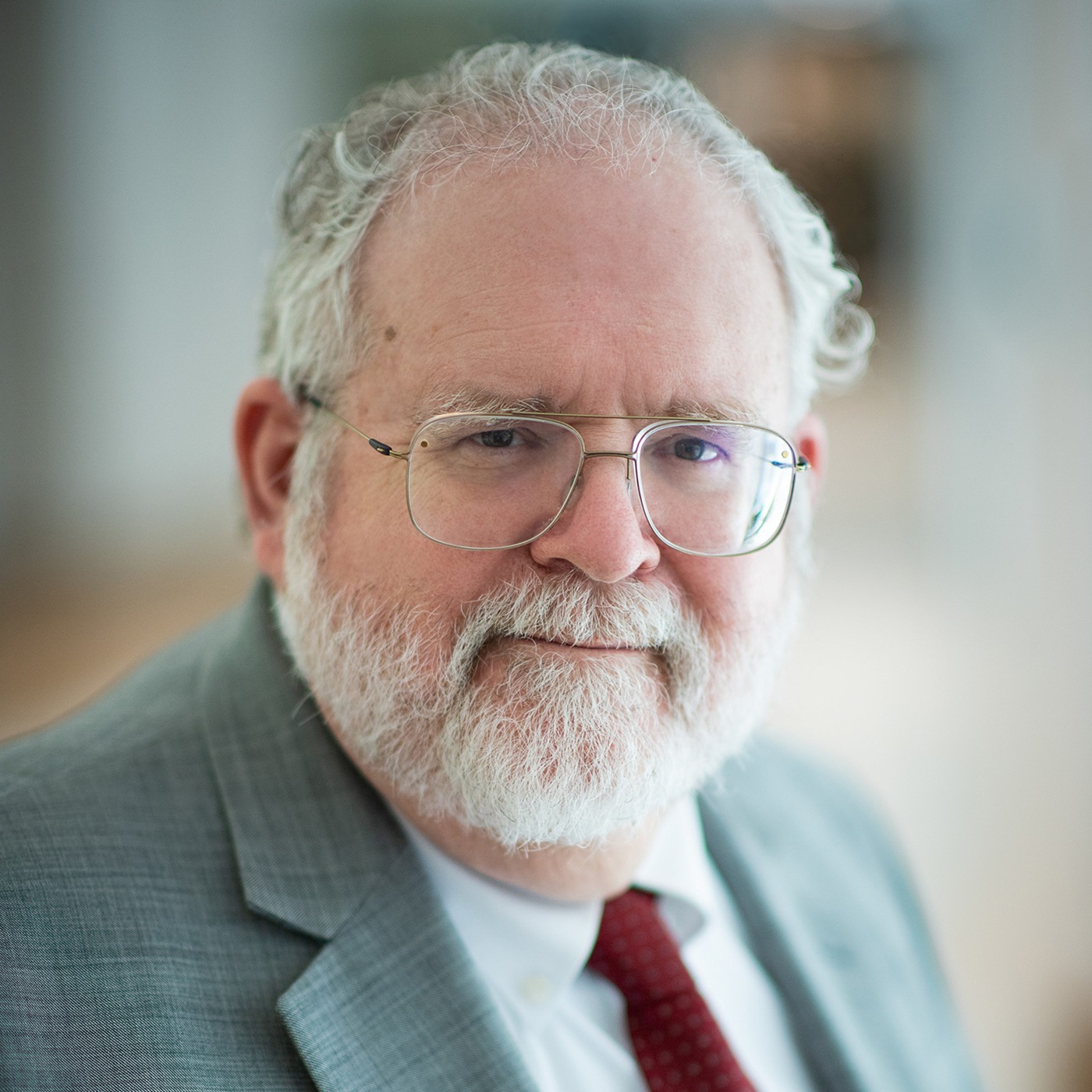
Walter Russell Mead is a distinguished fellow at the Hudson Institute, a Global View columnist at the Wall Street Journal, and the Alexander Hamilton professor of Strategy and Statecraft at the University of Florida. He is also the author of five books. His latest, the Ark of a Covenant, the United States, Israel and the Fate of the Jewish People, is, according to the New York Times, less a history of US Israel policy than a sweeping and masterfully told history of U.S. foreign policy in general. Professor Walter Russell Mead, welcome to in these Times.
- [01:16]
B
It's great to be here. Thank you for having me.
- [01:20]
A
I'd like to talk to you about Israel, the history of Israel and the American Israel relationship, as well as contemporary events and also how it affects our relationship with the rest of the world. First, I want to talk to you about the Ark of a Covenant, the United States, Israel and the Fate of the Jewish People, which you wrote a couple of years ago. It's a monumental, epic, historic analysis of the American Israel relationship and why Israel seems to be so important in the consciousness of Americans. Can you tell us what is unique about America, that it has this kind of special relationship with the Jewish people and ultimately the Jewish people's state, the state of Israel, that differs, say, from other Western countries?
- [02:12]
B
Right. Well, I think the first thing to say is that it's as much a difference of degree as a difference in kind. That is anti Semitism, as we've seen in the last couple of years, particularly. But but going back through American history, there's never been a time when anti Semitism was absent in American history any more than in the history of the west generally. But anti Semitism in general, the peaks have been lower and the valleys deeper, so to speak. And that's a pretty constant thing going back, you know, 300 years basically to Puritan Boston and the early south, where Charleston, South Carolina, was known as one of the most hospitable cities to Jews in the world in the 18th and 19th centuries. And if you want to try to think about that, I think the root of it is probably religious. And then from the religious sphere on into the cultural sphere, that is that the American colonies were very much products of the English Reformation, except For Maryland, which was settled in part by Catholics, the groups who came to the American colonies from England tended to be on the, quote, left wing of the British Reformation. And so there's this very strong sort of Calvinist, Reformed theological bent. And it had a number of different ways of thinking about the Jews that marked it off from a lot of Western Christian tradition.
- [03:51]
A
What specifically would you draw our attention to?
- [03:56]
B
Characteristically, first, the existence of Jews was seen by Western Christians and Eastern Christians too, to some degree as a threat. I mean, in one sense, a threat, because, hey, if. If these scholars of the Old Testament don't believe our interpretation of it, you know, they reject it, does that mean we're wrong? So there's sort of that element. But more, here's this group of people who don't live by the laws and don't recognize the morality that the rest of us recognize. I mean, it's not completely different what they believe, but, you know, divine right of kings or feudal oath, swearing on a Bible, all of these things that held society together, very fragile societies. The Jews don't believe the things that we believe. The Jews stand at the place where our understanding of the economy, which would say, don't borrow and lend money, finance in general, is evil. Well, the, the thing is you. You got to have finance. If you're a king and you want to go to war, you need the revenue from many years to be available in one year to fight your war. Well, that implies banking, that implies interest, and that implies somehow that your ideas about how your society works are incomplete. There's the Jew. So you see, in all of these different ways, there are ways in which simply the existence of Jews, regardless of what a particular Jew might do at a particular time, was felt by lots of people as a threat. But in this English Reformation Christianity, that changed number one, instead of seeing the existence of Jews as a sign that Christianity was wrong, possibly these Christians saw the existence of Jews as proof that Christianity is right. That is to say, you know, our God said that he would preserve this people. And look, here they are. And in the same way, beginning in the 17th century, there's a tradition of Anglo American writers saying the Bible says that in the future the Jews will return to their ancient land. And so any sign of Zionism would be naturally and spontaneously seen by these Christians as a sign, yes, I'm right, the Bible is true. I can believe it. So Jews, instead of a source of fear and uncertainty, become a source of reassurance. And I think that actually plays a large role in people's thinking.
- [06:42]
A
But still the other is that. Right. Even if it changed from a negative perspective to a positive perspective, still there's something other about the Jewish people.
- [06:54]
B
Oh, yeah, well, nobody's, nobody's going to say they're not Jewish, you know. Right. And they don't marry other people as often as, you know, they stick to themselves, they have their own food. So there are different people want to be a different people. Right. But also again, in America, you can be an Irish American. You can want Ireland to win in the World cup, you can want Ireland to drive the English out of Ireland, you can get very drunk on St. Patrick's Day or whatever it might be. Right. But that doesn't make you less an American. So in America we have this idea that you can be a people, you know, a member of a people which is not American and yet also be a full member of the American people. You can say that we've, we don't not just separate church from state in America, but we separate state from tribe. And so the Jewish tribe can sit there right next to the Scottish tribe, the Greek tribe, the Polish tribe, the WASP tribe, you name it. And in that sense be no more or less American than anybody else here. And the other thing would be attitudes toward capitalism. I think you'll often find anti Semitism around the world is associated with suspicion, fear and opposition to capitalism. You know, it's soulless. It concentrates wealth in the hands of bad people. Many of the kinds of stereotypes about what Jews do, you know, get rich, be selfish, whatever, whatever, whatever. Those things absolutely are attributable to capitalists. And you will often find therefore that populist political movements have a lot of sort of an anti Semitic Tang to it. I say an Ark of the Covenant, that William Jennings Bryan's famous cry at the 1896 convention, Thou shalt not crucify mankind upon a cross of gold. That's an anti Semitic dog whistle.
- [09:14]
A
So there was a time early in Israel's formative years, in the 40s and the 50s, where Israel was kind of the darling of both the right and the left and the socialists in Europe were, were strongly supportive of Israel. Do you think that there was a connection to their suspicion or their distance to capitalism that played a role in that, that they saw the Israelis as kind of building a new socialist haven?
- [09:40]
B
Yeah, well, this is again, a lot of you might say European philosemitism has generally speaking been rooted in the left. If you think about 19th and early 20th century Europe, the right tended to be clerical Catholic. You Know, we want the king, we want the Pope. And the left, which is anti clerical, doesn't want religious tests for office, doesn't believe in the kind of sacralized power structure of a traditional empire and feudal system. And all of this embraces the emancipation of the Jews, which comes from the French Revolution and Napoleon, as part of a modernizing agenda. And so there's always been this sense in Europe that somebody's attitudes toward Jews, not always, but, but can often be an ideological marker. Then it's intensified in the fascist and Nazi period where the Jews get singled out by the fascist right as the greatest enemy of all. And so then to be in the 1940s and 50s, to be on the left was to, you know, be, you know, anti fascist and therefore pro Jewish. Also, I have to say that the fact that while the Bolsheviks, generally speaking, were anti Zionist, there was a period in the late 40s which is actually critical for the emergence of Israel when Stalin saw Zionism as a tool that would help him wreck the British Empire and frustrate American and British strategic planning. And so Stalin actually did much more for the independence of Israel than Harry Truman ever did. And so again that, that kind of gives the left, you know, gives Israel a, a left wing thing. During World War II, you're gone was incredibly popular in the left.
- [11:43]
A
In the US which was a Irgun was a right wing. That's right, it's very paramilitary outfit.
- [11:51]
B
And so you would have actually your gun spokesman appear at communist and left wing rallies in the United States. And then in the 50s where Eisenhower wanted to center American policy on friendship with Nasser and the Gulf states, he had an Arab centric American foreign policy and as you I'm sure remember, actually helped force Israel to retreat from the Sinai after the suez War of 1956. It was seen as my, you know, what we need is a human rights policy in the Middle East. We don't want to stand with a bunch of feudal monarchs and tyrannical generals. But for, you know, because of, or oil and because of strategic concerns, plucky Israel, the only democracy, a nation of refugees. So this was a stick with which the left hit Eisenhower's foreign policy with over and over and over again. And the fact that icons like Eleanor Roosevelt were very pro Zionist and later Martin Luther King sort of helped cement that perception for a very long time.
- [13:04]
A
So what happened up until the Six Day War? The French were Israel's primary arms supplier in the Six Day War itself. And something happened after, I guess after the Six Day War that really marked the shift, what happened since?
- [13:20]
B
Well, I mean for the French they had two reasons for being pro Israel. One was they were mad at the British who forced them out of Syria. And so they were happy to help the Jews force the British out of the Middle East. You know, nothing more Gallic than that. But also the French were really, because they were fighting the war in Algeria, they were very opposed to Arab nationalism, Nasser was supporting, you know, et cetera. So the French had their own realpolitik reasons. Plus the French need to sell arms. French arms industry today still needs to sell arms. The French domestic market isn't large enough to support the kind of multi dimensional arms industry that Gaulist ideology says France should have. So it's a nation constantly seeking arms exports and Israel was a very good market. So all of those reasons. But after night, after 67, France isn't in Algeria anymore. You know, the Arab nationalism is a fact. The French are trying to accommodate with it and so they move, they move to a different direction.
- [14:27]
A
But there must be some root ideological driving force that over the years created such animosity on the left, in particular the European left. I'd also like you to comment on the American left, but especially in the European left that really looks at Israel with tremendous animus from this period of admiration just a few decades ago. What was it? What do you think it is?
- [14:59]
B
I think it's a generational shift that the post World War II European generation of the left was very pro Israel, but it was also in general the left supported the efforts of the European governments of the time to hold onto their colonies. And so with what was In Europe, this 68 generation, you know, the equivalent of the American boomers, the hippies, the new left radicals saw their parents support for Israel as part of their general parents support for white colonialism in the developing world. And so it became a touchstone on the left in Europe. Are you a real lefty or one of you compromising social imperial 1950s lefty? And then with as immigration began somewhat later to enter European politics and as America becomes more identified with being Pro Israel. Before 1973America in terms of foreign policy was not a particularly pro Israel country. But after that and starting under Nixon and Kissinger, oh, names of enormous evil on the democratic left and then going on through like Ronald Reagan, the horror and George W. Bush, right? To to be anti Israel on the left would be to signal you don't like Bush and the Republicans, you don't like American capitalism, you don't like imperialism, and that you personally have Liberated yourself from the hideous burden of Western imperialism. And then again, when you start having a lot of immigrants from North Africa, in France, from Turkey and Germany, from Pakistan and in the uk that changes. If you're normally speaking, it's the democratic parties on the left that hope to do well from the votes of new immigrants who tend to be poorer, want social programs, et cetera, et cetera, et cetera. And so electoral logic combines with kind of cultural and political logic to create this force.
- [17:13]
A
And do you think that many of those developments also characterize the American left? And is there still a broad consensus of pro Israel support?
- [17:24]
B
Well, the American left, you know, on every issue, not just Israel, tends to be less radical than the European left and slower to develop. So that, you know, the tendencies that happened relatively quickly on the left side in Europe. I mean, actually, I went in in the early 80s, Michael Harrington, who was then president of the Democratic Socialists of America, invited me to come with him to a conference that Francois Mitterrand was holding for the Third International or whatever it is in Paris. And Mike was dying of cancer at the time. And all the time we were there, we were sitting in cafe floor, you know, in Paris, these great leaders of the Social Democratic left, including Israeli leaders, were coming by, bonding, talking about the good old days that they had all fought together, their current struggles. And of course, the first generation of Israeli leftist politicians who's the large majority were exiles, often from Europe or, you know, had. Had either gotten out before or after the war and had still connections forged in the old country with the generation that had grown up in Germany and Sweden and France and so on. So I saw this community of what was then the Israeli political establishment absolutely being embraced as late as the early 1980s. But obviously you would not see anything like that today. And you wouldn't see the Democratic Socialists of America singling out Israel as Brazil, proof that socialism can work in a democratic country, which they used to do in the 50s.
- [19:14]
A
It's exactly the opposite now, right?
- [19:16]
B
They used to say in the 50s, you say socialism means an end of free speech. Look at Israel. You say socialism means weak national defense. Look at Israel. Israel was the poster child of the Democratic left. You can go back and listen to Peter, Paul and Mary, that communist Pete Seeger, singing like Zionist, you know, summer camp songs to American audiences at folk hootenannies. I mean, this is, this is what it was. And it's, you know, people under, under 50 can hardly imagine it, but that's, that's the world I grew up in.
- [19:53]
A
And so what, what happened? Is there something really fundamental at its core that shifted this or you, you talked about a number of different factors, economic factors and political factors and geopolitical factors that go way Israel and world Jewry. Is there something that you can point to that's fundamental? It says, okay, here was the ideological shift that shifted the entire left political spectrum away from Israel.
- [20:21]
B
Well, I do think generally big historical events are multi causal rather than uni causal. You know that it takes a lot of little streams to form a mighty river. And this river is as mighty as it has become because so many different streams pour into it. But I think a big thing that has come particularly since the end of the Cold War, is that, remember that the decision to partition Israel in 1947 was the first big decision the United nations ever took. And for a whole generation of liberal internationalists, you know, they'd grown up with, you know, hundred years of conflicts between different ethnic groups, each claiming the same piece of territory. And you know, these were wars of ethnic cleansing, wars of genocide. The Balkans, Poland, Germany, Germany, France, you know, all of these ethnic wars that, that went on and on and on. And the UN was an instrument that would solve these things. You obviously had to solve them by compromise. Nobody was going to get everything if both the Serbs and the Albanians claim Kosovo, nobody's going to get the whole thing. But there has to be a referee that draws a line and then people accept the line. And even if the line is maybe a little bit unfair, we have to have a referee or we can't play the game, so to speak, especially in an age of nuclear weapons. And so the Arabs were the ones who rejected the foundation of liberal internationalism when they rejected the decision to partition. This was seen not simply as an element in the Middle Eastern war, but it was an attack on the foundations of world peace and international law, which in the immediate aftermath of World War II, obviously meant to people human survival. Because if we can't stop these wars, and if a decision from the UN doesn't stop at a totally legitimate decision of the UN doesn't stop it, then there is. And the Arabs rejected the authority of the UN when they rejected the partition. They had their reasons. I'm not, not being Solomon here, you know, but there it is. So, but after 1990, it began to seem to a lot of liberal internationalists that Israel was the dirty dog that was preventing the establishment of universal peace. You know, that Israel's a stronger party, we're never going to have peace in the Middle east and therefore never going to have world peace unless Israel will make more concessions to the Palestinians. And sure, you know, maybe we're asking a little too much, but Israel is the stronger party. The weaker party has no concessions to give. It's got the Israel must be generous, must be generous. And also, if we're going to end wars, we have to stop nationalism. And Zionism is an unconstrained 19th century nationalism in full glory. Like the French nationalism that wanted Alsace and Lorraine back, the Israeli nationalism, some of them want the West Bank. It has claims based on ethnicity and history. It's willing to go to war to defend itself and advance what it sees as its interest. Well, if Germany did that, if France did that, if Italy did that, Europe would fall into war. The whole world would be chaos. So our efforts to build a moral order of universal peace on which the salvation or future of the world depends. All right. Israel is the stone in the shoe. Israel is the danger. All right. In some ways now we're back to the Middle Ages where the Christian religion was seen as the only strong force holding these feudal societies around in weak state. The loyalty of nobles to the king is only as strong as their faith in the oath that they've given to the King. You see, and there's no police, so the only authority against crime is the conscience of people. And the Jews are denying this foundation stone on which everything is built.
- [24:53]
A
You know, that's really fascinating and one of the profound insights that you wrote about in the Ark of a Covenant is when you reviewed Herzl's motivation, the founder of Zionism, it was fundamentally based on a pessimistic view of the Enlightenment. Yes, they were prepared to accept the offer given by the Enlightenment of becoming loyal citizens. It's what George Washington originally proposed to the Jews of America in exchange for protection of the Jews. And Herzl's profound insight was European Enlightenment would, despite its good intentions, perhaps would never be able to protect the Jews. So the Zionist movement itself and then the State of Israel were created because of the pessimism of the Zionists that the international community can live up to its word in the first place.
- [25:52]
B
That's right.
- [25:53]
A
And so this explains the constant ongoing tension because Westerners have faith in Western liberalism and enlightenment to impose or at least protect world order, whereas Israelis, its very creation was in opposition to that assertion.
- [26:12]
B
Yeah, exactly right. You know, these liberals would said basically, Herzl are lovely people, I wish them all the good in the world and my heart resonates with their values. But if the Jews believe in liberalism, the Jews will be exterminated. I mean, that was literally what he said, that the good people, when the, you know, when the Gestapo comes for you, all of these wonderful people signing petitions and forming civil action groups about universal human rights, they won't be there. They will drag you off to the camps and nobody will be there to help you. And this, I think explains a lot of what goes on between American Jews and Israeli Jews today. American Jews, by and large, are people for whom Herzl so far was wrong. And Israeli Jews are people for whom by and large, Herzl was right.
- [27:17]
A
That is so profound. And which brings us basically to October 7th. I felt on October 7th, by the afternoon when I began to hear the reports, that the Middle east was going to change. It wasn't surprising me. I think the response, the military response of the Israeli government would have been the response of any government what is considered right or left. And it reflected the strong will of the Israeli people. But this, this tension that you really profoundly point to, that the fundamental Israeli skepticism of international ability to protect the State of Israel and enforce agreements, and we're seeing it every day in terms of the ceasefire agreements in Lebanon and Gaza, that is the source of the tension with the American government and with American Jews whose basic assumption is we embrace the power of Western liberalism to protect us.
- [28:16]
B
And for American Jews in particular, who have been seeing now an attack by the anti liberal left on American Jews, a kind of, you know, hate spewing eruption of anti Jewish feeling against American Jews because of things happening in the Middle east, you know, feel the need to cling more desperately than ever to the idea that liberalism and the strength of liberal values in America is what will keep me safe and my children safe. I want liberalism to reign at Harvard and I want these illiberal protesters dealt with so that Harvard is a safe space for me. And so the American Jews, many of them have tended to become more invested in liberalism as the only path forward for solving their own personal situation in the United States as Israel has moved further away from what maybe a liberal idealist would prescribe as the right policy. And this is a profoundly difficult moment for the American Jewish community.
- [29:28]
A
I can of course, tell you that firsthand. In some respects, it's unprecedentedly difficult for American Jews. Most American Jews alive today have really not lived through this kind of anxiety in our relationship with the broader community. Let me ask you where. So where do we go from here? In your book you express. I think, I think it's fair to characterize this as quite critical or Even scathing perspective on the Obama policies in the Middle east. As at least you describe how the players in the Middle east were skeptical of the naivete of the Obama administration and bringing democracy to the Middle east and eventually putting pressure on Israel to relent to a two state solution as Obama wanted to implement it. Could you just relate to that, expand on that and give us your own sense? Where do we go from here now that the Middle east has changed so dramatically?
- [30:37]
B
Right. Well, I do think that Barack Obama is not an anti Semite and I certainly see all kinds of overreactions there. But he did not understand power politics. He did not understand, he does not understand the Middle East. You know, forget Israel, he sort of allowed Russia into Syria. The French were horrified by how weak the American negotiating position was vis a vis Iran in the nuclear deal. So, you know, for the Israelis and actually for everybody in the Middle east lives on a knife edge because what has happened to Lebanon or Syria could happen to any country in the Middle East. And every ruler there knows that the Prime Minister of Iraq under the last king, his head was kicked through the streets like a soccer ball. They do not live, they have never for one nanosecond lived in a post historical universe of liberal peace and the United Nations Charter regulating affairs between nations. They live in the world of realpolitik. And that makes them think differently, act differently. Doesn't mean they're always right. People make misjudgments. This is a very difficult thing to do. Well, and being a real politic doesn't mean you always make smart rail politic decisions. But when you have a sort of a John Kerry coming in nattering about win win solutions and things like that, you just sort of sigh and, and you'll listen to the Americans not because you think they are right about anything, but because their actions will have an impact, a real impact. And so you're trying to anticipate their actions. You're trying to play the Americans. And this would be as true of the Palestinians, as of the Israelis, as of the Egyptians, as of the Saudis, as of the Emiratis. You're trying to play these people. You know, they're stupid, but they're strong. And you need to figure out where they'll blunder next. And if you can try to steer them away from the things that would be worse for you. And if you can't, well, prepare yourself for what they're going to do. And Americans have pretty much consistently believed going back to the 40s that the same kind of peace that we introduced into Europe Western Europe after World War II with the Marshall Plan and our support for the beginnings of the EU and so on. You know, we could do that in the Middle east. And to some degree, that would be the next step in the transformation of the world to the liberal utopia that we all would very much rather live in than in the place that we are now. But the fundamental thing for the Obama people, I think, was their failure to realize that you can't do that on the cheap. If you wanted to transform the Middle east, you would have to project American power more, not less. The more America withdraws from the Middle east, the less anybody in the Middle east cares what America thinks. And Obama never really grasped the transactional nature because he's a liberal. And the way that you get ahead in America to rise in our elite and so on is you find win win solutions. You learn how to bridge gaps with other people. You realize that someone who looks very different from you under the skin, actually, they're an American, too. And there are all kinds of ways that, you know, you can build coalitions and common principles can really help you move forward. The Middle east is not that kind of a place, sadly.
- [34:34]
A
So, okay, we had Obama, four years of Trump, Biden, and now Trump again. Is American policy more or less consistent, or are there going to be changes in your estimation in the coming years? And where do we go from here?
- [34:52]
B
Why? Well, I can tell you American policy in the Middle east will be as predictable as Donald Trump, which is. Trump has much more the instincts of a Middle Easterner than Obama did, which may or may not make him a better person or a greater leader or any of those things. But he does, I think, instinctively get the transactional nature of foreign policy in the Middle East. And so I think Middle Eastern leaders feel it is easier to talk to him. You know, they have to. Like, when they're. When they're sort of with a Blinken or a Biden or an Obama or a Kerry, they sort of have to dance this bizarre dance of liberal pieties and, you know, remember which flower you have to hold forward at the right moment to. To keep the Americans happy. Oh, it's such a bore. But you have to do it. And with Trump, you know, you can just cut right to the chase and talk about, okay, this is what I want and this is what I'll give you. And they like that. On the other hand, Trump's policies are not always so endearing. For example, pumping all the oil and gas that we can is not going to help the Crown Prince of Saudi Arabia generate the massive wealth that he needs for the economic transformation of Saudi Arabia that he sees as vital to his future.
- [36:20]
A
Do you think over the next four years there'll be this expansion of the Abraham Accords?
- [36:26]
B
Four years is right. Now is a very long time. And here again, this is how the Middle east will surprise you. The thing that drove the Abraham Accords, in my view, was the increased fear of Iran by everybody else in the region and their decreased confidence in the Americans. And the more they felt that the Americans were unreliable and that Iran was a danger, the more reason the Arabs and the Israelis had to work together. And there's a secondary reason and another reason related to economic development. But, but that security argument, the fact that Israel has. Has so weakened Iran has actually weakened in some ways. The need, say, for the Saudis for a military alliance with Israel. Okay. And you might say, well, shouldn't they be grateful because Israel has helped them and respond, but with gratitude by a kind gesture? Now, you have not been paying attention to the politics of the Middle East. Israel has removed a big danger from the Saudis. Now, the, you know, possibly the rise of Turkey and Erdogan, which is potentially a real threat for the Saudis as well, could bring it back. I mean, what the Israelis and the Arabs have in common is that both of them think that they cannot dominate the Middle east on their own, but that for their independence to be preserved, no other power should be able to dominate it, except possibly the US with whom they've both learned to deal. So they don't want the Turks, they don't want the Iranians, they don't want anybody to rule the roost. But we should never mistake the Abraham Accords for some kind of, you know, Franco German reconciliation after World War II. They are a move on the chessboard. And you take those moves based on your calculations about your national interest and, may I say, your personal survival and the survival of your family.
- [38:35]
A
Professor Mead, before we run out of time, I'd like to ask you about the American foreign policy, in particular as it relates to Europe and Ukraine. What is the resolution going to be in Ukraine?
- [38:49]
B
It was interesting. I was just in Davos last week and was on a couple of panels in the Ukraine House and talked to a lot of folks there. I think we should all understand that Western policy toward Ukraine, we call it maybe the Schultz Biden consensus on Ukraine was a pretty cynical thing and that the idea was that we can't win because Putin has the power of nuclear escalation or in general, Putin has what people call escalation, dominance. But we don't want Ukraine to sort of totally be subjugated. So what do we do? We give Ukraine weapons and aid, enough to stop collapse, but not enough to let them actually win the war. And the idea is that sooner or later, the Ukrainians will get tired of fighting a war that they can't win, and the Ukrainians will go to Putin. You know, the Ukrainians will bring up the idea of peace. And so then I, having actually failed to defend Ukraine from Russia effectively, can look in the mirror and say, I've stood up for Ukraine. But now that Ukraine wants to give Hitler the Sudetenland, I'm not Neville Chamberlain, I'm Winston Churchill. You know, this is this idea of the sort of puffed up vanity of our political class that it. It doesn't want to admit what it's doing because it might make it feel bad about itself. So we've had a very cynical policy which is now coming to the inevitable conclusion that Ukraine is going to need to give up territory for Russia. The question is, what security guarantees can Ukraine hope to get from that? Sadly, I think NATO membership is out of the question. But from the Ukrainian point of view.
- [40:42]
A
It'S out of the question because that's a red line for the Russians.
- [40:45]
B
It is a red line for the Russians, but it's also probably a red line for the Hungarians. You need unanimous consent in NATO. I think it's a red line in Germany, frankly. You know, so Ukraine will be given a new certificate of liberal international defense commitment with a few more ribbons and stamps on it than the Budapest memorandum had, but possibly of about the same worth. That is, you know, maybe something better will happen. And I think it's interesting that Trump has been tougher on Russia than people expected. I don't think Trump wants a humiliating peace. Trump may not be a liberal internationalist, but he sees himself as a rival to people like Putin and Xi Jinping. And you don't, like, you may be a bunch of mafia dons sitting in a room. That may be your view of how the world works, but that doesn't mean you want Putin to take over the drug trade in the South Bronx. So it'll be kind of those sorts of calculations. It's all, I think, part of just a tremendous historical tragedy that's working out in front of us. And the consequences, I don't think are going to be particularly good. But, you know, I'm. I don't make policy. I just try to figure out what's going on.
- [42:10]
A
I have one final question for you, professor Meadow. It's a big question, but maybe you can address it in just a few minutes. What do you think the state of the country is?
- [42:20]
B
I think we're in a period very much, you know, the information revolution. We all talk about it like a cliche, you know, information revolution, text changing everything. But the times we say that, we somehow think that it doesn't mean very much. So this is really at most about like, you know, whether I'll lose my job. But if you think about what the industrial revolution changed, I mean, it changed everything. The nature of the family, nature of the community, nature of work, nature of the firm, nature of government, of the state. Everything changes. And it's a period of upheaval, war, revolution, migration. You know, everything goes up in explosions. And, you know, byproducts of the industrial revolution include fascism, communism, and modern liberal democracy. All proceed out of this era of turmoil. The information revolution is happening faster. It goes deeper, and it is extending geographically much faster than the industrial revolution ever did. You cannot think that what we are moving into is a world either of domestic stability or of international stability. We have to be thinking that political systems, political establishments everywhere, are going to be constantly facing challenges that they really don't know how to resolve, that our institutions over and over again are going to be facing tests that they were not built to match and maybe don't have the capabilities to match you. And I grew up in a world in which people sort of, let's say upper middle class, educated people, thought of themselves fundamentally as the administrators of a working system that our parents had handed to us. A set of health institutions, of governmental institutions, of journalistic institutions, religious institutions that basically worked okay, and. And that our job was, yes, obviously, to keep. Keep up with the times and, you know, do some innovations here and there, but fundamentally to run things that were already working. But that is not the task that we actually have, and certainly not the task the next generations will have. It will be to improvise in a world of broken institutions, rapid changes, public anger, confusion, dissatisfaction, fear, because from climate change to nuclear war, all of these fears are going to get worse as both the weapons of mass destruction proliferate and the inability of the world political system to kind of keep the peace begins to look, you know, just more probable that we can't solve our problems.
- [45:28]
A
So are you neutral or pessimistic or optimistic about, say, the next generation?
- [45:35]
B
I would say that the lord of Abraham, Isaac and Jacob, who created heaven and earth, is in charge of what's going on. You know, we are his people and the sheep of his pasture. And holding out both the hope of trust in him, but also the fear of him. As Aslan says in the Narnia stories, I am not a tame lion. Fear of the Lord is the beginning of wisdom, but also trust in the Lord is the grounds of all hope. And that is, I think, where we stand today. And so you're in a very good profession, Rabbi, very necessary one.
- [46:21]
A
Well, with that, Professor Walter Russell Mead. Thank you for this fascinating hour. Keep writing these amazing analyses and books that shed light on very, very complicated times. And thank you for being on the podcast today.
- [46:39]
B
Thank you.
- [46:44]
A
Walter Russell Mead is one of America's most prolific and insightful scholars of politics, government and foreign policy. Among the many fascinating topics we discussed, I want to focus on his key insight regarding the Zionist movement. Theodor Herzl, the founder of the modern Zionist movement, was a product of European Enlightenment. He was an assimilated Jew. At first glance, he was not the kind of person to advocate that Jews abandon Europe. To the contrary, he wanted to be accepted by European Enlightenment along with many of the Jews of his era. Herzl agreed with Western thinkers that antisemitism is unreasonable and that the Age of Reason, along with its rigorous standards of scientific proof and evidence, would wash out the irrationality of Jew hatred from society. In other words, if antisemitism was unreasonable, the way to defeat it would be to usher in a society based on reason. Eventually, rationality would overcome the irrationality of Jew hatred. This is what the Enlightenment Jews wanted and it is what they strived for. Until they didn't. Until they concluded that despite the high minded and perhaps sincere intentions of Enlightenment thinkers, the Enlightenment would fail in its promises to even protect, let alone except the Jews. Herzl, a newspaper correspondent in Paris during the Dreyfus trial in 1894, observed firsthand the explosion of raw, naked hatred of Jews in France, of all places, the beating heart of European Enlightenment. And he concluded that there was something about Europe that would decimate Jewish communities. No one could predict the dimensions of the catastrophe that would become known as the Holocaust. But the early Zionists intuited that the tools of the Enlightenment, mass communication, science, high technology and reason itself, could be turned against the Jews as easily as these could protect Jews. And therefore, contrary to practically all of his highly educated Western European compatriots, Herzl concluded that the only way to protect the Jews is to get out of the way of this devouring machine. He wrote in his 1896 pamphlet entitled the Jewish the Jewish question still exists. It would be foolish to deny it. It is a misplaced piece of medievalism which civilized nations do not seem able to shake off. The Jewish question persists wherever Jews live in appreciable numbers. We have sincerely tried everywhere to merge with the national communities in which we live, seeking only to preserve the faith of our fathers. It has not permitted us in vain. Are we loyal patriots, sometimes super loyal? I think we shall not be left in peace. Universal brotherhood is not even a beautiful dream. In other words, Herzl agreed that anti Semitism is unreasonable. But the answer to the Jewish question could not be more reason to persuade these unreasonable people in societies. It would do no good because as Jonathan Swift wrote, you cannot reason a person out of something they haven't reasoned themselves into in the first place. The Zionists response to the age old question of how to solve the Jewish problem was to leave Europe before it is too late and to create a state of our own. We are one people, Herzl wrote. Our enemies have made us one, whether we will it or not. Affliction binds us together and thus united we suddenly discover our strength. Yes, we are strong enough to form a state and indeed a model state. The Jews who will it shall achieve their state. We shall live at last as free men on our own soil and in our own homes peacefully die. The response to Herzl's pamphlet was swift and brutal. Practically all Jews rejected the thesis. The American Reform movement responded to Herzl with this. America is our Zion and Charleston our Jerusalem. Rabbi Isaac Mayer Wise, the then leader of American Reformed Judaism. We are perfectly satisfied with our political and social position in America. We want freedom, equality, justice and equity to and to govern the community in which we live. This we possess in such a fullness that no state whatever could improve on it. That new messianic movement over the ocean does not concern us at all. The Zionists are dupes of a thoughtless utopia, a momentary inebriation of morbid minds and a prostitution of Israel's cause to a madman's dance. Herzl's Jewish opponents, both liberals and conservatives, Reform and Orthodox, were convinced that this new Zionist movement was just a passing fad, a footnote in Jewish history that would quickly fade away. Zionism won the day. It is one of the most remarkable political movements of modern times and arguably the most successful. Since we now know how history unfolded, we can conclude that the Zionists were more right than their opponents who cast their trust in the Enlightenment to protect the Jews. In viewing all of the contemporary issues affecting Israel, and in understanding the different perspectives between Israel and the west and Israeli Jews and Western Jews, it is critical to remember that Zionism was born out of a skepticism of the West's desire or capacity to protect Jews. Israel emerged out of the wreckage of the Holocaust, the most devastating abandonment of Jews in history, propagated by Germany, which until World War II was considered by many to be the pinnacle of Western philosophy and morality, the home of the West's greatest thinkers, scientists, authors, musicians and cultural figures. On practically every issue, this tension runs like a thread in international relations and intra Jewish relations. Israelis are more skeptical of the peaceful intentions of their neighbors than the west and Western Jews. Israelis are more skeptical of the intentions and capacities of the international community, the United Nations, International Courts of Justice, the Red Cross to protect Jews than the west and Western Jews. These are all variations of the original question. What is the solution to the Jewish problem? Western values or Jewish self determination? Reliance on others to protect Jewish communities or self reliance? What do you think? Until next time. This is in these times.